edwina@edwin-pump.com

View All Products
en
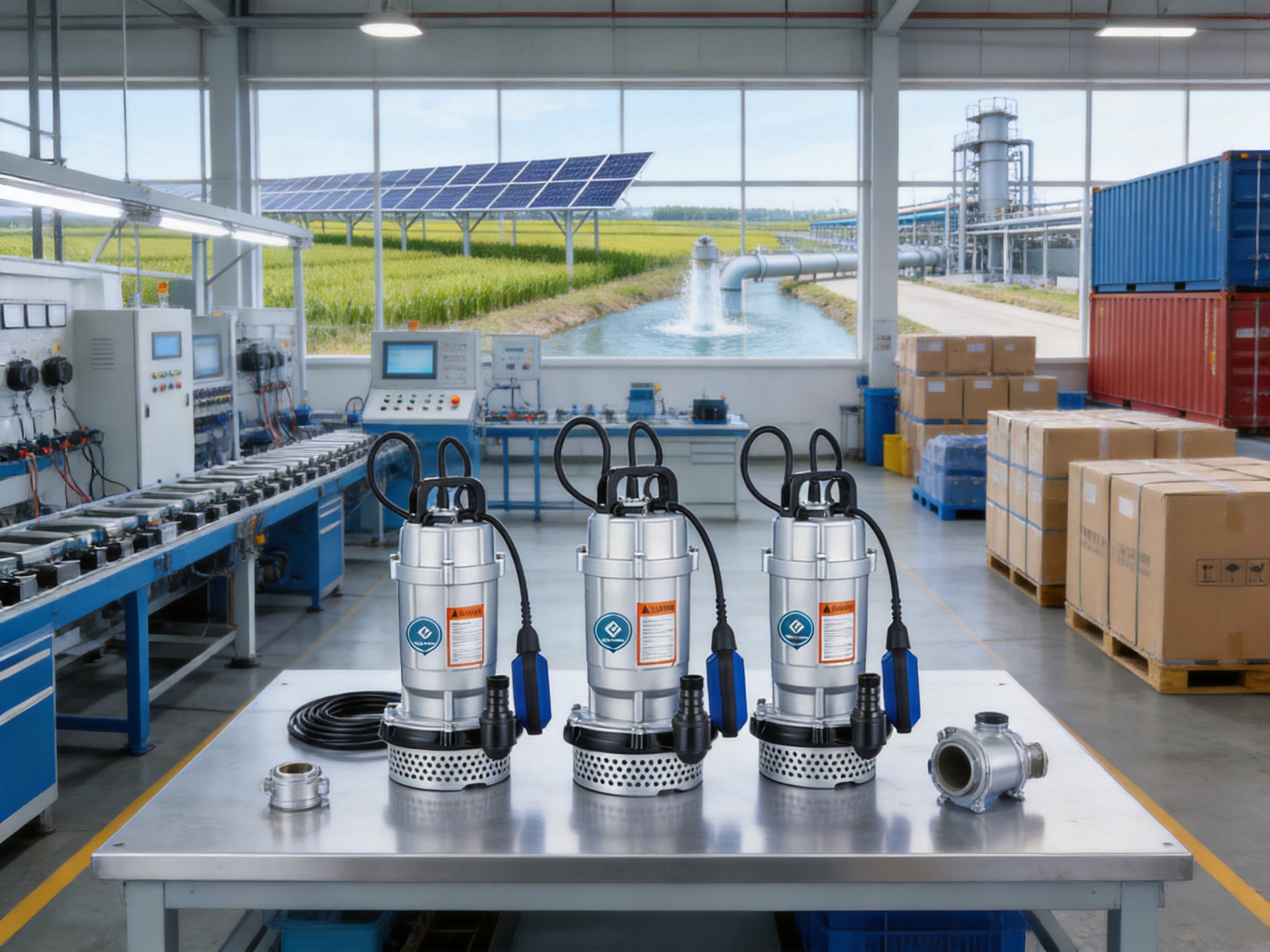
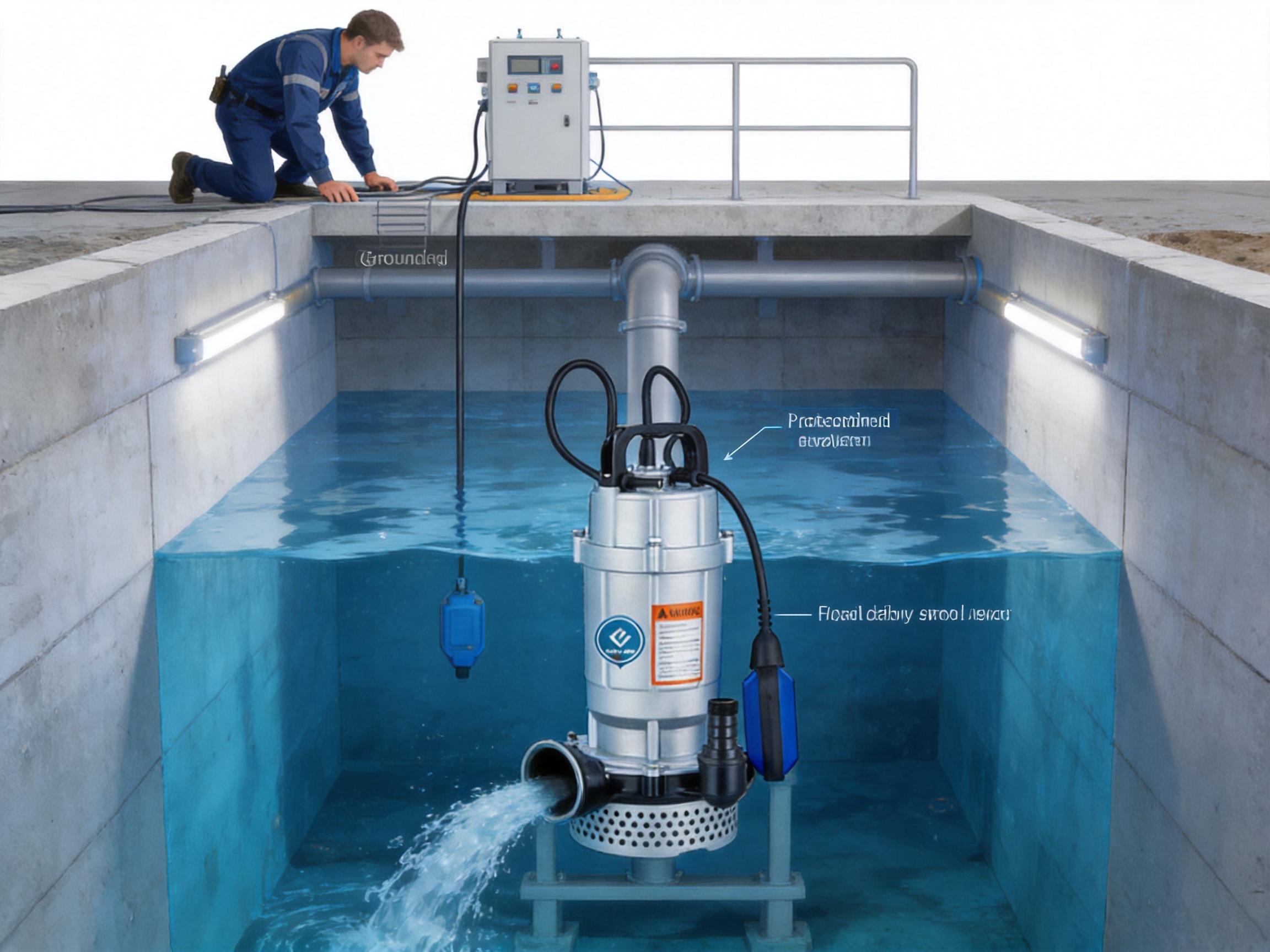
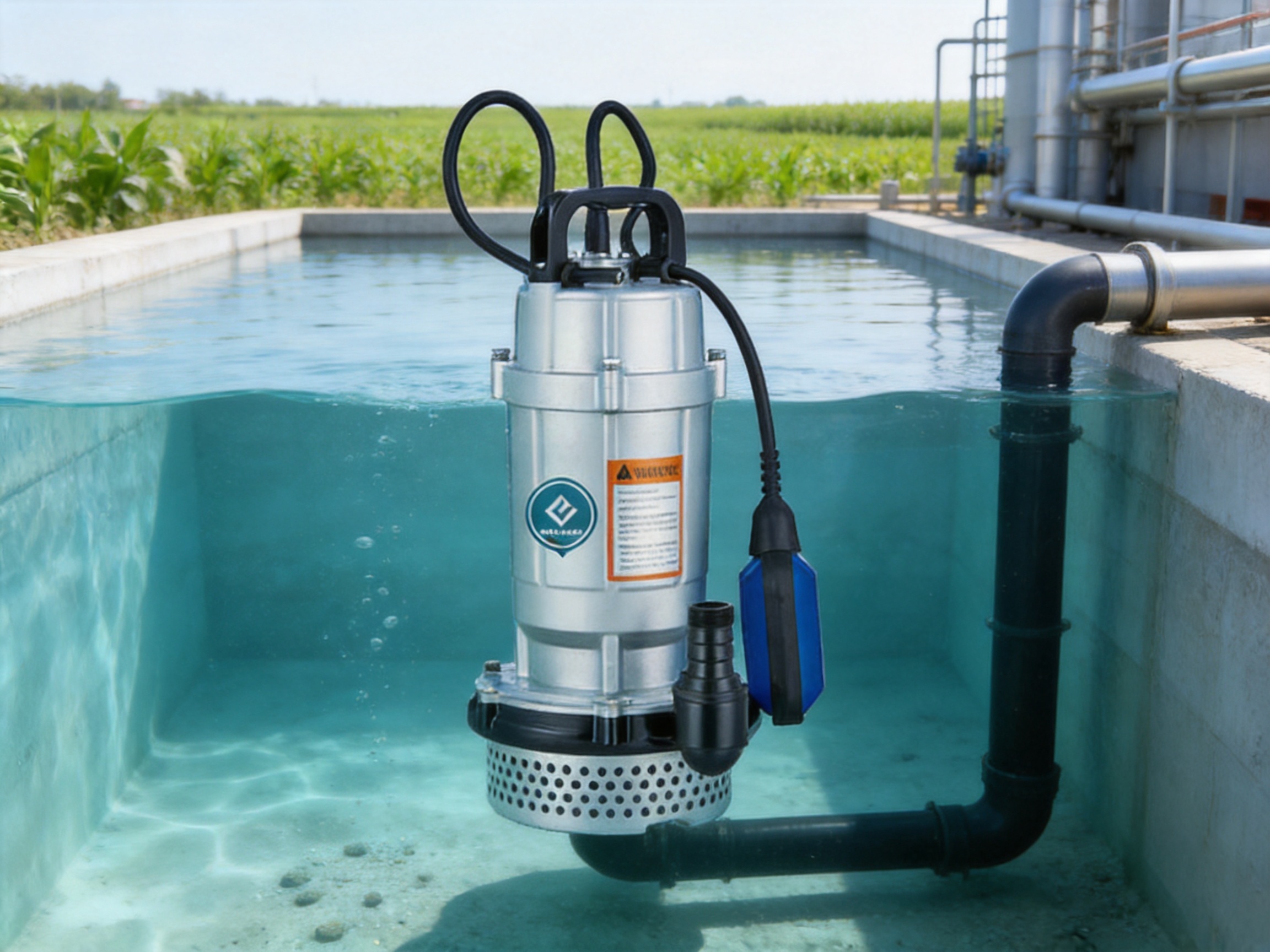
The Submersible Sewage Pump QX is designed for applications that require dependable water transfer below the liquid surface. As a compact submersible unit, it can be installed directly inside a well, reservoir, collection pit, drainage chamber, or other suitable water source, reducing the need for complicated suction piping and helping simplify installation. Its product positioning combines the practical benefits of submersible pump technology with the flexibility required for domestic, civil, agricultural, and industrial water-handling systems.
Although the model is identified as a sewage pump, the available technical information describes applications that include water supply from wells or reservoirs, domestic water service, civil and industrial use, garden irrigation, and general water transfer. This makes correct application assessment especially important. Operators should confirm the actual fluid characteristics, solids content, discharge requirements, electrical supply, and installation conditions before ordering or commissioning the pump.
With a rewindable motor, single-phase and three-phase electrical options, an optional floating switch, and operating-temperature capability up to 40°C, the QX offers a practical configuration for a wide range of users. It is particularly suitable for customers seeking a pump that can be placed within the source and operated with minimal surface infrastructure.
The pump is supplied by Taizhou Edwin Electric Co., Ltd., an integrated manufacturer involved in research and development, mass production, export, and one-stop procurement services. The company has developed product lines covering deep well pumps, submersible pumps, domestic booster pumps, circulation pumps, solar water pumps, intelligent booster pumps, and related water-treatment products. This broader manufacturing background supports a more coordinated approach to pump selection, system matching, production, inspection, and international delivery.
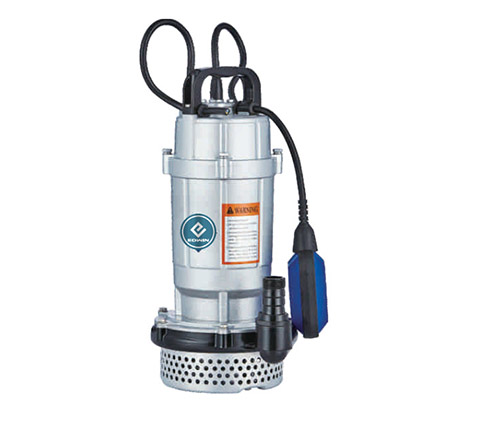
SUBMERSIBLE SEWAGE PUMP QX
The Submersible Sewage Pump QX is a submersible electric pump intended to transfer water from a submerged position. Instead of drawing water through a long external suction line, the pump is lowered into the liquid and pushes the fluid through a discharge pipe. This operating principle can reduce priming difficulties, improve installation convenience, and make the pump suitable for locations where a surface-mounted pump would be difficult to install.
Submersible construction also allows the motor and pump body to work as one compact assembly. When correctly installed, the unit remains close to the liquid source, which helps reduce suction-side restrictions. This is useful in wells, tanks, reservoirs, irrigation sources, and collection areas where the available space above ground is limited.
The QX product information identifies several principal application areas:
• Water supply from wells or reservoirs.
• Domestic water supply.
• Civil and industrial water-service systems.
• Garden watering and irrigation.
• General water transfer where a submersible installation is preferred.
The model can be configured for either single-phase power at 220–240 V and 50 Hz or three-phase power at 380–415 V and 50 Hz. This allows the pump to serve both smaller installations and larger systems with three-phase electrical infrastructure. A floating switch is available as an equipment option, providing a practical method for automatic start and stop control in suitable tanks and pits.
The stated maximum fluid temperature is 40°C, and the maximum sand content is 0.1%. These figures are important operating boundaries. They indicate that the pump should be selected for fluids compatible with the published limitations rather than for every possible type of industrial wastewater. If the application contains abrasive sand, fibrous material, large solids, aggressive chemicals, oil, or unusually hot liquid, the buyer should request a specific engineering review and confirmation of the appropriate configuration.
Compared with many conventional surface pumps, a submersible pump offers a direct and efficient installation method. The pump is positioned in the water rather than beside it, allowing the system to avoid many of the suction-side issues associated with above-ground equipment. Surface pumps may require careful priming, airtight suction piping, foot valves, and protection against air leakage. A submersible pump generally reduces these requirements because the pump inlet is already below the liquid level.
This design can provide several practical advantages:
• Faster installation in wells, tanks, and reservoirs.
• Reduced risk of losing prime during normal operation.
• More compact equipment arrangement.
• Lower surface noise because the motor is located below the water.
• Better use of limited plant or domestic space.
• Convenient operation in locations where suction lift is a concern.
• Simple integration with vertical discharge piping.
The QX can therefore be attractive to users who need a straightforward pumping solution without constructing a large pump room. It is also useful for temporary or seasonal systems, provided that the pump is installed according to the manufacturer’s instructions and protected from mechanical damage, dry running, unsuitable voltage, and excessive contamination.
Compared with basic low-cost submersible products, a pump with a rewindable motor can offer a different lifecycle proposition. When an eligible motor winding fault occurs, a rewindable motor may be repaired by a qualified service technician rather than requiring immediate replacement of the complete pump. The economic benefit depends on local labor, replacement-part availability, repair quality, and the overall condition of the unit. Nevertheless, serviceability can be a meaningful advantage for agricultural, commercial, and industrial users who want to control long-term maintenance costs.
The availability of both single-phase and three-phase versions is another competitive strength. Some competing models are limited to one electrical configuration, forcing buyers to use external electrical equipment or select a less suitable pump. The QX can be matched more closely to the power infrastructure at the installation site. Single-phase versions are convenient for homes, gardens, and small facilities, while three-phase versions are often preferred for commercial, industrial, municipal, and agricultural systems with established three-phase supply.
The published technical information should be treated as a foundation for selection rather than a complete pump schedule. Flow rate, head, motor power, outlet size, rated current, cable length, efficiency, pump dimensions, and solid-passage data should be confirmed from the exact model curve or quotation before purchase. The product is identified as the QX series, but the precise performance point may vary according to the selected model and configuration.
| Item | Published information | Selection significance |
|---|---|---|
| Product type | Submersible sewage pump | Designed for submerged installation and water transfer |
| Typical uses | Wells, reservoirs, domestic, civil, industrial, garden, and irrigation applications | Suitable application must be confirmed against fluid quality and pump curve |
| Maximum fluid temperature | Up to 40°C | Do not exceed the stated temperature limit without written technical approval |
| Maximum sand content | 0.1% | High-abrasion or heavily sand-loaded liquids require additional evaluation |
| Motor type | Rewindable motor | Supports qualified repair and possible lifecycle-cost control |
| Single-phase supply | 220–240 V, 50 Hz | Suitable for many residential and small commercial electrical systems |
| Three-phase supply | 380–415 V, 50 Hz | Suitable for industrial, agricultural, and commercial power systems |
| Automatic-control option | Floating switch available | Can support automatic level-based operation in suitable installations |
| Performance verification | Curve tolerance according to ISO 9906 | Provides a recognized basis for evaluating hydraulic performance |
| Warranty | Two years according to general sales conditions | Provides defined after-sales coverage subject to applicable terms |
One of the most significant technical statements is that curve tolerance follows ISO 9906. Pump curves are essential because they show how flow and head change as system resistance varies. A pump may deliver a high flow rate at low head but a lower flow rate at greater head. Selecting only by outlet size or motor power can result in poor performance, excessive energy consumption, or insufficient pressure at the delivery point.
Buyers should request the curve for the exact QX configuration being considered. The curve should be compared with the system’s required duty point, including static lift, pipe friction, valves, elbows, filters, irrigation equipment, and any changes in elevation. For systems with changing water levels, the minimum and maximum operating conditions should both be assessed.
In residential settings, the QX can be used for water transfer from a suitable well, storage reservoir, underground tank, or collection point. A submersible arrangement is often preferred where household space is limited or where surface noise must be minimized. The unit can also support garden irrigation, outdoor washing, and water movement between tanks.
For domestic water supply, the pump should be selected according to the number of fixtures, expected simultaneous demand, vertical elevation, and required pressure. A pump that is too small may fail to provide adequate flow at peak demand. A pump that is too large may cycle excessively, consume more power, or place unnecessary stress on pipes and fittings. Where stable pressure is required, the pump may be integrated with a pressure tank, control system, or booster arrangement selected for the application.
The optional floating switch is useful in tanks and collection chambers where liquid level changes frequently. It can help stop the pump when the water falls below a safe operating level and start the pump when the level rises, provided the switch is correctly installed and compatible with the control circuit. A floating switch should not be treated as a substitute for all electrical protection. Appropriate overload protection, short-circuit protection, grounding, and isolation equipment remain essential.
Domestic users should also consider water quality. The stated sand limit is 0.1%, and the product information does not provide a detailed solids-passage diameter or a complete list of compatible contaminants. If the source contains stones, long fibers, wipes, heavy sludge, grease, or large suspended solids, the customer should obtain confirmation before using the pump. A product described for sewage-related service is not automatically suitable for every category of raw sewage or wastewater.
Garden irrigation and agricultural water transfer demand reliable operation over repeated cycles. The QX can be installed in a reservoir, well, or other approved water source and connected to a distribution system serving sprinklers, drip irrigation, hoses, or storage tanks. Its submerged installation can be helpful on farms where the water source is separate from the electrical and control equipment.
For irrigation, correct hydraulic matching is especially important. Sprinklers require a defined operating pressure, while drip systems typically require lower flow and carefully controlled pressure. Long pipelines can create considerable friction loss, particularly when the pipe diameter is too small or when multiple valves and filters are installed. The pump should therefore be selected from the system duty point rather than from a general assumption that a higher motor rating will always provide better performance.
Water drawn from open reservoirs may carry sand, plant matter, algae, or other suspended material. The maximum sand content stated for the QX should be respected. A suitable intake location, screening arrangement, or settling process may be required to protect the pump. Screens and filters must be maintained carefully because blockage can reduce flow and increase operating stress.
A floating switch can be valuable in irrigation reservoirs. It may help prevent operation when the water level becomes too low, reducing the risk of dry running. However, the exact control logic should be designed for the pump and installation. In some agricultural systems, a separate level controller, pressure switch, timer, or programmable control panel may be more appropriate than a basic float.
The QX is also positioned for civil and industrial applications. These may include transferring water between tanks, draining suitable chambers, supplying process-support water, assisting construction-site water management, and moving water in utility systems. In commercial facilities, the compact submersible design can reduce the need for a dedicated surface pump room.
Industrial applications require more detailed evaluation than ordinary domestic use. The liquid may contain suspended particles, chemicals, elevated temperatures, oil, or other substances that affect seals, cables, elastomers, and metal components. The published maximum temperature of 40°C and sand limit of 0.1% should be used as initial boundaries. The user should provide a complete fluid description, including temperature, pH, density, viscosity, solids concentration, particle size, and chemical composition, when requesting technical confirmation.
For civil engineering and construction projects, mobility and installation speed can be important. A submersible pump can be placed in a pit or temporary collection area without extensive suction arrangements. Even in temporary installations, the discharge hose or pipe must be secured against movement, and the power cable must be protected against crushing, cutting, abrasion, and unauthorized handling.
In commercial buildings, the pump may be used in drainage or water-transfer systems that operate automatically. The design should include an accessible isolation point, a control method, an alarm where necessary, and a maintenance plan. Where failure could cause flooding or production interruption, the system may need duty and standby pumps, a high-level alarm, or backup power. These system-level provisions are separate from the pump itself but are important when evaluating reliability.
The QX uses a rewindable motor. This construction can support maintenance and repair by qualified professionals. Motor rewinding requires correct wire selection, insulation treatment, winding design, testing, and careful reassembly. An improperly rewound motor can overheat, lose efficiency, or fail prematurely. Therefore, only an experienced repair workshop should perform this work, and the repaired motor should be tested before being returned to service.
The single-phase version operates at 220–240 V and 50 Hz. This configuration is commonly used in homes, small workshops, gardens, and facilities without three-phase distribution. Single-phase motors may require appropriate starting components and overload protection. The installer should verify that the available supply can deliver the required current without excessive voltage drop, especially when the cable run is long.
The three-phase version operates at 380–415 V and 50 Hz. Three-phase power is common in factories, farms, commercial properties, and infrastructure projects. It can provide efficient motor operation and is well suited to continuous or frequent-duty systems. Correct phase sequence must be confirmed during commissioning, because an incorrect connection may cause the pump to rotate in the wrong direction and deliver reduced hydraulic performance.
Electrical installation should comply with local regulations and be performed by a qualified electrician. The system should normally include suitable circuit protection, overload protection, grounding, an isolating device, and protection against moisture ingress. The motor cable must be selected according to current, length, installation environment, and local electrical requirements.
The rated voltage and frequency must match the order confirmation and site supply. Operating a 50 Hz pump on an unsuitable frequency or voltage can lead to overheating, incorrect speed, poor performance, or premature failure. If a 60 Hz version or another voltage is needed, the manufacturer states that other voltages or 60 Hz frequency options are available on request. Such alternatives should be confirmed before production rather than assumed to be interchangeable.
The optional floating switch provides a convenient method of controlling pump operation according to liquid level. In a drainage or transfer tank, the float can start the pump when the liquid rises and stop it when the liquid falls. This helps reduce manual operation and can protect the pump from running when the water level is too low.
Float installation requires sufficient free movement. The switch should not be trapped against the tank wall, discharge pipe, cable, or other equipment. The operating range should be checked to ensure that the pump does not start and stop too frequently. Short cycling can increase motor stress and reduce equipment life.
For more demanding installations, the float may operate a separate contactor or control panel rather than switching the full motor current directly. The correct arrangement depends on motor rating, control voltage, local regulations, and the manufacturer’s wiring instructions. A high-level alarm can also be added where overflow would create a safety, environmental, or financial risk.
Automatic control does not eliminate the need for regular inspection. The float should be checked for obstruction, damage, contamination, and correct switching. In wastewater or dirty-water applications, deposits can limit movement. Regular cleaning and functional testing are important parts of preventive maintenance.
The manufacturer was founded in 2008 and operates as an integrated manufacturing enterprise. Its stated capabilities include independent research and development, mass production, and global export. This combination is significant because pump quality depends not only on the final assembly but also on product design, component control, manufacturing consistency, testing, packaging, and after-sales support.
Independent research and development allows a manufacturer to adapt products to different market requirements. Electrical standards, water conditions, installation practices, and customer expectations vary between countries. A company with its own technical development capability can refine motor configurations, pump hydraulics, sealing arrangements, control options, and product documentation according to market needs.
Mass production can offer advantages in component standardization, process repeatability, and purchasing efficiency. When production is organized around consistent procedures, the manufacturer can control assembly steps and reduce variation between units. Standardized production also helps support spare-parts planning and repeat orders for distributors, contractors, and original-equipment customers.
The company’s broader product portfolio includes deep well pumps, submersible pumps, domestic booster pumps, circulation pumps, solar water pumps, intelligent booster pumps, commercial multistage pumps, end-suction pumps, garden pumps, pool and spa pumps, pipes, valves, and pump accessories. This range gives customers access to related products from a coordinated supplier. It also indicates experience across several hydraulic applications rather than dependence on one narrow product category.
Since 2018, the company has invested in new energy and intelligent technology, including solar water pumps and intelligent booster pumps. Although these technologies are not built into every QX configuration, the investment demonstrates an effort to expand beyond traditional motor-and-pump manufacturing. Such experience can be useful when a project later requires solar-powered pumping, automatic pressure control, or a more integrated water-supply solution.
Manufacturing strength should also be evaluated through documentation and testing. The statement that pump curve tolerance follows ISO 9906 gives buyers a recognized reference for hydraulic performance. Customers should request the applicable test information, product drawings, wiring diagrams, inspection records, and performance curve for the exact model. Clear technical documentation helps reduce errors during procurement and installation.
The QX has several features that can distinguish it from basic, limited-purpose pump models. First, it is positioned for multiple application environments rather than a single household task. It can serve water supply, domestic use, garden irrigation, civil projects, and industrial water transfer, subject to fluid and performance verification.
Second, the availability of single-phase and three-phase versions improves purchasing flexibility. Many small pumps are sold only in a single electrical configuration. By offering both 220–240 V single-phase and 380–415 V three-phase options, the QX can be aligned with different site conditions without requiring every customer to redesign the electrical system.
Third, the rewindable motor can be attractive to customers who prioritize repairability. Some low-cost pumps are treated as disposable products after a motor fault. A rewindable motor provides the possibility of qualified repair, which may be particularly valuable in remote agricultural areas, commercial facilities, and markets where replacement logistics are slow or expensive.
Fourth, the optional floating switch supports practical automation. A pump that can be controlled by liquid level is easier to integrate into tanks, drainage chambers, and water-transfer systems. This can reduce manual supervision and help prevent operation at unsafe liquid levels.
Fifth, the manufacturer offers a two-year warranty according to its general sales conditions. Warranty duration alone does not determine product quality, but a defined warranty provides buyers with a clearer framework for after-sales responsibility. Customers should review the full warranty terms, including installation requirements, excluded conditions, service procedures, and documentation needed for a claim.
Finally, the manufacturer’s integrated export and procurement capability can be an advantage for international customers. Through related import and export service companies, the group provides procurement planning, order tracking, cross-border delivery, and foreign-trade support. For distributors and project contractors, coordination of product selection, production scheduling, packaging, and shipment can be as important as the pump’s technical characteristics.
Before installation, verify the pump model, voltage, frequency, outlet connection, cable arrangement, accessories, and performance curve. Inspect the pump for transport damage and confirm that the product matches the order. Do not install a pump with damaged cables, cracked housing, loose components, or visible seal problems.
The pump should be installed in a location where it remains adequately submerged during operation. The intake must not be blocked by sediment, debris, plastic, cloth, vegetation, or other material. If the pump rests on the bottom of a tank or pit, a suitable support arrangement may be needed to reduce sediment intake and prevent instability.
The discharge pipe should be properly supported and sized for the required flow. Excessively small pipework creates unnecessary friction loss and may reduce delivered flow. All connections should be secure and suitable for the operating pressure. The discharge line should not place mechanical strain on the pump body or cable.
The electrical cable must be routed so that it cannot be cut, crushed, stretched, or used to lift the pump unless the manufacturer specifically permits that method. A separate lifting rope or chain made from a suitable material should normally be used for lowering and retrieving the unit. The lifting arrangement must support the pump weight and withstand the installation environment.
Before energizing the pump, confirm that the liquid level is sufficient, the discharge path is open, the electrical protection is active, and the float or control system operates correctly. For three-phase models, verify rotation and phase sequence according to the manufacturer’s instructions. Observe the first start for unusual noise, vibration, leakage, unstable current, or poor flow.
Preventive maintenance helps preserve pump efficiency and extend service life. Inspection frequency should depend on operating hours, liquid quality, installation conditions, and the consequences of failure. A clean-water domestic installation may require less frequent intervention than a commercial drainage or industrial transfer system.
Maintenance activities may include checking the cable, examining the discharge connection, testing the float, inspecting the pump intake, cleaning accumulated deposits, and verifying electrical protection. The pump should be isolated from the power supply before inspection or removal. Never place hands or tools near moving components while the unit is energized.
Sand is a major concern because it can accelerate wear in hydraulic passages, bearings, mechanical seals, and other internal components. The published maximum sand content is 0.1%. If the source changes seasonally, operators should monitor water quality and consider sediment control. A settling tank, intake elevation adjustment, or suitable filtration system may help protect the pump, provided that the added equipment does not create excessive flow restriction.
If the pump becomes noisy, vibrates excessively, trips electrical protection, produces lower flow, or runs continuously without achieving the expected level change, it should be removed from service for diagnosis. Possible causes may include blocked intake, incorrect rotation, damaged pipework, insufficient water level, electrical voltage problems, worn components, or a mismatch between the pump and system duty.
A rewindable motor should be serviced only by a qualified workshop. After rewinding, the motor should undergo appropriate insulation, continuity, current, and operational tests. Reassembly should include careful inspection of seals and cable entries. A repair that addresses only the winding without investigating the original cause may lead to repeated failure.
Selection should begin with the required flow rate and total dynamic head. Flow rate is the volume of water that must be moved over a given period. Total dynamic head includes the vertical lift from the water surface to the discharge point plus friction losses in pipework, valves, fittings, filters, and equipment. If pressure is required at the outlet, that pressure must also be converted into an equivalent head and included in the calculation.
The water source and liquid characteristics should then be reviewed. Confirm the temperature, sand content, solids type, particle size, chemical properties, and expected variation over time. A pump suitable for clean or lightly contaminated water may not be suitable for thick sludge or aggressive industrial chemicals, even if both are informally described as wastewater.
Electrical conditions must be matched next. Confirm whether the site has 220–240 V single-phase power or 380–415 V three-phase power at 50 Hz. If the project is located in a 60 Hz market or requires a different voltage, request a specific option and confirm the resulting performance. Cable length and voltage drop should be evaluated, particularly in deep wells and remote irrigation systems.
Control requirements should also be defined. Manual operation may be sufficient for occasional transfer, while a tank installation may require a floating switch. A commercial or industrial system may require a control panel, high-level alarm, dry-run protection, pressure control, remote monitoring, or a standby pump. These requirements should be discussed before finalizing the order.
The following checklist can help buyers prepare a technical inquiry:
• Required flow rate and total head.
• Minimum and maximum water levels.
• Well, reservoir, pit, or tank dimensions.
• Fluid temperature and water quality.
• Maximum sand and solids content.
• Single-phase or three-phase supply.
• Voltage and frequency.
• Discharge pipe length and diameter.
• Manual or automatic control requirements.
• Need for a floating switch or other protection.
• Required cable length and installation depth.
• Local certification, packaging, and delivery requirements.
For international customers, product quality is only one part of a successful purchase. Accurate quotations, clear specifications, reliable production scheduling, correct export documentation, and suitable packaging are also essential. The manufacturer’s associated import and export service structure is intended to support procurement planning, order tracking, cross-border delivery, and foreign-trade processes.
Distributors may benefit from working with a supplier capable of providing more than one pump category. A customer who initially purchases a submersible pump may later need a domestic booster pump, solar water pump, circulation pump, commercial multistage pump, pipe, valve, or accessory. A broad portfolio can simplify sourcing and support more consistent technical advice across projects.
Project buyers should request a formal quotation that clearly states the exact model, motor configuration, voltage, frequency, accessories, warranty basis, delivery terms, packaging, and documentation. If a floating switch is required, it should be listed as part of the order rather than added informally later. Any requested special mechanical seal, alternative voltage, or 60 Hz configuration should also appear in the confirmed technical documents.
For repeat orders, buyers should establish a model-control procedure to ensure that later shipments use the same hydraulic and electrical configuration. A small change in motor power, outlet size, cable length, or control accessory can affect installation and system performance. Maintaining approved drawings and product records helps reduce procurement errors.
A responsible product evaluation should recognize the boundaries of the available information. The published details do not specify flow range, maximum head, motor power, outlet diameter, solid-passage size, exact materials, seal materials, insulation class, protection rating, or duty cycle. These details are important for final engineering selection and should be obtained from the manufacturer for the required QX variant.
The word “sewage” should not be interpreted as permission to pump every type of sewage. Raw sewage may contain fibrous materials, wipes, plastics, grease, stones, and other solids that require specialized cutting, vortex, non-clog, or high-passage hydraulic designs. If the intended liquid is genuinely raw sewage or heavy wastewater, the buyer should provide a representative description and request written confirmation of suitability.
Likewise, the stated maximum sand content of 0.1% should not be exceeded. Abrasive water can reduce service life even when the pump continues to operate. If the application involves a sandy well, river intake, mining area, or construction site, pretreatment and a specialized pump configuration may be necessary.
Temperature must remain within the stated limit of 40°C unless a different specification is approved. Higher temperatures can affect motor cooling, insulation, seals, lubrication, and material strength. Chemical compatibility should also be evaluated rather than assumed from the water’s appearance.
These limitations do not reduce the value of the QX. Instead, they clarify the importance of matching the pump to the actual duty. A properly selected pump generally performs more reliably, uses energy more effectively, and experiences fewer avoidable failures than a product chosen only by price or nameplate power.
Submersible pumping can contribute to efficient system design when the pump is correctly sized. Avoiding unnecessary suction losses, reducing leakage in pipework, and selecting a pump near its efficient operating region can lower energy consumption. Regular cleaning and maintenance can also help maintain hydraulic performance.
The rewindable motor supports a repair-oriented lifecycle approach. Extending the useful life of the motor through qualified rewinding may reduce the need to discard the complete pump after a repairable electrical fault. The environmental and financial benefit depends on the condition of the hydraulic components and the quality of the repair, but serviceability remains an important consideration in sustainable equipment management.
The manufacturer’s investment in solar water pumps and intelligent booster pumps also reflects awareness of changing water and energy requirements. Solar pumping can be valuable in remote agricultural and rural locations, while intelligent booster technology can help optimize pressure management in modern water systems. Customers with broader sustainability objectives may therefore be able to discuss complementary technologies within the same product network.
Efficient use also requires avoiding oversizing. A larger pump is not automatically better. If the pump delivers substantially more flow than the system needs, throttling losses, frequent cycling, mechanical stress, and unnecessary energy use may result. System design should balance performance, reliability, and lifecycle cost.
The QX is identified for submersible water transfer applications including wells, reservoirs, domestic water service, civil and industrial uses, gardens, and irrigation. The exact suitability depends on the liquid quality, flow, head, temperature, sand content, and solids present.
The product is named a sewage pump, but the available information does not state the solids-passage diameter or provide a complete raw-sewage specification. Users should obtain confirmation before pumping raw sewage containing wipes, rags, fibrous materials, plastics, stones, grease, or large solids.
The stated maximum fluid temperature is 40°C. Applications above this temperature should not be used without written technical confirmation and a suitable alternative specification.
The published maximum sand content is 0.1%. Water containing more sand may cause accelerated wear and should be evaluated separately.
Yes. The stated single-phase supply is 220–240 V at 50 Hz, and the stated three-phase supply is 380–415 V at 50 Hz. Other voltages and 60 Hz frequency options are available on request, subject to confirmation.
A rewindable motor can be repaired by a qualified service workshop after an eligible winding fault. This may reduce lifecycle costs and improve serviceability, although the pump’s overall condition and local repair capability must be considered.
A floating switch is available as an option. It can control operation according to liquid level in suitable tanks, pits, and reservoirs. Correct installation and electrical protection remain necessary.
Selection should be based on required flow, total dynamic head, liquid characteristics, electrical supply, installation depth, pipework, control requirements, and operating schedule. Buyers should request the curve and complete technical data for the exact model.
The product information states that curve tolerance follows ISO 9906. The exact performance should be checked against the official curve and order documentation for the selected configuration.
The stated warranty is two years according to the manufacturer’s general sales conditions. Buyers should review the complete warranty terms, exclusions, installation requirements, and claim procedures.
Other frequencies, including 60 Hz, are available on request. A 60 Hz version should be specifically confirmed because frequency can affect motor speed, current, head, flow, and performance.
Provide the required flow and head, water source, liquid temperature, sand and solids content, electrical supply, discharge pipe details, installation depth, cable length, control method, and any special seal or certification requirements.
The Submersible Sewage Pump QX is a flexible pumping solution for water transfer from wells, reservoirs, tanks, and other submerged sources. Its primary strengths include direct submersible installation, broad application potential, rewindable motor construction, single-phase and three-phase electrical options, optional floating-switch control, ISO 9906-based curve tolerance, and a two-year warranty under the stated sales conditions.
Compared with basic competitor products, the QX offers a useful combination of serviceability, electrical flexibility, automatic-control potential, and access to a broader family of pump and water-system products. These advantages are supported by the manufacturer’s integrated capabilities in research and development, mass production, export, procurement coordination, and product diversification.
The best results depend on proper selection. Users should confirm the hydraulic duty, liquid quality, temperature, sand content, solids characteristics, voltage, frequency, and control requirements before ordering. The available information establishes the pump’s principal operating range, but complete technical data for the exact model should be requested for engineering approval.
When correctly matched to the application and installed with appropriate electrical, mechanical, and level protections, the QX can provide a practical and maintainable solution for domestic water supply, irrigation, civil projects, industrial transfer, and suitable sewage-related duties.
1. Manufacturer’s product information for the Submersible Sewage Pump QX.
2. Manufacturer’s general technical information on deep well, submersible, booster, circulation, solar, and intelligent pump systems.
3. ISO 9906, Rotodynamic Pumps: Hydraulic Performance Acceptance Tests, Grades 1, 2, and 3.
4. General principles of submersible pump installation, electrical protection, level control, and preventive maintenance.
5. General engineering practice for pump selection based on flow rate, total dynamic head, fluid properties, and system resistance.
edwina@edwin-pump.com
+86-13586290903 (WhatsApp)
Xuri Gongliang Cutting Tool Entrepreneurship Park, Wenqiao Town, Wenling City, Taizhou City, Zhejiang Province, China

High Performance Smart Pump Factory


 English