edwina@edwin-pump.com

View All Products
en
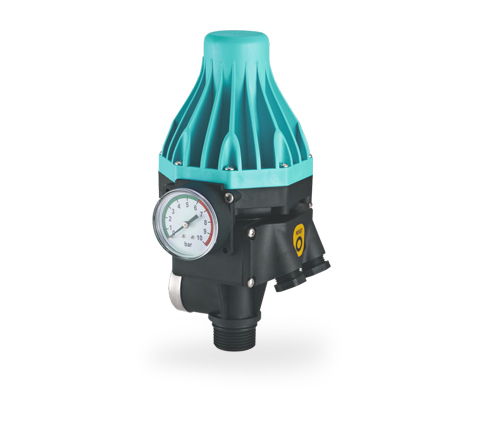
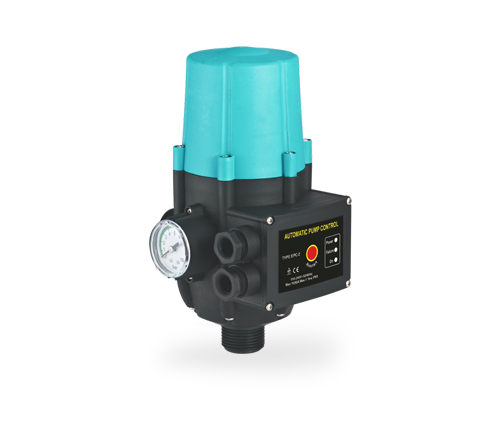
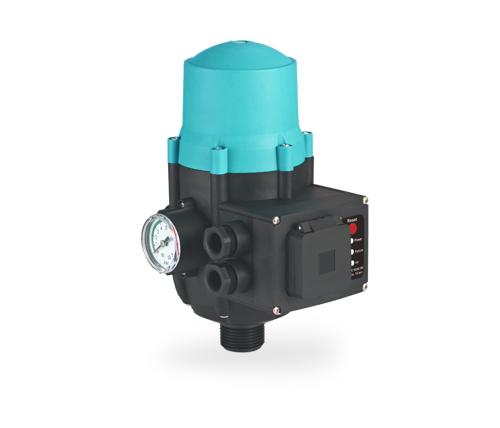
EPC-3(P) Series IP65 High Strength Protection G1" Male Screw Customization Automatical Pressure Switch
Modern water supply systems require more than a pump alone. They need dependable control equipment that can recognize pressure changes, respond quickly to changes in demand, protect the pump from abnormal operating conditions, and simplify installation for the user. The EPC-3(P) Series IP65 High-Strength Protection G1-inch Male Screw Automatic Pressure Switch is designed for this role. It combines automatic pump control, adjustable starting pressure, protection against water shortage, a standardized G1-inch male connection, and a sealed IP65 enclosure into one compact control solution.
Used in residential, agricultural, commercial, and light industrial water systems, the EPC-3(P) Series is intended to replace conventional combinations of pressure switches, pressure tanks, and check valves in many applications. When a tap is opened and system pressure falls, the controller automatically starts the connected electric pump. When the tap is closed and water flow stops, it stops the pump at the appropriate pressure condition. This operating concept can make a pumping installation easier to use, more compact, and more responsive to changes in water demand.
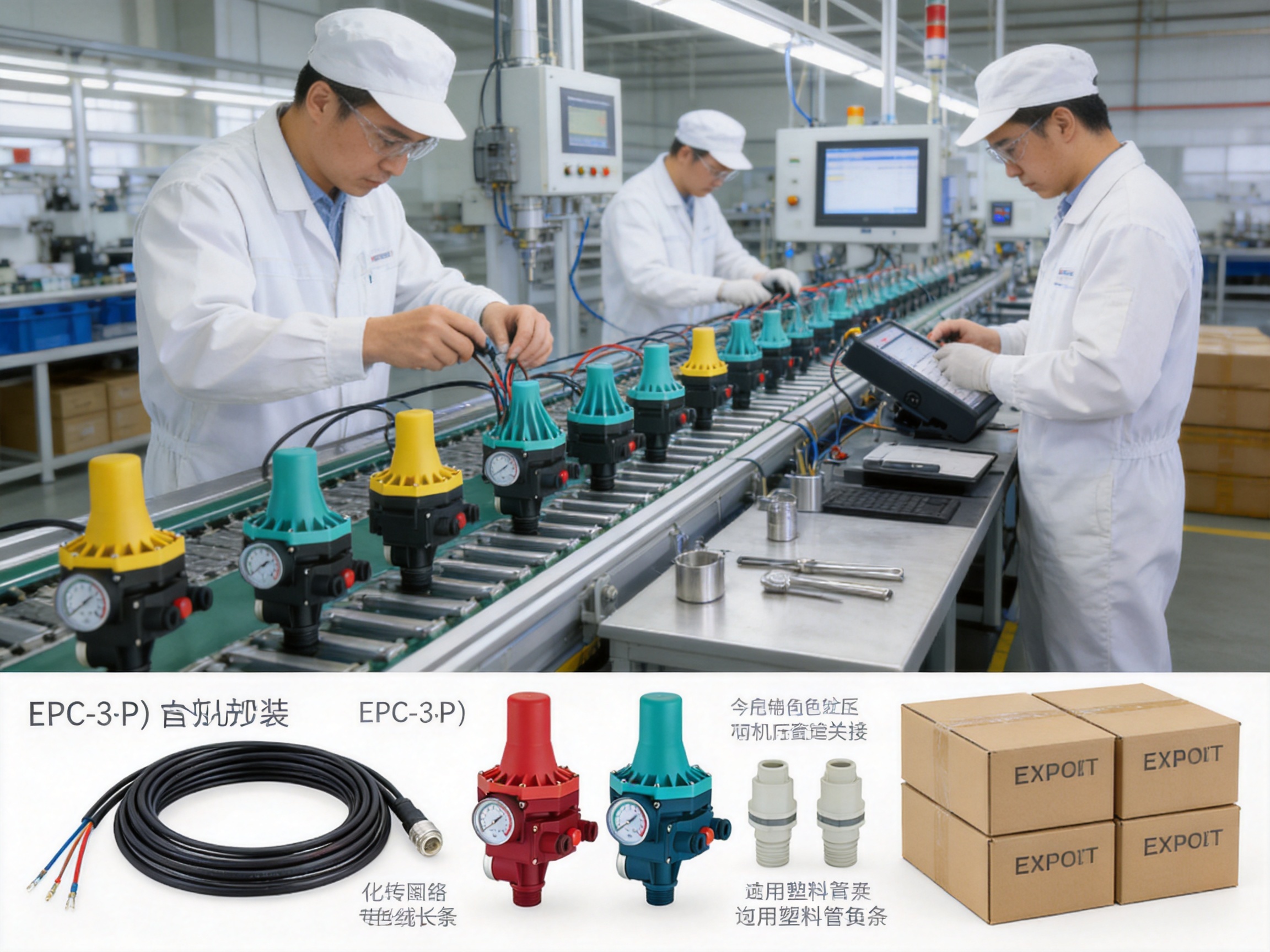
The product is manufactured by Taizhou Edwin Electric Co., Ltd., an integrated pump and water-control equipment enterprise founded in 2008. The company combines independent research and development, mass production, export operations, and one-stop procurement support. Its broader product portfolio includes deep well pumps, submersible pumps, domestic booster pumps, circulation pumps, solar water pumps, intelligent booster pumps, and related accessories. This product background gives the EPC-3(P) Series a practical connection to real-world pumping applications rather than treating the pressure controller as an isolated electrical component.
A water pump normally operates according to an electrical command, but water demand is created by users opening and closing taps, valves, showers, irrigation outlets, or process equipment. Without an automatic control system, the pump may need to be switched on and off manually, or it may need to run with a separate pressure tank and mechanical pressure switch. Both arrangements can work, but they may require more installation space, additional components, and regular adjustment.
An automatic pressure controller monitors the pressure and flow conditions in the discharge side of the pump system. When pressure falls because water is being drawn from the system, the controller sends an electrical signal that starts the pump. When the demand ends and flow is interrupted, the controller stops the pump. This allows the pump to operate according to actual water consumption.
The EPC-3(P) Series is designed for water systems in which automatic operation is preferred. It is particularly useful where a compact control assembly is required, where the pump must start when pressure decreases, or where the installer wants to reduce the number of separate control components. The controller is compatible with many common pump installations, subject to confirmation of the pump’s electrical ratings, voltage, current, connection requirements, and operating conditions.
Its operating concept is straightforward. A user opens a water outlet, pressure decreases, and the controller starts the pump. The pump then supplies water while the outlet is open. When the outlet is closed, the water flow stops and the pressure recovers. The controller recognizes the change and stops the pump. In applications where the water source becomes unavailable, the unit is also designed to automatically shut off the pump in the event of water shortage, helping reduce the risk of dry running.
The EPC-3(P) Series provides a combination of pressure control, electrical switching, environmental protection, and installation flexibility. Its principal characteristics include the following:
• Adjustable starting pressure from 1.2 bar to 3.0 bar, depending on the selected configuration and installation adjustment.
• Maximum working pressure of 10 bar.
• Available rated-voltage configurations of 100–120 V, 220–240 V, or 110–240 V according to the model and order specification.
• Operating frequency of 50/60 Hz.
• Maximum ambient or working temperature of 55°C.
• IP65 protection rating for resistance to dust and water jets from typical directions.
• Standard G1-inch male screw connection for integration with suitable water-system fittings.
• EPC-3 versions with a maximum using current of 10 A.
• EPC-3P versions available with maximum using current options of 10 A or 30 A.
• Optional G1-inch plastic pipe joint for easier and faster connection to a pump.
• Customizable power cable length and product color.
• One-year warranty according to the supplied product information.
These characteristics allow the pressure switch to serve as a control interface between the pump and the water-use points. At the same time, the range of voltage and current options supports different market requirements and pump configurations.
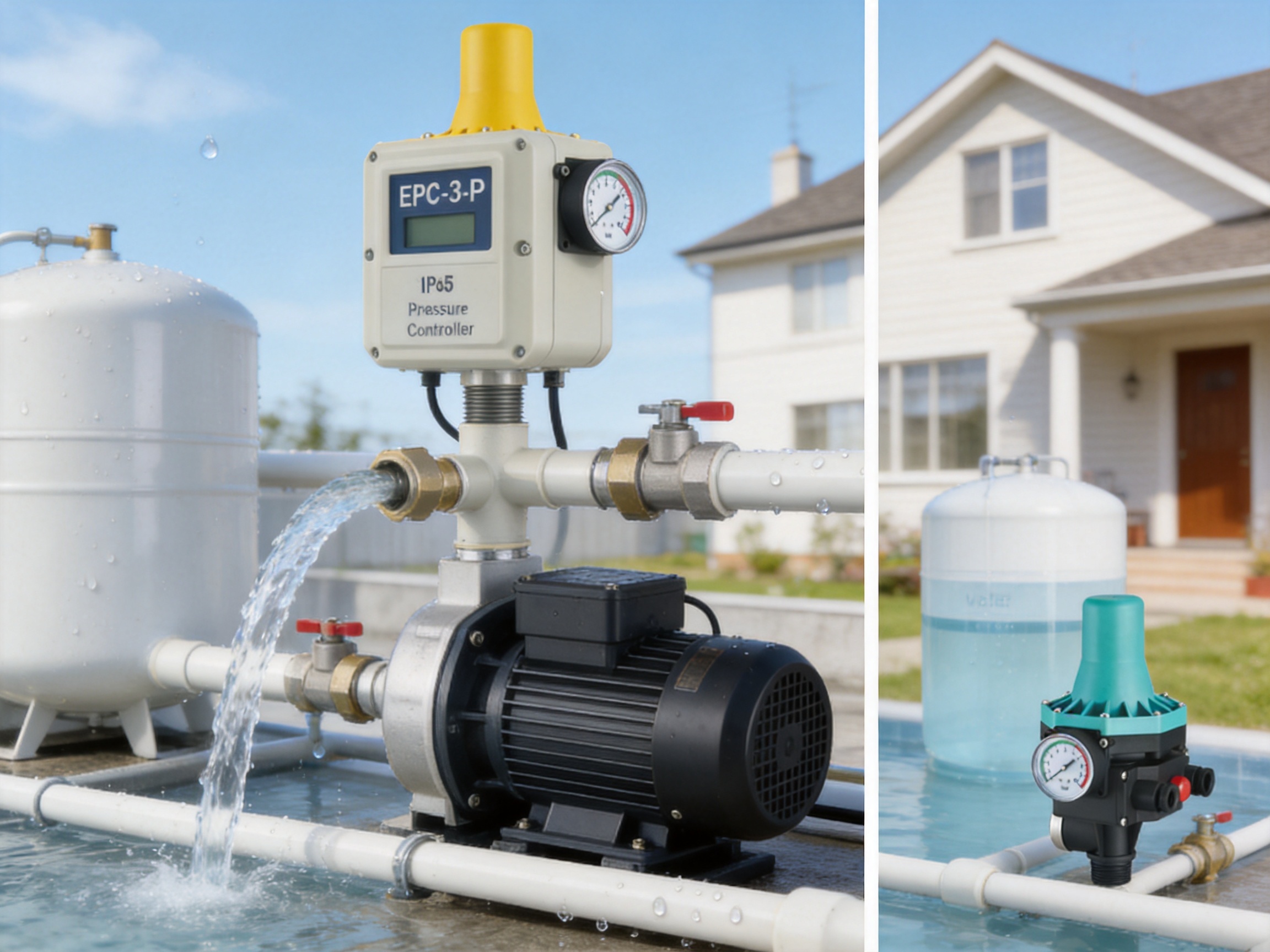
One of the most important advantages of the EPC-3(P) Series is its IP65 protection rating. In a pump installation, the controller may be exposed to humidity, splashing water, dust, condensation, and changing ambient conditions. A controller with insufficient enclosure protection may suffer from contamination, corrosion, electrical leakage, or reduced service life.
IP65 indicates that the enclosure is dust-tight and protected against water jets from any direction under the applicable testing conditions. This does not mean that the controller should be submerged or installed in a location that is permanently flooded. Correct installation remains essential. Nevertheless, the IP65 design provides a substantial level of environmental protection for normal pump-room, utility-room, agricultural, and outdoor sheltered applications.
The high-strength protection design also supports more reliable use in locations where a pump controller may encounter dust or occasional water spray. Compared with a basic unsealed switch, an IP65 pressure controller can offer a more suitable enclosure solution for practical water-system conditions. The enclosure protection is especially valuable when the controller is installed close to a pump, pipe connection, storage tank, irrigation assembly, or domestic water supply point.
Installers should still follow appropriate practices. The unit should be mounted in a stable position, connected using compatible fittings, protected from unnecessary mechanical impact, and used within the stated temperature, pressure, voltage, and current limits. Cable entries and connections must be correctly secured so that the protection rating is not compromised during installation.
Different water systems require different pressure responses. A small domestic pump supplying a single residence may need a different start point from an agricultural irrigation system or a booster arrangement serving multiple outlets. The EPC-3(P) Series addresses this need through an adjustable starting-pressure design.
The starting pressure can be adjusted during installation within a range of approximately 1.2 bar to 3.0 bar. The technical information lists common settings of 1.2 bar, 1.5 bar, and 2.2 bar for the EPC-3 and EPC-3P configurations, while the product description identifies an adjustment range extending to 3.0 bar. The exact setting should be selected according to the pump curve, pipe arrangement, elevation, required outlet pressure, and application demands.
A lower starting pressure may be suitable for a modest domestic water system where the pump needs to respond quickly to a small pressure reduction. A higher starting pressure may be useful where the system requires stronger pressure before the pump begins operation. The correct setting can help reduce unnecessary cycling and allow the controller to work more effectively with the pump.
Adjustment should be completed by a qualified installer or technician. The pump’s maximum operating pressure must not be exceeded, and the controller should not be used to compensate for an incorrectly sized pump, blocked pipe, leaking system, or inadequate water source. Pressure adjustment is a useful configuration feature, but it must be considered as part of the complete hydraulic system.
Dry running is a serious concern in pumping systems. If a pump continues operating when there is insufficient water, internal components may overheat, mechanical seals may be damaged, and the pump’s service life may be reduced. A controller that can recognize a water-shortage condition and stop the pump provides an important layer of protection.
The EPC-3(P) Series is designed to automatically shut off the water pump in the event of water shortage. This function is particularly relevant for wells, storage tanks, rainwater systems, irrigation installations, and other applications in which the water supply may fluctuate. It can also be useful in systems where an inlet valve may accidentally close or where the source tank may become empty.
Water-shortage protection should not be regarded as a substitute for proper system design. The suction pipe must be correctly sized and sealed, the pump must be selected for the water source, and inlet conditions must meet the pump manufacturer’s requirements. However, the automatic shutoff function adds a valuable protective response when the controller detects that normal water delivery is not available.
After a shortage condition, the restart behavior and resetting procedure should be confirmed for the particular installation and controller configuration. Operators should also investigate the cause of the water shortage before returning the pump to service. Repeated dry-run events may indicate a low water level, blocked suction line, leaking connection, faulty valve, or incorrectly selected pump.
The G1-inch male screw connection is another practical feature of the EPC-3(P) Series. A standardized threaded connection helps installers integrate the pressure controller into a wide range of water systems using commonly available fittings and adapters.
The connection is designed to simplify installation on pump discharge assemblies, domestic booster systems, water supply manifolds, and similar applications. An optional G1-inch plastic pipe joint is available for users who want a quick and convenient connection to the water pump. The plastic joint option may also help reduce installation time when the pump and pipe materials are compatible with the selected fitting.
Thread compatibility should always be checked before installation. A G1-inch thread is not automatically interchangeable with every one-inch thread standard. The installer should confirm thread type, sealing method, fitting material, pipe alignment, and pressure rating. Excessive tightening should be avoided because it may damage the threaded body or distort the sealing surface.
A correctly installed connection supports reliable pressure measurement and reduces the risk of leakage. The pipework should be clean, properly supported, and free from excessive vibration. Where a sealant or sealing tape is used, it must be applied carefully so that loose material does not enter the water passage or interfere with the connection.
The product family includes EPC-3 and EPC-3P configurations. Both versions share important features such as 50/60 Hz operation, G1-inch connection, IP65 protection, a 10-bar maximum working pressure, and a maximum working temperature of 55°C. Their principal difference is related to current capacity and the associated maximum power range.
| Parameter | EPC-3, 220–240 V | EPC-3, 110–120 V | EPC-3, 110–240 V |
|---|---|---|---|
| Rated voltage | 220–240 V | 110–120 V | 110–240 V |
| Frequency | 50/60 Hz | 50/60 Hz | 50/60 Hz |
| Maximum using current | 10 A | 10 A | 10 A |
| Maximum power range | 1.1 kW/1.5 kW | 0.55 kW/0.75 kW | 0.55 kW/1.1 kW |
| Starting pressure settings | 1.2, 1.5, or 2.2 bar | 1.2, 1.5, or 2.2 bar | 1.2, 1.5, or 2.2 bar |
| Maximum working pressure | 10 bar | 10 bar | 10 bar |
| Connection | G1-inch male | G1-inch male | G1-inch male |
| Protection rating | IP65 | IP65 | IP65 |
| Maximum working temperature | 55°C | 55°C | 55°C |
The EPC-3P configuration extends the current options to 10 A or 30 A, making it suitable for a broader group of pump applications. The stated maximum power ranges vary by voltage configuration. At 220–240 V, the listed maximum power options are 1.1 kW and 2.2 kW; at 110–120 V, the listed options are 0.55 kW and 1.1 kW; and at 110–240 V, the listed options are 1.1 kW and 2.2 kW.
These values should be treated as selection guidance rather than a reason to exceed the nameplate rating. The actual pump starting current may be higher than its running current, especially for motors with demanding startup characteristics. The controller should be selected according to the motor type, starting method, rated current, voltage, frequency, and applicable electrical regulations.
Before purchasing or installing an EPC-3(P) Series pressure switch, the user should confirm the complete operating environment. Voltage is a primary consideration. The product is available in configurations for 110–120 V, 220–240 V, and 110–240 V, but not every configuration necessarily supports every possible installation condition. The product label and order specification should be checked before connection.
Frequency compatibility is broad because the controller is specified for both 50 Hz and 60 Hz systems. Even so, the pump motor itself must also be rated for the local frequency. The current rating is equally important. A motor that operates near or above the controller’s maximum using current may cause overheating, nuisance tripping, contact wear, or premature failure.
The controller must be installed in a system whose pressure remains below the 10-bar maximum working pressure. Transient pressure surges, water hammer, and improperly controlled pump shutdowns can place additional stress on a system. Where pressure surges are possible, the piping design should include suitable measures such as correctly sized pipework, controlled valves, air management, or other protective components.
Electrical installation should be performed by a qualified person. The supply must be isolated before wiring or servicing. Protective earthing, overcurrent protection, cable sizing, insulation, and local electrical requirements must be observed. The pressure controller is not a replacement for all required electrical safety devices. Depending on the installation, additional motor protection or a suitable external contactor may be necessary.
Traditional pump control systems often use a combination of a pressure switch, pressure tank, check valve, and various fittings. Such a system can provide effective pressure management, but it may require more space and more individual components. Each additional component introduces another connection, adjustment, and potential maintenance point.
The EPC-3(P) Series offers a more integrated approach. By combining automatic pressure response, pump switching, flow interruption recognition, and water-shortage protection in one controller, it can simplify the control architecture of suitable pumping systems. This may reduce installation complexity and make the finished system easier for the operator to understand.
A compact integrated controller can also be useful where space is limited. Domestic booster pump installations, small utility rooms, agricultural pump enclosures, and compact water-treatment assemblies may benefit from a control component that occupies less room than a larger pressure-tank arrangement.
The controller can also provide more direct pump response. A pressure tank relies on stored water and a pressure differential before the pump starts. An automatic pressure controller responds to pressure decrease and water-flow conditions, allowing the pump to operate in accordance with actual demand. The best choice depends on the application, but the EPC-3(P) concept is attractive for systems where compact automatic operation is a priority.
Compared with a basic unprotected switch, the IP65 enclosure offers stronger environmental protection. Compared with a fixed-pressure controller, the adjustable starting-pressure feature gives installers greater flexibility. Compared with a one-voltage, one-current design, the available electrical configurations support more regional and application-specific requirements.
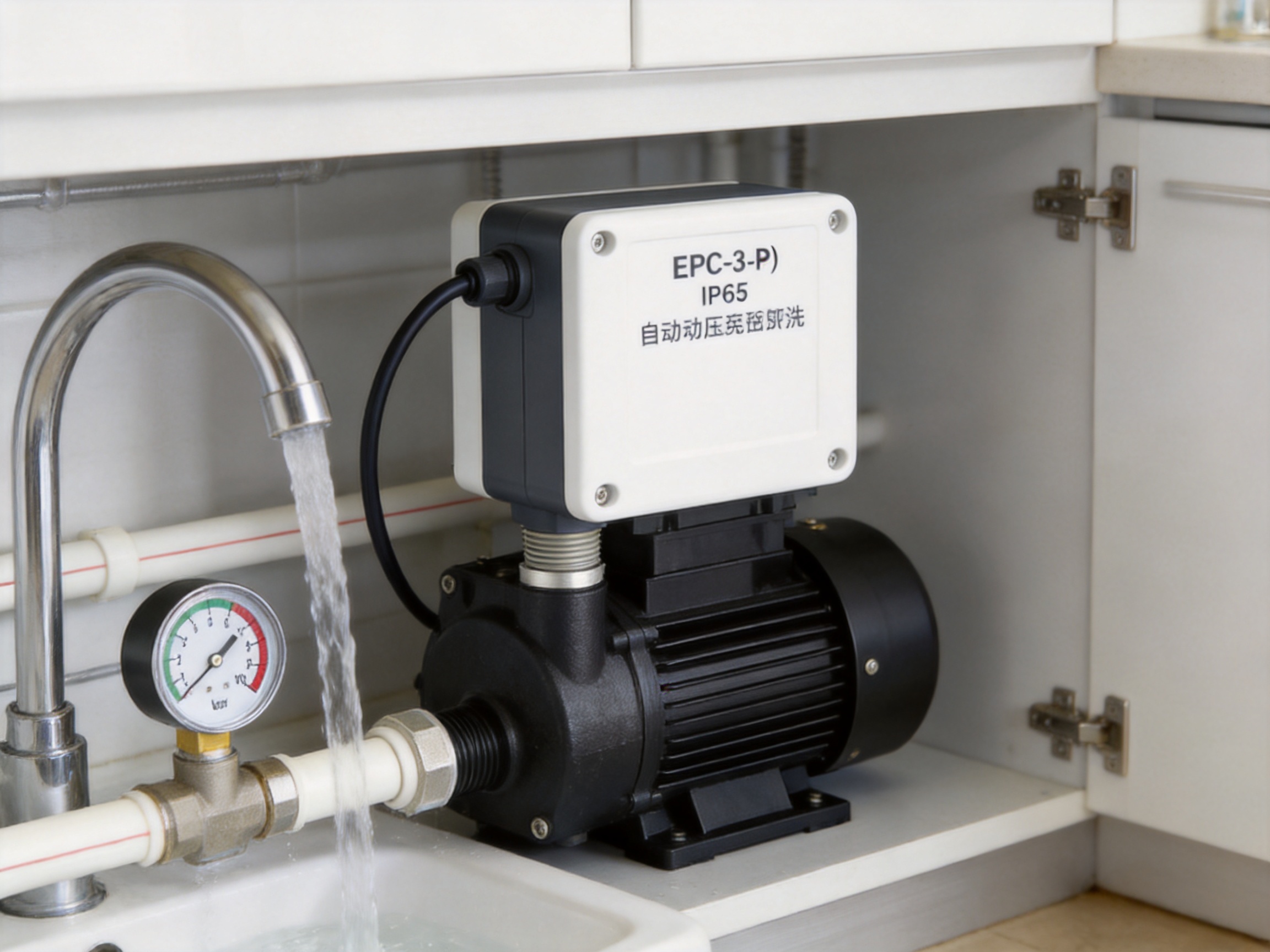
The EPC-3(P) Series can be considered for a wide range of water-supply tasks. In residential water systems, it may control a booster pump that supplies taps, showers, washing machines, or small household appliances. Its automatic start and stop function is convenient for users who expect water to be available without manually operating the pump.
In agricultural applications, the controller may be installed with a small irrigation pump, greenhouse water supply pump, or livestock watering system. The IP65 enclosure and water-shortage shutdown function are useful characteristics in environments where dust, splashing, and changing water levels may occur.
For commercial buildings, the pressure switch may support small booster units, service-water systems, or localized water distribution assemblies. The selection must consider the number of outlets, simultaneous demand, required pressure, pump duty cycle, and motor current.
In light industrial applications, the controller may be used for process-water supply, equipment cooling-water circulation, washing systems, or auxiliary water systems. Industrial users should confirm that the water quality, temperature, chemical exposure, pressure fluctuations, and duty cycle are compatible with the product materials and stated specifications.
The product can also be used with certain surface pumps, domestic booster pumps, and other compatible electric water pumps. It is not automatically suitable for every submersible or high-power pump. Application engineering is necessary where the pump is large, uses a special motor, has a high inrush current, or requires a separate control cabinet.
The EPC-3(P) Series is supported by the manufacturing background of Taizhou Edwin Electric Co., Ltd. The company was established in 2008 and operates as an integrated manufacturing enterprise with independent research and development, mass production, and global export capabilities. This structure is important because a pressure controller must be developed with an understanding of both electrical control and pump-system behavior.
An integrated manufacturer can coordinate product design, component selection, assembly, testing, packaging, and customer support within a unified supply chain. This may improve consistency between engineering requirements and production results. It can also make customization requests easier to evaluate, because the manufacturer can review electrical, mechanical, cable, appearance, and packaging requirements as part of the same project.
The company’s broader experience includes deep well pumps, submersible pumps, domestic booster pumps, circulation pumps, solar water pumps, intelligent booster pumps, pump accessories, pipes, and valves. This product range provides a useful application reference for pressure-control equipment. A controller developed alongside pump products can be assessed in the context of real pumping conditions, including pressure demand, flow variation, motor capacity, and installation requirements.
Since 2018, the company has invested in new energy and intelligent technology, including solar water pumps and intelligent booster pumps. This development direction is relevant to the EPC-3(P) Series because modern water systems increasingly rely on automatic control, energy-conscious operation, and responsive equipment management.
The company also established Taizhou Haipai Import & Export Co., Ltd. and Golden Falcon Industrial Co., Ltd. in 2012 to support procurement planning, order tracking, cross-border delivery, and foreign-trade services. For international buyers, this one-stop structure can simplify communication, product coordination, documentation, and shipment planning.
Although the supplied product information does not specify every individual production machine or factory process, the nature of the EPC-3(P) Series requires disciplined manufacturing controls. The product contains electrical switching elements, pressure-sensing components, a protective enclosure, a threaded hydraulic connection, cable assemblies, and sealing interfaces. Each part must work correctly as part of the finished unit.
A quality-oriented manufacturing process begins with incoming material control. Electrical parts, molded housing components, sealing materials, cable assemblies, terminals, and threaded connection parts should be checked against approved specifications. Consistent material quality helps ensure that the product performs reliably across different production batches.
Assembly accuracy is also important. The pressure-sensing mechanism must be positioned correctly, electrical connections must be secure, and the enclosure must be assembled in a way that supports the intended IP65 protection. The G1-inch male connection must maintain dimensional consistency so that compatible fittings can be installed without leakage or thread damage.
Electrical testing is an essential stage for a product that controls a pump motor. Depending on the production test plan, checks may include continuity, switching response, insulation performance, connection integrity, and functional operation at the specified voltage and frequency. Pressure-related testing can verify the starting-pressure response, the maximum allowable working pressure, and the consistency of the control action.
Final inspection should confirm product appearance, label information, cable specification, connection condition, enclosure assembly, and accessory configuration. Products intended for different voltage or current versions must be identified correctly to prevent installation errors.
Mass production capability is valuable because it allows the manufacturer to provide consistent products for distributors, pump assemblers, original equipment manufacturers, and project buyers. At the same time, customization capability allows the product to be adapted to customer requirements such as cable length, color, electrical configuration, starting-pressure setting, and optional pipe joint.
Customization is a central feature of the EPC-3(P) Series. Pump distributors and equipment manufacturers often require more than a standard catalog item. They may need a specific voltage, cable length, product color, pressure setting, connector arrangement, or packaging format.
The power cable length can be customized to match the physical layout of the pump assembly. This may reduce unnecessary cable loops, simplify installation, and improve the appearance of the finished equipment. Color customization can support a customer’s product identity or help distinguish different electrical or pressure configurations.
The starting pressure can be adjusted during installation, with the supplied information identifying an adjustment range from 1.2 bar to 3.0 bar. This allows the controller to be configured for different pump systems. Buyers should provide detailed application data when requesting a customized pressure setting, including pump type, rated power, working pressure, water source, elevation, and expected water demand.
Customers can also select among the available voltage and current configurations. The EPC-3 is specified at a maximum using current of 10 A, while the EPC-3P is available in 10 A/30 A options. Selecting the correct version at the beginning of a project helps avoid later changes to wiring, motor control, or enclosure design.
For OEM projects, the manufacturer’s experience in pump production and export can support product matching. A buyer may be able to combine the pressure switch with suitable pumps, pipe fittings, valves, or other water-system accessories. This can reduce procurement fragmentation and support a more coordinated supply program.
Installation should begin with a review of the system design. Confirm that the pump is suitable for automatic pressure control, that the water source is adequate, and that the controller’s voltage, current, pressure, and temperature ratings match the application.
The controller should normally be installed on the pump discharge side in the position recommended for the particular system. The pipe must be clean and free from debris. The G1-inch male thread should be connected to a compatible female fitting using an appropriate sealing method. The connection should be tightened securely but not excessively.
The controller must be mounted so that the cable and housing are not subjected to unnecessary pulling, twisting, vibration, or impact. If the pump produces substantial vibration, flexible connections or suitable supports may be required. The installation location should allow inspection and servicing while protecting the controller from direct immersion and extreme heat.
After the hydraulic connection is complete, the installer should verify that the water system is filled or primed as required by the pump manufacturer. The system should be checked for leaks before electrical power is applied. The starting pressure should then be adjusted according to the application, and the pump should be tested by opening and closing a water outlet.
The test should confirm that the pump starts when pressure falls, continues operating while water is demanded, and stops when the outlet is closed and flow is interrupted. The installer should also check the response to a simulated or controlled water-shortage condition where this can be done safely. Electrical connections must be made only by qualified personnel with the supply isolated during installation.
Automatic pressure controllers generally require less routine attention than complex control assemblies, but they should still be inspected periodically. The user should check for water leakage around the G1-inch connection, damage to the enclosure, loose cables, unusual pump cycling, or failure to stop after a tap is closed.
Frequent starts and stops may indicate a leak, a pressure setting that does not match the pump, a faulty check valve elsewhere in the system, a blocked pipe, or an undersized pressure system. These conditions should be investigated rather than ignored. Repeated cycling can increase motor and switch wear.
If the controller stops the pump because of water shortage, the water source should be checked before restarting. The operator should verify the tank level, well condition, suction line, inlet valve, and pump priming. Restarting a pump repeatedly without correcting the cause may lead to further damage.
The IP65 rating should be preserved by keeping the enclosure, cable entry, and connections intact. The housing should not be drilled or modified without approval from the manufacturer. Cleaning should be performed with suitable methods that do not force water into electrical openings or damage the enclosure.
Purchasing a pressure controller from an integrated pump manufacturer can offer practical benefits. The manufacturer understands the relationship between the controller and the pump, including flow demand, motor current, starting characteristics, discharge pressure, and installation layout.
This knowledge can improve product selection. Instead of evaluating the pressure switch only as an electrical device, the buyer can discuss the complete application: pump type, well depth, pipe length, building height, water source, number of outlets, irrigation requirement, and expected duty cycle.
An integrated manufacturer may also provide a wider range of related products. Edwin Pump’s portfolio includes pump types and water-system components for domestic, agricultural, commercial, municipal, mining, construction, HVAC, and new-energy applications. This broad capability supports one-stop procurement when a project requires pumps, control equipment, valves, pipes, or accessories.
For international buyers, export experience is another consideration. Global projects often require consistent communication, order tracking, packaging coordination, shipping documentation, and after-sales support. The company’s dedicated import and export organizations were established to provide these services and to support overseas customers.
The one-year warranty supplied with the EPC-3(P) Series provides an additional basis for commercial purchasing. Warranty terms should be reviewed in the sales agreement, including coverage, exclusions, installation requirements, evidence of failure, and service procedures.
Before placing an order, users should review the following points:
1. Confirm the required voltage: 110–120 V, 220–240 V, or 110–240 V configuration.
2. Confirm the local frequency is compatible with both the controller and the pump motor.
3. Compare the pump’s rated and starting current with the selected EPC-3 or EPC-3P current rating.
4. Confirm that the pump power falls within the applicable listed maximum power range.
5. Check that the system pressure remains below 10 bar.
6. Select a starting pressure suitable for the building, irrigation network, or process system.
7. Confirm that the water temperature and ambient conditions remain below 55°C.
8. Verify that the G1-inch male connection is compatible with the pipework and fitting standard.
9. Decide whether the optional G1-inch plastic pipe joint is required.
10. Specify cable length, color, pressure adjustment, packaging, and other customization requirements before production.
11. Confirm whether the application requires an external contactor, overload protector, or additional electrical safety device.
12. Review installation, commissioning, warranty, and after-sales requirements with the supplier.
The EPC-3(P) Series automatically controls a compatible electric water pump according to pressure and flow conditions. It starts the pump when pressure decreases because a water outlet is opened and stops the pump when flow is interrupted after the outlet is closed.
The starting pressure is adjustable during installation from approximately 1.2 bar to 3.0 bar. The listed common settings include 1.2 bar, 1.5 bar, and 2.2 bar. The correct setting depends on the pump and the hydraulic system.
IP65 means that the enclosure is dust-tight and protected against water jets under the relevant testing conditions. It is not intended to be submerged. Correct mounting and protection from permanent flooding remain necessary.
The maximum working pressure is 10 bar. The complete installation should also be designed to manage pressure surges and water hammer so that the controller and connected equipment are not exposed to excessive stress.
The controller uses a G1-inch male screw connection. An optional G1-inch plastic pipe joint is available for convenient connection to a compatible pump and pipe system.
The product information identifies 110–120 V, 220–240 V, and 110–240 V configurations. The exact version must be selected according to the local electrical supply and the pump motor rating.
The EPC-3 is listed with a maximum using current of 10 A. The EPC-3P is available with 10 A or 30 A options and has different maximum power ranges according to voltage configuration. The product label and technical data should be checked before selection.
The EPC-3(P) Series is designed to shut off the pump in the event of water shortage. However, it should be used together with proper pump selection, water-source management, priming, inlet design, and other appropriate protective measures.
Yes. The power cable length can be customized according to customer requirements. Cable specifications should be confirmed before production so that the finished product matches the intended electrical installation.
Yes. The product information identifies color customization as an optional feature. Color requirements should be confirmed in advance, especially for OEM products or installations with multiple controller versions.
No. Compatibility depends on voltage, frequency, motor current, power, pressure, connection, pump design, and operating cycle. High-power pumps, special motors, and demanding industrial systems may require a separate contactor or control cabinet.
Routine maintenance includes checking for leaks, housing damage, loose cables, unusual cycling, and correct pump stopping. If the unit activates water-shortage protection, the operator should identify and correct the cause before restarting the pump.
The supplied product information states that the pressure switch comes with a one-year warranty. Buyers should confirm the complete warranty terms and service procedure in the commercial agreement.
An OEM buyer should provide the required voltage, frequency, maximum current, pump power, starting-pressure requirement, cable length, color, connection details, packaging requirements, order quantity, and application conditions. Detailed information helps the manufacturer recommend the correct configuration.
The EPC-3(P) Series IP65 Automatic Pressure Switch is designed to provide compact, responsive, and configurable control for compatible water pumps. Its automatic start and stop function, adjustable starting pressure, water-shortage shutdown, G1-inch male connection, IP65 protection, and available current and voltage configurations make it suitable for a broad range of residential, agricultural, commercial, and light industrial water systems.
Its advantages over simpler pressure switches include stronger enclosure protection, greater configuration flexibility, and an integrated approach that can replace several traditional control components in suitable applications. The EPC-3P version also extends the current options for systems requiring a higher switching capacity, subject to proper electrical selection and installation.
The product is supported by a manufacturer with experience in pump research, mass production, global export, and water-system equipment. The company’s wider product portfolio, customization capability, and export-service structure can help customers coordinate complete pump and control solutions. For distributors, equipment assemblers, contractors, and project buyers, this combination of product functionality and manufacturing support can make the EPC-3(P) Series a practical choice for modern automatic water-pressure systems.
1. Product technical data for the EPC-3 and EPC-3P automatic pressure controller series.
2. Product information concerning IP65 enclosure protection and G1-inch threaded connections.
3. Manufacturer-provided specifications for starting pressure, rated voltage, frequency, current, working pressure, and temperature.
4. Manufacturer company information concerning independent research and development, mass production, global export, and pump-product integration.
5. General principles of automatic water-pump control, pressure switching, flow interruption, and dry-running protection.
6. General installation and electrical-safety practices for residential, agricultural, commercial, and light industrial pumping systems.
serieswatershortageprotectionvoltagestabilizationstainlesssteelverticalmultistagepump.jpg "EVR(S) Series Water Shortage Protection Voltage Stabilization Stainless Steel Vertical Multistage Pump")
edwina@edwin-pump.com
+86-13586290903 (WhatsApp)
Xuri Gongliang Cutting Tool Entrepreneurship Park, Wenqiao Town, Wenling City, Taizhou City, Zhejiang Province, China

High Performance Smart Pump Factory


 English