edwina@edwin-pump.com

View All Products
en
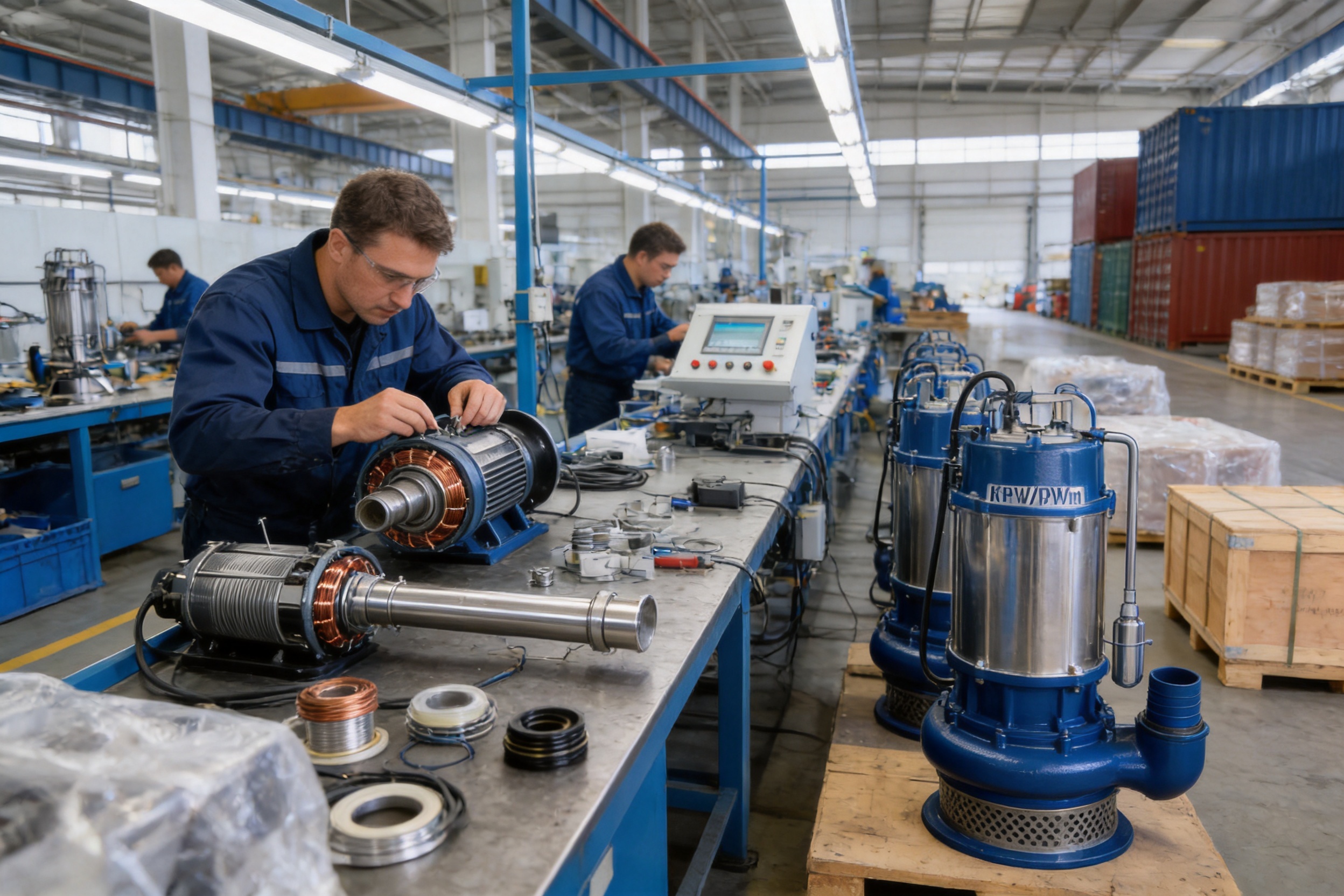
Wastewater management is an essential part of modern industrial, municipal, agricultural, and residential infrastructure. Whenever contaminated water, suspended solids, organic waste, or drainage fluids must be removed safely and efficiently, a dependable sewage pump becomes a critical operating asset. The right pump can reduce blockages, simplify installation, protect equipment, lower maintenance demands, and support stable wastewater treatment operations. The KPW/KPWm submersible sewage pump is designed for these demanding drainage applications, combining submersible operation, a robust motor structure, practical environmental limits, and manufacturing expertise developed through years of pump production and international supply.
This article examines the structure, operating principle, application range, technical boundaries, installation considerations, maintenance requirements, and purchasing value of the KPW/KPWm submersible sewage pump. It also explains how an experienced pump manufacturer supports product reliability through research and development, controlled production, quality management, export coordination, and application-oriented product design. The purpose is to help distributors, contractors, system designers, facility managers, and end users understand how this pump can be evaluated against competing wastewater drainage solutions.
Wastewater rarely has the same characteristics as clean water. It may contain suspended particles, organic matter, fibers, sediment, and other impurities. It may also be stored in pits, collection tanks, treatment basins, methane pools, or underground drainage stations where gravity alone cannot provide sufficient discharge. A sewage pump must therefore do more than move water. It must operate in a difficult fluid environment while remaining electrically protected, mechanically stable, and easy to access for service.
A submersible sewage pump is installed directly inside the liquid. Instead of drawing water through a long suction pipe, the pump is immersed in the collection area and pushes the fluid toward the discharge line. This configuration offers several practical advantages. It reduces suction-related limitations, helps minimize priming problems, saves installation space, and allows the equipment to be placed close to the lowest point of the drainage system. For facilities where wastewater levels change frequently, the submersible arrangement can provide a straightforward and efficient pumping solution.
The KPW/KPWm series is intended for wastewater drainage in factories, construction sites, commercial facilities, municipal sewage treatment plants, residential drainage stations, countryside methane pools, and field irrigation applications. This range of applications reflects a flexible design approach. The pump is suitable for users who need a compact drainage unit that can be placed into a tank, pit, or pool and operated under controlled liquid and installation conditions.
In industrial and commercial facilities, the pump may be used to remove wastewater generated during cleaning, processing, equipment operation, or building maintenance. On construction sites, it can assist with the removal of accumulated rainwater, groundwater, and construction wastewater. In municipal systems, it can support drainage stations and sewage treatment processes. In rural environments, it can help manage wastewater in methane pools and provide water movement for field irrigation where the fluid characteristics remain within the specified limits.
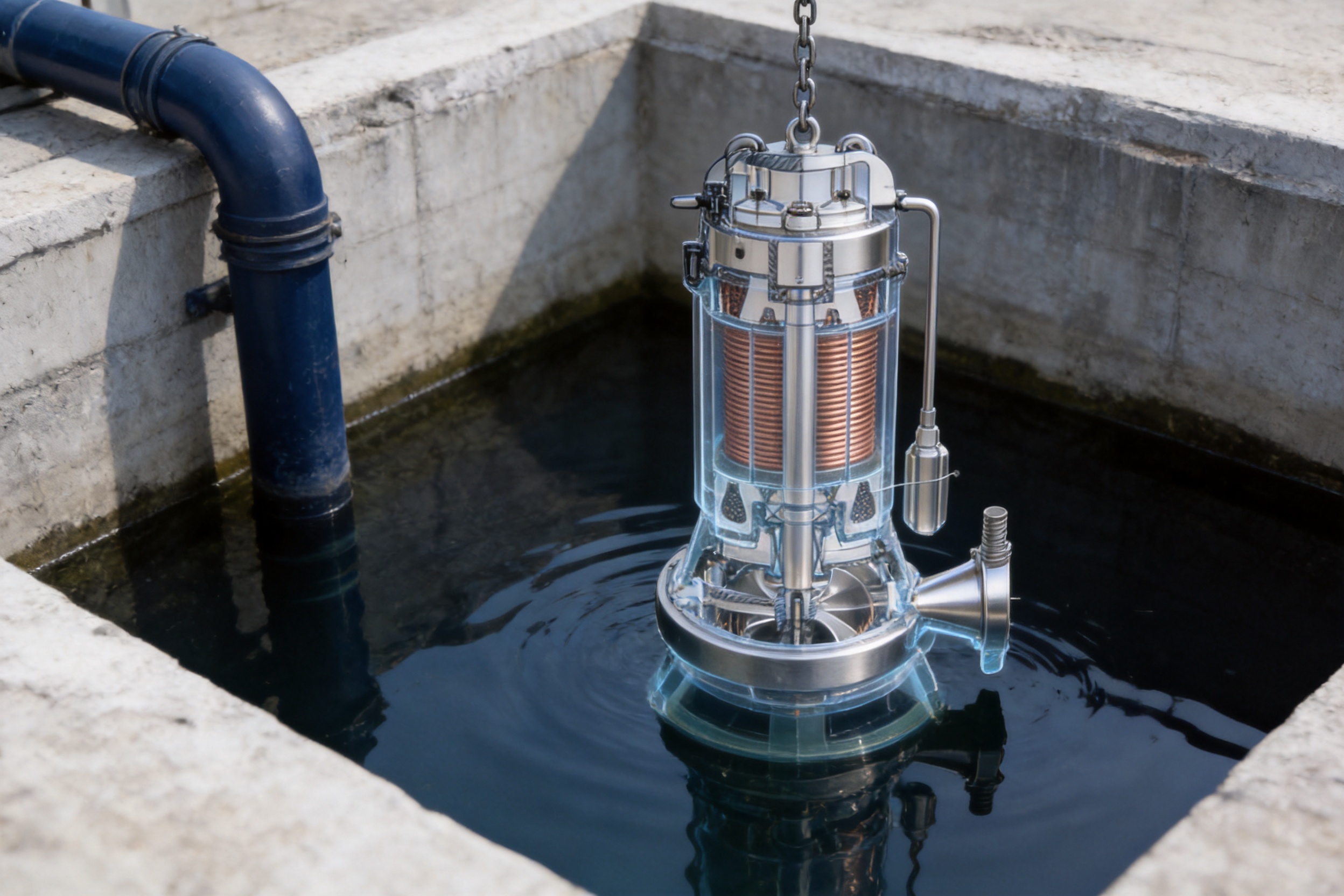
The KPW/KPWm is a submersible sewage pump designed to operate while immersed in liquid. Its motor and hydraulic components are integrated into a compact unit, allowing the pump to be installed directly in the drainage medium. When power is supplied, the motor rotates the impeller or hydraulic element, creating pressure that moves liquid from the collection area into the discharge pipe.
Because the pump is submerged, the surrounding liquid also helps dissipate motor heat during operation. This arrangement can support stable temperature control when the unit is correctly installed and operated within its specified limits. The motor includes a built-in thermal protector, which adds an important layer of safety by helping protect the winding from excessive temperature caused by overload, abnormal operating conditions, or inadequate heat dissipation.
The pump is designed for a maximum immersion depth of 5 meters. The maximum liquid temperature is 40°C, equivalent to 104°F. The permitted liquid pH value is 5 to 9, covering many commonly encountered wastewater conditions. The stated liquid kinematic viscosity range is approximately 7 × 10⁻⁶ to 23 × 10⁻⁶ m²/s, while the maximum liquid density is approximately 1.2 × 10³ kg/m³. These limits are important because pump performance and component life depend heavily on the physical and chemical properties of the pumped liquid.
Users should treat these values as design boundaries rather than general suggestions. A pump selected for liquid outside the specified temperature, density, viscosity, or pH range may experience reduced performance, accelerated seal wear, winding damage, corrosion, or hydraulic overload. Confirming the wastewater characteristics before purchase is therefore one of the most important steps in achieving reliable service.
One of the clearest advantages of the KPW/KPWm design is its direct submersible installation. The unit can be placed into the wastewater collection area without requiring a complicated external suction arrangement. This can simplify system layout and reduce the number of components needed between the collection point and the pump.
Compared with some surface-mounted drainage systems, a submersible pump can reduce the risk of suction-line air leakage, suction lift limitations, and frequent manual priming. The pump remains close to the liquid, which helps create a practical arrangement for pits, tanks, treatment stations, and temporary drainage locations. This is particularly useful where available space is limited or where the pump must be installed below ground level.
Wastewater pumping systems may encounter changing liquid levels, blocked discharge lines, overloaded hydraulic conditions, or irregular operating cycles. These conditions can place additional stress on the motor. The built-in thermal protector in the KPW/KPWm motor is designed to respond to excessive motor temperature and help prevent damage to the winding.
Thermal protection does not eliminate the need for correct electrical protection, proper cable sizing, suitable overload settings, and appropriate installation. However, it provides an additional safeguard within the motor itself. This integrated approach is valuable for commercial, residential, and agricultural users who need practical motor protection without adding a complex external control package for basic applications.
The motor uses copper winding. Copper is widely selected for motor construction because of its strong electrical conductivity, efficient current transmission, and ability to support reliable electromagnetic performance. A copper winding can help reduce electrical losses compared with less conductive winding materials and can contribute to stable motor operation when the motor is correctly designed and cooled.
For a submersible pump, the winding must perform inside a compact motor housing and under conditions where the unit is surrounded by liquid. The combination of copper winding, thermal protection, and appropriate insulation contributes to dependable operation within the stated service conditions. It also supports the pump’s suitability for repeated use in drainage applications rather than only occasional emergency pumping.
The KPW/KPWm motor uses a stainless steel welded shaft. The shaft transfers rotational power from the motor to the hydraulic assembly, so its mechanical strength, corrosion resistance, and dimensional stability are important to the overall pump structure.
Stainless steel is a practical material choice for wastewater equipment because exposure to moisture and chemically active fluids can accelerate corrosion in ordinary carbon steel. A stainless steel shaft can provide improved resistance to rust and surface deterioration. The welded construction also supports a compact shaft arrangement suitable for integrated submersible equipment.
Although shaft material is only one part of pump durability, it can make a meaningful difference in long-term service. A corroded or mechanically weakened shaft may cause vibration, seal damage, impeller misalignment, and reduced hydraulic performance. Selecting a pump with a corrosion-resistant shaft helps address one of the common concerns associated with wet-environment equipment.
The motor is specified with insulation class B. Motor insulation classification indicates the thermal capability of the insulating system used around the electrical winding. Class B insulation is commonly associated with a permitted winding temperature rise suitable for many general-purpose motor applications.
In a submersible pump, insulation integrity is especially important because the motor operates in a wet environment. Proper insulation helps isolate the electrical winding from moisture and conductive contamination. It must be supported by effective sealing, correct cable entry, suitable operating conditions, and regular inspection. The insulation class provides a defined design reference, but the actual service life also depends on how the pump is installed and maintained.
The motor is identified with an IPX8 protection class. IPX8 is associated with protection against continuous immersion in water under conditions specified by the manufacturer. This rating is highly relevant to submersible equipment because the pump is designed to work while immersed.
The protection rating should not be interpreted as permission to install the pump at any depth or in any liquid. The product’s maximum immersion depth remains 5 meters, and the liquid temperature, pH, density, and viscosity limits must also be respected. Cable connections, control boxes, power supplies, and external accessories may have different protection requirements. The complete installation must therefore be designed as a system rather than evaluated solely on the motor rating.
Factories often generate wastewater in equipment rooms, production areas, washing zones, service corridors, storage spaces, and underground drainage pits. The liquid may include suspended particles or process residues, making a sewage-oriented pump more appropriate than a clean-water pump.
The KPW/KPWm can be used for wastewater drainage where the fluid remains within the stated operating limits. Its submersible structure allows it to be positioned in a collection pit or tank and connected to a discharge pipe leading to a treatment system or designated drainage point. For industrial users, the most important considerations include fluid composition, solids content, operating frequency, discharge distance, lift height, and electrical supply.
Factories may also benefit from maintaining a standby unit. If drainage is essential to production continuity, a second pump can provide backup capacity during maintenance or abnormal inflow conditions. Alternating duty and standby pumps can also distribute operating hours and reduce wear concentration on one unit.
Construction sites commonly experience temporary water accumulation caused by rainfall, groundwater infiltration, foundation excavation, equipment washing, and concrete-related operations. Conditions can change rapidly, and the pumping equipment may need to be moved as the site develops.
A submersible pump is well suited to this type of environment because it can be placed directly into a pit or low-lying area. The compact configuration can simplify temporary drainage arrangements and reduce the need for a permanent pump room. However, construction users should protect the electrical cable from mechanical damage, prevent the pump from operating in dry conditions, and remove large debris that could obstruct the hydraulic inlet.
Commercial buildings, workshops, service centers, warehouses, and other facilities may require drainage from basements, service areas, car parks, equipment rooms, or wastewater collection tanks. A compact submersible sewage pump can provide an effective solution where gravity drainage is unavailable or insufficient.
Commercial operators generally value equipment that is simple to install, easy to replace, and reliable during emergency conditions. The built-in thermal protector and IPX8 motor protection provide useful design features for these applications. Regular inspection remains necessary, particularly in facilities where the pump is installed in a location that is difficult to access.
Municipal wastewater systems depend on pumps at numerous stages, including collection, transfer, drainage, and treatment. Submersible units can be installed in sewage pits and drainage stations to move wastewater toward treatment processes or higher-level collection points.
The KPW/KPWm is intended for drainage applications within its specified fluid and depth limits. In a municipal environment, engineers should verify the expected solids content, pump duty cycle, hydraulic duty point, and control method. Larger installations may require multiple pumps, automatic level controls, alarm systems, non-return valves, isolation valves, and lifting equipment for maintenance.
Residential quarters may use drainage stations to collect wastewater from lower floors, underground areas, or locations where the public sewer is positioned above the building outlet. A submersible sewage pump can provide the vertical and horizontal transfer required to connect the collection point with the main sewer system.
Noise, odor control, access, safety, and automatic operation are important in residential environments. Correct tank sizing and level control can help prevent excessively frequent starts. A strainer or suitable inlet design may reduce the risk of large objects entering the pump. Residential users should also ensure that household wastewater does not contain chemicals or materials outside the pump’s compatible range.
In rural areas, methane pools and agricultural drainage systems may require equipment capable of handling wastewater and transferring liquid for reuse or further treatment. The KPW/KPWm is listed for methane pool and field irrigation applications, provided the pumped medium complies with the technical limits.
Rural installations can be exposed to unstable power, sediment, vegetation, and irregular maintenance schedules. Users should consider a reliable electrical protection system, suitable cable routing, accessible lifting arrangements, and periodic cleaning. If the fluid contains abrasive sand or unusually aggressive chemicals, the application should be reviewed before purchase.
The following table summarizes the available product information. Actual pump performance, including flow rate, head, power, outlet size, and efficiency, should be confirmed using the relevant model curve and technical datasheet before final selection.
| Item | Specification or Description |
|---|---|
| Product series | KPW/KPWm submersible sewage pump |
| Primary function | Wastewater drainage and sewage transfer |
| Installation method | Direct submersible installation |
| Maximum immersion depth | 5 meters |
| Maximum liquid temperature | 40°C / 104°F |
| Permitted liquid pH | 5 to 9 |
| Liquid kinematic viscosity | Approximately 7 × 10⁻⁶ to 23 × 10⁻⁶ m²/s |
| Maximum liquid density | Approximately 1.2 × 10³ kg/m³ |
| Motor winding | Copper |
| Motor protection | Built-in thermal protector |
| Shaft | Stainless steel welded shaft |
| Insulation class | Class B |
| Protection class | IPX8 |
| Typical application environments | Factories, construction sites, commercial facilities, municipal plants, residential drainage stations, methane pools, and rural irrigation systems |
This table is a practical starting point rather than a replacement for engineering verification. The correct model must be selected according to required flow, total head, discharge pipe size, duty cycle, power supply, fluid composition, and installation configuration. When several operating conditions are possible, the pump should be checked against the most demanding normal duty rather than the average condition alone.
Surface-mounted self-priming pumps can be useful in many drainage systems, but they require an accessible location above the liquid and depend on the suction pipe remaining properly sealed. If air enters the suction line, priming may be delayed or lost. Suction lift is also limited by atmospheric conditions, pipe losses, and fluid temperature.
The KPW/KPWm avoids many of these concerns by operating directly in the liquid. The pump does not need to lift wastewater through a long suction pipe before pumping begins. This can simplify the initial design and reduce the risk of suction-side problems. For pits and tanks located below ground, the submersible arrangement may also reduce civil works and save equipment-room space.
Clean-water pumps are generally designed for liquids with low levels of suspended solids and relatively stable fluid quality. Using such a pump for sewage or wastewater can increase the risk of blockage, seal wear, and performance loss. A sewage pump is selected with wastewater drainage in mind and is therefore more suitable for contaminated liquids within its permitted range.
The KPW/KPWm includes features relevant to wastewater environments, including a corrosion-resistant stainless steel shaft, submersible protection, and a motor thermal protector. These features do not mean that the pump can handle every type of sewage or industrial chemical, but they provide a more appropriate design basis than a pump intended only for clean water.
Large permanent sewage pump stations may provide high capacity and extensive automation, but they can involve substantial construction, installation, and maintenance costs. Smaller facilities, temporary projects, farms, and individual drainage points may not require such a complex arrangement.
A compact submersible pump can offer a more economical and flexible option when the required flow and head are within its performance range. It can be installed in a smaller collection pit, integrated into an existing drainage system, or used as a temporary and backup unit. This makes the product attractive for customers seeking practical performance without overengineering a smaller installation.
Low-cost drainage pumps may appear attractive during initial purchasing, but the lowest purchase price does not always represent the lowest ownership cost. Weak thermal protection, inferior winding materials, poor sealing, corrosion-prone shafts, and inconsistent manufacturing can lead to more frequent failures.
The KPW/KPWm offers a combination of copper winding, built-in thermal protection, stainless steel shaft construction, Class B insulation, and IPX8 protection. These features provide a more complete product proposition than price alone. For distributors and project buyers, a product with defined technical boundaries and identifiable component features can also be easier to position, specify, and support in the market.
Product reliability begins before the pump reaches the job site. It depends on design decisions, material selection, production control, assembly accuracy, electrical testing, inspection procedures, packaging, and after-sales support. A manufacturer with experience across research and development, mass production, and export can coordinate these stages more effectively than a supplier focused only on trading or assembly.
The manufacturing enterprise behind this product was founded in 2008 and has developed an integrated operating structure covering independent research and development, mass production, and global export. Its product portfolio includes deep well pumps, submersible pumps, domestic booster pumps, circulation pumps, solar water pumps, intelligent booster pumps, and related water treatment products.
This broad product knowledge is valuable because wastewater systems often connect with other water-handling equipment. A customer may require a sewage pump for drainage, a booster pump for water supply, a circulation pump for HVAC equipment, or a solar pump for agricultural use. A manufacturer with multiple pump categories can better understand system-level requirements and support one-stop procurement planning.
Independent research and development allows a manufacturer to refine product structures according to market requirements rather than relying solely on standard third-party designs. For submersible sewage pumps, development work may involve hydraulic geometry, motor protection, sealing arrangements, shaft materials, electrical insulation, thermal behavior, and ease of maintenance.
R&D capability also supports adaptation to different regional requirements. International customers may operate on different voltage systems, frequency standards, installation practices, certification expectations, and wastewater conditions. A technically capable manufacturer can review these needs and recommend a suitable configuration instead of treating every project as identical.
Mass production is not simply a matter of manufacturing a larger number of units. It requires repeatable processes, controlled assembly, consistent component sourcing, trained operators, production documentation, and inspection points. When processes are stable, the variation between units can be reduced and replacement pumps are more likely to match the performance of previously supplied equipment.
For the KPW/KPWm, process consistency is especially important in the motor, sealing system, shaft assembly, cable entry, and final electrical testing. Small dimensional or assembly variations can influence vibration, noise, temperature rise, leakage resistance, and service life. A structured production system helps identify these issues before shipment.
The specified copper winding and stainless steel welded shaft demonstrate the importance of material selection. A professional manufacturing process should include controls for incoming materials, component dimensions, insulation quality, welding condition, surface finish, and compatibility with the intended operating environment.
Material control is particularly important for export products because the pump may be used in regions with different maintenance resources and replacement-part availability. Durable materials can reduce the frequency of intervention and help protect the customer’s investment. At the same time, technical claims must remain tied to the stated application limits. No material can compensate for operation outside the recommended conditions.
Submersible pumps require careful assembly because electrical and hydraulic components must work together inside a sealed structure. The motor housing, shaft, bearings, winding, insulation system, seals, cable entry, and pump body must be correctly positioned and secured.
Electrical tests may include winding continuity, insulation resistance, grounding verification, current checks, and operational testing. Mechanical inspection may include shaft rotation, seal condition, fastener security, vibration, and overall appearance. Hydraulic testing, where applicable, can help confirm that the completed product performs in accordance with its intended design.
Testing procedures should be documented and connected to production records. This improves traceability and provides the manufacturer with useful information for process improvement. It also gives distributors and project buyers greater confidence when purchasing equipment for repeated or large-volume applications.
International pump supply involves more than production. It includes order confirmation, product configuration, packaging, documentation, container planning, shipping coordination, customs information, and communication across time zones. A manufacturer supported by professional import and export organizations can provide more organized service to overseas customers.
The associated foreign trade structure provides procurement planning, order tracking, cross-border delivery, and export support. These capabilities can be important for distributors who need consistent schedules and clear communication. Reliable logistics do not replace product quality, but they help ensure that the correct equipment arrives in suitable condition and according to the customer’s project plan.
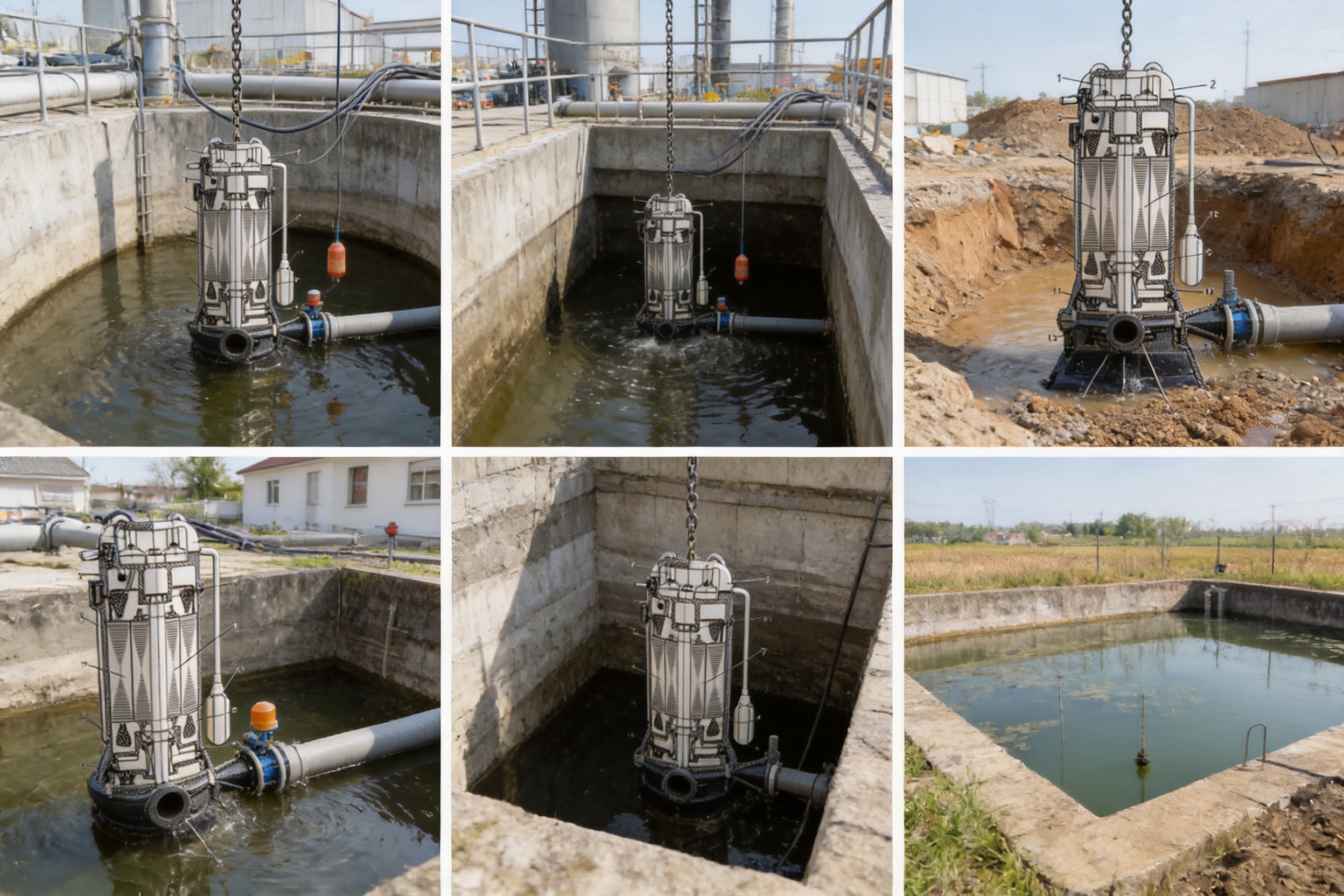
Before installation, inspect the pump, cable, discharge connection, fasteners, and lifting accessories. Confirm that the rated power supply matches the local electrical system. The collection pit or tank should be cleaned of large stones, metal fragments, construction waste, and other objects that could obstruct the inlet or damage the hydraulic components.
The pump should be installed in a stable position. It should not rest on soft sediment that could block the inlet or cause the unit to tilt. Where necessary, a guide rail, support frame, or lifting chain can be used to keep the pump correctly positioned and to permit safe removal for inspection.
The discharge pipe should be sized according to the required flow and total head. Excessively small pipework can increase friction losses and reduce delivered performance. The discharge arrangement may require a non-return valve to prevent reverse flow when the pump stops. An isolation valve can assist with maintenance, although valve placement and orientation should be reviewed by the system designer.
Electrical connections must be protected from water ingress and mechanical damage. Cable joints should not be submerged unless they are specifically designed and rated for that purpose. The pump should be connected through appropriate circuit protection and grounding. A qualified electrician should complete the electrical installation, particularly in industrial, municipal, and commercial environments.
Level controls can be used to start and stop the pump automatically. Float switches, pressure-based controls, or other approved control methods may be selected according to the installation. The control system should prevent excessive cycling and should include an alarm or backup response where overflow could cause significant damage.
Before the first start, confirm that the pump is fully immersed to the required operating level and that the discharge line is open. Check that the power supply is correct and that the pump can rotate without abnormal resistance. Observe the first operating cycle carefully. Excessive vibration, unusual noise, high current, repeated thermal trips, or poor discharge should be treated as warning signs.
Routine inspections should include the condition of the cable, lifting equipment, discharge pipe, valves, control system, and pump body. Operators should note changes in sound, vibration, flow, discharge time, current draw, and thermal behavior. A gradual reduction in performance may indicate blockage, impeller wear, pipe obstruction, or changes in the wastewater characteristics.
Wastewater pumps may accumulate fibers, sediment, grease, and debris. Cleaning frequency depends on the application. A pump serving a construction site may require more frequent inspection than one installed in a controlled municipal station. Before cleaning, isolate the pump from the electrical supply and follow safe lifting procedures.
Do not pull the pump out by the power cable. Use the designated lifting point or chain. After removal, clean the inlet and hydraulic passages with appropriate methods. Avoid damaging seals, cable entries, and painted or coated surfaces. If the pump has been exposed to aggressive wastewater, rinse it in accordance with site safety procedures.
Seals protect the motor and bearings from water penetration. Signs of seal problems may include moisture in the motor chamber, insulation-resistance deterioration, tripped protection, or abnormal noise. Regular electrical testing can help identify insulation problems before they become major failures.
Because the pump has IPX8 protection, the sealing system is an important part of its submersible design. However, seals are wear components and can be affected by abrasive solids, chemical exposure, overheating, dry running, and incorrect assembly. Replacement should be carried out using suitable parts and proper procedures.
Even when a pump is designed for submersible operation, it should not be allowed to run without adequate liquid. The surrounding liquid supports cooling and helps maintain the intended operating condition. Dry running can increase temperature, damage seals, and reduce motor life. Level controls should be set to stop the pump before the liquid falls below the safe operating level.
Model selection should begin with the required flow rate and total dynamic head. Flow rate is the volume of liquid that must be moved within a given time. Total head includes the vertical lift from the liquid surface to the discharge point plus friction and local losses in the pipe, valves, bends, and fittings.
Operating the pump far from its best efficiency region may increase energy use, vibration, and wear. The selected model should therefore be checked against the manufacturer’s performance curve. If the system has changing inflow or variable discharge requirements, the selection should consider the full operating range rather than a single nominal point.
Fluid properties must also be confirmed. Verify the liquid temperature, pH, density, viscosity, solids content, fiber content, and chemical composition. The stated limits for the KPW/KPWm include a maximum liquid temperature of 40°C, pH from 5 to 9, maximum immersion depth of 5 meters, and maximum liquid density of approximately 1.2 × 10³ kg/m³.
Electrical conditions are equally important. Confirm voltage, frequency, phase arrangement, starting current, cable length, and control-panel requirements. Long cable runs may create voltage drop and should be evaluated during system design. In areas with unstable power, additional electrical protection may be necessary.
Finally, consider maintenance access. A pump that performs well but cannot be safely removed or inspected may create unnecessary operational difficulty. The installation should include adequate clearance, lifting provisions, isolation points, and access to control equipment.
Pump sustainability is closely connected to service life, energy consumption, repairability, and correct sizing. A pump that operates reliably for a long period can reduce replacement waste and avoid the environmental impact associated with repeated manufacturing and transport. Durable materials such as copper winding and stainless steel shaft construction can contribute to this objective when supported by appropriate maintenance.
Energy efficiency depends on hydraulic design, motor performance, operating point, pipe sizing, and control strategy. Oversized pumps may consume more energy than necessary, while undersized pumps may run continuously or fail to meet drainage requirements. Correct selection is therefore one of the most effective ways to improve life-cycle performance.
The manufacturer’s wider investment in solar water pumps and intelligent booster pumps also reflects an orientation toward energy-conscious and technology-based water management. Although the KPW/KPWm is a conventional electrically driven sewage pump, it can form part of a broader water infrastructure strategy that includes efficient water transfer, intelligent control, renewable energy, and responsible resource use.
Distributors need products that are technically understandable, commercially practical, and supported by dependable supply. The KPW/KPWm has a clear application position: submersible wastewater drainage for industrial, municipal, commercial, residential, construction, and rural environments. Its defined operating limits and identifiable motor features make it easier to present to customers and compare with alternative solutions.
Contractors benefit from a pump that can be integrated into drainage projects without an unnecessarily complicated installation. The direct submersible arrangement can help reduce space requirements and simplify the equipment layout. Contractors should still complete hydraulic and electrical checks before quotation so that the selected pump matches the project duty.
Project buyers often evaluate total cost rather than purchase price alone. Product reliability, replacement availability, delivery coordination, documentation, technical assistance, and manufacturer responsiveness can all affect project success. A supplier with experience in global export and multiple pump categories can provide broader support throughout procurement and delivery.
For original equipment manufacturers and system integrators, consistency is especially important. Repeat orders require stable specifications, repeatable production, and clear communication regarding any design or component changes. A manufacturing enterprise with its own R&D and production capabilities is better positioned to manage these requirements than a purely opportunistic supplier.
Before ordering a KPW/KPWm submersible sewage pump, the buyer should prepare a complete application description. Important information includes the required flow rate, total head, discharge pipe length and diameter, liquid temperature, pH, density, viscosity, solids characteristics, immersion depth, electrical supply, operating hours, and control method.
The buyer should also clarify whether the pump will operate continuously or intermittently, whether a standby unit is required, how the pump will be lifted for maintenance, and whether the site has special safety or certification requirements. Providing accurate information allows the manufacturer or distributor to recommend the correct configuration and avoid performance problems caused by incomplete selection data.
Where wastewater composition is uncertain, laboratory analysis or a controlled site assessment may be appropriate. Industrial wastewater should not be assumed to behave like domestic sewage. Chemicals, solvents, oils, abrasive solids, high temperatures, and biological gases may influence material compatibility and safety requirements.
The pump is designed for submersible wastewater drainage and sewage transfer. Typical applications include factories, construction sites, commercial facilities, municipal sewage treatment plants, residential drainage stations, methane pools, and rural field irrigation systems.
The pump is designed for submersible operation and should be adequately immersed during use. Running without sufficient liquid can cause overheating, seal damage, and reduced service life. Level controls should be used where automatic operation is required.
The stated maximum immersion depth is 5 meters. Installation deeper than this limit should not be undertaken without written technical confirmation from the manufacturer.
The maximum liquid temperature is 40°C, or 104°F. Higher temperatures can affect motor cooling, insulation, seals, lubricants, and hydraulic performance.
The stated liquid pH range is 5 to 9. Liquids outside this range may cause accelerated corrosion or damage to wetted components and should be reviewed before selection.
The motor includes a built-in thermal protector. This feature helps protect the motor winding from excessive temperature, but it should be used together with suitable external circuit protection, grounding, and correctly selected electrical equipment.
A stainless steel shaft offers improved resistance to rust and moisture-related deterioration compared with ordinary carbon steel. This is valuable in a continuously wet wastewater environment. Shaft material is one part of the complete durability system and must be supported by correct sealing and maintenance.
IPX8 indicates a design intended for continuous immersion under conditions specified by the manufacturer. It does not remove the maximum depth, temperature, pH, density, and viscosity limits, and it does not automatically apply to external control equipment or cable connections.
No. The pump should be used only with liquids whose physical and chemical characteristics remain within the specified operating limits. Large solids, abrasive materials, aggressive chemicals, high-temperature liquids, and unusual industrial fluids require specific technical evaluation.
A non-return valve may be recommended to prevent liquid from flowing back through the discharge line when the pump stops. The final arrangement depends on the system design, vertical lift, pipe layout, and operating sequence.
Maintenance frequency depends on the application, operating hours, wastewater characteristics, and site conditions. Construction and industrial sites may require frequent cleaning, while controlled installations may use scheduled monthly, quarterly, or condition-based inspections.
Provide the required flow rate, total head, pipe size and length, liquid characteristics, maximum immersion depth, electrical supply, operating schedule, installation environment, and any special solids or chemical conditions. Complete information improves model selection and quotation accuracy.
The submersible design reduces suction-side complexity, avoids many priming concerns, saves installation space, and places the pump close to the liquid source. It can be especially practical for pits, tanks, underground drainage stations, and temporary construction drainage.
It can be suitable for residential drainage stations when the liquid, flow, head, electrical supply, and installation conditions meet the product requirements. Proper level control, odor management, safe access, and regular maintenance should be included in the system design.
The KPW/KPWm submersible sewage pump is designed to provide practical wastewater drainage across industrial, municipal, commercial, residential, construction, and rural applications. Its direct submersible installation simplifies many drainage arrangements, while the copper winding, built-in thermal protector, stainless steel welded shaft, Class B insulation, and IPX8 protection class provide a solid technical foundation for operation in wet environments.
The product’s advantages are strongest when it is correctly matched to the application. The maximum immersion depth of 5 meters, maximum liquid temperature of 40°C, pH range of 5 to 9, liquid viscosity range, and density limit must be respected. Hydraulic duty, electrical conditions, solids content, control strategy, and maintenance access should also be reviewed before purchase.
Behind the product is an integrated manufacturing and export organization with experience in independent research and development, mass production, global supply, and multiple pump categories. This combination supports more than the production of individual units. It enables coordinated product development, material selection, process control, testing, order management, and international customer service.
For users seeking a compact and dependable wastewater drainage solution, the KPW/KPWm offers a balanced combination of submersible convenience, motor protection, corrosion-conscious construction, and application flexibility. For distributors, contractors, and project buyers, it provides a clearly defined product platform supported by an experienced pump manufacturing structure and a broader portfolio of water-handling technologies.
1. Manufacturer-provided product information for the KPW/KPWm submersible sewage pump.
2. Manufacturer-provided company profile and product portfolio information.
3. General engineering principles for submersible pump installation, wastewater drainage, motor protection, and hydraulic system design.
4. General guidance on electrical motor insulation classes and enclosure protection classifications.
5. General wastewater pumping and preventive maintenance practices for industrial, municipal, commercial, residential, and agricultural systems.
6. General principles of pump selection based on flow rate, total dynamic head, liquid properties, operating cycle, and life-cycle cost.
edwina@edwin-pump.com
+86-13586290903 (WhatsApp)
Xuri Gongliang Cutting Tool Entrepreneurship Park, Wenqiao Town, Wenling City, Taizhou City, Zhejiang Province, China

High Performance Smart Pump Factory


 English