
edwina@edwin-pump.com

View All Products
en
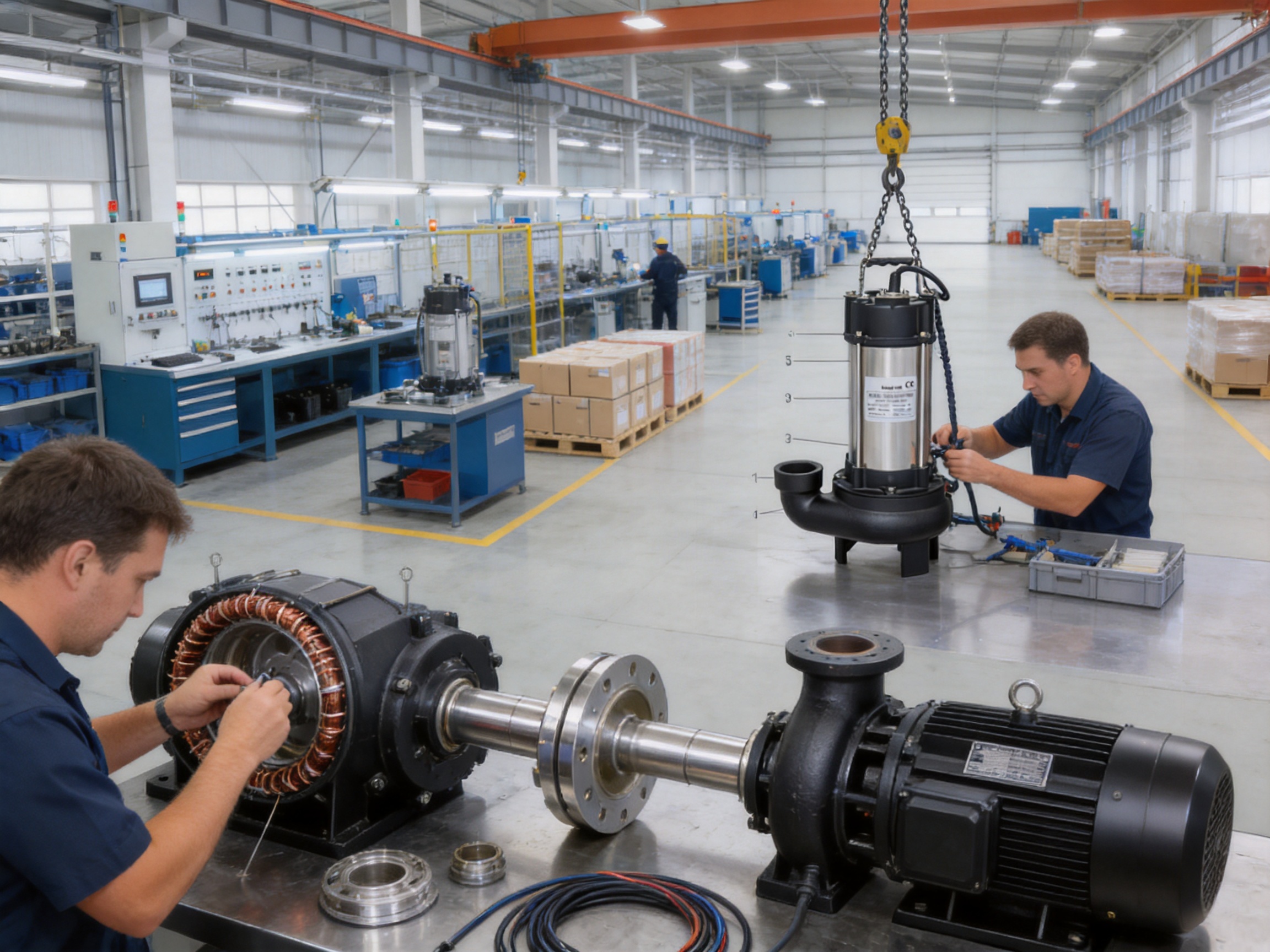
Wastewater management is a fundamental requirement in factories, construction sites, commercial facilities, residential communities, farms, and municipal infrastructure. A dependable sewage pump must move contaminated water efficiently while continuing to operate in demanding environments that may contain suspended solids, organic matter, and chemically varied liquids. The Submersible Sewage Pump VS is designed for this type of service, combining compact submersible installation, dependable motor protection, durable wetted components, and flexible application potential.
Unlike many conventional surface-mounted drainage systems, the Submersible Sewage Pump VS operates directly inside the collection pit, drainage basin, sewage tank, or wastewater chamber. This arrangement reduces the need for a long suction line, minimizes priming concerns, and allows the pump to remove water from locations where a dry-installed pump would be difficult or expensive to install. The submerged configuration also supports efficient drainage in confined spaces and temporary work areas.
Manufactured by Taizhou Edwin Electric Co., Ltd., the pump is part of a broader product portfolio that includes deep well pumps, submersible pumps, domestic booster pumps, circulation pumps, solar water pumps, intelligent booster pumps, and other water-management equipment. The company combines independent research and development, mass production, export experience, and procurement support to serve customers in industrial, agricultural, municipal, commercial, and household markets.
The VS model is particularly suited to applications requiring reliable wastewater drainage rather than ordinary clean-water transfer. Its copper-wound motor, built-in thermal protector, stainless steel welded shaft, Class B insulation, and IPX8 protection class create a practical foundation for long-term service. The pump can operate at an immersion depth of up to 5 meters, handle liquid temperatures up to 40°C, and work with liquids within a pH range of 5 to 9, subject to correct selection and operating conditions.
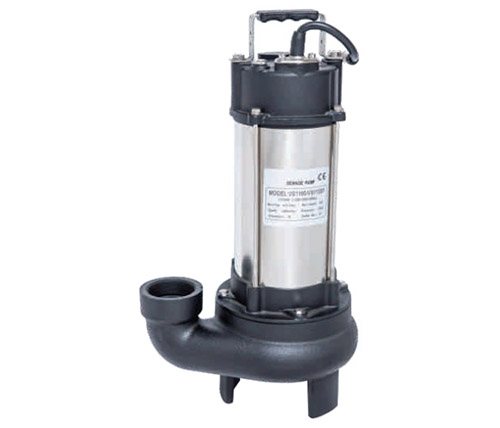
SUBMERSIBLE SEWAGE PUMP VS
The Submersible Sewage Pump VS is a compact wastewater drainage unit intended for installation below the liquid level. When the pump is energized, its motor drives the impeller and creates the pressure required to lift wastewater through the discharge pipe. Because the pump body is placed inside the liquid, the system can begin operation without the same suction-side limitations associated with many above-ground centrifugal pumps.
Submersible installation offers several practical benefits. It saves floor space, simplifies pipe routing, reduces the number of external components, and supports drainage from pits or tanks located below the surrounding ground level. It is also suitable for areas where a conventional pump room is not available. In construction projects, for example, the pump can be placed in a temporary collection point and used to remove accumulated water during foundation work, excavation, or site preparation.
The VS design is intended for wastewater drainage in factories, construction sites, commercial facilities, municipal sewage treatment systems, residential drainage stations, methane pools, and agricultural irrigation settings. These applications vary considerably in liquid quality and operating frequency, so appropriate system design remains important. The pump should be matched with the required flow rate, total head, discharge-pipe diameter, electrical supply, control method, and nature of the wastewater.
Its operating limits provide a useful framework for equipment selection. The maximum immersion depth is 5 meters, the maximum liquid temperature is 40°C or 104°F, and the applicable liquid pH range is 5 to 9. The listed kinematic viscosity range is approximately 7 × 10⁻⁶ to 23 × 10⁻⁶ m²/s, while the maximum liquid density is approximately 1.2 × 10³ kg/m³. These values indicate that the pump is intended for water-based wastewater and drainage liquids rather than highly concentrated sludge, heavy industrial fluids, or liquids containing unusually large solids.
The most important advantage of the VS pump is its ability to work while submerged. In a conventional surface installation, the suction pipe must be properly sized, sealed, supported, and positioned. Air leakage, excessive suction lift, blocked strainers, or poor priming can interrupt operation. A submersible pump avoids many of these challenges because the pump is located at the source of the wastewater and the liquid enters the pumping chamber directly.
Direct submerged operation is especially useful in drainage pits, sewage collection tanks, basement sumps, construction excavations, and municipal pumping stations. It also reduces the visible footprint of the installation. In locations where equipment must be protected from traffic, weather, or limited floor space, a submerged pump can provide a cleaner and more practical solution.
The VS pump uses copper motor winding. Copper offers high electrical conductivity and supports efficient energy transfer within the motor. Properly manufactured copper windings can reduce resistive losses, help maintain stable motor performance, and provide reliable starting and running characteristics when the pump is connected to a suitable power supply.
Motor winding quality has a direct influence on service life. In wastewater applications, a pump may experience repeated starts, changing liquid levels, extended operating periods, and elevated ambient temperatures. A well-formed copper winding, combined with appropriate insulation and thermal protection, helps the motor tolerate these operating demands more effectively than a poorly constructed winding system.
Compared with lower-cost pumps that may use inconsistent winding materials or less controlled assembly practices, a copper-wound motor provides a stronger basis for predictable performance. However, electrical installation must still comply with local requirements, and the pump should be protected by the correct circuit breaker, grounding arrangement, and control equipment.
Wastewater pumps can be exposed to difficult operating conditions, including blocked discharge lines, restricted impeller movement, voltage abnormalities, frequent cycling, and insufficient cooling. These conditions may cause the motor temperature to rise. The built-in thermal protector is designed to help guard the motor against excessive temperature by interrupting operation when a dangerous thermal condition occurs.
This feature is valuable because it provides an additional layer of motor protection within the pump itself. It can reduce the risk of damage caused by overheating and help improve operational safety. When the abnormal condition has been removed and the motor has cooled sufficiently, the protection system may permit the pump to resume operation, depending on the electrical configuration and control arrangement.
Thermal protection does not replace correct system design. It should not be considered a substitute for suitable overload protection, proper cable sizing, correct voltage, regular maintenance, or the removal of blockages. Instead, it works together with those measures to create a more complete protection strategy.
The pump is equipped with a stainless steel welded shaft. The shaft transfers motor torque to the hydraulic assembly and must maintain accurate rotation under continuous mechanical stress. Stainless steel provides useful resistance to corrosion, particularly in water-based environments where ordinary carbon steel may deteriorate more quickly.
The welded construction supports a robust connection between shaft components and contributes to mechanical integrity. A stable shaft helps reduce vibration, maintain alignment, and support consistent impeller rotation. In wastewater drainage, where the liquid may contain moisture, organic matter, and mild chemical contaminants, corrosion-resistant shaft materials can provide an advantage over less durable alternatives.
The shaft is only one part of the complete hydraulic assembly, so the pump must still be operated within its design limits. Abrasive solids, oversized debris, severe chemical exposure, and dry running can cause premature wear even when corrosion-resistant materials are used.
The IPX8 protection class is appropriate for equipment designed to operate continuously or for extended periods under water, subject to the specific conditions defined by the manufacturer. This level of enclosure protection reflects the pump’s submersible purpose and helps protect internal electrical components from water ingress during normal submerged operation.
IPX8 protection is a major distinction between a purpose-built submersible sewage pump and a general-purpose pump that has merely been placed near water. The enclosure, cable entry, sealing arrangements, and motor housing must work together to prevent water from reaching sensitive electrical components. This enables the VS pump to operate inside collection pits and tanks where exposure to water is unavoidable.
Users should inspect the power cable, seals, lifting arrangement, and pump housing before installation. Protection ratings depend on maintaining the integrity of the equipment. Cutting, extending, or repairing the cable without an approved method can compromise water resistance and create an electrical hazard.
The motor uses Class B insulation. Insulation class indicates the thermal capability of the motor insulation system. Class B insulation is commonly used in electric motors and provides a defined level of resistance to heat under normal operating conditions. When combined with a thermal protector and an appropriate cooling environment, it supports stable motor operation.
Submersible motors benefit from the surrounding liquid because the liquid can help transfer heat away from the motor housing. This cooling effect is one reason why the pump must not be operated outside its intended submerged conditions or allowed to run dry. Proper liquid coverage and correct installation are essential for maintaining motor temperature within the intended range.
| Parameter | Listed Value | Practical Significance |
|---|---|---|
| Product type | Submersible sewage pump | Designed for direct installation in wastewater or drainage locations |
| Maximum immersion depth | 5 m | Defines the maximum recommended submerged installation depth |
| Maximum liquid temperature | 40°C / 104°F | Suitable for ordinary cold and moderately warm wastewater |
| Liquid pH range | 5–9 | Suitable for many water-based wastewater conditions |
| Kinematic viscosity | Approximately 7 × 10⁻⁶ to 23 × 10⁻⁶ m²/s | Indicates the intended fluid-flow characteristics |
| Maximum liquid density | Approximately 1.2 × 10³ kg/m³ | Defines the upper density condition listed for the pump |
| Motor winding | Copper | Supports electrical conductivity and dependable motor performance |
| Motor protection | Built-in thermal protector | Helps guard against excessive motor temperature |
| Shaft material | Stainless steel welded shaft | Improves corrosion resistance and mechanical durability |
| Insulation class | Class B | Provides defined thermal resistance for the motor insulation system |
| Protection class | IPX8 | Supports operation in submerged conditions |
Flow rate and total head are essential selection factors, but they are not provided in the available product information. Buyers should request the applicable performance curve, rated power, voltage, frequency, discharge size, maximum particle passage, and duty-cycle information before final selection. These details allow engineers and distributors to verify that the model will meet the actual hydraulic requirements of a project.
Total head includes the vertical lifting distance and losses caused by pipe friction, fittings, valves, bends, and discharge restrictions. Selecting a pump based only on pipe diameter or motor power can lead to unsatisfactory performance. A properly designed system should identify the required flow, calculate the total dynamic head, consider the wastewater characteristics, and then compare the duty point with the pump curve.
The maximum liquid temperature of 40°C makes the pump suitable for many domestic, municipal, agricultural, and general industrial drainage duties. It is not intended for high-temperature process liquids unless the manufacturer specifically approves such use. Similarly, the pH range of 5 to 9 covers many ordinary wastewater conditions but does not automatically make the pump suitable for strong acids, strong alkalis, or aggressive chemical solutions.
Factories often generate wastewater through equipment washing, floor cleaning, production support activities, cooling operations, and general site drainage. A submersible pump can remove accumulated water from collection pits, service areas, underground tanks, and low-lying sections of the facility. Its compact arrangement is useful where the plant layout does not permit a large dedicated pump room.
Before installation in an industrial environment, the wastewater should be evaluated for temperature, pH, density, viscosity, solids content, and chemical composition. The VS operating limits make it suitable for many water-based industrial drainage tasks, but liquids containing harsh chemicals, abrasive particles, flammable vapors, or excessive solids may require a specialized pump design.
Construction sites frequently experience water accumulation in excavations, foundations, trenches, basements, and temporary sumps. Rainwater, groundwater infiltration, and wash-down water can delay work and create unsafe conditions. A portable or semi-permanent submersible sewage pump can help remove this water without requiring a permanent pump room.
The VS pump’s submerged format is convenient for construction work because the unit can be lowered into a collection point as the site develops. The maximum immersion depth of 5 meters should be observed, and the pump should be secured so that it remains upright and does not become buried in sediment. A suitable intake arrangement can help reduce the entry of large debris and prevent unnecessary blockage.
Commercial buildings, shopping facilities, restaurants, workshops, warehouses, and service centers may require drainage from basement pits, sewage tanks, utility rooms, and stormwater collection points. A compact sewage pump can support these applications while keeping equipment out of occupied areas.
For commercial installations, low maintenance and dependable automatic operation are often important. The VS pump can be integrated with level controls, floats, control panels, alarms, and check valves when the complete system is correctly configured. Automatic controls can start the pump when the liquid reaches a predetermined level and stop it when the tank has been drained to the desired point.
Municipal wastewater infrastructure includes collection networks, drainage stations, treatment plants, lifting stations, and overflow-control facilities. Submersible sewage pumps are commonly used where wastewater must be transferred from a low elevation to a higher pipeline or treatment stage.
The VS pump is suitable for certain municipal drainage duties within its operating limits. Its IPX8 protection class supports submerged operation, while the stainless steel shaft and copper motor winding contribute to service reliability. For larger municipal projects, engineers should evaluate redundancy, duty and standby arrangements, automatic controls, access for maintenance, lifting equipment, and the expected solids content of the wastewater.
Municipal installations often operate continuously or according to a high number of start cycles. A complete design should therefore include an operating schedule, motor protection, backup capacity, alarm management, and an inspection plan. The pump should not be selected solely on the basis of its physical size.
Residential quarters, apartment communities, and individual properties may have sewage collection points below the level of the public sewer. In such cases, a drainage station collects wastewater and uses a pump to transfer it into the main sewage line. A submersible pump is well suited to this arrangement because it occupies the tank rather than valuable indoor floor space.
The VS model may be used for residential drainage stations when its capacity, solids-handling capability, electrical characteristics, and installation dimensions match the project. A sealed tank cover, odor-control arrangement, check valve, isolation valve, and accessible lifting chain can improve the overall installation. Regular inspection is recommended to prevent grease, textiles, plastic materials, and other debris from interfering with operation.
In rural areas, methane pools and agricultural water systems may require the transfer of water-based liquids for irrigation or drainage. The pump’s submersible arrangement allows it to operate in a collection pool or tank without a separate suction system. This can simplify installation in fields and locations where utility infrastructure is limited.
When a methane pool is involved, safety assessment is essential. The pump and electrical system must be used only in an environment for which they are approved. The presence of combustible gases can create serious hazards, and a standard pump should not be assumed to be suitable for an explosive atmosphere. Site operators should follow applicable electrical and workplace-safety requirements and obtain professional confirmation before installation.
For agricultural irrigation, the liquid should be checked for sand, fibrous material, fertilizer residues, and other contaminants. Excessive abrasive content can reduce the service life of hydraulic components. The required flow and head should also be calculated according to field elevation, pipe length, sprinkler or emitter requirements, and irrigation scheduling.
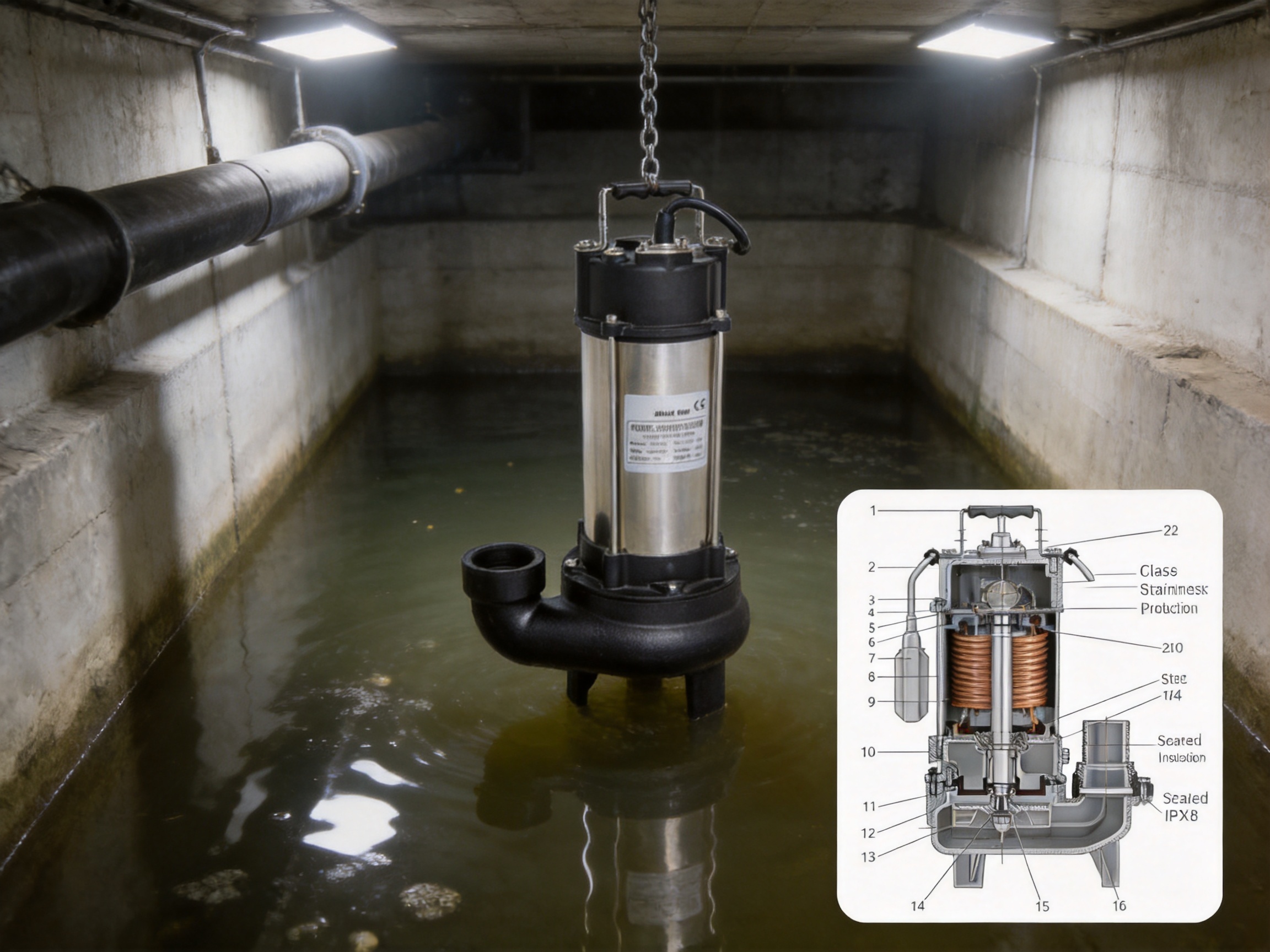
The Submersible Sewage Pump VS offers several practical advantages over conventional surface-mounted drainage pumps. The first is installation simplicity. A surface pump normally requires a suction pipe, foot valve, priming procedure, and a stable dry location. The VS pump is placed directly into the liquid and connected to the discharge system, reducing suction-side complexity.
The second advantage is space efficiency. A surface-mounted unit may require a concrete base, protective shelter, ventilation, and sufficient clearance for maintenance. A submerged unit can remain inside the tank or pit, making it suitable for compact locations. This can be particularly beneficial in residential drainage stations, commercial basements, and temporary construction installations.
The third advantage is improved protection from the surrounding environment. A surface pump may be exposed to rain, dust, impact, and temperature fluctuations. The VS motor is designed for submerged use and incorporates IPX8 protection. This does not remove the need for proper cable protection and controls, but it does make the pump more appropriate for wet operating conditions.
The fourth advantage is reduced priming risk. Air trapped in a suction line can cause a surface pump to lose prime. Because the VS pump operates below the liquid level, the hydraulic inlet is naturally supplied when the pump is correctly positioned. This can improve operational convenience and reduce the need for manual intervention.
Compared with basic low-cost submersible pumps, the VS model provides a more complete combination of features for wastewater service. Copper motor winding supports stable electrical performance, the thermal protector helps prevent overheating, the stainless steel shaft provides corrosion resistance, Class B insulation supports motor durability, and IPX8 protection is appropriate for submerged operation. These features create a stronger value proposition than a pump selected only on purchase price.
Competitor comparison should always be based on equivalent operating conditions. Important comparison points include the actual flow and head curve, motor efficiency, solids passage, mechanical seal design, cable quality, thermal protection, enclosure rating, material compatibility, warranty support, spare-parts availability, and service response. The VS pump’s advantages are most meaningful when these factors are evaluated as part of total operating cost rather than initial price alone.
Taizhou Edwin Electric Co., Ltd. was founded in 2008 and operates as an integrated manufacturing enterprise focused on independent research and development, mass production, and global export. This structure allows product development, manufacturing, quality control, and customer feedback to be connected within one business system.
Independent research and development supports continuous improvement in motor design, hydraulic performance, sealing arrangements, material selection, and product application. For wastewater pumps, development work must consider more than theoretical pumping capacity. It must also address heat management, corrosion exposure, mechanical balance, cable entry, submerged sealing, installation convenience, and maintenance requirements.
Mass production can provide important advantages when it is supported by controlled processes. Repeated manufacturing procedures allow workers and equipment to follow standardized methods for winding, assembly, welding, sealing, testing, and packaging. Consistency is particularly important for electric pumps because small variations in winding resistance, shaft alignment, bearing fit, or seal installation can affect performance and reliability.
A professional production process typically begins with incoming-material inspection. Copper wire, stainless steel shaft materials, insulation components, bearings, seals, housings, fasteners, cables, and hydraulic parts should be checked against defined requirements. Consistent incoming materials help reduce variation in the finished pump.
Motor winding is another important manufacturing stage. The copper wire must be formed and placed accurately, with appropriate insulation between turns and layers. The winding should be connected and secured correctly before varnishing or other insulation treatment. Electrical tests can verify resistance, insulation integrity, and overall winding quality.
The shaft and hydraulic assembly require accurate mechanical processing and alignment. A welded stainless steel shaft should be inspected for dimensional accuracy, surface condition, and connection integrity. The impeller and other rotating components should be balanced sufficiently for the intended operating speed. Good alignment helps control vibration and reduces stress on bearings and seals.
Sealing is critical for a submersible pump. The motor housing, cable entry, shaft area, and joints must work together to prevent water ingress. Assembly personnel should follow controlled procedures for seal placement, surface cleanliness, tightening torque, and inspection. Water-resistance testing can help identify sealing problems before the product leaves the factory.
Reliable pump manufacturing requires testing at multiple stages. Electrical tests may include winding resistance, insulation resistance, dielectric strength, current, and operating behavior. Mechanical inspection may include shaft runout, vibration, noise, impeller rotation, and fastener security. Hydraulic testing can verify flow and pressure performance against the applicable product curve.
For submersible equipment, water-resistance testing is especially important. Testing can help confirm that the enclosure and cable entry remain sealed under the specified conditions. Thermal operation may also be evaluated to ensure that the motor protector and insulation system function as intended.
Final inspection should confirm product labeling, cable length, accessories, rotation direction where applicable, packaging integrity, and documentation. A traceable production and inspection process allows potential issues to be investigated more effectively and supports consistent export quality.
Edwin Pump serves customers in international markets and has developed experience in procurement planning, order tracking, cross-border delivery, and foreign-trade services. International supply requires more than manufacturing a pump. It also requires accurate commercial communication, appropriate packaging, export documentation, product identification, and coordination with distributors or project buyers.
To support one-stop procurement, the company established Taizhou Haipai Import & Export Co., Ltd. and Golden Falcon Industrial Co., Ltd. in 2012. These associated companies contribute to procurement coordination, order management, logistics, and foreign-trade support. This structure can be valuable for overseas buyers that require consolidated sourcing, regular communication, and shipment planning.
Global projects may involve different voltage systems, regional standards, installation practices, and documentation requirements. Buyers should provide complete technical information at the quotation stage so the manufacturer can confirm the appropriate electrical configuration and supporting documentation.
The company’s wider portfolio includes solar water pumps, deep well pumps, submersible pumps, domestic booster pumps, circulation pumps, intelligent booster pumps, surface pumps, garden pumps, pool and spa pumps, commercial multistage pumps, end suction pumps, pipes, valves, and pump accessories. This range enables customers to source different pump types from one supplier.
A broad portfolio can simplify project procurement. An irrigation project, for example, may require a deep well pump, solar controller, pipework, valves, and a booster unit. A commercial building may need circulation pumps, pressure-boosting equipment, sewage drainage pumps, and accessories. Having access to multiple product categories can reduce the number of independent suppliers involved in a project.
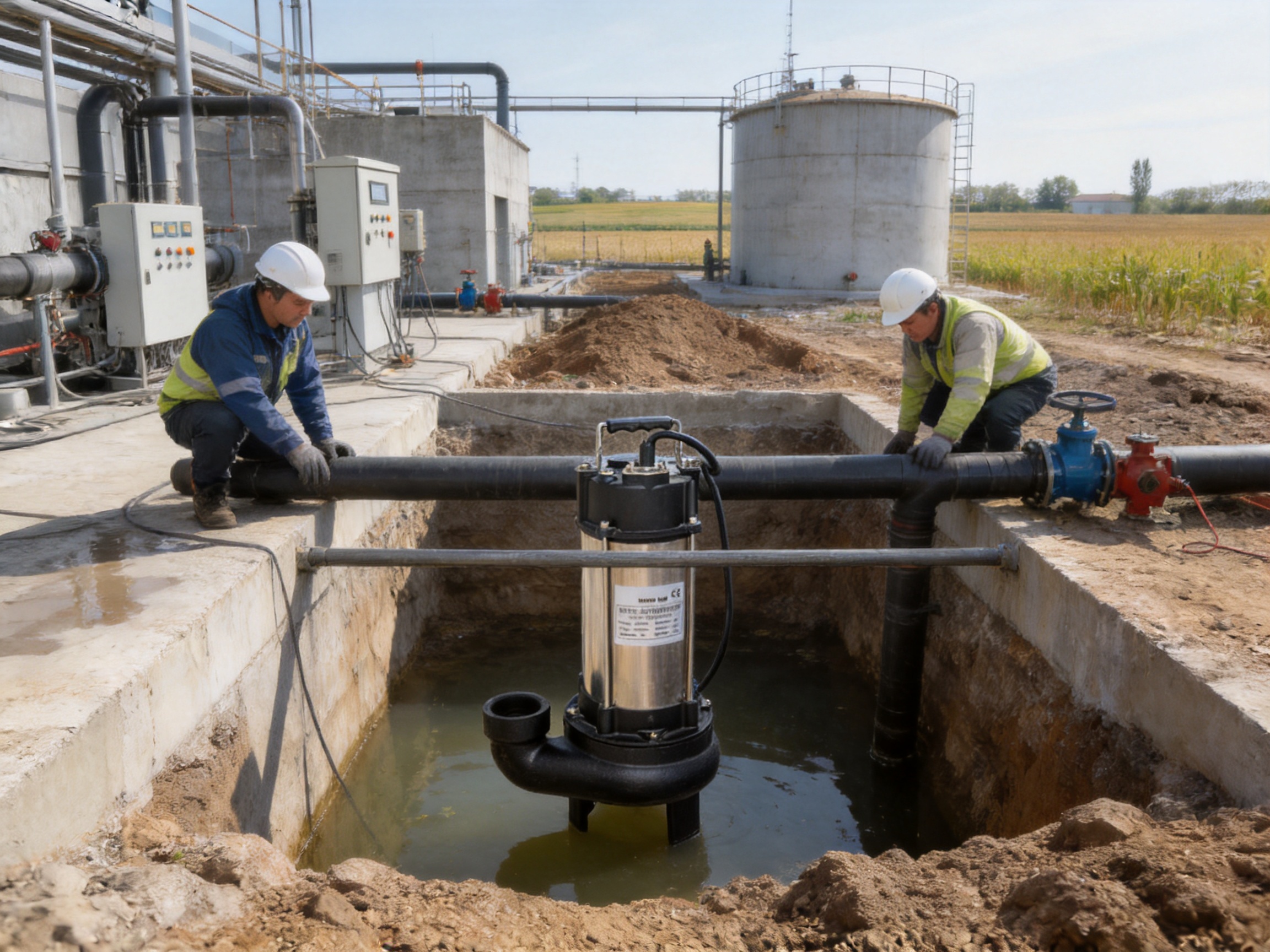
Before installation, inspect the pump for visible damage, loose components, damaged cable insulation, cracks, or contamination. Verify that the model and electrical rating match the project requirements. Confirm the required flow, head, liquid temperature, pH, density, and immersion depth.
The collection pit or tank should be cleaned of construction debris, large stones, metal fragments, plastic materials, and other objects that could block the inlet or damage the impeller. The pump should be positioned on a stable base or suspended using an appropriate lifting arrangement. It should not rest directly on loose sediment if that could obstruct the inlet.
The discharge pipe should be sized according to the required flow and total head. A pipe that is too small can create excessive friction loss and reduce delivered flow. Sharp bends should be minimized where possible, and the pipe should be adequately supported so that its weight is not transferred to the pump outlet.
A check valve may help prevent reverse flow when the pump stops, while an isolation valve can assist with maintenance. The complete piping system should be checked for leakage and blockage before commissioning. In a permanent station, the discharge line should be arranged to allow convenient removal of the pump without dismantling unnecessary sections of pipe.
Electrical work should be completed by a qualified professional in accordance with local regulations. The power supply must match the pump’s rated voltage, frequency, phase, and current requirements. Grounding, overcurrent protection, overload protection, cable sizing, and control-panel design should all be verified before operation.
The cable should be routed so that it cannot be cut, crushed, pulled by the pump, or exposed to unnecessary mechanical stress. It should not be used as a lifting rope. If the pump must be lowered or removed, use a suitable chain, rope, guide rail, or lifting handle designed for that purpose.
For automatic operation, the pump may be connected to a float switch, level sensor, or control system compatible with the motor and installation. Start and stop levels should be set to prevent excessive cycling and to ensure that the motor remains adequately submerged during operation.
The minimum operating level is especially important. If the liquid falls below the pump’s required cooling level, the motor may overheat or the pump may draw air. The control system should also include an alarm or backup arrangement where overflow could create safety, environmental, or property damage risks.
Before the first start, check that the discharge valve is in the correct position, the pump is fully or sufficiently submerged, the electrical connections are secure, and the liquid is within the specified operating range. Observe the first operating cycle for abnormal vibration, noise, leakage, high current, or inadequate drainage.
Routine maintenance should include inspection of the cable, lifting equipment, tank condition, level controls, discharge line, check valve, and pump exterior. The pump should be isolated from the electrical supply before it is removed from the tank or handled. Maintenance personnel should use appropriate protective equipment when working with sewage or contaminated water.
If the pump stops unexpectedly, do not repeatedly reset it without investigating the cause. Possible causes include a blocked inlet, obstructed impeller, closed discharge valve, low liquid level, voltage problem, damaged cable, excessive temperature, or motor fault. The built-in thermal protector may interrupt operation because of overheating, but the underlying reason must be corrected before normal service resumes.
Cleaning frequency depends on the wastewater composition and operating environment. Grease, fibrous materials, sediment, and other deposits can accumulate around the inlet or hydraulic components. Regular cleaning can help maintain flow, reduce motor load, and extend service life. A maintenance log should record operating hours, inspections, faults, repairs, and replacement parts.
Seasonal or long-term storage also requires care. If the pump will not be used for an extended period, it should be removed safely, cleaned with a compatible method, dried as appropriate, and stored in a protected location. The cable should be coiled without sharp bends, and the pump should be protected from impact, freezing, and corrosive storage conditions.
Wastewater may contain bacteria, viruses, toxic compounds, sharp objects, and gases. Personnel should treat every sewage installation as a potentially hazardous environment. Gloves, protective clothing, eye protection, and appropriate hygiene procedures are recommended. Confined-space entry should be performed only under an approved safety program with atmospheric testing, ventilation, supervision, and rescue provisions.
Electrical safety is equally important. A submersible pump operates in or near conductive liquid, so grounding and residual-current protection may be required by local regulations. Never handle the pump, cable, or control equipment while the power is energized. Do not use a damaged cable or attempt unauthorized repairs to sealed electrical components.
The VS pump should be used only with liquids compatible with its materials and operating limits. The listed pH range of 5 to 9 and maximum temperature of 40°C should be respected. If the liquid contains flammable gases, unusually aggressive chemicals, high concentrations of abrasive solids, or hazardous substances, a specialist risk assessment and equipment review are necessary.
Proper wastewater pumping also supports environmental protection. Preventing overflow reduces the risk of contamination to soil, groundwater, waterways, and public areas. Correctly sized equipment can reduce energy waste and avoid repeated emergency operation. Regular maintenance helps prevent leaks, premature disposal, and unnecessary replacement of equipment.
Choosing a professional manufacturer provides value beyond the individual pump. It gives buyers access to product knowledge, application guidance, quality procedures, technical documentation, spare-parts coordination, and after-sales communication. These services can be especially important when pumps are installed in remote sites or integrated into larger water-treatment systems.
Edwin Pump’s experience since 2008 combines product development, manufacturing, and international export. Its focus on independent R&D and mass production supports both product improvement and supply continuity. The company’s investment in intelligent technology and new-energy products since 2018 also reflects an effort to respond to changing requirements in energy efficiency, automation, and sustainable water management.
For distributors and engineering buyers, supplier stability can reduce procurement risk. A manufacturer with multiple pump categories can support repeat orders, replacement projects, and system expansion. The associated import and export companies further support order tracking, international logistics, and foreign-trade coordination.
Professional manufacturing does not eliminate the need for correct application engineering. Buyers should still provide accurate duty requirements and request the documents needed for their market. The best results come from cooperation between the manufacturer, system designer, installer, and end user.
Before ordering the Submersible Sewage Pump VS, buyers should confirm the following information:
1. Required flow rate and total dynamic head.
2. Power supply voltage, frequency, phase, and control method.
3. Discharge-pipe size and approximate pipeline length.
4. Maximum liquid temperature.
5. Liquid pH, density, viscosity, and chemical composition.
6. Solids content, fiber content, and approximate particle size.
7. Required immersion depth and tank dimensions.
8. Manual or automatic operation requirements.
9. Need for a float switch, level sensor, control panel, check valve, or isolation valve.
10. Local electrical, safety, certification, and documentation requirements.
11. Installation environment, including possible gases or hazardous substances.
12. Expected operating hours, start frequency, and duty or standby requirements.
Providing this information allows the manufacturer or distributor to confirm whether the VS model is suitable and whether additional accessories or a different configuration are required.
The pump is designed for wastewater drainage and water transfer in factories, construction sites, commercial facilities, municipal sewage systems, residential drainage stations, methane pools, and agricultural environments. It is intended for installation directly inside the liquid.
The product is designed as a submersible pump. Its IPX8 protection class and cooling arrangement are intended for submerged operation. It should not be used as a conventional dry-installed surface pump unless the manufacturer specifically approves that arrangement.
The listed maximum immersion depth is 5 meters. The actual installation should also consider tank geometry, cable length, discharge pressure, water level variation, and the condition of the pump housing and cable entry.
The maximum listed liquid temperature is 40°C or 104°F. Higher-temperature liquids should not be pumped without written confirmation that the materials, seals, insulation, and motor design are suitable.
The listed pH range is 5 to 9. This covers many ordinary water-based wastewater conditions, but the pump is not automatically suitable for concentrated acids, strong alkalis, or chemically aggressive process liquids.
Yes. The motor includes a built-in thermal protector designed to help interrupt operation when excessive motor temperature occurs. The cause of overheating must still be identified and corrected before the pump is returned to normal service.
Copper provides high electrical conductivity and supports efficient motor operation. A properly manufactured copper winding can contribute to stable performance, dependable starting, and improved resistance to electrical losses compared with lower-quality winding arrangements.
The stainless steel shaft provides corrosion resistance in water-based environments and transfers torque from the motor to the hydraulic assembly. The welded construction supports mechanical integrity when manufactured and inspected correctly.
IPX8 indicates that the enclosure is designed for protection during continuous or extended immersion under specified conditions. It is appropriate for a pump intended to operate inside a tank, pit, or drainage station. The cable and seals must remain undamaged for this protection to be maintained.
No pump should be assumed to handle every type of sewage. The liquid’s solids content, particle size, fibrous materials, viscosity, density, temperature, and chemical composition must be checked. Buyers should confirm the pump’s hydraulic design and solids-handling capability for the specific wastewater.
Automatic operation may be achieved by integrating the pump with a compatible float switch, level sensor, or control panel. The start and stop levels should be selected to prevent excessive cycling and ensure sufficient liquid coverage for motor cooling.
Buyers should request the performance curve, rated flow and head, motor power, voltage, frequency, discharge size, maximum solids passage, cable details, dimensions, weight, control options, and applicable installation instructions. This information is necessary for accurate engineering selection.
The submersible design reduces suction-line complexity, avoids many priming problems, saves space, and is better suited to wet pits and tanks. A surface-mounted pump may be preferable when the pump must remain accessible in a dry mechanical room, but it generally requires more suction-side planning.
The Submersible Sewage Pump VS is manufactured by Taizhou Edwin Electric Co., Ltd., an integrated pump manufacturer founded in 2008 with capabilities in independent R&D, mass production, and global export.
Yes. The broader product range includes solar pumps, deep well pumps, submersible pumps, domestic booster pumps, circulation pumps, intelligent booster pumps, surface pumps, garden pumps, pool and spa pumps, commercial multistage pumps, end suction pumps, pipes, valves, and pump accessories.
The Submersible Sewage Pump VS is a practical solution for wastewater drainage where reliable submerged operation, compact installation, and motor protection are important. Its copper winding, built-in thermal protector, stainless steel welded shaft, Class B insulation, and IPX8 protection class provide a strong technical foundation for demanding drainage applications.
The pump is suitable for a broad range of environments, including factories, construction sites, commercial facilities, municipal sewage systems, residential drainage stations, methane pools, and agricultural water applications. Its maximum immersion depth of 5 meters, maximum liquid temperature of 40°C, pH range of 5 to 9, and listed density and viscosity limits provide clear starting points for application review.
Its advantages over basic drainage solutions are most evident in submerged installation, reduced suction complexity, space efficiency, protection from wet environments, and integrated motor safeguards. Compared with competing products, buyers should evaluate not only price but also winding material, thermal protection, shaft construction, enclosure rating, hydraulic performance, service support, and total operating cost.
Supported by an established manufacturing organization with independent R&D, mass-production capability, export experience, and a broad product portfolio, the VS pump is positioned as a dependable component for professional water-management systems. Correct selection, qualified installation, suitable controls, and regular maintenance will ensure that the pump delivers its intended value throughout its operating life.
1. International Electrotechnical Commission. Degrees of Protection Provided by Enclosures for Electrical Equipment.
2. International Electrotechnical Commission. Rotating Electrical Machines: Rating and Performance Requirements.
3. Hydraulic Institute. Centrifugal Pump Application and System Design Principles.
4. American Society of Mechanical Engineers. Guidance for Pumping Systems and Wastewater Equipment Selection.
5. World Health Organization. Technical Guidance for Wastewater Handling and Sanitation Safety.
6. Manufacturer-provided technical information for the Submersible Sewage Pump VS.
7. Manufacturer-provided company profile and product portfolio information for Taizhou Edwin Electric Co., Ltd.
aseriesnoisereductiondesignacid-baseverticalsurfacepump-1.jpg "EV(F)A Series Noise Reduction Design Acid-base Vertical Surface Pump")
serieswatershortageprotectionvoltagestabilizationstainlesssteelverticalmultistagepump.jpg "EVR(S) Series Water Shortage Protection Voltage Stabilization Stainless Steel Vertical Multistage Pump")
edwina@edwin-pump.com
+86-13586290903 (WhatsApp)
Xuri Gongliang Cutting Tool Entrepreneurship Park, Wenqiao Town, Wenling City, Taizhou City, Zhejiang Province, China

High Performance Smart Pump Factory


 English