edwina@edwin-pump.com

View All Products
en
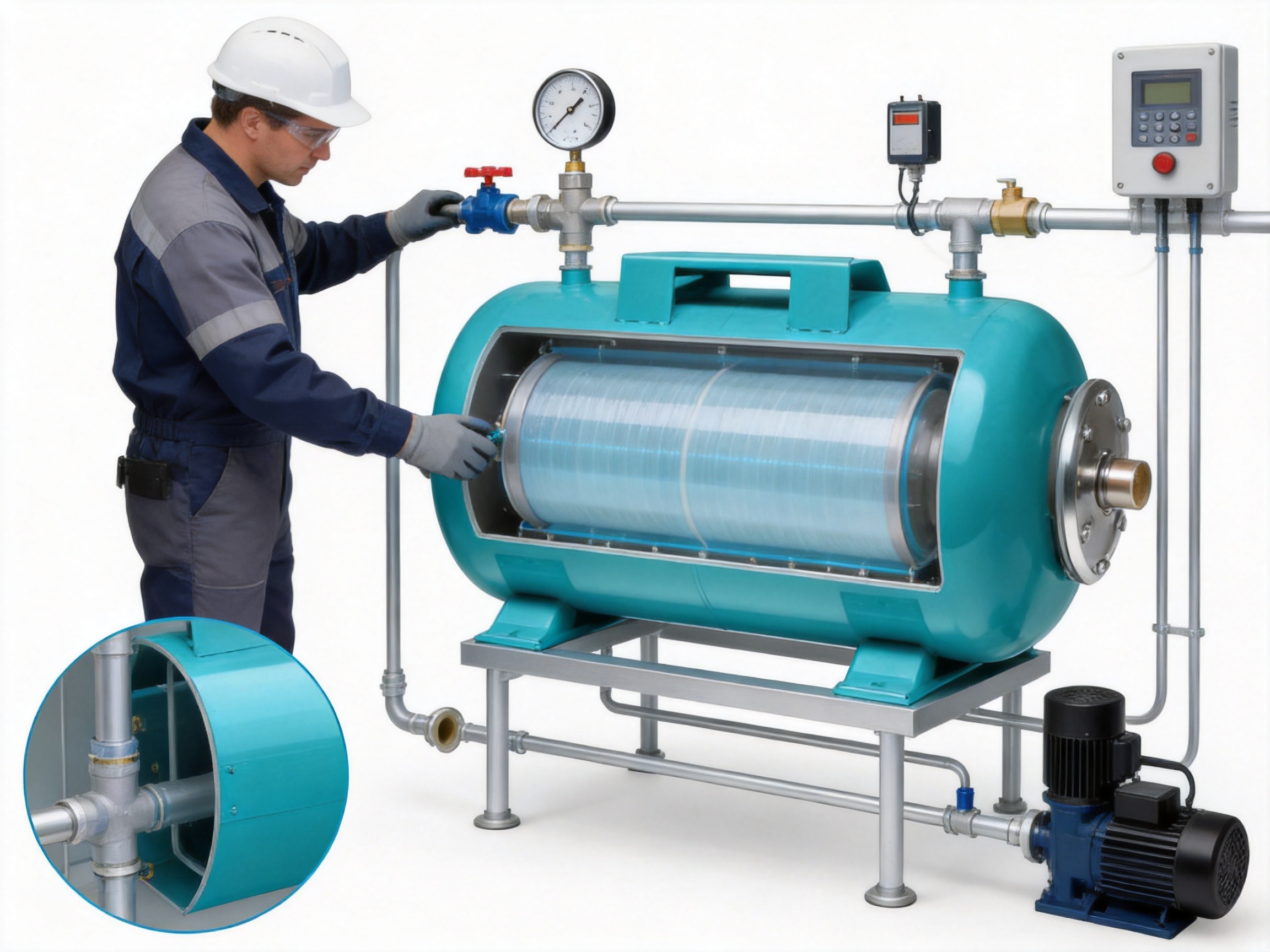
Water systems depend on stable pressure, controlled pump cycling, and dependable water storage. When these functions are not properly managed, pumps may start and stop too frequently, pressure may fluctuate during use, and mechanical components may experience unnecessary stress. A pressure tank provides an effective solution by storing pressurized water and helping the pump respond more efficiently to changing demand. The CF Series Carbon Steel Horizontal Pressure Tank is designed for this role in domestic, agricultural, commercial, and general water-supply installations.
Developed as a replaceable-membrane pressure tank, the CF Series combines a carbon steel body, a carbon steel flange, flexible membrane options, practical horizontal construction, and several pressure configurations. Available in nominal capacities from 19 liters to 100 liters, the series offers a useful range for different water systems. Its compact horizontal structure is especially suitable for booster sets, domestic pump assemblies, locations with limited vertical clearance, and installations where the tank must be mounted near or above a pump.
The product is manufactured by Taizhou Edwin Electric Co., Ltd., an integrated pump and water-system equipment enterprise founded in 2008. The company combines independent research and development, mass production, and international export. Its experience with deep well pumps, submersible pumps, booster pumps, circulation pumps, solar water pumps, and intelligent booster systems supports a broader understanding of how pressure tanks operate as part of complete water solutions.
A pump is designed to move water, but it does not need to run every time a faucet opens for a few seconds. Without a pressure tank, even a small water demand can activate the pump immediately. Repeated short operating cycles can increase electrical consumption, generate heat in the motor, accelerate wear on switches and contactors, and reduce the overall service life of the pumping system.
A pressure tank stores a volume of water under pressure. When a user opens a tap or a small outlet is operated, water can first be supplied from the tank. The pump remains off until the system pressure falls to the programmed cut-in point. Once the pump starts, it replenishes the stored water and restores pressure. This operating method reduces unnecessary starts and provides a smoother response to intermittent demand.
The tank also helps reduce pressure fluctuations. Although it cannot replace a properly selected pump, controller, pressure switch, or pipe network, it provides a buffer between the pump and the water-use points. That buffer is valuable in homes, irrigation systems, water-treatment equipment, pressure-boosting units, and small commercial installations.
In a well-designed system, the pressure tank works together with the pump, pressure switch, check valve, pipework, and safety devices. The correct tank size depends on pump capacity, cut-in and cut-out settings, expected demand, system pressure, and the desired reduction in pump cycling. The CF Series offers several size options so installers can select a tank that matches the operating requirements rather than relying on one universal model.
The CF Series is a horizontal carbon steel pressure tank with a replaceable membrane. The replaceable membrane design separates the stored water from the air or gas charge inside the vessel. This separation helps limit direct contact between the water and the metal shell and provides a controlled elastic interface for pressure storage.
The main product characteristics include a carbon steel tank body, a carbon steel flange, replaceable membrane construction, multiple nominal capacities, several maximum-pressure choices, and a standard 1-inch connector across the listed models. The standard precharge pressure is specified at 1.8 to 2.0 bar. Working-temperature compatibility depends on the membrane material selected for the application.
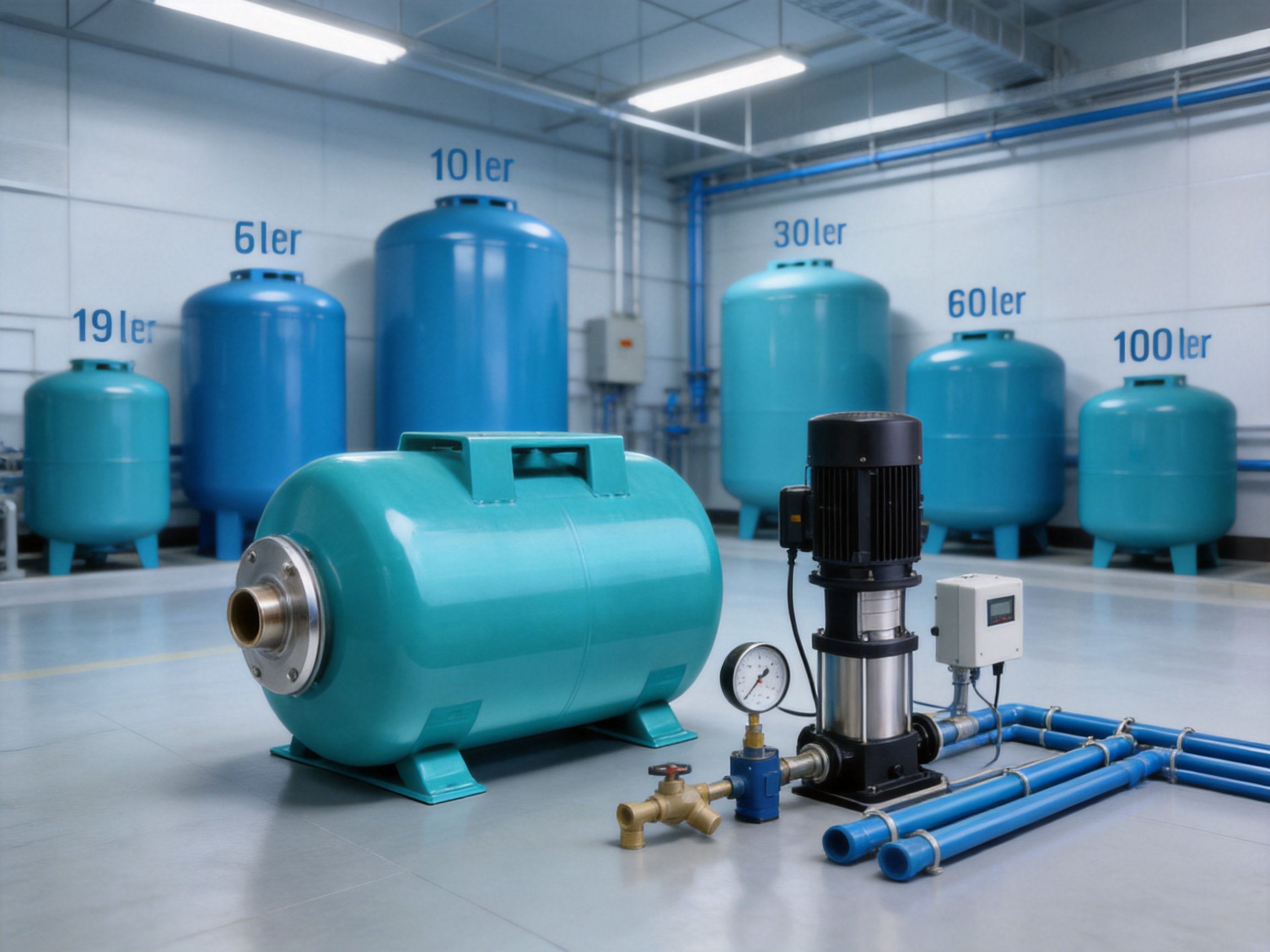
The available CF Series models are CF19L, CF24L, CF36L, CF50L, CF60L, CF80L, and CF100L. This range covers compact systems requiring a small pressure reserve as well as larger domestic or light commercial systems needing increased drawdown capacity.
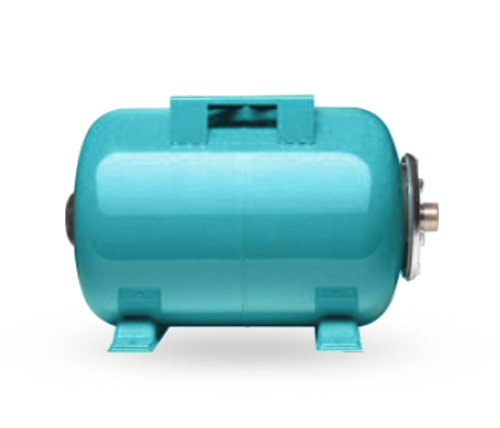
CF Series Carbon Steel Horizontal Pressure Tank for Water System
Carbon steel remains a widely used pressure-vessel material because it offers a practical combination of structural strength, manufacturability, availability, and cost control. For pressure tanks, the vessel must withstand repeated changes in internal pressure while remaining compatible with the intended installation environment. The CF Series uses a carbon steel construction suited to general water-system applications.
The carbon steel flange is an important part of the tank assembly. It provides the connection interface between the pressure vessel and the membrane or water-side components. A well-designed flange supports maintenance access and makes the replaceable membrane concept more useful because the internal membrane can be serviced or replaced without automatically discarding the complete outer shell.
Compared with pressure tanks that require full replacement after membrane failure, a replaceable-membrane design can offer a more maintainable solution. Service personnel can inspect the relevant components, replace the membrane when appropriate, and return the vessel to operation according to approved procedures. This may reduce material waste and simplify long-term maintenance planning.
Carbon steel also provides a firm platform for different mounting arrangements. The horizontal body can be incorporated into pump skids, booster packages, domestic water systems, and equipment cabinets where a vertical tank would be difficult to install. Its practical geometry supports flexible layout planning, particularly in compact mechanical rooms and low-clearance utility spaces.
The membrane is central to the performance of a pressure tank. It acts as a flexible barrier between the water and the compressed air space. When the tank is charged, incoming water pushes against the membrane and compresses the air. When the system demands water, the stored air pressure helps force water out of the tank and into the pipe network.
The CF Series uses a replaceable membrane structure. This design provides a maintenance advantage because the membrane is treated as a serviceable component rather than an inseparable part of the entire tank. A replaceable membrane can be especially valuable in systems expected to operate for many years, in installations where maintenance access is available, or in markets where serviceability and spare-parts supply are important purchasing factors.
Membrane material should be selected according to the water temperature, chemical conditions, and application requirements. The available temperature information identifies three material options: butyl, EPDM, and natural rubber. Butyl and EPDM are rated for a working temperature range of -10°C to 99°C in the supplied specification, while natural rubber is rated for 0°C to 77°C.
These temperature ranges should not be interpreted as permission to use any membrane in every application. The installer should confirm the selected membrane material, actual water temperature, water chemistry, pressure conditions, and local technical requirements before commissioning. If a system operates near the upper temperature limit, a suitable safety margin is advisable.
Butyl is commonly selected where low gas permeability and stable flexible performance are important. In a pressure tank, retaining the precharged air or gas is essential because the pressure reserve gradually becomes less effective if the charge is lost too quickly. The listed butyl working-temperature range of -10°C to 99°C makes it suitable for a broad range of normal water-system conditions, subject to application verification.
Butyl may be considered for domestic water supply, booster systems, and general installations where stable pressure behavior is required. The final suitability depends on the fluid, temperature, pressure, and any applicable drinking-water or regulatory requirements.
EPDM is a widely used elastomer for water-related equipment. It is often considered when resistance to weathering, ozone, and many environmental conditions is important. The CF Series specification lists EPDM with a working temperature range of -10°C to 99°C.
EPDM may be useful in installations exposed to varying ambient conditions or in systems where the membrane must maintain flexibility across a broad temperature range. As with all elastomers, compatibility must be evaluated against the actual fluid and any chemical additives used in the system.
Natural rubber is listed with a working-temperature range of 0°C to 77°C. It may be appropriate for selected water applications within that range, especially when the design priorities include flexibility and cost control. However, the narrower temperature range means that the application must be reviewed carefully before selection.
Natural rubber should not be used outside its specified range. Installers should also consider exposure to sunlight, ozone, oils, chemicals, and other environmental factors that may affect elastomer performance. Correct material selection is a key part of achieving dependable pressure-tank service.
The CF Series includes seven models. The model number indicates the approximate nominal volume, while the full technical selection should also consider maximum pressure, dimensions, connector size, precharge pressure, membrane material, and system demand.
| Model | Nominal Volume | Maximum Pressure Options | Length | Height | Precharge Pressure | Connector | Packing Volume |
|---|---|---|---|---|---|---|---|
| CF19L | 19 L | 6, 8, 10, or 16 bar | 395 mm | 292 mm | 1.8–2.0 bar | 1 inch | 0.0356 CBM |
| CF24L | 24 L | 6, 8, 10, or 16 bar | 460 mm | 292 mm | 1.8–2.0 bar | 1 inch | 0.0399 CBM |
| CF36L | 36 L | 6, 8, or 10 bar | 435 mm | 375 mm | 1.8–2.0 bar | 1 inch | 0.0588 CBM |
| CF50L | 50 L | 6, 8, or 10 bar | 545 mm | 375 mm | 1.8–2.0 bar | 1 inch | 0.0752 CBM |
| CF60L | 60 L | 6, 8, 10, or 16 bar | 645 mm | 408 mm | 1.8–2.0 bar | 1 inch | 0.1082 CBM |
| CF80L | 80 L | 6, 8, 10, or 16 bar | 600 mm | 470 mm | 1.8–2.0 bar | 1 inch | 0.1325 CBM |
| CF100L | 100 L | 6, 8, 10, or 16 bar | 685 mm | 470 mm | 1.8–2.0 bar | 1 inch | 0.1524 CBM |
The CF19L and CF24L models are appropriate starting points for compact household booster assemblies, small pressure-washing systems, and light-duty water applications where space is limited. The CF36L and CF50L models provide a larger reserve for homes with several outlets, small irrigation networks, or systems with more frequent intermittent demand.
The CF60L, CF80L, and CF100L models can be considered for larger domestic installations, commercial water supply, irrigation support, and packaged booster equipment. The actual choice should be based on pump output and the required drawdown volume rather than nominal tank volume alone.
One of the clearest advantages of the CF Series is its replaceable membrane. In a conventional non-serviceable tank, membrane damage or loss of elasticity may require replacement of the entire vessel. The CF approach separates the service life of the carbon steel shell from the service life of the flexible membrane. This can improve maintenance flexibility and may reduce total ownership costs over the life of the installation.
The horizontal format is another practical advantage. Vertical tanks are efficient where ceiling height is available, but they are not always suitable for compact pump rooms, cabinet installations, or equipment platforms. A horizontal vessel can fit under pipework, beside a pump, or within a low-clearance skid. This flexibility can reduce layout restrictions for installers and equipment designers.
The model range also provides an advantage over suppliers offering only one or two standard sizes. Seven listed capacities allow a more precise match between the tank and the system. A correctly sized tank can provide effective drawdown without occupying unnecessary space or adding avoidable weight and cost.
Multiple maximum-pressure options support different market requirements. The 6, 8, 10, and 16 bar configurations are not available for every model, so selection must follow the technical data. This range allows the product family to address ordinary household systems as well as applications that require a higher pressure rating.
The 1-inch connector provides a consistent interface across the listed models. Standardization can simplify procurement, reduce the number of connection components required by distributors, and make the tanks easier to integrate into common pump and pressure-control assemblies. Compatibility must still be verified against the pipework, valve arrangement, and local installation practice.
The precharge specification of 1.8 to 2.0 bar gives installers a defined starting point for setup. Precharge should be checked with the water side depressurized and adjusted according to the pump pressure-switch settings and system design. A tank is not correctly commissioned simply because it has been connected; the air charge must be matched to the operating conditions.
Taizhou Edwin Electric Co., Ltd. was founded in 2008 and has developed as an integrated manufacturing enterprise. Its stated capabilities include independent research and development, mass production, and global export. This integrated structure is valuable for pressure-tank customers because product design, production planning, order management, and export coordination are handled within a broader industrial organization rather than being treated as isolated activities.
The company’s core product lines include deep well pumps, submersible pumps, domestic booster pumps, and circulation pumps. It also supplies solar water pumps, intelligent booster pumps, and other water-treatment peripheral products. Pressure tanks are closely related to these products because many pump systems require pressure storage, pressure stabilization, or a buffer against short demand cycles.
Experience across multiple pump categories can support practical product development. A manufacturer that understands pump curves, pressure-switch operation, irrigation demand, domestic water patterns, and booster-system controls is better positioned to design a pressure tank for actual field use. The tank is not merely a metal container; it is a component within a hydraulic and electrical system.
Advanced manufacturing should be understood as a complete process rather than a single machine or production step. For a pressure tank, quality begins with material control and continues through shell forming, flange production, membrane preparation, assembly, pressure-related inspection, finishing, packing, and traceable delivery. Each stage influences safety, performance, and serviceability.
Independent research and development enables the manufacturer to respond to different installation requirements. Horizontal dimensions, connector arrangements, pressure ratings, membrane options, and packaging volumes all influence the usability of a tank. A product family such as the CF Series reflects an effort to provide several configurations rather than a one-size-fits-all solution.
Product development also involves considering the interaction between the pressure tank and the pump. The tank must provide an appropriate pressure response, withstand the selected operating conditions, and fit within the intended system layout. The availability of related pumps and intelligent booster products gives the manufacturer a broader reference base when evaluating complete water-system requirements.
Carbon steel body and flange materials must be selected and processed consistently. Dimensional stability, joining quality, surface condition, and connection accuracy affect the finished product. The membrane must also be manufactured and installed with attention to fit, flexibility, and compatibility with the tank geometry.
Because the membrane is replaceable, the flange and sealing arrangement require particular care. The connection must provide a reliable boundary between the pressure vessel and the water side while still permitting appropriate service access. A well-controlled interface supports the maintenance advantages of the design.
Mass production is important for distributors and project buyers who need repeatable specifications across multiple orders. Consistent dimensions, connector positions, pressure options, and packaging volumes make it easier for customers to plan inventory and integrate the tanks into standard equipment packages.
Production consistency also supports quality management. When the same models are manufactured repeatedly, process data and inspection procedures can be standardized. This helps reduce variation between batches and gives purchasing teams greater confidence when ordering replacement units or expanding an installed system.
The company established Taizhou Haipai Import & Export Co., Ltd. and Golden Falcon Industrial Co., Ltd. in 2012 to support procurement planning, order tracking, cross-border delivery, and foreign-trade services. These capabilities are relevant to international buyers because product quality is only one part of a successful supply relationship.
Export customers also need clear specifications, reliable packing, coordinated documentation, shipment visibility, and responsive communication. The CF Series packing-volume data supports logistics planning, while the standardized model information helps importers, distributors, and system integrators prepare product listings and warehouse records.
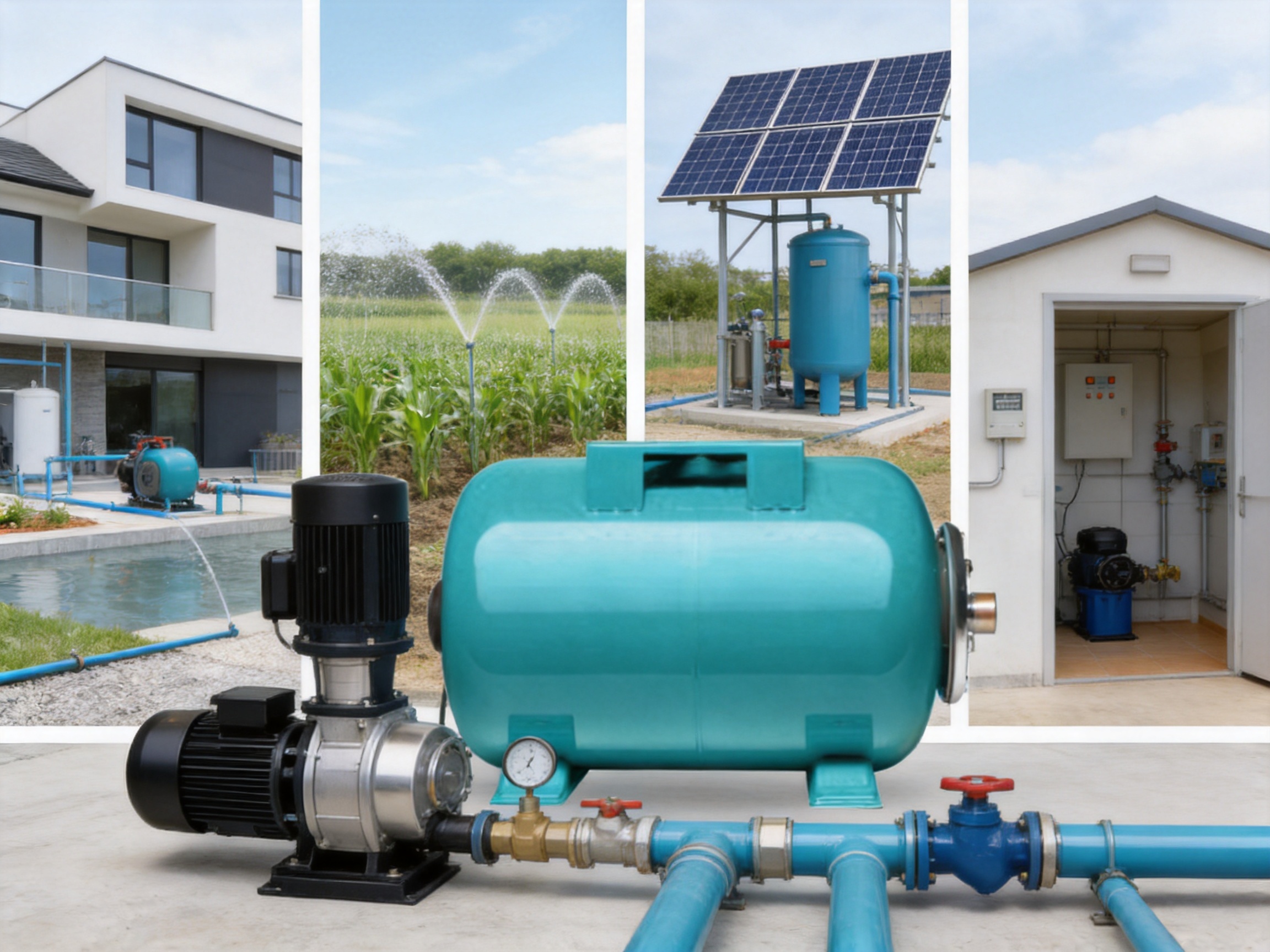
In residential systems, a pressure tank can support a well pump, booster pump, or household water-supply package. The smaller CF19L and CF24L models may be suitable where demand is moderate and installation space is restricted. Larger models can be selected for homes with several bathrooms, multiple simultaneous users, or a greater need to reduce pump starts.
The tank may be installed with a pressure switch and pump controller. When water is used, the tank supplies part of the demand before the pump starts. This can improve comfort by reducing immediate pump activation during short water draws such as hand washing, toilet filling, or brief tap operation.
Booster systems are often required when incoming water pressure is insufficient or inconsistent. A pressure tank can be added to a booster assembly to provide a local reserve and reduce rapid cycling. The horizontal configuration can be particularly useful in packaged booster units where the tank must fit into a compact frame.
For intelligent booster systems, the pressure tank may work alongside variable-speed control, sensors, and automatic start-stop logic. The control system manages pump operation while the tank provides hydraulic buffering. The correct configuration depends on the controller and pump design, but the tank can remain valuable even when electronic control is present.
Small irrigation systems often operate intermittently. Sprinklers, hose outlets, drip zones, and garden taps may create changing demand patterns. A pressure tank can help reduce starts when the demand is short or irregular. The CF36L, CF50L, and larger models may be considered for systems with greater water use, provided the pressure rating and membrane material match the application.
Outdoor installations require attention to weather protection, drainage, freezing conditions, and corrosion control. The tank should be installed according to the manufacturer’s instructions and protected from conditions outside its design range.
Solar pumping systems can experience changing output because available solar energy varies throughout the day. A pressure tank can provide a useful buffer between pump operation and water demand. When combined with a suitable solar pump, controller, storage arrangement, and pressure-management equipment, the tank may help smooth short-term changes in water use.
The tank itself does not store electrical energy and does not replace a water reservoir. Its role is hydraulic: it stores pressurized water and helps manage pressure behavior. System designers should therefore evaluate the pump, solar controller, water source, daily demand, and storage requirements as a complete installation.
Small commercial buildings, workshops, farms, service facilities, and light industrial sites may require stable water pressure without installing a large accumulator system. The larger CF models can provide a practical pressure buffer for selected applications. Before use, the buyer should verify the pressure rating, operating temperature, fluid compatibility, local codes, and required certifications.
For larger industrial systems, the CF Series may be used as part of a broader engineered package rather than as the sole pressure-storage device. Multiple tanks, larger commercial vessels, variable-frequency drives, or specialized control equipment may be required depending on flow rate and demand profile.
Installation should be performed by qualified personnel who understand pressure vessels, pump controls, and water-system safety. The tank should be mounted on a stable support capable of carrying the vessel weight when filled. The connection should be properly aligned and supported so that pipe loads are not transferred to the tank fitting.
A suitable isolation valve can make future maintenance easier. A drain or service arrangement may also be useful, depending on the system design. Pressure gauges, check valves, pressure switches, relief devices, and other accessories should be selected according to the pump and installation requirements.
The precharge should be checked before the tank is placed into normal service. The water side should be depressurized before measuring or adjusting the air charge. The specified initial range is 1.8 to 2.0 bar, but the final setting should correspond to the system’s pressure-switch and control parameters.
As a general principle, the precharge is often set below the pump cut-in pressure so that the tank can provide useful drawdown while allowing the pump to start correctly. The exact differential should follow the equipment manufacturer’s instructions and the requirements of the system designer. Incorrect precharge may produce poor drawdown, rapid cycling, or incomplete use of the tank volume.
The maximum pressure marking must never be exceeded. The installer should select a model with a pressure rating appropriate for the highest possible system pressure, including pressure surges and control failure conditions. A pressure-relief device should be provided where required by the system design or applicable regulations.
Temperature must also be controlled. Butyl and EPDM are listed for -10°C to 99°C, while natural rubber is listed for 0°C to 77°C. The selected membrane should remain within its rated range during normal operation, startup, shutdown, cleaning, and abnormal but foreseeable conditions.
Regular inspection helps maintain reliable pressure-tank performance. The exterior should be checked for corrosion, physical damage, leakage, unusual deformation, or deterioration around the connector and flange area. The pump should also be observed for excessive cycling, because frequent starts may indicate an incorrect precharge, damaged membrane, leaking plumbing, or an undersized tank.
The precharge should be checked periodically using suitable equipment and safe procedures. It is not enough to assume that the original pressure will remain unchanged indefinitely. Temperature, permeation, valve leakage, membrane wear, and service conditions can influence the charge over time.
If the tank loses pressure rapidly, the membrane or air valve may require inspection. If water emerges from a valve intended only for air service, the membrane may be damaged. Before disassembly, the water side and air side must be safely depressurized. Maintenance should follow the product documentation and local safety practices.
The replaceable membrane is a significant service feature, but replacement should be carried out by trained personnel. The correct membrane material and size must be used, sealing surfaces should be inspected, and the flange should be tightened according to an appropriate sequence and torque requirement. After reassembly, the tank should be checked for leakage and returned to service gradually.
A serviceable tank can provide an advantage in long-term ownership. Instead of treating the entire pressure vessel as disposable after a membrane problem, the user may be able to restore the tank through a controlled component replacement. This is especially useful for commercial buyers managing multiple installed systems and seeking predictable maintenance costs.
Buyers should begin by identifying the application. A domestic booster unit, irrigation package, well-water system, and commercial pressure set may have different flow patterns and pressure requirements. The tank should be selected with the pump curve, cut-in pressure, cut-out pressure, expected drawdown, and available installation space in mind.
The required maximum pressure must be confirmed before ordering. CF19L, CF24L, CF60L, CF80L, and CF100L are listed with 6, 8, 10, and 16 bar options, while CF36L and CF50L are listed with 6, 8, and 10 bar options. The buyer should not assume that every pressure option is available for every model.
Membrane material is another important purchasing point. Butyl, EPDM, and natural rubber have different temperature ranges and may have different compatibility characteristics. Buyers should specify the intended water temperature and application conditions rather than ordering only by tank volume.
Packaging volume is useful for freight planning. The listed packing volumes range from 0.0356 CBM for CF19L to 0.1524 CBM for CF100L. Importers can use this information when estimating container utilization, warehouse space, and distribution costs. Actual shipping arrangements should be confirmed with the supplier because packing methods and order quantities may affect final logistics calculations.
For distributors, the broad model range supports market segmentation. Smaller tanks can serve household and compact pump-system customers, while larger sizes can be offered to farms, commercial buildings, and equipment integrators. A common 1-inch connector across the listed models can simplify product training and inventory organization.
A pressure tank supplier with experience in pumps can provide more relevant technical support than a company focused only on standalone vessels. Pump systems operate as interconnected assemblies. Tank sizing, pressure-switch settings, check-valve positioning, pump capacity, pipe friction, and water demand all affect system performance.
Edwin Pump’s product portfolio includes deep well pumps, submersible pumps, surface pumps, booster pumps, circulation pumps, garden pumps, pool and spa pumps, commercial multistage pumps, end-suction pumps, pipes and valves, pump accessories, and intelligent booster pumps. This broad range gives the company a practical context for supplying pressure-management components to different types of water systems.
The company also serves sectors including new energy projects, agricultural irrigation, municipal engineering, mining, construction, HVAC systems, and household water supply. These sectors have different requirements, but they share a need for reliable water movement and controlled system operation. Experience across them supports a more complete understanding of customer applications.
Global export experience is another strength for international customers. Buyers often need assistance with product selection, procurement planning, order tracking, documentation, and delivery coordination. The company’s related foreign-trade organizations were established to support these activities and provide one-stop procurement services.
The principal performance benefit of the CF Series is improved pressure-system behavior. By storing water under pressure, the tank can reduce the frequency of pump starts during intermittent demand. This can support longer pump service life, reduce mechanical and electrical stress, and improve user comfort.
The tank can also help prevent the pump from responding too aggressively to minor changes in demand. In a system without sufficient hydraulic buffering, a small leak or brief outlet opening may produce repeated pressure changes. A correctly selected tank can absorb part of this variation and make the system less sensitive to short-duration usage.
The horizontal design may reduce installation complexity. In a confined pump room, changing from a vertical to a horizontal tank can free overhead space and allow more direct pipe routing. This can be particularly useful when the pump, pressure switch, and tank are assembled as one compact package.
Maintenance efficiency is supported by the replaceable membrane. Service personnel can focus on the component that has reached the end of its useful life instead of replacing a complete tank unnecessarily. This can improve equipment availability and contribute to a more sustainable maintenance strategy.
The range of capacities and pressure ratings allows the product to serve several levels of demand. Instead of selecting an oversized tank that increases cost and occupies valuable space, system designers can compare the available models and choose a closer fit. Correct sizing remains essential; the presence of multiple models does not remove the need for hydraulic calculation.
A pressure tank is a pressurized component and must be treated accordingly. It should never be modified, welded, drilled, or repaired in an unauthorized manner. The pressure rating must be respected, and the installation should include suitable protection against overpressure where required.
The tank should be protected from freezing if water remains inside during low-temperature conditions. Freezing can cause expansion and damage to internal components or connected pipework. Likewise, the tank should not be exposed to temperatures outside the selected membrane’s rated range.
Water quality can influence service life. Abrasive particles, aggressive chemicals, high mineral content, oils, or incompatible cleaning agents may affect the membrane, flange, connector, or internal surfaces. A filtration or treatment arrangement may be required for certain water sources.
Product documentation should be retained by the system owner. Model, capacity, pressure rating, membrane material, installation date, precharge setting, and maintenance records are useful for future service. For commercial facilities with several tanks, labeling each vessel can improve inspection and replacement planning.
The tank stores water under pressure and helps reduce unnecessary pump starts. It provides a hydraulic buffer between the pump and water outlets, helping stabilize pressure during intermittent demand.
It means the flexible internal membrane can be serviced or replaced separately from the outer carbon steel vessel, subject to proper procedures and availability of the correct replacement component.
The listed models are CF19L, CF24L, CF36L, CF50L, CF60L, CF80L, and CF100L, covering nominal capacities from 19 liters to 100 liters.
All listed models specify a 1-inch connector. Compatibility with the complete pipe system should still be verified before installation.
The listed precharge range is 1.8 to 2.0 bar. The final operating setting should be checked and adjusted according to the pressure-switch settings and the pump-system design.
The specification identifies butyl, EPDM, and natural rubber options. Butyl and EPDM are listed for -10°C to 99°C, while natural rubber is listed for 0°C to 77°C.
Yes. The CF Series is designed for water-system pressure storage and can be integrated with suitable booster pumps. The tank size, pressure rating, connector, and control settings must match the booster system.
It can be advantageous in installations with limited vertical clearance. The installer must confirm the available length, height, support arrangement, access for maintenance, and pipework orientation.
Selection should consider pump capacity, demand pattern, desired reduction in cycling, operating pressure, maximum pressure, temperature, membrane material, available space, and local installation requirements.
Not necessarily. An oversized tank may increase cost and consume space without delivering a proportional benefit. The correct capacity depends on the operating conditions and required drawdown volume.
The CF Series is manufactured by Taizhou Edwin Electric Co., Ltd., an integrated water-pump and water-system equipment enterprise founded in 2008, with research and development, mass production, and global export capabilities.
Potential applications include household water supply, domestic booster systems, irrigation, garden watering, solar pumping, commercial water supply, HVAC-related systems, and selected light industrial installations.
Inspect the vessel, flange, connector, and surrounding pipework for leakage or damage. Check the precharge with the water side depressurized, monitor pump cycling, and replace the membrane when required using the correct component and safe service procedures.
The CF Series Carbon Steel Horizontal Pressure Tank is a practical pressure-management component for water systems that require stable operation, reduced pump cycling, and flexible installation. Its carbon steel construction, carbon steel flange, replaceable membrane, horizontal format, 1-inch connector, and range of capacities make it suitable for a broad selection of domestic, agricultural, commercial, and packaged pump applications.
The replaceable membrane is a key advantage because it supports serviceability and may extend the useful life of the outer vessel. The availability of butyl, EPDM, and natural rubber options allows the tank to be matched more closely to temperature and application requirements. Multiple pressure configurations and seven nominal capacities further improve selection flexibility.
The product is supported by a manufacturer with experience in independent research and development, mass production, pump-system engineering, and global export. Its broader portfolio of water pumps and intelligent water-system products provides a strong foundation for understanding the role of pressure tanks in complete installations.
For the best result, the CF Series should be selected and commissioned as part of a complete hydraulic system. Proper tank sizing, membrane selection, precharge adjustment, pressure protection, installation support, and regular maintenance are essential. When these factors are managed correctly, the tank can contribute to smoother pressure delivery, more efficient pump operation, easier maintenance, and dependable long-term water-system performance.
Taizhou Edwin Electric Co., Ltd. CF Series Carbon Steel Horizontal Pressure Tank Product Specification.
Taizhou Edwin Electric Co., Ltd. CF Series Technical Data: Models, Pressure Ratings, Dimensions, Precharge, Connectors, and Packing Information.
Taizhou Edwin Electric Co., Ltd. Company Profile and Water-Pump Product Portfolio.
General principles of hydropneumatic pressure-tank operation and pump-cycle control.
General guidance for elastomer membrane selection in pressurized water applications.
General installation and maintenance practices for pressurized water-system components.
edwina@edwin-pump.com
+86-13586290903 (WhatsApp)
Xuri Gongliang Cutting Tool Entrepreneurship Park, Wenqiao Town, Wenling City, Taizhou City, Zhejiang Province, China

High Performance Smart Pump Factory


 English