edwina@edwin-pump.com

View All Products
en
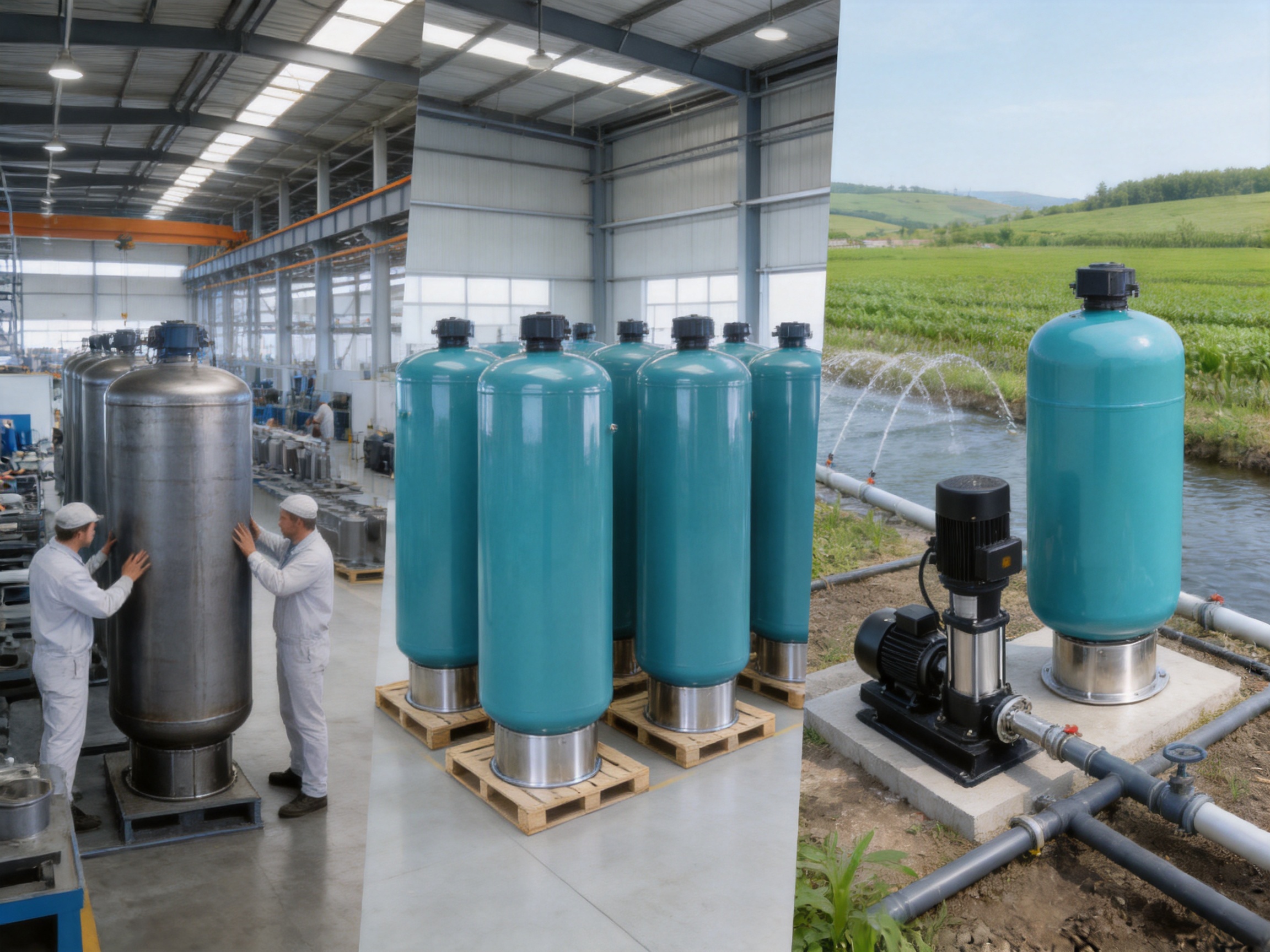
Water supply systems require more than a pump alone. A pump can move water, but a pressure tank helps the complete installation operate more smoothly, efficiently, and reliably. The SF Series 1-inch carbon steel vertical pressure tank with flange is designed for water supply, booster, irrigation, and pressure-control applications where stable system performance and long service life are important. Available with maximum pressure options of 6 bar and 8 bar, this replaceable-membrane tank provides a practical way to reduce pump cycling, stabilize water pressure, and protect pumping equipment from unnecessary operating stress.
The tank series is manufactured by Taizhou Edwin Electric Co., Ltd., an integrated pump and water equipment enterprise founded in 2008. The company specializes in independent research and development, mass production, international export, and one-stop procurement support for water pumps and related products. Its product experience covers deep well pumps, submersible pumps, domestic booster pumps, circulation pumps, solar water pumps, intelligent booster pumps, and water treatment peripheral products. This broader pump-system knowledge is valuable when producing pressure tanks because a pressure tank must be selected and applied as part of a complete hydraulic system rather than as an isolated component.
With a vertical structure, carbon steel flange, replaceable membrane, 1-inch connector, and multiple membrane-material choices, the SF Series offers flexibility for different working conditions. The compact dimensions of the available models also make the tanks suitable for domestic water supply, small commercial systems, agricultural installations, and equipment packages where space must be used efficiently.
A pressure tank is a storage and pressure-balancing vessel installed in a water pumping system. It contains water on one side of a flexible membrane and compressed air or gas on the other side. When the pump operates, water enters the tank and compresses the gas. When a water outlet is opened, the compressed gas pushes water back into the system, allowing a certain amount of water to be delivered without immediately starting the pump.
This operating principle provides several important benefits. First, the tank reduces the frequency with which the pump starts and stops. Second, it helps maintain a more consistent pressure between pump cycles. Third, it provides a reserve volume of pressurized water for short or intermittent demands. These functions are particularly useful in domestic booster systems, garden irrigation, small commercial water systems, and pressure sets used with wells or storage tanks.
A vertical pressure tank uses an upright configuration. Compared with a horizontal tank, its footprint is generally narrower in relation to its height, which can be helpful in plant rooms, pump rooms, utility areas, and packaged equipment installations. The vertical arrangement also provides a straightforward installation orientation and can be incorporated into many standard pump-room layouts.
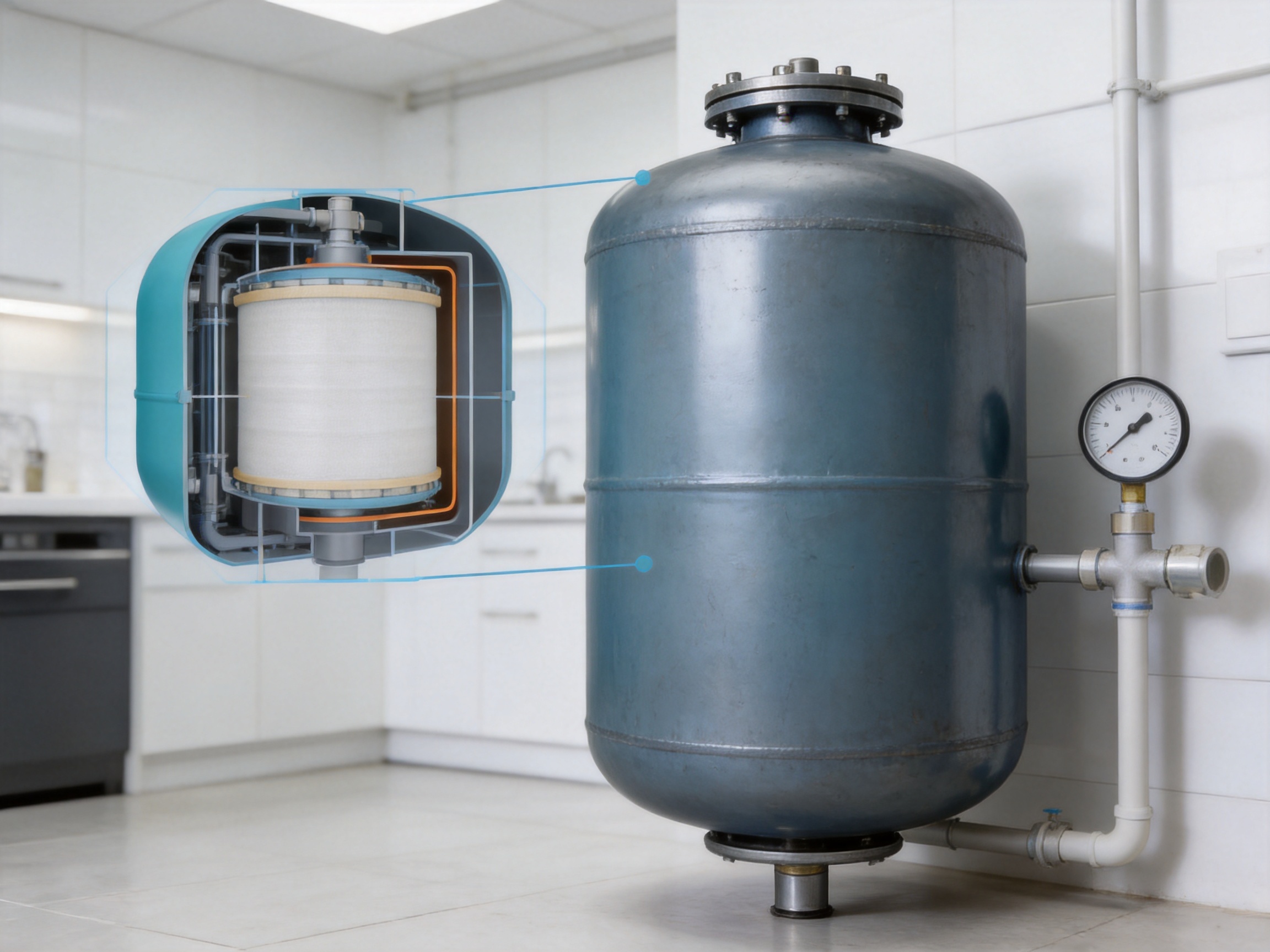
The SF Series is designed as a replaceable-membrane pressure tank. The membrane separates the water from the compressed air chamber. When the membrane eventually requires service because of wear, compatibility issues, or maintenance requirements, the replaceable design can provide a more practical service option than replacing the entire pressure vessel.
The tank is equipped with a carbon steel flange. The flange forms an important connection and service component, helping secure the membrane assembly and connect the tank to the water system. Carbon steel is widely used in pressure equipment because it offers a useful balance of mechanical strength, manufacturing practicality, and cost control.
For distributors, installers, and system integrators, a carbon steel flange can provide a familiar connection solution. It can be incorporated into standard piping arrangements and maintained using commonly available tools and procedures. The flange design is also consistent with the service philosophy of a replaceable-membrane vessel, since the membrane can be accessed through the relevant assembly during maintenance.
The replaceable membrane is one of the most important advantages of the series. The membrane is the working barrier between water and compressed gas. Over time, every flexible component is affected by pressure cycles, temperature, water chemistry, and installation conditions. A replaceable design allows qualified service personnel to inspect and change the membrane when required.
This feature can reduce lifecycle disruption. Instead of automatically discarding the complete tank after membrane wear, a user may be able to restore the vessel through a suitable replacement procedure. The actual service method should always follow the manufacturer’s instructions, and the tank must be fully depressurized before any service work begins. Nevertheless, the replaceable design is valuable for users who prioritize maintainability, repairability, and long-term operating control.
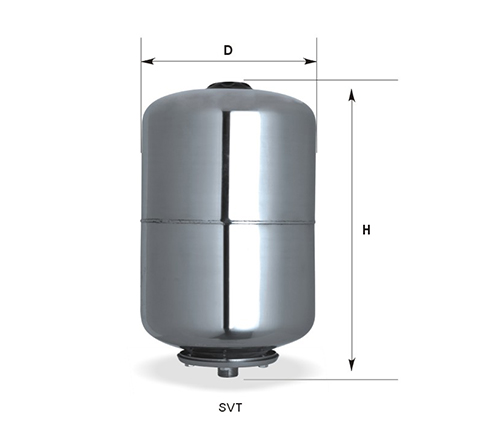
The upright form of the SF Series is appropriate for installations where floor space is limited. The listed models have diameters from 330 to 360 millimeters and heights from 325 to 390 millimeters. This compact range allows the tanks to be installed beside booster pumps, control panels, filters, manifolds, or pressure switches without occupying a large horizontal area.
A vertical tank can also support organized equipment-room planning. Pumps and tanks can be arranged in a clear vertical and horizontal pattern, leaving access around the pipe connector and service points. Good equipment layout improves inspection, reduces the risk of accidental damage, and makes it easier for technicians to check precharge pressure and system connections.
The SF Series is available with maximum pressure specifications of 6 bar and 8 bar. These two options allow the tank to be matched to different pressure-system requirements. A lower maximum-pressure option may be suitable for many domestic and light commercial installations, while an 8-bar version may be selected when the system requires a higher pressure rating within the permitted application range.
Maximum pressure is not the same as normal operating pressure. The pressure vessel must be selected and installed according to the complete system design, including pump shut-off pressure, pressure-switch settings, safety devices, water temperature, piping conditions, and applicable local regulations. The pump, tank, control equipment, and relief protection must be compatible with one another.
Each listed model uses a 1-inch connector. This connection size is widely used in domestic booster systems, small irrigation systems, and compact pressure assemblies. A standard connector can simplify procurement and installation because installers are more likely to have compatible fittings, valves, unions, and flexible connectors available.
The final connection method should be selected according to the piping material and system design. A suitable shut-off valve, drain arrangement, pressure gauge, and safety device may be required. The tank should not be forced into alignment with the pipework, because mechanical stress on the connector can affect sealing and long-term reliability.
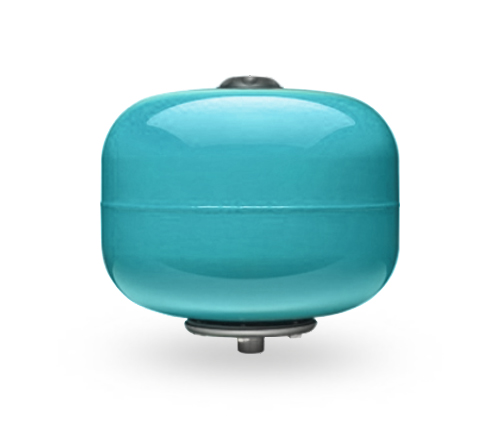
SF Series 1 Inch Carbon Steel 6Bar and 8Bar Vertical Pressure Tank with Flange
The SF Series information identifies three membrane-material options: Butyl, EPDM, and natural rubber. Each material has its own application characteristics. Correct selection depends on the water temperature, fluid quality, expected pressure cycles, regulatory requirements, and compatibility with the intended use.
The listed working temperature range for the Butyl membrane is -10°C to 99°C. Butyl is commonly selected for applications that require good gas retention and a broad working-temperature range. In a pressure tank, gas retention is important because stable precharge pressure contributes to predictable tank performance.
Butyl may be appropriate for many general water supply and pressure-boosting installations. However, the final selection should consider the water chemistry and any certification requirements associated with potable water. Users should confirm that the selected membrane version is suitable for the intended water-contact application before placing the tank into service.
The listed working temperature range for the EPDM membrane is also -10°C to 99°C. EPDM is widely recognized for its resistance to water, weathering, ozone, and a range of environmental conditions. It is often considered for water-related applications and systems exposed to changing ambient conditions.
EPDM compatibility depends on the actual fluid and chemical additives in the system. It should not be assumed that a material suitable for water is automatically suitable for every chemical mixture, oil-containing fluid, or treatment solution. System designers should review the fluid composition and confirm compatibility with the manufacturer before selecting the membrane.
The listed working temperature range for natural rubber is 0°C to 77°C. Natural rubber can offer useful elasticity and flexibility for pressure-cycle applications. Its lower minimum temperature specification means that it should be used only where the operating environment remains within the stated range.
Natural rubber may be suitable for selected water applications, particularly where the operating temperature is moderate and the material’s flexibility is beneficial. It is important to protect the tank from freezing conditions and excessive heat. If the system may experience temperatures outside the specified range, another membrane option should be considered.
Temperature affects pressure, elasticity, sealing performance, and material service life. As water temperature increases, the pressure conditions inside a closed system may change. Membrane materials may also become harder, softer, or less resistant when used outside their rated range. For these reasons, the membrane must be selected according to the highest and lowest temperatures expected during transport, storage, installation, operation, and shutdown.
The temperatures stated for the SF Series should be treated as working guidance rather than permission to ignore the complete equipment specification. A system designer should evaluate the tank together with the pump, water, pipework, pressure controls, and safety relief devices. When a system operates near the upper temperature limit, additional attention should be given to pressure adjustment and maintenance intervals.
The available models provide several dimensional choices while maintaining a 1-inch connector and a precharge pressure range of 1.8 to 2.0 bar. The following table summarizes the technical data supplied for the series.
| Model | Maximum Pressure | Diameter | Height | Precharge Pressure | Connector | Packing Volume |
|---|---|---|---|---|---|---|
| SF24L | 6 bar or 8 bar | 330 mm | 335 mm | 1.8–2.0 bar | 1 inch | 0.0405 CBM |
| SF25L | 6 bar or 8 bar | 350 mm | 325 mm | 1.8–2.0 bar | 1 inch | 0.0441 CBM |
| SF26L | 6 bar or 8 bar | 360 mm | 365 mm | 1.8–2.0 bar | 1 inch | 0.0520 CBM |
| RT24L | 6 bar or 8 bar | 350 mm | 390 mm | 1.8–2.0 bar | 1 inch | 0.0525 CBM |
The data shows that the listed models are close in overall size but offer different diameter and height combinations. This gives installers more flexibility when working around existing equipment, cabinets, pipework, ceilings, and access paths. The packing volume information is also useful for distributors and project planners who need to estimate storage and shipping requirements.
The RT24L designation appears in the supplied technical data alongside the SF models. Buyers should confirm the exact model code, capacity, product label, and application before ordering, especially when preparing a mixed-model purchase order. Model identification is important for matching replacement membranes, packaging, documentation, and pressure ratings.
Frequent pump starts and stops can increase mechanical and electrical stress. Each start creates a demand for motor torque, electrical current, and hydraulic acceleration. Repeated cycling can affect motor components, control equipment, seals, bearings, and pipe connections. A pressure tank provides a pressurized water reserve so that small water demands can be met without starting the pump every time.
Reducing cycling does not mean that the pump will never start. Rather, the tank allows the system to accumulate and release water within a pressure band. When the tank volume and precharge are correctly matched to the pump and system demand, the pump can operate in longer, more efficient cycles.
A pressure tank helps moderate fluctuations between pump start and stop points. Without adequate pressure storage, a small change in demand can cause rapid pressure changes or immediate pump activation. With the tank installed, water can be delivered from the stored volume, helping the system respond more gradually.
Stable pressure is useful in homes, offices, agricultural installations, and commercial facilities. It can improve the user experience at taps and showers, provide more predictable irrigation performance, and reduce abrupt hydraulic changes in connected equipment.
Lower pump cycling can contribute to better energy management. A motor that starts less frequently may operate under more favorable conditions, especially when the pressure system is correctly sized. The tank itself does not create energy savings in every installation, and it cannot compensate for an incorrectly selected or inefficient pump. However, it can support a better overall operating pattern by reducing unnecessary starts.
Pressure fluctuations can cause water hammer, vibration, and stress on pipe connections. A pressure tank can act as a hydraulic buffer, although it should not be considered a complete water-hammer arrestor for every system. Proper piping design, valves, controls, and flow management remain essential. When integrated correctly, the tank can help create a smoother pressure environment for pumps and connected equipment.
One major competitive advantage of the SF Series is the replaceable membrane. Many basic pressure tanks use a fixed internal diaphragm or bladder that cannot be economically replaced. When that internal component fails, the entire tank may need to be removed and discarded. A replaceable membrane can provide a more serviceable alternative for users who want to extend equipment life and manage maintenance costs.
The carbon steel flange is another practical advantage. A strong, serviceable flange supports the membrane structure and provides a familiar construction approach for professional installers. The combination of carbon steel construction, replaceable membrane technology, and standard 1-inch connection makes the tank suitable for system builders who value both durability and maintainability.
The availability of 6-bar and 8-bar options also improves application flexibility. Some competing products may offer only one pressure rating, forcing a distributor to hold more product variations or a system designer to compromise on selection. The SF Series allows the pressure rating to be chosen according to the project’s design requirements, provided all components remain within their approved specifications.
The vertical configuration provides another practical distinction. In compact pump rooms, a tank with a controlled footprint can be easier to position than a wide horizontal vessel. The listed dimensions allow buyers to compare the tank against available installation space before ordering. This is especially useful for booster pump sets, domestic utility rooms, small commercial plant areas, and packaged water systems.
Finally, the range of membrane materials gives the series greater adaptability. Butyl, EPDM, and natural rubber options cover different temperature and service considerations. Material choice should always be verified for the intended water and temperature conditions, but the availability of alternatives is useful for distributors serving different markets.
Taizhou Edwin Electric Co., Ltd. was founded in 2008 and operates as an integrated manufacturing enterprise. Its business includes independent research and development, mass production, and global export. This combination provides an important foundation for producing pressure tanks and related water equipment at consistent commercial scale.
A manufacturer with experience across multiple pump categories understands the conditions in which pressure tanks are used. Deep well pumps, submersible pumps, surface pumps, booster pumps, circulation pumps, solar water pumps, and intelligent booster pumps all create different system requirements. Experience with these products can support better product coordination, more practical dimensions, and improved understanding of pump-control behavior.
Independent research and development allows a manufacturer to adapt products to market requirements instead of relying only on standard third-party designs. For a pressure tank, development work may involve vessel dimensions, flange configuration, membrane installation, material selection, pressure ratings, connector design, packaging, and compatibility with common pump systems.
Product development also includes feedback from distributors, installers, and project customers. International users may require different pressure ratings, membrane materials, packaging arrangements, documentation, and order quantities. A manufacturer with its own product-development capability can respond more efficiently to these needs.
Mass production is important for maintaining supply continuity and controlling product consistency. Pressure tanks must be produced with repeatable dimensions, reliable connections, stable membrane installation, and appropriate pressure performance. Large-scale manufacturing creates opportunities for standardized procedures, production inspection, process control, and organized material management.
For wholesale buyers, production capability affects more than price. It also influences lead-time planning, replacement-part availability, order consolidation, packaging efficiency, and the ability to support recurring projects. Edwin Pump’s broader manufacturing organization is positioned to serve customers seeking repeat orders and coordinated water-system products.
The company supplies customers in international markets and has developed support resources for procurement planning, order tracking, cross-border delivery, and foreign-trade services. Through associated companies established in 2012, the business provides broader purchasing and export coordination.
International supply requires attention to product identification, packaging volume, shipping documents, communication, and delivery schedules. The stated packing volumes for the SF Series can assist importers and distributors when planning container utilization, warehouse space, and freight calculations. Clear model confirmation is especially important when several similar tank sizes are ordered together.
Pressure tanks are often purchased together with pumps, valves, controls, pipes, and accessories. A supplier that can provide multiple categories may simplify the procurement process. Edwin Pump’s product portfolio includes pump accessories, pipes and valves, intelligent booster pumps, commercial multistage pumps, end-suction pumps, garden pumps, pool and spa pumps, and other water equipment.
One-stop procurement can reduce the number of separate suppliers involved in a project. It may also make product matching easier, since the buyer can discuss pump performance, tank pressure, pipe connection, and control requirements through one coordinated purchasing channel. Although each product still requires technical verification, integrated sourcing can improve project organization.
The tank can be used in household water-pressure systems connected to a well, storage tank, surface pump, or booster pump. It may help provide a more stable supply to faucets, showers, toilets, washing machines, and other water outlets. In a domestic installation, the compact vertical shape can be advantageous where the pump room or utility area has limited floor space.
For drinking-water use, the buyer must confirm that the selected membrane and complete tank configuration meet applicable potable-water requirements. Water quality, sanitation, installation hygiene, and local certification rules should be considered before commissioning.
Booster systems often experience changing demand throughout the day. A pressure tank can provide stored water during low-flow periods and reduce unnecessary pump starts. It may be used with a pressure switch, electronic controller, variable-speed system, or other approved control arrangement.
The tank should be sized according to expected flow, pump capacity, pressure range, and cycling requirements. A tank that is too small may not reduce cycling adequately, while a tank that is too large may increase cost and occupy unnecessary space. The SF Series offers a compact format for small and medium pressure applications, subject to detailed system calculation.
Garden irrigation systems commonly operate intermittently. Sprinklers, hoses, drip systems, and automatic irrigation valves may create short-duration or variable water demands. A pressure tank can help smooth these demand changes and reduce cycling when water is used in small quantities.
Agricultural installations must account for water source quality, temperature, outdoor exposure, seasonal operation, and protection from freezing. The tank should be mounted on a stable base and protected against impact, excessive sunlight, and environmental conditions outside its approved range.
Small offices, shops, workshops, guesthouses, and similar buildings may require a compact pressure-boosting solution. The SF Series can support these applications when the required flow and pressure remain within the tank and pump system’s design limits. A stable pressure reserve may be useful for washrooms, cleaning points, light process water, and general utility supply.
Pressure vessels are used in some heating and circulation arrangements, but the tank material, membrane, temperature range, fluid composition, and pressure rating must be verified carefully. The supplied temperature information relates to the available membrane options, but not every membrane is suitable for every heating fluid or chemical additive. The complete application should be reviewed by a qualified system designer.
The tank should be installed by qualified personnel who understand pressure equipment and pump-system safety. Before installation, inspect the vessel, flange, connector, membrane configuration, and label. Confirm that the model, pressure rating, membrane material, and connector match the purchase order and system design.
Install the tank on a firm and level support surface. The support must be capable of carrying the filled weight and resisting vibration. Avoid installing the tank where it can be struck by vehicles, tools, agricultural equipment, or other moving objects. Provide adequate space around the connector and service points for inspection and maintenance.
The tank should be connected using suitable pipework and fittings. A shut-off valve can make future service easier, while a pressure gauge helps the technician observe system conditions. A drain arrangement may also be useful. Depending on the application and local requirements, the system may require a pressure relief valve or other protective device.
Do not lift the tank by the pipe connector, flange, valve, or other small component. Use appropriate lifting methods for the actual product weight and packaging condition. The connector should be aligned naturally with the piping. Excessive force, cross-threading, or pipe misalignment can damage the connection or produce leaks.
The listed precharge pressure for the models is 1.8 to 2.0 bar. Precharge should be checked with the water side fully depressurized and isolated from the system. Measuring precharge while the tank is still under water pressure can produce an inaccurate reading.
The correct field setting may depend on the pressure-switch arrangement and the manufacturer’s recommendations. The precharge must not exceed the maximum pressure rating of the tank or the permitted value for the installation. Adjustments should be made using clean, calibrated equipment by a qualified person.
After installation, open and close valves gradually to prevent sudden pressure surges. Check all threaded and flanged connections for leakage. Confirm that the pump starts and stops at the intended pressure points, that the tank accepts and releases water correctly, and that no abnormal vibration or noise is present.
Record the model, pressure rating, membrane material, precharge setting, installation date, and commissioning observations. These records can help during future maintenance and make it easier to identify replacement parts.
Regular inspection helps maintain pressure-tank performance. The inspection interval depends on the operating environment, cycling frequency, water quality, temperature, and importance of the installation. At minimum, users should monitor system pressure, pump cycling, leakage, unusual noise, and visible corrosion or damage.
Precharge pressure should be checked periodically according to the maintenance plan. Before checking, isolate the tank and fully depressurize the water side. If precharge repeatedly falls outside the expected range, investigate the valve, membrane, connection points, and possible leakage rather than repeatedly adding air without identifying the cause.
A failed membrane may cause the pump to cycle rapidly, the tank to lose effective storage capacity, or water to appear at the air valve in some configurations. If membrane failure is suspected, stop the equipment and have the tank inspected by qualified service personnel. Never open the flange or attempt membrane replacement while the vessel is pressurized.
Because the SF Series uses a replaceable membrane, service may be possible without replacing the entire pressure vessel. The correct replacement membrane must match the model, dimensions, material, and intended application. After replacement, the flange must be assembled correctly, the vessel checked for leaks, and the precharge restored according to the technical instructions.
The exterior should be kept clean and dry where practical. Any signs of corrosion, deformation, coating damage, or impact should be assessed promptly. A pressure vessel that shows serious structural damage must not be returned to service without professional evaluation.
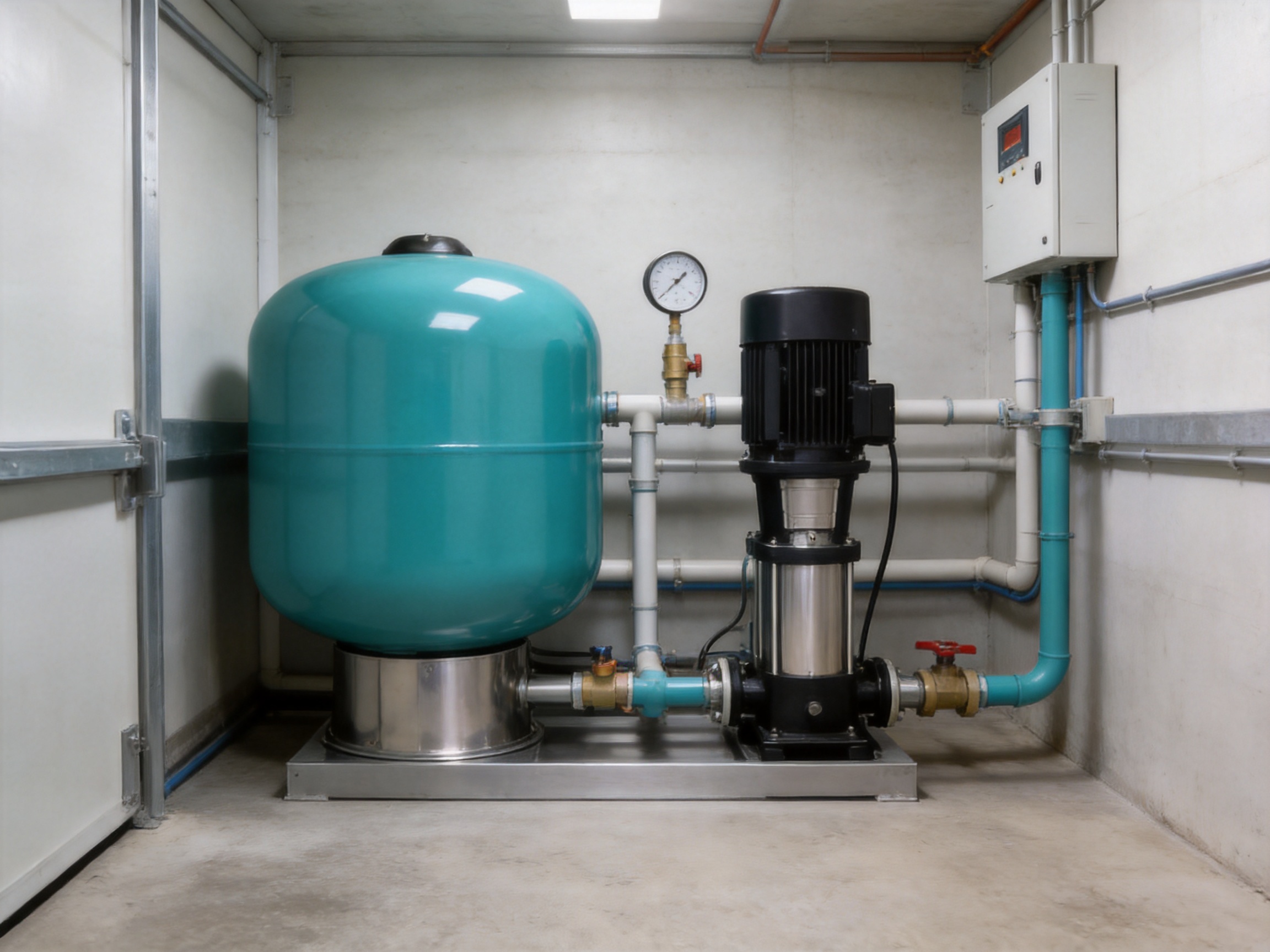
Model selection should begin with the pump and system requirements rather than with tank dimensions alone. Determine the pump’s maximum pressure, normal operating pressure, flow rate, start and stop settings, expected demand pattern, and required cycling frequency. Then compare these values with the tank’s 6-bar or 8-bar maximum-pressure option.
Next, check the available installation area. The SF24L has a diameter of 330 millimeters and a height of 335 millimeters. The SF25L has a diameter of 350 millimeters and a height of 325 millimeters. The SF26L has a diameter of 360 millimeters and a height of 365 millimeters. The RT24L has a diameter of 350 millimeters and a height of 390 millimeters. These differences may affect placement below shelves, inside cabinets, beside pumps, or within packaged skids.
Confirm the 1-inch connector requirement and determine whether the tank can be integrated into the existing pipework without restrictive transitions. Review the membrane material according to temperature and fluid compatibility. For outdoor or cold-weather systems, the minimum temperature range must be considered carefully. For warm-water systems, the upper temperature limit must not be exceeded.
Finally, confirm the model code, pressure rating, packing arrangement, replacement membrane availability, and documentation with the supplier. This is especially important because similar models may have close dimensions but different internal capacities or product configurations.
A pressure tank operates as part of a hydraulic system. Its performance depends on pump behavior, control settings, pipe size, valve arrangement, demand patterns, and maintenance. A company that manufactures only isolated vessels may not have the same practical understanding of pump applications as an integrated water-equipment manufacturer.
Edwin Pump’s product experience includes domestic booster pumps, solar pumps, submersible pumps, deep well pumps, surface pumps, circulation pumps, multistage pumps, end-suction pumps, and intelligent pressure systems. This product range gives the company a broad view of the requirements faced by installers and distributors. It also supports coordinated procurement when a project needs both pumping equipment and pressure-control accessories.
The company’s investment in intelligent technology and new-energy products since 2018 demonstrates a focus on expanding beyond traditional pump manufacturing. While the SF Series is a mechanical pressure tank, it can be integrated into modern systems that include electronic controllers, smart boosters, solar pumping equipment, and automated water management.
For global industrial customers, the combination of manufacturing, export organization, product variety, and procurement support can simplify communication. Buyers can discuss the application, select compatible equipment, organize order tracking, and plan cross-border delivery through a coordinated supplier relationship.
The main purpose is to store a reserve of pressurized water, stabilize system pressure, and reduce frequent pump starts and stops. It is intended for use with compatible water pumping and booster systems.
The listed models are available with maximum pressure options of 6 bar and 8 bar. The selected rating must be suitable for the complete system, including the pump, pressure controls, pipework, and safety devices.
The technical data lists a 1-inch connector for the SF24L, SF25L, SF26L, and RT24L models.
Yes. The series is described as using a replaceable membrane. Replacement should be completed only after the tank has been isolated and fully depressurized, and the replacement part must match the specific model and membrane material.
The listed options are Butyl, EPDM, and natural rubber. Butyl and EPDM are listed for -10°C to 99°C, while natural rubber is listed for 0°C to 77°C. Actual selection should also consider water chemistry, certification, and the complete application.
The listed precharge pressure range is 1.8 to 2.0 bar. Precharge must be checked with the water side depressurized and should be adjusted according to the system design and manufacturer’s instructions.
It may be suitable for a drinking-water installation only when the selected configuration, membrane, materials, and manufacturing documentation meet the requirements of the applicable market. Buyers should confirm potable-water suitability before use.
The difference is the maximum pressure rating. The 8-bar version is intended for systems that require a higher permitted pressure rating, while the 6-bar version may be adequate for lower-pressure applications. The operating pressure must remain within the approved rating.
A vertical tank can provide a relatively compact floor footprint and can be easier to position in a small pump room or utility area. It also offers a straightforward upright installation arrangement.
Buyers should verify the exact model, pressure rating, dimensions, connector size, membrane material, operating temperature, precharge requirement, packaging volume, and replacement-part availability. The RT24L designation in the supplied data should also be confirmed if it is included in a purchase order with SF models.
By storing pressurized water, the tank can reduce the number of short pump cycles. Fewer starts may reduce stress on the motor, controls, seals, and connected pipework. The tank must be correctly sized and adjusted to provide this benefit.
Installation and service should be carried out by qualified personnel familiar with pressure vessels, pumps, water systems, and safe depressurization procedures.
The SF Series 1-inch carbon steel vertical pressure tank provides a practical solution for improving the performance of domestic, commercial, irrigation, and booster water systems. Its main strengths include a replaceable membrane, carbon steel flange, 1-inch connector, vertical space-saving structure, 6-bar and 8-bar pressure options, and multiple membrane materials for different service conditions.
The tank can reduce pump cycling, support steadier water pressure, provide a pressurized reserve, and contribute to a more organized water-system design. Its replaceable-membrane construction is particularly valuable for users who want improved serviceability and potentially lower lifecycle disruption compared with non-serviceable fixed-diaphragm products.
Behind the product is an integrated manufacturer with experience in independent research and development, mass production, international export, and a broad range of pump technologies. Taizhou Edwin Electric Co., Ltd. has developed a product portfolio covering conventional and intelligent water-pumping applications, as well as procurement and export support for international customers.
For the best result, the tank should be selected according to the complete hydraulic system. Pressure rating, membrane material, temperature, precharge, dimensions, connector size, pump behavior, and local safety requirements must all be reviewed. When properly matched, installed, and maintained, the SF Series can serve as a reliable pressure-management component for modern water supply systems.
1. Product specification data for the SF Series 1-inch carbon steel vertical pressure tank with flange.
2. Technical data sheet listing SF24L, SF25L, SF26L, and RT24L dimensions, pressure ratings, precharge pressure, connector size, and packing volume.
3. Manufacturer information concerning carbon steel flange construction and replaceable membrane pressure tanks.
4. Manufacturer information concerning Butyl, EPDM, and natural rubber membrane working-temperature ranges.
5. General principles of hydropneumatic pressure-tank operation in domestic and commercial water-supply systems.
6. General guidance for pressure-vessel installation, precharge inspection, pump cycling control, and maintenance safety.
7. Company information regarding integrated research and development, mass production, global export, pump manufacturing, and one-stop procurement services.
edwina@edwin-pump.com
+86-13586290903 (WhatsApp)
Xuri Gongliang Cutting Tool Entrepreneurship Park, Wenqiao Town, Wenling City, Taizhou City, Zhejiang Province, China

High Performance Smart Pump Factory


 English