edwina@edwin-pump.com

View All Products
en
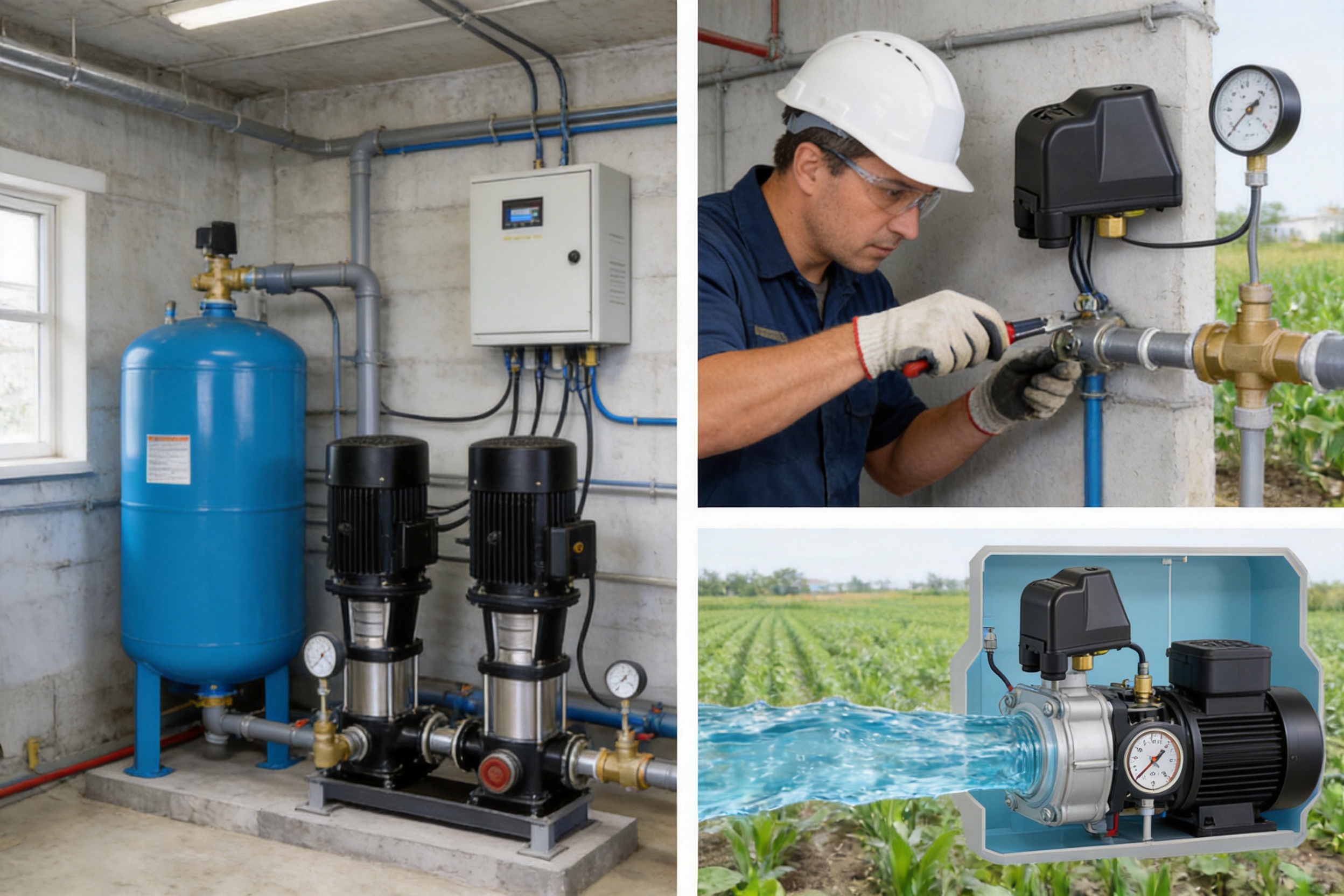
Reliable pressure control is essential for any water pump system that must deliver stable flow, protect equipment, and operate automatically. A pressure switch provides this control by monitoring system pressure and switching a pump on or off according to preset pressure values. The ERS-5 Series Zinc Alloy Bottom Antifatigue Pressure Switch is designed for this purpose, combining a durable zinc alloy construction, flexible pressure settings, practical connection options, and dependable switching performance for residential, commercial, and industrial water applications.
Unlike a basic manual pump controller, a mechanical pressure switch responds automatically to changing hydraulic conditions. When water demand causes system pressure to fall below the cut-in value, the switch closes the electrical circuit and starts the pump. When the pump restores pressure to the cut-out value, the switch opens the circuit and stops the pump. This automatic sequence helps maintain usable water pressure while reducing unnecessary pump operation.
The ERS-5 Series is specifically configured for bottom installation on water pump systems. Its zinc alloy body is designed to withstand repeated pressure cycles, exposure to normal water-system conditions, and the mechanical demands associated with pump starting and stopping. The antifatigue design further supports consistent operation over repeated cycles, making the product suitable for systems that experience frequent changes in demand.
A pressure switch is a compact but important control component. It acts as the connection between the hydraulic condition inside a pipeline and the electrical operation of a pump. Without a pressure switch or another automatic controller, a pump may need to be started and stopped manually, which can be inconvenient and may increase the risk of dry operation, over-pressurization, or unnecessary wear.
In a typical pump installation, the switch is connected to the pressure side of the system and wired into the pump’s control circuit. The internal sensing mechanism reacts to water pressure. At the lower pressure setting, often called the cut-in pressure, the contacts close and signal the pump to run. At the upper setting, known as the cut-out pressure, the contacts open and stop the pump.
This operating principle is especially useful in domestic water supply systems. For example, when a user opens a faucet, flushes a toilet, or starts an irrigation zone, water leaves the pressure vessel or pipeline. System pressure decreases. Once the pressure reaches the selected cut-in point, the ERS-5 Series can activate the pump. When the water demand ends, the pump raises the pressure until it reaches the selected cut-out point.
The same principle applies to agricultural irrigation, small commercial buildings, workshop water systems, booster installations, and various general-purpose pump assemblies. By matching the pressure switch settings to the pump and system requirements, the operator can obtain automatic pressure maintenance without relying on constant manual supervision.
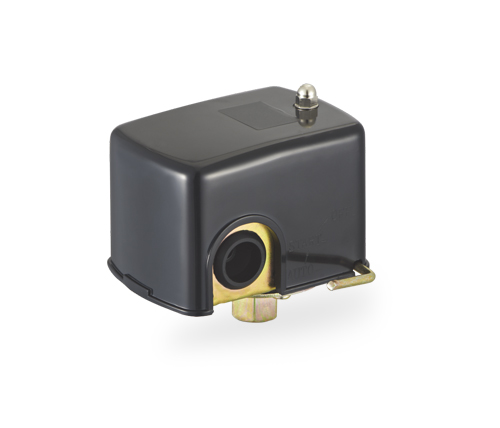
The ERS-5 Series Zinc Alloy Bottom Antifatigue Pressure Switch is a mechanical pressure controller developed for water pumps. It is designed for bottom mounting and is available with hydraulic connection configurations that include female and male options. The available pressure settings include 20–40 PSI, 30–50 PSI, and 40–60 PSI, while the broader adjustment range is specified from 15 PSI minimum cut-in to 100 PSI maximum cut-out.
The product supports rated voltages of 110–240 V and 400 V, with a power frequency of 50/60 Hz. Its rated current is 16(8) A, and the enclosure protection rating is IP44. A maximum working temperature of 55°C is specified for the product. These characteristics make the switch suitable for a wide range of common pump-control applications, subject to correct system design and professional electrical installation.
The zinc alloy housing provides a solid mechanical structure around the switching and pressure-sensing components. Compared with lightweight materials that may be less resistant to mechanical stress, a properly manufactured zinc alloy body can provide improved rigidity, dimensional stability, and resistance to impact during handling and installation.
The antifatigue structure is another important feature. Water pumps can start and stop many times during their service life. Every operating cycle produces a change in pressure and mechanical movement inside the switch. A pressure controller that is not designed for repeated cycling may become less reliable over time. The ERS-5 Series is intended to handle these recurring pressure changes while maintaining a stable switching response.
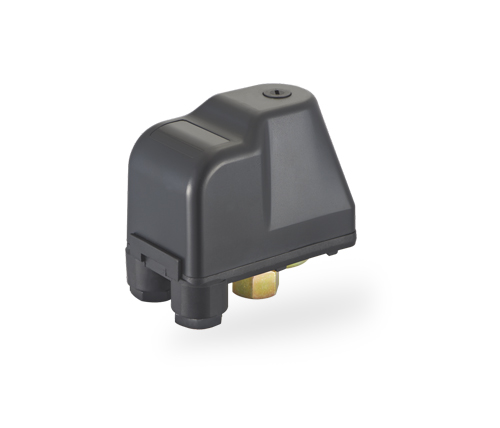
ERS-5 Series Zinc Alloy Bottom Antifatigue Pressure Switch for Water Pumps
The product specifications provide practical information for system designers, distributors, installers, and original equipment manufacturers. Before installation, users should verify that the selected model is compatible with the pump motor, pipeline pressure, electrical supply, connection size, environmental conditions, and required operating sequence.
| Parameter | Specification |
|---|---|
| Product type | Mechanical pressure controller |
| Application | Water pump pressure control |
| Body material | Zinc alloy |
| Installation position | Bottom-mounted configuration |
| Rated voltage | 110–240 V / 400 V |
| Power frequency | 50/60 Hz |
| Rated current | 16(8) A |
| Minimum cut-in pressure | 15 PSI |
| Maximum cut-out pressure | 100 PSI |
| Available pressure settings | 20–40 PSI, 30–50 PSI, 40–60 PSI |
| Protection class | IP44 |
| Maximum working temperature | 55°C |
| Female screw size | 1/4 inch and 3/8 inch |
| Male screw size | 1/4 inch |
| Warranty | 1 year |
The 16(8) A rating should be interpreted according to the electrical characteristics of the connected load and the applicable installation standards. Pump motors can create starting currents that are higher than their normal running current. For larger motors or demanding electrical conditions, an appropriately rated relay, contactor, overload protector, or motor-control device may be required. The pressure switch should not be treated as a substitute for complete motor protection.
The IP44 protection class indicates protection against solid objects of a specified size and water splashes from certain directions. It does not mean that the switch is waterproof or suitable for immersion. The installation location should be protected from direct flooding, high-pressure washing, and conditions outside the stated operating environment.
Material selection has a direct influence on the durability of a pressure switch. The ERS-5 Series uses a zinc alloy body to provide a firm and stable enclosure for the internal mechanism. Zinc alloy is widely used in industrial components because it can be formed with accurate details, offers good structural rigidity, and provides a practical balance between strength, weight, and manufacturing efficiency.
A strong housing helps protect the pressure switch during transportation, installation, and operation. It can also help maintain the alignment of threaded connections and internal components when the product is exposed to normal tightening forces. Correct installation remains essential, but the robust body gives installers a dependable foundation for connection to the hydraulic circuit.
The housing also contributes to the product’s resistance to routine environmental stress. Water pump installations may be located in utility rooms, equipment cabinets, agricultural areas, workshops, or outdoor enclosures. These environments can expose components to vibration, temperature variation, humidity, dust, and repeated mechanical handling. A durable metal body can provide an advantage over less rigid alternatives when the switch is used within its specified conditions.
Material quality alone does not guarantee long service life. The alloy composition, casting or forming process, machining accuracy, surface treatment, thread quality, assembly control, and final inspection all affect the finished product. This is why the manufacturing process is as important as the material selected for the housing.
Pump systems rarely operate only once or twice per day. A domestic booster pump may start whenever a tap is opened. An irrigation pump may cycle as different zones operate. A commercial water system may experience frequent demand changes throughout the working day. Each start and stop represents a pressure and mechanical cycle for the pressure switch.
The antifatigue concept addresses this repeated operation. The pressure-sensing and switching mechanism must respond to pressure changes without excessive deformation, sticking, or loss of calibration. The ERS-5 Series is designed to provide consistent performance under repeated cycling, supporting more dependable automatic pump control over the working life of the system.
Consistent switching is important for several reasons. If the cut-in response becomes unstable, the pump may start too late, causing a noticeable drop in water pressure. If the cut-out response becomes unstable, the pump may continue running longer than necessary. Rapid or irregular cycling can also place additional stress on the pump motor, electrical contacts, pressure vessel, and pipework.
The antifatigue design therefore supports the entire pump assembly, not just the switch itself. By helping the pump operate according to predictable pressure points, the controller can contribute to a more orderly operating pattern. The switch cannot correct incorrect pump sizing, a blocked pipeline, a damaged pressure vessel, or insufficient water supply, but it can provide reliable control when the wider system is properly designed.
Different water systems require different pressure ranges. A small household booster installation may work effectively at 20–40 PSI, while a system serving a larger building or elevated pipeline may require a higher operating range. The ERS-5 Series provides standard pressure settings of 20–40 PSI, 30–50 PSI, and 40–60 PSI, with pressure adjustment capability within the specified product range.
The difference between cut-in and cut-out pressure is commonly called the pressure differential. A suitable differential allows the pump to run long enough to restore system pressure without starting and stopping excessively. The correct values depend on pump performance, pipe resistance, water demand, pressure tank characteristics, and the requirements of the application.
For example, a 20–40 PSI setting means that the pump is generally called to start when pressure falls to approximately 20 PSI and is stopped when pressure rises to approximately 40 PSI. A 30–50 PSI setting provides a higher pressure operating band. A 40–60 PSI setting may be useful for systems requiring stronger pressure, provided that all connected components are rated for the selected pressure.
Pressure settings should not be selected only according to the desired outlet pressure. The pump’s maximum pressure, pipeline rating, tank pre-charge, relief-valve setting, and fixture requirements must also be considered. A qualified installer should verify the complete hydraulic design before changing the adjustment range.
Water pump systems use different connection arrangements depending on pump design, pipe size, fittings, and regional installation practice. The ERS-5 Series offers female screw sizes of 1/4 inch and 3/8 inch, as well as a 1/4 inch male option. This flexibility helps distributors and equipment manufacturers select a configuration that matches their standard assemblies.
Connection compatibility can simplify installation and reduce the number of adapters required. Fewer adapters may mean fewer potential leak points, a more compact assembly, and a cleaner installation. However, every threaded connection should still be sealed correctly using a suitable method and installed without excessive force.
The bottom-mounted arrangement is particularly useful where the pressure switch is intended to be installed below or at the lower hydraulic connection of a pump assembly. Installers should confirm the available space, orientation, accessibility, and direction of water flow before fitting the product. The switch should be positioned so that it can be inspected, adjusted, and replaced when necessary.
Thread specifications should be confirmed before ordering. Nominal sizes can vary between markets and fitting standards, and the correct connection type must match the pump or manifold. If a system uses different thread standards, a properly rated adapter may be needed. The adapter should be compatible with the pressure, temperature, water quality, and sealing method of the installation.
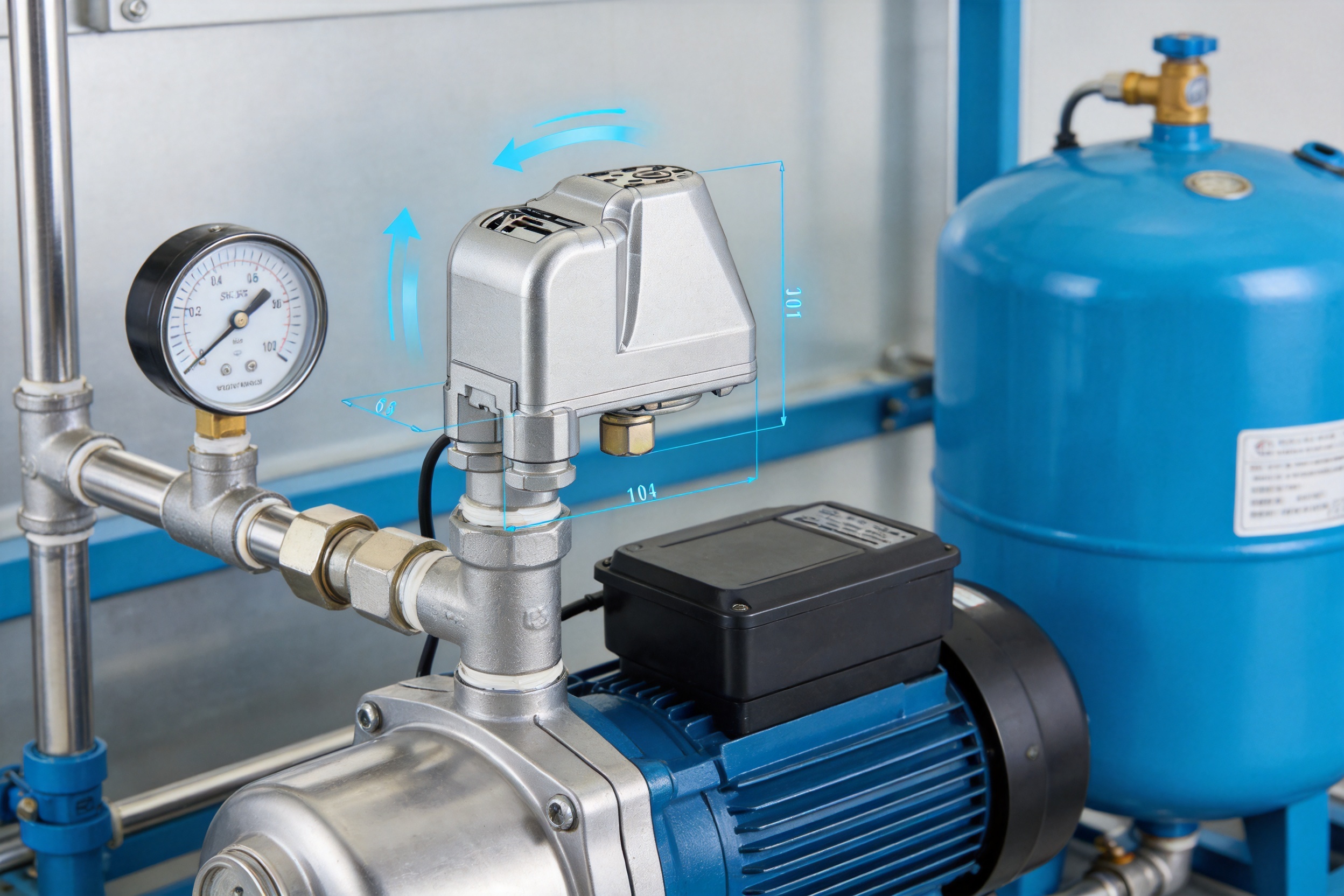
The ERS-5 Series is rated for 110–240 V and 400 V applications at 50/60 Hz, with a stated rated current of 16(8) A. These specifications allow the product to serve a broad range of pump systems, but electrical compatibility must always be checked before installation.
The installer should confirm the supply voltage, phase arrangement, motor current, starting characteristics, frequency, grounding arrangement, and local electrical requirements. A pressure switch should be installed by a qualified professional who understands motor-control circuits and the hazards associated with electrical equipment in wet environments.
The switch should be disconnected from the power supply before inspection, adjustment, or maintenance. Wires should be selected and terminated according to the applicable electrical code. Cable glands, covers, and sealing arrangements should be installed correctly to maintain the intended level of environmental protection.
Motor overload protection remains important. If the connected pump motor draws more current than the switch can safely interrupt, an external contactor or relay should be used. The switch can then control the coil or control input of the larger switching device rather than carrying the full motor load directly. This approach is often appropriate for commercial, industrial, or higher-capacity systems.
Water and electricity create a serious safety risk when equipment is installed incorrectly. The pressure switch should never be operated with a damaged enclosure, loose wiring, exposed terminals, or signs of overheating. Any unusual buzzing, repeated arcing, burning smell, inconsistent switching, or visible corrosion should be investigated immediately by qualified personnel.
The product’s IP44 protection class supports use in ordinary pump-room and equipment-enclosure environments where the switch may encounter limited splashing. The rating should be considered during system layout. The controller should be located away from direct spray, standing water, immersion, and high-pressure cleaning equipment.
The maximum working temperature is specified as 55°C. This value is important when the pressure switch is installed near hot-water equipment, heated pipes, boiler rooms, solar thermal systems, or machinery that produces radiant heat. The temperature of the surrounding air and the temperature transferred through the hydraulic connection should both be considered.
Water quality can also influence service life. Sand, scale, rust, or other particles may interfere with small hydraulic passages and moving components. Where water contains significant sediment, a suitable filter or separator should be installed upstream according to the requirements of the complete pump system. Regular cleaning and inspection can help reduce the risk of pressure-sensing problems.
Outdoor installations may require an additional protective enclosure. The enclosure should allow sufficient ventilation, provide access for maintenance, and prevent condensation from accumulating around electrical parts. Protection against freezing is also necessary because frozen water can damage hydraulic components and connected pipework.
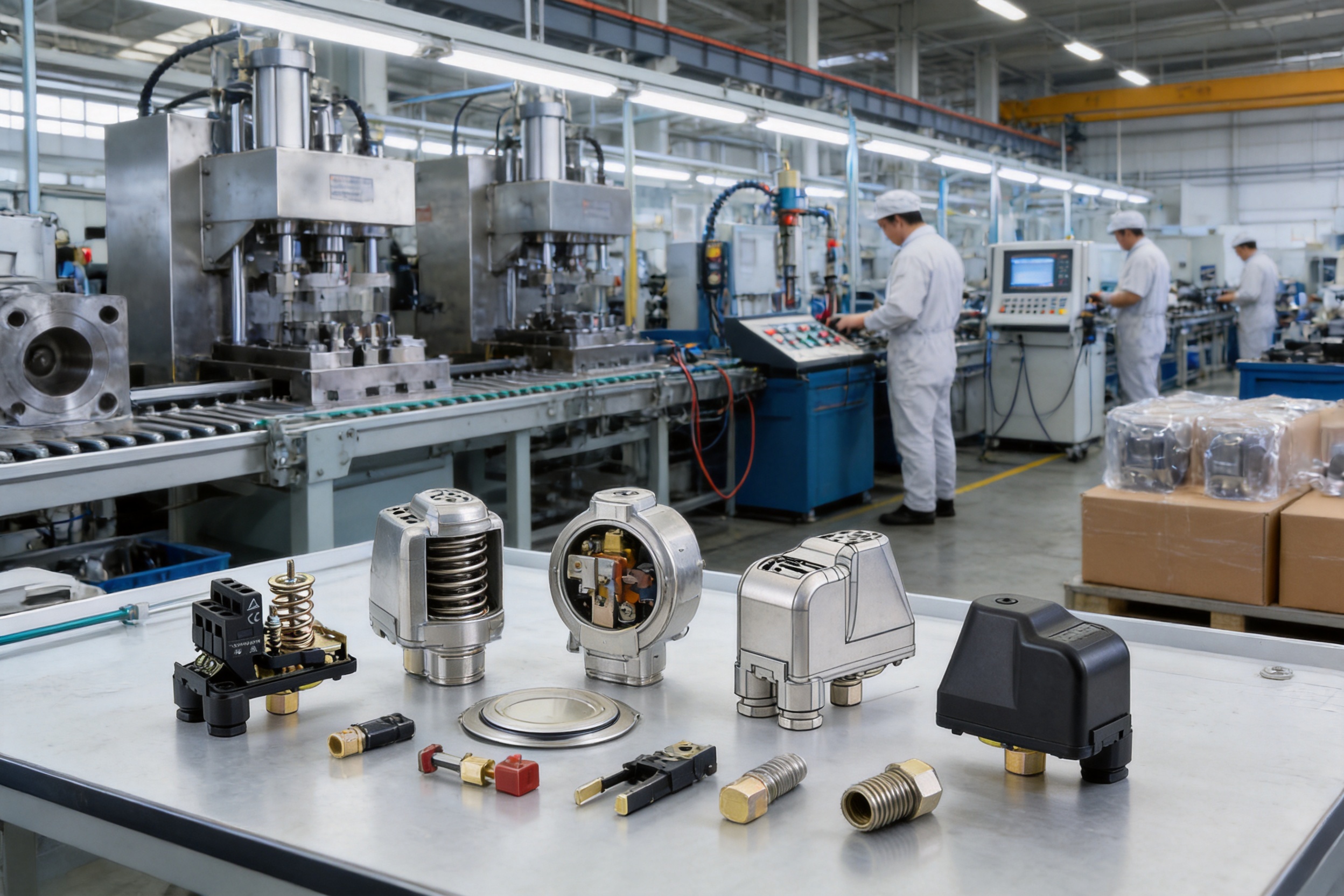
The performance of a mechanical pressure switch depends heavily on manufacturing consistency. A pressure controller contains multiple parts that must work together accurately. The housing, threaded connection, diaphragm or sensing element, spring mechanism, electrical contacts, terminals, adjustment components, and sealing parts must be produced and assembled within appropriate tolerances.
The manufacturing process begins with material control. Zinc alloy materials should be selected according to the required mechanical properties and forming characteristics. Incoming materials can be checked for conformity before entering production. This helps reduce variation in the finished housing and supports stable performance between production batches.
Forming or casting the zinc alloy housing requires controlled tooling and process parameters. Proper control helps produce consistent wall thickness, connection geometry, mounting dimensions, and surface quality. After forming, critical areas may be machined or finished to ensure that threads and mating surfaces meet the required dimensional standards.
Thread accuracy is especially important. A poorly formed thread can make installation difficult, create a weak mechanical connection, or increase the risk of leakage. Manufacturing inspection may include dimensional checks, thread gauges, visual inspection, and verification of surface condition. A consistent thread profile helps the installer create a secure connection without excessive tightening force.
Internal components require equal attention. Springs must provide the required mechanical response. Pressure-sensing parts must respond to hydraulic changes without excessive friction or deformation. Electrical contacts must open and close reliably under the intended operating conditions. Insulating components must be positioned correctly to reduce the risk of short circuits or unintended contact.
Assembly control is essential because even correctly manufactured parts can perform poorly if they are assembled incorrectly. Production workers and automated processes should follow defined procedures for component placement, tightening, sealing, adjustment, and inspection. Where necessary, assembly tools can help maintain repeatable torque and reduce variation.
Functional testing is a key stage of pressure-switch production. A finished unit may be checked for cut-in pressure, cut-out pressure, electrical continuity, insulation condition, switching response, leakage, and mechanical operation. Pressure testing helps verify that the product responds within the required range. Electrical testing helps confirm that the contacts and terminals operate safely.
Final inspection may also include visual checks of the housing, markings, terminals, connection threads, and protective components. Packaging inspection helps ensure that the product reaches the customer without damage caused by impact, moisture, or incorrect handling. Together, these controls support dependable performance in the field.
The manufacturer behind the ERS-5 Series operates as an integrated enterprise with capabilities covering research and development, mass production, and global export. This integrated structure is valuable because it connects product design, production planning, quality management, customer service, and international delivery within a coordinated organization.
Experience in water pumps and related control products allows the manufacturer to understand the relationship between pressure switches and complete pump systems. This system-level knowledge can support practical product development. A pressure switch is not an isolated electrical component; it must interact correctly with pumps, pressure vessels, pipework, valves, water demand, and protection devices.
The company has developed product lines that include deep well pumps, submersible pumps, domestic booster pumps, circulation pumps, solar water pumps, intelligent booster pumps, and other water-treatment peripheral products. This broad portfolio can help customers source compatible equipment and accessories from a single professional supplier.
Investment in new energy and intelligent technology further strengthens the company’s ability to respond to changing market requirements. Although the ERS-5 Series is a mechanical pressure controller, it can be used alongside conventional and modern pump systems. Knowledge of intelligent pumping, solar pumping, and automated water supply can support better understanding of application requirements.
Mass-production capability is also important for distributors and original equipment manufacturers. Stable production planning can help support repeat orders, consistent specifications, and predictable delivery schedules. At the same time, the company offers options involving the product housing, hydraulic connections, and pressure settings according to customer requirements, providing a balance between standardized production and application-specific customization.
Global export experience adds another operational advantage. International customers often need support with documentation, order tracking, packaging, shipping coordination, and communication across different markets. An organization with dedicated import and export service capabilities can help streamline these stages for overseas buyers.
The ERS-5 Series offers several practical advantages when compared with basic pressure controllers that provide limited material options, fixed settings, or less robust construction. The first advantage is its zinc alloy body. A durable metal housing can provide improved rigidity and a more substantial installation platform than a lightweight enclosure when the product is exposed to mechanical stress.
The second advantage is the antifatigue design. Repeated pump cycling is a normal condition in many water systems, and a switch designed for recurring pressure changes can provide more stable long-term operation than a controller intended only for occasional use.
The third advantage is pressure-setting flexibility. The 20–40 PSI, 30–50 PSI, and 40–60 PSI options allow customers to select a pressure range that better matches the application. This is more practical than using one fixed setting for every pump system.
The fourth advantage is connection flexibility. Male and female connection options in common sizes can simplify integration with different pump assemblies. This may reduce the need for additional fittings and help distributors serve a broader customer base.
The fifth advantage is suitability for multiple sectors. The switch can be used in residential, commercial, and industrial water systems when the electrical, pressure, temperature, and environmental conditions are within specification. A versatile controller can reduce the number of separate product types that a distributor needs to stock.
The sixth advantage is customization support. The manufacturer can provide options involving the outer housing, hydraulic connection, and pressure setting according to customer requirements. Customization is particularly useful for pump manufacturers and system integrators that need the pressure switch to match a standardized product platform.
These advantages should be evaluated together with the requirements of the complete system. No pressure switch is suitable for every application. Correct pump sizing, proper electrical protection, accurate pressure adjustment, clean water conditions, and professional installation remain essential for reliable performance.
Residential water systems often require automatic pressure maintenance because water demand changes throughout the day. A household may use several outlets at different times, and the pump must respond without requiring the homeowner to operate a manual switch.
The ERS-5 Series can be used in suitable domestic booster systems to control pump starting and stopping. When a shower, faucet, washing machine, or toilet causes pressure to fall, the controller can activate the pump. When demand stops and pressure rises, the controller can stop the pump.
For residential use, the installer should consider the building height, fixture requirements, pump flow, tank size, pipe diameter, and expected simultaneous demand. A pressure range that works well for a single-story home may not be appropriate for a multi-story building. The switch should be coordinated with a pressure tank when one is used, and the tank pre-charge should be set according to the system design.
Residential users also benefit from a controller that is easy to understand and maintain. Clear pressure settings, accessible terminals, and standard connection options can simplify service work. However, adjustment should be performed carefully, and electrical work should be assigned to qualified personnel.
Agricultural and garden pumping systems may experience variable demand as irrigation zones open and close. A pressure switch can help automate water delivery and reduce the need for manual pump operation.
The ERS-5 Series may be used in suitable surface-pump, garden-pump, or small booster-pump installations. Its available pressure ranges allow the system designer to select a working band appropriate for the irrigation layout. The selected setting should account for elevation changes, pipe friction, sprinkler requirements, and the pressure rating of hoses and fittings.
Outdoor agricultural environments may expose equipment to dust, humidity, vibration, and temperature variation. The switch should be mounted in a protected location that satisfies its IP44 rating and temperature limit. If the water contains sand or sediment, filtration may be needed to protect the sensing connection and other hydraulic components.
For larger agricultural pumps, the switch may control a contactor rather than switching the motor directly. This arrangement can provide a more suitable electrical interface for high-power equipment and can be combined with overload, dry-running, and phase-protection devices as required.
Commercial buildings, workshops, small factories, and service facilities often require stable water pressure for cleaning, production support, sanitation, or equipment operation. A mechanical pressure controller can serve as a reliable component in a conventional automatic pump assembly.
In commercial systems, the consequences of unstable pressure or pump downtime may be greater than in a small household installation. For this reason, the pressure switch should be selected as part of a broader control strategy. System designers may combine it with pressure gauges, isolation valves, check valves, pressure vessels, motor starters, overload relays, and alarm devices.
The ERS-5 Series can be considered for systems where the stated pressure, voltage, current, temperature, and connection specifications are suitable. For larger or more complex installations, the pressure switch may provide a control signal to a separate motor-control panel. This allows the system to benefit from the switch’s mechanical pressure response while using industrial-grade electrical protection and monitoring.
Commercial applications may also benefit from customized configurations. A pump manufacturer can request a preferred hydraulic connection or pressure setting to match a standard booster package. A distributor can select common versions for inventory while obtaining special configurations for particular projects.
The ERS-5 Series is associated with water pump pressure control and can be integrated into different pump categories when the operating conditions are compatible. These may include surface pumps, domestic booster pumps, garden pumps, selected submersible pump systems, and other pressure-based water supply assemblies.
Deep well and submersible pump systems require special attention to the location of the pressure switch. The switch is normally installed in the accessible pressure line or control assembly rather than submerged with the pump. The system designer should ensure that the switch receives an accurate pressure signal and that the pump is protected from dry running and excessive cycling.
Booster pump systems often use a pressure vessel to reduce the frequency of pump starts. The pressure switch and tank should be matched so that the pump does not start every time a very small amount of water is used. Correct tank sizing and pre-charge adjustment can improve system stability and reduce mechanical wear.
Circulation pumps may not always use the same pressure-control principle as a domestic water booster. In heating or HVAC applications, temperature, differential pressure, or electronic control may be more appropriate. The ERS-5 Series should therefore be selected only where a pressure-based pump-start and pump-stop sequence is required.
Before installation, inspect the pressure switch for transport damage and verify the model, connection type, pressure range, voltage rating, and current rating. Confirm that the pump, pipework, tank, fittings, and electrical supply are suitable for the selected configuration.
Close the water isolation valve and disconnect electrical power before beginning work. Drain pressure from the relevant section of the system. Install the pressure switch using the correct connection and an appropriate sealing method. Avoid applying excessive torque to the housing or using tools in a way that may damage the body.
The switch should be installed in a position that allows the pressure-sensing port to communicate correctly with the system pressure. The orientation should follow the equipment design and installation instructions. The unit should not be used as a structural support for heavy piping, and connected pipes should be independently supported where necessary.
After the hydraulic connection is completed, inspect for leaks. Restore water pressure gradually and observe the connection during the initial test. Electrical connections should then be completed according to the pump circuit design and applicable regulations.
Once the system is energized, verify that the pump starts at the intended cut-in pressure and stops at the intended cut-out pressure. Check for excessive cycling, delayed response, leakage, unusual noise, overheating, or unstable pressure. If the actual operating behavior differs from the expected sequence, the system should be de-energized and inspected before continued operation.
Routine maintenance helps preserve the performance of a mechanical pressure switch. Periodically inspect the housing, threaded connections, cable entry, terminals, and surrounding pipework. Look for corrosion, water marks, loose connections, damaged insulation, or evidence of overheating.
If the pump does not start when pressure falls, possible causes may include incorrect wiring, insufficient pressure change, blocked sensing passages, damaged contacts, a faulty motor, or a problem with the power supply. If the pump does not stop when pressure rises, possible causes may include an incorrect cut-out setting, a leaking system, insufficient pump pressure, stuck contacts, or a damaged sensing mechanism.
Frequent pump cycling can result from a small pressure tank, incorrect tank pre-charge, a leaking check valve, a hidden pipeline leak, an unstable water supply, or unsuitable pressure settings. It is important to investigate the complete system rather than replacing the pressure switch immediately.
Water leakage around the threaded connection may be caused by incorrect sealing, cross-threading, damaged threads, excessive vibration, or mechanical stress from unsupported pipework. The system should be depressurized before correcting the problem.
Any pressure-switch adjustment should be made carefully and only within the permitted product range. Adjusting the switch beyond the maximum cut-out pressure can create unsafe conditions and may exceed the pressure rating of the pump or pipeline. Electrical and pressure-related troubleshooting should be carried out by trained personnel.
Choosing a pressure switch is not only a matter of comparing a few technical numbers. Supplier experience influences product consistency, application support, customization capability, production continuity, and after-sales service.
A manufacturer with experience in water pumps can better understand how pressure controls behave in real installations. It can evaluate the relationship between a pressure switch and pump curves, pressure tanks, valves, electrical controls, and water demand. This experience supports more practical product design and more useful customer communication.
Manufacturing integration can also reduce communication gaps between design and production. When product development, mass production, quality control, and export services are managed within a coordinated organization, customer requirements can be transferred more efficiently into manufacturing instructions and inspection procedures.
The supplier’s broader portfolio is another advantage for customers seeking one-stop procurement. Buyers may need pumps, controllers, valves, pipes, pressure accessories, and related water-system products for the same project. A supplier able to provide multiple product categories can help simplify sourcing and improve compatibility between components.
A one-year warranty provides a defined period of support for the product, subject to the supplier’s warranty terms and correct installation. Buyers should retain product records, installation information, and purchase documentation in case technical service is required.
Different pump manufacturers and distributors may require specific pressure ranges, connection formats, housing arrangements, or packaging standards. The ERS-5 Series supports customization in areas such as the outer housing, hydraulic connection, and pressure setting according to customer needs.
Customization can help an original equipment manufacturer create a consistent product platform. For example, a pump assembly may be designed around a particular connection position or a defined cut-in and cut-out sequence. A customized pressure switch can reduce the number of adapters and help standardize replacement parts.
Before approving a customized version, the buyer should provide complete technical information. This may include motor voltage, current, phase, pump curve, desired cut-in and cut-out pressures, connection size, installation orientation, environmental temperature, water quality, packaging requirements, and target market regulations.
Samples and validation testing are recommended for customized products. The customer should verify hydraulic performance, electrical compatibility, leakage resistance, installation clearance, switching stability, and behavior under repeated cycles. A clear approval process can reduce misunderstandings during mass production.
Distributors should identify the most common pressure ranges and connection types in their target market. Stocking 20–40 PSI, 30–50 PSI, and 40–60 PSI versions can provide coverage for many ordinary applications, while special projects may require a customized configuration.
Product selection should also consider local voltage standards. The stated rating supports 110–240 V and 400 V systems, but the exact wiring arrangement must be confirmed. Distributors should ensure that product labels, technical documents, and packaging clearly communicate the applicable electrical and pressure limits.
Project buyers should evaluate the complete bill of materials, including pumps, pressure tanks, gauges, valves, filters, contactors, overload protectors, and installation fittings. The pressure switch should be purchased as part of a coordinated system rather than treated as an interchangeable component without checking the operating conditions.
For repeat orders, buyers may benefit from agreeing on a standard specification, inspection procedure, packaging method, and delivery schedule. This can support more predictable procurement and reduce variation between project batches.
A durable pressure controller can contribute to more sustainable equipment use by reducing premature replacement. When a switch maintains reliable pump control, it can help avoid unnecessary pump operation and reduce stress caused by irregular cycling. Longer service life also reduces the materials and transportation associated with frequent replacement.
Efficient system design remains the most important factor. A pressure switch cannot compensate for an oversized pump, excessive leakage, poor pipe design, or an incorrectly adjusted pressure tank. Energy savings depend on the complete installation, including pump efficiency, operating schedule, hydraulic design, and maintenance.
The zinc alloy housing may also support product durability when used in appropriate environmental conditions. At the end of its service life, the product should be handled according to local waste and recycling requirements. Electrical components should not be discarded with ordinary household waste where separate collection is required.
The main function is to automatically start and stop a water pump according to system pressure. It closes the pump-control circuit when pressure falls to the cut-in point and opens the circuit when pressure reaches the cut-out point.
Zinc alloy provides a rigid and durable housing for the pressure-sensing and switching mechanism. It offers a practical combination of mechanical strength, dimensional stability, and manufacturing flexibility for pump-control applications.
Bottom-mounted means that the pressure switch is designed for installation at the lower or bottom connection position of the pump assembly or hydraulic control arrangement. The exact installation position should be confirmed against the pump design and available space.
The standard pressure settings include 20–40 PSI, 30–50 PSI, and 40–60 PSI. The stated minimum cut-in pressure is 15 PSI, and the stated maximum cut-out pressure is 100 PSI. The selected setting must remain compatible with the entire water system.
Yes, it can be used in suitable residential booster-pump systems when the pump voltage, current, pressure, connection, temperature, and installation conditions are within the specified limits.
For larger motors, the pressure switch may need to control a contactor or relay rather than switching the motor directly. The electrical design must account for starting current, motor protection, overload protection, and local regulations.
The product is specified with a rated current of 16(8) A. The actual suitability depends on the motor type, load characteristics, starting current, voltage, and switching conditions. A qualified electrician should confirm whether an external contactor is required.
The product is specified with an IP44 protection class. It is designed for protection against certain solid objects and splashing water, but it is not intended for immersion or direct high-pressure water exposure.
The specified maximum working temperature is 55°C. The surrounding air temperature and the temperature transferred through the hydraulic connection should both remain within the applicable limit.
Yes. The technical specifications identify female connection sizes of 1/4 inch and 3/8 inch, as well as a 1/4 inch male connection option.
Customization options are available for areas such as the housing, hydraulic connection, and pressure setting, according to customer requirements. Customized projects should be validated before mass production.
Frequent cycling may be related to pressure-tank sizing, tank pre-charge, leakage, check-valve problems, insufficient pump capacity, or unsuitable pressure settings. The entire system should be inspected before changing the pressure switch.
A standard mechanical pressure switch primarily responds to pressure. It should not automatically be assumed to provide dry-run protection. Additional dry-running protection may be required, especially for wells, tanks, and systems with an uncertain water supply.
Hydraulic installation should be performed by a competent installer, and electrical wiring should be completed by a qualified professional. Water and electricity create significant hazards when installation procedures are not followed.
The product information specifies a one-year warranty. Buyers should confirm the warranty terms, exclusions, installation requirements, and service procedure with the supplier before purchase.
The ERS-5 Series Zinc Alloy Bottom Antifatigue Pressure Switch is a practical mechanical controller for automatic water pump operation. Its main strengths include a durable zinc alloy body, an antifatigue design for repeated pressure cycles, multiple pressure-setting options, male and female connection choices, broad electrical compatibility, and a design suited to residential, commercial, agricultural, and selected industrial water systems.
Compared with basic pressure controllers, the product offers greater flexibility in configuration and a more robust approach to repeated pump operation. Its value is further supported by the manufacturer’s experience in pump research and development, mass production, global export, customized product support, and integrated water-system product supply.
Reliable performance depends on correct application. The installer must verify pressure limits, electrical ratings, temperature, connection size, environmental protection, motor requirements, and system protection devices. When these factors are properly coordinated, the ERS-5 Series can provide dependable automatic pressure control and help support stable, efficient water pump operation.
1. Manufacturer-provided technical specifications for the ERS-5 Series Zinc Alloy Bottom Antifatigue Pressure Switch.
2. Manufacturer-provided product description and application information for mechanical water pump pressure controllers.
3. Manufacturer-provided information concerning zinc alloy construction, pressure settings, electrical ratings, connection options, and protection class.
4. Manufacturer-provided corporate information concerning pump research and development, mass production, export services, and customized manufacturing.
5. General principles of water pump pressure control, automatic pump switching, pressure-tank operation, and motor protection.
6. General electrical installation and safety practices for pump-control equipment used in wet or damp environments.
edwina@edwin-pump.com
+86-13586290903 (WhatsApp)
Xuri Gongliang Cutting Tool Entrepreneurship Park, Wenqiao Town, Wenling City, Taizhou City, Zhejiang Province, China

High Performance Smart Pump Factory


 English