edwina@edwin-pump.com

View All Products
en
Reliable liquid transfer is essential in petrochemical plants, chemical processing facilities, power stations, seawater desalination plants, pharmaceutical factories, food-processing facilities, paper mills, and sugar refineries. In these demanding environments, a pump must do more than move water from one point to another. It must maintain stable hydraulic performance, tolerate changing temperatures, support continuous operation, protect its mechanical seal and bearings, and remain serviceable throughout a long industrial operating life.
The EZA Series end suction centrifugal pump is designed for these requirements. It is a robust process pump intended for conveying clean liquids or liquids containing small particles, including high-temperature, low-temperature, neutral, or corrosive liquids. Its design combines a conventional end suction centrifugal configuration with features intended to improve heat dissipation, sealing reliability, bearing protection, maintenance access, and operating stability.
For industrial users, the value of this pump is not limited to its basic flow function. The complete pump design reflects a focus on material selection, precision casting, hydraulic optimization, flexible shaft-seal arrangements, heat-management provisions, and standards-based flange compatibility. These characteristics make the EZA Series a practical option for petrochemical and process applications where ordinary water pumps may not provide sufficient protection or adaptability.
End suction centrifugal pumps are widely used because they offer a straightforward flow path, compact installation, and comparatively simple maintenance. However, process applications can expose the pump to conditions that are far more severe than those found in basic domestic or light-commercial water systems. The pumped liquid may be hot or cold, chemically aggressive, slightly contaminated, or subject to frequent changes in temperature and pressure.
The EZA Series is engineered around these operating challenges. Its design is suitable for conveying clean liquids and liquids containing small particles, while the material and sealing options allow the pump to be configured for neutral or corrosive media. This flexibility makes it useful for a wide range of industrial duties, including cooling-water circulation, heat dissipation, chemical transfer, process-water transport, desalination, and utility services.
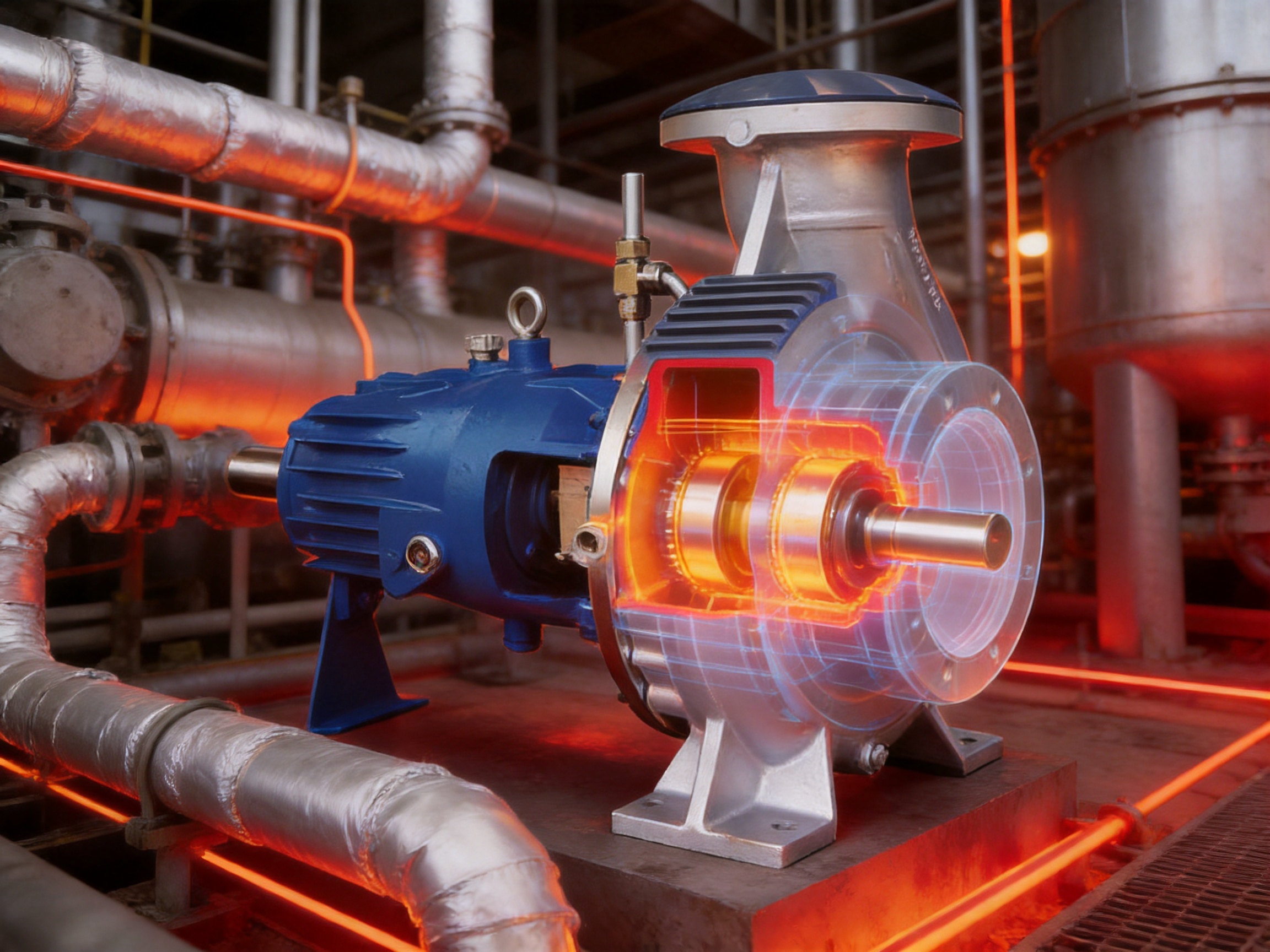
In petrochemical installations, heat is one of the most important factors affecting reliability. Elevated liquid temperature can increase vapor pressure, accelerate seal wear, transfer heat toward the bearing housing, and create unfavorable conditions around the shaft and pump cover. The EZA Series addresses these risks through a pump cover with reserved heating or insulation cavities, a mechanical-seal cavity designed for cooling rinse water, and a suspension frame incorporating heat-dissipation provisions.
These features are particularly valuable when the pump is installed near reactors, heat exchangers, distillation systems, storage tanks, process skids, or other equipment where liquid temperature and ambient heat loads can vary significantly.

EZA Series Heat Dissipation High and Low Temperature Water End Suction Centrifugal Pump for Petrol Chemical
The most distinctive feature of the EZA Series is its focus on heat dissipation. Heat can affect nearly every important pump component. If excessive heat reaches the mechanical seal, elastomers may harden or lose elasticity. If heat accumulates around the bearings, lubricant life may be reduced. If the temperature distribution around the pump casing becomes uneven, thermal expansion may affect clearances and alignment.
The pump cover includes a reserved heating and insulation cavity as well as a mechanical-seal cavity. Cooling or rinsing water can be passed through the relevant area to improve mechanical-seal working conditions. This arrangement helps reduce the influence of heat transfer on the bearing assembly and supports greater stability in the complete pump unit.
For high-temperature applications, this type of thermal-management provision can offer an important advantage over a basic end suction pump that has no dedicated cooling or insulation arrangement. Instead of treating heat as an external operating problem, the EZA design incorporates heat control into the pump structure.
The same design philosophy can also benefit low-temperature applications. Where cold liquids, chilled process fluids, or temperature-sensitive media are handled, controlled insulation and appropriate sealing arrangements can help reduce the risk of condensation, thermal shock, and unstable seal conditions. The correct configuration depends on the liquid, operating temperature, pressure, and installation environment.
Different industrial liquids require different sealing solutions. A seal suitable for clean ambient-temperature water may not be appropriate for hot process liquid, corrosive chemical media, or a service requiring enhanced leakage protection. The EZA Series can be equipped with several shaft-seal arrangements, including a single mechanical seal, double mechanical seal, assembled mechanical seal, or packing seal.
This selection enables the pump to be matched more closely to the application. A single mechanical seal may be suitable for many general liquid-transfer duties. A double mechanical seal may be preferred where leakage control, hazardous-liquid containment, or improved cooling and lubrication of the seal faces is required. An assembled mechanical seal can support a specific maintenance or process requirement, while packing may be selected for certain traditional industrial services.
Seal selection should always be based on the liquid composition, temperature, pressure, solids content, shaft speed, and applicable safety requirements. The important advantage of the EZA Series is that the pump platform supports multiple sealing configurations rather than forcing every user into one standard arrangement.
The suspension frame uses a bearing combination structure aligned with AP610 principles. The pump end uses a cylindrical roller bearing, while the drive end uses a back-to-back angular contact ball bearing. This arrangement is intended to manage the radial and axial forces generated during pump operation and to support stable shaft rotation.
The suspension frame also uses thin-oil lubrication and includes heat-dissipation provisions. Compared with a less specialized bearing arrangement, this design can help reduce bearing temperature and improve operating reliability, particularly when the pump is exposed to continuous duty, high ambient temperatures, or demanding process conditions.
Proper bearing life still depends on correct installation, alignment, lubrication, operating speed, load, and maintenance. Nevertheless, selecting a pump with an appropriate bearing structure gives the operator a stronger foundation for reliable service.
The pump body and impeller use precision-cast stainless-steel construction. Stainless steel can provide improved resistance to corrosion compared with ordinary carbon-steel or general-purpose cast-iron materials, depending on the specific grade and pumped liquid. This is important in chemical, seawater, pharmaceutical, food, and process-water applications where fluid chemistry may vary.
Precision casting supports the production of complex hydraulic passages and component profiles while maintaining consistent geometry. The casting process must be followed by appropriate inspection, machining, balancing, and quality control. When these processes are properly managed, the result is a component that combines structural strength with a carefully controlled hydraulic shape.
Material selection must be confirmed for every application. Stainless steel is not automatically compatible with every chemical, concentration, or temperature. The final material grade, gasket material, seal materials, and surface treatment should be selected according to the complete operating medium and site conditions.
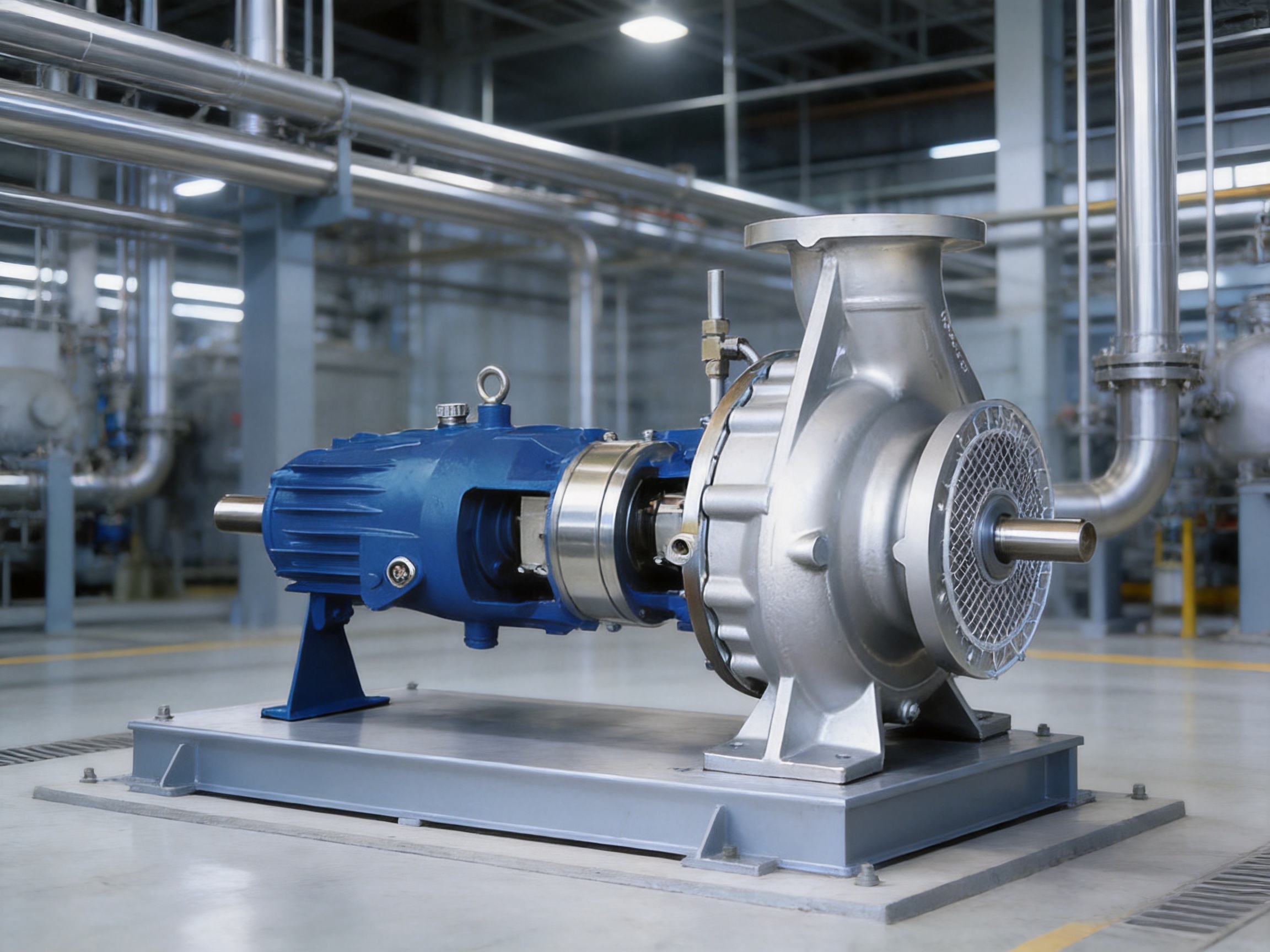
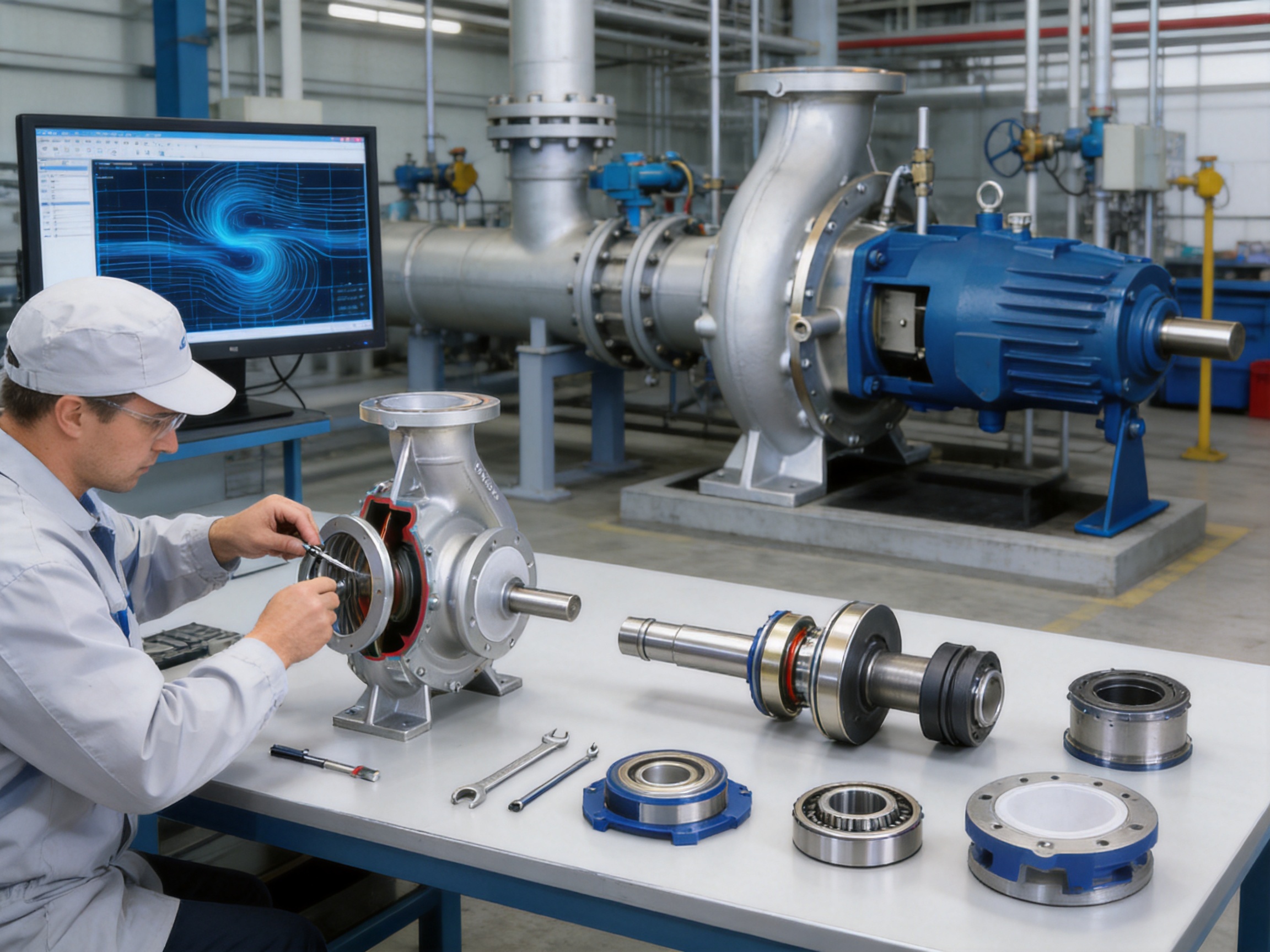
The impeller is developed using a hydraulic model optimized with computational fluid dynamics. CFD-assisted design can help engineers examine velocity distribution, pressure changes, flow separation, turbulence, and potential hydraulic losses before finalizing the component geometry. This approach supports the development of an impeller that can operate efficiently and smoothly across its intended working range.
The EZA impeller also undergoes dynamic and static balancing. Balance quality is important because an unbalanced rotating component can generate vibration, increase bearing loads, accelerate mechanical-seal wear, and reduce the service life of the pump and motor. Proper balancing supports quieter operation and improves the mechanical stability of the rotating assembly.
Hydraulic efficiency is especially important in industrial facilities because pumping systems often operate for thousands of hours each year. Even a modest reduction in power consumption can create meaningful savings over the life of the equipment. A pump that transfers the required flow with lower hydraulic losses can also reduce motor loading, operating temperature, and the overall energy demand of the process system.
Actual efficiency depends on the selected model, impeller diameter, speed, liquid properties, flow rate, total head, suction conditions, piping system, and operating point. The pump should therefore be selected using a verified performance curve and an accurate system calculation rather than by nominal pipe size alone.
Chemical and petrochemical plants require pumps for process circulation, cooling, heating, feed transfer, utility services, and liquid recovery. The EZA Series is suited to applications involving clean or slightly contaminated liquid, high or low temperature, and neutral or corrosive media when the correct materials and seal arrangement are specified.
Typical duties may include circulating cooling water around heat exchangers, transferring process water between tanks, handling utility liquids, supporting thermal-control systems, or moving compatible chemical solutions. In these applications, heat dissipation and mechanical-seal flexibility are important because liquid conditions can change rapidly during startup, shutdown, cleaning, and normal operation.
Desalination facilities require equipment that can operate in environments where chloride exposure and corrosion risk are significant. Stainless-steel pump components, appropriate fasteners, compatible seals, and suitable protective measures can help improve service reliability. The precise stainless-steel grade must be chosen according to salinity, temperature, oxygen content, pressure, and the presence of other corrosive constituents.
The pump may be used in supporting duties such as pre-treatment circulation, cooling-water movement, utility-water transfer, or other compatible services. For direct seawater handling, the user should confirm material compatibility and corrosion allowances with the supplier before placing an order.
Paper production involves extensive water circulation, chemical dosing, washing, cooling, and process-liquid transfer. Pumps may be exposed to elevated temperatures, additives, fibers, and small suspended particles. The EZA Series is designed to handle clean liquids or liquids containing small particles, making it potentially suitable for selected paper-mill services where the particle concentration and size remain within the pump's design limits.
Correct pump selection is particularly important in paper production because fibrous material can affect impeller passageways, mechanical seals, and wear components. The liquid must be reviewed carefully before determining the most suitable impeller, seal, and material configuration.
Sugar refineries use pumps for process water, washing systems, heating and cooling circuits, liquid transfer, and utility services. Temperature control and reliable continuous operation are important because production systems often operate for extended periods. A pump with heat-management provisions and a serviceable bearing structure can reduce the risk of unexpected downtime.
Where the pump is used in a hygienic or food-related process, the buyer should confirm the required material standards, surface finish, cleaning procedures, and seal materials. The general EZA industrial configuration should be matched to the specific process requirement.
Power plants depend on circulation pumps for cooling water, auxiliary systems, heat dissipation, water treatment, and plant utilities. Some services involve high temperature, while others require continuous duty and stable operation under changing loads. The EZA Series can support suitable water-transfer applications when the selected model matches the required flow, head, temperature, and water chemistry.
Its bearing design, heat-dissipation provisions, and balanced impeller can be valuable in installations where vibration control and long operating periods are priorities.
Pharmaceutical and food-processing facilities place strong emphasis on cleanliness, material compatibility, leakage control, and maintenance. The EZA Series can be configured for suitable liquid-transfer duties, particularly where stainless-steel construction and an appropriate mechanical seal are required.
However, hygienic applications often involve additional requirements concerning surface finish, clean-in-place procedures, sanitary connections, elastomer approvals, and certification. These requirements should be specified during the purchasing process so that the pump configuration is appropriate for the intended service.
The EZA Series uses flange connections based on ISO 2084 and PN16 dimensions. The flange dimensions are compatible with corresponding standards such as GB/T9113.1, BS4504, ISO 7005.1, DIN 2533, and ISO 7005.2, subject to the specific size and installation requirements.
Standards-based flange dimensions can simplify integration into existing industrial piping systems. They can also make it easier to coordinate the pump with valves, strainers, flexible connectors, reducers, expansion joints, and other pipeline components. Before installation, the engineering team should verify flange drilling, nominal diameter, pressure rating, gasket selection, bolt dimensions, and the actual standard used by the site.
| Nominal Diameter DN | Diameter d | Diameter k | Outside Diameter D | Number of Holes n | Hole Diameter S |
|---|---|---|---|---|---|
| 32 | 76 | 100 | 140 | 4 | 18 |
| 40 | 84 | 110 | 150 | 4 | 18 |
| 50 | 99 | 125 | 165 | 4 | 18 |
| 65 | 118 | 145 | 185 | 4 | 18 |
| 80 | 132 | 160 | 200 | 8 | 18 |
| 100 | 156 | 180 | 220 | 8 | 18 |
| 125 | 184 | 210 | 250 | 8 | 18 |
| 150 | 211 | 240 | 285 | 8 | 22 |
| 200 | 266 | 295 | 340 | 12 | 22 |
| 250 | 319 | 355 | 405 | 12 | 26 |
| 300 | 370 | 410 | 460 | 12 | 26 |
| 350 | 429 | 470 | 520 | 16 | 26 |
The dimensions above provide a connection reference and should be checked against the final approved drawing. They do not replace a complete installation drawing or a site verification. Pump orientation, foundation dimensions, shaft height, motor frame, coupling guard, maintenance clearance, pipe loads, and access for seal replacement should also be reviewed before installation.
Industrial equipment must be designed not only for operation but also for inspection and repair. A pump that is difficult to maintain can increase labor requirements and extend production stoppages. The EZA Series uses a rotor rear-drawing design intended to make maintenance easier without disturbing the connected pipeline.
This arrangement can allow the rotating assembly and selected internal components to be removed from the rear side of the pump for inspection or service while the pump body remains connected to the piping. Reducing the need to disconnect large-diameter pipework can save time and minimize the risk of disturbing adjacent valves, supports, and instruments.
Maintenance planning should include periodic checks of vibration, bearing temperature, lubrication condition, mechanical-seal leakage, coupling alignment, foundation bolts, flange connections, and motor current. Early detection of abnormal conditions can prevent secondary damage and improve the total operating life of the pump.
The mechanical seal should be inspected according to the service conditions. Small amounts of initial adjustment or bedding-in behavior may be normal for certain seal designs, but continuous leakage, visible spray, excessive temperature, or rapid deterioration requires investigation. The seal cavity and cooling or rinse-water arrangement should also be kept clean and operated at the specified pressure and flow.
Taizhou Edwin Electric Co., Ltd. was established in 2008 as an integrated manufacturing enterprise with capabilities in independent research and development, mass production, and global export. This integrated structure is important because pump performance depends on the coordination of product design, hydraulic development, casting, machining, assembly, testing, and after-sales support.
Independent research and development allows the manufacturer to refine hydraulic models, improve component structures, respond to application requirements, and develop product families for different market segments. For the EZA Series, the development emphasis is visible in the combination of CFD-assisted impeller optimization, heat-dissipation provisions, flexible sealing arrangements, and an industrial bearing structure.
Precision casting is used for key stainless-steel components such as the pump body and impeller. Casting is followed by machining of critical interfaces, shaft fits, seal locations, bearing seats, flange surfaces, and other dimensions that influence assembly accuracy and operating reliability.
Machining quality is especially important in a centrifugal pump. The shaft must rotate with the correct runout, bearing seats must maintain proper geometry, seal faces must remain aligned, and flange surfaces must support reliable gasket compression. Consistent process control reduces the possibility of vibration, leakage, misalignment, and premature wear.
The use of computational fluid dynamics during hydraulic development provides a modern method for improving flow passage design. Engineers can evaluate hydraulic behavior digitally and use the results to refine the impeller and casing before production. This can reduce unnecessary experimentation and support more efficient fluid movement.
Dynamic and static balancing are then used to control the rotating component's mass distribution. This is a vital manufacturing step because even a well-designed impeller can cause vibration if it is not properly balanced. Balancing, combined with accurate machining and correct assembly, supports smoother operation and reduces stress on bearings, couplings, seals, and foundations.
The EZA Series incorporates a bearing combination structure aligned with AP610 principles and flange dimensions based on recognized international and regional standards. Standards-oriented engineering helps industrial buyers evaluate compatibility, specify replacement parts, coordinate piping, and establish maintenance procedures.
Standards do not eliminate the need for application engineering. The final pump must still be selected for the actual operating point, liquid, temperature, pressure, materials, and safety requirements. However, the use of recognized design principles gives the project team a clearer technical basis for evaluation.
In addition to product development and manufacturing, the company has experience supporting global orders and export projects. Taizhou Haipai Import and Export Co., Ltd. and Golden Falcon Industrial Co., Ltd. were established in 2012 to provide procurement planning, order tracking, cross-border delivery, and foreign-trade services.
For international industrial customers, supplier coordination is an important part of project success. Clear order confirmation, documentation management, production scheduling, packaging, shipment planning, and communication can help reduce procurement risk. A manufacturer with integrated export support can be more responsive when a project involves multiple pump sizes, spare parts, technical documents, and delivery requirements.
The EZA Series should be compared with competing products according to the complete application requirement rather than only purchase price. A basic end suction pump may provide acceptable service in ordinary ambient-temperature water. In a petrochemical or process environment, however, additional design features can have a substantial effect on reliability and maintenance costs.
Many standard pumps are not equipped with dedicated provisions for managing heat around the seal and bearing areas. The EZA Series includes a pump-cover cavity for heating or insulation, a mechanical-seal cavity designed for cooling rinse water, and a heat-dissipating suspension frame. These features provide a stronger response to hot-liquid and high-ambient-temperature conditions.
Some competing pumps are supplied with only one standard seal arrangement. The EZA Series can be configured with single mechanical seals, double mechanical seals, assembled mechanical seals, or packing seals. This wider range can make it easier to align the pump with liquid properties, leakage-control needs, maintenance practices, and plant safety requirements.
The rotor rear-drawing design is intended to facilitate maintenance without affecting the connected pipeline. This can be a meaningful advantage in large industrial installations, where dismantling pipework may require additional labor, lifting equipment, permits, and production downtime.
Precision-cast stainless-steel components and CFD-optimized impeller development provide advantages over pumps built only for general-purpose water service. The final material and configuration must still be selected correctly, but the EZA platform is designed with a broader industrial application range in mind.
The combination of a balanced impeller, specialized bearing arrangement, thin-oil lubrication, and heat-dissipation features supports continuous industrial operation. These characteristics can help reduce vibration and thermal stress when the pump is properly selected and operated near its intended duty point.
Successful pump selection begins with a complete duty description. The user should provide the required flow rate, total dynamic head, liquid name, density, viscosity, temperature range, vapor pressure, solids content, corrosiveness, suction conditions, operating hours, motor power, site altitude, and ambient temperature.
The minimum and maximum operating conditions should both be considered. A pump selected only for normal conditions may become unstable during startup, cleaning, seasonal operation, emergency circulation, or process changes. The selected operating point should normally fall within the recommended range of the pump performance curve and should avoid prolonged operation at extreme low-flow or high-flow conditions.
Net positive suction head is another essential consideration. The available NPSH at the installation must exceed the pump's required NPSH by an appropriate margin. High liquid temperature increases vapor pressure and can make cavitation more likely. Suction piping should therefore be designed with adequate diameter, short and direct routing, minimal unnecessary fittings, and correct placement of valves and strainers.
Material compatibility must include all wetted parts, not just the pump body and impeller. Gaskets, O-rings, mechanical-seal faces, springs, elastomers, shaft sleeves, fasteners, and coatings may respond differently to the pumped liquid. A complete chemical compatibility review is necessary for corrosive or hazardous service.
For hot liquids, the user should specify the normal temperature, maximum temperature, startup temperature, thermal cycling frequency, and any insulation or heat-tracing requirements. For low-temperature applications, the user should identify the risk of freezing, condensation, viscosity changes, and thermal shock.
The motor and coupling should also be selected as part of the complete package. Motor power must cover the required hydraulic duty while allowing a suitable margin. The baseplate, coupling, guard, foundation, alignment procedure, and electrical protection should be coordinated before shipment.
The pump should be installed on a rigid, level foundation capable of supporting the complete pump, motor, baseplate, and operating loads. The foundation should minimize vibration and prevent movement during startup and normal operation. The pump should not be used to support the weight of connected piping.
Suction and discharge pipework should be independently supported. Pipe stress at the pump flanges can distort the casing, affect alignment, and increase the risk of leakage. Flanges should be aligned naturally without using the pump to force the pipes into position.
The suction line should be arranged to minimize air pockets. Eccentric reducers may be required in certain horizontal suction installations to prevent air accumulation. The suction pipe should be sized to maintain acceptable velocity and minimize friction losses. A properly designed suction system is critical for avoiding cavitation and unstable operation.
Before startup, the pump and suction line must be filled and vented according to the installation design. Dry running can damage the mechanical seal. The direction of motor rotation should be checked before the pump is operated under full load. Coupling alignment should be verified after the pump and motor have been secured and again after the system reaches operating temperature if thermal movement is significant.
Cooling or rinse water for the mechanical seal should be connected according to the approved arrangement. The pressure and flow should be sufficient for the seal design but should not exceed the permitted value. Excessive pressure can damage the seal or force process liquid into an unintended location.
Operators should monitor flow, discharge pressure, suction pressure, motor current, bearing temperature, vibration, seal leakage, and unusual noise. A change in any of these conditions may indicate blockage, cavitation, air ingress, misalignment, bearing wear, seal damage, impeller problems, or a change in the process liquid.
The pump should not be operated continuously against a fully closed discharge valve unless the design specifically permits it for a very short period. Shutoff operation can rapidly increase liquid temperature inside the casing and may damage the pump. The pump should also avoid prolonged operation far from its best efficiency region.
Lubrication must follow the specified oil type, quantity, replacement interval, and operating temperature. Overfilling the bearing housing can generate heat, while insufficient lubrication can lead to rapid wear. The oil should be inspected for contamination, discoloration, metal particles, or water ingress.
Maintenance records should document operating hours, seal replacement, oil changes, vibration readings, bearing temperatures, repairs, and process changes. Historical data helps identify gradual deterioration and supports planned maintenance rather than emergency shutdowns.
Industrial pump efficiency affects both operating cost and environmental performance. A pump that requires less power for the same hydraulic output can reduce electricity consumption and associated emissions over its service life. Efficient hydraulic design, correct impeller balancing, proper motor sizing, and operation near the intended duty point all contribute to this result.
Reliability also has an environmental and commercial value. Unplanned leakage can create product loss, contamination, cleanup requirements, and safety risks. Unplanned shutdowns can interrupt production and require emergency labor, replacement parts, and expedited transportation. A pump designed with appropriate sealing, heat management, and maintenance access can help reduce these risks when it is correctly applied.
The total cost of ownership should therefore include purchase price, energy use, spare parts, maintenance labor, downtime exposure, seal replacement frequency, bearing life, and expected service life. A pump with stronger industrial features may provide a better economic result even when its initial purchase price is higher than that of a basic water pump.
Industrial buyers need more than a catalog product. They need technical communication, reliable production, consistent quality, documentation, spare-parts support, and dependable delivery. A manufacturer involved in research and development, mass production, and international export is better positioned to support these requirements.
Taizhou Edwin Electric Co., Ltd. has developed a broad pump portfolio that includes deep-well pumps, submersible pumps, domestic booster pumps, circulation pumps, solar water pumps, intelligent booster pumps, and other water-pumping products. This broad experience provides exposure to different hydraulic systems, motor technologies, application environments, and customer requirements.
Since 2018, the company has invested in new-energy and intelligent technologies, expanding into solar water pumps and intelligent booster pumps. Although the EZA Series serves a specialized industrial purpose, the wider product portfolio demonstrates an ongoing focus on innovation and adaptation to changing market needs.
The company serves applications in new-energy projects, agricultural irrigation, municipal engineering, mining, construction, HVAC systems, household water supply, and industrial facilities. This application diversity can support a deeper understanding of how pump performance interacts with piping systems, controls, energy use, and field conditions.
The EZA Series is an end suction centrifugal pump designed for industrial liquid transfer. It is intended for clean liquids or liquids containing small particles and can be configured for high-temperature, low-temperature, neutral, or corrosive liquid service when the correct materials and sealing arrangements are selected.
Yes, the pump is designed with petrochemical and process-industry requirements in mind. Its heat-dissipation provisions, flexible shaft-seal options, stainless-steel components, bearing structure, and maintenance-oriented construction make it suitable for selected petrochemical duties. The exact configuration must be confirmed according to the liquid, temperature, pressure, hazardous-area requirements, and applicable project standards.
The heat-dissipation design helps control the effects of high liquid temperature and surrounding heat. The pump cover includes provisions for heating or insulation and a mechanical-seal cavity that can use cooling rinse water. The suspension frame also includes heat-dissipation features intended to reduce bearing temperature and improve operating stability.
It can handle selected corrosive liquids when the wetted materials, mechanical seal, gaskets, elastomers, and other components are compatible with the specific chemical. Corrosion resistance depends on the liquid concentration, temperature, pressure, exposure time, and material grade. A technical compatibility review is required before final selection.
Available options include a single mechanical seal, double mechanical seal, assembled mechanical seal, and packing seal. The most suitable arrangement depends on leakage requirements, liquid characteristics, temperature, pressure, solids content, maintenance policy, and safety considerations.
The EZA Series is designed to support high-temperature liquid applications when correctly configured. The allowable temperature depends on the pump materials, seal arrangement, bearing conditions, liquid properties, operating pressure, and selected model. The final operating limits should be confirmed from the approved technical documentation.
Yes, selected models and configurations may be used for low-temperature liquids. The user should consider viscosity, condensation, freezing risk, elastomer behavior, thermal shock, and insulation requirements. The correct seal and material package should be specified for the actual temperature range.
The flange connection dimensions are based on ISO 2084 and PN16 requirements. The design is also stated to be compatible with corresponding flange standards including GB/T9113.1, BS4504, ISO 7005.1, DIN 2533, and ISO 7005.2, subject to the specific size and project requirements.
The rotor rear-drawing design is intended to simplify maintenance and permit access to the rotating assembly without affecting the connected pipeline. Actual maintenance procedures depend on the installation layout, available clearance, pump size, lifting equipment, and site safety procedures.
Computational fluid dynamics helps engineers study flow patterns, pressure distribution, turbulence, separation, and hydraulic losses. The results can be used to refine the impeller and flow passages before production, supporting more efficient and stable hydraulic performance.
Balancing reduces the centrifugal forces caused by uneven mass distribution. A properly balanced impeller can reduce vibration, bearing loads, coupling stress, seal wear, and noise. It also contributes to more stable operation and longer component life.
Important information includes required flow, total head, liquid name, temperature, density, viscosity, corrosiveness, solids content, suction conditions, operating frequency, power supply, installation altitude, connection size, seal preference, material requirements, and applicable standards. Providing complete data improves the accuracy of model selection and quotation.
Potential applications include chemical and petrochemical facilities, seawater desalination, paper mills, sugar refineries, power plants, pharmaceutical facilities, food industries, cooling-water systems, heat-dissipation systems, and other industrial liquid-transfer duties.
The EZA Series end suction centrifugal pump is designed for industrial applications where temperature control, sealing flexibility, corrosion resistance, hydraulic efficiency, and maintenance access are important. Its heat-dissipation structure addresses one of the most challenging aspects of process pumping, while its mechanical-seal options allow the pump to be adapted to different liquids and operating requirements.
Precision-cast stainless-steel components, CFD-assisted hydraulic development, static and dynamic impeller balancing, an AP610-oriented bearing structure, thin-oil lubrication, and a rear-drawing maintenance design provide a comprehensive technical foundation. These features give the pump meaningful advantages over basic end suction pumps intended only for ordinary ambient-temperature water service.
The manufacturing strength behind the product is equally important. Independent research and development, mass-production capability, international export experience, and a broader portfolio of pump technologies support the company's ability to serve industrial customers with different technical and procurement requirements.
For the best results, the EZA Series should be selected as part of a complete pumping system. Correct hydraulic sizing, chemical compatibility review, seal selection, suction design, foundation preparation, alignment, cooling-water arrangement, and preventive maintenance are essential. When properly matched to the application, the pump can provide dependable service for demanding petrochemical, chemical, power, desalination, and process-industry operations.
1. Manufacturer-provided EZA Series product description and technical information.
2. Manufacturer-provided flange connection dimensions for ISO 2084 and PN16 applications.
3. Manufacturer-provided component and material information for the EZA Series end suction centrifugal pump.
4. Manufacturer-provided company profile and manufacturing capability information.
5. API Standard 610, Centrifugal Pumps for Petroleum, Petrochemical and Natural Gas Industries.
6. ISO 2084, flange connection dimensional practices for industrial piping applications.
7. Relevant PN16 flange dimensional standards and corresponding international flange standards.
8. General engineering practices for centrifugal pump selection, installation, alignment, lubrication, and preventive maintenance.
edwina@edwin-pump.com
+86-13586290903 (WhatsApp)
Xuri Gongliang Cutting Tool Entrepreneurship Park, Wenqiao Town, Wenling City, Taizhou City, Zhejiang Province, China

High Performance Smart Pump Factory


 English