
edwina@edwin-pump.com

View All Products
en
In modern aquaculture, oxygen is not simply a supporting condition; it is a direct driver of survival rate, feed conversion, growth speed, water stability, and farm profitability. A pond with insufficient dissolved oxygen can lose productivity quickly, especially during hot weather, after heavy feeding, during algae crashes, or at night when photosynthesis stops. The ADSIA Series AC/DC Brushless Motor Solar Impeller Aerator is designed to solve this challenge with a high-efficiency impeller, a durable brushless motor, and automatic AC/DC power switching that supports stable aeration in changing weather and operating conditions.
This product belongs to the AC/DC solar aerator category and is built for small and medium-sized aquaculture ponds, ecological farms, ornamental fish systems, and other water bodies that need both oxygenation and water movement. Unlike conventional aeration equipment that may depend only on grid power or use older motor technology, this aerator combines solar energy compatibility, AC backup operation, deep-water oxygenation, and vertical circulation in one integrated solution. The result is a practical aeration system that supports healthier ponds while reducing energy consumption and operational uncertainty.
The ADSIA Series is especially valuable for farms that want to reduce electricity costs, improve water quality, and maintain aeration continuity when solar radiation is unstable. Its AC220/DC300V power architecture and best DC input voltage range of 300V to 400V allow it to work with a solar panel system while also supporting AC power. When sunlight is available, solar energy can drive aeration; during cloudy weather or at night, automatic AC/DC switching helps the system continue operating. This is a major advantage over single-power-source aerators that can leave ponds vulnerable during critical oxygen-demand periods.
Behind the product is Taizhou Edwin Electric Co., Ltd., an integrated manufacturing enterprise founded in 2008. The company specializes in independent research and development, mass production, and global export of pump and water-treatment-related products. Its core experience in deep well pumps, submersible pumps, domestic booster pumps, circulation pumps, solar pumps, and intelligent pump systems provides a strong technical foundation for products that operate in demanding water environments. The ADSIA Series reflects this manufacturing background by combining energy efficiency, stable power control, robust mechanical design, and practical aquaculture performance.
ADSIA Series AC/DC Brushless Motor Solar Impeller Aerator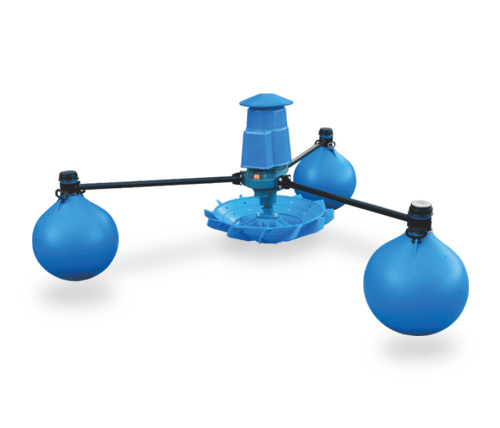
The ADSIA Series AC/DC Brushless Motor Solar Impeller Aerator is engineered to increase dissolved oxygen while promoting vertical water circulation. Its high-speed impeller draws and throws water in a way that produces bubbles and strong water movement. This process increases the contact area between water and air, accelerates oxygen transfer, and helps distribute oxygen more evenly through the pond. At the same time, the circulation effect helps reduce water stratification, which is a frequent cause of low oxygen zones near the bottom.
The model provided in the performance data is ADSIA-300-2200. It operates with AC220/DC300V, uses a recommended DC input voltage of 300V to 400V, and has a rated power of 2200W. Its oxygenation rate is at least 3.4 kg/h, and its covering area is 2665 to 5328 square meters, depending on pond conditions, stocking density, installation layout, water depth, and management style. The solar panel open circuit voltage should be below 450V, and the recommended solar panel power should be at least 1.3 times the pump power.
The brushless motor is one of the most important elements of the product. Compared with traditional brushed motors, a brushless motor reduces friction-related wear, lowers maintenance requirements, improves power conversion efficiency, and extends service life. In aquaculture, where equipment may need to run for long hours every day, these advantages have direct economic value. Lower maintenance means fewer interruptions; higher efficiency means reduced energy demand; and longer service life means better investment return.
The aerator’s automatic AC/DC switching function is another major product highlight. Aquaculture ponds do not stop consuming oxygen when weather conditions change. Fish and shrimp continue to respire at night, microbial activity continues to consume oxygen, and organic matter continues to decompose. A solar-only aerator may perform well in sunlight but can become insufficient when solar input is reduced. By allowing both AC and DC power operation, the ADSIA Series is better suited to real-world farm conditions where reliability matters as much as energy savings.
The following table summarizes the technical data for the available model. These specifications help farmers, project designers, distributors, and system integrators evaluate the aerator for pond oxygenation planning and solar power configuration.
| Item | Voltage | Best DC Input Voltage | Power | Oxygenation Rate | Covering Area | Solar Panel Open Circuit Voltage | Solar Panel Power |
| ADSIA-300-2200 | AC220/DC300V | 300V-400V | 2200W | ≥3.4 kg/h | 2665-5328㎡ | <450V | ≥1.3 × pump power |
These values demonstrate that the ADSIA-300-2200 is designed for serious pond aeration rather than light ornamental use alone. A power level of 2200W, combined with an oxygenation rate of at least 3.4 kg/h, gives the product the capacity required for aquaculture ponds where oxygen demand can rise rapidly. The broad covering area also indicates that the impeller design is not only creating surface disturbance but also pushing water across a large effective zone.
The solar panel configuration guidance is equally important. For effective operation, the solar array should be sized properly rather than matched only to the rated motor power. The recommendation of at least 1.3 times the pump power supports better performance under real sunlight conditions, where panel output may be reduced by temperature, dust, clouds, panel angle, or seasonal solar variation. This practical requirement helps users avoid undersized solar installations that cannot maintain stable aeration.
Dissolved oxygen is one of the most critical water quality parameters in fish and shrimp farming. When dissolved oxygen drops below safe levels, aquatic animals reduce feeding, become stressed, grow more slowly, and become more vulnerable to disease. Severe oxygen deficiency can cause mass mortality in a short time. Even moderate oxygen stress can reduce profitability by lowering feed efficiency and increasing the risk of health problems.
Many ponds face oxygen stress during early morning hours. During the day, algae and aquatic plants release oxygen through photosynthesis. At night, however, photosynthesis stops while fish, shrimp, algae, bacteria, and other organisms continue consuming oxygen. This means dissolved oxygen usually reaches its lowest point before sunrise. A reliable aerator is essential during this period, and the ADSIA Series is especially useful because it can switch between solar DC and AC power instead of depending only on daytime sunshine.
Oxygenation also supports the biological breakdown of organic waste. Uneaten feed, feces, dead algae, and other organic matter accumulate in ponds. Microorganisms decompose this material, but the decomposition process consumes oxygen. If oxygen is insufficient, anaerobic conditions can develop near the pond bottom, producing harmful substances such as hydrogen sulfide, ammonia-related stress conditions, and unpleasant odors. By improving oxygen transfer and water circulation, the ADSIA Series helps maintain a healthier pond environment.
Vertical circulation is also significant. In many ponds, warm oxygen-rich surface water and cooler oxygen-poor bottom water can separate into layers. This stratification can create dead zones near the bottom, where waste accumulates and water quality deteriorates. The high-speed impeller of the ADSIA Series promotes water movement that helps mix layers, improving overall oxygen distribution and reducing the risk of sudden water quality changes.
The impeller is the heart of the aeration effect. A poorly designed impeller may consume power without producing sufficient oxygen transfer or water movement. The ADSIA Series uses a high-efficiency impeller concept designed to create bubbles and strong flow. The rotating action breaks water into smaller moving streams and increases air-water contact. The more effectively water contacts air, the more oxygen can dissolve into the pond.
High-speed impeller operation also creates circulation energy. In aquaculture, oxygen transfer alone is not enough if oxygen remains only near the surface or close to the machine. The aerator must distribute oxygenated water through the pond area. The ADSIA Series is designed for both oxygenation and circulation, giving it an advantage over systems that may produce bubbles but limited horizontal or vertical water movement.
The wide covering area of 2665 to 5328 square meters shows that the aerator can influence a large pond zone when properly installed. Actual coverage depends on local conditions such as pond shape, depth, stocking density, wind direction, sludge level, and water exchange. However, the performance range gives farm managers a useful planning reference for determining how many units are needed and where they should be placed.
Compared with simple air pumps or low-power splash devices, an impeller aerator can provide visible circulation and rapid oxygen transfer. This is valuable in ponds with high biomass, intensive feeding, or warm climates where oxygen demand is high. The ADSIA Series further improves this impeller-based advantage by combining it with brushless motor efficiency and dual power input flexibility.
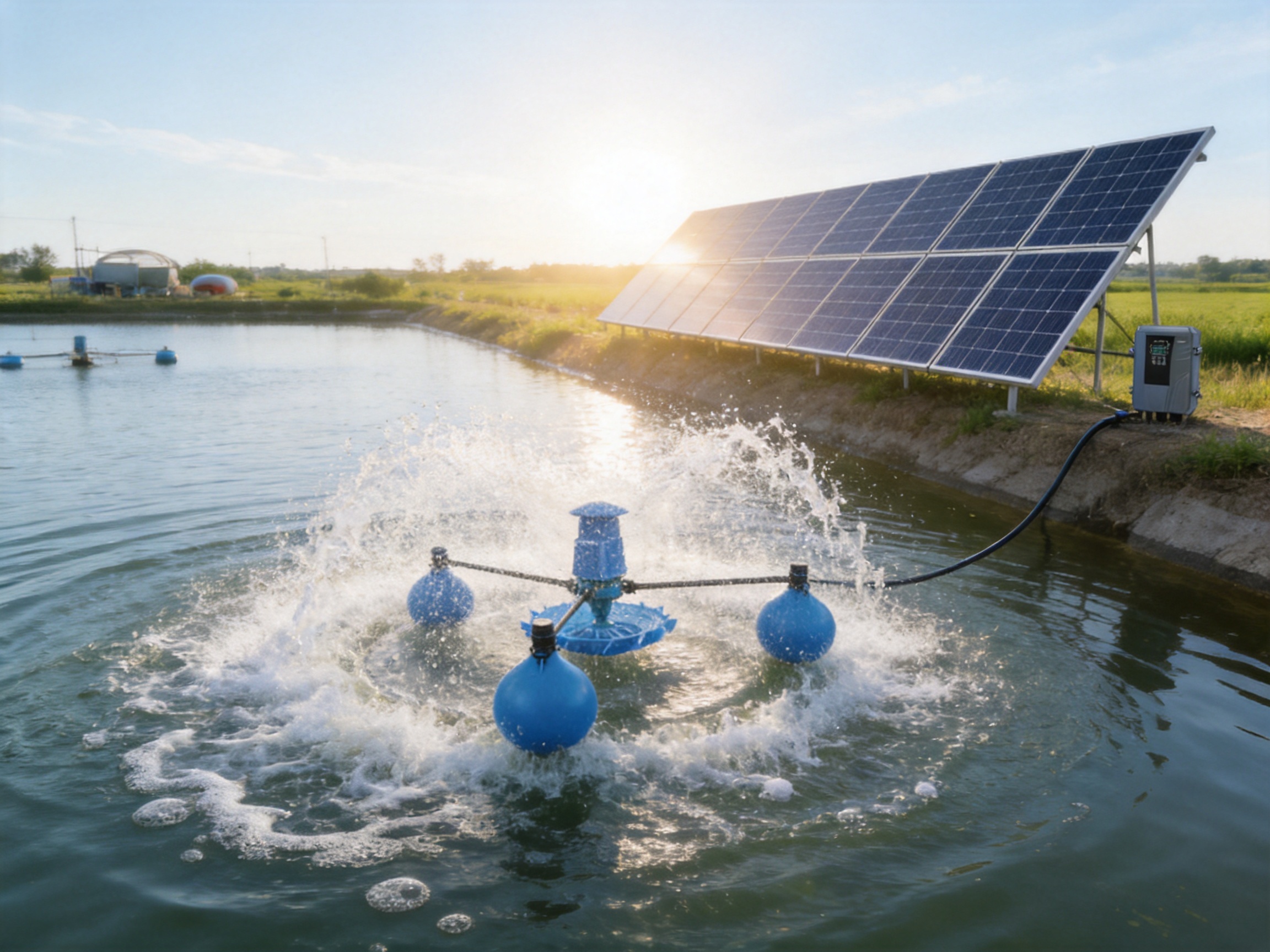
One of the strongest competitive advantages of the ADSIA Series is its automatic AC/DC switching capability. Many farms are interested in solar aeration because electricity costs are rising and rural power supply can be unstable. However, solar-only systems may not always meet oxygen demand during cloudy periods or nighttime operation. The ADSIA Series addresses this problem by accepting both AC220 and DC300V input, allowing users to benefit from solar power while maintaining operational security.
During sunny hours, the aerator can use DC input from a properly configured solar panel system. This reduces dependence on grid electricity and helps lower daily operating costs. In regions with high solar radiation, the savings can be significant over a full farming season. Solar operation also supports farms in remote areas where grid access is limited, expensive, or unreliable.
When solar input is insufficient, the system’s AC capability helps maintain stable operation. This matters because oxygen emergencies often happen when conditions are least convenient: at night, before sunrise, after storms, during cloudy weather, or when algae conditions change suddenly. Automatic AC/DC switching gives farmers more confidence that aeration will continue when fish and shrimp need it most.
Compared with competitors that offer only AC aerators, the ADSIA Series can reduce grid energy consumption. Compared with competitors that offer only DC solar aerators, it provides stronger continuity and better risk management. Compared with traditional fuel-powered emergency aeration, it reduces noise, fuel handling, emissions, and daily maintenance. This balanced power architecture makes the product well suited for modern aquaculture operations that want both sustainability and reliability.
The ADSIA Series uses an AC/DC brushless motor, which is a major upgrade over traditional brushed motor systems. In a brushed motor, brushes physically contact the commutator, creating friction, heat, electrical noise, and wear. Over time, brushes must be replaced, and motor performance can decline. In wet, outdoor, and continuous-operation environments, reducing wear components is a significant advantage.
A brushless motor uses electronic control instead of mechanical brushes. This design improves efficiency because less energy is lost to friction. It also improves reliability because fewer parts are subject to mechanical wear. For aquaculture users, this means lower maintenance frequency, fewer unexpected failures, and better long-term operating economy.
Energy efficiency is not only an environmental benefit; it affects farm profitability. Aerators often run for many hours, especially in warm seasons or high-density ponds. Even a modest efficiency improvement can lead to meaningful savings over months and years. When combined with solar energy use, the brushless motor helps reduce overall operating costs and improves the economic case for upgrading from older aeration equipment.
The brushless motor also supports stable performance under variable power conditions. Solar power can fluctuate because of clouds, temperature, and panel conditions. A motor system designed for AC/DC operation must manage these changes effectively. The ADSIA Series is developed for such conditions, making it more suitable for solar-integrated aquaculture than conventional motors that were originally designed only for grid power.
Many aeration systems are available in the market, including paddlewheel aerators, roots blower systems, air stones, surface splash aerators, diesel-driven emergency aerators, and simple solar aerators. Each has its place, but the ADSIA Series offers a strong combination of performance features that directly address common weaknesses in competing products.
Traditional grid-powered aerators can provide strong aeration, but they depend on electricity supply and can produce high operating costs. In areas where power prices are high or grid reliability is poor, this becomes a major limitation. The ADSIA Series reduces this disadvantage by using solar DC power when available while retaining AC operation as backup.
Solar-only aerators reduce energy costs but may be unreliable when sunlight is weak. This can be risky in aquaculture because low oxygen often occurs at night or under cloudy conditions. The ADSIA Series improves on solar-only designs through automatic AC/DC switching, making it more practical for commercial farming.
Air stone systems can be useful in tanks and smaller ponds, but they may not create strong large-area circulation. Without circulation, oxygenated water may remain localized. The impeller design of the ADSIA Series creates both bubbles and water movement, increasing its value in ponds that need mixing as well as oxygen transfer.
Diesel-driven emergency aerators can be used during outages, but fuel cost, noise, maintenance, and manual operation reduce convenience. They are usually not ideal for daily energy-efficient operation. The ADSIA Series provides a cleaner, more automated alternative that supports long-term pond management rather than only emergency response.
| Feature | ADSIA Series AC/DC Brushless Solar Impeller Aerator | Typical AC-Only Aerator | Typical Solar-Only Aerator | Basic Air Pump System |
| Power Flexibility | AC and DC with automatic switching | AC only | DC only | Usually AC only |
| Energy Cost Reduction | High potential with solar operation | Limited | High in sunlight only | Limited to moderate |
| Night and Cloudy Operation | Supported through AC input | Supported if grid is stable | Limited unless batteries are added | Supported if grid is stable |
| Motor Technology | Brushless motor | Often conventional motor | Varies by model | Varies by model |
| Water Circulation | Strong impeller-driven circulation | Depends on design | Often lower power | Usually localized |
| Maintenance Demand | Reduced due to brushless design | Moderate | Varies | Requires air line and diffuser care |
The ADSIA Series is suitable for small and medium-sized aquaculture ponds where fish and shrimp require stable dissolved oxygen. It can be used in freshwater fish ponds, shrimp ponds, mixed aquaculture systems, ecological farms, and ornamental fish aquariums or display water bodies that require strong oxygenation and circulation. Its combination of high oxygenation rate and broad coverage makes it especially useful in ponds where biological load changes during the farming cycle.
In fish farming, oxygen demand rises as fish grow and stocking biomass increases. Early in the cycle, oxygen demand may be moderate, but later stages can become more sensitive to oxygen shortages. Installing a reliable aerator before peak biomass is reached helps prevent emergency conditions and supports continuous feeding. The ADSIA Series can assist farm managers in maintaining dissolved oxygen during these high-demand stages.
In shrimp farming, water quality stability is particularly important. Shrimp are sensitive to sudden environmental changes, and poor bottom conditions can affect health and survival. Aeration and circulation help maintain a more stable pond environment. By moving water vertically and increasing dissolved oxygen, the ADSIA Series supports better pond bottom conditions and helps reduce stress factors associated with low oxygen.
Ecological farms and ornamental water systems can also benefit from aeration. In these applications, the goal may include maintaining clear water, reducing odor, supporting beneficial microorganisms, and improving the visual and biological quality of the water body. The ADSIA Series offers an energy-conscious solution for such systems, especially where solar power use is desirable.
Proper installation is essential for achieving the expected aeration effect. The aerator should be positioned to support effective circulation throughout the pond. In rectangular ponds, placement should consider water flow direction, prevailing wind, pond depth, and feeding areas. In irregular ponds, users may need to observe water movement and adjust position to reduce dead zones.
The solar power system must be configured according to the electrical requirements. For the ADSIA-300-2200, the best DC input voltage is 300V to 400V, and the solar panel open circuit voltage should remain below 450V. The recommended solar panel power is at least 1.3 times the pump power. This means the solar array should not be undersized. A well-designed solar configuration helps the aerator operate more consistently and improves the value of the solar investment.
Electrical safety should always be handled by qualified personnel. Because aquaculture environments combine water, outdoor exposure, and electrical equipment, correct wiring, grounding, protection devices, and waterproof connections are essential. Users should follow local electrical regulations and installation guidelines. The AC power supply should be stable and suitable for the product’s operating requirements.
Farmers should also plan aeration operation according to oxygen demand. Aeration may be needed continuously in intensive systems, while semi-intensive ponds may use scheduled operation during high-risk periods. Common high-risk periods include late night, early morning, after heavy feeding, during hot weather, after rain, and during algae instability. The AC/DC switching function allows flexible planning because solar operation can reduce cost during the day while AC input can support night operation.
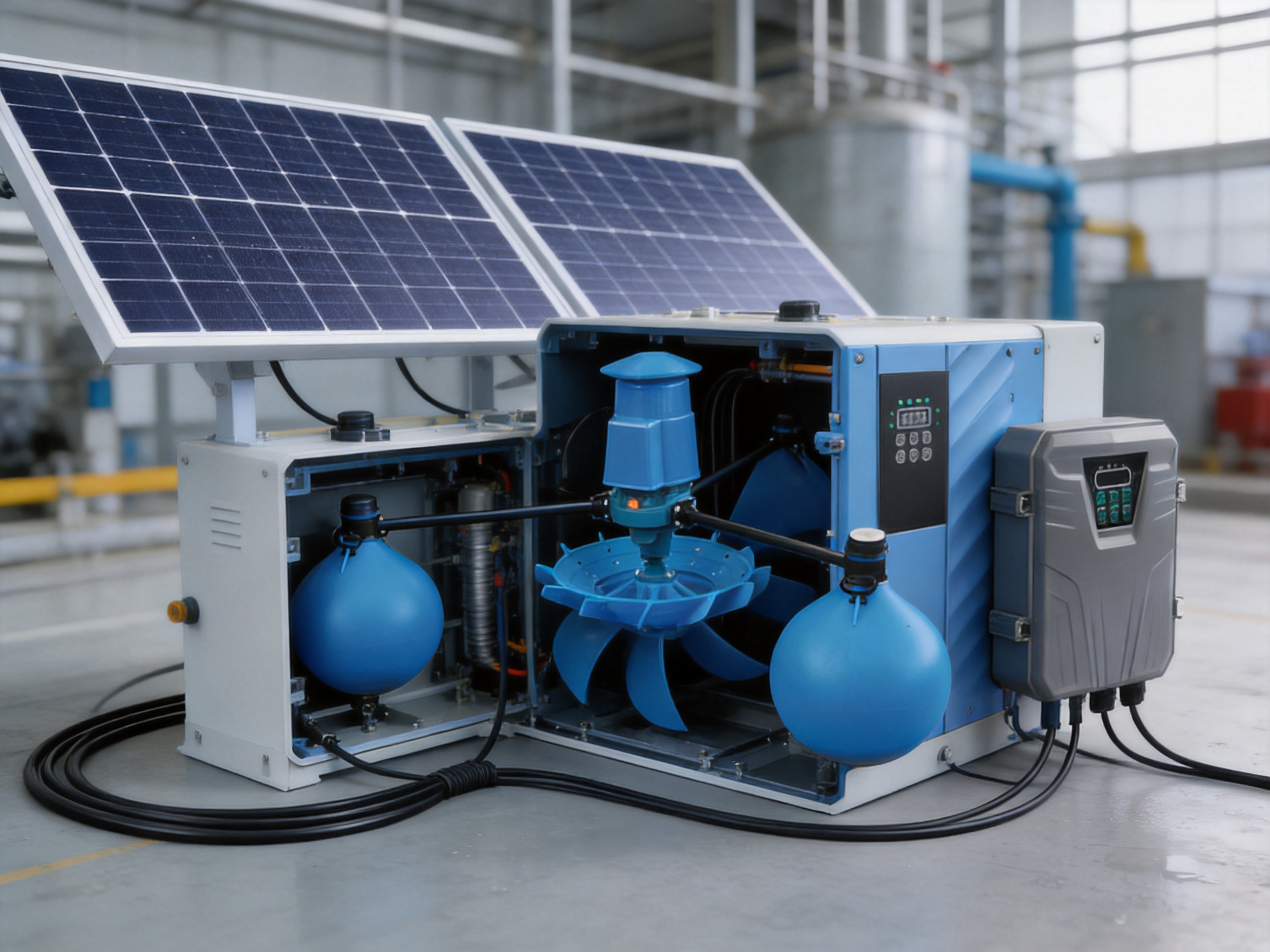
The ADSIA Series benefits from the manufacturing experience of Taizhou Edwin Electric Co., Ltd., a company founded in 2008 with a focus on pumps, water systems, and global export. Over years of development, the company has built a broad product portfolio that includes deep well pumps, submersible pumps, surface pumps, booster pumps, circulation pumps, garden pumps, pool and spa pumps, commercial multistage pumps, pump accessories, end suction pumps, pipes and valves, intelligent booster pumps, and solar water pump solutions. This broad technical foundation helps the company develop products for different water movement environments and performance requirements.
Advanced manufacturing is not only about assembling parts. It includes engineering design, material selection, motor technology, process control, performance testing, quality inspection, packaging, export management, and after-sales support. The company’s integrated manufacturing model allows better control over these stages. For a product like the ADSIA Series, this matters because aerators must withstand outdoor use, long operating hours, water exposure, and variable power conditions.
Independent research and development are important strengths. A manufacturer with internal R&D capability can improve motor design, optimize impeller geometry, adapt products for solar energy, and respond to customer feedback faster than companies that only trade standard products. Since 2018, the company has invested in new energy and intelligent technology, launching solar water pumps and intelligent booster pumps. The ADSIA Series reflects this direction by integrating solar-compatible operation with efficient motor technology.
Mass production capability also supports consistent quality and supply stability. For distributors, project contractors, and farming enterprises, reliable delivery is important. A supplier that can manage production scale, quality inspection, and export documentation reduces procurement risk. The company also established professional foreign trade service capabilities through related enterprises, supporting procurement planning, order tracking, cross-border delivery, and export service. This makes it easier for global customers to source products efficiently.
Aquaculture equipment must be reliable because failure can directly affect livestock survival. A pump or aerator failure is not merely an inconvenience; it can create an oxygen emergency. For this reason, product reliability must be built into design and manufacturing from the beginning. The ADSIA Series is supported by a three-year warranty, showing confidence in the product’s durability and giving users additional peace of mind.
Quality control for an aerator involves multiple areas. The motor must be inspected for electrical performance and thermal behavior. The impeller must be balanced and manufactured to deliver the intended water flow. Electrical components must support the required voltage range and switching function. Structural parts must withstand outdoor operation and mechanical vibration. Packaging must protect the equipment during international transportation.
Because the company has long experience in pump manufacturing, it understands key reliability factors such as sealing, motor protection, hydraulic performance, and durability under continuous operation. These capabilities are transferable to the design and production of solar aeration equipment. The ADSIA Series is not an isolated product; it is part of a broader engineering culture focused on water movement and electric drive systems.
The three-year warranty is particularly meaningful in a market where some low-cost aeration products may offer limited support. A longer warranty helps customers evaluate total value rather than only purchase price. When equipment operates reliably over multiple seasons, the cost per operating hour decreases. This is especially important for farms that depend on aeration as a core production tool.
Energy cost is one of the most important operating expenses in aquaculture. Aerators, pumps, feeders, and other equipment can consume significant electricity, especially in intensive systems. By using solar energy during available sunlight hours, the ADSIA Series can reduce grid electricity consumption and improve long-term operating economics. The brushless motor further supports savings by improving energy conversion efficiency.
Return on investment should be evaluated beyond the initial purchase price. A cheaper aerator may cost more over time if it consumes more electricity, requires more repairs, fails during critical periods, or lacks power flexibility. The ADSIA Series is designed to reduce these hidden costs through solar compatibility, AC backup capability, brushless motor durability, and strong oxygenation performance.
For farms with high daytime aeration demand, solar operation can deliver meaningful savings. In warm climates, oxygen demand is often high during sunny periods because water temperature rises and animal metabolism increases. Solar energy availability often aligns well with daytime operational needs. At night, when solar input is absent, AC operation can maintain oxygenation without requiring a large battery system. This can reduce the complexity and cost of full off-grid designs.
The system also supports risk reduction. Oxygen-related mortality can cause losses far greater than the cost of aeration equipment. By improving oxygen reliability, the aerator helps protect the farmer’s biological assets. Better dissolved oxygen also supports feeding activity and growth, improving production results. These indirect economic benefits are often more important than energy savings alone.
Modern aquaculture is under increasing pressure to improve sustainability. Farms must reduce energy consumption, control water quality, minimize waste impact, and operate responsibly. Solar aeration contributes to these goals by reducing dependence on fossil-fuel-based electricity and lowering the carbon footprint of daily pond management. The ADSIA Series supports this transition while maintaining practical reliability through AC backup.
Improved aeration can also reduce environmental stress within the pond. Adequate oxygen supports aerobic decomposition of organic matter, which is generally more favorable than anaerobic decomposition. Better circulation can reduce stagnant zones, improve biological balance, and help maintain more consistent water conditions. These effects support healthier aquaculture ecosystems.
Compared with diesel-powered alternatives, electric solar-compatible aeration reduces local emissions, fuel storage risks, and noise. This is beneficial for farms near residential areas, ecological farms, and ornamental water projects. Quiet and cleaner operation improves the working environment and supports better community acceptance.
The use of a brushless motor also contributes to sustainability by extending service life and reducing replacement frequency. Products that last longer consume fewer manufacturing resources over time. When combined with energy-efficient operation, durable design becomes a meaningful part of sustainable equipment selection.
The ADSIA Series is not only attractive to end users; it also offers advantages for distributors, installers, and aquaculture project contractors. Its clear performance data, defined voltage requirements, and solar panel configuration guidance make it easier to design systems and explain product value to customers. The AC/DC feature gives sales teams a strong differentiating point in markets where customers are concerned about both energy costs and reliability.
Distributors benefit from products that solve real customer pain points. In aquaculture, farmers often ask whether solar equipment can operate at night or during cloudy weather. A solar-only product may require batteries or may not meet expectations. The ADSIA Series provides a more practical answer by combining solar input with AC operation. This reduces objections and supports broader market acceptance.
Project contractors can use the product in solar aquaculture upgrades, pond modernization projects, ecological farm development, and water quality improvement systems. The broad covering area allows efficient layout planning. The oxygenation rate gives designers a quantitative basis for matching equipment to pond size and biomass. The three-year warranty helps support project confidence.
For international buyers, the company’s export experience is also important. Taizhou Edwin Electric Co., Ltd. and its associated trade service structure support global purchasing needs, including order tracking and cross-border delivery. This reduces communication barriers and procurement uncertainty for customers outside China.
When applied correctly, the ADSIA Series can support a more stable pond management strategy. Aeration improves dissolved oxygen, but it also influences feeding, waste breakdown, algae balance, and animal behavior. Farmers often observe that fish gather near aeration zones during low oxygen periods. A strong aerator can reduce crowding stress by improving oxygen distribution over a larger area.
Better oxygen levels can improve feed utilization. Fish and shrimp consume feed more efficiently when environmental conditions are suitable. Low oxygen reduces appetite and digestion efficiency, causing feed waste and water quality deterioration. By supporting oxygen stability, the aerator helps farmers maintain feeding programs more confidently.
Water circulation also helps distribute temperature and dissolved substances. In stagnant ponds, some areas may have poor oxygen, high waste concentration, or uneven temperature. Circulation reduces these differences and promotes a more uniform culture environment. This is especially useful in ponds with irregular shapes, high organic load, or limited water exchange.
Aeration can also support emergency response. If weather changes suddenly or oxygen drops unexpectedly, having a powerful aerator with AC/DC flexibility provides an important management tool. Farmers can operate the equipment when needed without depending only on sunlight. This flexibility can be crucial during the most dangerous oxygen stress events.
Taizhou Edwin Electric Co., Ltd. operates from Wenling City, Taizhou City, Zhejiang Province, China, an area known for pump manufacturing and electromechanical industry development. Since its founding in 2008, the company has focused on medium-to-high-end global markets and has earned recognition among customers through reliable quality. Its products are widely used in new energy projects, agricultural irrigation, municipal engineering, mining, construction, HVAC systems, household water supply, and aquaculture-related water applications.
The company’s strength lies in combining manufacturing capability with market responsiveness. It does not only produce single-purpose equipment; it provides a broad water system product range that can meet diverse procurement needs. This is valuable for customers who want one-stop sourcing for pumps, accessories, and related water treatment peripheral products. For global buyers, reducing supplier complexity can save time and improve project coordination.
Investment in new energy and intelligent technology since 2018 demonstrates a forward-looking direction. Solar water pumps and intelligent booster pumps require expertise in motor control, energy management, and system integration. These same capabilities are relevant to the ADSIA Series, which must manage AC/DC power and maintain reliable aeration under variable conditions.
As a high-performance water pump manufacturer and smart pump factory, the company applies its accumulated knowledge to products that support modern agriculture and aquaculture. The ADSIA Series is a natural extension of this expertise, serving customers who need efficient, durable, and energy-conscious aeration solutions.
The ADSIA Series stands out because it addresses multiple needs at once. It improves oxygenation, promotes water circulation, supports solar energy use, maintains AC backup operation, reduces maintenance through brushless motor technology, and offers a three-year warranty. Many competing products may provide one or two of these advantages, but fewer combine them in an integrated aerator designed for practical aquaculture use.
Its oxygenation rate of at least 3.4 kg/h and covering area of 2665 to 5328 square meters make it suitable for productive pond systems. Its recommended DC input range of 300V to 400V and solar open circuit voltage limit below 450V provide clear guidance for solar configuration. Its recommendation for solar panel power at least 1.3 times pump power reflects a realistic understanding of field conditions rather than an overly optimistic laboratory-only approach.
The product’s brushless motor creates another competitive advantage. In markets where low-cost products may use less efficient or less durable motor designs, a brushless motor provides long-term value. Customers who evaluate total cost of ownership will recognize the benefit of reduced wear and improved efficiency.
The automatic AC/DC switching function may be the most important differentiator. Aquaculture farmers need solar savings, but they cannot accept oxygen risk. By combining renewable energy with grid backup, the ADSIA Series provides a balanced solution. It helps farms move toward lower energy costs and better sustainability without sacrificing operational security.
Before selecting an aerator, buyers should evaluate pond size, water depth, stocking density, species, feeding level, climate, existing power supply, and solar resource. The ADSIA-300-2200 model can cover a large area, but multiple units may be needed for intensive ponds or irregular layouts. The goal should be not only to create visible water movement but also to maintain safe dissolved oxygen throughout the culture cycle.
Buyers should also consider whether they need daytime solar operation, night operation, or both. If the farm has stable grid power but wants to reduce electricity cost, the AC/DC function is highly useful. If the farm has limited grid power, solar operation can provide an important energy source, while AC input may be connected to available grid or backup power where possible.
Solar panel sizing should follow the product requirements. Undersized panels may reduce operating performance and create user dissatisfaction. The solar panel power should be at least 1.3 times the pump power, and the open circuit voltage must remain below 450V. A professional solar installer can help configure panel series and parallel connections correctly.
Buyers should also value warranty, supplier experience, and after-sales communication. Aeration equipment is a long-term production asset. Choosing a manufacturer with R&D, mass production capability, export experience, and technical product knowledge can reduce procurement risk and support better long-term outcomes.
Although the brushless motor reduces maintenance needs, routine inspection remains important. Users should regularly check electrical connections, mounting stability, impeller condition, floating or support components, and cable protection. Debris such as weeds, plastic, or fishing materials should be removed to prevent obstruction and maintain efficient water movement.
Solar panels should be kept clean and properly oriented. Dust, bird droppings, leaves, and shading can reduce power output. Because the aerator’s performance depends on sufficient input power during solar operation, panel maintenance is part of the overall aeration system maintenance. Users should inspect panel wiring and support structures periodically, especially after storms.
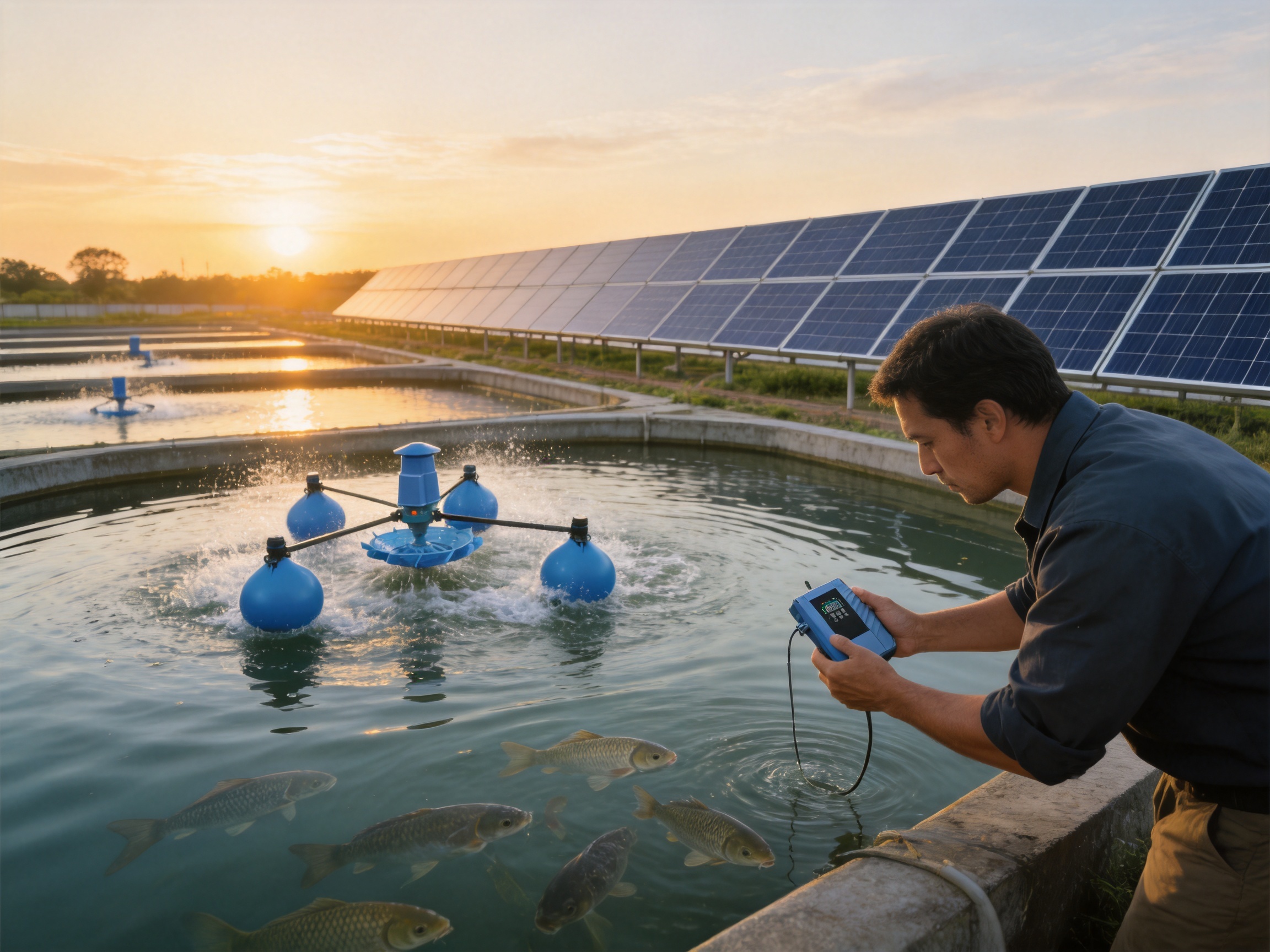
Farmers should monitor dissolved oxygen with a reliable meter when possible. Visual observation is useful, but oxygen meters provide better management data. Monitoring helps determine when aeration should be increased, whether additional units are needed, and how pond conditions change through the day and night. This data-driven approach improves aquaculture efficiency.
Seasonal maintenance should include checking all equipment before high-risk periods. Before summer or peak biomass stages, users should confirm that the aerator operates correctly on both AC and DC power. This prevents unexpected problems when oxygen demand is highest. A preventive maintenance approach is always safer than emergency repair.
The main purpose is to increase dissolved oxygen and promote vertical water circulation in aquaculture ponds and other water bodies. It helps improve water quality, supports fish and shrimp growth, and reduces the risk of oxygen stress.
The AC/DC switching function allows the aerator to use solar DC power when sunlight is available and AC power when solar input is insufficient. This helps reduce electricity costs while maintaining reliable operation during cloudy weather or at night.
A brushless motor has fewer wear components, lower friction, better energy efficiency, and longer service life. For aquaculture equipment that may operate for long hours, this means lower maintenance and better long-term value.
The ADSIA-300-2200 model has an oxygenation rate of at least 3.4 kg/h, making it suitable for productive pond aeration applications.
The covering area is 2665 to 5328 square meters. Actual performance depends on pond shape, depth, stocking density, installation position, and water quality conditions.
The solar panel open circuit voltage should be below 450V, and the solar panel power should be at least 1.3 times the pump power. For the 2200W model, proper solar system design is important for stable operation.
Yes, it can operate at night when connected to a suitable AC power supply. This is one of its advantages over solar-only aerators that depend entirely on sunlight unless batteries are added.
Yes, it is suitable for shrimp ponds because it improves dissolved oxygen and water circulation, both of which are important for maintaining stable pond conditions and reducing stress.
The product is supported by a three-year warranty, giving users added confidence in durability and long-term operation.
Buyers should consider total value rather than only initial cost. The ADSIA Series offers AC/DC flexibility, solar energy savings, brushless motor durability, strong oxygenation, wide coverage, and manufacturer support, which can reduce operating risk and long-term expense.
The ADSIA Series AC/DC Brushless Motor Solar Impeller Aerator is a strong solution for aquaculture operators who need reliable oxygenation, effective water circulation, and improved energy efficiency. Its high-speed impeller increases dissolved oxygen and moves water vertically, helping reduce stratification and improve pond quality. Its brushless motor reduces energy consumption and maintenance while supporting long service life. Its automatic AC/DC switching function gives farmers the practical advantage of solar savings without sacrificing night or cloudy-day reliability.
Compared with conventional AC-only, solar-only, or basic air pump systems, the ADSIA Series provides a more balanced and modern approach. It is designed not merely to aerate water, but to support healthier aquaculture production, better risk management, and improved long-term profitability. The ADSIA-300-2200 model, with 2200W power, an oxygenation rate of at least 3.4 kg/h, and a covering area of 2665 to 5328 square meters, offers strong performance for small and medium-sized pond applications.
The manufacturing strength behind the product further increases its value. Taizhou Edwin Electric Co., Ltd. brings years of experience in pump manufacturing, new energy technology, intelligent systems, global export, and quality-focused production. This combination of product engineering and manufacturing capability makes the ADSIA Series a competitive choice for aquaculture farms, distributors, and project contractors seeking dependable solar-compatible aeration equipment.
For farms that want to improve water quality, protect aquatic livestock, reduce energy costs, and modernize pond management, the ADSIA Series AC/DC Brushless Motor Solar Impeller Aerator offers a practical and forward-looking investment.
Boyd, C. E. Water Quality Management for Pond Fish Culture. Elsevier Scientific Publishing.
Boyd, C. E., and Tucker, C. S. Pond Aquaculture Water Quality Management. Springer.
Food and Agriculture Organization of the United Nations. Small-Scale Aquaculture Development and Water Quality Guidelines.
Hargreaves, J. A., and Tucker, C. S. Managing Ammonia in Fish Ponds. Southern Regional Aquaculture Center.
Pillay, T. V. R., and Kutty, M. N. Aquaculture: Principles and Practices. Blackwell Publishing.
Timmons, M. B., Ebeling, J. M., Wheaton, F. W., Summerfelt, S. T., and Vinci, B. J. Recirculating Aquaculture Systems. Cayuga Aqua Ventures.
edwina@edwin-pump.com
+86-13586290903 (WhatsApp)
Xuri Gongliang Cutting Tool Entrepreneurship Park, Wenqiao Town, Wenling City, Taizhou City, Zhejiang Province, China

High Performance Smart Pump Factory


 English