
edwina@edwin-pump.com

View All Products
en
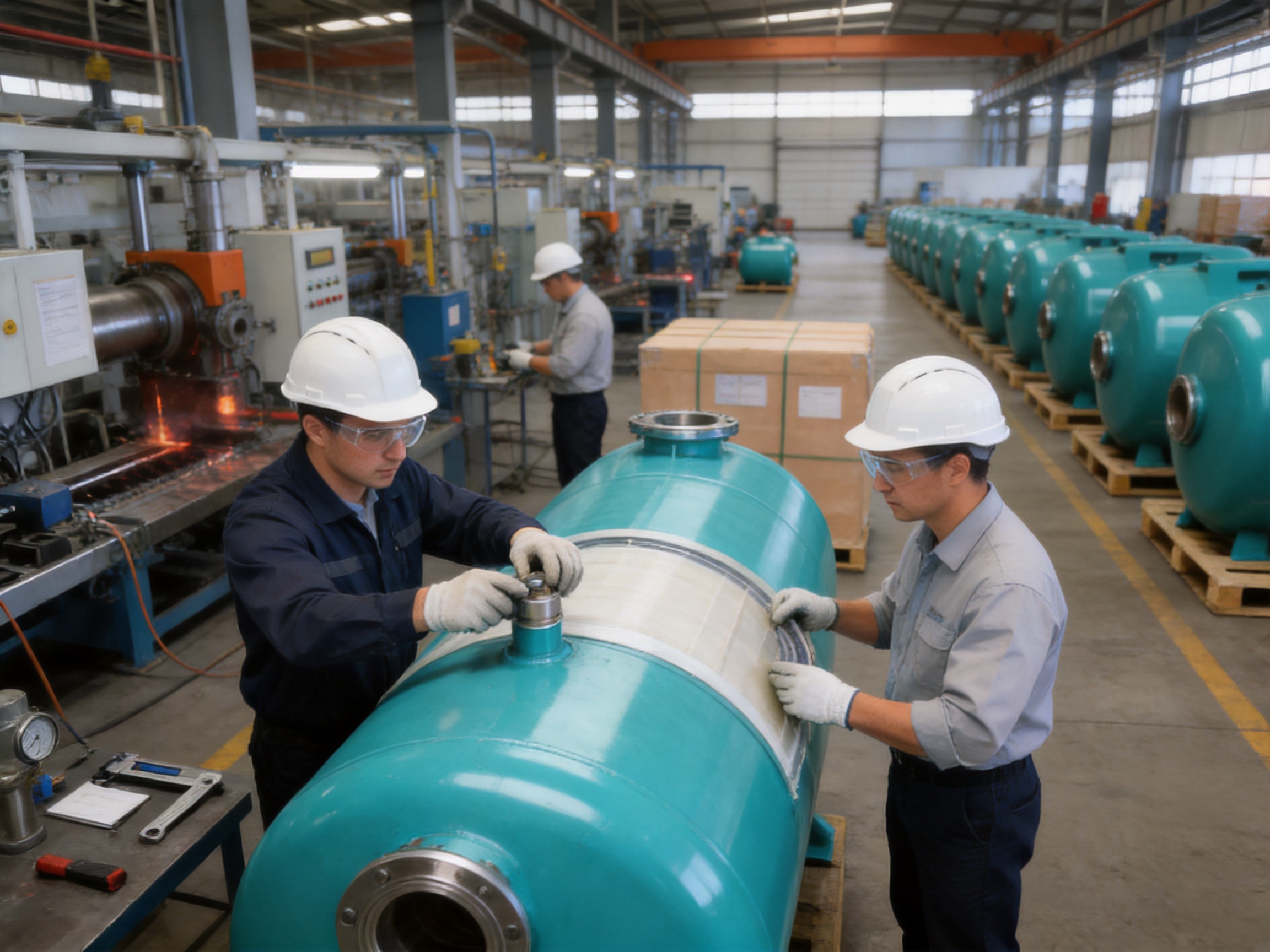
Reliable pressure management is essential in domestic, agricultural, commercial, and industrial water systems. A pump may provide the required flow and pressure, but without a properly selected pressure tank, the pump can start too frequently, pressure can fluctuate, and the entire installation may experience unnecessary wear. The CF Series carbon steel horizontal pressure tank is designed to provide a practical and dependable solution for these challenges.
This replaceable-membrane pressure tank is intended for water systems that require stable pressure, reduced pump cycling, and efficient storage of pressurized water. Available in several capacities from 19 liters to 100 liters, the series can be matched to different pump sizes, pipe arrangements, and water-use patterns. Its horizontal configuration is especially useful where vertical clearance is limited or where the tank must be installed close to a domestic booster pump.
The design combines a carbon steel pressure vessel, carbon steel flange, replaceable membrane construction, a standard one-inch connector, and selectable maximum pressure ratings. Depending on the model and configuration, the maximum pressure can be 6, 8, 10, or 16 bar. The product is therefore suitable for many residential water supply systems, pressure boosting sets, irrigation installations, and general water-treatment applications.
Manufactured by Taizhou Edwin Electric Co., Ltd., the product forms part of a broader water equipment portfolio that includes deep well pumps, submersible pumps, domestic booster pumps, circulation pumps, solar water pumps, intelligent booster pumps, and related accessories. The company’s manufacturing and export experience supports a product approach centered on practical engineering, repeatable production, quality control, and one-stop procurement.
A pressure tank stores a volume of water under compressed air or gas pressure. When a tap, shower, irrigation valve, or appliance requires water, the stored water can be delivered before the pump starts. Once the tank pressure falls to the pump start point, the pump operates and replenishes the tank.
Without a pressure tank, a pump may start every time a small amount of water is used. This is known as short cycling. Repeated starts place additional stress on the motor, electrical components, seals, bearings, and pump hydraulics. Short cycling can also cause unstable pressure and increased energy consumption.
A properly sized pressure tank provides several important functions:
It reduces the number of pump starts during low or intermittent water demand.
It helps maintain a more consistent pressure in the distribution system.
It supplies a reserve volume of water for short periods of use.
It reduces mechanical and electrical stress on the pump.
It can improve the service life of the complete pressure-boosting installation.
It provides a more comfortable experience for users, particularly in domestic systems where sudden pressure changes are undesirable.
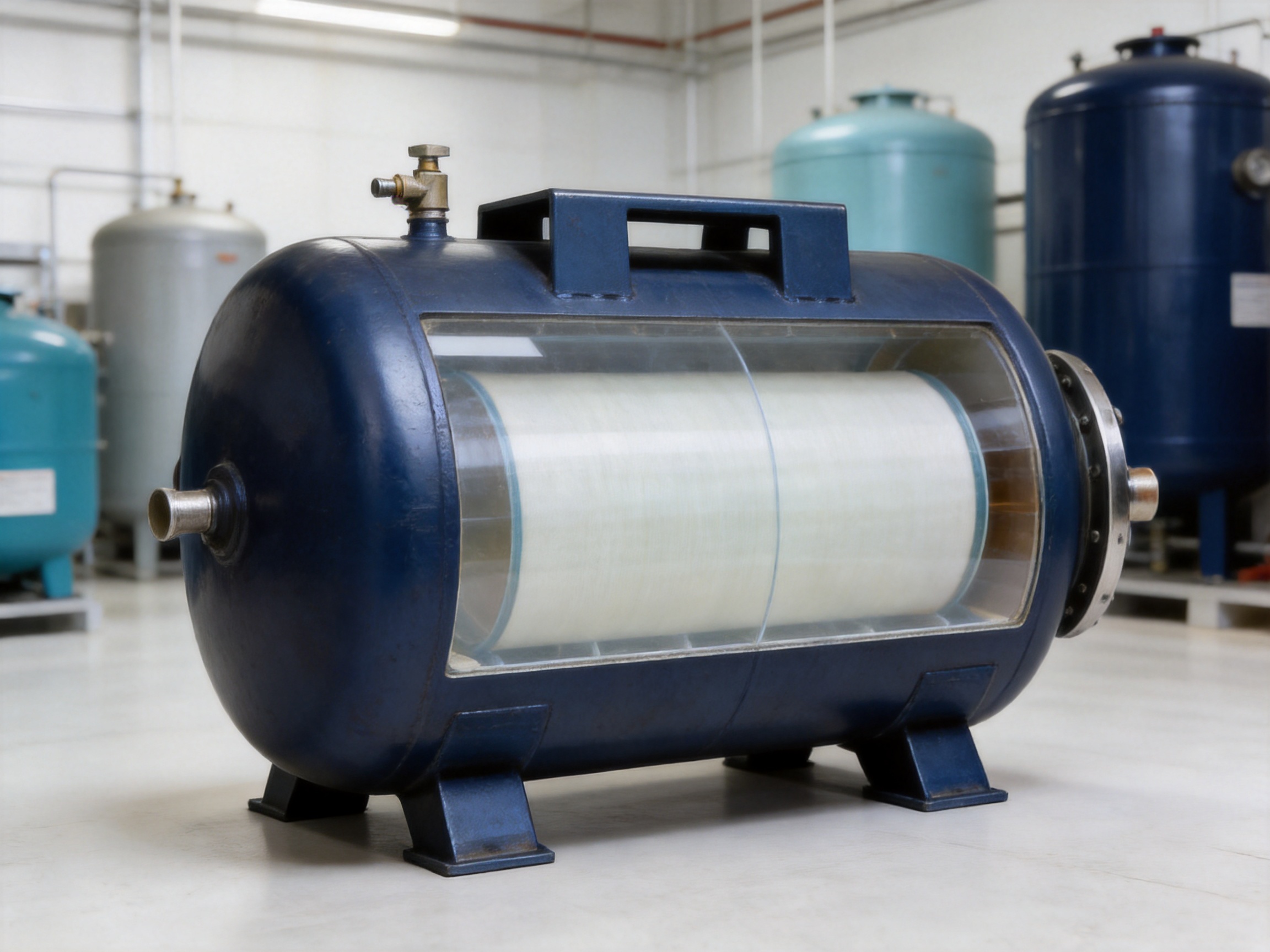
The CF Series is designed around these principles. Its replaceable membrane separates the stored water from the air chamber. This arrangement helps prevent direct contact between the water and the internal air charge, supporting more stable operation and simplifying maintenance when the membrane eventually needs replacement.
The CF Series is a horizontal carbon steel pressure tank for water systems. The tank is available in seven nominal capacities: 19 liters, 24 liters, 36 liters, 50 liters, 60 liters, 80 liters, and 100 liters. The product family allows installers and system designers to select a practical size instead of relying on one tank for every application.
The main product characteristics include a carbon steel pressure vessel, a carbon steel flange, a replaceable membrane, a one-inch water connection, and a factory-related precharge pressure range of 1.8 to 2.0 bar. The operating temperature depends on the membrane material selected for the application.
For Butyl membrane configurations, the stated working temperature range is -10°C to 99°C. For EPDM membrane configurations, the stated range is also -10°C to 99°C. For natural rubber configurations, the stated working temperature range is 0°C to 77°C.
These temperature limits should be treated as important selection criteria. The correct membrane material depends on the water temperature, the expected operating conditions, the water chemistry, and the requirements of the complete installation. Users should confirm the final configuration with the supplier before placing an order, especially when the system handles heated water, unusual fluids, or demanding service conditions.
The horizontal form factor gives the CF Series a useful advantage in compact pump rooms and domestic equipment installations. It can be positioned beneath or beside a pump, depending on the layout. In many small pressure-boosting sets, a horizontal tank is easier to integrate than a tall vertical vessel.
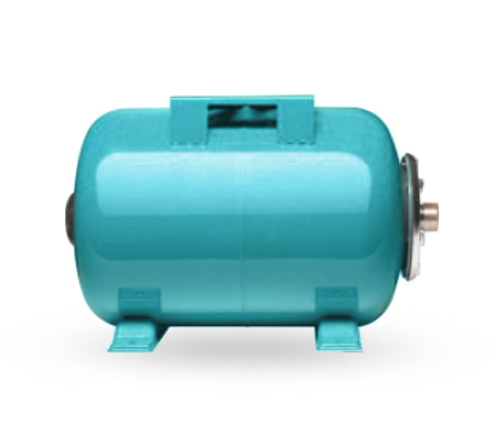
CF Series Carbon Steel Horizontal Pressure Tank for Water System
The pressure vessel provides the structural enclosure for the water and compressed air chambers. Carbon steel is widely used in pressure equipment because it offers a practical combination of strength, manufacturability, and cost efficiency. When correctly formed, welded, finished, and tested, it can provide reliable service in common water pressure applications.
The carbon steel construction also makes the CF Series suitable for buyers who need a durable pressure tank without moving into a more expensive stainless steel vessel for every installation. This creates a balanced product position between lightweight consumer-grade tanks and highly specialized industrial pressure equipment.
As with all carbon steel equipment, the external installation environment should be considered. The tank should be protected from persistent standing water, aggressive chemicals, severe corrosion exposure, and physical impact. Appropriate surface treatment and routine inspection are important for maintaining long-term performance.
The carbon steel flange connects the membrane assembly and related components to the main tank body. A properly designed flange must provide a secure interface, support uniform clamping, and help maintain pressure integrity during repeated operating cycles.
The use of a carbon steel flange creates a consistent material system with the main tank body. This can simplify manufacturing, assembly, and quality inspection. It also provides a robust connection area for service operations when the replaceable membrane must be inspected or replaced.
The replaceable membrane is one of the most important design features of the CF Series. In a non-replaceable bladder tank, damage to the internal bladder may require replacement of the entire tank. A replaceable membrane can reduce maintenance cost and minimize unnecessary disposal of the pressure vessel.
The membrane separates the water side from the air side. This separation helps limit air absorption into the water and supports more predictable pressure behavior. It also reduces direct exposure of the tank’s air chamber to water, which can help maintain a more stable precharge condition when the tank is correctly installed and serviced.
Different water systems may require different membrane materials. Butyl is commonly selected when broad temperature performance and good flexibility are required. EPDM can be suitable for many general water applications and provides a useful temperature range. Natural rubber may be selected for applications that remain within its stated temperature limits and where its specific material characteristics are appropriate.
Membrane selection should not be based on temperature alone. The installer should also consider drinking-water requirements, chemical compatibility, water quality, disinfection practices, and local regulations. The available product configuration should be confirmed before installation.
The horizontal arrangement is beneficial where ceiling height or vertical space is restricted. It can be placed on a stable base near a pump, pressure switch, control system, or manifold. This can make the entire installation easier to access and service.
Horizontal tanks are also useful for compact booster packages. A pump manufacturer, system integrator, or installer can combine the tank with a surface pump, pressure controller, check valve, pressure gauge, and pipe fittings to create a complete pressure water system.
All listed models use a one-inch connector. A common connection size simplifies integration with many domestic and light commercial plumbing systems. It also reduces the number of special adapters required during installation.
However, connection compatibility should always be checked against the pump outlet, pipe diameter, local thread standard, valve arrangement, and required flow rate. A one-inch tank connector does not mean that every system should use one-inch pipe throughout. The complete hydraulic design must be evaluated to prevent excessive friction loss and unnecessary pressure drop.
The CF Series includes several maximum pressure options. The listed maximum ratings are 6 bar, 8 bar, 10 bar, and 16 bar, depending on the model and selected configuration. Not every rating is available for every capacity, so the product code and order specification must be checked carefully.
The CF19L and CF24L models are listed with maximum pressure options of 6, 8, 10, and 16 bar. The CF36L and CF50L models are listed with 6, 8, and 10 bar options. The CF60L, CF80L, and CF100L models are listed with 6, 8, 10, and 16 bar options.
Maximum pressure is not the same as normal operating pressure. The tank should never be operated above its specified maximum rating. The pump cut-out pressure, pressure switch setting, relief valve setting, and precharge pressure must be coordinated so that the tank remains within its safe operating range.
The listed precharge pressure is 1.8 to 2.0 bar. In practical system design, precharge is normally adjusted according to the pump control settings and the manufacturer’s instructions. The correct value is often related to the pump cut-in pressure, but the exact adjustment depends on the system arrangement and the selected control strategy.
Before checking or adjusting precharge, the water side of the tank should be depressurized according to safe service procedures. Measuring air pressure while the tank is still under water pressure can produce an inaccurate result. Only trained personnel should perform pressure adjustments, and suitable protective equipment should be used.
A pressure relief valve and appropriate control devices should be installed where required by the system design and applicable regulations. The tank is one component of a pressurized installation, and safe operation depends on the correct selection and coordination of every component.
| Model | Maximum Pressure Options | Length | Height | Precharge Pressure | Connector | Packing Volume |
|---|---|---|---|---|---|---|
| CF19L | 6, 8, 10, or 16 bar | 395 mm | 292 mm | 1.8–2.0 bar | 1 inch | 0.0356 CBM |
| CF24L | 6, 8, 10, or 16 bar | 460 mm | 292 mm | 1.8–2.0 bar | 1 inch | 0.0399 CBM |
| CF36L | 6, 8, or 10 bar | 435 mm | 375 mm | 1.8–2.0 bar | 1 inch | 0.0588 CBM |
| CF50L | 6, 8, or 10 bar | 545 mm | 375 mm | 1.8–2.0 bar | 1 inch | 0.0752 CBM |
| CF60L | 6, 8, 10, or 16 bar | 645 mm | 408 mm | 1.8–2.0 bar | 1 inch | 0.1082 CBM |
| CF80L | 6, 8, 10, or 16 bar | 600 mm | 470 mm | 1.8–2.0 bar | 1 inch | 0.1325 CBM |
| CF100L | 6, 8, 10, or 16 bar | 685 mm | 470 mm | 1.8–2.0 bar | 1 inch | 0.1524 CBM |
The dimensions in the table are useful for preliminary layout planning, but the installer should verify the final product drawing before fabrication or installation. Additional clearance may be required for the connector, pressure gauge, air valve, inspection, membrane replacement, and maintenance tools.
A common weakness of generic pressure tank offerings is limited size selection. If only one or two capacities are available, a system designer may be forced to choose a tank that is too small or unnecessarily large. The CF Series provides seven nominal capacities, allowing a closer match to pump output and demand characteristics.
The smaller CF19L and CF24L models are suitable for compact domestic systems, small booster units, and installations where space is restricted. The CF36L and CF50L models provide additional reserve volume for larger homes, irrigation zones, and moderate water demand. The CF60L, CF80L, and CF100L models are better suited to systems requiring greater drawdown support or longer intervals between pump starts.
Capacity selection should be based on the pump flow rate, starting frequency, pressure switch differential, expected water demand, and available installation space. A larger nominal tank does not automatically provide the same usable water volume because drawdown depends on the pressure settings and precharge.
The replaceable membrane gives the CF Series a serviceability advantage over pressure tanks that require complete replacement when the internal bladder fails. A serviceable pressure vessel can be more economical over the life of the system, especially for commercial buyers, maintenance contractors, and equipment distributors.
Replacement also reduces downtime. Instead of removing the complete tank and modifying the installation, a trained technician may be able to service the internal membrane while retaining the existing vessel, provided the tank body remains safe and suitable for continued use.
Many general-purpose tanks are limited to a single pressure class. The CF Series offers multiple maximum pressure options across the product range. This allows purchasers to specify a tank for standard domestic pressure boosting or select a higher-rated configuration for more demanding pressure systems.
The availability of a 16-bar option on selected models is particularly useful for applications that require a greater pressure margin. Nevertheless, the system designer must confirm that the pump, pipework, fittings, valves, control equipment, and relief devices are all compatible with the selected pressure rating.
The stated temperature range of up to 99°C for Butyl and EPDM configurations offers flexibility for systems that operate above normal cold-water temperatures. The natural rubber option is rated from 0°C to 77°C and may be appropriate for lower-temperature applications.
This range gives buyers more configuration options than a pressure tank supplied with only one membrane material. It also supports more informed selection based on actual service conditions rather than treating all water systems as identical.
The horizontal design can be easier to install in compact pump rooms, utility cabinets, domestic plant rooms, and packaged booster systems. Compared with a tall tank, it may reduce vertical clearance requirements and simplify access to nearby controls.
For equipment manufacturers, the horizontal configuration can support modular product design. A pump, tank, control panel, pressure switch, and pipe assembly can be arranged on a common base or frame. This may help improve packaging efficiency and simplify transportation.
The one-inch connector provides a familiar interface for many water system installers. Standardized connections can help reduce installation time and make replacement projects easier, particularly when the existing system already uses compatible pipework.
The connector also supports a broad distribution strategy. Importers, wholesalers, and pump dealers can stock a common fitting size across multiple tank capacities instead of managing numerous specialized connection standards.
Taizhou Edwin Electric Co., Ltd. was founded in 2008 and operates as an integrated manufacturing enterprise with activities covering independent research and development, mass production, and global export. This combination is important for pressure tank production because product performance depends not only on the design concept but also on repeatable forming, welding, assembly, inspection, and packaging.
An integrated manufacturer can coordinate product development with factory capability. Design decisions can be assessed against material availability, production tolerances, assembly efficiency, service requirements, and export packaging. This reduces the risk of creating a product that performs well in a prototype but is difficult to manufacture consistently at volume.
The CF Series reflects a product development approach that considers capacity, pressure rating, membrane material, connector size, physical dimensions, and logistics together. These factors influence one another. A larger tank requires different structural proportions, a higher pressure rating may require stronger components, and a replaceable membrane requires a suitable flange and service arrangement.
Engineering coordination is also valuable when customers need private labeling, project-specific documentation, or product combinations involving pumps and accessories. A manufacturer with experience across multiple pump categories can better understand how a pressure tank functions as part of a complete water system rather than as an isolated vessel.
Carbon steel pressure tank production generally involves controlled metal preparation, forming, welding, surface treatment, component installation, and pressure-related inspection. Dimensional consistency is important because the tank must fit the membrane, flange, connector, support structure, and packaging system.
Welding quality is a particularly important consideration for any pressurized carbon steel vessel. Consistent welding procedures, suitable preparation, controlled heat input, and appropriate inspection help reduce the possibility of leakage or structural weakness. Production personnel must maintain repeatable processes across different capacities and pressure classes.
The manufacturer’s mass-production capability supports standardized production of the CF19L through CF100L models. Standardization can improve repeatability, simplify spare-parts management, and make it easier for distributors to reorder established configurations.
The membrane is a functional component rather than a simple accessory. Its dimensions, flexibility, material selection, and installation condition affect the tank’s performance. Correct assembly is essential to avoid twisting, pinching, uneven loading, or premature wear.
A controlled assembly process should include checks for membrane positioning, flange alignment, connector security, air valve condition, and general appearance. Component control is especially important when different membrane materials are available for different temperature ranges.
For purchasers, this means that product quality should be evaluated through the complete assembly process, not only by examining the outside of the tank. A well-finished vessel with an incorrectly installed membrane will not provide the expected service performance.
Pressure tanks should be inspected for leakage and structural integrity as part of the manufacturing and quality-control process. Testing procedures may vary according to the applicable standards, pressure class, market requirements, and customer documentation needs.
Inspection can include visual examination, dimensional checks, connector checks, air-side verification, water-side pressure testing, and packaging inspection. The specific tests and records should be confirmed for each purchasing project, particularly when the tank is intended for regulated markets or commercial installations.
The listed packing volumes range from 0.0356 CBM for the CF19L to 0.1524 CBM for the CF100L. These values help importers estimate container utilization, warehouse requirements, and shipping costs. Packaging should protect the painted or treated surface, connector, flange, and other exposed components during handling and transport.
Export experience is valuable because international distribution involves more than manufacturing. Products must be labeled correctly, packed for long-distance handling, documented accurately, and coordinated with shipping schedules. Edwin Pump has established additional companies and professional teams for procurement planning, order tracking, cross-border delivery, and foreign trade services, supporting a more complete supply process for overseas customers.
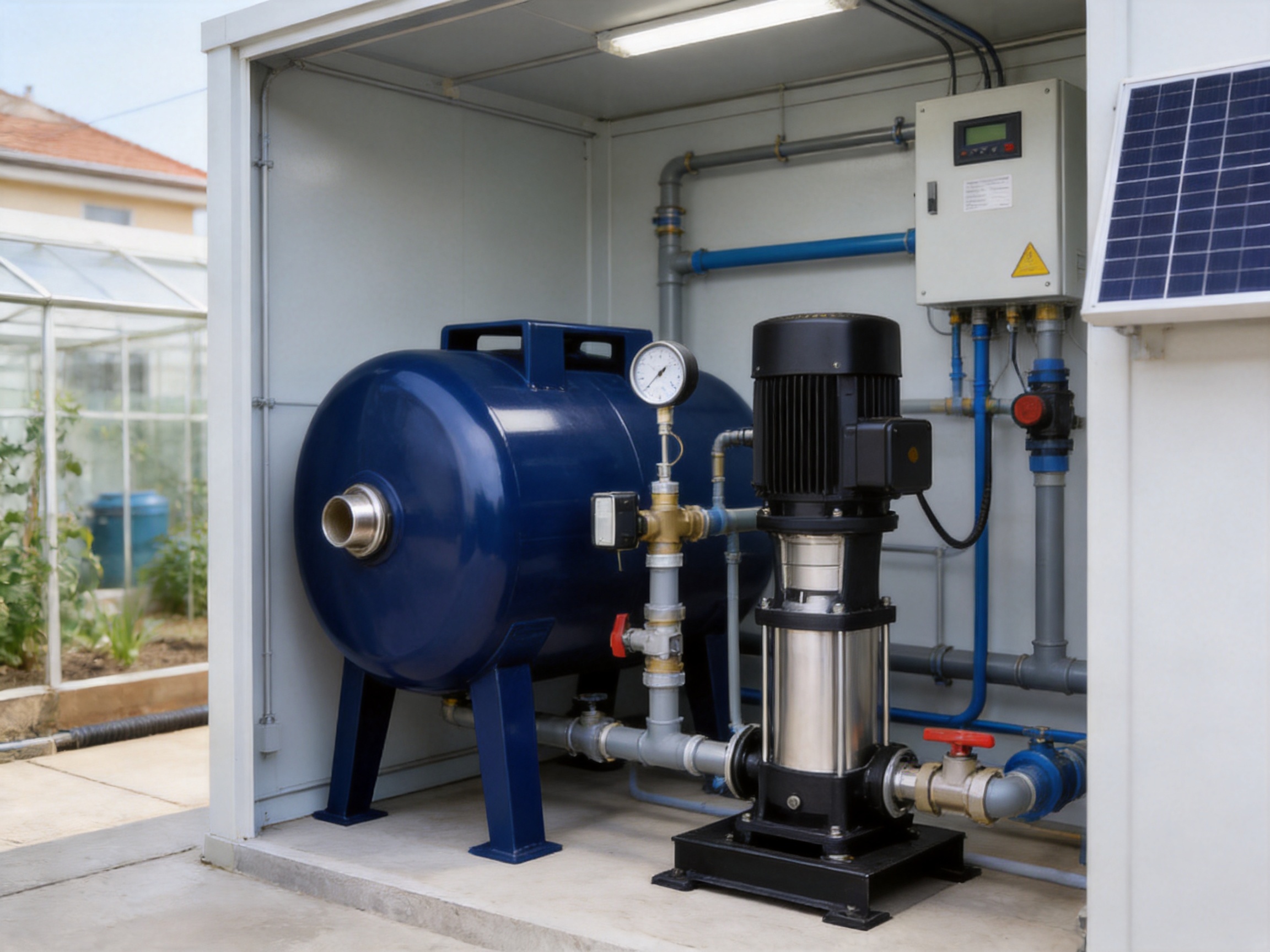
The CF Series is well suited to household water pressure systems. It can be paired with a surface pump or domestic booster pump to improve pressure from a municipal supply, storage tank, shallow well, or rainwater collection system.
In a home, the pressure tank can reduce pump starts caused by short uses such as hand washing, toilet filling, or brief tap operation. It can also help provide a smoother pressure experience when several outlets are used at different times.
Small agricultural irrigation systems often have variable demand. A pump may supply water to garden lines, greenhouse sprinklers, livestock facilities, or localized irrigation networks. A pressure tank can help stabilize the system when valves open and close intermittently.
The selected tank should be matched to the pump and irrigation control method. Larger irrigation zones may require a bigger pressure vessel, while systems with continuous flow may benefit more from a correctly sized pump and control valve than from an oversized tank.
Small offices, retail premises, guesthouses, and light commercial facilities may require a compact booster system to maintain acceptable water pressure. The horizontal tank can be integrated into a packaged system where plant-room space is limited.
For commercial use, maintenance access and replacement planning are important. The replaceable membrane design can support serviceability and may reduce the long-term cost associated with internal bladder wear.
Pressure tanks are commonly used alongside filtration equipment, softeners, dosing systems, and water treatment skids. They can provide pressure stabilization and reduce unnecessary pump cycling when treated water is drawn intermittently.
The correct membrane and vessel rating must be confirmed for the treated fluid. Not every water treatment chemical is compatible with every membrane material, and the tank should not be used with fluids outside the supplier’s approved application range without technical verification.
Solar water pumping systems often experience changing output due to sunlight conditions. A pressure tank can complement a solar pump by storing pressurized water and reducing the need for immediate pump operation during short demand periods.
System designers should evaluate the relationship between solar generation, pump control, storage volume, and water demand. In some applications, a larger water storage tank is more appropriate than a larger pressure tank. The CF Series can serve as one part of a complete solar water supply solution when its pressure and temperature limits are respected.
Circulation and hydronic systems may require expansion or pressure-management equipment with specific design characteristics. The CF Series should only be used in such systems when the selected membrane, temperature rating, pressure rating, and fluid compatibility are appropriate.
For systems containing treated water, glycol mixtures, or elevated temperatures, the installer must obtain confirmation before use. The product information provided identifies water-system applications, and specialized HVAC applications should be reviewed individually.
Model selection should begin with the pump’s operating characteristics. Important information includes rated flow, cut-in pressure, cut-out pressure, motor power, expected starts per hour, and the type of control system used.
The next consideration is usable drawdown. Nominal tank capacity is the total internal volume, but only part of that volume is available between the pump’s cut-in and cut-out pressures. A tank that is physically larger may not deliver the expected drawdown if the pressure settings are not properly configured.
Installation space is also important. Compare the tank length and height with the available base area, pipe routing, maintenance clearance, and access route. The CF19L has a listed length of 395 mm and height of 292 mm, while the CF100L has a listed length of 685 mm and height of 470 mm. These differences can significantly affect equipment layout.
The maximum pressure rating must be selected according to the complete system design. A 6-bar configuration may be appropriate for a standard low-pressure domestic installation, while a 10-bar or 16-bar configuration may be required for a higher-pressure system. The highest available pressure rating should not be selected automatically because higher-rated equipment may increase cost and may require compatible valves, gauges, and controls.
Membrane material should be selected based on temperature and fluid compatibility. Butyl and EPDM options are listed for -10°C to 99°C, while natural rubber is listed for 0°C to 77°C. These ranges provide a useful starting point, but the final choice should also consider local regulations and water quality.
Finally, check the connector, packaging requirements, documentation, spare membrane availability, surface treatment, and warranty conditions. Distributors should confirm whether each model is available in the required pressure and membrane configuration before publishing product information or accepting project orders.
The tank should be installed by qualified personnel who understand pressurized water systems. Before installation, inspect the vessel for transport damage, confirm the model and pressure rating, and verify that the connector and membrane configuration match the order.
Install the tank on a stable, level support. The support should be capable of carrying the tank’s weight when full of water and should prevent excessive vibration or movement. Avoid placing the vessel where it may be struck by equipment, exposed to standing water, or subjected to severe environmental corrosion.
The connection should be properly sealed using a suitable method for the selected thread type and water application. Do not apply excessive force to the connector, and do not use the tank body as a lever when tightening pipe fittings.
A check valve may be required depending on the pump and pipe arrangement. A pressure gauge, pressure switch, relief valve, isolation valve, and drain arrangement should be installed when appropriate. The actual configuration depends on the application and local requirements.
Confirm the precharge pressure before commissioning. The tank should be isolated from the water system and depressurized on the water side before measuring the air charge. Adjust the precharge only within the permitted range and according to the pump control strategy.
After installation, inspect the system for leaks, start and stop behavior, pressure stability, unusual noise, and excessive cycling. The tank should not be placed into service if the vessel, flange, connector, membrane, or air valve shows signs of damage.
Routine maintenance helps preserve the performance of the complete pressure system. Inspect the tank exterior for corrosion, dents, coating damage, leakage, or movement. Check the connector and nearby pipework for signs of stress or vibration.
Monitor pump cycling. A sudden increase in starts may indicate loss of precharge, membrane damage, a leaking check valve, an incorrectly adjusted pressure switch, or a change in water demand. The pressure tank should be investigated before the pump suffers unnecessary wear.
Check precharge at appropriate service intervals. The required interval depends on operating conditions, water temperature, usage frequency, and the importance of the installation. Commercial and agricultural systems may need a documented maintenance schedule.
If the membrane is damaged, isolate the tank, drain the water side, release pressure safely, and follow the manufacturer’s replacement procedure. The replacement membrane must match the tank model and application. Do not install an unverified membrane material simply because its dimensions appear similar.
When a tank has been exposed to freezing conditions, inspect it carefully before restarting. Water expansion caused by freezing can damage the membrane, connector, or vessel. The stated temperature range refers to working conditions for the membrane and should not be interpreted as permission to allow water inside the tank to freeze.
For international buyers, product quality is only one part of a successful supply relationship. Consistent communication, order tracking, documentation, shipping coordination, and after-sales support are equally important. Edwin Pump’s development from a pump manufacturer into a broader water equipment supplier supports customers seeking multiple related products from one source.
The company’s product range includes deep well pumps, submersible pumps, domestic booster pumps, circulation pumps, solar water pumps, intelligent booster pumps, commercial multistage pumps, end suction pumps, garden pumps, pool and spa pumps, pipes, valves, and pump accessories. This range can help distributors and system integrators assemble a more complete purchasing plan.
One-stop procurement can reduce the administrative burden associated with sourcing pumps, pressure tanks, controls, and accessories from multiple factories. It may also make it easier to coordinate product specifications, packaging, production schedules, and shipping documents.
Since 2018, the company has invested in new energy and intelligent technology, including solar water pumps and intelligent booster pumps. This direction is relevant to pressure tank customers because modern water systems increasingly combine mechanical storage with electronic control, variable demand management, and energy-conscious operation.
The company reports applications in new energy projects, agricultural irrigation, municipal engineering, mining, construction, HVAC systems, and household water supply. This broad exposure can contribute to practical product development because pressure equipment must perform under very different installation conditions.
For distributors, the CF Series offers a clear product family that can be presented by capacity, pressure rating, membrane material, dimensions, and application. For original equipment manufacturers, the series may provide a foundation for packaged booster systems. For contractors, the standard connector and horizontal design can support straightforward replacement and installation planning.
The tank stores pressurized water and helps reduce frequent pump starts. It also helps stabilize water pressure during intermittent demand and provides a reserve volume between pump cycles.
The tank body is made from carbon steel. The product also uses a carbon steel flange and a replaceable membrane arrangement.
The listed capacities are 19 liters, 24 liters, 36 liters, 50 liters, 60 liters, 80 liters, and 100 liters.
The listed connector size for the CF Series models is one inch.
The listed precharge pressure is 1.8 to 2.0 bar. Actual adjustment should follow the system design and supplier instructions.
Depending on the model, the available maximum pressure options are 6, 8, 10, and 16 bar. The options are not identical for every capacity, so the exact model specification should be confirmed before purchase.
The product information identifies Butyl, EPDM, and natural rubber membrane options. Butyl and EPDM are listed for -10°C to 99°C, while natural rubber is listed for 0°C to 77°C.
Yes. The CF Series uses a replaceable membrane design. Replacement should be completed by qualified personnel using a compatible membrane for the specific tank model and application.
Some membrane configurations are listed for temperatures up to 99°C. However, the final application must be checked for fluid compatibility, pressure, local regulations, and the selected membrane material before use with hot water.
The tank should be installed on a stable support with adequate clearance for connection, inspection, pressure adjustment, and membrane replacement. A qualified installer should coordinate the tank with a pump, check valve, pressure gauge, pressure switch, relief valve, and other required components.
Selection depends on pump flow, cut-in and cut-out pressures, expected water demand, desired pump-start reduction, installation space, and system pressure. Nominal capacity should not be used as the only selection criterion because usable drawdown depends on pressure settings.
No. A larger tank may reduce pump cycling, but it also requires more installation space and may increase cost. The tank should be sized according to the complete water system rather than selected solely by maximum capacity.
Potential applications include domestic water supply, booster systems, agricultural irrigation, commercial buildings, water treatment equipment, packaged pump systems, and selected solar water pumping installations.
Buyers should confirm the model, nominal capacity, maximum pressure, membrane material, working temperature, connector size, dimensions, packaging volume, surface treatment, inspection documentation, replacement membrane availability, and applicable certification requirements.
The CF Series carbon steel horizontal pressure tank provides a practical solution for water systems that require pressure stabilization, reduced pump cycling, and compact installation. Its main features include a carbon steel vessel, carbon steel flange, replaceable membrane, one-inch connector, several nominal capacities, multiple pressure options, and membrane temperature ranges suitable for a variety of water applications.
Compared with a basic one-size pressure tank, the series offers greater configuration flexibility. Users can select from seven capacities and several pressure classes, while the replaceable membrane supports maintenance and longer-term serviceability. The horizontal form is useful where vertical space is limited, and the standardized connector can simplify system integration.
The value of the product also depends on the manufacturing and supply capabilities behind it. Taizhou Edwin Electric Co., Ltd. combines research and development, mass production, export experience, and a broad water equipment portfolio. Its manufacturing approach supports coordinated product design, repeatable carbon steel vessel production, membrane assembly, inspection, packaging, and international order management.
For the best result, the tank should be selected as part of a complete pump and pressure-control system. Correct sizing, suitable membrane selection, proper precharge adjustment, safe installation, and routine maintenance are essential. When these factors are managed correctly, the CF Series can provide dependable support for domestic, agricultural, commercial, and general water pressure applications.
1. Product specification sheet for CF Series replaceable-membrane carbon steel pressure tanks.
2. Manufacturer-provided technical data for CF19L, CF24L, CF36L, CF50L, CF60L, CF80L, and CF100L models.
3. General engineering principles for hydropneumatic pressure tanks and pump cycling control.
4. Standard practices for installation and maintenance of pressurized water system components.
5. General guidance on carbon steel vessel inspection, membrane service, and pressure-system safety.
6. Manufacturer information concerning pump research and development, mass production, export services, and water equipment applications.
edwina@edwin-pump.com
+86-13586290903 (WhatsApp)
Xuri Gongliang Cutting Tool Entrepreneurship Park, Wenqiao Town, Wenling City, Taizhou City, Zhejiang Province, China

High Performance Smart Pump Factory


 English