
edwina@edwin-pump.com

View All Products
en
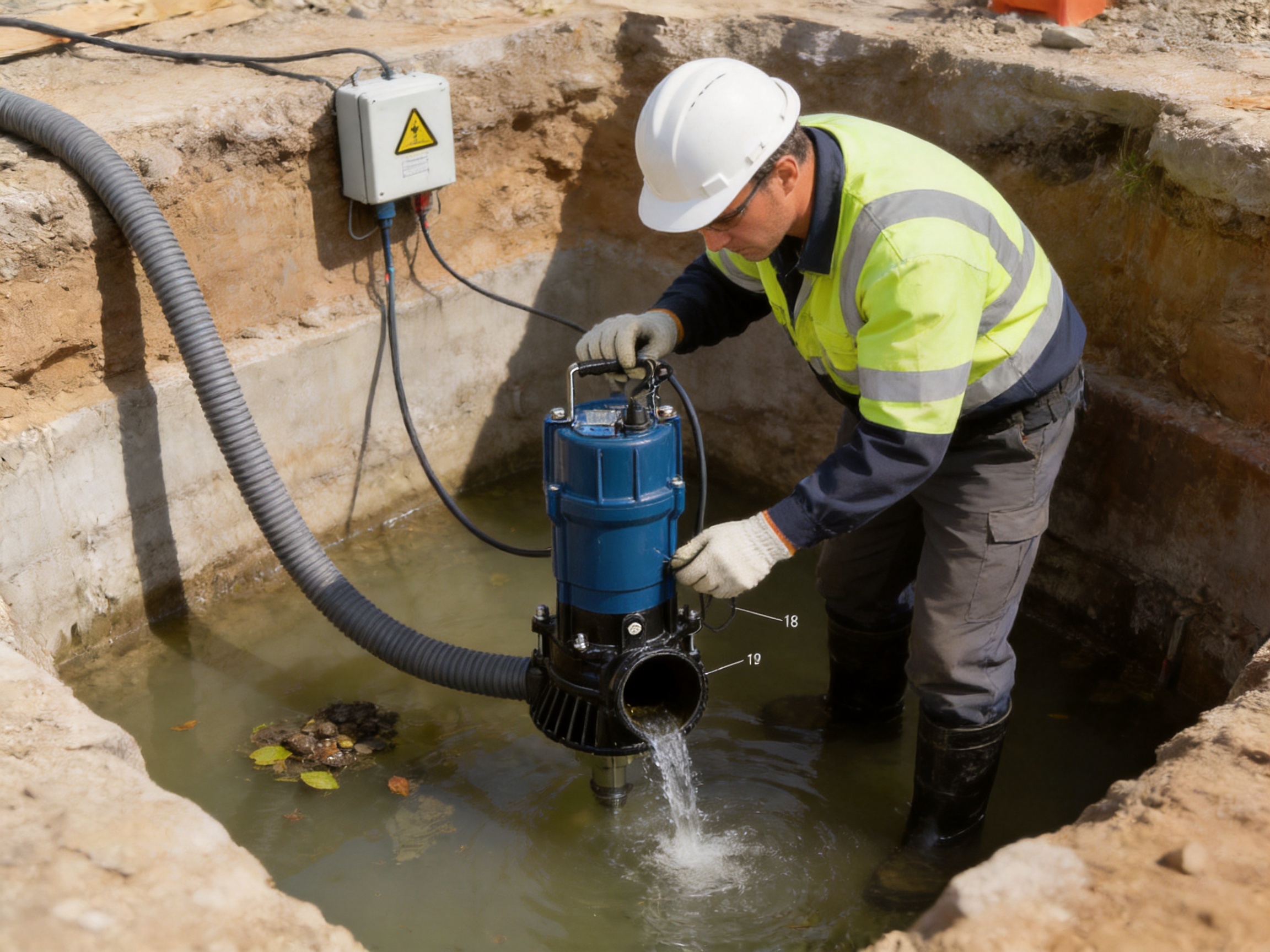
Effective drainage is essential in homes, farms, construction sites, workshops, livestock facilities, gardens, and municipal environments. Whenever accumulated water must be removed from a pit, well, basement, tank, excavation, or low-lying area, the pump must operate reliably in conditions that are often dirty, wet, and difficult to control. A submersible sewage pump is designed for this purpose by placing the pumping unit directly inside the water. This arrangement allows the pump to move water efficiently while reducing the need for complicated surface installation arrangements.
The SPA1 submersible sewage pump is a compact electrical drainage solution intended for small irrigation and drainage applications. It is particularly suitable for urban well-water pumping, field irrigation and drainage, garden irrigation, household water supply, industrial accumulated-water drainage, construction-site water management, and water supply or drainage in livestock-breeding facilities. Its design combines a submersible operating structure, a copper-wound motor, a built-in thermal protector, Class B insulation, and an IPX8 protection rating.
These features make the pump appropriate for users who need a practical, easy-to-deploy drainage product rather than an oversized industrial pumping system. Its ability to work while immersed, its protection against continuous water exposure, and its built-in motor safety features support dependable operation in many routine drainage environments.
A submersible sewage pump differs from many conventional surface pumps because the motor and pump body are installed beneath the liquid level during operation. Instead of drawing water through a long suction pipe, the pump pushes water from its immersed position toward the discharge point. This configuration can simplify installation and reduce the risk of suction problems.
Surface-mounted pumps generally require adequate space, a properly primed suction line, and careful control of the distance between the pump and the water source. If the suction pipe leaks air, if the pump loses prime, or if the water level falls below the suction inlet, performance may deteriorate. A submersible design avoids many of these concerns because the pump is placed directly into the water.
The SPA1 is intended for small electrical irrigation and drainage duties. It can be used where water must be removed from a low area or transferred from one location to another. Typical examples include removing accumulated rainwater from a construction area, draining a household water collection point, supporting garden irrigation, and helping manage water around agricultural or livestock facilities.
Although the term “sewage pump” is commonly used for drainage equipment, users should always confirm the actual nature of the liquid before installation. The supplied product information specifies a maximum liquid temperature of 40°C and a maximum immersion depth of 5 meters. It does not provide detailed information about solids-handling capacity, particle diameter, chemical compatibility, or abrasive-media performance. Therefore, the SPA1 should be selected for suitable drainage water and confirmed applications rather than assumed to be appropriate for every type of wastewater.
| Item | Specification | Practical Meaning |
|---|---|---|
| Product type | Submersible sewage pump | The pump operates while immersed in the liquid. |
| Model | SPA1 | A compact model for small electrical irrigation and drainage duties. |
| Maximum immersion depth | 5 meters | The pump should be installed within the stated depth limit. |
| Maximum liquid temperature | 40°C | The pumped liquid should remain at or below the specified temperature. |
| Motor winding | Copper winding | Supports electrical conductivity and dependable motor operation. |
| Motor protection | Built-in thermal protector | Helps protect the motor against excessive temperature. |
| Insulation class | Class B | Defines the motor insulation system according to the supplied specification. |
| Protection class | IPX8 | Indicates protection for continuous immersion under specified conditions. |
| Primary applications | Irrigation, drainage, household water management, construction, livestock facilities | Suitable for a wide variety of small-scale water-transfer tasks. |
The table shows why the SPA1 should be evaluated as an application-focused drainage pump. The product information emphasizes immersion depth, liquid temperature, electrical protection, and general irrigation or drainage use. It does not state a flow rate, head, power rating, outlet size, solids passage, or automatic float configuration. These details should be confirmed with the supplier before a final purchase or system design.
The most important advantage of the SPA1 is its submersible structure. The pump can be placed directly in the water that needs to be transferred or removed. This can reduce the amount of suction-side pipework and make the system easier to arrange in locations where space is limited.
For construction drainage, a pump that can be lowered into a collection point may be more convenient than a surface unit that must remain outside the excavation. For garden and agricultural applications, direct immersion can simplify temporary water transfer. For household drainage, the same principle can help users respond quickly to accumulated water in a sump, low-level area, or storage point.
Another advantage is reduced priming complexity. Surface pumps often require the suction line and pump casing to be filled with water before starting. A submersible pump is already surrounded by the liquid during operation, which can make startup more straightforward when the installation is correctly arranged.
Submersible operation can also reduce noise at the point of use because the surrounding water and installation environment can help moderate operating sound. The extent of noise reduction depends on the installation, water level, discharge pipe, and supporting surface, but the immersed arrangement is generally well suited to applications where a separate surface pump enclosure would be inconvenient.
The SPA1 also provides flexibility for temporary and permanent drainage arrangements. It can be used in a prepared water collection point or moved between suitable locations when project conditions change. This flexibility is valuable for contractors, agricultural users, maintenance teams, and property owners who may need one pump to address several routine drainage tasks.
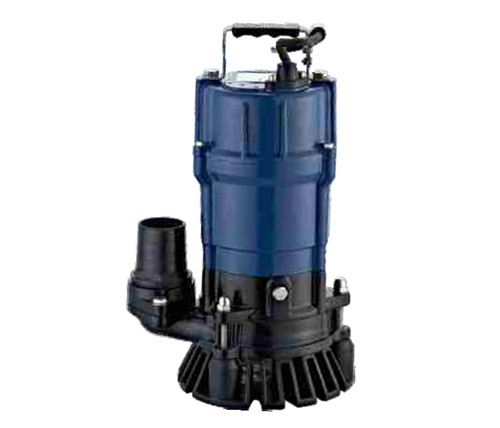
SUBMERSIBLE SEWAGE PUMP SPA1
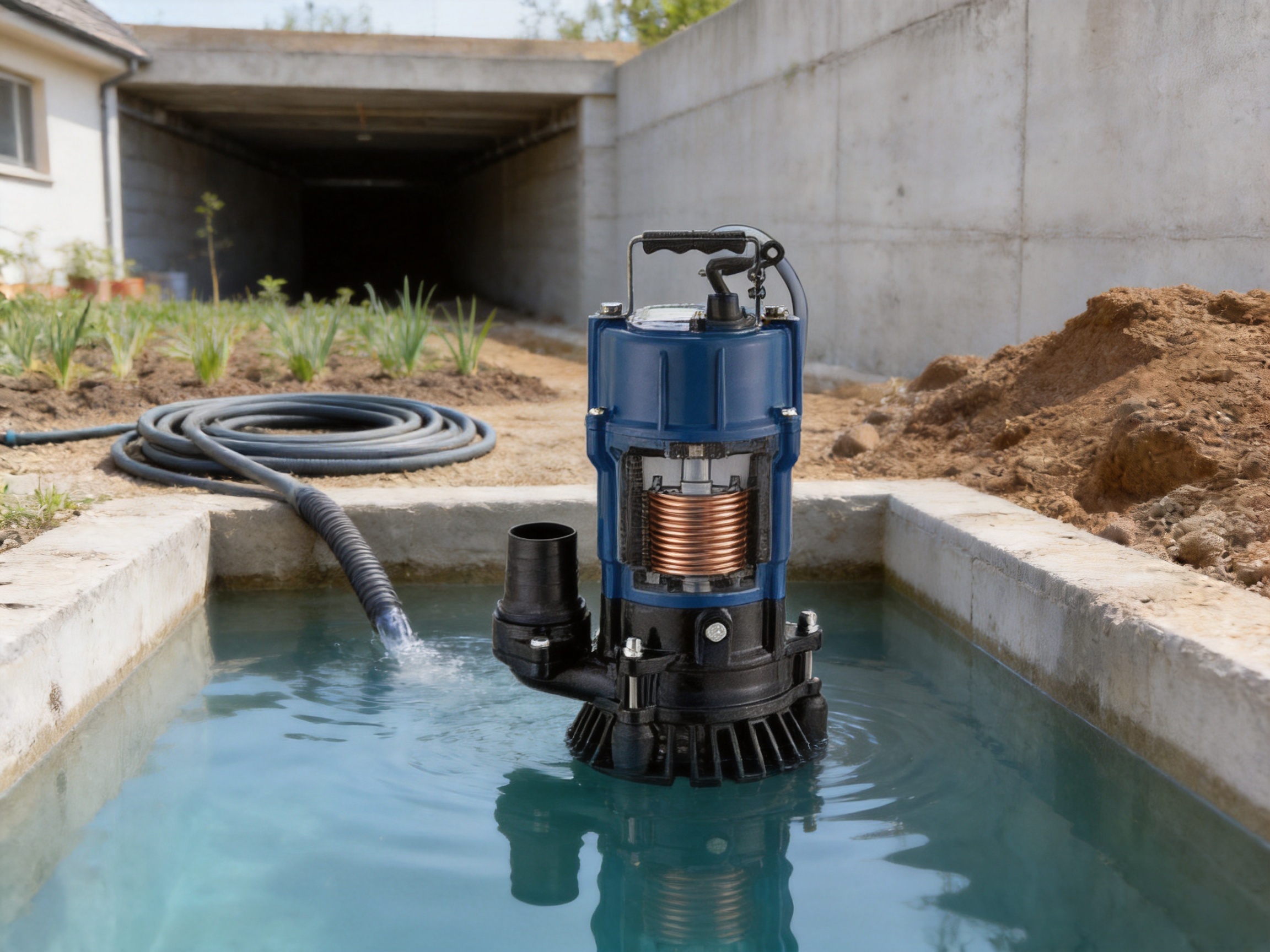
The SPA1 uses a copper-wound motor. Copper winding is a significant component of an electric pump motor because the winding carries current through the magnetic field that drives the motor. The quality of the winding process, the consistency of the wire placement, and the integrity of the insulation all influence the pump’s electrical performance.
Compared with low-cost motors that may use less conductive winding materials or inconsistent winding methods, a copper-wound motor can offer a stronger basis for efficient electrical operation. Copper has high electrical conductivity, supports stable current transmission, and is widely used in motors that require dependable performance. The final results still depend on the motor design, operating voltage, loading, cooling conditions, and manufacturing quality, but the specified copper winding is an important product strength.
A built-in thermal protector provides another layer of protection. Electric motors can produce excess heat when they operate under overload, restricted discharge conditions, unfavorable voltage, frequent starting, or insufficient cooling. If excessive temperature continues, the winding insulation may deteriorate and the motor may suffer permanent damage.
The thermal protector is designed to respond to abnormal temperature conditions within the motor. Its presence helps reduce the risk associated with overheating and gives the product a more complete protection design than a basic motor without integrated thermal protection. Users should still install suitable external electrical protection and follow the operating instructions. A thermal protector is a safety feature, not a substitute for correct wiring, grounding, circuit protection, and appropriate operating conditions.
Class B insulation is also specified for the motor. Insulation class describes the thermal capability of the electrical insulation system. Class B is a recognized motor-insulation classification and provides a defined basis for evaluating the temperature capability of the winding insulation. The actual service life of the motor will depend on operating temperature, voltage stability, starting frequency, water conditions, maintenance, and correct use.
These motor features give the SPA1 an advantage over generic low-cost drainage pumps that may not clearly identify their winding material, thermal protection, or insulation class. Clear technical information helps distributors, installers, and end users make more informed decisions and integrate the pump into a suitable electrical system.
The SPA1 is specified with an IPX8 protection class. In the context of the product information, this supports the pump’s intended submerged operation. A pump that is designed to work underwater must protect its electrical components from water entry under the conditions defined for its protection rating.
IPX8 is especially relevant because submersible pumps are exposed to water for extended periods. The rating distinguishes the pump from ordinary electrical equipment that may only tolerate splashing or temporary contact with water. It is one of the reasons a properly selected submersible pump can be installed inside a water collection point rather than placed beside it.
Users should understand that a protection rating does not remove the need for proper installation. Cable joints, plugs, control boxes, electrical connections, and extension arrangements must also be suitable for wet environments. The power supply should be protected by appropriate electrical safety equipment, and the pump should be handled only after the power has been disconnected.
When compared with a standard surface pump, the SPA1’s IPX8 specification provides a clear functional advantage for applications requiring direct immersion. The pump is designed around the reality that water exposure is part of normal operation, not an accidental condition.
The SPA1 can be used for small-scale pumping from urban wells or similar water collection points, provided that the liquid quality, depth, temperature, and required pumping performance fall within the pump’s operating limits. Direct immersion can be useful where the well has limited surrounding space or where a surface suction arrangement would be inconvenient.
Before use in a well, the installer should verify that the pump dimensions are compatible with the opening and that the discharge route is properly supported. The pump should not be allowed to rest in heavy sediment if doing so could restrict the inlet or expose the unit to abrasive material.
Small agricultural plots often require flexible water movement. The SPA1 can support field irrigation and drainage by transferring water from a collection point to an irrigation area or by removing excess water after rain. Its portable submersible structure can help farmers and maintenance personnel adapt to changing field conditions.
For irrigation, the user should confirm that the available flow and discharge pressure meet the needs of the sprinklers, hoses, or distribution lines. The supplied information does not state the pump’s maximum head or flow rate, so these values should be obtained before designing a complete irrigation system.
Garden irrigation commonly involves tanks, ponds, storage pits, rainwater collection points, and temporary water sources. A submersible pump can reduce installation time by being placed in the source and connected to a discharge hose or pipe. The SPA1 is suitable for this type of practical water-transfer requirement when the water is within the approved temperature and cleanliness range.
Garden users should keep leaves, stones, string, and other debris away from the pump inlet. A simple support frame, screened intake arrangement, or raised installation position may help reduce the entry of unwanted material, provided that the arrangement does not restrict water flow.
Households may need to drain basements, tanks, utility areas, rainwater collection points, or other low-lying spaces. The SPA1 can assist with these tasks when a suitable discharge route is available. Its immersed configuration is particularly useful where a portable pump must be deployed quickly.
For domestic use, safety deserves special attention. The electrical supply should be protected, the pump cable should not be damaged or pinched, and the pump should never be lifted by its electrical cable. The unit should be disconnected from the power source before cleaning, inspection, or repositioning.
Workshops and industrial facilities may experience accumulated water in service areas, pits, storage zones, or low-level sections of a building. The SPA1 can support small drainage tasks in these environments. It may be used as a maintenance pump or as part of a routine water-removal arrangement.
Industrial users must evaluate the liquid carefully. The stated specifications do not confirm compatibility with oils, solvents, corrosive chemicals, high-concentration solids, or abrasive slurries. If the liquid contains unusual substances, the user should provide a complete chemical and physical description to the supplier before selection.
Construction sites frequently need to remove rainwater, seepage, and accumulated water from excavations or work areas. A compact submersible pump can be deployed in a temporary collection pit and connected to a discharge line leading away from the site.
The SPA1’s maximum immersion depth of 5 meters should be respected during construction use. The discharge pipe should be routed so that it does not create a trip hazard, become crushed by vehicles, or discharge back toward the excavation. Construction environments can contain sand and debris, so the pump should be checked regularly and should not be operated in conditions beyond its intended service range.
Livestock facilities require regular management of water around washing areas, storage points, drainage channels, and service zones. The SPA1 can assist with water supply and drainage tasks in suitable locations. Its immersion capability can be useful where water collects in pits or low-level areas.
Hygiene and safety procedures should be incorporated into the installation. The pump should be cleaned according to the liquid conditions, and users should avoid using the same equipment for incompatible water sources without appropriate sanitation and inspection.
Product comparison should be based on the complete application rather than a single specification. A lower purchase price does not necessarily represent better value if the pump lacks electrical protection, cannot tolerate immersion, requires complicated priming, or fails prematurely under routine operating conditions.
The SPA1 offers several practical advantages compared with basic or poorly specified alternatives. First, its submersible structure allows the pump to operate at the water source. This can simplify installation and reduce suction-side problems. Second, the copper-wound motor provides a clearly identified electrical construction. Third, the built-in thermal protector supports safer operation during abnormal temperature conditions. Fourth, the IPX8 rating corresponds to the requirements of continuous immersion under defined conditions.
The product also benefits from a clearly stated maximum immersion depth and liquid temperature. Such information helps users avoid operating the pump beyond its intended conditions. Generic products may provide incomplete specifications, making it difficult to determine whether they are suitable for a particular well, pit, tank, or drainage project.
Another advantage is application versatility. The SPA1 is not limited to one narrow use. It is presented for irrigation, drainage, household water management, construction, industrial accumulated-water removal, and livestock-related water handling. This makes it attractive to distributors and professional buyers who need a practical pump for multiple small-scale projects.
| Evaluation Point | SPA1 Design Feature | Potential Advantage in Practice |
|---|---|---|
| Installation position | Submersible construction | Can be placed directly in the water source or collection point. |
| Motor conductor | Copper winding | Provides a recognized, conductive motor-winding material. |
| Overheating response | Built-in thermal protector | Helps reduce the risk of motor damage caused by excessive temperature. |
| Immersion capability | IPX8 protection class | Supports operation in an immersed environment under specified conditions. |
| Application range | Irrigation, drainage, household, construction, industrial, and livestock uses | Allows one product model to address several routine water-management tasks. |
| Operating limits | Maximum depth of 5 meters and liquid temperature of 40°C | Gives users clear boundaries for safer product selection and operation. |
These advantages should not be interpreted as a claim that the pump is suitable for every competitor comparison or every wastewater condition. Selection must still consider the required flow, head, solids content, electrical supply, discharge pipe, operating cycle, and liquid chemistry. The strongest advantage of the SPA1 is its combination of practical immersion capability and clearly identified motor-protection features for small drainage applications.
The performance of a pump depends not only on its visible housing or stated specifications but also on the manufacturing systems used to produce it. According to the supplied company information, the manufacturer was founded in 2008 and operates as an integrated enterprise specializing in independent research and development, mass production, and global export.
An integrated manufacturing structure can provide advantages throughout the product life cycle. Independent research and development allows the manufacturer to study application requirements, refine pump structures, and develop product lines for different markets. Mass production supports consistent manufacturing procedures and helps the company serve distributors and commercial buyers that require repeat orders. Export experience supports communication, order coordination, packaging, and international delivery.
The company’s product portfolio includes deep well pumps, submersible pumps, domestic booster pumps, and circulation pumps. It has also expanded into solar water pumps and intelligent booster pumps. This broader product experience can be valuable because different pump categories share important engineering considerations, including motor construction, water handling, electrical protection, sealing, hydraulic design, and application matching.
A manufacturer with multiple product categories can also provide more coordinated procurement. Buyers may be able to source several water-pumping products from one professional supplier rather than managing separate technical and commercial relationships for every application. This can simplify product selection, order tracking, spare-parts communication, and project planning.
Independent research and development is important in the pump industry because different regions and applications require different combinations of voltage, frequency, hydraulic performance, installation style, materials, control systems, and environmental protection. Product development must balance performance, reliability, manufacturability, cost, and user safety.
For a submersible pump such as the SPA1, development work may involve the interaction of the motor, pump body, impeller system, shaft, seals, cable entry, thermal protector, and external protection structure. Even when the final product is compact, each component must work within the conditions created by immersion and water movement.
The specified copper winding, Class B insulation, built-in thermal protector, and IPX8 protection class indicate that the product has been defined around electrical and immersion requirements rather than being treated as a simple unprotected water-transfer device. These features demonstrate attention to the conditions that commonly affect submersible pump service life.
Mass production is especially important for distributors, contractors, and project buyers. A pump may be technically suitable for an application, but the supplier must also be able to provide consistent products in the required quantity and schedule. A manufacturing enterprise with established production capability can support repeatable assembly, procurement planning, and order fulfillment.
Consistency is critical in motor manufacturing. Copper wire must be wound correctly, insulation must be applied carefully, electrical connections must be secure, and protective components must be integrated correctly. Assembly accuracy also matters for rotating components, seals, fasteners, and cable connections. A stable production process helps reduce variation between units.
Mass production does not replace inspection or application engineering, but it creates the foundation for systematic quality management. When manufacturing steps are standardized, the supplier can better monitor materials, assembly operations, product testing, packaging, and shipment preparation.
The company has developed international trade and export capabilities through related import and export organizations established after the manufacturing business. The supplied information describes professional support for procurement planning, order tracking, cross-border delivery, and foreign trade services.
These services are valuable for overseas buyers because purchasing a pump involves more than selecting a model. Buyers may need assistance with product documentation, packaging requirements, shipping schedules, order quantities, destination-market expectations, and communication between technical and commercial teams.
Global export experience can also help a manufacturer understand the varied operating environments in which pumps are used. Agricultural irrigation, municipal drainage, construction, household water supply, and industrial applications may differ significantly from one country to another. A supplier that regularly communicates with international customers is better positioned to clarify application requirements before production.
While the supplied materials do not list every factory procedure or inspection instrument, a reliable submersible pump manufacturing process should address several essential stages. These stages explain why professional production capability matters when comparing an established manufacturer with an unknown or lightly documented supplier.
Production begins with the selection and preparation of materials and components. The motor winding wire, insulation materials, housing components, shaft elements, seals, fasteners, cables, and protective devices must be appropriate for the design. Consistent incoming materials are essential for repeatable product performance.
For a pump intended for immersion, sealing-related components deserve particular attention. Water entry into the motor compartment can create severe electrical and mechanical problems. The cable entry and housing interfaces must be assembled in a way that supports the stated protection level under appropriate operating conditions.
The motor-winding stage is central to electrical performance. Copper wire must be formed and positioned accurately within the stator assembly. The winding should be secured so that it can withstand normal electromagnetic forces, vibration, and temperature changes. Insulation must separate conductive elements and protect the winding system.
The stated Class B insulation provides a defined classification for the motor insulation system. A professional manufacturing process should include appropriate checks for winding continuity, electrical resistance, insulation integrity, and connection quality. Exact factory test methods are not provided in the product material, so buyers seeking project-specific documentation should request the applicable inspection and testing information.
The pump and motor sections must be assembled with attention to alignment, fastening, rotating clearances, and sealing. Poor alignment can increase vibration, noise, bearing loads, and wear. Incorrect fastening can allow leakage or structural movement. Inadequate clearance can reduce hydraulic performance or cause rotating interference.
Mechanical assembly is particularly important for a pump used in temporary construction or agricultural environments, where handling and repositioning may occur. A well-assembled product is better prepared to withstand normal installation and operating stresses within its intended limits.
The built-in thermal protector must be correctly positioned and connected within the motor system. Its purpose is to respond to excessive temperature, so its operation depends on proper integration with the winding and electrical circuit. A manufacturing process that treats this component as a critical safety feature can help ensure that it is not omitted, incorrectly wired, or poorly positioned.
The IPX8 specification makes water protection a central part of the product design. Sealing surfaces, cable entries, joints, and protective interfaces must be assembled consistently. The pump should be evaluated under appropriate quality procedures before shipment.
Users should distinguish between the pump’s protection rating and the protection of the complete installation. Even if the pump itself is rated for immersion, an incorrectly sealed cable extension, damaged power cord, unsuitable plug, or unprotected control device can create a dangerous condition.
Professional pump production commonly includes functional evaluation of electrical operation and mechanical performance. Depending on the model and factory procedure, checks may include starting behavior, current, rotation, noise, vibration, leakage resistance, and pumping operation. The specific test records available for the SPA1 should be confirmed with the supplier when required for a project.
Testing is valuable because a pump can appear acceptable externally while still containing an electrical connection, sealing, or mechanical issue. Systematic inspection helps identify problems before products are packaged and delivered to the customer.

Correct installation is essential for obtaining the benefits of the SPA1. Before installation, inspect the pump, cable, connectors, discharge pipe, and support arrangements. Do not use the pump if the cable or housing is damaged. Confirm that the liquid is appropriate for the pump and that the maximum temperature does not exceed 40°C.
Place the pump in a stable position where it can remain sufficiently immersed during operation. The maximum immersion depth is 5 meters. The pump should not be suspended solely by the power cable, and it should not be allowed to rest on unstable debris that could block the inlet.
Use a discharge pipe or hose that is compatible with the required flow and pressure. Excessively narrow pipework can increase resistance and reduce performance. Sharp bends, unnecessary restrictions, and long discharge routes can also affect the final result. The outlet should be directed to a safe discharge location where returning water will not flood the source area.
Electrical installation should be completed by a qualified person or in accordance with local electrical regulations. The supply voltage and frequency must match the pump requirements confirmed by the supplier. Suitable grounding and residual-current protection should be provided for wet-area operation.
Before starting the pump, confirm that the cable is protected from cuts, crushing, heat, traffic, and sharp edges. Keep all electrical connections away from standing water unless they are specifically designed and protected for that environment. Disconnect the power before moving or servicing the pump.
Good operating habits can extend service life and reduce avoidable failures. Do not run the pump outside the specified immersion depth or liquid-temperature limit. Avoid dry running unless the manufacturer has specifically confirmed that the model can tolerate it. A submersible pump relies on the surrounding liquid for its intended operating environment, and insufficient water can cause overheating or premature wear.
Inspect the intake area regularly. Leaves, cloth, plastic, string, stones, and other debris can restrict the water passage or interfere with the rotating system. If the pump is used in a construction or agricultural setting, inspections may need to be more frequent because sediment and debris levels can change quickly.
Do not use the SPA1 for liquids that may attack the pump materials unless chemical compatibility has been confirmed. High-temperature water, corrosive liquids, oils, solvents, concentrated chemicals, and abrasive slurries may require a different pump design. The absence of a stated solids-passage specification also means that users should not assume the pump is intended for large solids or heavy sludge.
If the pump becomes unusually noisy, vibrates excessively, delivers less water, trips electrical protection, or shows signs of leakage, disconnect it and investigate the cause. Continuing to operate a pump under abnormal conditions can turn a minor problem into a major motor or hydraulic failure.
Maintenance requirements depend on the frequency of use and the quality of the pumped water. Routine maintenance may include cleaning the external surface, checking the intake, inspecting the cable, examining the discharge connection, and confirming that the pump remains securely positioned.
If the pump does not start, first isolate the electrical supply and have a qualified person check the power source, protective device, connections, and control components. The built-in thermal protector may respond to excessive temperature, but repeated thermal activation indicates that the underlying operating condition should be corrected.
If flow is lower than expected, check for a blocked intake, kinked discharge hose, excessive discharge resistance, insufficient water level, or an installation depth and pipe arrangement that does not match the application. Because the supplied information does not state the pump’s hydraulic curve, users should obtain the correct performance data before diagnosing a system based only on visual observations.
If the pump trips a circuit protector, do not repeatedly reset the device without inspection. Possible causes can include damaged wiring, water entry, overload, mechanical obstruction, incorrect voltage, or a fault in the electrical system. A qualified technician should identify and correct the issue.
At the end of seasonal use, clean and dry the pump according to the manufacturer’s instructions. Store it in a protected location where the cable will not be sharply bent or crushed. Before returning the pump to service, inspect all components again.
The SPA1 is most appropriate when the project requires a compact submersible pump for small irrigation, drainage, or water-transfer duties. Buyers should begin by defining the water source, liquid type, required discharge point, operating duration, available power supply, and expected water level.
Flow and head are two of the most important hydraulic criteria. Flow describes how much water must be moved over a given period. Head describes the vertical lift and pressure resistance the pump must overcome. A pump that moves water effectively at low lift may not provide the same output at a higher discharge elevation or through a long restrictive pipe.
Because the available product information does not list flow, head, power, outlet size, or electrical voltage, these specifications should be requested before purchasing for a defined system. The supplier can help confirm whether the SPA1 is appropriate for the intended application and operating point.
Liquid characteristics must also be evaluated. The user should identify whether the water contains sand, fibers, leaves, sludge, chemicals, oil, or other substances. If solids are present, ask for the permitted particle size and recommended intake protection. If the liquid is warm, confirm that it remains below the 40°C maximum.
Installation depth is another selection factor. The SPA1 is rated for a maximum immersion depth of 5 meters. If the proposed installation exceeds this value, a different model or system arrangement may be required.
For distributors, the SPA1 can be positioned as a practical drainage product with multiple application possibilities. Its use in irrigation, household water management, construction, industrial accumulated-water drainage, and livestock facilities creates opportunities across several customer groups.
Commercial buyers may also benefit from working with a manufacturer that offers a broader range of pump products. A supplier able to provide deep well pumps, submersible pumps, booster pumps, circulation pumps, solar water pumps, and intelligent booster pumps may support more complete project requirements.
The company’s stated experience in procurement planning, order tracking, cross-border delivery, and foreign trade services can be useful for international customers. These capabilities may help reduce communication gaps between product selection, production, shipment, and delivery.
Buyers should request the technical and commercial documents required for their market. Depending on the destination and application, this may include a datasheet, wiring information, installation instructions, packaging details, inspection records, spare-parts information, and applicable compliance documents. The exact documents available should be confirmed directly with the supplier.
The SPA1 is designed for small electrical irrigation and drainage applications. It can be used for urban well-water pumping, field irrigation and drainage, garden irrigation, household water supply, industrial accumulated-water drainage, construction water management, and water supply or drainage in livestock facilities.
Yes. It is a submersible pump and is specified with an IPX8 protection class for immersed operation under defined conditions. The complete installation must still use suitable electrical protection and properly protected connections.
The maximum stated immersion depth is 5 meters. The pump should not be installed deeper than this limit unless the manufacturer confirms a different approved configuration.
The maximum liquid temperature stated for the pump is 40°C. Liquids above this temperature may exceed the intended operating conditions and should not be pumped without specific confirmation from the supplier.
The motor uses a copper winding. Copper is a highly conductive material commonly used in electric motors and supports dependable electrical operation when properly manufactured and insulated.
Yes. The motor includes a built-in thermal protector. This feature helps respond to excessive motor temperature, although it does not replace correct installation, external circuit protection, or proper operating practices.
Class B is a recognized motor-insulation classification that identifies the thermal capability of the insulation system. Actual service life also depends on voltage, load, water temperature, operating cycle, installation, and maintenance.
The supplied product information does not state a solids-passage diameter or heavy-sludge capability. Users should not assume that the pump can handle large solids, fibrous waste, abrasive slurry, or concentrated sludge. Confirm these requirements with the supplier before use.
Chemical compatibility is not specified in the provided information. Corrosive or chemically active liquids should only be pumped after the supplier confirms that the materials are suitable.
It is presented as suitable for household water supply and drainage applications. The user should confirm the liquid condition, electrical requirements, discharge arrangement, and required hydraulic performance before installation.
Yes, construction-site water management is one of the listed application areas. The pump should remain within the 5-meter immersion limit, and users should protect the cable and discharge line from traffic, sharp edges, crushing, and construction debris.
Buyers should request the rated voltage, frequency, power, flow rate, maximum head, outlet size, cable length, applicable solids-handling information, dimensions, weight, packaging details, and any required compliance or inspection documents. These details are not included in the supplied product description and should be confirmed for the specific order.
The SPA1 operates directly in the liquid, which can simplify installation and reduce suction-side priming concerns. A surface pump may be preferable in some applications where the pump must remain outside the water or where specific hydraulic and maintenance arrangements are required. The correct choice depends on the project conditions.
Disconnect the power and have the system inspected by a qualified person. Possible causes include overload, blockage, damaged cable, water entry, incorrect voltage, mechanical obstruction, or another electrical fault. Repeatedly resetting the protection without finding the cause is not recommended.
The SPA1 submersible sewage pump is a practical solution for small irrigation, drainage, and water-transfer requirements. Its direct-immersion design supports flexible installation in wells, pits, tanks, construction areas, gardens, agricultural locations, household drainage points, and livestock facilities. The specified 5-meter maximum immersion depth and 40°C maximum liquid temperature provide clear operating boundaries.
Its copper-wound motor, built-in thermal protector, Class B insulation, and IPX8 protection class are important strengths when compared with basic products that provide limited technical information or lack clearly identified motor-protection features. These characteristics support a product design focused on electrical reliability and submerged operation.
The manufacturer’s experience in independent research and development, mass production, global export, and one-stop procurement services adds value for distributors and commercial buyers. Its wider portfolio of water pumps, including deep well, submersible, booster, circulation, solar, and intelligent pump products, supports broader project sourcing needs.
At the same time, responsible selection requires more than reviewing the product name. Users should confirm flow, head, power, outlet size, solids-handling capability, liquid compatibility, and electrical requirements for each project. When used within its stated limits and installed with appropriate safety measures, the SPA1 offers a dependable and versatile approach to small-scale drainage and water management.
1. Product specification and application information for the SPA1 submersible sewage pump.
2. Technical information concerning copper motor windings, thermal protection, Class B insulation, and IPX8 protection supplied for the product.
3. General principles of electric motor construction, insulation systems, and thermal protection.
4. General guidance for submersible pump installation, wet-environment electrical safety, and drainage-system design.
5. Manufacturer profile and company information concerning research and development, mass production, export services, and water-pump product categories.
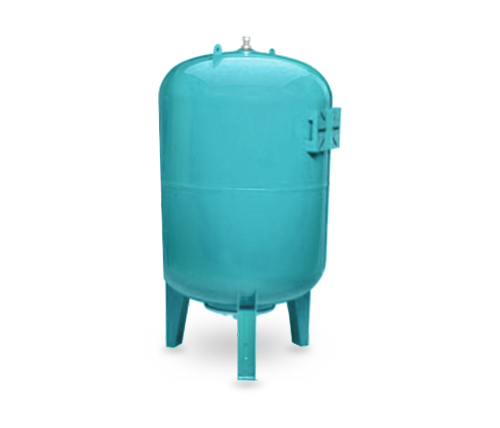
serieswatershortageprotectionvoltagestabilizationstainlesssteelverticalmultistagepump.jpg "EVR(S) Series Water Shortage Protection Voltage Stabilization Stainless Steel Vertical Multistage Pump")
edwina@edwin-pump.com
+86-13586290903 (WhatsApp)
Xuri Gongliang Cutting Tool Entrepreneurship Park, Wenqiao Town, Wenling City, Taizhou City, Zhejiang Province, China

High Performance Smart Pump Factory


 English