edwina@edwin-pump.com

View All Products
en
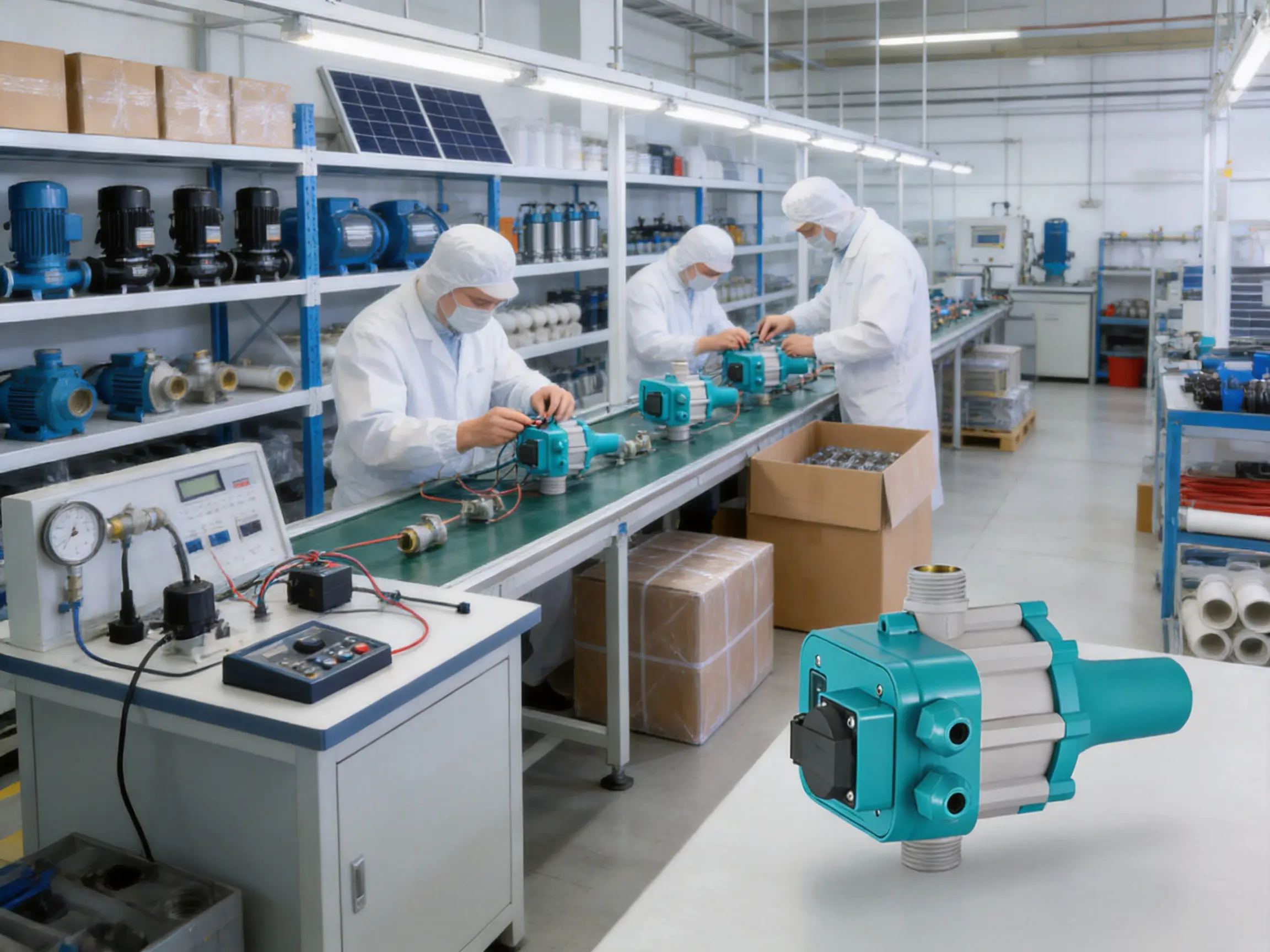
Reliable pressure control is essential for any water pumping system that must deliver water automatically, efficiently, and safely. In residential water supply, agricultural irrigation, commercial facilities, and general utility installations, users expect a pump to start when water is needed and stop when demand ends. Manual operation can be inconvenient, waste energy, and expose the pump to unnecessary wear. The EPC-1.1 Series Start and Stop Automatically Pressure Switch is designed to solve these problems through automatic pressure-based pump control.
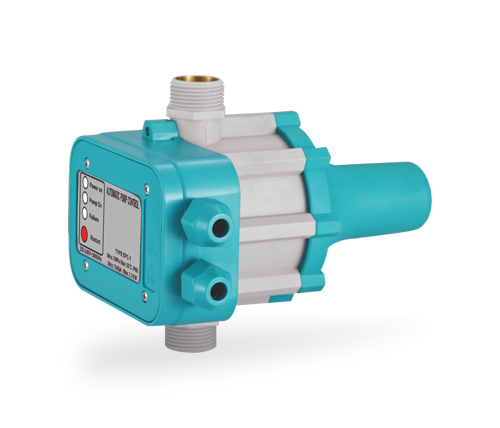
The EPC-1.1 Series is an automatic pressure controller developed for water pump applications. It monitors pressure conditions within the water system, starts the electric pump when pressure decreases, and stops the pump when water demand ends and the pressure reaches the appropriate level. It also incorporates a dry-running protection function that helps prevent damage when the pump operates without sufficient water.
With a maximum rated current of 10 A, maximum working pressure of 10 bar, IP44 protection, G1-inch connection threads, and compatibility with 50/60 Hz power systems, the EPC-1.1 Series is suitable for many common pump installations. It is available in 220–240 V, 110–120 V, and 110–240 V versions, helping distributors, installers, and equipment manufacturers select a suitable electrical configuration for different markets.
Manufactured by Taizhou Edwin Electric Co., Ltd., the EPC-1.1 Series reflects the company’s experience in water pumps, intelligent booster systems, circulation pumps, submersible pumps, deep well pumps, and pump accessories. The pressure switch is not merely an electrical component; it is part of a broader approach to integrated water system control, reliable manufacturing, international supply, and practical engineering support.
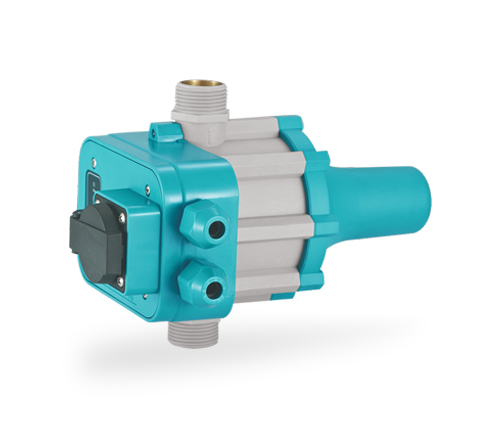
EPC-1.1 Series Start and Stop Automatically Pressure Switch Used in Water Pumps
The EPC-1.1 Series is a pressure-controlled automatic device installed between a water pump and the connected water distribution system. Its main purpose is to control the start and stop operation of the pump according to changes in water pressure and flow conditions.
When a user opens a tap or another water outlet, the pressure in the pipe system falls. The EPC-1.1 Series detects this pressure decrease and sends an electrical signal that starts the pump. The pump then supplies water and restores pressure in the system. When the tap is closed and water flow stops, the pressure rises to the maximum pressure level produced by the pump. The controller then stops the pump automatically.
This operating principle eliminates the need for a user to switch the pump on and off manually. It also helps ensure that the pump operates only when water is required. The result is a more convenient water supply system with better control over energy use and pump operating time.
The controller can be used with a wide range of water pump arrangements, including domestic booster pumps, surface pumps, garden pumps, and other compatible electric pump systems. It is also suitable for selected agricultural and commercial applications where the current, pressure, temperature, and connection requirements fall within the specified limits.
The central benefit of the EPC-1.1 Series is automatic pump control. The system starts the pump after a pressure decrease caused by opening a tap or using water. It stops the pump when the water flow interrupts and the pressure reaches the pump’s maximum operating level.
Automatic operation is especially valuable in houses, apartments, workshops, farms, and small commercial buildings. Users can access water without locating a switch or monitoring the pump manually. The pump responds to actual demand, which improves convenience and reduces the possibility of leaving the pump running unnecessarily.
Dry running occurs when a pump operates without enough water. This can happen because of an empty storage tank, a closed inlet valve, a blocked suction pipe, a low well level, or an air leak in the suction system. Without suitable protection, dry running may cause overheating, seal damage, impeller wear, and premature motor failure.
The EPC-1.1 Series is designed to examine the water condition automatically and help protect the pump from damage caused by dry running. This function adds an important safety layer to the system, particularly in installations where water availability can change or where continuous manual supervision is impractical.
Dry-running protection should not replace correct pump installation, appropriate pipe sizing, or regular maintenance. However, it can significantly reduce the risk associated with temporary water shortages and abnormal operating conditions.
The EPC-1.1 Series is designed around practical specifications for common water pump applications. Its electrical and hydraulic ratings allow the unit to be used in a variety of domestic, agricultural, and light commercial systems.
| Specification | Available Value |
|---|---|
| Product series | EPC-1.1 |
| Product type | Automatic pressure controller for water pumps |
| Rated voltage | 220–240 V, 110–120 V, or 110–240 V |
| Power frequency | 50/60 Hz |
| Maximum using current | 10 A |
| Maximum power | 1.1 kW for 220–240 V and 110–240 V versions; 0.55 kW for the 110–120 V version |
| Starting pressure settings | 1.2 bar, 1.5 bar, or 2.2 bar |
| Maximum working pressure | 10 bar |
| Connection thread | G1 inch |
| Protection rating | IP44 |
| Maximum working temperature | 55°C |
| Power frequency compatibility | 50/60 Hz |
| Warranty | One year |
The three available starting pressure settings provide flexibility for different water supply designs. A lower starting pressure may be appropriate for a basic domestic water system, while a higher setting can be selected when the installation requires more pressure before the pump begins operation. The final setting should be selected according to the pump curve, building height, pipe losses, and required water service conditions.
The 10-bar maximum working pressure provides a substantial operating margin for many typical water systems. Installers must still verify the pressure rating of the pump, pipes, valves, fittings, storage tanks, and other connected components. The lowest-rated component always determines the safe operating limit of the complete system.
The G1-inch connection thread is a widely used size in water pump equipment. It allows the controller to be integrated into many existing pump assemblies and reduces the need for unusual adapters. A G1-inch plastic pipe joint is available as an option for quick connection to a water pump.
A conventional pump controlled by a basic manual switch requires the operator to start and stop the motor whenever water is needed. This may be acceptable for occasional use, but it becomes inconvenient in homes, offices, farms, and workshops where water demand occurs many times throughout the day.
The EPC-1.1 Series automates this process. Once installed and adjusted correctly, it responds to pressure changes without requiring repeated manual intervention. This creates a more comfortable user experience and allows the pump to be positioned in a remote or less accessible location.
A pump that remains switched on continuously may consume unnecessary electricity and experience avoidable mechanical stress. It may also create noise and increase the temperature of the motor and surrounding equipment.
By stopping the pump when water demand ends, the EPC-1.1 Series supports demand-based operation. The pump runs when water is needed and stops when the system has recovered pressure. This operating method can reduce idle running and contribute to longer equipment service life.
A basic on/off switch does not normally monitor pressure conditions or help detect a lack of water. The EPC-1.1 Series combines automatic start and stop control with automatic water examination and dry-running protection. This provides a more complete solution for users who want both convenience and greater operational security.
Many pressure control products are designed for only one voltage range. The EPC-1.1 Series is available in 220–240 V, 110–120 V, and 110–240 V configurations. This broad selection supports different electrical standards and makes the product useful for international distribution.
Distributors can select the appropriate model for their target market, while original equipment manufacturers and project suppliers can discuss suitable electrical configurations with the manufacturer. The voltage options also help reduce the need to adapt a product designed for a different power system.
The pressure switch is designed as a practical component for direct integration into water pump systems. Its G1-inch thread, optional plastic quick-connection joint, and compact pressure-control design simplify installation for many applications.
Compared with more complex control cabinets, the EPC-1.1 Series can offer a straightforward solution where advanced variable-speed control is not required. It provides automatic pressure-based operation without requiring a large external control system for a small or medium pump installation.
The controller is suitable for a wide range of water supply situations. It can be used in residential water boosting, garden irrigation, agricultural water delivery, utility water systems, and selected commercial installations. Its 50/60 Hz compatibility and multiple voltage versions make it adaptable to different regional markets.
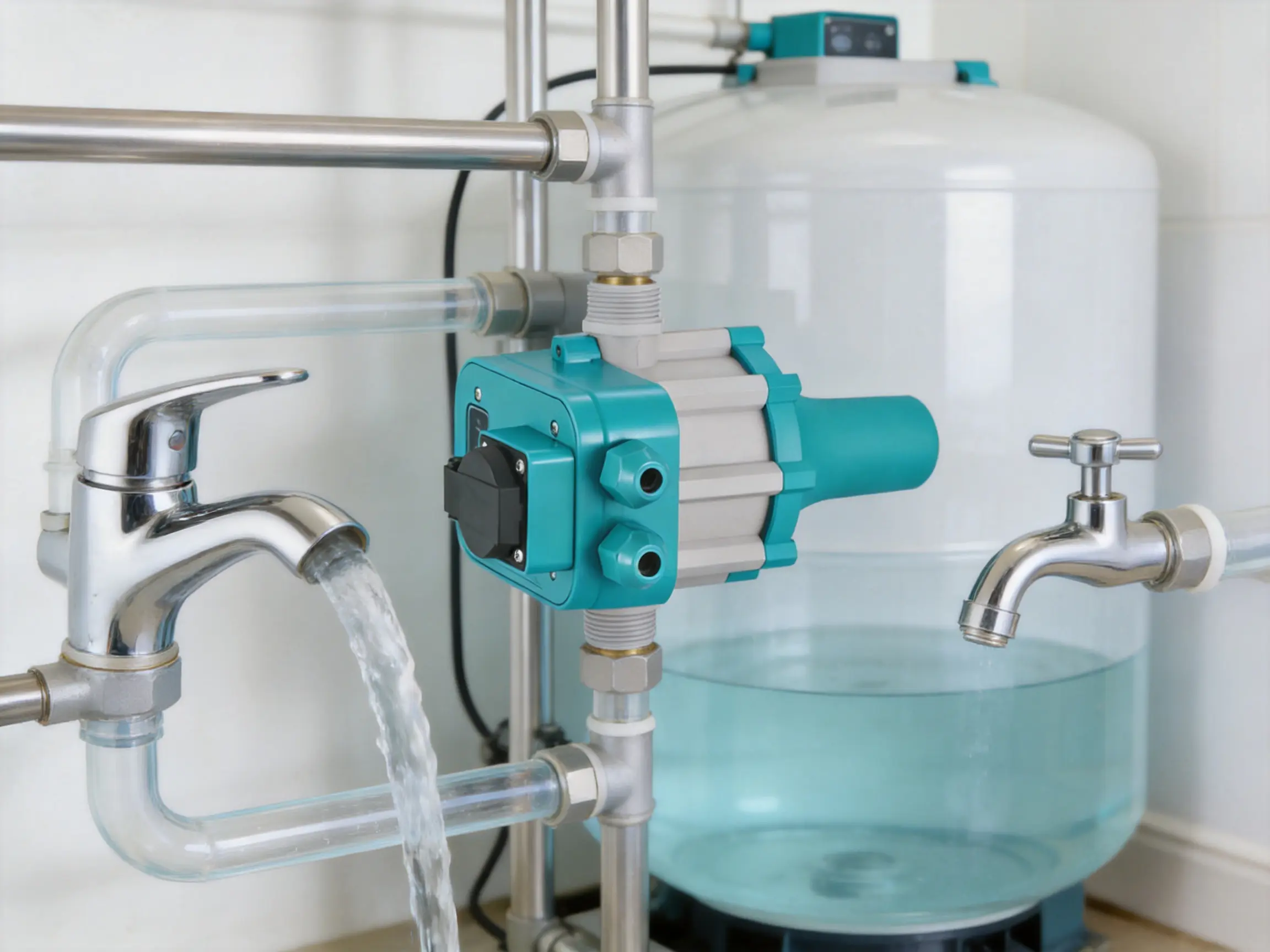
In homes, the EPC-1.1 Series can be used with a domestic booster pump to improve water pressure at taps, showers, washing machines, and other outlets. When a resident opens an outlet, the pressure drops and the pump starts automatically. When the outlet is closed, the pump stops.
This is useful in buildings supplied by low-pressure municipal water systems, elevated storage tanks, wells, or rainwater collection systems. The controller can help provide a more convenient water supply without requiring the homeowner to operate the pump manually.
Garden pumps often serve hoses, sprinklers, drip irrigation networks, and small irrigation systems. Water demand may vary frequently as different valves open and close. Automatic pressure control allows the pump to respond to these changes and helps prevent it from operating continuously when no water is being used.
For garden installations, the installer should protect the controller and pump from excessive exposure to rain, flooding, direct sunlight, and freezing temperatures. Although the EPC-1.1 Series has an IP44 protection rating, it should be installed in an appropriate enclosure or sheltered position when the environment requires additional protection.
Small farms and agricultural facilities may use electric pumps for livestock watering, greenhouse irrigation, cleaning, and general water transfer. Automatic control can reduce the need for personnel to monitor the pump during every water-use cycle.
The controller is particularly useful in systems with predictable pressure-based demand. However, agricultural installations should be evaluated carefully because long pipe runs, large elevation changes, dirty water, and rapid valve operation may influence system performance. A filter, suitable check valve, and correctly sized pipework may be necessary.
Workshops, small factories, warehouses, restaurants, and service facilities may need reliable water pressure for cleaning, equipment operation, or employee facilities. The EPC-1.1 Series can provide automatic control for compatible pump systems where the electrical load and pressure requirements remain within the rated limits.
For commercial installations with multiple pumps, high flow rates, large motors, or complex pressure requirements, the EPC-1.1 Series should be integrated with suitable contactors, overload protection, storage tanks, or a larger control system as required by the project design.
The controller may also be used in utility water systems that require the pump to respond to changes in pressure. Its automatic operation is useful where water demand is intermittent and the pump should remain stopped during periods of no flow.
Before installation, engineers should confirm that the pump type, motor rating, water quality, pressure range, and flow requirements are compatible with the pressure switch. The controller is intended for water pump applications and should not be treated as a universal controller for every liquid or industrial process.
The EPC-1.1 Series is produced by Taizhou Edwin Electric Co., Ltd., an integrated manufacturing enterprise founded in 2008. The company specializes in independent research and development, mass production, and global export. Its product portfolio includes deep well pumps, submersible pumps, domestic booster pumps, circulation pumps, solar water pumps, intelligent booster pumps, and related water treatment peripheral products.
This broad product experience provides an important advantage in the development of pump accessories and control components. A pressure switch designed by a company familiar with pump motors, hydraulic systems, and field applications can be evaluated in relation to complete pump performance rather than as an isolated electrical product.
Independent research and development allows the manufacturer to improve products according to market needs, application feedback, and changing customer requirements. For a pressure controller, this includes attention to start and stop behavior, pressure settings, electrical compatibility, connection design, protection functions, and installation convenience.
The EPC-1.1 Series demonstrates a practical development philosophy. It focuses on functions that matter to pump users: automatic operation, pressure monitoring, dry-running protection, broad electrical compatibility, and easy connection. This balance between useful functions and straightforward installation makes the product accessible to professional installers and equipment distributors.
Mass production requires more than manufacturing individual units. It requires repeatable processes, standardized components, controlled assembly, inspection procedures, and dependable supply planning. These capabilities are important for distributors and original equipment manufacturers that need consistent product quality across repeated orders.
Edwin Pump’s integrated manufacturing structure supports the production of water pumps and related accessories for global customers. By combining product development with manufacturing experience, the company can coordinate technical specifications, component sourcing, production scheduling, quality inspection, packaging, and export preparation.
Pressure switches operate at the intersection of hydraulic and electrical systems. A reliable product must maintain a secure connection to the water line while also providing dependable electrical switching. Manufacturing quality therefore depends on the accuracy of the connection thread, the consistency of sealing surfaces, the reliability of the internal switching mechanism, and the stability of the housing and cable assembly.
Quality-oriented assembly helps reduce problems such as leakage, loose connections, unstable operation, premature contact wear, and incorrect pressure response. Appropriate inspection should include visual checks, connection verification, electrical performance testing, pressure-related testing, and confirmation of product labeling and packaging.
Edwin Pump serves customers in international markets and has developed supporting companies for procurement planning, order tracking, cross-border delivery, and foreign trade services. This experience is valuable for overseas buyers who require more than a product catalogue. International customers also need accurate documentation, stable communication, suitable packaging, export coordination, and dependable after-sales support.
The availability of 110–120 V, 220–240 V, and 110–240 V versions reflects the company’s understanding of different regional electrical requirements. The product can be discussed for private-label projects, distribution programs, and pump system packages according to customer needs.
Since 2018, the company has invested in new energy and intelligent technology, including solar water pumps and intelligent booster pumps. This direction is relevant to the development of modern water systems, where users increasingly expect automation, energy awareness, remote management, and reliable operation in locations with limited infrastructure.
Although the EPC-1.1 Series is a pressure switch rather than a variable-speed intelligent controller, it reflects the same practical movement toward automated water management. It provides a simple method for improving pump control without requiring a complex digital infrastructure.
Correct installation is essential for safe and reliable operation. The EPC-1.1 Series should be installed by a qualified person who understands electrical safety, pump operation, water pressure, and local regulations.
The controller should be installed in the water line according to the flow direction and connection requirements of the pump system. The G1-inch connection must be properly sealed using appropriate materials and methods. Excessive tightening should be avoided because it may damage the thread, housing, or sealing components.
The electrical supply must match the voltage and frequency rating of the selected version. The connected pump must remain within the maximum current and power rating of the controller. A 10 A maximum using current does not mean that every 10 A motor is suitable under every starting condition. Motors can draw a significantly higher current during startup, so the installer should verify compatibility and use additional switching or protection equipment when required.
The pump should be correctly primed where necessary, and the suction line should be free from air leaks. A check valve may be required to prevent pressure loss when the pump stops. Pipework should be sized to reduce excessive friction losses, and valves should be installed in positions that permit maintenance and safe isolation.
The controller should not be exposed to conditions beyond its maximum working temperature of 55°C. It should also be protected from flooding, corrosive chemicals, severe mechanical impact, and environments that exceed its IP44 protection level. Where the installation is outdoors, a suitable weather-resistant housing or sheltered location may be required.
The EPC-1.1 Series is available with starting pressure settings of 1.2 bar, 1.5 bar, and 2.2 bar. The correct choice depends on the required service pressure and the design of the water system.
A lower starting pressure may be appropriate for basic applications where the pump should begin operation after a modest pressure reduction. A higher starting pressure may be useful in systems that require stronger pressure before the pump starts. The selected setting must be compatible with the pump’s pressure capability and the desired pressure range of the installation.
Engineers should consider elevation. Approximately 0.1 bar of pressure is required for every meter of vertical water rise, before accounting for pipe friction and outlet pressure. If the starting pressure is selected without considering building height, the pump may fail to provide satisfactory service or may cycle in an undesirable manner.
Frequent pump cycling means that the pump starts and stops repeatedly within a short period. This may result from a small leak, an undersized pressure tank, an incorrectly adjusted pressure setting, an air problem, a blocked pipe, or a mismatch between the controller and the pump.
To reduce cycling, the installer should inspect all connections, verify that outlets and valves close properly, check the suction line, and confirm that the pump can reach the required pressure. In some systems, a pressure vessel or small storage tank can help stabilize operation.
Regular maintenance helps preserve the performance of the pressure controller and the connected pump. Users should inspect the system for leakage, unusual noise, vibration, slow pressure recovery, and repeated restarting. Electrical connections should be checked by qualified personnel with the power isolated.
If the pump does not start when a tap is opened, possible causes include no electrical supply, incorrect wiring, insufficient pressure reduction, a closed inlet valve, a blocked pipe, a dry pump, or a controller that is not compatible with the pump rating. The system should be examined systematically rather than repeatedly switching the pump on and off.
If the pump starts but does not stop, possible causes include a continuous water demand, a leak, inadequate pump pressure, a faulty check valve, air in the system, or an incorrect installation. The pump should not be allowed to run continuously without investigation because this may increase wear and energy consumption.
If the dry-running protection activates, the user should check the water source, suction pipe, inlet filter, tank level, and pump priming condition. The underlying water supply problem should be corrected before restarting the system. Repeatedly resetting a dry-running condition without restoring water flow may damage the pump.
The IP44 protection rating indicates protection against solid objects larger than 1 millimeter and water splashes from appropriate directions. It does not mean that the controller is waterproof or suitable for immersion. The unit should be kept away from standing water and installed in accordance with the environmental conditions of the site.
The EPC-1.1 Series can be adapted to different customer purchasing requirements. Color can be provided according to customer requirements, subject to production and order conditions. A G1-inch plastic pipe joint is available for quick connection to the water pump, and the power cable length can be selected according to customer needs.
These options are useful for pump manufacturers, wholesalers, engineering companies, and distributors that want the pressure controller to match an existing product range. Cable length customization can help simplify installation and reduce unnecessary cable extensions. Color customization can support product identification, packaging consistency, or private-label programs.
Customers should provide complete technical information when requesting a quotation. Important details include the target voltage, power frequency, pump power, motor current, starting conditions, desired pressure setting, connection size, cable length, packaging requirements, estimated quantity, and destination market.
For larger projects, buyers may also request production samples, technical drawings, product labels, inspection arrangements, and shipping documentation. Clear communication before production helps ensure that the delivered controller matches the intended pump system and market requirements.
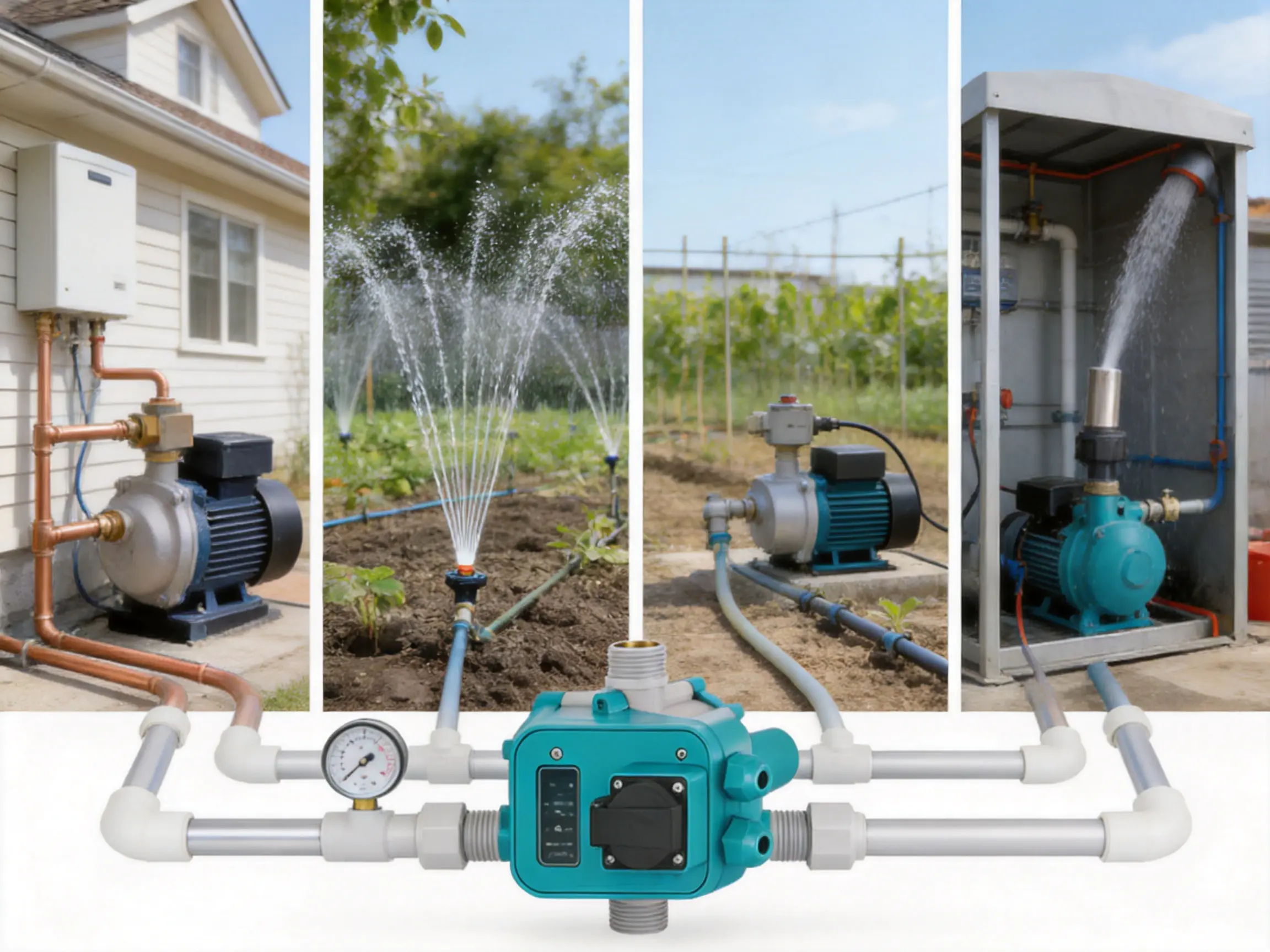
Buying a pressure controller from a company focused on water pumps offers several practical benefits. The product can be evaluated in relation to real pump applications, including domestic booster systems, surface pumps, submersible pumps, circulation systems, and irrigation equipment.
A specialized manufacturer understands that a pressure switch is part of a complete hydraulic system. The controller must work with the pump’s pressure curve, motor characteristics, connection design, and operating environment. This application knowledge can support better product selection and reduce compatibility problems.
Edwin Pump’s broader product portfolio also enables customers to source multiple water pump categories and accessories from one supplier. Its product categories include solar pumps, deep well pumps, submersible pumps, surface pumps, booster pumps, circulation pumps, garden pumps, pool and spa pumps, commercial multistage pumps, pump accessories, end suction pumps, pipes and valves, and intelligent booster pumps.
One-stop procurement can simplify communication, order management, shipping coordination, and after-sales service. It may also help distributors create complete water supply packages rather than purchasing the pump, control component, and accessories from unrelated suppliers.
The EPC-1.1 Series competes through a combination of useful automation, practical specifications, flexible electrical options, and manufacturing support. Its value is not based only on a single feature. Instead, it is created by the relationship between pressure control, dry-running protection, installation convenience, product customization, and supply capability.
Compared with manual pump switching, the EPC-1.1 Series provides a more convenient and responsive user experience. Compared with basic pressure switches that only start and stop a pump, it adds automatic water examination and protection against dry running. Compared with products limited to one electrical standard, its multiple voltage configurations support a wider range of markets.
Its G1-inch connection makes it practical for many common pump systems, while the optional quick-connection joint can simplify assembly. Its 10-bar maximum working pressure supports numerous domestic and light commercial installations. Its IP44 rating offers protection suitable for properly sheltered pump environments.
For professional buyers, the manufacturer’s independent R&D, mass production capability, export experience, and broader pump portfolio provide additional value. These strengths can be especially important when the pressure switch is purchased as part of a larger pump package or recurring supply program.
Before ordering the EPC-1.1 Series, buyers should confirm the pump motor voltage and frequency. The selected controller must correspond to the electrical supply available at the installation site. Buyers should also verify the pump’s maximum current, rated power, and starting characteristics.
The hydraulic requirements should be reviewed carefully. Confirm the pipe connection size, desired starting pressure, maximum system pressure, pump head, flow rate, elevation, and water temperature. The maximum working temperature of the controller is 55°C, and the water system should remain within the approved operating conditions.
Environmental conditions should also be considered. Determine whether the controller will be installed indoors, outdoors, in a damp room, near a well, in a pump enclosure, or in a location exposed to dust and water. Additional protection may be necessary even when the product’s IP44 rating is suitable for the basic installation.
For commercial and distribution buyers, confirm the required cable length, color, packaging, label, quantity, delivery schedule, and documentation. A clear purchase specification helps the manufacturer prepare the correct version and reduces delays during order processing.
The EPC-1.1 Series automatically starts and stops a compatible water pump according to pressure and water demand. It starts the pump when pressure decreases and stops the pump when water flow stops and the pressure reaches the appropriate level.
Yes. The EPC-1.1 Series is designed to examine the water condition automatically and help protect the pump from damage caused by dry running. The water supply and pump installation should still be checked carefully before restarting the system.
The available versions include 220–240 V, 110–120 V, and 110–240 V. All listed versions are compatible with 50/60 Hz power frequencies, subject to the product configuration selected for the order.
The maximum using current is 10 A. The connected pump must be evaluated according to its rated current and starting current. Additional electrical protection or switching equipment may be necessary for some motor applications.
The available starting pressure settings are 1.2 bar, 1.5 bar, and 2.2 bar. The appropriate setting depends on the pump characteristics, building height, pipe losses, and required water pressure.
The maximum working pressure is 10 bar. All other components in the water system must have suitable pressure ratings, and the system should never be operated beyond the limit of its weakest component.
The EPC-1.1 Series uses a G1-inch connection thread. A G1-inch plastic pipe joint is available as an option for quick connection to a water pump.
The controller has an IP44 protection rating, but it should be installed in a sheltered and suitable location. It is not designed for immersion or exposure to standing water. An additional weather-resistant enclosure may be necessary for outdoor applications.
Yes. The power cable length can be selected according to customer requirements, subject to production conditions and order specifications.
Color can be provided according to customer requirements. Buyers should confirm customization details, minimum order quantities, and packaging requirements with the manufacturer before production.
The controller is intended for compatible water pumps, including selected domestic booster pumps, surface pumps, garden pumps, and other suitable electric pump systems. Compatibility must be confirmed according to voltage, current, power, pressure, connection, and operating conditions.
Not necessarily. It can provide a straightforward automatic control solution for compatible pump systems, but larger installations may require contactors, overload protection, pressure tanks, multiple-pump controls, variable-speed drives, or a complete electrical control cabinet.
The stated warranty period is one year. Warranty conditions should be confirmed with the supplier and normally depend on correct installation, appropriate use, and compliance with the specified operating limits.
The EPC-1.1 Series Start and Stop Automatically Pressure Switch provides a practical way to improve the convenience, protection, and efficiency of water pump systems. By starting the pump when pressure falls and stopping it when water demand ends, it reduces the need for manual operation and supports demand-based pump control.
Its main advantages include automatic start and stop operation, dry-running protection, 10 A maximum current capability, 10-bar maximum working pressure, IP44 protection, G1-inch connections, 50/60 Hz compatibility, and multiple voltage options. These features make it suitable for residential water supply, garden irrigation, agricultural systems, workshops, and selected commercial applications.
The product also benefits from the capabilities of Taizhou Edwin Electric Co., Ltd., an integrated manufacturer with experience in independent R&D, mass production, international export, water pumps, intelligent booster systems, solar pumping technology, and pump accessories. This background supports consistent product development, coordinated supply, customization, and one-stop procurement.
For installers and end users, the EPC-1.1 Series offers a straightforward automatic pressure control solution. For distributors, pump manufacturers, and engineering buyers, it provides flexible specifications and a reliable manufacturing partner for recurring supply. When correctly selected, installed, and maintained, the EPC-1.1 Series can contribute to stable water delivery, improved pump protection, and more efficient operation across a wide range of water systems.
1. Product technical data for the EPC-1.1 Series Start and Stop Automatically Pressure Switch.
2. Manufacturer product information concerning automatic pressure control, dry-running protection, electrical ratings, connection size, and operating temperature.
3. General principles of residential, agricultural, and commercial water pump system design.
4. General guidance on electric motor protection, pump installation, pressure control, and hydraulic system maintenance.
5. Manufacturer information concerning independent research and development, mass production, global export, solar water pump technology, and intelligent booster pump development.
edwina@edwin-pump.com
+86-13586290903 (WhatsApp)
Xuri Gongliang Cutting Tool Entrepreneurship Park, Wenqiao Town, Wenling City, Taizhou City, Zhejiang Province, China

High Performance Smart Pump Factory


 English