edwina@edwin-pump.com

View All Products
en
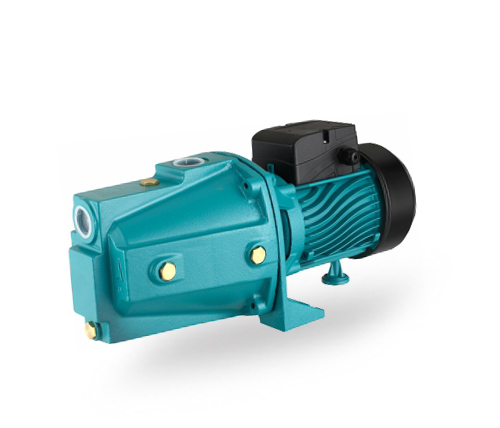
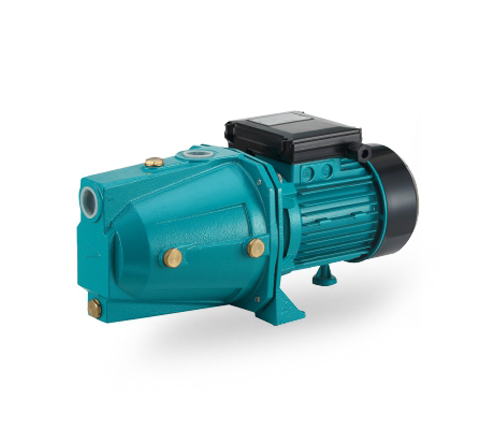
A dependable water pump can make the difference between an efficient garden irrigation system and one that is difficult to operate, maintain, and expand. For households, greenhouses, small farms, fish-breeding facilities, and poultry-raising applications, the ideal pump must provide dependable water movement while remaining practical, compact, and straightforward to connect. The EGP-XPY Series Garden JET Water Pump is designed for this type of requirement, combining self-priming operation, useful suction capability, motor protection, and flexible installation options in one garden-oriented pump solution.
As a garden self-priming pump, the EGP-XPY Series is intended for clean water and other liquids with physical and chemical characteristics similar to water. Its stated maximum suction height is 8 meters, allowing it to draw water from a moderate depth when the suction pipe, foot valve, connections, and installation conditions are correctly selected. Its maximum fluid temperature is +35°C, while the maximum ambient temperature is +40°C, making it suitable for many ordinary outdoor and indoor water-supply environments.
The pump is also equipped with a built-in thermal protector, C&U bearing, Class F insulation, and IPX4 protection. These details are important because a garden pump may be exposed to demanding operating conditions, including long working periods, variable ambient temperatures, occasional splashing, and frequent starting and stopping. The protective design helps support safe operation and gives users a stronger foundation for long-term service.
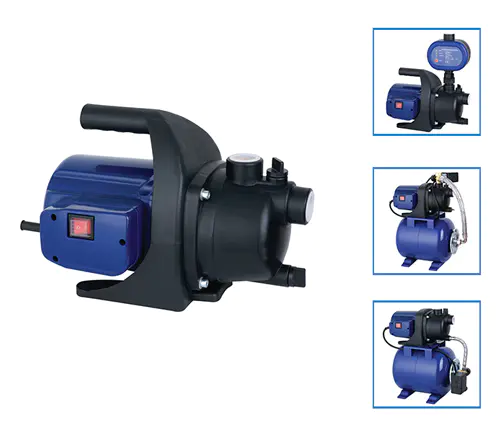
EGP-XPY Series Garden JET Water Pump
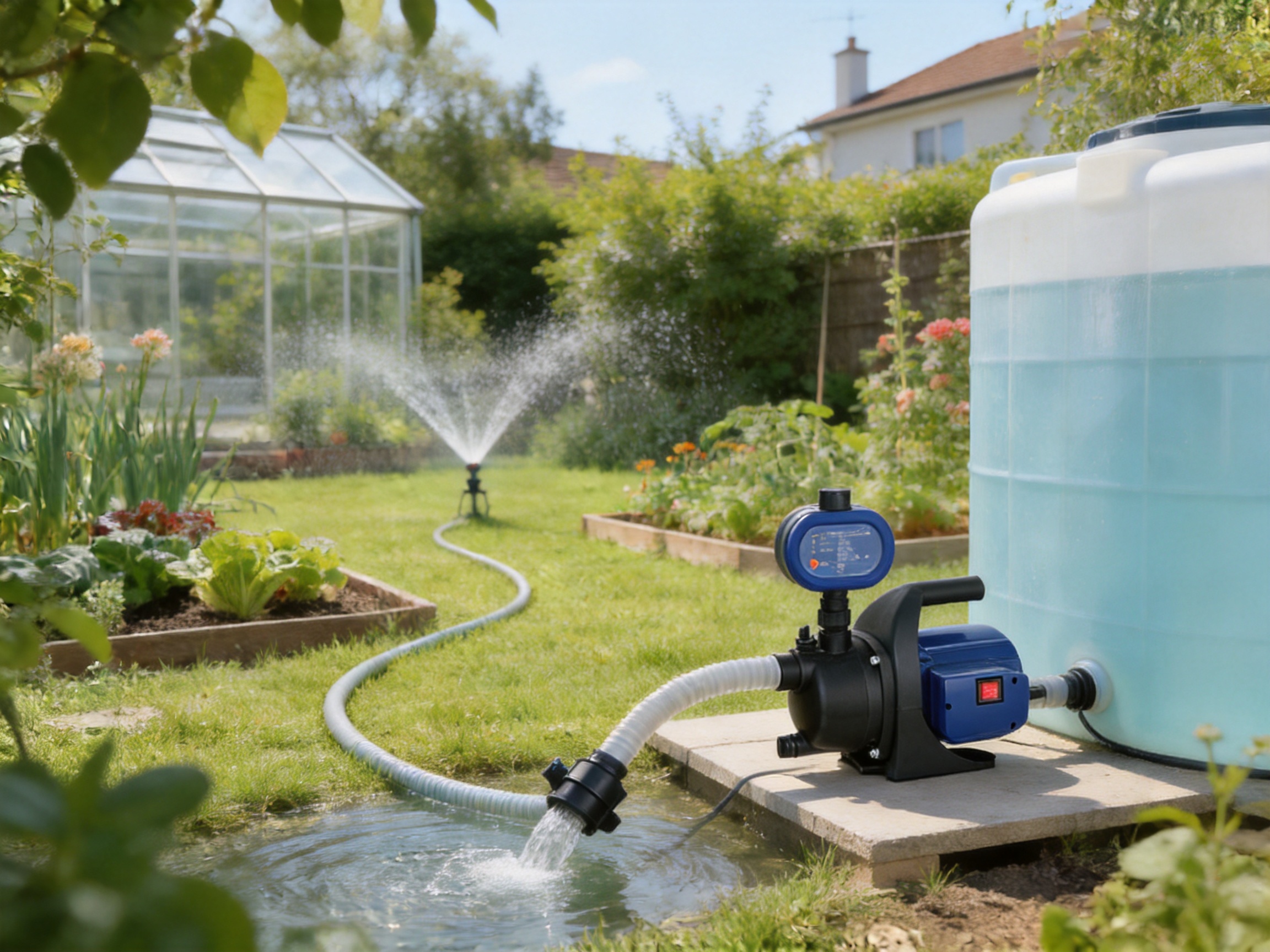
A garden jet water pump is generally used to move clean water from a source to a delivery point. The water source may be a storage tank, shallow well, rainwater collection system, pond, cistern, or another suitable supply. The pump creates the pressure and flow needed for irrigation lines, garden hoses, greenhouse sprinklers, small water-supply systems, and similar applications.
The word “jet” commonly refers to a pump design that uses a hydraulic arrangement to support suction and pressure generation. In practical use, this means the pump can be positioned above the water source while drawing water through a properly sealed suction line. A self-priming arrangement is especially useful because it is intended to reduce the difficulty of restarting the pump after the system has been filled and correctly prepared.
The EGP-XPY Series is categorized as a Garden Self-priming Pump. This makes it different from a submersible pump, which must be installed below the water level, and from many circulation pumps, which are normally designed to continuously move water within a closed heating or cooling circuit. A garden jet pump is instead focused on suction-based water transfer and pressure delivery in general-purpose water applications.
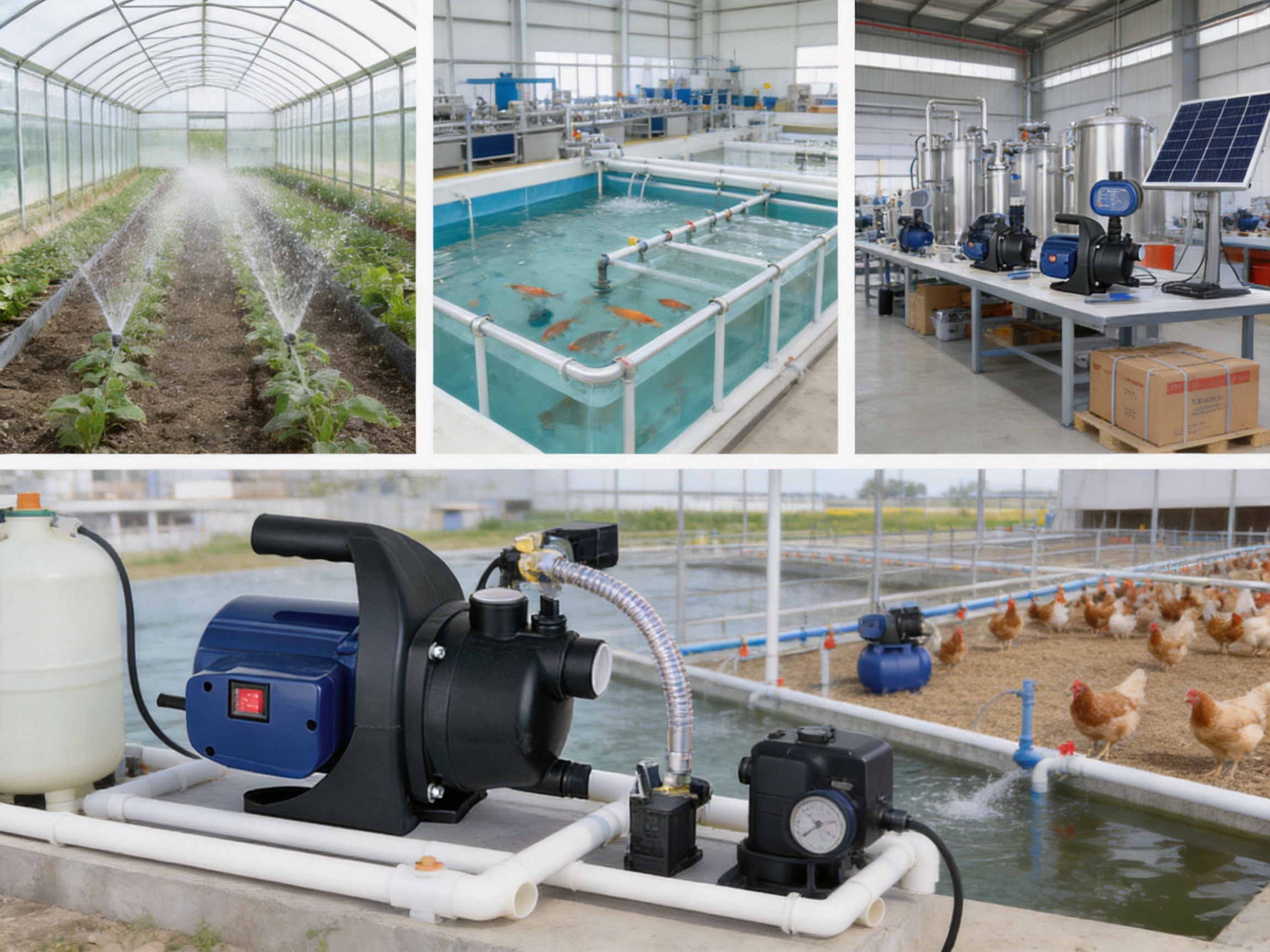
Its operating profile is well suited to users who need one pump for several routine tasks. A homeowner may use it for garden irrigation during dry weather, then connect it to a domestic automatic water-supply system. A greenhouse operator may use it to supply sprinklers or drip irrigation. A small agricultural user may use it for clean-water transfer in a poultry or fish-breeding environment. This flexibility is one of the principal benefits of the product category.
The EGP-XPY Series includes several technical characteristics that directly affect installation, operating safety, and service life. The most important specifications provided for the product are summarized below.
| Specification | Stated Value | Practical Significance |
|---|---|---|
| Product type | Garden self-priming pump | Suitable for above-ground suction and water delivery applications |
| Maximum fluid temperature | +35°C | Designed for clean, relatively cool water and similar liquids |
| Maximum suction | +8 m | Supports water drawing from a moderate depth under suitable conditions |
| Bearing | C&U bearing | Provides a recognized bearing solution for rotating components |
| Motor protection | Built-in thermal protector | Helps protect the motor against excessive temperature during operation |
| Insulation class | F | Provides a defined thermal insulation rating for the motor winding system |
| Protection class | IPX4 | Offers protection against water splashing from different directions |
| Maximum ambient temperature | +40°C | Suitable for many normal outdoor and indoor installation environments |
These specifications should always be considered together with the installation conditions. Maximum suction is influenced by elevation, pipe diameter, pipe length, air leakage, water temperature, the condition of the foot valve, and the actual water level. Similarly, IPX4 protection is not a substitute for a waterproof enclosure or protection against flooding. Correct application and installation remain essential to achieving reliable performance.
One of the strongest advantages of the EGP-XPY Series is its self-priming design. In a conventional suction pump system, air in the suction pipe can prevent the pump from establishing the required water flow. Users may then need to repeat a manual filling process or troubleshoot air pockets before the pump can operate normally. A self-priming pump is designed to make this process more manageable after the initial preparation of the pump and suction line.
This feature is valuable in garden environments because the pump may not be used continuously. Irrigation systems are often operated according to weather, crop requirements, or household schedules. A pump that sits unused between operating periods should be convenient to restart. Self-priming performance can reduce the amount of attention required during routine operation, especially when the installation has been correctly filled and sealed.
Self-priming does not mean that installation preparation can be ignored. The pump body normally needs to be filled according to the manufacturer’s instructions before initial operation. The suction pipe must be airtight, the water source must be adequate, and the suction-side fittings should be securely tightened. A suitable foot valve or non-return arrangement can help retain water in the suction line when the pump stops.
Compared with products that depend heavily on manual re-priming, a properly installed self-priming garden pump can offer a more convenient ownership experience. This is particularly useful for domestic users who want a practical solution rather than a system requiring specialist attention each time the water supply is started.
The specified maximum suction of 8 meters gives the EGP-XPY Series a useful operating range for many shallow-water applications. It may be used to draw water from a storage tank, rainwater reservoir, shallow well, or other source positioned below the pump. This capability allows the pump to remain accessible at ground level rather than requiring the motor and electrical components to be placed underwater.
Above-ground installation has several practical advantages. The pump can be inspected more easily, electrical connections can be arranged in a controlled location, and routine maintenance does not require lifting equipment or entering a tank. In seasonal applications, the pump can also be drained, stored, or protected more conveniently at the end of the operating period.
However, the 8-meter figure should be treated as a stated maximum rather than a guaranteed working condition for every installation. The effective suction height can be reduced by long horizontal pipes, narrow pipework, multiple elbows, clogged strainers, high water temperature, and leaks. The distance should be measured from the pump’s water level reference to the actual water surface, not simply from the bottom of a well or tank.
To obtain better suction performance, users should select a suction pipe with an appropriate internal diameter, keep the line as short and direct as practical, avoid unnecessary bends, and confirm that all joints are airtight. A clean inlet strainer can help protect the pump from debris while reducing the risk of blockage. These installation principles apply to almost every surface-mounted self-priming pump and are especially important when the system approaches its maximum suction requirement.
The built-in thermal protector is a significant safety feature for a garden pump. Electric motors can become excessively hot when they operate under abnormal conditions. Possible causes include blocked flow, repeated starting, insufficient ventilation, low or unstable voltage, an overloaded hydraulic system, or a mechanical obstruction. A thermal protector is designed to interrupt or limit motor operation when the temperature becomes excessive, helping reduce the risk of damage.
Thermal protection does not remove the need for correct electrical installation. The pump should be connected to a suitable power supply with appropriate grounding and protective equipment. If the thermal protector repeatedly activates, the reason should be investigated instead of simply restarting the pump again and again. Repeated overheating may indicate an installation fault, a restricted pipe, a mechanical problem, or unsuitable operating conditions.
The stated Class F insulation rating is another important characteristic. Motor insulation is exposed to heat, electrical stress, and operating cycles. A defined insulation class helps describe the thermal capability of the winding insulation system. For users and distributors, this specification provides a clearer basis for comparing motor construction and evaluating suitability for normal pumping duties.
The IPX4 protection class indicates resistance to water splashing from various directions. This is appropriate for many sheltered outdoor or utility-room installations where occasional splashing may occur. Even so, the pump should be positioned on a stable, dry, and well-drained foundation. It should not be placed where standing water, flooding, direct heavy rain, or uncontrolled spray can reach the motor and electrical connections.
These protective features create an important advantage over basic pumps that provide limited information about motor insulation and protection. Clear ratings help installers design a more appropriate system and help end users understand the environmental limits of the equipment.
The bearing supports rotating components and helps maintain smooth mechanical movement inside the pump motor. The EGP-XPY Series uses a C&U bearing, giving the product a defined bearing specification rather than leaving the component selection unclear. Bearing quality influences operating noise, vibration, friction, and the long-term stability of the rotating assembly.
In a garden pump, the bearing may experience repeated starting cycles and varying loads as the water system opens and closes. Reliable bearing performance is therefore important even when the pump is not operated continuously. A stable bearing arrangement helps the motor maintain consistent rotation and supports the mechanical efficiency of the pump.
Users should still follow normal maintenance principles. The pump should be kept free from excessive dust and moisture, the surrounding area should have adequate ventilation, and abnormal sounds or vibration should be investigated promptly. A bearing specification alone cannot compensate for dry running, severe blockage, misalignment, or improper electrical operation, but it is an important part of a properly designed motor assembly.
The primary application of the EGP-XPY Series is garden water supply and irrigation. It can support hose watering, small sprinkler systems, and other clean-water irrigation arrangements. Its above-ground construction allows the pump to be placed near a storage tank or water source while delivering water to garden beds, lawns, planters, or landscaping areas.
For larger irrigation systems, users should confirm the required flow, pressure, pipe size, and number of outlets before selecting the final pump configuration. The product information identifies the pump as a garden self-priming model but does not provide a complete performance curve. Therefore, professional selection should be based on the required duty point and the applicable model data supplied for the intended electrical version.
Greenhouses require dependable and controlled watering. Plants may suffer when irrigation is irregular, while excessive manual watering can waste time and water. A self-priming garden pump can supply sprinklers, hand-watering lines, or suitable low-pressure irrigation equipment when the system is correctly designed.
The maximum fluid temperature of +35°C is relevant in greenhouse environments. Water stored in a warm tank or exposed to strong sunlight should be checked before pumping. If the water temperature may exceed the stated limit, a different pump solution should be considered. Keeping the water within the specified range helps protect the pump and maintain appropriate operating conditions.
The product is identified as suitable for fish-breeding applications involving clean water or liquids similar to water in physical and chemical properties. In such environments, water transfer may be required between tanks, reservoirs, filtration arrangements, or supply points. The pump should be installed in a way that avoids drawing in excessive solids, feed residue, algae, or other debris.
Application designers should also consider the effect of flow and pressure on the fish environment. The pump’s presence in a fish-breeding system does not by itself define the correct flow rate, oxygenation level, or filtration process. Those factors should be determined according to the species, tank size, water quality requirements, and operating method.
Clean water supply is essential in poultry facilities. The EGP-XPY Series may support water transfer for cleaning, storage, and general supply duties when the water is within the stated temperature and cleanliness limits. Its thermal protection and splash resistance can be useful in utility areas where pumps may be exposed to occasional moisture.
In poultry environments, hygiene and drainage are particularly important. The pump should not be installed directly in contaminated standing water, and the suction source should be protected from solids and biological debris. A separate filtration or straining arrangement may be appropriate depending on the water source.
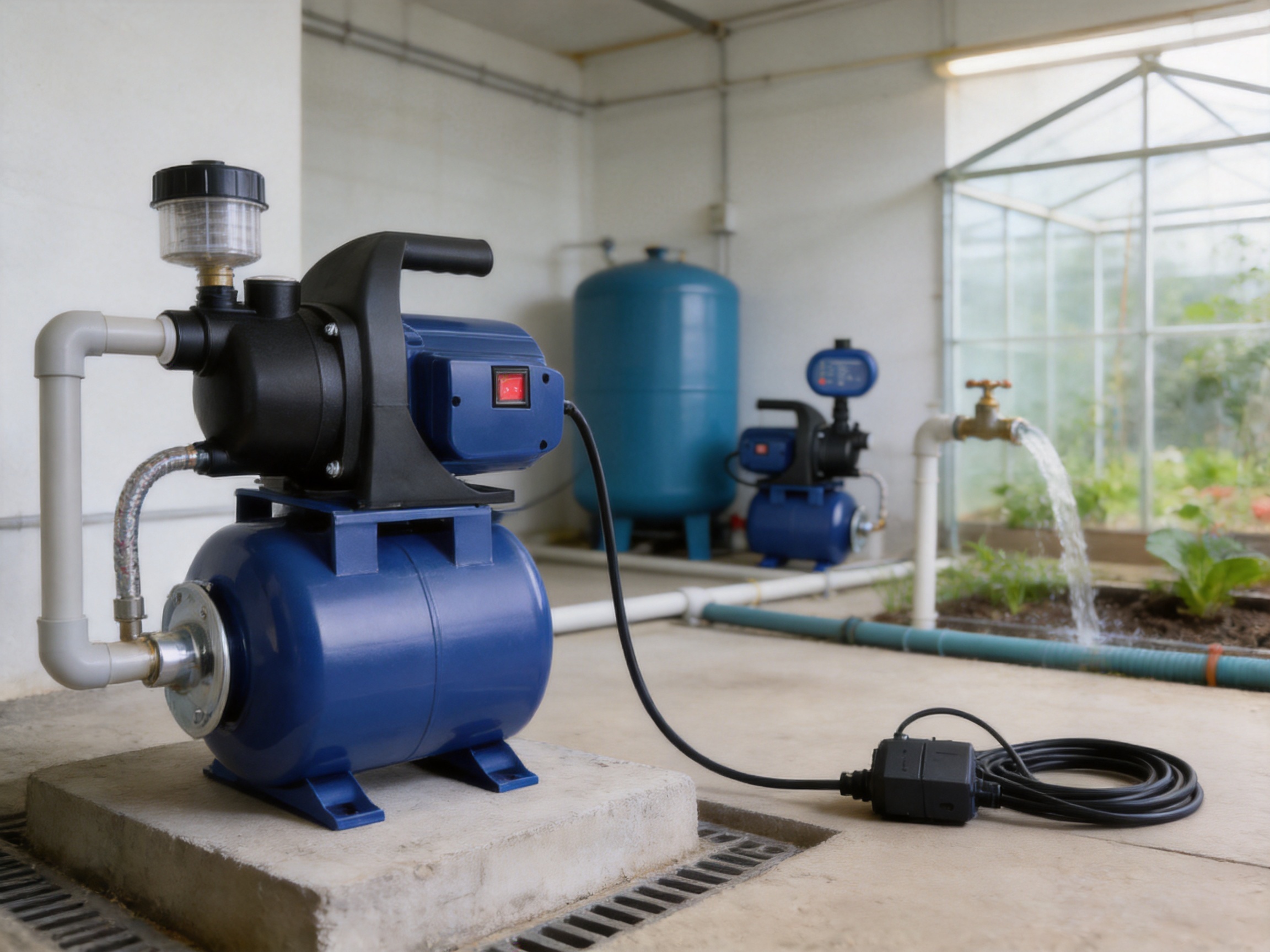
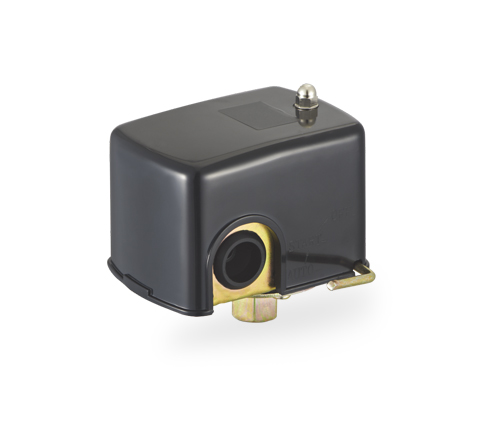
The pump can be connected with a pressure controller as an option and can also be assembled with a tank system. These options make it suitable for domestic automatic water-supply arrangements. A pressure controller can help start and stop the pump according to water demand, while a tank can reduce frequent cycling and provide a more stable supply in some installations.
For a household, this may mean using stored rainwater or tank water for outdoor taps, toilets, washing areas, or garden irrigation. The system should be designed to prevent contamination between non-potable water and drinking-water networks. If water is intended for human consumption, all components and installation practices must meet the relevant local requirements.
The manufacturer lists several options on request: different cable lengths, connection with a pressure controller, and assembly with a tank system. These options are valuable because pump installations rarely have identical layouts. A compact domestic system may need a short cable, while a larger garden or agricultural installation may require a longer connection arrangement. Offering different cable lengths can help reduce unnecessary extensions and simplify installation planning.
A pressure controller can turn a basic pump into a more responsive automatic water-supply unit. When a tap or irrigation outlet opens, the pressure may fall and signal the pump to start. When demand stops, the controller can stop the pump. The exact control logic depends on the selected controller and system design, but the option gives distributors and project installers more flexibility.
A tank system may be useful where the user wants improved pressure stability, reduced starting frequency, or a reserve of pressurized water. The tank size and pressure settings should be selected according to the expected demand and pump characteristics. A correctly matched tank can make the system more comfortable for domestic use and may help reduce wear caused by unnecessary frequent starts.
Compared with a fixed, one-configuration pump, a product with selectable accessories can be easier to adapt to different markets. Importers, wholesalers, installers, and original equipment buyers can request a configuration that better matches local installation practices and customer expectations.
Competition in the garden pump market includes low-cost general-purpose pumps, submersible products, circulation pumps, and more advanced automatic booster systems. The EGP-XPY Series occupies a practical middle position: it offers the accessible installation of an above-ground pump while adding features that are important for reliability and adaptability.
First, the self-priming design can be more convenient than a basic surface pump that requires extensive manual priming. This is especially relevant for seasonal irrigation and domestic use, where the pump may be stopped and restarted regularly.
Second, the specified 8-meter maximum suction offers useful flexibility for shallow wells and below-pump storage sources. Some basic pumps are limited to very shallow suction applications, while a submersible pump may require more difficult installation and removal procedures. The correct choice depends on the water source, but an 8-meter stated capability gives the EGP-XPY Series a practical range for many common garden layouts.
Third, the product includes a built-in thermal protector, Class F insulation, and IPX4 protection. These features provide a clearer safety and environmental profile than products that do not clearly identify motor protection or insulation. Buyers can use the stated specifications when comparing alternatives and preparing installation instructions.
Fourth, the use of a C&U bearing shows attention to the rotating assembly. Although bearing selection is only one part of pump quality, it contributes to the overall engineering specification and gives distributors a defined component reference.
Fifth, the product can be configured with different cable lengths, a pressure controller, or a tank system. This can reduce the need to replace a standard pump with a completely different model when the customer requires a more customized installation.
Finally, the product is supported by a manufacturer with experience in multiple pump categories, including deep well pumps, submersible pumps, domestic booster pumps, circulation pumps, solar water pumps, and intelligent booster pumps. This broader product knowledge can be beneficial to buyers seeking coordinated solutions instead of purchasing unrelated equipment from several suppliers.
These advantages should not be interpreted as a claim that one pump is ideal for every application. High-temperature liquids, heavily contaminated water, deep-water installations beyond the suction limit, and demanding industrial duties may require other pump types. The advantage of the EGP-XPY Series is its balanced suitability for ordinary clean-water garden, greenhouse, small agricultural, and domestic applications.
The manufacturer, Taizhou Edwin Electric Co., Ltd., was founded in 2008 and operates as an integrated manufacturing enterprise. Its stated capabilities include independent research and development, mass production, and global export. This combination is important for pump buyers because a dependable product program requires more than assembly alone. It requires design control, component coordination, production planning, testing, quality management, packaging, and after-sales communication.
Independent research and development can help a manufacturer respond to different water-supply requirements. Garden pumps, solar pumps, deep well pumps, submersible pumps, booster pumps, and circulation pumps each involve different hydraulic and electrical considerations. Experience across these categories can support the development of more appropriate product structures and accessory combinations.
Mass-production capability is also valuable for importers and distributors. Buyers often need consistent products across repeat orders, predictable lead times, and stable packaging. A manufacturer with organized production resources is better positioned to support regular supply than a small workshop that depends on irregular component availability.
Global export experience adds another layer of capability. Export-oriented pump manufacturing involves documentation, electrical-version coordination, labeling, packaging protection, order tracking, shipping preparation, and communication with customers in different markets. These processes are particularly important for distributors who need to bring products into their own supply chains with fewer delays and uncertainties.
The company has also established related import and export organizations to support procurement planning, order tracking, cross-border delivery, and foreign-trade services. This one-stop approach can simplify cooperation for international customers. Instead of handling product selection, order follow-up, and logistics through unrelated service providers, buyers can work with a coordinated supplier structure.
A pump’s quality is influenced by the entire production chain. Motor winding, insulation treatment, bearing installation, housing assembly, hydraulic component accuracy, sealing, wiring, and final inspection all contribute to performance. A reliable manufacturer must coordinate these stages rather than focusing only on the visible exterior of the pump.
For the EGP-XPY Series, the stated Class F insulation, built-in thermal protector, IPX4 protection, and C&U bearing indicate that the motor and mechanical assembly have been specified with practical operating conditions in mind. These features should be supported by controlled assembly procedures and appropriate inspection before shipment.
Production quality is also important for self-priming performance. The pump body, sealing surfaces, threaded connections, and internal hydraulic passages must work together correctly. Air leakage on the suction side can prevent the pump from operating properly even when the motor is functioning. Consistent assembly and inspection can therefore have a direct effect on the user’s experience during installation and startup.
For international buyers, quality assurance should include more than a single product sample. Repeat-order consistency, batch records, component control, electrical testing, and packaging standards all deserve attention. A manufacturer with independent development and mass-production experience is better equipped to establish these systems and improve them over time.
Since 2018, the manufacturer has invested in new energy and intelligent technology, including solar water pumps and intelligent booster pumps. This development is relevant to the broader direction of water-pump technology. Customers increasingly want lower energy consumption, automated control, remote or simplified operation, and equipment that can function in locations where conventional grid electricity is limited.
The EGP-XPY Series itself is a garden self-priming pump rather than a solar or intelligent model. However, the manufacturer’s broader experience can support future product development and provide customers with access to a wider range of water-pumping solutions. A distributor may begin with a conventional garden pump and later require a solar pump for an agricultural project or an intelligent booster pump for a residential system.
Product portfolio breadth also helps with application matching. A surface-mounted self-priming pump should not be used where a submersible deep-well pump is required, and a conventional garden pump may not replace a high-pressure commercial multistage pump. A supplier with multiple categories can help customers select the appropriate technology instead of forcing every project into one product type.
Install the pump on a stable, level foundation close to the water source whenever possible. A shorter suction line generally improves the chances of reliable priming and reduces friction losses. The location should be dry, ventilated, accessible for inspection, and protected from flooding. Because the stated protection class is IPX4, the pump should not be treated as suitable for immersion.
The suction pipe must be airtight. Even a small air leak can make priming difficult or cause unstable operation. Use appropriate fittings, seal threaded joints correctly, and avoid flexible hose sections that can collapse under suction. The inlet should be kept above the bottom of the tank or well so that sediment is not drawn into the pump.
A foot valve or suitable non-return valve can help keep the suction line filled when the pump stops. The valve should be correctly sized and kept clean. If it becomes blocked, the pump may lose effective suction or operate with insufficient water flow.
Before the first startup, fill the pump according to the applicable installation instructions. Confirm that the suction line is full of water and that the delivery side is arranged safely. Never assume that a self-priming pump can operate indefinitely while completely dry. Dry running may damage internal components and seals.
The electrical supply should match the pump’s specific rated voltage and frequency. The circuit should include suitable protection, grounding, and a properly selected switch or controller. Electrical work should be completed by a qualified professional where required by local regulations. The cable should be protected from sharp edges, excessive heat, standing water, and mechanical damage.
During initial operation, check for abnormal noise, excessive vibration, water leakage, overheating, and unstable flow. Confirm that the pump stops and starts correctly if a pressure controller or tank system is installed. If the thermal protector activates repeatedly, switch off the pump and identify the cause before continuing operation.
Routine maintenance is relatively simple when the pump is used with clean water, but it should not be neglected. Inspect the suction strainer, foot valve, pipe joints, and pump connections at regular intervals. Remove dirt and sediment before they restrict the inlet. Check that the installation area remains dry and that ventilation openings are not blocked.
Before maintenance, disconnect the electrical supply and release pressure from the system. If the pump will not be used during freezing weather, drain the pump and exposed pipework as appropriate. Water left inside the pump or pipes may expand when frozen and cause cracking or other damage.
Users should pay attention to changes in sound and vibration. A new grinding sound, humming noise, reduced flow, or repeated thermal shutdown may indicate a blocked inlet, bearing issue, electrical problem, air leak, or hydraulic restriction. Early investigation can prevent a minor issue from becoming a major failure.
The one-year warranty provided for the product applies according to the manufacturer’s general sales conditions. Buyers should retain purchase documentation, follow installation requirements, and contact the supplier when a warranty-related issue occurs. Unauthorized modification or operation outside the stated conditions may affect warranty evaluation.
When purchasing the EGP-XPY Series for resale or project use, buyers should first define the intended market. Garden irrigation, greenhouse watering, domestic automatic supply, fish breeding, and poultry raising may have different expectations for accessories, packaging, cable length, control, and documentation.
Second, buyers should confirm the water characteristics. The product is intended for clean water or liquids similar to water in physical and chemical properties. Water containing sand, sludge, fibrous material, aggressive chemicals, or high concentrations of suspended solids may require a different pump design or additional filtration.
Third, the required duty point should be established. This includes flow rate, delivery pressure, suction height, pipe length, elevation difference, and the number of outlets that may operate at the same time. A pump should not be selected solely by motor power or maximum suction. A complete hydraulic assessment gives a more reliable result.
Fourth, buyers should decide whether the installation requires a pressure controller or tank system. These options can improve convenience but should be matched to the intended operating pattern. A domestic system with frequent tap opening may benefit from automatic control, while a simple seasonal garden hose may only require a manual switch.
Fifth, the buyer should confirm electrical requirements and cable length before ordering. Different markets may use different voltage, frequency, plug, and certification expectations. The manufacturer’s option for different cable lengths can help support local installation practices, but the correct specification should be agreed before production and shipment.
Finally, distributors should evaluate the supplier’s ability to provide repeat-order support. Product availability, response speed, spare-part communication, packaging, technical documents, and after-sales cooperation are all important. The manufacturer’s integrated production and export structure is intended to support these requirements for customers in international markets.
The EGP-XPY Series is designed for normal clean-water duties, not every possible liquid-transfer task. The maximum fluid temperature is +35°C, so hot water applications should be excluded unless a separately approved configuration is available. The maximum ambient temperature is +40°C, meaning installations in extremely hot, enclosed, or poorly ventilated locations require additional evaluation.
The product should also be protected from severe weather and flooding. IPX4 provides splash resistance but does not mean that the pump can be submerged or exposed to continuous high-pressure water. A covered installation with good drainage is the safer approach for outdoor use.
The stated maximum suction of 8 meters should not be used as a reason to install the pump at the limit without checking the complete pipe system. Real-world performance may be lower because of elevation, friction, water temperature, and air leakage. A conservative design generally provides more dependable service than an installation operated continuously at the edge of its stated capability.
Clear operating boundaries are an advantage rather than a limitation. They help users avoid inappropriate applications and allow distributors to recommend the pump honestly. Proper product matching protects the pump, improves customer satisfaction, and reduces unnecessary warranty claims.
It is a garden self-priming jet water pump intended for clean water and liquids with similar physical and chemical properties. It is designed for above-ground installation and suction-based water transfer.
The stated maximum suction is 8 meters. Actual results depend on the water level, pipe length, pipe diameter, elevation, valve condition, and whether the suction system is completely airtight.
Yes. Garden irrigation is one of the primary intended applications. It may be used with suitable hoses, sprinklers, storage tanks, or other correctly designed clean-water irrigation equipment.
Yes. Connection with a pressure controller is listed as an option on request. A pressure controller can support automatic starting and stopping according to water demand when correctly installed and adjusted.
Yes. The product can be assembled with a tank system as an option. The tank size and pressure settings should be selected according to the application and expected water demand.
The maximum fluid temperature is +35°C. Water above this limit should not be pumped unless a separately approved product configuration is confirmed.
The maximum ambient temperature is +40°C. The pump should be installed in a ventilated location and protected from excessive heat, direct flooding, and unsuitable environmental conditions.
The built-in thermal protector helps protect the motor when its temperature becomes excessive. If it activates repeatedly, the user should investigate the cause, such as blockage, overload, poor ventilation, unstable voltage, or mechanical resistance.
IPX4 indicates protection against water splashing from different directions. It does not mean the pump is waterproof for immersion. The pump should be installed in a dry, protected, and well-drained position.
The product is intended for clean water or liquids similar to water in physical and chemical properties. Water containing significant sand, sludge, fibers, chemicals, or other abrasive or corrosive substances may require another pump type or additional treatment.
It may be suitable for a shallow-well application when the actual suction height is within the 8-meter stated maximum and the complete suction system is correctly installed. A performance review is recommended for installations near the limit.
The pump uses a C&U bearing. Bearing condition contributes to smooth rotation, controlled vibration, and dependable motor operation.
The motor has Class F insulation. This identifies the thermal insulation rating of the motor winding system.
The stated warranty is one year, according to the manufacturer’s general sales conditions. Buyers should follow the installation and operating requirements and retain the relevant purchase records.
A surface-mounted self-priming pump can be easier to inspect, access, and maintain. It may be suitable when the water source is shallow enough for the stated suction capability. A submersible pump may still be the better choice for deeper sources or conditions where the pump must operate below the water level.
The EGP-XPY Series combines self-priming operation with a built-in thermal protector, Class F insulation, IPX4 protection, a stated 8-meter suction capability, and optional pressure-control and tank configurations. These features can provide greater application flexibility than a simpler basic model.
The EGP-XPY Series Garden JET Water Pump is a practical clean-water solution for garden irrigation, greenhouse supply, fish breeding, poultry raising, and domestic automatic water systems. Its self-priming design supports convenient above-ground operation, while the stated 8-meter maximum suction provides useful flexibility for shallow water sources and storage tanks.
The product’s built-in thermal protector, Class F insulation, IPX4 protection, and C&U bearing give it a clearly defined technical foundation. Optional cable lengths, pressure-controller connection, and tank-system assembly make it easier to adapt the pump to different installation layouts and customer requirements.
Its competitive value also comes from the manufacturing capabilities behind it. Since 2008, Taizhou Edwin Electric Co., Ltd. has developed experience in independent research and development, mass production, global export, and multiple pump categories. Its broader investment in solar and intelligent pumping technology supports a wider product portfolio and gives international buyers access to coordinated water-supply solutions.
For the best results, users should select the pump according to the required flow, pressure, suction height, water quality, temperature, electrical supply, and control method. When installed within its operating limits and maintained correctly, the EGP-XPY Series can provide a reliable and adaptable foundation for everyday garden and domestic water management.
1. Product technical information for the EGP-XPY Series Garden JET Water Pump, including application range, operating limits, protection features, and configuration options.
2. General principles of centrifugal and self-priming pump installation, including suction-line sealing, priming, pipe sizing, and foot-valve selection.
3. International Electrotechnical Commission guidance on degrees of protection provided by enclosures for electrical equipment.
4. International motor-insulation classification principles for rotating electrical machines.
5. Standard maintenance practices for clean-water pumps, including inspection, drainage, electrical isolation, and protection against dry running.
6. Manufacturer information regarding research and development, mass production, export services, product categories, and water-pump technology development.
edwina@edwin-pump.com
+86-13586290903 (WhatsApp)
Xuri Gongliang Cutting Tool Entrepreneurship Park, Wenqiao Town, Wenling City, Taizhou City, Zhejiang Province, China

High Performance Smart Pump Factory


 English