edwina@edwin-pump.com

View All Products
en
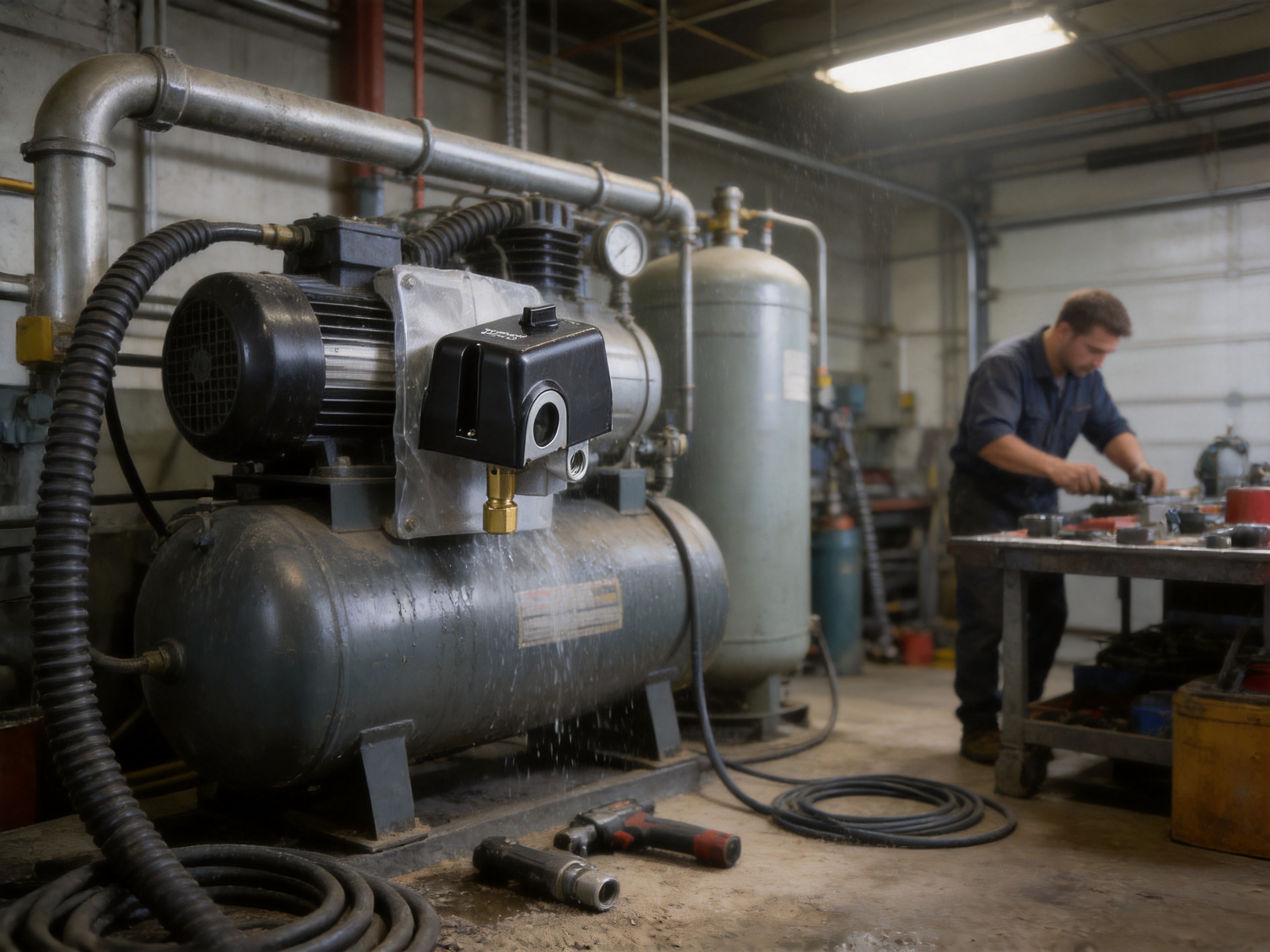
Reliable pressure control is essential to the safe, efficient, and consistent operation of an air compressor. A pressure switch serves as the control point between the compressor and the compressed-air system. It monitors pressure, starts the compressor when pressure falls below a selected cut-in value, and stops the compressor when the desired cut-out pressure is reached. When this component is correctly selected and installed, it helps maintain stable system pressure, reduce unnecessary motor cycling, and protect the compressor from operating outside its intended range.
The ERQ-4 Series 12A pressure switch is designed for air compressor applications that require dependable automatic pressure control, flexible pressure settings, and compatibility with several electrical systems. Its pressure range extends from 20 psi to 175 psi, while available configurations include pressure settings such as 20–50 psi, 30–60 psi, 40–70 psi, 50–80 psi, 95–125 psi, and 135–175 psi. The series is also available with different hydraulic connection arrangements and air-relief valve options, allowing it to be adapted to different compressor designs.
One of the most important characteristics of this series is its focus on protection against water exposure. Air compressor installations are often located in workshops, garages, agricultural facilities, production areas, and other environments where condensation, cleaning water, or humidity may be present. A pressure switch with a water-resistant construction can offer better service reliability than a basic switch that is intended only for clean, dry indoor conditions.
The ERQ-4 Series combines pressure monitoring, electrical switching, and optional pressure relief functions in a compact control device. It is suitable for original equipment manufacturers, pump and compressor assemblers, industrial maintenance teams, distributors, and users who need a configurable replacement pressure switch for compressed-air systems.
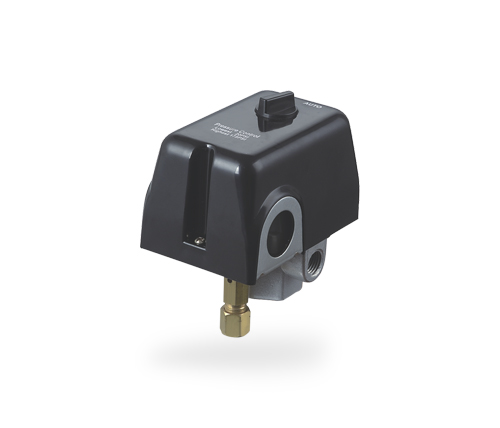
ERQ-4 Series 12A 110V to 240V Impermeable to Water Pressure Switch Used in Air Compressors
An air compressor produces compressed air and stores it in a receiver or pressure tank. The pressure switch is connected to the compressed-air circuit and senses the pressure inside the system. When pressure decreases to the selected cut-in point, the switch closes or changes its electrical state to start the compressor motor. As the compressor fills the tank, pressure rises. When the selected cut-out point is reached, the switch changes state again and stops the motor.
This automatic cycle allows the compressor to supply air without requiring an operator to start and stop the motor manually. It also helps prevent continuous operation after the storage tank has reached the required pressure. Correct cut-in and cut-out settings are important because they influence the usable air volume, motor operating frequency, energy consumption, and mechanical stress on the compressor.
For example, a configuration with a 30 psi cut-in pressure and a 60 psi cut-out pressure will start the compressor when the system falls to approximately 30 psi and stop it when the pressure rises to approximately 60 psi. A higher-pressure configuration, such as 135–175 psi, may be suitable for equipment designed for a higher operating range. The selected configuration must always match the compressor, receiver, air tools, pipework, and safety requirements of the complete system.
A pressure switch must perform several tasks at the same time. It must sense pressure accurately, switch the electrical load safely, withstand repeated operating cycles, maintain its adjustment, and remain suitable for the environmental conditions around the compressor. Mechanical strength, electrical performance, sealing, connection quality, and adjustment stability all influence the service life of the component.
The ERQ-4 Series is specified for a broad range of air compressor pressure-control applications. Its maximum pressure range extends to 175 psi, and its minimum listed cut-in point is 20 psi. The series has a rated current of 12A and is listed with a rated voltage of 380V. Product materials also describe compatibility with 110V–240V electrical systems, so the exact voltage and switching configuration should be confirmed before ordering and installation.
| Parameter | Specification | Application Significance |
|---|---|---|
| Product series | ERQ-4 Series | Pressure control for air compressors |
| Minimum cut-in pressure | 20 psi | Lowest listed pressure at which the compressor can be activated |
| Maximum cut-out pressure | 175 psi | Highest listed pressure setting for stopping the compressor |
| Available pressure settings | 20–50, 30–60, 40–70, 50–80, 95–125, and 135–175 psi | Provides choices for different compressor and receiver requirements |
| Rated current | 12A | Defines the listed electrical switching capacity |
| Rated voltage | 380V; product information also references 110V–240V compatibility | Electrical configuration must be verified for the intended installation |
| Frequency | 50/60Hz | Suitable for common industrial and commercial power frequencies |
| Maximum working temperature | 40°C | Installation environment should remain within the specified temperature range |
| Protection degree | IP20 as listed | Additional enclosure protection may be needed in exposed locations |
| Hydraulic connection | Female 1/4 inch; optional one-way or four-way arrangements | Supports different air-line and installation layouts |
| Air-relief valve | Available with a delayed-closing system | Helps release residual pressure during motor restarting |
| Warranty | One year | Provides a stated period of product support |
The voltage information deserves careful attention. The product title references 110V to 240V, while the technical parameter list states a rated voltage of 380V. This may reflect different product configurations, contact arrangements, or application variants within the series. Buyers should provide the motor voltage, phase arrangement, frequency, current, and wiring requirements when requesting a quotation. The supplier should then confirm the correct electrical version before shipment.
The protection information should also be interpreted correctly. The product is described as impermeable to water or suitable for wet environments, while the listed protection degree is IP20. IP20 generally indicates protection against solid objects above a certain size but does not indicate protection against water ingress. Therefore, the switch should not be installed where it will be directly sprayed or submerged unless the complete assembly is placed inside a suitable protective enclosure. The water-resistant construction can improve durability against incidental moisture, but it does not replace proper installation practice.
Moisture is a common source of premature failure in electrical control components. Condensation can form when a compressor moves between warm and cold environments. Cleaning activities can expose equipment to water droplets. Workshops may contain oil mist, dust, humidity, and temperature changes. Agricultural and outdoor installations can experience even more demanding conditions.
The ERQ-4 Series is designed with an impermeable-to-water or water-resistant construction intended to reduce the risk of water entering sensitive internal areas. This design emphasis is a useful advantage compared with ordinary pressure switches that are designed only for dry, clean, protected locations. Better resistance to incidental moisture can help reduce corrosion, contact contamination, insulation deterioration, and unwanted electrical interruptions.
Water resistance is especially valuable in applications where the compressor cannot easily be relocated to a clean equipment room. Examples include vehicle repair workshops, construction support areas, agricultural processing facilities, small manufacturing plants, and service garages. In these environments, a control component must be selected not only for its pressure range and electrical rating, but also for its ability to tolerate the surrounding installation conditions.
However, environmental protection is always a system-level responsibility. The pressure switch should be mounted in a position that minimizes direct exposure to water, oil, and impact. Cable entries should be properly sealed, pipe connections should be tightened without damaging the housing, and the switch should be protected from vibration that exceeds the equipment design. Where the installation is outdoors or subject to direct washing, an external enclosure with an appropriate ingress-protection rating should be considered.
Compared with a low-cost general-purpose switch, the ERQ-4 Series can provide a more appropriate solution where moisture resistance and configurable installation are important selection criteria. The practical advantage is not simply the presence of a sealing feature. It is the combination of environmental consideration, mechanical pressure control, electrical switching, and optional relief functionality in one product family.
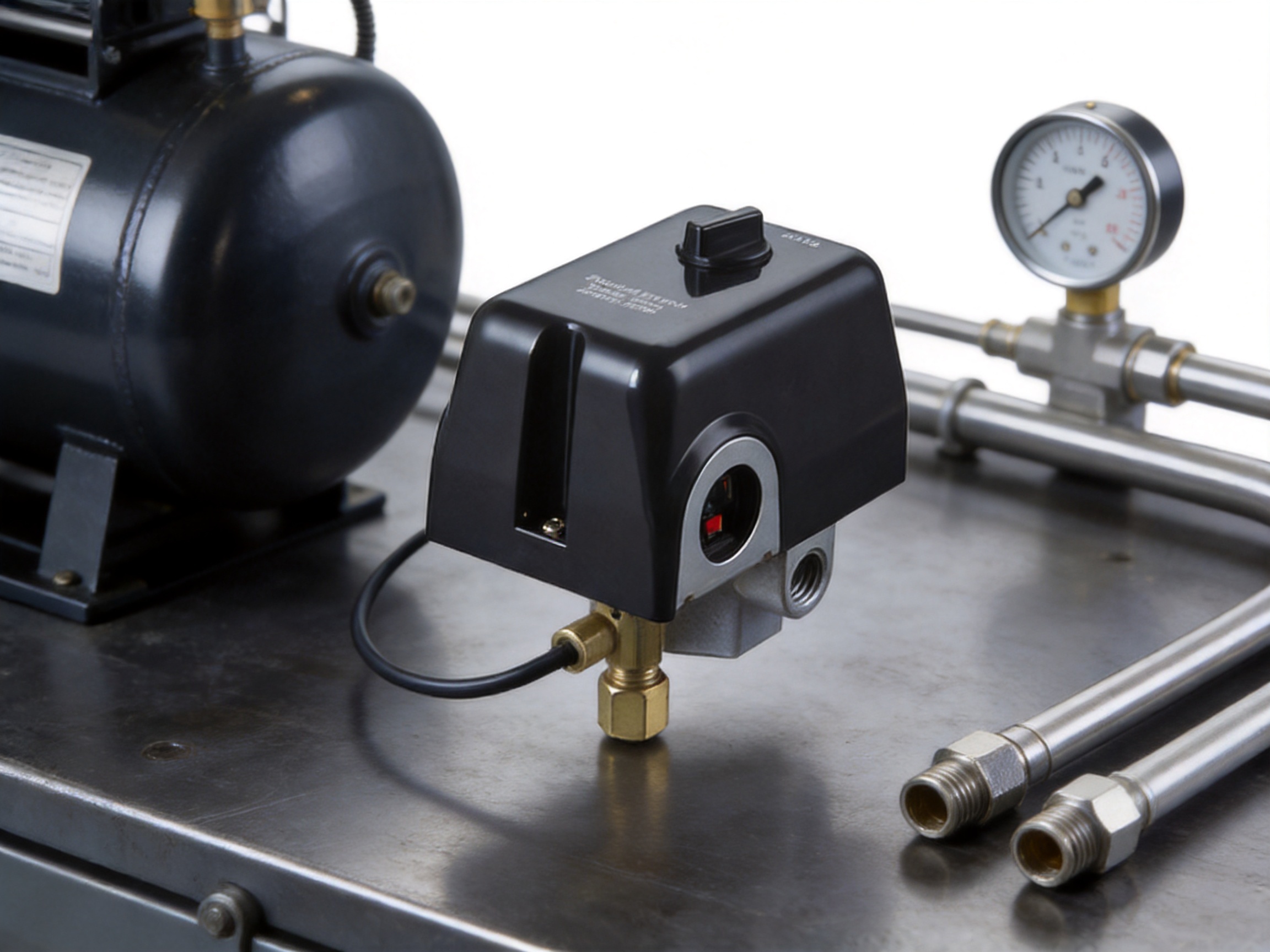
Different compressors operate at different pressure levels. A small workshop compressor may require a relatively low cut-in and cut-out range, while a specialized industrial unit may operate at a substantially higher pressure. A pressure switch that offers only one fixed setting can force the user to purchase a different model for every pressure requirement. The ERQ-4 Series addresses this issue through multiple standard pressure-setting combinations and customized settings.
The listed options include 20–50 psi, 30–60 psi, 40–70 psi, 50–80 psi, 95–125 psi, and 135–175 psi. These ranges provide a selection of pressure differentials for general-purpose air compressors. The pressure differential, sometimes called the pressure band, is the difference between the cut-in and cut-out values. This differential determines how much pressure can be consumed before the compressor restarts.
A smaller differential may maintain a more consistent pressure level but can cause more frequent compressor starts. A larger differential may reduce starting frequency and allow more stored air to be used, but the pressure at the point of use will vary more significantly. The correct balance depends on the receiver volume, compressor motor, air demand, operating cycle, and requirements of the connected tools or machinery.
Customized pressure settings can be valuable for original equipment manufacturers and distributors. A compressor manufacturer may need a pressure switch configured for a particular receiver size or motor. A regional distributor may require a standard setting commonly used in its local market. An industrial user may need a special configuration for a replacement program. The availability of customized settings can simplify procurement and reduce the need for field modification.
Pressure adjustments should be carried out only by qualified personnel using calibrated test equipment. Incorrect adjustment can cause the compressor to operate above its safe pressure, start too frequently, or fail to maintain the required supply. The pressure switch must never be treated as a replacement for a properly rated pressure-relief valve or other required safety device.
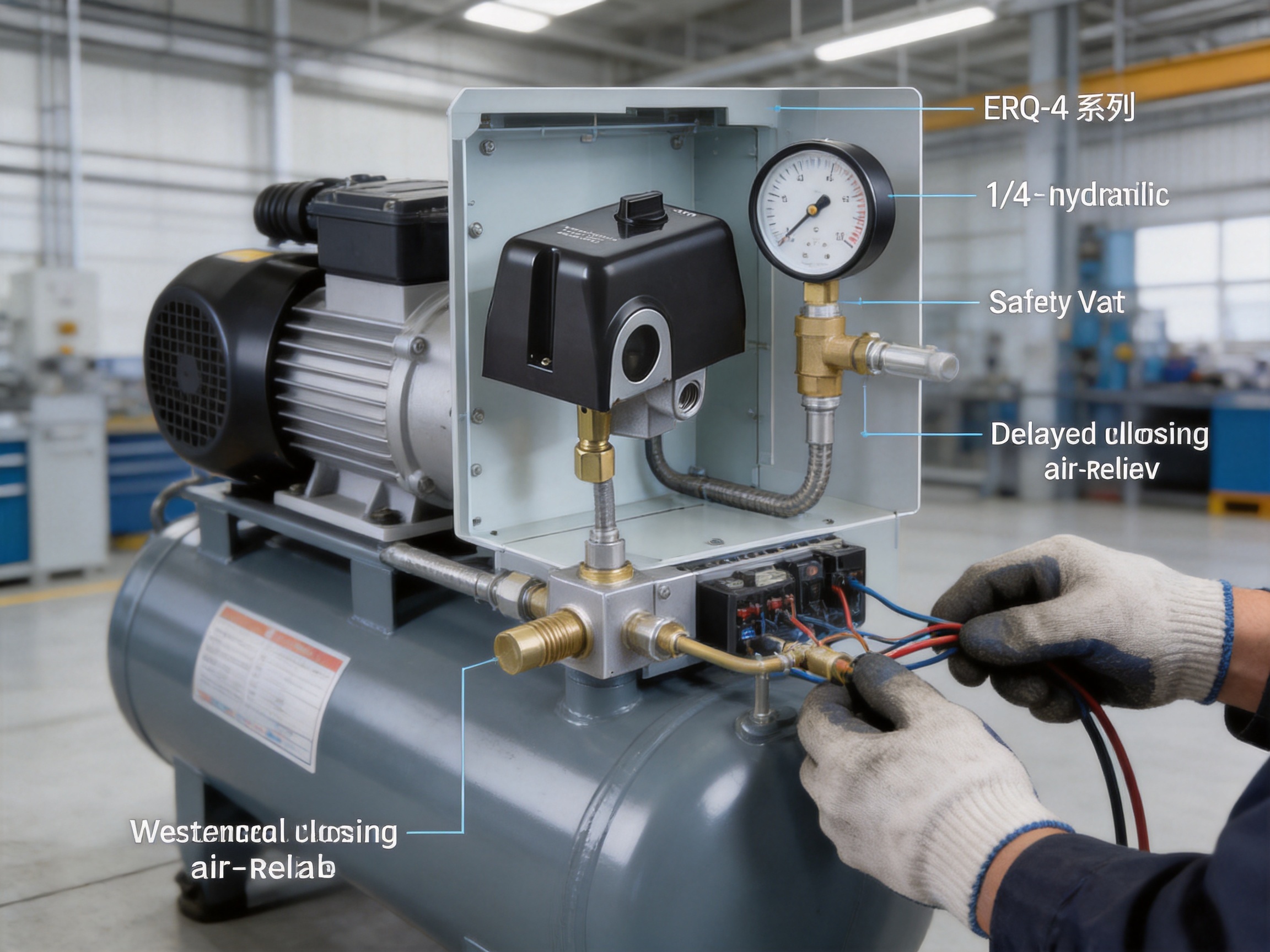
The ERQ-4 Series can be equipped with an air-relief valve using a delayed-closing system. This feature is important in many compressor installations because compressed air may remain trapped in the discharge pipe between the compressor head and the check valve or receiver inlet. If the motor attempts to restart while this trapped air remains under pressure, the motor may experience a heavy starting load.
By releasing residual pressure for a short period during the stopping and restarting sequence, the air-relief valve can help reduce starting resistance. This may support smoother motor starting, particularly in systems that use direct-on-line starting. It can also help reduce mechanical stress on the motor, crankshaft, connecting components, and compressor pump.
The delayed-closing principle allows the valve to remain open for the required part of the operating sequence and then close as the compressor begins producing air. The exact installation arrangement depends on the compressor design, check-valve location, pipe diameter, and control circuit. Options include a 6 mm pipe or a 1/4 inch diameter pipe, according to the product information.
Compared with a pressure switch that provides only electrical switching, a version with an air-relief function can offer additional value by addressing both control and restart behavior. This integrated approach may reduce the number of separate components required around the compressor and simplify assembly for equipment manufacturers.
The relief function must be connected correctly. A leaking or incorrectly routed relief tube can cause air loss, abnormal compressor behavior, or failure to unload the discharge line. Installation personnel should check the tubing size, routing, fitting tightness, and compatibility with the compressor’s check valve and discharge circuit.
The pressure switch is available with a female 1/4 inch hydraulic connection, and the product information also identifies one-way and four-way screw arrangements. Connection flexibility is useful because air compressor layouts vary considerably. Some compressors require a direct connection to a tank or manifold, while others need space for a pressure gauge, relief valve, discharge tube, or additional control component.
A four-way arrangement can provide several connection points in a compact assembly. Depending on the configuration, it may allow the pressure switch to be installed together with a pressure gauge, safety valve, air outlet, or pipe fitting. A one-way arrangement may be more appropriate for a simple, direct connection where the installation has limited accessories.
Connection compatibility should be checked before installation. Important factors include thread standard, thread size, sealing method, orientation, available clearance, and pressure rating. Thread sealant should be applied carefully so that it does not enter the pressure-sensing passage. Excessive tightening force may damage the fitting, housing, or internal pressure mechanism.
The connection should be inspected for leakage after installation. The compressor should be isolated, depressurized, and made safe before any adjustment or connection work. After assembly, the system should be pressurized gradually while the connection and surrounding parts are checked for air leakage.
The ERQ-4 Series is listed with a 12A current rating and 50/60Hz frequency compatibility. These specifications make it suitable for many common compressor-control applications, but the rating must be compared with the actual motor current and starting characteristics. Compressor motors can draw a substantially higher current during startup than during normal running. A pressure switch that is suitable for a particular running current may not be suitable for direct switching of a motor with a high inrush current.
Where the motor load exceeds the recommended direct-switching capacity, the pressure switch should operate a properly rated contactor or relay instead of switching the motor directly. This arrangement can reduce stress on the pressure-switch contacts and provide a more appropriate control circuit for larger motors. Electrical installation should be completed by a qualified electrician in accordance with local regulations and the motor manufacturer’s wiring diagram.
The product information references both 110V–240V compatibility and a 380V rated-voltage specification. This difference reinforces the need for configuration confirmation. The buyer should identify whether the compressor uses single-phase or three-phase power, the nominal supply voltage, the motor rated current, the control voltage, and the desired contact arrangement. These details should be matched with the product’s nameplate and technical documentation.
Electrical terminals should be tightened to the correct torque, and conductors should be protected against abrasion and accidental contact. The switch should be disconnected from the power supply before the cover is opened. Grounding, overcurrent protection, isolation, and emergency-stop provisions should be incorporated into the complete compressor installation according to applicable safety requirements.
Compared with a pressure switch selected only by pressure range, the ERQ-4 Series encourages a more complete selection process. Its value depends on choosing the correct electrical version, pressure configuration, connector arrangement, and installation environment as one coordinated package.
The ERQ-4 Series is supplied by Taizhou Edwin Electric Co., Ltd., an integrated manufacturing enterprise established in 2008. The company’s stated activities include independent research and development, mass production, and global export. This combination is important for a pressure-control component because reliable performance depends on more than final assembly. It requires control of design, component sourcing, production consistency, inspection, packaging, and after-sales communication.
Independent research and development can help a manufacturer respond to different market requirements. Pressure switches used in domestic compressors may have different connection and pressure needs from switches used in industrial equipment. Customers may request a particular housing style, pipe connection, relief-valve diameter, or factory pressure setting. An in-house development capability can make these adaptations more efficient than relying entirely on an unchanged standard product.
Mass production can provide advantages in repeatability and supply stability. When a product is manufactured in an organized production system, work instructions, assembly sequences, component checks, and testing procedures can be standardized. Repeatability is particularly important for pressure switches because small differences in spring force, diaphragm behavior, contact alignment, or adjustment can influence the operating pressure and service life.
The company’s broader product experience includes deep well pumps, submersible pumps, domestic booster pumps, circulation pumps, solar water pumps, intelligent booster pumps, and related water-system products. This background gives the manufacturer practical experience with pressure, flow, motors, electrical control, fluid connections, and equipment used in demanding environments. Although an air compressor pressure switch is a specialized component, the same engineering disciplines are relevant.
Manufacturing quality also depends on process control. A reliable production approach may include incoming inspection of raw materials, dimensional checks of molded or machined parts, verification of electrical components, controlled assembly, pressure testing, contact testing, visual inspection, and functional testing. The specific internal procedures and certifications should be confirmed with the supplier, but these are the types of process controls that support consistent pressure-switch production.
For international customers, manufacturing strength is also linked to documentation and order management. The company has established related import and export organizations to support procurement planning, order tracking, cross-border delivery, and foreign-trade services. This can be useful for distributors and original equipment manufacturers that need coordinated purchasing rather than a single sample order.
The ERQ-4 Series should be compared with competing pressure switches according to the complete application, not only the purchase price. A basic competitor may provide a single pressure setting and a standard connection at a low initial cost. However, the total value of a pressure switch is influenced by installation time, compatibility, environmental durability, replacement frequency, and the cost of compressor downtime.
The first advantage is configuration flexibility. Multiple pressure ranges and customized settings allow the product to serve different compressor designs. This can reduce the need to keep many unrelated models in inventory. A distributor may be able to cover several customer applications through one product family, while an equipment manufacturer can request a configuration aligned with a specific compressor package.
The second advantage is the water-resistant design emphasis. In workshops, agricultural facilities, and service environments, moisture can be a major cause of electrical problems. A design intended to resist water exposure may provide more dependable operation than an unprotected switch when both products are installed in the same general environment. The installation must still respect the stated IP20 protection degree and should include additional enclosure protection when direct water contact is possible.
The third advantage is the optional delayed-closing air-relief valve. This feature can help unload the compressor discharge line and improve starting behavior. A competing switch without this option may require an additional unloading component or a different control arrangement. Combining these functions can simplify the compressor assembly and potentially reduce installation complexity.
The fourth advantage is connection choice. One-way and four-way arrangements, together with hydraulic connection options, make it easier to integrate the switch into different pipe layouts. Flexible connection choices can be particularly valuable in replacement projects where the existing tank, manifold, pressure gauge, or outlet arrangement cannot easily be changed.
The fifth advantage is supplier support for customization. A manufacturer capable of adjusting pressure settings, housing requirements, hydraulic connections, and relief-valve details can support original equipment projects more effectively than a supplier that offers only fixed catalog products.
Finally, the product is supported by a company with experience in pumps, motors, water systems, export operations, and industrial procurement. This broader background may help customers discuss the pressure-control component as part of a complete fluid-equipment solution rather than as an isolated electrical accessory.
Automotive repair shops and general workshops commonly use compressed air for tire inflation, cleaning, impact tools, spray equipment, and pneumatic machinery. These environments may contain metal dust, oil vapor, humidity, and frequent cleaning activity. A configurable pressure switch with an optional relief valve can provide practical control for small and medium compressor systems.
Factories often use compressed air for tools, actuators, assembly equipment, and maintenance operations. The pressure requirement may vary between departments, and the compressor may operate for long periods. The selected switch should be matched to the motor circuit, receiver pressure, and duty cycle. Where larger motors are used, a contactor-controlled arrangement is generally appropriate.
Agricultural facilities can expose equipment to humidity, dust, temperature variation, and occasional water. The water-resistant design emphasis of the ERQ-4 Series may be useful in these conditions when combined with suitable enclosure and mounting practices. Pressure settings can be selected according to the air tools, cleaning equipment, or pneumatic devices connected to the compressor.
Compressor manufacturers can use the ERQ-4 Series as part of a standardized equipment package. Customized pressure settings, connection styles, and air-relief options can help match the switch to a particular tank, motor, and control panel. Consistent sourcing can also simplify assembly instructions, spare-parts management, and product documentation.
When an existing pressure switch fails or becomes difficult to source, the ERQ-4 Series may be considered as a replacement. Before ordering, the technician should record the original cut-in and cut-out pressure, electrical voltage, motor current, thread size, connection orientation, relief-tube size, and available mounting space. A replacement should never be selected by physical appearance alone.
Before installation, isolate the compressor from the electrical supply and fully release stored air pressure. Confirm that the receiver is depressurized and that the system cannot restart unexpectedly. Inspect the new switch, fittings, electrical terminals, relief valve, and sealing surfaces for damage or contamination.
Install the pressure switch in a location that allows access for wiring, adjustment, inspection, and maintenance. Avoid locations subject to excessive vibration, direct water spray, high heat, corrosive chemicals, or mechanical impact. The maximum listed working temperature is 40°C, so the switch should be kept away from hot compressor heads and other heat sources.
Use the correct thread and fitting arrangement. Apply an appropriate sealing method to the external thread without blocking the pressure passage. Tighten the connection securely but do not use excessive force. If a four-way configuration is selected, verify that every unused opening is properly sealed and that connected accessories are rated for the system pressure.
Connect the electrical circuit according to the approved wiring diagram. Verify supply voltage, phase, frequency, current, overload protection, and contactor requirements. Make sure conductors are secure and protected. The pressure switch should not be used as the only protective device in the compressor system.
If the air-relief valve is installed, connect the relief tube with the specified diameter and route it without sharp bends, crushing, or unnecessary length. Check that the tube communicates with the correct discharge-line location. After installation, test the compressor’s stop and restart cycle and confirm that the discharge line unloads as intended.
Pressurize the system gradually. Check for air leaks around the hydraulic connection, relief tube, and receiver fitting. Observe the cut-in and cut-out points using a calibrated pressure gauge. If the operating values differ significantly from the required settings, stop the compressor and investigate before placing the equipment into service.
Routine inspection can extend the service life of a pressure switch. Check the housing for cracks, deformation, or signs of water entry. Inspect the wiring for loose terminals, heat damage, and insulation wear. Examine the hydraulic connection for leakage and confirm that the pressure setting remains appropriate.
If the compressor does not start, first verify the power supply, overload protection, motor condition, and pressure level. The switch may not close if the actual pressure has not fallen below the cut-in point. Other possible causes include incorrect wiring, damaged contacts, a blocked pressure passage, or a failed motor circuit.
If the compressor does not stop, disconnect power safely and investigate immediately. Possible causes include incorrect pressure adjustment, welded contacts, a blocked sensing passage, wiring errors, or a pressure gauge that does not reflect actual tank pressure. The compressor should not be allowed to continue operating above its safe pressure limit.
If the motor struggles to restart, inspect the air-relief tube and check valve. A blocked, leaking, disconnected, or incorrectly routed relief tube can prevent the discharge line from unloading. The motor capacitor, voltage supply, and mechanical condition should also be checked by qualified personnel.
If moisture is found inside the housing, improve the mounting location and external protection. Confirm whether the switch has been exposed to direct spray, condensation, or immersion. Because the listed protection degree is IP20, a separate protective enclosure may be required for harsh environments.
Replacement is recommended when contacts are severely burned, the pressure mechanism no longer holds its setting, the housing is damaged, or the switch cannot be verified through safe testing. Users should not attempt unauthorized internal repairs that could compromise the pressure or electrical safety functions.
Buyers should begin by identifying the compressor’s required pressure range. The desired cut-in and cut-out pressures should be compared with the available ERQ-4 Series settings. The receiver’s rated pressure and the compressor manufacturer’s operating instructions must always take priority.
The next step is to confirm the electrical data. Provide the nominal supply voltage, phase, frequency, motor rated current, starting method, and whether the pressure switch will control the motor directly or operate a contactor. Do not assume that the voltage stated in a product title applies to every version of the series.
Connection details are equally important. Confirm whether the compressor requires a female 1/4 inch connection, one-way or four-way construction, a particular thread standard, or a specific relief-tube diameter. A drawing or photograph of the original installation can help the supplier recommend the correct configuration.
Environmental conditions should be described accurately. State whether the switch will be installed indoors, outdoors, in a humid room, near a washdown area, or inside a control cabinet. The water-resistant design may improve reliability against incidental moisture, but direct exposure may require a separate enclosure and upgraded system protection.
For volume orders, customers should discuss pressure setting consistency, packaging, labeling, spare parts, sample approval, inspection requirements, lead times, and warranty procedures. The stated warranty period is one year, but commercial customers should confirm the warranty scope and the evidence required for a claim.
A pressure switch is a relatively compact product, but its performance affects the operation of a much larger compressor system. Manufacturer experience is therefore important. A supplier that understands motors, pumps, pressure, pipework, electrical control, and export requirements is better positioned to discuss the practical interaction between the switch and the equipment.
Taizhou Edwin Electric Co., Ltd. has developed a product portfolio that includes water pumps and intelligent fluid-control products for domestic, agricultural, commercial, and industrial applications. Its stated investment in new energy and intelligent technology demonstrates an interest in developing products beyond traditional motor assemblies. This type of product-development background can support continued improvement in control components and integrated equipment solutions.
The company also serves international customers through associated procurement and export organizations. For overseas buyers, this can provide advantages in order coordination, production follow-up, documentation, delivery arrangements, and communication. These services are particularly useful when the customer is purchasing multiple product categories or building a private-label equipment program.
A capable manufacturer should be evaluated through samples, technical documents, response quality, factory communication, inspection arrangements, and consistency between approved samples and mass-produced goods. Customers may also request information about material specifications, testing procedures, quality controls, packaging, and available customization before committing to a large order.
The main purpose is to automatically start and stop an air compressor according to system pressure. It activates the compressor when pressure falls to the selected cut-in value and stops the compressor when pressure reaches the selected cut-out value.
The listed overall range is 20 psi to 175 psi. Standard settings include 20–50 psi, 30–60 psi, 40–70 psi, 50–80 psi, 95–125 psi, and 135–175 psi. Customized settings may also be available according to the customer’s requirements.
The product is designed with a water-resistant or impermeable-to-water construction intended to improve durability in environments where incidental moisture may occur. However, the listed protection degree is IP20, so the switch should not be directly sprayed or submerged. Additional enclosure protection is recommended for exposed installations.
The product title references 110V–240V compatibility, while the technical data lists 380V. This indicates that the exact electrical configuration must be confirmed before purchase. Buyers should provide the compressor voltage, phase, current, and wiring arrangement so the correct version can be supplied.
The listed current rating is 12A, but motor starting current can be considerably higher than running current. For larger motors or demanding starting conditions, the pressure switch should normally control a suitably rated contactor or relay rather than switch the motor directly.
The air-relief valve helps release residual pressure from the compressor discharge line during the stopping and restarting sequence. This can reduce the load on the motor during restart and support smoother compressor operation.
The listed hydraulic connection is a female 1/4 inch arrangement, with one-way and four-way screw configurations. Air-relief tubing options include 6 mm and 1/4 inch diameters. The correct option depends on the compressor layout and connected accessories.
Customized pressure settings are listed as an available option. The customer should provide the required cut-in and cut-out values, along with the compressor’s pressure rating and operating requirements, for confirmation by the supplier.
The listed maximum working temperature is 40°C. The switch should be installed away from hot compressor surfaces and other heat sources that could raise the local temperature above this limit.
The product information states a one-year warranty. Buyers should confirm the warranty terms, covered conditions, claim process, and documentation requirements before placing an order.
Selection should be based on cut-in and cut-out pressure, motor voltage, phase, current, frequency, connection size, relief-valve requirement, environmental conditions, mounting space, and whether a contactor will be used. A complete technical review is safer than selecting the switch based only on its appearance or pressure range.
The ERQ-4 Series 12A pressure switch is a flexible control component for air compressors that require automatic pressure management, selectable operating ranges, and adaptable connections. Its listed pressure settings cover applications from low-pressure workshop equipment to higher-pressure compressor systems. The available customized settings can support original equipment manufacturers, distributors, and replacement projects.
The series also offers practical features that distinguish it from a basic fixed-setting switch. Its water-resistant design emphasis is useful in environments where humidity and incidental moisture are concerns. Its optional delayed-closing air-relief valve can help reduce restart loading. Its one-way and four-way connection arrangements support different compressor layouts. Together, these features can simplify equipment design and improve application compatibility.
Correct electrical and environmental selection remains essential. The difference between the referenced 110V–240V compatibility and the listed 380V rating should be clarified before purchase. The stated IP20 protection degree should also be considered when planning installation in a wet or outdoor area. A suitable enclosure, correct wiring, qualified installation, and routine inspection are necessary for safe operation.
Supported by a manufacturer with experience in independent development, mass production, water pumps, intelligent equipment, and international export, the ERQ-4 Series can serve as part of a broader industrial procurement program. For customers seeking a pressure switch that combines configurable pressure control, connection flexibility, moisture-conscious construction, and optional air relief, this product family offers a practical solution for a wide range of compressor applications.
1. Product technical information for the ERQ-4 Series 12A pressure switch, including pressure ranges, electrical ratings, connection options, air-relief configurations, and operating temperature.
2. General principles of compressed-air system design, including receiver pressure control, compressor cycling, motor starting, and discharge-line unloading.
3. International enclosure-protection classification principles for interpreting IP ratings and selecting additional protection for electrical equipment.
4. Electrical installation and motor-control practices for pressure switches, contactors, overload protection, and compressor equipment.
5. Manufacturer information concerning research and development, mass production, pump products, intelligent water systems, export services, and customer support.
edwina@edwin-pump.com
+86-13586290903 (WhatsApp)
Xuri Gongliang Cutting Tool Entrepreneurship Park, Wenqiao Town, Wenling City, Taizhou City, Zhejiang Province, China

High Performance Smart Pump Factory


 English