edwina@edwin-pump.com

View All Products
en
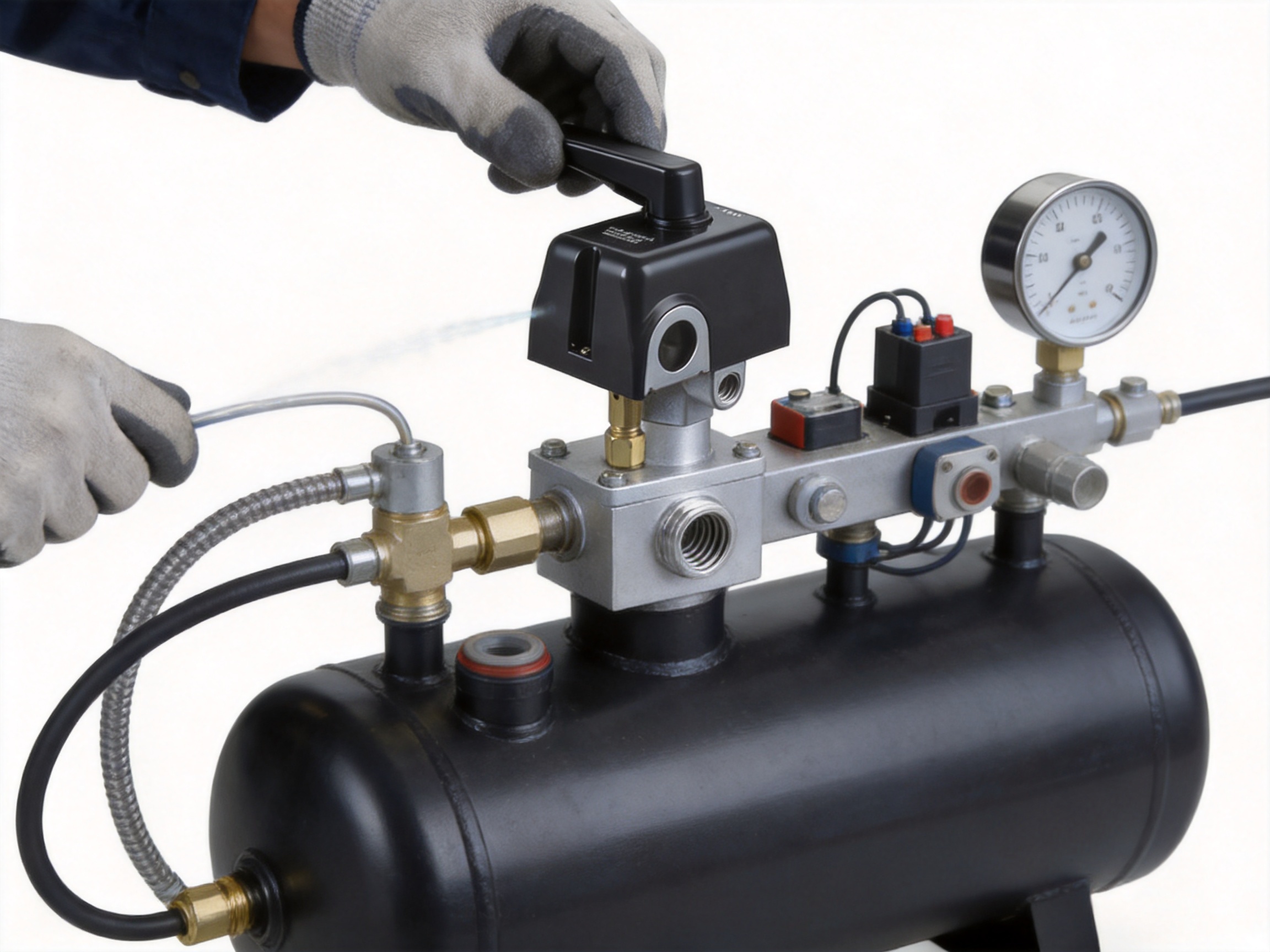
Air compressors depend on accurate, repeatable pressure control to operate safely and efficiently. A pressure switch is the component that connects the compressor’s air-pressure condition with its electrical control circuit. When system pressure falls below the selected cut-in point, the switch starts or permits the compressor to run. When pressure reaches the selected cut-out point, it interrupts the circuit and prevents unnecessary over-pressurization. The quality of this small component can therefore influence compressor performance, equipment protection, energy consumption, and maintenance requirements.
The ERQ-4 Series pressure switch is designed for air compressor applications that require dependable pressure monitoring, flexible pressure settings, and compatibility with commonly used electrical systems. Its principal features include a pressure range from 20 to 175 psi, a nominal current rating of 12A, 50/60Hz frequency compatibility, selectable hydraulic connections, an air-relief valve with delayed closing, and customized pressure settings. The product is also described as impermeable to water, providing additional protection in environments where moisture exposure may occur.
For industrial workshops, automotive repair facilities, manufacturing plants, agricultural service locations, and general compressed-air systems, the ERQ-4 Series offers a practical combination of control flexibility and installation convenience. Its design is intended to support stable compressor cycling while reducing the risk of pressure-related operating faults.
An air compressor converts electrical or mechanical energy into stored pneumatic energy. The compressed air is held in a receiver tank or distributed through a pipe network, where it supplies tools, actuators, cleaning equipment, automation equipment, and other pneumatic devices. Because the compressor is not normally expected to run continuously, the system needs a control device that can respond to changing pressure conditions.
The pressure switch performs this control function by sensing pressure through a mechanical connection. A diaphragm, piston, or similar sensing element responds to system pressure and moves an internal mechanism. At the selected cut-in pressure, the electrical contacts close or change state. At the selected cut-out pressure, the contacts open or return to their original position. The difference between these two settings is commonly called the pressure differential or operating range.
A poorly selected pressure switch can lead to several problems. If the cut-in pressure is too low, pneumatic tools may not receive sufficient air. If the cut-out pressure is too high, the compressor and receiver may experience unnecessary stress. If the switch cycles too frequently, the motor may suffer from excessive starting wear and the system may consume more energy. If the electrical rating is inadequate, the contacts may overheat, weld together, or fail prematurely.
The ERQ-4 Series addresses these requirements through adjustable pressure configurations, a 12A current rating, and a pressure range suitable for many small and medium air compressor installations. Its design also includes an air-relief function that helps reduce the pressure trapped at the compressor outlet during shutdown. This can make restarting easier, especially for systems using direct-on-line motor starting.
The ERQ-4 Series 12A pressure switch is a mechanical pressure controller intended primarily for air compressors. It is available for pressure settings beginning at approximately 20 psi and extending to a maximum cut-out pressure of approximately 175 psi, depending on the selected configuration.
The listed standard pressure combinations include 20–50 psi, 30–60 psi, 40–70 psi, 50–80 psi, 95–125 psi, and 135–175 psi. These options allow the switch to be matched to different receiver capacities, compressor outputs, tool requirements, and application pressures. Customized settings are also available according to customer requirements.
The product information identifies a 12A rated current, a nominal rated voltage of 380V, and a frequency of 50/60Hz. The product title also refers to 110V to 240V compatibility. Because electrical ratings can vary according to the internal contact arrangement, motor connection, and market configuration, users should confirm the exact voltage and current specification before installation. The correct rating must always be selected for the actual compressor motor and control circuit.
The standard product information identifies a maximum working temperature of 40°C and an IP20 protection degree. The switch is described as impermeable to water in its application-oriented product description, but IP20 is not the same as a fully waterproof outdoor enclosure rating. The pressure switch should therefore be installed in a suitable protected location and should not be exposed directly to rain, spray, flooding, or pressure washing unless the complete installation includes additional environmental protection.
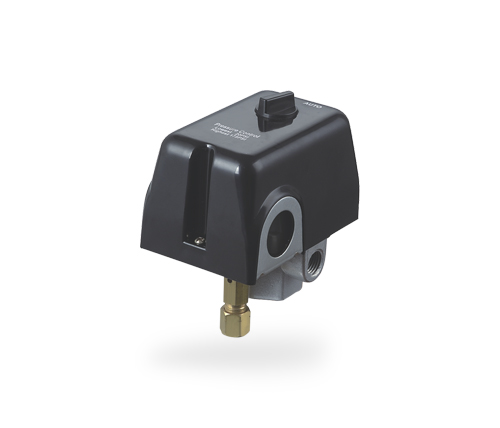
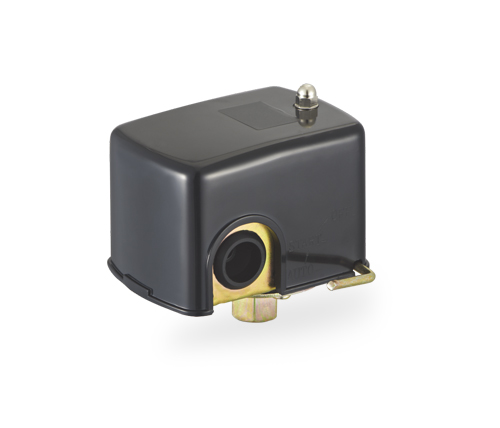
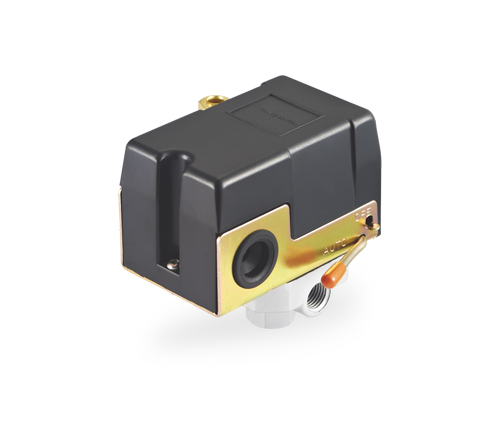
ERQ-4 Series 12A 110V to 240V Impermeable to Water Pressure Switch Used in Air Compressors
One of the main advantages of the ERQ-4 Series is the range of available pressure settings. Different compressor systems operate at different working pressures. A workshop compressor supplying air tools may need a different operating range from a light-duty compressor used for inflation, cleaning, or intermittent service.
The available settings from 20–50 psi through 135–175 psi provide a practical selection for low-pressure and higher-pressure applications. This avoids the need to use one fixed pressure switch across every installation. Selecting a suitable differential helps the compressor start and stop at appropriate points, maintaining useful air pressure while preventing excessive operating time.
Customized pressure settings add another advantage for equipment manufacturers and industrial users. OEMs, system integrators, and distributors may require a particular cut-in and cut-out combination for a private-label compressor, a specialized air receiver, or a regional market. The ability to request customized settings can simplify product standardization and reduce the need for aftermarket modification.
Mechanical pressure switches remain popular because they can perform their basic control function without a complex electronic control platform. A properly designed mechanical mechanism can respond directly to pressure changes and provide a clear switching action. This simplicity is especially useful in workshops and field-service environments where ease of replacement and straightforward troubleshooting are important.
The ERQ-4 Series is built around a mechanical pressure-control principle. This allows technicians to diagnose common problems by checking system pressure, electrical continuity, terminal connections, and the mechanical response of the switch. Compared with highly integrated electronic controllers, a mechanical switch may be easier to understand and replace in locations where advanced diagnostic equipment is not available.
Mechanical simplicity does not mean that the product is limited to basic applications. The switch can be integrated into compressor control panels, receiver-mounted systems, portable compressors, and general compressed-air equipment. Its standard connection options and selectable settings make it adaptable to a wide range of installations.
The air-relief valve is an important feature for compressor starting performance. When a compressor stops, pressure may remain in the discharge line between the compressor head and the check valve. If this pressure is not relieved, the motor may have to start against a loaded discharge line. That condition can increase starting torque, create electrical stress, and make the compressor more difficult to restart.
The ERQ-4 Series incorporates an air-relief valve with a delayed closing system. The valve can release trapped discharge pressure when the compressor stops and then close after the compressor has started or after the appropriate control action occurs. This arrangement helps reduce the load during restarting and may support smoother motor operation.
The air-relief valve can be configured with a 6 mm or 1/4-inch diameter pipe, depending on the application and installation design. The correct tubing should be selected to match the compressor’s discharge arrangement, the check valve location, and the available connection hardware.
Installation flexibility is another strength of the ERQ-4 Series. The hydraulic connection can be supplied in 1/4-inch male or female configurations, and the product information also refers to one-way and four-way screw arrangements. These alternatives allow the switch to be fitted to different receiver tanks, manifolds, mounting adapters, and compressor layouts.
A suitable connection can reduce the need for additional adapters and help simplify assembly. It can also improve serviceability because technicians can replace the pressure switch without redesigning the surrounding pipework. Before ordering, the installer should confirm thread type, thread direction, sealing method, available clearance, and the physical orientation required by the compressor.
Many compressor installations are located in workshops, garages, agricultural buildings, maintenance areas, and industrial environments where moisture, condensation, oil mist, and dirt may be present. The ERQ-4 Series is marketed with an impermeable-to-water design intended to improve durability in environments where water exposure is a concern.
This feature can provide an advantage over basic pressure switches that have limited protection against environmental moisture. Reduced water ingress can help protect internal mechanical and electrical elements from corrosion, contamination, and premature contact failure.
However, environmental protection must be evaluated as part of the complete installation. The stated IP20 rating indicates that the switch is not designed as a fully sealed outdoor device. It should be mounted away from direct water impact, installed with appropriate cable protection, and protected from condensation where necessary. The term impermeable to water should be interpreted in conjunction with the official technical rating and the actual installation conditions.
| Parameter | Specification | Application Significance |
|---|---|---|
| Product series | ERQ-4 Series | Mechanical pressure control for air compressors |
| Pressure range | Approximately 20–175 psi | Supports low-pressure and higher-pressure compressor configurations |
| Available pressure settings | 20–50, 30–60, 40–70, 50–80, 95–125, and 135–175 psi | Allows selection according to equipment requirements |
| Rated current | 12A | Suitable for specified compressor control circuits when correctly matched |
| Rated voltage | Listed as 380V; product title also references 110V–240V | Confirm the exact model and wiring configuration before installation |
| Frequency | 50/60Hz | Compatible with common utility frequencies |
| Maximum working temperature | 40°C | Install where ambient and operating temperatures remain within specification |
| Protection degree | IP20 | Requires protection from direct water and outdoor exposure |
| Hydraulic connection | 1/4-inch male or female options | Supports different pipe and manifold configurations |
| Screw arrangement | One-way or four-way options | Provides installation flexibility |
| Air-relief connection | 6 mm or 1/4-inch pipe option | Helps release trapped discharge pressure during shutdown |
| Warranty | 1 year | Provides a defined period of product support |
The table summarizes the available product information, but it should not replace the switch nameplate, wiring diagram, technical drawing, or order confirmation. In particular, the voltage information should be verified because the product title and technical data identify different voltage references. A pressure switch must be matched to the actual motor circuit, contact arrangement, and electrical safety requirements of the compressor.
During normal operation, compressed air enters the pressure-sensing portion of the switch through the hydraulic connection. As pressure rises or falls, the internal sensing element moves against a calibrated spring. The spring force represents the selected pressure setting. When system pressure reaches the cut-out point, the mechanism changes the electrical contact state and stops the compressor or sends a stop signal to the motor control system.
As air is consumed, receiver pressure gradually declines. When it reaches the cut-in point, the mechanism returns the contacts to the operating position and starts the compressor or permits the compressor motor to run. The difference between cut-in and cut-out pressure ensures that the compressor does not start and stop at every small pressure fluctuation.
The pressure differential must be selected with consideration for the compressor capacity, tank volume, air demand, motor starting frequency, and the operating requirements of connected equipment. A narrow differential may maintain a more consistent pressure but can cause frequent cycling. A wider differential may reduce starting frequency but can create a greater variation in available air pressure.
The ERQ-4 Series is therefore not simply an on-off electrical component. It is part of the compressor’s complete operating strategy. Correct selection and adjustment can contribute to equipment longevity, stable pneumatic performance, and more efficient use of electrical energy.
Industrial workshops often operate several pneumatic tools and machines from a central compressor. Air consumption may vary significantly throughout the day as tools are engaged and released. A reliable pressure switch helps maintain the receiver pressure within the selected operating range and protects the compressor from uncontrolled operation.
The ERQ-4 Series is suitable for applications where a mechanical switch is preferred because maintenance personnel are familiar with its operating principle. The available hydraulic connections can simplify integration into receiver tanks or compressor manifolds, while the air-relief valve can support easier motor restarting.
Automotive repair shops commonly use compressed air for impact wrenches, tire inflation, air cleaning, spray equipment, lifts, and other service operations. These locations may contain oil, dust, metal particles, condensation, and frequent changes in temperature. A pressure switch with practical environmental protection and robust mechanical control can be beneficial in this setting.
Because automotive service work often requires equipment to be available immediately, a switch that can be inspected and replaced without complicated programming is useful. The ERQ-4 Series allows technicians to select a pressure configuration that corresponds to the compressor and the expected pneumatic demand.
Compressors used in agricultural and rural areas may be installed in sheds, workshops, equipment rooms, or semi-enclosed buildings. Moisture and dust can be more difficult to control in these locations. The water-exposure protection described for the ERQ-4 Series can provide an additional level of resistance compared with unprotected control components.
Even in these applications, the switch should be mounted under a suitable cover and kept away from direct spray. A protected installation extends service life and ensures that the switch is used within its specified environmental limits.
Portable compressors and compact commercial units often require space-efficient controls with straightforward connections. The ERQ-4 Series can be used where the pressure switch is mounted directly on a receiver, manifold, or compact control assembly. Its range of pressure options allows the manufacturer or end user to choose a suitable operating profile without installing an oversized controller.
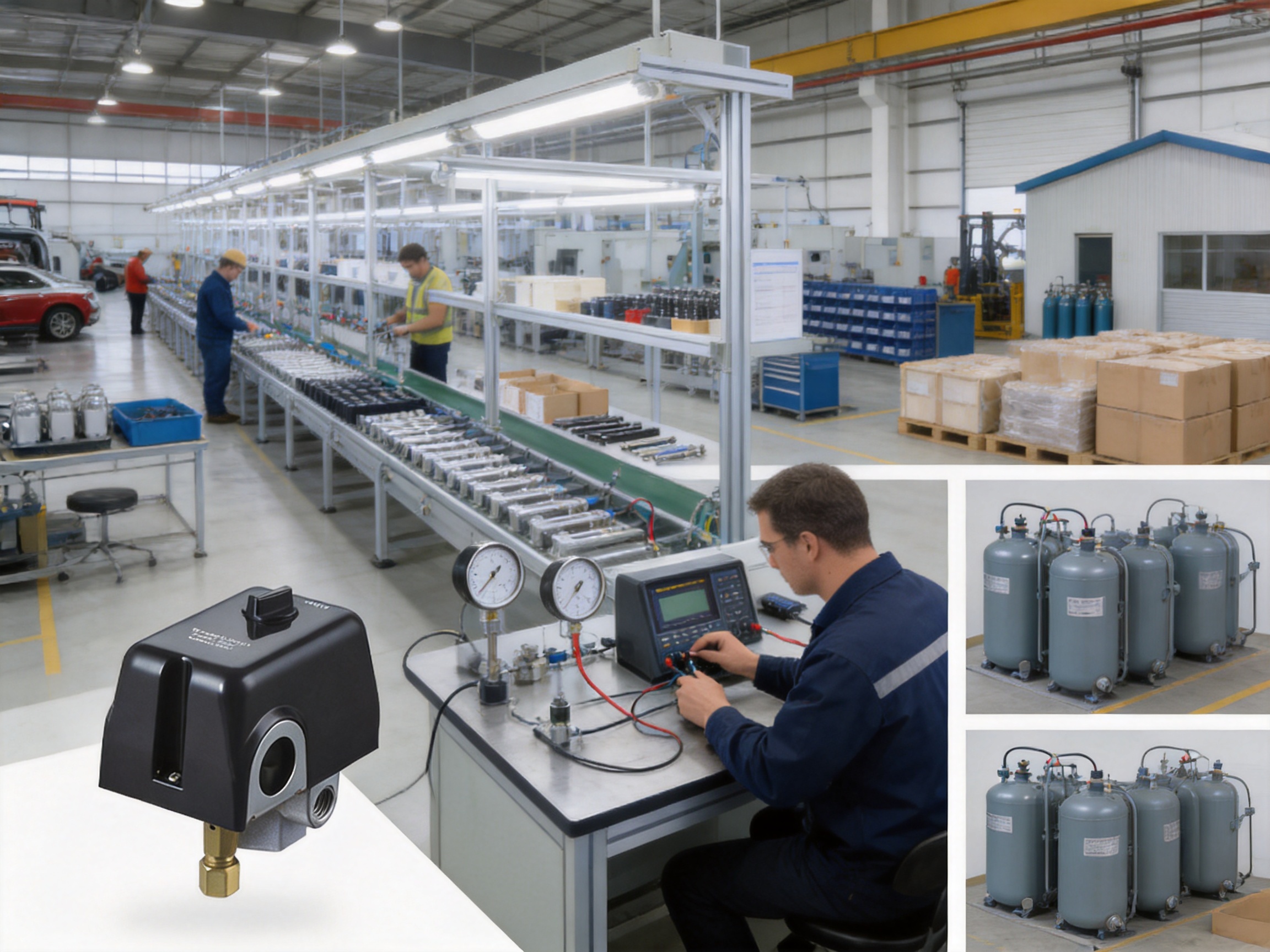
Taizhou Edwin Electric Co., Ltd., operating under the Edwin Pump business identity, was established in 2008 and has developed as an integrated manufacturing enterprise. Its stated capabilities include independent research and development, mass production, and global export. Although the company is widely associated with water pumps and water-treatment peripheral products, this manufacturing background is also relevant to pressure-control accessories and related mechanical and electrical components.
An integrated manufacturing model can provide advantages throughout the product life cycle. Product development, component selection, assembly planning, quality inspection, packaging, and order coordination can be managed through a connected organization rather than through unrelated suppliers. This can improve communication when customers require customized pressure settings, different hydraulic connections, or specific enclosure configurations.
The company’s experience in pumps, booster systems, circulation equipment, and other fluid-handling products gives it practical knowledge of pressure, flow, motor control, sealing, and installation requirements. A pressure switch used with an air compressor operates in a different medium from a water pump, but many engineering principles remain relevant: accurate pressure response, reliable connections, protection against environmental conditions, and compatibility with motor-driven equipment.
The company also reports investment in new energy and intelligent technology since 2018, including solar water pumps and intelligent booster pumps. This indicates an ongoing focus on product development and system-level control. For customers purchasing pressure switches alongside pumps, booster systems, and other fluid-control products, a supplier with broader equipment knowledge can support more coordinated procurement.
Mass production capability is particularly valuable for distributors, compressor manufacturers, and OEM customers. Consistent product availability, repeatable assembly, and standardized inspection procedures help support long-term purchasing programs. For customized orders, a production organization with experience in international export and order tracking can also simplify communication between technical, commercial, and logistics teams.
Independent research and development supports the refinement of product structures, connection options, pressure settings, and application compatibility. For a pressure switch, development work may include improving the sensing mechanism, optimizing contact movement, refining the air-relief function, and selecting materials suitable for the intended operating environment.
Research and development also helps manufacturers respond to regional requirements. Compressor designs vary between markets, and customers may need different voltage arrangements, thread standards, pressure units, terminal layouts, or housing configurations. A flexible development capability makes it easier to adapt the product while retaining a stable basic platform.
Pressure switches must operate consistently because small variations can affect compressor cycling. Production quality is influenced by the accuracy of spring selection, diaphragm or sensing-element assembly, contact alignment, sealing, terminal fastening, and final pressure calibration.
A manufacturing process designed for repeatability can reduce variation between batches. Standardized work instructions, controlled assembly procedures, inspection checkpoints, and functional testing are important elements of a reliable production system. Customers should request the applicable inspection records, pressure test criteria, and electrical test details when purchasing for critical or high-volume applications.
The company has established related import and export organizations to support procurement planning, order tracking, cross-border delivery, and foreign-trade services. This is valuable for international customers that need more than a single product shipment. A professional export process can help coordinate technical confirmation, packaging, documentation, production schedules, and delivery arrangements.
Global customers may also benefit from communication support during product selection. Confirming the pressure range, electrical rating, connection type, air-relief tube diameter, quantity, packaging, and destination requirements before production can reduce the risk of ordering an unsuitable configuration.
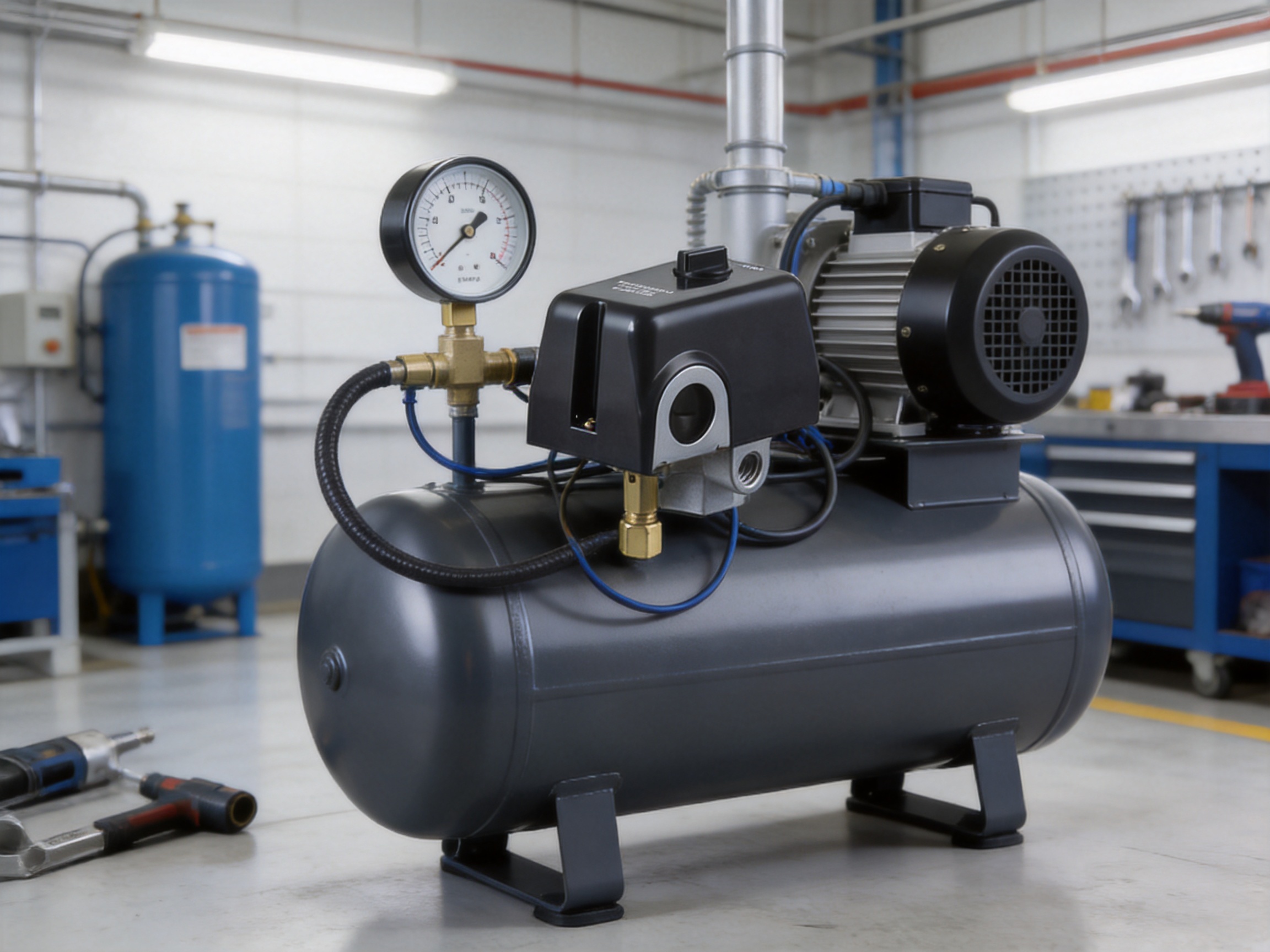
The ERQ-4 Series has several practical advantages when compared with a basic fixed-setting pressure switch. First, its available pressure combinations cover a broad operating range. A fixed switch may force the user to accept a pressure profile that does not match the compressor. The ERQ-4 Series provides more choice and also supports customized settings.
Second, the product offers multiple hydraulic connection options. A basic alternative may be available in only one thread configuration, requiring extra adapters or modifications. Male and female 1/4-inch options can make installation more convenient and help reduce unnecessary connection points.
Third, the integrated air-relief valve with delayed closing can improve compressor starting behavior. A simple pressure switch without this feature may require a separate unloading arrangement or may allow the motor to restart against residual discharge pressure.
Fourth, the product is designed with moisture exposure in mind. While its IP20 rating means that it must still be protected from direct water, the stated impermeable-to-water design provides a useful consideration for workshops and other challenging environments.
Fifth, the product is supported by a manufacturer with experience in pumps, pressure systems, mass production, research and development, and international supply. This broader manufacturing background can be an advantage for customers seeking a stable source rather than an anonymous replacement component.
These advantages do not mean that the ERQ-4 Series is suitable for every compressor. Users must still verify electrical load, motor starting current, pressure requirements, ambient conditions, connection dimensions, and applicable safety standards. The correct product is determined by the complete system, not by the pressure range alone.
Installation should be performed by a qualified technician who understands compressed-air systems and electrical safety. Before beginning work, disconnect the compressor from the power supply, release stored air pressure, and confirm that the receiver and discharge lines are depressurized.
Check the pressure switch model against the compressor’s required cut-in and cut-out pressures. Confirm whether the system requires a 1/4-inch male or female connection, and verify whether a one-way or four-way configuration is appropriate. The switch must be installed with a suitable sealing method that does not obstruct the pressure passage.
Electrical wiring must follow the applicable wiring diagram. The nominal current rating of 12A should not be treated as permission to connect any motor without checking motor running current, starting current, phase arrangement, voltage, and contact duty. If the motor load exceeds the pressure switch’s direct-switching capability, an appropriately rated contactor or motor starter should be used.
Make sure that conductors are correctly sized, terminals are secure, and cable entries are protected from pulling, vibration, and abrasion. The switch should be mounted where it can be inspected and serviced, while remaining protected from direct water, excessive dust, high heat, and mechanical impact.
If the air-relief valve is used, connect the appropriate 6 mm or 1/4-inch tube according to the compressor design. The tube should be routed without sharp bends or crushing. Any leakage in the unloading circuit can affect compressor starting and system efficiency.
After installation, restore power and observe at least several complete operating cycles. Confirm that the compressor starts at the intended cut-in pressure and stops at the intended cut-out pressure. Check for air leaks, abnormal electrical noise, excessive contact arcing, unstable cycling, or failure of the air-relief function.
Before ordering the ERQ-4 Series, buyers should prepare a complete technical specification. The first requirement is the desired pressure range. State whether the application needs a standard setting such as 30–60 psi or 135–175 psi, or whether a customized setting is required.
The second requirement is electrical compatibility. Confirm the supply voltage, number of phases, frequency, motor current, control voltage, contact arrangement, and whether the switch will control the motor directly or operate a contactor. Because the supplied product information references both 110V–240V and 380V, the exact model configuration should be confirmed in writing before purchase.
The third requirement is the hydraulic connection. Identify whether the compressor uses a 1/4-inch male or female connection, and confirm the thread standard used in the destination market. Also specify the desired one-way or four-way configuration and the air-relief tube size.
The fourth requirement is the environmental condition. Explain whether the switch will be installed indoors, in a workshop, in an agricultural building, in a mobile compressor, or in a location exposed to condensation. The stated maximum working temperature is 40°C, and the IP20 rating requires protection against direct water and outdoor exposure.
The fifth requirement is volume and delivery planning. OEM customers should provide expected annual demand, batch quantities, packaging preferences, labeling requirements, and any inspection or documentation needs. Early technical confirmation can reduce production delays and prevent configuration errors.
Routine maintenance begins with visual inspection. Look for loose wiring, damaged insulation, corrosion, oil contamination, cracked fittings, air leakage, or evidence of overheating. The pressure switch should remain firmly mounted, and the surrounding pipework should not place excessive mechanical stress on the housing.
If the compressor fails to start, first verify the power supply, fuse, motor protection, and pressure level. The switch may not close if the actual pressure has not fallen below the cut-in point. If the motor hums or struggles to start, inspect the air-relief tube and check whether residual discharge pressure is being released.
If the compressor does not stop, disconnect power immediately and investigate the pressure switch, contact condition, wiring, and pressure-sensing connection. Never allow a compressor to continue operating uncontrolled. The receiver’s independent safety relief device must remain installed and functional regardless of the pressure switch.
Frequent cycling may result from a pressure differential that is too narrow, a receiver that is too small, an air leak, or excessive downstream demand. Check the complete pneumatic system rather than replacing the switch without diagnosis.
Inaccurate switching may be caused by an unsuitable pressure configuration, a blocked pressure passage, mechanical wear, vibration, or operation outside the specified temperature range. A calibrated pressure gauge should be used to compare actual system pressure with the switch operating points.
When a replacement is required, use the same pressure range, connection type, electrical rating, and air-relief arrangement whenever possible. Replacing a switch with a visually similar but electrically or mechanically different model can create a serious safety risk.
A pressure switch is a control component and should not be considered the only safety device in an air compressor system. The compressor should have an appropriately rated safety relief valve, suitable motor protection, correctly sized electrical conductors, and a receiver designed for the operating pressure.
Do not exceed the rated pressure of the receiver, piping, fittings, or connected equipment. The maximum cut-out setting of the pressure switch must remain below the safe working pressure of the weakest component in the system.
Do not bypass the pressure switch to keep the compressor running. Such action can cause uncontrolled pressure rise, motor overload, equipment damage, and serious injury. If the switch fails, isolate the compressor and replace or repair the component using qualified personnel.
Because the listed enclosure protection is IP20, the switch should not be treated as suitable for direct outdoor exposure or immersion. Use a properly rated control enclosure when the installation requires higher environmental protection.
The ERQ-4 Series is primarily used to control air compressors by switching the compressor on at a selected cut-in pressure and off at a selected cut-out pressure. It can be used in workshops, industrial facilities, automotive service locations, agricultural buildings, and other compressed-air applications.
The listed operating range extends from approximately 20 psi to 175 psi. Standard combinations include 20–50 psi, 30–60 psi, 40–70 psi, 50–80 psi, 95–125 psi, and 135–175 psi. Customized settings can also be requested.
The product is available in several pressure-setting configurations, and customized settings are supported. Adjustment should only be performed according to the manufacturer’s instructions and with a calibrated pressure gauge. The selected range must remain within the compressor and receiver’s safe operating limits.
The technical information lists a 12A rated current, a nominal rated voltage of 380V, and 50/60Hz frequency. The product title references 110V–240V compatibility. Since the voltage information indicates that different configurations may exist, buyers must confirm the exact model, terminal arrangement, and voltage before installation.
The switch should not be installed in an unprotected outdoor location. Although it is described as impermeable to water for applications involving moisture exposure, the stated protection degree is IP20. It should therefore be shielded from direct rain, spray, flooding, and strong condensation.
The listed options include 1/4-inch male and female hydraulic connections. One-way and four-way screw arrangements are also identified. The correct configuration depends on the compressor manifold, receiver connection, available space, and local thread requirements.
The air-relief valve releases trapped pressure in the compressor discharge line after shutdown. Its delayed-closing function can help the motor restart with less resistance by reducing the pressure against the compressor head.
The listed options are a 6 mm tube or a 1/4-inch diameter tube. The selected size should match the compressor’s existing unloading circuit and connection hardware.
No. Direct switching is only appropriate when the motor voltage, current, starting conditions, phase arrangement, and pressure-switch contact rating are compatible. For larger motors or demanding starting conditions, the switch should operate a correctly rated contactor or motor starter instead.
The listed maximum working temperature is 40°C. The switch should be installed away from hot compressor heads, exhaust air, direct sunlight, and other heat sources that could raise the local temperature beyond the specified limit.
The product information states a one-year warranty. Warranty conditions should be confirmed with the supplier and may depend on correct installation, operation within specifications, and compliance with the applicable sales agreement.
Pressure switches can differ in voltage, contact arrangement, pressure setting, connection type, relief-valve configuration, and enclosure design. Confirming these details helps prevent incorrect installation and ensures that the supplied product matches the compressor system.
The ERQ-4 Series pressure switch is a versatile mechanical controller developed for air compressor pressure management. Its broad selection of pressure ranges, 12A current rating, 50/60Hz compatibility, multiple connection options, customized settings, and delayed-closing air-relief valve make it suitable for a wide variety of compressor installations.
Its stated water-exposure protection provides an additional benefit for workshops and industrial environments, while the IP20 rating emphasizes the importance of protected installation. Buyers should carefully verify the exact electrical configuration because the available product information references both 110V–240V and 380V specifications.
The manufacturing background of Taizhou Edwin Electric Co., Ltd. adds value for customers seeking an experienced supplier with independent research and development, mass-production capability, pump and fluid-control expertise, and international export support. These strengths can benefit OEMs, distributors, compressor manufacturers, and industrial users that require repeatable supply and configuration flexibility.
When correctly selected, installed, and maintained, the ERQ-4 Series can help stabilize compressor operation, reduce difficult restarting, support reliable pressure control, and improve the practical serviceability of compressed-air equipment. The best results are achieved when the pressure switch is evaluated as part of the complete compressor system, including the motor, receiver, safety valve, piping, electrical protection, and environmental conditions.
1. Manufacturer-provided ERQ-4 Series product specifications and application information.
2. Manufacturer-provided technical data concerning pressure settings, current rating, voltage, frequency, connection options, air-relief valve configurations, working temperature, and protection degree.
3. General engineering principles for mechanical pressure switches used in compressed-air systems.
4. General guidelines for air compressor receiver protection, motor control, unloading systems, and pneumatic maintenance.
5. General principles of electrical equipment selection, contact rating verification, grounding, motor protection, and safe installation.
edwina@edwin-pump.com
+86-13586290903 (WhatsApp)
Xuri Gongliang Cutting Tool Entrepreneurship Park, Wenqiao Town, Wenling City, Taizhou City, Zhejiang Province, China

High Performance Smart Pump Factory


 English