
edwina@edwin-pump.com

View All Products
en
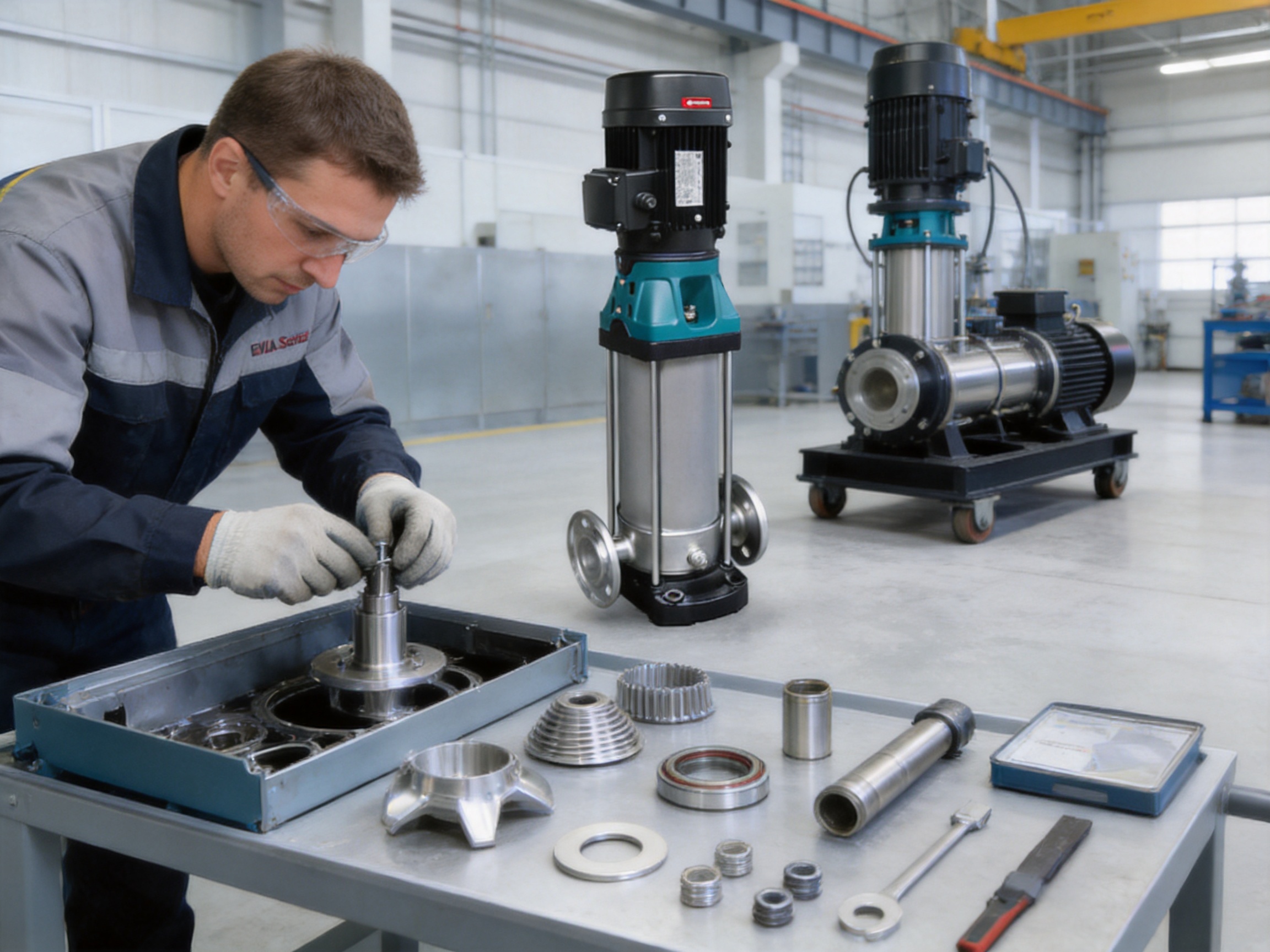
Reliable water movement is essential in modern buildings, industrial facilities, irrigation systems, cleaning operations, and firefighting installations. When a pumping system must deliver stable pressure over extended operating periods, a vertical multistage centrifugal pump can provide an effective combination of hydraulic performance, compact installation, and dependable service. The EVLA Series Stable Chassis Plain Washer Dustproof Multistage Pump is designed for these requirements, combining a vertical multistage structure with a stable chassis, dustproof protection, carefully arranged components, and durable materials.
This pump is developed for applications where consistent pressure, efficient fluid transfer, and long-term mechanical stability are important. Its multistage configuration uses multiple impellers arranged in series to increase pressure progressively. Unlike a simple single-stage pump that may require a larger casing or a higher rotational speed to achieve comparable pressure, a multistage design can distribute the pressure-building process across several stages. This makes the EVLA Series suitable for pressure boosting, high-rise water supply, industrial cleaning, high-pressure washing, firefighting systems, and agricultural irrigation.
The product is manufactured by Taizhou Edwin Electric Co., Ltd., a Chinese pump manufacturer with experience in research and development, mass production, export services, and customized procurement support. Since its establishment in 2008, the company has developed product lines covering deep well pumps, submersible pumps, domestic booster pumps, circulation pumps, solar water pumps, intelligent booster pumps, and other water system products. This broad product background supports the development of a versatile multistage pump intended for both commercial and industrial users.
The EVLA Series is a non-self-priming vertical multistage centrifugal pump. Its vertical arrangement allows the pump to achieve high pressure within a relatively compact footprint, which is valuable in equipment rooms, plant areas, commercial buildings, and utility spaces where floor area is limited. The inlet and outlet are positioned at the bottom of the pump and located on the same plane in an inline configuration. This arrangement can simplify pipe routing and help integrate the pump into existing water systems.
The pump is equipped with a standard motor and a maintenance-free cartridge-type mechanical seal. The cartridge structure helps simplify seal installation and replacement compared with loose seal components that require more complicated positioning during maintenance. The design also supports consistent sealing performance when the pump is correctly installed and operated within its specified conditions.
The EVLA Series is described as having a dustproof design, stable chassis, plain washer arrangement, multistage hydraulic construction, and high-quality materials. These features work together rather than functioning as isolated improvements. Dust protection helps reduce the risk of contamination. A stable chassis supports smoother operation. Plain washers help distribute mechanical loads. The multistage hydraulic design creates pressure efficiently, while corrosion-resistant and stainless-steel components contribute to service durability.
Because the product is a non-self-priming pump, the suction line and pump body must be correctly filled and configured before operation. Users should follow appropriate installation procedures, confirm that the available liquid level is suitable, and prevent dry running. Correct system design is essential for achieving the expected performance and protecting the mechanical seal, impellers, motor, and other internal components.
A multistage pump contains several impellers and diffusers arranged in sequence. Liquid enters the pump and passes through the first impeller, where rotational energy is converted into fluid velocity and pressure. The diffuser then guides the liquid and converts part of the velocity into additional pressure before directing the flow to the next stage. This process is repeated through the remaining impellers.
Because pressure is built in stages, the pump can achieve a higher discharge pressure than many conventional single-stage pumps of similar general dimensions. The arrangement also allows the hydraulic elements to remain aligned along a vertical shaft. This helps create a compact package for applications that require pressure boosting but have limited installation space.
The multistage configuration is especially useful in high-rise buildings. As water must overcome static elevation as well as pipe friction and fixture demand, a properly selected high-pressure pump is needed to maintain useful pressure at upper floors. The EVLA Series can also be used in industrial water systems, cleaning systems, high-pressure washing systems, firefighting systems, and agricultural irrigation networks where increased pressure is necessary.
The exact operating point depends on the selected model, number of stages, motor rating, pipe arrangement, liquid characteristics, and system resistance. For this reason, users should select the pump according to required flow rate and head rather than relying only on the pump name. A professional selection process should consider peak demand, normal demand, static head, friction losses, minimum inlet pressure, operating temperature, and the possibility of future system expansion.
Compared with a large single-stage pressure pump, a vertical multistage pump may offer a more space-efficient solution. Compared with several pumps connected in series, an integrated multistage unit can reduce installation complexity, alignment requirements, and the number of external connections. These are practical advantages for contractors, system integrators, and maintenance teams.
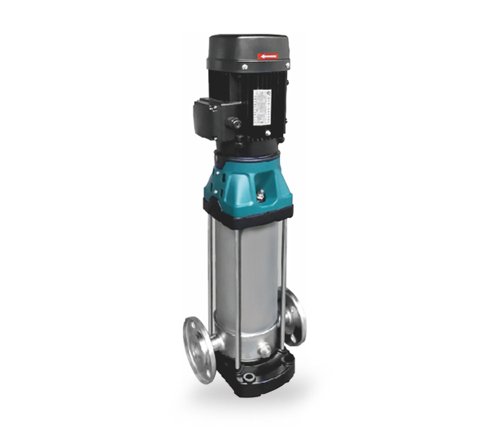
EVLA Series Stable Chassis Plain Washer Dustproof Multistage Pump
The dustproof design is intended to reduce the entry of dust and other particles into vulnerable pump areas. Dust can interfere with motor ventilation, contaminate mechanical components, accelerate wear, and reduce the reliability of electrical connections. The value of dust protection is particularly clear in workshops, agricultural environments, construction areas, warehouses, equipment rooms, and industrial sites where airborne particles may be present.
A dustproof structure does not mean that the pump can be exposed to unlimited dust, water, chemicals, or outdoor weather without protection. Installation should still provide suitable ventilation, drainage, access control, and environmental shielding. However, the design provides an additional layer of protection compared with a basic pump that does not pay specific attention to contamination control.
The stable chassis provides a rigid foundation for the pump and motor assembly. A firm base helps limit movement during operation and supports correct alignment between the motor, coupling, pump shaft, and hydraulic section. When a pump is mounted on an unstable or poorly leveled base, vibration can increase and may affect bearings, seals, couplings, fasteners, and connected pipework.
Stable mounting is particularly important for systems that operate continuously or at high pressure. The chassis also helps make installation more predictable because the pump can be positioned and secured on a defined support structure. Installers should place the unit on a level foundation and use suitable anchors and connection methods according to the installation environment.
Plain washers are simple components, but they perform an important mechanical function. They distribute the load applied by nuts and bolts over a wider surface area. This can help protect mounting surfaces, reduce localized stress, and support more even fastening of pump components or structural connections.
In a pump exposed to vibration and pressure fluctuations, consistent fastening is important. Plain washers can contribute to a secure connection when used with the correct bolts, nuts, tightening torque, and assembly procedures. They should be regarded as part of a complete mechanical fastening design rather than as a substitute for proper alignment or foundation work.
The materials table identifies several important wet-end components as stainless steel or AISI 304 stainless steel. The last-stage diffuser and impeller are listed as stainless steel, while the long sleeve and pump barrel are listed as AISI 304. Stainless steel can offer good resistance to corrosion in many water applications and can support a clean, durable fluid path.
The mechanical seal is listed as carbon and ceramic. This material pairing is widely used in water pump sealing applications because it can provide suitable sliding properties and wear resistance when the liquid, temperature, pressure, and operating speed remain within the design range. The elastic ring is identified as rubber. Other components, such as the support, are listed as cast iron, offering a robust structural material for the pump assembly.
Material suitability always depends on the actual pumped liquid. Standard water applications are different from seawater, chemical solutions, abrasive liquids, fluids containing suspended solids, or liquids with unusual pH values. Before ordering, users should confirm material compatibility with the manufacturer, especially for aggressive or contaminated liquids.
One of the primary advantages of a vertical multistage pump is its ability to generate increased pressure without requiring an excessively large horizontal installation area. A conventional horizontal pump may need a larger base, longer pipe runs, or additional series-connected equipment to achieve a similar duty point. The EVLA Series uses a vertical structure to concentrate the hydraulic stages and motor assembly into a compact package.
This can be beneficial in commercial buildings, plant rooms, water treatment areas, and agricultural installations where usable floor space is valuable. A smaller footprint may also reduce the amount of civil work needed for installation. Nevertheless, sufficient clearance must be maintained around the motor, mechanical seal, coupling, electrical connection, and service areas.
In a single-stage arrangement, the entire pressure increase is generated by one impeller. A multistage pump divides the pressure increase among several impellers. This can produce a more suitable hydraulic arrangement for high-head applications and allows the pump to be selected for pressure boosting without using an unnecessarily large single impeller.
Efficient performance is influenced by more than the pump itself. Correct pipe sizing, clean water passages, appropriate valve selection, proper motor voltage, adequate inlet conditions, and accurate duty-point selection all affect energy consumption. The EVLA Series provides a suitable platform for efficient pressure movement, but system engineering remains essential.
The inlet and outlet are located at the pump bottom on the same plane. This inline arrangement may simplify the connection of the pump into a straight pipeline. It can reduce the need for complex pipe offsets and help make the installation more orderly. In replacement projects, an inline pump can sometimes be integrated into existing pipe layouts with fewer modifications than a pump with opposing side connections.
Pipe supports should be installed independently where necessary so that the weight of the pipework does not load the pump casing. The pump should not be used as a structural support for improperly supported pipes. Flexible connectors may be considered where appropriate to reduce the transmission of vibration, but they should not be used to correct major alignment or foundation problems.
The cartridge-type mechanical seal is designed to simplify the sealing arrangement. A cartridge seal is supplied as a preassembled unit, which can help reduce installation errors during service. It may also shorten maintenance time because technicians do not need to individually position every seal component on the shaft.
Although the seal is described as maintenance-free during normal operation, it remains a wear component. Its service life depends on liquid cleanliness, temperature, pressure, shaft alignment, dry-running protection, operating frequency, and system conditions. If leakage occurs, the pump should be inspected promptly rather than operated indefinitely with a damaged seal.
The combination of a dustproof design, stable chassis, durable materials, and a vertical multistage structure gives the EVLA Series a practical advantage in demanding environments. It is intended for applications where the pump must operate reliably over time and where unstable mounting, contamination, or pressure requirements could challenge a less specialized design.
The pump should still be installed in accordance with the environmental conditions. Outdoor installations may require a protective enclosure, freeze protection, suitable drainage, and electrical protection. Dustproof construction should not be confused with complete explosion-proof certification or unrestricted outdoor use. Project engineers should verify all required certifications before applying the pump in hazardous locations.
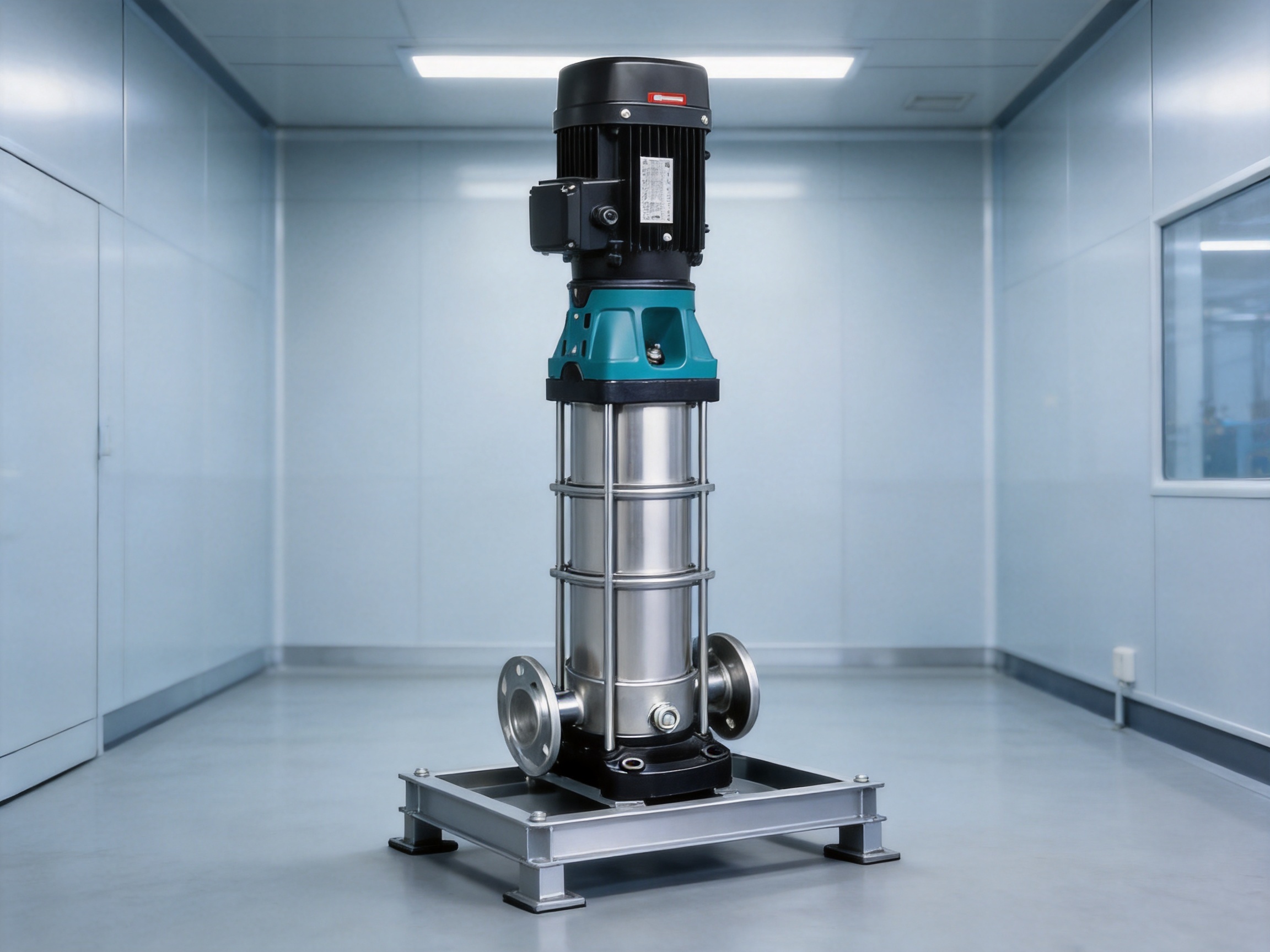
The EVLA Series can be used to increase water pressure in main pipelines, commercial facilities, residential complexes, and high-rise buildings. Pressure boosting is necessary when the municipal supply is insufficient, when upper floors experience low pressure, or when a building has varying demand throughout the day.
A pressure-boosting system may include storage tanks, pressure sensors, control panels, non-return valves, isolation valves, pressure vessels, and multiple pumps. The EVLA Series can serve as a central pressure-producing component within such a system. System designers should establish the required pressure range and ensure that the pump does not operate continuously against a closed discharge valve.
Industrial facilities often require pressurized water for production processes, equipment cooling, cleaning, washing, and utility services. The compact vertical form can be useful where equipment must be arranged within a restricted plant room. Stainless-steel hydraulic components can also be advantageous in standard clean-water applications where corrosion resistance and a clean internal flow path are valued.
Industrial users should evaluate liquid quality, temperature, solids content, chemical compatibility, and operating schedule. If the liquid contains abrasive particles or aggressive chemicals, a different material configuration or pump type may be required. Technical confirmation before purchase helps prevent premature wear and protects the entire production system.
Cleaning systems require stable pressure and dependable flow. The EVLA Series can support high-pressure washing applications in commercial, industrial, agricultural, and service environments. Its multistage configuration is suitable when the system needs increased pressure for spray nozzles, washing lances, cleaning manifolds, or process equipment.
Cleaning applications can expose pumps to detergents, chemicals, elevated temperatures, and intermittent operation. Users should verify the compatibility of the seal and wetted materials with the cleaning medium. A suitable inlet filter can help prevent particles from entering the pump, while correct shutdown procedures can reduce water hammer and pressure shock.
Firefighting systems require reliable pressure and rapid availability. A multistage pump may be used in suitable pressure-boosting or water supply arrangements, subject to local regulations and project approval. The pump, motor, control equipment, valves, and backup arrangements must be selected as a complete system.
Fire protection installations may require specific certifications, redundancy, testing routines, emergency power supplies, and code-compliant controls. The EVLA Series should only be used in a firefighting project after the responsible engineer confirms that the selected model and configuration meet applicable standards. General pump suitability should not be treated as automatic fire system certification.
The product can support field irrigation, sprinkler irrigation, and drip-feed irrigation systems. Irrigation networks often require pressure to overcome elevation changes, pipe friction, filters, valves, and distribution equipment. A multistage pump can provide the head needed for sprinklers or long-distance pipelines while maintaining a compact mechanical arrangement.
Before installation, the irrigation designer should assess the water source, suction conditions, filtration requirements, seasonal demand, pipe length, elevation, and pressure requirements at the farthest outlet. For solar-powered installations, the pump must be matched with the solar system, inverter, controller, storage strategy, and expected sunlight conditions. The EVLA Series is a standard motor-driven pump and should not be assumed to include a solar controller unless specifically configured and supplied as a complete solar pumping package.
The manufacturer operates as an integrated enterprise covering independent research and development, mass production, and global export. This combination is important because pump quality depends on the relationship between product design, component sourcing, production control, inspection, packaging, and after-sales support. A company that only assembles standard products may have less control over product adaptation than a manufacturer with its own development and production capabilities.
Taizhou Edwin Electric Co., Ltd. has developed a broad portfolio of water pumps, including deep well pumps, submersible pumps, domestic booster pumps, circulation pumps, solar pumps, and intelligent booster pumps. Experience across these categories can contribute to a better understanding of different hydraulic conditions, motor requirements, control systems, and installation environments.
The company’s manufacturing and export background also supports large-volume procurement. Mass production can improve process repeatability when supported by standardized work instructions, incoming material inspection, in-process checks, assembly controls, and final testing. For distributors and engineering contractors, repeatability is especially important because they need consistent performance across multiple orders and project sites.
Research and development is another important strength. The pump industry increasingly requires solutions that combine hydraulic efficiency, compact dimensions, energy awareness, intelligent control, corrosion resistance, and easy maintenance. Investment in new energy and intelligent technology since 2018 has expanded the company’s product portfolio and demonstrates an effort to respond to changing market needs.
The manufacturer has also established professional teams for procurement planning, order tracking, cross-border delivery, and foreign trade services through affiliated companies. These capabilities can be valuable for international buyers that need support beyond the pump itself. Clear communication about model selection, documentation, production schedules, packaging, shipping, and spare parts can reduce procurement risk.
Advanced manufacturing should be understood as a complete process rather than a single machine or production step. For the EVLA Series, quality depends on accurate machining and alignment of the shaft and hydraulic components, correct assembly of the multistage stack, reliable fastening, proper mechanical seal installation, motor inspection, and final performance verification. Each step contributes to stable operation.
The listed materials provide a basis for evaluating the pump’s construction. Stainless-steel impellers and diffusers can support corrosion resistance and hydraulic durability. The AISI 304 pump barrel and long sleeve provide a stainless-steel flow-path structure for many clean-water applications. Cast iron support components provide a strong structural foundation, while carbon and ceramic mechanical seal faces provide a common sealing combination for water service.
Material control should include verification of the correct grade, dimensional accuracy, surface quality, and compatibility with the intended liquid. Components with similar visual appearance may have different chemical and mechanical properties, so reliable manufacturers should maintain appropriate purchasing and inspection procedures.
Multistage pumps require careful assembly because several hydraulic stages share a common shaft and casing arrangement. Impellers, diffusers, sleeves, rings, and seals must be correctly positioned. Excessive clearance can reduce hydraulic performance, while insufficient clearance may increase friction or create interference.
Correct shaft alignment is also important. The motor, coupling, pump shaft, and support structure must work together without excessive radial or axial loading. A stable chassis helps support this alignment, but assembly accuracy and installation quality remain equally important.
A professional pump manufacturing process should include inspection and testing before shipment. Typical quality activities may include visual inspection, dimensional checks, electrical checks, rotation verification, leakage inspection, vibration observation, and hydraulic performance testing according to the applicable product and project requirements.
Export readiness includes suitable packaging, moisture protection, product identification, documentation, and coordination with logistics providers. Pumps shipped internationally may encounter long storage periods, temperature changes, vibration, and handling impacts. Proper packaging and clear documentation help preserve the equipment’s condition until installation.
The supplied motor information identifies a liquid temperature range of approximately -20°C to +70°C, a maximum ambient temperature of +40°C, and an applicable altitude of up to 1,000 meters. Standard voltage options include single-phase 220–240 V at 50 Hz and three-phase 380 V at 50 Hz. These values provide general selection guidance, but the exact model rating should always be confirmed before ordering.
| Item | General Information | Selection Consideration |
|---|---|---|
| Pump type | Vertical multistage centrifugal pump | Suitable for pressure boosting and high-head water movement |
| Priming type | Non-self-priming | The pump and suction line must be correctly filled before operation |
| Connection arrangement | Inline inlet and outlet at the bottom | Can simplify integration into straight pipe systems |
| Mechanical seal | Cartridge type, carbon/ceramic materials | Requires clean operation and protection from dry running |
| Liquid temperature | Approximately -20°C to +70°C | Confirm the exact model and seal compatibility for the liquid |
| Maximum ambient temperature | Approximately +40°C | Provide adequate ventilation and avoid excessive heat exposure |
| Standard voltage | Single-phase 220–240 V/50 Hz or three-phase 380 V/50 Hz | Verify local power supply and motor configuration |
| Altitude reference | Up to approximately 1,000 meters | Higher-altitude installations may require engineering confirmation |
| Principal wet-end materials | Stainless steel and AISI 304 components | Confirm compatibility with the pumped liquid |
The published information does not provide a complete model-by-model performance curve, flow range, head range, motor power, efficiency value, sound level, or dimensional drawing. These details are necessary for final engineering selection. Buyers should request the technical curve and installation drawing for the specific EVLA model under consideration.
It is also important to confirm the actual electrical frequency required in the destination market. The listed standard voltage information is based on 50 Hz operation. If the local power supply is different, the motor and electrical control system must be evaluated before purchase.
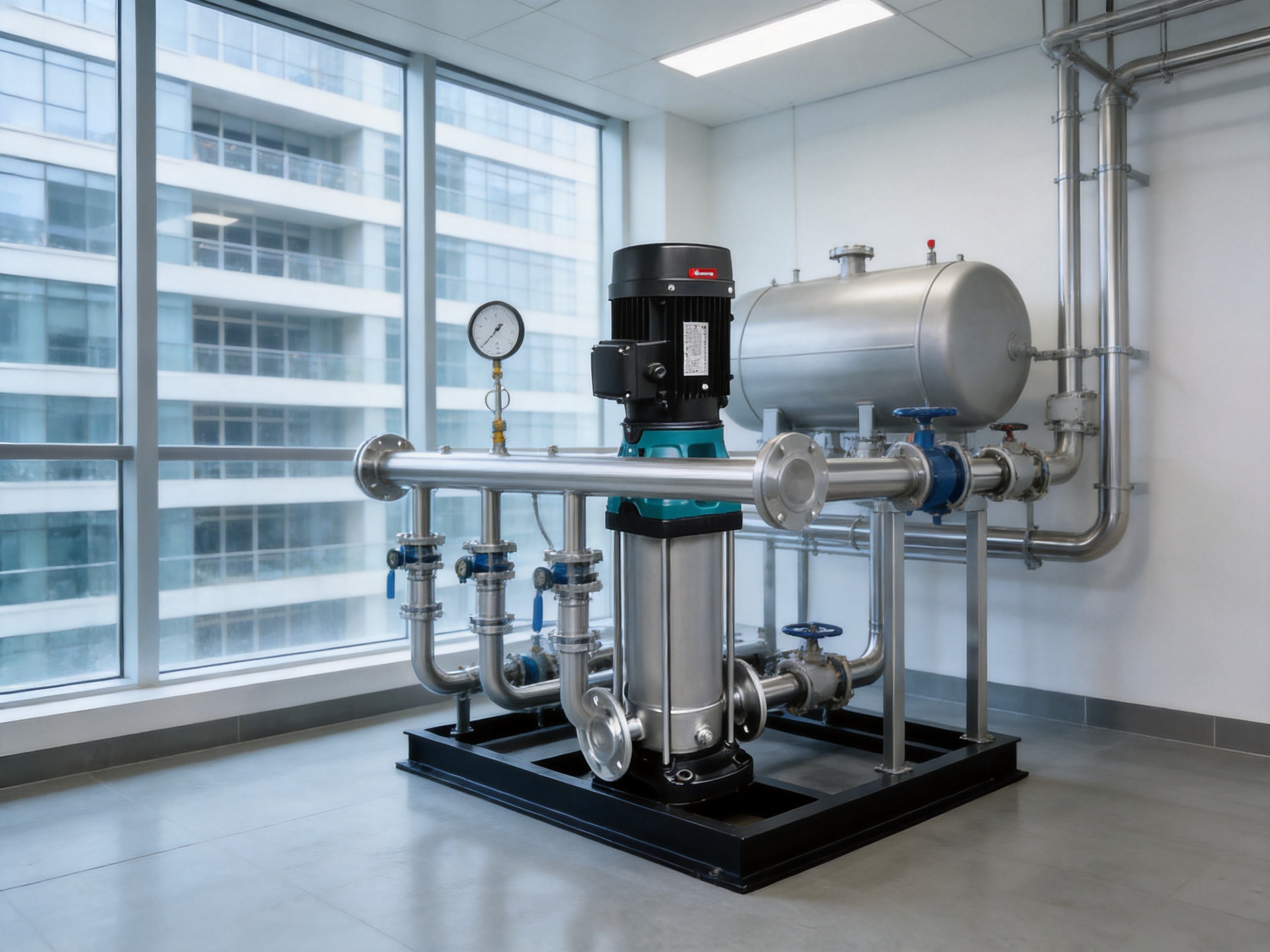
Installation should begin with a review of the complete hydraulic system. Confirm the water source, pipe diameter, static head, required pressure, expected flow rate, available electrical power, ambient conditions, and maintenance access. The pump should be selected based on the real duty point and not simply on the nominal pipe size or motor appearance.
The foundation should be level, rigid, and capable of supporting the pump, motor, and connected accessories. The stable chassis should be fixed securely. If the base is uneven, installers should correct the foundation rather than forcing the pump into position with excessive tightening.
Inlet and outlet pipes should be properly supported. The pump casing should not carry the weight of long pipe sections, valves, filters, or fittings. Poorly supported pipework can impose stress on the pump connections and may cause leakage, distortion, or vibration.
The suction line should be as short and direct as practical. Avoid unnecessary elbows, sudden reductions, high points where air can collect, and restrictions that reduce inlet pressure. A suitable strainer or filter may be used when the water contains particles, but the filter must be sized correctly and cleaned regularly to prevent excessive pressure loss.
Install isolation valves where required to permit maintenance. A non-return valve may be needed to prevent reverse flow, particularly in pressure-boosting and vertical pipeline systems. Pressure gauges can assist with commissioning and troubleshooting. Where pressure fluctuations are likely, a pressure vessel or suitable control strategy may improve system stability.
Electrical installation should be completed by qualified personnel. Confirm the voltage, frequency, phase, protective device, cable size, grounding, and motor rotation. The motor should be protected against overload, phase loss, abnormal voltage, and other conditions relevant to the installation. The control cabinet should be located where it is protected from water, excessive dust, and unauthorized access.
Before starting the pump, fill and vent the pump as required for a non-self-priming design. Verify that all valves are in suitable positions and that the motor can rotate in the correct direction. Never operate the pump dry. A short dry-running event can damage the mechanical seal and may lead to leakage or further internal damage.
Routine inspection helps maintain reliable operation. Operators should observe discharge pressure, flow behavior, motor sound, vibration, temperature, seal condition, and electrical current. A change in any of these indicators may signal a blocked filter, closed valve, air entry, worn bearing, damaged seal, hydraulic obstruction, incorrect rotation, or an operating point outside the recommended range.
The pump should not be operated continuously against a closed discharge valve. Such operation can rapidly heat the liquid in the pump and may damage internal components. Likewise, frequent starts and stops can place additional stress on the motor, coupling, seal, and electrical system. Where demand varies considerably, suitable control equipment may help reduce unnecessary cycling.
Dust should be removed from external surfaces and motor ventilation areas according to the site environment. Cleaning should be performed without directing water into electrical enclosures or motor openings. In dusty environments, more frequent inspection may be needed even though the pump includes a dustproof design.
Filters and strainers should be inspected and cleaned at appropriate intervals. A blocked filter can reduce inlet pressure and cause cavitation. Cavitation may produce crackling noise, vibration, unstable pressure, and damage to impellers or diffusers. Maintaining clean water passages is one of the most effective ways to protect a multistage pump.
Mechanical seal leakage should be treated as a maintenance signal. Small amounts of moisture during an initial bedding-in period may occur in some sealing arrangements, but continuous or increasing leakage requires inspection. Technicians should isolate the pump, release pressure, disconnect electrical power, and follow safe maintenance procedures before examining the seal.
If the pump does not start, check the power supply, circuit protection, motor connections, control signals, overload protection, and possible mechanical blockage. If the pump runs but produces insufficient pressure, check the rotation direction, liquid level, valve positions, suction restrictions, air in the system, impeller condition, and whether the selected model is suitable for the actual duty point.
If vibration is excessive, inspect the foundation, chassis fasteners, pipe supports, coupling alignment, bearings, shaft, and hydraulic components. Vibration can also result from cavitation or operation far from the best efficiency point. Correcting the root cause is more effective than simply tightening bolts or adding external supports.
International purchasers often need more than a reliable pump body. They need product selection support, stable production, clear communication, shipping coordination, documentation, and dependable follow-up. The manufacturer’s experience in global export and procurement services is therefore an important part of the product value.
The company’s related import and export organizations provide support for procurement planning, order tracking, cross-border delivery, and foreign trade services. This can benefit distributors, project contractors, wholesalers, and original equipment manufacturers that purchase pumps for several markets or applications.
A broad product portfolio also makes one-stop sourcing possible. A customer requiring deep well pumps for water extraction, submersible pumps for drainage, domestic booster pumps for buildings, circulation pumps for HVAC systems, and vertical multistage pumps for industrial pressure boosting may be able to coordinate these requirements through one supplier.
For larger projects, buyers can request model comparison, material confirmation, motor configuration, packaging requirements, spare parts recommendations, and technical documentation before issuing a purchase order. This process reduces misunderstandings and makes it easier to align the pump with local electrical and installation requirements.
Before purchasing the EVLA Series, confirm the required flow rate and total head. The head should include static elevation, pipe friction, valves, filters, fittings, and the pressure required at the point of use. If the system has multiple operating zones, calculate both minimum and maximum demand.
Confirm the liquid type and quality. Standard clean water is generally the reference application, but special liquids may require different seals or materials. Provide information about temperature, pH, suspended solids, salinity, chemical additives, and viscosity.
Confirm the electrical supply. Specify single-phase or three-phase power, voltage, frequency, starting method, control requirements, and local protection standards. If the pump will be installed at high altitude, in a hot room, or in a dusty outdoor environment, provide these details during selection.
Request the complete technical data for the exact model. Important documents may include the pump curve, motor data, dimensions, installation instructions, wiring diagram, material confirmation, spare parts list, and recommended operating limits.
Discuss packaging and delivery requirements for international transportation. Confirm whether the pump will be shipped as a single unit, integrated into a skid, packed with accessories, or supplied as part of a complete booster system. Clear packing instructions can reduce damage during handling.
Finally, confirm warranty terms, inspection procedures, spare parts availability, and technical support arrangements. A reliable supplier should be able to explain the recommended maintenance process and identify the components most likely to require replacement over the equipment’s service life.
The EVLA Series is a vertical multistage centrifugal pump. It uses several impellers arranged in series to build pressure progressively and is intended for applications such as water supply, pressure boosting, industrial cleaning, high-pressure washing, firefighting water systems, and irrigation.
No. The supplied information identifies the pump as non-self-priming. The pump and suction line must be correctly filled and prepared before starting. Dry running should be avoided because it can damage the mechanical seal and other internal components.
The vertical multistage structure can generate high pressure in a compact arrangement. It is useful where the installation requires substantial head but has limited floor space. The arrangement can also provide an orderly inline connection for suitable pipeline systems.
The inlet and outlet are located at the bottom of the pump and are positioned on the same plane in an inline configuration. This can simplify connection to a straight pipeline, although the actual installation must still provide independent pipe support and adequate service clearance.
The dustproof design helps reduce the entry of dust and particles into vulnerable areas of the pump. It is beneficial in environments where airborne contamination may affect motor ventilation, electrical connections, or mechanical components. It does not mean that the pump can be exposed to unlimited dust, rain, chemicals, or hazardous atmospheres without additional protection.
The supplied materials table lists stainless steel for the impeller and last-stage diffuser. The long sleeve and pump barrel are listed as AISI 304. The support is listed as cast iron, the mechanical seal uses carbon and ceramic materials, and the elastic ring is listed as rubber. The final material configuration should be confirmed for the exact model and liquid.
Yes. Pressure boosting for main pipes and high-rise buildings is identified as an application. The correct model must be selected according to the building height, required flow, pressure at each zone, pipe losses, and local water system design.
Yes. The listed applications include flooding, sprinkler irrigation, and drip-feed irrigation. The irrigation designer should calculate the required head and flow, consider filters and elevation changes, and confirm that the pump is compatible with the available water source.
The supplied motor information identifies a liquid temperature range of approximately -20°C to +70°C. The exact allowable temperature depends on the model, seal configuration, motor design, and application. Confirmation is recommended for liquids outside standard ambient-temperature water service.
The stated standard options are single-phase 220–240 V at 50 Hz and three-phase 380 V at 50 Hz. Buyers should verify the exact motor configuration and ensure that it matches the local electrical supply and control system.
The cartridge mechanical seal is described as maintenance-free during normal service, but the pump still requires routine inspection. Operators should check pressure, vibration, noise, motor temperature, electrical current, filter condition, fasteners, and possible seal leakage.
Check motor rotation, liquid level, valve positions, suction restrictions, air entry, blocked filters, pipe leakage, impeller condition, and the actual system duty point. The selected model may also be undersized for the required head or flow.
Provide the required flow rate, total head, liquid type, temperature, electrical supply, installation altitude, ambient conditions, pipe arrangement, operating schedule, and any special certification requirements. The manufacturer can then recommend a suitable model and provide the relevant technical curve and documentation.
The EVLA Series Stable Chassis Plain Washer Dustproof Multistage Pump is designed as a compact, high-pressure water movement solution for commercial, industrial, agricultural, and building services applications. Its vertical multistage configuration supports efficient pressure development, while the inline bottom connections can simplify pipeline integration. The stable chassis helps provide a firm operating foundation, the dustproof structure supports contamination control, and the plain washer arrangement contributes to secure mechanical fastening.
The use of stainless-steel and AISI 304 components in key hydraulic areas provides a durable foundation for many clean-water applications. The cartridge-type carbon and ceramic mechanical seal is intended to simplify installation and reduce routine service requirements when the pump is operated correctly. These features give the product practical advantages over less specialized single-stage or poorly supported pump arrangements.
The manufacturer’s strengths extend beyond the pump design. Its experience in research and development, mass production, international export, intelligent pump technology, solar pumping, and procurement services supports a more complete supply capability. For distributors and engineering buyers, this combination can improve product consistency, technical communication, order management, and long-term sourcing efficiency.
Correct application remains essential. The EVLA Series should be selected according to the actual hydraulic duty point, liquid characteristics, electrical supply, and environmental conditions. When properly specified, installed, and maintained, it can provide a dependable pressure-boosting platform for water supply, industrial systems, cleaning equipment, firefighting arrangements, and irrigation networks.
1. Manufacturer-provided EVLA Series product description and technical information.
2. Manufacturer-provided materials table for vertical multistage pump components.
3. General principles of centrifugal pump selection, installation, and maintenance.
4. General engineering guidance for multistage pump hydraulic operation.
5. General practices for mechanical seal handling and pump dry-running prevention.
6. General water supply and pressure-boosting system design principles.
7. General industrial motor protection and electrical installation practices.
8. General agricultural irrigation pump selection and pipeline design practices.
edwina@edwin-pump.com
+86-13586290903 (WhatsApp)
Xuri Gongliang Cutting Tool Entrepreneurship Park, Wenqiao Town, Wenling City, Taizhou City, Zhejiang Province, China

High Performance Smart Pump Factory


 English