
edwina@edwin-pump.com

View All Products
en
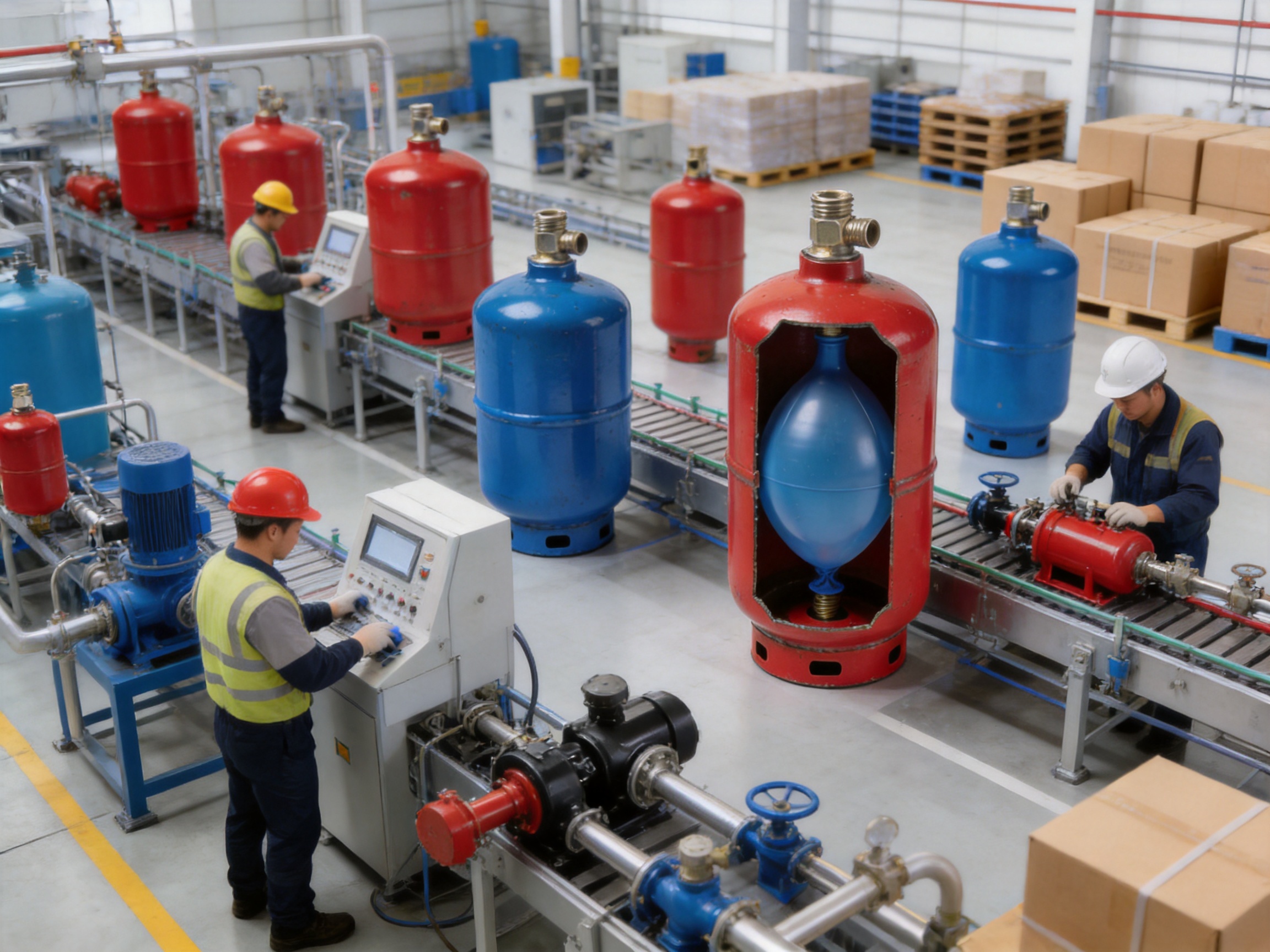
In modern water circulation, heating, boiler, and solar thermal systems, pressure stability is more than a convenience; it is a foundation for safety, comfort, equipment protection, and long-term system efficiency. The FT/PT Series pressure tank is designed for applications where controlled pressure, reliable expansion absorption, and compact installation are essential. Built as a carbon steel pressure tank with a fixed SBR rubber balloon, a standard pre-charge pressure of 1.5 bar, a maximum working pressure of 4 bar, and a working temperature range of -10°C to 99°C with EPDM compatibility, this series provides practical performance for thermal systems, boiler systems, and solar systems.
The product is especially suitable for users who require a dependable expansion or pressure-balancing component for compact water and heating installations. Its value lies not only in its technical design but also in the manufacturing discipline behind it. Produced by a company with years of pump and water system manufacturing experience, the FT/PT Series benefits from mature production organization, global export capability, independent research and development, and a product ecosystem that includes pumps, accessories, pipes, valves, booster systems, circulation equipment, and solar water solutions.
Unlike generic pressure tanks that may focus only on basic storage volume, the FT/PT Series is positioned as a functional pressure-management product for integrated water systems. It supports system stability by helping reduce pressure fluctuations, protecting pumps and valves, supporting thermal expansion control, and contributing to smoother operation in heating and water circulation environments. For contractors, distributors, OEM customers, and system integrators, it offers a balance of compact dimensions, standardized connection, practical pressure rating, and manufacturing support.
The FT/PT Series pressure tank is a carbon steel pressure tank designed for thermal, boiler, and solar system use. It is supplied with a fixed SBR rubber balloon and a pre-charge pressure of 1.5 bar. The tank is built to withstand a maximum working pressure of 4 bar and can operate within a temperature range from -10°C to 99°C when configured with EPDM-related working conditions. These parameters make it suitable for many light commercial, residential, and system-support applications where pressure buffering and expansion compensation are required.
The series includes several compact models, including FT-6L, FT-8L, FT-10L, FT-12L, and PT-8L. The connector specification is 3/4 inch across the listed models, making the tanks convenient for integration into common water and thermal system layouts. The model variety allows customers to choose a suitable tank size according to installation space, system volume, and pressure-stabilization requirements.
The product supports OEM cooperation, which is important for importers, distributors, private-label customers, and engineering solution providers. OEM support may include customized packaging, order planning, model selection assistance, and coordination with broader water system product procurement. In a competitive market where buyers often need both reliable products and responsive supply-chain service, this support adds commercial value beyond the physical tank itself.
As part of a larger water system product family, the FT/PT Series complements pumps and accessories such as circulation pumps, booster pumps, solar pumps, garden pumps, surface pumps, deep well pumps, submersible pumps, pool and spa pumps, commercial multistage pumps, end suction pumps, pipes, valves, and intelligent booster pump systems. This compatibility within a broad product ecosystem helps buyers simplify sourcing and maintain consistency across system components.
The FT/PT Series uses carbon steel as the tank body material. Carbon steel is widely used in pressure vessel and water system accessory manufacturing because it offers strength, formability, structural stability, and cost-effective durability. In pressure tank applications, the metal shell must maintain shape and integrity under repeated pressure changes. A properly manufactured carbon steel body provides the stiffness and mechanical reliability required for routine system operation.
Inside the tank, the fixed SBR rubber balloon separates the fluid-side operation from the air cushion function. SBR rubber is valued for its elasticity, resilience, and general performance in controlled water system environments. The fixed balloon design helps the tank perform its pressure-stabilizing role while maintaining a simple, practical structure. This design is especially useful where customers need a reliable and economical solution for standard system conditions.
The pre-charge pressure of 1.5 bar provides a factory-set starting point for many installations. Correct pre-charge pressure helps the tank absorb pressure changes and perform efficiently. Although installers should always verify that the tank is suitable for the specific system and may adjust according to local engineering requirements, a standard 1.5 bar pre-charge is convenient for typical heating and pressure-management scenarios.
The maximum working pressure of 4 bar makes the series appropriate for systems operating within moderate pressure ranges. In thermal, boiler, and solar applications, pressure fluctuation can occur due to heating, cooling, pump cycling, valve movement, and expansion of water volume. A 4 bar maximum working pressure rating helps define the safe operating envelope of the tank and supports proper system design.
The working temperature range of -10°C to 99°C provides flexibility across seasonal and operating conditions. Heating and solar thermal systems may face cold ambient environments during shutdown periods and elevated temperatures during active operation. The stated range supports practical use in many system designs, provided that the full installation is engineered according to applicable standards and compatible materials.
Model |
Diameter |
Height |
Connector |
Packing |
FT-6L |
325 mm |
103 mm |
3/4 inch |
0.06799 CBM / 5 pcs |
FT-8L |
325 mm |
128 mm |
3/4 inch |
0.08820 CBM / 5 pcs |
FT-10L |
325 mm |
136 mm |
3/4 inch |
0.09984 CBM / 5 pcs |
FT-12L |
325 mm |
160 mm |
3/4 inch |
0.10658 CBM / 5 pcs |
PT-8L |
398 mm |
100 mm |
3/4 inch |
0.01584 CBM |
Thermal systems depend on predictable pressure behavior. When water is heated, it expands. Without an appropriate expansion or pressure-buffering component, the system may experience pressure rise, relief valve discharge, noise, inefficient circulation, or accelerated wear on system components. The FT/PT Series pressure tank helps manage these changes by providing a controlled space for pressure variation.
In heating circuits, pressure tanks can support smoother operation of circulation pumps and reduce the frequency of pressure-related disturbances. This is particularly useful in compact heating installations where space is limited but pressure control remains necessary. The available FT models, with their compact dimensions and consistent 3/4 inch connection, are practical for installations where the designer must fit components into cabinets, service rooms, utility spaces, or equipment skids.
For installers, the benefit is not merely the tank itself but the predictability of its specifications. When the diameter, height, connection size, pre-charge pressure, maximum working pressure, and temperature range are clearly defined, system planning becomes more efficient. Clear product parameters help reduce selection errors and improve communication between designers, distributors, and end users.
Boiler systems require careful pressure management because thermal expansion is an unavoidable part of boiler operation. Whether the system supports domestic hot water preparation, space heating, or industrial support functions, changes in water temperature can influence internal pressure. A pressure tank such as the FT/PT Series helps absorb these changes and contributes to the overall stability of the boiler circuit.
The working temperature range up to 99°C is meaningful for boiler-related applications within the suitable design envelope. Although boiler systems must always be designed with safety valves, gauges, controls, and code-compliant installation practices, a properly selected pressure tank is an important supporting component. The FT/PT Series offers a practical solution for systems that fall within its pressure and temperature range.
Compared with low-quality tanks that may have inconsistent pre-charge, weak coating, poor dimensional accuracy, or unreliable rubber components, this series emphasizes controlled manufacturing and product consistency. For boiler system installers, this consistency reduces the risk of premature service issues and helps maintain professional installation quality.
Solar thermal systems often experience significant temperature variation. During sunny periods, fluid temperatures may rise quickly, while at night or during seasonal changes, the system may cool. This cycle can create expansion and contraction that must be managed. The FT/PT Series pressure tank is designed for solar system support, making it suitable for installations that need a compact and reliable expansion-management product.
In solar water heating systems, a pressure tank can help protect circulation components and reduce stress caused by temperature-induced volume changes. The tank’s carbon steel construction and rubber balloon structure allow it to serve as part of a complete solar thermal pressure-management arrangement. The 3/4 inch connector is convenient for many standard system layouts.
Solar applications also benefit from manufacturers that understand new energy projects. The company behind the FT/PT Series has invested in new energy and intelligent technology since 2018, expanding into solar water pumps and intelligent booster systems. This broader experience with solar-related water equipment provides useful technical context when supporting customers who purchase pressure tanks for solar thermal or renewable-energy water projects.
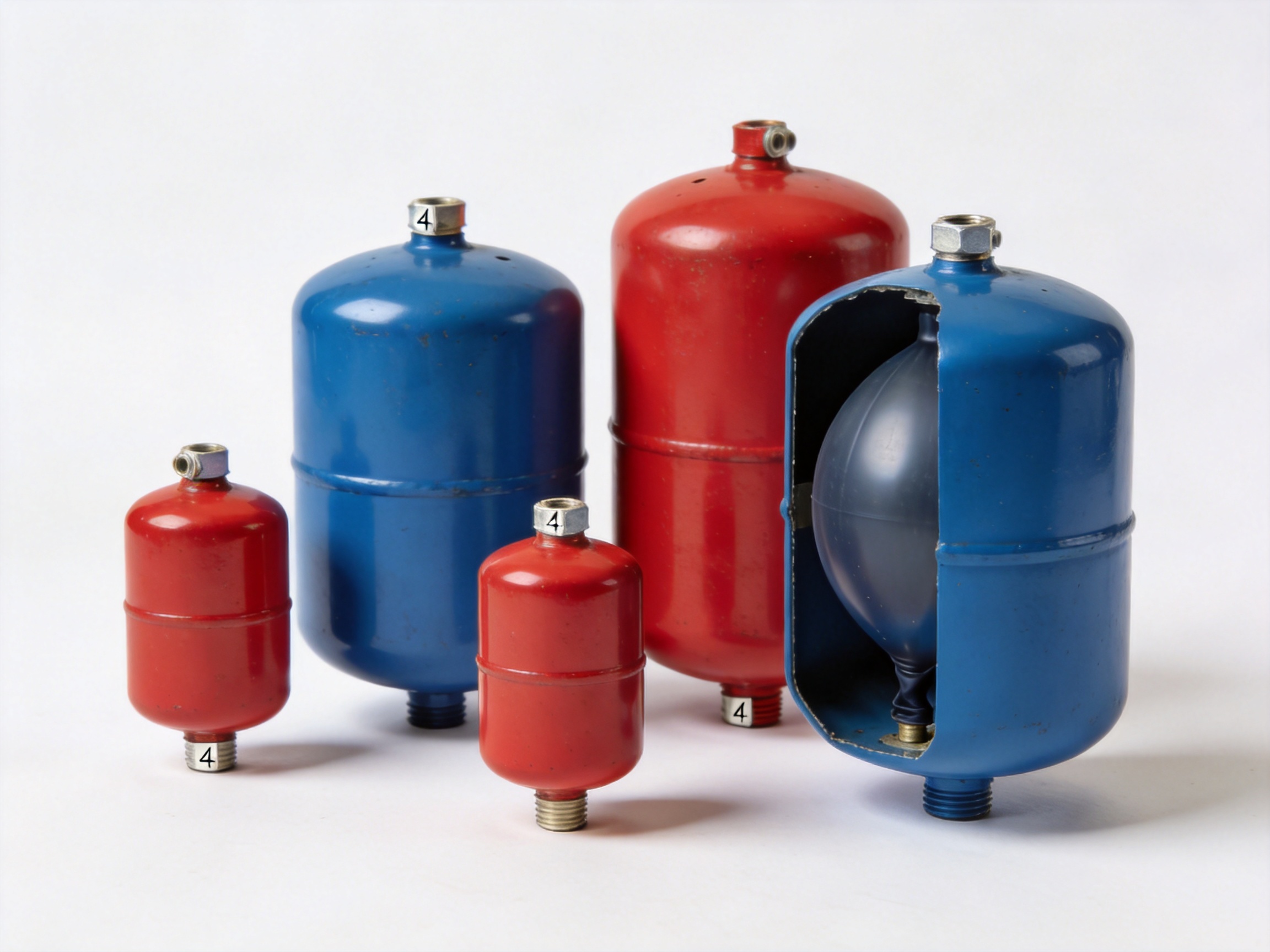
The first advantage of the FT/PT Series is its balanced specification profile. Some competing tanks may offer a low price but lack clear operating data, while others may be oversized or unnecessarily expensive for compact systems. This series provides defined models, a standard 1.5 bar pre-charge, a 4 bar maximum working pressure, a -10°C to 99°C working temperature range, and standardized 3/4 inch connections. These details make selection easier and help buyers avoid uncertainty.
The second advantage is the use of a fixed SBR rubber balloon within a carbon steel tank body. In many entry-level pressure tanks, the internal separation component may be poorly formed or inconsistently assembled. A stable fixed balloon structure helps the tank maintain its pressure-buffering function. When paired with controlled metal forming and assembly processes, this improves practical reliability.
The third advantage is compact model diversity. With capacities including 6L, 8L, 10L, and 12L in the FT range, plus the PT-8L model, users can select the appropriate size for different system needs. Competitor products often force customers to adapt their system to the tank rather than selecting a tank that fits the system. The FT/PT Series supports more flexible planning.
The fourth advantage is OEM support. For many international buyers, product quality alone is not enough. They also need packaging consistency, documentation support, order tracking, export coordination, and communication throughout procurement. The manufacturer’s export and service structure supports these requirements, making the FT/PT Series suitable not only for individual projects but also for distribution and private-label business.
The fifth advantage is the company’s broader manufacturing background. A manufacturer that produces deep well pumps, submersible pumps, domestic booster pumps, circulation pumps, solar pumps, intelligent booster pumps, and related water system products has a more complete understanding of hydraulic systems than a supplier focused only on simple tanks. This broader product knowledge improves the ability to support complete solutions.
The sixth advantage is integration with one-stop procurement. Customers who source pumps, pressure tanks, pipes, valves, and accessories from a coordinated supplier can reduce communication cost, lower compatibility risk, and improve delivery planning. In global industrial purchasing, this can be as important as the product price itself.
Pressure tanks play an important role in reducing stress on pumps and connected components. When a pump starts and stops frequently, the system may experience pressure fluctuations. Over time, frequent cycling can increase wear on motors, controls, seals, valves, and pipe connections. A pressure tank can help absorb some of these changes and reduce the severity of pressure movement.
In systems with booster pumps or circulation pumps, pressure buffering contributes to smoother water delivery and more stable operating behavior. Although the FT/PT Series is primarily described for thermal, boiler, and solar systems, its pressure-management principle is relevant to many water system configurations within its design parameters. Correct tank selection and installation can help protect equipment and improve user comfort.
For intelligent booster pump systems, stable pressure behavior is particularly important. Smart pump controls depend on sensor readings, flow changes, and pressure feedback. If a system has unstable pressure dynamics, controls may respond more frequently than necessary. A properly selected pressure tank can support smoother control behavior and reduce unnecessary cycling.
The carbon steel shell gives the FT/PT Series its mechanical foundation. Carbon steel can be formed into strong tank bodies with consistent geometry. In manufacturing, steel preparation, forming, welding, surface treatment, and inspection all influence the final quality. A well-controlled process helps ensure that the tank can withstand operating pressure and maintain dimensional consistency.
The internal SBR rubber balloon is central to the tank’s function. Rubber quality, elasticity, thickness consistency, and installation precision all influence performance. A fixed rubber balloon design is practical for standard applications because it provides a clear separation function while keeping the structure simple and economical.
The use of EPDM-related temperature compatibility in the stated working temperature range is important for heating and thermal applications. EPDM is widely used in water and heating system seals because of its temperature resistance and durability in many fluid environments. The stated range of -10°C to 99°C helps customers evaluate suitability for their systems.
The connector design is another practical feature. A 3/4 inch connector is common in compact water system installations and helps simplify installation planning. Standardization reduces the need for special adapters and can improve installation efficiency.
The FT/PT Series benefits from a manufacturing background built around pump and water system technology. The manufacturer was founded in 2008 and has developed as an integrated enterprise specializing in independent research and development, mass production, and global export. This background matters because pressure tanks are not isolated components; they are part of larger hydraulic and thermal systems.
Independent research and development allows the company to understand product function rather than merely assemble components. In practical terms, R&D capability supports material selection, structural improvement, model planning, and application matching. For customers, this means the supplier can respond more effectively to technical questions and market needs.
Mass production capability supports consistency. In pressure tank manufacturing, consistency is crucial. Each tank must meet dimensional requirements, connection accuracy, pressure-related standards, and packaging expectations. A supplier with organized mass production can better maintain stable quality across repeated orders.
Global export experience is also a major strength. International buyers require more than factory output. They need export documentation, shipment coordination, packaging suitable for transport, communication across time zones, and reliable order tracking. The company’s experience in global export helps reduce procurement friction for distributors and project buyers.
To support diverse purchasing requirements, the company established professional import and export service structures in 2012, including teams for procurement planning, order tracking, cross-border delivery, and foreign trade services. This is especially valuable for customers purchasing mixed product categories such as pumps, tanks, valves, and accessories.
A pressure tank must be manufactured with attention to every step, from raw material selection to final packaging. The process begins with selecting suitable carbon steel material for the tank shell. Material consistency affects forming, welding, surface quality, and long-term durability. Reliable suppliers typically apply incoming material inspection to confirm that steel sheets or components meet production requirements.
Forming is the next critical stage. The tank body must be shaped accurately to achieve the intended diameter, height, and structural profile. Poor forming can lead to uneven stress distribution, cosmetic defects, or assembly difficulty. Controlled forming equipment and trained operators help create repeatable parts across production batches.
Welding and joining processes are essential for pressure-bearing reliability. In a well-managed factory, welding parameters are controlled to achieve stable seams and minimize defects. After welding, visual inspection and, where applicable, pressure-related checks help confirm that the tank is suitable for its rated working conditions.
Surface treatment supports corrosion resistance and appearance. Carbon steel tanks require appropriate surface preparation and finishing to protect the shell and provide a professional product presentation. Good surface treatment improves customer confidence and helps the tank maintain its appearance during storage, transport, and installation.
The rubber balloon assembly must be handled carefully. Rubber components must be correctly positioned and fixed to perform as intended. Improper installation may affect pressure response or reduce service life. Controlled assembly processes help ensure that the balloon is correctly integrated into the tank.
Pre-charge pressure setting is another important quality step. The FT/PT Series is supplied with a pre-charge pressure of 1.5 bar. Accurate pre-charging requires suitable equipment and inspection. A tank that leaves the factory with the correct pre-charge pressure gives installers a reliable starting point and reduces adjustment time.
Final inspection may include appearance checks, dimensional verification, connection inspection, packaging confirmation, and pressure-related verification according to internal quality requirements. Consistent inspection processes reduce the risk of shipment defects and improve customer satisfaction.
Packaging is also part of quality. The specification table provides packing information for the models, including multi-piece packing for several FT models. Proper packaging helps protect the tanks during warehouse handling and international transport. For OEM customers, packaging consistency is especially important because it influences brand image in the destination market.
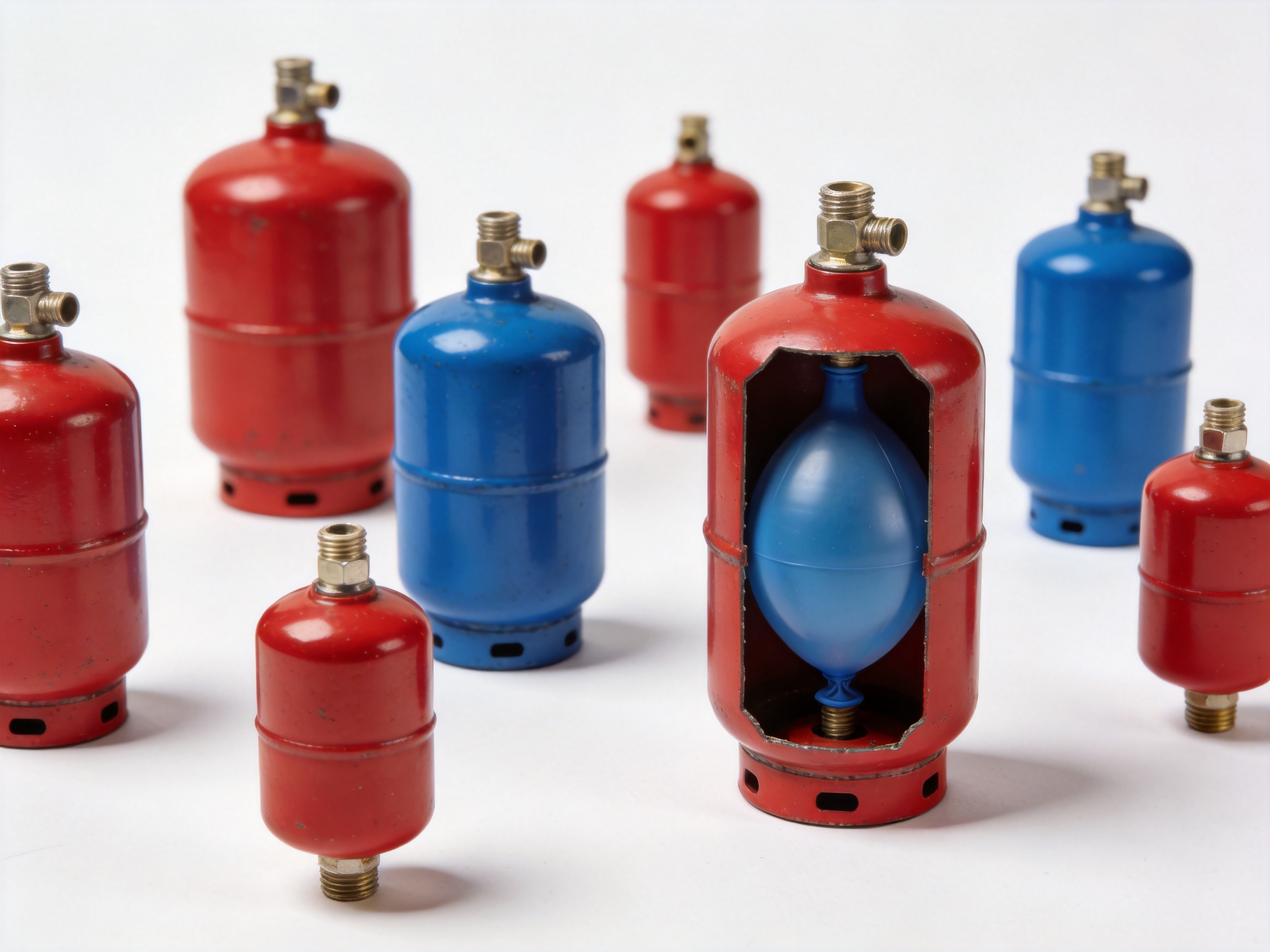
Many international buyers prefer suppliers that can provide a full water system product range. Sourcing from multiple unrelated factories can create problems: inconsistent communication, different quality levels, incompatible components, separated shipments, and complicated after-sales coordination. The company behind the FT/PT Series offers a wide range of product categories, including solar pumps, deep well pumps, submersible pumps, surface pumps, booster pumps, circulation pumps, garden pumps, pool and spa pumps, commercial multistage pumps, pump accessories, end suction pumps, pipes and valves, and intelligent booster pumps.
This broad portfolio is a strong advantage for distributors and project contractors. A customer purchasing pressure tanks may also need circulation pumps for heating systems, booster pumps for domestic water supply, solar pumps for renewable-energy applications, or valves and accessories for installation. A coordinated supplier can help simplify model matching and shipment planning.
One-stop procurement also supports consistent quality expectations. When components are supplied through a single organized manufacturer and service team, buyers can establish long-term standards for inspection, packaging, documentation, and delivery. This is difficult when each component is purchased from a different source.
OEM support is a key commercial feature of the FT/PT Series pressure tank. For international distributors, private branding can be essential. Markets differ in labeling preferences, packaging design, instruction requirements, and sales channel expectations. OEM support allows buyers to adapt the product presentation to local market needs while relying on a mature manufacturing base.
OEM cooperation can also help customers build a more complete product line. For example, a distributor selling pumps may add pressure tanks and accessories under the same brand family. This creates a professional appearance and improves customer loyalty. The FT/PT Series, with compact models and clear specifications, is suitable for such line expansion.
Manufacturing support also helps customers respond to market demand. If a buyer needs planned shipments, mixed product loading, or coordinated order tracking, the company’s foreign trade service structure can assist. This is important for seasonal markets such as heating, solar thermal installation, and agricultural water systems, where timing affects sales performance.
Correct tank selection should always be based on system volume, working pressure, temperature, pump behavior, and applicable local standards. The FT/PT Series provides useful specification data, but installers should confirm that the chosen model is appropriate for the installation. The maximum working pressure of 4 bar must not be exceeded, and the working temperature should remain within the stated range.
The pre-charge pressure of 1.5 bar is a standard factory setting, but system-specific adjustment may be required. Installers should check pre-charge pressure before commissioning and follow professional procedures. Pressure should be checked when the water side is depressurized, and adjustments should be made using suitable equipment.
The 3/4 inch connector helps simplify connection to common systems, but proper sealing materials and installation torque are important. Over-tightening may damage threads or fittings, while under-tightening may cause leakage. Installers should use appropriate tools and follow good plumbing practice.
The tank should be installed in a location that allows inspection and maintenance access. It should be protected from physical damage, severe environmental exposure, and conditions beyond its rated range. In heating or solar systems, the tank should be positioned according to the system design so it can effectively perform its pressure-management function.
System safety devices remain essential. A pressure tank is not a substitute for safety valves, temperature controls, gauges, expansion system design, or code-compliant installation. It is one component within a complete safety and performance strategy.
Routine inspection helps maintain pressure tank performance. Users or service technicians should periodically check for visible damage, corrosion, leakage, abnormal pressure behavior, or system noise. If a tank is part of a heating or boiler system, inspection can be included in seasonal maintenance.
Pre-charge pressure should be checked periodically according to the system maintenance schedule. Loss of air charge can reduce the tank’s ability to absorb pressure changes. If pressure instability, frequent relief valve discharge, or pump cycling problems occur, the tank should be inspected as part of troubleshooting.
The surrounding system should also be maintained. Pumps, valves, gauges, and controls all affect pressure behavior. A pressure tank performs best when the whole system is clean, properly adjusted, and operating within design limits.
If the tank shows signs of serious corrosion, physical deformation, leakage, or internal failure, it should be replaced. Pressure-bearing components should not be repaired casually or used beyond safe operating conditions. Professional judgment is recommended for all service decisions.
In real installations, pressure tanks face repeated cycles. Heating systems warm up and cool down. Solar systems experience changing sunlight and temperature. Pumps may start and stop. Valves may open and close. These actions create pressure variation that can reduce comfort and shorten component life if not controlled.
The FT/PT Series is designed to provide practical pressure buffering within its rated range. Its compact models are especially useful where space is limited but a pressure-management component is still required. The fixed rubber balloon design allows it to perform its function without unnecessary complexity.
For distributors, real-world performance also includes logistics and customer response. A product that is easy to explain, easy to stock, and easy to integrate into standard systems has clear market value. The FT/PT Series offers defined specifications and packing information, which supports inventory planning and sales communication.
For contractors, the value lies in predictable installation. A standard connector, compact dimensions, and clear pressure data reduce uncertainty on site. This can save time and reduce callbacks, especially when the tank is installed as part of a heating, boiler, or solar thermal system.
Carbon steel pressure tanks remain widely used because they combine strength, manufacturability, and cost effectiveness. In many applications, stainless steel may be unnecessary, while plastic or low-grade materials may not provide the desired structural strength. Carbon steel offers a practical middle ground for many pressure-management products.
When properly manufactured and finished, carbon steel tanks provide dependable performance. The key is quality control. Material thickness, forming accuracy, welding quality, coating, and assembly all affect the final result. Buyers should therefore consider not only the tank material but also the supplier’s manufacturing capability.
The FT/PT Series demonstrates the practical value of carbon steel construction by combining it with a fixed SBR rubber balloon and standardized operating parameters. This makes it suitable for customers who want a reliable, economical, and easy-to-source product for standard system applications.
Taizhou Edwin Electric Co., Ltd. was founded in 2008 and has built its reputation as an integrated manufacturing enterprise focused on independent R&D, mass production, and global export. Its core product lines include deep well pumps, submersible pumps, domestic booster pumps, and circulation pumps. The company focuses on medium-to-high-end global markets and has earned customer recognition through reliable quality and expanding product capability.
The company’s product applications cover new energy projects, agricultural irrigation, municipal engineering, mining, construction, HVAC systems, and household water supply. This broad application experience supports a practical understanding of pressure, flow, durability, and system integration. The FT/PT Series pressure tank benefits from this broader engineering environment.
Since 2018, the company has invested in new energy and intelligent technology, launching solar water pumps and intelligent booster pumps. This direction is important because modern water systems increasingly combine mechanical reliability with energy efficiency and smart control. Pressure tanks remain relevant in this environment because stable pressure supports both traditional and intelligent equipment operation.
The company also provides one-stop procurement services for global industrial clients. Through dedicated foreign trade and export service capabilities, customers can receive support for procurement planning, order tracking, cross-border delivery, and product coordination. These strengths help international buyers reduce supply-chain complexity.
The FT/PT Series is positioned for customers who need a dependable carbon steel pressure tank for thermal, boiler, and solar systems. It is not merely a commodity tank; it is a system-support component backed by organized manufacturing and export service. Its compact model range and OEM support make it suitable for distributors, contractors, system integrators, and private-label buyers.
In competitive markets, buyers often compare products by price first. However, pressure tanks should also be evaluated by specification clarity, manufacturing consistency, supplier reliability, and service support. A very low-cost tank may create hidden costs if it causes leakage, unstable pressure, poor packaging complaints, or shipment delays. The FT/PT Series offers a more balanced value proposition.
The product’s advantages become clearer when considered as part of a complete water system portfolio. Customers can source pumps, pressure tanks, valves, and accessories from a manufacturer familiar with hydraulic equipment. This reduces the risk of mismatched components and improves long-term cooperation.
The FT/PT Series pressure tank is designed for thermal systems, boiler systems, and solar systems. It helps manage pressure variation, supports expansion control, and contributes to stable system operation within its rated pressure and temperature range.
The tank body is made of carbon steel. Carbon steel provides mechanical strength, formability, and cost-effective durability for pressure tank applications.
The product uses a fixed SBR rubber balloon. This structure supports the pressure-buffering function of the tank and provides a practical design for standard water and thermal system applications.
The standard pre-charge pressure is 1.5 bar. Installers should verify and adjust the pre-charge if required by the specific system design.
The maximum working pressure is 4 bar. The tank should not be used in systems that exceed this pressure rating.
The working temperature range is -10°C to 99°C under the stated EPDM-related conditions. This range supports many heating, boiler, and solar thermal applications.
The listed models use a 3/4 inch connector, making them convenient for many common water and thermal system installations.
The listed models include FT-6L, FT-8L, FT-10L, FT-12L, and PT-8L. These options allow customers to select a tank according to installation space and system requirements.
Yes. OEM support is available, making the product suitable for distributors, private-label buyers, and international market development.
The FT/PT Series offers clear specifications, compact model options, a fixed SBR rubber balloon, carbon steel construction, standard pre-charge pressure, OEM support, and the backing of a manufacturer with broad pump and water system expertise.
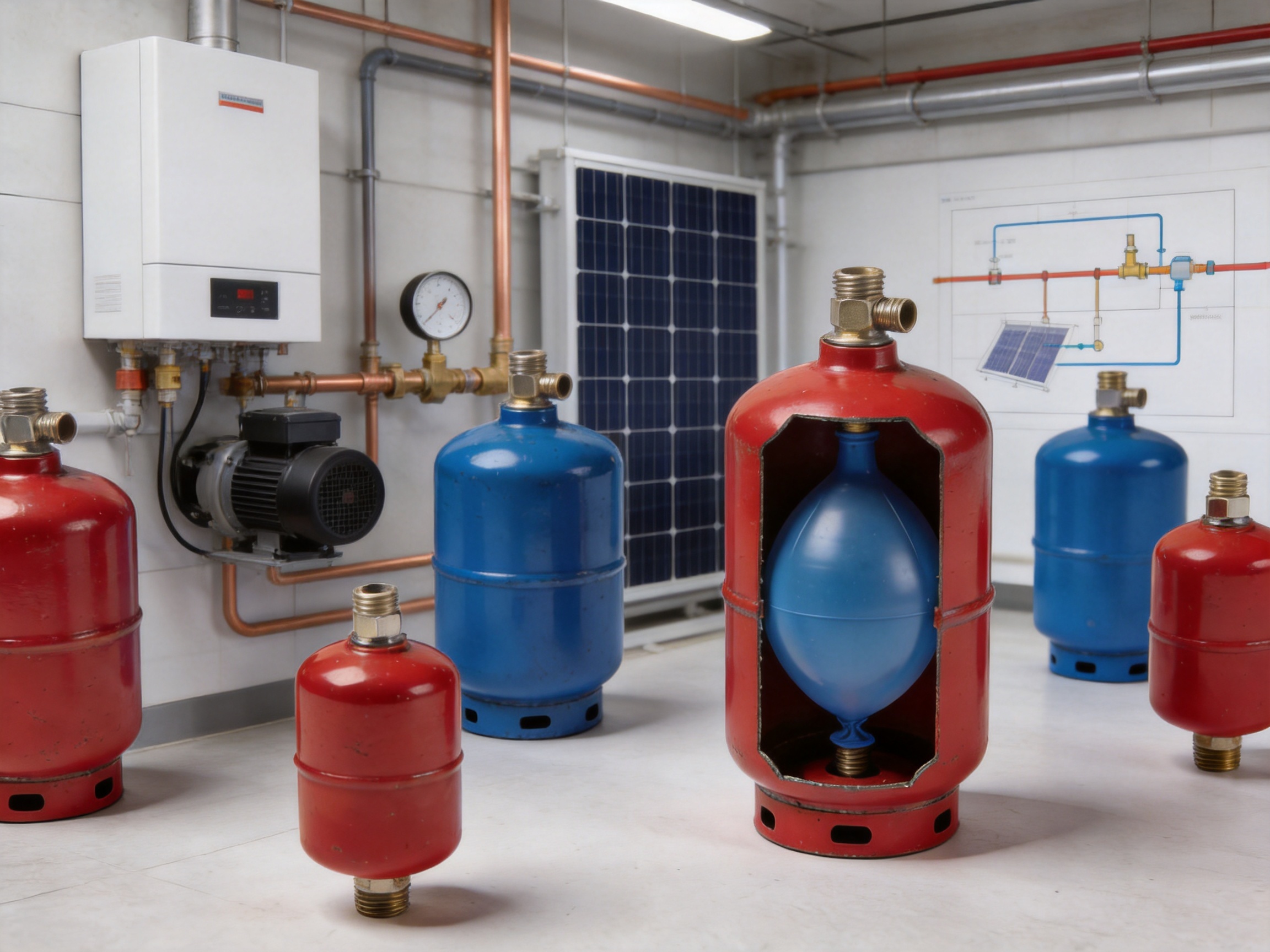
The FT/PT Series pressure tank is a practical and reliable solution for pressure management in thermal, boiler, and solar systems. With carbon steel construction, a fixed SBR rubber balloon, 1.5 bar pre-charge pressure, 4 bar maximum working pressure, and a -10°C to 99°C working temperature range, it provides the essential characteristics required for stable system operation.
Its advantages go beyond basic specifications. The series offers compact model choices, standardized 3/4 inch connections, OEM support, and compatibility with one-stop procurement strategies. For buyers who need more than a low-cost component, it provides the value of manufacturing consistency, export service, and integration within a broader water system product portfolio.
Backed by a company founded in 2008 with strengths in independent R&D, mass production, global export, pump manufacturing, new energy development, and intelligent water system technology, the FT/PT Series is well suited for international distributors, engineering contractors, and system integrators. It represents a balanced combination of product practicality, manufacturing capability, and commercial support.
For heating, boiler, and solar thermal applications where pressure stability matters, the FT/PT Series pressure tank offers a dependable choice. It helps protect system components, supports smoother operation, simplifies sourcing, and provides the professional foundation required for long-term cooperation in global water system markets.
1. Pressure Vessel Design Manual, practical guidelines for pressure-bearing components and system safety considerations.
2. Hydronic Heating System Design Handbook, principles of expansion control, circulation, and pressure stabilization.
3. Solar Thermal Systems Engineering Guide, application practices for temperature variation and expansion management in solar water systems.
4. Pump System Optimization Reference Manual, guidance on pump cycling, pressure control, and accessory selection.
5. Rubber Materials in Water System Applications, technical overview of SBR and EPDM performance characteristics.
6. International Plumbing and Mechanical System Practice Notes, installation and maintenance considerations for tanks, valves, and thermal equipment.
edwina@edwin-pump.com
+86-13586290903 (WhatsApp)
Xuri Gongliang Cutting Tool Entrepreneurship Park, Wenqiao Town, Wenling City, Taizhou City, Zhejiang Province, China

High Performance Smart Pump Factory


 English