
edwina@edwin-pump.com

View All Products
en
Reliable water delivery is one of the most important requirements in fire protection, industrial safety, construction, agriculture, and emergency response. A fire hose may appear simple in design, but its performance depends on the quality of its lining, reinforcement, outer protection, connectors, pressure rating, flexibility, and resistance to environmental conditions. When a hose is used in a high-pressure location, every component must work together to maintain stable water flow and prevent leakage, rupture, abrasion, or premature failure.
The high-strength PVC-lined rubber fire hose described in this article is designed for demanding water conveyance and fire suppression applications. Available in sizes from 1 inch to 6 inches, with working pressure options from 8 Bar to 25 Bar, it provides a versatile solution for users who need dependable water delivery across different operating environments. The 2-inch, 25-Bar configuration is especially suitable for high-pressure fire protection requirements, while the wider size range allows the product to be adapted to agricultural irrigation, industrial water transfer, construction projects, emergency vehicles, and other applications.
Its construction combines a PVC inner lining with a strong polyester yarn reinforcement and a protective rubber outer layer. This combination is intended to provide a balance of pressure resistance, flexibility, abrasion protection, and ease of handling. Compared with basic hoses that may use a single material or offer limited pressure choices, the product provides more options for system designers and purchasing teams.
Manufactured by Taizhou Edwin Electric Co., Ltd., also known as Edwin Pump, the hose is part of a broader range of pump accessories and water-handling products. The company has operated since 2008 and has developed capabilities in product research and development, mass production, procurement coordination, order management, and global export. These capabilities support customers seeking a coordinated supply of pumps, hoses, valves, and related water system components.
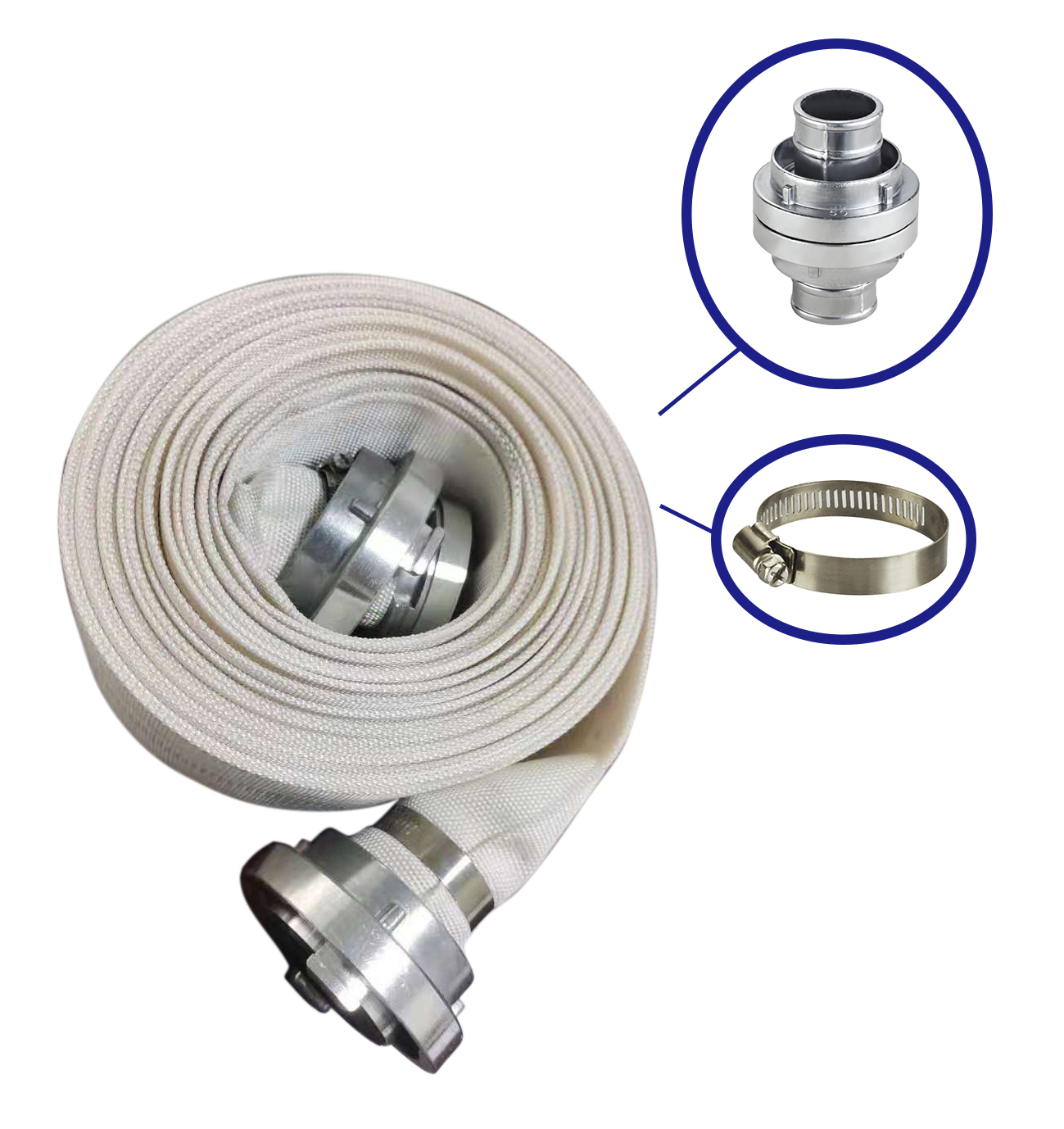
High Strength PVC Lining Rubber Fire Hose For High Pressure Places
The high-strength PVC-lined rubber fire hose is a flexible pressure hose intended for transferring water in situations where durability and reliable performance are required. The hose is available in multiple internal diameters, including 25 mm, 38 mm, 45 mm, 50 mm, 65 mm, 75 mm, 100 mm, 125 mm, and 150 mm. These dimensions correspond approximately to nominal sizes from 1 inch through 6 inches.
The standard working pressure range is 8 Bar to 25 Bar, depending on the selected size and construction specification. The 2-inch version has an internal diameter of approximately 50 mm and can be supplied with a working pressure of up to 25 Bar. Its corresponding burst pressure is listed at up to 75 Bar. This makes the 2-inch, 25-Bar model appropriate for applications requiring a strong, consistent flow of water through a relatively manageable hose diameter.
Available hose lengths generally range from 10 meters to 30 meters. Some product descriptions also identify common lengths of 15 meters to 30 meters, allowing purchasers to select a configuration based on installation distance, storage arrangements, and operational requirements. Aluminum connectors and stainless steel 304 hoops may be supplied as part of the hose configuration, helping the hose connect with compatible fire protection or water delivery equipment.
The product has a maximum operating temperature of approximately 60 degrees Celsius. It is therefore intended primarily for normal-temperature water conveyance and fire protection duties rather than for the transfer of high-temperature liquids or steam. Users should always select the correct pressure, temperature, connector, and length configuration for the intended application.
The main product characteristics include a PVC lining, a polyester yarn reinforcement layer, and a rubber outer layer. The PVC lining helps create a smooth internal surface for water movement and is designed to resist common forms of wear associated with water conveyance. The polyester yarn provides structural reinforcement, helping the hose withstand internal pressure. The rubber exterior contributes flexibility and offers an additional protective layer against contact damage.
The hose can be used with standard fire hose fittings when the correct connector size and connection method are selected. This compatibility can simplify integration with existing pump systems, fire suppression equipment, fire trucks, irrigation systems, and temporary construction water networks.
Important features include:
High-strength construction for demanding water delivery applications.
PVC lining designed to support abrasion, puncture, and water-flow performance.
Rubber outer protection for flexibility and resistance to external wear.
Working pressure options from 8 Bar to 25 Bar.
Size options from 1 inch to 6 inches.
Available lengths generally ranging from 10 meters to 30 meters.
Compatibility with suitable standard hose fittings.
Aluminum connector and stainless steel 304 hoop options.
Maximum recommended operating temperature of approximately 60 degrees Celsius.
Suitability for residential, commercial, industrial, agricultural, construction, and emergency applications.
The inner lining is a critical part of a fire hose because it comes into direct contact with the conveyed water. A well-formed lining provides a continuous water passage and helps reduce the risk of leakage through the reinforcement layer. PVC is commonly selected for hose linings because it can provide a smooth internal surface, practical chemical resistance, and good resistance to abrasion under ordinary water-service conditions.
The PVC lining in this product is designed to improve the hose’s ability to handle repeated water delivery. It also supports a clean internal flow path, which is important when the hose is connected to a pump that must maintain stable discharge performance. A smoother internal passage can help reduce unnecessary flow resistance compared with a rough or poorly formed internal surface.
The lining also serves as a barrier between the water and the reinforcing textile. This separation is important because the reinforcement is intended to provide strength rather than act as the primary fluid barrier. By combining a dedicated lining with an external protective layer, the hose is designed as a multi-layer product rather than a single-material tube.
Polyester yarn provides the structural framework that allows the hose to withstand internal water pressure. During operation, the water inside the hose exerts force on the lining and surrounding layers. The reinforcement distributes this force around the hose circumference and along its length, helping the hose maintain its shape and resist expansion.
The use of polyester yarn provides several practical benefits. It offers a strong relationship between weight and tensile performance, allowing the hose to remain manageable while still supporting high-pressure service. It also provides flexibility, which is important when the hose must be deployed around equipment, vehicles, buildings, irrigation fields, or construction areas.
The reinforcement must be applied consistently to ensure that pressure is distributed evenly. Variations in yarn placement, tension, overlap, or density can affect hose performance. For this reason, the manufacturing process must control the textile reinforcement stage carefully. Consistent production helps ensure that hoses of the same specification perform similarly from one production batch to another.
The rubber outer layer adds protection to the hose during handling and operation. Fire hoses are often dragged over concrete, soil, gravel, metal surfaces, vehicle platforms, and other areas that can cause abrasion. The outer rubber layer helps protect the reinforcement and lining from direct contact with these surfaces.
Rubber also contributes to flexibility. A hose that is too rigid may be difficult to deploy quickly, especially when emergency personnel must position it around obstacles or connect it to a pump under time pressure. A flexible outer layer can make the hose easier to bend, roll, move, and store when handled correctly.
In addition to abrasion resistance, the outer layer provides a degree of protection against puncture and ultraviolet exposure. The actual service life will depend on how the hose is used, cleaned, dried, stored, and exposed to weather. Nevertheless, the layered construction offers a practical advantage over products that provide minimal external protection.
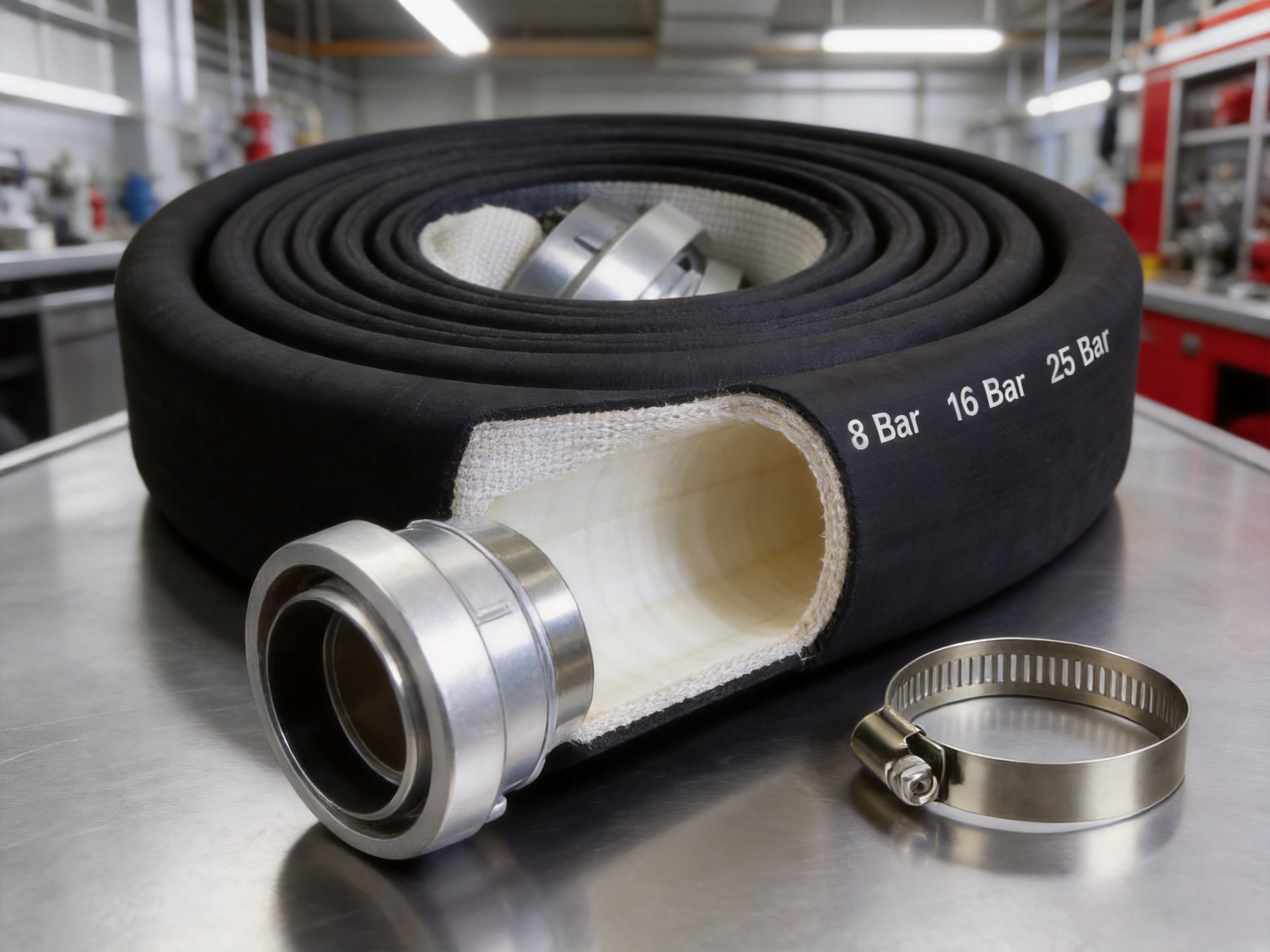
Pressure selection is one of the most important decisions when purchasing a fire hose. Working pressure refers to the pressure the hose is designed to handle during normal operation. Burst pressure refers to the pressure at which the hose may fail during a controlled test or under severe conditions. The listed burst pressure is not an operating target and should never be treated as a pressure at which the hose can be safely used continuously.
For the listed specifications, the 8-Bar working pressure option has a burst pressure of approximately 24 Bar. The 10-Bar option has a listed burst pressure of approximately 30 Bar. The 13-Bar option corresponds to approximately 39 Bar, the 16-Bar option to approximately 48 Bar, the 20-Bar option to approximately 60 Bar, and the 25-Bar option to approximately 75 Bar.
This relationship provides an additional safety margin between normal working conditions and the listed burst level. A margin is important because real systems may experience pressure fluctuations, pump start-up surges, water hammer, temperature variation, connection stress, and accidental bending. However, the actual safety of an installation depends on the complete system, including the pump, fittings, valves, clamps, connectors, and operating procedures.
When selecting a 25-Bar hose, the pump discharge pressure and any transient pressure must be evaluated. The hose should be used only within the recommended working pressure and temperature limits. Operators should also confirm that the fittings, clamps, connectors, and valves have pressure ratings equal to or greater than the required system pressure.
The smaller sizes, from 1 inch through 2-1/2 inches, are listed with working pressure options of 8, 10, 13, 16, 20, and 25 Bar. The 3-inch size is listed with options up to 20 Bar. The 4-inch, 5-inch, and 6-inch sizes are listed with working pressure options up to 16 Bar. This range allows customers to balance flow requirements, handling weight, pressure demand, and installation conditions.
A smaller hose diameter may be easier to carry and deploy, while a larger diameter can support higher water volume at a suitable pressure. The correct size depends on the pump output, required flow rate, total hose length, elevation difference, friction loss, and nozzle or outlet requirements.
Nominal Size |
Approximate ID |
Working Pressure Options |
Listed Burst Pressure Options |
Typical Length |
1 inch |
25 mm |
8/10/13/16/20/25 Bar |
24/30/39/48/60/75 Bar |
10–30 m |
1-1/2 inches |
38 mm |
8/10/13/16/20/25 Bar |
24/30/39/48/60/75 Bar |
10–30 m |
1-3/4 inches |
45 mm |
8/10/13/16/20/25 Bar |
24/30/39/48/60/75 Bar |
10–30 m |
2 inches |
50 mm |
8/10/13/16/20/25 Bar |
24/30/39/48/60/75 Bar |
10–30 m |
2-1/2 inches |
65 mm |
8/10/13/16/20/25 Bar |
24/30/39/48/60/75 Bar |
10–30 m |
3 inches |
75 mm |
8/10/13/16/20 Bar |
24/30/39/48/60 Bar |
10–30 m |
4 inches |
100 mm |
8/10/13/16 Bar |
24/30/39/48 Bar |
10–30 m |
5 inches |
125 mm |
8/10/13/16 Bar |
24/30/39/48 Bar |
10–30 m |
6 inches |
150 mm |
8/10/13/16 Bar |
24/30/39/48 Bar |
10–30 m |
The technical data should be used as a product selection guide. Before placing an order, buyers should confirm the final specification, including actual wall thickness, connector type, hose length, pressure rating, test requirements, and packaging method.
One advantage of this product is the availability of several working pressure levels. Some basic hoses are offered in only one standard pressure rating, which can force users to purchase an unsuitable product or pay for unnecessary capacity. The range from 8 Bar to 25 Bar allows the hose to be matched more closely to the pump and application.
For ordinary water transfer, an 8-Bar or 10-Bar configuration may be sufficient. For industrial fire protection, construction pumping, or high-pressure emergency systems, a 16-Bar, 20-Bar, or 25-Bar configuration may be more appropriate. This flexibility can support more efficient system planning and reduce the risk of selecting a hose that is under-rated for the intended service.
The PVC lining, polyester yarn reinforcement, and rubber outer layer provide a layered construction with different functions assigned to different materials. Compared with a single-layer hose, this design can offer better protection against internal pressure and external damage.
The PVC lining is focused on fluid containment and internal flow. The polyester yarn is focused on pressure reinforcement. The rubber exterior is focused on handling and environmental protection. This division of functions is one reason multi-layer hoses are widely used in demanding water systems.
A high-pressure hose must be strong, but excessive weight can reduce its usefulness. Firefighters, maintenance teams, construction workers, and agricultural operators often need to deploy and reposition hoses manually. The use of polyester yarn reinforcement helps provide strength without relying exclusively on heavy metallic reinforcement.
The rubber outer layer also supports flexibility, allowing the hose to be bent and positioned more easily than a rigid pipe. This is particularly useful where permanent piping is unavailable or where a temporary water delivery route is needed.
The product is not limited to one type of fire protection system. It can be used in residential and commercial fire prevention measures, industrial facilities, agricultural water conveyance systems, farmland irrigation, fire suppression vehicles, civil engineering projects, and other high-pressure locations.
This broad application range can simplify purchasing for companies that operate across several sectors. A distributor, contractor, or equipment integrator may be able to use the same product family for several customer requirements while selecting different sizes and pressure levels as needed.
Compatibility with standard fire hose fittings is another practical advantage. A hose is useful only when it can be securely connected to pumps, valves, hydrants, manifolds, nozzles, or other system components. The availability of aluminum connectors and stainless steel 304 hoops supports reliable assembly when the correct connection method is used.
Buyers should still confirm fitting standards before ordering. Different regions and industries may use different coupling systems, thread standards, quick-connect arrangements, or flange configurations. Confirming the connector specification in advance helps avoid delays during installation.
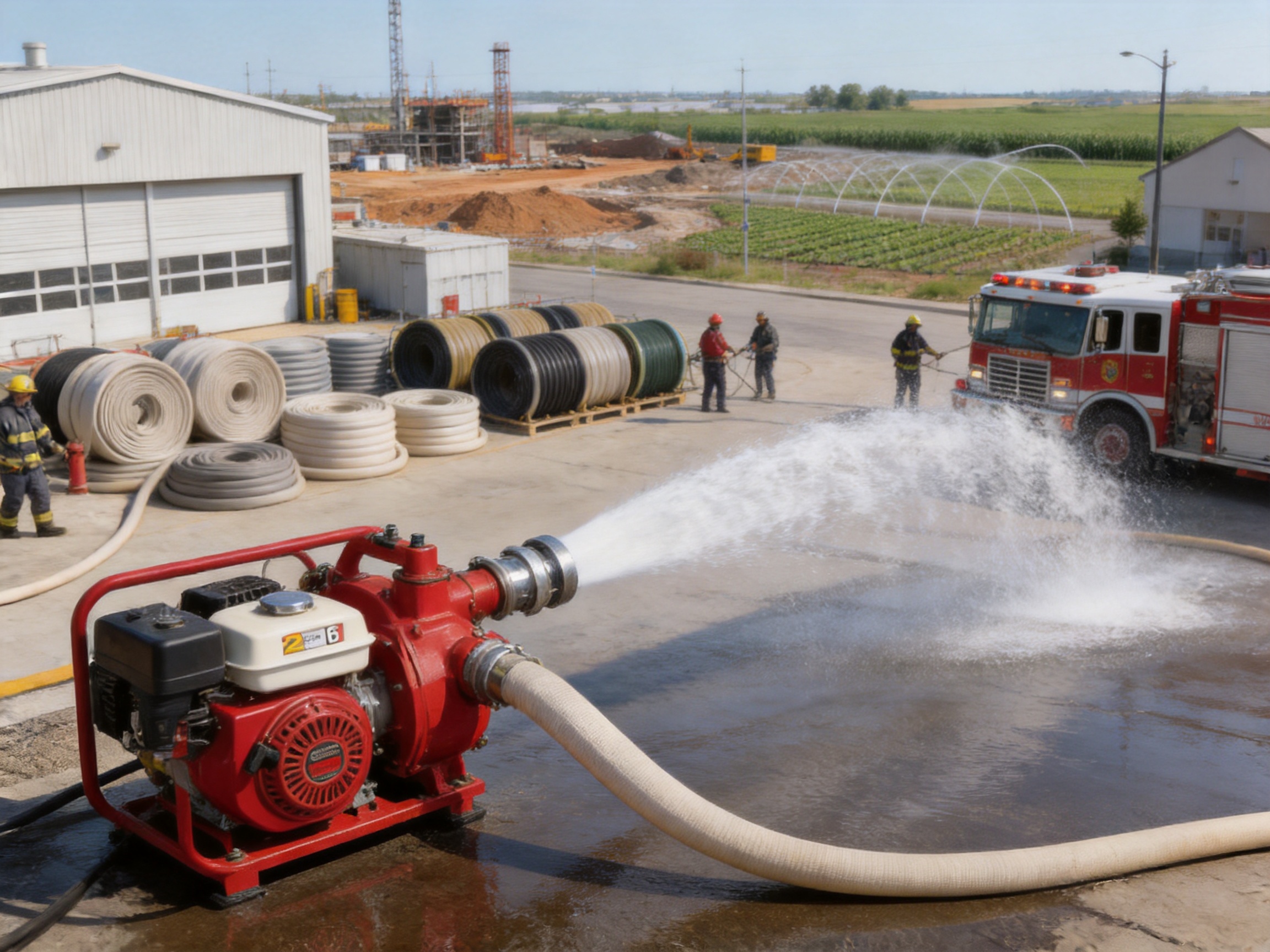
In residential buildings, commercial properties, warehouses, workshops, and public facilities, hoses may be used as part of emergency fire protection arrangements. The product can support water transfer from a pump, storage tank, hydrant, or other water source to a designated outlet or firefighting device.
For these applications, the hose should be stored in a clean and accessible location. It should be protected from sharp edges, direct contamination by oils, excessive sunlight, and unnecessary mechanical stress. Periodic inspection is important even when the hose has not been used recently.
Industrial environments may contain combustible materials, high-temperature equipment, electrical systems, chemicals, fuels, or manufacturing processes that increase the need for effective fire response. A hose rated for high pressure can support emergency water delivery when connected to an appropriately designed pump and fire protection network.
The 2-inch, 25-Bar version may be useful where a relatively compact hose is required to deliver pressurized water over a practical distance. Larger sizes can be considered where the system requires greater flow volume and the operating pressure is within the listed limit for that size.
Construction sites frequently require temporary water systems. Fire hazards may be created by welding, cutting, fuel storage, electrical installations, temporary heating equipment, and unfinished structures. A portable hose can be moved as the project develops and can connect temporary pumps or water storage equipment.
Construction areas are also demanding environments for hose materials. Concrete, steel, stone, soil, dust, tools, vehicles, and machinery can cause abrasion. The rubber outer layer is intended to provide additional protection during normal handling, but operators should still avoid dragging the hose over sharp objects whenever possible.
The hose can also be used for agricultural water conveyance and farmland irrigation. Its flexible construction allows water to be delivered across fields, greenhouses, nurseries, and temporary irrigation zones without installing permanent pipework for every route.
In agricultural environments, the hose should be protected from prolonged contact with agricultural chemicals, oils, and sharp plant materials unless compatibility has been confirmed. After use, it should be flushed where appropriate, cleaned, fully dried, and stored away from direct sunlight and damaging substances.
Fire suppression vehicles require hoses that can be deployed quickly and connected securely. The product can be configured for use with suitable vehicle-mounted pumps, water tanks, valves, and nozzles. The selected diameter and pressure rating should be based on the vehicle pump’s flow and discharge characteristics.
Hose storage on a vehicle should prevent crushing, excessive bending, contact with hot exhaust components, and exposure to sharp equipment. Correct coiling and securing procedures can help maintain the hose’s flexibility and reduce the risk of damage during transportation.
Civil engineering projects may need temporary high-pressure water lines for drainage, dust control, testing, dewatering, emergency response, and construction operations. The range of available lengths and diameters allows project managers to adapt hose assemblies to different site layouts.
For municipal or infrastructure work, procurement teams may also benefit from the manufacturer’s ability to supply pump-related products and accessories. Coordinating pumps, hoses, and other water system components through an experienced export-oriented supplier can simplify communication and order management.
The performance of a pressure hose depends not only on its material specification but also on how consistently it is manufactured. A reliable production process should control raw material preparation, lining formation, reinforcement application, outer-layer integration, cutting, connector assembly, pressure testing, inspection, and packaging.
Taizhou Edwin Electric Co., Ltd. was founded in 2008 and operates as an integrated manufacturing enterprise with independent research and development, mass production, and global export capabilities. Its principal product lines include deep well pumps, submersible pumps, domestic booster pumps, circulation pumps, solar water pumps, intelligent booster pumps, and related water treatment peripheral products.
This product portfolio is relevant to fire hose production because the hose is often used as part of a larger water delivery system. Understanding pump performance, pressure requirements, flow demand, and water system integration helps a manufacturer provide more practical accessory solutions.
A multi-layer hose requires coordination between different materials and production stages. The PVC lining must be formed with suitable dimensional consistency. The polyester yarn must be applied with controlled tension and coverage. The rubber outer layer must bond or integrate with the underlying structure sufficiently to protect the hose during handling.
Consistent process control is important for maintaining the internal diameter, wall structure, flexibility, pressure resistance, and appearance of the finished product. It also helps reduce variation among individual hose lengths, which is valuable for distributors, contractors, and system integrators purchasing in volume.
For a product with several diameters and pressure levels, manufacturing flexibility is equally important. Different sizes require different production settings, reinforcement arrangements, connector dimensions, and testing parameters. A factory with experience in multiple water system products is better positioned to coordinate these specifications and support customized purchasing requirements.
Independent research and development supports the improvement of product structure, material selection, manufacturing efficiency, and application suitability. In water equipment manufacturing, research and development may involve improving hydraulic performance, reducing energy consumption, strengthening materials, enhancing sealing reliability, and adapting products to different regional requirements.
For the fire hose, development priorities may include improving flexibility while maintaining pressure resistance, enhancing the durability of the PVC lining, refining the textile reinforcement, improving connection reliability, and optimizing packaging for international transportation.
Mass production capability can be important for distributors and project suppliers who need consistent product availability. A manufacturer that can produce pumps and accessories at scale may be able to coordinate larger orders, repeat specifications, and scheduled shipments more effectively than a small workshop with limited production capacity.
Supply stability is especially important for construction projects, municipal contracts, agricultural equipment distributors, and emergency equipment suppliers. Delays in hose delivery can interrupt installation, commissioning, or replacement programs. A structured manufacturing and export process helps reduce purchasing uncertainty.
The company established Taizhou Haipai Import and Export Co., Ltd. and Golden Falcon Industrial Co., Ltd. in 2012 to support procurement planning, order tracking, cross-border delivery, and foreign trade services. These capabilities are designed to provide one-stop purchasing support for international customers.
For overseas buyers, product quality is only one part of the purchasing decision. They also need clear communication, accurate documentation, suitable packaging, shipment coordination, and reliable follow-up. An integrated export structure can help connect technical specifications with commercial and logistical requirements.
Edwin Pump reports that its products are used in new energy projects, agricultural irrigation, municipal engineering, mining, construction, heating, ventilation and air-conditioning systems, and household water supply. This experience across multiple water applications supports a broader understanding of customer requirements.
Correct installation is essential for safe hose operation. Before connecting the hose to a pump, valve, hydrant, vehicle, or other water outlet, the operator should inspect the hose body, coupling, gasket, hoop, and connection surface. Any visible cuts, severe abrasions, exposed reinforcement, deformation, or damaged connector should be evaluated before use.
The hose connection should be secured according to the applicable assembly procedure. The provided maintenance guidance specifies securing the connection with galvanized steel wire and adhesive tape before attaching the fire hose to the hose interface. The exact method should be adapted to the connector design and the requirements of the installation.
Connections should be tightened sufficiently to prevent leakage but not excessively tightened in a way that damages the fitting or hose. If a coupling requires a gasket, the gasket should be correctly seated and inspected for wear. A leaking connection can reduce water delivery, create a slip hazard, and increase mechanical stress on the hose.
During operation, the hose should be aligned as close as practical to a straight and stable route. The maintenance recommendations advise positioning the hose perpendicular beside the water pump to reduce torsion and sudden changes in direction. The hose should not be twisted because torsion can restrict flow, stress the lining, and place additional force on the connection.
Bends should be gradual rather than sharply folded. If the hose must pass around a corner, the bend radius should be large enough to prevent kinking. The hose should also be protected from vehicle wheels, machinery tracks, sharp tools, exposed metal edges, and falling materials.
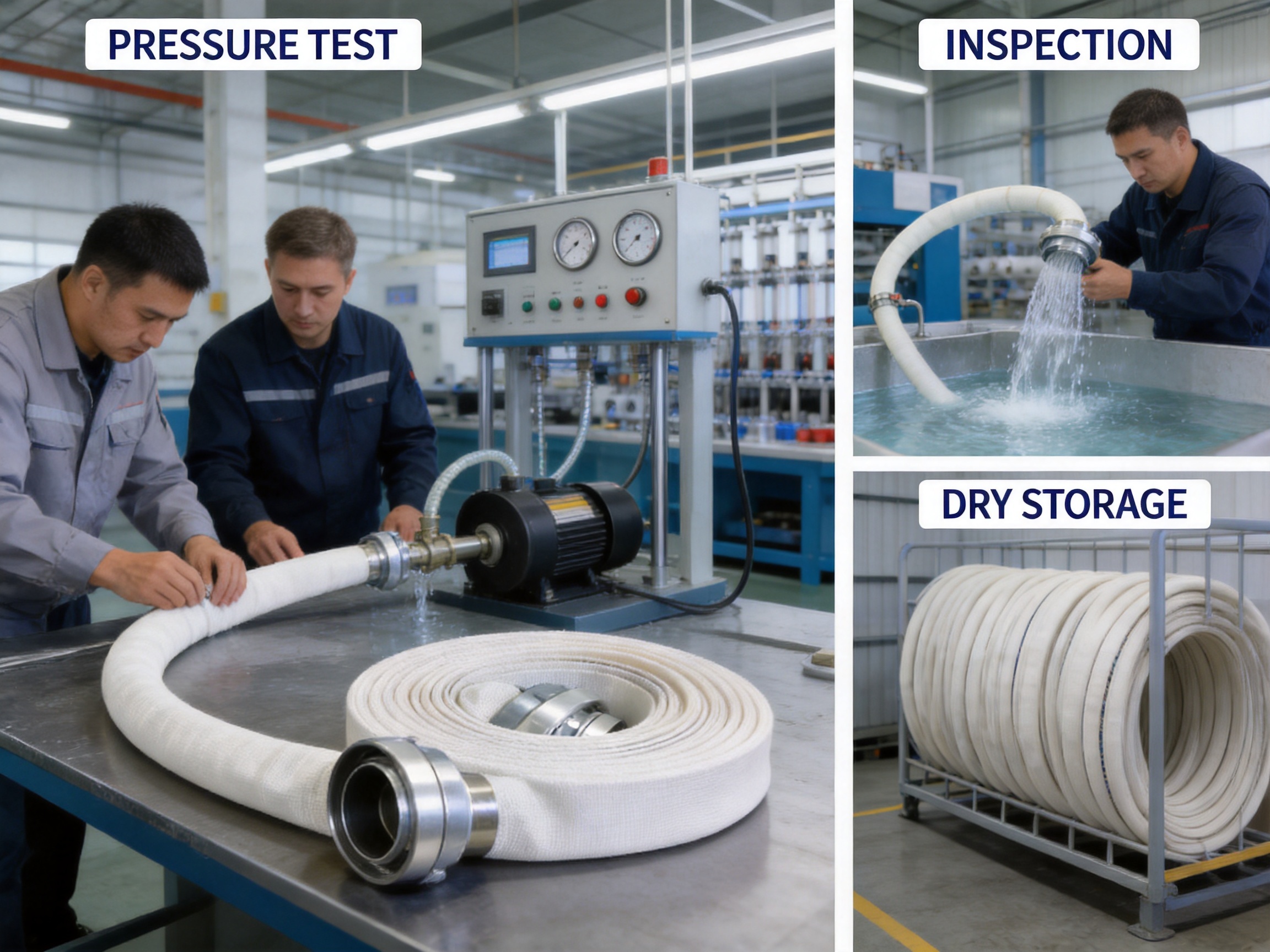
Before every important operation, inspect the entire hose length. Look for cuts, punctures, cracks, soft spots, bulges, exposed fabric, abnormal swelling, damaged couplings, loose hoops, and signs of chemical attack. Pay special attention to the areas near connectors because repeated bending and handling can concentrate stress at the ends.
Check that the selected hose pressure rating is suitable for the planned operating pressure. Confirm that the pump, fittings, valves, and nozzles are also compatible. If the hose has been stored for a long period, it should be inspected even if it appears unused.
Operators should avoid placing the hose near sharp objects, oils, fuels, solvents, and other substances that may attack the rubber or PVC materials. If a hose must cross a road or access route, an appropriate hose bridge or protective cover should be used to reduce the risk of wheel damage and intermittent water flow.
The hose should not be pulled by its connector. It should be moved by supporting the hose body and avoiding sudden jerks. When pressure is applied, operators should stand clear of connections and avoid placing hands or feet beneath a pressurized hose.
Any unusual vibration, leakage, bulging, pressure loss, or change in water flow should be treated as a warning. The pump should be stopped safely, the pressure relieved, and the hose inspected before operation resumes.
After use, the hose should be thoroughly cleaned to preserve the inner lining. It may be rinsed with lukewarm water or a suitable soap solution. Cleaning removes dirt, sediment, salts, and other materials that could remain inside the hose and contribute to deterioration.
Strong solvents, aggressive chemicals, abrasive brushes, and excessively hot water should not be used unless material compatibility has been specifically confirmed. Cleaning products should not leave residues that may damage the PVC lining or rubber exterior.
The hose must be dried before it is rolled up and stored. Rolling a wet hose can retain moisture inside the lining and create an environment that contributes to odor, material deterioration, or microbial growth. The hose should be drained, opened at both ends where practical, and allowed to dry thoroughly.
Store the hose in a cool, dry, and ventilated location away from direct sunlight, ozone-generating equipment, oils, fuels, solvents, acids, and sharp objects. Excessive ultraviolet exposure can gradually affect polymer materials, even when the hose is not in use.
The hose should be coiled without sharp folds and should not be crushed under heavy equipment. If it is stored on a vehicle, the storage compartment should prevent movement and protect it from hot surfaces. Periodic rotation and inspection can help identify damage before an emergency occurs.
Freezing conditions can damage water-filled hoses and connected equipment. During severe winter conditions, when water supply is temporarily interrupted, the maintenance guidance recommends operating the water pump at reduced speed to maintain minimal water output and help prevent freezing.
In practice, the hose should also be drained as soon as possible when the system is shut down, provided that draining is compatible with the fire protection procedure. Frozen water expands and can place significant stress on the lining, reinforcement, fittings, and pump components. Site-specific winterization procedures should be established for systems operating in cold climates.
Purchasers should provide detailed information when requesting a quotation. The required hose size, internal diameter, working pressure, length, connector type, coupling standard, operating temperature, application, and packaging requirements should be stated clearly.
The 2-inch, 25-Bar specification is a strong choice for many high-pressure water delivery applications, but it should not be selected automatically for every system. A larger diameter may be needed for higher flow rates, while a smaller diameter may be more practical for portable firefighting equipment. The system designer should calculate pressure loss and confirm pump compatibility.
Buyers should also clarify whether the hose will be used for emergency fire response, continuous irrigation, intermittent industrial transfer, vehicle-mounted equipment, or temporary construction service. These applications may have different requirements for abrasion resistance, storage, connector design, length, and inspection frequency.
For bulk orders, purchasers may request production samples, dimensional confirmation, pressure test documentation, packing details, labeling, and inspection arrangements. Repeat buyers should maintain a clear product specification so that future shipments remain consistent with previously approved samples.
Because the product is manufactured for international customers, packaging and shipment planning should be considered early. Hose rolls must be protected from crushing, moisture, contamination, and connector damage during transportation. Proper labeling can help warehouse teams identify size, pressure rating, length, and intended use after delivery.
A specialized water equipment manufacturer can offer advantages beyond the supply of a single hose. Fire hoses are commonly integrated with pumps, booster systems, valves, tanks, irrigation equipment, and control devices. When a supplier understands these related products, it can help customers select accessories that are more compatible with their complete water system.
Edwin Pump’s product range includes solar water pumps, deep well pumps, submersible pumps, domestic booster pumps, circulation pumps, intelligent booster pumps, commercial multistage pumps, surface pumps, garden pumps, pool and spa pumps, end suction pumps, and pump accessories. This broad range reflects experience in moving water under different pressure, flow, and installation conditions.
The company’s focus on medium-to-high-end global markets indicates an emphasis on product reliability, technical development, and international supply capability. Its experience in new energy projects, agricultural irrigation, municipal engineering, mining, construction, HVAC systems, and household water supply gives it exposure to a wide range of water-handling challenges.
For customers purchasing fire hoses alongside pumps or other accessories, a one-stop procurement model can reduce the number of separate suppliers involved in a project. It can also simplify communication about pressure, flow, connector compatibility, packaging, and delivery schedules.
The hose is designed for pressurized water delivery in fire protection, industrial, construction, agricultural, municipal, and other applications. It is particularly suitable for situations requiring a durable, flexible hose with working pressure options up to 25 Bar.
The highest listed working pressure is 25 Bar for selected sizes and configurations. The 2-inch hose is specifically described as a 25-Bar high-strength fire hose. The maximum pressure option depends on the selected diameter, so buyers should confirm the final specification before ordering.
The listed burst pressure for the 25-Bar configuration is approximately 75 Bar. This is a test-related limit and must not be treated as a normal operating pressure. The hose should be operated at or below its rated working pressure.
Available sizes range from 1 inch to 6 inches. Approximate internal diameters include 25 mm, 38 mm, 45 mm, 50 mm, 65 mm, 75 mm, 100 mm, 125 mm, and 150 mm.
The listed length range is generally 10 meters to 30 meters. Product information also identifies common lengths of 15 meters to 30 meters. The final available length should be confirmed with the supplier based on the selected size and pressure configuration.
The hose uses a PVC inner lining, polyester yarn reinforcement, and a rubber outer layer. Aluminum connectors and stainless steel 304 hoops may be included depending on the selected configuration.
It is described as compatible with standard fire hose fittings when the correct size and connection specification are selected. Because fitting standards vary between regions and systems, buyers should confirm the coupling type, dimensions, thread, and sealing method before purchase.
The listed maximum temperature is approximately 60 degrees Celsius. The hose is intended primarily for normal-temperature water service and should not be used for steam or high-temperature fluids without specific technical approval.
Yes. The product information identifies agricultural water conveyance and farmland irrigation as suitable applications. Users should protect the hose from sharp objects, oils, fuels, and chemicals that may affect the PVC or rubber materials.
After use, rinse the hose with clean lukewarm water or a suitable soap solution. Remove dirt and sediment, drain the hose, and allow it to dry completely before rolling and storing it.
Prevent water from freezing inside the hose whenever possible. Drain the hose after use, store it in a protected location, and follow site-specific winterization procedures. In severe winter conditions, reduced pump operation may help maintain minimal water output when temporary interruption is unavoidable.
The product combines a PVC lining, polyester yarn reinforcement, and rubber outer protection. This layered structure is designed to provide a stronger balance of internal water containment, pressure resistance, flexibility, and external durability than a basic single-material hose.
Yes. The manufacturer’s product range includes several types of water pumps and pump accessories, including deep well pumps, submersible pumps, booster pumps, circulation pumps, solar water pumps, intelligent booster pumps, commercial multistage pumps, surface pumps, garden pumps, pool and spa pumps, end suction pumps, pipes, and valves.
Provide the required size, internal diameter, working pressure, length, connector type, coupling standard, application, operating temperature, quantity, packaging needs, and destination. Clear technical information helps the supplier recommend the correct configuration and prepare an accurate quotation.
The high-strength PVC-lined rubber fire hose is designed to provide reliable and flexible water delivery for high-pressure fire protection and other demanding applications. Its combination of PVC lining, polyester yarn reinforcement, and rubber outer protection provides a practical balance of internal flow performance, pressure resistance, abrasion protection, and handling flexibility.
With sizes from 1 inch to 6 inches, working pressure options from 8 Bar to 25 Bar, and typical lengths from 10 meters to 30 meters, the product can be adapted to many different water system requirements. The 2-inch, 25-Bar configuration is particularly suitable for high-pressure environments where users need a manageable hose diameter and dependable water delivery.
The product’s advantages include multiple pressure choices, layered material protection, broad application suitability, standard fitting compatibility, and a construction intended for repeated handling. Its performance depends on correct selection, installation, operation, cleaning, drying, inspection, and storage.
Taizhou Edwin Electric Co., Ltd. supports this product with experience in pump manufacturing, product research and development, mass production, international export, and one-stop water equipment procurement. Its broader range of pump and water treatment products allows customers to coordinate hoses with pumps, valves, and other system components.
For fire protection contractors, industrial users, agricultural equipment suppliers, construction companies, municipal project managers, and international distributors, this PVC-lined rubber fire hose offers a versatile solution for pressurized water conveyance. Proper technical evaluation and application-specific configuration remain essential to achieving safe and reliable service.
1. Product technical data supplied for the high-strength PVC-lined rubber fire hose, including size, internal diameter, working pressure, burst pressure, and length ranges.
2. Manufacturer-provided product description covering PVC lining, rubber outer protection, polyester yarn reinforcement, connectors, temperature limitations, and intended applications.
3. Manufacturer-provided maintenance guidance covering hose connection, operation, placement, freezing prevention, cleaning, drying, and storage.
4. General principles of industrial hose selection, pressure rating, hydraulic compatibility, inspection, and maintenance.
5. General fire protection equipment practices concerning hose handling, fitting compatibility, pressure safety, and emergency water delivery.
6. Company information supplied for Taizhou Edwin Electric Co., Ltd., including its manufacturing history, research and development activities, product range, export operations, and water equipment applications.

edwina@edwin-pump.com
+86-13586290903 (WhatsApp)
Xuri Gongliang Cutting Tool Entrepreneurship Park, Wenqiao Town, Wenling City, Taizhou City, Zhejiang Province, China

High Performance Smart Pump Factory


 English