edwina@edwin-pump.com

View All Products
en
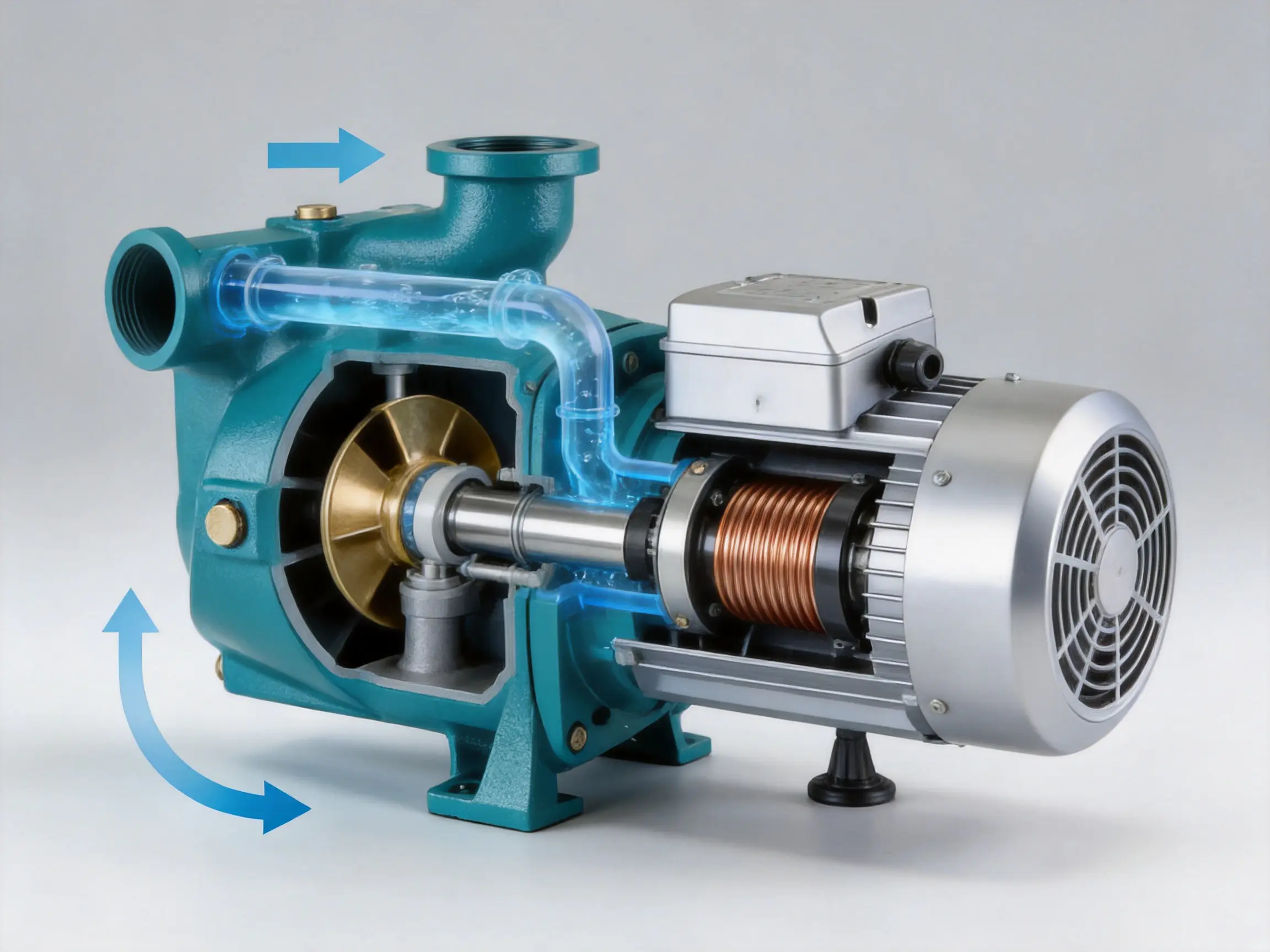
Reliable water transfer is essential in homes, gardens, farms, workshops, small commercial properties, and civil water-supply systems. A pump used in these applications must do more than move water. It must start reliably, tolerate the presence of air in the suction line, maintain stable pressure, resist corrosion in water-contact areas, and operate safely over long periods. The JSW Series self-priming jet pump is designed around these practical requirements.
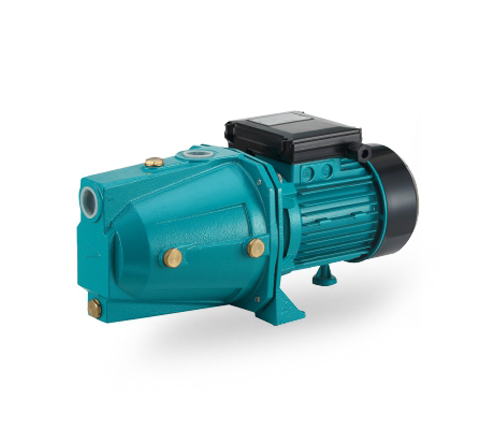
Combining a durable cast-iron body, brass impeller, AISI 304 stainless steel shaft, C&U bearing technology, and a self-priming hydraulic structure, the JSW Series provides a compact solution for clean-water transfer and pressure-boosting duties. Its operating range includes three models, from 0.45 kW to 0.75 kW, with maximum flow rates of 50 to 60 L/min and maximum heads of 45 to 60 m. The series also offers a maximum suction height of 8 m.
The pump is manufactured by Taizhou Edwin Electric Co., Ltd., an integrated enterprise engaged in product development, manufacturing, and global export. Since its establishment in 2008, the company has developed a broad water-pump portfolio covering deep-well pumps, submersible pumps, domestic booster pumps, circulation pumps, solar water pumps, intelligent booster pumps, and related water-treatment products. This manufacturing background supports the JSW Series with an organized product-development structure and experience in serving different international markets.
Unlike a basic centrifugal pump that may require a completely flooded suction line before operation, a self-priming jet pump can evacuate air from the suction pipe and establish water flow after the pump casing has been filled. This characteristic makes the JSW Series especially useful for tank transfer, shallow-well lifting, garden irrigation, domestic water distribution, and installations where air may occasionally enter the suction system.
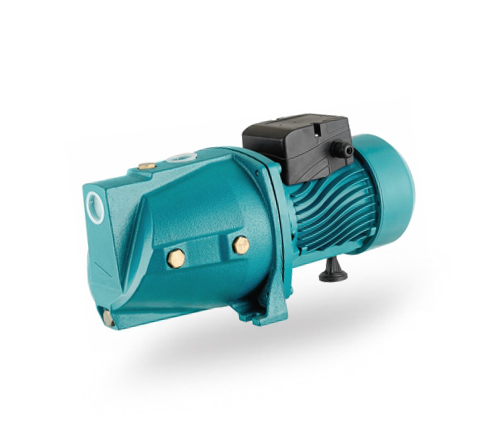
JSW Series C&U Bearing AISI304 Shaft Self-priming JET Pump for Clean Water
The JSW Series is intended for clean water and liquids with physical and chemical properties similar to water. It is not designed for abrasive slurries, heavily contaminated wastewater, corrosive chemicals, or liquids containing large solid particles. Within its recommended operating range, the pump provides an efficient and practical method of moving water between tanks, wells, pressure systems, irrigation networks, and household distribution points.
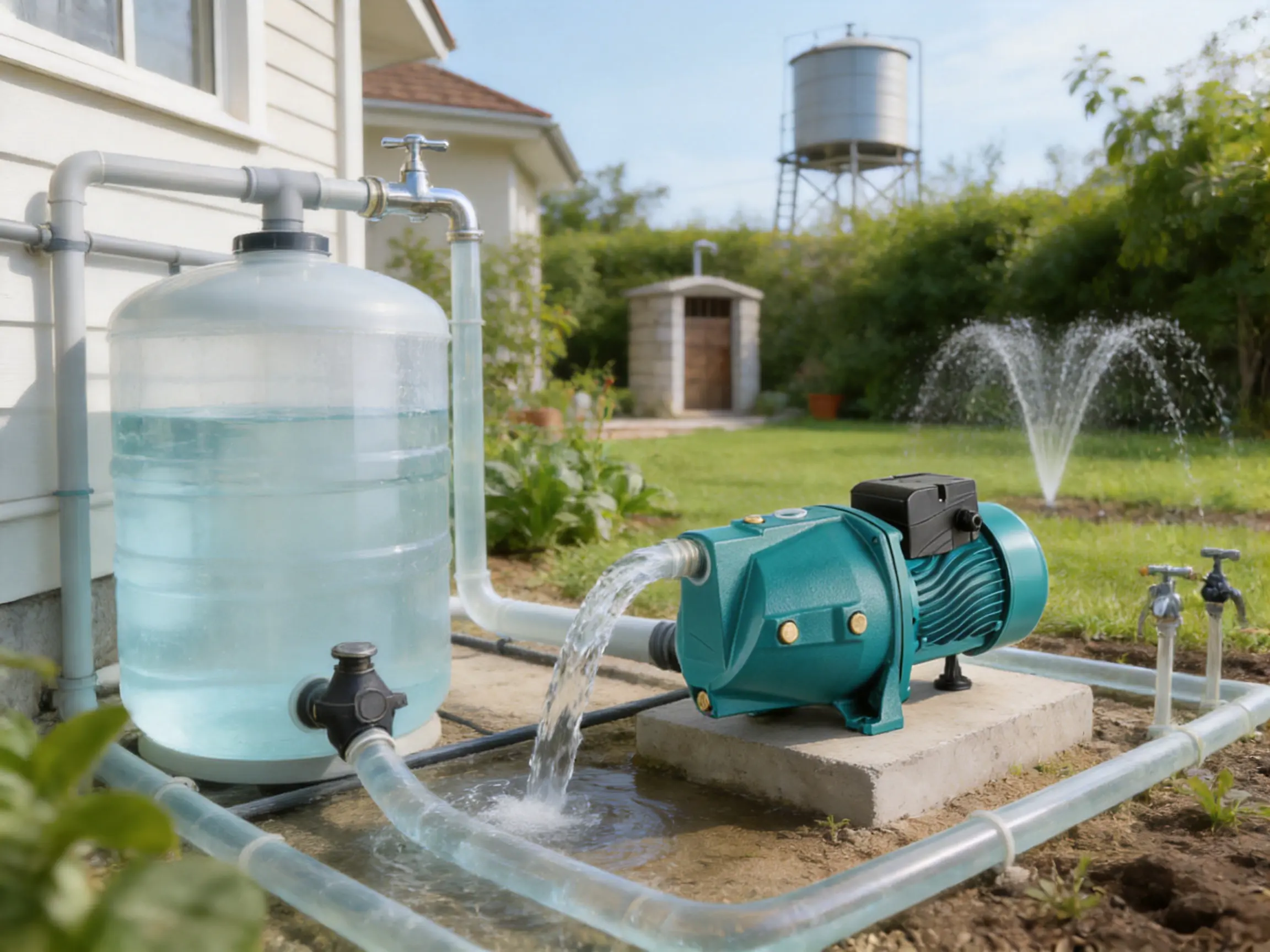
The hydraulic design is suitable for several common application conditions. Water may be drawn from a storage tank, lifted from a shallow well, distributed to a domestic water system, or directed through a garden irrigation arrangement. The pump can also be incorporated into small pressure sets where additional pressure is needed for showers, taps, sprinklers, or other outlets.
Its maximum liquid temperature is +40°C, which allows the pump to handle moderately warm water within the stated limit. The maximum ambient temperature is also +40°C. These operating limits make the unit suitable for typical indoor and outdoor installations in residential, agricultural, and light commercial environments, provided that the pump is protected from flooding, excessive heat, freezing conditions, and unsuitable liquids.
In residential applications, water pressure can be inconsistent when several outlets are used at the same time or when the source is positioned below the point of consumption. The JSW Series can support domestic water distribution by transferring water from a tank or shallow source and supplying it to a small pressure system.
The compact motor-and-pump arrangement is convenient for installations where space is limited. The 1-inch inlet and outlet connections also correspond to commonly used pipe sizes in small water systems. Properly sized pipes, foot valves, isolation valves, and non-return valves should be selected according to the installation requirements and local plumbing practice.
Garden irrigation systems often require moderate flow and dependable pressure rather than the very high capacities associated with large agricultural pumps. The JSW Series can supply sprinklers, hose systems, drip-irrigation headers, and small distribution networks when the selected model matches the required flow and head.
The self-priming function is useful where a pump is connected to a water tank or shallow source and the suction line may not remain completely full during periods of inactivity. Once the pump casing is correctly filled and the suction installation is properly sealed, the pump can re-establish suction more conveniently than a standard non-self-priming centrifugal design.
Many properties use rooftop tanks, ground-level storage tanks, rainwater storage systems, or shallow wells. The pump can be used to transfer clean water from one tank to another, raise water toward an elevated storage tank, or supply a distribution system from a shallow source.
The stated maximum suction height is 8 m. This figure should be treated as a maximum design value rather than a guarantee for every installation. Actual performance depends on suction-pipe diameter, pipe length, fittings, water temperature, altitude, airtightness, foot-valve condition, and the water level during operation. A shorter and properly sealed suction line will generally provide more reliable results than a long line with multiple bends and restrictive fittings.
The performance and service life of a self-priming jet pump depend heavily on the materials used in the hydraulic and motor assemblies. The JSW Series uses a combination of metallic and engineered-polymer components selected for strength, dimensional stability, corrosion resistance, and practical manufacturing efficiency.
The pump body and support are manufactured from HT200 cast iron. Cast iron provides strong structural support for the hydraulic chamber and motor connection while helping the pump resist vibration under normal operating conditions. The body and support receive a special anti-rust treatment intended to improve durability in ordinary water-pump environments.
Compared with lightweight polymer pump bodies, a cast-iron structure can offer greater rigidity and resistance to mechanical stress. Compared with lower-grade untreated castings, an anti-rust treatment provides an additional measure of protection during storage, installation, and use. This is particularly valuable in utility rooms, pump houses, gardens, and other locations where humidity may be present.
At the same time, cast iron is not a substitute for correct installation. The pump should be mounted on a stable foundation, kept away from prolonged standing water, and protected from direct exposure to aggressive chemicals or marine environments unless the complete installation has been specifically evaluated for those conditions.
The JSW Series uses a brass impeller. Brass is widely used in clean-water pumps because it provides a useful combination of mechanical strength, corrosion resistance, and reliable hydraulic performance. It is also less vulnerable to certain forms of corrosion than ordinary unprotected steel.
The brass impeller supports smooth operation and contributes to dependable restarting after periods of inactivity. This is important in seasonal applications such as garden irrigation, holiday properties, small allotments, and backup water systems. A pump that remains unused for an extended period must still be installed and maintained correctly, but the material selection helps reduce concerns associated with rust formation on key rotating components.
The shaft is made from AISI 304 stainless steel. Because the shaft is a rotating component located near water-contact areas and the mechanical seal, its material has a direct influence on long-term reliability. AISI 304 stainless steel offers good resistance to rust in normal clean-water applications and helps prevent deterioration at the shaft surface.
Compared with a conventional untreated carbon-steel shaft, an AISI 304 shaft provides a more suitable solution for repeated water exposure. It helps preserve the shaft’s surface condition, supports mechanical-seal performance, and reduces the possibility of rust-related damage in the water-contact zone.
The shaft and rotor assembly must still be protected from dry running, excessive vibration, misalignment, and unsuitable liquids. Stainless steel improves material durability, but it does not make the pump appropriate for every chemical or abrasive fluid.
The mechanical seal uses a carbon-and-ceramic combination. This type of seal is widely applied in clean-water pumps because it can provide a controlled barrier between the hydraulic chamber and the motor area. The seal must operate with adequate liquid lubrication and should never be exposed to extended dry running.
A properly functioning mechanical seal helps prevent water leakage into the motor assembly. If leakage is observed around the shaft area, the pump should be switched off and inspected rather than operated continuously. Seal wear may result from dry running, abrasive particles, incorrect alignment, excessive temperature, or normal service life.
The venturi tube and diffuser are made from PPO, an engineered polymer selected for dimensional stability and suitability within the jet-pump hydraulic assembly. These components help create the pressure and velocity conditions necessary for the self-priming jet effect.
Using engineered polymer components in these areas can reduce weight and support accurate, repeatable production of hydraulic passages. The material also avoids unnecessary corrosion in components that are exposed to clean water. The performance of the venturi and diffuser depends on correct assembly, clean water, and the absence of blockages or foreign objects.
The motor case is made from aluminum, while the motor cover is made from cast iron. Aluminum helps reduce weight and provides practical heat-dissipation characteristics for the motor housing. The cast-iron cover adds structural strength to the rear portion of the motor assembly.
The terminal board is made from PC material, and the cooling fan is made from PP. These materials are selected for their suitability in electrical and motor-support components. The fan cover, terminal cover, capacitor, stator, rotor, and bearing form part of the complete motor system and must be assembled accurately to maintain safe operation.
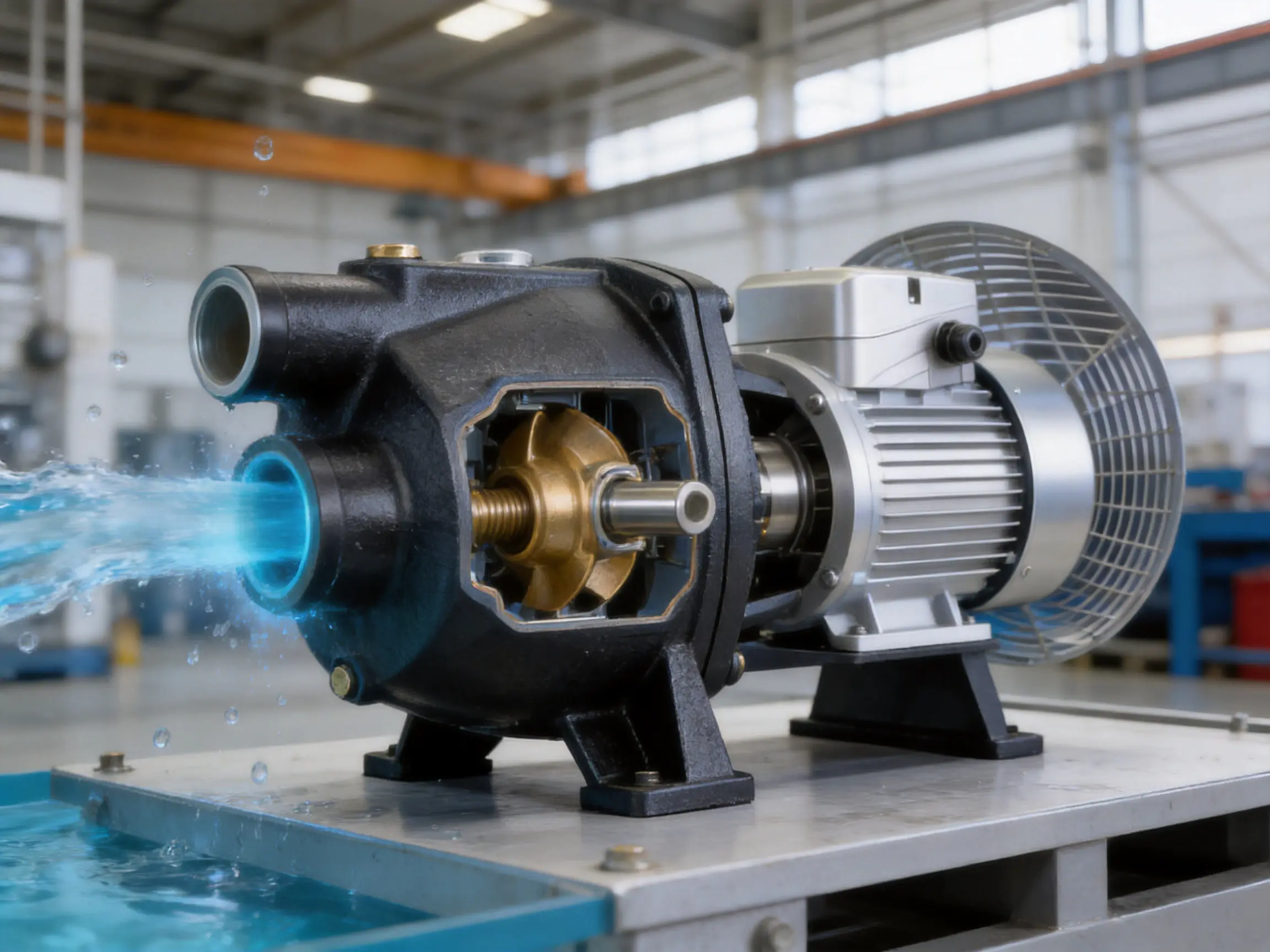
The main functional advantage of the JSW Series is its self-priming jet-pump design. A self-priming pump is designed to remove air from the suction pipe by recirculating water through an internal hydraulic passage. This process creates the pressure difference needed to draw water upward from the source.
Before the first start, the pump casing normally needs to be filled with clean water according to the installation instructions. The suction line should be airtight and equipped with a suitable foot valve or other arrangement to prevent water from draining back to the source. Once the pump has been correctly primed, the jet assembly can assist in removing residual air from the suction line during operation.
This design is particularly useful in systems where the suction pipe may contain a small amount of air after shutdown. A conventional centrifugal pump can lose its prime under such conditions and may need manual refilling. The self-priming function of the JSW Series reduces this inconvenience, although it cannot compensate for a major air leak, an incorrectly installed suction line, or an empty water source.
A basic centrifugal pump may offer a lower initial cost, but it often requires a fully flooded suction arrangement or frequent manual priming. The JSW Series offers more flexibility for shallow suction applications because the jet mechanism is designed specifically to manage air in the suction system.
The pump also combines self-priming performance with a brass impeller, stainless steel shaft, and robust cast-iron structure. This combination gives it a broader practical advantage than a low-cost pump constructed entirely from basic materials. Buyers seeking dependable operation should evaluate the complete construction, not only the motor power or purchase price.
Compared with some lightweight domestic pumps, the JSW Series emphasizes durability in its body, support, shaft, and impeller. Compared with larger commercial multistage pumps, it offers a simpler and more compact solution for moderate-flow applications. Its value is strongest when the required duty falls within its intended range: clean water, shallow suction, moderate flow, and small to medium pressure requirements.
The JSW Series includes three models. Each model has 1-inch inlet and outlet connections and a maximum suction height of 8 m. The principal differences are motor power, maximum flow, and maximum head.
| Model | Power | Motor Rating | Inlet/Outlet | Maximum Flow | Maximum Head | Maximum Suction |
|---|---|---|---|---|---|---|
| JSW-6M | 0.45 kW | 0.6 HP | 1 inch x 1 inch | 50 L/min | 45 m | 8 m |
| JSW-8M | 0.55 kW | 0.75 HP | 1 inch x 1 inch | 55 L/min | 50 m | 8 m |
| JSW-10M | 0.75 kW | 1 HP | 1 inch x 1 inch | 60 L/min | 60 m | 8 m |
The values in the table are maximum performance figures. Actual flow and head will vary according to the system curve. Pipe friction, elevation, fittings, valves, water temperature, suction conditions, and outlet restrictions all influence the working point. A pump should not be selected solely because its maximum head or maximum flow appears suitable.
For example, a system requiring a high flow rate at a significant elevation may need the JSW-10M rather than the JSW-6M. Conversely, a small garden system with limited water demand may operate efficiently with the JSW-6M. The JSW-8M provides an intermediate option for users who need a balance between flow and pressure.
Maximum head is the theoretical vertical height at which the pump can produce zero or nearly zero flow. It is not the same as the pressure available at every outlet. As flow increases, the available head decreases. The actual duty point should therefore be checked against the pump’s performance curve when a precise system design is required.
Static elevation is only one part of total head. The total dynamic requirement also includes friction loss in pipes and fittings, pressure requirements at the outlet, and any additional equipment installed in the system. A correctly selected pump must provide adequate head at the required operating flow, not merely reach the required elevation under no-flow conditions.
Maximum flow is normally measured under conditions with very limited resistance. Real installations include pipes, bends, filters, valves, sprinklers, hose nozzles, and elevation differences. These elements reduce the delivered flow.
Users should avoid oversizing the pump simply to obtain a higher maximum flow. Oversizing may lead to unnecessary energy consumption, excessive cycling, water hammer, or operation outside the most efficient part of the hydraulic range. The correct model is the one that meets the required duty with a reasonable operating margin.
The JSW Series motor uses durable copper wiring. Copper conductors provide good electrical conductivity and help support efficient motor operation when the pump is connected to a suitable power supply. The motor is also equipped with high-efficiency C&U bearings, which are intended to support smooth rotor movement and stable operation.
Bearings are essential to the service life of a pump motor. They maintain shaft alignment, reduce friction, and support the rotating assembly. High-quality bearings can help reduce vibration and operating noise while supporting consistent mechanical performance.
The C&U bearing specification is a notable advantage for a pump in this category because bearing quality influences more than smoothness. It also affects shaft loading, seal stability, rotor alignment, and motor efficiency. Proper lubrication, correct installation, and protection from water ingress remain essential for achieving the expected bearing life.
The single-phase motor includes a built-in thermal protector. This protection is designed to help prevent motor damage caused by overheating. Overheating may result from overload, blocked ventilation, excessive ambient temperature, low voltage, incorrect wiring, frequent cycling, or operation against unsuitable hydraulic conditions.
A thermal protector is an important safety feature, but it should not be treated as a replacement for correct system design. If the protector repeatedly trips, the cause should be identified. Repeated resetting without inspection may shorten motor life or indicate a serious installation problem.
The motor uses Class F insulation. Insulation class defines the thermal capability of the motor winding insulation system. Class F provides a practical level of thermal endurance for many pump-motor applications, provided that the motor remains within its rated operating conditions.
Good electrical practice is still necessary. The supply voltage should match the motor rating, the circuit should include suitable protection, and all wiring should be completed by qualified personnel. The terminal cover must remain correctly installed to help protect electrical connections from environmental exposure.
The motor protection rating is IP44. This indicates protection against solid objects above a specified size and against water splashing from various directions. IP44 does not mean that the motor is waterproof or suitable for immersion.
The pump should be installed in a dry, ventilated location where it will not be exposed to direct jets of water, flooding, or prolonged condensation. Outdoor installations should include appropriate shelter and drainage. Electrical work should comply with local regulations and the conditions of the installation site.
The performance of a pump is influenced not only by its design but also by the consistency of the manufacturing process. Taizhou Edwin Electric Co., Ltd. operates as an integrated manufacturing enterprise with independent research and development, mass-production capability, and global export experience. This combination is important for buyers who require repeatable quality across multiple orders.
The company was founded in 2008 and has developed experience in the production of several water-pump categories. Its product portfolio includes solar water pumps, deep-well pumps, submersible pumps, domestic booster pumps, circulation pumps, intelligent booster pumps, and other water-pump accessories. Experience across multiple product families can support component knowledge, application understanding, and practical design improvements.
Independent research and development enables a manufacturer to adapt pump structures to different operating conditions rather than relying only on generic products. For the JSW Series, this includes the integration of a self-priming jet system, selected hydraulic materials, a stainless steel shaft, thermal protection, and a compact domestic-pump configuration.
Research and development also involves evaluating the relationship between hydraulic performance, motor power, materials, assembly, noise, heat generation, and service requirements. A pump is a complete system, and improvements in one area must be balanced against the effects on other components.
Mass production can provide several advantages when supported by appropriate process control. Repeated manufacturing procedures help standardize component dimensions, assembly methods, wiring arrangements, and inspection routines. Consistency is especially important for pump components such as impellers, diffusers, venturi tubes, mechanical seals, shafts, bearings, stators, and motor housings.
The JSW Series uses a defined component structure with identified materials for many parts. The pump body and support use HT200 cast iron, the venturi tube and diffuser use PPO, the impeller uses brass, the mechanical seal uses carbon and ceramic, the motor case uses aluminum, the motor cover uses cast iron, the fan uses PP, and the terminal board uses PC. A clear materials structure helps support purchasing, production planning, assembly, and replacement-part management.
An integrated manufacturer can coordinate product development, sourcing, production, inspection, packaging, and export preparation within a connected organization. This can improve communication when customers require different models, power ratings, packaging arrangements, labels, or shipment quantities.
For international buyers, manufacturing strength also includes the ability to manage order tracking, procurement planning, cross-border delivery, and foreign-trade services. Edwin Pump established related companies to support procurement and export activities, helping create a broader one-stop service structure for customers purchasing pumps and water-treatment peripheral products.
The company’s products are used in new-energy projects, agricultural irrigation, municipal engineering, mining, construction, HVAC systems, and household water supply. The JSW Series is aimed primarily at clean-water domestic and civil applications, but experience across wider sectors can contribute to a better understanding of water movement, pressure requirements, environmental conditions, and system integration.
Since 2018, the company has invested in new-energy and intelligent technologies, including solar water pumps and intelligent booster pumps. This development direction shows an effort to respond to changing market requirements, including energy efficiency, automation, remote operation, and integrated water management.
Customers comparing the JSW Series with competing products should consider the application, not only the brand name or rated horsepower. The series offers several practical advantages over common alternatives.
The clearest advantage is self-priming capability. A non-self-priming centrifugal pump generally requires the suction pipe and casing to remain full of water. If air enters the line, the pump may lose its prime and require manual refilling. The JSW Series is designed to remove air from the suction line after the casing is filled, making it more convenient for shallow-source and intermittent-use applications.
Some low-cost pumps use extensive plastic construction to reduce manufacturing and shipping costs. While plastic can be useful in selected hydraulic components, the JSW Series combines engineered polymer parts with cast iron, brass, stainless steel, and aluminum. This balanced material selection offers structural strength where it is needed and corrosion-resistant or lightweight materials where they are appropriate.
Multistage pumps are suitable for higher pressure, larger systems, and more demanding commercial duties, but they can be unnecessarily complex for a small household or garden installation. The JSW Series provides a simpler alternative for moderate-flow clean-water applications. Its compact format can reduce installation complexity and make routine maintenance more accessible.
A basic booster pump may provide pressure assistance but may not be suitable for lifting water from a shallow well or tank through a suction line. The JSW Series combines booster-pump usefulness with shallow-source suction capability. Its 8 m maximum suction specification gives it greater flexibility than a pump intended only for flooded-inlet pressure boosting.
The combination of a brass impeller, AISI 304 shaft, carbon/ceramic mechanical seal, C&U bearings, copper wiring, thermal protection, Class F insulation, and IP44 motor protection creates a well-rounded package. Competitors may offer one or two of these features, but buyers should compare the complete configuration when evaluating durability and value.
Correct installation is essential for achieving self-priming performance and long service life. The pump should be placed on a firm, level base that can support its weight and limit vibration. The installation area should be dry, ventilated, accessible for inspection, and protected from flooding.
The suction pipe should be as short and direct as practical. It should have an internal diameter appropriate for the pump connection and should avoid unnecessary bends, high points, and restrictions. All threaded connections must be sealed carefully because even a small air leak on the suction side can prevent successful priming.
A foot valve is recommended when the water source is below the pump or when the suction line could drain after shutdown. The foot valve should be positioned below the minimum water level and kept clear of mud, sand, leaves, and other debris. A suitable strainer may be installed where necessary, but excessive restriction should be avoided.
The pump casing should be filled with clean water before the first start and after any condition that causes the pump to lose its prime. The discharge valve may be adjusted during startup according to the system requirements. The pump should never be operated for a prolonged period without water because dry running can damage the mechanical seal and other hydraulic components.
The electrical connection should be completed by qualified personnel. The power supply must match the motor rating, and suitable overload, short-circuit, grounding, and residual-current protection should be provided where required by local regulations. Cable size should correspond to the installation distance and current demand.
Routine inspection can significantly improve pump reliability. Users should check for unusual noise, excessive vibration, leakage, reduced pressure, repeated thermal trips, abnormal motor temperature, and changes in priming behavior. Any unusual condition should be investigated before the pump is returned to continuous operation.
The suction strainer and foot valve should be cleaned periodically. Blockages increase suction resistance and can cause cavitation, reduced flow, or loss of prime. Pipes and fittings should also be checked for leaks, especially after maintenance or freezing weather.
The pump should be drained when there is a risk of freezing. Water that freezes inside the casing can expand and damage the pump body, hydraulic components, mechanical seal, or connected pipes. Seasonal installations should be inspected before restarting after a long period of inactivity.
The motor ventilation openings and fan cover should be kept free of dust and obstructions. Adequate airflow helps the motor dissipate heat and reduces the likelihood of thermal-protector activation. Electrical terminals should be checked by qualified personnel during scheduled maintenance.
Mechanical seals, bearings, impellers, capacitors, and other wear-related components may eventually require replacement. The correct replacement parts should be selected according to the specific model and production configuration. Maintenance should be carried out with the power disconnected and the hydraulic system depressurized.
Before choosing a JSW Series model, buyers should identify the water source, suction height, required flow, total head, pipe size, duty cycle, ambient conditions, and electrical supply. These factors are more important than selecting the largest available motor by default.
The JSW-6M is suitable for users whose requirements are close to a maximum flow of 50 L/min and a maximum head of 45 m. The JSW-8M provides an intermediate capacity with a maximum flow of 55 L/min and a maximum head of 50 m. The JSW-10M offers the highest capacity in the series, reaching up to 60 L/min and 60 m maximum head.
Because the maximum suction height is 8 m for all three models, selecting a larger motor does not automatically increase the permissible suction height. If the source is deeper than the specified limit, a different pump arrangement, such as a submersible pump or a properly designed deep-well system, may be more appropriate.
Users should also confirm the electrical frequency and voltage before ordering. The supplied technical information identifies the motor as single-phase and includes a thermal protector, but the precise electrical specification should be confirmed for the intended market and order configuration.
The pump is designed for clean water and liquids with physical and chemical properties similar to water. It should not be used for abrasive slurry, heavily contaminated wastewater, corrosive chemicals, or liquids containing large solid particles unless the complete pump configuration has been specifically approved for that service.
Self-priming means that, after the pump casing has been filled with water, the pump can use its internal jet action to help remove air from the suction pipe and establish water flow. The suction line must still be airtight, and the pump cannot operate correctly if the source is empty or if there is a major air leak.
Yes. The pump casing should normally be filled with clean water before the first start and whenever the pump has lost its prime. Operating the pump without water can damage the mechanical seal and may cause overheating.
The maximum stated suction height is 8 m. Actual performance depends on the installation, including pipe length, pipe diameter, fittings, water temperature, altitude, foot-valve condition, and airtightness. A lower practical suction height may be required in difficult conditions.
Maximum head is the highest pressure-related elevation the pump can theoretically reach under low-flow conditions. Maximum suction is the vertical distance from the water surface to the pump inlet on the suction side. They are different design parameters and should not be added together without a complete hydraulic calculation.
The maximum liquid temperature is +40°C. The pump may be used for water up to this stated limit, but it is not intended for high-temperature industrial service. The ambient temperature is also specified as a maximum of +40°C.
The correct model depends on the required flow, sprinkler pressure, pipe length, elevation, and number of outlets. The JSW-6M may be adequate for a small system, while the JSW-8M or JSW-10M may be better for longer lines or higher pressure requirements. The operating point should be checked rather than relying only on maximum figures.
Yes, it can be used for clean-water lifting from a shallow well within the maximum 8 m suction specification. The well must provide sufficient water, and the suction pipe should include a suitable foot valve and strainer where necessary.
The single-phase motor includes a built-in thermal protector. It also uses Class F insulation and has an IP44 protection rating. These features improve operational safety, but correct wiring, grounding, overload protection, ventilation, and installation remain necessary.
The AISI 304 stainless steel shaft provides improved rust resistance in water-contact areas compared with an untreated carbon-steel shaft. It supports reliable rotation and helps protect the area around the mechanical seal, although the pump must still be used only with suitable liquids.
Maintenance includes checking for leaks, cleaning the suction strainer and foot valve, inspecting pipes and fittings, keeping the motor ventilation clear, monitoring noise and vibration, protecting the pump from freezing, and arranging qualified inspection of electrical connections. Wear components should be replaced with compatible parts when necessary.
A submersible pump operates below the water surface and pushes water upward, while the JSW Series is installed outside the source and draws water through a suction pipe. The JSW Series is convenient when the pump must remain accessible and the source is within the 8 m suction limit. A submersible or deep-well pump may be more suitable for deeper sources.
The JSW Series self-priming jet pump is a practical clean-water solution for domestic supply, garden irrigation, tank transfer, shallow-well lifting, water towers, automatic irrigation systems, and small civil water applications. Its principal strengths are the self-priming jet structure, 8 m maximum suction capability, brass impeller, AISI 304 stainless steel shaft, cast-iron pump body and support, carbon/ceramic mechanical seal, C&U bearings, copper motor wiring, thermal protection, Class F insulation, and IP44 motor protection.
The three-model range makes it possible to select a capacity suited to different requirements, from the 0.45 kW JSW-6M to the 0.75 kW JSW-10M. Buyers should evaluate the complete hydraulic system, including actual flow, total head, suction conditions, pipe resistance, and electrical supply, before making a selection.
Its competitive value comes from the combination of reliable materials, useful self-priming performance, compact construction, and a manufacturing organization with experience in research and development, mass production, international export, and multiple water-pump categories. When installed correctly and operated within its clean-water and temperature limits, the JSW Series can provide dependable service for residential, agricultural, and light commercial water-transfer applications.
1. Product technical information for the JSW Series self-priming jet pump, including model ratings, materials, temperature limits, suction height, and motor protection specifications.
2. Manufacturer-provided component and materials table for the JSW Series pump assembly.
3. Manufacturer company profile describing research and development, mass production, global export, and water-pump product categories.
4. General principles of centrifugal and self-priming jet-pump operation, including suction-line design, priming procedures, hydraulic head, and flow-rate selection.
5. General pump-maintenance practices covering mechanical seals, bearings, suction strainers, thermal protection, electrical safety, and freeze protection.
edwina@edwin-pump.com
+86-13586290903 (WhatsApp)
Xuri Gongliang Cutting Tool Entrepreneurship Park, Wenqiao Town, Wenling City, Taizhou City, Zhejiang Province, China

High Performance Smart Pump Factory


 English