edwina@edwin-pump.com

View All Products
en
Small-scale drainage and water-transfer tasks often demand more than a basic electric pump. The equipment must operate in wet conditions, tolerate regular immersion, protect its motor against overheating, and provide practical service for homes, farms, construction sites, workshops, and commercial facilities. The SPA3 submersible sewage pump is designed for this type of demanding working environment. It combines a compact submerged pumping format with a copper-wound motor, built-in thermal protection, IPX8 protection, and an operating design intended for water drainage and transfer applications.
Unlike a surface pump, a submersible pump is installed directly inside the water or accumulated liquid. This arrangement reduces the need for suction pipes, helps eliminate many priming problems, and enables the pump to remove water from wells, pits, tanks, flooded areas, and other low-level locations. Because the motor and hydraulic unit are placed together, the system can provide a straightforward solution where installation space is limited or where the liquid level changes frequently.
The SPA3 is particularly suitable for users who require a practical pump for small electrical irrigation and drainage equipment. Its application range includes urban well-water pumping, field irrigation, garden irrigation, household water supply, industrial accumulated-water drainage, construction-site water handling, and livestock-breeding water supply and drainage. These uses place different demands on a pump, but they share a need for simple installation, dependable operation, and protection against the effects of immersion.
This article examines the pump’s operating concept, application value, motor design, safety features, installation considerations, maintenance needs, and the manufacturing strengths behind its production. It also explains how the product compares with common alternatives and why a focused, application-oriented design can offer advantages over unsuitable general-purpose pumps.
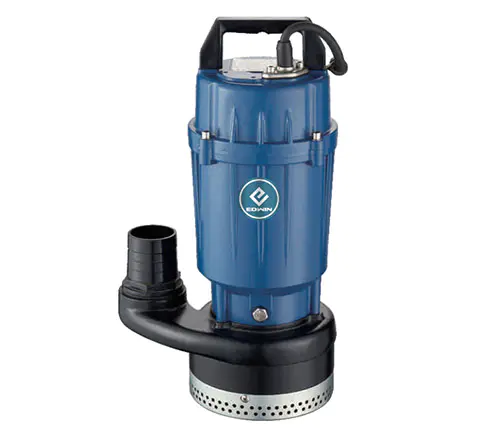
SUBMERSIBLE SEWAGE PUMP SPA3
The SPA3 is a submerged electric pump intended to move water and accumulated liquid from one location to another. The central design principle is simple: instead of drawing liquid through a long suction line from outside the water, the pump is lowered into the liquid and pushes the water through a discharge connection. This can make installation faster and more dependable, especially in pits, wells, tanks, drainage points, and areas where the water level is below the available floor or ground level.
The pump is identified as a submersible sewage pump, but the available product information emphasizes small electrical irrigation, drainage, water-supply, and accumulated-water applications. The correct application should therefore be confirmed according to the liquid condition, solids content, required flow, discharge head, and operating schedule. For clean or moderately contaminated water, the pump can be considered for many practical drainage duties. If the liquid contains large solids, abrasive particles, corrosive chemicals, oil, or unusually heavy sludge, the user should request a detailed suitability review before purchase.
Its maximum immersion depth is specified as 5 meters, and the maximum liquid temperature is 40°C. These limits are important because submersible equipment depends on the surrounding liquid for operating conditions and heat management. Staying within the specified depth and temperature range supports reliable mechanical and electrical performance.
The motor uses copper winding and includes a built-in thermal protector. Copper winding is valued in electric motors because copper offers effective electrical conductivity and supports stable current transmission through the windings. The thermal protector adds a further layer of operational safety by helping protect the motor when temperature rises excessively because of overload, restricted flow, voltage issues, or other abnormal conditions.
The motor has insulation class B and a protection class of IPX8. IPX8 indicates that the enclosure is designed for continuous immersion under conditions specified by the manufacturer. It does not mean that every installation condition is automatically safe. Correct cable handling, proper grounding, suitable electrical protection, and observance of the immersion limit remain essential.
A good pump selection process begins with the operating conditions rather than with the product name alone. The following table summarizes the principal information available for the SPA3.
| Item | Specification or feature | Practical importance |
|---|---|---|
| Product type | Submersible sewage pump | Designed for submerged installation in drainage and water-transfer locations |
| Maximum immersion depth | 5 meters | Defines the maximum recommended installation depth |
| Maximum liquid temperature | 40°C | Suitable for normal-temperature water and drainage liquids within this limit |
| Motor winding | Copper winding | Supports efficient electrical conduction and stable motor operation |
| Motor protection | Built-in thermal protector | Helps protect the motor from excessive temperature |
| Insulation class | Class B | Defines the thermal capability of the motor insulation system |
| Protection class | IPX8 | Supports continuous immersion when installed under specified conditions |
| Typical uses | Irrigation, drainage, household supply, construction drainage, industrial accumulated-water removal, and livestock facilities | Provides flexibility across agricultural, domestic, commercial, and light industrial tasks |
The table does not replace a complete pump performance curve. Flow rate, head, power, outlet size, solids-passage capability, and electrical parameters should be confirmed from the appropriate technical datasheet before final selection. These details determine whether the pump can meet a particular system requirement.
The most visible advantage of the SPA3 is its submerged operating format. A surface-mounted pump must lift water through a suction pipe, and that suction arrangement can create installation challenges. Air leaks, excessive suction height, poor pipe layout, and insufficient priming may reduce performance or prevent the pump from starting correctly. A submersible pump avoids many of these problems by working directly in the water.
For drainage tasks, direct placement is especially useful. When water accumulates in a basement pit, agricultural ditch, construction excavation, tank, or industrial collection point, the pump can be positioned close to the lowest practical level. This allows water to be removed without building a complex suction system. The discharge pipe then carries water to an approved outlet, storage tank, irrigation line, or drainage channel.
Many small drainage locations do not have enough room for a separate pump base, motor shelter, suction manifold, and control arrangement. A submerged pump occupies the wet area rather than requiring a dedicated dry installation platform. This can reduce the footprint of the pumping arrangement and simplify temporary installations.
Construction contractors, farms, and maintenance teams may also benefit from this compact approach because equipment can be moved between locations. The pump can be installed when water removal is needed and removed for storage after the task is complete, provided it is handled, cleaned, and stored correctly.
Surface pumps generally need to be filled and kept primed before operation. A pump installed below the water level is naturally surrounded by the liquid it is intended to move. This reduces the risk of dry suction lines and makes startup more convenient. Nevertheless, the pump must not be allowed to run without sufficient liquid coverage. Submersible operation does not eliminate the need to prevent dry running.
Water levels in drainage pits, irrigation sources, and temporary collection areas can change quickly. A submersible design can follow the changing level more easily than a fixed surface installation. The operator should still ensure that the pump remains adequately submerged and that the intake is not blocked by sediment, weeds, cloth, plastic, or other debris.
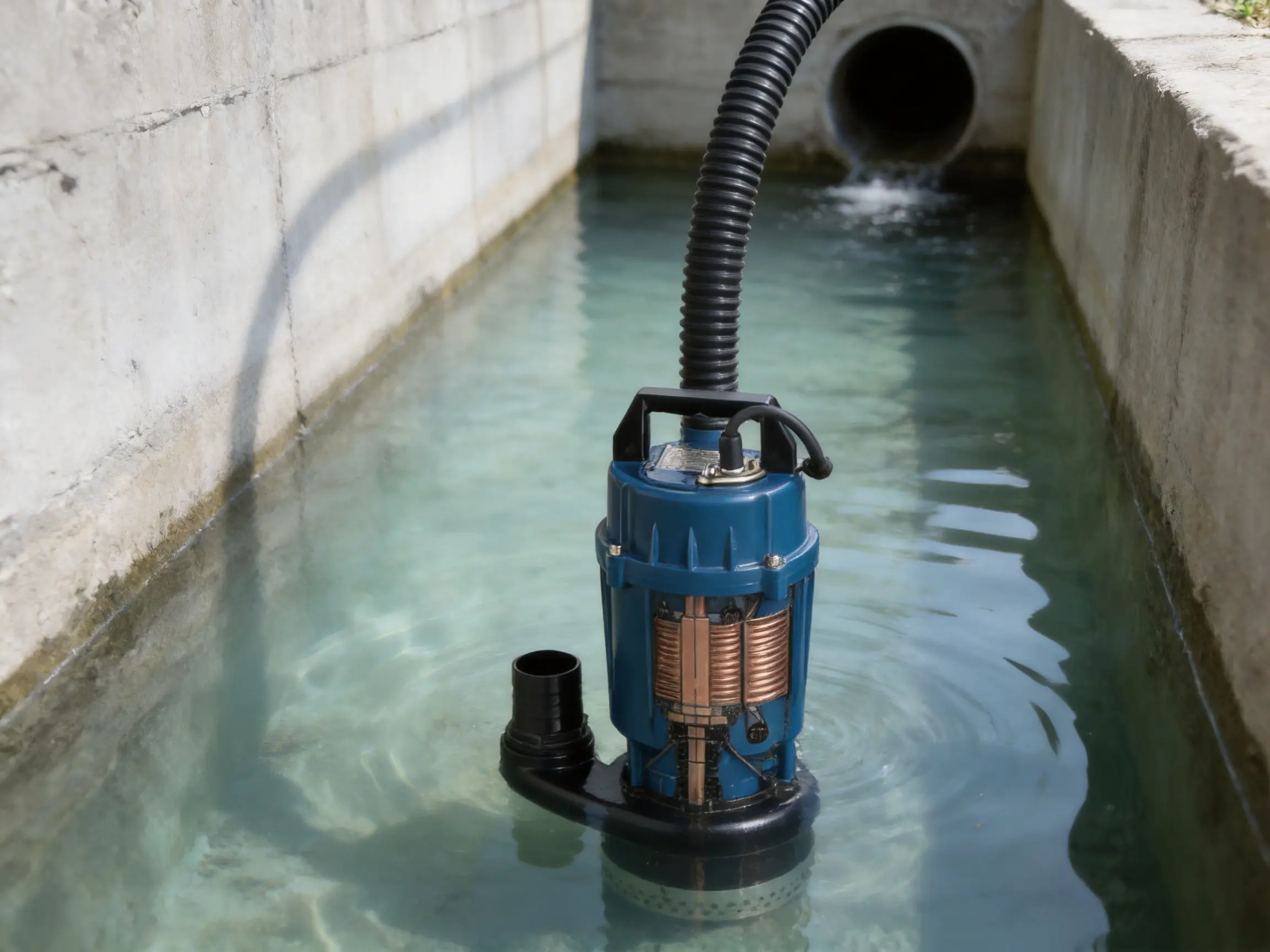
The motor is the power source of the pump, and its construction strongly influences operating stability. The SPA3 uses a copper winding motor. Copper is widely used in electric motors because it combines good conductivity with practical mechanical and thermal performance. An effective winding supports the conversion of electrical energy into rotational energy, which is then transferred to the pump’s hydraulic components.
Compared with an inferior winding arrangement, a properly manufactured copper winding can contribute to more stable operation and reduced electrical losses under suitable working conditions. It can also support consistent motor performance when the pump is used according to its rated electrical requirements. The use of copper winding is therefore an important product feature for buyers who prioritize dependable daily operation over the lowest initial purchase price.
A thermal protector is an important safeguard in a compact submerged motor. The motor may experience elevated temperature when the discharge line is restricted, the pump is overloaded, the voltage is abnormal, the impeller is obstructed, or the pump operates in an unsuitable liquid. The built-in thermal protector is designed to respond to excessive motor temperature and help prevent damage.
Thermal protection should be regarded as a protective measure rather than a license to ignore operating conditions. Repeated thermal trips may indicate a blockage, incorrect voltage, an undersized cable, insufficient liquid coverage, excessive discharge resistance, or a pump-selection problem. The cause should be identified before the pump is returned to continuous operation.
Insulation class B identifies the thermal category of the motor insulation system. Motor insulation separates the electrical conductors and helps prevent short circuits within the winding. Correct insulation is essential in a pump that operates in a humid or submerged environment. The insulation system must be supported by proper sealing, cable integrity, grounding, and correct assembly.
IPX8 is particularly relevant to a submersible pump. It indicates a high level of protection against water ingress during continuous immersion under manufacturer-defined conditions. This feature supports the fundamental role of the product: operating while surrounded by water.
IPX8 protection does not eliminate all installation responsibilities. The power cable should not be cut, repaired with unsuitable materials, or placed where it can be crushed. Electrical connections should remain dry and protected. The pump should be connected through an appropriate circuit protection device, and local electrical regulations should be followed. Installation and servicing should be performed by a qualified person whenever electrical hazards are present.
Small urban wells and collection points may require a compact pump that can be lowered into the water without extensive surface equipment. The SPA3 can be considered for well-water pumping within its 5-meter maximum immersion depth and 40°C liquid-temperature limit. The water quality should be evaluated before use, especially where sand, gravel, or other abrasive material may be present.
Small field irrigation systems often need to move water from a pond, collection basin, shallow well, or storage tank to an irrigation line. A submersible pump can provide a direct connection between the water source and the discharge pipe. It may be useful for vegetable plots, nurseries, small farms, and seasonal irrigation work.
Irrigation design should account for pipe length, elevation changes, fittings, filters, and the pressure requirements of sprinklers or drip systems. The pump should not be selected solely because the source is accessible. The required flow and total head must be matched with the pump’s performance data. If the water contains mud, plant matter, or sand, a screen or suitable pre-filtration arrangement may be necessary.
Gardens commonly include rainwater tanks, decorative ponds, storage containers, and low-level collection areas. A compact submersible pump can transfer water from these sources to a hose, irrigation system, or secondary tank. In household water-supply applications, the liquid should be appropriate for the intended use, and local requirements concerning potable water must be followed. A pump intended for general water transfer should not automatically be treated as certified drinking-water equipment.
Workshops, warehouses, utility rooms, and production areas may experience accumulated water from cleaning, leakage, rainwater entry, or process-related drainage. The SPA3 can serve as a practical removal pump where the liquid is within the stated temperature limit and is compatible with the pump construction.
Industrial buyers should inspect the liquid carefully. Chemicals, solvents, oils, concentrated cleaning agents, and abrasive solids can damage ordinary pump materials or shorten service life. The product is best evaluated as a water and accumulated-water drainage solution unless detailed material compatibility information confirms a more specialized duty.
Construction areas frequently contain foundation pits, trenches, excavations, and temporary water-collection points. A submersible pump can be placed in the lowest area and connected to a discharge hose or pipe. This can help maintain workable conditions after rainfall or during groundwater accumulation.
Construction environments are harsh. The pump should be protected from falling objects, excessive sediment, concrete slurry, sharp debris, and accidental cable damage. If the liquid becomes heavily loaded with sand or cement particles, the operator should stop and assess whether the pump is suitable for that condition.
Livestock farms require dependable water transfer and drainage around washing areas, storage tanks, service rooms, and animal-care facilities. The SPA3 can be considered for suitable water-supply and drainage duties. Hygiene, liquid compatibility, and cleaning procedures should be included in the operating plan. The pump should be flushed and maintained in a way that prevents contamination between different applications.
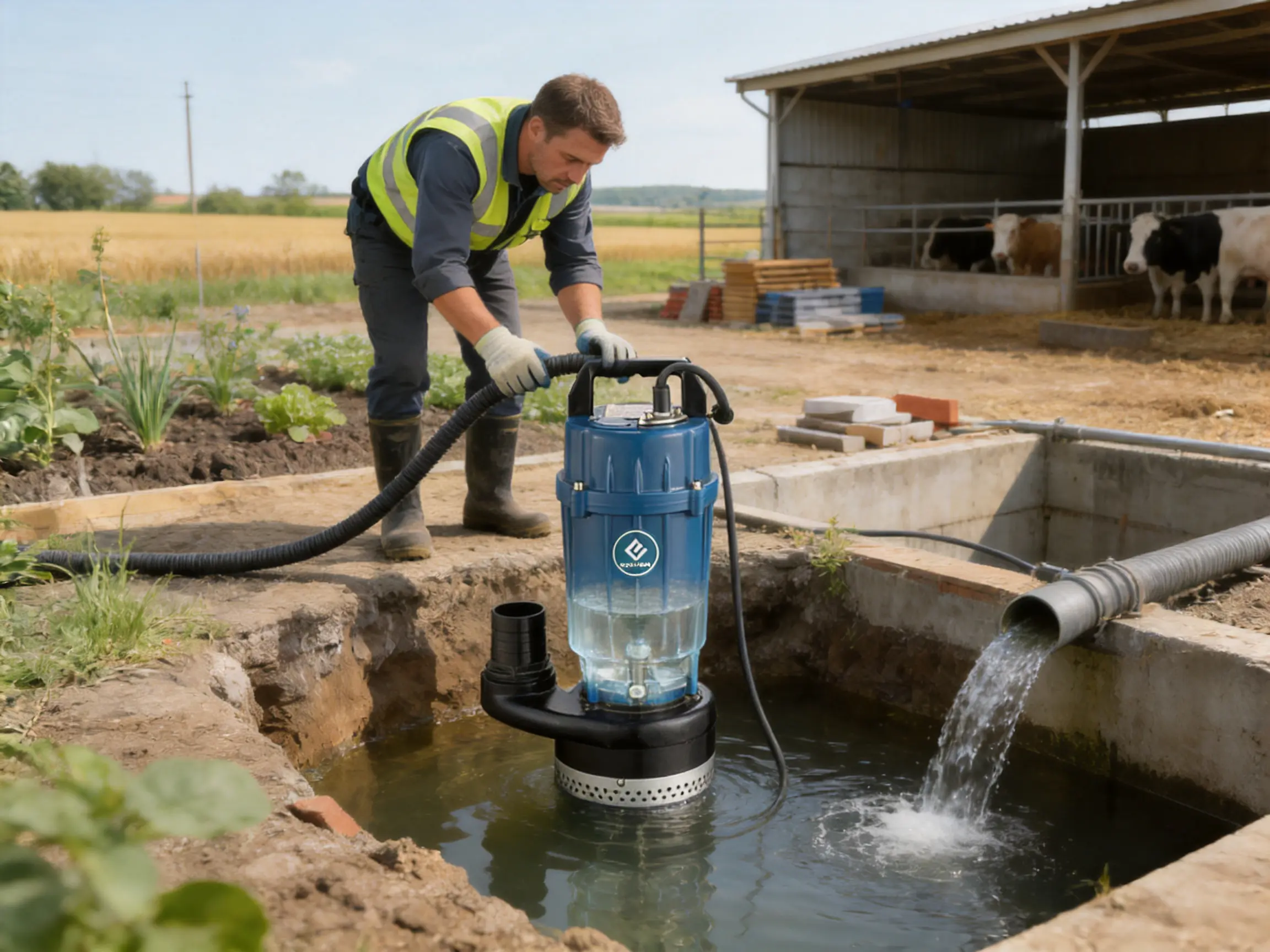
Product comparisons should be based on the application rather than on a single specification. The SPA3 has several practical advantages when compared with unsuitable surface pumps, unprotected portable pumps, or low-quality motors. Its value comes from the combination of submerged operation, IPX8 protection, copper winding, and built-in thermal protection.
A surface pump can be a good solution when the pump must remain dry and the water source is easy to access through a properly designed suction line. However, surface pumps may require priming and can be sensitive to suction leaks, suction height, and air entering the pipe. The SPA3 avoids many of these concerns because it is placed directly in the liquid.
For pits, tanks, wells, and temporary drainage points, the submersible arrangement can be faster to deploy. It also reduces the need for a separate dry pump room. The correct choice still depends on the required flow, head, maintenance access, and liquid condition.
A basic utility pump that is not designed for immersion may suffer electrical or mechanical damage if placed in water. The SPA3 is specifically designed for submerged service, with IPX8 protection and a stated maximum immersion depth. This makes it more appropriate for wet installations than equipment intended only for dry operation.
Some low-cost pumps focus primarily on initial price and may omit important motor-protection features. The SPA3 includes a built-in thermal protector, which provides a useful additional defense against overheating. This feature may help reduce the risk of motor damage during abnormal operating conditions, although correct sizing and operation remain necessary.
The copper winding is another competitive feature. Stable motor winding construction supports efficient electrical performance and dependable operation. Buyers evaluating competing products should verify the actual motor winding material rather than relying only on marketing language. The winding material, motor protection, insulation, sealing, and manufacturing consistency all affect long-term value.
| Evaluation point | SPA3 characteristic | Potential user benefit |
|---|---|---|
| Installation method | Submersible | Direct placement in wells, pits, tanks, and accumulated water |
| Water-ingress protection | IPX8 | Designed for continuous immersion under specified conditions |
| Motor winding | Copper | Supports stable electrical operation and effective conductivity |
| Overheating response | Built-in thermal protector | Provides added protection during abnormal temperature rise |
| Operating depth | Maximum 5 meters | Suitable for many shallow wells, pits, tanks, and drainage areas |
| Liquid temperature | Maximum 40°C | Appropriate for normal-temperature water and compatible drainage liquids |
| Application flexibility | Irrigation, drainage, household, construction, industrial accumulated water, and livestock facilities | Supports multiple practical use scenarios with one product platform |
The performance of a pump is influenced not only by its design but also by the consistency of the manufacturing process. Taizhou Edwin Electric Co., Ltd., operating under the Edwin Pump name, was founded in 2008. The company is described as an integrated manufacturing enterprise with capabilities in independent research and development, mass production, and global export.
This integrated structure is important for international pump buyers. Independent research and development allows the manufacturer to refine product designs and respond to changing market requirements. Mass-production capability supports repeatability and supply capacity. Export experience helps the company understand packaging, documentation, logistics, order coordination, and customer service requirements in different markets.
Independent research and development provides a foundation for product improvement. In pump manufacturing, development work may involve motor construction, hydraulic performance, sealing arrangements, thermal protection, materials, assembly methods, noise behavior, and application adaptation. A company that maintains its own development capability can adjust products more directly than a trading organization that only resells equipment.
The company’s product portfolio includes deep-well pumps, submersible pumps, domestic booster pumps, circulation pumps, solar water pumps, intelligent booster pumps, and other related equipment. This broad range can help engineers and purchasing teams compare different pumping solutions within one supplier network.
Mass production requires organized processes for component preparation, motor winding, assembly, inspection, testing, packaging, and inventory management. A reliable production system should aim for consistent dimensions, repeatable electrical characteristics, secure sealing, and stable assembly quality from one unit to the next.
For distributors and project buyers, production capacity is valuable because product availability and delivery reliability can influence project schedules. A manufacturer with experience in mass production is better positioned to support repeat orders, private procurement programs, and ongoing distribution requirements.
The company’s product categories include solar pumps, deep-well pumps, submersible pumps, surface pumps, booster pumps, circulation pumps, garden pumps, pool and spa pumps, commercial multistage pumps, pump accessories, end-suction pumps, pipes and valves, and intelligent booster pumps.
This range supports one-stop procurement for customers whose projects require more than one pump type. For example, an agricultural project may need a solar pump for remote irrigation, a submersible pump for drainage, pipes and valves for distribution, and a booster pump for pressure management. A building project may require drainage equipment, circulation pumps, and booster systems. Sourcing related products from an experienced pump manufacturer can simplify technical communication and order coordination.
The company established Taizhou Haipai Import & Export Co., Ltd. and Golden Falcon Industrial Co., Ltd. in 2012 to support procurement planning, order tracking, cross-border delivery, and foreign-trade services. This indicates an organizational focus on international supply rather than only domestic manufacturing.
Global buyers often need clear product information, reliable communication, coordinated shipment schedules, export documentation, and responsive after-sales support. A supplier with dedicated foreign-trade experience can help reduce the administrative burden associated with international purchasing.
Since 2018, the company has invested in new energy and intelligent technology. This has led to the expansion of solar water pumps and intelligent booster pumps within its product offering. Although the SPA3 is a conventional electric submersible pump, the company’s wider investment direction demonstrates an effort to follow important developments in efficient water movement, renewable energy, automation, and smart control.
For buyers, this broader technical direction can be valuable when a project includes both conventional drainage and newer energy or intelligent-water-management requirements. It also suggests that the manufacturer is building product knowledge across several pump technologies rather than limiting its activity to one narrow category.
A pump’s stated features are meaningful only when they are supported by controlled production. Several manufacturing stages are especially important for a submersible model.
The copper winding must be formed, positioned, connected, and insulated consistently. Poor winding quality can increase electrical loss, create hot spots, and reduce motor life. Careful assembly helps ensure that the motor receives the intended electrical characteristics and that the winding remains protected during operation.
Submersible equipment requires effective control of water ingress. Sealing components, cable entry points, housing joints, and shaft areas must be assembled correctly. IPX8 performance depends on the complete product system rather than on one component alone. Quality control should therefore pay attention to seals, compression, fit, and final assembly condition.
The built-in thermal protector must be correctly positioned and electrically integrated with the motor. It should respond appropriately to excessive temperature while allowing normal operation under suitable conditions. Consistent assembly is essential because an incorrectly connected protective device cannot provide its intended benefit.
The pump’s hydraulic components must be aligned and securely assembled. Impeller balance, clearances, fastener security, and housing fit can influence vibration, noise, efficiency, and service life. A clean and carefully controlled assembly area helps reduce the possibility of foreign material entering the hydraulic section.
Final inspection should verify appearance, assembly integrity, cable condition, electrical safety, rotation, and operating behavior. Depending on the product-control system, manufacturers may also conduct insulation, leakage, performance, and functional tests. Buyers who require formal test reports or specific inspection procedures should discuss these requirements before ordering.
Correct installation is essential for obtaining the advantages of the SPA3. Before installation, identify the water source, expected liquid condition, required discharge route, available power supply, maximum operating depth, and maintenance access.
Place the pump on a stable surface or suspend it in a way that prevents it from resting directly in heavy sediment. The intake should remain clear. Avoid placing the pump where mud, gravel, cloth, plastic, plant roots, or other debris can block the inlet.
The pump should remain within the maximum immersion depth of 5 meters. It should also remain adequately submerged during operation. If the water level falls below the required level, stop the pump rather than allowing it to run dry.
Use a discharge line that is suitable for the expected pressure, flow, and liquid. Avoid unnecessary bends and restrictions because they increase resistance and may reduce water delivery. The discharge outlet should be directed to a safe location where released water will not cause erosion, flooding, contamination, or structural damage.
Where backflow could occur, a suitable valve may be considered. The pipe should be supported independently when necessary so that excessive weight is not transferred to the pump connection.
Electrical connection should comply with local regulations. Use an appropriate power circuit, grounding arrangement, and protective device. The cable should be routed away from sharp edges, moving machinery, heat sources, and vehicle traffic. Do not lift or lower the pump by pulling on the power cable.
Because the pump operates in water, electrical safety must receive priority. Any sign of damaged insulation, loose connection, unusual tripping, or water-related electrical fault should be treated seriously. Disconnect power before inspecting or servicing the equipment.
Before starting, check that the pump is submerged, the discharge route is open, the cable is secure, and the liquid is within the specified temperature range. Observe the first operating cycle for unusual noise, vibration, poor flow, repeated thermal trips, or leakage. Stop the pump immediately if abnormal behavior is detected.
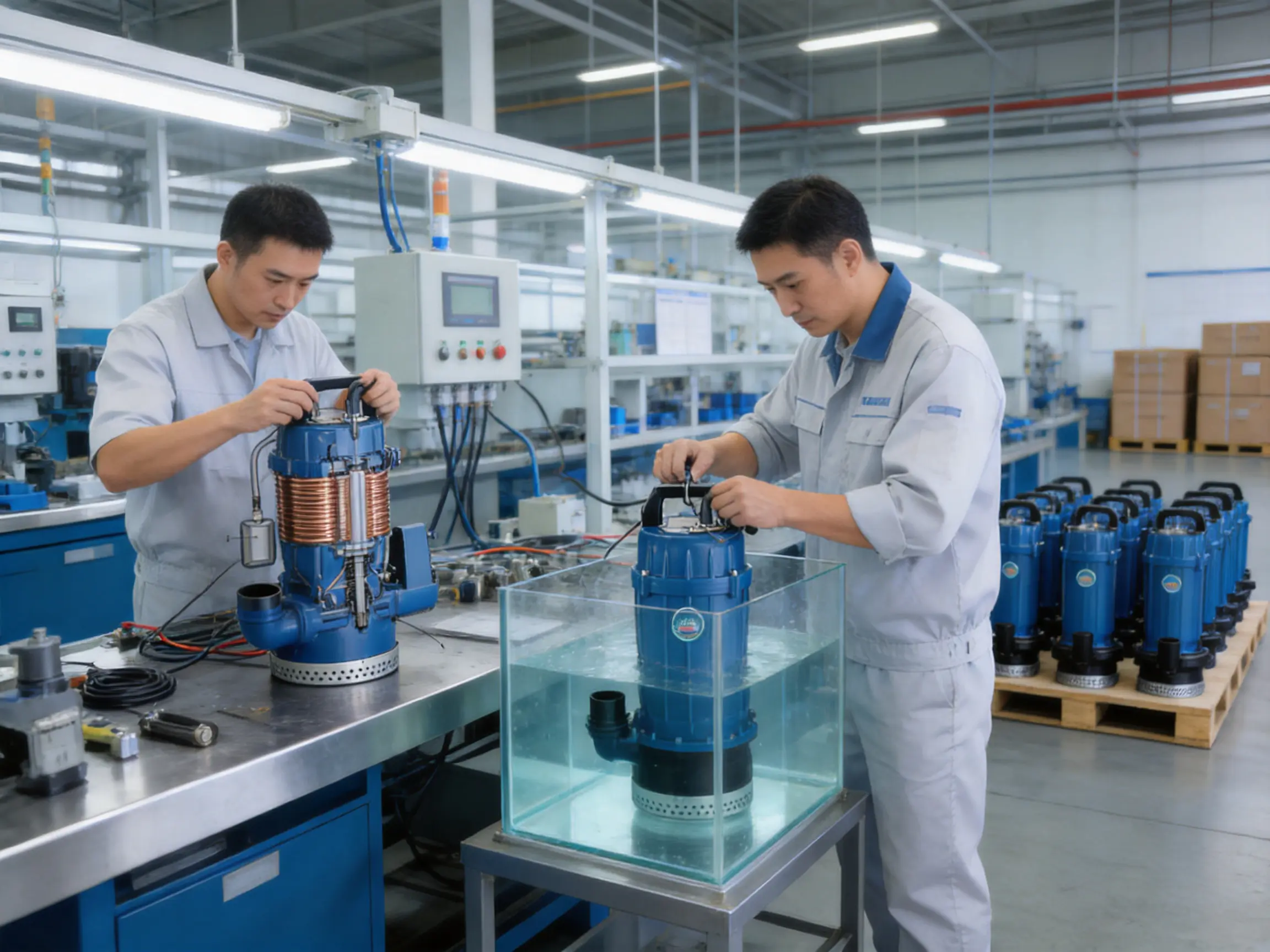
Routine maintenance helps preserve pump performance and identify problems before they become serious. The frequency of inspection should depend on operating hours, liquid cleanliness, installation environment, and the importance of the pumping duty.
After use in dirty water, inspect the pump exterior and intake area. Remove fibers, leaves, mud, and other debris. If the pump has been used in an industrial or livestock environment, clean it according to the liquid-handling requirements and applicable hygiene procedures.
Inspect the cable for cuts, abrasion, crushing, swelling, or loose connections. A damaged cable can create a severe electrical hazard, especially in wet environments. Cable repairs should use appropriate professional methods, and replacement should be considered when damage compromises insulation integrity.
If the thermal protector repeatedly interrupts operation, do not simply restart the pump again and again. Investigate possible causes, including blocked intake, restricted discharge, excessive solids, insufficient submergence, incorrect voltage, or a pump that is being used beyond its intended duty.
Where the pump is installed in a pit or tank, sediment can accumulate around the intake. Periodic cleaning of the collection area can reduce blockage risk. If sand or abrasive particles are continuously present, ask the supplier whether the pump is suitable for the expected concentration and operating duration.
When the pump is removed from service, rinse it with suitable clean water, allow it to dry externally, and store it in a protected location. Avoid leaving the pump exposed to direct sunlight, freezing conditions, corrosive vapors, or impact. Do not coil the cable excessively tightly or store the pump while contaminated with aggressive liquids.
Buyers should prepare a clear duty description before requesting a quotation. Important information includes the liquid type, liquid temperature, presence of solids, required flow rate, vertical lift, horizontal pipe length, discharge-pipe size, operating hours, power supply, installation depth, and environmental conditions.
The SPA3’s known limits include a maximum immersion depth of 5 meters and a maximum liquid temperature of 40°C. If the application exceeds either limit, a different model or a specially engineered solution may be required. Similarly, if the liquid contains large solids, corrosive chemicals, oil, or abrasive materials, compatibility should be confirmed in writing.
Project buyers should also request the relevant performance information before final approval. A pump’s ability to move water depends on its relationship between flow and head. More discharge pressure generally reduces available flow, while long pipes, narrow pipes, elbows, filters, and valves create additional resistance. Matching the pump to the system is more important than choosing a model based only on motor appearance or nominal size.
For distributors, contractors, and original-equipment buyers, a pump is part of a larger supply relationship. Product quality, production capacity, delivery coordination, documentation, and communication all contribute to the total purchasing experience.
An integrated manufacturer with research and development, mass production, and export operations can offer advantages beyond the individual pump. It may be able to support product selection, mixed-category purchasing, recurring orders, packaging coordination, and international shipment planning. The company’s wider product range also allows buyers to discuss submersible, surface, solar, booster, circulation, and multistage requirements with one experienced supplier.
The company’s stated focus on quality, innovation, high-performance water pumps, and one-stop procurement services aligns with the requirements of global industrial customers. For a buyer evaluating the SPA3, this broader capability can be as important as the pump’s individual motor and immersion specifications.
The lowest purchase price does not always represent the lowest total cost. A pump that is difficult to install, vulnerable to overheating, or inconsistent in operation may create labor costs, downtime, replacement expenses, and project delays. Features such as copper winding, thermal protection, and IPX8 construction can contribute to more dependable use when matched to the correct application.
Long-term value also depends on serviceability and application discipline. Keeping the intake clear, preventing dry running, staying within the depth and temperature limits, and using a suitable discharge line can protect the pump from avoidable stress. Even a well-manufactured pump can fail prematurely if it is used with unsuitable liquid or operated outside its design conditions.
The SPA3 offers a practical balance for users who need a compact, submerged drainage and water-transfer pump rather than a large engineered pumping station. Its broad application potential, protective motor features, and manufacturer support make it suitable for many small and medium water-handling tasks, subject to detailed duty confirmation.
The SPA3 is a submersible sewage pump intended for submerged water transfer, drainage, irrigation, household water supply, construction drainage, industrial accumulated-water removal, and livestock-facility applications.
The maximum stated immersion depth is 5 meters. The pump should not be installed deeper than this limit without confirmation from the manufacturer.
The maximum liquid temperature is 40°C. Liquids above this temperature require a model specifically designed for higher-temperature service.
Yes. The product information identifies the motor as having copper winding. Copper winding supports effective electrical conductivity and stable motor operation when the pump is used with the correct power supply.
Yes. The motor includes a built-in thermal protector. This helps protect the motor if its temperature rises excessively, although repeated thermal activation should always be investigated.
IPX8 indicates that the pump is designed for continuous immersion under specified conditions. The rating supports submerged operation but does not replace correct electrical installation, grounding, cable protection, or observance of the maximum immersion depth.
Yes. The stated applications include field irrigation and garden irrigation. The required flow, pressure, water quality, pipe arrangement, and irrigation method should be checked before selection.
The product information includes household water supply among its applications. However, users should confirm whether the water is intended for drinking and whether the pump has the certifications or material approvals required for potable-water use.
No pump should be assumed suitable for every sewage condition. The available information does not specify solids-passage size, abrasive-material tolerance, chemical compatibility, or heavy-sludge capability. These conditions should be confirmed with the manufacturer before use.
The pump should not be intentionally operated dry. Maintain sufficient liquid coverage and stop the pump when the water level becomes too low. Dry running can cause overheating or mechanical damage.
Confirm the required flow, total head, liquid type, solids content, temperature, installation depth, power supply, discharge connection, operating frequency, and working schedule. Request the applicable performance curve and electrical details for final selection.
The manufacturer has operated since 2008 and is described as an integrated enterprise with independent research and development, mass-production, and global-export capabilities. Its product portfolio covers several pump categories, while related import and export companies support procurement planning and international delivery.
The SPA3 submersible sewage pump is designed for users who need practical drainage and water-transfer equipment in a compact submerged format. Its main strengths include direct installation in the liquid, a maximum immersion depth of 5 meters, a maximum liquid temperature of 40°C, copper motor winding, a built-in thermal protector, insulation class B, and IPX8 protection.
These features give the pump advantages over unsuitable surface pumps, unprotected utility pumps, and low-quality alternatives that lack adequate motor protection. The product can support urban well-water pumping, field and garden irrigation, household water transfer, industrial accumulated-water drainage, construction-site dewatering, and livestock-facility applications when the liquid and system conditions are appropriate.
The manufacturer’s long-term presence, independent research and development, mass-production capability, export experience, broad product range, and investment in solar and intelligent pump technology further strengthen its position as a global pump supplier. For buyers, the most reliable purchasing decision will come from combining these supplier strengths with a careful technical review of flow, head, liquid condition, electrical requirements, and installation environment.
When correctly selected, installed, and maintained, the SPA3 provides a straightforward solution for moving water from locations where a conventional surface installation would be inconvenient or unreliable.
1. Product information supplied for the SPA3 submersible sewage pump, including application, motor, immersion-depth, and liquid-temperature data.
2. Manufacturer profile and company information supplied for Taizhou Edwin Electric Co., Ltd.
3. General principles of electric motor insulation classes and thermal protection.
4. General principles of IP enclosure protection for electrical equipment.
5. Standard pump-selection practices covering flow, head, pipe resistance, liquid compatibility, and installation conditions.
edwina@edwin-pump.com
+86-13586290903 (WhatsApp)
Xuri Gongliang Cutting Tool Entrepreneurship Park, Wenqiao Town, Wenling City, Taizhou City, Zhejiang Province, China

High Performance Smart Pump Factory


 English