
edwina@edwin-pump.com

View All Products
en
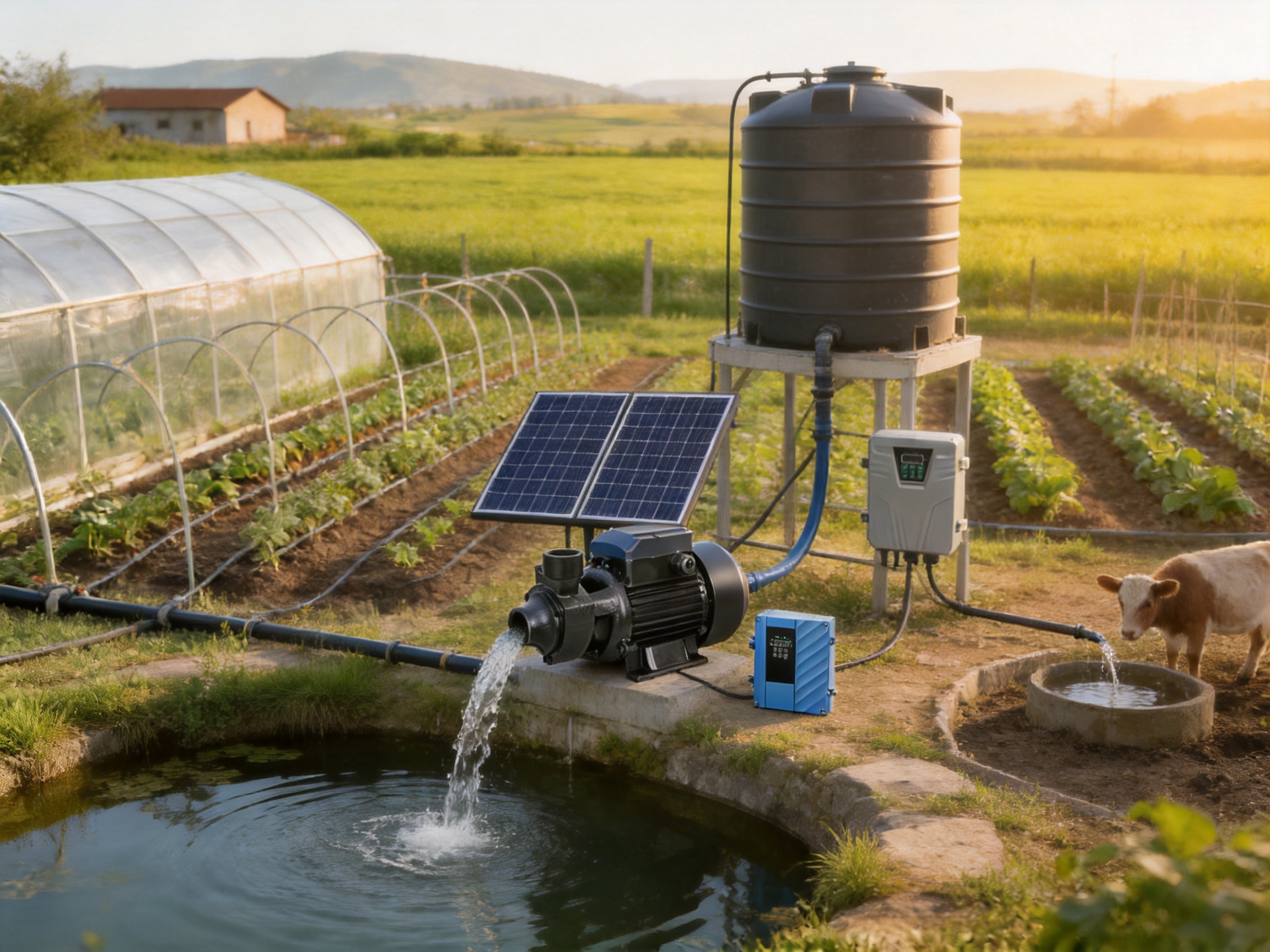
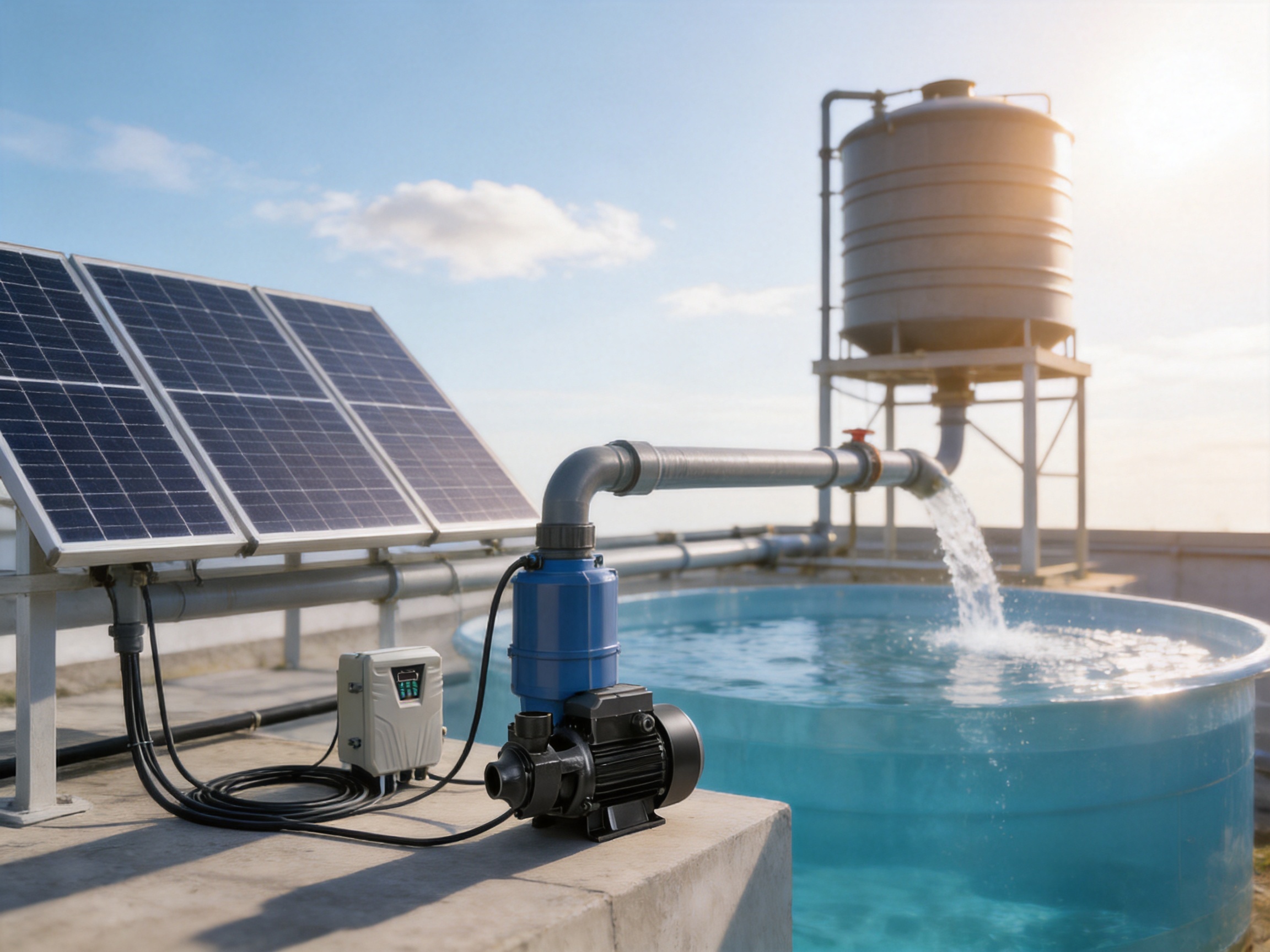
Reliable access to water is essential for households, farms, communities, and small industrial operations. In many locations, however, water must be moved without dependable grid electricity. Remote agricultural areas, rural settlements, off-grid construction sites, emergency water systems, and isolated properties often require pumping equipment that can work efficiently from a solar power source. These applications demand more than a conventional water pump. They require a solution that combines energy efficiency, dependable hydraulic performance, resistance to suspended particles, simple installation, and long service life.
The EQB Series Brushless DC Motor Solar Vortex Pump is designed for this type of demanding environment. It combines a brushless direct-current motor with a vortex hydraulic structure to provide practical solar-powered water transfer. The pump is intended for surface applications and can be used for household water supply, agricultural irrigation, water transfer, and small-scale industrial duties. Its design addresses two common problems in off-grid pumping: limited energy availability and water that may contain suspended solids or debris.
Unlike a standard centrifugal pump designed only for relatively clean water, a vortex pump creates a hydraulic environment that reduces direct contact between the impeller and much of the solid material moving through the pump. This helps lower the likelihood of blockage when the water contains particles from ponds, reservoirs, open channels, or other sources. At the same time, the brushless DC motor allows the pump to operate directly with an appropriately configured solar power system, reducing the need for complex mechanical transmission and routine motor maintenance.
The EQB Series is manufactured by Taizhou Edwin Electric Co., Ltd., an integrated pump enterprise with experience in research and development, mass production, and international export. The company’s broader product portfolio includes deep well pumps, submersible pumps, domestic booster pumps, circulation pumps, solar water pumps, and intelligent booster pumps. This product knowledge provides a useful foundation for developing equipment that responds to different water-supply conditions and purchasing requirements.
Solar pumping has developed from a specialized solution into a practical option for many water-supply projects. Photovoltaic panels can produce electricity during daylight hours, allowing water to be transferred to a storage tank, irrigation reservoir, elevated container, or direct-use system. Where the water requirement is compatible with daytime operation, a solar pump can reduce dependence on the electrical grid, fuel deliveries, or battery banks.
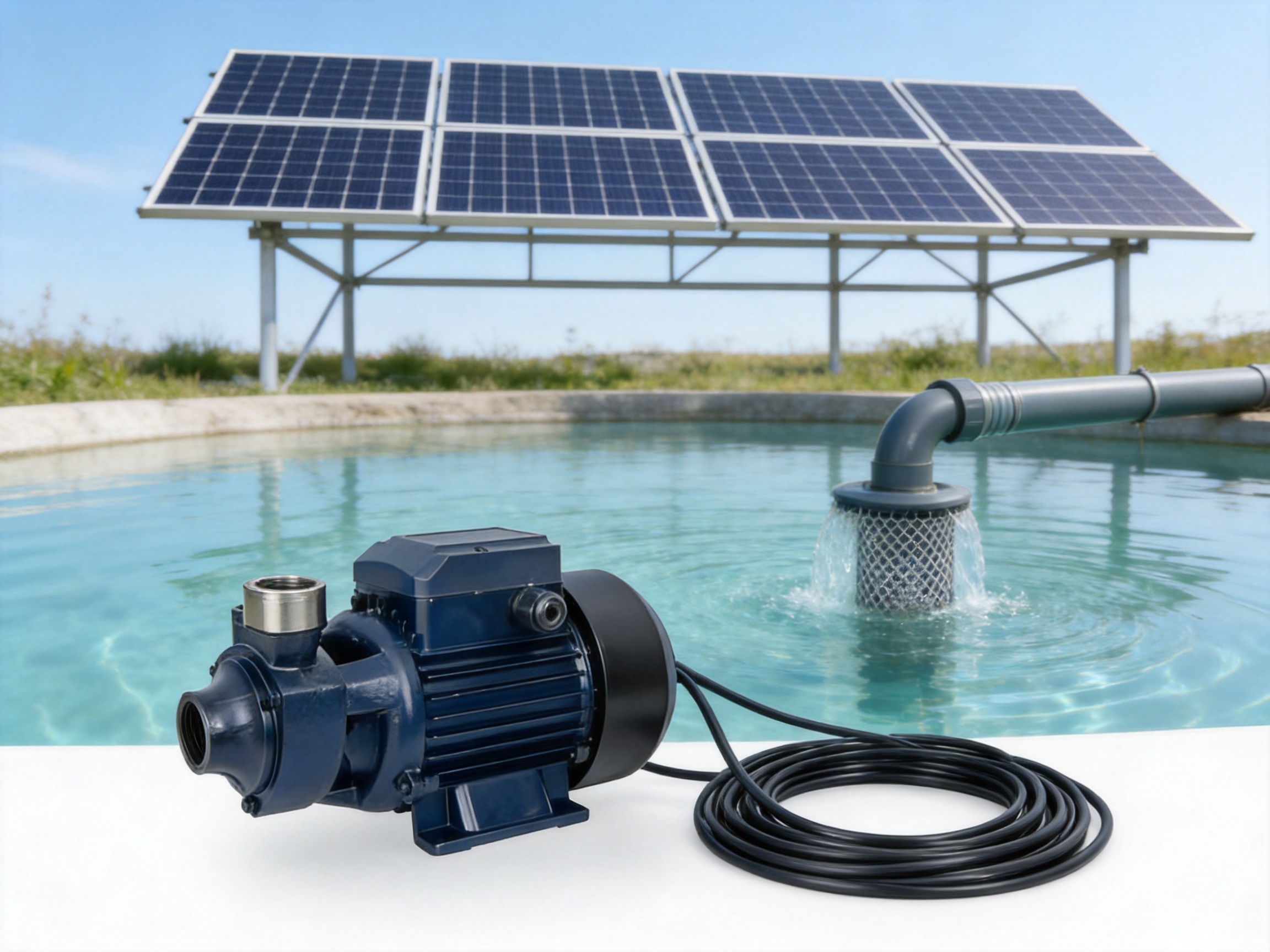
A surface solar pump is particularly useful when the water source is accessible above ground or when the pump can be positioned outside a shallow collection tank, pond, reservoir, or transfer basin. Typical installations may include a suction pipe, a discharge pipe, a solar array, protective electrical equipment, and a storage or distribution system. Compared with many deep-well installations, a surface arrangement can be easier to inspect, service, relocate, and integrate into a small water project.
Solar energy also changes how pumping equipment should be evaluated. A pump selected for grid electricity may not perform well when connected to a variable solar source. Solar radiation changes throughout the day because of cloud cover, temperature, shading, panel orientation, and seasonal conditions. A suitable solar pump must therefore be matched with an appropriate voltage range and sufficient panel capacity. Its motor and hydraulic components must operate efficiently under a power supply that is not always constant.
The EQB Series addresses this requirement through several voltage-specific models. The listed options include 24 V, 48 V, and 72 V motor configurations. Each model has a defined optimum DC input voltage range, allowing system designers to select the version that corresponds to the planned photovoltaic array. The product data also specifies a maximum solar-panel open-circuit voltage and recommends solar-panel power of at least 1.3 times the pump power.
This information is important because it supports more disciplined system design. Instead of connecting a pump to an oversized or unsuitable power source, an installer can select a model according to the required head, flow, operating voltage, and available solar generation. Correct matching improves starting reliability, reduces electrical stress, and helps the pump deliver consistent performance under normal operating conditions.
The EQB Series Brushless DC Motor Solar Vortex Pump consists of a compact surface pump assembly powered by a brushless DC motor. The motor converts electrical energy from a DC solar system into rotational mechanical energy. The rotating hydraulic assembly then transfers energy to the water and generates flow and pressure.
A brushless DC motor does not use conventional mechanical brushes and a commutator to transfer current to the rotating section. Instead, electronic switching controls the magnetic field and maintains motor rotation. The absence of brushes eliminates a wear component commonly found in brushed motors. This is especially valuable in remote locations where regular maintenance visits may be difficult or expensive.
The vortex hydraulic design creates a circulating flow pattern within the pump chamber. This arrangement is intended to allow water containing suspended solids to pass through with a lower risk of clogging than many narrow-passage pump designs. It does not mean that every type or concentration of solid can be pumped without inspection or pretreatment. However, it provides a practical advantage when the water source is not perfectly clean and may contain small particles, organic debris, or sediment.
The pump is categorized as a DC surface solar pump. This means that it is generally positioned outside the water source rather than submerged inside a well or tank. Surface installation makes the motor and pump body more accessible for inspection. It also allows the system to be used for transferring water between open sources and storage points, provided that the installation respects the pump’s suction limitations and the water source is suitable for surface pumping.
The product is available in models offering maximum listed flow rates of 2 cubic meters per hour or 3 cubic meters per hour. Maximum listed heads range from 25 meters to 65 meters. The selection of a particular model should be based on the actual operating point rather than only the maximum values. Pipe length, elevation difference, fittings, valves, water temperature, suction conditions, and required delivery pressure all affect the final flow achieved in a real installation.
The EQB Series provides four listed model options. The lower-voltage units are suitable for smaller solar water systems, domestic applications, and modest irrigation requirements. The higher-voltage units are intended for installations requiring greater head or a higher power level. The model names identify important characteristics, including approximate flow class, maximum head, nominal voltage, and motor power.
| Model | Nominal Voltage | Optimum DC Input Voltage | Power | Maximum Flow | Maximum Head | Outlet | Cable Length | Maximum Solar Panel VOC | Recommended Solar Panel Power |
| EQB2-25-24-210 | 24 V | 30–48 V | 210 W | 2 m³/h | 25 m | 1 × 1 inch | 2 m | Less than 60 V | At least 1.3 × pump power |
| EQB2-30-24-280 | 24 V | 30–48 V | 280 W | 2 m³/h | 30 m | 1 × 1 inch | 2 m | Less than 60 V | At least 1.3 × pump power |
| EQB3-50-48-550 | 48 V | 60–90 V | 550 W | 3 m³/h | 50 m | 1 × 1 inch | 2 m | Less than 120 V | At least 1.3 × pump power |
| EQB3-65-72-750 | 72 V | 90–120 V | 750 W | 3 m³/h | 65 m | 1 × 1 inch | 2 m | Less than 170 V | At least 1.3 × pump power |
The maximum flow and maximum head figures should be understood as reference points rather than simultaneous operating values. In pump selection, a pump normally produces its highest flow near low head and its highest head at very low or zero flow. The performance curve should be reviewed for the exact duty point. If an installation requires a specific flow at a specific elevation, the installer should confirm that the selected model can provide that combination after accounting for friction losses.
The 1-inch outlet connection provides a convenient size for small water-supply systems, garden irrigation, greenhouse applications, and transfer lines. The supplied two-meter cable simplifies initial installation, although the complete electrical system may require additional weather-resistant cable, connectors, protection devices, and a suitable control arrangement depending on the project.
The brushless DC motor is one of the most important features of the EQB Series. In a brushed motor, carbon brushes gradually wear as they contact the commutator. This can create friction, electrical arcing, carbon dust, and a need for periodic replacement. In contrast, a brushless motor uses electronic commutation. The rotating magnetic field is controlled without physical brushes rubbing against a commutator.
This design provides several practical benefits. First, it reduces the number of consumable mechanical components. A pump installed in a remote agricultural area may not be easy to access, so minimizing routine motor maintenance is valuable. Second, the reduced mechanical contact can support efficient operation. Lower internal friction helps make better use of limited solar energy, particularly when the system is sized for a modest photovoltaic array.
Third, brushless operation can contribute to longer operating life when the motor is properly protected from overload, excessive heat, water ingress, and unsuitable voltage. The motor still requires correct installation and appropriate electrical protection, but the absence of brush replacement simplifies long-term ownership. This is especially relevant in off-grid systems where the cost of maintenance can exceed the initial cost of the pump.
Brushless DC technology is also naturally suited to photovoltaic applications because solar panels produce direct current. Depending on the system configuration, the pump can be paired with a suitable solar controller or control system that manages voltage, current, starting behavior, and operating protection. Eliminating unnecessary conversion stages may improve system simplicity, although the final electrical architecture must always follow the pump’s requirements and the installer’s safety standards.
Compared with a conventional AC motor that requires an inverter, a DC pump can offer a more direct path from solar generation to mechanical pumping. This may reduce system complexity in small installations. It can also make the equipment easier to integrate into portable or modular solar water systems. However, AC systems remain valuable for larger projects and grid-connected applications. The advantage of the EQB Series is its suitability for compact DC solar applications where direct, efficient operation is a priority.
Water sources used in rural and agricultural projects are not always clean. Ponds may contain leaves and organic material. Open reservoirs can collect sediment. Irrigation channels may carry small particles. Rainwater collection systems can transport debris from roofs or drainage surfaces. A pump designed only for clear water may experience blockage, reduced flow, impeller damage, or frequent cleaning under these conditions.
The vortex design of the EQB Series is intended to improve the handling of water with suspended solids. Rather than relying on extremely narrow hydraulic passages, the vortex arrangement produces a circulating flow inside the pump chamber. The impeller transfers energy to the water while helping reduce the chance that suspended material will become tightly wedged in the hydraulic path.
This characteristic gives the EQB Series an advantage over many conventional small clear-water pumps when the source contains moderate debris. It can reduce interruptions caused by clogging and support smoother water transfer. For irrigation or water transfer from ponds and reservoirs, this can be more practical than using a highly restrictive pump design that requires frequent intake cleaning.
Nevertheless, a vortex pump is not a substitute for responsible water-source management. Large stones, ropes, fibrous waste, abrasive sand, and heavy sludge may damage any pump. A correctly sized intake screen or coarse filter can prevent large objects from entering while preserving sufficient inlet area for good flow. The screen should be accessible for cleaning, and it should not be so fine that it becomes blocked quickly or creates excessive suction resistance.
The balance between solids handling and hydraulic efficiency is an important design consideration. Some clear-water pumps can achieve high efficiency when the water is clean but may be more sensitive to particles. A vortex pump may be selected when operational continuity and clog resistance are more important than achieving the highest possible efficiency in laboratory clear-water conditions. For many real-world solar installations, avoiding repeated shutdowns and cleaning can deliver a significant practical benefit.
Brushed DC pumps can be simple and economical, but their brushes and commutators are wear components. As operating hours increase, brush wear may reduce performance and eventually require replacement. The EQB Series removes this maintenance point through brushless motor technology. This is particularly advantageous for remote installations, seasonal irrigation systems, and community water projects where technical support may not be immediately available.
Many standard centrifugal pumps are optimized for clean water and can be vulnerable to blockage when the source contains suspended particles. The vortex configuration of the EQB Series is better suited to water transfer from ponds, reservoirs, and similar sources that may contain moderate debris. This can reduce the frequency of stoppages and improve reliability in less controlled water environments.
Fuel-powered pumps can provide high output, but they require fuel storage, engine maintenance, oil changes, exhaust management, and regular manual operation. They also generate noise and local emissions. A solar-powered brushless pump has no fuel requirement during operation and can produce water without direct combustion emissions at the installation site. Once the solar array is installed, operating costs can be more predictable, especially in locations where fuel delivery is difficult.
Grid-dependent pumps can be convenient where electricity is reliable. However, rural or remote sites may experience outages, high connection costs, or no grid access at all. The EQB Series is designed for DC solar input and can form the core of an independent water system. This improves energy autonomy and allows pumping infrastructure to be installed where extending the grid would be uneconomical.
Oversized pumps can increase installation cost and may waste energy when the actual water demand is modest. The EQB range includes several power and head options, allowing a system designer to select a model closer to the required duty. A properly selected 210 W or 280 W unit may be more appropriate for a small domestic or garden system than a much larger pump. For higher-head applications, the 550 W and 750 W options provide additional capacity without abandoning the DC solar format.
Correct photovoltaic matching is essential for satisfactory pump performance. Solar panels do not deliver a fixed voltage under every condition. Their output varies with sunlight intensity, panel temperature, wiring, shading, and load. The EQB Series data provides both an optimum DC input range and a maximum open-circuit voltage for the solar panel system.
For the 24 V models, the listed optimum input range is 30–48 V DC, while the panel open-circuit voltage must remain below 60 V. For the 48 V model, the optimum input range is 60–90 V DC and the panel open-circuit voltage must remain below 120 V. For the 72 V model, the optimum range is 90–120 V DC and the open-circuit voltage must remain below 170 V.
These limits should not be treated as approximate suggestions. The photovoltaic array must be designed so that the maximum possible open-circuit voltage, including the effect of low ambient temperature where applicable, stays within the pump system’s permissible range. Exceeding the allowable voltage can damage electrical components and create a serious safety risk.
The recommended solar-panel power is at least 1.3 times the pump power. This provides a useful design margin because actual panel output is often lower than its rated value. Dust, heat, cloud cover, suboptimal orientation, cable losses, and aging can all reduce available power. For example, a 210 W pump requires a recommended solar-panel capacity of at least approximately 273 W based on the 1.3 multiplier. A 750 W pump requires at least approximately 975 W of panel power before any additional design margin is considered.
System designers may choose to install additional capacity where the project requires earlier morning starts, later afternoon operation, or better performance during variable weather. The final array should be determined by local solar conditions and the intended operating schedule. In some systems, a storage tank is more economical than a large battery bank. Water can be pumped when sunlight is available and stored for use at night or during cloudy periods.
Electrical protection should include suitable isolation, overcurrent protection, grounding, surge protection where appropriate, and weather-resistant connections. The solar array, controller, pump cable, and any control equipment should be installed according to local electrical regulations. The pump must never be connected to a voltage source outside its specified range simply to increase speed or output.
A reliable pump installation depends on more than the pump itself. The complete hydraulic system should be designed around the required flow, total dynamic head, source conditions, and delivery point. Total dynamic head includes the vertical elevation difference between the water surface and the discharge point, plus friction losses in pipes, elbows, valves, filters, and other fittings.
For example, a system may need to lift water 15 meters vertically while also moving it through a long pipe to an irrigation area. The pump must overcome both the static elevation and the friction loss. If the pipe is too narrow, the friction loss may be high enough to reduce the delivered flow significantly. A properly sized pipe can improve performance and reduce the energy required for water transfer.
Because the EQB Series has a 1-inch outlet, the discharge line should be selected with attention to the required flow and distance. A larger pipe may sometimes be used downstream to reduce friction, with suitable fittings connecting it to the pump outlet. Long suction lines should be avoided where possible because surface pumps are sensitive to suction losses. The pump should be positioned close to the water source, with the suction pipe kept short, sealed, and properly supported.
Air leaks on the suction side can prevent priming and cause unstable operation. All connections should be tight, and the suction pipe should be suitable for vacuum service so that it does not collapse under negative pressure. The intake should remain below the minimum water level while avoiding the bottom of the pond or tank, where sediment concentration may be higher.
Check valves, foot valves, isolation valves, and non-return devices may be used as required by the installation. Each additional component adds resistance, so valves and filters should be selected for adequate flow capacity. A storage tank with a float switch or level sensor can help prevent overflow and can coordinate water production with demand.
The EQB Series can serve as a compact source of water for homes, small community systems, and remote facilities. A typical application may draw water from a pond, reservoir, collection tank, or suitable shallow source and pump it into an elevated storage tank. Gravity can then distribute water to taps, livestock points, gardens, or other low-pressure outlets.
Using a tank instead of running the pump continuously can improve system flexibility. The pump operates during sunlight hours, while stored water is available when solar production falls. A float switch can stop the pump when the tank is full. A low-water protection arrangement can prevent the pump from running when the source level falls below the safe intake level.
For community projects, the vortex design can be helpful where water quality varies or where regular cleaning resources are limited. However, water intended for drinking must receive appropriate treatment. A pump transfers water; it does not automatically make water potable. Filtration, disinfection, testing, and safe storage must be considered separately according to local public-health requirements.
The compact structure and low-maintenance motor are also useful for household owners who want a system that does not require daily technical attention. A correctly installed solar pump can provide an independent water source for cleaning, gardening, livestock, and other non-potable uses while reducing reliance on grid electricity or fuel.
Agriculture is one of the most important application areas for solar water pumping. Irrigation demand often increases during sunny periods, which naturally corresponds with the availability of solar energy. The EQB Series can be used for fields, orchards, greenhouses, nurseries, and small irrigation networks where the required flow and head fall within the selected model’s capabilities.
For drip irrigation, the pump may supply a filter, pressure regulator, mainline, and distribution network. Because drip emitters can be sensitive to particles, an appropriate filtration system is still necessary even though the vortex pump can tolerate suspended solids better than many clear-water designs. For open irrigation or sprinkler systems, the required pressure and flow should be calculated carefully before selecting the pump.
In orchards and greenhouses, a storage tank can stabilize the water supply. The pump fills the tank during daylight, and irrigation is controlled by timers, soil-moisture sensors, or manual valves. This approach can reduce the need for batteries and allow water to be applied at the best time for the crop rather than only while the pump is running.
Solar pumping can also reduce fuel-related operating costs for farms located far from electrical infrastructure. The absence of engine exhaust near crops and workers is another practical benefit. Farmers should still protect the solar panels from dust, agricultural chemicals, livestock, and accidental impact. Periodic cleaning and inspection can help maintain energy production.
Water transfer is a natural use for a vortex surface pump. The pump may move water from a pond to a tank, from a reservoir to an irrigation line, or from a collection basin to a treatment or distribution point. These sources commonly contain more debris than a sealed water tank, making clog resistance an important consideration.
The intake arrangement should be designed to protect the pump without restricting flow excessively. A floating intake can draw water from below the surface while avoiding floating leaves and bottom sediment. In a fixed installation, the intake may be supported above the bottom and surrounded by a coarse protective screen. The intake should be inspected regularly, particularly after storms or periods of heavy organic growth.
Where water contains abrasive sand or high sediment levels, the project designer should assess whether additional settling, pre-filtration, or a different pump type is required. Vortex construction improves tolerance to suspended solids, but abrasive particles can still accelerate wear in hydraulic components. The best result comes from combining the pump’s natural solids-handling characteristics with sensible source management.
The performance of a pump depends not only on its published specifications but also on the consistency of its manufacturing. Taizhou Edwin Electric Co., Ltd. operates as an integrated manufacturing enterprise involved in independent research and development, mass production, and global export. This structure allows product development, production planning, quality control, and customer support to be coordinated within a broader organizational system.
Independent research and development is important for solar pump products because the motor, hydraulic design, electrical characteristics, and application environment must work together. A pump cannot be optimized only by changing the motor or only by changing the impeller. The complete product must be considered as a system. The EQB Series reflects this integrated approach by combining brushless DC motor technology, solar-compatible voltage ranges, vortex hydraulics, and compact installation features.
Mass-production capability contributes to repeatability. When a manufacturer has established production processes for multiple pump families, it can develop standardized procedures for component preparation, assembly, wiring, inspection, and packaging. Repeatable production helps reduce variation between units and supports reliable supply for distributors, project contractors, and original equipment customers.
The company’s experience across deep well pumps, submersible pumps, domestic booster pumps, circulation pumps, and solar pumps also provides a broad understanding of different hydraulic environments. Deep-well applications require attention to vertical lifting and submersion. Booster pumps require pressure control and domestic comfort. Circulation pumps must support continuous movement in heating, cooling, or water systems. This cross-category knowledge can support more appropriate product selection and project consultation.
International export experience is another strength for global buyers. Export-oriented manufacturing requires attention to documentation, packaging, communication, order tracking, delivery coordination, and product consistency. Through associated import and export service organizations, the company provides procurement planning, order follow-up, cross-border delivery, and foreign-trade support. These services can be valuable for customers purchasing equipment for overseas projects or distribution networks.
Manufacturing quality should also include attention to the product’s operating environment. Solar pumps may be installed outdoors, where they encounter sunlight, dust, rain, temperature changes, and variable electrical conditions. A responsible production process therefore needs to emphasize proper electrical assembly, secure cable connections, reliable sealing, accurate hydraulic assembly, and inspection before shipment. Specific certifications and test results should be confirmed according to the destination market and project requirements.
Since 2018, the company has invested in new energy and intelligent technology, including solar water pumps and intelligent booster pumps. This development direction reflects the changing needs of the water-pumping market. Customers increasingly seek equipment that uses less energy, operates independently, and can be integrated with automated controls.
Solar pumping requires a different product-development approach from traditional grid-powered pumping. Engineers must account for changing input power, system start-up behavior, panel configuration, and protection against unsuitable voltage. A successful solar pump must continue to operate as part of a complete energy system rather than as an isolated motor and hydraulic assembly.
The EQB Series is positioned within this new-energy product direction. Its DC motor format is suitable for direct photovoltaic integration, while the model range allows different power levels to be selected for different project sizes. The vortex structure adds application flexibility by supporting water sources that may not meet strict clear-water conditions.
Intelligent technology can further expand the capabilities of solar pumping systems. Future installations may incorporate remote monitoring, water-level sensors, dry-run protection, performance data, automatic fault reporting, and demand-based control. Even when a particular pump system uses a simple control arrangement, designing the pump family around modern energy and automation requirements creates a foundation for more advanced projects.
Before installation, confirm the water source, required flow, vertical lift, pipe distance, expected solids content, solar conditions, and available mounting location. Select the model according to the calculated operating point instead of relying only on the maximum head or maximum flow stated in the catalog data.
Place the pump on a stable, level base that is protected from flooding and excessive vibration. Keep it as close to the water source as practical. The installation should allow sufficient space for inspection, cable access, connection checks, and cleaning of the intake screen or filter.
Prepare the suction line carefully. Use a pipe that is appropriate for surface-pump suction service, minimize bends, and seal every connection against air leakage. If a foot valve is used, ensure that it remains submerged and is suitable for the water quality. The intake should be positioned away from the bottom and from areas where large debris accumulates.
Install the discharge line with suitable supports and valves. Avoid unnecessary restrictions. If the system includes a high point where air can collect, consider whether an air-release arrangement is needed. Protect the pipe from impact, freezing, ultraviolet exposure, or agricultural machinery where relevant.
Connect the solar array and electrical equipment only after verifying voltage polarity and the allowable input range. Use weather-resistant connectors and cable glands. Provide a means of isolation so the pump can be safely disconnected during maintenance. Where lightning, unstable weather, or long cable runs are concerns, consult a qualified electrical professional about surge protection and grounding.
Prime the pump and suction line according to the installation method before initial operation. A surface pump should not be operated dry unless the manufacturer’s instructions specifically permit it. Dry running can cause overheating, seal damage, and premature wear. After starting, inspect the system for leaks, unusual noise, vibration, unstable flow, or excessive heating.
One of the main maintenance advantages of the EQB Series is its brushless motor, which eliminates routine brush replacement. Even so, all pumping equipment requires basic inspection. Periodically check the intake screen, pipe connections, cable condition, mounting bolts, and surrounding area. Remove accumulated leaves, mud, and other material before they restrict the water source.
Solar panels should be kept reasonably clean. Dust, bird deposits, leaves, and other contamination reduce the amount of sunlight reaching the photovoltaic cells. Cleaning frequency depends on the local environment. In agricultural or dusty regions, inspection may be required more often than in areas with regular rainfall.
Monitor changes in water flow. A gradual decrease may indicate a blocked intake, a clogged filter, air entering the suction line, a damaged pipe, reduced solar output, or a change in the water level. If the pump stops unexpectedly, isolate the electrical supply and investigate the cause rather than repeatedly restarting it.
Seasonal systems should be prepared for periods of non-use. If freezing temperatures are possible, drain water from exposed pipes and pump components as required. If the system is installed in a region with heavy storms, inspect the mounting structure and electrical protection after severe weather.
Maintenance records can be useful for agricultural and commercial users. Recording flow observations, cleaning dates, solar-panel condition, and operating hours helps identify performance trends before a minor issue becomes a major failure. For larger installations, a simple water meter or operating log can provide valuable information about system productivity.
The EQB2-25-24-210 model provides a listed maximum head of 25 meters and maximum flow of 2 cubic meters per hour. It may be appropriate for smaller water-transfer systems, garden irrigation, low-rise household supply, or applications with moderate elevation requirements.
The EQB2-30-24-280 model has the same listed maximum flow class but increases the maximum head to 30 meters. It may be selected when the installation has a somewhat greater elevation difference or additional pipe resistance. The 24 V configuration remains suitable for relatively compact solar arrays.
The EQB3-50-48-550 model provides a listed maximum flow of 3 cubic meters per hour and maximum head of 50 meters. Its higher voltage and power rating make it suitable for projects requiring more substantial lifting capacity, such as elevated storage tanks, longer distribution lines, or small agricultural irrigation systems.
The EQB3-65-72-750 model provides the highest listed head in the series at 65 meters and a maximum flow of 3 cubic meters per hour. It is intended for higher-head solar water-transfer duties. The photovoltaic system must be designed carefully because the optimum DC voltage range and maximum open-circuit voltage are higher than those of the lower-voltage models.
In every case, the final choice should be based on the required duty point, not the model name alone. A professional supplier or pump engineer can assist with interpreting the performance curve, estimating friction losses, and matching the pump with solar-panel capacity and control equipment.
For distributors, contractors, and project developers, product availability is only one part of a successful procurement process. Consistent communication, technical documentation, production scheduling, quality coordination, and delivery support are also important. An integrated manufacturer can help simplify these activities by coordinating product development, production, and export services.
Taizhou Edwin Electric Co., Ltd. has developed a one-stop procurement structure through its manufacturing and affiliated foreign-trade organizations. Customers can seek support for procurement planning, order tracking, cross-border delivery, and international purchasing procedures. This is particularly useful for buyers handling multiple pump categories or combining solar pumps with conventional water-supply products.
The company’s wider product portfolio can also reduce supplier fragmentation. A project may require a solar surface pump for an open reservoir, a submersible pump for a deep well, a booster pump for domestic pressure, or a circulation pump for an HVAC installation. Access to several product families through an experienced pump supplier can improve purchasing efficiency and help maintain consistency across a project.
For original equipment and private-label customers, the manufacturer’s research, production, and export capabilities may provide a foundation for customized business cooperation. Any customization, certification, packaging, electrical configuration, or performance requirement should be discussed and confirmed before production.
The EQB Series supports more sustainable water-pumping practices by using solar energy as its primary power source. Solar generation produces electricity without fuel combustion at the point of use. This can help reduce operating emissions and noise compared with small engine-driven pumps, while also improving access to water in areas where grid extension is difficult.
Energy efficiency is especially important in small solar systems because every watt of available power affects water output. The brushless motor and direct-current format are intended to make effective use of the available solar input. Correct sizing, suitable pipework, and regular panel maintenance are equally important in achieving the expected energy performance.
Long-term value also depends on durability and serviceability. A pump that can handle moderate suspended solids, requires no brush replacement, and can be accessed easily for inspection may provide lower ownership effort over its service life. The value of this design is most visible in remote areas, where transport and labor costs can make frequent maintenance expensive.
Water storage further improves sustainability. Instead of installing a large battery bank, many projects can store energy in the form of elevated or tanked water. The pump operates when sunlight is available, and the stored water meets demand later. This approach can lower system complexity and extend the useful life of the overall installation.
No pump is suitable for every application. The EQB Series is a surface solar vortex pump, so it should not be treated as a replacement for a deep-well submersible pump in applications where water must be lifted from substantial depth below the pump location. The available suction conditions must be checked carefully, especially at high elevations or where the water source level changes significantly.
The listed maximum flow and head do not describe every possible operating condition. Actual performance depends on the complete system. Excessive pipe friction, a blocked intake, low solar radiation, incorrect voltage, or insufficient panel power can reduce output. Buyers should provide complete project information when requesting a selection recommendation.
Water quality must also be evaluated. The vortex design is beneficial for water containing suspended solids or debris, but aggressive chemicals, highly abrasive sand, large solids, and thick sludge may require specialized materials or another pump design. Drinking-water applications require independent water treatment and compliance with local regulations.
These limitations do not reduce the usefulness of the EQB Series. Instead, they emphasize the importance of matching the equipment to the application. A pump provides the best value when its hydraulic, electrical, and environmental requirements are understood before installation.
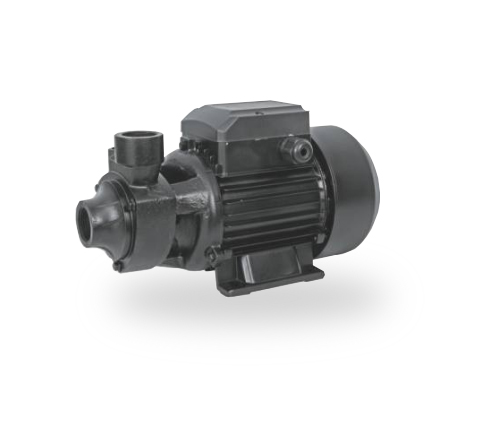
EQB Series Brushless DC Motor Solar Vortex Pump
A structured planning process helps ensure that the selected pump performs reliably. Begin by identifying the source and destination of the water. Record whether the source is a tank, pond, reservoir, shallow well, or open channel. Note the typical water level, the possibility of debris, and any seasonal changes.
Next, define the required water quantity. Household supply may be calculated from daily consumption and peak demand. Irrigation requirements may be based on crop area, irrigation method, operating hours, and seasonal water needs. Commercial applications should identify both normal and peak flow requirements.
Measure the elevation difference from the lowest operating water level to the discharge point. Add estimated friction losses from the planned pipework and fittings. This produces an approximate total dynamic head. Compare that requirement with the performance curve of each candidate model.
Then design the solar array. Confirm the model’s optimum input voltage, maximum open-circuit voltage, and minimum recommended panel power. Consider local solar radiation, temperature, shading, panel direction, cable length, and the desired operating period. If water must be available at night, evaluate a storage tank before deciding to install batteries.
Finally, plan protection and maintenance. Include intake protection, dry-run prevention, tank-level control, electrical isolation, weather protection, and access for inspection. This process improves reliability and prevents the common mistake of selecting a pump based solely on the maximum flow or motor wattage.
The EQB Series is a brushless DC motor solar vortex surface pump. It is designed to operate with an appropriately configured DC solar power system and is intended for water transfer, household supply, agricultural irrigation, and similar applications.
Its vortex pump design is intended to handle water containing suspended solids or moderate debris with a lower risk of clogging than many conventional clear-water pump designs. A suitable intake screen is still recommended, and large stones, fibrous materials, heavy sludge, or highly abrasive water should be evaluated separately.
No. The motor is brushless, so it does not use conventional mechanical brushes. This reduces routine maintenance and is useful in remote solar installations where service access may be limited.
The required voltage depends on the selected model. The 24 V models have an optimum DC input range of 30–48 V. The 48 V model has an optimum range of 60–90 V. The 72 V model has an optimum range of 90–120 V. The solar array’s open-circuit voltage must remain below the specified limit for the selected model.
The listed recommendation is solar-panel power of at least 1.3 times the pump power. Additional capacity may be considered where weather conditions, shading, high temperatures, or longer daily operating periods are expected.
No. The solar array must be matched to the pump model’s permissible voltage range. Connecting a pump to an unsuitable voltage can damage the motor or control electronics and create a safety hazard.
The EQB Series is categorized as a surface pump. It is suitable when the water source and suction conditions are appropriate for surface installation. Deep-water applications generally require a purpose-designed submersible or deep-well pump.
Normally, no. Maximum flow and maximum head are reference points on a pump performance curve and are not usually achieved simultaneously. The actual operating flow depends on the total dynamic head and the hydraulic resistance of the system.
The pump can transfer water, but pumping alone does not make water safe to drink. Drinking-water systems require suitable source protection, filtration, disinfection, testing, and compliance with local health regulations.
Yes, filling a storage tank is a practical solar-pumping application. A float switch, level sensor, or other control method can stop the pump when the tank reaches the desired level. A low-water protection system is also recommended for the source side.
A storage tank allows the pump to operate when sunlight is available and stores water for later use. This can reduce the need for batteries and can make the water supply more reliable during evening hours or short periods of cloud cover.
Common causes include air leaks in the suction line, an incorrectly positioned intake, a damaged foot valve, an empty suction pipe, a water level below the intake, or an installation that exceeds the pump’s practical suction capability. All suction connections should be sealed and checked carefully.
Routine maintenance includes inspecting the intake screen, checking pipe and cable connections, cleaning solar panels when necessary, observing changes in flow, and checking for unusual noise or vibration. The brushless motor eliminates brush replacement, but it does not eliminate the need for general system inspection.
The EQB2-25-24-210 is listed with a maximum head of 25 meters, while the EQB2-30-24-280 is listed with a maximum head of 30 meters. The correct selection depends on whether the stated lifting requirement includes pipe friction and other losses. The performance curve should be reviewed before final selection.
The EQB3-65-72-750 offers the highest listed maximum head at 65 meters. It requires a higher-voltage solar system with an optimum DC input range of 90–120 V and a solar-panel open-circuit voltage below 170 V.
The vortex design improves tolerance to suspended solids, but a screen or suitable filter protects the pump from large objects and excessive debris. The protective device should be large enough to avoid creating excessive suction resistance and should be positioned where it can be cleaned easily.
Yes. The compact models may be suitable for greenhouse water transfer, storage-tank filling, and small irrigation networks when the required flow and head are within the pump’s operating range. Drip systems generally require appropriate filtration and pressure control.
Useful information includes the water source, water quality, required flow, vertical elevation, pipe length and diameter, operating schedule, solar conditions, desired storage arrangement, and whether the system is for domestic, agricultural, or commercial use. Complete information leads to a more accurate selection.
The EQB Series Brushless DC Motor Solar Vortex Pump is designed for water-pumping projects that require energy independence, compact installation, low maintenance, and improved tolerance to suspended solids. Its brushless DC motor is well suited to solar operation because it eliminates brush wear and supports efficient use of direct-current power. Its vortex hydraulic design provides an important practical advantage for water sources that may contain moderate debris or suspended particles.
The four listed models cover maximum heads from 25 meters to 65 meters and maximum flows from 2 cubic meters per hour to 3 cubic meters per hour. With 24 V, 48 V, and 72 V options, the series can support different solar-system designs. The specified voltage ranges and recommended panel-power ratio give installers a useful basis for correct electrical matching.
Compared with brushed DC pumps, fuel-powered units, grid-dependent systems, and many conventional clear-water pumps, the EQB Series offers a strong combination of low-maintenance operation, solar compatibility, and flexible water-source use. Its success in the field will depend on appropriate model selection, sound hydraulic design, correct solar-array configuration, intake protection, and regular inspection.
The manufacturing capabilities of Taizhou Edwin Electric Co., Ltd. further support the product’s market position. The company combines independent research and development, mass production, export experience, and a broad pump portfolio. Its investment in solar and intelligent technologies reflects an understanding of the changing requirements of global water infrastructure. For households, farms, project contractors, and distributors seeking a practical solar surface pump, the EQB Series provides a versatile foundation for reliable off-grid water supply.
1. Taizhou Edwin Electric Co., Ltd., EQB Series Brushless DC Motor Solar Vortex Pump product information and performance data.
2. Taizhou Edwin Electric Co., Ltd., company profile and manufacturing overview.
3. General principles of centrifugal and vortex pump operation, hydraulic engineering reference materials.
4. General photovoltaic system design principles for DC motor loads and solar water-pumping applications.
5. General guidance on pump selection, total dynamic head, pipe friction, suction conditions, and water-system maintenance.
6. General agricultural irrigation planning principles for solar-powered water-transfer systems.
edwina@edwin-pump.com
+86-13586290903 (WhatsApp)
Xuri Gongliang Cutting Tool Entrepreneurship Park, Wenqiao Town, Wenling City, Taizhou City, Zhejiang Province, China

High Performance Smart Pump Factory


 English