
edwina@edwin-pump.com

View All Products
en
Modern water supply systems require more than basic pumping power. Residential buildings, commercial facilities, gardens, water towers, solar water systems, and light industrial installations all need stable pressure, reliable operation, efficient energy use, and protection against common hydraulic problems. A pump that simply runs at a fixed speed may deliver excessive pressure during low-demand periods, waste electricity, generate unnecessary noise, and experience greater mechanical stress. The XLA 2-30 and XLA 3-30 intelligent permanent magnet variable frequency pumps are designed to address these challenges through integrated pressure control, high-efficiency motor technology, intelligent speed adjustment, and stainless-steel fluid-contact components.
As part of the Multistage Intelligent Booster Pump category, the XLA Series combines the performance of a compact multistage pump with the convenience of automatic variable frequency control. The available models provide maximum heads of 42 meters and 45 meters, with maximum flows of 75 liters per minute and 91.6 liters per minute respectively. Both models use single-phase power and support a wide input voltage range, making them practical for different electrical conditions in residential, commercial, and light industrial environments.
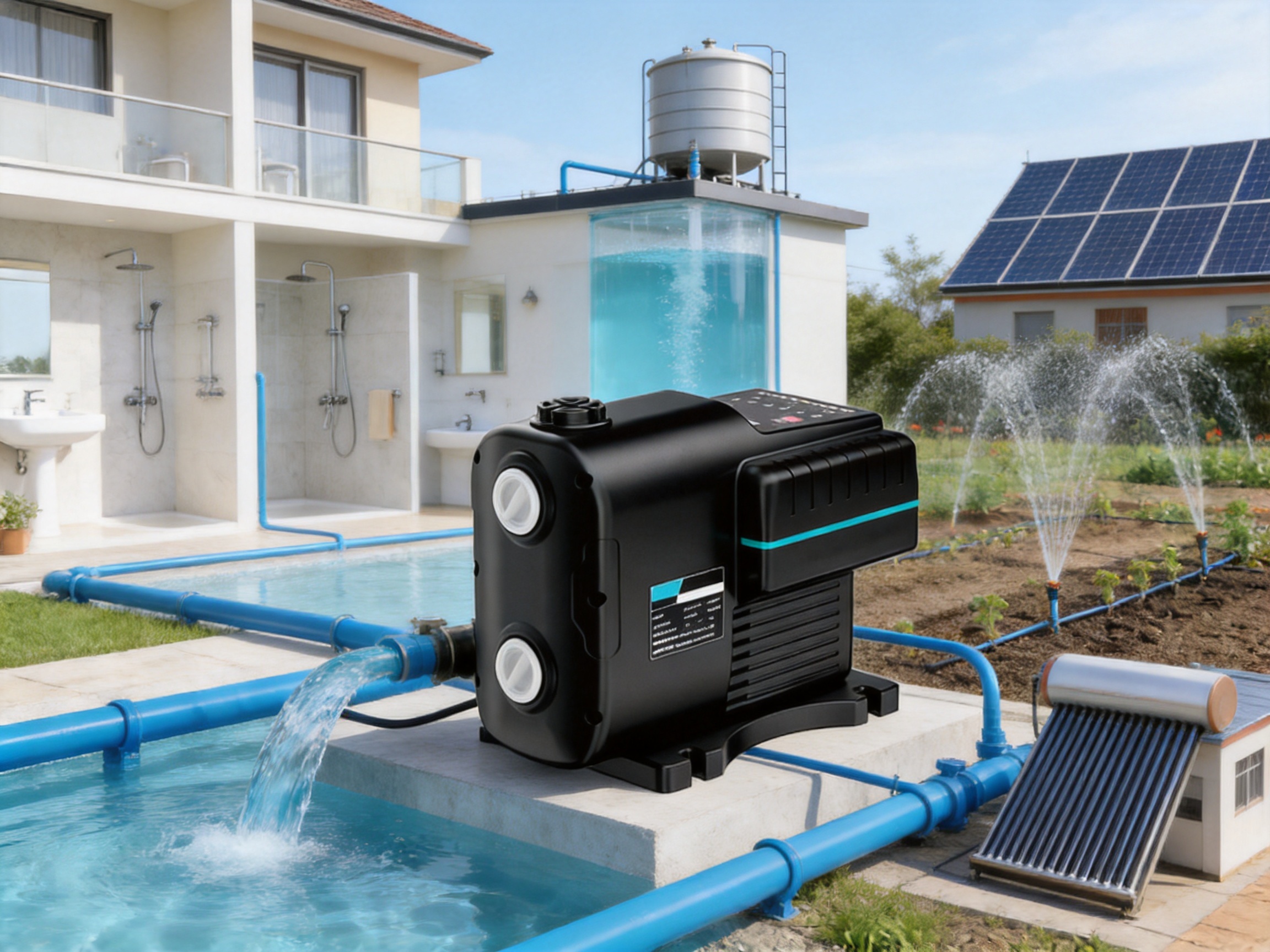
The pump is intended for clean water and non-corrosive liquids without solid particles or fibers. It is suitable for well water lifting, water tower filling, domestic water supply, garden irrigation, pipeline pressure boosting, solar water supply systems, and water heater support. Its intelligent operating design helps deliver the required pressure without forcing the motor to operate continuously at full capacity.
A conventional fixed-speed booster pump generally operates at one nominal speed whenever it is switched on. If demand changes, the system may respond through manual throttling, pressure tanks, bypass arrangements, or repeated start-and-stop cycles. These methods can work, but they may cause pressure fluctuations, energy losses, water hammer, and increased wear.
An intelligent variable frequency pump uses electronic control to adjust motor speed according to the operating requirement. When demand is low, the pump can reduce its speed and power consumption. When several outlets are opened or the pressure requirement increases, it can increase speed to maintain water delivery. This makes the system more responsive and helps avoid the unnecessary energy consumption associated with fixed-speed operation.
The XLA Series adds a one-click pressure adjustment interface to this operating concept. Instead of requiring complicated external controls, the user can make a straightforward pressure adjustment through the pump interface. The integrated control system is intended to simplify commissioning and everyday use, especially in domestic water systems where the operator may not have specialist electrical or hydraulic training.
Variable frequency operation also supports smoother system performance. A controlled acceleration and deceleration profile can reduce abrupt changes in flow. This is particularly useful in whole-house water supply systems, water heater installations, solar water systems, and pipelines where sudden pressure changes may create noise or damage fittings over time.
One of the central features of the XLA Series is its IE5 permanent magnet motor. Permanent magnet motors can achieve high efficiency because the rotor does not rely on induced current in the same way as a conventional asynchronous motor. By reducing certain electrical losses, the motor can convert a greater proportion of input power into useful mechanical output.
The product information identifies motor efficiency of up to 96 percent under suitable operating conditions. It also states that the motor can deliver more than 30 percent energy savings compared with asynchronous motors. Actual savings depend on the duty cycle, water demand, pressure setting, installation conditions, and local electricity costs, but the design is clearly directed toward reducing operating expenditure over the service life of the pump.
Energy efficiency is especially important in booster applications because pumps may run many hours each day. A small reduction in power consumption during every operating cycle can result in significant annual savings. The benefit becomes more evident where demand changes frequently, such as in residential buildings with multiple water outlets, commercial facilities with variable occupancy, or irrigation systems with changing flow requirements.
The motor reaches a rated maximum speed of 4,800 revolutions per minute. This speed capability, combined with the multistage hydraulic structure, enables the pump to generate useful pressure in a compact body. The integrated controller manages the operating speed rather than forcing the pump to remain at its maximum speed continuously.
Traditional asynchronous motors remain widely used because they are familiar, robust, and relatively simple. However, they may experience higher rotor losses and may not provide the same efficiency across a broad range of loads. A fixed-speed asynchronous pump can also waste energy when the system demand is below its design point.
The XLA Series is designed to provide several advantages in this comparison:
• Higher stated motor efficiency through IE5 permanent magnet technology.
• Variable speed control that matches output more closely to actual demand.
• Lower unnecessary power consumption during periods of reduced water use.
• Reduced pressure fluctuation through controlled operation.
• Compact integration of motor, pump, sensor, and control functions.
• Wide input voltage support from 180 to 260 volts for single-phase systems.
These characteristics can make the pump more suitable than a basic fixed-speed model for users who prioritize lifecycle cost, convenience, and pressure stability rather than only initial purchase price.
The XLA 2-30 and XLA 3-30 are multistage booster pump models. A multistage design uses several impeller stages arranged in series. Each stage adds pressure to the fluid, allowing the pump to achieve a higher head than a single-stage pump of similar general size may provide.
Multistage construction is valuable when the system requires pressure for elevated locations, long pipelines, multiple fixtures, or water tower filling. It is also useful when the required flow is moderate but the pressure requirement is relatively high. Instead of relying on a very large single impeller, the pump distributes pressure generation across multiple stages.
The XLA 2-30 provides a maximum flow of 75 liters per minute and a maximum head of 42 meters. The XLA 3-30 provides a maximum flow of 91.6 liters per minute and a maximum head of 45 meters. These figures are maximum published values; the actual flow available at a specific installation will depend on pipe length, pipe diameter, elevation, fittings, system pressure, liquid properties, and the selected operating setting.
The one-inch inlet and outlet connections make the pump compatible with many common domestic and light commercial pipe systems. Correct pipe sizing remains important. Undersized pipes may increase friction loss and reduce available flow, while poorly designed suction piping may cause unstable operation. Professional installation should include appropriate isolation valves, clean water conditions, correct electrical protection, and sufficient support for the connected pipework.
The XLA Series is designed around a simple pressure adjustment concept. A one-click pressure regulation function allows users to set or change the desired pressure without relying on complex external programming equipment. This is useful for applications in which the pressure requirement may change after installation, such as adding a shower, extending a garden irrigation line, or connecting a water heater.
Intelligent control can also reduce frequent on-and-off cycling. A pump that starts and stops too often may experience greater electrical and mechanical stress, while users may notice unstable water pressure. By adjusting speed more progressively, the XLA Series is intended to provide a smoother response to changing demand.
The integrated sensors support automatic monitoring of operating conditions. The product description emphasizes high-quality sensors and a non-return water structure. Together, these functions are intended to help maintain system stability, reduce reverse flow, and minimize pressure shocks when the pump stops or when downstream conditions change.
For residential users, the interface simplifies daily operation. For installers, integrated controls can reduce the number of external components and shorten commissioning time. For project designers, the built-in intelligence may help create a cleaner and more compact booster system.
Water hammer occurs when moving water changes velocity suddenly, often because a valve closes rapidly or a pump stops abruptly. The resulting pressure wave can cause pipe vibration, noise, joint stress, and long-term damage in poorly designed systems. Water hammer is a common concern in domestic water supply, high-rise piping, water tower systems, and long pipelines.
The XLA Series incorporates a non-return water structure intended to limit reverse movement of water and support more stable shutoff behavior. The design works together with sensors and intelligent control to reduce abrupt changes in system conditions. Although no pump can compensate for every piping problem, this integrated approach provides an advantage over a basic pump that has no built-in non-return or intelligent pressure management functions.
Proper installation remains essential. Pipework should be secured, valves should be selected correctly, and the system should be designed according to the pressure rating of all components. Where a system has unusually long pipes, rapid-closing valves, or significant elevation changes, additional hydraulic protection may still be required.
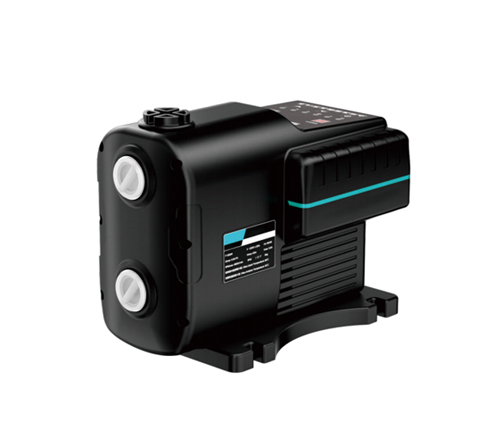
XLA 2-30/3-30 Intelligent Permanent Magnet Variable Frequency Pump
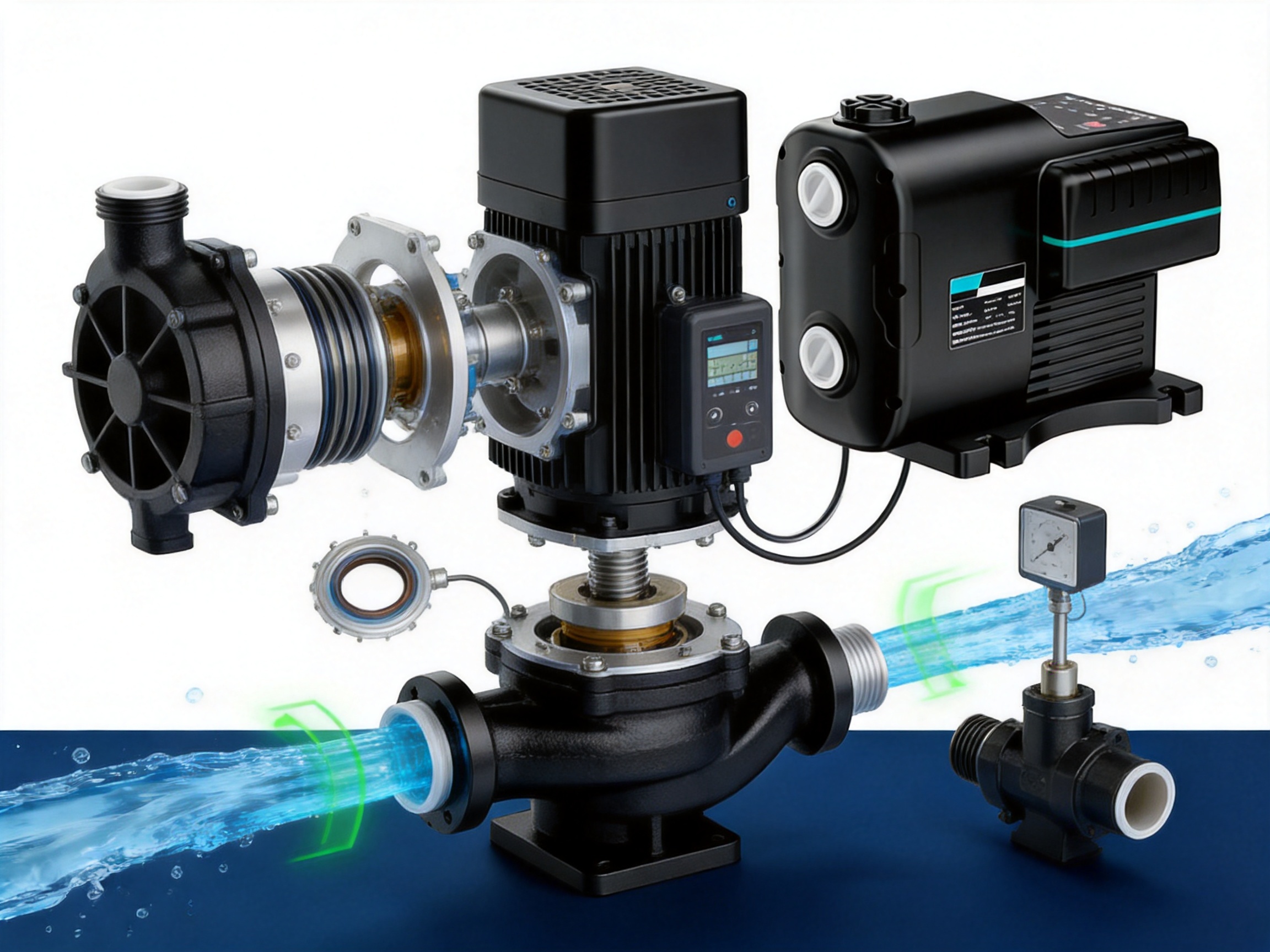
Fluid-contact materials influence pump service life, maintenance needs, and suitability for different water applications. The XLA Series uses stainless steel for the relevant shaft-seal component and identifies a silicon carbide/graphite shaft arrangement. The product description also states that fluid components are made of stainless steel to support hygienic and corrosion-resistant liquid delivery.
The published component table lists the pump body, base and upper cover, and impeller as engineering plastic. Engineering plastics can provide a favorable balance of dimensional stability, corrosion resistance, low weight, and manufacturing flexibility. They are often useful in compact domestic pumps because they reduce overall mass while resisting many common water-related corrosion issues.
The shaft-seal materials are selected for durability in a rotating hydraulic assembly. Silicon carbide offers high hardness and wear resistance, while graphite can provide suitable sealing and friction characteristics when correctly matched to the operating conditions. The exact suitability of the seal depends on liquid temperature, pressure, water chemistry, operating frequency, and installation quality.
For clean water applications, the combination of corrosion-resistant fluid-contact materials and a sealed electric motor housing can help reduce routine maintenance. It also supports applications where cleanliness is important, including domestic water supply, water heater support, and solar water systems.
| Component | Material | Functional Benefit |
|---|---|---|
| Pump body | Engineering plastic | Lightweight construction and resistance to common water-related corrosion |
| Base and upper cover | Engineering plastic | Compact structure, reduced weight, and manufacturing flexibility |
| Impeller | Engineering plastic | Low mass and resistance to many clean-water operating environments |
| Shaft seal | Stainless steel | Corrosion-resistant support for sealing components |
| Shaft | Silicon carbide/graphite | Wear-resistant sealing and rotating interface materials |
The material selection demonstrates that the pump is designed for a specific operating range rather than for every possible liquid. Users should not use the pump for liquids containing abrasive solids, fibers, aggressive chemicals, or other substances outside the stated application. A technical review is recommended when the liquid differs from clean water or a non-corrosive fluid.
The XLA Series is designed for single-phase electrical systems with an input voltage range of 180 to 260 volts and operation at either 50 or 60 hertz. The specification table identifies a nominal 220-volt supply with a tolerance of plus or minus 20 percent. This wide voltage range can be useful in regions where supply voltage varies during periods of high demand or where rural electrical networks are less stable.
Dual-frequency compatibility also supports international distribution. A pump that can operate on both 50-hertz and 60-hertz systems is easier to specify for different markets, provided that local electrical standards, installation requirements, and motor settings are correctly observed.
The motor uses Class F insulation. This insulation class is commonly associated with electrical systems designed to withstand elevated winding temperatures within specified limits. The stated ambient temperature limit is 55 degrees Celsius, while the liquid temperature limit is 80 degrees Celsius. These limits should be respected during system design and operation.
The pump has an IP54 protection grade. This indicates protection against limited dust ingress and water splashes from relevant directions. It supports safe use in suitable outdoor or semi-outdoor conditions, but IP54 does not mean that the pump can be submerged or exposed directly to heavy rain, flooding, or pressurized water jets. A weather-protected installation is still recommended.
Built-in safety protections are identified as part of the energy-saving and versatile design. Depending on the exact control configuration, intelligent pump protection may address operating conditions such as abnormal pressure, overload, dry running, or other faults. Installers should consult the supplied technical documentation for the full protection logic and should still provide electrical protection appropriate to local regulations.
The published maximum liquid temperature is 80 degrees Celsius, and the maximum ambient temperature is 55 degrees Celsius. These specifications make the pump suitable for certain hot-water support duties, including water heater and solar water supply applications, while establishing a clear boundary for safe use.
The pump is intended for clean water or non-corrosive liquids without solid particles and fibers. It should not be treated as a wastewater pump, slurry pump, sewage pump, or abrasive-fluid pump. Solids can damage the impeller, seal, sensor, or internal passages and may cause blockage. If the source water contains sand or suspended matter, appropriate filtration or pre-treatment should be considered before the pump inlet.
Water quality can also affect the service life of seals and hydraulic components. Highly mineralized water, chemically treated water, or liquids with unusual pH may require a material compatibility assessment. The stated temperature and liquid compatibility limits should always take priority over general application assumptions.
The XLA Series can support clean well water lifting where the required suction and discharge conditions fall within the pump's design range. The installation must account for the well level, suction lift, pipe diameter, foot valve or inlet arrangement, and the possibility of air entering the suction line. A pump should never be selected using maximum head alone; the complete system curve must be evaluated.
Filling a water tower requires reliable pressure and the ability to transfer water to an elevated point. The multistage hydraulic design provides useful head for this type of task, while intelligent control can help adjust output as the filling conditions change. A suitable level control system may be used to prevent overflow and to coordinate pump operation with the tank level.
Homes with low municipal pressure, multiple floors, or several simultaneous outlets can benefit from a variable frequency booster pump. The system can respond when showers, faucets, washing machines, or garden taps are used. Compared with a basic fixed-speed pump, intelligent speed adjustment can provide a more comfortable pressure experience and reduce unnecessary energy use during low-demand periods.
Garden irrigation systems often have changing flow requirements. Different sprinkler zones, drip irrigation lines, and hose outlets may require different operating conditions. The XLA Series can provide pressure boosting for clean water irrigation systems, especially where the source supply is insufficient. Filtration should be considered when using rainwater storage or other sources that may contain debris.
Solar water supply installations may operate under changing conditions depending on available energy, storage, and demand. The XLA Series can support solar-related water supply systems and water heaters where the liquid and temperature remain within the published limits. Its wide voltage and frequency design can also provide flexibility in system integration, although the full electrical arrangement must be evaluated by a qualified installer.
Small commercial buildings, workshops, offices, guesthouses, and light industrial facilities may require compact pressure boosting without installing a large centralized pump station. The XLA Series offers a practical capacity range for moderate flow requirements, while its integrated control and compact dimensions can simplify installation where equipment space is limited.
The two listed models share the same nominal voltage, frequency compatibility, connection size, weight, and external dimensions. Their main differences are motor power, maximum flow, and maximum head. The XLA 2-30 is suited to applications with moderate demand, while the XLA 3-30 offers additional capacity for higher flow or pressure requirements.
| Specification | XLA 2-30 | XLA 3-30 |
|---|---|---|
| Nominal voltage | 220 V ±20% | 220 V ±20% |
| Frequency | 50/60 Hz | 50/60 Hz |
| Power | 550 W | 750 W |
| Power rating | 0.7 HP | 1 HP |
| Maximum flow | 75 L/min | 91.6 L/min |
| Maximum head | 42 m | 45 m |
| Inlet and outlet | 1 inch × 1 inch | 1 inch × 1 inch |
| Net weight | 6 kg | 6 kg |
| Gross weight | 8 kg | 8 kg |
| Dimensions | 283 × 172 × 219 mm | 283 × 172 × 219 mm |
For a smaller residence, garden system, or moderate pressure application, the XLA 2-30 may provide an efficient balance between capacity and power consumption. For larger homes, small commercial premises, or systems with several simultaneous outlets, the XLA 3-30 may offer greater reserve capacity.
Maximum flow and maximum head should not be expected at the same operating point. Pump performance normally changes according to the system curve. When selecting a model, the installer should determine the required flow, static elevation, friction losses, minimum inlet pressure, desired outlet pressure, and expected peak demand. The selected pump should operate near an efficient part of its performance range rather than being chosen solely by its largest advertised number.
Both listed models have dimensions of 283 by 172 by 219 millimeters, with a net weight of approximately 6 kilograms. This compact format can be valuable in domestic plant rooms, utility cabinets, equipment platforms, commercial service areas, and solar water installations where space is limited.
A lighter pump can also simplify handling during installation and service. However, compact size does not eliminate the need for proper mounting. The pump should be installed on a stable surface, protected from flooding, and positioned so that connections can be inspected. Pipework should not impose excessive mechanical load on the pump body.
The inlet and outlet should be connected with correctly sized fittings and suitable sealing materials. The flow direction must be observed. Before start-up, the system should be filled and air should be removed according to the installation instructions. Running a pump without sufficient water can damage seals and hydraulic components.
For outdoor use, the IP54 housing protection should be considered together with the location. A roof, enclosure, or weather shield can protect the pump from direct rainfall and prolonged ultraviolet exposure. Adequate ventilation is also important because the motor and electronic controller generate heat during operation.
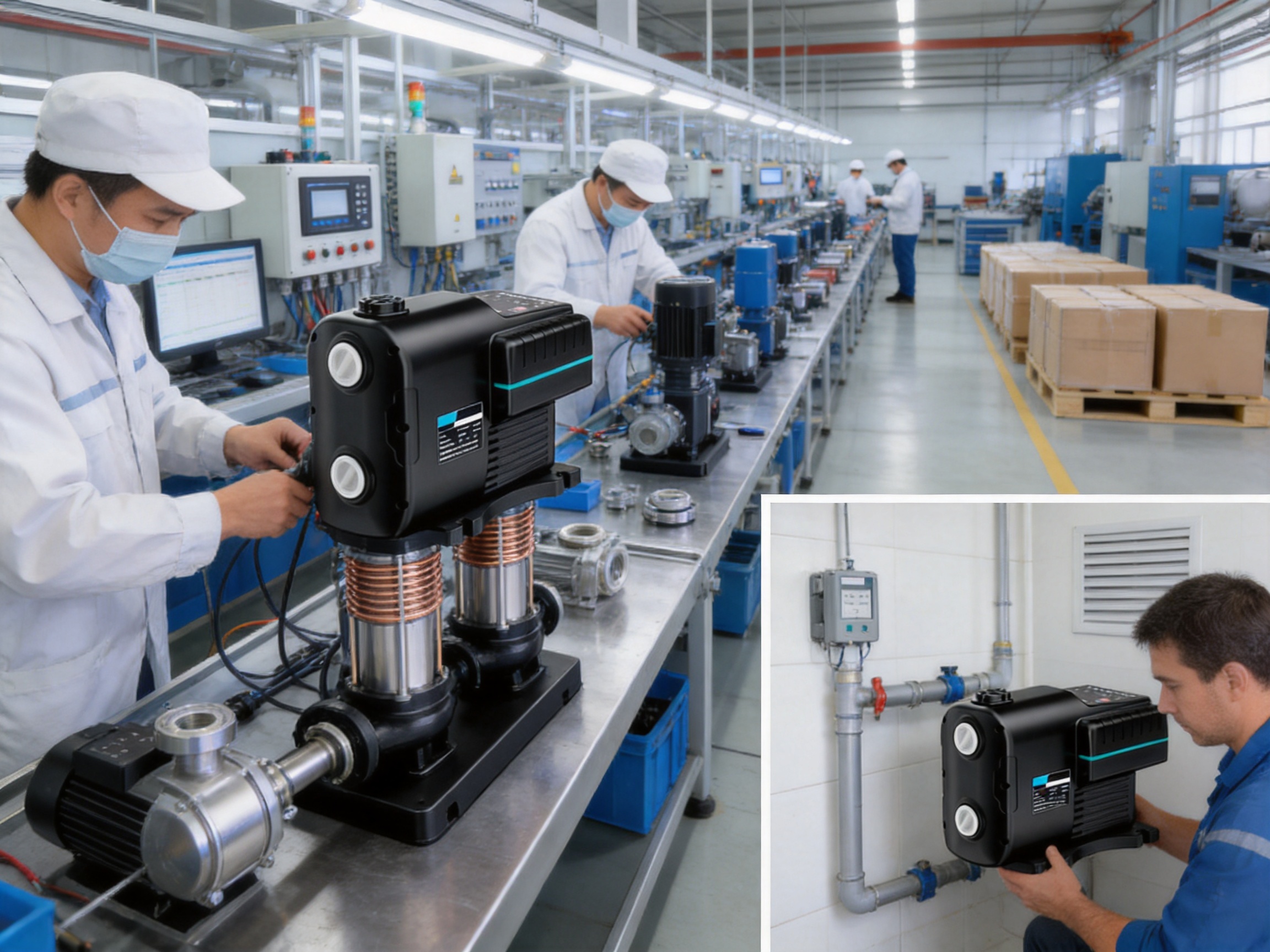
The manufacturer behind the XLA Series is an integrated pump enterprise founded in 2008. Its stated capabilities include independent research and development, mass production, and global export. This combination is important because intelligent pumps require coordination between hydraulic design, motor engineering, electronic control, software logic, materials selection, assembly, and after-sales support.
Independent research and development allows the manufacturer to improve products according to application feedback rather than depending entirely on external designs. In an intelligent booster pump, this may include optimizing the relationship between the impeller stages, permanent magnet motor, sensors, controller, pressure settings, and protective functions.
Mass production provides a foundation for repeatability. Once a design has been validated, controlled production processes can help maintain consistency in dimensions, winding quality, sealing, assembly torque, electrical connections, and final performance. Repeatability is particularly important for distributors and project buyers who need multiple units with consistent characteristics.
The company's product portfolio includes deep well pumps, submersible pumps, domestic booster pumps, circulation pumps, solar water pumps, and intelligent booster pumps. This broad product knowledge can support application-based recommendations rather than isolated product sales. Experience across different pump categories also helps the manufacturer understand common field conditions such as fluctuating voltage, variable demand, elevated temperature, irrigation requirements, and limited installation space.
The XLA Series uses 100 percent copper wire in the motor winding. Pure copper conductors provide stable electrical conductivity and can reduce resistive heat generation when properly designed and manufactured. Lower winding losses contribute to motor efficiency and may support longer service life by reducing thermal stress.
Winding quality depends on more than conductor material. Consistent winding tension, correct insulation placement, accurate connection points, effective varnish or impregnation processes, and electrical testing are all important. A professional production line should verify winding resistance, insulation performance, continuity, and other relevant motor parameters before the motor is integrated into the pump assembly.
The use of Class F insulation indicates that the electrical insulation system is designed for an elevated thermal category. Proper manufacturing control is essential to ensure that the actual insulation system, winding arrangement, and curing process deliver the intended performance.
Multistage pumps require accurate alignment of stages, impellers, seals, and flow passages. Small dimensional errors can affect hydraulic efficiency, noise, vibration, and pressure output. Controlled tooling and inspection help ensure that key components are assembled consistently.
Sealing quality is equally important. The shaft seal must prevent water from entering the motor area while allowing the rotating shaft to operate with controlled friction. Material compatibility, surface finish, axial alignment, spring pressure, and cleanliness during assembly all influence seal reliability.
A manufacturing process that includes dimensional inspection, component verification, controlled assembly, and leak testing can reduce the risk of premature failure. These production disciplines are especially important for intelligent pumps because the electronic portion cannot compensate for a poorly assembled hydraulic system.
The variable frequency controller is a core part of the XLA Series. It must coordinate motor speed, pressure response, sensor signals, start and stop behavior, and protective functions. Manufacturing quality therefore includes both hardware assembly and functional verification.
Typical quality-control activities for an intelligent pump may include visual inspection of circuit boards, verification of electrical connections, sensor checking, insulation testing, operating-current measurement, pressure testing, and simulated fault testing. The exact factory procedures are not listed in the supplied product information, but these are the types of controls normally required to produce reliable integrated pump systems.
Final testing should confirm that the completed unit responds correctly to pressure demand and operates within its intended voltage and frequency range. Testing the complete pump rather than only individual parts helps identify problems caused by the interaction between motor, controller, sensors, impellers, seals, and housing.
The XLA Series competes not only with other intelligent booster pumps but also with simpler fixed-speed pumps, separate pump-and-inverter systems, and conventional pressure-boosting packages. Its main advantage is the integration of multiple functions into a compact unit.
Compared with a basic fixed-speed booster pump, the XLA Series offers variable speed control, one-click pressure adjustment, permanent magnet motor efficiency, and integrated sensor-based operation. This can reduce the need for manual throttling and may lower energy consumption during partial-load conditions.
Compared with a separate pump, external inverter, pressure sensor, and control cabinet, the integrated design can reduce wiring complexity and equipment footprint. It may also simplify installation and reduce the number of separate components that need to be coordinated. The final cost comparison should include installation labor, control equipment, enclosure requirements, commissioning, and long-term maintenance rather than only the pump purchase price.
Compared with a low-cost pump using less durable materials, the XLA Series emphasizes pure copper winding, corrosion-resistant fluid-contact materials, stainless-steel sealing components, and a silicon carbide/graphite shaft arrangement. These features are intended to support stable performance and service durability in clean-water systems.
Compared with a pump designed only for one electrical standard, the 180-to-260-volt and 50/60-hertz capability offers greater application flexibility. This can be valuable for international projects, replacement installations, and areas where voltage variation is a practical concern.
The purchase price of a pump is only one part of its total cost. Electricity, service labor, replacement parts, downtime, and water-system performance all contribute to lifecycle cost. The permanent magnet motor and variable frequency control are intended to reduce the energy portion of that lifecycle cost.
Energy savings are most likely to be meaningful when the pump operates under changing demand. A pump serving only a constant, carefully matched duty point may show a smaller benefit than a pump serving a system with frequent partial-load operation. Even so, high motor efficiency can remain valuable across the operating range.
Reduced cycling and smoother pressure response may also support component longevity. Lower mechanical shock can benefit valves, pipe joints, seals, and pump components. The actual maintenance benefit will depend on water quality, operating hours, installation conditions, and adherence to recommended service procedures.
For facility managers, measuring actual electricity use before and after installation can help verify performance. A simple assessment should include daily operating hours, average flow, pressure settings, electricity price, and any changes in water demand. This provides a more realistic estimate than relying only on the motor nameplate rating.
The pump should be selected according to the complete hydraulic system. Important factors include required flow, static lift, pipe friction, number of outlets, peak simultaneous demand, source water level, and desired pressure. A pump that is too small may fail to provide adequate service, while an oversized pump may operate inefficiently or create unnecessary pressure.
The water source should be clean and free from damaging solids. If the source contains sand, rust, or debris, a suitable filter should be installed and maintained. Filters must be sized correctly so that they do not create excessive suction loss.
The suction pipe should be as short and direct as practical, with secure, airtight connections. Air leaks on the suction side can cause poor performance, noise, loss of prime, or unstable operation. The discharge line should be supported independently where necessary so that pipe weight does not load the pump connections.
Electrical installation should comply with local regulations. The supply voltage must fall within the specified range, and the circuit should include appropriate protection against short circuits and other electrical faults. A qualified electrician should handle wiring, grounding, isolation, and commissioning.
The pump should be protected from freezing, flooding, corrosive atmospheres, and direct exposure to severe weather. Although the IP54 rating supports suitable outdoor use, it does not permit submerged operation. The surrounding area should remain accessible for inspection and maintenance.
Before commissioning, confirm that all connections are tight, the system is filled with water, valves are in the correct position, and the pump rotates or operates according to the manufacturer's instructions. Observe the first operating cycle for leaks, unusual noise, excessive vibration, unstable pressure, or fault indications.
Intelligent control reduces the need for manual intervention, but it does not eliminate maintenance. Routine inspection should include checking for leaks, unusual vibration, abnormal noise, loose electrical connections, blocked filters, and signs of overheating. The frequency of inspection depends on operating hours, water quality, temperature, and installation environment.
Filters should be cleaned or replaced according to the level of contamination. A blocked filter can reduce inlet pressure and cause poor pump performance. If the pump is used with a water source that changes seasonally, filter inspection should be increased during periods of heavy sediment or organic debris.
Pressure settings should be reviewed if the system is modified. Adding new fixtures, extending irrigation lines, changing pipe sizes, or installing a water heater can alter the hydraulic demand. The intelligent control function can help adjust output, but the pump must still remain within its hydraulic and temperature limits.
If a fault occurs, the operator should first check water availability, inlet and outlet valves, filter condition, power supply, and visible leaks. Repeated fault resets without identifying the cause may create additional risk. Electrical or electronic repairs should be performed by qualified personnel using suitable replacement parts.
The manufacturer has developed its business around pump research, production, export, and one-stop procurement services. Its stated market focus includes medium-to-high-end global customers, with pump applications in new energy projects, agricultural irrigation, municipal engineering, mining, construction, HVAC systems, and household water supply.
Since 2018, the company has invested in new energy and intelligent technology, including solar water pumps and intelligent booster pumps. This direction is relevant to the XLA Series because modern water systems increasingly require the coordination of energy efficiency, automation, variable demand, and renewable-energy integration.
The company also established related import and export service organizations to support procurement planning, order tracking, cross-border delivery, and foreign trade services. For international buyers, these capabilities can be important because successful equipment supply involves more than manufacturing. Product documentation, communication, packaging, shipment coordination, and order follow-up all influence project results.
A factory with experience in both mass production and export can be better positioned to serve distributors, engineering companies, original equipment buyers, and project contractors. Consistent packaging, clear specifications, quality documentation, and responsive communication help reduce uncertainty during international purchasing.
The XLA Series reflects several important trends in pump technology. First, users want lower energy consumption without sacrificing pressure performance. Second, they want automatic control rather than constant manual adjustment. Third, they need compact equipment that is easy to install in limited spaces. Fourth, they expect pumps to operate reliably in a wide range of domestic and commercial environments.
The combination of IE5 permanent magnet motor technology, variable frequency control, multistage pressure generation, one-click adjustment, non-return design, and integrated protection addresses these needs in a single product family.
The XLA 2-30 and XLA 3-30 also provide a practical capacity range. The smaller model is suitable for moderate applications, while the larger model offers increased flow and head. The shared dimensions and connection size can simplify product selection and replacement planning for distributors and installers.
Most importantly, the pump is designed as a system rather than as an isolated motor and impeller. Hydraulic performance, electrical flexibility, sensor feedback, pressure control, protection, and material selection are brought together in one compact booster pump. This integrated approach can provide benefits in comfort, energy use, installation simplicity, and operational stability.
It is an intelligent multistage booster pump using a permanent magnet variable frequency motor. The product family includes the XLA 2-30 and XLA 3-30 models for clean-water pressure boosting and transfer applications.
The XLA 2-30 has a 550-watt motor, a 0.7-horsepower rating, a maximum flow of 75 liters per minute, and a maximum head of 42 meters. The XLA 3-30 has a 750-watt motor, a 1-horsepower rating, a maximum flow of 91.6 liters per minute, and a maximum head of 45 meters.
Yes. The published specification supports 50/60 hertz operation and a single-phase voltage range of 180 to 260 volts. Local electrical requirements and installation instructions must still be followed.
The stated maximum liquid temperature is 80 degrees Celsius. The pump may support certain hot-water, solar water, and water-heater applications when all operating conditions remain within the specified limits.
No. The pump is designed for clean water or non-corrosive liquids without solid particles and fibers. Wastewater, abrasive fluids, and liquids containing debris may damage the hydraulic and sealing components.
The IP54 protection grade supports use in suitable outdoor or semi-outdoor locations, but the pump should be protected from flooding, submersion, direct heavy rainfall, and pressurized water jets. A weather-protected installation is recommended.
The controller adjusts motor speed according to water demand. When demand is low, the pump can operate at reduced speed instead of running continuously at full speed. This can reduce energy consumption, particularly in systems with changing flow requirements.
The product integrates intelligent variable frequency control, so a separate external inverter may not be required for the standard operating function. The complete installation should still include appropriate electrical isolation and protection according to local regulations.
The published component information identifies engineering plastic for the pump body, base and upper cover, and impeller. It identifies stainless steel for the shaft-seal component and silicon carbide/graphite for the shaft arrangement.
Recommended applications include well water lifting, water tower filling, household water supply, garden irrigation, pipeline pressure boosting, solar water supply systems, water heaters, and the transfer of clean non-corrosive liquids.
The model should be selected according to required flow, total head, pipe losses, elevation, inlet conditions, peak demand, and desired pressure. Maximum flow and maximum head do not normally occur at the same operating point, so the full system requirement should be evaluated.
It is designed to help prevent reverse flow and reduce abrupt pressure changes when the pump stops or the system condition changes. This can support smoother operation and reduce the risk of water hammer, although correct pipe and valve design remains necessary.
Class F identifies the thermal category of the motor insulation system. The motor should still be operated within the stated ambient temperature, voltage, load, and installation limits.
Maintenance should include checking for leaks, unusual noise, vibration, overheating, filter blockage, loose connections, and abnormal pressure. Water quality and operating conditions determine the appropriate inspection schedule.
Pure copper wire provides stable electrical conductivity and can reduce resistive losses and heat generation when the winding is correctly designed and manufactured. The product description identifies 100 percent copper wire as a motor construction feature.
The XLA 2-30 and XLA 3-30 intelligent permanent magnet variable frequency pumps are designed for users who need dependable pressure boosting, efficient operation, and compact intelligent control. Their IE5 permanent magnet motors, high stated efficiency, wide voltage range, dual-frequency compatibility, multistage hydraulic design, one-click pressure adjustment, non-return structure, and integrated protections provide a strong alternative to basic fixed-speed booster pumps.
The products are suitable for a broad range of clean-water applications, including homes, gardens, water towers, solar water systems, water heaters, commercial facilities, and light industrial installations. Their compact dimensions and common one-inch connections make them practical for new systems and replacement projects.
The manufacturing foundation behind the product includes independent research and development, mass production, global export experience, pure copper motor winding, controlled hydraulic assembly, corrosion-conscious material selection, and intelligent pump technology development. These strengths support the product's positioning as a modern high-performance booster solution rather than a conventional fixed-speed pump.
Correct selection and installation remain essential. When the pump is matched to the system curve, supplied with clean water, operated within its temperature and electrical limits, and maintained properly, it can provide stable pressure, reduced energy consumption, and reliable service across many residential, commercial, and light industrial applications.
1. Product technical information for the XLA 2-30 and XLA 3-30 intelligent permanent magnet variable frequency pumps.
2. Manufacturer-provided product descriptions, operating conditions, component material data, and model performance specifications.
3. General principles of centrifugal pump selection, multistage pump operation, and system-curve analysis.
4. General principles of permanent magnet motor efficiency and variable frequency drive control.
5. General guidance on pump installation, water hammer reduction, electrical motor insulation, and enclosure protection ratings.
6. Manufacturer background information concerning research and development, mass production, intelligent pump technology, export services, and global water-pump applications.
edwina@edwin-pump.com
+86-13586290903 (WhatsApp)
Xuri Gongliang Cutting Tool Entrepreneurship Park, Wenqiao Town, Wenling City, Taizhou City, Zhejiang Province, China

High Performance Smart Pump Factory


 English