edwina@edwin-pump.com

View All Products
en
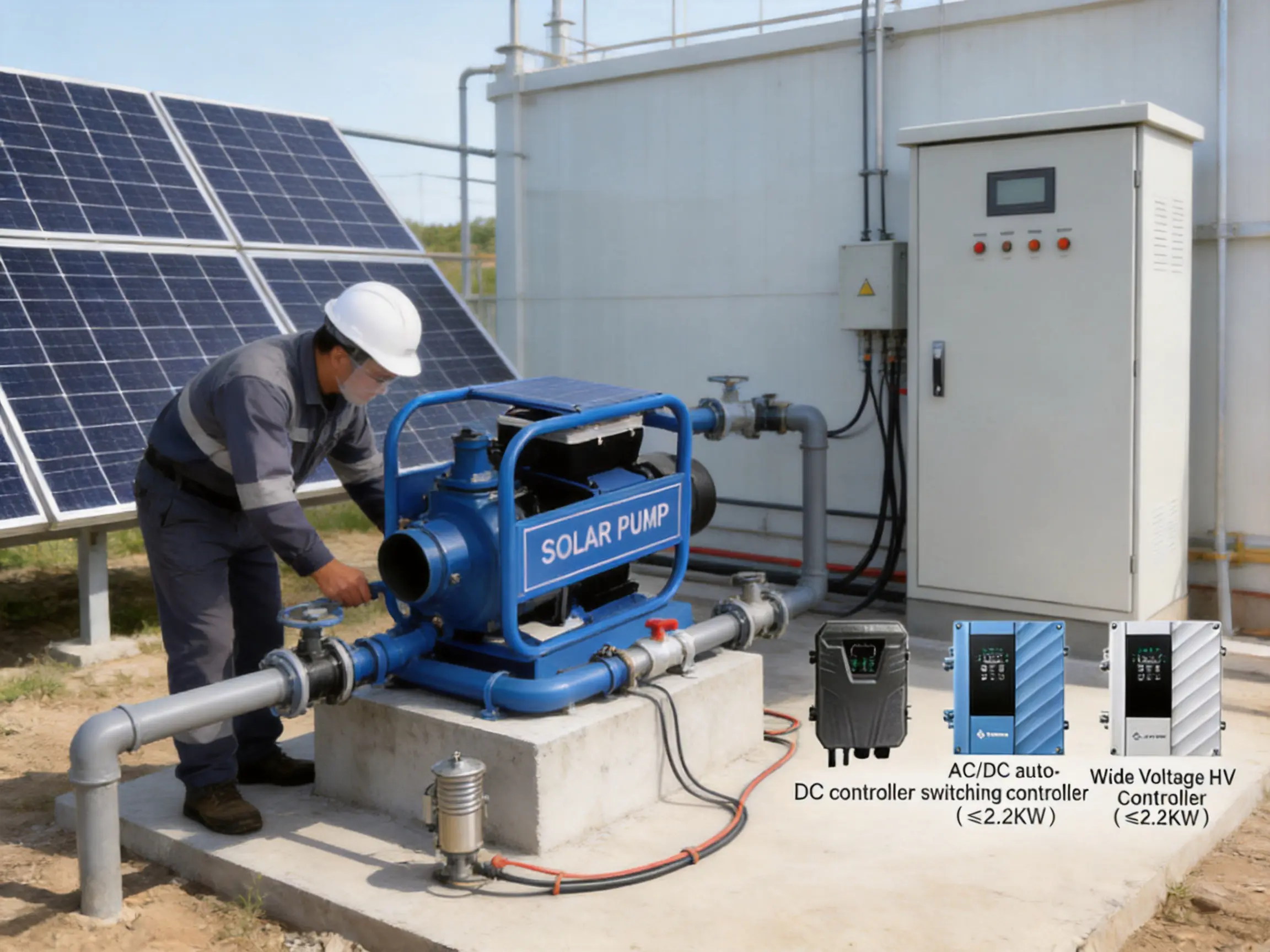
Reliable water movement is essential for households, farms, gardens, rural communities, and many small commercial projects. However, water-pumping equipment is often installed in locations where electrical supply is unstable, expensive, or unavailable. Conventional AC pumps depend entirely on the utility grid, while traditional DC solar pumps may require a separate inverter when connection to mains power is necessary. The ADSU Series AC/DC Hybrid Brushless Motor Solar Centrifugal Pump addresses this challenge by combining solar DC compatibility and mains AC operation in one flexible pumping solution.
Designed for surface water transfer, irrigation, household supply, and off-grid applications, the ADSU Series uses a brushless motor and centrifugal hydraulic design to deliver smooth water flow with low maintenance requirements. Its hybrid input capability allows users to select solar energy when sunlight is available and switch to AC power when required. This operating flexibility can improve system availability while helping reduce dependence on conventional electricity.
The series includes models from 750 W to 2,200 W, with maximum flow rates from 20 to 50 cubic meters per hour and maximum heads from 15 to 30 meters. Multiple outlet sizes and performance configurations allow the pump to be matched to different pipe systems, irrigation layouts, and water-transfer requirements.
Manufactured by Taizhou Edwin Electric Co., Ltd., the ADSU Series reflects the company’s broader experience in pump research, production, export, and new-energy technologies. Since its establishment in 2008, the company has developed product lines covering deep well pumps, submersible pumps, domestic booster pumps, circulation pumps, solar water pumps, and intelligent booster pumps. This diversified product background supports a practical understanding of water-system requirements across residential, agricultural, municipal, construction, mining, HVAC, and renewable-energy applications.
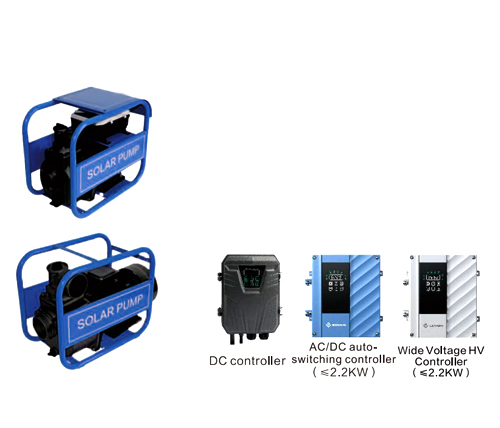
ADSU Series AC/DC Hybrid Brushless Motor Solar Centrifugal Pump
The ADSU Series is an AC/DC surface solar pump built around three key principles: flexible energy input, efficient centrifugal water transfer, and reduced mechanical maintenance. These principles make the pump suitable for projects that need reliable operation but cannot depend on a single power source.
In a conventional installation, a pump may be selected specifically for either AC grid power or DC solar power. If the energy source changes, additional equipment or a completely different pump may be required. An AC/DC hybrid pump reduces this limitation by accepting both types of input within the specified electrical ranges. The system can be integrated into a solar pumping installation and also connected to an available AC supply.
The pump’s brushless motor is another important part of the design. Unlike a brushed motor, a brushless motor does not use traditional brushes and commutators that wear through continuous contact. Removing these wear components can reduce routine maintenance and contribute to longer service life when the pump is correctly installed and operated.
The centrifugal hydraulic structure is intended to generate smooth and continuous water flow. Centrifugal pumps are widely used for surface water transfer because they can move substantial volumes of water and work effectively in applications such as irrigation, storage-tank filling, garden watering, and household distribution. The ADSU Series combines this established hydraulic principle with solar-compatible electrical technology.
Solar energy is attractive because it can reduce operating costs and provide an independent power source. Nevertheless, solar availability changes throughout the day and across seasons. Cloud cover, shading, weather conditions, and seasonal sunlight can influence the output of a photovoltaic array. A solar-only pump may therefore experience reduced performance when solar input is insufficient.
The ADSU Series is designed to operate with both AC and DC input. The listed AC operating range is 85 V to 280 V, while the recommended DC input varies by model. Several models specify an optimum DC input range of 110 V to 350 V, and higher-power configurations specify 300 V to 350 V. The specified solar-panel open-circuit voltage is below 450 V. These values provide the basis for designing a compatible photovoltaic array and electrical system.
When solar power is strong, the pump can use renewable DC energy for water transfer. When solar output is unavailable or insufficient, an AC source can be used where available. This arrangement may be particularly useful for households, farms, and small communities that want to reduce grid consumption without sacrificing access to a backup power source.
Compared with a single-input pump, a hybrid model can provide greater planning flexibility. Users do not necessarily need to choose between renewable energy and utility power. Instead, the system can be designed around the available water demand, local sunlight, required operating schedule, and backup strategy.
The dual-input design can also be beneficial during system expansion. A project may begin with AC operation and later add photovoltaic panels, or it may begin as an off-grid solar installation and retain AC compatibility for future connection to a generator or utility supply. This adaptability can reduce the need to replace the pump when the energy infrastructure changes.
Although the pump supports AC and DC operation, the electrical system must be designed according to the model-specific specifications. Solar panels should be selected so that the array’s operating voltage and open-circuit voltage remain within the stated limits. The photovoltaic array should also provide at least 1.3 times the pump power according to the listed performance data.
For example, a 750 W pump model requires a solar-panel power rating of at least 1.3 times the pump power. A 1,100 W model, a 1,500 W model, and a 2,200 W model should each be paired with an appropriately sized photovoltaic system based on the same design principle. Actual array sizing may also depend on local solar conditions, cable length, shading, seasonal performance, and the required pumping schedule.
Qualified electrical personnel should verify voltage, current, protection, grounding, disconnect equipment, and installation conditions before commissioning. The published specifications provide a product-selection foundation, but the complete solar pumping system must be engineered for the site.
The brushless motor is one of the main advantages of the ADSU Series. In a brushed motor, physical brushes transfer electrical current to the rotating part of the motor. These components gradually wear and may create friction, heat, electrical noise, and maintenance requirements. A brushless motor uses electronic commutation instead of mechanical brush contact.
This design can offer several practical benefits:
Reduced wear: The absence of brushes removes a common source of mechanical deterioration.
Lower maintenance: Users do not need to replace motor brushes as part of normal service.
Improved operating smoothness: Electronic commutation can support stable motor rotation and consistent pumping behavior.
Longer service potential: With proper protection and correct operating conditions, fewer wear components can support extended service life.
Better suitability for remote installations: Lower routine maintenance is valuable when the pump is installed in a rural or off-grid location where service access is limited.
Lower energy loss: Brushless motor technology can help improve the efficiency of the motor system, especially when combined with appropriate electronic control and a correctly selected hydraulic configuration.
These benefits do not eliminate the need for installation inspection. Water quality, dry running, excessive voltage, blocked inlets, poor ventilation, and incorrect pipe sizing can still affect pump life. However, the brushless architecture reduces one important category of routine mechanical maintenance.
The ADSU Series is intended for surface pumping rather than deep-well submersible installation. Its centrifugal hydraulic design is particularly appropriate when the water source is accessible from the surface and the system requires a relatively high flow rate. Typical sources may include storage tanks, ponds, reservoirs, collection basins, and other suitable surface-water locations.
The available models cover a range of flow and head requirements. The smallest listed configuration provides a maximum flow of 20 cubic meters per hour and a maximum head of 15 meters. Larger configurations reach up to 50 cubic meters per hour, while the highest listed head is 30 meters. This range allows users to choose a model based on the balance between water volume and delivery height.
Maximum flow and maximum head are reference points rather than simultaneous operating values. The actual flow rate decreases as the required head, pipe friction, fittings, elevation, and system pressure increase. For correct selection, users should calculate the total dynamic head and compare the required duty point with the pump’s performance curve.
A system with a short pipe run and low elevation may operate closer to the maximum-flow portion of the curve. A system with long pipes, multiple bends, filters, valves, or elevated storage tanks may require a lower flow rate at a higher head. Selecting the pump according to the actual duty point helps avoid underperformance and unnecessary energy consumption.
The ADSU Series includes models with 2-inch and 3-inch outlets. The 2-inch configurations are available in several flow and head combinations, while the 3-inch configurations are designed for higher flow requirements. Larger pipe diameters can help reduce friction losses when moving substantial volumes of water over longer distances.
Pipe sizing should be considered together with the pump outlet. A system with undersized piping may restrict flow, increase friction, and cause the pump to work under less favorable conditions. A correctly designed pipe network can help preserve the advantages of the centrifugal pump and make better use of available solar energy.
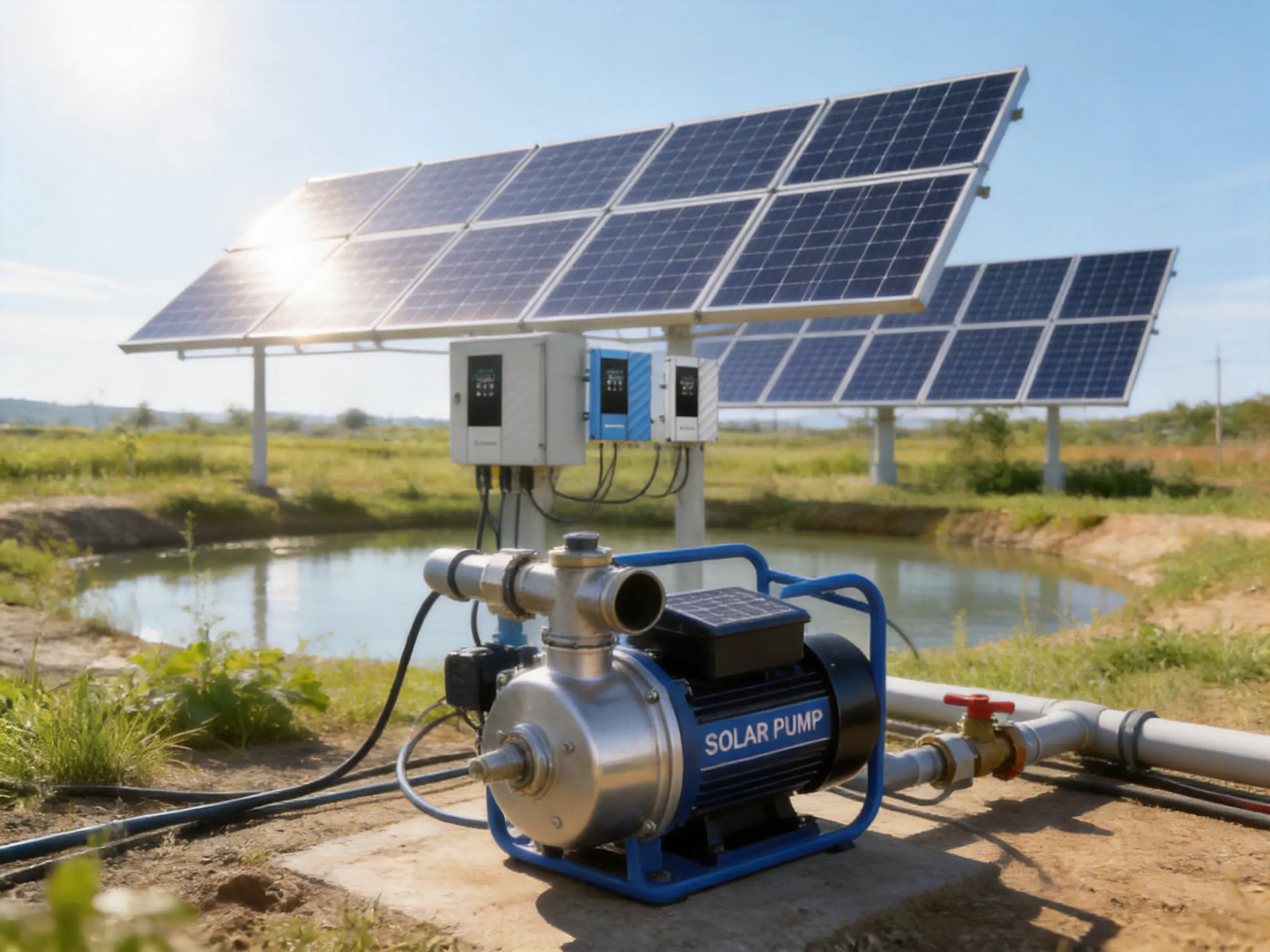
The following table summarizes the listed performance data for the ADSU Series. The values should be used as product-selection references. Final performance depends on the installation duty point, water conditions, pipe system, power source, and other site factors.
| Model | AC Voltage | Optimum DC Input Voltage | Power | Maximum Flow | Maximum Head | Outlet | Cable | Solar Panel Open-Circuit Voltage | Minimum Solar Panel Power |
| ADSU20-15-110-750 | 85–280 V | 110–350 V | 750 W | 20 m³/h | 15 m | 2 inches | 0.6 m | Below 450 V | At least 1.3 × pump power |
| ADSU23-17-110-1100 | 85–280 V | 110–350 V | 1,100 W | 23 m³/h | 17 m | 2 inches | 0.6 m | Below 450 V | At least 1.3 × pump power |
| ADSU23-25-110-1500 | 85–280 V | 110–350 V | 1,500 W | 23 m³/h | 25 m | 2 inches | 0.6 m | Below 450 V | At least 1.3 × pump power |
| ADSU28-30-300-2200 | 85–280 V | 300–350 V | 2,200 W | 28 m³/h | 30 m | 2 inches | 0.6 m | Below 450 V | At least 1.3 × pump power |
| ADSU35-15-110-1100 | 85–280 V | 110–350 V | 1,100 W | 35 m³/h | 15 m | 3 inches | 0.6 m | Below 450 V | At least 1.3 × pump power |
| ADSU43-17-110-1500 | 85–280 V | 300–350 V | 1,500 W | 43 m³/h | 17 m | 3 inches | 0.6 m | Below 450 V | At least 1.3 × pump power |
| ADSU50-20-300-2200 | 85–280 V | 300–350 V | 2,200 W | 50 m³/h | 20 m | 3 inches | 0.6 m | Below 450 V | At least 1.3 × pump power |
Flow is usually the first consideration for irrigation and water-transfer projects. A garden or household storage system may require a moderate flow, while an agricultural irrigation network may need a larger volume within a limited operating period. The 2-inch models provide maximum flows from 20 to 28 cubic meters per hour. The 3-inch models extend the range from 35 to 50 cubic meters per hour.
Users should estimate the actual daily or hourly water demand rather than selecting solely by the highest published flow. A pump that is significantly oversized may cycle unnecessarily, consume more energy than needed, or require additional control equipment. A pump that is undersized may fail to deliver sufficient water during the available sunlight hours.
Head represents the energy required to raise or pressurize water. It includes vertical elevation as well as losses caused by pipe friction, valves, elbows, filters, and other components. The ADSU models provide maximum heads between 15 and 30 meters. A model with a higher maximum head may be more suitable for elevated tanks, sloped farmland, or longer delivery systems.
However, maximum head is not the same as normal operating head. At or near shutoff head, flow may be very low. The pump should therefore be selected using the complete performance curve and the actual required flow at the required total head. The product information identifies performance curves as part of the technical documentation, making them an important reference during system design.
The ADSU Series offers several advantages when compared with conventional single-power pumps or brushed-motor alternatives. These advantages are especially relevant in applications where energy flexibility, maintenance access, and operating efficiency are important.
An AC-only pump depends on a stable utility supply, generator, or inverter. This can be a limitation in remote agricultural areas, rural properties, construction locations, and off-grid communities. The ADSU Series can use solar DC power as well as AC power, allowing renewable energy to become part of the operating plan.
This does not mean that every application will eliminate grid electricity. Instead, the hybrid configuration provides more options. Solar power may handle daytime pumping, while AC power can support operation during poor weather or periods of high demand. This flexibility can reduce energy costs and increase resilience.
A DC-only solar pump may be highly suitable for dedicated off-grid installations, but it may require additional equipment if the owner later wants to use mains power. The ADSU Series is designed from the beginning for both power types. This can make it more adaptable for projects that have changing energy conditions or require a backup source.
AC/DC compatibility may also simplify product selection for distributors, contractors, and system integrators. One hybrid product family can serve several customer needs instead of requiring separate product lines for grid-connected and solar-only installations.
Brush wear is a common maintenance issue in brushed motors. The ADSU Series uses a brushless motor, reducing the need for brush replacement and helping support stable operation. This is especially advantageous for installations where regular service visits are inconvenient or expensive.
Some solar pumps are designed primarily for low-flow domestic or livestock use. The ADSU Series reaches maximum flow rates of up to 50 cubic meters per hour, making it suitable for larger garden, agricultural, and water-transfer tasks. Its range of 2-inch and 3-inch outlet models provides additional flexibility for projects that need more water volume.
A standard pump may be able to move water effectively but may not be designed around the variable characteristics of solar power. The ADSU Series is specifically presented as a solar centrifugal pump with DC input specifications, photovoltaic voltage limits, and recommended solar-panel sizing. This product-focused approach supports more purposeful integration into renewable-energy systems.
For rural homes, vacation properties, and residences with suitable surface-water sources, the ADSU Series can support water transfer to storage tanks or household distribution systems. Solar energy can be used during daylight hours to fill a tank, while the stored water can provide supply when the pump is not operating. AC availability provides an additional operating option when the household needs water outside normal solar production periods.
The pump may also support rooftop tank filling, garden watering, and transfer between storage containers. The compact design and 0.6-meter cable listed in the performance data can support practical installation planning, although the complete system may require additional wiring, controls, protection, valves, and pipe fittings.
Household installations should include appropriate filtration when the source contains suspended particles. The pump should not be exposed to water conditions beyond its intended design. Correct priming, protection from dry running, and proper suction-pipe design are essential for reliable operation.
Agriculture is one of the most important application areas for solar pumping. Farms and orchards often have open land, strong solar exposure, and a significant need for water during daylight hours. A solar-powered surface pump can transfer water from a reservoir, pond, or collection tank to irrigation lines, elevated storage, or field distribution points.
The ADSU Series provides model options for both moderate and high flow. The larger 3-inch outlet models are suitable for systems where high-volume transfer is more important than high pressure. The 2-inch models offer configurations that balance flow and head for smaller farms, gardens, and orchard systems.
Solar pumping can reduce fuel consumption when compared with diesel-powered alternatives. It can also reduce dependence on grid electricity in agricultural locations where utility extensions are costly. The hybrid AC/DC format adds value where a farm has both solar panels and an existing electrical connection.
Irrigation designers should calculate the required application rate, operating time, elevation, pipe distance, and irrigation method. Drip systems, sprinklers, open channels, and storage-tank filling each have different hydraulic requirements. The pump should be matched to the actual system rather than selected solely according to the maximum flow printed on a specification sheet.
Remote communities may need dependable water pumping without a stable utility grid. In such situations, solar energy can provide a practical source of daytime power. The ADSU Series can support water transfer for community storage tanks, rural water projects, and small shared supply systems when the water source and hydraulic conditions are appropriate.
The brushless motor and dual-power architecture are useful in remote areas. Lower maintenance can reduce the frequency of service visits, while AC compatibility can provide an alternative source when a generator or future grid connection becomes available. A properly sized storage tank can help balance variable solar production and water demand.
Community projects should place particular emphasis on system protection and maintainability. The installation should include accessible isolation points, suitable electrical protection, a clear operating procedure, and routine inspection of the water source and pipework. Solar panels should be installed where shading is minimized, and the array should be protected from environmental damage.
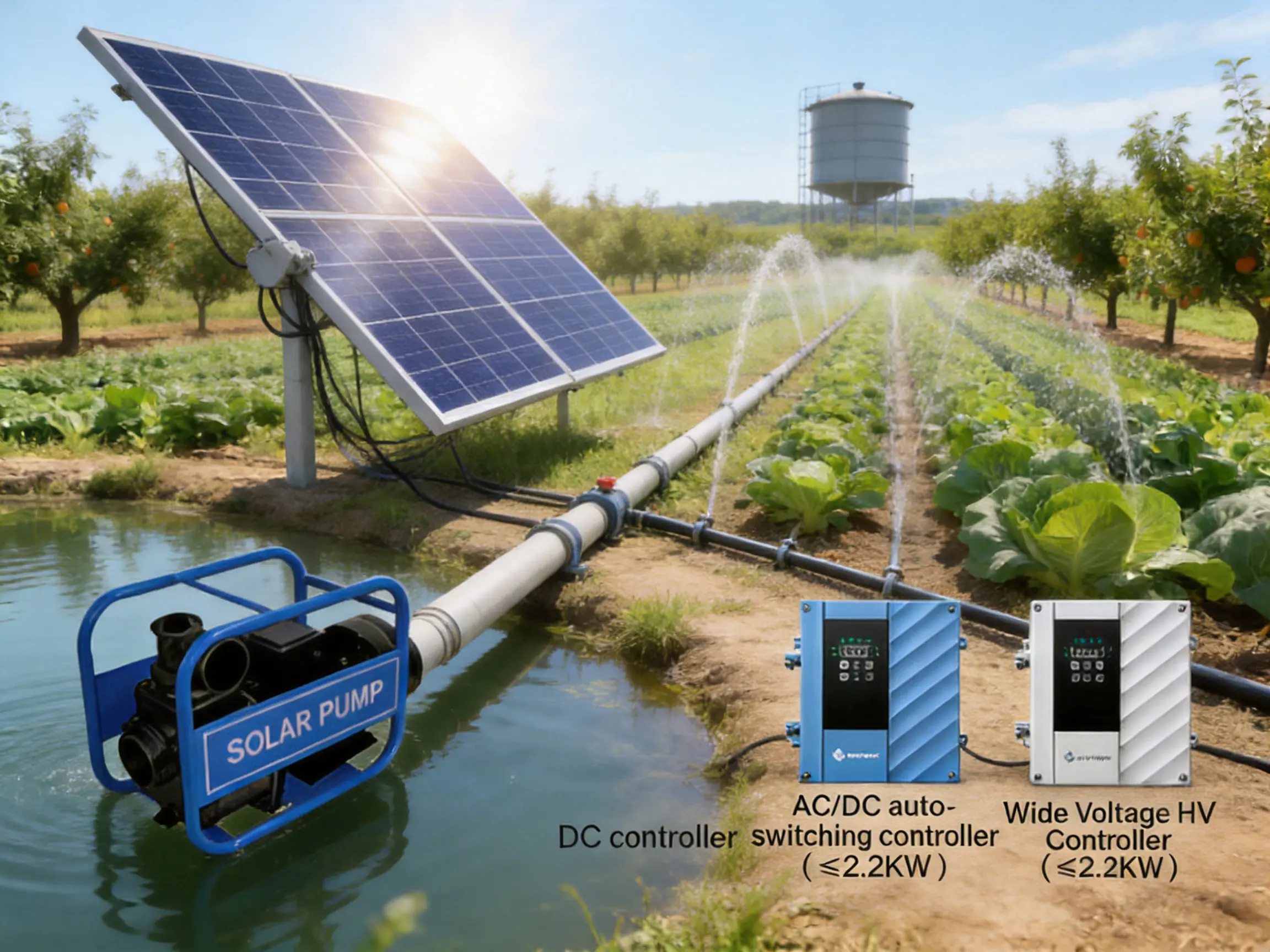
The ADSU Series can also be considered for large gardens, landscape irrigation, water features, and selected pool or spa water-transfer applications, provided that the pump materials, water chemistry, and hydraulic requirements are suitable. A centrifugal pump may be used to circulate or transfer water, but the project designer must confirm compatibility with filtration systems, chemical treatment, and required pressure.
Small commercial sites may use the pump for storage-tank filling, landscape irrigation, process-water transfer, or general water movement. Examples include agricultural workshops, small hotels, nurseries, rural offices, and facilities with rooftop or ground-mounted solar panels.
For commercial installations, the hybrid power capability can support operational continuity. Solar energy may reduce daytime operating costs, while AC power can be used during periods of reduced solar output. The best configuration depends on the site’s energy tariff, water demand, solar resource, and required operating hours.
The performance of a pump depends not only on its published specifications but also on the manufacturer’s ability to develop, produce, inspect, and support the product consistently. Taizhou Edwin Electric Co., Ltd. was founded in 2008 as an integrated manufacturing enterprise specializing in independent research and development, mass production, and global export.
The company’s product portfolio includes deep well pumps, submersible pumps, domestic booster pumps, circulation pumps, solar water pumps, intelligent booster pumps, and related water-pumping products. This broad product range gives the manufacturer exposure to different hydraulic environments, motor technologies, installation requirements, and customer expectations.
Experience across multiple pump categories can support the development of specialized products such as the ADSU Series. Surface solar pumping requires the coordination of a centrifugal hydraulic system, brushless motor technology, DC electrical input, AC compatibility, and photovoltaic system requirements. A company working across conventional and new-energy pump categories is positioned to combine these areas of knowledge in a single product platform.
The company has also invested in new energy and intelligent technology since 2018. This development direction corresponds with the growing demand for solar water pumps and smart water-management equipment. The ADSU Series represents this focus by applying hybrid power capability and brushless motor technology to a practical surface-pumping format.
Independent research and development can help a manufacturer adapt products to market requirements instead of relying only on standardized third-party designs. For a solar pump, development work may involve motor control, electrical compatibility, hydraulic matching, thermal performance, enclosure design, cable configuration, and system integration.
The product data for the ADSU Series shows attention to several aspects of system design: AC voltage range, model-specific DC input voltage, power rating, flow, head, outlet diameter, cable length, solar-panel open-circuit voltage, and minimum solar-panel power. Providing these details helps distributors, installers, and project designers evaluate the pump for specific applications.
Mass production capability is important for wholesalers, contractors, and international customers who require repeat orders. Consistent production helps support stable product availability and more predictable procurement planning. It can also make it easier for distributors to maintain replacement stock and build standardized project packages.
For pump products, production consistency involves multiple stages, including component sourcing, motor assembly, hydraulic assembly, electrical integration, inspection, packaging, and shipment preparation. The exact factory procedures may vary by model, but an integrated manufacturing structure can improve coordination between these stages.
The company has established related import and export organizations to support procurement planning, order tracking, cross-border delivery, and foreign-trade services. This is significant for international buyers who may need assistance beyond the pump itself.
Global customers often require model confirmation, documentation review, packaging coordination, shipment scheduling, and communication across different time zones. A manufacturer with an export-oriented service structure can help streamline these activities. For distributors and project contractors, this may reduce administrative complexity and improve order visibility.
The company’s pumps are used in new-energy projects, agricultural irrigation, municipal engineering, mining, construction, HVAC systems, and household water supply. This application diversity demonstrates an orientation toward both residential and industrial customers, with product requirements ranging from compact domestic equipment to higher-capacity commercial systems.
Correct installation is essential to achieve the expected performance of any centrifugal pump. Before installation, the user should identify the water source, water level, required flow, total dynamic head, pipe distance, pipe diameter, power-source configuration, and intended operating schedule.
The pump should be installed on a stable base that limits vibration and protects the motor from flooding or excessive moisture. The suction line should be as short and direct as practical. Excessive bends, air leaks, or an unsuitable suction arrangement can reduce pumping performance and cause unstable operation.
All pipe connections should be properly sealed. The inlet should be protected from large debris, while filters or strainers should be selected so that they do not create excessive pressure loss. Valves should be installed where necessary to permit isolation, maintenance, and controlled operation.
The electrical installation should follow the model’s input requirements. AC and DC circuits must be clearly identified and protected against accidental connection or incorrect switching. The solar array should be checked for voltage compatibility, and the open-circuit voltage must remain below the specified limit. Grounding, overcurrent protection, disconnect devices, and cable selection should be handled by qualified personnel.
The pump should not be operated dry. Before startup, the installer should confirm that the pump and suction line are correctly filled or primed according to the system design. Initial commissioning should include checking for leaks, unusual vibration, abnormal noise, unstable flow, and excessive motor temperature.
The brushless motor reduces one important maintenance requirement, but routine inspection remains necessary. A maintenance schedule should include checking electrical connections, cable condition, pipe joints, inlet screens, valves, mounting hardware, and the surrounding installation environment.
Solar panels should be inspected for dust, shading, physical damage, and loose connections. Dirt or shading can reduce DC power and may cause lower pumping performance even when the pump itself is operating correctly. In agricultural locations, vegetation growth and seasonal changes can affect solar exposure.
The water source should also be monitored. Sand, silt, algae, leaves, and other suspended materials may affect the pump and pipe system. Appropriate filtration and regular cleaning can help preserve hydraulic performance. If the pump shows a sudden reduction in flow, possible causes include a blocked inlet, air entering the suction line, a closed valve, excessive pipe friction, insufficient solar power, or an electrical issue.
Maintenance records can help identify performance changes over time. Recording operating conditions, cleaning dates, flow observations, and electrical checks may allow problems to be addressed before they cause extended downtime.
The ADSU Series is designed to use solar energy as one of its available power sources. Replacing or supplementing grid electricity with photovoltaic power can reduce purchased electricity consumption during suitable operating periods. In locations that rely on fuel-powered generators, solar pumping may also reduce fuel use, noise, and local emissions.
The brushless motor supports the product’s energy-efficiency goals by reducing mechanical losses associated with brush contact. The centrifugal design can provide efficient water movement when the pump is selected correctly for the duty point. System efficiency, however, depends on the complete installation, including solar-array sizing, pipe diameter, total head, control strategy, and maintenance.
Energy savings should be evaluated over the full operating cycle. A pump that runs for many hours at a moderate flow may have different energy requirements from a pump that operates briefly at a high flow. Users should consider the volume of water required per day, available sunlight, storage capacity, and the cost of alternative power sources.
The environmental benefit of solar pumping is strongest when the system is properly sized and operated. Oversized equipment, excessive pipe losses, or poor solar-panel placement can reduce the effective benefit. Professional system design helps ensure that renewable energy is used productively.
International buyers often need products that can adapt to different electrical environments and project types. The ADSU Series provides a broad AC input range and model-specific DC input options, creating flexibility for different solar system designs. Its flow range, head range, and outlet options support applications from small household installations to larger agricultural water-transfer systems.
The product is also supported by a manufacturer with experience in global export and one-stop procurement services. This can be valuable for importers, distributors, engineering contractors, and project developers who require coordinated communication, model selection, order tracking, and delivery support.
Because the company manufactures several pump categories, buyers may also be able to develop a broader product portfolio through one supply relationship. Deep well pumps, submersible pumps, booster pumps, circulation pumps, solar pumps, and accessories can serve different segments of the water-equipment market.
For distributors, the ADSU Series can be positioned as a flexible product for customers who want renewable-energy operation without giving up AC compatibility. For system integrators, its published electrical and hydraulic parameters provide a starting point for photovoltaic and pipe-system design. For end users, its brushless motor and surface-pump configuration offer a practical combination of lower maintenance and high-volume water transfer.
The ADSU Series is an AC/DC surface solar centrifugal pump. It is designed for surface water transfer and can operate from solar DC power or mains AC power within the specified electrical ranges.
Yes. The product is designed for hybrid operation and includes an AC input range of 85 V to 280 V. This allows operation from a suitable AC source when solar power is unavailable or when the installation is not connected to photovoltaic panels.
Yes, provided that the solar array meets the voltage and power requirements of the selected model. The DC input range, open-circuit voltage limit, and minimum recommended solar-panel power must be checked before installation.
The listed maximum flow is 50 cubic meters per hour for the ADSU50-20-300-2200 model. Other models provide maximum flows from 20 to 43 cubic meters per hour.
The listed maximum head is 30 meters for the ADSU28-30-300-2200 model. Other configurations provide maximum heads from 15 to 25 meters.
A brushless motor does not use traditional motor brushes that wear through mechanical contact. This can reduce routine maintenance, support smoother operation, and make the pump more suitable for remote or difficult-to-access installations.
No. The ADSU Series is a surface centrifugal pump. It is intended for suitable surface-water applications such as reservoirs, storage tanks, ponds, irrigation systems, and household water-transfer installations.
The correct model should be selected according to the required flow, total dynamic head, pipe diameter, water source, operating schedule, and power-source conditions. The pump’s performance curve should be compared with the actual system duty point.
The product data specifies solar-panel power of at least 1.3 times the pump power. The array voltage must also remain within the specified DC input range, and the solar-panel open-circuit voltage must be below 450 V. Local solar conditions and system losses may justify additional design capacity.
Yes. The series is suitable for residential gardens, farms, orchards, and other irrigation projects when the required flow and head match the selected model. Pipework and irrigation equipment should be designed to minimize unnecessary hydraulic losses.
It can support household water-transfer applications, such as filling a storage tank or moving water from a suitable source. The complete domestic water system should include appropriate filtration, controls, pressure management, and safety protection.
The brushless motor reduces routine motor maintenance, but the complete installation still requires inspection. Users should check the inlet, filters, pipework, valves, electrical connections, solar panels, and operating conditions regularly.
Possible causes include inadequate solar power, blocked filters, air entering the suction line, closed valves, undersized pipework, excessive elevation, incorrect model selection, or a problem with the electrical supply. A systematic inspection should be performed before replacing the pump.
The ADSU Series is manufactured by Taizhou Edwin Electric Co., Ltd., an integrated pump manufacturer founded in 2008 with experience in research and development, mass production, and global export.
The ADSU Series AC/DC Hybrid Brushless Motor Solar Centrifugal Pump provides a practical answer to the changing energy and water-supply requirements of modern installations. Its most important advantage is the ability to operate with both solar DC power and mains AC power. This flexibility allows users to benefit from renewable energy while retaining a backup or alternative power source.
The brushless motor reduces wear-related maintenance, while the centrifugal design supports smooth water transfer across a range of household, agricultural, community, and small commercial applications. With models from 750 W to 2,200 W, maximum flow rates from 20 to 50 cubic meters per hour, maximum heads from 15 to 30 meters, and both 2-inch and 3-inch outlet configurations, the series provides multiple options for different hydraulic requirements.
Its performance depends on correct sizing and installation. Solar-panel voltage, array power, total dynamic head, pipe friction, water-source conditions, and operating schedules must all be considered. When these factors are properly matched, the ADSU Series can help reduce energy costs, improve operating flexibility, and support dependable water access in both grid-connected and off-grid locations.
Backed by a manufacturer with experience in pump research, mass production, new-energy technology, and international supply services, the ADSU Series is positioned as a versatile solution for customers seeking efficient and adaptable surface water pumping.
Taizhou Edwin Electric Co., Ltd. ADSU Series AC/DC Hybrid Brushless Motor Solar Centrifugal Pump: Product Description and Performance Data.
Taizhou Edwin Electric Co., Ltd. Product Information for Solar Water Pumps, Submersible Pumps, Booster Pumps, and Circulation Pumps.
International Electrotechnical Commission. Guidance on Rotating Electrical Machines and Motor Performance Principles.
Hydraulic Institute. Centrifugal Pump System Design and Application Principles.
Solar photovoltaic system design principles concerning array voltage, open-circuit voltage, system losses, and power sizing.
General engineering practice for centrifugal pump selection, total dynamic head calculation, pipe friction evaluation, and water-system commissioning.
edwina@edwin-pump.com
+86-13586290903 (WhatsApp)
Xuri Gongliang Cutting Tool Entrepreneurship Park, Wenqiao Town, Wenling City, Taizhou City, Zhejiang Province, China

High Performance Smart Pump Factory


 English