
edwina@edwin-pump.com

View All Products
en
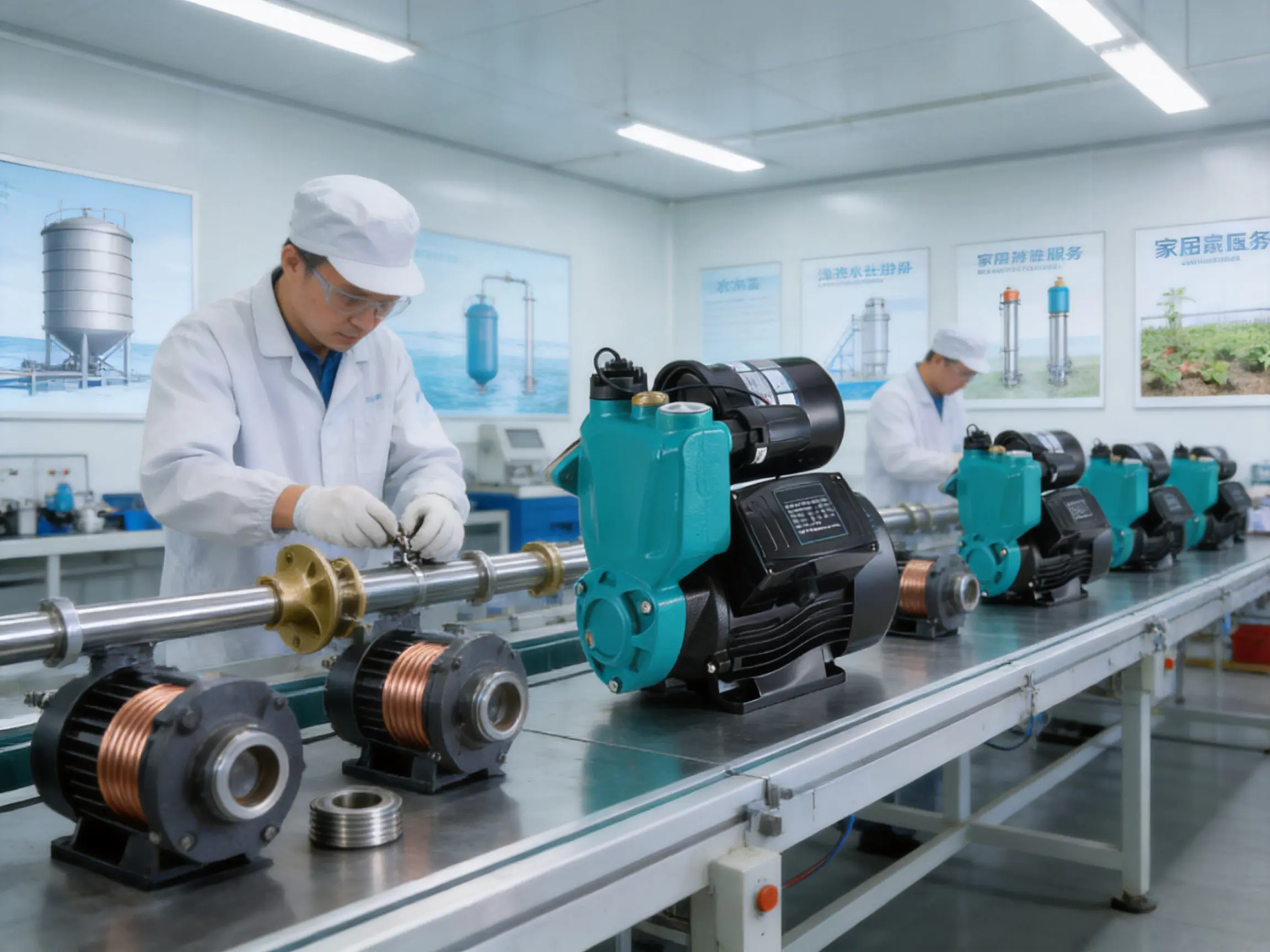
Reliable water pressure is essential in homes, gardens, farms, small commercial buildings, and civil water-supply installations. A pump used in these environments must do more than transfer water. It should start automatically when demand appears, maintain a stable supply, tolerate occasional air in the suction line, resist corrosion in wetted areas, and continue operating dependably after long periods of inactivity. The EPS-AZ Series Automatic AISI 304 Shaft Hot and Cold Water Self-Priming Pump with Tank is designed around these practical requirements.
This automatic self-priming peripheral pump combines a compact pump body, automatic pressure control, an integrated tank, a brass impeller, and an AISI 304 stainless steel shaft. Its intended applications include water tower supply, domestic water distribution, garden irrigation, allotment irrigation, tank transfer, well water lifting, automatic irrigation systems, and other installations requiring reliable water delivery at relatively high pressure.
With motor options from 0.25 kW to 2.20 kW, maximum flow rates from 30 to 115 liters per minute, maximum heads from 30 to 65 meters according to the listed model data, and a maximum suction height of 9 meters, the series covers a useful range of small and medium water-supply duties. The design is especially suitable where a conventional pump would require additional control equipment or where an ordinary centrifugal pump might struggle with air mixed into the suction line.
The EPS-AZ Series is a self-priming peripheral pump equipped with an automatic control system and pressure tank. Unlike a basic manual pump that must be switched on and off by an operator, the automatic arrangement is intended to respond to changes in water demand. When a tap, irrigation outlet, or other consumption point is opened, the system can start the pump. When demand stops and pressure is restored, it can stop the motor.
This operating principle helps reduce unnecessary running time. It also makes the pump convenient for household water distribution, where users expect water to be available without manually operating a switch each time. The tank supports the pressure-control function and can help reduce frequent starts during small or intermittent water demands.
The pump is categorized as a self-priming peripheral pump. Peripheral hydraulic designs are commonly selected when the installation requires higher pressure in relation to the pump’s compact size. The EPS-AZ Series is therefore suitable for applications involving elevated water tanks, multi-level buildings, garden sprinklers, small pressure sets, and water delivery over moderate vertical distances.
The product is intended for clean water and liquids with physical and chemical properties similar to clean water. It is not presented as a sewage pump, slurry pump, seawater pump, or chemical-transfer pump. Correct fluid selection is important because suspended solids, aggressive chemicals, abrasive particles, or unsuitable temperatures may damage the impeller, mechanical seal, pressure components, or pump casing.
The series offers several motor sizes so that users can select a pump according to required flow, pressure, pipe arrangement, suction conditions, and operating frequency. Choosing the correct size is more efficient than selecting the largest available motor for every installation. An oversized pump may consume more energy, create excessive pressure, or operate outside the most suitable part of its performance range.
| Model | Power | Power | Inlet/Outlet | Maximum Flow | Maximum Head | Maximum Suction |
|---|---|---|---|---|---|---|
| kW | HP | L/min | m | m | ||
| EPS250-AZ | 0.25 | 0.34 | 1 x 1 inch | 30 | 30 | 9 |
| EPS370-AZ | 0.37 | 0.50 | 1 x 1 inch | 40 | 35 | 9 |
| EPS550-AZ | 0.55 | 0.75 | 1 x 1 inch | 50 | 40 | 9 |
| EPS750-AZ | 0.75 | 0.10* | 1 x 1 inch | 55 | 45 | 9 |
| EPS900-AZ | 0.90 | 1.20 | 1 x 1 inch | 55 | 50 | 9 |
| EPS1100-AZ | 1.10 | 1.50 | 1.5 x 1.5 inches | 100 | 60 | 9 |
| EPS1500-AZ | 1.50 | 2.00 | 1.5 x 1.5 inches | 110 | 60 | 9 |
| EPS2200-AZ | 2.20 | 3.00 | 1.5 x 1.5 inches | 115 | 65 | 9 |
*The supplied product data lists 0.10 HP for the EPS750-AZ model. Because 0.75 kW is commonly associated with approximately 1.0 HP, buyers should confirm the final nameplate rating and technical datasheet before ordering.
The maximum values in the table are reference figures rather than guaranteed operating points at every condition. Actual flow depends on total dynamic head, pipe diameter, pipe length, fittings, valves, elevation, water temperature, suction conditions, and the operating point of the system. A professional selection should consider the complete pump curve and the duty point rather than relying only on maximum flow or maximum head.
One of the principal advantages of the EPS-AZ Series is its automatic operating arrangement. A conventional pump often requires a separate pressure switch, control panel, check valve, and pressure vessel. Each additional component introduces installation work, wiring requirements, space requirements, and another possible maintenance point. By incorporating automatic pressure control and a tank into one packaged unit, the EPS-AZ design can simplify many small water-supply systems.
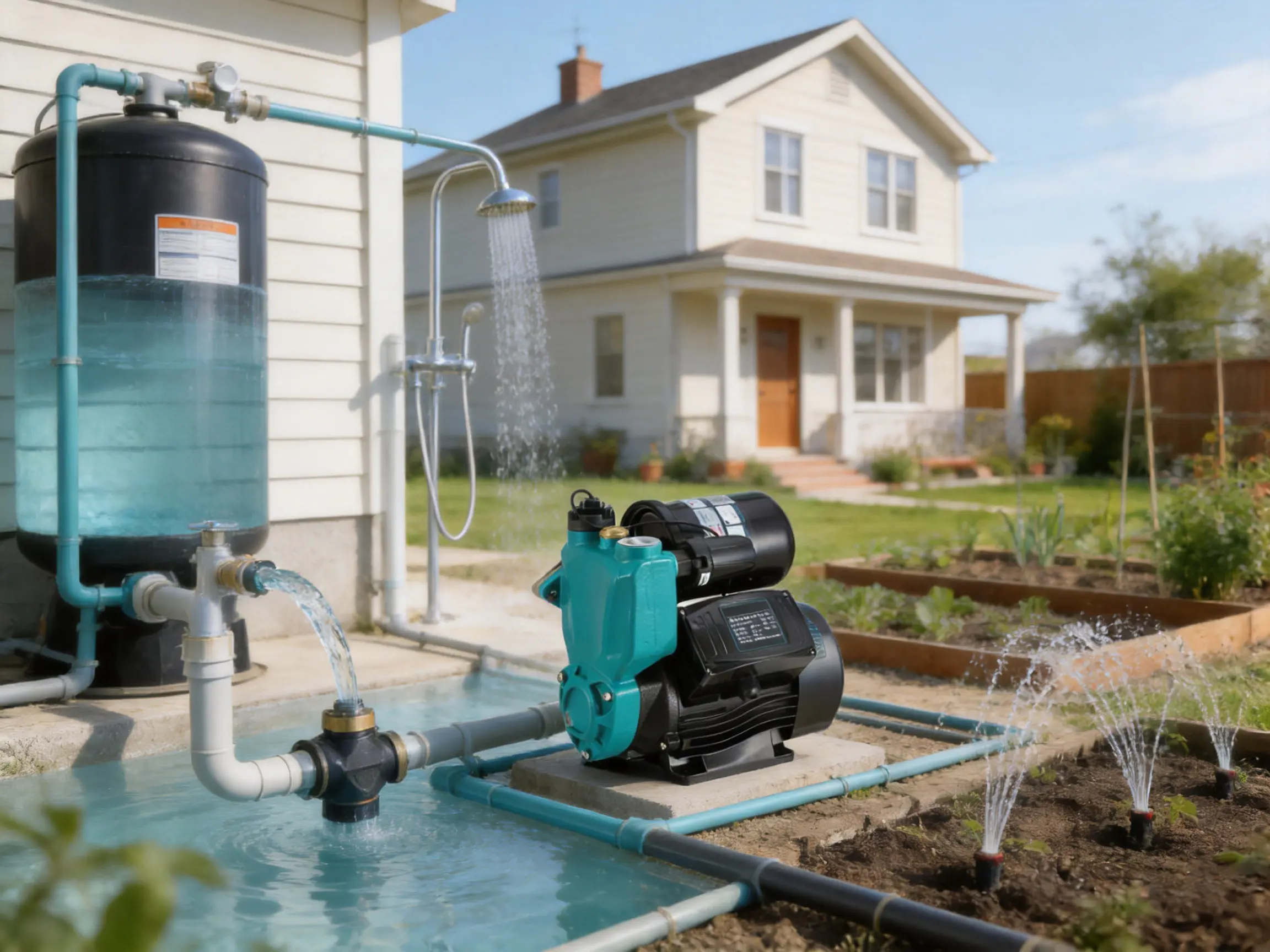
Automatic operation is useful in a household because water consumption is rarely constant. A user may open a kitchen tap for only a few seconds, operate a shower for several minutes, or use several outlets at the same time. The pump responds to demand instead of requiring manual supervision. In a garden, it can support an irrigation outlet or sprinkler system without requiring the operator to start the motor manually each time.
The integrated tank also supports smoother system behavior. Small water demands can be handled with less immediate dependence on continuous motor operation, depending on the system pressure settings and tank characteristics. This may reduce start-stop frequency and improve user comfort by helping maintain more consistent pressure.
Automatic control does not eliminate the need for correct installation. The suction line must be airtight, the pump must be filled or primed according to the installation instructions, and the electrical supply must match the motor specification. A foot valve or suitable non-return arrangement may be required in certain suction configurations to prevent the suction pipe from draining when the pump stops.
Air in the suction line is a common difficulty in domestic and civil water systems. Small leaks at threaded joints, a partially empty suction pipe, water-level changes in a tank, or intermittent suction conditions can introduce air. A pump that is not designed for self-priming may lose its prime and fail to deliver water until the system is manually refilled.
The EPS-AZ Series is designed to handle situations where air or water may be present in the liquid to be pumped. Its self-priming configuration makes it more adaptable than a basic non-self-priming peripheral pump in installations where the suction line cannot remain completely flooded. The specified maximum suction height is 9 meters, although the practical achievable suction height depends on atmospheric pressure, water temperature, pipe losses, altitude, sealing quality, and the condition of the suction line.
It is important to understand that a stated suction height is not the same as a recommendation to operate continuously at the maximum possible lift. The closer the installation approaches the theoretical limit, the more sensitive it becomes to air leakage, friction losses, water temperature, and vapor formation. For dependable operation, the pump should be installed as close as practical to the water source, with a short and properly sized suction pipe.
The suction pipe should rise continuously toward the pump where possible, avoiding unnecessary high points that can trap air. Connections should be sealed carefully without introducing excessive sealant into the passage. A strainer can help prevent debris from entering the pump, but it must be correctly sized and cleaned regularly so that it does not create excessive suction resistance.
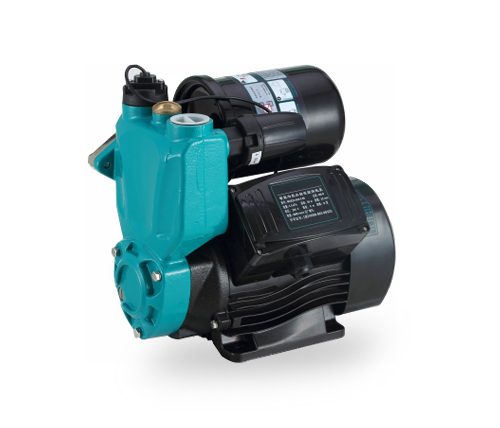
EPS-AZ Series Automatic AISI304 Shaft Hot and Cold Water Self-priming Pump with Tank
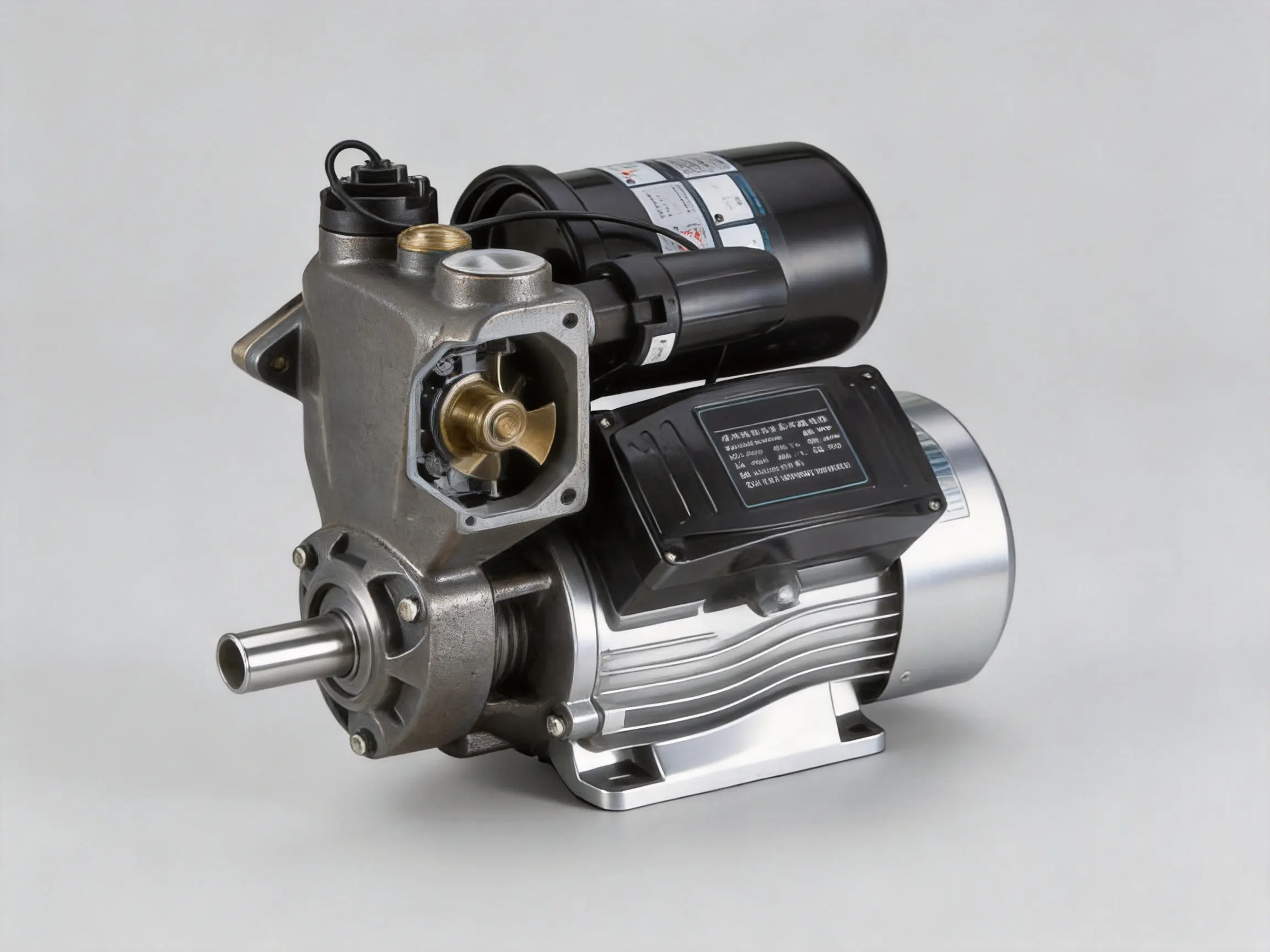
The product uses a combination of materials selected for mechanical strength, wear resistance, and protection of water-contact areas. The pump body and support are made from cast iron with a special anti-rust treatment. Cast iron provides a rigid housing that can withstand hydraulic forces and support the motor and pump assembly. The treatment is intended to improve resistance to surface corrosion during normal use.
The impeller is made from brass. Brass is a practical choice for a compact pressure pump because it offers good mechanical strength, suitable hydraulic performance, and resistance to many ordinary water-service conditions. The material can also support reliable restarting after the pump has remained unused for an extended period, provided the water quality and installation conditions are appropriate.
The shaft is manufactured from AISI 304 stainless steel. This is one of the most important material features of the series. The shaft is exposed to the mechanical seal and is closely associated with the water-contact region. A stainless steel shaft helps reduce rust-related problems and supports cleaner, more reliable operation than an untreated carbon-steel shaft in comparable conditions.
The supplied materials table identifies the mechanical seal as carbon and ceramic. Mechanical seals must maintain a controlled interface between rotating and stationary components while preventing water from entering the motor. Carbon and ceramic combinations are widely used in clean-water pumps because they provide a practical balance of sealing performance, wear resistance, and cost.
The motor case is listed as aluminum, while the motor cover is listed as cast iron. Aluminum can help reduce weight and support heat dissipation, whereas cast iron provides rigidity in the relevant structural area. The fan is listed as polypropylene. These material choices contribute to a compact pump that can be handled and installed without the excessive weight associated with larger all-cast-iron motor assemblies.
| Component | Listed Material or Construction | Functional Contribution |
|---|---|---|
| Pump body | HT200 cast iron | Rigid hydraulic housing and structural support |
| Support | HT200 cast iron | Stable connection between hydraulic and motor sections |
| Impeller | Brass | Durable hydraulic rotating element for clean-water service |
| Shaft and rotor | Stainless-steel shaft construction is specified | Reduced corrosion risk in the water-contact shaft area |
| Mechanical seal | Carbon/ceramic | Separation of the water chamber and motor section |
| Motor case | Aluminum | Compact structure and heat dissipation support |
| Motor cover | Cast iron | Mechanical rigidity and protection |
| Fan | Polypropylene | Motor cooling airflow |
The motor is equipped with durable copper wiring, C&U high-efficiency bearings, a built-in thermal protector for the single-phase motor, Class F insulation, and an IP44 protection rating. Together, these features are intended to support reliable operation in normal pump-room, utility-room, outdoor shelter, and domestic installation environments.
Copper winding wire provides good electrical conductivity and supports efficient conversion of electrical energy into motor torque. Winding quality is important because poor insulation, inadequate slot filling, or inconsistent winding tension can increase heat generation and shorten motor life. A professional manufacturing process should control winding dimensions, insulation placement, electrical resistance, and final motor testing.
The C&U bearing specification indicates the use of recognized bearing components intended to provide smooth rotor support. Bearings influence vibration, noise, shaft alignment, and service life. Proper bearing fit is just as important as bearing brand or type. During assembly, the bearing must be installed without damaging the races, and the rotor must be checked for free rotation and correct alignment.
The built-in thermal protector helps protect the single-phase motor against overheating. Overheating can result from blocked ventilation, excessive ambient temperature, voltage problems, a seized impeller, frequent cycling, incorrect wiring, or operation outside the intended hydraulic conditions. Thermal protection is an important safeguard, but it should not be treated as a substitute for correct installation and electrical protection.
Class F insulation provides a higher thermal insulation capability than basic insulation classes commonly used in smaller motors. The actual permissible temperature rise still depends on the motor design, load, ambient temperature, ventilation, and operating conditions. The maximum ambient temperature is listed as +40°C, so installations in hotter environments may require additional ventilation or a suitable reduction in operating load.
The IP44 rating indicates protection against solid objects of a specified size and water splashing from different directions. It does not mean that the motor can be submerged or exposed to powerful water jets. The terminal cover, cable entry, and electrical connections should be protected from direct rain, flooding, condensation, and accidental water spray.
The EPS-AZ Series is specified for a maximum liquid temperature of +60°C. This allows the pump to be considered for certain warm-water applications in addition to ordinary cold-water supply. Examples may include warm utility water, temperature-controlled process support, or water systems where the liquid temperature is above normal ambient conditions but remains below the stated limit.
Temperature affects pump operation in several ways. Warm water can have a higher vapor pressure, which may reduce the available suction margin and increase the risk of cavitation, especially when the pump is lifting water from a low level. Higher temperature can also affect seals, gaskets, tank components, lubricants, and electrical cooling. Therefore, the pump should not be selected solely because the maximum temperature is listed as 60°C; the complete installation must be reviewed.
The water must remain compatible with the materials of construction. Clean water and liquids similar to water in physical and chemical properties are the recommended medium. Users handling oils, solvents, acids, alkaline chemicals, saltwater, or abrasive fluids should obtain a specific material-compatibility assessment before using the pump.
Water tower applications often require water to be lifted, distributed, or pressurized between a storage tank and consumption points. The EPS-AZ Series can be used in suitable water tower arrangements where the required flow and head fall within the selected model’s capability. The automatic pressure function can help deliver water when outlets are opened and stop the pump when the demand ends.
The installation designer should calculate the static elevation between the water source and the highest outlet, then add friction losses through the pipes, elbows, valves, filters, and fittings. The selected pump must provide adequate pressure at the required flow, not merely reach the highest stated head under zero-flow conditions.
In a home with low municipal pressure or variable supply pressure, an automatic booster arrangement can improve water delivery to taps, showers, washing equipment, and other outlets. The compact construction is useful where space is limited and a separate pump room is not available.
For a household system, noise, pressure stability, electrical safety, and ease of maintenance are important. The integrated tank and automatic control can reduce the need for manual operation. The user should still ensure that the electrical circuit includes suitable overload and residual-current protection where required by local regulations.
Gardens and allotments frequently draw water from storage tanks, rainwater reservoirs, shallow wells, or other sources. A self-priming pump is useful when the water source is below the pump and when the suction pipe may not remain completely full. The available pressure can support hoses, sprinklers, drip-irrigation zones, and small automatic irrigation systems, provided the selected model matches the irrigation flow requirement.
For irrigation, water quality should be considered carefully. Rainwater tanks may contain leaves, sediment, and biological material. A suitable pre-filter or strainer is recommended, and the user should inspect it regularly. Excessive blockage can reduce flow, increase suction resistance, and cause the pump to overheat or lose prime.
The product can be used for lifting clean water from suitable shallow wells within the maximum suction limitation. It is not a deep-well submersible pump. If the water level is beyond the practical suction range, a submersible pump or deep-well pump should be selected instead.
Well water may contain sand or dissolved minerals. Sand is abrasive and can accelerate wear of the impeller and mechanical seal. Before selecting the pump, the water should be assessed for suspended solids, temperature, chemical composition, and seasonal level changes.
Small civil buildings, workshops, utility rooms, agricultural properties, and service facilities can benefit from an automatic pump with a compact footprint. The pump may be used for water distribution, tank transfer, small wash-down systems, or supplementary pressure service. The final application must remain within the product’s clean-water limitations and electrical specifications.
The EPS-AZ Series has several practical advantages over a basic manual peripheral pump or a standard low-cost pump assembled with minimal protection. The most visible advantage is the integrated automatic pressure arrangement. A basic pump may require an operator to switch it on and off, while the EPS-AZ system is designed to respond to water demand automatically.
The second advantage is the combination of self-priming capability and a maximum suction specification of 9 meters. Many ordinary centrifugal pumps perform best only when flooded or when the suction pipe remains completely full. In real domestic installations, small air pockets and minor changes in water level are common. A self-priming design provides additional installation flexibility, although the suction piping still needs to be correctly sealed.
The AISI 304 stainless steel shaft is another differentiating feature. In lower-cost pumps, an unprotected shaft may develop rust in the seal area after repeated exposure to water or after long storage. Rust can damage the mechanical seal and create leakage. A stainless steel shaft helps address this risk and is particularly valuable when the pump is installed in a humid location or used intermittently.
The brass impeller also provides a durable alternative to less robust impeller materials in demanding domestic pressure applications. The impeller must withstand rotational forces, hydraulic pressure, and repeated starting. Brass offers a substantial metal construction while remaining suitable for many clean-water duties.
The motor protection package is more complete than the arrangement found on very basic pumps. Copper windings, C&U bearings, Class F insulation, a built-in thermal protector, and IP44 protection collectively support safer and more dependable operation. These features do not remove the need for external electrical protection, but they provide a stronger foundation for a professional pump installation.
The series also offers a broad motor range. Competitors that provide only one or two power sizes may force a customer to choose between insufficient pressure and unnecessary energy consumption. With models from 0.25 kW to 2.20 kW, the EPS-AZ range can serve both modest domestic requirements and higher-flow small civil applications.
Finally, the integrated format can reduce installation complexity. Fewer external components may mean fewer threaded joints, less wiring, a smaller installation area, and a shorter commissioning process. The exact saving depends on the project design, but a packaged automatic solution is often more convenient than building a control system from separate parts.
The manufacturer, Taizhou Edwin Electric Co., Ltd., was established in 2008 and operates as an integrated enterprise covering independent research and development, mass production, and global export. This combination is important for pump buyers because product performance depends not only on the design but also on repeatable production, component control, assembly discipline, testing, and after-sales coordination.
Independent research and development allows the company to adapt pump designs to different market requirements. Domestic booster pumps, deep-well pumps, submersible pumps, circulation pumps, solar water pumps, and intelligent booster pumps require different hydraulic and electrical solutions. Experience across these product categories can support broader engineering knowledge in motor design, hydraulic passages, control systems, seals, materials, and application selection.
Mass production provides an opportunity to standardize important manufacturing operations. A consistent production system can establish repeatable procedures for casting inspection, machining, impeller balancing, shaft preparation, motor winding, bearing installation, mechanical-seal assembly, wiring, pressure testing, and performance checking. Standardization is particularly valuable when customers purchase multiple units for one project or place repeat orders over time.
The cast-iron pump body and support must be accurately machined so that the impeller, shaft, seal, and motor remain correctly aligned. Dimensional control at these interfaces affects hydraulic efficiency, vibration, noise, and seal life. A rigid body alone is not enough; the machining and assembly process must preserve concentricity and correct clearances.
The brass impeller should be checked for dimensional consistency and balance. An imbalanced impeller can create vibration and increase bearing loads. Hydraulic surfaces should be free from unacceptable casting defects, burrs, or obstructions that could restrict the flow path. Careful finishing supports stable operation and consistent performance between production units.
Motor production requires control over winding quality, insulation, rotor balance, bearing seating, terminal connections, and cooling components. The use of copper wiring and high-efficiency bearings provides a strong component foundation, while production testing confirms whether the assembled motor behaves as intended. Electrical checks may include insulation resistance, winding resistance, no-load current, rotation, and thermal behavior, depending on the manufacturer’s internal procedures.
The mechanical seal is a precision component that requires clean assembly and correct compression. Contamination, misalignment, or incorrect installation can cause leakage soon after commissioning. A quality-oriented manufacturing process should protect the sealing surfaces during assembly and verify that the completed hydraulic chamber remains leak-free.
Automatic pumps require additional attention because the hydraulic assembly and control components must work together. Pressure sensing, tank connection, automatic start and stop behavior, and protection against abnormal operating conditions are all relevant to final inspection. Functional testing of the complete unit is more meaningful than testing only the motor or only the pump body.
The company’s export experience also supports international purchasing requirements. Since 2012, associated import and export organizations have been used to support procurement planning, order tracking, cross-border delivery, and foreign trade services. For distributors and project buyers, these capabilities can be important because dependable delivery, documentation, packaging, communication, and repeat-order management are part of the total product value.
Professional pump production should include inspection at several stages rather than relying only on a final visual check. Incoming materials should be assessed for conformity with the intended specifications. Castings should be inspected for visible defects and machining quality. Brass impellers should be checked for correct dimensions and balance. Stainless steel shafts should be verified for surface condition, straightness, and compatibility with the seal arrangement.
Motor testing should confirm that the electrical assembly is safe and suitable for the rated voltage and frequency. The thermal protector should be correctly connected. Bearings should operate smoothly without abnormal sound. The fan and fan cover should be secure and should provide adequate cooling airflow.
Hydraulic testing should verify that the pump can operate without unacceptable leakage and that the assembled unit produces performance consistent with the intended model. Depending on the testing system, the manufacturer may examine flow, pressure, current, vibration, noise, and automatic start-stop behavior. Test records can help identify process variation and support continuous improvement.
For buyers, it is appropriate to request the final technical datasheet, motor nameplate information, wiring instructions, operating limits, warranty terms, and any available inspection documentation. The product information supplied for this series identifies the main materials and performance range, but project-specific requirements may require additional confirmation.
Install the pump on a stable, level base that can support the operating weight and absorb normal vibration. Keep sufficient space around the motor for ventilation and maintenance. Avoid locations exposed to flooding, direct high-pressure spray, excessive dust, corrosive vapors, or temperatures outside the stated ambient range.
The suction pipe should be airtight and appropriately sized. Air entering through a loose fitting can prevent successful priming even when the pump itself is functioning correctly. Avoid unnecessary elbows and sharp changes in direction. Where the water source is below the pump, use a suitable foot valve or non-return valve when required by the installation design.
Use pipework that can withstand the maximum pressure generated by the pump. Install isolation valves where they are useful for maintenance and commissioning. A pressure gauge can help the operator understand system behavior and identify changes caused by blocked filters, closed valves, air entry, or worn components.
Before starting the pump, follow the manufacturer’s priming procedure. A self-priming pump still normally requires the pump casing to contain water before initial operation. Starting a dry pump may damage the mechanical seal. Open the appropriate valve, confirm that the suction line is ready, and check for leakage during the first operating cycle.
The power supply must match the motor nameplate. Electrical work should be performed by qualified personnel in accordance with local regulations. Provide appropriate grounding, overload protection, isolation, and residual-current protection where required. Cable entries should remain sealed, and the terminal cover should be installed securely to preserve the intended protection level.
Routine maintenance begins with observation. Unusual noise, vibration, frequent restarting, unstable pressure, reduced flow, visible leakage, or motor overheating should be investigated promptly. Early diagnosis can prevent a small issue from developing into mechanical-seal failure, bearing damage, winding damage, or hydraulic blockage.
Inspect the suction strainer and clean it when necessary. A blocked strainer increases suction resistance and may cause the pump to lose prime. Check that valves are fully open during normal operation and that the suction pipe has not become obstructed or deformed.
Examine threaded joints and pipe connections for air leakage on the suction side. Water leakage is not always visible when the pump is stopped, so a careful inspection may be needed while the pump is operating. Replace damaged seals and do not rely on excessive tightening, which can damage fittings or distort components.
Keep the motor ventilation openings clear. Dust and debris can restrict cooling airflow and increase the winding temperature. The surrounding area should be kept dry and ventilated, especially when the pump operates frequently or in a warm environment.
If the pump will remain unused for an extended period, protect it from freezing temperatures. Water left inside the pump can expand when frozen and damage the casing or internal components. In seasonal applications, drain and store the equipment according to the applicable service instructions.
Mechanical-seal replacement should be performed by a trained technician. The seal faces must be kept clean, and the shaft should be inspected for wear or corrosion before installing a new seal. Because the EPS-AZ Series uses an AISI 304 shaft, corrosion risk is reduced, but the shaft should still be examined whenever the pump is disassembled.
Begin with the required flow rate. Estimate how many outlets may operate simultaneously and determine whether the system is intended for a single household, a garden zone, a tank-filling application, or a small commercial installation. Avoid adding every possible outlet together if simultaneous use is unrealistic, but include a reasonable allowance for changing demand.
Next, calculate total dynamic head. This includes the vertical height from the water level to the delivery point, required outlet pressure, and friction losses in the pipework and fittings. For example, a pump used to deliver water to an upper floor must overcome both elevation and the pressure needed at the outlet. A pump’s maximum head is generally achieved at very low flow, so the required operating point must be checked against the performance curve.
Then evaluate suction conditions. Measure the vertical distance from the lowest expected water level to the pump inlet. Consider seasonal water-level changes, altitude, water temperature, suction-pipe length, and the possibility of air leaks. If the source is too deep, a submersible or deep-well solution may be more appropriate.
Finally, verify water temperature, water quality, electrical supply, installation environment, connection size, and automatic-control requirements. The EPS-AZ Series is designed for clean water or similar liquids and has a listed maximum liquid temperature of +60°C and maximum ambient temperature of +40°C.
Energy efficiency is influenced by the motor, hydraulic design, pipework, operating point, and control strategy. Selecting the smallest suitable model can reduce energy consumption, but undersizing may cause inadequate pressure or continuous operation. The best result comes from matching the pump to the actual duty rather than choosing solely by motor power.
Automatic operation can support efficiency by preventing the motor from running when there is no water demand. The tank may also reduce unnecessary cycling during small draw-offs, depending on pressure settings and system configuration. Correct pipe sizing is equally important because a narrow or excessively long pipe creates friction losses that force the pump to work harder.
Total value includes more than the purchase price. A pump with a stainless steel shaft, brass impeller, thermal protection, automatic controls, and replaceable service components may offer better long-term suitability than a cheaper pump with fewer protective features. Reduced installation complexity and easier operation can also lower labor and ownership costs.
Taizhou Edwin Electric Co., Ltd. serves customers in domestic, agricultural, municipal, construction, mining, new-energy, HVAC, and household water-supply markets. Its product portfolio includes deep-well pumps, submersible pumps, domestic booster pumps, circulation pumps, solar water pumps, and intelligent booster pumps. This broad experience allows the company to address different hydraulic conditions rather than focusing on only one type of pump.
The company’s development since 2008 reflects an emphasis on research, production, and international distribution. The establishment of related import and export operations in 2012 added procurement planning, order tracking, cross-border logistics, and foreign-trade support. These services can be valuable to wholesalers, engineering contractors, distributors, and project purchasers who need coordinated supply rather than a single isolated product.
Investment in intelligent technology and new-energy products since 2018 demonstrates an effort to extend beyond conventional motor pumps. The EPS-AZ Series represents the company’s focus on practical automatic water supply, while other product lines address solar pumping and intelligent pressure control. This wider technical direction supports ongoing product improvement and market adaptation.
The EPS-AZ Series is a strong candidate for a household drawing water from a storage tank, especially where the water level is below the pump and automatic operation is preferred. It is also suitable for a small garden irrigation system that requires more pressure than a simple transfer pump can provide.
For water tower installations, the pump can support transfer and distribution duties when the calculated flow and head remain within the model’s capability. For small civil buildings, it can provide supplementary pressure to outlets, utility areas, or irrigation networks. In each case, the installer should verify the duty point, pipe size, electrical supply, and water quality.
The product is less suitable for dirty water, sewage, heavily sandy water, aggressive chemicals, deep-well applications beyond the suction limit, or systems that require submersible operation. Selecting a product outside its intended duty can lead to premature wear and unsatisfactory performance regardless of the quality of the pump.
It is an automatic self-priming peripheral pump with an integrated tank. It is designed for clean-water transfer and pressure supply in domestic and civil applications.
Yes. Drawing water from tanks is one of the recommended applications. If the tank is below the pump, the suction height must remain within the practical limit, and the suction line must be airtight.
The listed maximum suction height is 9 meters. Actual performance may be lower depending on altitude, water temperature, pipe losses, valve arrangement, air leakage, and the lowest water level in the source.
The listed maximum liquid temperature is +60°C. The complete installation, including seals, tank components, pipework, and safety controls, should be checked for the intended temperature.
The pump body and support are listed as HT200 cast iron, the impeller is brass, the shaft is AISI 304 stainless steel, and the mechanical seal uses carbon and ceramic materials.
It helps reduce rust and corrosion in the shaft area exposed to water and the mechanical seal. This can support longer service life and more reliable restarting compared with an untreated shaft in similar conditions.
The series is designed for automatic operation through its pressure-control arrangement and tank. The exact start and stop behavior depends on the system configuration, pressure settings, water demand, and correct installation.
No. The recommended medium is clean water or liquids with similar physical and chemical properties. Sewage, abrasive water, heavy sediment, and chemically aggressive liquids require a different pump design and material selection.
The correct model depends on the number of outlets, required flow, building height, pipe losses, source-water level, and desired pressure. A smaller model may suit a modest household, while a larger home or multi-outlet system may require a higher-power model.
IP44 indicates protection against specified solid objects and splashing water. It does not permit submersion or exposure to powerful water jets. The motor should be installed in a dry, protected, and well-ventilated location.
Check the water level, suction-pipe connections, foot valve, strainer, and priming procedure. Air leakage is a common cause. The pump should not be operated dry because the mechanical seal may be damaged.
Yes. Garden irrigation, allotment irrigation, and automatic irrigation systems are recommended applications when the required flow and pressure match the selected model. A filter may be necessary when the water contains debris.
Yes. The company’s product lines include deep-well pumps, submersible pumps, domestic booster pumps, circulation pumps, solar water pumps, intelligent booster pumps, and other water-pumping products.
The EPS-AZ Series Automatic AISI 304 Shaft Hot and Cold Water Self-Priming Pump with Tank is designed as a practical, compact, and versatile solution for automatic water supply. Its principal strengths include self-priming capability, automatic pressure control, an integrated tank, a brass impeller, an AISI 304 stainless steel shaft, cast-iron structural components, thermal motor protection, Class F insulation, and a useful range of motor powers.
Compared with a basic manual pump, it can simplify operation and reduce the number of external control components required for many domestic and civil installations. Compared with lower-cost constructions using less corrosion-resistant shaft materials, the stainless steel shaft and brass impeller offer valuable durability advantages for clean-water service. The range of available models also allows more precise matching to different flow and pressure requirements.
The product should be selected and installed according to its actual hydraulic duty, suction conditions, water quality, temperature, electrical supply, and environmental limitations. When applied correctly, it can serve water towers, household distribution systems, gardens, allotments, tanks, shallow wells, and small civil water-supply installations.
Supported by an integrated manufacturing and export organization, Taizhou Edwin Electric Co., Ltd. combines pump research and development, mass production, product diversification, and international supply services. This manufacturing background strengthens the product’s appeal to distributors, contractors, and end users seeking a dependable automatic water-pumping solution for global applications.
Taizhou Edwin Electric Co., Ltd. Product Information File: EPS-AZ Series Automatic AISI 304 Shaft Hot and Cold Water Self-Priming Pump with Tank.
Taizhou Edwin Electric Co., Ltd. Technical Data and Materials Table for EPS-AZ Series Pumps.
General principles of centrifugal and peripheral pump selection, suction conditions, hydraulic head calculation, and water-supply system design.
General motor protection practices covering thermal protection, insulation classes, enclosure ratings, grounding, and electrical installation safety.
General maintenance guidance for self-priming pumps, mechanical seals, suction strainers, pressure tanks, and domestic booster systems.
aseriesnoisereductiondesignacid-baseverticalsurfacepump-1.jpg "EV(F)A Series Noise Reduction Design Acid-base Vertical Surface Pump")
edwina@edwin-pump.com
+86-13586290903 (WhatsApp)
Xuri Gongliang Cutting Tool Entrepreneurship Park, Wenqiao Town, Wenling City, Taizhou City, Zhejiang Province, China

High Performance Smart Pump Factory


 English
