
edwina@edwin-pump.com

View All Products
en
Reliable vacuum generation is essential in many industrial processes, particularly where the operating environment is humid, contaminated, chemically active, or subject to continuous production demands. A single-stage liquid ring vacuum pump provides a practical and durable solution for these conditions by using a rotating impeller and a service liquid to compress gas. Unlike many dry vacuum technologies, this operating principle allows the pump to handle gas containing moisture, small amounts of liquid carryover, and certain process contaminants with comparatively low sensitivity.
The SK Series single-stage liquid ring vacuum pump is designed for broad industrial use. Its operating principle is straightforward, but its performance depends on accurate engineering, stable manufacturing, appropriate material selection, and correct system integration. The pump is suitable for general manufacturing, food processing, chemical production, paper manufacturing, brick extrusion, automotive operations, metalworking, petroleum processing, mining, oil and gas, plastics, textiles, power utilities, cement production, and other industries that require dependable vacuum service.
Manufactured by Taizhou Edwin Electric Co., Ltd., the SK Series reflects the company’s experience in pump research and development, mass production, international export, and industrial procurement support. Edwin Pump has developed a product portfolio covering deep well pumps, submersible pumps, domestic booster pumps, circulation pumps, solar water pumps, intelligent booster pumps, and other water and fluid-handling equipment. This broader manufacturing background supports a practical understanding of fluid movement, rotating equipment, motor integration, quality control, and customer-specific application requirements.
This article explains the construction, operating principle, advantages, applications, manufacturing strengths, installation requirements, maintenance considerations, and selection factors associated with the SK Series single-stage liquid ring vacuum pump.
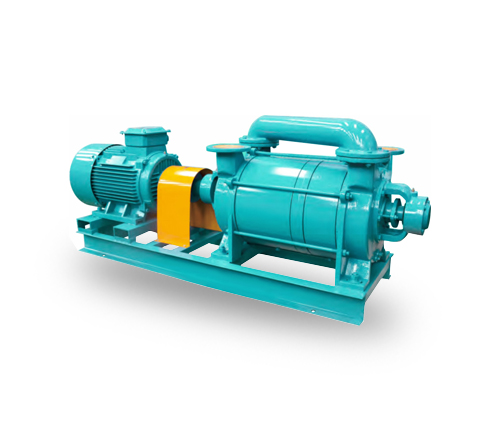
SK Series Single Stages Widely Applications Liquid Ring Vacuum Chenmical Industrial Pump
A liquid ring vacuum pump is a positive-displacement-style vacuum machine that uses a rotating liquid ring to create sealed working chambers. The pump normally uses water as the operating liquid, although another compatible liquid may be selected when the process requires it. During operation, the impeller rotates inside a cylindrical casing. Because the impeller is positioned eccentrically relative to the casing, the liquid forms a ring of varying thickness around the internal circumference.
The vanes of the impeller divide the space between the impeller hub and the liquid ring into a series of enclosed chambers. As the impeller rotates, the volume of these chambers changes periodically. When a chamber increases in volume, it creates a suction effect and draws gas into the pump. As the chamber moves through the rotation cycle and its volume decreases, the trapped gas is compressed. The compressed gas is then discharged through the outlet port.
This process occurs continuously and smoothly. The liquid ring acts both as a seal and as a compression medium. It also absorbs a portion of the heat generated during gas compression. This makes the liquid ring principle particularly useful in applications where the gas may contain water vapor, process moisture, or limited quantities of entrained liquid.
The pump is described as single-stage because gas compression takes place in one principal impeller and casing arrangement. A single-stage configuration generally offers a relatively simple mechanical design, a compact footprint, and convenient maintenance access compared with more complex multistage vacuum arrangements. The appropriate model should still be selected according to the required vacuum level, gas volume, operating liquid conditions, temperature, and process compatibility.
The impeller is the central rotating component of the pump. It contains vanes that divide the working space into compression chambers. The impeller must maintain the correct relationship with the casing and liquid ring so that the pump can generate a stable vacuum. Dimensional accuracy, balance, surface condition, and resistance to the intended operating environment are important factors in impeller performance.
Because the impeller rotates continuously, manufacturing quality has a direct effect on vibration, noise, bearing life, energy consumption, and long-term reliability. Proper balancing and controlled assembly help prevent uneven loads that could reduce the service life of the pump or its drive system.
The casing surrounds the impeller and provides the internal geometry needed to form the liquid ring. It also incorporates the gas inlet and discharge passages. The casing must be sufficiently strong to withstand operating forces and must maintain its dimensions under the expected temperature and pressure conditions.
The internal clearance between the impeller and casing is especially important. Excessive clearance can reduce volumetric efficiency and vacuum performance, while insufficient clearance may increase the risk of contact during operation. Accurate machining and careful assembly are therefore essential to achieving consistent performance.
The service liquid normally forms a moving cylindrical ring inside the casing. Water is commonly used because it is accessible, economical, and effective for many general industrial applications. The liquid also helps seal the spaces between impeller vanes and can remove heat generated during compression.
In some processes, the operating liquid may become mixed with the compressed gas. A vapor-liquid separator can be installed downstream to separate the liquid from the discharged gas. The separated liquid may be drained, cooled, treated, recirculated, or replaced depending on the process design. The selection of a once-through, partial-recovery, or closed-loop liquid system should be based on water availability, discharge requirements, temperature control, and contamination concerns.
The inlet port allows process gas to enter the compression chambers. The discharge port releases the compressed gas and any accompanying service liquid. Correctly sized and properly routed pipework is important because excessive pressure loss on the suction side can limit pump capacity, while excessive back pressure on the discharge side can increase operating load and reduce performance.
The pump is connected to a suitable electric motor through the appropriate drive arrangement. Depending on the supplied configuration, the system may include a coupling, base, guard, valves, gauges, separators, filters, or other accessories. The motor must be compatible with the pump’s operating speed, power requirement, voltage, frequency, and installation environment.
Bearings, seals, shafts, and couplings should be selected and installed to support continuous operation. These parts are not merely auxiliary items; they influence alignment, vibration, maintenance intervals, and the overall operating life of the equipment.
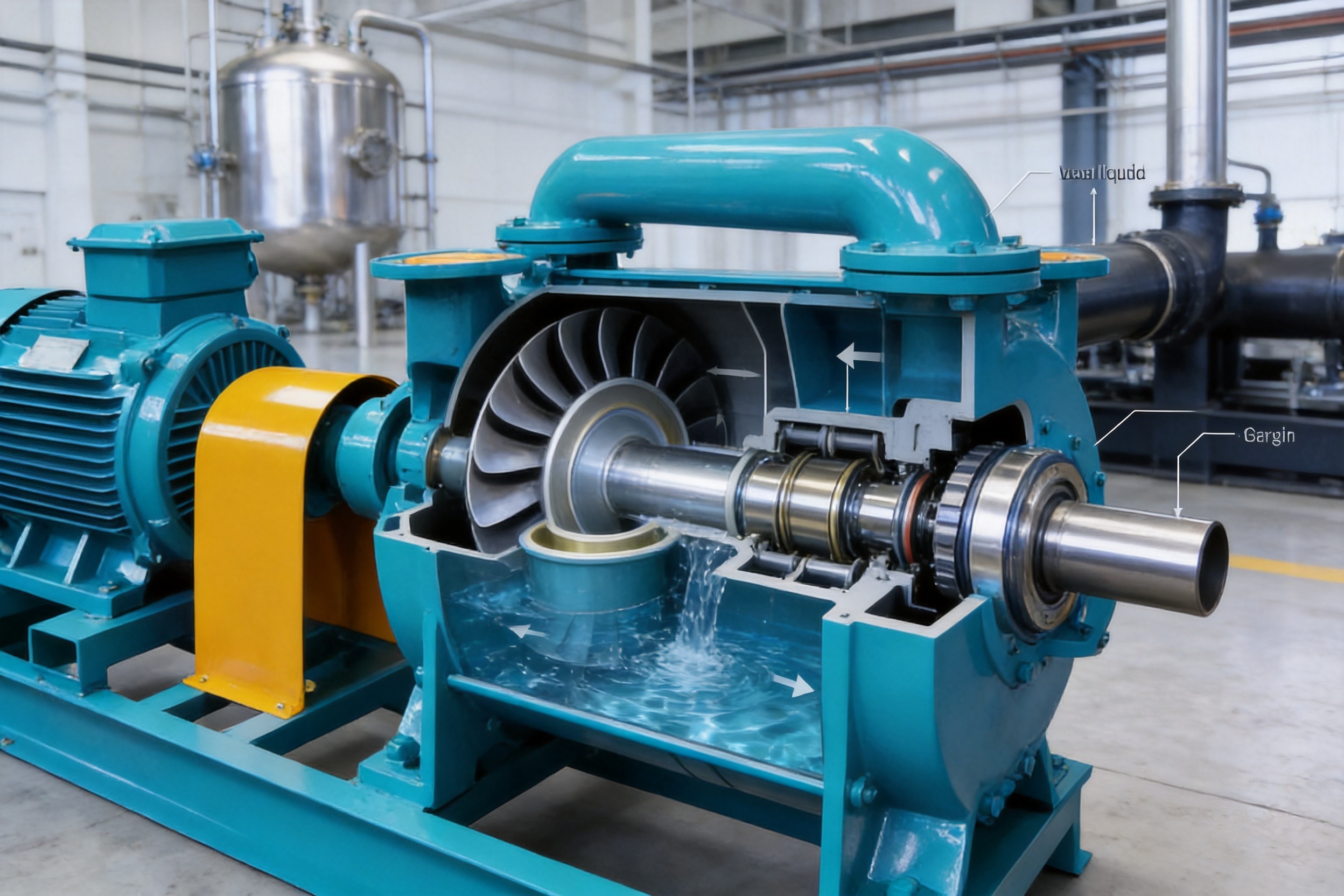
Before starting the pump, the service liquid supply should be established according to the system design. When the impeller begins to rotate, centrifugal force moves the liquid outward toward the inner surface of the casing. The liquid forms a ring around the impeller, while the eccentric position of the impeller causes the ring to vary in relation to the impeller vanes.
At the suction section, the space between the vanes and the liquid ring expands. This increase in volume reduces pressure and draws gas into the pump. As rotation continues, the chamber moves toward the compression section. Its volume decreases, compressing the gas until the discharge port opens to the chamber. The gas then leaves the pump.
The cycle repeats for each impeller chamber. Because several chambers are active during every revolution, the resulting vacuum generation is continuous rather than intermittent. The liquid ring also reduces direct contact between the impeller and casing, allowing the pump to manage certain wet and dirty gases more effectively than some dry systems.
The final vacuum and gas-handling capacity depend on several conditions. These include impeller speed, service liquid temperature, service liquid flow, atmospheric pressure, gas temperature, gas composition, suction pressure, discharge pressure, internal clearances, and the presence of non-condensable gases. A pump that performs well under one set of conditions may produce different results under another, which is why application data should be confirmed before ordering.
One of the main advantages of a liquid ring design is its tolerance for wet gases. Many industrial processes produce water vapor or involve evaporation, condensation, washing, drying, filtration, or steam-related operations. A liquid ring pump can be suitable for these conditions because the service liquid is already part of the compression mechanism.
This does not mean that every liquid or contaminant is automatically harmless. Corrosive chemicals, abrasive solids, high-temperature vapors, and reactive compounds must be evaluated carefully. Nevertheless, for many humid applications, the liquid ring principle offers a practical advantage over vacuum equipment that requires a dry and exceptionally clean gas stream.
Industrial gas streams may contain small quantities of dust, process vapor, or liquid carryover. The liquid ring can help absorb or transport some of these contaminants, reducing the risk of immediate performance loss. Proper upstream filtration, separation, and process control remain important, but the design is often more forgiving than highly sensitive dry vacuum equipment.
The rotating impeller generates vacuum continuously, making the SK Series suitable for production lines and processes that require extended operating periods. A properly sized pump can support stable vacuum conditions without frequent interruptions for consumable replacement or complex internal adjustments.
The liquid ring operating principle uses a relatively small number of primary working elements. Compared with some advanced multistage or highly specialized vacuum systems, a single-stage pump can offer simpler inspection and service procedures. Its straightforward mechanism can be beneficial for users who value maintainability and predictable operation.
Compression generates heat. In a liquid ring pump, the service liquid absorbs and carries away part of this heat. This can help control internal operating temperatures and support stable performance when the liquid supply and discharge arrangements are properly designed.
The SK Series is suited to many industries rather than one narrow application. Its use across manufacturing, food processing, chemicals, paper, plastics, textiles, mining, automotive, and utilities demonstrates the adaptability of the liquid ring concept. This breadth can simplify equipment standardization for companies operating several plants or production areas.
The most economical vacuum pump is not necessarily the one with the lowest initial purchase price. A pump that tolerates humid process conditions, operates reliably, and can be maintained with accessible components may provide stronger lifecycle value. Reduced downtime, easier troubleshooting, and fewer process interruptions can be more important than a small difference in initial equipment cost.
Manufacturing plants may use vacuum systems for material handling, fixture holding, degassing, drying, packaging, filtration, and process evacuation. A liquid ring pump can be selected when the gas stream contains moisture or when the process environment is not suitable for a dry vacuum pump.
Food processing operations frequently involve steam, water vapor, cleaning cycles, evaporation, and packaging. The pump can support vacuum packaging, product cooling, moisture removal, and other operations when the materials of construction and service liquid arrangement comply with the relevant process requirements.
Paint and coating processes may require vacuum for mixing, deaeration, solvent recovery, or transfer operations. The gas composition must be assessed carefully because solvents and vapors can affect seals, materials, and service liquid quality. A suitable separator, ventilation arrangement, and safety system may also be required.
Chemical plants use vacuum for distillation, evaporation, drying, filtration, crystallization, solvent recovery, and reactor evacuation. The liquid ring pump can be advantageous where vapor and moisture handling are important. Chemical compatibility must be confirmed for every wetted component, including the casing, impeller, shaft seal, piping, separator, and operating liquid.
Paper production requires vacuum for sheet formation, dewatering, felt conditioning, pickup operations, and drying support. These processes can involve large gas volumes and high moisture content. Liquid ring pumps are commonly considered for such duties because they can manage humid air and water vapor when correctly sized.
Vacuum is used in brick extrusion to remove entrained air from clay and improve product density and consistency. Dust and moisture are common in these environments. Appropriate filtration and protection should be applied, but the liquid ring design can provide a robust option for demanding extrusion service.
Automotive plants and metalworking facilities may use vacuum for component handling, impregnation, machining support, drying, heat treatment, and casting-related processes. The pump can be incorporated into centralized or dedicated vacuum systems, depending on production layout and required capacity.
Vacuum equipment may support vapor removal, priming, dehydration, filtration, recovery, and process evacuation in petroleum-related facilities. Gas composition, flammability, temperature, and regulatory requirements must be reviewed in detail. The pump itself should be integrated into a system designed for the specific hazardous-area and process conditions.
Mining operations can involve water, dust, slurry-related moisture, and harsh working environments. Vacuum may be used in filtration, dewatering, mineral processing, and material handling. The liquid ring pump’s ability to work with humid gas streams can be valuable, while upstream separation and routine inspection remain essential.
Plastics production may use vacuum during extrusion, drying, degassing, and resin processing. Textile plants may apply vacuum to drying, spinning, dyeing, and handling processes. In both industries, the pump should be chosen according to vapor load, temperature, required vacuum level, and the possibility of fibers, particles, or chemical additives entering the suction line.
Power and utility facilities may use vacuum pumps for condenser evacuation, priming, drainage, and auxiliary process duties. Cement and allied-product plants may require vacuum for material handling, filtration, and production equipment. Construction-material plants can use vacuum in forming, drying, lifting, or process support. The equipment should be protected from abrasive particles and installed with suitable filtration where necessary.
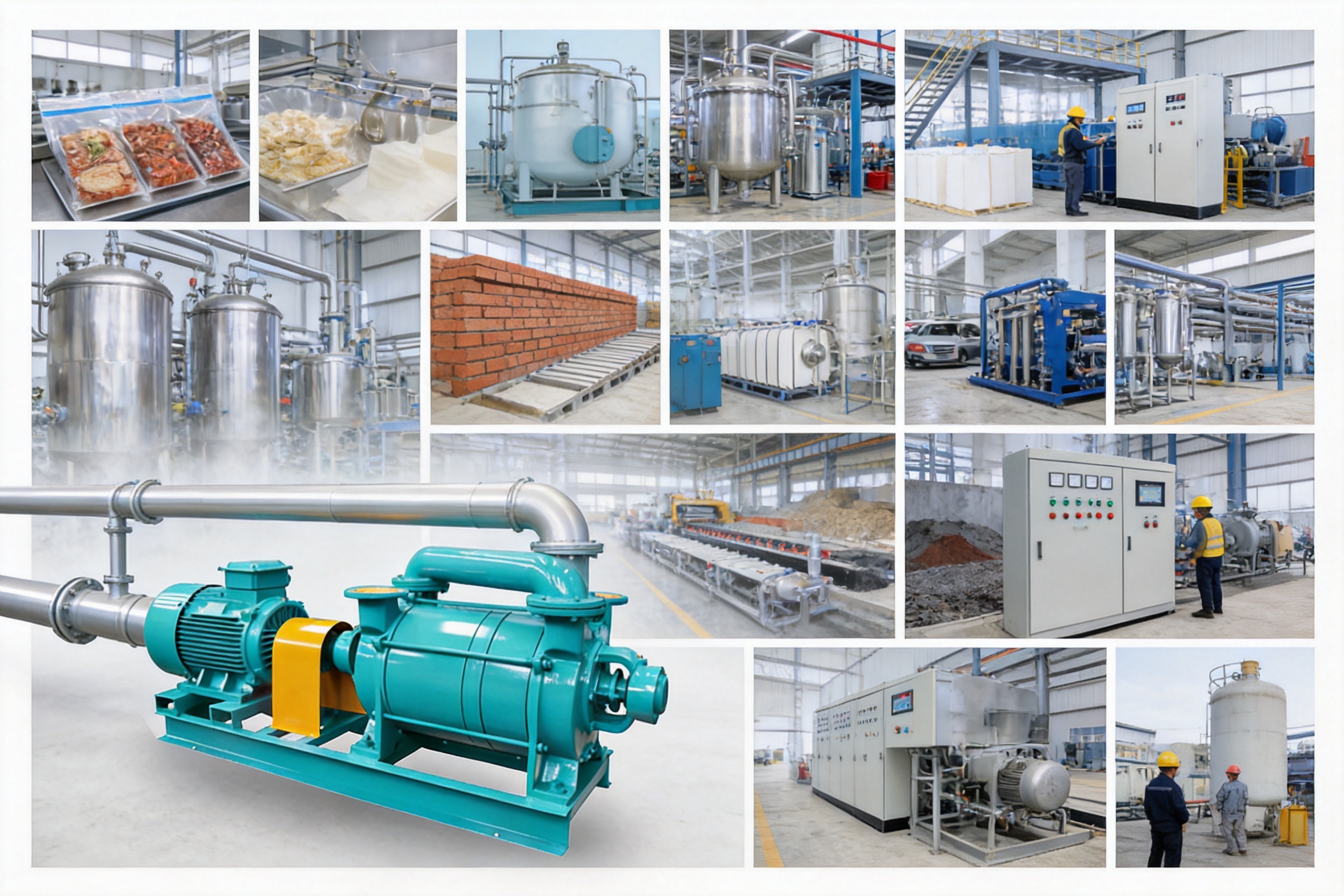
The quality of a vacuum pump depends on more than its operating principle. The manufacturing system behind the product influences dimensional consistency, component compatibility, production repeatability, and after-sales support. Taizhou Edwin Electric Co., Ltd. was founded in 2008 and operates as an integrated manufacturing enterprise with independent research and development, mass production, and global export capabilities.
Independent research and development enables the company to improve product structures, respond to application requirements, and coordinate mechanical, electrical, and fluid-handling considerations. For a pump manufacturer, this capability is important because customers often require more than a standard catalog item. They may need a specific motor arrangement, control method, connection configuration, material option, accessory package, or operating solution.
Mass production provides another important strength. Repeatable manufacturing procedures can help maintain consistency between batches and support reliable delivery for distributors, engineering contractors, original equipment manufacturers, and industrial end users. Production planning is particularly valuable when customers require multiple pumps for a project or need replacement units over an extended period.
Edwin Pump’s broader product range includes deep well pumps, submersible pumps, domestic booster pumps, circulation pumps, solar water pumps, intelligent booster pumps, and other pump-related products. This range gives the company experience with different fluid-handling environments, motor technologies, control systems, installation conditions, and customer expectations. Such experience can support more complete project discussions, even when the immediate requirement is a vacuum pump.
The company has also developed affiliated import and export service resources to support procurement planning, order tracking, cross-border delivery, and foreign-trade coordination. For international customers, these capabilities can reduce communication gaps and help organize documentation, production schedules, packaging, shipment preparation, and delivery arrangements.
Advanced manufacturing is not limited to individual machines or production tools. It includes coordination between design, material purchasing, machining, assembly, testing, packaging, and customer service. A pump manufacturer with integrated operations can manage these stages more effectively and identify potential issues before equipment reaches the customer.
Assembly quality affects shaft alignment, seal performance, bearing loading, rotor clearance, and vibration. Correct assembly procedures should include inspection of mating surfaces, verification of component orientation, confirmation of fastener security, and examination of rotating parts. Controlled assembly is essential for a pump expected to operate continuously in an industrial environment.
Vacuum equipment should be checked before shipment to verify basic mechanical operation and conformity with the ordered configuration. Depending on the product arrangement and customer requirements, testing may include running checks, rotation verification, leakage inspection, electrical checks, vibration observation, and performance confirmation. The specific testing program should be agreed upon for projects involving special materials or critical process duties.
International industrial customers often need assistance with technical clarification, product selection, packing requirements, shipping coordination, and documentation. Edwin Pump’s global export experience and one-stop procurement approach are intended to support these needs. This can be especially useful for engineering companies and distributors managing several pump categories within the same project.
Material selection is a central consideration when the pump handles chemical vapors, solvents, corrosive gases, or contaminated service liquid. The correct material depends on the complete process, not just the name of the chemical. Concentration, temperature, exposure time, pressure, dissolved gases, and the presence of abrasive particles can all affect material performance.
Users should identify every substance that may contact the pump. This includes the process gas, condensate, operating liquid, cleaning chemicals, flushing liquid, and any additive introduced into the system. Seal materials deserve particular attention because elastomers can be affected by solvents, oils, acids, alkalis, and elevated temperatures.
Where the process is chemically aggressive, a technical review should be completed before purchase. The pump supplier can evaluate the intended operating conditions and recommend a suitable configuration or identify limitations. If the service liquid becomes contaminated, the system may require continuous replacement, filtration, treatment, or controlled disposal.
The pump should be installed in a clean, accessible, and adequately ventilated location. Sufficient space should be provided around the pump for inspection, lubrication where applicable, seal maintenance, pipework adjustment, and motor service. The ambient temperature should remain within the applicable operating range.
A stable foundation helps reduce vibration and protects the pump from movement during operation. If the pump and motor are supplied as separate units, shaft alignment must be completed carefully. Misalignment can increase coupling loads, cause seal problems, and reduce bearing life.
The suction line should be as short and direct as practical. Unnecessary bends, restrictive valves, undersized pipes, and poorly designed reducers can increase pressure loss. The line should be supported independently so that its weight does not load the pump casing or connected flanges.
A suitable strainer or filter may be installed when the process gas can carry solids. However, the filter must be sized correctly and maintained regularly. A blocked suction filter can substantially reduce pump capacity and may create unstable operating conditions.
Because the discharge may contain both compressed gas and service liquid, a vapor-liquid separator is often useful. The separator can remove liquid from the gas stream and provide a controlled method for draining or recovering the operating liquid. The discharge line should be designed to prevent excessive back pressure and should include suitable drainage arrangements.
The service liquid circuit should provide the required flow at an appropriate temperature. If the liquid becomes too warm, vacuum performance may decline because the vapor pressure of the liquid increases. A cooling arrangement may therefore be necessary for continuous operation or high-temperature applications.
In a once-through system, fresh liquid enters the pump and is discharged with the compressed gas. In a recirculating system, a separator and cooler return the liquid to the pump. Recirculation can reduce water consumption, but it requires attention to heat removal, contamination control, liquid level, and chemical concentration.
The motor and control equipment should be installed by qualified personnel. Voltage, frequency, phase, overload protection, grounding, rotation direction, and enclosure requirements should be verified before commissioning. Hazardous-area applications require equipment and installation methods that meet the applicable local standards.
Useful instruments may include suction vacuum gauges, discharge pressure indicators, service liquid flow indicators, temperature sensors, motor current monitoring, and vibration monitoring. These instruments help operators identify changes in performance before a failure occurs. Establishing baseline readings during commissioning makes later troubleshooting easier.
Before commissioning, inspect the pump, motor, foundation, coupling, guards, piping, valves, and electrical connections. Confirm that protective packaging has been removed and that no foreign objects remain inside the suction or discharge system.
Verify that the pump shaft can rotate freely where manual rotation is permitted by the equipment design. Check the service liquid supply and confirm that the liquid is compatible with the pump materials and the process. If a separator or cooling circuit is installed, inspect its connections, level, drain, and flow path.
Briefly check motor rotation according to the manufacturer’s procedure. Incorrect rotation can prevent vacuum generation and may damage internal components if the pump is allowed to run incorrectly for an extended period. Once rotation is confirmed, start the pump with the appropriate valves in their commissioning positions.
Observe the pump during the initial run. Check for unusual vibration, abnormal noise, leakage, excessive motor current, unstable vacuum, inadequate liquid flow, or overheating. Gradually introduce the process load and record operating readings. These initial measurements provide a useful reference for future maintenance.
Operators should check the pump for abnormal noise, vibration, leakage, temperature, and changes in vacuum performance. The service liquid supply should remain stable. Any sudden change in liquid color, odor, temperature, or flow may indicate contamination, process variation, or a system problem.
Mechanical seals or packing arrangements should be inspected according to the maintenance schedule. A small change in leakage may be an early indication of wear, misalignment, shaft damage, or unsuitable service liquid. Prompt investigation can prevent more serious damage.
If a vapor-liquid separator is used, its drain, level control, internal surfaces, and connected piping should be inspected. Accumulated solids or deposits can restrict flow and reduce separation efficiency. The separator should never be treated as a maintenance-free accessory.
The service liquid should be maintained within the required temperature and cleanliness range. Hard water may create deposits, while contaminated liquid may damage seals or reduce internal clearances. Depending on the application, filtration, softening, chemical treatment, periodic replacement, or complete system cleaning may be required.
At planned intervals, inspect the impeller, casing, shaft, bearings, seals, coupling, fasteners, and electrical connections. Look for corrosion, erosion, deposits, scoring, imbalance, and unusual wear. The inspection interval should reflect operating hours, process severity, start-stop frequency, and the consequences of downtime.
Insufficient vacuum may result from inadequate service liquid flow, excessive liquid temperature, suction-line leakage, blocked filters, incorrect rotation, excessive internal clearance, insufficient pump speed, or a process load greater than the pump’s design capacity. The first troubleshooting step should be to compare current readings with the commissioning baseline.
High motor current may be caused by excessive discharge pressure, an incorrect service liquid condition, mechanical friction, bearing problems, misalignment, or a process gas load outside the expected range. Electrical supply issues should also be investigated.
Noise and vibration can indicate poor foundation conditions, coupling misalignment, bearing wear, impeller imbalance, foreign material inside the pump, or internal contact. Continued operation under severe vibration can cause secondary damage and should be avoided until the cause is identified.
Liquid carryover at the discharge may occur when the separator is undersized, the liquid level is incorrect, the discharge velocity is too high, or the system is operating outside its intended conditions. A properly designed separator and drainage arrangement can reduce this problem.
Overheating may be associated with insufficient service liquid, high liquid temperature, restricted cooling, excessive compression, bearing friction, or inadequate ventilation. Temperature should be considered together with vacuum level, motor current, and liquid flow rather than evaluated in isolation.
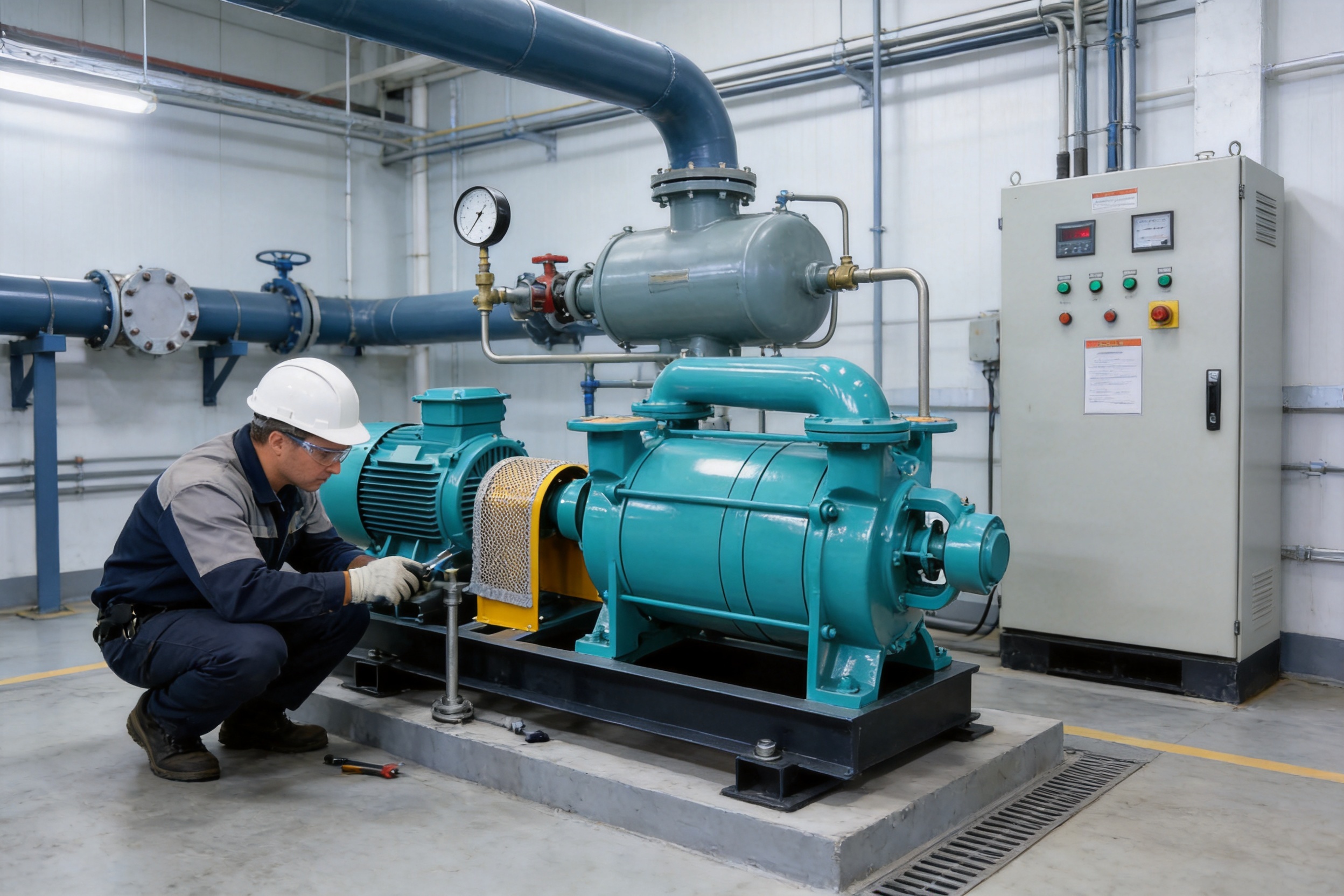
Selection should begin with a clear description of the process. The required vacuum level should be specified as an absolute pressure or another clearly defined unit. The gas volume or pumping speed should be stated at the relevant suction pressure, not only at atmospheric conditions. Process temperature, gas composition, moisture content, entrained liquid, contaminants, and operating hours should also be provided.
The service liquid must be identified, including its temperature, availability, chemical composition, and allowable discharge route. If water is used, the source quality and expected temperature rise should be reviewed. If another liquid is proposed, compatibility with the pump materials and seals must be confirmed.
Users should also explain whether the pump will operate continuously, intermittently, or under frequent start-stop conditions. A pump selected for occasional use may not be appropriate for continuous production service. Similarly, a process with frequent liquid slugs or solids may need additional separators, filters, drains, or protective controls.
Other selection factors include motor voltage, frequency, installation position, connection standards, available floor space, ambient conditions, noise expectations, control requirements, spare parts strategy, and local service capability. Providing complete technical information at the quotation stage helps prevent incorrect sizing and costly changes after delivery.
| Selection Factor | Information to Confirm | Why It Matters |
|---|---|---|
| Required vacuum | Target absolute pressure and operating range | Determines whether the selected pump can reach the required vacuum under actual conditions |
| Gas flow | Required pumping speed at the working pressure | Prevents undersizing and unstable process performance |
| Gas composition | Air, vapor, solvent, chemical gas, or mixed stream | Influences material, seal, safety, and service liquid selection |
| Moisture and liquid carryover | Expected vapor load and possible liquid slugs | Determines the need for separators, drains, and protective devices |
| Service liquid | Type, temperature, flow, quality, and disposal method | Affects vacuum performance, cooling, corrosion, and operating cost |
| Operating pattern | Continuous, intermittent, or frequent cycling | Influences duty rating, cooling, controls, and maintenance planning |
| Installation environment | Indoor or outdoor, ambient temperature, dust, humidity, hazardous area | Guides motor, enclosure, ventilation, and protection requirements |
| System accessories | Separator, filter, valves, gauges, cooler, control panel | Ensures that the complete vacuum system performs as intended |
The SK Series is positioned for users who need a dependable vacuum solution for humid, dirty, or high-capacity industrial duties. Its liquid ring construction directly addresses several challenges that occur in real production environments. Rather than requiring the process gas to remain perfectly dry, the pump uses liquid as an essential part of its sealing and compression process.
Its single-stage configuration offers a balance between functional performance and mechanical simplicity. For many applications, this can make the equipment easier to understand, install, inspect, and maintain. The design is also suitable for integration with separators, cooling circuits, filters, valves, gauges, and automated controls.
Compared with equipment designed only for clean and dry gases, the SK Series may offer greater tolerance in processes where moisture and vapor are unavoidable. Compared with more complex vacuum packages, it can provide a straightforward solution for applications that do not require multiple compression stages or highly specialized control architecture.
The product’s industrial value is further supported by the manufacturer’s experience in pump production and international supply. Edwin Pump’s integrated capabilities in research and development, production, export coordination, and one-stop procurement can help customers manage both individual equipment purchases and broader water or fluid-handling projects.
These advantages should be considered application advantages rather than universal performance claims. Every vacuum pump must be evaluated against the actual operating point, gas composition, service liquid, installation arrangement, and local technical requirements. Correct selection and system design remain essential to achieving the expected result.
Industrial sustainability includes energy use, water consumption, equipment life, maintenance frequency, and waste management. A liquid ring pump can contribute to efficient operation when it is correctly sized and operated close to its intended duty. Oversized equipment may consume more power and liquid than necessary, while undersized equipment may run continuously at an unsuitable operating point.
Water management is particularly important. A once-through service liquid system may be simple, but it can use substantial quantities of water in continuous applications. A recirculating arrangement can reduce consumption when combined with effective separation and cooling. The correct choice depends on local water availability, contamination level, temperature control, discharge regulations, and project economics.
Preventive maintenance also supports sustainability. Replacing a worn seal or cleaning a blocked separator is generally preferable to operating until the impeller, casing, bearings, or motor are damaged. Stable equipment performance reduces unplanned shutdowns and can improve the efficiency of the wider production line.
Edwin Pump’s investment in new energy and intelligent technology since 2018 demonstrates an interest in expanding beyond conventional pump products. Its solar water pumps and intelligent booster pumps complement the company’s existing manufacturing experience and reflect an approach that combines fluid-handling equipment with improved energy management and intelligent control.
Industrial buyers should request a complete technical proposal rather than selecting a vacuum pump based only on the model name. The proposal should identify the pump configuration, motor details, service liquid requirements, expected operating range, accessories, materials, connection information, testing arrangements, packing method, and recommended spare parts.
For international orders, delivery planning should include production lead time, export packing, shipping method, customs documentation, destination requirements, and installation support. Clear communication is especially important when the pump forms part of a larger vacuum package or is being supplied through an engineering contractor.
Edwin Pump’s associated import and export service companies support procurement planning, order tracking, cross-border delivery, and foreign-trade services. This structure can be useful for customers purchasing multiple pump categories or coordinating equipment for agricultural irrigation, municipal engineering, mining, construction, HVAC, household water supply, and industrial projects.
After-sales planning should include operating instructions, maintenance recommendations, spare parts identification, troubleshooting procedures, and contact arrangements. A reliable supplier should be able to help customers understand not only how to purchase the pump but also how to operate it safely and maintain its performance over time.
Vacuum systems can create hazards involving rotating machinery, pressure differences, hot surfaces, chemicals, solvents, contaminated liquids, and electrical energy. Guards should remain in place while the pump is operating. Maintenance should be performed only after the equipment has been isolated, depressurized, drained, and electrically disconnected according to approved procedures.
If the pump handles flammable, toxic, corrosive, or oxygen-enriched gases, a detailed risk assessment is required. The pump, motor, seals, separator, ventilation, electrical system, and control equipment must be suitable for the process. Operators should also consider the possibility of chemical reaction between the service liquid and the gas stream.
Noise, vibration, and hot liquid discharge should be controlled through appropriate layout, guarding, insulation, signage, and personal protective equipment. Local regulations and site-specific safety standards always take priority over general product guidance.
A liquid ring vacuum pump creates vacuum by rotating an impeller inside a casing partially filled with service liquid. Centrifugal force forms the liquid into a ring. The ring and impeller vanes create chambers that expand to draw in gas and contract to compress it before discharge.
The SK Series uses one primary impeller and casing arrangement to perform the gas compression process. This single-stage configuration offers a relatively direct mechanical structure for many industrial vacuum applications.
Liquid ring pumps are generally well suited to humid gas streams and water vapor because the service liquid is part of the compression mechanism. The actual operating limit depends on vapor temperature, suction pressure, liquid temperature, gas load, and the selected pump model.
It may be suitable for certain chemical vapors, but compatibility must be evaluated before purchase. The gas composition, concentration, temperature, service liquid, casing material, impeller material, shaft seal, and discharge system all require review.
A separator is often recommended because compressed gas may contain a quantity of service liquid. The separator can remove liquid from the gas stream and provide a controlled method for drainage, cooling, treatment, or recirculation.
Water is commonly used because it is economical and suitable for many general applications. Other liquids may be considered when process compatibility, freezing protection, lubrication, vapor pressure, or chemical resistance requires an alternative.
As service liquid temperature rises, its vapor pressure generally increases. This can reduce the achievable vacuum. High temperature may also affect seals and other components. Cooling or improved liquid circulation may be required for continuous or demanding operation.
Important information includes target vacuum, gas flow, gas composition, temperature, moisture content, possible liquid carryover, service liquid conditions, operating hours, motor power supply, installation environment, and required accessories. Complete data improves the accuracy of selection.
The SK Series is intended for a range of industrial applications, including demanding process duties. Continuous operation must be confirmed for the selected model and operating point. Adequate service liquid flow, cooling, ventilation, alignment, and maintenance are essential.
Common causes include suction leaks, blocked filters, insufficient service liquid, excessive liquid temperature, incorrect rotation, high discharge pressure, excessive internal wear, inadequate speed, and a process load beyond the pump’s capacity.
A liquid ring pump may be more tolerant of moisture and certain contaminants, while a dry pump may be preferred where water contamination must be avoided or where a completely dry process is required. The best choice depends on the gas stream, vacuum level, cleanliness requirements, operating cost, and maintenance strategy.
A single-stage design generally offers a simpler arrangement and may be suitable for many general industrial duties. A multistage design may be selected when a deeper vacuum or a different performance profile is required. The required operating point should determine the choice.
Taizhou Edwin Electric Co., Ltd. has experience in independent research and development, mass production, global export, and pump-related procurement services. Its wider product portfolio covers several types of water and fluid-handling equipment, supporting practical knowledge of motors, pumps, controls, and industrial applications.
The pump can be incorporated into a system with suitable valves, gauges, separators, cooling equipment, protection devices, and control equipment. Automation requirements should be discussed during the engineering and quotation stages.
Check the foundation, alignment, piping, electrical connections, service liquid supply, separator, valves, guards, and rotation direction. Confirm that the pump is suitable for the process and observe the equipment carefully during its initial run.
The SK Series single-stage liquid ring vacuum pump provides a practical solution for industrial processes that require dependable vacuum generation in the presence of moisture, vapor, or certain process contaminants. Its rotating impeller, eccentric casing arrangement, and service liquid ring create a continuous compression cycle with a relatively simple mechanical structure.
The design is suitable for a broad range of industries, including manufacturing, food processing, paint, chemicals, paper, brick extrusion, automotive, metalworking, petroleum, mining, oil and gas, plastics, textiles, power utilities, cement, and construction materials. Its key advantages include wet-gas capability, stable operation, heat management through the service liquid, broad application flexibility, and practical maintenance potential.
Product performance ultimately depends on correct selection and system integration. Suction conditions, gas composition, service liquid temperature, liquid flow, separation, piping, motor configuration, installation quality, and preventive maintenance must all be considered. When these factors are properly managed, the pump can support reliable production and long-term equipment value.
Backed by Taizhou Edwin Electric Co., Ltd.’s experience in research and development, mass production, global export, and one-stop pump procurement, the SK Series is positioned as an industrial vacuum option for customers seeking durable equipment and coordinated technical support. A detailed application review should be completed before purchase to confirm the appropriate model, materials, accessories, and operating conditions.
1. Manufacturer-provided product description for the SK Series single-stage liquid ring vacuum pump.
2. Manufacturer-provided application information covering manufacturing, food processing, paint, chemical, paper, brick extrusion, automotive, metalworking, petroleum, mining, oil and gas, plastics, textile, power, utility, cement, and allied-product industries.
3. Manufacturer-provided company profile for Taizhou Edwin Electric Co., Ltd., including research and development, mass production, global export, and pump product portfolio information.
4. General industrial guidance on liquid ring vacuum pump construction, service liquid management, vapor-liquid separation, installation, commissioning, and maintenance.
5. General engineering principles for centrifugal liquid-ring formation, gas compression, suction piping, discharge piping, rotating equipment alignment, and process compatibility.
edwina@edwin-pump.com
+86-13586290903 (WhatsApp)
Xuri Gongliang Cutting Tool Entrepreneurship Park, Wenqiao Town, Wenling City, Taizhou City, Zhejiang Province, China

High Performance Smart Pump Factory


 English