edwina@edwin-pump.com

View All Products
en
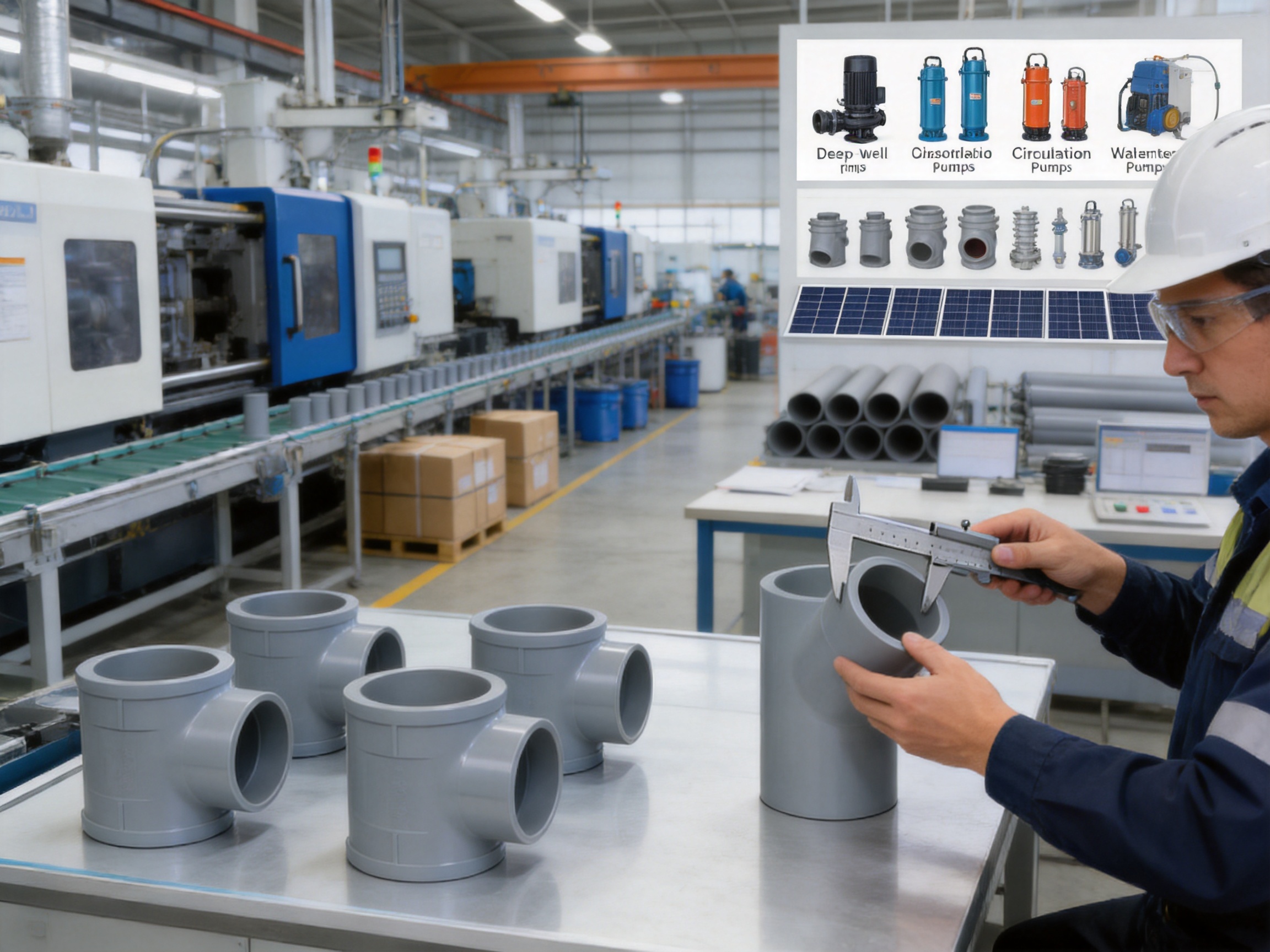
Reliable pipe connections are essential to the safety, efficiency, and service life of every building water system. A pipe may be manufactured from high-quality material, correctly sized, and installed in a carefully planned network, but the complete system can still fail if its fittings are weak, poorly matched, or unsuitable for the operating environment. For this reason, the selection of a socket coupling deserves the same attention as the selection of pipe, valves, pumps, and other fluid-handling equipment.
The CPVC SCH80 ASTM socket coupling described in this article is designed to create a secure connection between compatible CPVC pipes. It is available in nominal sizes from 1/2 inch to 6 inches and is intended for building, industrial, commercial, institutional, and utility applications. Manufactured from CPVC, the coupling combines corrosion resistance, dimensional stability, convenient socket installation, and compatibility with recognized ASTM-based piping requirements.
This product is particularly suitable for systems transporting hot water, cold water, pure water, drinking water, and wastewater, provided that the complete system is designed and installed according to applicable regulations and the chemical and temperature conditions are suitable for CPVC. Its grey finish, compact form, manual installation method, and broad size range make it a practical choice for contractors, distributors, engineering companies, and original equipment manufacturers.
The coupling is supplied by Taizhou Edwin Electric Co., Ltd., an integrated manufacturing and export enterprise established in 2008. Although the company is widely associated with deep well pumps, submersible pumps, booster pumps, circulation pumps, solar water pumps, and intelligent water systems, its product portfolio also includes piping accessories and related fluid-handling products. This combination of pump expertise and piping-system knowledge supports a more complete approach to water infrastructure procurement.
A socket coupling is a straight pipe fitting used to join two sections of pipe with the same nominal size. Each end of the coupling contains a socket, or female connection, into which a compatible pipe is inserted. The connection is normally completed using the solvent cement system specified for the piping material and application. When the pipe and fitting are correctly prepared and assembled, the solvent cement creates a continuous bonded joint.
Unlike a threaded fitting, a socket coupling does not depend on external threads, internal threads, or mechanical tightening. This gives the installer a smooth and compact connection that can be useful in congested pipe chases, equipment rooms, ceiling spaces, and wall cavities. It also avoids the potential for thread damage, cross-threading, and leakage caused by insufficient tightening.
The term SCH80 identifies the wall-thickness classification of the compatible CPVC piping system. Schedule 80 pipe is generally associated with a heavier wall than Schedule 40 pipe in the same nominal size. The increased wall thickness can provide additional mechanical strength and pressure capability, although the actual allowable pressure depends on pipe size, temperature, material grade, design standard, and system conditions.
The product specification identifies the coupling as a CPVC SCH80 Coupling, model S50. The body material is CPVC, the standard reference includes ASTM D1784, and the matching fitting criterion is ASTM F439. These references are important because a fitting should not be selected only by visual appearance or nominal size. Material classification, dimensional compatibility, pressure-temperature performance, and installation requirements must all be considered together.
Product type |
CPVC SCH80 socket coupling |
Model |
S50 |
Nominal size range |
1/2 inch to 6 inches |
Material |
CPVC |
Color |
Grey |
Reference material standard |
ASTM D1784 |
Matching fitting criterion |
ASTM F439 |
Connection method |
Solvent socket connection |
Media suitability |
Hot water, cold water, pure water, drinking water, and wastewater when compatible with CPVC and local regulations |
Application areas |
Buildings, homes, hospitals, hotels, food plants, and industrial systems |
Customization |
OEM and ODM support |
Packaging |
Carton box or customer-specified packaging |
The size range is one of the product’s practical advantages. Smaller fittings are suitable for domestic water branches, instrument connections, and compact service lines, while larger sizes can be used in commercial building distribution networks, process-water systems, utility piping, and selected industrial installations. A single supplier capable of supporting this range can simplify procurement, documentation, stocking, and project coordination.
CPVC, or chlorinated polyvinyl chloride, is a thermoplastic material developed for applications requiring greater temperature capability than conventional PVC. Its molecular structure and chlorine content give it a combination of chemical resistance, stiffness, and temperature performance that is useful in hot- and cold-water systems.
One of the most important benefits of CPVC is its resistance to many common forms of corrosion. Unlike metallic fittings, CPVC does not rust, and it is not subject to the same electrochemical corrosion mechanisms that can affect steel, galvanized iron, or certain copper installations. This can be particularly valuable in humid plant rooms, coastal locations, water-treatment facilities, and systems where the water chemistry may accelerate metal degradation.
CPVC also has a smooth internal surface. A smooth bore can help reduce frictional resistance compared with rougher or internally corroded metal pipe. Lower friction can support efficient water conveyance and may assist engineers in controlling pump energy consumption. The actual hydraulic performance remains dependent on pipe length, flow rate, internal diameter, fittings, valves, elevation, and pump selection, but the material’s smooth surface is a useful system characteristic.
The coupling is electrically nonconductive. This means it does not create a conductive metallic path through the piping system. In suitable applications, this can reduce concerns associated with galvanic interaction between dissimilar metals. It may also be useful where electrical isolation is desirable, although electrical bonding and grounding requirements for the overall facility must always be addressed separately by qualified professionals.
CPVC is also relatively lightweight compared with many metal alternatives. Lower fitting weight can simplify handling, transport, storage, and installation. On large projects, this may reduce the need for heavy lifting equipment in some areas and make work more manageable for installation teams. Lower weight does not eliminate the need for proper pipe supports, expansion allowances, and good workmanship, but it can improve overall job-site convenience.
Building and industrial water systems are exposed to a variety of conditions. Moisture, oxygen, dissolved salts, cleaning chemicals, disinfectants, temperature changes, and contact with different materials can all affect the performance of piping components. A metal fitting that performs well in one environment may require coatings, cathodic protection, special alloys, or frequent inspection in another.
The CPVC SCH80 coupling offers a corrosion-resistant alternative for applications where compatible thermoplastic materials are preferred. Its corrosion resistance is inherent in the body material rather than dependent on a surface coating. This distinction is significant because a coating can be scratched or damaged during transport and installation, while the resistance of a CPVC body is not based on a thin external layer.
For buildings near coastlines, commercial kitchens, laundries, hospitals, hotels, and industrial plants, resistance to rust and scale can support long-term maintenance objectives. The coupling is also suitable for certain wastewater and process-water applications, but chemical compatibility must be verified before use. CPVC should not be treated as universally resistant to every chemical. Solvents, concentrated acids, oils, fuels, and other aggressive substances may affect the material or the solvent cement system.
Compared with ordinary PVC, CPVC is generally preferred when the system involves elevated water temperatures. Compared with unprotected carbon steel, CPVC can offer a lower-corrosion solution in many water-service environments. Compared with some metallic options, it can also reduce concerns related to galvanic corrosion and internal rust products. These advantages make it a competitive option when the application falls within the material’s approved operating range.
A fitting must withstand more than the static pressure of the fluid. It may also be exposed to thermal expansion, vibration, pressure surges, installation loads, accidental impact, and stresses caused by poor alignment. A Schedule 80 design provides a heavier-wall configuration than lighter schedule alternatives, giving the coupling a robust profile for demanding piping layouts.
The heavier construction can be valuable in exposed mechanical rooms, utility corridors, commercial buildings, and industrial service areas where fittings may encounter greater physical demands. It can also provide greater material thickness around the socket area, supporting a durable solvent-welded connection when the pipe and fitting are correctly assembled.
However, Schedule 80 should not be interpreted as a guarantee of unlimited pressure capability. Pressure ratings can change with temperature, and thermoplastic piping normally requires derating at elevated temperatures. The design engineer must use the manufacturer’s current technical data, applicable standards, local codes, and project-specific safety factors when selecting the fitting.
Correct support is equally important. CPVC pipe systems can expand and contract with temperature changes more than many metallic systems. Long straight runs may require expansion loops, offsets, guides, or other measures. Supports should be spaced according to pipe size, temperature, fluid weight, and the relevant installation standard. The coupling is a strong component, but it cannot compensate for an unsupported or incorrectly designed piping network.
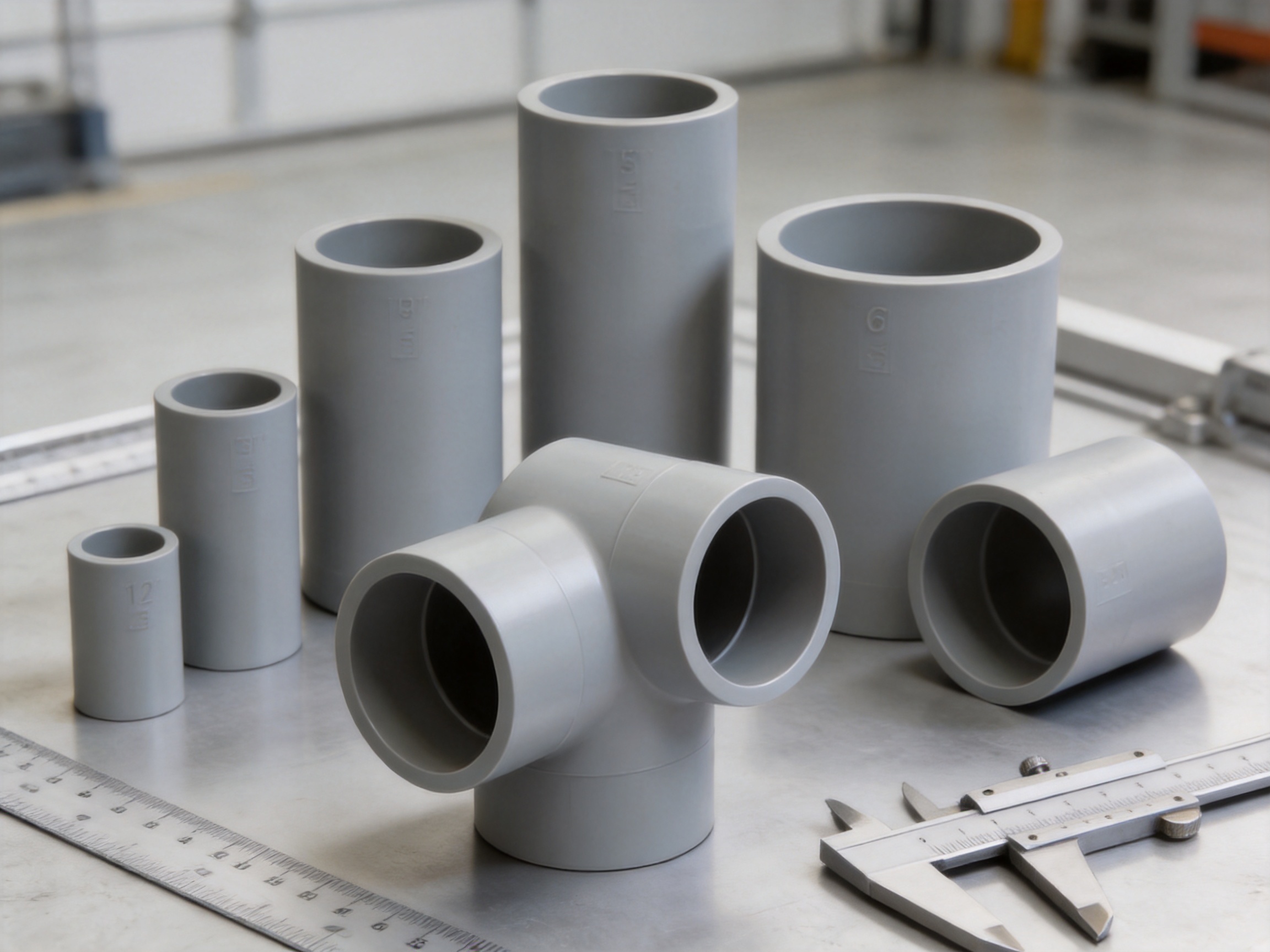
The product is available in eleven listed nominal sizes. The technical data provides outside diameter, overall coupling length, and an additional length dimension identified as L1. These values help engineers, fabricators, and installers coordinate the fitting with compatible pipe and determine the approximate space required for installation.
Nominal size |
D, outside diameter in millimeters |
L, overall length in millimeters |
L1 in millimeters |
1/2 inch |
21.34 |
50.2 |
24 |
3/4 inch |
26.67 |
56.5 |
27 |
1 inch |
33.40 |
62.5 |
30 |
1-1/4 inches |
42.16 |
68.5 |
33 |
1-1/2 inches |
48.26 |
74.5 |
36 |
2 inches |
60.32 |
80.5 |
39 |
2-1/2 inches |
73.02 |
97.0 |
46 |
3 inches |
88.90 |
103.0 |
49 |
4 inches |
114.30 |
123.0 |
59 |
5 inches |
141.00 |
139.5 |
67 |
6 inches |
168.00 |
159.6 |
76.8 |
Dimension verification is recommended before installation, especially when replacing fittings from another manufacturer or combining products from different production systems. Nominal pipe size alone does not always guarantee complete compatibility. The outside diameter, socket depth, material classification, solvent cement requirements, and applicable standard should all be checked.
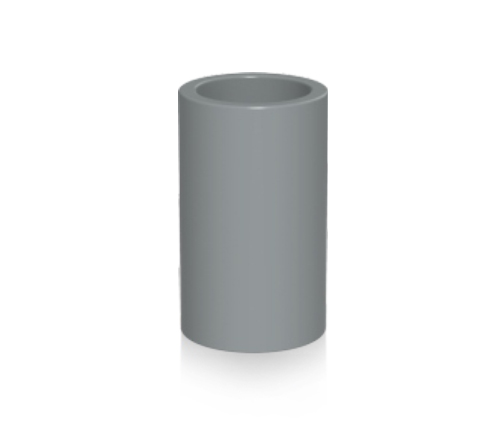
1/2 to 6 Inch CPVC SCH80 ASTM Corrosion Resistant Socket Coupling for Buidings
The socket connection method is straightforward and familiar to many professional plumbing and mechanical contractors. Compared with flanged connections, it generally requires less space and fewer separate components. There are no bolts, nuts, gaskets, or alignment holes to manage. Compared with threaded connections, the installer does not need to cut or protect threads, and the fitting can maintain a smooth external profile.
A correctly made solvent-welded joint can form a sealed connection around the full circumference of the pipe. This helps reduce the risk of leakage caused by uneven gasket compression or loose mechanical hardware. The final quality depends on preparation, cement selection, insertion depth, curing time, temperature, and installer technique, so the fitting should always be installed in accordance with the relevant CPVC system instructions.
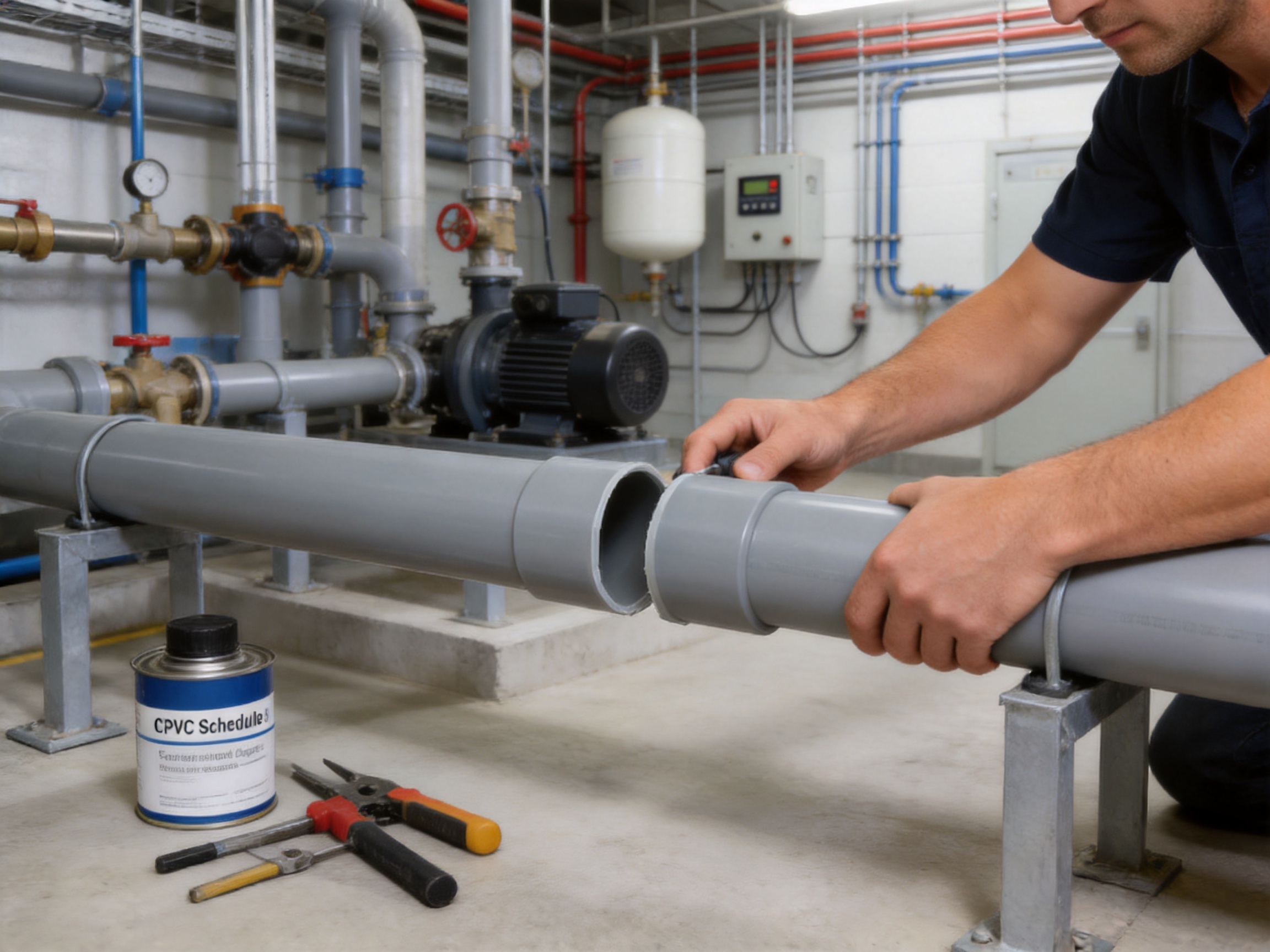
Typical installation steps include cutting the pipe squarely, removing burrs, cleaning and drying the pipe and socket, checking the dry fit, applying the correct primer or preparation material where required, applying approved CPVC solvent cement, inserting the pipe fully into the socket with the correct motion, and allowing adequate curing time before pressure testing. The installer should avoid twisting the pipe after the cement has begun to set unless the manufacturer’s instructions specifically permit it.
Tools used for installation are generally simple and portable. This can be an advantage on renovation projects, high-rise construction, and sites where welding or hot-work permits would create additional complexity. The absence of flame-based joining can also support safer installation in locations where hot work is restricted, although normal precautions for solvent handling, ventilation, fire prevention, and personal protective equipment remain necessary.
Metallic couplings remain important in many high-temperature, high-pressure, and specialized systems. However, they may be heavier, more difficult to handle, and more vulnerable to rust or galvanic effects depending on the material and environment. They can also require threading, welding, grooving, flanges, gaskets, or specialized tools.
The CPVC coupling provides a lighter and corrosion-resistant option for compatible water-service applications. Its socket connection can reduce installation time and simplify material handling. The absence of metallic corrosion products may also help maintain water quality and reduce the likelihood of rusty discoloration in suitable potable-water systems.
Ordinary PVC is widely used in cold-water, drainage, and other low-temperature services. CPVC is often selected where a greater temperature range is required. For hot-water distribution and combined hot- and cold-water networks, CPVC can provide a more appropriate material platform than standard PVC.
The specific allowable temperature and pressure must still be verified. The comparison is not a claim that CPVC is suitable for every hot-fluid application. Rather, it reflects the reason CPVC is commonly considered when temperature performance is a central design requirement.
Threaded plastic fittings can be useful for removable connections, transitions, gauges, and equipment interfaces. However, threads can be damaged by excessive tightening, and sealant selection can affect joint quality. A socket coupling avoids these issues in permanent straight-line pipe connections.
The socket design is also compact and does not require a wrench for the coupling itself. This can be helpful in narrow spaces and can reduce the risk of stress concentration caused by over-tightening. Where future disassembly is required, a union or suitable flanged transition may be more appropriate than a permanent socket coupling.
Flanged systems are valuable where equipment removal, inspection, or frequent maintenance is expected. Nevertheless, they require more installation space and additional components. They may also be more expensive in small-diameter branches. The socket coupling is a practical alternative for permanent pipe-to-pipe joints where routine disassembly is not required.
The coupling is specified for use in buildings, homes, hospitals, hotels, and food plants. In residential construction, it can be used in compatible hot- and cold-water distribution lines, service branches, equipment connections, and repair sections. The compact design is suitable for wall cavities, service shafts, and ceiling spaces when the system has been correctly supported and protected.
Hospitals and hotels often require dependable water distribution across numerous rooms and floors. A corrosion-resistant thermoplastic piping system can simplify installation in humid service areas and reduce maintenance associated with rust. In these facilities, however, water hygiene, thermal disinfection, fire regulations, acoustic requirements, and local approvals must be reviewed as part of the complete design.
Food plants may use CPVC components in selected utility-water, wash-water, and process-support systems. The fitting’s suitability depends on the fluid composition, cleaning chemicals, temperature cycles, and applicable food-contact or hygienic requirements. The product should not be used for direct food contact unless the complete material and system have the required approvals.
Commercial buildings can use the coupling in mechanical rooms, plant rooms, water-treatment areas, irrigation-support networks, and general plumbing services. It may also be useful in facilities where the piping network is connected to booster pumps or circulation pumps. Because the supplier also manufactures pump products, customers may be able to coordinate pump and piping accessory procurement through one industrial source.
Industrial applications may include utility water, cooling-water support, chemical-service lines with verified compatibility, wastewater conveyance, and process support. The suitability of CPVC depends strongly on the chemical environment. Engineers should request chemical-resistance data when the system carries anything other than standard water or mild wastewater.
A fitting does not operate in isolation. In many installations, the coupling forms part of a larger water-handling system that includes a pump, pressure tank, valves, gauges, filters, pipes, and control equipment. A reliable joint can help maintain the intended performance of the entire system by reducing leakage and unnecessary pressure loss.
For domestic booster systems, CPVC couplings may be used in compatible distribution sections downstream of a pump. For circulation systems, the material should be checked against the continuous operating temperature and any chemical treatment used in the water. For solar water-pumping systems, temperature and ultraviolet exposure should be evaluated carefully, particularly where piping is installed outdoors.
Deep-well and submersible pump systems may include CPVC fittings in selected above-ground sections, control lines, or water-distribution networks. The fitting should not automatically be assumed suitable for the submerged portion of a well or for every pressure condition. Pump starting and stopping can create transients, and the piping system must be designed to manage surge pressure and vibration.
The supplier’s broader experience in pump manufacturing can be useful for customers seeking coordinated fluid-handling solutions. Taizhou Edwin Electric Co., Ltd. focuses on independent research and development, mass production, and global export. Its product lines include deep well pumps, submersible pumps, domestic booster pumps, circulation pumps, solar water pumps, intelligent booster pumps, and related water-treatment peripheral products. This product breadth can support one-stop procurement for projects requiring both pumping equipment and compatible accessories.
The company was founded in 2008 and operates as an integrated manufacturing enterprise. Its stated capabilities include independent research and development, mass production, and international export. These capabilities are relevant to the production of piping accessories because consistent fittings require more than a suitable raw material. They require controlled tooling, repeatable forming, inspection procedures, dimensional control, packaging discipline, and organized order management.
Independent research and development allows a manufacturer to respond to customer requirements, improve product geometry, coordinate product families, and develop customized solutions. For OEM and ODM buyers, this capability can be important when a project requires special branding, packaging, documentation, dimensions, or coordinated product configurations.
Mass production can improve repeatability when it is supported by suitable process controls. Repeated production runs allow the manufacturer to monitor dimensions, identify process variation, maintain consistent socket geometry, and organize inspection around defined specifications. For international distributors, stable repeatability is essential because fittings must remain compatible across multiple orders and project phases.
A professional manufacturing process for CPVC socket couplings generally involves material preparation, controlled molding, cooling, removal from tooling, visual inspection, dimensional inspection, sorting, marking where required, and packaging. The exact machinery and internal process parameters are not specified in the supplied product information, so buyers should request detailed factory quality records when a project requires them. Nevertheless, the company’s integrated manufacturing structure provides a foundation for systematic production and export support.
Quality control should focus on several critical features. The socket must be round and dimensionally consistent. The inner surface should be free from defects that could interfere with pipe insertion or solvent bonding. The fitting body should have a uniform appearance without cracks, voids, severe warping, or visible contamination. The material should be properly identified and matched with the intended CPVC system. Packaging should prevent impact and deformation during transportation.
For large projects, customers may request inspection reports, batch traceability, dimensional records, material documentation, sample approval, and pre-shipment inspection. A transparent supplier should be able to discuss the available documentation and explain how production lots are controlled. These practices reduce uncertainty for contractors and make it easier to manage quality across international supply chains.
Taizhou Edwin Electric Co., Ltd. has expanded beyond its original pump-focused business by developing additional companies and professional teams for procurement planning, order tracking, cross-border delivery, and foreign-trade services. This structure can be valuable to customers who purchase several categories of equipment for one project.
Water infrastructure projects often require more than a single fitting. A buyer may need pumps, valves, pipes, couplings, pressure-control equipment, filters, electrical accessories, and replacement parts. Coordinating these items through multiple suppliers can create challenges involving technical compatibility, delivery schedules, commercial documents, and warranty communication. A supplier with a wider product portfolio may help reduce those coordination points.
The company’s products are used in new-energy projects, agricultural irrigation, municipal engineering, mining, construction, HVAC systems, and household water supply. These application areas expose the organization to different flow requirements, installation environments, and customer expectations. Experience across several water-related sectors can support practical product selection and more responsive technical communication.
The company has also invested in new-energy and intelligent technologies since 2018, including solar water pumps and intelligent booster pumps. While the CPVC coupling is a passive piping component, its role in these systems is still important. Efficient pump operation depends on a properly sized, leak-resistant, and chemically compatible piping network. A dependable coupling can contribute to the overall reliability of a modern water system.
Before installation, confirm that the pipe and coupling have the same nominal size and compatible schedule classification. Check the product for cracks, distortion, contamination, or transportation damage. Do not install a fitting that has been exposed to conditions likely to affect its material performance.
Cut the pipe squarely to ensure that the end enters the socket evenly. Remove external and internal burrs, and clean the pipe end. A rough or angled cut can reduce insertion depth, interfere with solvent coverage, and create an uneven joint.
Test the dry fit before applying cement. The pipe should enter the socket to the intended depth without excessive force. If the fit is unusually loose or tight, stop and verify the pipe and fitting dimensions rather than attempting to compensate with excessive cement.
Use solvent cement and preparation products approved for CPVC systems. Products intended for other plastics may not provide the correct chemical bond. Follow the cement manufacturer’s instructions regarding surface preparation, application, temperature, humidity, working time, and curing.
Insert the pipe fully and evenly into the coupling socket. Hold the joint steady for the recommended time. Excessive movement during the initial set can weaken the bond. Remove excess cement from the outside of the joint if required, but avoid disturbing the connection.
Allow the joint to cure for the appropriate period before pressure testing or placing the system into service. Cure time depends on pipe size, ambient temperature, humidity, cement type, and system pressure. Pressure testing should be conducted according to the project specification and applicable standards.
Provide correct support and alignment. The coupling should not be used to force misaligned pipes into position. Avoid hanging heavy valves, pumps, or equipment directly from the plastic piping unless the system design specifically includes suitable supports and transitions.
Protect the completed installation from excessive impact, prolonged direct sunlight where the product is not rated for such exposure, freezing conditions, and contact with incompatible chemicals. If the piping passes through concrete, walls, or structural members, use appropriate sleeves and allowances for movement.
Selection begins with the fluid. Confirm whether the system carries cold water, hot water, drinking water, pure water, wastewater, treated water, or another medium. Review the chemical composition, concentration, temperature, flow rate, and cleaning regime. Wastewater can vary significantly, and some industrial wastewater streams may contain chemicals that are unsuitable for CPVC.
The next consideration is pressure and temperature. Determine the normal operating pressure, maximum operating pressure, pump shutoff pressure, surge pressure, and expected temperature range. If the system experiences frequent thermal cycling, the design should account for expansion and contraction. The coupling must be selected as part of a complete pressure-rated system rather than as an isolated component.
Confirm the applicable standards and approvals. The supplied specification references ASTM D1784 and ASTM F439. Depending on the destination market and application, additional certifications may be required for potable water, fire protection, chemical service, or public infrastructure. Buyers should identify those requirements before placing an order.
Check dimensions carefully. The listed outside diameters range from 21.34 millimeters for the 1/2-inch size to 168.00 millimeters for the 6-inch size. Overall length ranges from 50.2 millimeters to 159.6 millimeters. These dimensions help determine pipe routing and installation clearance, but the installer should use current approved drawings and product data for final construction.
Finally, consider supply requirements. For recurring projects, OEM and ODM support may be useful. Custom packaging, private labeling, carton configurations, and consolidated shipments can help distributors manage inventory. The supplier identifies carton-box packaging as standard, with customer-requested packing available.
The purchase price of a fitting is only one part of its economic value. A lower-cost component may become expensive if it causes installation delays, leakage, rework, corrosion-related maintenance, or inconsistent replacement requirements. The CPVC coupling can provide lifecycle advantages through its lightweight construction, corrosion resistance, and relatively simple socket installation.
Installation labor is an important factor. A socket connection generally requires fewer components than a flanged joint and avoids the specialized equipment associated with metallic welding. On projects with many fittings, even modest savings in handling and assembly time can influence total installed cost.
Maintenance can also be affected by material choice. CPVC does not rust in the same manner as carbon steel, and its nonmetallic body can reduce the need for coating repairs in certain environments. If the system is correctly designed and the water chemistry is compatible, these characteristics may support a longer service interval.
Inventory management is another consideration. A supplier offering eleven sizes and related pump and piping products can make it easier for distributors to consolidate orders. Standardized packaging and repeatable product identification can support warehouse control and reduce picking errors.
Fittings are small compared with pumps, tanks, and treatment systems, but their quality has a direct effect on system reliability. A supplier should be evaluated for technical competence, production consistency, communication, documentation, and after-sales support.
Edwin Pump’s experience in water equipment gives the company an application-oriented background. Its products serve household, agricultural, municipal, commercial, industrial, HVAC, mining, and new-energy markets. These sectors require different approaches to pressure, flow, materials, controls, and installation conditions.
The company’s international export experience is also relevant for overseas buyers. Cross-border orders require careful attention to packing, shipping marks, commercial invoices, product descriptions, customs documentation, lead times, and delivery coordination. The company states that its associated professional teams support procurement planning, order tracking, cross-border delivery, and foreign-trade services.
For project buyers, the ability to communicate with one supplier about both pumping equipment and piping accessories may reduce administrative complexity. It can also help the buyer compare the performance requirements of the pump with the pressure and flow requirements of the connected piping system.
The product is a CPVC SCH80 socket coupling used to join two compatible CPVC pipes of the same nominal size. It creates a straight-line connection using the socket solvent-welding method.
The listed size range is from 1/2 inch to 6 inches. The available nominal sizes are 1/2, 3/4, 1, 1-1/4, 1-1/2, 2, 2-1/2, 3, 4, 5, and 6 inches.
It is specified for hot and cold water, but the actual suitability depends on operating temperature, pressure, pipe classification, solvent cement, and local code requirements. Always verify the manufacturer’s current pressure-temperature data before use.
The product information lists drinking water among the intended media. However, potable-water use may require specific approvals in the destination country. Buyers should confirm the required certification for the complete piping system before installation.
Yes. CPVC is inherently resistant to many common forms of corrosion and does not rust like carbon steel. Chemical compatibility must still be checked because no plastic material is resistant to every chemical.
SCH80 refers to a Schedule 80 wall-thickness classification for compatible piping. It generally indicates a heavier-wall configuration than Schedule 40 in the same nominal size. Pressure performance must be confirmed using the applicable technical data and temperature derating requirements.
No. It is a socket coupling designed for a solvent-welded connection. It does not require threaded ends, bolts, nuts, or a flange gasket for a permanent pipe-to-pipe joint.
The specification identifies ASTM D1784 as the material standard reference and ASTM F439 as the matching fitting criterion. Additional standards or approvals may be required for specific markets and applications.
OEM and ODM support are identified in the product information. Buyers can discuss branding, packaging, product configuration, documentation, and project-specific requirements with the supplier.
The standard color listed for the product is grey.
Outdoor use depends on exposure to ultraviolet radiation, temperature, impact, and weather. The complete installation should be reviewed for protection and material suitability. Direct sunlight exposure should not be assumed acceptable without confirmation.
No. The product information lists wastewater as a possible medium, but wastewater composition varies widely. Chemical compatibility, temperature, solids, pressure, and local regulations must be reviewed for each application.
Confirm the nominal size, outside diameter, schedule compatibility, material, socket dimensions, solvent cement, operating conditions, and applicable approvals. Inspect the fitting for cracks, distortion, or damage before use.
The listed standard packaging is a carton box. Packaging can also be arranged according to the customer’s request, subject to agreement with the supplier.
A manufacturer with experience in pumps, water systems, and related accessories may provide broader application knowledge and support one-stop procurement. This can be useful when a project requires both pumping equipment and compatible piping components.
No. The coupling is one component of a complete piping system. Engineers must still design for pressure, temperature, water chemistry, expansion, support, surge, safety, installation, inspection, and local regulations.
The CPVC SCH80 ASTM socket coupling is a practical connection component for compatible building, commercial, institutional, and industrial water systems. Its main strengths include a broad size range, CPVC corrosion resistance, Schedule 80 construction, compact socket geometry, lightweight handling, and compatibility with recognized ASTM-based requirements.
Compared with many metallic alternatives, it can reduce concerns related to rust, weight, and hot-work installation. Compared with ordinary PVC, CPVC is more appropriate for systems requiring elevated temperature capability. Compared with threaded or flanged plastic connections, the socket design offers a compact permanent joint with fewer separate components.
Its performance depends on correct product selection and installation. Pipe compatibility, pressure-temperature limits, solvent cement, chemical resistance, support spacing, thermal movement, and local approvals must all be evaluated. When these requirements are properly managed, the coupling can contribute to a clean, durable, and maintainable piping network.
The manufacturing and supply capabilities of Taizhou Edwin Electric Co., Ltd. further strengthen the product offering. Founded in 2008, the company combines research and development, mass production, export experience, pump manufacturing, intelligent water technology, and one-stop procurement support. For customers seeking a dependable CPVC piping accessory from a broader water-equipment supplier, this coupling represents a competitive and versatile solution.
ASTM International. ASTM D1784, Standard Specification for Rigid Poly(Vinyl Chloride) Compounds and Chlorinated Poly(Vinyl Chloride) Compounds.
ASTM International. ASTM F439, Standard Specification for Socket-Type Chlorinated Poly(Vinyl Chloride) CPVC Plastic Pipe Fittings, Schedule 80.
Manufacturer product specification. CPVC SCH80 Coupling, Model S50, nominal sizes 1/2 inch to 6 inches.
Manufacturer technical data. Dimensional information for CPVC SCH80 socket couplings, including outside diameter, overall length, and L1 dimensions.
General engineering guidance for thermoplastic piping installation, solvent cement joining, pressure testing, thermal expansion, and pipe support.
Project-specific building codes, potable-water regulations, chemical-compatibility requirements, and local installation standards should be consulted before final product selection.
edwina@edwin-pump.com
+86-13586290903 (WhatsApp)
Xuri Gongliang Cutting Tool Entrepreneurship Park, Wenqiao Town, Wenling City, Taizhou City, Zhejiang Province, China

High Performance Smart Pump Factory


 English