edwina@edwin-pump.com

View All Products
en
Reliable water movement is essential in industrial production, commercial buildings, residential water systems, HVAC installations, treatment facilities, and agricultural support systems. When an application requires more pressure than a conventional single-stage pump can provide, a horizontal multistage pump offers an efficient and practical solution. The EMF Series horizontal multistage pump is designed for water boosting, process-water transfer, heating and cooling circulation, water treatment, industrial cleaning, air-conditioning systems, and light-duty chemical or treated-water applications.
With a compact horizontal configuration, multiple impeller stages, guide vane covers, a bearing sleeve design, and a range of motor powers, the EMF Series is intended to provide stable pressure and dependable water delivery without requiring the large installation area associated with many vertical or long-shaft pump designs. Its model range covers rated flows from approximately 2 to 20 m³/h and rated heads from approximately 9 to 50 m, allowing users to select a configuration according to the required operating point.
The product is manufactured and supplied by Taizhou Edwin Electric Co., Ltd., an integrated pump enterprise with experience in independent research and development, mass production, export operations, and water-system equipment. The company’s broader product portfolio includes deep well pumps, submersible pumps, domestic booster pumps, circulation pumps, solar water pumps, intelligent booster pumps, and related water-treatment products. This wider manufacturing background supports a practical understanding of complete water systems rather than focusing only on individual pump components.
This article explains the design, operating advantages, technical range, applications, materials, manufacturing strengths, selection considerations, and maintenance requirements of the EMF Series horizontal multistage pump.
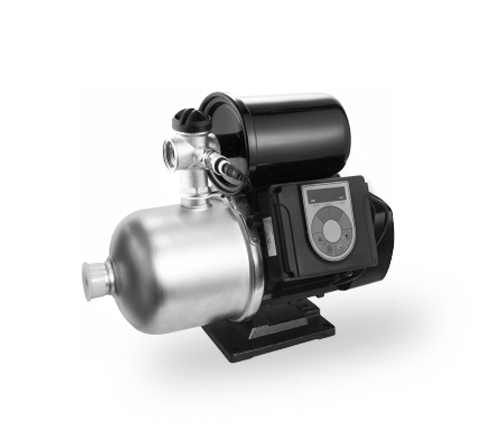
EMF Series Guide Vane Cover Configuraion Bearing Sleeve Design Stainless Steel Horizontal Multistage Pump
The EMF Series is a horizontal multistage centrifugal pump developed for applications that require moderate flow and comparatively high pressure. Unlike a single-stage centrifugal pump, a multistage pump uses several impellers arranged in series. Water passes through each stage, and the pressure increases progressively as the fluid moves through the pump.
This operating principle enables the pump to generate higher head without requiring a single oversized impeller. The result is a relatively compact pump that can support pressure boosting, high-level water transfer, industrial cleaning, process-water delivery, and building-service applications.
The horizontal arrangement places the pump and motor on a common horizontal axis. This design is convenient for installations with accessible equipment rooms, floor-mounted pump bases, and service areas where technicians need to inspect the motor, pump casing, mechanical seal, or electrical connections. Compared with some vertical multistage designs, a horizontal pump can be easier to remove, inspect, and replace in low-clearance plant rooms.
The EMF Series is available in several flow classes, including EMF2, EMF4, EMF8, EMF12, EMF16, and EMF20. The number in the model family generally indicates the approximate rated flow class in cubic meters per hour, while the final number identifies a particular stage or performance configuration. B-type models provide additional performance variations within selected flow families.
The product information identifies heating and cooling applications, water treatment, industrial cleaning, water boosting, air-conditioning systems, air-freshening equipment, heater devices using softened water, fertilization and metering systems, drinking-water boosting, and light-chlorine-water service as typical application areas.
A centrifugal pump converts mechanical energy from the motor into hydraulic energy. The motor rotates the shaft and impellers. As water enters the suction side, the rotating impeller increases the fluid velocity. The diffuser and guide vane sections then convert part of that velocity into pressure before directing water toward the next stage.
In a multistage configuration, each stage contributes additional head. If the pump contains several effective hydraulic stages, the final discharge pressure is substantially higher than the pressure generated by a single impeller at the same flow. This makes a multistage arrangement suitable for applications where pressure, rather than very large flow, is the primary requirement.
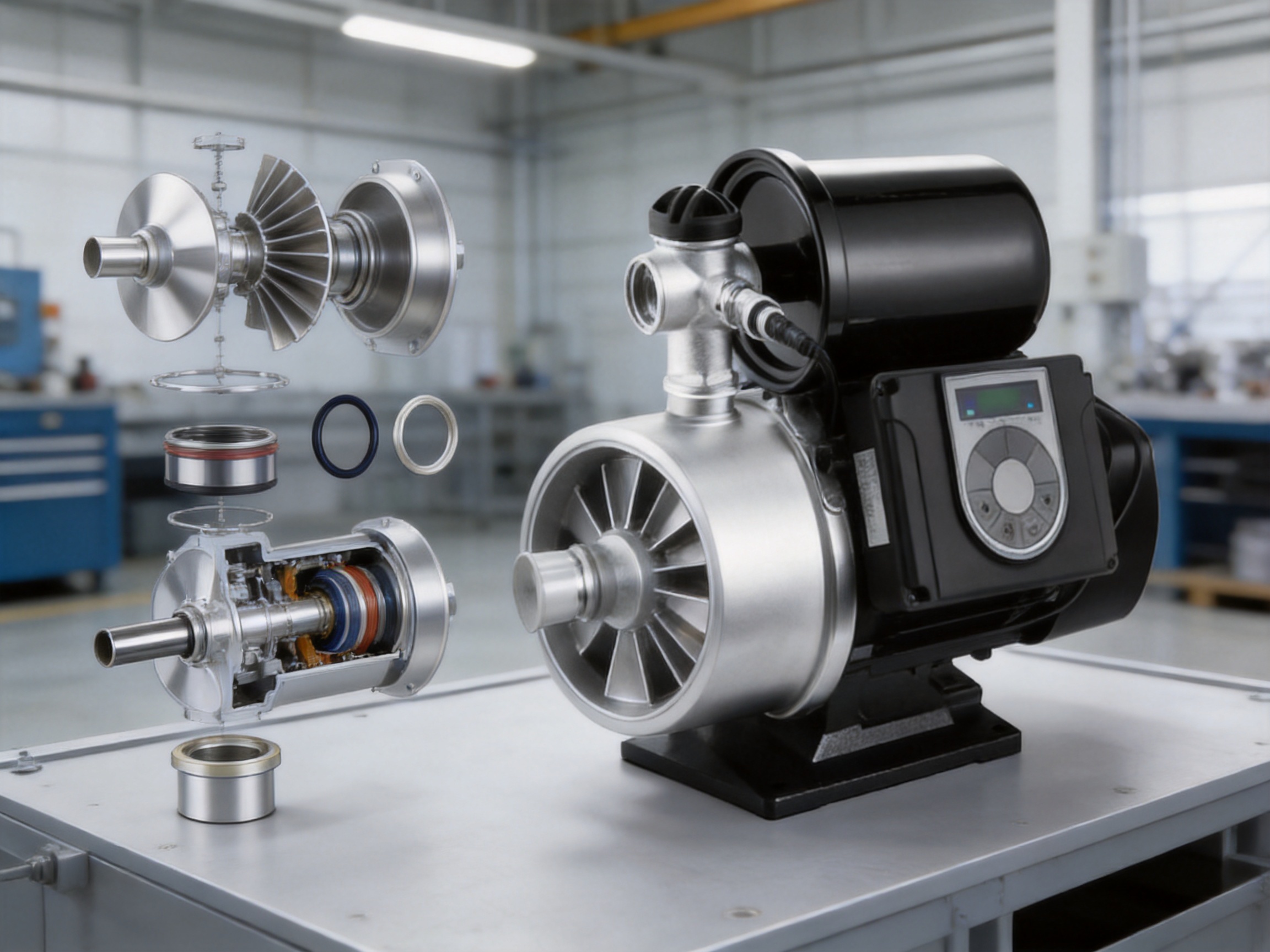
The guide vane cover plays an important role in directing water through the hydraulic passage. Properly formed guide vanes help control the flow leaving the impeller and reduce unnecessary turbulence. Better flow guidance can contribute to stable pump operation, lower hydraulic losses, and more predictable performance across the operating range.
The bearing sleeve design supports the rotating shaft and helps maintain alignment during operation. Shaft alignment is especially important in a multistage pump because several impellers and diffuser passages must remain correctly positioned. A well-supported rotating assembly can reduce vibration, protect the mechanical seal, and contribute to longer service life when the pump is correctly installed and operated.
Because the pump is a pressure-generating device, the selected model must always match the actual system duty. A pump should not be chosen only by maximum head or maximum flow. The correct selection depends on the required flow rate, static lift, pipe friction, pressure requirement, liquid temperature, liquid properties, suction conditions, voltage, and operating schedule.
The horizontal configuration gives the EMF Series a practical and compact footprint. It can be installed on a floor, equipment platform, pump skid, or service base. The design is suitable for machine rooms and utility spaces where a vertical pump may not be convenient.
Horizontal installation also makes the motor and pump assembly accessible from the side. Routine tasks such as checking electrical terminals, observing mechanical seal leakage, inspecting fasteners, and examining the cooling fan can generally be performed without dismantling a tall vertical assembly.
For retrofit projects, the compact form can be useful when replacing older pumps or adding a booster pump to an existing water line. However, sufficient clearance must still be provided around the pump for ventilation, maintenance, shaft inspection, and safe electrical work.
The multistage arrangement is one of the central advantages of the EMF Series. Multiple stages allow the pump to produce a higher rated head while maintaining a moderate flow capacity. This is valuable in applications such as high-floor building water supply, boiler or heater feed support, process-water boosting, industrial washing, and long-pipe distribution systems.
Compared with using a very large single-stage pump for the same pressure requirement, a multistage pump can provide a more balanced hydraulic design. The impellers and diffusers are selected as a coordinated assembly, helping the pump deliver pressure progressively rather than forcing one impeller to perform the entire pressure increase.
The guide vane cover is designed to support controlled fluid movement between hydraulic stages. It provides a defined passage for the flow and helps guide water toward the next impeller. This arrangement can improve the consistency of the hydraulic path and support efficient pressure conversion.
Guide vane components must be manufactured with suitable dimensional accuracy. Small deviations in the hydraulic passages can affect efficiency, noise, vibration, and pressure stability. The use of controlled machining, component inspection, and assembly verification is therefore important for multistage pump production.
The bearing sleeve design supports the shaft within the pump hydraulic assembly. This is particularly relevant for a multistage pump because the shaft must maintain a stable position while transmitting torque through multiple impellers.
A properly fitted bearing sleeve can help reduce radial movement and contribute to smoother operation. It also supports the mechanical relationship between the shaft, impellers, diffusers, guide vane covers, and sealing elements. Correct lubrication, clean water, proper alignment, and operation within the specified conditions remain essential for reliable bearing performance.
The product title highlights a stainless-steel design, and the materials information specifically identifies the impeller as stainless steel. Stainless steel is advantageous in water-pump applications because it offers good resistance to corrosion compared with ordinary carbon steel. It is especially useful where the liquid is treated water, softened water, light-chlorine water, or water exposed to humid operating environments.
The available material table also lists a cast-iron pump casing and support, an aluminum motor case, and a cast-iron motor cover. Therefore, customers should distinguish between a stainless-steel hydraulic component configuration and a fully stainless-steel pump. The precise material combination should be confirmed before ordering, particularly when the pump will handle corrosive liquids, elevated temperatures, or water-treatment chemicals.
The EMF Series uses a two-pole induction motor. Single-phase versions are available for 1 × 220–240 V at 50 Hz and 1 × 110–120 V at 50 Hz. Three-phase versions are available for 3 × 380–415 V at 50 Hz. Motors with other voltages may be available upon request.
Single-phase versions are convenient for smaller buildings, workshops, light commercial installations, and locations where three-phase power is not available. Three-phase versions are generally more suitable for industrial installations and higher-power models because three-phase motors can provide stable operation in larger electrical systems.
The motor insulation class is listed as Class F. Single-phase motors include thermal protection according to the supplied product information. The pump is also identified with a maximum working pressure of 1.0 MPa and an environmental temperature limit of approximately 50°C. These figures must be observed during system design and operation.
The EMF Series includes a broad selection of models. The smallest models in the available data are in the EMF2 family, with rated flow around 2 m³/h and rated head between approximately 14 and 42 m. The EMF4 family provides rated flow around 4 m³/h and rated head from approximately 15 to 45 m.
The EMF8 family covers approximately 8 m³/h and includes both standard and B-type configurations. The listed rated head ranges from approximately 9 to 48 m, depending on the model. The EMF12 family provides approximately 12 m³/h and heads from around 9.5 to 50 m. The EMF16 and EMF20 families address higher flow requirements, with rated flow around 16 and 20 m³/h respectively.
| Model Family | Approximate Rated Flow | Approximate Rated Head Range | Typical Selection Focus |
|---|---|---|---|
| EMF2 | 2 m³/h | 14–42 m | Small water boosting and compact pressure systems |
| EMF4 | 4 m³/h | 15–45 m | Residential, light commercial, and process-water service |
| EMF8 | 8 m³/h | 9–48 m | Industrial cleaning, HVAC support, and building boosting |
| EMF12 | 12 m³/h | 9.5–50 m | Commercial water supply and moderate industrial service |
| EMF16 | 16 m³/h | 10–30 m | Higher-flow water transfer and pressure support |
| EMF20 | 20 m³/h | 10.5–31.5 m | Higher-capacity water distribution systems |
The table is a general guide based on the supplied rated data. It does not replace a pump curve or a system calculation. Actual performance changes with flow, suction conditions, liquid properties, pipe arrangement, voltage, and pump condition.
Rated head is the height of water column associated with the stated operating point. It is expressed in meters. A rated head of 30 m does not necessarily mean the pump will always deliver 30 m of head. The actual head depends on the operating flow and the resistance of the connected system.
System head includes static elevation, required terminal pressure, pipe friction, fittings, valves, filters, heat exchangers, and other equipment. The selected pump should intersect the system curve near the intended operating point. Operating too far from the preferred range can increase noise, vibration, power consumption, or mechanical wear.
Rated flow is the approximate water volume moved per hour at the stated operating condition. A higher-flow model is not automatically better. Oversizing a pump may produce excessive pressure, unnecessary energy use, frequent valve throttling, unstable operation, or premature seal wear.
The correct flow should be based on actual user demand, process requirements, fixture demand, irrigation zones, heat-exchanger flow, cleaning equipment requirements, or other system conditions. Where demand varies significantly, a control system or intelligent booster arrangement may be more appropriate than selecting a continuously oversized fixed-speed pump.
The listed EMF models range from approximately 0.37 kW to 3 kW. Smaller motors are used for low-flow, moderate-head applications, while higher-power models support greater flow or higher pressure requirements.
Motor power should be evaluated together with hydraulic efficiency and operating duty. A pump with a larger motor may provide additional capacity, but it may also require a larger electrical supply, stronger protection devices, and greater operating cost. The motor starter, overload protection, cable size, and electrical enclosure should be selected by a qualified professional.
The following table summarizes selected models from the supplied technical information. The rated values are presented as published data and should be confirmed against the latest official performance curve before final selection.
| Model | Power | Rated Head | Rated Flow | Maximum Suction | Approximate Gross Weight |
|---|---|---|---|---|---|
| EMF2-20(T) | 0.37 kW | 14 m | 2 m³/h | 5 m | 8 kg |
| EMF2-60(T) | 0.75 kW | 42 m | 5 m³/h | 5 m | 12 kg |
| EMF4-20(T) | 0.55 kW | 15 m | 4 m³/h | 5 m | 9.7 kg |
| EMF4-60(T) | 1.1 kW | 45 m | 5 m³/h | 5 m | 13.5 kg |
| EMF8-10(T) | 0.55 kW | 12 m | 8 m³/h | 5 m | 10.5 kg |
| EMF8-40(T) | 2.2 kW | 48 m | 5 m³/h | 5 m | 24 kg |
| EMF8-50B(T) | 2.2 kW | 46.5 m | 5 m³/h | 5 m | 25 kg |
| EMF12-10(T) | 1 kW | 13.5 m | 12 m³/h | 5 m | 12 kg |
| EMF12-30(T) | 3 kW | 39 m | 5 m³/h | 5 m | 27 kg |
| EMF12-30B(T) | 3 kW | 50 m | 5 m³/h | 5 m | 27 kg |
| EMF16-30(T) | 2.2 kW | 30 m | 5 m³/h | 5 m | 23 kg |
| EMF20-30(T) | 3 kW | 31.5 m | 5 m³/h | 5 m | 25 kg |
The supplied technical table contains some formatting irregularities, including rows in which the flow value and weight fields are not visually aligned in the original presentation. Buyers should request the complete datasheet, dimensional drawing, pump curve, and electrical specification for the exact model before placing an order.
The primary advantage of a multistage pump over a basic single-stage pump is its ability to generate higher pressure in a compact package. This is valuable when a system requires pressure boosting but does not require the very high flow capacity of a large end-suction pump.
The EMF Series can be used where water must be moved through elevated pipework, multiple building floors, industrial equipment, cleaning nozzles, or long distribution networks. Its staged hydraulic design provides a practical balance between pressure capability, footprint, and motor size.
The availability of multiple flow families and stage configurations gives system designers more flexibility. Instead of selecting one pump for every application, users can choose from small 0.37 kW models through 3 kW models, with rated heads and flows suited to different installation requirements.
This range can simplify standardization for contractors, distributors, and project engineers. A single supplier can potentially support small domestic booster requirements, commercial water systems, process-water installations, and selected industrial applications.
The horizontal layout provides convenient access for inspection and maintenance. The motor, pump body, guide vane components, bearing sleeve, mechanical seal, and electrical connection can be considered within a familiar floor-mounted arrangement.
Easy access does not eliminate maintenance requirements, but it can reduce service complexity compared with equipment installed in narrow shafts or difficult-to-reach vertical locations. For commercial and industrial users, service accessibility can influence total ownership cost as much as the initial purchase price.
The stainless-steel impeller option is an advantage for clean-water applications where corrosion resistance is important. It is particularly relevant to treated water, softened water, humid equipment rooms, and light-chlorine-water services within the pump’s material and chemical limits.
Nevertheless, stainless steel is not universally resistant to every chemical. Concentration, temperature, pH, chloride level, and exposure duration all influence material compatibility. A chemical compatibility review should be completed before the pump is used for aggressive liquids.
The EMF Series can serve several market segments without requiring a completely different pump architecture. The same general platform can support water treatment processes, industrial cleaning, HVAC water circulation and boosting, air-conditioning systems, heater devices using softened water, fertilization or metering systems, and drinking-water pressure boosting when the applicable materials and certifications are satisfied.
This versatility can be advantageous for distributors and engineering companies that manage different types of water-system projects. It can also help end users select a familiar pump platform for expansion projects.
The manufacturer’s experience extends across several pump categories, including solar water pumps, submersible pumps, deep well pumps, domestic booster pumps, circulation pumps, intelligent booster pumps, and commercial multistage pumps. This breadth provides practical experience with different hydraulic conditions, motor technologies, control methods, and installation environments.
The company was founded in 2008 and has developed operations covering research and development, production, export, procurement planning, order tracking, cross-border delivery, and foreign-trade services. For international customers, this integrated structure can make communication and project coordination more efficient.
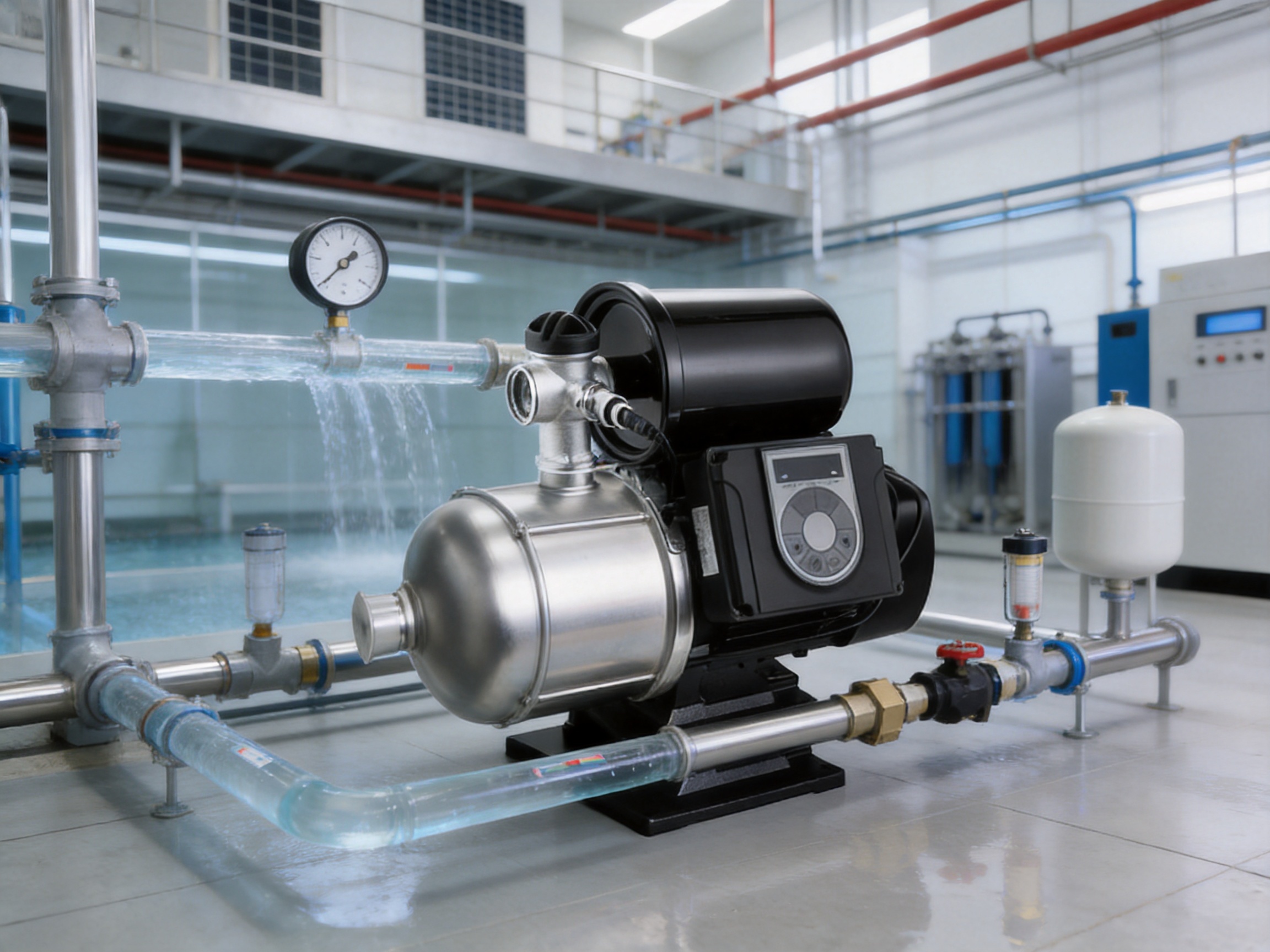
A pump’s reliability depends on more than its catalog specifications. Casting quality, machining accuracy, shaft alignment, impeller balance, motor winding quality, sealing performance, electrical protection, assembly control, and final testing all influence real-world performance.
The manufacturer identifies independent research and development as part of its operating capability. In practical terms, this supports the development and adjustment of pump structures for different markets, voltage systems, application environments, and customer requirements.
Independent product development can also help a manufacturer refine hydraulic components, improve assembly methods, adapt motors to regional electrical standards, and create product families that share compatible parts or manufacturing processes.
Mass production can provide advantages when it is supported by consistent processes. Standardized casting, machining, motor assembly, winding, sealing, painting, inspection, and packaging procedures can reduce variation between production batches.
For wholesalers, contractors, and original-equipment customers, stable production capacity is important because project delivery often depends on receiving multiple pumps with consistent specifications. Production scale can also support spare-parts planning and repeat orders.
The EMF Series includes identifiable components such as the pump casing, pump body, shaft and rotor, motor case, ball bearing, motor cover, fan, fan cover, guide vane cover, impeller, diffuser, bearing sleeve, O-ring, support, capacitor holding box, and capacitor.
A component-based construction allows the manufacturer to inspect individual parts before final assembly. It also gives service technicians a clearer framework for identifying wear, replacing seals, checking rotating components, and diagnosing abnormal operating conditions.
The supplied materials table lists HT200 for the pump casing and support, aluminum for the motor case, cast iron for the motor cover, and stainless steel for the impeller. These material choices reflect a balance between mechanical strength, weight, corrosion resistance, manufacturability, and cost.
Material selection should always be matched to the liquid. Clean water and light-duty treated water may be suitable for the standard configuration, while corrosive liquids, abrasive fluids, hot water, or chemically dosed liquids may require alternative materials and seals.
The company operates through an international business structure that includes procurement planning, order tracking, cross-border delivery, and foreign-trade services. This can be valuable for overseas buyers who require more than a product quotation.
One-stop support may include model selection, voltage confirmation, packaging coordination, documentation, shipping arrangements, and after-sales communication. For distributors and project contractors, reducing the number of separate suppliers can simplify purchasing administration.
Water treatment systems often require stable pressure to move water through filters, softeners, membranes, dosing equipment, and distribution lines. The EMF Series can be considered for clean-water transfer and pressure boosting within the applicable flow, head, temperature, and material limits.
Before installation, the designer should assess filtration pressure loss, membrane operating pressure, chemical compatibility, water temperature, and the possibility of suspended solids. The pump should not be used for abrasive or heavily contaminated water unless the configuration is specifically approved for that service.
Industrial cleaning equipment may require a steady water supply for spray systems, washing stations, processing equipment, and production-line cleaning. A multistage pump can provide the pressure necessary for spray nozzles and elevated distribution lines while maintaining a relatively compact footprint.
The required flow must be calculated from the number and size of nozzles, the desired spray pressure, pipe length, filters, valves, and operating sequence. If several cleaning zones operate simultaneously, the pump must be selected for the combined demand.
Heating and cooling systems depend on reliable circulation and pressure balance. The EMF Series may support water circulation, pressure boosting, heater-device supply, and selected HVAC applications using suitable water quality.
The installer must verify liquid temperature, expansion conditions, system pressure, seal compatibility, and the pump’s environmental temperature limit. If the pump is used in a closed-loop system, air removal, expansion control, and correct system filling are particularly important.
Air-conditioning and air-freshening systems may require water movement through coils, heat exchangers, humidification devices, or auxiliary treatment equipment. The pump’s moderate flow and multistage pressure capability can be useful where the system contains several hydraulic restrictions.
Noise, vibration, and control requirements should be considered carefully in commercial buildings. A pump installed near occupied spaces should be correctly aligned, securely mounted, and operated near its preferred duty point.
Commercial and residential buildings may experience insufficient municipal pressure, elevated floors, peak-demand fluctuations, or long internal pipe runs. The EMF Series can be used as a fixed-speed booster in selected applications, provided the model is correctly sized.
For buildings with highly variable demand, the pump may be combined with a pressure tank, pressure switch, bypass arrangement, or intelligent control system. The control strategy should prevent rapid cycling, dry running, excessive discharge pressure, and operation against a closed valve.
Fertilization and metering systems may need controlled water pressure to distribute diluted nutrients or treatment solutions. The pump material, seal material, and liquid compatibility must be reviewed before use.
Because chemical concentration and temperature can vary, a standard clean-water pump should not automatically be assumed suitable for fertilizer solutions. The purchaser should provide complete liquid data to the manufacturer, including concentration, pH, temperature, suspended solids, and expected operating hours.
The supplied application information includes drinking-water boosting and light-chlorine-water service. For potable-water systems, local regulations may require specific certifications, approved materials, hygienic design, and documentation.
Users should confirm that the exact pump configuration complies with the regulations of the installation country. Potable-water suitability is determined by the complete wetted-material configuration, not only by the presence of a stainless-steel impeller.
The pump should be installed on a firm, level foundation capable of supporting its operating weight and vibration loads. Mounting bolts should be tightened evenly, and the pump should be protected from external pipe strain.
Suction and discharge pipes should be adequately supported. The pump should never be expected to carry the weight of long pipe runs, heavy valves, filters, or flexible connectors. Pipe alignment should be checked before final tightening.
The suction line should be as short and direct as practical. Unnecessary elbows, sudden diameter changes, partially closed valves, and restrictive filters can increase suction losses. Excessive suction resistance may cause cavitation, unstable flow, noise, and damage to hydraulic components.
The maximum suction value listed in the technical information is approximately 5 m for the presented models. This figure should not be treated as a guarantee under every installation condition. Actual suction performance depends on water temperature, atmospheric pressure, pipe friction, elevation, fluid level, and the net positive suction head available.
An isolation valve may be installed on the suction and discharge sides to facilitate service. A check valve may be required where reverse flow could damage the pump or cause unwanted system movement. Pressure gauges can assist with commissioning and troubleshooting.
Before starting the pump, the system should be filled and the pump casing properly primed. A centrifugal pump should not run dry unless it is specifically designed for dry-running operation. Dry running can damage the mechanical seal and generate excessive heat.
The electrical connection should be completed by qualified personnel. The supply voltage and frequency must match the motor nameplate. Correct overload protection, grounding, phase sequence verification for three-phase motors, and suitable cable sizing are essential.
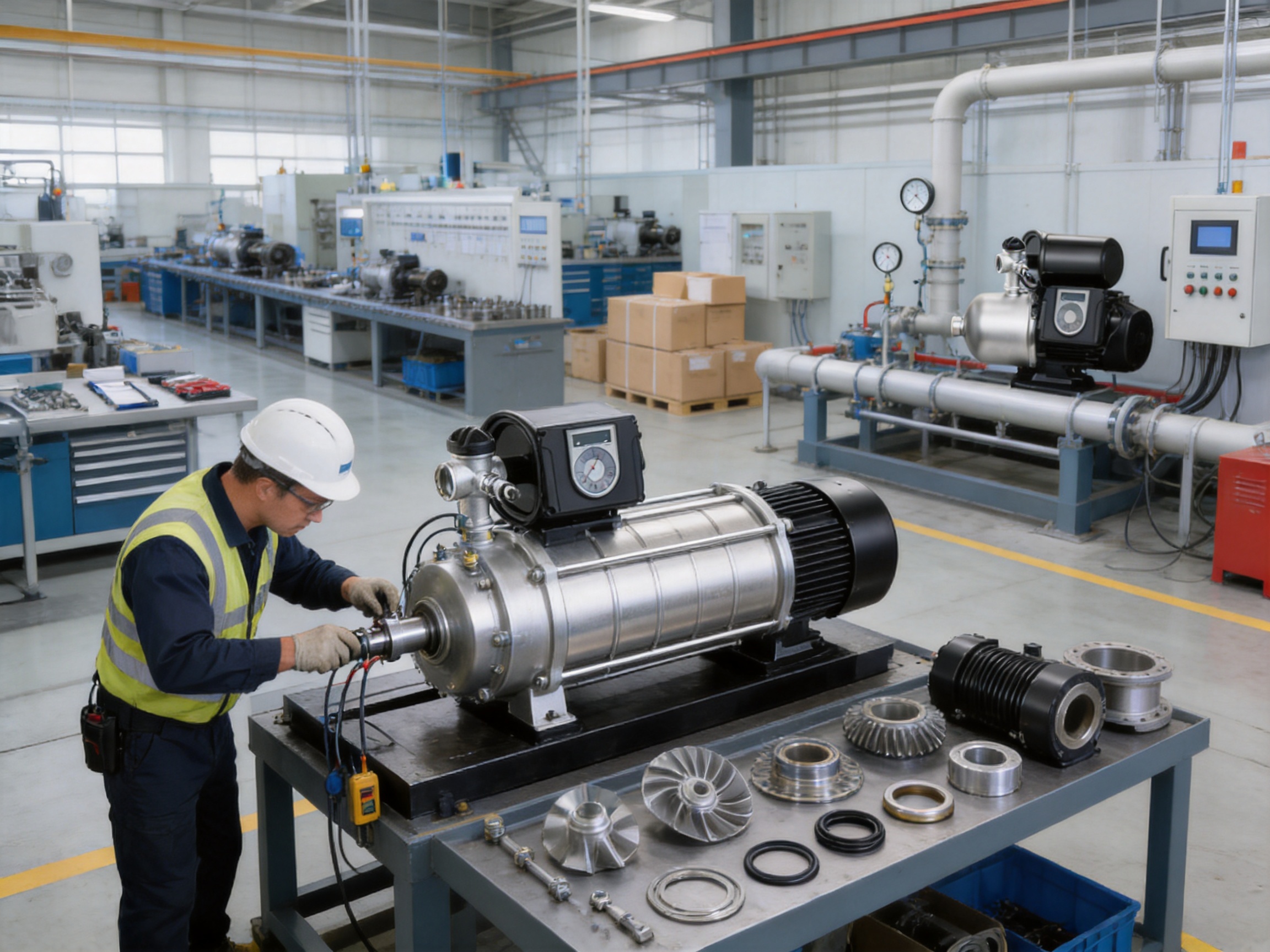
During commissioning, inspect the pump, motor, pipework, electrical connections, fasteners, valves, and base. Confirm that the shaft can rotate freely where manual rotation is permitted by the design and safety procedure.
Open the required suction valve fully and ensure that the pump is filled with liquid. The discharge valve should be positioned according to the manufacturer’s start-up procedure. The pump should then be started briefly to verify the direction of rotation on three-phase versions.
After start-up, observe discharge pressure, flow, current, vibration, sound, and seal condition. A small amount of initial seal moisture may occur in some systems, but continuous leakage should be investigated.
The pump should operate near the intended duty point. Prolonged operation at zero flow, extremely low flow, excessive flow, or a closed discharge valve can cause overheating, internal recirculation, vibration, or seal damage.
Where water demand changes frequently, the system should be designed to reduce repeated starts and stops. A pressure tank, suitable control device, or intelligent booster controller can improve operating stability. The control system must be matched to the motor type and the electrical requirements of the installation.
Routine inspections should include checking for abnormal vibration, unusual noise, water leakage, motor overheating, loose fasteners, damaged cables, blocked ventilation, and pressure changes. A sudden change in pressure or current may indicate a blocked filter, closed valve, air ingress, worn hydraulic parts, or an electrical fault.
The mechanical seal is a wear component. Its service life depends on water quality, pressure, temperature, shaft alignment, dry-running events, and the presence of abrasive particles. If leakage becomes continuous or excessive, the seal should be inspected and replaced with a compatible part.
The bearing sleeve and ball-bearing assembly should be protected from contamination and excessive loading. Misalignment, pipe strain, cavitation, or operation outside the intended hydraulic range can increase bearing loads.
Signs of bearing or shaft problems may include rising vibration, metallic noise, increased motor current, unstable pressure, or visible movement of the rotating assembly. Continued operation under these conditions may damage the impellers, diffusers, guide vane covers, and motor.
Impellers and diffusers should be inspected if performance declines or if the pump has handled water containing sediment or foreign matter. Deposits can reduce hydraulic passage area, while abrasion can change clearances and lower efficiency.
The stainless-steel impeller offers improved corrosion resistance for suitable water applications, but it is not immune to erosion or chemical attack. Cleaning methods should be compatible with the material and should not damage sealing surfaces.
Electrical inspections should include terminal tightness, grounding continuity, overload-protection operation, insulation condition, capacitor condition on applicable single-phase models, and motor ventilation.
Any electrical work must be performed after isolating and securing the power supply. Maintenance personnel should follow local electrical regulations and the motor manufacturer’s safety procedures.
For pump distributors, engineering companies, and original-equipment builders, product consistency and supply coordination are important. A broad model family can reduce the need to source separate pumps for every small and medium water-system project.
The EMF Series offers several motor powers, flow categories, head levels, and single-phase or three-phase electrical configurations. This supports project standardization while still allowing the purchaser to select a model appropriate to the application.
The manufacturer’s wider product range also creates opportunities for coordinated procurement. A project may require a deep well pump for source-water extraction, a submersible pump for drainage, a circulation pump for HVAC, and a horizontal multistage pump for pressure boosting. Working with a supplier that understands several pump categories can simplify technical communication.
For export buyers, the company’s experience with cross-border delivery and foreign-trade service can support documentation, packaging, production scheduling, and shipment coordination. These services are particularly useful for distributors managing recurring container orders or contractors working on international projects.
Before ordering an EMF Series pump, the purchaser should prepare the following information:
1. Required flow rate in cubic meters per hour.
2. Required total head in meters or required discharge pressure.
3. Static suction and discharge elevation.
4. Pipe size, pipe length, fittings, filters, valves, and other pressure losses.
5. Liquid type, temperature, pH, chlorine level, chemical concentration, and suspended solids.
6. Available power supply, voltage, frequency, and number of phases.
7. Installation altitude and ambient temperature.
8. Required inlet and outlet connection arrangement.
9. Expected operating hours and start-stop frequency.
10. Required certifications for potable water, electrical safety, or regional compliance.
11. Need for pressure switches, pressure tanks, variable-speed control, or intelligent booster integration.
12. Required spare parts and maintenance schedule.
This information enables the manufacturer or technical distributor to recommend the correct model rather than simply selecting a pump based on the largest available head or motor power.
A horizontal multistage pump is a centrifugal pump with several impellers arranged in series on a horizontal shaft. Each stage adds pressure, allowing the pump to produce a higher total head than many single-stage pumps while maintaining a relatively compact floor-mounted design.
The guide vane cover directs water leaving one impeller toward the next hydraulic stage. It helps organize the flow path, convert velocity into pressure, and support stable multistage operation.
The bearing sleeve supports the rotating shaft and helps maintain alignment inside the hydraulic assembly. Proper shaft support reduces movement and can help protect the mechanical seal, impellers, diffusers, and other rotating components.
Not necessarily. The supplied material information specifically identifies the impeller as stainless steel, while the pump casing and support are listed as HT200, the motor case as aluminum, and the motor cover as cast iron. The exact wetted-material configuration should be confirmed for the selected model.
The standard information does not establish seawater suitability. Seawater contains chlorides that can be aggressive to many materials. A complete corrosion review and an approved special material configuration are required before seawater use.
The product information refers to heating and cooling applications, but the actual allowable liquid temperature depends on the pump configuration, seal materials, motor conditions, and system pressure. The buyer should confirm the maximum liquid temperature for the exact model.
The supplied information lists a maximum working pressure of 1.0 MPa. This limit should not be exceeded, and the complete system should also be checked for pressure ratings of pipes, valves, fittings, tanks, and connected equipment.
The listed motor options include single-phase 220–240 V at 50 Hz, single-phase 110–120 V at 50 Hz, and three-phase 380–415 V at 50 Hz. Other voltages may be available upon request and should be confirmed before production.
As a conventional centrifugal pump, the EMF Series generally needs to be filled with liquid before starting unless the complete installation includes an approved self-priming arrangement. Running the pump dry can damage the mechanical seal.
Prolonged operation against a closed discharge valve is not recommended. With no useful flow, the liquid inside the pump can heat up and create damaging hydraulic conditions. The pump should be operated according to the manufacturer’s commissioning procedure.
The correct model depends on the building’s required flow, elevation, pressure demand, pipe losses, peak usage, and available electricity. A pressure calculation should be completed before selecting an EMF2, EMF4, EMF8, EMF12, EMF16, or EMF20 model.
The pump can potentially be incorporated into a controlled booster system, but compatibility depends on the motor, control method, pressure sensor, operating range, and protection functions. The control system should be confirmed with the manufacturer before installation.
Maintenance generally includes checking leakage, vibration, noise, pressure, electrical connections, motor ventilation, pipe supports, filters, valves, and the condition of the mechanical seal. The service interval should be adapted to operating hours, water quality, and application severity.
The EMF Series horizontal multistage pump is a practical solution for water systems that require compact installation, moderate flow, and increased pressure. Its horizontal arrangement, staged hydraulic design, guide vane cover, bearing sleeve support, stainless-steel impeller configuration, and broad motor range make it suitable for many clean-water and treated-water applications.
Compared with conventional single-stage solutions, the pump can provide higher head within a compact assembly. Compared with some large or specialized pump arrangements, it offers a more accessible floor-mounted format for inspection and service. Its range of EMF2 through EMF20 models gives users flexibility for residential, commercial, HVAC, industrial cleaning, water treatment, and process-water projects.
The manufacturer’s strengths include independent research and development, mass-production capability, a broad pump portfolio, international export experience, and support for procurement and delivery coordination. These capabilities can benefit distributors, contractors, equipment builders, and industrial customers seeking a stable supply partner for water-pump projects.
Correct selection remains essential. Users should verify the required flow and head, liquid properties, temperature, material compatibility, electrical supply, suction conditions, pressure rating, certifications, and control requirements. When properly selected, installed, commissioned, and maintained, the EMF Series can provide dependable pressure boosting and water transfer for a wide range of demanding applications.
1. Product technical information for the EMF Series horizontal multistage pump, including model performance data, motor specifications, dimensions, materials, and application notes.
2. Manufacturer-provided materials table for pump casing, support, motor case, motor cover, impeller, guide vane cover, diffuser, bearing sleeve, and related components.
3. Manufacturer-provided technical parameters for rated head, rated flow, power, maximum suction, gross weight, operating pressure, environmental temperature, and motor voltage.
4. General centrifugal-pump engineering principles concerning multistage hydraulic operation, pump selection, suction conditions, priming, cavitation prevention, and system-head calculation.
5. General industrial pump installation and maintenance practices for mechanical seals, bearings, pipe supports, electrical protection, vibration control, and water-system commissioning.
edwina@edwin-pump.com
+86-13586290903 (WhatsApp)
Xuri Gongliang Cutting Tool Entrepreneurship Park, Wenqiao Town, Wenling City, Taizhou City, Zhejiang Province, China

High Performance Smart Pump Factory


 English