edwina@edwin-pump.com

View All Products
en
Water systems depend on stable pressure, dependable pump operation, and accurate control. Whether a pump supplies a household, supports a commercial building, serves an irrigation network, or operates as part of a filtration installation, the pressure switch is one of the components responsible for coordinating the system’s basic operating cycle. A properly selected pressure switch starts the pump when pressure falls and stops it when the configured upper pressure is reached. This simple function can improve convenience, reduce unnecessary pump operation, and help protect the wider water installation.
The ERS-2.5 Series Silver Plated Contact Sealed Case Pressure Switch for Water Systems is designed as a professional mechanical pressure controller for these applications. It combines a silver plated electrical contact, a sealed protective case, configurable pressure settings, multiple hydraulic connection options, and compatibility with 110–240 V electrical systems. Its operating frequency range of 50/60 Hz allows it to serve water equipment markets with different electrical standards, while available rated currents of 4.0 A and 10.0 A provide flexibility for different pump control requirements.
Manufactured by Taizhou Edwin Electric Co., Ltd., the ERS-2.5 Series reflects the company’s broader experience in pumps, pump accessories, water supply equipment, and intelligent water technologies. The company has developed an integrated business model covering product research and development, manufacturing, quality control, order coordination, and international export. This background is important because a pressure switch should not be viewed as an isolated electrical component. It must work correctly with pumps, tanks, pipes, valves, and the operating conditions of the complete water system.
This article examines the ERS-2.5 Series in detail, explains how it works, reviews its technical specifications, compares its practical advantages with common alternatives, and discusses the manufacturing strengths that support its use in domestic, commercial, agricultural, and industrial water applications.
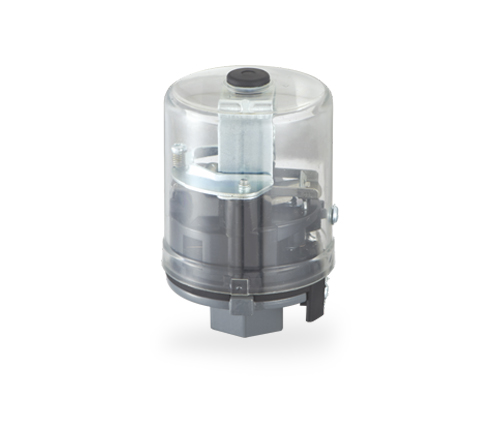
ERS-2.5 Series Silver Plated Contact Sealed Case Pressure Switch for Water Systems
A pressure switch is an automatic control device that responds to changes in hydraulic pressure. In a typical pump installation, water is delivered into a pipe network or pressure tank. As water is consumed, system pressure gradually decreases. When the pressure reaches the configured cut-in point, the switch closes the electrical circuit and allows the pump to start. As the pump restores pressure, the pressure rises until it reaches the configured cut-out point. The switch then opens the circuit and stops the pump.
This operating sequence is especially useful in systems where water demand changes throughout the day. A user may open a faucet for only a few seconds, operate several outlets at once, or use a pump intermittently for irrigation. Without automatic pressure control, the pump would need to be manually started and stopped or controlled by a more complex electronic system. A mechanical pressure switch provides a direct and practical way to automate the basic operation of the pump.
The switch also helps coordinate the relationship between the pump and the pressure storage arrangement. When used with a pressure tank, it can help maintain a defined pressure range and reduce the number of unnecessary pump starts. The precise effect depends on tank size, pump capacity, pipe design, water demand, and pressure settings. Nevertheless, a correctly adjusted pressure switch is an important part of a balanced water supply system.
The ERS-2.5 Series is designed to respond to configured pressure values rather than relying on a complicated control interface. This mechanical operating principle can be advantageous where users prefer straightforward adjustment, easy serviceability, and a familiar control method. It is suitable for pump systems that require automatic start and stop control based on pressure.
The ERS-2.5 Series is a pressure switch for water systems with a sealed case and silver plated contact. The product is intended for use as a mechanical pressure controller in pump and water supply applications. Its design combines hydraulic sensing and electrical switching in one compact control component.
The product supports a rated voltage range from 110 V to 240 V and operates at both 50 Hz and 60 Hz. It is available with a rated current of 4.0 A or 10.0 A, allowing customers to select a version that corresponds more closely to the electrical characteristics of the controlled pump or installation. The pressure switch includes a single contact arrangement and is offered with aluminum or plastic base options.
Hydraulic connections can be supplied in 1/4-inch male or 3/8-inch female configurations. This makes it easier to match the pressure switch with different piping layouts and connection requirements. Pressure settings can also be customized according to customer requirements, subject to the product’s operating limits and the needs of the application.
The listed minimum cut-in pressure is 0.5 bar, while the maximum cut-out pressure is 3.5 bar. A standard pressure range of 1.1–1.8 bar is indicated, with settings available according to customer requirements. The maximum working temperature is 55 degrees Celsius, and the product has an IP20 protection class. These values should be considered during system design so that the product is used within appropriate electrical, hydraulic, environmental, and temperature conditions.
The first defining feature is the silver plated contact. Electrical contacts are subject to repeated switching during normal pump operation. Contact material affects electrical conductivity, switching reliability, and resistance to wear. Silver plating is commonly selected for its favorable electrical conductivity and its ability to support reliable contact performance in switching applications. In the ERS-2.5 Series, the contact is enclosed within a protective case to help reduce exposure to external contamination.
The second important feature is the sealed case construction. The case helps organize the switching mechanism and protects the internal components from routine external influences. The term sealed case should not be interpreted as unlimited waterproof performance, particularly because the listed protection class is IP20. Installation should therefore be carried out in a suitable location, away from direct water spray, condensation, flooding, and other conditions outside the specified protection level.
The third feature is pressure-based automatic control. The switch is intended to start and stop the water pump according to configured pressure values. This avoids the need for constant manual intervention and enables the pump to respond to actual water demand.
The fourth feature is configuration flexibility. Customers may request different hydraulic connection arrangements and pressure settings. This is valuable for original equipment manufacturers, distributors, contractors, and system integrators who need to adapt the switch to different pump models or regional installation practices.
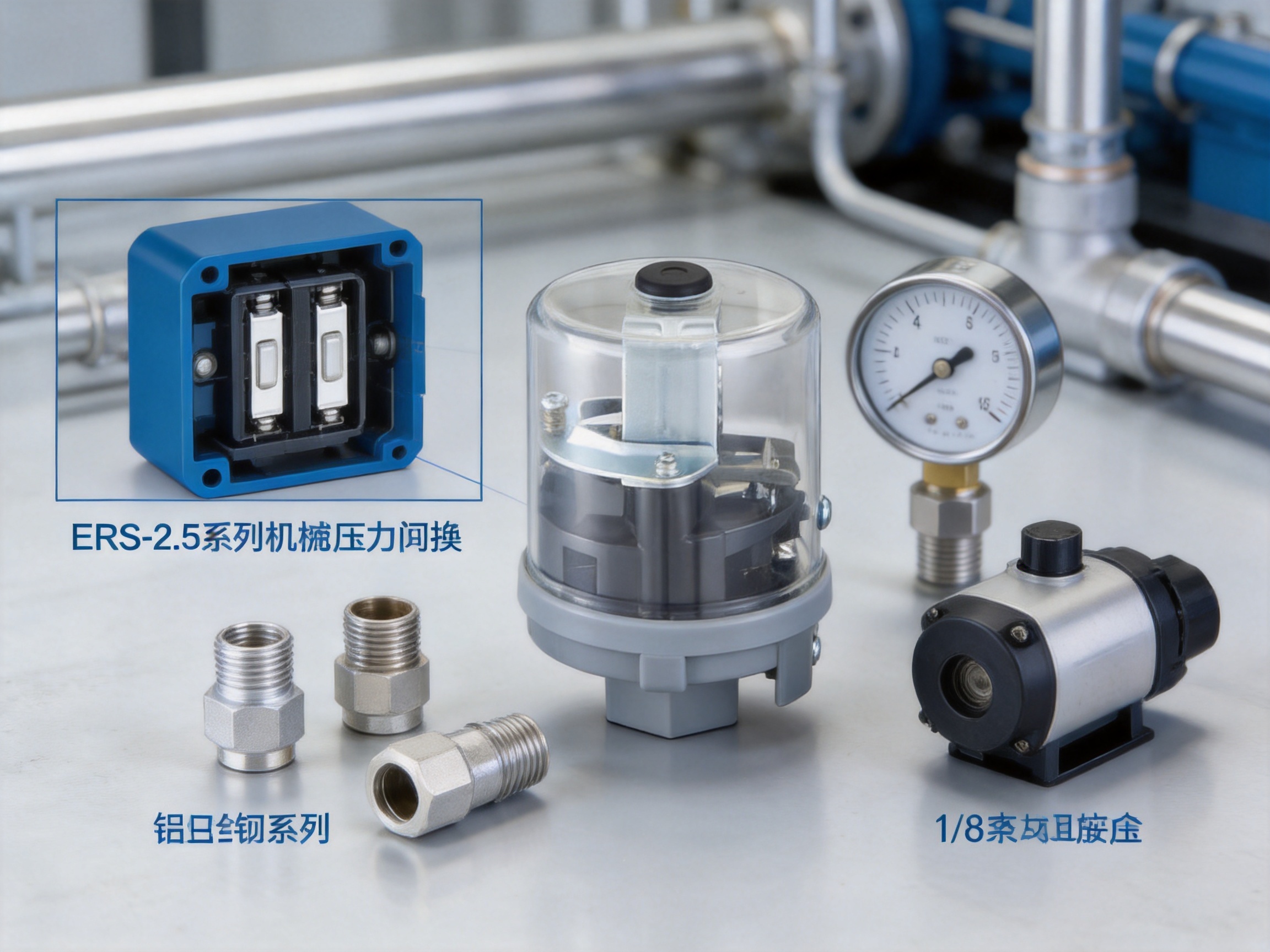
The following table summarizes the principal technical information available for the ERS-2.5 Series.
| Item | Specification |
|---|---|
| Product type | Mechanical pressure controller |
| Application | Water systems and automatic pump control |
| Rated voltage | 110–240 V |
| Power frequency | 50/60 Hz |
| Rated current | 4.0 A or 10.0 A |
| Minimum cut-in pressure | 0.5 bar |
| Maximum cut-out pressure | 3.5 bar |
| Standard pressure range | 1.1–1.8 bar, adjustable according to customer requirements |
| Base options | Aluminum or plastic |
| Contact arrangement | Single |
| Hydraulic connection options | 1/4-inch male or 3/8-inch female |
| Protection class | IP20 |
| Maximum working temperature | 55 degrees Celsius |
| Warranty | One year |
These specifications make the product appropriate for low- to moderate-pressure automatic pump control applications where the electrical and environmental conditions remain within the stated limits. System designers should confirm the pump’s starting current, running current, voltage, pressure capability, connection dimensions, ambient conditions, and installation environment before selecting the final pressure switch configuration.
The operation of the pressure switch begins with hydraulic pressure entering through the selected connection. Pressure acts on the internal sensing mechanism. When the system pressure falls to the configured cut-in value, the mechanical mechanism changes position and closes the electrical contact. This sends power to the pump, provided that the switch has been wired correctly and the pump’s electrical requirements are compatible with the selected version.
Once the pump is running, water pressure increases. When the pressure reaches the configured cut-out value, the mechanism opens the contact and interrupts power to the pump. The pump then stops. This cycle repeats whenever water is consumed and pressure falls below the cut-in setting.
The difference between cut-in and cut-out pressure is commonly known as the differential. A suitable differential allows the pump to operate for a useful period instead of starting and stopping excessively. However, the correct values depend on the characteristics of the pump, the pressure tank, the water demand pattern, and the requirements of the connected equipment.
Because the ERS-2.5 Series is a mechanical pressure controller, users should avoid treating it as a dry-running protection device, flow sensor, or full electronic pump management system unless the wider installation includes those functions separately. The pressure switch controls based on pressure. Additional protection may be necessary in systems exposed to low-water conditions, blocked pipes, electrical overload, abnormal voltage, or other operating risks.
Different water systems require different pressure behavior. A small household booster installation may need a relatively modest pressure range. An agricultural irrigation system may require a different start and stop arrangement. A commercial water supply installation may be designed around the pressure requirements of multiple floors, fixtures, or process points.
The ERS-2.5 Series supports customization of pressure settings according to customer requirements. This allows system builders to specify a configuration that better matches the intended installation rather than relying on a single fixed setting for every application. Pressure adjustment should be completed by qualified personnel using suitable test equipment and taking into account the maximum pressure rating of all connected components.
The electrical contact is one of the most important parts of a mechanical pressure switch. Every pump start and stop operation causes the contacts to make or break an electrical circuit. If the contact surface is poorly suited to the load, the result may be excessive electrical resistance, localized heating, arcing, unreliable switching, or premature wear.
Silver plated contacts offer a practical balance of conductivity and switching performance. Silver is known for high electrical conductivity, which can help support efficient current transfer through the contact area. The plated surface also provides a purpose-designed interface for repeated switching within the rated electrical conditions.
Compared with a basic unplated contact design, a silver plated contact may offer more consistent performance over repeated operation when the switch is correctly matched to the pump load. This is particularly relevant in systems where pressure changes frequently and the pump cycles regularly. The contact design does not remove the need for proper circuit protection, correct wiring, and load verification, but it contributes to the reliability of the switching mechanism.
The sealed enclosure provides an additional benefit by keeping the contact assembly organized and reducing exposure to routine dust and external contamination. The case also gives the product a more finished and professional construction than an exposed-contact arrangement. For distributors and equipment manufacturers, this can improve product consistency across different system builds.
A pressure switch operates at the boundary between hydraulic and electrical systems. Water enters the sensing side, while electrical conductors connect the switch to the pump circuit. A properly designed case is therefore important for mechanical stability, electrical separation, and protection of internal components.
The ERS-2.5 Series uses a sealed case to protect the internal contact and pressure mechanism from ordinary external influences. This design can support reliable operation in normal indoor or protected equipment locations. It also helps simplify handling during installation because the internal switching components are enclosed rather than exposed.
At the same time, the specified IP20 protection class should guide installation decisions. The product should be mounted in a dry, adequately protected location. It should not be installed where it may be directly sprayed, submerged, exposed to heavy condensation, or subjected to an atmosphere that exceeds the stated environmental conditions. If the pump system is outdoors, the switch should be installed inside a suitable weather-protected control enclosure unless the complete installation design provides the necessary protection.
Hydraulic connections should be tightened correctly, using appropriate sealing methods and avoiding excessive force that could damage the connection or housing. The pipework should be flushed and free from excessive debris before commissioning. Electrical work should be completed by qualified personnel, with the circuit protected by suitable overcurrent and residual-current protection where required by local regulations.
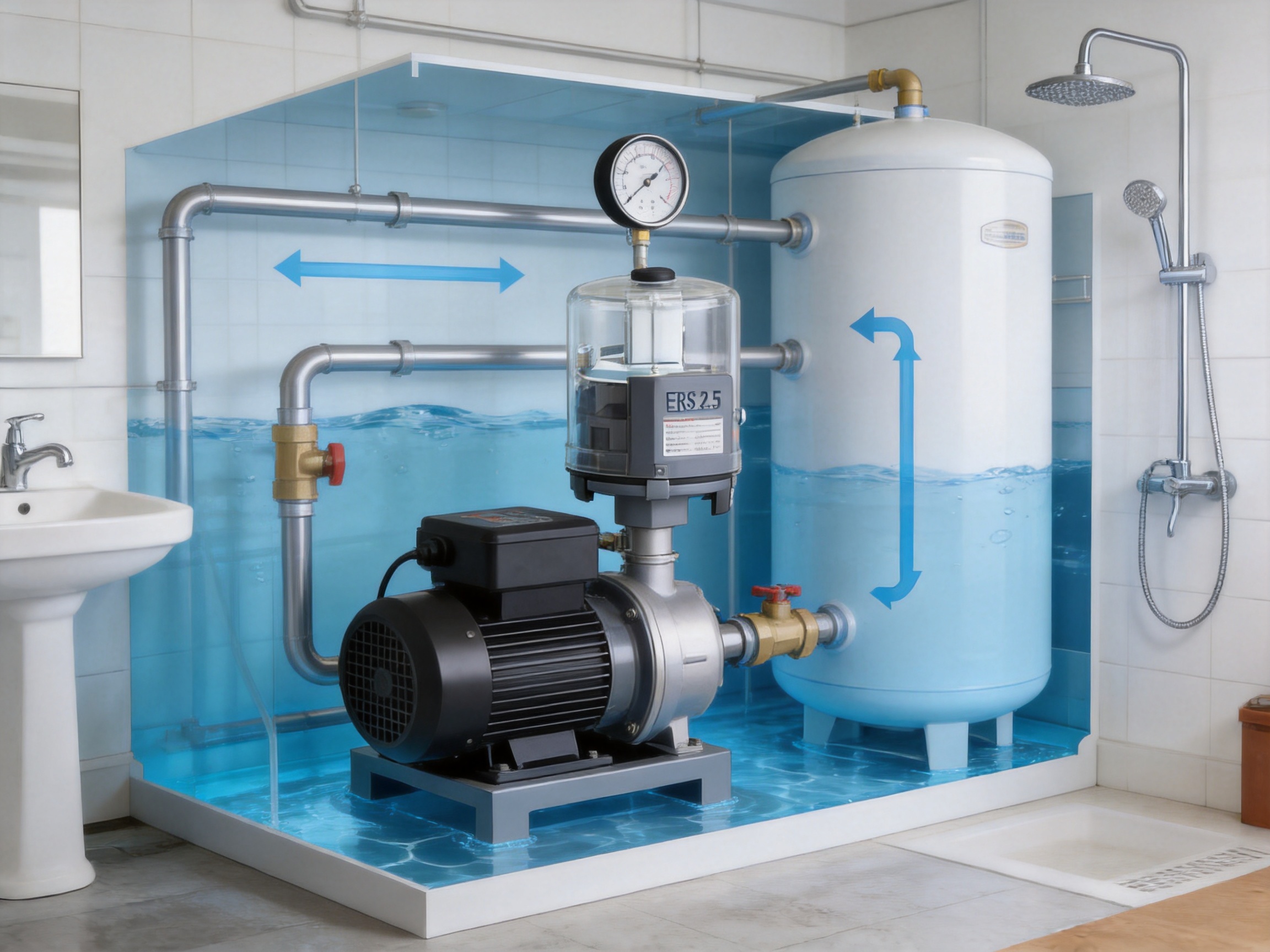
The ERS-2.5 Series competes with several types of pump control solutions, including basic mechanical switches, electronic pressure controllers, flow-based pump controllers, and fully integrated variable-frequency systems. Each type has advantages, but the best choice depends on the complexity, budget, and control requirements of the water installation.
A basic mechanical pressure switch may offer simple pressure-based control, but the quality of its contact materials, case construction, connection options, and manufacturing consistency can vary. The ERS-2.5 Series differentiates itself through its silver plated contact, enclosed case, defined pressure specifications, and available 4.0 A and 10.0 A versions.
The availability of 1/4-inch male and 3/8-inch female hydraulic connections also gives the product greater adaptability than a single-connection design. For system integrators, this may reduce the need for additional adapters and make it easier to standardize a pressure switch across several product configurations.
Electronic controllers may provide digital displays, programmable functions, alarm outputs, and additional protective features. These features are useful in advanced installations, but they can also increase cost, configuration complexity, and sensitivity to electrical or environmental conditions.
A mechanical pressure switch is often preferred where the required function is limited to automatic pump start and stop based on pressure. The ERS-2.5 Series offers a direct operating principle that can be understood and serviced by technicians familiar with conventional pump systems. It does not require a digital interface for basic adjustment, which may be beneficial in cost-sensitive or remote applications.
The choice between mechanical and electronic control should be made according to the application. A mechanical switch is not intended to replace a complete intelligent pump controller where the installation requires dry-run detection, communication, variable-speed control, data logging, or multiple alarm functions. Its advantage is focused, dependable pressure switching.
Flow-based controllers detect water movement and may start a pump when flow begins. Pressure switches, by contrast, respond directly to system pressure. In systems equipped with pressure tanks or systems where a specific pressure range is important, pressure-based control can be more suitable.
The ERS-2.5 Series can be integrated into traditional pump-and-tank arrangements and other systems designed around cut-in and cut-out values. This makes it familiar to installers and compatible with established water supply practices.
Variable-frequency systems regulate pump speed to maintain a more constant pressure and can provide energy-related benefits under changing demand. However, they generally require more specialized equipment, commissioning, and technical support. A mechanical pressure switch is a more economical choice when fixed-speed pump operation and automatic pressure cycling are adequate.
The ERS-2.5 Series therefore occupies a useful position between a manually controlled pump and a complex intelligent booster system. It offers automatic pressure control without unnecessary electronic complexity.
In houses, apartments, and small residential buildings, a pressure switch can control a booster pump that supplies taps, showers, washing machines, or other water outlets. The ERS-2.5 Series can start the pump when pressure falls during water use and stop it after the system reaches the selected upper pressure.
Its compact mechanical format and connection flexibility make it suitable for packaged booster assemblies and replacement applications. Installers should select the correct rated current and confirm that the pump’s electrical load remains within the pressure switch rating.
Pressure tank systems use stored water and compressed air to reduce the need for the pump to operate every time a small amount of water is drawn. The pressure switch manages the operating range of the pump and tank combination. The ERS-2.5 Series can be specified with pressure settings that correspond to the system’s design.
Tank pre-charge, pipe volume, pump capacity, and pressure differential should all be checked during commissioning. Incorrect adjustment may cause short cycling, excessive pressure, or unsatisfactory water delivery.
Small and medium irrigation installations often require automatic pump control when water demand changes between zones or operating periods. A pressure switch can provide a practical control method for systems that do not require continuous variable-speed regulation.
The switch should be installed inside a protected control box or equipment enclosure when used in outdoor agricultural environments. Dust, rain, fertilizer exposure, high humidity, and temperature variation must be considered because the product has an IP20 protection class and a maximum working temperature of 55 degrees Celsius.
Commercial water systems may use pressure switches in booster packages, service water systems, filtration equipment, or auxiliary pump assemblies. The 110–240 V rating and 50/60 Hz frequency support use across many international markets, while the 4.0 A and 10.0 A options allow selection based on the connected pump circuit.
For larger commercial systems, the pressure switch may be used as one part of a broader control arrangement. Engineers should determine whether the pump requires a motor starter, relay, overload protection, contactor, or separate control cabinet. The pressure switch rating should not be assumed to cover every motor starting condition without verification.
Filtration and water treatment systems often include pumps, tanks, valves, and pressure-dependent operating sequences. A mechanical pressure switch can control a pump that maintains pressure within a defined section of the installation.
When used in a treatment system, the compatibility of all wetted materials and the quality of the water should be assessed. The pressure switch should be used only in applications consistent with its material construction, temperature range, and pressure limits.
Some pool and spa installations use pressure-dependent auxiliary pumping equipment. Where the system design calls for automatic pressure-based start and stop control, a pressure switch may be considered. However, the installation environment must be carefully evaluated because pool areas can have high humidity, splash exposure, and chemical vapors. The IP20 rating means that the switch requires appropriate protection and should not be exposed directly to these conditions.
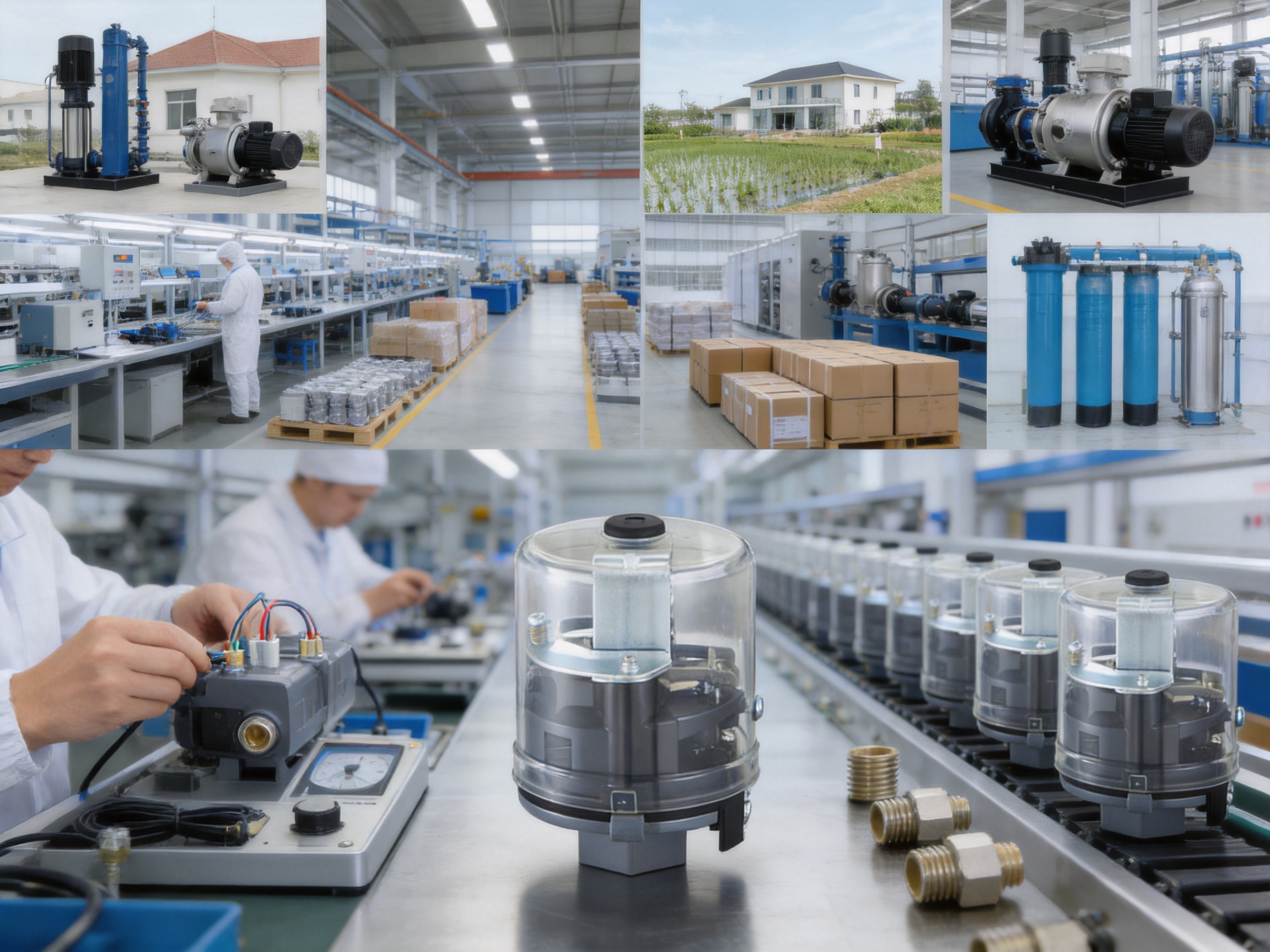
The performance of a pressure switch depends not only on its design but also on the consistency of the manufacturing process. Small differences in contact assembly, pressure calibration, sealing, terminal installation, or housing fit can influence product behavior. An integrated manufacturer with experience in pumps and water equipment is well positioned to understand how the switch will be used in real water systems.
Taizhou Edwin Electric Co., Ltd. was founded in 2008 and operates as an integrated manufacturing enterprise. Its capabilities include independent research and development, mass production, and global export. The company’s core product portfolio includes deep well pumps, submersible pumps, domestic booster pumps, circulation pumps, solar water pumps, intelligent booster pumps, and related water system products.
This product range provides valuable application knowledge. A company that develops and manufactures different types of pumps can evaluate pressure switches in the context of pump starting characteristics, pressure requirements, water demand, and system integration. Such experience can support more practical product customization than a supplier focused only on isolated electrical components.
Independent research and development supports continuous improvement in product design, material selection, manufacturing methods, and application compatibility. For a pressure switch, development work may involve the pressure-sensing mechanism, contact structure, housing design, connection options, adjustment range, and suitability for different pump assemblies.
The ability to develop products internally can also shorten communication cycles between engineering, manufacturing, and customers. When customers require a different hydraulic connection or pressure setting, an experienced manufacturer can evaluate the request within the context of existing product structures and production capabilities.
Mass production is important for distributors, pump manufacturers, and project suppliers that need stable availability over repeated orders. A suitable manufacturing system should maintain consistency between batches while controlling key dimensions, assembly steps, and electrical performance.
The ERS-2.5 Series is designed for repeatable production in several configurations. Available current ratings, base materials, hydraulic connections, and pressure settings can be organized into a product platform that supports different customer requirements without abandoning standardized manufacturing control.
A reliable pressure switch requires controlled assembly. The pressure sensing components must be positioned correctly, the electrical contact must be securely installed, and the housing must be assembled so that the internal mechanism operates smoothly. Connection threads must be formed accurately to support proper installation and sealing.
Manufacturing process control can include incoming material inspection, component verification, assembly checks, pressure testing, electrical continuity testing, visual inspection, and final functional testing. The precise inspection plan should correspond to the manufacturer’s internal quality system and the requirements of the target market.
For a product with a silver plated contact, contact surface quality and assembly cleanliness are especially important. For a pressure-controlled product, calibration and switching-point verification are equally important. These controls help ensure that the switch operates close to the specified cut-in and cut-out settings.
The company has developed experience in international orders and established related import and export service organizations to support procurement planning, order tracking, cross-border delivery, and foreign trade services. This is a practical advantage for overseas buyers. A pressure switch may be technically suitable, but successful procurement also depends on documentation, communication, packaging, delivery scheduling, and after-sales coordination.
Global supply experience can help the manufacturer understand different customer expectations, packaging requirements, electrical markets, and application standards. Buyers should still confirm the specific certifications, documentation, labeling, and compliance requirements applicable in their destination country before placing an order.
Selecting the correct ERS-2.5 Series configuration begins with the pump’s electrical data. The rated voltage must match the supply voltage, and the rated current must be suitable for the pump circuit. Buyers should check both the normal running current and the motor starting characteristics. If the pump is controlled through a contactor or relay, the pressure switch may be used to control the coil circuit rather than switching the motor directly, depending on the system design.
The next consideration is pressure. The system designer should identify the desired cut-in and cut-out pressures and verify that the pump can generate the required pressure under actual flow conditions. The selected pressure settings must also remain below the safe working pressure of the pump, tank, pipework, valves, filters, and connected fixtures.
Hydraulic connection type is another important selection factor. The 1/4-inch male and 3/8-inch female options should be compared with the existing manifold, pressure tank, pipe fitting, or pump outlet. Avoid forcing mismatched threads together or relying on unsuitable adapters. A correct connection reduces installation time and lowers the risk of leakage.
The installation environment should be evaluated before ordering. The maximum working temperature is 55 degrees Celsius, and the protection class is IP20. A dry indoor equipment room may be appropriate, while an exposed outdoor location may require a protective enclosure. Excessive vibration, chemical vapor, condensation, and direct water contact should be avoided unless the complete system design includes suitable protection.
Finally, customers should specify whether they require an aluminum or plastic base and whether a customized pressure setting is needed. Providing complete information at the ordering stage helps reduce errors and supports more efficient production planning.
Installation should be carried out by a qualified technician who understands both hydraulic and electrical safety. Before work begins, isolate the electrical supply, release system pressure, and confirm that the pump cannot start unexpectedly. All local electrical and plumbing regulations should be followed.
Install the switch in the correct orientation and connect it to a suitable pressure sensing point. The sensing line should be clean and free from obstructions. If the switch is installed on a pressure tank manifold, verify that the sensing port communicates correctly with the system pressure and is not isolated by a closed valve.
Use the correct hydraulic fitting and an appropriate thread-sealing method. Tighten the connection sufficiently to prevent leakage, but do not apply excessive torque. After installation, pressurize the system gradually and inspect every connection for leaks.
Electrical wiring should be matched to the selected voltage and current rating. Terminals must be tight, conductors must have suitable insulation, and the circuit should include the required protective devices. If the pump motor exceeds the direct switching capacity of the pressure switch, use an appropriate contactor or relay arrangement.
During commissioning, observe the pressure gauge while opening and closing a water outlet. Confirm that the pump starts at or near the intended cut-in pressure and stops at or near the intended cut-out pressure. Check that the pump does not continue running after the system reaches the upper setting. Also check for excessive short cycling, unstable pressure, unusual electrical noise, and leakage.
Pressure settings should be adjusted carefully and incrementally. A change in one setting can affect the operating differential and the overall behavior of the installation. Record the final settings for future maintenance and inform the system operator of the normal operating range.
A mechanical pressure switch is designed for practical service, but routine inspection remains important. The surrounding area should be kept clean and dry. Operators should periodically check for signs of water leakage, damaged wiring, loose fittings, unusual pump cycling, or inconsistent pressure control.
If the pump starts and stops too frequently, the cause may be an incorrectly adjusted pressure switch, an unsuitable pressure tank pre-charge, inadequate tank volume, a leaking pipe, a blocked sensing connection, or a pump that is too large or too small for the system. The pressure switch should not be replaced or adjusted without first checking the wider installation.
If the pump does not start, verify the electrical supply, protective devices, wiring, pressure level, and contact operation. If the pump does not stop, isolate the system safely and investigate whether the cut-out pressure is set too high, the pump cannot reach the required pressure, or the sensing mechanism has been affected by contamination or mechanical damage.
Maintenance personnel should never bypass safety devices or continue operating a pump when there is evidence of overheating, electrical arcing, pressure beyond the system rating, or water entering an unsuitable electrical area. Any damaged pressure switch should be replaced with a correctly rated product.
Original equipment manufacturers and project suppliers often need more than a standard catalog item. They may require a specific connection, a defined pressure range, a selected current rating, a particular base material, or coordinated packaging. The ERS-2.5 Series supports this type of requirement through hydraulic and pressure-setting options.
Customization can help OEMs design a more coherent pump package. Instead of modifying each installation with multiple adapters or field adjustments, the manufacturer can supply a pressure switch configured closer to the intended application. This may improve assembly efficiency and reduce the chance of incorrect installation.
For distributors, a product platform with several standard specifications can simplify inventory planning. The 4.0 A and 10.0 A versions, combined with different connection and base choices, allow a product range to serve multiple customer segments. Distributors can also use the defined technical data to guide customers toward a suitable configuration.
For engineering projects, the manufacturer’s broader pump portfolio supports one-stop procurement. A buyer may source a pressure switch together with deep well pumps, submersible pumps, booster pumps, circulation pumps, solar water pumps, or other pump accessories. Coordinated sourcing can simplify communication and make it easier to match the control component with the selected pump equipment.
Reliability in a pressure switch is measured by more than the ability to switch once. The product must continue to respond consistently through repeated pressure cycles, maintain secure electrical connections, and remain mechanically stable under normal operating conditions. The silver plated contact and enclosed case are intended to support this type of dependable operation.
Value is also related to the total installation rather than the purchase price alone. A pressure switch with suitable connection options can reduce adaptation work. A correctly selected current rating can reduce the need for an unsuitable substitute. A configurable pressure range can help the system operate closer to its design requirements. Clear technical specifications can reduce selection errors and installation delays.
The one-year warranty provides an additional level of purchase support. Warranty terms should be reviewed with the supplier, including coverage conditions, installation requirements, evidence of failure, and the process for technical evaluation. Correct installation and use within the specified limits are essential for reliable service and warranty consideration.
Every control product has defined operating limits. The ERS-2.5 Series should be used within its voltage, current, pressure, temperature, connection, and environmental specifications. It is not a universal replacement for every pump control technology.
The IP20 protection class means that the product should be protected from direct water exposure. The maximum working temperature of 55 degrees Celsius limits use in high-temperature environments. The listed current rating must be compared with the actual pump circuit, including motor starting behavior and any applicable electrical codes.
The pressure switch should also be selected with consideration for water quality. Abrasive particles, scale, sludge, and other contaminants may affect the sensing connection or internal mechanism. Where water quality is poor, filtration and appropriate maintenance should be considered as part of the complete system design.
When the installation requires dry-run protection, phase monitoring, variable-speed operation, communication, remote monitoring, or detailed fault management, additional equipment may be required. The ERS-2.5 Series performs its intended role as a mechanical pressure-based start and stop controller and should be integrated with other protective devices where necessary.
The main purpose is to automatically start and stop a water pump according to system pressure. It closes the electrical circuit when pressure falls to the configured cut-in value and opens the circuit when pressure reaches the configured cut-out value.
The product is rated for 110–240 V and supports both 50 Hz and 60 Hz power frequencies. The complete pump circuit must still be checked to ensure that the selected version is suitable for the installation.
The ERS-2.5 Series is available with rated current options of 4.0 A and 10.0 A. The correct option depends on the electrical characteristics of the controlled pump or control circuit.
The listed minimum cut-in pressure is 0.5 bar, and the maximum cut-out pressure is 3.5 bar. A standard pressure range of 1.1–1.8 bar is indicated, with pressure settings available according to customer requirements.
Yes. Hydraulic connections can be supplied according to customer needs. Available options include a 1/4-inch male connection and a 3/8-inch female connection.
Yes. The pressure setting can be configured according to customer requirements, provided that the requested setting is compatible with the product’s operating range and the water system’s design.
The silver plated contact is designed to provide reliable electrical conductivity and support repeated switching under suitable rated conditions. It is an important feature for a pressure switch that controls regular pump start and stop cycles.
The case provides protection for the internal mechanism, but the listed protection class is IP20. The switch should therefore be installed in a dry, protected location and should not be directly exposed to water spray, immersion, or heavy condensation.
It may be used as part of an outdoor installation only when it is mounted in a suitable protective enclosure and kept within the specified temperature and environmental conditions. Direct exposure to rain, spray, and moisture should be prevented.
The product is available with an aluminum base or a plastic base. The appropriate choice may depend on the customer’s mechanical, environmental, and equipment integration requirements.
The maximum listed working temperature is 55 degrees Celsius. Installation conditions should be evaluated to ensure that the pressure switch does not exceed this limit.
The product is a pressure-based start and stop controller. Dry-run protection is not identified as an integrated function in the available specifications. A separate protective device may be required for systems where dry running is a concern.
The listed warranty period is one year. Buyers should confirm the detailed warranty conditions and service procedure with the supplier before purchase.
Domestic pump installers, water system integrators, agricultural equipment suppliers, commercial building contractors, filtration equipment manufacturers, pump distributors, and OEM customers can all consider the ERS-2.5 Series where mechanical pressure control is suitable.
The ERS-2.5 Series Silver Plated Contact Sealed Case Pressure Switch provides a focused and practical solution for automatic pump control in water systems. Its key strengths include silver plated contacts, an enclosed mechanical structure, 110–240 V compatibility, 50/60 Hz operation, 4.0 A and 10.0 A current options, adjustable pressure settings, and flexible hydraulic connection choices.
Compared with a basic mechanical switch, it offers a more clearly specified and adaptable product design. Compared with a fully electronic controller, it provides a simpler and potentially more economical approach for applications that require pressure-based pump start and stop control without advanced digital functions. Its value is strongest when the product is correctly matched to the pump, pressure tank, hydraulic circuit, electrical load, and installation environment.
The manufacturing background of Taizhou Edwin Electric Co., Ltd. further supports the product’s application potential. The company combines independent research and development, mass production, international export experience, and a broad portfolio of pump and water treatment peripheral products. This integrated capability can benefit customers seeking consistent supply, technical customization, and coordinated procurement for complete water systems.
For the best results, users should select the appropriate current rating, connection type, pressure setting, and base option; install the switch in a properly protected location; verify all electrical and hydraulic conditions; and commission the system with accurate pressure measurement. Used within its specified limits, the ERS-2.5 Series can serve as a dependable mechanical control component for domestic, agricultural, commercial, and industrial water applications.
1. Product technical data for the ERS-2.5 Series Silver Plated Contact Sealed Case Pressure Switch for Water Systems.
2. Manufacturer product information concerning mechanical pressure controllers, pump accessories, and water system applications.
3. Manufacturer information concerning research and development, mass production, international export, and integrated pump manufacturing.
4. General principles of pump pressure control, pressure tank operation, hydraulic connection practice, and electrical motor protection.
5. General guidance for interpreting voltage, current, frequency, pressure, temperature, and ingress protection specifications in water equipment installations.
aseriesnoisereductiondesignacid-baseverticalsurfacepump-1.jpg "EV(F)A Series Noise Reduction Design Acid-base Vertical Surface Pump")
edwina@edwin-pump.com
+86-13586290903 (WhatsApp)
Xuri Gongliang Cutting Tool Entrepreneurship Park, Wenqiao Town, Wenling City, Taizhou City, Zhejiang Province, China

High Performance Smart Pump Factory


 English