
edwina@edwin-pump.com

View All Products
en
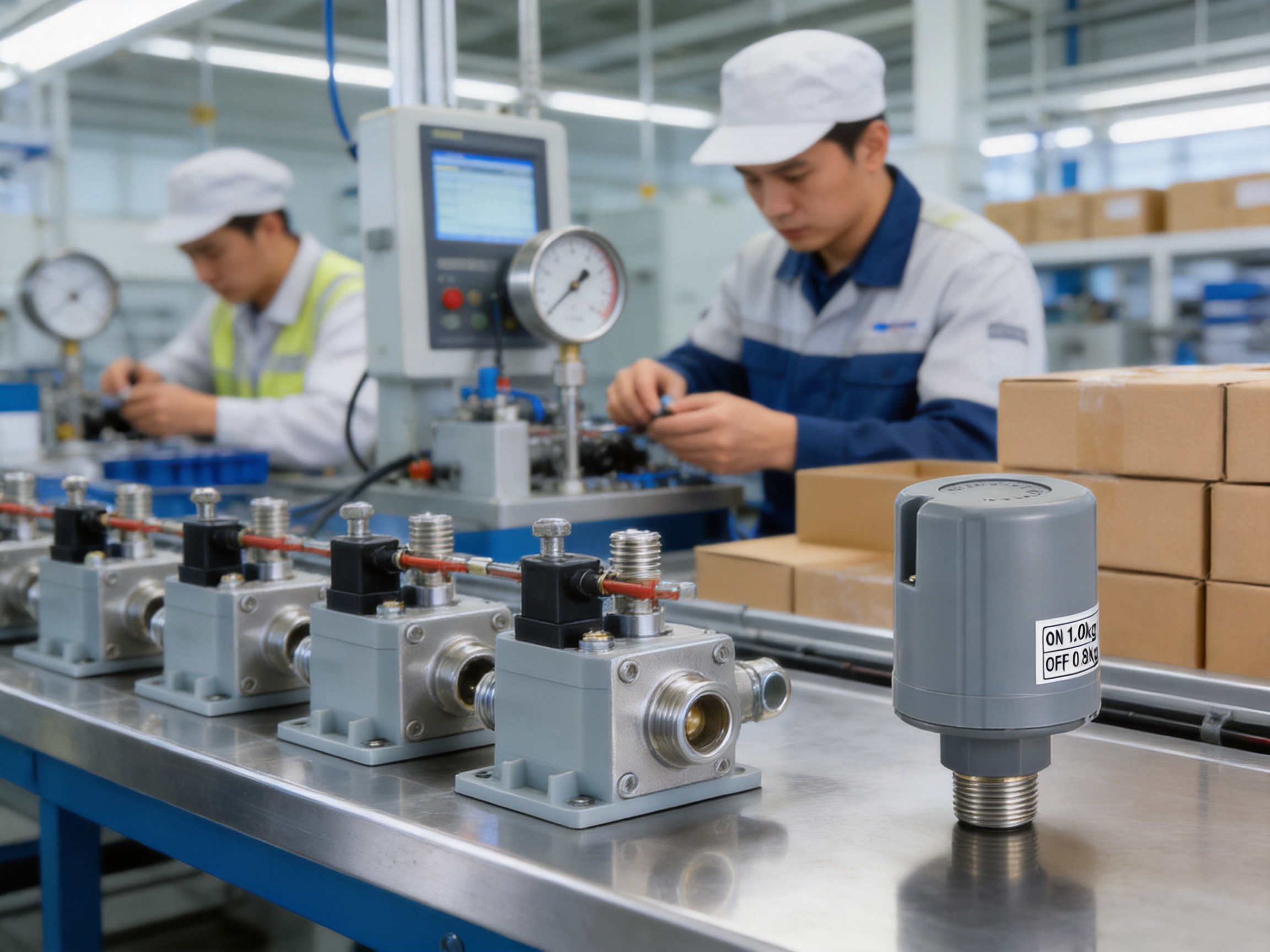
Reliable pressure control is one of the most important requirements in any water pump installation. A pump must start when demand causes the system pressure to fall, continue operating while water is required, and stop when the desired pressure has been restored. Without accurate automatic control, a pump may run continuously, start too frequently, operate under unsuitable conditions, or become exposed to unnecessary mechanical and electrical stress. The ERS-2 Series Pressure Switch is designed to provide a practical control solution for domestic, commercial, and industrial water pump systems.
The ERS-2 Series is a mechanical pressure controller developed for automatic pump start and stop operation. It monitors the pressure in a connected water system and responds according to a selected pressure setting. Its available pressure range extends from a minimum cut-in pressure of 0.5 bar to a maximum cut-out pressure of 3.5 bar. With rated voltage options from 110 V to 240 V, compatibility with 50/60 Hz power systems, and rated current options of 4 A and 10 A, the controller is suitable for many common water supply applications.
The product combines a straightforward mechanical operating principle with flexible configuration options. Customers can select different hydraulic connection styles, screw sizes, base materials, contact arrangements, and pressure settings according to the requirements of a particular pump system. This flexibility helps installers, equipment manufacturers, distributors, and project contractors select a configuration that matches their intended application rather than adapting an entire system around a fixed controller design.
A pressure switch performs a simple but essential task. When water is consumed, system pressure normally decreases. Once pressure falls to the selected cut-in level, the switch closes the electrical circuit and starts the pump. As the pump supplies water and pressure rises, the switch monitors the increase. When the pressure reaches the selected cut-out level, the switch opens the circuit and stops the pump.
This automatic sequence eliminates the need for manual pump operation in many applications. Users can open a tap, operate a shower, irrigate a garden, or use a water appliance while the pump responds automatically. When the demand ends and pressure is restored, the pump stops without requiring a person to disconnect the power supply.
Automatic starting and stopping can also improve the practical efficiency of a water supply system. A pump that runs only when pressure needs to be restored is generally better suited to intermittent demand than a pump that must be operated manually. Automatic control can reduce unnecessary running time, simplify operation, and help protect the pump from being left running after water demand has ended.
The ERS-2 Series is intended to function as a dedicated pressure control component rather than as a complete variable-speed drive or electronic pump controller. Its mechanical operating design makes it easy to understand, configure, and integrate into systems where reliable pressure-based switching is preferred. For applications requiring advanced digital monitoring, communication, or variable-frequency control, additional equipment may be needed. However, for conventional automatic start-and-stop requirements, a mechanical pressure switch can provide a cost-effective and dependable solution.
The ERS-2 Series is available with rated voltage from 110 V to 240 V and supports both 50 Hz and 60 Hz power frequencies. These characteristics make the controller suitable for use across a wide range of regional electrical systems. The rated current options are 4 A and 10 A, allowing selection according to the electrical characteristics of the pump motor and the intended installation design.
| Parameter | Specification |
|---|---|
| Product type | Mechanical pressure controller for water pumps |
| Rated voltage | 110 V–240 V |
| Power frequency | 50/60 Hz |
| Rated current | 4 A or 10 A |
| Minimum cut-in pressure | 0.5 bar |
| Maximum cut-out pressure | 3.5 bar |
| Available pressure settings | Examples include 1.0–1.8 bar, 1.5–2.2 bar, and 2.2–3.0 bar |
| Protection rating | IP20 |
| Maximum working temperature | 55°C |
| Hydraulic connection options | 1/4-inch male or 3/8-inch female, according to configuration |
| Base options | Zinc alloy or plastic |
| Contact options | Double or single contacts |
| Screw size options | 1/4 inch or 3/8 inch |
The pressure settings can be supplied according to customer requirements. The listed pressure combinations are examples rather than a limitation of every possible configuration. This is particularly useful for pump manufacturers and project suppliers that need a pressure controller adjusted to a defined operating range before shipment.
Because water systems vary considerably, pressure selection should be based on pump performance, pipework design, required delivery pressure, tank arrangement, elevation differences, and the characteristics of the end-use equipment. A pressure switch should not be selected solely by looking at the nominal pump power. The complete hydraulic system must be considered to ensure that the cut-in and cut-out values support stable operation.
One of the principal advantages of the ERS-2 Series is its broad pressure adjustment range. The minimum cut-in value of 0.5 bar allows the controller to respond to relatively low system pressure. The maximum cut-out value of 3.5 bar provides a practical upper range for many domestic and light commercial water supply systems.
Different applications require different pressure behavior. A small residential booster system may need a moderate cut-in pressure and a higher cut-out pressure to provide comfortable water use. A garden irrigation installation may operate with a different pressure profile depending on sprinkler requirements and pipe length. A shallow well or surface pump system may require settings designed around suction conditions and available water supply. By offering multiple pressure ranges and customized settings, the ERS-2 Series can be matched more closely to the application.
Pressure setting flexibility also benefits original equipment manufacturers. A pump manufacturer may sell similar pump assemblies into several markets, each with different water-use expectations. Instead of developing a separate pressure controller for every destination, the manufacturer can specify suitable settings during production or procurement. This can simplify product planning and support a more consistent supply chain.
Installers should verify that the pressure switch setting is compatible with the maximum working pressure of the pump, pipes, fittings, storage tanks, and connected appliances. The cut-out pressure should remain within the safe operating limits of all components. A properly selected setting helps avoid both inadequate water delivery and unnecessary pressure loading.
The ERS-2 Series supports hydraulic connection choices including a 1/4-inch male connection and a 3/8-inch female connection. These options help accommodate different pipework layouts and adapter arrangements. Connection selection can be made according to customer needs, making the product suitable for various pump assemblies and replacement applications.
The source nipple or pressure connection provides the interface between the water system and the internal pressure-sensing mechanism. During installation, the connection should be sealed correctly using an appropriate sealing method for the thread type and water temperature. The installer should avoid excessive tightening, contamination, cross-threading, or unsupported pipe loading, all of which may cause leakage or mechanical damage.
A correctly positioned pressure connection can also contribute to more stable operation. The pressure switch should sense the actual system pressure relevant to the pump and water outlet. If it is installed in a location affected by severe turbulence, trapped air, blockage, or an unsuitable branch connection, the switch may not respond in the expected manner.
The availability of both male and female connection configurations provides an advantage over pressure controllers with only one fixed connection style. It can reduce the number of adapters required and support more convenient replacement of existing components. For distributors, multiple connection choices also make it easier to serve customers using different pump brands, pipe systems, and installation standards.
The ERS-2 Series uses a mechanical pressure-switch operating principle. A pressure-sensitive mechanism reacts to changes in hydraulic pressure and changes the electrical contact state when the selected threshold is reached. This design is familiar to pump installers and service technicians and does not require a digital display, software setup, or communication interface for basic operation.
The simple operating concept is one of the product’s practical strengths. In many water supply applications, the required task is not remote monitoring but dependable switching at a defined pressure. A mechanical controller can meet that need with limited system complexity. It can be integrated into pump packages, booster units, domestic water systems, garden pumps, and other conventional installations.
The product is available with single or double contact arrangements. The appropriate contact configuration depends on the electrical design of the pump system and the intended switching method. The choice should be confirmed before ordering and installation, especially when the controller is being used as a replacement part.
The base can be supplied in zinc alloy or plastic. A zinc alloy base may be selected when a more rigid mechanical structure is preferred, while a plastic version may suit applications where reduced weight or a particular assembly configuration is important. The most suitable option depends on the equipment design, environmental conditions, and customer requirements.
The maximum working temperature is specified as 55°C. This value should be considered during system design. The water temperature, ambient temperature, enclosure conditions, motor heat, and nearby pipework can all influence the operating environment. The controller should be installed where the temperature remains within the specified limit.
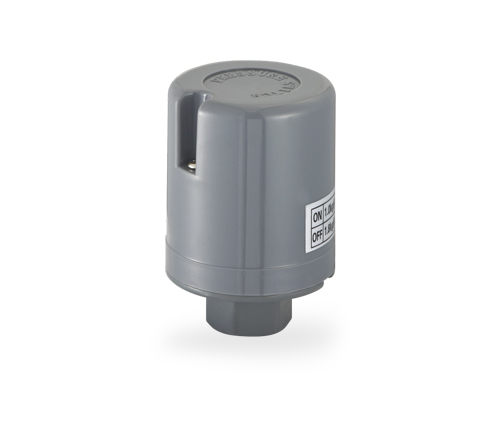
ERS-2 Series 0.5Bar to 3.5Bar Pressure Switch for Water Pump
The product information describes the ERS-2 Series as having a waterproof design and a source nipple for installation. At the same time, the technical parameters identify the protection rating as IP20. These two points should be understood carefully. The product’s design may provide protection suitable for its intended pump-control environment, but an IP20 rating does not indicate protection against water jets or immersion.
For this reason, the pressure switch should be installed in a dry, protected position unless the complete system design provides additional enclosure protection. It should not be exposed directly to rain, spray, flooding, condensation, or cleaning water. If the pump is installed outdoors or in a wet technical area, the electrical connection and pressure switch should be protected by a suitable enclosure and installed in accordance with local electrical requirements.
Good installation practice is essential for long service life. The hydraulic connection should be checked for leaks, the electrical terminals should be tightened appropriately, and cable entry points should be protected from moisture and mechanical strain. The controller should be mounted so that its body is not subjected to excessive vibration, impact, or unsupported pipe forces.
The distinction between hydraulic sealing and electrical protection is important. A sealed pressure connection can prevent water leakage at the thread, but it does not automatically protect the electrical section from water exposure. Installers should evaluate both sides of the product during system design and should never assume that a pressure switch with a water-system connection can be installed without environmental protection.
Many competing pressure switches are supplied with a narrow or fixed pressure setting. Such products may work effectively in one standard application but may require adjustment, replacement, or additional components when the system pressure requirements change. The ERS-2 Series offers a more flexible approach through selectable and customized pressure ranges.
The ability to support pressure settings such as 1.0–1.8 bar, 1.5–2.2 bar, and 2.2–3.0 bar allows the controller to serve different water supply designs. It can be specified for lower-pressure domestic systems, moderate booster applications, or installations requiring a higher operating range. The option of customized settings may also simplify OEM integration.
This flexibility can reduce product-selection errors. Instead of choosing a pressure switch based only on physical appearance or electrical rating, a buyer can select the hydraulic and pressure characteristics that correspond to the actual system. A closer match can help reduce nuisance cycling, insufficient water pressure, and unnecessary pump operation.
Another advantage is the choice of hydraulic connection. A single connection standard can create difficulty when replacing a controller on an existing pump or when integrating a switch into a compact pump assembly. Male and female options in 1/4-inch and 3/8-inch formats provide a broader installation base.
The ERS-2 Series also offers 4 A and 10 A rated-current versions. This does not mean that every pump can be connected directly without checking its starting current and electrical requirements. However, it does provide a choice that can better match the intended circuit design. Where the pump motor exceeds the appropriate switching capacity, a contactor or relay should be used so that the pressure switch controls the auxiliary circuit rather than carrying the motor load directly.
Electronic pump controllers can provide useful functions such as digital displays, fault codes, dry-run protection, communication, and variable-speed operation. These features are valuable in advanced systems, but they may also increase product cost, installation complexity, and service requirements. Not every pump installation needs advanced digital functions.
The ERS-2 Series is suitable for applications where the main requirement is automatic pressure-based switching. Its mechanical operation can be easier for installers to understand and troubleshoot. There is no need for a software interface or programming procedure for the basic start-and-stop function. This can be beneficial in residential maintenance, agricultural applications, small commercial buildings, and markets where simple serviceability is a priority.
A mechanical pressure switch can also be useful in areas where electrical infrastructure is basic or where replacement components need to be readily understood by local technicians. The visible relationship between system pressure and switch operation makes the product practical for conventional pump service work.
However, product selection should always reflect application needs. An electronic controller may be more suitable when a system requires dry-run detection, integrated non-return behavior, high-precision pressure display, variable-frequency control, or remote monitoring. The strength of the ERS-2 Series is not that it replaces every advanced controller, but that it provides an efficient and configurable solution for a broad range of conventional pump-control duties.
In houses, apartments, and small residential properties, the ERS-2 Series can be used to control booster pumps that improve water pressure at taps, showers, washing machines, or other outlets. When water demand causes pressure to fall, the pump can start automatically. Once the pressure returns to the selected level, the pump can stop.
Residential systems often benefit from a pressure switch that is simple to operate and easy to replace. The available connection and pressure options help the controller fit different domestic pump packages. Correct setting is important because excessive cut-out pressure may cause unnecessary stress in pipes and appliances, while an insufficient setting may produce unsatisfactory water delivery.
Garden pumps and small irrigation systems frequently operate according to intermittent demand. Sprinklers, hose nozzles, and irrigation zones may be opened and closed at different times. A pressure switch can automate pump operation so that the pump responds when water is required.
For irrigation, pressure requirements depend on the type of sprinkler, the elevation of the garden, pipe diameter, length of the distribution network, and the number of outlets operating simultaneously. The controller should be configured with a pressure range that works with the pump curve and the irrigation layout.
Surface pumps used for wells, tanks, rainwater reuse, or transfer duties may require automatic pressure control when supplying a pressurized distribution line. The ERS-2 Series can be incorporated into a system where pressure is the primary signal for starting and stopping the pump.
In these applications, the installer should consider suction lift, priming, water availability, and the possibility of dry running. A mechanical pressure switch controls pressure but does not automatically confirm that water is available at the pump inlet. Additional protection may be required when the source level can fall or when interruption of the water supply is possible.
Booster pumps are often used to improve pressure in buildings, workshops, agricultural facilities, and small commercial properties. The ERS-2 Series can provide automatic control for a booster pump where the water system has defined cut-in and cut-out requirements.
For a booster package, the pressure switch should be installed at a point that reflects the pressure of the delivery system. If a storage tank, pressure vessel, check valve, or long pipe run is included, the installer should evaluate how each component affects pressure fluctuations and pump cycling.
Small commercial facilities may use automatic pressure switches in washdown systems, utility water supply, equipment cleaning, irrigation, or auxiliary water systems. The 110–240 V rating and 50/60 Hz compatibility support use in many electrical markets, while the 4 A and 10 A options provide flexibility for different circuit arrangements.
In industrial installations, the ERS-2 Series should be applied within its pressure, temperature, current, and environmental limits. Larger pumps, corrosive liquids, high-temperature fluids, and hazardous areas may require specialized pressure-control equipment. A qualified engineer should confirm suitability before installation in demanding industrial conditions.
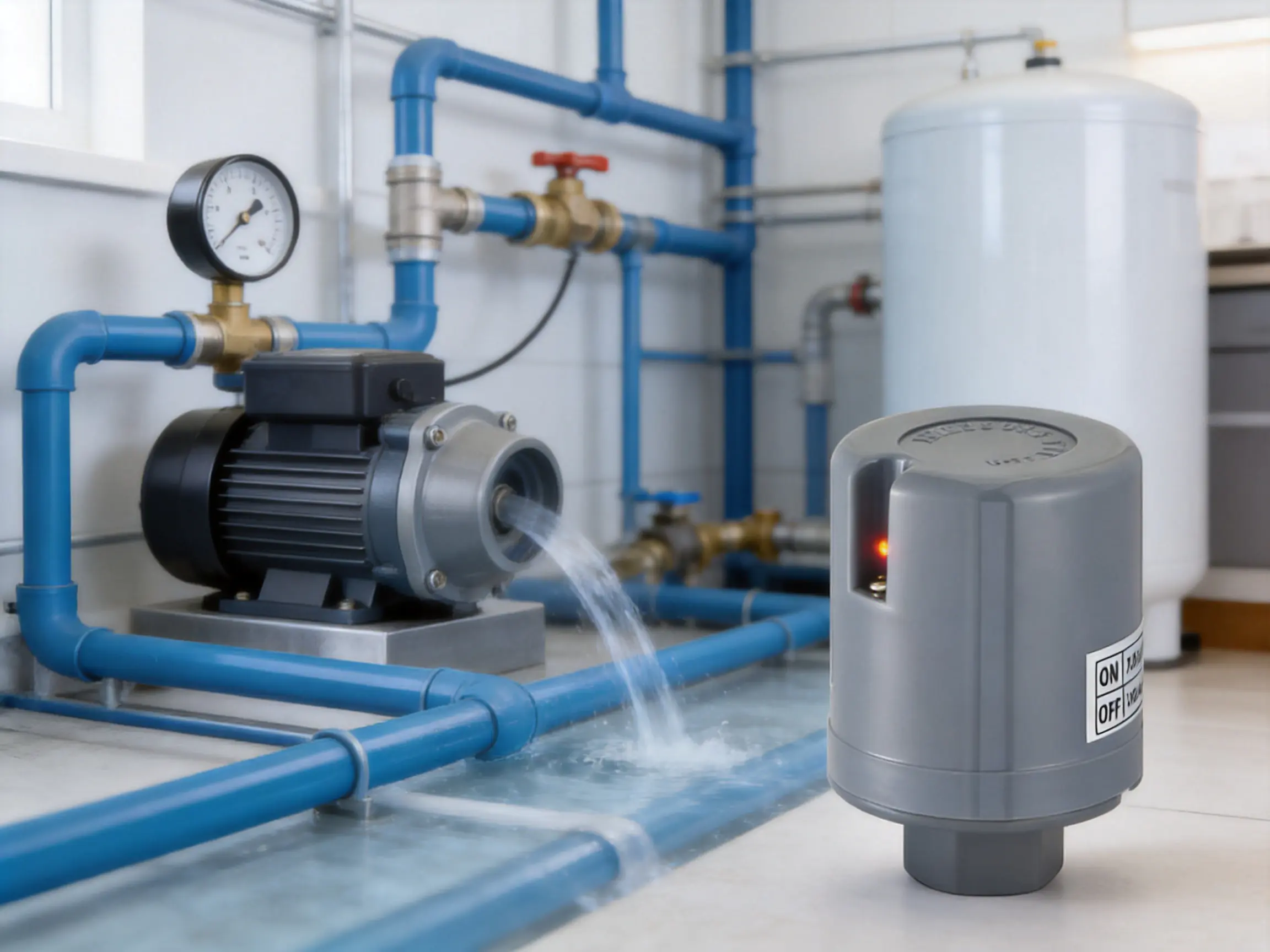
The manufacturer is an integrated enterprise specializing in independent research and development, mass production, and global export. This combination is important for a pressure switch because successful production requires more than a functional prototype. The design must be translated into repeatable components, stable assembly procedures, consistent pressure behavior, and dependable supply for international customers.
Independent research and development supports product adaptation. The ERS-2 Series includes multiple pressure ranges, connection options, base materials, and contact configurations. These variations indicate a product approach designed to accommodate different customer requirements rather than relying on one universal version. The ability to customize pressure settings and hydraulic connections is particularly valuable for pump manufacturers and professional distributors.
Mass production provides another advantage. When pressure switches are used in pump assemblies, consistency between units is essential. Variations in mechanical components, sealing surfaces, electrical contacts, or pressure calibration can lead to differences in starting and stopping behavior. A manufacturer with mass-production capability can establish structured workflows for component preparation, assembly, adjustment, inspection, and packing.
Integrated manufacturing can also improve coordination between design and production. If a customer requires a specific pressure range or connection configuration, engineering and production teams can communicate through an established process. This can reduce delays associated with sourcing a completely different controller and may help maintain a more consistent specification across repeat orders.
The company’s product portfolio includes deep well pumps, submersible pumps, domestic booster pumps, circulation pumps, solar water pumps, intelligent booster pumps, and related water treatment peripheral products. This broad pump experience is relevant to pressure-switch development because the controller must be understood in the context of real pump systems. Knowledge of pump performance, water supply requirements, and application conditions can support more practical product configuration.
The company also serves international customers through procurement planning, order tracking, cross-border delivery, and foreign trade services. For buyers sourcing pump components from overseas, these capabilities can be important. A technically suitable pressure switch must also be available with reliable documentation, repeatable specifications, appropriate packaging, and coordinated delivery.
A pressure switch contains both hydraulic and electrical functions, so quality control must address several areas. The pressure-sensing mechanism should respond consistently. The hydraulic connection should be properly formed and sealed. The electrical contacts should operate reliably within the specified rating. The body and base should withstand normal installation forces. The final product should also be correctly identified and packed for shipment.
A quality-oriented production process may include incoming inspection of materials, dimensional checks, assembly controls, pressure adjustment, electrical continuity checks, visual inspection, and final packaging verification. The exact procedures depend on the manufacturer’s internal system and customer requirements, but each stage contributes to product consistency.
Pressure calibration is particularly important. The cut-in and cut-out values determine when the pump starts and stops, so incorrect adjustment can affect the complete water system. A suitable production process should provide a controlled method for setting and verifying the pressure range. When customized pressure values are ordered, the specified settings should be clearly communicated between the customer, engineering team, production line, and inspection process.
Electrical testing is equally important. The rated voltage and current information should be matched to the product configuration. Terminals, contacts, insulation, and internal wiring should be checked according to the applicable production and customer requirements. Buyers should request the technical documentation appropriate to their market and application when necessary.
Mechanical components also require attention. The base material, thread, pressure port, cover, and contact mechanism must be assembled correctly. Zinc alloy and plastic versions may have different handling requirements, and each configuration should be checked against its intended specification. A structured inspection system helps reduce the risk of mixing components or shipping an incorrect variant.
For original equipment manufacturers, the ERS-2 Series offers a combination of configurability and repeatable supply. A pump manufacturer can specify a pressure range, hydraulic connection, contact arrangement, base type, and electrical rating that match a particular pump package. This can help create a more integrated finished product.
Distributors can benefit from the breadth of the product family. Stocking suitable versions with different pressure ranges and connection types can enable them to serve domestic, agricultural, and light commercial customers. The recognizable operating principle also makes the controller accessible to installers who are already familiar with mechanical pressure switches.
Project buyers may value the manufacturer’s ability to support one-stop procurement across several pump categories. A supplier that produces multiple types of water pumps and peripheral products can help coordinate components for larger water-supply projects. This may simplify communication, order tracking, and export logistics.
The stated one-year warranty provides an additional level of purchasing assurance. Warranty terms should be reviewed together with the commercial contract, installation requirements, exclusions, and documentation. Correct installation and operation within the specified limits remain essential to achieving reliable service.
Before installation, confirm the pressure range, rated voltage, rated current, connection type, thread size, base material, and contact arrangement. These details should correspond to the ordered configuration and the pump system design. Using an incorrect variant can lead to leakage, improper switching, or electrical overload.
Turn off and isolate electrical power before making electrical connections. The installer should follow local electrical codes and use suitable protection devices. If the pump motor starting current exceeds the pressure switch’s switching capacity, an appropriately rated contactor or relay should be installed.
Install the pressure switch at a suitable point in the water system where it can sense representative pressure. The connection should be clean and free from debris. Use a compatible sealing method and avoid applying excessive force to the body. Pipework should be independently supported so that its weight is not transferred to the pressure switch.
Protect the product from direct exposure to water and from temperatures above 55°C. Because the specified protection rating is IP20, outdoor or wet-area installations should include suitable environmental protection. The pressure switch should also be kept away from severe vibration, impact, corrosive chemicals, and conditions outside its intended design.
After installation, inspect the hydraulic connection for leakage and verify the electrical connection. Open a water outlet and observe whether the pump starts at the expected pressure. Close the outlet and confirm that the pump stops at the expected pressure. If the pump cycles rapidly, fails to stop, or does not start, investigate pressure settings, air in the system, check valves, pipe leakage, electrical wiring, and pump performance.
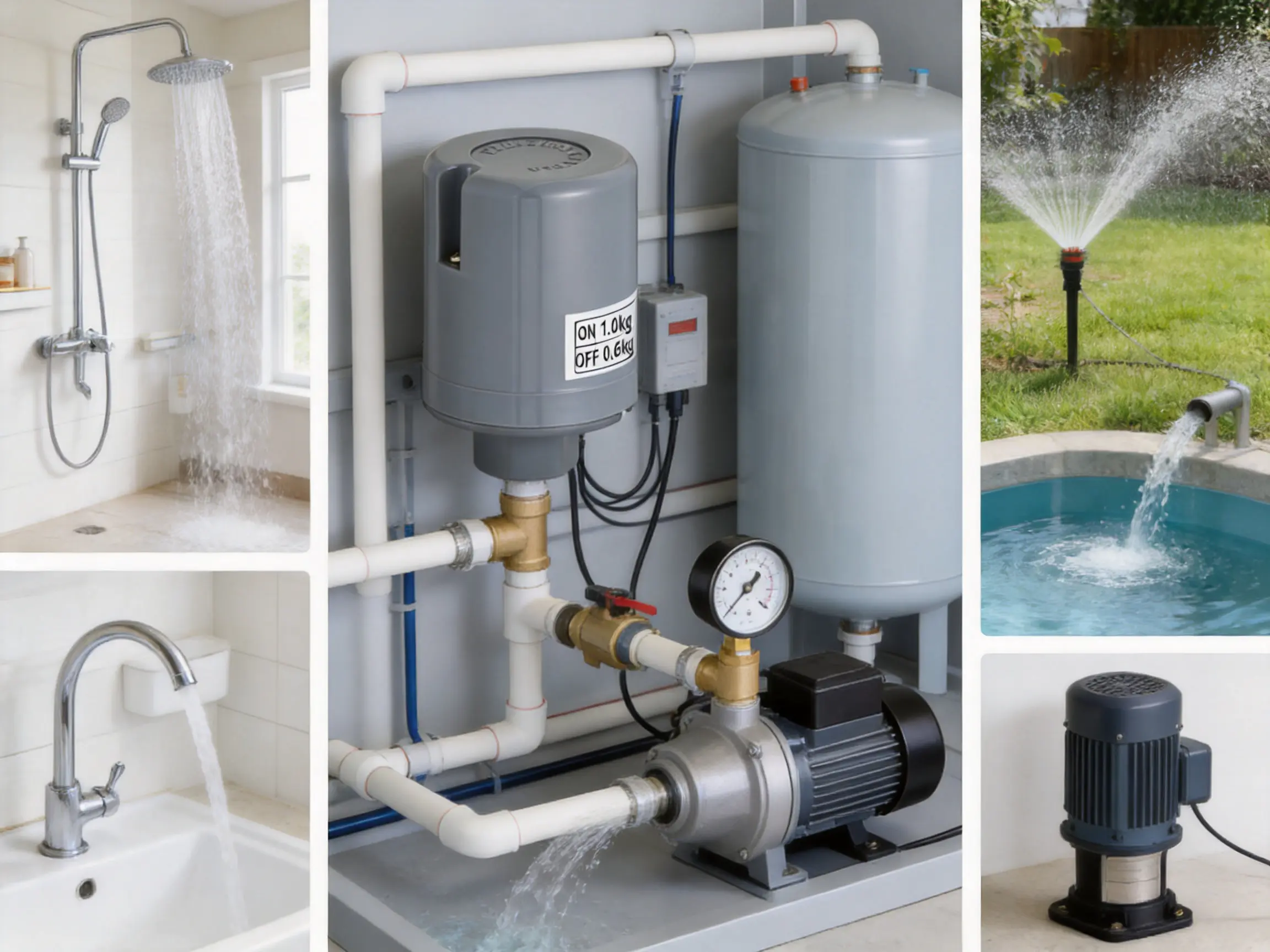
Routine maintenance begins with visual inspection. Check for water leakage around the pressure connection, signs of corrosion, damaged wires, loose terminals, unusual noise, or physical damage to the body. A clean and dry installation environment can help extend service life.
If the pump does not start when pressure falls, verify that electrical power is available and that the pressure has actually fallen below the cut-in setting. Check whether the pressure port is blocked, whether the water supply is available, and whether the pump has a separate fault. If the switch contacts are not operating correctly, the pressure controller may require professional inspection or replacement.
If the pump continues running after water demand stops, check for a leak in the pipework, an open outlet, an incorrectly selected cut-out setting, insufficient pump pressure, a damaged check valve, or a pressure switch fault. The pump may be unable to reach the cut-out pressure even though the switch itself is functioning correctly.
Frequent starts and stops may be caused by a small leak, an undersized pressure vessel, unsuitable pressure settings, blocked pipework, or inadequate pump capacity. Rapid cycling should not be ignored because it can increase wear on the pump motor, electrical contacts, and mechanical components.
Do not disassemble or modify the pressure mechanism without suitable technical knowledge. Pressure and electrical components can create safety risks if incorrectly adjusted. Repairs, calibration, and electrical testing should be carried out by qualified personnel using appropriate equipment.
The first selection factor is the required operating pressure. Determine the pressure at which the pump should start and the pressure at which it should stop. Consider the highest outlet, the required service pressure, static elevation, friction losses, and the pressure limits of connected equipment.
The second factor is electrical compatibility. Confirm the supply voltage and frequency, then compare the pump’s operating and starting current with the pressure switch rating. A 4 A or 10 A pressure switch should not be assumed to be suitable for every pump of a similar nominal power because motor current varies by design and operating conditions.
The third factor is the hydraulic connection. Select a 1/4-inch male or 3/8-inch female connection as appropriate, and confirm whether the system uses a compatible screw size. An adapter may be possible in some installations, but a direct and properly sealed connection is generally preferable.
The fourth factor is the physical and environmental design. Choose a zinc alloy or plastic base according to the pump package and installation conditions. Confirm that the controller can be protected from moisture and that the working temperature remains within the specified limit.
Finally, confirm the contact arrangement and any customer-specific pressure setting. For OEM projects, provide the supplier with a complete technical specification before production. This can reduce misunderstandings and help ensure that the delivered controller matches the pump assembly.
Although the ERS-2 Series is a mechanical controller, it remains relevant in modern water systems. Not every installation requires a connected sensor, mobile application, or variable-speed drive. Many users need a dependable, understandable, and economical method of controlling a conventional pump.
Mechanical pressure switching can also be used as part of a broader system. A pump package may combine the pressure switch with a pressure tank, check valve, isolation valve, overload protection, and dry-run protection. In such an arrangement, each component performs a specific function. The pressure switch manages automatic start and stop based on system pressure, while other devices address hydraulic stability and equipment protection.
For solar water pumping and intelligent booster applications, the ERS-2 Series may be used where the system architecture includes a conventional pressure-controlled section. However, compatibility must be evaluated carefully because solar pumps, variable-speed drives, and intelligent controllers may have their own control logic. The pressure switch should only be included where the electrical and hydraulic design supports its operation.
The main function is to start and stop a water pump automatically according to system pressure. It starts the pump when pressure falls below the selected cut-in value and stops the pump when pressure reaches the selected cut-out value.
The specified operating range extends from a minimum cut-in pressure of 0.5 bar to a maximum cut-out pressure of 3.5 bar. Example pressure settings include 1.0–1.8 bar, 1.5–2.2 bar, and 2.2–3.0 bar. Customized settings can be discussed according to customer requirements.
Yes. The product information states that the pressure setting can be selected according to customer needs. The required cut-in and cut-out values should be confirmed before ordering so that the correct configuration can be produced.
The rated voltage is 110 V to 240 V, and the product supports 50 Hz and 60 Hz power frequencies. The available rated-current options are 4 A and 10 A. The pump’s operating and starting current must still be checked before direct connection.
Not necessarily. The pressure switch must be selected according to the motor’s electrical load and starting characteristics. If the motor current exceeds the suitable switching capacity, a correctly rated contactor or relay should be used.
The available connection choices include a 1/4-inch male connection and a 3/8-inch female connection. Screw size options include 1/4 inch and 3/8 inch. The correct selection depends on the pump system and the ordered configuration.
The product is described as having a waterproof design, but the listed protection rating is IP20. It should therefore be installed in a dry, protected location or inside a suitable enclosure when used outdoors or in a wet area. It should not be exposed directly to rain, spray, or immersion.
The maximum working temperature is specified as 55°C. The installation environment, water temperature, nearby motor heat, and enclosure conditions should all remain within the applicable limits.
It can be used with suitable water pump systems, including domestic booster pumps, surface pumps, garden pumps, and other conventional pump applications requiring automatic pressure control. The pump’s pressure, current, connection, and control requirements must be checked first.
The listed function is automatic start and stop according to pressure. Dry-run protection is not identified as an integrated feature in the supplied information. If the water source may run dry, a separate dry-run protection device or suitable pump-control system should be considered.
The product information states a one-year warranty. Buyers should confirm the detailed warranty terms, installation requirements, and applicable exclusions with the supplier before purchase.
Pressure calibration determines when the pump starts and stops. Incorrect settings can cause inadequate delivery pressure, unnecessary cycling, continuous running, or excessive system pressure. The selected values should match the pump and the complete hydraulic installation.
The ERS-2 Series Pressure Switch provides a practical solution for automatic water pump control. Its mechanical operating principle, broad pressure range, 110–240 V electrical compatibility, 50/60 Hz frequency support, and 4 A or 10 A current options make it suitable for many conventional water systems. Flexible hydraulic connections, selectable base materials, single or double contacts, and customized pressure settings further improve its adaptability.
Compared with fixed-setting controllers, the ERS-2 Series offers greater configuration flexibility. Compared with more complex electronic controllers, it provides a simpler approach for applications that require dependable pressure-based switching without advanced digital functions. Its advantages are strongest when the product is correctly matched to the pump, hydraulic network, electrical load, and installation environment.
The manufacturer’s strengths in independent research and development, mass production, international export, and a broad water-pump product portfolio support the product’s position as a configurable component for global pump applications. For OEMs, distributors, and project buyers, this combination can support repeat orders, customized specifications, and coordinated procurement.
Proper installation remains essential. The pressure range must be selected carefully, the electrical rating must be respected, connections must be sealed correctly, and the IP20 protection rating must be considered when planning the installation environment. When these requirements are followed, the ERS-2 Series can provide reliable automatic control for domestic, agricultural, commercial, and selected light industrial water pump systems.
1. ERS-2 Series Pressure Switch Product Specification, supplied technical product information.
2. Water Pump System Design Principles, pressure control and automatic pump operation guidance.
3. Electrical Safety and Motor Control Practices for Low-Voltage Pump Installations.
4. General Principles of Hydraulic Pressure Measurement and Mechanical Pressure Switching.
5. Manufacturer Information on Water Pump Research, Production, Export, and Product Development.
serieswatershortageprotectionvoltagestabilizationstainlesssteelverticalmultistagepump.jpg "EVR(S) Series Water Shortage Protection Voltage Stabilization Stainless Steel Vertical Multistage Pump")
edwina@edwin-pump.com
+86-13586290903 (WhatsApp)
Xuri Gongliang Cutting Tool Entrepreneurship Park, Wenqiao Town, Wenling City, Taizhou City, Zhejiang Province, China

High Performance Smart Pump Factory


 English
