edwina@edwin-pump.com

View All Products
en
Water systems depend on accurate pressure management to deliver stable performance, protect pumps, and maintain user comfort. When pressure falls below an acceptable level, a pump must start promptly. When the target pressure has been restored, the pump should stop without unnecessary cycling or over-pressurization. The ERS-7 Series 110–240V Customized Setting High Strength Spring Pressure Switch is designed to perform this essential control function in residential, commercial, and selected industrial water applications.
This mechanical pressure controller combines adjustable pressure settings, a high-strength spring, broad voltage compatibility, and a practical connection design. It can be configured according to project requirements, with an adjustment range that supports different starting pressures during installation. Its rated voltage range of 110–240V, with a 400V option identified in the technical data, makes it suitable for a wide range of pump and water-system electrical arrangements.
Unlike a basic fixed-pressure switch, the ERS-7 Series gives installers and system designers greater flexibility. The pressure threshold can be adjusted to match the pump, piping layout, tank capacity, elevation difference, and required water-service conditions. This makes the controller useful for booster systems, domestic water supply, pump sets, water heaters, irrigation equipment, and other applications that require automatic pressure response.
The ERS-7 Series is a mechanical pressure switch developed for automatic control of water pumps and related water equipment. It monitors the pressure in a connected water line and changes the electrical state of the pump circuit when pressure reaches the configured operating point.
During normal operation, the pressure switch responds to two basic conditions. If the system pressure drops below the cut-in setting, the switch activates the pump or connected equipment. As pressure rises to the cut-out setting, the switch disconnects the pump, helping prevent continuous operation and unnecessary energy consumption.
The product uses a high-strength spring to support stable mechanical pressure control. The spring is an important part of the switching mechanism because it determines how the pressure-sensitive assembly reacts to changes in water pressure. A properly designed spring helps maintain repeatable operation, supports adjustment accuracy, and resists deformation during long-term use.
The ERS-7 Series is supplied with a black cover and a G1-inch screw connection. The G1-inch interface is widely used in water-pump installations and can be paired with a suitable plastic pipe joint for quick connection. The product also has an IP44 protection class and a maximum working temperature of 55°C, making it appropriate for many protected water-system environments.
Product Series |
ERS-7 Series |
Product Type |
Mechanical pressure controller |
Rated Voltage |
110–240V / 400V |
Rated Current |
16(8)A |
Minimum Cut-In Pressure |
15 PSI |
Maximum Cut-Out Pressure |
100 PSI |
Typical Pressure Ranges |
20–40 PSI, 30–50 PSI, and 40–60 PSI |
Connection Size |
G1 inch |
Protection Class |
IP44 |
Maximum Working Temperature |
55°C |
Cover Color |
Black as standard; other colors available according to customer requirements |
A water pressure switch is positioned between the hydraulic system and the electrical control circuit. Its pressure-sensing mechanism reacts to the force generated by water inside the connected pipe or pressure chamber. Mechanical movement caused by this force operates electrical contacts inside the switch.
When household or industrial water demand increases, water leaves the pressure vessel or distribution line. The pressure gradually declines. Once the pressure reaches the configured starting point, the ERS-7 Series closes or changes its electrical contacts so that the pump can start. The pump then restores pressure to the system.
As the pump operates, the pressure rises. When it reaches the selected stopping point, the pressure switch changes its contact position and stops the pump. This basic sequence provides automatic operation without requiring a separate electronic controller or a complex programmable control system.
The difference between the cut-in and cut-out pressures is commonly called the differential. A suitable differential helps prevent rapid start-stop cycling. If the difference is too narrow, a pump may start and stop too frequently. If it is too wide, the system may experience an excessive pressure variation. The adjustable design of the ERS-7 Series allows the installer to select a practical operating range for the application.
Typical pressure settings include 20–40 PSI, 30–50 PSI, and 40–60 PSI. The listed pressure range can also be customized according to customer requirements, provided that the final setting remains within the product’s operating limits and is appropriate for the pump and system design.
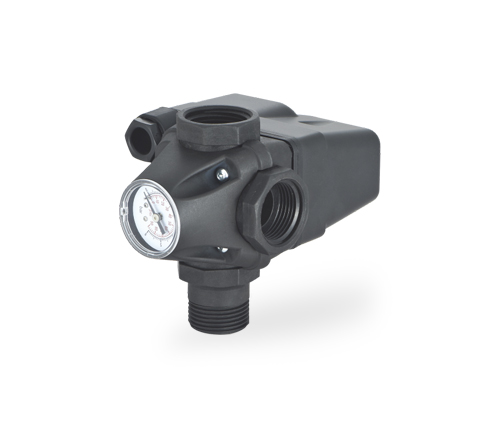
ERS-7 Series 110 to 240V Customized Setting High Strength Spring Pressure Switch for Water Systems
One of the most important advantages of the ERS-7 Series is its adjustable starting pressure. The starting pressure can be adjusted during installation within a range of approximately 1.2 to 3.0 bar. This allows the same product family to serve water systems with different pressure requirements.
A small residential booster system may require a lower starting point because the household distribution pressure is modest and the pump is intended to support showers, faucets, washing machines, and other fixtures. A larger property, irrigation system, or multi-point water supply may require a higher starting pressure to compensate for elevation, pipe length, or simultaneous demand.
Adjustability also helps installers account for real-world conditions. A water system may have a pressure tank, a long discharge pipe, non-return valves, filters, or a significant vertical distance between the pump and the highest outlet. These factors influence how pressure behaves during operation. A fixed switch may not provide the correct response for every installation, whereas an adjustable switch can be tuned during commissioning.
The adjustment should be carried out by a qualified installer using an appropriate pressure gauge. The technician should verify the actual start and stop pressures under operating conditions rather than relying only on nominal values. The pump’s maximum pressure, the pipe rating, the pressure vessel rating, and the requirements of connected equipment must also be considered before selecting final settings.
The 20–40 PSI configuration is commonly suitable for smaller domestic water systems and applications where moderate pressure is sufficient. It can help provide automatic support for a home water supply, a compact booster set, or a small pressure tank arrangement.
This range may be appropriate where the pump has a moderate head capability and the system does not require high outlet pressure. The lower starting point can reduce unnecessary pump operation during light demand, while the 40 PSI stopping point provides a practical pressure level for many basic water-service applications.
The 30–50 PSI configuration offers a higher service pressure and may suit larger homes, multi-outlet systems, and applications where several fixtures may operate at different times. It provides a balance between user comfort, pump loading, and energy consumption.
Because the starting and stopping pressures are higher than those of the 20–40 PSI setting, the pump and connected pipework must be capable of handling the selected conditions. The installer should confirm that the pressure tank pre-charge and pump performance are matched to the pressure-switch settings.
The 40–60 PSI configuration is intended for systems that require stronger water pressure. It can be considered for selected booster applications, larger distribution networks, and installations with higher demand, provided that all components are rated for the operating pressure.
Higher pressure settings should never be selected solely to increase water flow. The entire hydraulic and electrical system must be evaluated. Excessive pressure may cause leakage, noise, fixture damage, or accelerated wear if the connected equipment is not designed for it.
The spring is central to the mechanical performance of a pressure switch. It provides the opposing force that balances water pressure inside the sensing mechanism. As pressure changes, the spring and diaphragm or piston assembly move in relation to one another until the switching point is reached.
The ERS-7 Series uses a high-strength spring intended to support reliable pressure control over repeated operating cycles. A spring with suitable strength and resilience helps maintain the selected setting and reduces the risk of deformation during normal use. This is especially important in water systems where the pump may start and stop many times over its service life.
Compared with a lower-quality mechanical design, a high-strength spring can offer better resistance to mechanical fatigue, provided that it is correctly manufactured and used within the specified pressure range. Stable spring performance contributes to more consistent cut-in and cut-out behavior, which can help protect the pump from erratic switching.
The spring also supports field adjustment. During installation, the technician can change the pressure threshold according to the actual water-system requirements. A robust adjustment mechanism is valuable because it enables the switch to be tuned without replacing the entire controller.
Mechanical pressure switches are often selected for their straightforward construction. They do not depend on software, a display, or a separate control board to perform the basic pressure-switching function. In applications where simple and serviceable control is preferred, the spring-operated design can provide an effective alternative to more complex electronic equipment.
The ERS-7 Series is designed for rated voltages from 110V to 240V, with 400V identified as an available voltage option in the technical data. This broad compatibility supports use in different electrical markets and helps reduce the need to maintain many separate pressure-switch models for different regions.
The rated current is specified as 16(8)A. The notation indicates a rated current value that should be interpreted according to the applicable electrical load category and installation conditions. Motor loads can have high starting currents, so the pressure switch must be selected and wired in accordance with the pump motor characteristics, local electrical codes, and the manufacturer’s installation instructions.
For small or moderate pump motors within the appropriate rating, the switch may control the pump circuit directly. For larger motors or demanding applications, it may be preferable to use the pressure switch to control a relay, contactor, or other suitable motor-control device. This approach can reduce electrical stress on the switch contacts and provide an additional level of system protection.
Electrical connections should be completed by a qualified professional. The power supply must be isolated before installation or service. Correct grounding, cable selection, terminal tightening, overload protection, and enclosure practices are essential for safe operation.
The availability of different power-cable lengths is another practical advantage for customized projects. Cable length can be selected according to customer needs, helping simplify installation where the switch is positioned at a particular distance from the pump control box or power connection.
The ERS-7 Series has an IP44 protection class. This means the enclosure is designed to provide protection against solid objects above a specified size and splashing water from appropriate directions. IP44 protection is useful in many protected pump rooms, utility areas, domestic installations, and equipment enclosures.
IP44 does not mean that the pressure switch can be submerged or exposed to continuous water jets, flooding, or severe outdoor weather without additional protection. The installer should position the product in a dry and appropriately protected location. Cable entries, pipe connections, and the surrounding enclosure should be arranged so that water cannot collect around electrical parts.
The maximum working temperature is 55°C. The switch should not be installed where ambient heat or water temperature exceeds this limit. If the product is used near a water heater or in a hot mechanical room, the surrounding temperature must be checked carefully. Temperature conditions can affect both electrical components and mechanical pressure-sensing elements.
The G1-inch screw connection provides a practical interface for connection to a pump, pipe fitting, pressure tank assembly, or water-system manifold. A G1-inch plastic pipe joint is available as an option for quick connection to a water pump. Thread sealing should be completed using an appropriate method, while avoiding excessive force that could damage the connection or housing.
The pressure switch should be installed in a position where it senses system pressure accurately. Air pockets, blocked passages, sediment, or an incorrectly positioned connection may cause delayed or unstable switching. Before commissioning, the pipe should be flushed when necessary, and the system should be checked for leakage.
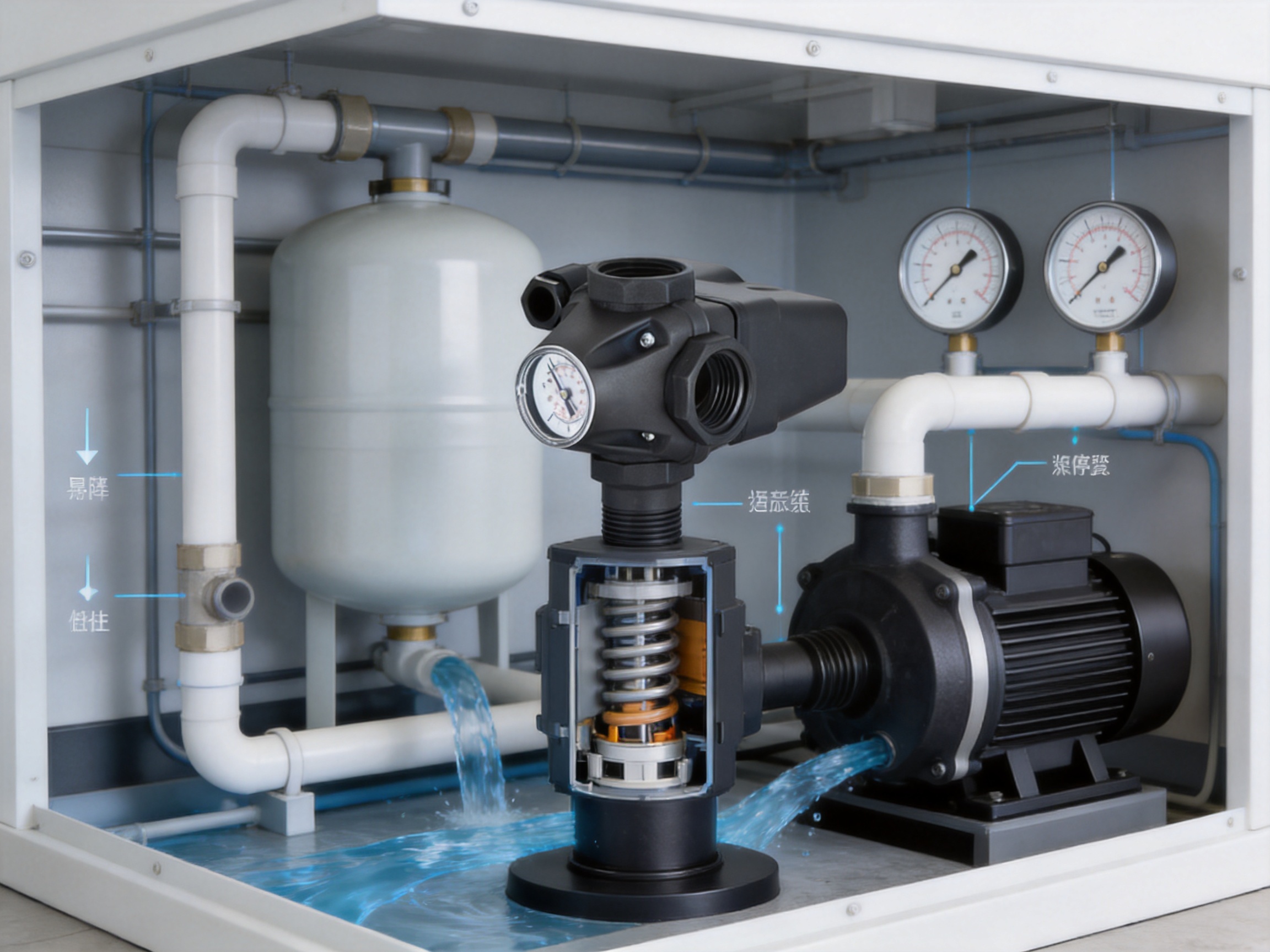
Domestic booster pumps are often used when municipal or well-water pressure is insufficient. The ERS-7 Series can automatically start a booster pump when pressure drops because a faucet, shower, toilet, or appliance is opened. It can then stop the pump once the pressure returns to the selected level.
The adjustable settings allow the controller to be matched to the size of the residence and the desired comfort level. In a small home, a moderate pressure range may be sufficient. In a larger house with multiple bathrooms and longer pipe runs, a higher setting may be more appropriate if the pump and piping are designed for it.
Deep-well and submersible pumps frequently supply water to a pressure tank or distribution line. A pressure switch can be installed at a suitable point in the discharge system to control the pump circuit or a motor-control device.
Because deep-well installations may involve long vertical lifts and changing water levels, pressure settings must be selected carefully. The installer should consider the pump curve, static head, friction losses, dry-running risks, and pressure-vessel requirements. The ERS-7 Series can provide the pressure-based start and stop function, but it should be integrated with appropriate overload, dry-run, and low-water protections where required.
Surface pumps used for gardens, agricultural irrigation, rainwater reuse, and general water transfer can benefit from automatic pressure control. When a downstream valve is opened, the pressure decreases and the switch can start the pump. Closing the valve allows pressure to rise and the pump to stop.
For irrigation systems, the selected pressure range should correspond to the sprinkler, drip, or hose equipment. If several zones operate at different pressures, the system may require additional valves, regulators, or separate control arrangements.
Some water-heating and utility-water systems require pressure monitoring to maintain a stable supply. The ERS-7 Series can be used in suitable applications where the pressure, temperature, voltage, and current remain within the specified limits.
When used near heated water, the 55°C maximum working temperature must be respected. Additional thermal protection may be necessary if the equipment can experience higher temperatures or abnormal conditions.
Small farms, workshops, service buildings, and commercial facilities may use pressure-controlled pumps for cleaning, process water, irrigation, or general distribution. The ERS-7 Series offers a relatively simple approach to automatic pump operation without the complexity of a full electronic variable-speed system.
For commercial installations, the system designer should verify motor starting conditions and expected duty cycle. If the pump is large, starts frequently, or operates in a demanding environment, the pressure switch may be connected to a contactor or control panel rather than switching the motor directly.
A key advantage of the ERS-7 Series is its customizable pressure setting. A basic fixed switch may only provide one predetermined operating range, which can limit its usefulness when pump performance or site conditions vary. The adjustable ERS-7 design gives installers more control during commissioning.
The high-strength spring is another differentiating feature. Mechanical durability is important because a pressure switch may experience thousands of operating cycles. A robust spring helps maintain the relationship between pressure and switching movement, supporting dependable operation over time.
Broad voltage compatibility can simplify product selection for international projects. A supplier, distributor, or equipment builder can use one product family across systems operating on common low-voltage ranges, subject to final electrical verification. This can reduce model complexity in purchasing and inventory management.
The G1-inch connection is widely recognized in pump and water-system applications. A familiar connection size supports faster installation and easier integration with standard fittings. The optional plastic pipe joint further supports quick connection where the system design permits its use.
The product also supports customization beyond pressure settings. Customers can request different cover colors and cable lengths. These options are useful for original equipment manufacturers, pump assemblers, distributors, and project contractors who need the product to match their equipment configuration or branding requirements.
Compared with an advanced electronic pressure controller, a mechanical switch may offer a simpler maintenance approach. It does not require a user interface, software configuration, or complex programming for basic start-stop control. This can be beneficial in locations where straightforward operation and familiar service procedures are valued.
Taizhou Edwin Electric Co., Ltd., operating under the Edwin Pump product range, was founded in 2008. The company is described as an integrated manufacturing enterprise with capabilities in independent research and development, mass production, and global export. These capabilities are relevant to the ERS-7 Series because a pressure switch must combine mechanical precision, electrical reliability, consistent assembly, and stable supply capacity.
An integrated manufacturing structure can support closer coordination between product development and production. When engineering, manufacturing, quality control, and export operations work within a connected organization, design feedback can move more efficiently from the production floor to the development team. This is valuable for adjustable pressure products, where spring force, diaphragm movement, contact response, sealing, and connection dimensions must work together.
Independent research and development also supports adaptation to customer requirements. The ERS-7 Series includes adjustable pressure options, voltage variations, color customization, and cable-length choices. These features indicate a product approach designed to serve different pump configurations rather than only one standardized installation.
Mass-production capability is important for distributors and pump manufacturers that require stable delivery. A pressure switch is often a supporting component in a larger pump assembly, so shortages or inconsistent specifications can delay production. A manufacturer with established production capacity can better support recurring orders, project purchasing, and original equipment requirements.
Quality begins with material and component selection. The high-strength spring must have suitable mechanical properties, while the housing, pressure-sensing components, electrical contacts, terminals, seals, and connection parts must be compatible with the intended water-system environment. Production control should ensure that components meet defined specifications before assembly.
Assembly consistency is equally important. Mechanical pressure switches depend on the correct positioning of internal parts and the correct adjustment of spring tension. Electrical contacts must be aligned so that switching occurs cleanly. Threaded connections and sealing elements must be assembled correctly to reduce the risk of leakage.
Functional testing is a critical stage in pressure-switch production. A finished unit should be checked for switching behavior, pressure response, electrical continuity, and visible assembly defects. Pressure testing can verify whether the switch activates and deactivates within the intended range. Electrical testing can help confirm insulation and contact performance under applicable production procedures.
For customized products, order documentation and parameter control are especially important. The requested voltage, current rating, pressure range, cable length, cover color, and connection configuration should be clearly recorded. Production and inspection teams can then use the order requirements as a reference before packing and shipment.
Edwin Pump’s broader product portfolio includes deep-well pumps, submersible pumps, domestic booster pumps, circulation pumps, solar water pumps, intelligent booster pumps, and water-treatment peripheral products. This pump-system experience can support the development and application of related control products. A manufacturer familiar with pumps is better positioned to understand how pressure switches interact with pump head, flow, motor load, pressure tanks, and actual water demand.
The company’s products are used in agricultural irrigation, municipal engineering, mining, construction, HVAC systems, household water supply, and new-energy projects. These sectors have different operating conditions and purchasing expectations. Experience across multiple applications can encourage practical product development, flexible customization, and stronger technical communication with customers.
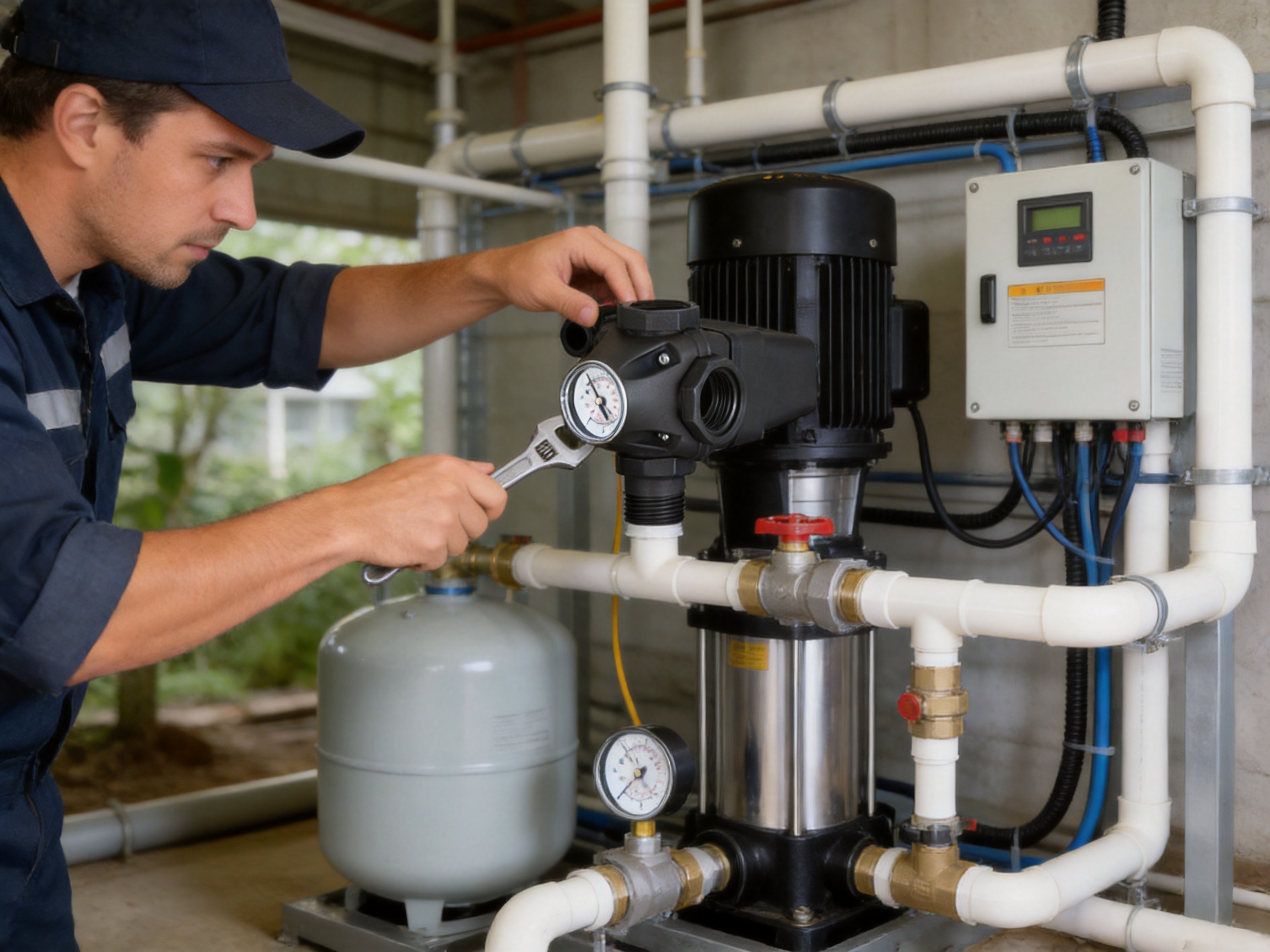
For pump manufacturers, the ERS-7 Series can be incorporated into booster sets, domestic pump assemblies, surface-pump packages, and other automatic water equipment. The adjustable design allows one product family to cover multiple equipment configurations.
For original equipment manufacturers, cable-length customization can reduce the need for field modification. A cable that is appropriate for the final assembly can improve wiring organization and shorten installation time. Color customization can also help distinguish product series or coordinate with the appearance of a finished pump unit.
Distributors may benefit from a product that addresses several common pressure-control requirements. Instead of stocking only one fixed-pressure switch, distributors can offer multiple standard ranges and request customized specifications for larger projects. The 20–40 PSI, 30–50 PSI, and 40–60 PSI options provide a practical starting point for product selection.
International customers may also value the manufacturer’s export experience. Edwin Pump established additional import and export service companies in 2012 to support procurement planning, order tracking, cross-border delivery, and foreign-trade services. These capabilities can be useful when customers require coordinated purchasing of pumps, accessories, valves, pipes, and control components.
A one-stop procurement model can reduce communication effort. Customers purchasing a pump system may need pressure switches, pipe joints, valves, pressure tanks, cables, and other accessories. A supplier familiar with the complete water-system application can help customers organize their component requirements and reduce the risk of mismatched products.
Before selecting a pressure setting, the installer should identify the required water pressure at the point of use. This requires consideration of elevation, friction losses, pipe diameter, simultaneous flow demand, and the pressure required by connected equipment.
The pump’s performance curve should be compared with the desired cut-in and cut-out pressures. The pump must be capable of reaching the selected cut-out pressure while still delivering the required flow. If the cut-out pressure is higher than the pump can reliably achieve, the pump may run continuously or fail to stop.
The pressure tank, where used, should be matched to the pressure-switch settings. A correctly sized tank can reduce pump cycling and provide a reserve of pressurized water between pump starts. The tank pre-charge should be set according to the tank manufacturer’s instructions and the selected cut-in pressure.
Pipework and fittings must have pressure ratings suitable for the highest possible system pressure. Safety valves, pressure relief devices, non-return valves, filters, and isolation valves should be evaluated as part of the complete design. The pressure switch is one component of the control system and cannot replace protection devices required for other risks.
For systems with a high risk of dry running, the pressure switch should be combined with a low-water or dry-run protection device. A pressure switch responds to pressure, not directly to water level. If a well, tank, or source runs dry, additional protection may be necessary to prevent pump damage.
Installation should be performed by qualified personnel who understand both water-system and electrical safety requirements. Before work begins, disconnect the electrical supply and release pressure from the hydraulic system.
First, confirm that the product specification matches the application. Check the voltage, current, pressure range, connection size, working temperature, and environmental conditions. Inspect the pressure switch for transport damage and verify that the required accessories are available.
Next, identify a suitable connection point where the pressure switch can sense the actual system pressure. The connection should not be blocked by sediment or a closed valve. If the switch is connected near a pressure tank or pump outlet, the location should reflect the pressure conditions that the controller is intended to regulate.
Install the G1-inch connection using an appropriate sealing method. Tighten the fitting carefully and avoid applying excessive torque to the housing. If an optional G1-inch plastic pipe joint is used, ensure that the joint is compatible with the pipe material, pressure rating, and installation environment.
Complete the electrical wiring according to the applicable circuit diagram and local regulations. Use suitable cable protection and strain relief. Confirm that the cable length and routing do not create tension on the switch terminals. A protective circuit breaker and motor overload protection should be provided as required by the pump and electrical system.
After the mechanical and electrical installation is complete, restore the water supply and inspect all connections for leakage. Open a suitable outlet and observe the pressure gauge while the pump operates. Adjust the starting pressure and stopping pressure gradually until the desired operating range is achieved.
During commissioning, verify that the pump starts when pressure falls below the cut-in point and stops when pressure reaches the cut-out point. Check that the pump does not continue running after the system has reached the required pressure. Also observe whether rapid cycling occurs during normal water demand.
Routine inspection can help maintain reliable operation. The installer or service technician should periodically check for water leakage, damaged cables, loose terminals, unusual pump cycling, and visible housing damage. The pressure gauge should be compared with the expected operating range if the system begins to behave abnormally.
If the pump does not start when water is demanded, first verify the electrical supply and protective devices. Check whether the pressure actually falls below the cut-in setting. A blocked pressure passage, incorrect adjustment, damaged diaphragm, or faulty electrical connection may prevent the switch from responding.
The pump motor itself may also have a separate fault. The pressure switch should not be assumed to be the cause until the control circuit and pressure conditions have been tested.
If the pump continues running, verify whether the system can reach the selected cut-out pressure. A leak, open outlet, blocked pipe, insufficient pump capacity, or incorrect pressure setting may prevent the stopping point from being reached.
If the system reaches the required pressure but the pump does not stop, the electrical contacts or mechanical sensing mechanism may require inspection. The switch should be isolated from the power supply before any internal examination or service work.
Frequent cycling may result from a small pressure differential, an incorrectly adjusted pressure tank, a water leak, an undersized tank, or a fluctuating water demand. The technician should examine the complete system rather than simply increasing the pressure range.
The selected pressure settings should remain within the pump’s capability and the limits of all connected components. A wider differential may reduce cycling, but it should not create unacceptable pressure variation for users or equipment.
Inconsistent switching may be caused by air in the pressure connection, sediment, vibration, damaged mechanical components, or unstable electrical supply. The connection passage should be checked for blockage, and the pressure switch should be installed in a position that minimizes excessive vibration.
Electronic pump controllers can provide additional functions such as digital displays, flow detection, dry-run protection, automatic restart, and variable-speed communication. These features can be valuable in advanced systems, but they also increase complexity, cost, and dependence on electronic components.
The ERS-7 Series is focused on the essential pressure-switching function. Its mechanical operating principle is easy to understand and can be serviced by technicians familiar with conventional pump controls. For many domestic, agricultural, and general water applications, this straightforward approach is sufficient.
A mechanical controller can be particularly attractive where power quality is variable, technical support is limited, or the end user prefers simple operation. It can also serve as a cost-effective component in pump packages where advanced electronic functions are not required.
The choice between a mechanical pressure switch and an electronic controller should be based on the complete system requirements. Applications requiring precise digital monitoring, communication, variable-speed control, or advanced diagnostics may require electronic equipment. Applications requiring reliable automatic start-stop pressure control may be well suited to the ERS-7 Series.
A pressure switch is more valuable when it is developed and supplied by a company that understands the water-pump environment. Pump control depends on more than electrical ratings. It involves hydraulic pressure, motor starting characteristics, water demand, pipe resistance, pressure tanks, environmental conditions, and installation practices.
Taizhou Edwin Electric Co., Ltd. has developed its business around pumps and related water-system products. Its product categories include solar pumps, deep-well pumps, submersible pumps, surface pumps, booster pumps, circulation pumps, garden pumps, pool and spa pumps, commercial multistage pumps, end-suction pumps, intelligent booster pumps, pipes, valves, and pump accessories.
This broad product coverage supports application knowledge across multiple pump types. Customers can discuss pressure control in the context of the actual pump package rather than treating the pressure switch as an isolated component. Such coordination can help reduce compatibility problems during equipment selection.
The company emphasizes independent research and development, mass production, global export, quality, innovation, and one-stop procurement service. These strengths are relevant to buyers seeking a long-term supply partner rather than a one-time component source.
Since 2018, the company has invested in new-energy and intelligent technologies, including solar water pumps and intelligent booster pumps. Although the ERS-7 Series is a mechanical pressure controller, experience in intelligent pump development can contribute to a broader understanding of modern water-system control requirements.
Water-system projects often have different electrical, mechanical, and visual requirements. The ERS-7 Series supports customization in several practical areas. Starting pressure can be adjusted during installation, and pressure ranges can be selected according to customer requirements. Cover color can be customized, and cable length can be specified according to the final equipment layout.
Customization is useful for pump manufacturers that produce different models for different markets. It can also help project contractors standardize the appearance and wiring of equipment installed across a building or facility.
Before placing a customized order, customers should provide complete technical information. This may include supply voltage, motor power, motor current, desired cut-in and cut-out pressure, connection requirements, cable length, cover color, installation environment, water temperature, and expected operating frequency.
Clear specifications reduce production errors and help the supplier recommend a suitable configuration. Where the pressure settings are unusual, customers should also provide the pump curve and system requirements so that the switch is not configured beyond the pump’s capability.
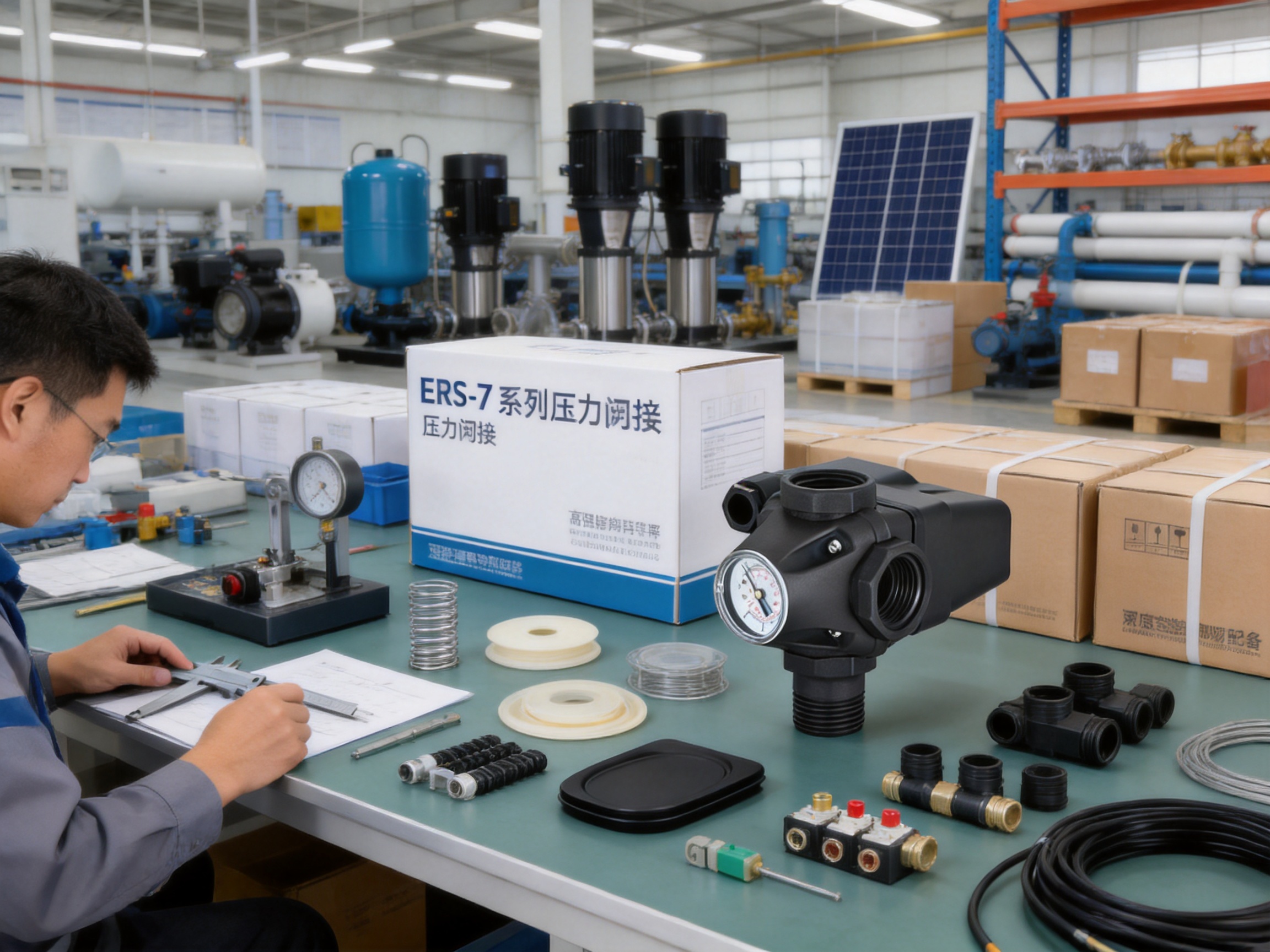
The main purpose is to automatically start and stop a water pump according to changes in system pressure. It starts the pump when pressure falls below the selected cut-in point and stops the pump when pressure reaches the selected cut-out point.
Yes. The starting pressure can be adjusted during installation within an approximate range of 1.2 to 3.0 bar. Typical pressure ranges include 20–40 PSI, 30–50 PSI, and 40–60 PSI, while other configurations may be available according to customer requirements.
The listed rated voltage is 110–240V, with 400V also identified as an available voltage option in the technical data. The final selection must match the pump motor and the electrical system. Customers should confirm the required configuration before ordering.
The rated current is listed as 16(8)A. Because motor starting current can be higher than normal running current, the application should be checked carefully. Larger motors may require the pressure switch to operate a relay or contactor rather than switching the motor directly.
The listed standard pressure ranges are 20–40 PSI, 30–50 PSI, and 40–60 PSI. The technical data also identifies a minimum cut-in pressure of 15 PSI and a maximum cut-out pressure of 100 PSI.
The pressure switch uses a G1-inch screw connection. A G1-inch plastic pipe joint is available as an option for quick connection to a water pump.
The IP44 protection class supports use in suitable protected environments, but the switch should not be submerged or exposed to continuous heavy water spray. Outdoor installations may require an additional weather-resistant enclosure and careful protection of the cable and connection points.
The maximum working temperature is specified as 55°C. The switch should be installed away from conditions that exceed this limit.
Yes. The power-cable length can be selected according to customer needs. The required length should be confirmed before production or shipment.
Black is listed as the standard cover color. Other colors can be requested according to customer requirements and project specifications.
This depends on the motor voltage, current, starting characteristics, and applicable electrical regulations. For larger motors, a contactor or relay is often recommended so that the pressure switch controls the motor-control circuit rather than carrying the full motor load.
The ERS-7 Series is a pressure controller and does not directly measure water level. If dry running is possible, an appropriate low-water or dry-run protection device should be added to the system.
Rapid cycling can be reduced by checking the pressure differential, adjusting the pressure tank pre-charge, inspecting for leaks, confirming the tank size, and selecting pressure settings that match the pump and water demand. The complete system should be evaluated by a qualified technician.
The product information specifies a one-year warranty. Warranty conditions should be confirmed with the supplier and may depend on correct installation, operating conditions, and compliance with the applicable terms.
A pump manufacturer understands how pressure controls interact with pump performance, motor loading, pressure tanks, pipework, and water demand. This application knowledge can assist customers with product selection, customization, system matching, and one-stop procurement.
Before purchasing the ERS-7 Series, confirm the electrical supply voltage and frequency used at the installation site. Verify whether the pressure switch will control the pump directly or operate a contactor or relay. Compare the rated current with the motor’s running and starting characteristics.
Confirm the required cut-in and cut-out pressures. Select a pressure range that provides adequate service pressure while remaining within the pump’s output capability and the pressure limits of the pipes, fittings, tank, and fixtures.
Check the G1-inch connection and confirm that the required adapter or plastic pipe joint is compatible with the pump and pipework. Review the maximum working temperature and the environmental conditions at the installation point.
For customized orders, specify the desired cable length, cover color, pressure range, voltage option, quantity, packaging requirements, and delivery schedule. Providing complete information at the quotation stage can improve order accuracy and production efficiency.
The ERS-7 Series 110–240V Customized Setting High Strength Spring Pressure Switch is a practical solution for automatic water-pump pressure control. Its adjustable starting pressure, selectable pressure ranges, high-strength spring, broad voltage compatibility, G1-inch connection, and customization options make it suitable for a wide variety of water-system applications.
Its main advantage over a basic fixed switch is flexibility. Installers can adjust the operating pressure to suit the pump and the actual hydraulic conditions. Its mechanical design also offers a straightforward alternative to more complex electronic controllers when digital monitoring and advanced programming are not necessary.
The product is supported by the manufacturing capabilities of Taizhou Edwin Electric Co., Ltd., an integrated enterprise with experience in research and development, mass production, pump manufacturing, global export, and one-stop procurement services. Its wider product portfolio and application experience provide a useful foundation for supplying pressure switches together with pumps and related water-system components.
For distributors, pump manufacturers, contractors, and industrial buyers, the ERS-7 Series can support standardized product selection while still allowing project-specific customization. When correctly selected, installed, adjusted, and maintained, it can help maintain stable pressure, reduce unnecessary pump operation, and contribute to dependable water-system performance.
1. Product technical data for the ERS-7 Series mechanical pressure controller.
2. Manufacturer-provided product description and application information for adjustable water-system pressure switches.
3. General principles of pump pressure control, pressure-switch operation, and pump-system commissioning.
4. General guidance for electrical protection, motor-load switching, pressure vessels, pipe ratings, and water-system installation.
5. Manufacturer profile and company information concerning research and development, mass production, pump manufacturing, export services, and water-system product integration.
edwina@edwin-pump.com
+86-13586290903 (WhatsApp)
Xuri Gongliang Cutting Tool Entrepreneurship Park, Wenqiao Town, Wenling City, Taizhou City, Zhejiang Province, China

High Performance Smart Pump Factory


 English