edwina@edwin-pump.com

View All Products
en
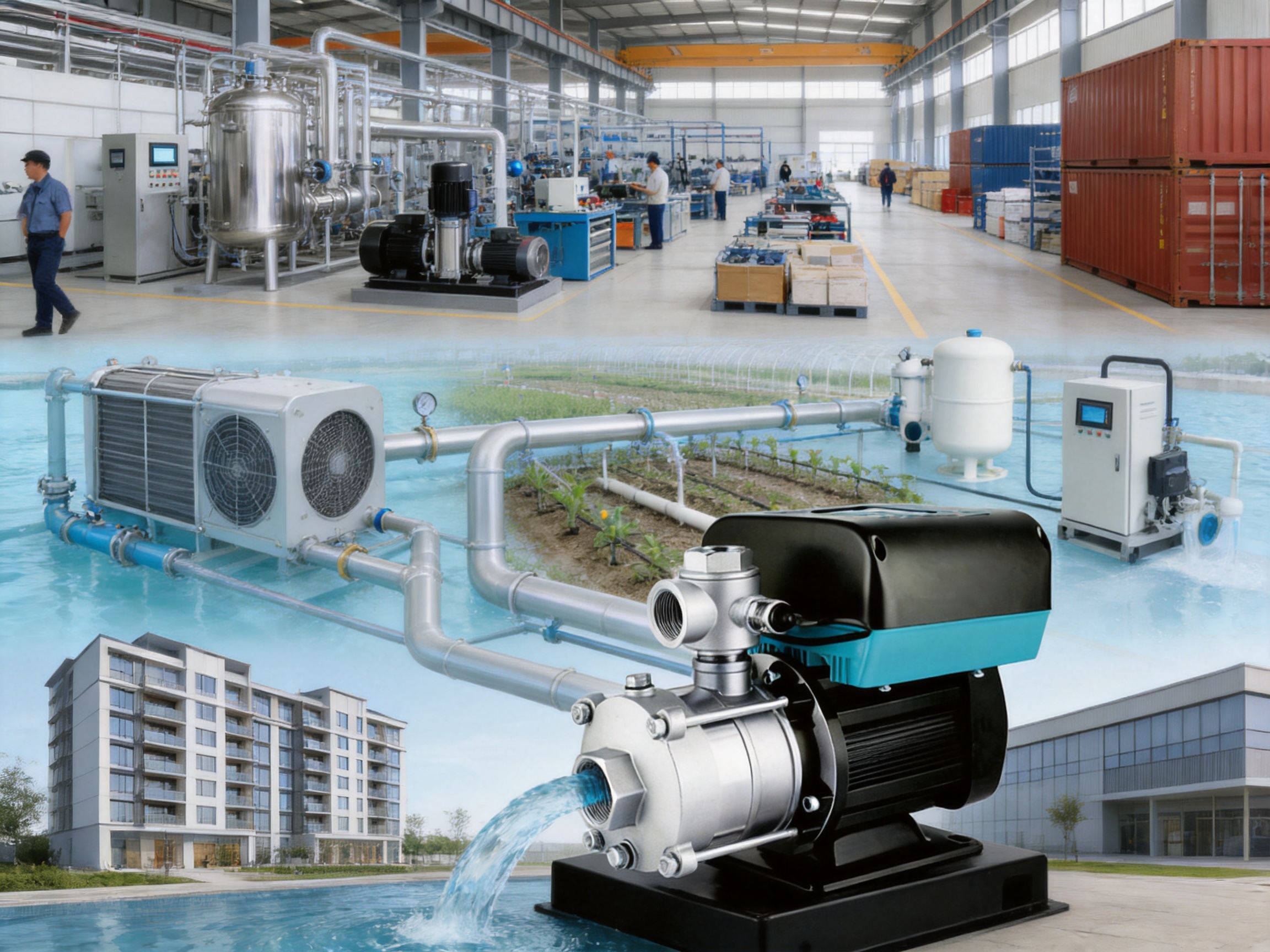
Reliable water pressure is essential in residential buildings, commercial facilities, agricultural installations, light industrial plants, and many other applications. As buildings become taller, water networks become more complex, and users expect stable pressure with lower operating costs, conventional fixed-speed pumps are increasingly being replaced by intelligent variable-frequency systems. The 25/40XLBJL Permanent Magnet Variable Frequency Intelligent Booster Centrifugal Pump is designed for this changing market. It combines a high-efficiency permanent magnet motor, intelligent pressure regulation, self-priming capability, compact centrifugal construction, and multiple protection functions in one integrated pumping solution.
This product is available in two principal configurations: the 25XLBJL4-30 and the 40XLBJL8-50. Both models are intended to provide efficient water boosting, liquid transfer, circulation, and lifting. Their variable-frequency control allows the pump to respond more flexibly to changing demand than a traditional single-speed booster pump. Instead of operating continuously at one fixed speed, the system can adjust its operating condition according to the required pressure and flow. This can improve user comfort, reduce unnecessary energy consumption, and help protect the pump from abnormal operating conditions.
The pump is manufactured by Taizhou Edwin Electric Co., Ltd., an integrated enterprise engaged in research and development, mass production, and global export. Since its establishment in 2008, the company has developed product lines covering deep well pumps, submersible pumps, domestic booster pumps, circulation pumps, solar water pumps, and intelligent pumping equipment. This broad product experience gives the manufacturer a practical understanding of different water supply conditions, including agricultural irrigation, household water supply, HVAC circulation, municipal projects, industrial cleaning, mining, construction, and new energy applications.
The 25/40XLBJL series is a permanent magnet variable-frequency intelligent booster centrifugal pump. Its principal function is to increase and stabilize water pressure while delivering a controlled flow. The product is suitable for users who need an automatic pressure-boosting solution without installing a large and complicated pump station.
The pump is designed around several important engineering concepts. The first is permanent magnet motor technology. Permanent magnet motors can achieve high efficiency across a broad operating range because the rotor does not require the same type of electrical excitation used by a conventional induction motor. The second is variable-frequency operation, which enables speed adjustment and more precise matching between pump output and actual water demand. The third is intelligent control, which makes pressure adjustment simpler and allows integrated protection functions to operate automatically.
In practical use, the pump can support residential water supply, water transfer, circulation systems, cooling applications, water treatment, industrial cleaning, and selected food, beverage, and agricultural liquid-handling processes. The transported liquid should be low in viscosity, neutral, non-explosive, and free from solid particles or fibers. Oil and oil-based liquids require a specially selected pump type and should not be handled by the standard configuration without technical confirmation.
The available models cover different flow and head requirements. The smaller 25XLBJL4-30 model provides a maximum flow of 133 liters per minute and a maximum head of 50 meters. The larger 40XLBJL8-50 model provides a maximum flow of 200 liters per minute and a maximum head of 60 meters. This makes the series suitable for a range of small and medium water-boosting requirements.
The pump is designed for single-phase electrical systems with an input voltage range of 180–260 volts and a frequency of 50 or 60 hertz. The wide-voltage design is valuable in areas where electrical supply can fluctuate. Instead of being limited to a narrow nominal voltage, the pump can maintain more stable operation within the specified range, provided that the installation follows the recommended electrical and safety requirements.
The liquid temperature range is 0–70°C, while the stated ambient temperature is up to 40°C. The motor insulation is Class F, which provides a suitable thermal insulation level for the intended operating environment. The product information lists IPX4 pump protection, while the feature description also refers to IP54 protection for the operating interface and outdoor-use capability. Because protection ratings can apply to different components or configurations, the purchaser should confirm the exact rating of the selected model and control assembly before installation in an exposed location.
| Item | 25XLBJL4-30 | 40XLBJL8-50 |
| Frequency | 50/60 Hz | 50/60 Hz |
| Power range | 100–1100 W | 400–2200 W |
| Maximum flow | 133 L/min | 200 L/min |
| Maximum head | 50 m | 60 m |
| Maximum speed | 5000 r/min | 4500 r/min |
| Inlet and outlet | 1.25 inch × 1 inch | 1.5 inch × 1.25 inch |
| Net weight | 11 kg | 25 kg |
| Dimensions | 324 × 146 × 250 mm | 408 × 190 × 303 mm |
The performance values in the table are maximum reference values. Actual flow and pressure depend on the system curve, pipe diameter, pipe length, elevation, fittings, inlet conditions, liquid characteristics, and the selected operating point. Professional system sizing should therefore consider both the required flow and the required head rather than selecting a pump based only on its maximum rating.
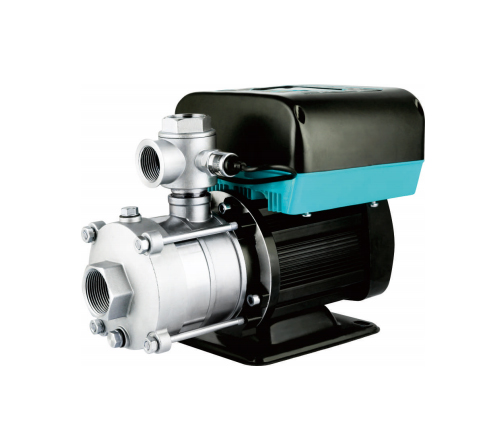
25/40XLBJL Permanent Magnet Variable Frequency Intelligent Booster Centrifugal Pump
One of the most important advantages of the XLBJL series is its IE5 permanent magnet motor. High-efficiency motor technology can reduce the electrical losses associated with pumping, especially in applications that operate for long hours each day. Water-boosting systems often run repeatedly throughout the day, and even modest improvements in motor efficiency can contribute to meaningful energy savings over the service life of the equipment.
The motor uses 100% copper wire in the winding construction. Copper has good electrical conductivity and supports effective heat transfer when the winding is correctly designed and manufactured. The combination of copper windings and permanent magnet technology helps the motor operate efficiently while maintaining dependable performance during regular pressure-boosting cycles.
Compared with many basic fixed-speed pumps, a permanent magnet variable-frequency pump can offer several practical benefits. A fixed-speed pump may run at full speed even when only a small amount of water is required. This can create excessive pressure, increase energy consumption, cause more hydraulic noise, and produce unnecessary mechanical stress. By contrast, a variable-frequency system can reduce speed when demand is low and increase speed when additional pressure or flow is needed.
Energy efficiency should not be considered only at the motor level. The total efficiency of a pumping system also depends on hydraulic design, pipe sizing, control strategy, operating point, maintenance condition, and the number of starts and stops. The XLBJL series addresses the control aspect by coordinating speed and pressure response. When correctly selected and installed, this can help the pump operate closer to the actual needs of the water system.
Another advantage of permanent magnet technology is its suitability for compact equipment. Because the motor can provide high performance in a relatively compact form, the pump package can remain suitable for installations where space is limited. This is useful in residential utility rooms, compact equipment rooms, rooftop water systems, commercial service areas, and small industrial facilities.
Stable pressure is one of the central requirements of a modern booster system. In a household, unstable pressure can affect showers, faucets, washing machines, water heaters, and other appliances. In a commercial or light industrial setting, pressure fluctuations can disturb cleaning equipment, cooling circuits, process lines, and water treatment systems.
The XLBJL series provides one-click pressure regulation through an integrated operating interface. This design reduces the complexity normally associated with setting up a separate pressure controller, external frequency converter, and multiple adjustment devices. The operator can select or adjust the target pressure through a simple interface, allowing the pump to respond to changing demand more conveniently.
A straightforward interface is particularly valuable for installers and end users. Complex control systems may require specialized programming or lengthy commissioning procedures. A clear interface can reduce installation time, make daily operation easier, and help users understand the status of the pump. It also supports faster adjustment when the operating conditions of a building or process change.
Variable-frequency control can improve pressure comfort because the pump is not limited to abrupt full-speed operation. When a single outlet is open, the pump can operate at a lower speed than it would when several outlets are used simultaneously. When demand increases, the control system can raise the speed to provide additional pressure and flow. This dynamic response can reduce sudden pressure shocks and contribute to a smoother water supply.
However, every variable-frequency pump must be correctly matched to the system. The required pressure should be determined from the static elevation, friction losses, fixture requirements, and desired residual pressure. An excessively high pressure setting may increase energy use and place unnecessary stress on pipes and fittings. A properly selected set point is therefore essential for achieving the best balance between user performance and operating economy.
The self-priming capability of the XLBJL series is useful in applications where air may be present in the suction line or where the pump is installed above the liquid source within the permitted installation conditions. Self-priming performance can simplify commissioning and reduce the need for repeated manual priming, although the suction arrangement, maximum suction lift, pipe sealing, and installation instructions must still be followed carefully.
Long periods of inactivity can create problems for many pumps. Internal components may become difficult to rotate because of deposits, corrosion, dried residues, or mechanical sticking. To address this issue, the XLBJL series includes a self-start anti-stick function. When the pump remains idle for an extended period, it can automatically start once every 12 hours and stop after several seconds.
This short automatic movement helps prevent the rotating assembly from remaining stationary for too long. The feature is especially useful in seasonal homes, backup water systems, occasional-use commercial facilities, holiday properties, and equipment that may not operate every day. It is not a replacement for correct maintenance, but it can reduce the risk of seizure caused by prolonged inactivity.
The anti-stick function should be used only when the system is installed safely. The suction and discharge paths must be properly connected, the pump must be filled or configured according to the installation requirements, and the electrical supply must be stable. Installers should also ensure that automatic starting does not create a hazard for personnel or equipment connected to the water system.
Water pumps may be exposed to abnormal conditions such as dry running, overload, excessive temperature, blocked rotation, unstable voltage, frequent cycling, or unusual pressure. Integrated protection can help reduce the risk of damage when such conditions occur.
The XLBJL product description specifies multiple protection functions designed to safeguard the pump against abnormal working conditions. The exact protection package may depend on the final configuration and control design, so purchasers should obtain the technical manual for the selected model. Nevertheless, integrated protection represents a significant advantage over basic pumps that rely only on external circuit breakers or manual supervision.
Electrical protection and mechanical protection serve different purposes. A circuit breaker may interrupt a severe electrical fault, but it may not provide the same response as intelligent pump control during dry-running conditions, repeated starts, abnormal pressure, or motor overload. A dedicated control system can monitor operating behavior and respond more appropriately to the actual condition of the pump.
Protection functions also support longer service life by reducing operation under unfavorable conditions. When a pump is prevented from continuing through a damaging situation, the motor, mechanical seal, impeller, bearings, and control components may experience less stress. This can reduce unplanned downtime and improve the reliability of the water supply system.
Protection technology should always complement, not replace, good installation practice. The pump should be connected to a suitable power supply, installed with correctly sized pipes, protected from excessive contamination, and maintained according to the manufacturer’s recommendations. Proper upstream filtration may be required where the water contains suspended material.
Material selection affects corrosion resistance, hydraulic reliability, mechanical durability, and suitability for different applications. The pump body of the XLBJL series is made from stainless steel. Stainless steel provides a clean and durable wetted structure for many water-handling applications and can offer better corrosion resistance than ordinary painted carbon steel in appropriate environments.
The impeller is also made from stainless steel. Since the impeller is directly involved in converting motor energy into hydraulic energy, its dimensional accuracy, balance, and surface condition are important. A stainless steel impeller can provide a robust solution for clean-water applications and other compatible low-viscosity liquids.
The motor housing and pump support are made from aluminum. Aluminum can offer a useful balance of low weight, strength, and heat dissipation. Reduced equipment weight assists handling during installation, while the housing provides structural support and helps protect the motor assembly.
The mechanical seal uses silicon carbide and graphite. The mechanical seal is a critical component because it helps prevent liquid from entering the motor area along the rotating shaft. Silicon carbide is known for its hardness and wear resistance, while graphite can provide suitable sealing and friction characteristics in compatible operating conditions. The exact service life of a mechanical seal depends on liquid quality, temperature, pressure, alignment, operation, and maintenance.
| Component | Material | Functional significance |
| Pump body | Stainless steel | Durable wetted structure and corrosion resistance for suitable liquids |
| Motor housing | Aluminum | Lightweight construction and heat dissipation |
| Impeller | Stainless steel | Hydraulic energy transfer and reliable clean-liquid handling |
| Pump support | Aluminum | Structural support with reduced overall weight |
| Mechanical seal | Silicon carbide/graphite | Sealing performance at the rotating shaft interface |
The combination of stainless steel, aluminum, and engineered sealing materials reflects a practical design approach. Different components are assigned materials according to their operating role. This can help balance durability, weight, cost, thermal performance, and manufacturing efficiency.
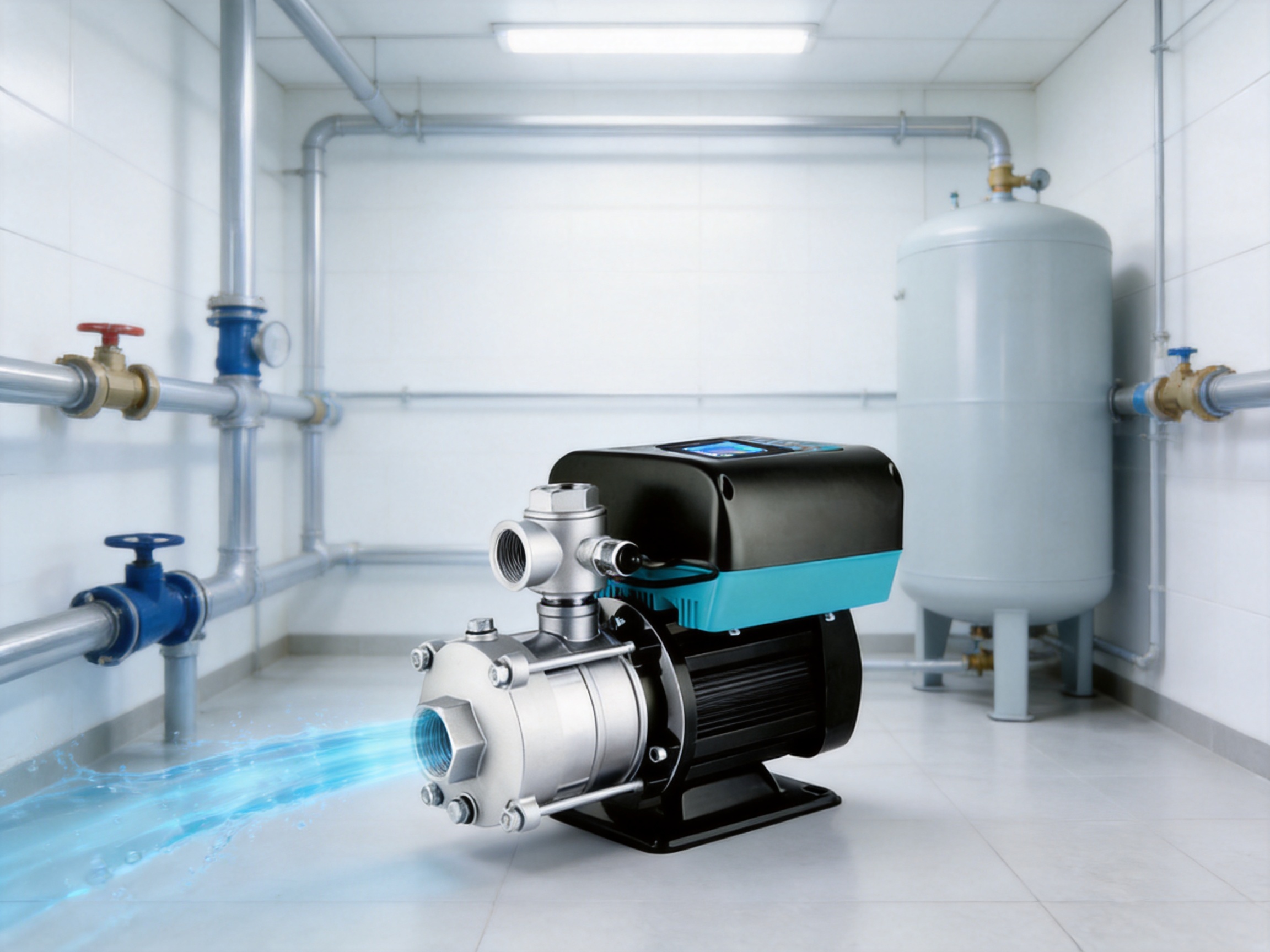
The XLBJL series offers several advantages over conventional fixed-speed booster pumps. The first is energy adaptability. A fixed-speed pump normally delivers one basic speed condition, while a variable-frequency pump can adjust speed according to demand. This can reduce wasted energy during low-demand periods.
The second advantage is pressure stability. Traditional systems may rely on repeated start-and-stop operation controlled by a pressure switch. Such systems can produce noticeable pressure variation and may start the motor frequently. Variable-frequency regulation can provide a more gradual response and maintain a closer relationship between actual pressure and the selected target.
The third advantage is operational convenience. A one-click pressure adjustment interface simplifies commissioning and routine adjustment. Users do not necessarily need to manage several external control components to make a basic pressure change.
The fourth advantage is compact integration. The pump combines hydraulic equipment, motor technology, variable-frequency operation, and intelligent protection in one product platform. This can reduce the space required for a booster installation and simplify the overall system layout.
The fifth advantage is suitability for fluctuating electrical supply. The 180–260V single-phase input range is useful for locations where voltage is not always perfectly stable. Many residential and small commercial sites do not have access to three-phase power, so a single-phase intelligent pump can provide a practical alternative.
The sixth advantage is the anti-stick starting function. Conventional pumps that remain unused for long periods may require manual checking before operation. Automatic periodic movement can offer an additional layer of operational readiness, particularly in seasonal or intermittent-use installations.
These advantages do not mean that the pump is suitable for every application. Large industrial plants, abrasive slurry systems, high-temperature processes, seawater applications, hazardous areas, and liquids containing solids may require specialized pump designs. The XLBJL series is intended primarily for compatible clean or low-viscosity liquids and should be selected within its stated operating conditions.
Product performance depends not only on the design concept but also on manufacturing consistency. Taizhou Edwin Electric Co., Ltd. operates as an integrated manufacturer with independent research and development, mass-production capability, and export experience. This structure allows the company to connect product design, component selection, assembly, quality management, and customer service within one organizational system.
Independent research and development supports product improvement based on practical market requirements. Water pumps used in homes, agriculture, construction, HVAC, municipal projects, and industrial facilities face different challenges. A manufacturer with several pump categories can compare operating feedback across applications and develop more appropriate solutions for pressure control, energy efficiency, corrosion resistance, and installation convenience.
Mass production provides an important advantage for international buyers. It supports repeatable assembly processes, coordinated procurement, production scheduling, and more consistent availability. For distributors and project suppliers, dependable batch production is essential because the product specification must remain stable from one order to the next.
The manufacturer’s experience since 2008 also contributes to process familiarity. Pump manufacturing requires attention to dimensional tolerances, winding quality, rotor and impeller balance, mechanical seal installation, pressure performance, electrical safety, and final inspection. Each stage can affect the finished product. A structured manufacturing process helps ensure that the motor, hydraulic section, control system, and enclosure work together as intended.
Material traceability and supplier coordination are also important in pump production. Stainless steel components, aluminum housings, copper wire, mechanical seals, electronic control parts, and fasteners must meet the requirements of the intended design. Consistent incoming material management can reduce variation and make production quality more predictable.
Assembly accuracy is especially important for rotating equipment. Incorrect alignment, uneven fastening, poor sealing installation, or contamination during assembly can influence noise, vibration, leakage, and service life. A professional manufacturing process should therefore include controlled assembly procedures and inspection of key interfaces before the pump is released.
Electrical testing is another core element. The motor winding, insulation, control board, input voltage range, variable-frequency function, and protection response should be evaluated according to the applicable product requirements and internal quality procedures. Hydraulic testing is equally important because the pump must deliver the expected relationship between flow, head, speed, and power.
Export experience strengthens the manufacturer’s ability to serve international customers. Global clients may require different voltage frequencies, packaging specifications, documentation, labels, shipping arrangements, and after-sales support. Taizhou Edwin Electric Co., Ltd. has established related import and export service companies to support procurement planning, order tracking, cross-border delivery, and foreign trade services. This one-stop structure can reduce communication gaps between production and international purchasing teams.
Residential water systems are one of the most suitable application areas for the XLBJL series. The pump can be used to increase pressure in houses, apartments, villas, small residential developments, and water storage systems. It may support showers, kitchen outlets, washing machines, toilets, water heaters, and garden irrigation points.
In a multi-story building, pressure at upper floors can be lower because of elevation and pipe losses. A properly sized booster pump can compensate for these losses and provide more comfortable water use. The variable-frequency function is valuable because household demand changes throughout the day. The pump may operate at a lower output when only one tap is open and respond more strongly when several fixtures are used at the same time.
For residential use, low noise, compact dimensions, and simple adjustment are important. The smaller 25XLBJL4-30 model weighs approximately 11 kilograms and has a compact listed size of 324 × 146 × 250 millimeters. These characteristics may simplify installation in a domestic equipment room or utility area, subject to sufficient ventilation and service access.
Commercial buildings often require dependable pressure for washrooms, kitchens, cleaning stations, cooling systems, and general service water. Retail buildings, offices, restaurants, hotels, workshops, and small factories may experience significant variations in demand during the day. Intelligent pressure control can help accommodate these changes without requiring a large fixed-speed pump to operate continuously at maximum output.
In industrial cleaning systems, stable pressure can support spray nozzles, equipment washing, and process cleaning. The water quality and temperature must remain within the pump’s permitted conditions, and abrasive or chemically aggressive cleaning liquids should be evaluated before selection.
The pump can also be used for liquid transportation, circulation, and lifting in suitable low-viscosity systems. Examples include transferring water between storage tanks, circulating water through small cooling arrangements, and supplying water treatment equipment. The stainless steel pump body and impeller provide a practical material combination for many clean-water environments.
For food and beverage applications, the standard pump should not automatically be assumed to meet every hygiene or certification requirement. The liquid compatibility, cleaning process, regulatory requirements, and wetted-material approvals must be checked for each project. Where special sanitary standards apply, the purchaser should request the appropriate configuration and documentation.
Air-conditioning circulation is another application identified for the series. HVAC systems depend on consistent circulation to transfer heat through chilled-water or other compatible circuits. The pump’s variable-frequency capability can help match circulation output to changing building loads, although the complete HVAC design must determine the correct flow, head, pressure, and control strategy.
Cooling systems may also benefit from adjustable pumping. During periods of lower thermal demand, operating at a reduced speed can limit unnecessary energy consumption. During higher demand, the pump can provide additional circulation within its performance range. Proper control logic and system balancing remain necessary to achieve the intended result.
Water treatment and water purification systems often require reliable transfer or circulation between tanks, filters, membranes, and treatment stages. The pump may be suitable for compatible clean liquids without solids or fibers. However, the designer must consider chemical compatibility, temperature, concentration, pressure, and the possible presence of cleaning agents.
Because the product uses a mechanical seal, the liquid must be suitable for the seal materials and operating conditions. Silicon carbide and graphite provide useful performance in many applications, but no seal material is universally compatible with every chemical. Technical confirmation is recommended whenever the liquid is not ordinary fresh water.
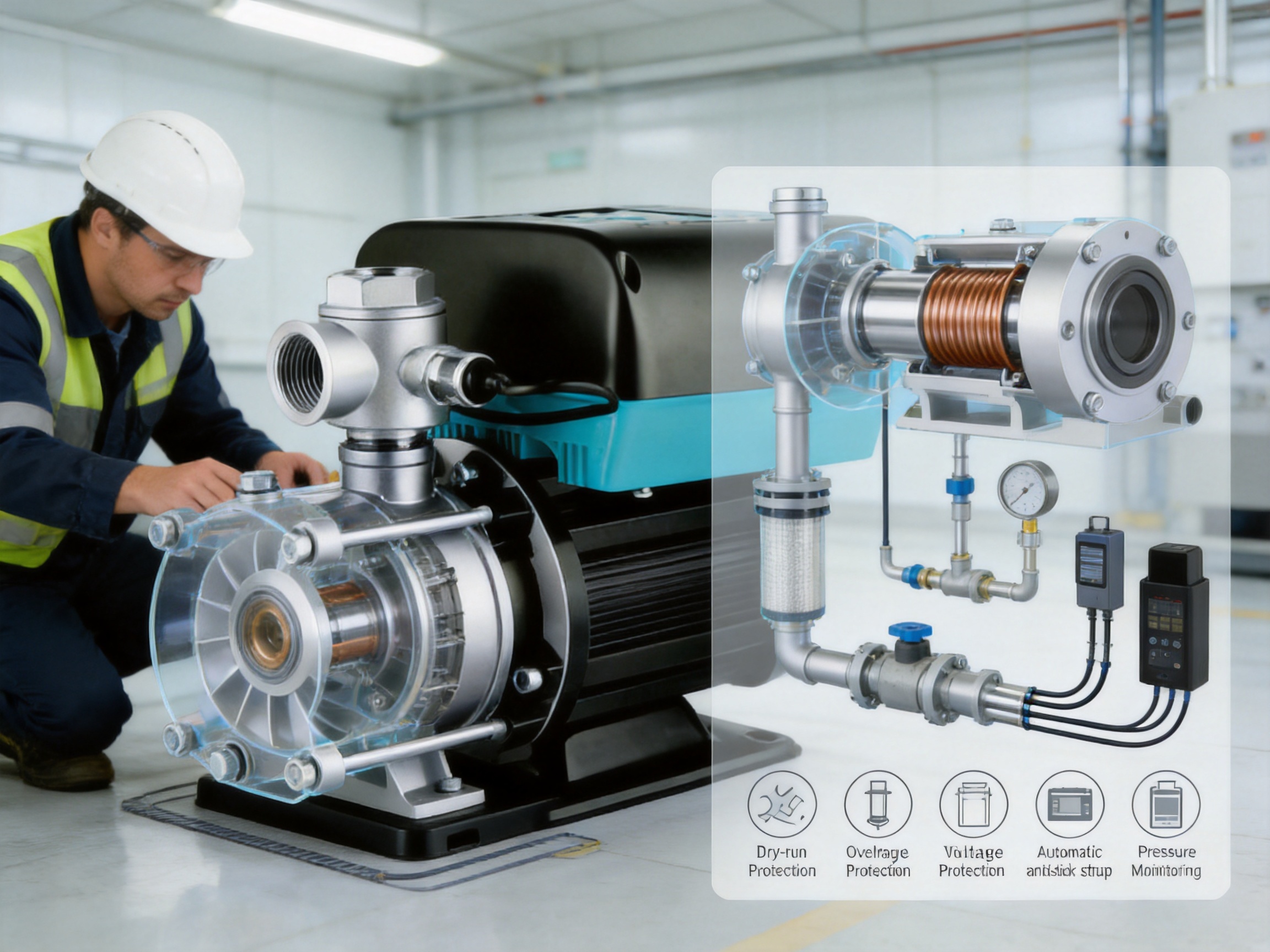
Correct installation is essential for achieving the expected performance of any intelligent booster pump. The pump should be installed on a stable foundation or support that can withstand operating vibration and the weight of the equipment. The surrounding area should provide enough room for electrical connection, inspection, cleaning, and future service.
The suction pipe should be correctly sized and sealed. Air leakage on the suction side can reduce priming performance, cause unstable flow, and increase the risk of dry running. Pipework should be arranged to avoid unnecessary sharp bends, restrictions, and unsupported loads on the pump connections. The pump should not be used as a structural support for incorrectly aligned piping.
Before starting, the installer should verify the direction of flow, fill or prime the pump according to the applicable procedure, check all connections, and confirm that valves are in the correct position. The electrical supply must match the specified single-phase 180–260V, 50/60Hz range. Grounding, circuit protection, cable sizing, and local electrical regulations must also be observed.
After startup, the system should be checked for leakage, abnormal noise, vibration, pressure instability, and overheating. The operating pressure should be adjusted to meet the actual system requirement rather than set unnecessarily high. If the pump cycles too frequently, the installer should review the pressure setting, storage arrangement, check valves, pipe sizing, and water demand pattern.
Outdoor installation requires particular attention to weather exposure, drainage, electrical safety, and protection of the control components. The supplied product information refers to outdoor-use protection for the interface while also listing IPX4 for the pump specification. The exact installation environment should therefore be confirmed against the model documentation before the pump is placed in direct rain or an unprotected location.
Routine maintenance helps preserve pumping efficiency and reduces the likelihood of unexpected failure. The system should be inspected periodically for leakage, unusual vibration, corrosion, loose connections, blocked strainers, and abnormal pressure behavior. Water quality should also be monitored where deposits or contamination may affect the impeller or mechanical seal.
Filters and strainers should be cleaned as required. A blocked inlet filter can reduce flow, increase suction losses, and cause unstable operation. If the pump is installed in a system with a storage tank, the tank should be kept clean enough to prevent excessive debris from entering the pump.
The anti-stick function provides periodic automatic movement during long idle periods, but seasonal equipment should still receive a planned inspection before intensive use. The electrical connection, valves, pipework, pressure settings, and seal area should be checked. Any unusual sound or failure to achieve pressure should be investigated before continuous operation.
Mechanical seals are wear components and may eventually require replacement. Seal life depends on temperature, pressure, liquid cleanliness, chemical compatibility, shaft condition, and operating frequency. Replacing a seal should be carried out by trained personnel using correct components and procedures.
Electronic controls should be protected from unauthorized modification and moisture beyond their rated environment. If an alarm or protection function stops the pump, the cause should be identified rather than repeatedly resetting the unit. Continued operation under an unresolved abnormal condition can lead to more serious damage.
The 25XLBJL4-30 model has a maximum listed flow of 133 liters per minute and a maximum head of 50 meters. Its smaller dimensions and lower net weight make it suitable for compact residential and light commercial systems where the pressure and flow requirement falls within its performance range.
The 40XLBJL8-50 model has a maximum listed flow of 200 liters per minute and a maximum head of 60 meters. It offers greater capacity for larger buildings, multiple outlets, commercial water systems, and light industrial applications. Its larger dimensions and 25-kilogram net weight should be considered when planning the installation base and handling method.
Selection should be based on the required operating point, not simply the maximum head or maximum flow. The designer should calculate static head, friction losses, expected demand, required terminal pressure, and any future expansion. The final operating point should ideally fall within the pump’s stable and efficient operating range.
Liquid temperature, viscosity, chemical composition, solids content, and gas content must also be evaluated. The stated liquid temperature range is 0–70°C, and the standard product is intended for low-viscosity, neutral, non-explosive liquids without solid particles or fibers. Special liquids require technical review before purchase.
For distributors, contractors, equipment integrators, and project buyers, a pump supplier should provide more than a product name and a basic specification sheet. Technical communication, order coordination, packaging, delivery, documentation, and after-sales support all affect the success of a project.
Taizhou Edwin Electric Co., Ltd. and its related export-service companies provide a structure intended to support international procurement. The company’s product portfolio covers several pump categories, allowing buyers to source different water-handling products from one manufacturing group. This can simplify supplier management for projects involving deep wells, submersible systems, booster pumps, circulation pumps, solar pumps, and accessories.
A broad product portfolio can also help with system matching. Some projects require a source-water pump, a transfer pump, a booster pump, and control accessories. Working with a manufacturer experienced in several categories may make it easier to coordinate equipment characteristics and technical communication.
Before placing an order, buyers should confirm the exact model, voltage, frequency, connection size, protection rating, materials, performance curve, packaging, spare parts, warranty terms, and inspection requirements. They should also specify whether the pump will be used for domestic water, HVAC circulation, industrial cleaning, water treatment, agricultural service, or another application.
Energy efficiency is an increasingly important factor in water equipment purchasing. The cost of electricity over a pump’s operating life may be much greater than the original purchase price. A high-efficiency permanent magnet motor and variable-frequency control can help reduce energy use when the system demand changes throughout the day.
Lower energy consumption can also reduce indirect environmental impact associated with electricity generation. In addition, longer equipment life and reduced maintenance can limit the need for replacement parts and emergency transportation. These benefits depend on correct sizing, appropriate operation, regular maintenance, and compatible liquid conditions.
The compact form of the XLBJL series may contribute to efficient use of installation space. A smaller equipment footprint can be valuable in urban buildings, retrofit projects, and equipment rooms where expansion is difficult. The product’s single-phase input also supports installation in locations without a dedicated three-phase supply.
Sustainability should be evaluated as a complete system objective. Oversized pumps, excessive pressure settings, poor pipe design, clogged filters, and leakage can offset the advantages of an efficient motor. For this reason, the pump should be integrated into a properly designed hydraulic system and operated at a reasonable target pressure.
The pump is designed for intelligent water boosting, pressure stabilization, liquid transfer, circulation, and lifting. It is suitable for residential, commercial, HVAC, water treatment, cooling, industrial cleaning, and other compatible low-viscosity liquid applications.
Permanent magnet motor technology supports high motor efficiency, while variable-frequency control allows the pump speed to respond to changing water demand. Together, these features can reduce unnecessary energy use and help maintain more stable pressure than a basic fixed-speed pump.
The main models are the 25XLBJL4-30 and 40XLBJL8-50. The first has a maximum flow of 133 L/min and maximum head of 50 meters. The second has a maximum flow of 200 L/min and maximum head of 60 meters.
Yes. The stated input supply is single-phase 180–260V at 50/60Hz. The electrical installation must still comply with local regulations and include suitable grounding, circuit protection, and cable sizing.
The feature information describes protection for outdoor use, while the product specification lists IPX4 and the interface description refers to IP54. Because protection ratings may apply to different components, the exact configuration should be confirmed before installing the pump in a fully exposed location.
The standard pump is intended for low-viscosity, neutral, non-explosive liquids without solid particles or fibers. The liquid temperature range is 0–70°C. Oil, oil-based liquids, aggressive chemicals, abrasive liquids, and special process fluids require technical confirmation.
When the pump remains idle for a long time, it can automatically start every 12 hours and run for several seconds before stopping. This periodic movement helps reduce the risk of seizure caused by prolonged inactivity.
It may be suitable for selected residential or commercial pressure-boosting duties, but the required flow, static elevation, pipe losses, and terminal pressure must be calculated first. Larger buildings or complex systems may require multiple pumps or a dedicated booster station.
Buyers should confirm the model, performance curve, voltage, frequency, inlet and outlet sizes, liquid characteristics, temperature, installation location, protection rating, materials, documentation, spare parts, and warranty conditions.
The product is manufactured by Taizhou Edwin Electric Co., Ltd., a Chinese pump manufacturer founded in 2008 with independent research and development, mass-production, and international export capabilities.
The 25/40XLBJL Permanent Magnet Variable Frequency Intelligent Booster Centrifugal Pump is developed for users who need efficient, compact, and intelligent pressure boosting. Its IE5 permanent magnet motor, copper winding construction, wide-voltage single-phase input, one-click pressure adjustment, self-priming design, anti-stick function, and multiple protection features provide a strong combination of performance and convenience.
The two available models allow the series to cover different flow and head requirements. Stainless steel wetted components provide a durable solution for compatible liquids, while aluminum structural components help reduce equipment weight and support heat dissipation. The integrated design can simplify installation compared with systems that require separate motors, controllers, and pressure devices.
Compared with conventional fixed-speed pumps, the XLBJL series offers greater adaptability to changing demand and better potential for energy-conscious operation. Its value is further supported by the manufacturer’s experience in pump research, mass production, international procurement, and export service.
Successful application still depends on correct engineering. The pump must be selected according to the actual system curve, installed with properly designed pipework, operated within the specified liquid and ambient conditions, and maintained regularly. When these requirements are followed, the 25/40XLBJL series can provide a practical solution for stable water pressure, efficient circulation, and dependable liquid transfer in modern residential, commercial, and light industrial systems.
1. Product technical information for the 25/40XLBJL Permanent Magnet Variable Frequency Intelligent Booster Centrifugal Pump.
2. Manufacturer-provided model and performance data for the 25XLBJL4-30 and 40XLBJL8-50 pump configurations.
3. Manufacturer-provided material schedule for pump body, motor housing, impeller, pump support, and mechanical seal.
4. General principles of centrifugal pump selection, hydraulic system design, and variable-frequency motor control.
5. General guidance on electric motor efficiency classes, insulation systems, enclosure protection, and pump maintenance.
edwina@edwin-pump.com
+86-13586290903 (WhatsApp)
Xuri Gongliang Cutting Tool Entrepreneurship Park, Wenqiao Town, Wenling City, Taizhou City, Zhejiang Province, China

High Performance Smart Pump Factory


 English