edwina@edwin-pump.com

View All Products
en
Reliable water access is essential for agriculture, livestock production, rural communities, industrial facilities, construction projects, and many other applications. In locations where grid electricity is unstable, expensive, or unavailable, solar pumping provides an efficient and sustainable alternative. However, solar-only systems may experience interruptions during cloudy weather, at night, or during periods of reduced sunlight. A hybrid pumping solution addresses this limitation by combining solar DC power with conventional AC electricity in one integrated system.
The 6/8ADPC AC/DC Hybrid Brushless Motor Solar Deep Well Pump is designed for demanding water-supply applications that require strong hydraulic performance, flexible power input, and dependable long-term operation. Its hybrid AC/DC configuration allows the pump to operate with solar energy when sufficient sunlight is available and use grid AC power when solar input is insufficient. This arrangement supports more continuous water delivery and reduces dependence on a single energy source.
Developed for deep well and high-capacity pumping applications, this pump combines a brushless motor, stainless steel construction, optimized hydraulic components, and compatibility with intelligent solar control systems. It is suitable for agricultural irrigation, livestock water supply, off-grid infrastructure, industrial water systems, mining, construction, municipal projects, and hybrid backup installations.
The product is manufactured by Taizhou Edwin Electric Co., Ltd., an integrated pump enterprise with experience in product development, mass production, export services, and water-pumping technology. Since its establishment in 2008, the company has expanded its product portfolio to include deep well pumps, submersible pumps, domestic booster pumps, circulation pumps, solar water pumps, intelligent booster pumps, and related water-system products.
This article explains the operating principle, technical advantages, applications, performance data, manufacturing strengths, installation considerations, and purchasing value of the 6/8ADPC AC/DC Hybrid Brushless Motor Solar Deep Well Pump.
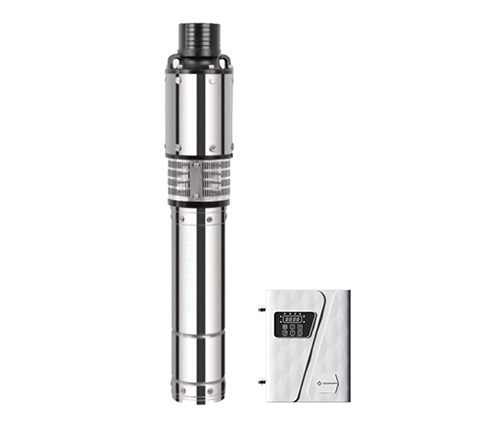
6/8ADPC AC/DC Hybrid Brushless Motor Solar Deep Well Pump
An AC/DC hybrid solar deep well pump is a submersible pumping system capable of using two different electrical sources. The first source is direct current generated by solar panels. The second source is alternating current supplied by a conventional grid or other compatible AC source. The pump and its control system are designed to manage these inputs and maintain stable operation according to the available power conditions.
Traditional solar pumps generally depend entirely on sunlight. Their output may decrease when solar radiation falls, and they may stop operating completely after sunset unless the system includes batteries or a separate water-storage strategy. A conventional AC pump, by contrast, can provide stable operation when grid power is available but may be unsuitable for remote sites or locations with high electricity costs.
The hybrid configuration combines the principal advantages of both systems. Solar energy can be used as the primary daytime power source, reducing operating costs and carbon emissions. AC electricity can provide backup operation during the night, on cloudy days, or whenever solar input is below the required level. This helps improve water-supply continuity without requiring a large battery bank for every installation.
The 6/8ADPC series is designed around a high-voltage DC solar input and a three-phase AC input. The listed models use AC380 V and DC520 V electrical configurations, with an optimum DC input range of 520 V to 650 V. The appropriate solar array, controller, protection equipment, cable arrangement, and AC connection must be selected by qualified technical personnel according to the actual installation conditions.
The most important advantage of the pump is its ability to work with both solar DC and conventional AC power. This allows users to design a flexible water-supply system instead of choosing between a solar-only pump and a grid-only pump.
During periods of strong sunlight, the solar system can supply the pump and reduce the amount of electricity purchased from the grid. When sunlight becomes insufficient, the system can switch to AC power, depending on the selected control configuration. This is particularly valuable for farms, industrial plants, livestock facilities, and remote communities where an interruption in water delivery could cause operational or economic losses.
Hybrid operation also provides flexibility during system expansion. A user may initially install the pump with a solar array and later connect a compatible AC source for backup. Alternatively, an existing AC water system may be supplemented with solar generation to reduce energy costs.
The pump uses a brushless motor designed for smooth, efficient, and low-maintenance operation. Unlike a brushed motor, a brushless motor does not rely on mechanical carbon brushes that gradually wear against a commutator. The reduction of these friction-based components can help lower maintenance requirements and extend motor service life when the pump is correctly selected, installed, and operated.
Brushless motor technology can also reduce mechanical losses and improve electrical efficiency. Lower energy loss means that a larger portion of the available solar or grid power can be converted into useful pumping work. This is especially important in solar installations, where the available energy changes throughout the day and system efficiency directly affects water output.
The motor is engineered to support stable rotational performance and reduced operating noise. For residential, agricultural, and community water systems, smoother operation can contribute to a more comfortable working environment and reduced mechanical stress on connected pipework.
The 6/8ADPC series is intended for substantial water-transfer requirements. According to the supplied performance data, the listed models can provide a maximum flow rate of up to 135 cubic meters per hour. The maximum head options range from 35 meters to 150 meters, allowing the series to cover different combinations of water depth, pipe elevation, and system pressure requirements.
Maximum flow and maximum head are not normally achieved at the same operating point. Actual performance depends on the selected model, total dynamic head, pipe diameter, friction losses, water level, voltage, solar intensity, controller settings, and other hydraulic conditions. Users should therefore select a model using a complete pump curve and a calculated duty point rather than relying only on the maximum values.
The hydraulic structure is optimized to support efficient water movement through the pump. Proper hydraulic design helps the motor use available energy effectively and supports stable delivery in deep wells, agricultural systems, and large-scale water-transfer applications.
The pump uses a durable stainless steel design intended for underground, outdoor, and wet operating environments. Stainless steel construction can provide improved resistance to corrosion compared with less suitable materials, particularly when the pump is exposed to water, humidity, and changing field conditions.
A corrosion-resistant housing also supports long-term mechanical integrity. This is important for deep well equipment because retrieval and replacement can require considerable labor, lifting equipment, and downtime. A robust external structure helps protect the internal motor and hydraulic components during installation and operation.
Material selection must always be matched to the actual water chemistry. Users should evaluate factors such as salinity, acidity, sand content, temperature, and aggressive dissolved minerals before final selection. Stainless steel improves durability, but no pump material is suitable for every fluid without technical assessment.
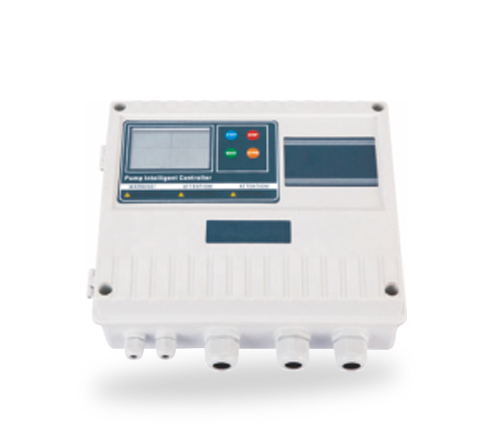
The pump is designed to work with intelligent control equipment, including systems that support maximum power point tracking. An MPPT controller can continuously adjust the operating point of the solar array to make better use of available sunlight. This is useful because solar panel voltage and current vary with irradiance, temperature, shading, and load conditions.
Intelligent control systems may also provide functions such as overload protection, dry-run protection, overvoltage protection, undervoltage protection, phase-loss monitoring, and automatic restart. The exact functions depend on the selected controller and system configuration. These protective features can help prevent damage and improve operating reliability in changing field conditions.
Solar-powered operation can reduce the amount of grid electricity consumed by a pumping system. For agricultural users, this may reduce long-term irrigation costs. For remote projects, solar power can eliminate or reduce the need for diesel fuel, fuel transportation, and generator maintenance.
Solar energy also supports lower-emission water production during operation. When combined with efficient motor and hydraulic technology, the system can help users pursue more sustainable water-management objectives without sacrificing pumping capacity.
The environmental value of a solar pump depends on the complete system design. Correct sizing of solar panels, controller, cable, pump, pipework, and storage facilities is necessary to obtain the expected energy savings. Poorly matched components may reduce output and increase operating costs.
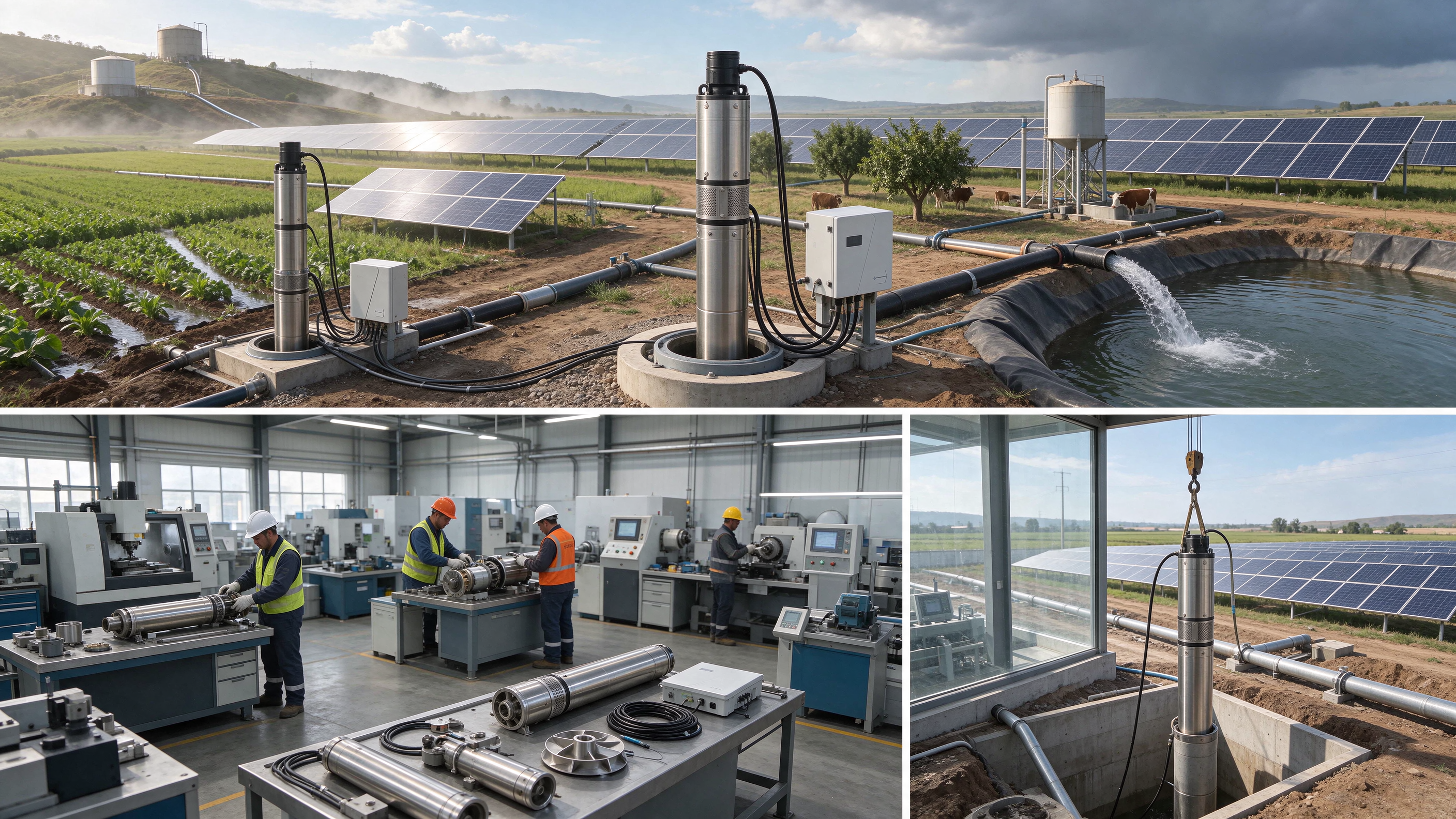
The following table presents the performance information supplied for the 6/8ADPC series. These values should be treated as reference data for preliminary selection. Final selection should be confirmed using the manufacturer’s current technical documentation and a complete performance curve.
| Model | Voltage | Optimum DC Input | Power | Maximum Flow | Maximum Head | Outlet | Cable | Solar Panel Open-Circuit Voltage | Recommended Solar Power |
|---|---|---|---|---|---|---|---|---|---|
| 6/8ADPC135-35-380/520-7500 | AC380 V/DC520 V | 520–650 V | 7,500 W | 135 m³/h | 35 m | 4 inches | 2 m | Below 900 V | At least 1.3 × pump power |
| 6/8ADPC135-75-380/520-15000 | AC380 V/DC520 V | 520–650 V | 15,000 W | 135 m³/h | 75 m | 4 inches | 2 m | Below 900 V | At least 1.3 × pump power |
| 6/8ADPC135-113-380/520-22000 | AC380 V/DC520 V | 520–650 V | 22,000 W | 135 m³/h | 113 m | 4 inches | 2 m | Below 900 V | At least 1.3 × pump power |
| 6/8ADPC135-150-380/520-37000 | AC380 V/DC520 V | 520–650 V | 22,000 W as supplied | 135 m³/h | 150 m | 4 inches | 2 m | Below 900 V | At least 1.3 × pump power |
The final row lists a model designation ending in 37000 while the supplied performance table identifies the power as 22,000 W. This specification should be verified with the manufacturer before ordering. Confirming the rated power, current, controller rating, and performance curve is especially important for a high-head installation.
Flow rate indicates the volume of water delivered within a specific period. The listed maximum flow is 135 cubic meters per hour, which is equivalent to 2.25 cubic meters per minute under the stated maximum-flow condition. This capacity may be suitable for large irrigation blocks, reservoirs, livestock operations, industrial processes, and water-transfer systems.
Actual flow may be lower when the pump operates against greater head or when the solar array cannot provide the required input power. A project designer should calculate the required daily water volume, peak delivery rate, irrigation schedule, and storage capacity before choosing the model.
Pump head represents the energy required to move water through the system. It includes the vertical lift from the water level to the discharge point, pressure requirements at the outlet, and losses caused by friction in pipes, valves, fittings, filters, and other equipment.
The 6/8ADPC models offer maximum head values of 35 meters, 75 meters, 113 meters, and 150 meters according to the supplied data. A model with a higher maximum head is not automatically the best choice. Oversizing can increase initial cost and energy consumption, while undersizing may fail to deliver the required pressure or volume.
The supplied specification recommends solar panel power of at least 1.3 times the pump power. This provides a basic reference for array sizing. For example, a 7,500 W pump would require a recommended solar power of at least 9,750 W under that calculation. A 15,000 W pump would require at least 19,500 W of solar power.
Actual solar array design must also consider local solar radiation, seasonal weather, panel temperature, shading, cable losses, controller efficiency, installation angle, and the required daily water volume. In areas with frequent cloud cover or a high demand for early-morning and evening water, additional panels, water storage, or AC backup may be required.
Agriculture is one of the most important application fields for the pump. It can support irrigation for open fields, orchards, greenhouses, nurseries, and agricultural reservoirs. Solar operation can reduce daytime electricity costs, while AC backup helps maintain irrigation schedules when sunlight is inadequate.
The pump may be integrated with drip irrigation, sprinkler systems, center pivots, filtration systems, fertigation equipment, or storage tanks. A complete agricultural design should account for the required pressure at the irrigation equipment and the potential presence of sand, sediment, fertilizers, or other materials in the water.
Reliable water is essential for cattle, poultry, sheep, goats, and other livestock. A hybrid pump can fill elevated tanks or ground-level reservoirs during the day and continue operating with AC power when necessary. Water storage can also be used to separate pumping times from animal consumption times, reducing the need for continuous operation.
For livestock installations, designers should consider hygiene, water quality, float-switch control, tank overflow prevention, and protection against dry running. The pump should be installed in a suitable water source with adequate submergence and appropriate intake conditions.
Remote homes, rural schools, clinics, community centers, and small settlements may not have dependable grid access. Solar power can provide an independent water source, while a generator or local AC supply can be used as backup where available.
The combination of solar generation and water storage can provide a practical alternative to large battery systems. Water can be pumped when solar power is available and stored for later use. Where continuous or high-demand water delivery is required, the AC input provides additional operational flexibility.
The high-capacity models may be suitable for industrial water transfer, construction dewatering support, utility water distribution, process-water supply, and selected water-treatment applications. The pump’s high flow and multiple head options allow it to be considered for projects with different hydraulic requirements.
Industrial users should conduct a detailed compatibility assessment before installation. The assessment should include water chemistry, solids content, temperature, duty cycle, electrical protection, automation requirements, and applicable local regulations. If the pump is used in a process involving chemicals or abrasive fluids, material compatibility must be confirmed in advance.
Mining and construction sites often need temporary or semi-permanent water-transfer systems. Solar operation may reduce fuel consumption in remote work areas, while AC backup can support operation during critical work periods. The stainless steel housing and submersible design can be advantageous where equipment must operate in wet or exposed environments.
These applications require careful attention to suspended solids, abrasive particles, cable protection, lifting equipment, and site safety. The pump should not be used beyond its approved water-quality conditions, and any dewatering installation should include monitoring for changing water levels and unexpected debris.
Some users already have grid-powered pumping systems but want to reduce operating expenses or improve resilience. The 6/8ADPC pump can be considered as part of a hybrid water infrastructure strategy. Solar power may serve as the main energy source during daylight hours, while AC power supports nighttime operation or periods of reduced solar production.
This arrangement can be useful for farms with time-of-use electricity tariffs, facilities located in areas with frequent power interruptions, and businesses seeking to reduce their exposure to energy-price fluctuations.
The performance of a high-capacity pump depends not only on its published specifications but also on the consistency of its manufacturing process. The manufacturer’s background combines independent research and development, mass production, export operations, and a broad portfolio of water-pumping products. This integrated structure supports coordination between product design, manufacturing, order management, and after-sales service.
Product development for a hybrid solar pump requires cooperation among hydraulic engineers, motor designers, electrical-control specialists, and manufacturing technicians. The pump must handle changing input conditions while maintaining reliable mechanical and electrical operation. The design must also consider motor efficiency, heat management, hydraulic balance, insulation, sealing, cable routing, and controller compatibility.
The manufacturer’s investment in solar water pumps and intelligent technology since 2018 reflects a focus on adapting traditional pump products to changing energy and automation requirements. This experience is valuable because solar pumping systems require different design priorities from conventional fixed-speed AC pumps.
Mass production can provide advantages in repeatability, component planning, assembly efficiency, and supply stability. When manufacturing procedures are standardized, each unit can be built according to controlled specifications rather than relying entirely on individual assembly practices.
For international buyers, production capacity is also important when purchasing multiple units for agricultural, municipal, or industrial projects. A manufacturer with experience in large-volume production can support consistent product availability and coordinate production schedules with export requirements.
A pump is not simply a motor attached to an impeller. The motor, hydraulic stages, shaft, bearings, seals, housing, and controller must operate as a coordinated system. The design of the hydraulic passages affects flow efficiency and head generation, while the motor determines the available torque and electrical consumption.
The 6/8ADPC product integrates a brushless motor with a hydraulic structure intended for strong flow and lift. This integration helps the pump respond to the demanding conditions found in deep wells and large-volume water systems.
Manufacturing stainless steel submersible equipment requires appropriate forming, welding, machining, finishing, and inspection procedures. Dimensional consistency is important because the housing, motor assembly, hydraulic components, and discharge connection must fit together correctly.
Surface finishing and weld quality can affect corrosion resistance and mechanical durability. Proper fabrication also helps maintain the alignment of rotating components and the integrity of sealed areas. These factors are especially relevant in a pump intended for long-term immersion.
Hybrid AC/DC operation places additional requirements on electrical design and system integration. The control system must be suitable for the specified voltage range and must protect the motor from abnormal conditions. Solar input must be designed so that the open-circuit voltage remains below the specified limit, including the effects of low-temperature conditions that can increase panel voltage.
Control equipment should be selected according to the pump’s rated power, input current, starting characteristics, environmental conditions, and required protection functions. The manufacturer’s experience with intelligent booster pumps and solar pumping products supports the development of systems that combine mechanical pumping with modern control technology.
International pump purchasing involves more than manufacturing. Buyers may need technical selection, product documentation, packaging, order tracking, shipping coordination, customs support, and communication across different time zones. The company’s related import and export organizations were established to provide procurement planning, order tracking, cross-border delivery, and foreign-trade services.
This structure can simplify procurement for distributors, engineering contractors, system integrators, and industrial users seeking multiple types of pumps from one source. The company’s product range includes deep well pumps, submersible pumps, domestic booster pumps, circulation pumps, solar pumps, intelligent booster pumps, pump accessories, pipes, and valves.
A solar-only pump can be efficient during periods of strong sunlight but may provide limited output during cloudy weather or stop after sunset. The hybrid 6/8ADPC system offers greater operational flexibility because AC power can be used when the solar source is not sufficient.
This reduces the need to oversize the solar array solely for low-light periods. It can also reduce reliance on batteries, which may require replacement and additional environmental protection. Water storage remains useful, but the AC input provides an additional way to maintain supply during periods of high demand.
A conventional AC pump may offer stable operation where grid electricity is reliable, but it can result in higher operating costs and may not be practical in remote locations. The hybrid pump can use solar energy as an alternative source, reducing grid consumption and improving resilience against power interruptions.
The brushless motor and intelligent controller compatibility can also provide efficiency and monitoring advantages compared with older motor and control technologies. The exact benefit depends on the complete system and operating conditions.
Diesel pumps can be deployed in remote locations but require fuel storage, regular refueling, engine servicing, exhaust management, and protection against fuel price changes. A solar hybrid pump has no direct fuel consumption during solar operation and can provide quieter operation with less routine mechanical maintenance.
For a project with a high daily pumping requirement, the long-term energy savings may be significant. The AC input also provides a backup option when a generator or grid supply is available.
Brushed motors contain components that wear through mechanical contact. Brush replacement and commutator maintenance may be required over time. A brushless motor eliminates this brush-wear mechanism and can support a longer maintenance interval when operated within its specified conditions.
The brushless design is particularly suitable for systems where access is difficult, such as deep wells, remote agricultural fields, and underground installations. Reducing the need for retrieval and repair can lower total ownership costs.
Before selecting the pump, measure or estimate the static water level, dynamic water level, required discharge point, vertical elevation, pipe length, pipe diameter, valve arrangement, filtration requirements, and terminal pressure. These values are needed to calculate total dynamic head.
The pump’s operating point should fall within the recommended performance range. Operating continuously at an extreme end of the curve may reduce efficiency or increase stress. A qualified pump engineer should review the duty point for major commercial, agricultural, or industrial projects.
The listed product uses AC380 V and DC520 V configurations, with an optimum DC input range of 520 V to 650 V. High-voltage DC systems can be hazardous and must be installed by qualified electricians in accordance with local electrical standards.
The solar array must be configured so that its open-circuit voltage remains below the specified limit. Designers should consider the lowest expected ambient temperature, because solar module voltage may rise in cold conditions. Correct cable sizing, grounding, isolation, overcurrent protection, surge protection, and emergency shutdown arrangements are essential.
The pump should be installed at a suitable depth with sufficient submergence and clearance from the well bottom. It should not be allowed to run dry. Sand, gravel, mud, and other solids can damage hydraulic parts or reduce service life, so the well should be assessed and developed before installation.
The discharge pipe and lifting cable should be supported properly. The electrical cable must be protected against abrasion, tension, sharp edges, and water ingress. The pump should be lowered and raised using suitable equipment rather than pulling on the electrical cable.
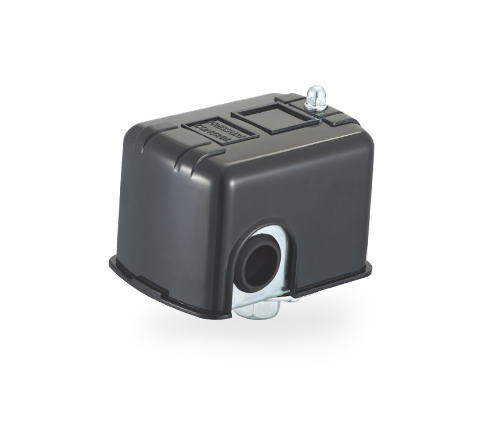
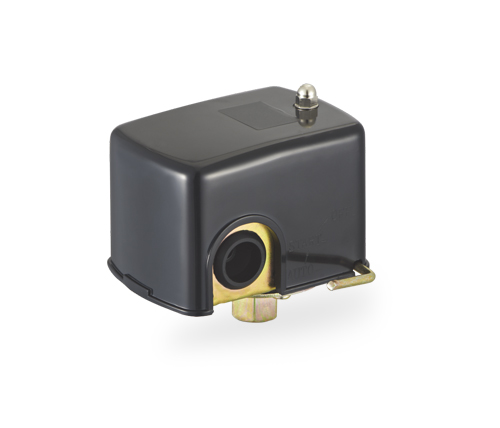
An appropriate controller should manage the transition between DC and AC power according to the project’s requirements. The system may use water-level sensors, pressure switches, float controls, tank sensors, or remote monitoring devices.
Protection against dry running, overload, overvoltage, undervoltage, phase problems, excessive temperature, and abnormal operating conditions should be considered. The exact protection package depends on the controller and site design.
Although the brushless motor reduces routine maintenance compared with brushed designs, the entire system still requires periodic inspection. Operators should check water output, operating current, voltage, vibration, noise, controller alarms, cable condition, pipework, valves, and tank controls.
Solar panels should be kept reasonably clean, and shading should be minimized. Electrical terminals and protective devices should be inspected by qualified personnel. If flow decreases, possible causes include a lower water level, blocked intake, pipe obstruction, worn hydraulic components, inadequate solar input, or a control-system fault.
For distributors and system integrators, the 6/8ADPC series offers a product that can serve several market segments with one basic hybrid platform. The different head and power options make it possible to address small commercial installations as well as larger agricultural and industrial projects.
For engineering contractors, the combination of product development, production, export, and procurement support can simplify project coordination. A supplier with multiple pump categories can also help customers source complementary products, including booster pumps, circulation pumps, pump accessories, pipes, and valves.
For end users, the main value lies in energy flexibility and water-supply reliability. Solar operation can reduce recurring energy expenses, while AC backup helps protect the water supply from changes in weather or solar availability. The brushless motor and stainless steel construction support a lower-maintenance and durable system when properly installed.
Reliability is influenced by product design, manufacturing consistency, material selection, installation quality, and operating conditions. The pump’s stainless steel structure, brushless motor, and intelligent-control compatibility provide a strong technical foundation, but correct system design remains essential.
A reliable installation should use a pump that matches the water source and duty point. It should also include properly sized solar panels, a compatible controller, safe AC integration, suitable protection devices, and adequate water-level monitoring. Regular inspection helps identify developing problems before they become major failures.
The manufacturer’s experience in research and development, mass production, and global export provides a practical foundation for serving international customers. Its focus on new energy and intelligent technology is aligned with the growing demand for efficient, automated, and resilient water systems.
Yes. The pump is designed for hybrid AC/DC operation. It can use solar DC power and conventional AC electricity, subject to the correct controller, electrical configuration, and installation design. The switching method and operating priority should be confirmed during system planning.
The supplied performance data lists a maximum flow rate of 135 cubic meters per hour for the models shown. Actual flow depends on the selected model, total dynamic head, solar input, voltage, pipework, water level, and operating conditions.
The supplied models provide maximum head options of 35 meters, 75 meters, 113 meters, and 150 meters. The correct model should be selected according to the calculated duty point rather than maximum head alone.
Yes. It is designed for applications such as field irrigation, orchard irrigation, greenhouse irrigation, livestock water supply, and agricultural reservoir filling. The water quality, sand content, pressure requirements, and daily water volume should be assessed before selection.
A brushless motor avoids the mechanical brush wear found in brushed motors. It can provide smooth operation, reduced maintenance, lower mechanical loss, and a longer service life when correctly controlled and operated within its rated conditions.
The supplied specification recommends solar panel power of at least 1.3 times the pump power. This is a preliminary guideline. The final array should also consider local solar radiation, seasonal conditions, temperature, shading, cable losses, and the required daily water volume.
The solar panel open-circuit voltage must remain below the specified limit. The supplied data lists a limit below 900 V. The array designer must account for the highest possible panel voltage, including cold-weather conditions, to protect the controller and pump system.
Not necessarily. The pump can operate directly from a properly designed solar array through a compatible controller. Water storage or AC backup may be used instead of batteries to maintain supply when sunlight is insufficient. The best solution depends on the required operating schedule and site conditions.
Yes, when a suitable AC source is connected and the system is configured for hybrid operation. If no AC source or battery-supported system is available, nighttime operation depends on the selected system design and stored water capacity.
Stainless steel provides corrosion resistance, but no material is completely resistant to every water chemistry. Salinity, acidity, dissolved minerals, temperature, and chemical exposure should be evaluated before installation.
Buyers should confirm the required flow, total dynamic head, water quality, well diameter, water level, power source, solar array size, AC voltage, controller compatibility, cable length, outlet size, delivery schedule, documentation, and applicable local standards. The final row of the supplied performance table should also be verified because its model designation and listed power rating require confirmation.
The pump is manufactured by Taizhou Edwin Electric Co., Ltd., an integrated pump enterprise established in 2008. The company develops and produces deep well pumps, submersible pumps, booster pumps, circulation pumps, solar pumps, intelligent water systems, and related products for global customers.
The 6/8ADPC AC/DC Hybrid Brushless Motor Solar Deep Well Pump provides a practical solution for users who need high-capacity water delivery with flexible energy options. Its ability to use both solar DC and conventional AC power improves operating continuity compared with solar-only systems, while solar operation can reduce electricity costs compared with grid-only pumping.
The brushless motor supports efficient and low-maintenance performance, and the stainless steel structure is designed for demanding wet and outdoor environments. Multiple head and power options allow the series to serve agricultural, livestock, rural, industrial, construction, mining, and utility applications.
Its value is strengthened by the manufacturer’s experience in research and development, mass production, solar technology, intelligent controls, and international procurement support. However, the pump should always be selected according to a complete hydraulic and electrical assessment. Correct solar-array sizing, controller selection, dry-run protection, water-quality evaluation, and professional installation are essential for achieving reliable service.
For projects seeking a combination of renewable energy, AC backup, strong pumping capacity, and reduced maintenance, this hybrid deep well pump offers a versatile foundation for modern water-supply infrastructure.
1. Supplied product specification for the 6/8ADPC AC/DC Hybrid Brushless Motor Solar Deep Well Pump.
2. Supplied performance data and model-selection information for the 6/8ADPC135 series.
3. General principles of solar photovoltaic system design, maximum power point tracking, and electrical protection.
4. General engineering principles for centrifugal pump selection, total dynamic head calculation, and hydraulic system design.
5. General guidance for submersible pump installation, water-level protection, cable management, and preventive maintenance.
6. Manufacturer information concerning Taizhou Edwin Electric Co., Ltd., its product portfolio, manufacturing activities, and international procurement services.
edwina@edwin-pump.com
+86-13586290903 (WhatsApp)
Xuri Gongliang Cutting Tool Entrepreneurship Park, Wenqiao Town, Wenling City, Taizhou City, Zhejiang Province, China

High Performance Smart Pump Factory


 English