edwina@edwin-pump.com

View All Products
en
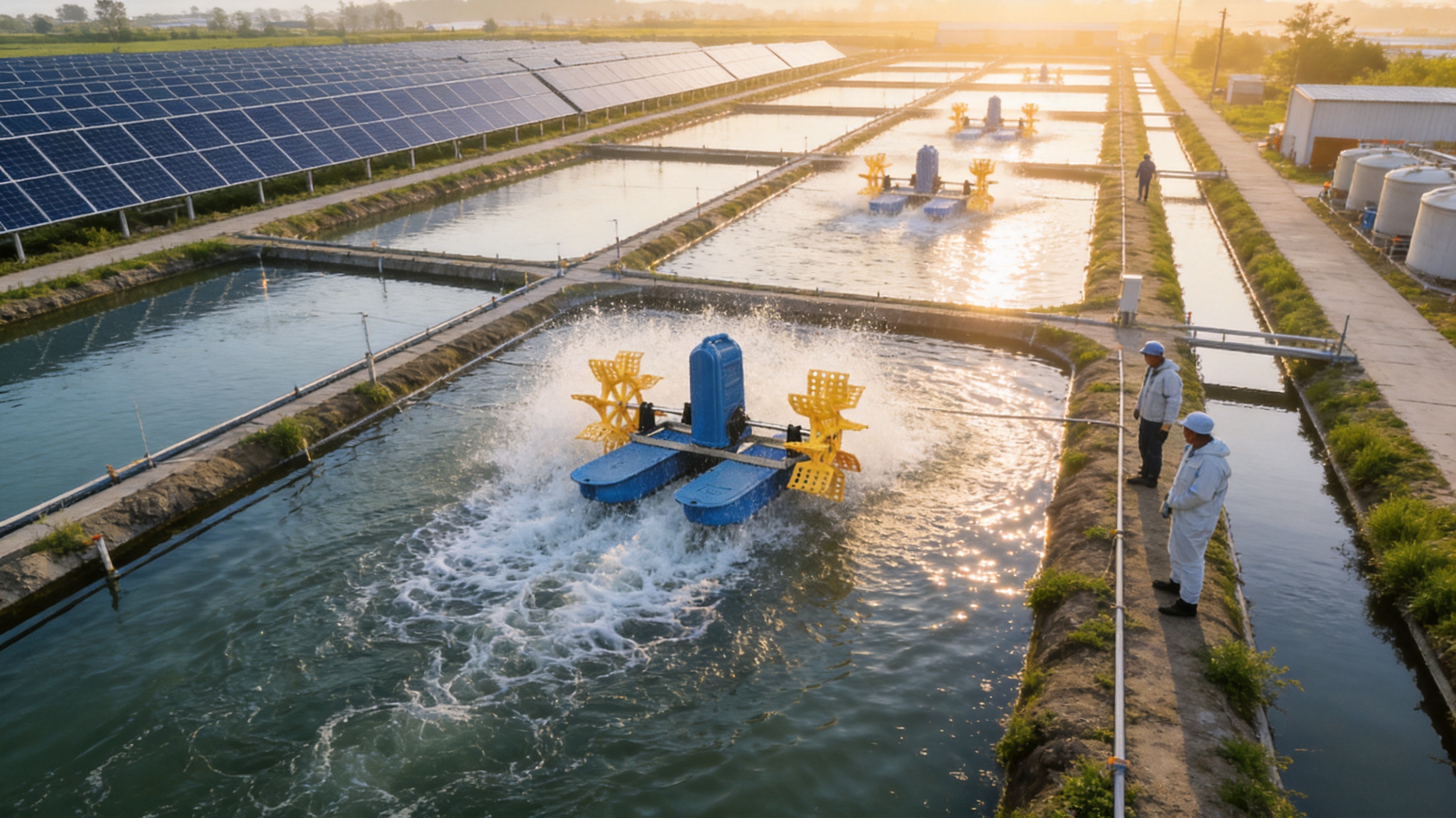
Modern aquaculture depends on maintaining stable water quality, sufficient dissolved oxygen, and reliable circulation throughout the production cycle. As stocking densities increase and farms expand in scale, aeration equipment must do more than simply move water. It must operate efficiently, withstand demanding outdoor conditions, reduce labor requirements, and continue working when weather conditions change. The ADSWA Series AC/DC Solar Paddle Wheel Aerator is designed to meet these needs through a combination of solar energy utilization, grid-compatible operation, high-speed paddle wheel circulation, brushless motor technology, and corrosion-resistant construction.
The system is developed for large aquaculture ponds, intensive fish farms, shrimp farms, ecological water-management projects, and other applications requiring continuous oxygen transfer and broad water movement. Its hybrid AC/DC design allows the aerator to use direct-current solar power under suitable sunlight while also supporting alternating-current operation when grid power is available. This flexible energy structure helps maintain aeration continuity during cloudy or rainy weather, reducing interruptions that could negatively affect aquatic life.
With a rated power of 2200 watts, an oxygenation rate greater than 2.0 kilograms per hour, six impellers, and a recommended coverage range of approximately 2,665 to 8,000 square meters, the ADSWA6-300-2200 model is configured for demanding aquaculture environments. It combines the renewable-energy benefits of solar operation with the dependable backup capability of conventional AC power, creating a practical solution for farms seeking lower operating costs and greater operational security.
Dissolved oxygen is one of the most important environmental parameters in aquaculture. Fish, shrimp, and other aquatic organisms require oxygen for respiration, growth, feeding, movement, and resistance to disease. Oxygen is also needed by beneficial microorganisms that break down organic matter in pond water. When dissolved oxygen levels decline, animals may become stressed, feed conversion may deteriorate, and mortality risks can increase rapidly.
Oxygen depletion is especially common during nighttime, early morning, periods of heavy cloud cover, hot weather, algae die-off, and high-density feeding cycles. In large ponds, natural diffusion from the atmosphere may not provide enough oxygen to support the biomass. Water stratification can also create areas with different temperatures and oxygen concentrations. Without adequate circulation, oxygen-rich surface water may not reach deeper or more remote areas of the pond.
A paddle wheel aerator addresses these problems in two ways. First, the rotating paddles disturb the water surface and increase contact between water and air. Second, the rotating assembly produces horizontal and vertical water movement, helping distribute oxygen throughout a wider area. The effectiveness of the equipment therefore depends not only on motor power but also on paddle design, impeller quantity, rotation speed, installation arrangement, and the ability to operate when aeration is most needed.
The ADSWA Series is designed around this combined aeration and circulation principle. Its high-speed paddle wheel creates a strong water flow, increasing water movement and supporting oxygen diffusion. This design makes it suitable for large ponds and intensive farms where a small localized aeration zone would be insufficient.
The primary distinguishing feature of the ADSWA Series is its AC/DC switching capability. Traditional electric aerators normally depend on grid power, while basic solar aerators may stop when sunlight is weak or unavailable. The hybrid configuration combines the advantages of both approaches in one operating system.
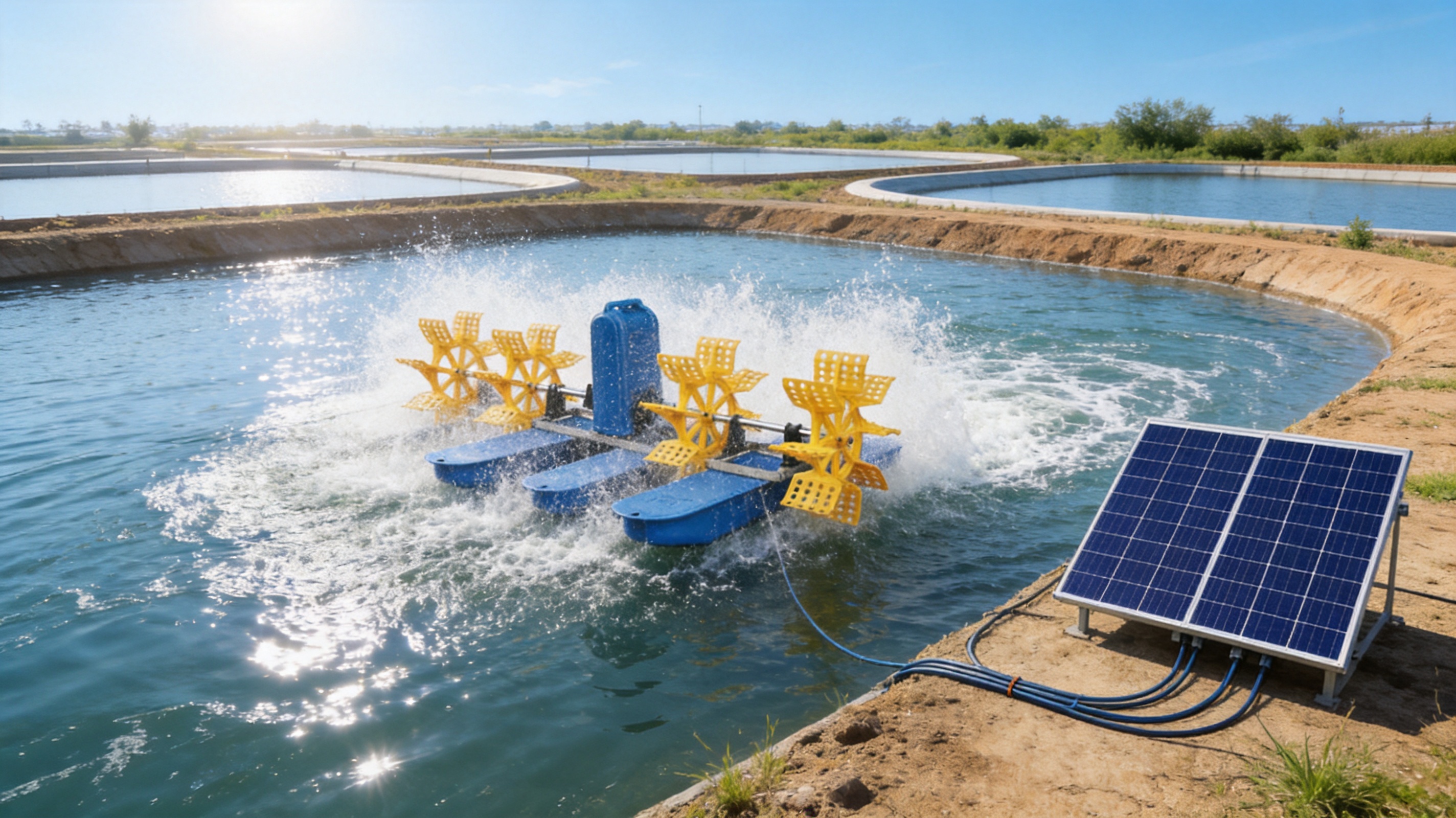
During periods of suitable solar generation, the aerator can operate from direct-current power supplied by a correctly configured solar panel system. Solar operation can reduce dependence on the electrical grid and may lower energy costs over the service life of the equipment. It is particularly useful for farms located in remote areas where grid access is limited, unstable, or expensive to extend.
When solar input becomes insufficient because of clouds, rain, seasonal changes, or reduced daylight, the AC function provides an alternative source of power. This switching capability helps reduce the risk of unexpected aeration stoppage. In intensive aquaculture, continuity is extremely important because oxygen demand can remain high even when solar generation is temporarily reduced.
The AC/DC concept also gives farm operators greater flexibility in system planning. A farm may begin with grid-supported operation, add solar panels later, or use solar power as the primary source while keeping AC power as a backup. This staged approach can be useful for farms managing capital investment, expanding pond capacity, or gradually transitioning toward renewable energy.
The ADSWA6-300-2200 model has an AC voltage of 220 volts and a DC operating range of 300 to 400 volts, with 300 volts identified as the best input voltage. The solar panel open-circuit voltage should remain below 450 volts. The recommended solar panel power is at least 1.3 times the pump or aerator power. For the 2200-watt model, this indicates a solar array capacity of approximately 2,860 watts or more, subject to actual site conditions, controller requirements, local installation standards, and professional system design.
Correct voltage matching is essential for safe and stable operation. Solar panels should be selected and connected according to the required DC range, open-circuit voltage limit, local temperature conditions, wiring configuration, and controller specifications. A properly designed photovoltaic system helps ensure that the aerator receives stable input power without exposing the motor or control components to excessive voltage.
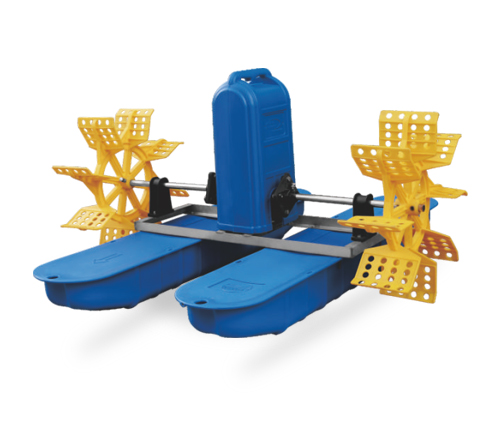
ADSWA Series AC/DC Solar Paddle Wheel Aerator
The paddle wheel is the working component that converts motor power into water movement and oxygen transfer. As the impellers rotate, their paddles enter and leave the water repeatedly. This action breaks the surface, forms a water spray and flow pattern, and increases the water-air interface. The movement supports the transfer of atmospheric oxygen into the pond.
Unlike an aerator that only creates bubbles in a small area, a paddle wheel system also produces broader horizontal circulation. This is important in large ponds because dissolved oxygen must be distributed rather than concentrated near the machine. Strong circulation can help reduce stagnant zones, improve mixing, and move oxygenated water toward areas where aquatic organisms are feeding or resting.
The ADSWA6-300-2200 model is equipped with six impellers. Multiple impellers allow the drive system to influence a larger volume of water than a compact single-impeller unit. They can also create a longer circulation path when the aerator is positioned correctly. The effective coverage area is listed as approximately 2,665 to 8,000 square meters, although actual performance depends on pond shape, depth, water quality, stocking density, wind, installation position, and operating conditions.
High-speed rotation is especially useful in large-scale aquaculture because the objective is not simply to add oxygen at one point. The objective is to support a circulation pattern that improves overall pond conditions. Installation should therefore be planned with consideration for pond boundaries, water inlets and outlets, corners, natural current, and areas where organic matter may accumulate.
In a large pond, aerator placement can influence both oxygen distribution and energy efficiency. Positioning the unit near a central or strategically open area may help create a more effective circulation loop. In elongated ponds, multiple machines or a carefully selected orientation may be necessary. Operators should use local pond conditions and professional installation guidance to determine the best arrangement.
The ADSWA Series utilizes brushless AC and DC motors. Brushless motor technology eliminates the mechanical brushes and commutators used in many conventional brushed motors. This reduces friction-related wear and removes the need to replace brushes during routine service.
Reduced mechanical wear can contribute to longer operating life, more stable performance, and lower maintenance requirements. This is valuable in aquaculture because equipment is often exposed to water spray, humidity, dust, fertilizer residue, feed particles, and fluctuating outdoor temperatures. A motor that requires fewer consumable replacement parts can reduce service interruptions and simplify maintenance planning.
Brushless motors can also provide efficient power conversion and controlled rotation. When paired with a suitable electronic control system, they can support stable operation across different energy conditions. This is particularly relevant to a hybrid solar aerator because the available DC input may vary according to sunlight and system configuration.
The motor design is supported by corrosion-resistant materials selected for outdoor and aquatic environments. Although no material is completely immune to corrosion, appropriate material selection and regular cleaning can significantly improve durability. Components exposed to water spray should be inspected periodically, especially in farms using brackish water, saline water, chemical treatments, or aggressive cleaning agents.
For farm operators, the combination of brushless motor construction and corrosion-resistant components offers several practical benefits: fewer brush replacements, reduced mechanical wear, less routine intervention, improved suitability for remote locations, and a better foundation for long-term continuous operation.
The ADSWA Series is particularly suitable for high-density aquaculture and large pond environments. In intensive farming, the biomass per unit area is higher, feeding activity is greater, and oxygen consumption can change quickly. A reliable aerator must respond to these conditions with strong circulation and consistent operating availability.
The rated 2200-watt power level provides a substantial operating capacity for demanding applications. The six-impeller configuration extends the water-moving action across a larger working zone than many small household or hobby-grade aerators. The oxygenation rate of more than 2.0 kilograms per hour provides a reference point for evaluating the equipment in relation to farm size and oxygen demand.
Performance data should always be interpreted together with real operating conditions. Oxygenation test results may vary with water temperature, salinity, dissolved oxygen concentration, water depth, atmospheric pressure, paddle immersion, and pond geometry. A farm with extremely high stocking density may require several aerators, supplemental aeration equipment, or an automated oxygen-monitoring strategy.
Even so, the ADSWA Series offers a strong foundation for large-scale aeration planning. It can be used as a primary aeration unit, part of a distributed pond system, or a renewable-energy aeration solution for remote production areas. Its AC backup function also makes it suitable for farms that cannot afford extended downtime during poor weather.
| Item | Voltage | Best DC Input Voltage | Power | Oxygenation Rate | Coverage Area | Impeller Quantity | Solar Panel Open-Circuit Voltage | Recommended Solar Panel Power |
| ADSWA6-300-2200 | AC220/DC300V | 300–400V DC | 2200W | Greater than 2.0 kg/h | Approximately 2,665–8,000 m² | 6 | Below 450V | At least 1.3 times aerator power |
The data above provides an initial basis for equipment selection and solar-system planning. The stated solar panel recommendation means that the array should normally be sized above the aerator’s rated power to account for conversion losses, changing sunlight, temperature effects, dust, wiring losses, and operating margins. A 2200-watt aerator therefore requires a solar array of at least approximately 2860 watts under the stated sizing principle.
Actual system design should be completed by qualified professionals who can evaluate the solar resource, panel orientation, seasonal weather, electrical protection, cable length, grounding, switching equipment, and local regulations. A correct design supports both performance and safety.
A major advantage of the ADSWA Series is its ability to use solar power. Solar generation can lower grid electricity consumption and support more sustainable aquaculture operations. For farms with strong solar resources, daytime aeration can be powered primarily by renewable energy, reducing operating costs and carbon emissions associated with conventional electricity generation.
Many solar-only aerators are dependent on sunlight and may stop during overcast conditions unless a battery system is installed. The AC/DC switching function provides a practical alternative. Instead of requiring a large battery bank for every installation, the system can use AC power when solar input is inadequate. This may reduce system complexity and improve reliability.
The six-impeller paddle wheel arrangement is designed for broad circulation. Compared with small aerators intended for ornamental ponds or limited water volumes, the ADSWA Series is better suited to large aquaculture areas and intensive farming applications.
Brushless motor technology reduces the maintenance tasks associated with brush replacement and brush wear. Combined with corrosion-resistant materials, it supports a lower-maintenance operating model. This can be particularly advantageous for remote farms where service visits are costly or difficult to schedule.
The hybrid energy architecture helps maintain aeration availability when weather conditions change. Since oxygen demand can remain high during cloudy and rainy periods, the ability to switch to AC power can provide an important operational safeguard.
The product is supplied with a three-year warranty. A clearly defined warranty period gives users additional confidence when investing in equipment for commercial operations. It also reflects the manufacturer’s commitment to product reliability and customer support.
The aerator is produced by a manufacturing enterprise with experience in independent research and development, mass production, and global export. The company was established in 2008 and has developed product lines covering deep well pumps, submersible pumps, domestic booster pumps, circulation pumps, solar water pumps, intelligent booster pumps, and other water-related equipment.
This broader product background is relevant to the ADSWA Series because aeration equipment requires knowledge of motors, electrical control, fluid movement, sealing, corrosion resistance, and outdoor operation. Experience across multiple pump and water-treatment categories can support better component selection and more integrated product development.
Since 2018, the manufacturer has invested in new energy and intelligent technology. This direction supports the development of solar water pumps and intelligent booster pumps, as well as hybrid equipment such as the AC/DC solar paddle wheel aerator. Experience with solar systems and intelligent electrical control is important when designing equipment that must work with variable renewable energy input.
Independent research and development allows the manufacturer to adapt products to different markets and application requirements. Instead of relying only on standardized imported assemblies, an integrated manufacturer can coordinate motor selection, controller matching, mechanical design, material choice, testing, and production quality more effectively.
Mass production also provides advantages in consistency and supply capability. Commercial aquaculture projects may require multiple units, replacement parts, and repeat orders. A manufacturer with established production capacity can support project schedules more effectively than a small workshop focused only on limited custom orders.
The company’s business structure includes dedicated import and export service organizations established to support procurement planning, order tracking, cross-border delivery, and foreign trade services. For international customers, these capabilities can simplify communication and coordination from technical inquiry through shipment and after-sales support.
Reliable aeration equipment begins with controlled manufacturing. The motor, shaft, impellers, frame, electrical controller, and protective components must work together under continuous outdoor stress. Quality control should therefore address both individual components and the completed machine.
Motor production requires attention to winding quality, insulation, rotor balance, bearing fit, heat dissipation, and electrical performance. Brushless motors also require precise matching between the motor and its electronic control system. Inconsistent components can cause unstable starting, overheating, excessive vibration, or reduced efficiency.
Mechanical assembly is equally important. The paddle wheel must remain properly aligned, and rotating components must be balanced to reduce vibration. Shaft supports, fasteners, seals, and connection points should be checked for secure assembly. Excessive vibration not only creates noise but can accelerate wear in bearings, frames, and mounting structures.
Material selection is another central part of the manufacturing process. Components exposed to water spray and humid air should be produced from materials or treated surfaces appropriate for the application. Corrosion-resistant construction helps preserve structural integrity and reduces the likelihood that rust particles or deteriorated components will affect pond operation.
Electrical safety requires careful attention to insulation, grounding, protection against overload, and separation of electrical components from water exposure. Hybrid AC/DC products must also be tested for proper switching behavior and input compatibility. The system should be verified under both AC and DC operating conditions before delivery.
Performance testing may include no-load operation, rated-load operation, current measurement, rotation inspection, vibration checks, switching verification, and water-based aeration evaluation. Such tests help identify manufacturing issues before equipment is shipped to a farm. For export products, consistent documentation and standardized testing are also important for customer confidence and project approval.
A professional manufacturing process is not limited to final inspection. It includes supplier evaluation, incoming material checks, process control, assembly procedures, traceability, final testing, packaging protection, and customer feedback. This systematic approach helps reduce variations between units and supports stable long-term performance.
Proper installation is essential to achieving the expected aeration and coverage performance. The aerator should be installed on a stable floating or supported structure suitable for the pond environment. The mounting arrangement must keep the impellers at the correct operating depth while preventing excessive tilt or movement.
The unit should be positioned where the paddle wheel can generate an unobstructed circulation pattern. Avoid placing the aerator too close to pond walls, dense vegetation, fixed obstacles, water gates, or areas with heavy sediment accumulation. In large ponds, the installation angle should be selected to promote circulation across the desired area rather than directing flow into a corner.
Solar panels should be installed in a location with adequate sunlight and minimal shading during the main operating period. Trees, buildings, poles, and nearby structures can reduce solar output. Panel orientation and tilt should be determined according to geographic location and local solar conditions.
The DC voltage must remain within the specified input range, and the solar panel open-circuit voltage must remain below the stated maximum. Cables should be correctly sized for the distance and current, protected from mechanical damage, and routed to minimize exposure to water and animals. All electrical connections should be completed according to applicable standards by qualified personnel.
When AC power is used, the supply should include suitable circuit protection, grounding, and isolation equipment. The AC source must match the required voltage and frequency. Operators should not modify the electrical system without professional guidance, particularly because the product can be connected to both high-voltage DC and AC power sources.
Before full operation, installers should check rotation direction, impeller clearance, current draw, switching function, structural stability, cable security, and emergency shutoff access. A controlled commissioning process can identify installation problems before the equipment is exposed to extended operating loads.
Although the brushless motor reduces routine maintenance, regular inspection remains necessary. Operators should establish a maintenance schedule based on operating hours, water quality, climate, and farm production intensity.
Before each operating period, inspect the impellers for entangled grass, plastic, ropes, fishing nets, feed bags, and other debris. Foreign objects can restrict rotation, increase motor load, and reduce oxygenation performance. The machine should be disconnected from all power sources before any cleaning or inspection work is performed.
Check the frame, floats, fasteners, shaft supports, cables, and protective covers for signs of looseness, wear, cracking, or corrosion. Any damaged component should be repaired or replaced promptly. Small structural problems can become serious if the unit continues to operate under vibration and water movement.
Observe the sound and vibration of the aerator during normal operation. A sudden change in noise, increased vibration, irregular rotation, or reduced water movement may indicate an obstruction, bearing issue, alignment problem, electrical fault, or structural concern. Early inspection can prevent more costly damage.
Solar panels should be kept clean and free from heavy dust, bird droppings, leaves, and other shading materials. Reduced solar output can affect the ability of the system to operate at its best DC input. Cleaning should be carried out using safe procedures that do not damage the panel surface or expose personnel to electrical hazards.
During seasonal shutdown or extended storage, clean and dry the equipment as far as practical, protect electrical connectors, and store removable components in a dry location. Follow the manufacturer’s recommendations for storage, lubrication, replacement parts, and warranty service.
Large fish ponds often require circulation across a substantial water area. The six-impeller paddle wheel can support broad oxygen distribution and help reduce stagnant zones. The AC/DC structure provides flexibility for farms that experience changing weather and variable energy availability.
High-density farming increases oxygen demand and leaves less tolerance for equipment failure. The strong water movement, brushless motor, and backup AC capability make the aerator suitable for farms seeking dependable support during intensive production cycles.
Shrimp farms may operate in environments where corrosion resistance is especially important. Proper material selection, cleaning, and inspection remain necessary, but corrosion-resistant construction can provide a stronger basis for long-term operation in humid or saline conditions.
Remote farms may face high costs for grid connection or unreliable electrical supply. Solar operation can provide an independent energy option, while AC compatibility allows the system to use a generator or local grid connection when available.
Beyond commercial aquaculture, paddle wheel aeration can support ecological ponds, water restoration projects, and managed water bodies where circulation and oxygen diffusion are needed. Project managers should evaluate water chemistry, biological requirements, noise limits, and installation restrictions before deployment.
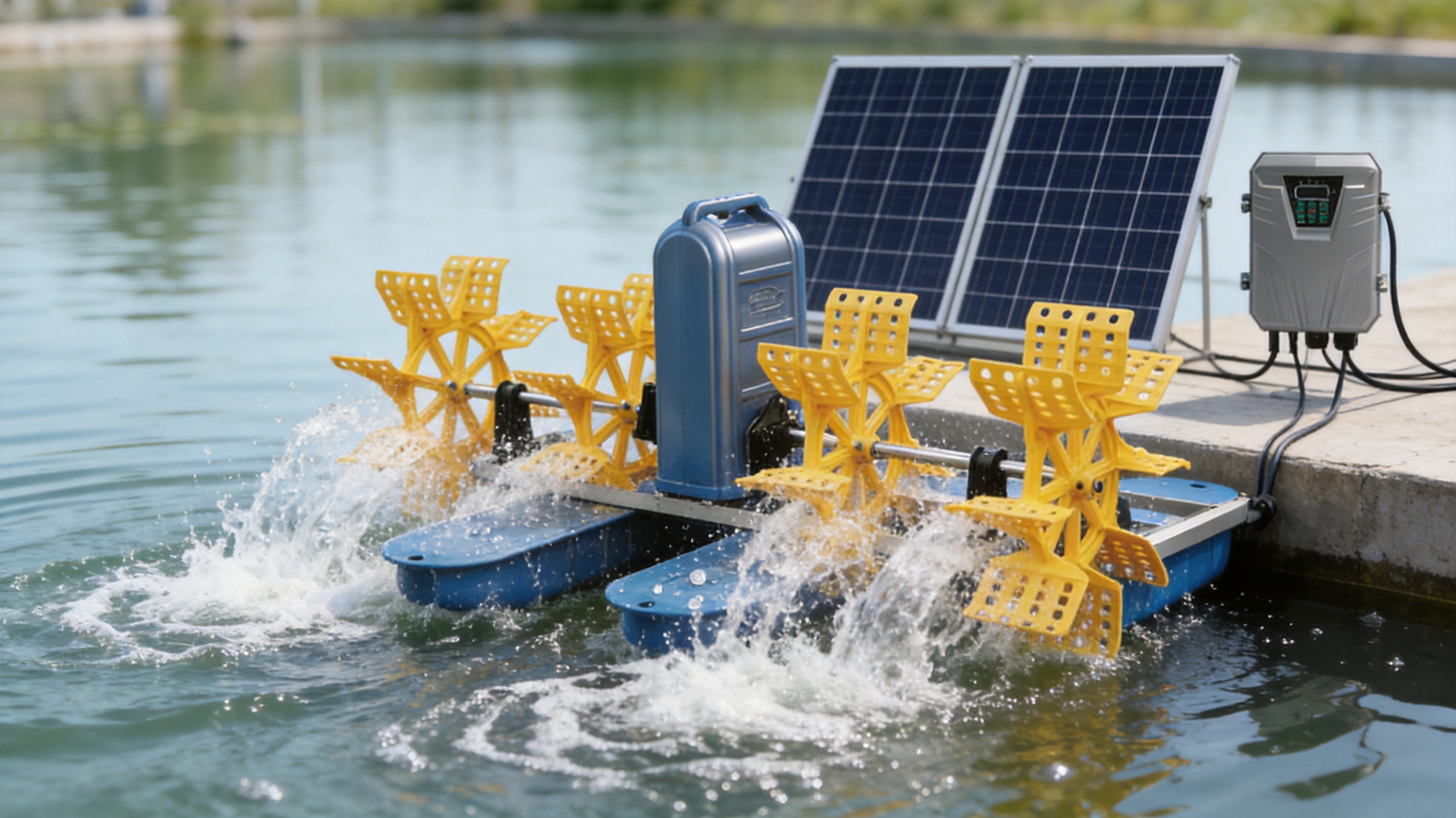
The total operating cost of an aerator includes electricity, maintenance, replacement parts, labor, downtime, and the effect of equipment performance on farm productivity. Solar energy can reduce the electricity purchased from the grid, especially when aeration is scheduled during daylight hours.
However, solar operation should be evaluated as a complete system rather than by panel cost alone. The project may require solar panels, mounting structures, wiring, protection devices, switching equipment, installation labor, and possible battery or backup arrangements. The best solution depends on local electricity prices, solar conditions, operating schedules, and the consequences of aeration interruption.
The AC/DC design can improve economic flexibility. A farm may operate primarily with solar power during periods of strong sunlight and use AC power during low-generation periods. This can avoid the need to oversize the solar array excessively while still maintaining operational continuity.
Maintenance savings may also contribute to the lifecycle value of the product. Brushless motor construction reduces the need for brush replacement, while corrosion-resistant materials can reduce the frequency of structural repairs. These benefits are most valuable when the equipment is installed in remote locations or operated for long daily periods.
Farm managers should compare products using total cost of ownership rather than initial purchase price alone. Important comparison factors include oxygenation capacity, coverage, power consumption, energy flexibility, maintenance requirements, warranty support, parts availability, installation requirements, and expected service life.
Before purchasing an AC/DC solar paddle wheel aerator, buyers should define the pond size, water depth, species, stocking density, daily feeding rate, local climate, electricity availability, and required operating schedule. These details help determine whether one unit is sufficient or whether several units should be distributed across the farm.
The stated coverage range of 2,665 to 8,000 square meters should be treated as a planning reference rather than an absolute guarantee for every pond. Higher stocking density, warmer water, greater organic loading, and poor natural circulation may increase the required aeration capacity.
Buyers should also confirm the compatibility of the solar array and AC supply. The DC input range is 300 to 400 volts, the best input voltage is 300 volts, and the solar open-circuit voltage should remain below 450 volts. The solar array should be sized at no less than 1.3 times the aerator power, subject to professional design review.
Questions about delivery, spare parts, warranty procedures, installation support, and technical documentation should be addressed before the order is finalized. For international projects, purchasers should also confirm packaging, shipping conditions, customs documentation, electrical standards, and local service arrangements.
Because the system uses electrical power near water, safety must be treated as a primary requirement. Installation, inspection, and repair should be carried out by qualified personnel. The equipment should be disconnected from both AC and DC sources before maintenance begins.
Operators should prevent unauthorized access to live electrical components and protect cables from animals, machinery, floating debris, and water immersion. Proper grounding, circuit protection, isolation switches, and weather-resistant enclosures should be included in the installation.
The aerator should never be operated with damaged cables, loose electrical connections, exposed conductors, broken protective components, or unstable mounting structures. If unusual noise, smoke, burning odor, severe vibration, or abnormal heating occurs, the unit should be shut down and inspected by a qualified technician.
Responsible operation also means avoiding excessive aeration that could unnecessarily disturb aquatic organisms or consume energy without improving water quality. A farm may combine equipment operation with dissolved oxygen monitoring, feeding schedules, water-temperature records, and weather observations to create a more efficient management strategy.
The aerator increases oxygen diffusion and water circulation in aquaculture ponds. Its paddle wheels create strong surface movement and help distribute oxygenated water across a wider area.
Yes. The system supports DC operation from a correctly designed solar power system. It can also use AC power when grid electricity or another suitable AC source is available.
When solar generation is insufficient, the AC/DC switching function allows the system to use AC power, provided that a compatible AC supply is connected and correctly configured. This helps reduce the risk of aeration interruption.
The rated power is 2200 watts. The model has an AC220/DC300V voltage designation and a recommended DC input range of 300 to 400 volts.
The ADSWA6-300-2200 model has six impellers. The multiple-impeller configuration is designed to support stronger and broader water movement in large ponds.
The best DC input voltage is 300 volts, and the recommended DC input range is 300 to 400 volts. The solar panel open-circuit voltage should remain below 450 volts. Solar-system design should be completed by a qualified professional.
The recommended solar panel power is at least 1.3 times the aerator power. For a 2200-watt model, this corresponds to approximately 2860 watts or more, subject to local solar conditions and system design requirements.
The listed coverage range is approximately 2,665 to 8,000 square meters. Actual coverage depends on pond shape, water depth, stocking density, water quality, installation position, temperature, and other operating conditions.
The stated oxygenation rate for the ADSWA6-300-2200 model is greater than 2.0 kilograms per hour. Actual results can vary according to water temperature, salinity, dissolved oxygen level, paddle immersion, and installation conditions.
A brushless motor does not use mechanical brushes that require regular replacement. This can reduce mechanical wear, maintenance requirements, and service interruptions while supporting stable long-term operation.
Yes. Its solar DC capability makes it suitable for areas with limited grid access. The AC function can provide an additional power option where a grid connection, generator, or other compatible AC supply is available.
The product is supplied with a three-year warranty, but specific coverage depends on the manufacturer’s warranty terms, installation conditions, operating practices, and evidence of proper maintenance. Buyers should confirm the detailed warranty policy before purchase.
Inspection frequency should reflect operating hours and water conditions. High-use farms should check debris, vibration, cables, structural parts, and impellers regularly. Immediate inspection is required if performance changes or abnormal noise appears.
That depends on the total pond area, stocking density, water conditions, and oxygen demand. The listed coverage range is a reference. Large or highly intensive farms may require multiple units arranged according to a professional aeration plan.
The main difference is the ability to operate with both DC solar power and AC power. A basic solar-only unit may stop when sunlight is insufficient, while the AC/DC design provides an alternative energy source for greater operating continuity.
The ADSWA Series AC/DC Solar Paddle Wheel Aerator provides a practical combination of renewable-energy operation, backup power flexibility, strong water circulation, and long-term mechanical reliability. Its six-impeller configuration and 2200-watt power rating are designed for large aquaculture ponds and high-density farming environments where oxygen distribution and continuous operation are essential.
The use of brushless AC and DC motors reduces routine wear and supports lower maintenance requirements. Corrosion-resistant materials help the system withstand demanding outdoor conditions, while the three-year warranty provides additional confidence for commercial users. The hybrid AC/DC structure is especially valuable because it allows farms to benefit from solar energy without becoming fully dependent on changing sunlight conditions.
Manufacturing expertise in pumps, solar water systems, intelligent technology, motor products, and international supply further supports the product’s suitability for global aquaculture projects. Through research and development, mass production, controlled assembly, electrical testing, and export-service capability, the manufacturer offers more than a standalone machine; it provides a platform for dependable water-management equipment and one-stop project support.
For the best results, buyers should evaluate pond conditions carefully, design the solar and AC systems correctly, install the aerator in a strategic position, and maintain the unit according to professional safety procedures. When properly selected and operated, the ADSWA Series can help improve oxygen availability, strengthen pond circulation, reduce dependence on grid power, and support more efficient and sustainable aquaculture production.
1. Product performance data for the ADSWA6-300-2200 AC/DC solar paddle wheel aerator.
2. Manufacturer product information concerning brushless motor construction, AC/DC switching, corrosion-resistant materials, and warranty support.
3. Manufacturer company information concerning research and development, mass production, solar technology, intelligent pump development, and international export services.
4. General aquaculture engineering principles relating to dissolved oxygen, pond circulation, mechanical aeration, and water-quality management.
5. General photovoltaic system design principles concerning DC voltage range, open-circuit voltage, solar-array sizing, electrical protection, and installation safety.
edwina@edwin-pump.com
+86-13586290903 (WhatsApp)
Xuri Gongliang Cutting Tool Entrepreneurship Park, Wenqiao Town, Wenling City, Taizhou City, Zhejiang Province, China

High Performance Smart Pump Factory


 English