edwina@edwin-pump.com

View All Products
en
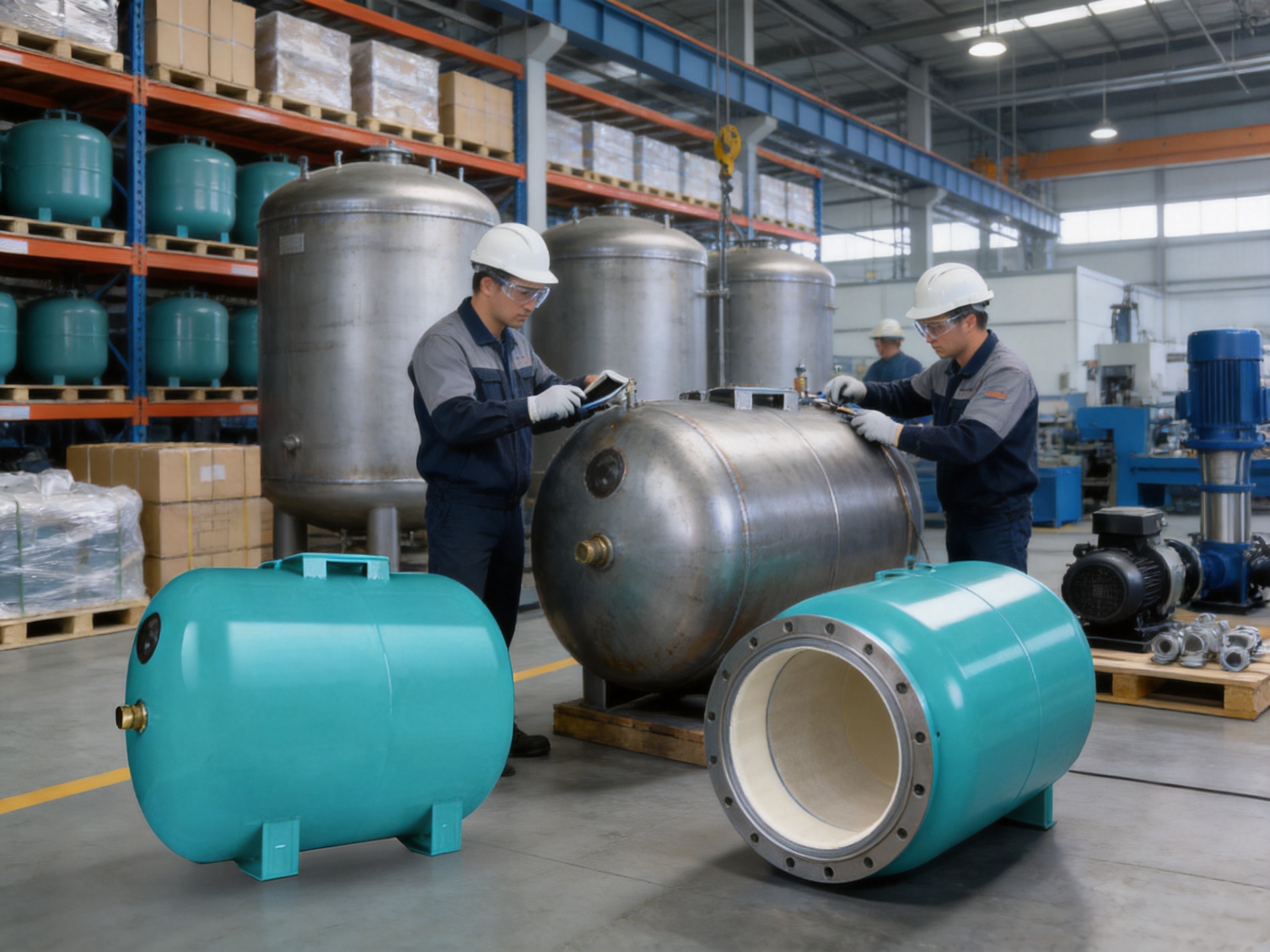
Water supply systems depend on stable pressure, controlled pump operation, and dependable hydraulic storage. When demand changes quickly, a pump that starts and stops too often can experience unnecessary wear, consume more electricity, and deliver an inconsistent flow. A properly selected pressure tank helps solve these problems by storing pressurized water, reducing pump cycling, and supporting a more comfortable and efficient water supply system.
The NCF Series 6 Bar to 10 Bar 1 Inch Connector Horizontal Water Pressure Tank is designed for domestic, agricultural, commercial, and light industrial water applications. It combines a carbon steel pressure vessel, replaceable membrane technology, flexible pressure ratings, and a practical horizontal configuration. Available in 60-liter, 80-liter, and 100-liter models, the series is suitable for booster systems, surface pump installations, domestic water supply equipment, irrigation systems, and other applications where pressure stability is important.
Manufactured by Taizhou Edwin Electric Co., Ltd., the tank benefits from the experience of an integrated pump and water equipment manufacturer with capabilities in research and development, production, quality control, export coordination, and technical support. The company’s wider product portfolio includes deep well pumps, submersible pumps, domestic booster pumps, circulation pumps, solar water pumps, intelligent booster pumps, and water treatment accessories. This broad product knowledge allows the pressure tank to be developed and supplied as part of a complete pumping solution rather than as an isolated component.
A pressure tank is a hydraulic storage device installed in a water pumping system. It contains a volume of water separated from compressed air or gas by a flexible membrane. As the pump fills the tank, the water pressure increases and compresses the air chamber. When a tap, irrigation outlet, or other water consumer opens, stored water can flow into the system before the pump needs to start again.
This operating principle provides several important benefits. First, the tank reduces the number of pump starts and stops. Second, it helps maintain a more stable pressure during short periods of demand. Third, it provides a reserve of pressurized water for small or intermittent consumption. Finally, it can reduce mechanical and electrical stress on the pump, motor, pressure switch, control panel, and pipework.
Without a pressure tank, a pump may start every time a small amount of water is required. This can occur when a user opens a tap briefly, when a toilet refills, or when a small irrigation valve operates. Frequent cycling can shorten the service life of the motor and switching components. The NCF Series is designed to provide the hydraulic buffer required to make these systems operate more smoothly.
The NCF Series is a horizontal water pressure tank with a 1-inch connector and replaceable membrane construction. Its pressure vessel is made from carbon steel, providing a strong and economical structure for pressurized water storage. The internal membrane separates the stored water from the air chamber, helping reduce direct contact between the water and the steel shell.
The series is available in three practical capacities: NCF60L, NCF80L, and NCF100L. These capacities cover a wide range of small and medium water supply requirements. The tanks can be selected with maximum pressure ratings of 6 bar, 8 bar, 10 bar, or 16 bar, depending on the system design and available configuration.
The horizontal design is particularly useful when installation height is limited or when the tank must be placed beside a surface pump, booster pump, or control assembly. It can be integrated into compact equipment packages and can help simplify service access in plant rooms, utility spaces, agricultural pump houses, and domestic installations.
| Model | Maximum Pressure Options | Length | Height | Precharge Pressure | Connector | Packing Volume |
| NCF60L | 6, 8, 10, or 16 bar | 665 mm | 408 mm | 1.8–2.0 bar | 1 inch | 0.1031 CBM |
| NCF80L | 6, 8, 10, or 16 bar | 618 mm | 470 mm | 1.8–2.0 bar | 1 inch | 0.1325 CBM |
| NCF100L | 6, 8, 10, or 16 bar | 705 mm | 470 mm | 1.8–2.0 bar | 1 inch | 0.1524 CBM |
The dimensions and technical values in the table provide a useful starting point for system planning. Final selection should also consider pump flow, pump head, pressure-switch settings, daily water demand, pipe size, installation temperature, and the number of outlets operating at the same time.
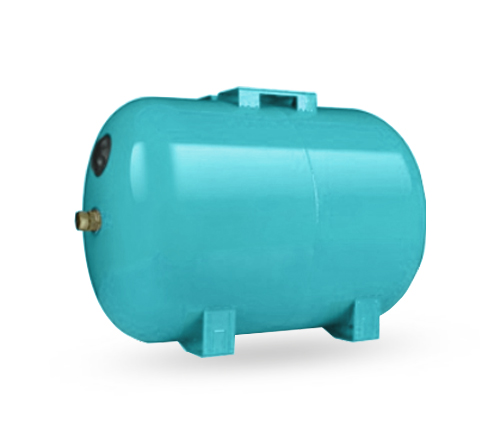
NCF Series 6 Bar to 10 Bar 1 Inch Connector Horizontal Water Pressure Tank
One of the most important features of the NCF Series is its replaceable membrane. The membrane separates the water from the compressed air inside the tank. This design supports efficient pressure storage while helping protect the outer steel shell from continuous exposure to the stored water.
A replaceable membrane offers a significant service advantage compared with pressure tanks that require complete replacement when the internal flexible component reaches the end of its useful life. If the membrane becomes worn after extended operation, qualified maintenance personnel may be able to replace it without discarding the entire tank body. This can reduce long-term maintenance cost, simplify repair planning, and support a more sustainable product life cycle.
The replaceable design is also valuable for distributors, installers, and service companies. A standard replacement membrane can be stocked separately, allowing maintenance work to be organized more efficiently. Instead of removing an entire pressure tank and sourcing a new vessel, a technician may restore the tank through a targeted service procedure, provided the vessel and all other components remain suitable for continued use.
The membrane material options listed for the series include Butyl and EPDM. Both materials are widely used in water system applications, but the best selection depends on the operating environment, water characteristics, temperature, chemical exposure, and local application requirements. Butyl is commonly selected for its low gas permeability and suitability for pressure storage. EPDM is known for broad resistance to heat, weathering, and many water-related environments.
Material selection should always be confirmed before ordering, especially where the water contains unusual chemical content, where the tank will operate at elevated temperature, or where local regulations specify a particular elastomer. The product information identifies working temperature ranges for both membrane options, and project engineers should verify the applicable range for the exact configuration being supplied.
The pressure vessel is manufactured from carbon steel, a material widely used for pressurized storage equipment because of its strength, availability, and cost efficiency. Carbon steel allows the tank to withstand the mechanical stresses associated with internal pressure while keeping the product commercially accessible for residential, agricultural, and commercial projects.
A well-designed carbon steel shell must be formed, welded, finished, and inspected with care. The geometry of the tank influences pressure distribution, dimensional stability, transport durability, and connection alignment. Consistent forming and welding practices are therefore essential to product reliability.
The use of a carbon steel flange supports the replaceable membrane construction. The flange helps secure the membrane assembly and provides access for maintenance when replacement is required. Proper flange alignment, sealing, and tightening are important for preventing leakage and ensuring that the membrane operates correctly throughout the pressure cycle.
Compared with some non-metallic alternatives, carbon steel offers a robust structure and a familiar installation format for pump professionals. Installers, wholesalers, and maintenance technicians commonly understand carbon steel pressure vessels, standard pipe connectors, and pressure-control components. This familiarity can reduce installation complexity and simplify future servicing.
Carbon steel tanks are also suitable for integration into packaged systems. A pump supplier can combine the tank with a surface pump, booster pump, pressure switch, pressure gauge, check valve, and control cabinet. The resulting package can be configured for domestic water supply, irrigation, commercial washdown, or other pressure-boosting applications.
The NCF Series is offered with maximum pressure options of 6 bar, 8 bar, 10 bar, and 16 bar. This range allows system designers to select a tank that corresponds to the pressure requirements of the pump and application. A low-pressure domestic system may require a different pressure class from a commercial booster installation or a high-head irrigation system.
Pressure selection should never be based only on the normal operating pressure. The system designer must consider the maximum possible pressure, pump shut-off head, pressure-switch cut-out setting, water hammer, temperature, pipe elevation, and any pressure increase caused by control malfunction. The selected tank must be suitable for the highest pressure that could reasonably occur in service.
The 6-bar and 8-bar configurations can be appropriate for many domestic and light-duty systems when the pump and control settings are within the corresponding limits. The 10-bar version provides additional capacity for higher-pressure booster arrangements. The 16-bar option is intended for systems that require a higher pressure class, subject to confirmation of the exact product configuration and application conditions.
The availability of several pressure classes gives distributors more flexibility in inventory planning. A product range with multiple pressure options can serve a wider customer base without requiring completely different tank designs for every application. It also allows engineering teams to choose a product more precisely instead of operating a lower-rated tank close to its maximum capability.
The listed precharge pressure for the NCF Series is 1.8–2.0 bar. Precharge refers to the air pressure in the tank before water is introduced. It is a key factor in the usable water volume and the behavior of the pump control system.
If the precharge is too low, the membrane may expand excessively and the tank may deliver less effective pressure support. If the precharge is too high, the tank may accept too little water and may not provide the expected reduction in pump cycling. Correct adjustment is therefore essential.
In a typical pressure-switch installation, the precharge is often set below the pump cut-in pressure. The exact difference depends on the pressure-switch design, system requirements, tank orientation, and manufacturer guidance. A qualified installer should verify the setting using a reliable pressure gauge while the tank is isolated and fully depressurized on the water side.
Precharge should be checked during commissioning and periodically during maintenance. Temperature changes, membrane aging, valve leakage, or service work can affect the pressure. A routine inspection can identify an abnormal condition before it causes poor water delivery or excessive pump cycling.
Because the tank operates as part of a complete hydraulic system, precharge should not be evaluated in isolation. Pump capacity, pipe resistance, water demand, pressure-switch settings, and tank size all interact. Correct sizing and adjustment are more important than simply choosing the largest available tank.
The horizontal shape of the NCF Series provides installation flexibility. In many pump rooms, vertical clearance is limited by ceilings, shelves, pipe racks, or existing equipment. A horizontal vessel can fit beneath a workbench, beside a surface pump, or within a compact booster skid where a tall tank would be impractical.
Horizontal tanks are also convenient for packaged pumping equipment. A manufacturer or system integrator can mount the pressure tank in a coordinated layout with the pump and controls. This can reduce the overall footprint and make the equipment easier to transport and install at the project site.
The 1-inch connector is compatible with many common small and medium pumping arrangements. It provides a familiar connection size for installers and can simplify integration with standard fittings, valves, pressure switches, and manifolds. Connection compatibility should nevertheless be checked against the existing pipework and the flow requirements of the system.
During installation, the tank should be positioned on a stable and level support. The support must be capable of carrying the tank weight when full of water, not merely its empty weight. Piping should be arranged so that excessive mechanical force is not transferred to the connector. A shut-off valve and suitable drain arrangement can make future maintenance safer and more convenient.
Access to the air valve, flange, connector, and surrounding components should be maintained. A tank that is installed in a confined location without service clearance may be difficult to inspect or repair. Good installation planning improves both operational reliability and the practical value of the replaceable membrane design.
The NCF Series offers several advantages over pressure tanks in which the internal membrane cannot be replaced. The first is serviceability. When a replaceable membrane reaches the end of its service life, the tank may be repaired rather than automatically discarded, assuming the shell and other components remain safe and suitable.
The second advantage is lifecycle economy. The initial purchase price is only one part of the cost of ownership. Maintenance labor, spare parts availability, downtime, disposal, and replacement logistics can have a substantial effect on the total cost of a pressure system. A replaceable membrane can help reduce these long-term burdens.
The third advantage is flexibility for international distribution. A carbon steel vessel with a replaceable internal component can be supported through a spare-parts program. Importers and service companies can hold membranes, seals, and related components in inventory rather than storing complete tanks in every size and pressure rating.
The fourth advantage is system integration. With several tank capacities and pressure classes, the series can be matched with different pumps and control systems. This is more useful than a one-size-fits-all approach, particularly for a manufacturer serving domestic, agricultural, commercial, and industrial customers.
Compared with basic low-cost pressure tanks, the NCF Series also provides a clearer maintenance pathway. The presence of a carbon steel flange and replaceable membrane makes the internal construction more service-oriented. For professional users, this can be more valuable than a slightly lower initial cost from a non-serviceable product.
In homes, apartments, and small residential buildings, the tank can be used with a surface pump or booster pump to stabilize water pressure. It can reduce the need for the pump to start whenever a small amount of water is consumed. This is useful for kitchen taps, bathroom fixtures, washing machines, and toilet flushing systems.
In a domestic installation, noise reduction can be an additional benefit. Fewer pump starts may reduce the frequency of motor noise and vibration, especially when the pump is located close to living areas. The pressure tank can also provide a short reserve of water during brief demand events or momentary control delays.
Small agricultural operations often experience changing water demand as valves are opened and closed. A pressure tank can provide a buffer between the pump and the irrigation network. It may be used with surface pumps, garden pumps, or booster equipment serving greenhouse lines, small sprinkler systems, and localized irrigation installations.
For irrigation, the selected pressure class and tank capacity must correspond to the pump curve and the requirements of the irrigation devices. Systems with long pipe runs, elevation changes, or multiple zones require careful hydraulic assessment. The tank supports pressure stability, but it does not replace correct pump sizing or proper valve control.
Commercial properties often require stable water pressure for washrooms, cleaning equipment, service areas, and light process operations. A pressure tank can support a booster pump system by reducing rapid cycling during intermittent demand. The 80-liter and 100-liter models may be suitable for applications where demand is greater than that of a single household, subject to engineering calculation.
Commercial installations also benefit from maintainability. A tank with a replaceable membrane can be incorporated into a planned preventive-maintenance program. The maintenance team can inspect precharge pressure, connection condition, flange sealing, and vessel exterior during routine service.
Solar pumping systems may experience variable power availability because of changing sunlight conditions. A pressure tank can help separate short-term water demand from immediate pump operation. When integrated correctly with a solar water pump, storage tank, controller, and water distribution network, it can improve the usability of the system.
The tank does not replace the need for adequate water storage where solar energy is intermittent for long periods. However, it can provide useful pressure storage and reduce the number of starts and stops when the solar pump and control system are operating within the required range.
Booster pumps are frequently used where municipal pressure is insufficient or where water must be delivered to upper floors, remote buildings, or process equipment. The NCF Series can be paired with conventional pressure switches or more advanced intelligent booster controls.
In an intelligent system, the controller may vary pump speed according to demand. Even in such systems, a pressure tank can provide damping, reduce rapid pressure fluctuations, and support small demand events. The tank size and precharge should be selected according to the control strategy rather than copied from a conventional fixed-speed installation.
Pool and spa systems can include circulation pumps, filtration equipment, heating systems, and water-treatment devices. A pressure tank may be applied in related pressure-boosting or auxiliary water supply arrangements, provided that the materials, membrane, pressure class, and water chemistry are suitable.
Because pool chemicals can affect materials, the exact application must be reviewed before use. The compatibility of the membrane and all wetted components should be confirmed for the intended water-treatment environment.
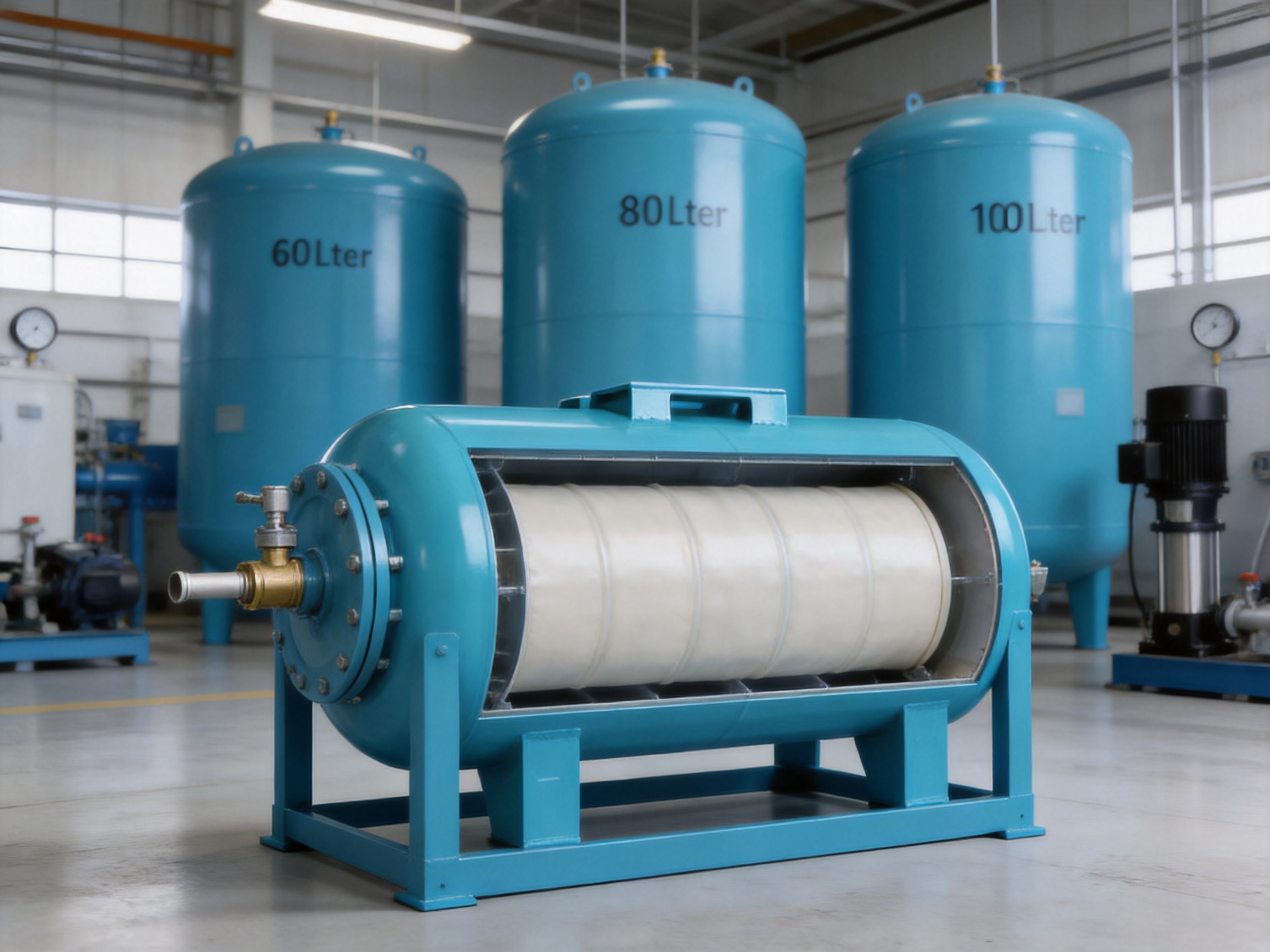
Taizhou Edwin Electric Co., Ltd. was founded in 2008 and operates as an integrated manufacturing enterprise. Its activities include independent research and development, mass production, and global export. This combination is important because a pressure tank is not only a fabricated metal container; it is a functional component that must work correctly with pumps, controls, valves, pipework, and water systems.
The company’s experience across multiple pump categories supports practical product development. Its product range includes deep well pumps, submersible pumps, domestic booster pumps, circulation pumps, solar water pumps, intelligent booster pumps, end suction pumps, commercial multistage pumps, garden pumps, pool and spa pumps, and pump accessories. This breadth helps engineers understand the performance requirements that pressure tanks must meet in real installations.
An integrated product portfolio also supports compatibility planning. The same manufacturer can evaluate how a tank interacts with pump head, flow rate, control pressure, starting frequency, and application conditions. This can be an advantage over suppliers that sell pressure vessels without a broader understanding of pumping-system behavior.
Mass production provides another strength. Repeatable manufacturing methods help maintain consistent dimensions, connector positions, flange interfaces, and product configurations. Consistency is especially important for distributors and system builders who need products that fit standardized installation designs.
Global export experience contributes to packaging, documentation, order coordination, and logistics planning. The technical data identifies packing volumes for each model, which can assist importers and distributors when calculating container utilization, warehouse requirements, and transportation costs. Efficient packaging can reduce handling damage and improve supply-chain planning.
The production of a pressure tank generally involves several controlled stages. These may include steel material preparation, shell forming, welding, surface treatment, flange fabrication, membrane preparation, assembly, pressure testing, dimensional inspection, and packaging. Each stage affects the final performance of the tank.
Carbon steel sheet or other approved vessel material must be selected according to the pressure class and design requirements. Consistent material thickness and reliable traceability support stable production. Material surfaces should be checked for damage, contamination, and irregularities before forming.
The shell must be formed to the required geometry with controlled dimensions. Accurate forming helps maintain the intended pressure distribution and ensures that the flange, support, and connector assemblies align correctly. Dimensional consistency is also important when tanks are integrated into packaged pump units.
Welding is a critical manufacturing operation for any pressurized steel vessel. Stable welding parameters, suitable preparation, controlled heat input, and trained operators help reduce the risk of defects. Welded areas should be inspected according to the applicable internal quality procedures and project requirements.
The flange must be correctly positioned and securely attached to the vessel. The connector needs to maintain accurate alignment with the system pipework. Proper assembly supports membrane installation, sealing performance, and service access.
Carbon steel requires appropriate surface protection to reduce the risk of external corrosion during storage, transportation, and operation. The treatment method should be suitable for the intended environment. Installers should still protect the tank from prolonged exposure to standing water, aggressive chemicals, and severe weather unless the specific finish is designed for those conditions.
Pressure and leakage testing are essential for verifying vessel integrity. Testing helps identify problems with welds, joints, flanges, seals, or connectors before the product is shipped. A responsible quality system should define test procedures, test pressures, holding times, acceptance criteria, and documentation practices.
Final inspection can include visual checks, dimensional verification, connector inspection, membrane assessment, label confirmation, and packaging review. The listed packing volumes for the NCF models demonstrate the importance of standardized logistics planning. Correct packaging helps protect the tank during international transportation and warehouse handling.
Buyers of pressure tanks often need more than a product dimension and a nominal capacity. They may require help selecting the correct pressure rating, membrane material, connector size, precharge, replacement parts, and pump combination. A manufacturer with experience in pumps and water systems is better positioned to provide meaningful technical guidance.
Taizhou Edwin Electric Co., Ltd. has developed a professional structure that includes associated import and export operations. Taizhou Haipai Import & Export Co., Ltd. and Golden Falcon Industrial Co., Ltd. were established in 2012 to support procurement planning, order tracking, cross-border delivery, and foreign trade services. For international customers, these functions can simplify communication and improve order coordination.
Global customers may purchase pressure tanks together with pumps, valves, pipes, controllers, and other accessories. A supplier capable of supporting one-stop procurement can reduce the number of separate vendors involved in a project. This may simplify specifications, documentation, shipping arrangements, and after-sales communication.
The company’s focus on new energy and intelligent technology since 2018 also reflects the changing needs of the water-pumping industry. Solar pumping and intelligent booster systems require equipment that can operate efficiently under variable conditions. Pressure tanks remain valuable in these systems when correctly selected and integrated.
Tank sizing should begin with the application demand. Important questions include how many outlets may operate simultaneously, how often water is used, what flow rate is required, what pressure range is acceptable, and how frequently the pump can start without excessive wear.
A larger tank generally provides more stored water and can reduce pump cycling, but it also requires more installation space and may increase initial cost. A smaller tank may be appropriate for a low-demand system, but it may not provide sufficient buffer capacity for a large building or irrigation network. The correct choice is the one that matches the system’s actual hydraulic behavior.
The pump curve must be reviewed together with the tank rating. The pump’s maximum shut-off pressure must not exceed the permissible pressure of the selected tank and associated components. Pressure switches, gauges, relief valves, check valves, pipework, and connectors must all be compatible with the intended pressure class.
Temperature must also be considered. The supplied product information identifies working temperature ranges for Butyl and EPDM membrane configurations, with values presented in the product data as approximately -10°C to 99°C and in the technical information as approximately -20°C to 99°C. Because these figures differ between sections of the supplied information, the exact working-temperature limit should be confirmed with the manufacturer for the selected model and membrane material before use.
Water quality can affect service life. If the system contains abrasive particles, aggressive chemicals, oils, or unusual additives, the membrane, connector, seals, and vessel coating should be reviewed for compatibility. Filtration may be advisable where suspended solids could damage pumps or valves.
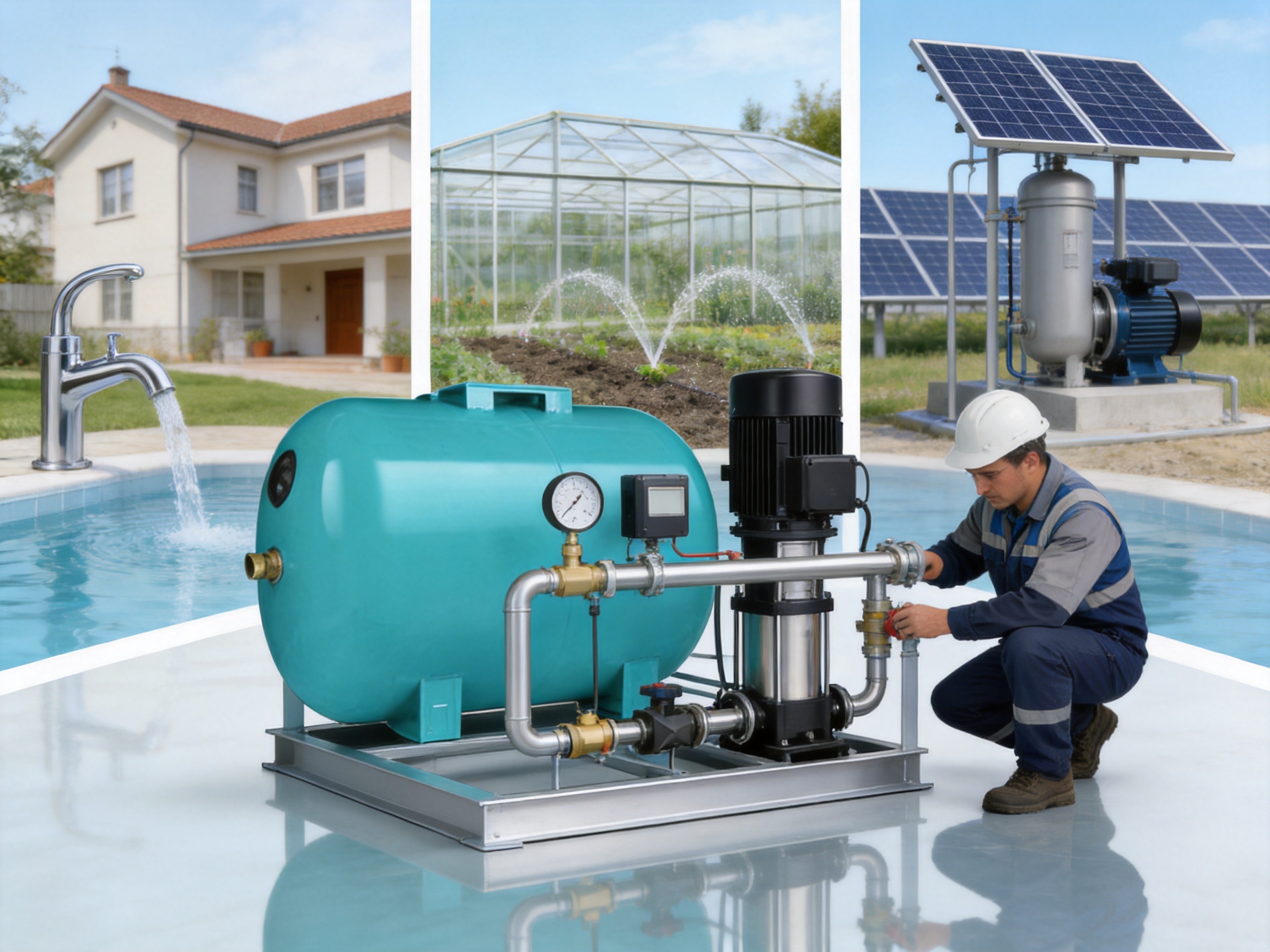
Before installation, inspect the tank for transport damage, deformation, corrosion, missing parts, or connector damage. Confirm the model, capacity, maximum pressure, membrane material, and connector size against the purchase order and system design.
Install the tank on a firm, level support that can carry its operating weight. Do not rely on unsupported pipework to hold the vessel. Use appropriate brackets, frames, or mounting supports according to the installation layout.
Connect the tank using correctly sized fittings and sealing materials. Avoid cross-threading or excessive tightening. The pipe should be independently supported so that bending loads are not transferred to the tank connector.
Check the precharge before filling the water side. The correct procedure normally requires isolating the tank from the water system and releasing water pressure from the tank side. Use a calibrated gauge and adjust the air pressure only within the limits recommended for the application.
After connection, open valves gradually and inspect all joints for leakage. Set the pressure switch or controller according to the pump, tank, and system requirements. Confirm that the pump starts and stops at the intended pressures and that no rapid cycling occurs during low-flow demand.
After commissioning, record the initial precharge, pressure settings, model number, installation date, membrane type, and maintenance contact. This information can be valuable for future service and replacement-parts planning.
Routine maintenance helps preserve the performance of the pressure tank and the wider pumping system. The external vessel should be inspected for corrosion, impact damage, unusual vibration, water leakage, and coating deterioration. The connector and flange area should receive particular attention.
Precharge pressure should be checked according to the operating schedule and manufacturer recommendations. A significant loss of precharge may indicate a leaking air valve, membrane problem, incorrect measurement procedure, or other system issue. If the tank becomes waterlogged, the pump may start and stop more frequently than normal.
Unusual pump behavior can provide an early warning. Rapid cycling, unstable pressure, delayed pump stopping, low usable water volume, or repeated pressure-switch operation may indicate that the tank requires inspection. Other causes, such as a leaking pipe, faulty check valve, blocked filter, or incorrect controller setting, should also be considered.
When a membrane replacement is required, the system must be isolated, depressurized, and serviced by qualified personnel. The replacement membrane, flange seal, fasteners, and related parts should be compatible with the exact tank model. After reassembly, the tank should be checked for correct sealing and restored to the appropriate precharge.
Any pressure-vessel repair must respect local safety rules and the manufacturer’s service instructions. A tank with severe corrosion, deformation, cracked welds, or other structural damage should not be returned to service merely by replacing the membrane.
For distributors, the NCF Series offers a clear product structure with three capacities, multiple pressure options, a standard 1-inch connector, and replaceable membrane technology. This makes it easier to build a product catalog that serves several market segments.
The 60-liter model can support compact installations where space is limited. The 80-liter model offers an intermediate solution for domestic and light commercial systems. The 100-liter model provides greater storage capacity for larger demand patterns, subject to correct hydraulic sizing.
The standardized series can also simplify spare-parts management. Distributors may stock replacement membranes, seals, and related service parts alongside complete tanks. This can improve customer support and create additional maintenance-service opportunities.
International buyers can benefit from the manufacturer’s experience with export packaging and cross-border order handling. Packing volume data helps with freight calculations and warehouse planning. Combined procurement of pressure tanks and pumps may also reduce administrative effort and improve consistency between system components.
A replaceable membrane can contribute to longer product utilization because the entire steel vessel does not necessarily need to be discarded when the membrane reaches the end of its service life. Extending the working life of the pressure vessel can reduce material waste and lower the environmental impact associated with complete product replacement.
Efficient pump operation can provide another indirect benefit. By reducing unnecessary pump starts, a pressure tank may help reduce mechanical losses and improve operating efficiency. The actual energy benefit depends on the pump type, control method, demand pattern, pipework, and pressure settings.
Responsible lifecycle management includes correct installation, regular inspection, suitable membrane selection, timely service, and proper disposal of worn components. Buyers should consider not only the purchase price but also serviceability, spare-parts availability, shipping requirements, and expected operating conditions.
The pressure tank is one part of a complete water system. Its value increases when it is correctly matched with the pump, controller, valves, pipes, and application. A manufacturer with multiple product lines can help customers develop a more coordinated system solution.
Edwin Pump’s wider portfolio includes products for deep wells, domestic water boosting, agricultural irrigation, solar pumping, circulation, commercial multistage applications, and general water transfer. This range allows the company to serve projects that require more than one pump category or accessory.
For a domestic booster package, the tank may be combined with a surface pump, pressure switch, gauge, check valve, and pipe fittings. For a solar application, it may be integrated with a solar pump, controller, storage tank, and distribution network. For commercial use, it may form part of a multistage booster assembly with several pumps and intelligent controls.
This system-oriented approach can help customers avoid mismatched pressure ratings, incompatible connectors, and unclear responsibility between different suppliers. It also supports technical communication from initial product selection through order tracking, installation, and after-sales service.
The main purpose is to store pressurized water and reduce unnecessary pump starts and stops. It helps stabilize system pressure and provides a reserve of water for short or intermittent demand events.
The series includes NCF60L, NCF80L, and NCF100L models, with nominal capacities of 60 liters, 80 liters, and 100 liters.
All listed models use a 1-inch connector. The connector should still be checked against the actual pump system, fittings, and pipework before installation.
The product data lists maximum pressure options of 6 bar, 8 bar, 10 bar, and 16 bar. The correct option must be selected according to the pump shut-off pressure, control settings, system design, and safety requirements.
Yes. The NCF Series uses a replaceable membrane, allowing qualified service personnel to replace the internal membrane when necessary, provided that the pressure vessel remains structurally sound.
The supplied information identifies Butyl and EPDM membrane options. The appropriate material depends on temperature, water quality, chemical exposure, and the application. Buyers should confirm material compatibility for the specific project.
The technical data lists a precharge pressure of 1.8–2.0 bar. The final setting should be adjusted according to the pump control method and application requirements.
Yes. Its horizontal configuration, compact range of capacities, and 1-inch connector make it suitable for many domestic booster systems. Correct sizing and pressure adjustment remain essential.
Yes, the tank may be used in suitable irrigation systems with surface pumps, garden pumps, or booster pumps. The pressure rating and capacity must match the irrigation layout, pump curve, pipe length, elevation, and valve arrangement.
Check the required water demand, pump flow and head, maximum system pressure, pressure-switch settings, installation space, connector size, membrane material, operating temperature, water quality, and maintenance access.
The horizontal design is useful where vertical clearance is limited. It can fit beside pumps, beneath work surfaces, or within compact packaged systems while still providing pressure storage capacity.
Tank capacity is the total internal volume of the vessel. Usable water volume is the amount that can be delivered between the pump cut-out and cut-in pressures. Usable volume depends on precharge, pressure settings, membrane behavior, and system conditions, so it is lower than the nominal tank capacity.
The inspection interval depends on the application and operating conditions. It should be checked during commissioning and periodically afterward, particularly if the pump begins cycling frequently or system pressure becomes unstable.
A membrane may be replaced when the vessel, flange, connector, and other structural parts remain safe and serviceable. A qualified technician should inspect the tank before returning it to operation.
No. The supplied material presents slightly different temperature ranges in different sections. The exact working-temperature limit should therefore be confirmed with the manufacturer for the selected membrane and model before purchase or installation.
A pump manufacturer can provide broader system knowledge, including pump matching, pressure control, application guidance, spare-parts planning, and coordinated procurement of related equipment. This can reduce the risk of selecting incompatible components.
The NCF Series 6 Bar to 10 Bar 1 Inch Connector Horizontal Water Pressure Tank is a practical pressure-storage solution for domestic, agricultural, commercial, and selected industrial water systems. Its carbon steel vessel provides a robust structure, while the replaceable membrane supports long-term serviceability and more efficient lifecycle management.
The 60-liter, 80-liter, and 100-liter models give buyers useful capacity choices. Multiple maximum-pressure options help system designers match the tank to different pump and control arrangements. The horizontal format supports installation in compact or low-clearance locations, and the 1-inch connector provides compatibility with many common small and medium pumping systems.
Its strongest value comes from the combination of product design and manufacturer capability. Taizhou Edwin Electric Co., Ltd. brings experience in research and development, mass production, pump-system engineering, export logistics, and one-stop procurement. Its broad product portfolio enables the pressure tank to be considered as part of a complete pumping solution rather than as a disconnected accessory.
For buyers seeking a serviceable, flexible, and professionally supported pressure tank, the NCF Series provides a strong foundation. Correct model selection, pressure setting, installation, membrane choice, and maintenance remain essential to achieving reliable performance. When these factors are addressed, the tank can help reduce pump cycling, stabilize water pressure, improve equipment protection, and support a more dependable water supply system.
1. Product technical information for the NCF Series replaceable membrane pressure tank, including model dimensions, pressure options, connector size, precharge pressure, and packing volume.
2. Manufacturer-provided product description for carbon steel pressure vessels with replaceable Butyl and EPDM membranes.
3. General engineering principles for hydropneumatic pressure tanks, pump cycling control, and water supply system design.
4. General maintenance practices for pressurized water vessels, membrane tanks, pressure switches, and booster pump systems.
5. Manufacturer company information concerning research and development, mass production, international export, pump product categories, and one-stop procurement services.
edwina@edwin-pump.com
+86-13586290903 (WhatsApp)
Xuri Gongliang Cutting Tool Entrepreneurship Park, Wenqiao Town, Wenling City, Taizhou City, Zhejiang Province, China

High Performance Smart Pump Factory


 English