
edwina@edwin-pump.com

View All Products
en
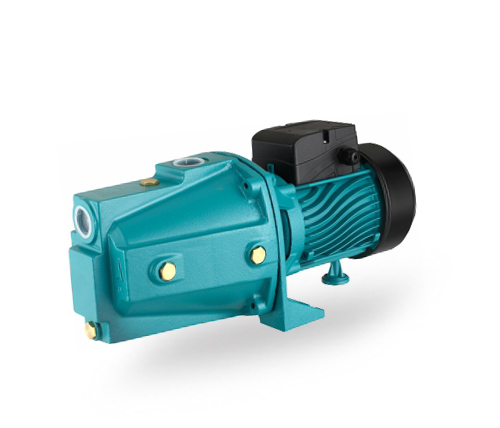
Reliable water management is essential in gardens, greenhouses, small farms, fish-breeding facilities, poultry-raising areas, and residential properties. Whether the task involves irrigating planting beds, transferring clean water, supplying a domestic system, or maintaining stable pressure at several outlets, the pump must provide dependable flow while remaining simple to install and operate. The EGMP-RY Series Garden Use of Multi-stage Self-priming Pump is designed for these practical requirements.
This garden self-priming pump combines multi-stage hydraulic performance with self-priming capability in a compact surface-mounted design. It is intended for clean water and other liquids with physical and chemical properties similar to water. Its maximum suction lift is 8 meters, while the maximum permitted fluid temperature is +35°C. A built-in thermal protector, Class F insulation, IPX4 protection, C&U bearing support, and a maximum ambient temperature of +40°C contribute to dependable operation in demanding everyday environments.
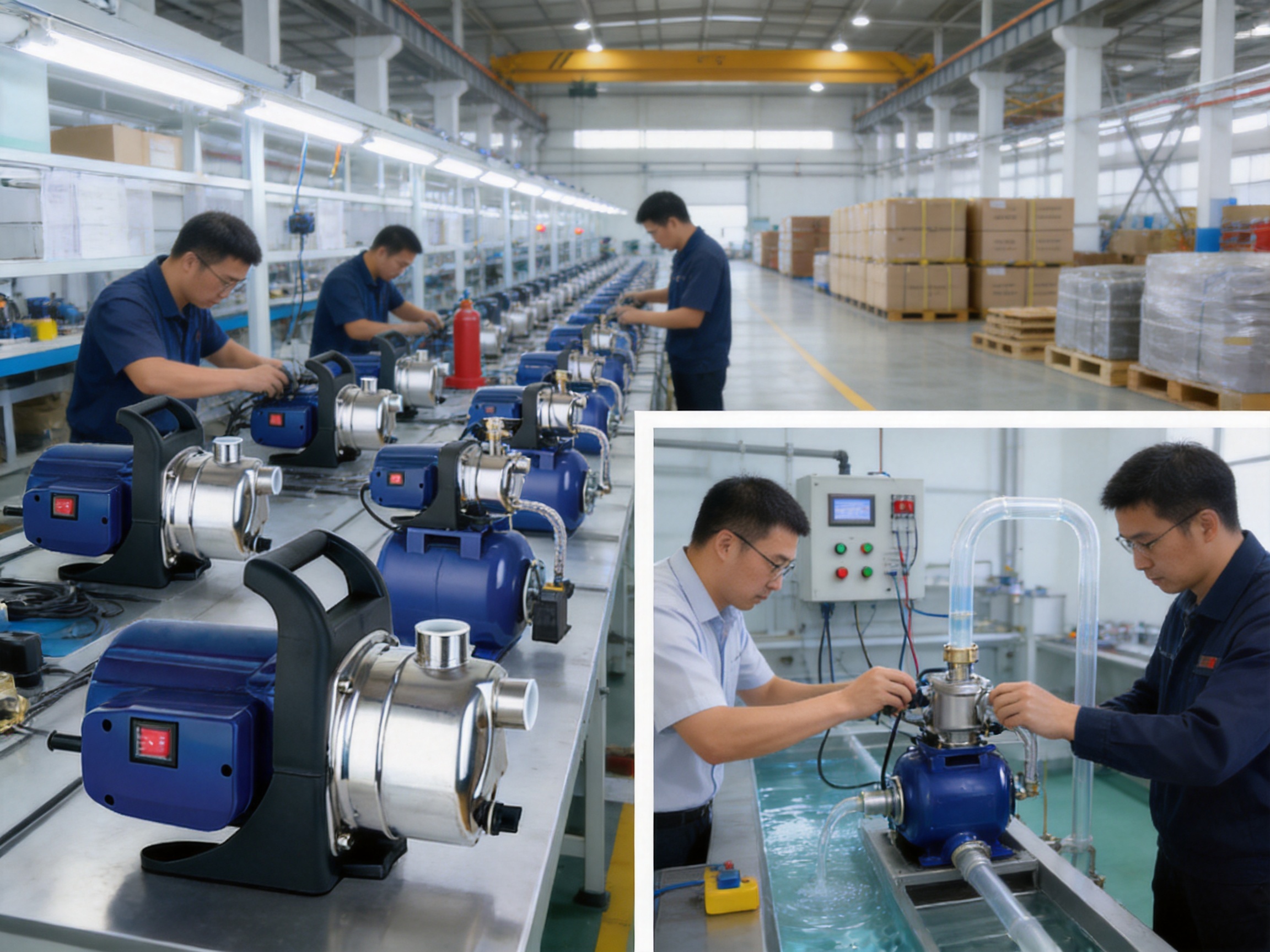
The product is manufactured by Taizhou Edwin Electric Co., Ltd., an integrated pump enterprise with experience in independent research and development, mass production, international export, procurement coordination, and cross-border delivery. The company’s wider product portfolio includes deep well pumps, submersible pumps, domestic booster pumps, circulation pumps, solar water pumps, intelligent booster pumps, and other water-treatment-related products. This broad technical background supports the development of practical pump solutions for residential, agricultural, commercial, and industrial users.
The EGMP-RY Series is a surface pump intended for applications where the water source is accessible from above ground and the pump can be installed outside the water. Unlike a conventional non-self-priming pump, a self-priming model is designed to remove air from the suction line after the initial priming process, helping the pump establish water flow more conveniently when the installation is correctly configured.
The multi-stage hydraulic structure is particularly useful where users need more pressure than a basic single-stage garden pump can provide. Each hydraulic stage contributes to the development of pressure, allowing the pump to serve irrigation lines, domestic water points, greenhouse systems, and similar applications. The exact performance of a particular model depends on its configuration, motor rating, pipe arrangement, elevation, and operating conditions, so selection should always be made according to the required flow and head.
In practical terms, the pump is positioned between a simple garden transfer pump and a more specialized commercial pressure system. It offers a useful balance of installation flexibility, pressure capability, operating convenience, and accessible maintenance. This makes it suitable for users who need more than basic water movement but do not necessarily require a large industrial pumping installation.
The pump is designed for clean water or liquids similar to water in physical and chemical behavior. It is not intended for abrasive slurries, heavily contaminated wastewater, corrosive chemicals, fuel, or liquids outside the specified temperature range. Correct fluid selection is important for protecting the hydraulic components, seals, bearings, and motor system.
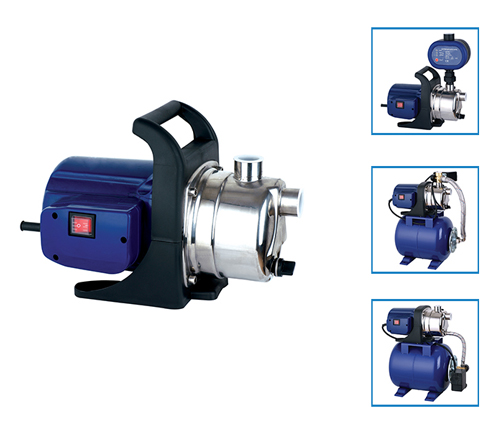
EGMP-RY Series Garden Use of Multi-stage Self-priming pump
The EGMP-RY Series includes several protective and operating features selected for garden, agricultural, greenhouse, and domestic water applications. The following table summarizes the core information available for the product series.
| Specification | Product Information | Practical Significance |
|---|---|---|
| Product type | Garden multi-stage self-priming pump | Suitable for surface installation and applications requiring convenient water suction and useful pressure |
| Recommended fluid | Clean water or liquids similar to water | Supports irrigation, domestic water supply, greenhouse use, and other clean-water duties |
| Maximum fluid temperature | +35°C | Defines the upper temperature limit for the pumped liquid |
| Maximum suction lift | +8 m | Allows the pump to draw water from a source located below the pump, subject to correct installation conditions |
| Bearing | C&U bearing | Provides a recognized bearing solution for motor support and rotating reliability |
| Motor protection | Built-in thermal protector | Helps protect the motor against overheating during abnormal operating conditions |
| Insulation class | Class F | Provides a higher thermal insulation category for the motor winding system |
| Protection class | IPX4 | Offers protection against water splashing from different directions when installed appropriately |
| Maximum ambient temperature | +40°C | Defines the recommended upper surrounding temperature for operation |
| Warranty | 1 year | Applies according to the manufacturer’s general sales conditions |
These specifications should be interpreted together rather than individually. For example, the 8-meter maximum suction figure does not mean that every installation will achieve the same result. Actual suction performance is influenced by water temperature, pipe diameter, pipe length, the number of elbows, foot-valve condition, airtightness, altitude, and the presence of air leaks. A short, properly sealed suction line with an appropriate diameter will generally provide better results than a narrow, lengthy, or poorly sealed line.
One of the main advantages of the EGMP-RY Series is its multi-stage hydraulic design. In a multi-stage pump, water passes through more than one impeller and guide structure. The stages work together to increase pressure progressively. This arrangement is useful when the installation includes elevated irrigation areas, long pipe runs, sprinklers, multiple taps, or domestic outlets that require a stable pressure level.
A basic transfer pump may move water effectively over a short distance but may not provide sufficient pressure for a sprinkler, elevated tank, or several outlets operating simultaneously. A multi-stage pump can offer a more appropriate pressure profile for these conditions. It is therefore a practical choice for garden users who need both water movement and pressure delivery.
For greenhouse irrigation, the pump can support water distribution through branches, hoses, or small irrigation networks. For garden irrigation, it can be connected to sprinklers, watering lines, and manual outlets, provided that the required flow and pressure fall within the selected model’s performance range. For domestic automatic water supply, it can serve as the main surface pump in combination with a pressure controller or tank system.
The multi-stage principle also helps the pump address installations where the water source is not immediately next to the point of use. Long pipe distances and moderate elevation changes create hydraulic resistance. A properly selected multi-stage unit can overcome this resistance more effectively than a low-pressure garden pump.
Users should avoid selecting a pump solely according to the maximum head shown on a performance curve. The correct selection must consider the operating point, which combines flow rate and total dynamic head. Total dynamic head includes vertical elevation, pipe friction, fittings, valves, equipment resistance, and the pressure needed at the outlet. Professional distributors can help match the pump to the actual system requirements.
Self-priming capability is valuable in garden and domestic installations because surface-mounted pumps are often installed above the water source. During initial commissioning, the pump and suction line normally require proper filling with water. Once correctly primed, the self-priming structure helps the pump handle the presence of residual air in the suction line more effectively than a standard non-self-priming surface pump.
This feature can simplify routine use, particularly where the pump is connected to a tank, well, rainwater collection system, irrigation reservoir, or underground water source. It may also reduce the inconvenience associated with repeated manual priming after short interruptions, although the exact result depends on the suction piping, check valve, water source, and condition of the system.
Correct installation remains essential. The suction pipe should be airtight, appropriately sized, and installed with as few unnecessary bends as possible. A suitable foot valve or non-return valve can help retain water in the suction line. The pump should be placed on a stable base and protected from flooding, severe weather, and conditions beyond its IPX4 protection classification.
Before starting the pump, the operator should confirm that the pump body is filled according to the installation instructions. Running a centrifugal pump dry can damage internal components and reduce seal life. The suction line should also be checked for leaks, and the water source should contain enough water to prevent the pump from operating without adequate supply.
Compared with a submerged unit, a surface-mounted self-priming pump provides easier access for inspection and maintenance. The motor and pump body remain visible, making it easier to check connections, listen for abnormal noise, inspect for leakage, and replace external components when necessary.
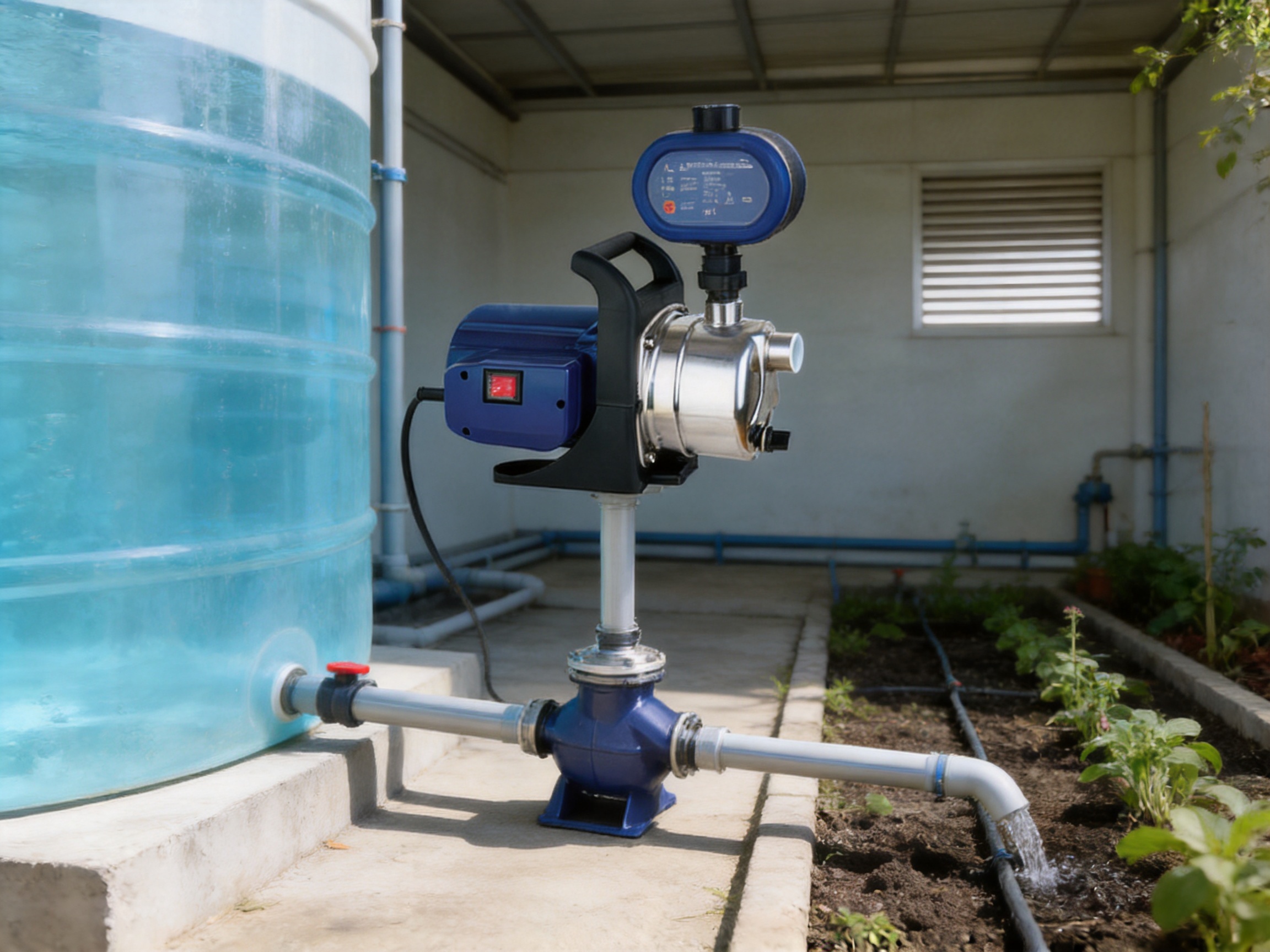
The EGMP-RY Series includes a built-in thermal protector. This component is designed to help protect the motor if its temperature rises abnormally. Overheating can result from excessive ambient temperature, voltage irregularities, blocked ventilation, excessive hydraulic load, frequent starting, inadequate water supply, or other operating problems.
The thermal protector adds an important layer of safety for garden and domestic users who may not continuously monitor the pump. If the motor temperature reaches an unsafe level, the protective system can interrupt operation and help prevent damage. Depending on the operating condition and equipment configuration, the motor may resume operation after cooling, or the system may require inspection before restarting.
Thermal protection is not a substitute for correct installation or proper electrical protection. The pump should still be connected to a suitable power supply with appropriate overcurrent protection, grounding, and wiring. Electrical installation should be carried out by a qualified professional and in accordance with local regulations.
The use of Class F insulation further supports the motor’s thermal performance. Insulation class describes the temperature capability of the electrical insulation system. Class F is widely used in motor applications that require a higher thermal margin than lower insulation categories. In a garden pump, this provides additional support for reliable operation under normal design conditions.
The maximum ambient temperature for the product is +40°C. In hot climates, the pump should be installed in a ventilated location away from direct sources of radiant heat. A shaded, dry, and well-ventilated pump area helps reduce thermal stress and supports longer service life.
The pump has an IPX4 protection classification. This indicates protection against water splashing from different directions. It is a useful rating for garden and utility environments where occasional splashes may occur during irrigation or routine cleaning.
IPX4 does not mean that the pump is waterproof, submersible, or suitable for immersion. The unit should never be placed in standing water or exposed to direct flooding. Electrical connections should be positioned above likely water levels and protected from rain according to the complete installation requirements. Cable glands, terminal covers, plugs, sockets, and external control devices should also be correctly selected for the environment.
Outdoor installation should include protection from excessive dust, mud, chemical sprays, direct mechanical impact, and extreme weather. If the pump is installed in a pump house, the enclosure should allow adequate ventilation while preventing water accumulation. The surrounding area should remain accessible for inspection and emergency shutdown.
When these conditions are followed, the IPX4 design supports practical outdoor use in gardens, greenhouse service areas, and domestic utility spaces. It gives users more flexibility than a pump intended only for dry indoor installation, while still requiring responsible protection from severe environmental exposure.
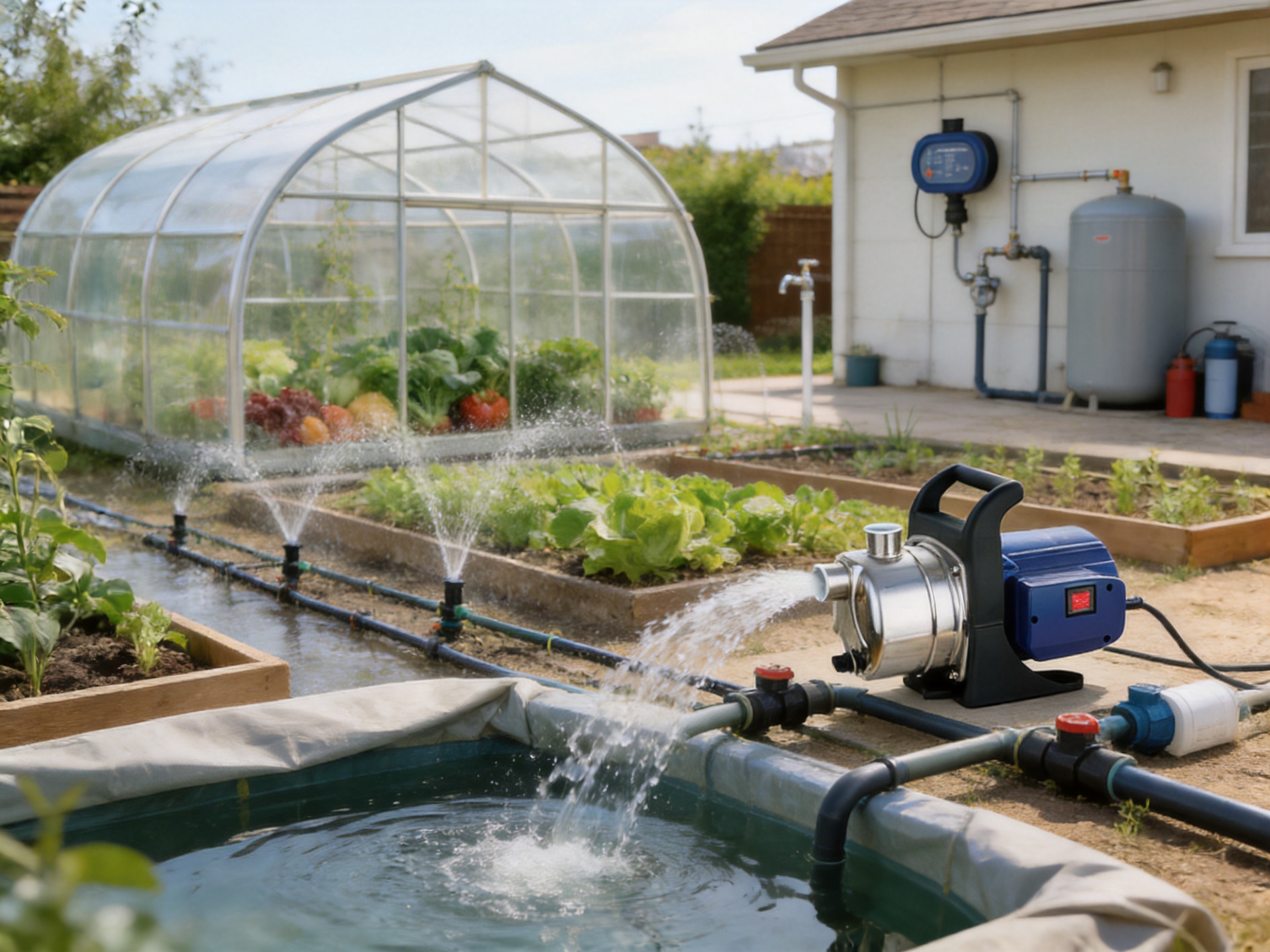
Garden irrigation is one of the most direct applications for the EGMP-RY Series. The pump can draw water from a storage tank, reservoir, or suitable well and deliver it to hoses, sprinklers, watering points, or small distribution networks. Its multi-stage design is useful when the garden includes several sections or when the water must travel through a moderately long pipe system.
Users can operate the pump manually for scheduled watering or integrate it with a pressure controller for more convenient automatic operation. The appropriate configuration depends on whether the system uses a sprinkler, drip line, hose reel, or combination of outlets. Each irrigation method has different flow and pressure requirements.
Greenhouses require consistent water delivery to planting beds, containers, seedling areas, and irrigation manifolds. A compact self-priming pump can serve as a central water supply unit for small and medium greenhouse installations. The pump can be connected to a tank or other clean-water source and used with a pressure control arrangement.
Because greenhouse environments may be warm and humid, installation should provide sufficient ventilation and protection for electrical components. The maximum ambient temperature and maximum fluid temperature must be respected. Filters may be recommended where the water contains particles that could affect valves, nozzles, or irrigation equipment.
The product information identifies fish breeding and poultry raising as suitable application areas. In these environments, the pump may be used for clean-water supply, tank replenishment, cleaning operations, and general water distribution. The pump is not a specialized aeration pump or wastewater treatment pump, so the application must remain within its clean-water design conditions.
Where the source contains organic matter, sediment, feathers, feed residue, or other contaminants, appropriate filtration and pre-treatment should be considered. Protecting the suction inlet from debris can reduce the risk of blockage and help maintain stable operation.
In homes, the pump can support automatic water supply from a tank, reservoir, or shallow water source. It may be connected to a pressure controller so that the pump starts when water is demanded and stops when the demand ends. A tank system can also be assembled to reduce the number of starts and provide a more stable pressure experience.
Automatic systems should include the correct control equipment, non-return protection, pressure settings, and safety devices. The pump should not be selected or adjusted without considering the pressure rating of connected pipes, valves, water heaters, and appliances.
The EGMP-RY Series can be adapted to different project requirements through several options available on request. These include different cable lengths, connection with a pressure controller, and assembly with a tank system.
Different cable-length options can help match the pump to the physical layout of the installation. This may be useful where the electrical connection is located at a distance from the pump or where the pump is installed within a dedicated equipment area. Correct cable sizing remains important, particularly for longer cable runs, because voltage drop can influence motor performance.
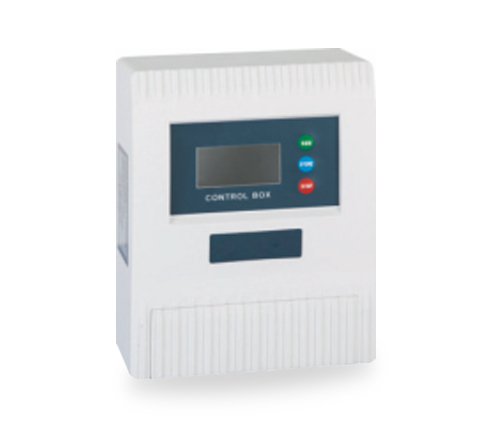
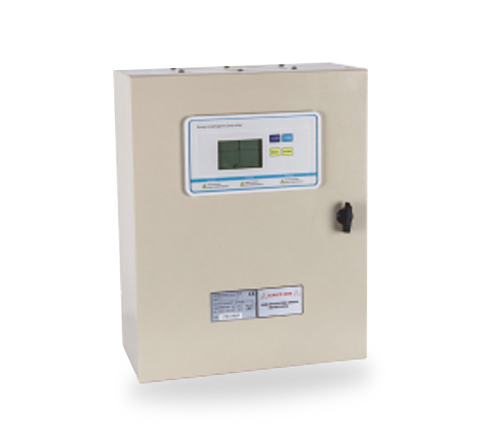
A pressure controller can convert the pump from a manually operated unit into a more convenient automatic water supply system. When a tap or irrigation outlet opens, the pressure changes and the controller can signal the pump to start. When the outlet closes, the controller can stop the pump after the system reaches the relevant condition.
The control arrangement should be selected according to the pump’s electrical rating, starting characteristics, pressure range, and intended use. The pressure controller should also be protected from moisture and installed in accordance with its own operating instructions.
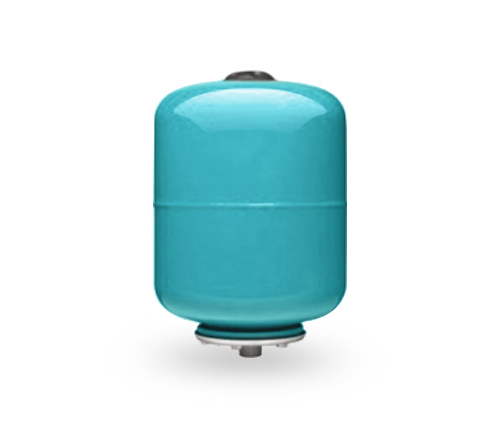
A tank system can provide several benefits. It may reduce rapid cycling, support pressure stability, and provide a reserve volume for short water demands. A pressure tank also helps prevent the pump from starting every time a very small quantity of water is needed.
Tank size should be selected according to the expected demand, pump capacity, system pressure, and number of starts per hour. A correctly configured tank system can improve user comfort and contribute to longer service life for the pump and motor.
Although every pump must be selected for a specific duty, the EGMP-RY Series offers several practical advantages compared with a basic single-stage or non-self-priming garden pump.
The multi-stage hydraulic arrangement is suited to applications that require more pressure than a simple water transfer operation. It can be considered for longer pipe runs, moderate elevation, sprinkler systems, and multiple outlet arrangements, subject to the performance curve of the selected model.
The self-priming design allows the surface-mounted pump to work with water sources located below the pump level when the suction lift remains within the specified maximum. This provides flexibility for garden tanks, reservoirs, and shallow source applications.
The built-in thermal protector provides an additional safeguard against overheating. This is especially useful in domestic and garden applications where the pump may be operated by users without specialized technical training.
The option to connect a pressure controller or assemble a tank system allows the pump to be adapted to manual, semi-automatic, or automatic water supply arrangements. Users can select a configuration that matches their budget and operating needs.
Because the pump is installed above ground, routine inspection is generally easier than with a submerged pump. The operator can access the motor, pump body, electrical connections, and external pipework without removing the entire unit from a well or tank.
Class F insulation, IPX4 protection, and a maximum ambient temperature of +40°C provide a practical specification for many protected outdoor and utility installations. These features do not eliminate the need for correct enclosure and ventilation, but they support the pump’s suitability for garden and domestic environments.
The product is supported by the manufacturing capabilities of Taizhou Edwin Electric Co., Ltd., which was founded in 2008. The company operates as an integrated manufacturing enterprise with activities covering independent research and development, mass production, and global export. This integrated structure is important because pump quality depends not only on final assembly but also on design control, component selection, process consistency, testing, packaging, and after-sales coordination.
Independent research and development allows the manufacturer to respond to different market requirements rather than relying exclusively on standard products. Garden pumps, domestic booster pumps, solar pumps, circulation pumps, deep well pumps, and submersible pumps operate under different hydraulic and environmental conditions. Experience across these categories helps build a broader understanding of motor design, hydraulic systems, sealing, control, installation, and application engineering.
Mass production provides the opportunity to standardize key processes and maintain repeatability across larger orders. Consistency is especially important for distributors, importers, project contractors, and original equipment customers. When products are manufactured using controlled procedures, customers can expect more predictable dimensions, component interfaces, electrical characteristics, and packaging arrangements.
A professional manufacturing process begins with product planning and engineering review. The intended duty, water quality, pressure range, temperature, electrical supply, installation method, and protection requirements must be considered before the product enters production. For a self-priming garden pump, the hydraulic path, priming behavior, motor power, sealing arrangement, and thermal protection must work together.
Component quality is another important factor. Bearings, motor windings, insulation materials, mechanical seals, impellers, pump housings, terminals, cables, and protective devices all influence the final result. The use of C&U bearings in the EGMP-RY Series reflects attention to a critical rotating component. Bearing quality affects noise, vibration, friction, heat generation, and service life.
Assembly accuracy is also essential. The motor and hydraulic section must be aligned correctly, fasteners must be tightened consistently, and seals must be installed without damage. Poor alignment or incorrect sealing can cause vibration, leakage, premature wear, or reduced hydraulic performance. Controlled assembly procedures help reduce these risks.
Testing and inspection should be incorporated into production to verify the basic operating condition of each pump. Typical pump production checks may include electrical safety inspection, insulation verification, current assessment, leakage examination, rotation confirmation, noise and vibration observation, and hydraulic performance testing according to the product’s technical requirements. The exact testing program depends on the product model and applicable standards.
International export experience gives the manufacturer an additional understanding of packaging, documentation, voltage requirements, regional market expectations, and logistics. Since pumps are sold to customers in different countries, the ability to coordinate production, order tracking, inspection, shipping, and foreign trade services is a practical advantage for importers and distributors.
To meet different purchasing requirements, the company established Taizhou Haipai Import & Export Co., Ltd. and Golden Falcon Industrial Co., Ltd. in 2012. These organizations support procurement planning, order tracking, cross-border delivery, and foreign trade services. For overseas customers, a coordinated supply chain can simplify communication and reduce administrative complexity.
For a single household purchase, product specifications are important. For distributors, contractors, and commercial buyers, supplier capability is equally important. A pump supplier must be able to provide consistent products, technical information, packaging, delivery coordination, and support for repeat orders.
An integrated manufacturer can usually coordinate more aspects of the supply process directly. This may help buyers manage product selection, customization requests, cable requirements, pressure-controller integration, tank-system arrangements, and shipment schedules. A supplier with several pump categories can also support customers who need multiple products for one project.
Edwin Pump’s product range covers domestic and industrial water applications, including new energy projects, agricultural irrigation, municipal engineering, mining, construction, HVAC systems, and household water supply. This range indicates an effort to serve customers across different technical sectors rather than focusing on only one narrow application.
Since 2018, the company has invested in new energy and intelligent technology, including solar water pumps and intelligent booster pumps. This investment is relevant to the development of modern water systems, where energy efficiency, remote management, automatic pressure control, and system integration are increasingly important.
For buyers evaluating the EGMP-RY Series, the manufacturer’s wider experience provides a useful support foundation. The pump can be purchased as an individual product, but it can also be considered within a larger water-supply portfolio that includes solar pumping, pressure boosting, circulation, deep-well extraction, and submersible applications.
The pump should be installed by a competent technician who understands hydraulic and electrical systems. Before installation, the user should verify the voltage, frequency, motor rating, pipe sizes, required flow, total head, water temperature, and suction conditions.
The suction line should be as short and direct as practical. All joints must be airtight because even a small air leak can prevent proper priming or cause unstable operation. The pipe should not contain unnecessary high points where air can collect. A suitable foot valve may help maintain water in the suction line when the pump stops.
The pump should be fixed securely to a rigid and level base. Excessive movement can increase vibration and place stress on pipe connections. Flexible connectors may be used where appropriate to reduce the transmission of vibration, but they should not replace proper support or correct alignment.
The delivery line should include suitable isolation and non-return components where required by the system design. Valves should be selected for the expected pressure and fluid conditions. If a pressure controller or tank is installed, its location should allow inspection and protection from water exposure.
Before commissioning, the operator should check that the pump is filled with water, the suction valve is open, the discharge system is ready, and the electrical supply is correctly connected. The first start should be observed carefully. Unusual noise, excessive vibration, leakage, repeated thermal interruption, or failure to deliver water should be treated as a reason to stop the pump and inspect the installation.
Routine maintenance helps preserve performance and extend service life. The pump area should be kept clean and dry, and the motor ventilation openings should not be blocked. The operator should periodically inspect the electrical cable, terminal area, pipe joints, valves, base, and pump housing.
The water source should be monitored for sediment, debris, algae, and other contaminants. A blocked suction inlet can reduce flow and cause the pump to operate under abnormal conditions. If the water quality changes, the system may require additional filtration or cleaning.
Mechanical seals and bearings are wear-related components. Their service life depends on operating hours, water quality, temperature, alignment, dry-running prevention, and the number of starts and stops. Leakage from the pump body or shaft area should not be ignored, because continued operation may damage the motor or other internal components.
If the thermal protector interrupts operation, the cause should be identified rather than repeatedly restarting the pump. Possible causes include low voltage, excessive load, blocked ventilation, high ambient temperature, seized bearings, restricted pipework, or insufficient water supply. A qualified technician should conduct electrical and mechanical checks when necessary.
Before long periods of non-use, the pump should be handled according to the installation and storage instructions. In regions where freezing temperatures may occur, water should not be allowed to remain in the pump and pipework if freezing could cause damage. The unit should be isolated from the power supply before maintenance or inspection.
The EGMP-RY Series is most appropriate when the user needs a surface-mounted pump for clean water, a suction lift of up to 8 meters under suitable conditions, and pressure performance associated with a multi-stage design. It is well suited to garden irrigation, greenhouse water supply, domestic automatic water supply, and selected fish-breeding or poultry-raising duties.
It may not be the right selection for abrasive liquids, highly contaminated water, very hot fluids, deep-well extraction beyond the specified suction conditions, or applications requiring submersible operation. In these cases, a deep well pump, submersible pump, sewage pump, circulation pump, or specialized industrial pump may be more appropriate.
Buyers should provide the supplier with the water source depth, required flow, elevation, pipe distance, number of outlets, fluid temperature, electrical supply, and intended control method. This information allows the correct model and optional accessories to be selected instead of relying on a general product description.
The value of a garden pump is determined by more than its purchase price. A reliable pump should provide stable operation, manageable maintenance, appropriate protection, and compatibility with the complete water system. The EGMP-RY Series addresses these factors through its multi-stage hydraulic configuration, self-priming design, thermal protection, Class F insulation, IPX4 protection, and optional automatic-control arrangements.
Long-term value also depends on correct application. Even a well-manufactured pump can experience early failure if it is operated dry, exposed to flooding, connected to an unsuitable power supply, used with abrasive liquid, or forced to operate outside its flow and head range. Careful selection and installation are therefore as important as the product’s construction.
For distributors and project buyers, the manufacturer’s integrated production and export capabilities add further value. Independent research and development, mass production, broad product coverage, and foreign trade coordination can support repeat purchasing and multi-product sourcing. These strengths can be especially useful for irrigation contractors, agricultural equipment dealers, building-service suppliers, and water-system integrators.
The pump is intended for clean water or other liquids with physical and chemical properties similar to water. It should not be used for abrasive slurries, heavily contaminated wastewater, aggressive chemicals, fuel, or other fluids outside the product’s design conditions.
The listed maximum suction lift is 8 meters. Actual performance depends on pipe length, pipe diameter, water temperature, altitude, valve condition, airtightness, and other installation factors. A correctly designed suction line is essential for achieving reliable priming and water delivery.
Yes. Correct initial priming is normally required for a surface self-priming pump. The pump body and suction line should be prepared according to the installation instructions. The pump should not be operated dry.
It can be used in suitable outdoor or utility environments when correctly installed. Its IPX4 protection classification provides resistance to water splashing, but it is not a submersible or floodproof product. The pump must be protected from immersion, flooding, severe weather, and direct water jets.
The maximum fluid temperature is +35°C. Pumping water above this limit may affect seals, bearings, hydraulic performance, and motor operating conditions.
The maximum ambient temperature is +40°C. In hot areas, the pump should be installed in a shaded and well-ventilated location to prevent excessive motor heating.
Class F refers to the thermal classification of the motor insulation system. It provides a higher temperature capability for the winding insulation than lower insulation classes and supports reliable motor operation under suitable conditions.
The thermal protector helps prevent motor damage caused by excessive temperature. It is an additional safety feature, but it does not replace correct electrical protection, proper ventilation, suitable voltage, or correct pump selection.
It can be configured for domestic automatic water supply when connected with a suitable pressure controller or tank system. The pressure, flow, electrical characteristics, and connected plumbing must be compatible with the selected pump and control equipment.
Yes. Connection with a pressure controller is available as an option on request. The controller should be selected and installed according to the pump’s electrical and hydraulic requirements.
Yes. The product can be assembled with a tank system as an option on request. A tank may help stabilize pressure and reduce frequent starts, depending on the system design.
A multi-stage design can develop higher pressure than many basic single-stage transfer pumps. This can be beneficial for sprinklers, longer pipe runs, moderate elevation, and multiple outlets, provided that the operating point remains within the pump’s performance range.
Routine care includes checking pipe joints, electrical connections, ventilation, pump noise, vibration, leakage, and water-source cleanliness. The pump should be protected from dry running, flooding, freezing, and unsuitable fluids. Service work should be carried out by qualified personnel.
The listed warranty is one year, according to the manufacturer’s general sales conditions. Buyers should confirm the detailed warranty terms, exclusions, service procedure, and documentation with the authorized supplier.
Typical users include homeowners, garden irrigation installers, greenhouse operators, agricultural equipment distributors, fish-breeding facilities, poultry-raising operations, and contractors requiring a compact surface pump for clean-water supply.
The EGMP-RY Series Garden Use of Multi-stage Self-priming Pump is designed as a versatile clean-water solution for gardens, greenhouses, domestic water systems, and selected agricultural applications. Its multi-stage hydraulic design supports useful pressure delivery, while the self-priming structure provides flexibility for surface installations with suitable suction conditions.
The product’s built-in thermal protector, Class F insulation, IPX4 protection, C&U bearing, 8-meter maximum suction specification, +35°C maximum fluid temperature, and +40°C maximum ambient temperature provide a practical foundation for reliable everyday operation. Optional cable lengths, pressure-controller connection, and tank-system assembly further expand its usefulness.
Beyond the product itself, the manufacturer offers the advantages of an integrated pump business with independent research and development, mass-production capability, international export experience, broad product coverage, and coordinated procurement and delivery services. These strengths make the pump relevant not only to individual users but also to distributors, contractors, and commercial buyers seeking a dependable supplier for ongoing water-pump requirements.
When correctly selected, installed, and maintained, the EGMP-RY Series can provide a convenient and efficient approach to garden irrigation, greenhouse water distribution, domestic automatic supply, and other clean-water duties. Its combination of pressure capability, self-priming convenience, motor protection, and supplier support makes it a practical alternative to simpler conventional garden pumps.
1. Product technical information for the EGMP-RY Series Garden Use of Multi-stage Self-priming Pump.
2. Manufacturer-provided application, operating, option, protection, and warranty information.
3. General principles of centrifugal pump selection, suction piping, priming, and total dynamic head calculation.
4. General guidance on electric motor insulation classes, thermal protection, and environmental protection classifications.
5. General engineering practices for clean-water irrigation, greenhouse water supply, domestic booster systems, and surface pump installation.
6. Manufacturer company information concerning research and development, mass production, export services, product categories, and intelligent water-pump technology.
aseriesnoisereductiondesignacid-baseverticalsurfacepump-1.jpg "EV(F)A Series Noise Reduction Design Acid-base Vertical Surface Pump")
edwina@edwin-pump.com
+86-13586290903 (WhatsApp)
Xuri Gongliang Cutting Tool Entrepreneurship Park, Wenqiao Town, Wenling City, Taizhou City, Zhejiang Province, China

High Performance Smart Pump Factory


 English