
edwina@edwin-pump.com

View All Products
en
Reliable pressure control is essential to the safe, efficient, and convenient operation of modern water systems. Whether a pump is supplying water to a residential building, feeding a storage tank, supporting an irrigation installation, or operating as part of a commercial filtration system, the pressure must be controlled accurately. If the pump starts too late, water pressure may become insufficient. If it stops too late, the system can experience unnecessary energy consumption, overheating, leakage, or mechanical stress.
The ERS-2.5 Series Silver Plated Contact Sealed Case Pressure Switch for Water Systems is designed to provide automatic and dependable control for water pumps. As a mechanical pressure controller, it monitors hydraulic pressure and switches the pump on or off according to preset pressure values. Its silver-plated contact system, sealed protective case, flexible hydraulic connection options, and adjustable pressure settings make it suitable for a broad range of water supply applications.
The switch is designed for rated voltages from 110V to 240V and supports both 50Hz and 60Hz power frequencies. Depending on the selected configuration, it can handle a rated current of 4.0A or 10.0A. Its standard technical range includes a minimum cut-in pressure of 0.5 bar, a maximum cut-out pressure of 3.5 bar, and a pressure setting range of 1.1 to 1.8 bar, with customization available according to customer requirements.
Manufactured by Taizhou Edwin Electric Co., Ltd., the product reflects the company’s experience in pump equipment, pump accessories, intelligent water systems, and export-oriented manufacturing. Edwin Pump was founded in 2008 and has developed capabilities covering independent research and development, mass production, quality management, procurement coordination, and global delivery. These capabilities support a product philosophy centered on practical engineering, stable operation, and suitability for diverse international markets.
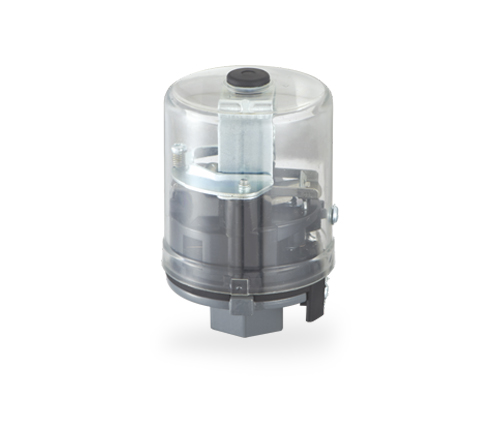
ERS-2.5 Series Silver Plated Contact Sealed Case Pressure Switch for Water Systems
A water pump cannot operate efficiently if it runs continuously without regard to actual demand. In a typical water supply installation, consumption changes throughout the day. Taps may be opened and closed, irrigation zones may operate at different times, and storage tanks may require periodic refilling. A pressure switch provides an automatic response to these changes.
When system pressure falls below the configured cut-in point, the pressure switch closes the electrical circuit and starts the pump. As the pump supplies water, pressure rises. When pressure reaches the cut-out point, the switch opens the circuit and stops the pump. This simple operating principle allows the pump to respond to demand without requiring constant manual control.
Proper pressure control offers several important benefits:
1. It maintains more consistent water availability at outlets.
2. It reduces unnecessary pump running time.
3. It helps limit motor heating caused by prolonged operation.
4. It reduces the risk of pressure-related damage to pipes, tanks, valves, and fittings.
5. It supports more convenient automatic operation for users.
6. It can improve the service life of a properly matched pump system.
A pressure switch is therefore not merely an electrical accessory. It is a key control component that connects hydraulic conditions with electrical pump operation. Its quality affects the performance of the entire water system.
The ERS-2.5 Series is a mechanical pressure controller specifically developed for water systems. Its construction combines a hydraulic sensing mechanism, electrical switching contacts, a protective case, and a connection structure suitable for pump and piping installations.
The product is available with a 4A or 10A rated current configuration and a rated voltage range of 110V to 240V. This broad voltage range enables the pressure switch to be considered for multiple regional electrical standards, subject to correct installation and system design. Its 50/60Hz compatibility also supports use in markets with different power frequencies.
The pressure switch can be supplied with 1/4-inch female or 3/8-inch female hydraulic connections. Edwin Pump can also provide hydraulic connection options and pressure settings according to customer requirements. This flexibility is especially valuable for distributors, pump manufacturers, system integrators, and original equipment manufacturers that need to align the component with different pump models or installation standards.
The product uses single contacts and is available with an aluminum or plastic base. Its maximum working temperature is 55°C, and its listed protection class is IP20. These specifications indicate that the pressure switch should be installed in a suitable protected environment and used within the stated operating conditions.
Product Series |
ERS-2.5 |
Product Type |
Mechanical pressure controller |
Application |
Water systems and automatic pump control |
Rated Voltage |
110V–240V |
Power Frequency |
50/60Hz |
Rated Current |
4.0A or 10.0A |
Minimum Cut-In Pressure |
0.5 bar |
Maximum Cut-Out Pressure |
3.5 bar |
Standard Pressure Range |
1.1–1.8 bar, adjustable according to customer requirements |
Hydraulic Connection |
1/4-inch female or 3/8-inch female |
Base Options |
Aluminum or plastic |
Contact Configuration |
Single contact |
Protection Class |
IP20 |
Maximum Working Temperature |
55°C |
Warranty |
1 year |
One of the defining features of the ERS-2.5 Series is its silver-plated contact system. Electrical contacts are exposed to repeated switching cycles, and every switching event can produce a small electrical arc. Over time, unsuitable contact materials may become oxidized, contaminated, or worn, resulting in increased electrical resistance and less dependable switching.
Silver is widely used in electrical contact applications because of its excellent electrical conductivity. A silver-plated contact can support efficient current transfer and help maintain stable electrical performance during normal switching operations. In a pressure switch, this is particularly important because the pump may start and stop repeatedly in response to changes in water demand.
The silver-plated contact is sealed inside a durable case. This design helps protect the switching mechanism against external influences such as dust, accidental contact, and water-system environmental conditions. The sealed-case structure also supports a cleaner internal operating environment, which is beneficial for repeatable switching performance.
It is important to understand that contact quality works together with correct electrical sizing. The pressure switch must be selected according to motor current, starting characteristics, voltage, frequency, and installation requirements. Where pump motor loads exceed the switch’s rated capacity, an appropriate relay, contactor, or other control arrangement should be used. The silver-plated contact improves contact performance within the specified rating, but it does not replace proper system engineering.
The ERS-2.5 Series automatically starts and stops a water pump based on configured pressure settings. This automatic function is useful in systems where water demand changes frequently and manual pump control would be inconvenient or unreliable.
During operation, the pressure-sensing mechanism responds to the hydraulic pressure in the connected water line. When pressure drops to the cut-in value, the electrical contacts change state and energize the pump circuit. The pump then restores pressure by transferring water into the piping system, pressure tank, or distribution network. Once the pressure reaches the cut-out value, the switch interrupts the pump circuit.
The difference between the cut-in and cut-out settings is commonly known as the pressure differential. A properly selected differential helps prevent excessively frequent starting and stopping. If the differential is too narrow for the application, the pump may cycle more often than desirable. If it is too wide, users may experience a greater variation in outlet pressure. For this reason, pressure settings should be selected in accordance with pump performance, tank volume, pipe layout, water demand, and the requirements of the final application.
Because the product supports customized pressure settings, it can be adapted for different operating conditions. This is an advantage over fixed-setting products that may require additional modifications or may not match the pressure requirements of a specific pump system.
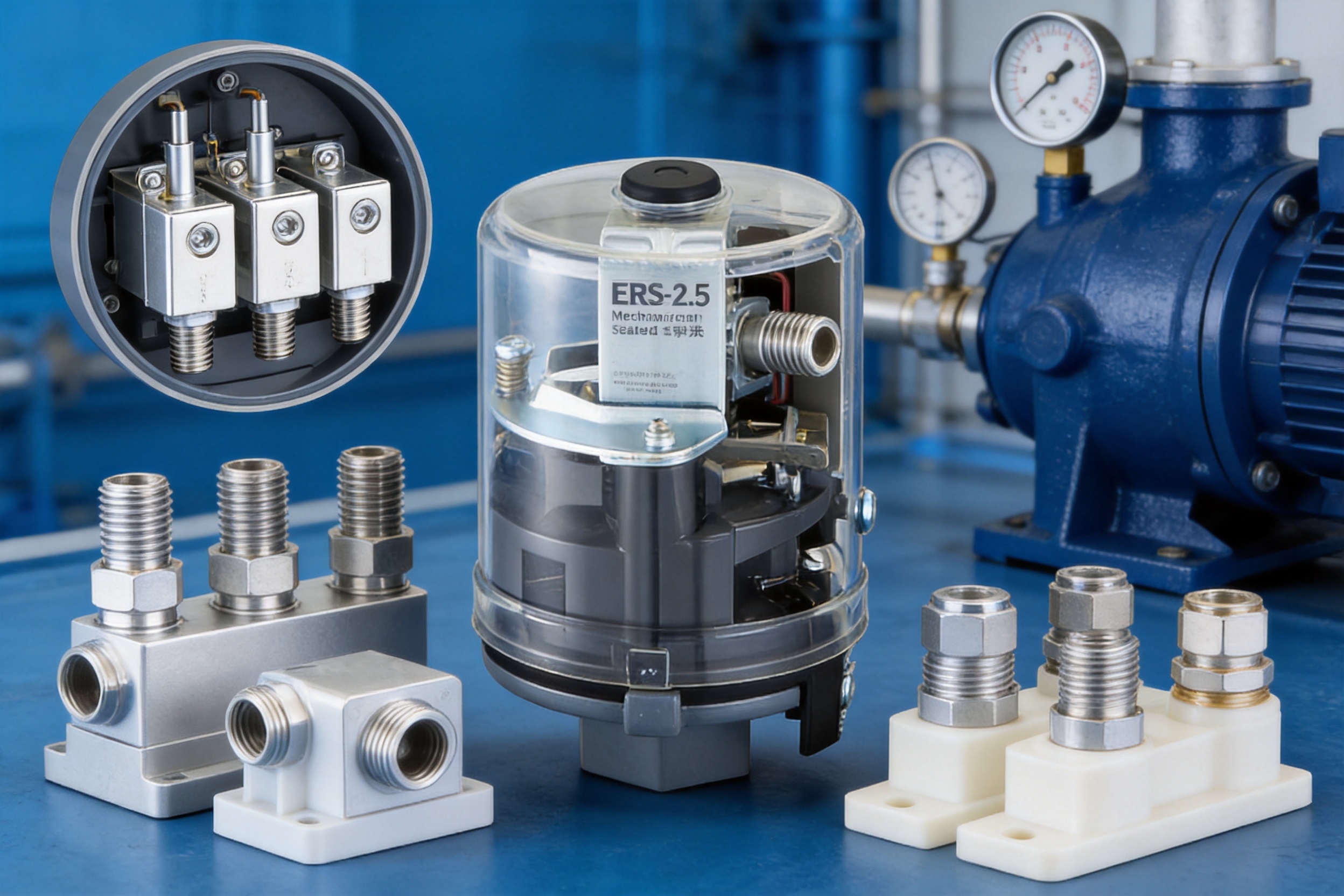
Many basic pressure switches are designed for general use but offer limited flexibility in connection type, contact configuration, or pressure adjustment. The ERS-2.5 Series provides several practical advantages for professional water-system applications.
The 110V–240V rated voltage range allows the product to serve a broad group of pump systems. Its 50/60Hz frequency compatibility supports use across markets with different utility standards. This reduces the need for separate product versions when a distributor or system builder serves multiple regions.
The availability of 4.0A and 10.0A versions allows users to select a configuration closer to the electrical demand of the pump. Correct selection helps support reliable operation and reduces the risk of overloading the control component.
The product supports 1/4-inch and 3/8-inch female connection options. Hydraulic connection customization can simplify integration with different pump heads, manifolds, pipes, adapters, and existing water-system components.
The standard pressure range is 1.1–1.8 bar, while pressure settings can be configured according to customer requirements. This makes the product more adaptable than a pressure switch limited to one fixed operating point.
The sealed case protects the internal contact mechanism from many external environmental influences. Combined with silver-plated contacts, this structure is designed to support stable switching and practical service life.
Different base materials can support different application priorities. An aluminum base may be preferred where a more robust mechanical structure is required, while a plastic base can support weight reduction and cost control. The selection can be made according to the installation environment and customer requirements.
The ERS-2.5 Series is designed specifically for water systems rather than being a generic pressure-control device for unrelated media. Its operating concept, hydraulic connections, pressure range, and pump-control function are aligned with common water supply requirements.
In homes, pressure switches are commonly used with surface pumps, booster pumps, shallow-well systems, and water storage tanks. The ERS-2.5 Series can automatically start the pump when household pressure decreases and stop it after the pressure has been restored. This supports convenient water use at taps, showers, washing machines, and other outlets.
For domestic applications, the selected pressure range should reflect the building height, pipe resistance, storage-tank pressure, and pump curve. A qualified installer should also confirm that the pump’s maximum pressure is suitable for all downstream components.
Deep-well and submersible pumps often supply water to elevated tanks, pressure vessels, or building distribution systems. A pressure switch may be used as part of the control arrangement, although the complete installation may require additional protective components such as dry-run protection, overload protection, check valves, and a suitable control box.
The pressure switch should be positioned where it can sense the relevant system pressure accurately. It should not be installed in a location where air pockets, severe vibration, excessive heat, or blocked passages could distort pressure readings.
Garden pumps and small irrigation systems benefit from automatic pressure control because water demand can change as sprinklers and valves open or close. The ERS-2.5 Series can help coordinate pump operation with the pressure conditions in the irrigation line.
For irrigation networks with multiple zones, designers should consider the flow requirements of each zone, the pressure loss in the piping, and the starting current of the pump motor. The pressure switch is one part of the control system and should be integrated with other components as required.
Water filtration systems may need a pump to operate automatically when pressure falls or when treated water is demanded. A pressure switch can be installed in a suitable position to control pump start and stop functions. Its sealed contact case is useful in equipment environments where moisture and general operating contamination may be present.
Small commercial buildings, workshops, agricultural facilities, and light industrial installations often require reliable water pressure without the complexity of a fully automated variable-speed system. A mechanical pressure controller can provide a straightforward and economical control solution for appropriately sized systems.
The product may be considered for pump-and-tank arrangements, service-water systems, equipment washing systems, and other applications where the pressure remains within the specified operating range. System designers should verify compatibility with water quality, temperature, pressure, electrical load, and applicable regulations.
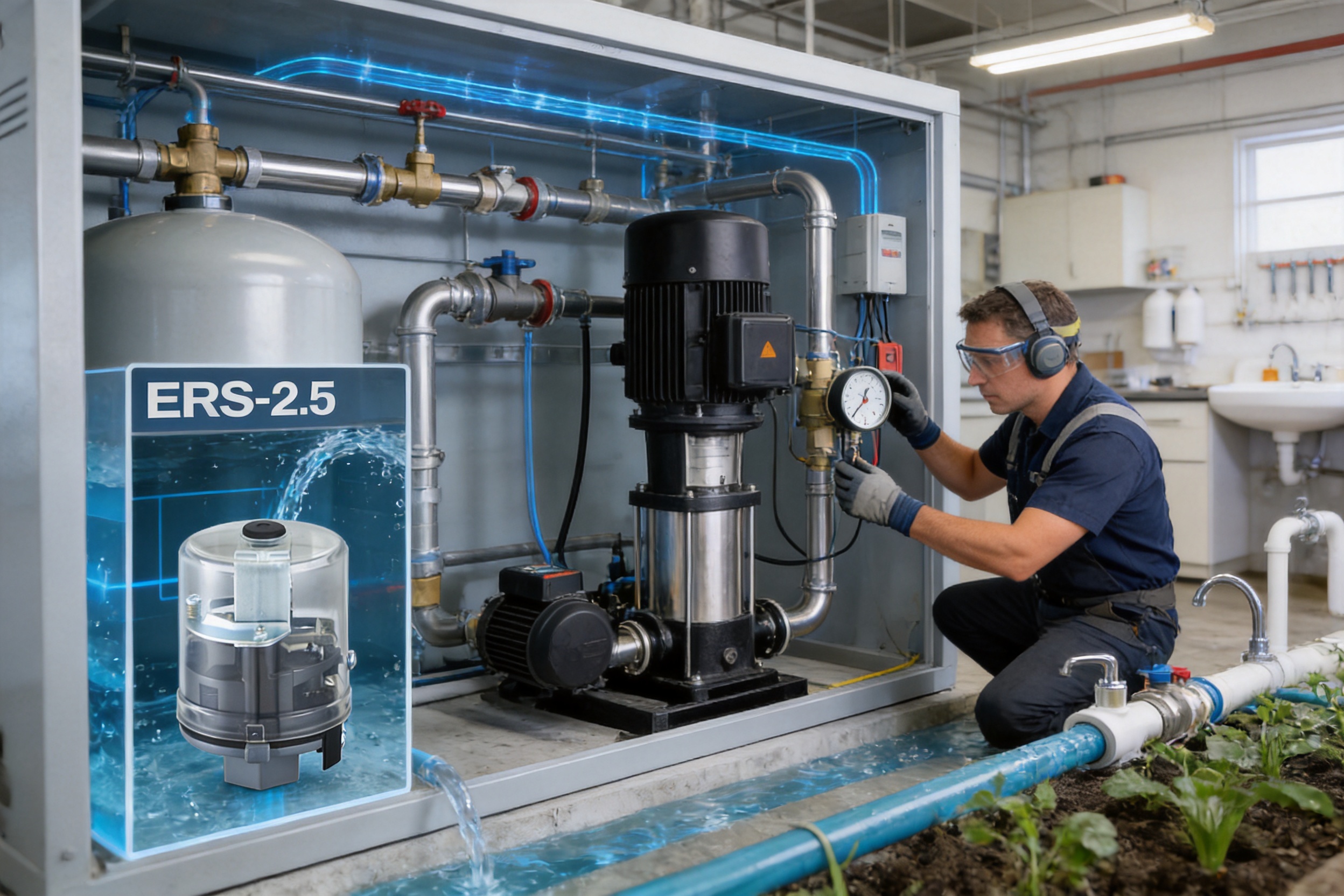
The performance of a pressure switch depends not only on its design but also on the manufacturing processes used to produce, assemble, inspect, and package it. Taizhou Edwin Electric Co., Ltd. operates as an integrated manufacturing enterprise with capabilities in independent research and development, mass production, and global export.
Since its establishment in 2008, the company has focused on water pumps and related water-system products. Its product portfolio includes deep-well pumps, submersible pumps, domestic booster pumps, circulation pumps, solar water pumps, intelligent booster pumps, and pump accessories. This broader product knowledge provides an important engineering advantage when developing a pressure switch for pump applications.
Independent research and development allows the manufacturer to consider the pressure switch as part of a complete water system rather than as an isolated electrical component. Knowledge of pump hydraulics, motor operation, pressure vessels, piping resistance, and water distribution helps the engineering team address practical installation requirements.
This product-oriented development approach also supports customization. Customers may require different hydraulic connections, pressure settings, current ratings, base materials, or packaging configurations. A manufacturer with in-house development capability can respond more efficiently to these requirements than a trading company that depends entirely on external suppliers.
Mass production requires repeatable processes, stable material supply, controlled assembly, and consistent testing. For a pressure switch, important production steps may include component preparation, diaphragm or sensing-element assembly, contact installation, wiring preparation, enclosure assembly, pressure calibration, electrical inspection, and final packaging.
Repeatability is particularly important for pressure-control products. A switch that operates correctly in one unit but has inconsistent pressure settings in another can create problems for distributors and installers. Controlled production processes help reduce variation and support more predictable product performance.
The ERS-2.5 Series incorporates silver-plated contacts and offers aluminum or plastic base options. These materials must be selected, processed, and assembled with attention to dimensional accuracy and application requirements. The hydraulic connection must align correctly with the internal pressure-sensing structure, while the electrical contact system must be installed securely within the sealed case.
Effective procurement coordination is important for maintaining product consistency. Edwin Pump’s broader organization includes professional teams for procurement planning, order tracking, cross-border delivery, and foreign trade services. These capabilities support stable production planning and help customers manage orders from inquiry through shipment.
Quality-oriented assembly involves more than simply fitting parts together. The internal mechanism must move correctly, electrical contacts must align properly, seals must be positioned accurately, and the case must provide suitable protection. Pressure adjustment components must also be calibrated in a controlled way.
For export customers, assembly consistency is especially important because products may travel long distances and be installed by different teams in different countries. A clearly defined assembly and inspection process helps reduce installation problems and supports reliable field use.
Pressure switches should be checked for electrical continuity, switching response, pressure setting, connection integrity, and visible assembly quality. Depending on the production program and customer requirements, inspection may include pressure-cycle testing, current-related checks, insulation checks, leakage checks, and verification of labeling and packaging.
The specific inspection program should be based on the product configuration, applicable standards, customer specifications, and intended market. Edwin Pump’s experience in international export supports the need for organized product documentation and consistent pre-shipment controls.
Correct installation is necessary to obtain the expected performance from the ERS-2.5 Series. The pressure switch should be installed by a qualified professional who understands both electrical safety and hydraulic systems.
Before installation, confirm whether the pressure switch uses a 1/4-inch female or 3/8-inch female connection. Use compatible fittings and suitable sealing materials. Threads should be tightened sufficiently to prevent leakage but should not be over-tightened, as excessive force can damage the connection or housing.
The pressure-sensing connection should be installed where the switch can measure actual system pressure. Avoid locations with severe turbulence, trapped air, sediment accumulation, or a restricted passage. If the system contains debris, a suitable filter or strainer should be considered to protect connected components.
The electrical supply must be disconnected before wiring. The installer should verify the rated voltage, frequency, pump current, and wiring diagram before connecting the pressure switch. The selected 4A or 10A version must be appropriate for the electrical load.
Where a motor’s starting current or operating current exceeds the pressure switch rating, the switch should control a suitable relay or contactor instead of directly switching the motor. Overload protection, short-circuit protection, grounding, and local electrical requirements must also be addressed.
Pressure adjustment should be carried out carefully and methodically. The installer should use a reliable pressure gauge and observe the actual cut-in and cut-out behavior. Adjustments should remain within the permitted product range and should be compatible with the pump’s performance and the pressure rating of the complete water system.
After adjustment, the system should be operated through several start-and-stop cycles. This confirms that the pump starts at the intended low-pressure point and stops at the intended high-pressure point. It also helps identify leaks, rapid cycling, unexpected pressure fluctuations, or incorrect wiring.
The listed maximum working temperature is 55°C. The pressure switch should not be exposed to temperatures above this limit. Because the listed protection class is IP20, the product should be protected from direct water jets, flooding, rain exposure, and unsuitable outdoor conditions unless it is installed inside an appropriate enclosure.
Excessive vibration should be avoided. A stable mounting arrangement helps reduce mechanical stress on the hydraulic connection and supports consistent pressure sensing. The installation area should also permit inspection and future adjustment.
Mechanical pressure switches are designed for practical service, but routine inspection remains important. Maintenance requirements depend on water quality, switching frequency, pump size, temperature, and the surrounding installation environment.
If the pump does not start when pressure falls, first confirm that electrical power is available. Then check the fuse, circuit breaker, wiring, pump motor, hydraulic connection, and pressure setting. A blocked sensing passage or incorrect pressure adjustment may prevent the switch from responding properly.
The switch should never be opened or adjusted while energized. Troubleshooting should be performed by qualified personnel using appropriate safety procedures.
If the pump continues running after pressure has increased, check whether the cut-out pressure has been reached. Possible causes may include insufficient pump capacity, water leakage, an open outlet, incorrect pressure adjustment, a blocked pressure-sensing passage, or a contact that does not release correctly.
The complete system should be evaluated rather than replacing the pressure switch immediately. A pump that cannot generate the required pressure may cause the switch to remain in the start position even when the controller is functioning normally.
Rapid cycling may result from a small pressure differential, an undersized pressure tank, a water leak, a damaged check valve, or an unstable water demand pattern. The pressure settings should be reviewed, and the hydraulic system should be checked for leakage and tank pre-charge conditions where applicable.
Leakage may be caused by an unsuitable fitting, damaged thread, insufficient sealing, excessive tightening, or vibration. The system should be depressurized before inspection. Replace damaged sealing materials and confirm that the connection size matches the pressure switch.
Unusual heating may indicate an overloaded switch, loose wiring, unsuitable voltage, high motor starting current, or poor contact conditions. Confirm that the selected current rating is correct. If necessary, use a contactor or relay arrangement suitable for the pump motor.
Water pump systems can be controlled using mechanical pressure switches, electronic pump controllers, variable-frequency drives, float switches, timers, or programmable control panels. Each solution has a suitable application range.
A mechanical pressure switch is often valued for its straightforward operating principle. It does not require complex programming and can provide direct pressure-based control. This simplicity can make installation, diagnosis, and replacement easier for standard pump-and-tank systems.
Electronic pump controllers may offer dry-run protection, digital displays, flow detection, and additional alarm functions. However, they can be more sensitive to electrical disturbances, require more complex diagnosis, and may involve a higher initial cost. A mechanical controller such as the ERS-2.5 Series can be a practical choice when the application primarily requires automatic pressure-based starting and stopping.
Variable-frequency drives provide advanced speed control and may maintain more constant pressure across changing flow conditions. They are valuable in sophisticated commercial or industrial systems, but they require more detailed electrical design and parameter configuration. For many smaller or medium-sized water systems, a properly selected pressure switch remains an economical and effective solution.
Float switches are suitable when water level, rather than pressure, is the main control signal. They may be used in tanks and reservoirs, but they do not replace a pressure switch in a pressurized distribution system.
The most appropriate technology depends on the pump, water demand, pressure requirements, motor characteristics, budget, and desired level of automation. The ERS-2.5 Series is positioned as a reliable mechanical solution for systems where direct pressure control is the primary requirement.
Product flexibility is important for distributors that serve multiple markets. The ERS-2.5 Series supports different voltage conditions, current ratings, hydraulic connections, base materials, and pressure settings. This enables distributors to configure the product for different pump packages and customer applications.
System integrators can also benefit from the product’s compatibility with a range of water-system components. It can be used with surface pumps, booster pumps, tank systems, filtration equipment, and selected submersible pump arrangements. Its compact mechanical operating concept can simplify the design of systems that do not require advanced electronic control.
Customization is another commercial advantage. Customers may request a particular hydraulic connection or pressure setting. For private-label, equipment-package, and original equipment applications, the ability to discuss these requirements with the manufacturer can help reduce unnecessary adaptation work during assembly.
Edwin Pump’s manufacturing and export structure supports more than product supply alone. Its affiliated procurement and foreign-trade capabilities are intended to help with purchasing coordination, order tracking, cross-border delivery, and one-stop sourcing. This is valuable for buyers who purchase pressure switches together with pumps, valves, pipes, control products, and other water-treatment accessories.
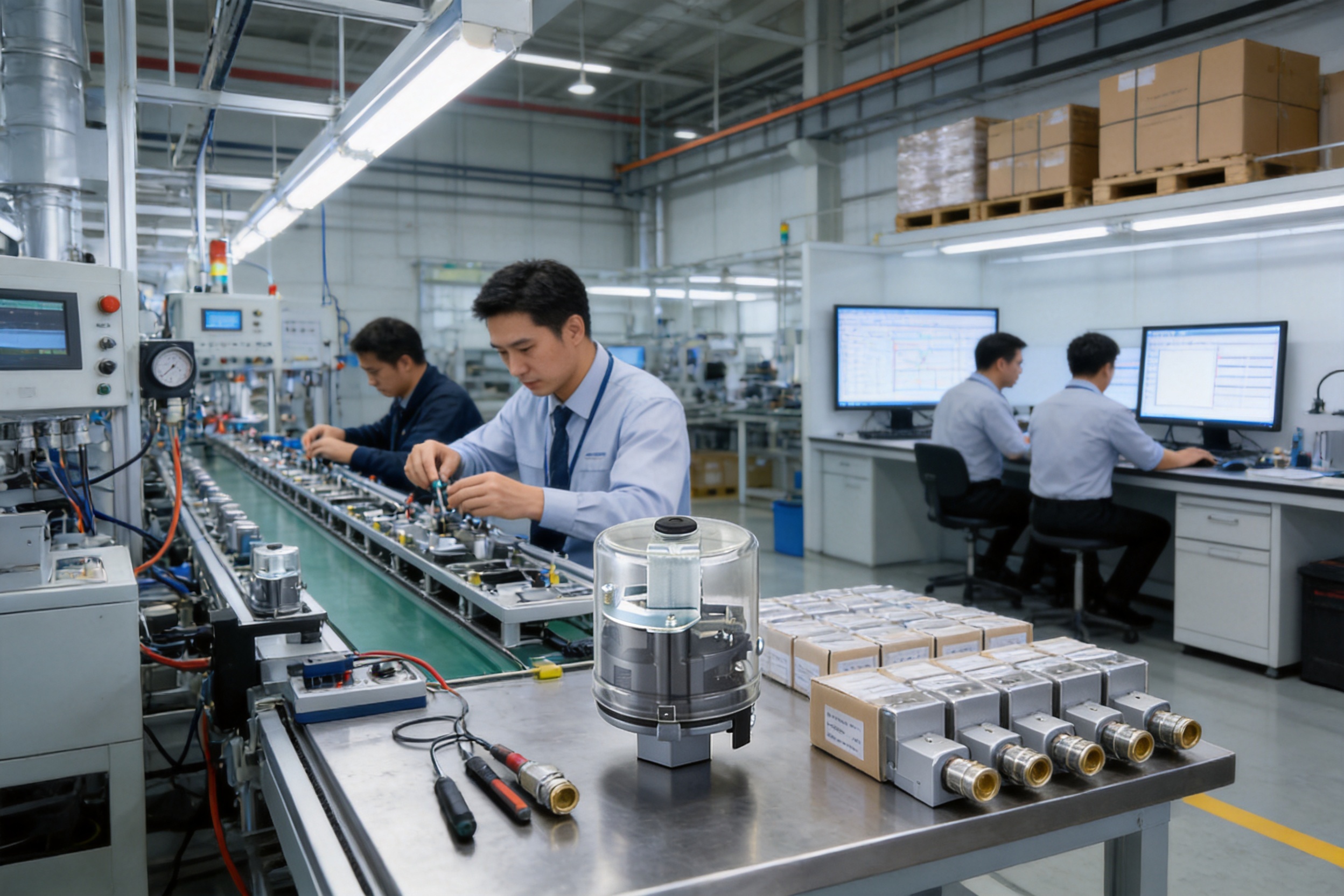
A pressure switch is often purchased as part of a wider pump solution. Edwin Pump’s product categories include solar pumps, deep-well pumps, submersible pumps, surface pumps, booster pumps, circulation pumps, garden pumps, pool and spa pumps, commercial multistage pumps, end-suction pumps, pipes and valves, pump accessories, and intelligent booster pumps.
This wide range gives the manufacturer experience across different hydraulic environments. Deep-well pumps may require different control considerations from garden pumps. Circulation pumps operate differently from domestic booster systems, while commercial multistage pumps may involve higher pressure and flow requirements. Understanding these differences helps guide the selection of suitable pressure-control components.
The ERS-2.5 Series is not intended to replace every advanced pump-control technology. Instead, it provides a dependable mechanical control option for applications within its ratings. It can be used as part of a conventional pump-and-pressure system or included in a broader equipment package designed for residential, agricultural, commercial, or light industrial use.
Edwin Pump has developed from a pump-focused enterprise into an integrated manufacturer serving international customers. Its activities include research and development, production, product export, procurement coordination, and order support. The company’s product development since 2018 has also included solar water pumps and intelligent booster pumps, demonstrating attention to new-energy and intelligent water technologies.
This combination of traditional pump manufacturing and newer intelligent applications creates a useful foundation for accessory development. Mechanical pressure switches remain important in many systems, while advanced pump controllers are increasingly used where monitoring, variable speed, and digital protection are required. A manufacturer familiar with both areas can help customers choose a control method suitable for the actual system rather than promoting one technology for every application.
Global customers also require dependable communication, consistent specifications, organized documentation, and reliable delivery. The company’s experience in cross-border business and its professional foreign-trade services are intended to support these needs. For importers and distributors, supply-chain coordination can be as important as the technical performance of an individual component.
Before ordering or installing the ERS-2.5 Series, buyers should confirm the following points:
1. The pump motor voltage is within the 110V–240V rated range.
2. The power frequency is 50Hz or 60Hz.
3. The operating and starting current are compatible with the selected 4A or 10A version.
4. The hydraulic connection is 1/4-inch female or 3/8-inch female, or a customized option has been agreed.
5. The required cut-in and cut-out pressures fall within the suitable range.
6. The pump can generate enough pressure to reach the selected cut-out setting.
7. The complete piping, tank, valve, and fitting system is rated for the operating pressure.
8. The installation temperature does not exceed 55°C.
9. The product is protected from direct water exposure because its listed protection class is IP20.
10. Additional motor protection is included where required by the electrical design.
11. The installation complies with local electrical, plumbing, and safety regulations.
12. The customer has confirmed whether an aluminum or plastic base is preferred.
13. The customer has reviewed the one-year warranty terms and applicable service procedures.
It is used to automatically start and stop a water pump according to hydraulic pressure. When pressure falls to the configured cut-in value, the switch starts the pump. When pressure rises to the cut-out value, it stops the pump.
The rated voltage is 110V–240V. The pressure switch is also designed for 50Hz and 60Hz power frequencies. The final installation must still be checked against the pump motor and local electrical requirements.
The product is available with a rated current of 4.0A or 10.0A. The correct version should be selected according to the pump’s operating load and starting characteristics.
Yes. The standard pressure range is listed as 1.1–1.8 bar, and pressure settings can be configured according to customer requirements, provided the requested settings are suitable for the product and complete water system.
The standard options include 1/4-inch female and 3/8-inch female hydraulic connections. Other connection requirements can be discussed for customized orders.
Silver has high electrical conductivity and is widely used in switching applications. Silver-plated contacts can support efficient current transfer and stable operation during repeated switching, provided the switch is operated within its rated electrical conditions.
The listed protection class is IP20, so the switch should not be exposed directly to rain, water spray, flooding, or other unsuitable outdoor conditions. If outdoor use is required, it should be installed inside an appropriate protective enclosure.
No. The current rating and motor starting characteristics must be checked. If the pump load exceeds the pressure switch rating, a suitable relay or contactor should be used. Motor protection must be designed separately according to the installation requirements.
Yes. A mechanical pressure switch is commonly used in pump-and-pressure-tank systems. The cut-in and cut-out settings should be coordinated with the tank pre-charge, pump curve, system pressure rating, and expected water demand.
The listed maximum working temperature is 55°C. Operation above this temperature should be avoided unless a different configuration has been specifically approved by the manufacturer.
The base can be supplied in aluminum or plastic. The choice may depend on mechanical requirements, weight, cost, and the intended installation environment.
The product information specifies a one-year warranty. Buyers should confirm the warranty conditions, exclusions, documentation requirements, and service process before placing an order.
Installation should be completed by qualified personnel familiar with electrical wiring, pump systems, hydraulic connections, pressure adjustment, grounding, and applicable local regulations.
The ERS-2.5 Series Silver Plated Contact Sealed Case Pressure Switch for Water Systems provides a practical method for automatic pump control. Its principal strengths include silver-plated electrical contacts, a sealed protective case, 110V–240V voltage compatibility, 50/60Hz operation, 4A and 10A current options, adjustable pressure settings, and 1/4-inch or 3/8-inch hydraulic connection choices.
Compared with a basic fixed-configuration pressure switch, the ERS-2.5 Series offers greater adaptability for pump manufacturers, distributors, installers, and system integrators. Its mechanical operating principle supports straightforward installation and maintenance, while its customizable settings help match different water-system requirements.
The product is supported by the manufacturing experience of Taizhou Edwin Electric Co., Ltd., an established water-pump and water-system equipment enterprise with capabilities in research and development, mass production, product coordination, and global export. The company’s wider portfolio, including submersible pumps, deep-well pumps, booster pumps, circulation pumps, solar pumps, intelligent booster pumps, and related accessories, provides a broad technical background for developing components used in complete water solutions.
For the best results, users must select the appropriate current version, pressure settings, hydraulic connection, and base material. Installation should also include proper motor protection, safe wiring, suitable fittings, and environmental protection consistent with the IP20 classification and 55°C maximum working temperature. When correctly selected and installed, the ERS-2.5 Series can provide dependable pressure-based pump automation for domestic, agricultural, commercial, and light industrial water systems.
1. Product technical information for the ERS-2.5 Series Silver Plated Contact Sealed Case Pressure Switch for Water Systems.
2. General principles of mechanical pressure switching in water-pump control systems.
3. General electrical engineering practices for motor circuits, switching contacts, overload protection, and contactor selection.
4. General hydraulic engineering practices for pump selection, pressure adjustment, pressure tanks, pipe fittings, and water distribution systems.
5. General enclosure protection principles for electrical equipment used in water-system installations.
6. Manufacturer information concerning water pumps, pump accessories, research and development, manufacturing, and export services.
serieswatershortageprotectionvoltagestabilizationstainlesssteelverticalmultistagepump.jpg "EVR(S) Series Water Shortage Protection Voltage Stabilization Stainless Steel Vertical Multistage Pump")
edwina@edwin-pump.com
+86-13586290903 (WhatsApp)
Xuri Gongliang Cutting Tool Entrepreneurship Park, Wenqiao Town, Wenling City, Taizhou City, Zhejiang Province, China

High Performance Smart Pump Factory


 English
