edwina@edwin-pump.com

View All Products
en
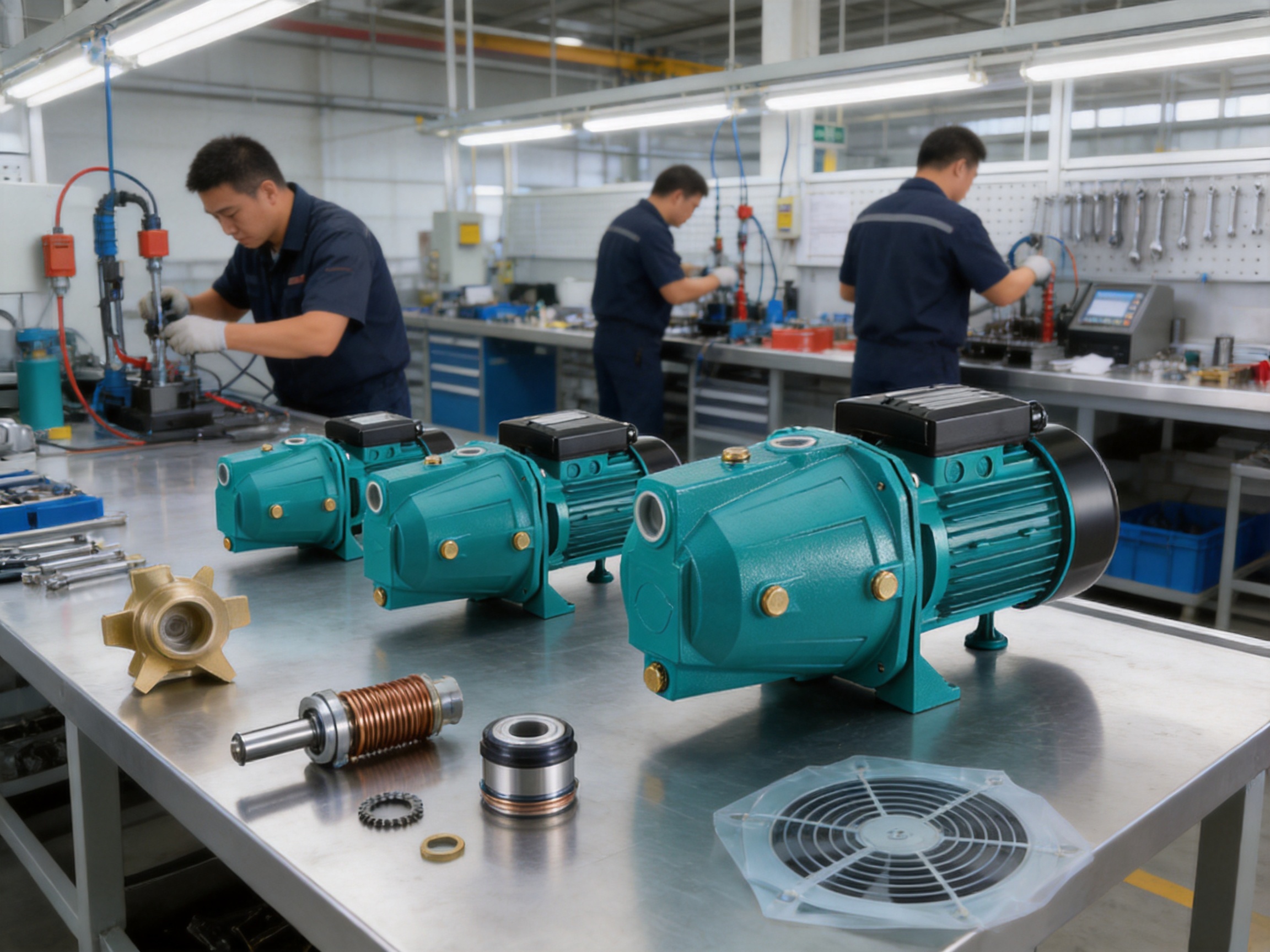
Reliable water movement is essential in residential buildings, farms, workshops, commercial facilities, and heating, ventilation, and air-conditioning systems. A suitable pump must do more than move water from one point to another. It must start reliably, maintain stable pressure, resist corrosion, tolerate intermittent operation, and deliver consistent performance over an extended service life. The JET-L Series clean water brass impeller self-priming shallow well pump is designed to address these practical requirements in a compact and economical package.
Developed for clean water transfer and liquids with similar physical and chemical properties, the JET-L Series combines a self-priming hydraulic design, brass impeller, stainless steel shaft, copper motor winding, cast iron structural components, and a built-in thermal protection system. These features make the pump suitable for domestic water supply, garden irrigation, water tank transfer, well water lifting, automatic irrigation systems, pressure sets, and air-conditioning-related circulation or supply duties.
The series is available in three power configurations: JET-550L, JET-750L, and JET-1100L. Depending on the selected model, maximum flow reaches 45 to 50 liters per minute, maximum head ranges from 40 to 55 meters, and the maximum suction height is 8 meters. With one-inch inlet and outlet connections, the pump is easy to integrate into common residential and light commercial piping systems.
The JET-L Series belongs to the self-priming JET pump category. Unlike a conventional surface pump that may require manual filling of the suction line and pump casing after air enters the system, a self-priming pump is designed to remove air from the suction pipe and establish water flow more easily after the initial filling procedure. This characteristic is particularly valuable in shallow wells, water tanks, rainwater systems, and installations where the suction line may not remain completely flooded.
The pump is intended for clean water applications. It can also handle liquids that have similar physical and chemical properties to water, provided that the liquid temperature, cleanliness, viscosity, and chemical compatibility remain within the operating limits of the pump. The maximum liquid temperature is 60°C, while the maximum ambient temperature is 40°C.
Its operating concept is straightforward. The motor rotates the impeller at high speed, creating hydraulic energy that increases the pressure of the liquid. The JET hydraulic assembly uses a nozzle, venturi, and diffuser to support the self-priming process and generate the required pressure. During startup, the pump can manage a mixture of air and water in the suction line, gradually evacuating air until a stable water column is formed.
This design is useful where water sources are positioned below the pump. The maximum recommended suction height is 8 meters, although the actual achievable suction height depends on atmospheric pressure, water temperature, pipe length, pipe diameter, fittings, elevation, and the condition of the foot valve or check valve. Correct installation remains essential for obtaining the best result.
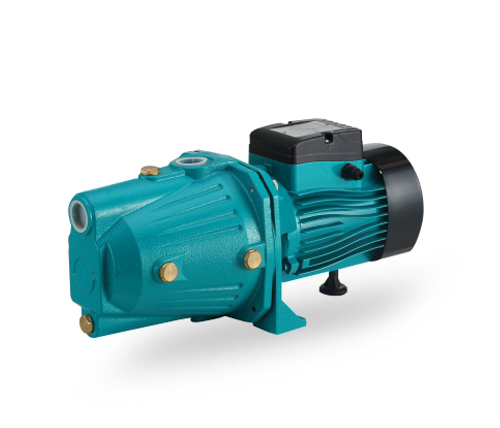
JET-L Series Clean Water Brass Impeller Self-priming Shallow Well Pump for Air Conditioner System
The JET-L Series offers three standard models so users can select a pump according to flow, pressure, and power requirements. The product range covers common domestic and light commercial duties without requiring an oversized motor for smaller installations.
| Model | Rated Power | Rated Power | Inlet/Outlet | Maximum Flow | Maximum Head | Maximum Suction |
| JET-550L | 0.6 kW | 0.8 HP | 1 inch x 1 inch | 45 L/min | 40 m | 8 m |
| JET-750L | 0.75 kW | 1 HP | 1 inch x 1 inch | 50 L/min | 45 m | 8 m |
| JET-1100L | 1.1 kW | 1.5 HP | 1 inch x 1 inch | 50 L/min | 55 m | 8 m |
The table shows that the JET-550L is appropriate for lower-demand water transfer, small gardens, and basic domestic supply. The JET-750L provides additional pressure and flow capacity for users who need a stronger water supply or more demanding irrigation performance. The JET-1100L delivers the highest available head and is suitable for taller buildings, longer pipe runs, larger pressure losses, or applications requiring greater delivery pressure.
Maximum flow and maximum head are reference points rather than simultaneous operating values. In practical operation, flow decreases as discharge pressure and total head increase. A correct pump selection should therefore consider the complete system curve, including static lift, friction loss, required outlet pressure, pipe size, fittings, valves, and the number of outlets operating at the same time.
One of the most important advantages of the JET-L Series is its self-priming capability. Surface-mounted pumps are often installed above the water source, which means the suction pipe can contain air during initial startup or after a prolonged shutdown. Air pockets reduce hydraulic efficiency and may prevent an ordinary centrifugal pump from establishing flow. The JET-L design uses a jet-assisted hydraulic arrangement to help overcome this common installation challenge.
The nozzle and venturi generate a recirculating flow inside the pump chamber. This action supports the removal of air from the suction pipe and helps the pump build a continuous water column. Once the suction line is filled, the pump can operate as a conventional surface centrifugal pump while continuing to provide the pressure and flow required by the system.
This feature offers several practical benefits. The pump is easier to restart after periods of inactivity, more tolerant of small amounts of air in the suction line, and more suitable for water sources that are not directly below the pump. It can also reduce the need for frequent manual intervention in domestic water supply and garden irrigation systems.
Self-priming does not mean that the pump can run dry indefinitely. The pump casing must be filled according to the installation instructions before the first startup, and the suction line should be correctly sealed. A damaged foot valve, loose connection, leaking pipe, or blocked strainer can introduce excessive air and prevent successful priming. Protecting the pump from dry running is important for preserving the mechanical seal and hydraulic components.
The JET-L Series uses a brass impeller. The impeller is one of the most important components in any centrifugal pump because it transfers rotational energy from the motor to the liquid. Its material directly affects corrosion resistance, dimensional stability, mechanical strength, and long-term hydraulic performance.
Brass provides several advantages in clean water pumping. It offers good resistance to corrosion in common water service, maintains a stable shape during operation, and has suitable mechanical strength for a compact jet pump. Brass is also less likely than certain unprotected ferrous materials to develop surface rust that can affect restarting or contaminate the pumped water with visible corrosion particles.
The brass impeller is especially useful when the pump experiences repeated shutdowns and restarts. Long periods of inactivity can cause corrosion or deposits in lower-quality impellers, potentially making startup more difficult. The combination of a brass impeller and rust-free copper inserts is designed to support smooth restarting after storage or intermittent operation.
Compared with basic plastic impellers, the brass construction can provide a more robust solution for users who prioritize mechanical durability and stable performance. Plastic components may be suitable for some low-duty systems, but brass is often preferred when the pump is expected to cope with more demanding operating cycles, higher pressure, or long-term service.
Compared with untreated cast iron hydraulic parts, brass offers improved resistance to rust in water-contact areas. This can be beneficial in domestic water systems, water tanks, irrigation installations, and HVAC environments where the appearance and cleanliness of the pumped water matter.
The pump incorporates an AISI 304 stainless steel shaft. The shaft transfers torque from the motor to the impeller and operates in an environment that may be exposed to moisture. A stainless steel shaft helps protect this critical rotating component from rust and corrosion.
AISI 304 stainless steel is widely used in water-handling equipment because it provides a practical balance of corrosion resistance, strength, availability, and cost. In the JET-L Series, the shaft helps maintain smooth rotation and protects the water-contact area from rust-related deterioration. This is particularly important in clean water applications where corrosion products could affect the liquid or damage the mechanical seal.
The pump also uses a carbon and ceramic mechanical seal. This seal helps prevent water from passing along the shaft into the motor area. Mechanical seal reliability is essential because leakage can damage bearings, electrical components, and the motor winding. Proper alignment, correct operating conditions, and protection against dry running are all necessary to achieve the expected service life of the seal.
The material combination is designed to offer a practical advantage over low-cost pumps that use less corrosion-resistant shaft materials. A rusting shaft can create friction, damage the seal faces, and make the pump difficult to restart. By using stainless steel in this area, the JET-L Series improves the durability of a component that is often overlooked during pump selection.
The motor is equipped with copper winding. Copper has excellent electrical conductivity, allowing the motor to transfer electrical energy into mechanical power efficiently when properly designed and operated. Copper winding also supports good heat dissipation and reliable performance during normal pump duty.
The JET-L motor uses high-efficiency C&U bearings to support smooth rotor movement. Proper bearing quality reduces friction, vibration, and operating noise while helping maintain accurate shaft alignment. Stable shaft alignment is important for the impeller, mechanical seal, and overall hydraulic performance.
A built-in thermal protector is provided for the single-phase motor. This protective device is designed to respond to excessive temperature caused by overload, abnormal operating conditions, restricted ventilation, or other electrical and mechanical problems. Thermal protection helps reduce the risk of motor damage, although it does not replace correctly sized circuit protection, grounding, installation, and maintenance.
The motor uses Class F insulation. This insulation rating provides a suitable thermal margin for many general-purpose pump applications. The pump also has an IP44 protection rating, which indicates protection against solid objects of a specified size and protection against splashing water from typical directions. IP44 is appropriate for many sheltered pump-room and equipment-room installations, but the motor should not be submerged or exposed to uncontrolled water spray.
The maximum ambient temperature is 40°C. Adequate ventilation around the motor is necessary, especially in warm equipment rooms, enclosed cabinets, or HVAC plant areas. A motor that operates in a very hot environment may experience reduced thermal performance even if the hydraulic load is within the rated range.
The pump body and support are manufactured from HT200 cast iron with a special anti-rust treatment. Cast iron provides rigidity and vibration resistance, helping the pump maintain stable alignment under pressure. A rigid housing can also reduce deformation and contribute to consistent clearances between hydraulic components.
The cast iron body provides a durable foundation for domestic, agricultural, and light commercial operation. Its strength makes it suitable for installations where the pump may experience frequent starting, pipe vibration, or moderate pressure fluctuations. The anti-rust treatment improves surface protection and helps extend the useful life of the housing when the pump is installed in a suitable dry or sheltered location.
The motor case is made from aluminum. Aluminum helps reduce weight while providing effective heat dissipation. A lighter motor housing can make handling and installation easier, especially where the pump must be mounted on a small platform or moved during maintenance.
The motor cover is made from cast iron, adding structural protection to the rear section of the motor. The fan is made from PP, a material commonly used for lightweight rotating fan components. The fan cover helps protect the cooling fan and improves user safety by limiting access to the rotating element.
The nozzle, venturi, and diffuser are made from PPO. These components are central to the jet-pump hydraulic assembly. Their material selection supports a lightweight and corrosion-resistant design in the internal water passage. The combination of PPO hydraulic components with a brass impeller provides a balance of corrosion resistance, low weight, and reliable hydraulic function.
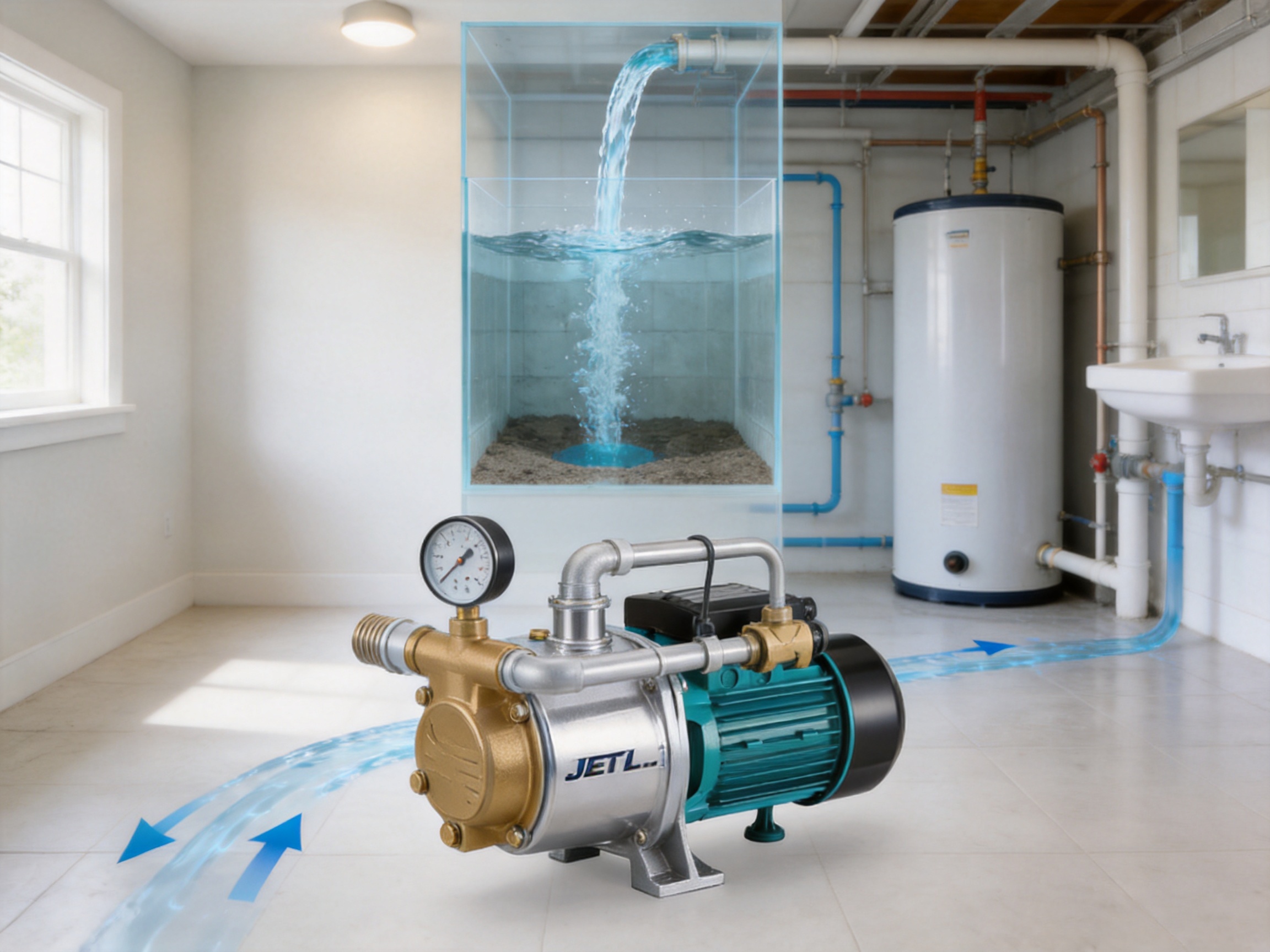
Many surface pumps appear similar from the outside, but their internal construction can differ substantially. The JET-L Series is designed to provide advantages in several areas that directly influence operating reliability.
First, the self-priming jet arrangement provides better tolerance of air in the suction line than a basic non-self-priming centrifugal pump. This reduces startup difficulties in shallow-well and tank-transfer installations.
Second, the brass impeller offers a more durable water-contact component than many entry-level plastic impellers. It is suited to repeated operation, pressure generation, and long service intervals when used with clean water.
Third, the AISI 304 shaft helps resist corrosion in a critical rotating area. This is a meaningful improvement over pumps using ordinary steel shafts without adequate protection.
Fourth, the copper motor winding and C&U bearings support dependable motor operation. Some low-cost products may use lower-conductivity winding materials or less consistent bearing quality. These compromises can lead to greater heat generation, reduced efficiency, higher noise, and shorter service life.
Fifth, the built-in thermal protector provides an additional layer of motor safety. Although users must still install proper external electrical protection, thermal protection can help reduce damage during abnormal conditions.
Sixth, the JET-L Series covers several power levels within one product family. This makes it easier for distributors, contractors, and system designers to match the pump to different project requirements without changing to an entirely different design platform.
Finally, the one-inch inlet and outlet configuration is compatible with common piping arrangements. Standardized connections reduce installation complexity and make replacement or system integration more convenient.
The JET-L Series is suitable for distributing clean water in homes, villas, small apartment buildings, workshops, and rural properties. It can draw water from a well, tank, underground storage vessel, or other suitable source and deliver it to faucets, showers, toilets, washing equipment, and small pressure systems.
In a domestic installation, the pump may be paired with a pressure tank and pressure switch. The tank reduces the number of pump starts by storing a volume of pressurized water. The pressure switch starts and stops the pump according to system demand. This arrangement can provide more stable service and reduce motor cycling.
The pump can also support a small pressure set for applications where municipal pressure is insufficient. For example, it may transfer water from a storage tank to a building with a higher elevation or supply a remote section of a property. The selected model should be based on the required pressure at the furthest outlet and the expected simultaneous flow.
Users should ensure that the water is clean and free from abrasive sand, stones, excessive sediment, fibers, and corrosive chemicals. If the source contains sand or suspended solids, a suitable filter or sediment separator should be installed upstream, provided that the additional pressure loss is considered in the pump selection.
Garden irrigation is another important application. The pump can supply sprinklers, spray guns, drip irrigation systems, hoses, and small irrigation manifolds. Its self-priming design is useful when the water source is a rainwater tank or shallow well located below the pump position.
For garden use, the JET-550L may be sufficient for a modest area with a short hose and limited pressure requirements. The JET-750L can provide additional capacity where several sprinklers or a longer pipeline are used. The JET-1100L is appropriate where greater elevation, longer pipe runs, or higher outlet pressure is required.
Irrigation systems should be divided into zones when the water demand is greater than the pump’s practical operating capacity. Running too many outlets at once can reduce pressure and result in poor irrigation coverage. A correctly designed system uses valves, filters, regulators, and appropriately sized pipes to keep friction losses under control.
The pump should not be selected solely by maximum flow. Sprinklers and irrigation devices often require a minimum operating pressure. A pump that provides a large flow at low pressure may not perform well with elevated sprinklers, long hoses, or pressure-compensating emitters. The system designer should identify the required flow and pressure at the same operating point.
The JET-L Series can be used to transfer water between storage tanks or lift water from a shallow well within the maximum suction limitation. It is well suited to properties that collect rainwater, use storage tanks to manage intermittent supply, or require water to be moved from a lower level to a higher distribution point.
When lifting water from a well, the suction pipe should be as short and direct as possible. Excessive bends, undersized pipe, leaking joints, and clogged strainers increase suction losses and may prevent the pump from achieving its rated performance. The suction pipe should generally be at least as large as the pump inlet, with the final selection based on system design and installation conditions.
A foot valve or suitable check valve can help keep the suction pipe filled when the pump stops. This supports faster restarting and reduces the amount of air introduced into the system. The valve should be accessible for inspection and should not create excessive resistance.
The 8-meter maximum suction specification should be treated as a practical upper limit under favorable conditions rather than a guaranteed result in every installation. Water temperature, altitude, pipe friction, and vapor pressure affect the available suction performance. A lower suction lift is preferable whenever the site permits it.
The product title identifies air-conditioner system use, and the pump can be considered for clean-water duties related to small HVAC installations. Possible applications include transferring water to a storage tank, supplying auxiliary clean-water circuits, supporting equipment cleaning, and assisting certain low-temperature water distribution arrangements.
Before using the pump in an HVAC system, the designer must confirm the liquid temperature, pressure, chemical compatibility, flow requirement, and operating schedule. The maximum liquid temperature is 60°C, and the pump is intended for clean water or similar liquids. It is not automatically suitable for glycol mixtures, chemically treated water, seawater, refrigerant fluids, or aggressive cleaning solutions.
In HVAC installations, the pump should be evaluated against the total dynamic head of the circuit. This includes vertical lift, pipe friction, heat exchanger resistance, valve losses, filter losses, and the pressure required at the terminal equipment. If the pump is used in a closed-loop circulation system, the required pressure may primarily relate to friction losses rather than building elevation.
The cast iron body, brass impeller, stainless steel shaft, and thermal-protected copper-wound motor provide a practical configuration for many general clean-water support duties. However, the final selection should always be checked against the system fluid and operating temperature.
Taizhou Edwin Electric Co., Ltd. was founded in 2008 and operates as an integrated manufacturing enterprise focused on research and development, mass production, and global export. This integrated structure is important because it allows product development, component selection, manufacturing coordination, quality control, and customer service to operate within a connected supply and management system.
The company’s product portfolio includes deep well pumps, submersible pumps, domestic booster pumps, circulation pumps, solar water pumps, intelligent booster pumps, and related water treatment peripheral products. This breadth gives the engineering and production teams exposure to different hydraulic structures, motor technologies, control methods, and application requirements.
Independent research and development supports continuous product improvement. For a self-priming pump, development work may involve hydraulic passage optimization, nozzle and venturi matching, impeller geometry, motor performance, seal reliability, noise reduction, thermal behavior, and ease of assembly. A broad product portfolio also enables the manufacturer to compare different design approaches across multiple pump categories.
Mass production capability is valuable for distributors and project buyers who require consistent supply. Standardized manufacturing procedures help maintain repeatability between production batches. Consistent component dimensions, winding processes, bearing installation, seal assembly, and motor testing are all important to the final performance of a pump.
The use of defined materials for key components reflects a structured product design approach. HT200 cast iron is specified for the pump body and support, PPO for the nozzle, venturi, and diffuser, brass for the impeller, carbon and ceramic for the mechanical seal, aluminum for the motor case, and PP for the fan. These material choices are not isolated features; they form a coordinated system intended to balance durability, corrosion resistance, weight, thermal performance, and production efficiency.
Production strength also includes the ability to support international export. Since establishing related import and export service companies in 2012, the business has developed capabilities in procurement planning, order tracking, cross-border delivery, and foreign trade services. These capabilities can be valuable to overseas buyers who need coordinated documentation, shipment scheduling, packaging, and order communication.
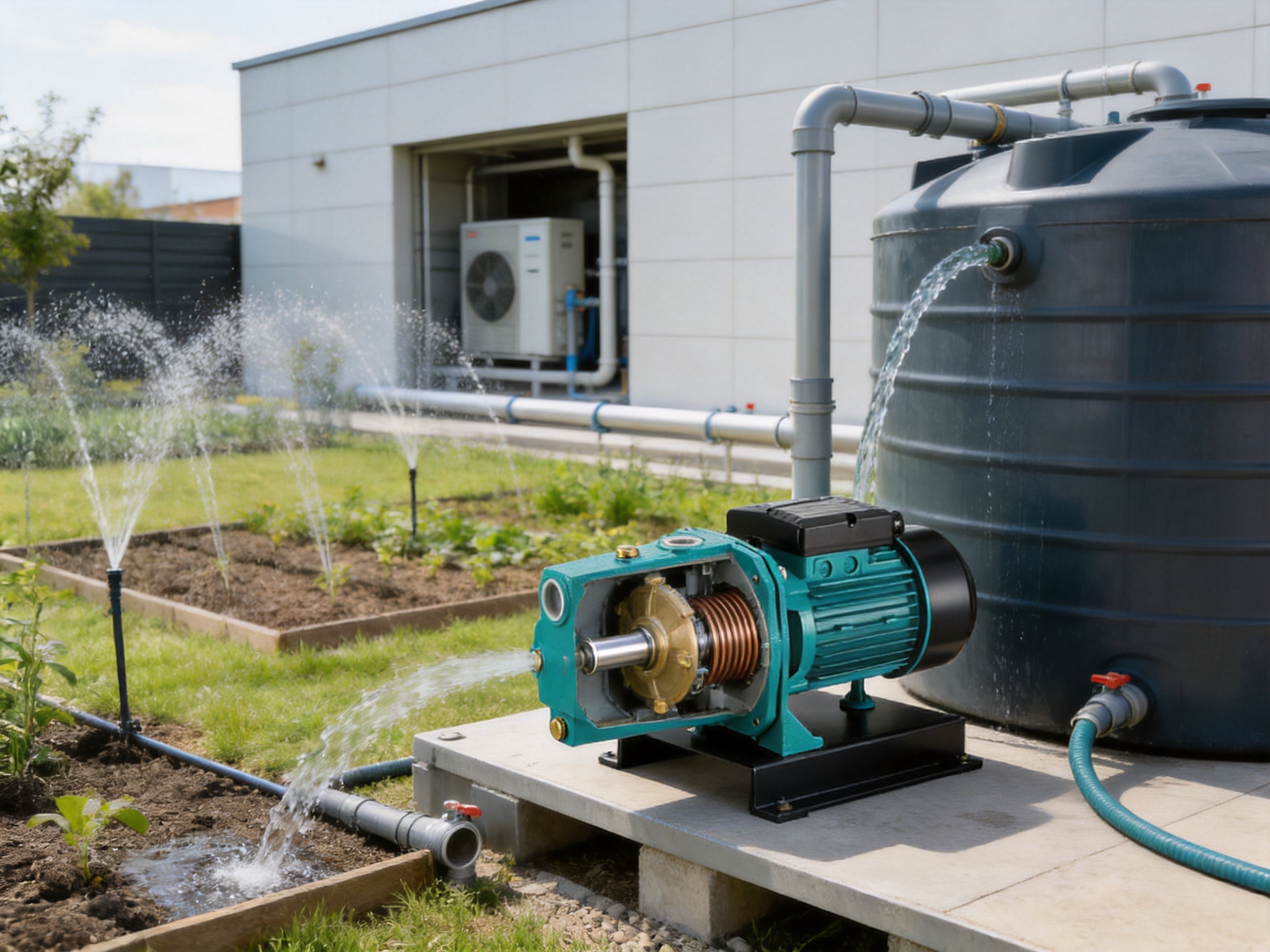
Quality in pump manufacturing depends on more than final visual inspection. It begins with design verification and continues through incoming material control, machining, assembly, electrical testing, hydraulic testing, packaging, and after-sales support.
For the JET-L Series, quality-oriented production should pay particular attention to the concentricity of the shaft and impeller, the fit of the mechanical seal, the accuracy of the hydraulic passages, the integrity of the motor winding, the function of the thermal protector, and the sealing of the pump casing. These factors directly influence startup behavior, leakage prevention, noise, vibration, and service life.
Motor winding quality is especially important. Copper winding must be formed and insulated consistently, while the stator and rotor must be assembled with correct clearances. Electrical tests can help identify insulation defects, winding abnormalities, grounding problems, and other conditions that may affect safety or performance.
Hydraulic testing should verify that the pump can achieve the expected relationship between flow and head. Testing at different operating points helps identify abnormal noise, leakage, excessive vibration, unstable priming, or deviations from the design curve. Although maximum flow and maximum head are commonly used catalogue values, real system performance depends on the entire pump curve.
Material traceability and process control also contribute to consistent production. When critical components are sourced and processed according to defined specifications, the manufacturer can better control variation between batches. This is particularly important for export customers, distributors, and contractors who need predictable product behavior across multiple projects.
The pump should be installed on a stable, level foundation that can support its weight and limit vibration. The installation location should be dry, adequately ventilated, protected from flooding, and accessible for inspection and maintenance. The motor should not be exposed to direct water jets or installed in a location where it could become submerged.
The suction pipe should be airtight. Even a small air leak on the suction side can interfere with self-priming and reduce pump performance. Threaded joints should be sealed correctly, and flexible hoses should be suitable for vacuum service. A suction hose that collapses under negative pressure can restrict flow and cause poor operation.
The suction line should rise continuously toward the pump where possible, avoiding high points that can trap air. If a high point cannot be avoided, the layout should be reviewed carefully because trapped air may make priming difficult. The suction inlet should be fitted with a suitable strainer and foot valve when required by the application.
The discharge line should include suitable isolation valves and, where appropriate, a pressure gauge. A check valve may be used to prevent backflow. Piping should be independently supported so that its weight does not place stress on the pump casing or threaded connections.
Before initial startup, the pump casing must be filled with clean water. The suction line should also be checked for leaks and the valves should be positioned correctly. The motor rotation, electrical voltage, grounding, and protective devices should be verified by a qualified installer.
The pump should never be operated dry. Dry running can rapidly damage the mechanical seal because the seal faces depend on liquid for cooling and lubrication. If the water source is unreliable, a low-water protection device, float switch, pressure controller, or other suitable safeguard should be considered.
Regular maintenance helps preserve the performance of the JET-L Series. The maintenance schedule should reflect water quality, operating hours, installation conditions, and the number of starts per day.
Users should periodically inspect the suction strainer and clean it when necessary. A blocked strainer increases suction resistance and may cause cavitation, reduced flow, or failure to prime. Filters on the discharge side should also be checked because excessive blockage increases system head.
Connections should be inspected for leakage, particularly around the suction pipe, pump casing, drain plug, and mechanical seal area. Water leakage near the motor should be treated seriously because it may indicate a damaged seal or casing problem.
Unusual noise, vibration, high motor temperature, repeated thermal protector activation, or declining pressure may indicate a developing fault. Possible causes include bearing wear, impeller blockage, air leakage, restricted piping, low water level, incorrect voltage, or excessive system demand. Continuing to operate under abnormal conditions may increase repair costs.
Before performing maintenance, the pump must be isolated from the electrical supply. The system should be depressurized, and hot liquid should be allowed to cool. Electrical work should be carried out by qualified personnel, while mechanical repairs should use suitable replacement parts and correct sealing procedures.
The correct model depends on the required operating point rather than on motor power alone. Begin by calculating the required flow rate. For domestic use, this may be based on the number of fixtures that could operate simultaneously. For irrigation, it may be based on the flow requirements of sprinklers or irrigation zones. For tank transfer, it may be based on the desired filling time.
Next, calculate total head. Total head includes the vertical distance between the water level and delivery point, the required pressure at the outlet, and all friction losses in pipes, valves, filters, fittings, and equipment. If the pump must lift water from a shallow well, the suction lift should also be assessed within the 8-meter maximum specification.
The JET-550L is a logical starting point for smaller water transfer and domestic applications requiring up to approximately 45 liters per minute under favorable conditions and a maximum head of 40 meters.
The JET-750L provides a higher 45-meter maximum head and up to 50 liters per minute maximum flow. It may be selected for medium-duty domestic supply, garden irrigation, and applications with greater pipe resistance.
The JET-1100L provides the highest pressure capability in the series, with a maximum head of 55 meters. It is suitable for installations with greater elevation or pressure requirements, provided that the actual duty point remains within the pump curve and the electrical supply is appropriate.
Because catalogue maximum values do not represent all operating conditions, buyers should request the detailed performance curve when designing a complete system. Professional selection based on the duty point helps prevent oversizing, undersizing, unstable operation, unnecessary energy consumption, and premature wear.
| Feature | JET-L Series Benefit | Practical User Value |
| Self-priming jet design | Assists air removal from the suction line | Easier startup in shallow wells and tank systems |
| Brass impeller | Good corrosion resistance and mechanical durability | Reliable pressure generation and smoother restarting |
| AISI 304 shaft | Resists rust in a critical water-contact area | Improved seal and shaft service life |
| Copper motor winding | Good electrical conductivity and heat management | Dependable operation and efficient motor performance |
| C&U bearings | Supports smooth rotor movement | Reduced friction, noise, and vibration |
| Built-in thermal protector | Helps protect the single-phase motor from overheating | Additional safety during abnormal operating conditions |
| Class F insulation | Provides a suitable thermal insulation margin | Reliable electrical performance in general applications |
| IP44 protection | Protects against specified solid objects and splashing water | Suitable for many sheltered installation environments |
| Three model options | Covers several power and head requirements | Flexible selection for domestic and light commercial systems |
A pump’s purchase price is only one part of its total cost of ownership. Energy consumption, service frequency, replacement parts, downtime, and installation complexity can have a greater impact over the operating life of the equipment.
The copper-wound motor, efficient bearings, and appropriately matched hydraulic components are intended to support dependable performance. Selecting the correct model is equally important. An oversized pump may consume unnecessary energy and cause frequent cycling, while an undersized pump may run continuously at an unsuitable duty point.
Self-priming capability can reduce operational inconvenience by making restarts easier after air enters the suction line or after the pump has been shut down. A corrosion-resistant impeller and shaft can also reduce the likelihood of rust-related faults in clean-water service.
Long-term reliability depends on the complete system. Proper pipe sizing, clean water, stable voltage, correct grounding, adequate ventilation, and protection against dry running all contribute to lower maintenance costs. A well-designed installation allows the pump to operate within its intended range and minimizes unnecessary stress on the motor and hydraulic assembly.
The JET-L Series is designed for clean water and similar liquids. It should not be used for liquids containing large quantities of abrasive solids, highly corrosive chemicals, flammable fluids, sewage, slurry, or liquids whose temperature exceeds the specified limit without engineering confirmation.
The pump should not be installed below the maximum allowable suction conditions. If the water level is too far below the pump, the pump may experience cavitation, unstable flow, excessive noise, or failure to prime. In such cases, a submersible pump or a different hydraulic arrangement may be more appropriate.
The IP44 rating does not make the pump waterproof. The pump must be protected from flooding, heavy rain, direct hose spraying, and condensation that could enter the motor or terminal box. Outdoor installations should use suitable weather protection and electrical enclosures.
Any use in hot-water, HVAC, or chemically treated systems should be evaluated carefully. The liquid temperature must remain within the stated limit, and the material compatibility of the brass, stainless steel, seal, PPO, and other components must be confirmed for the specific fluid.
The JET-L Series is a surface-mounted self-priming jet pump designed for clean water transfer and shallow-well applications. It can also support domestic supply, garden irrigation, water tank transfer, and selected HVAC-related water duties.
The maximum stated suction height is 8 meters. Actual performance depends on altitude, water temperature, pipe length, pipe diameter, fittings, valve condition, and the airtightness of the suction line. A shorter and better-sealed suction line normally provides more reliable results.
No. The pump must not run dry. Dry running can damage the mechanical seal and may cause overheating. The pump casing should be filled with clean water before initial startup, and low-water protection should be considered where the source level may fall.
The JET-1100L provides the highest maximum head in the series, reaching 55 meters. It has a rated power of 1.1 kW or 1.5 HP and is intended for applications requiring greater lifting height or delivery pressure.
The JET-550L may be suitable for a small garden with limited irrigation zones, short pipe runs, and moderate pressure requirements. If the system uses several sprinklers, a long hose, or elevated terrain, the JET-750L or JET-1100L may be more appropriate.
All three listed models use one-inch by one-inch inlet and outlet connections. The actual pipe size should be selected according to the system flow, pipe length, and pressure-loss calculation.
The pump is intended for clean water or liquids similar to water. It is not designed as a sewage, slurry, or heavy-sediment pump. If the source contains suspended solids, suitable filtration and a review of the application are necessary.
The maximum liquid temperature is 60°C. Applications involving hotter liquids, glycol mixtures, chemical additives, or special process fluids require confirmation of material and seal compatibility before use.
IP44 indicates protection against specified solid objects and splashing water. It does not mean that the motor can be submerged or exposed to continuous water spray. The pump should be installed in a dry, ventilated, and protected location.
The single-phase motor includes a built-in thermal protector. Proper external electrical protection, grounding, correct voltage, and professional installation are still required.
Fill the pump casing before startup, ensure that the suction pipe is airtight, use a suitable foot valve, avoid unnecessary high points in the suction line, clean the strainer, and keep the water level within the recommended suction range. Persistent priming failure should be investigated rather than corrected by repeated dry running.
Inspect and clean strainers, check for leakage, monitor noise and vibration, verify electrical connections, protect the motor from moisture, and investigate repeated thermal protector activation. Maintenance should always be performed after disconnecting and isolating the electrical supply.
The pump is designed for general water supply and transfer duties, but the suitability of continuous operation depends on the actual flow, head, ambient temperature, ventilation, water temperature, and electrical conditions. The duty cycle should be confirmed for the specific installation.
Buying from an integrated manufacturer can provide advantages beyond the pump itself. A manufacturer involved in product research, production, export, and customer support can coordinate technical information and commercial requirements more efficiently than a purely trading-based supply chain.
Taizhou Edwin Electric Co., Ltd. combines product development with mass manufacturing and international export experience. The company’s broader range of pump categories supports application knowledge across residential, agricultural, municipal, construction, mining, HVAC, new energy, and household water supply projects.
Its related import and export service companies provide procurement planning, order tracking, cross-border delivery, and foreign trade support. For international distributors, contractors, and project buyers, these services can simplify communication and improve order visibility from production through shipment.
The company has also invested in solar water pumps and intelligent booster pumps since 2018, expanding beyond conventional motor-driven water transfer. This focus on new energy and intelligent technology indicates an effort to address changing requirements in energy efficiency, remote water supply, automation, and modern building services.
For buyers evaluating long-term suppliers, important considerations include manufacturing consistency, product range, technical communication, production capacity, export experience, customization capability, spare-parts support, and responsiveness after delivery. An integrated manufacturer with established product families can be better positioned to support repeat orders and multi-product procurement programs.
The JET-L Series clean water brass impeller self-priming shallow well pump is designed as a durable and versatile solution for residential, agricultural, commercial, and selected HVAC-related applications. Its principal advantages include self-priming performance, a brass impeller, AISI 304 stainless steel shaft, copper motor winding, C&U bearings, cast iron structural components, built-in thermal protection, Class F insulation, and IP44 motor protection.
The three available models provide a practical range of power and pressure capabilities. The JET-550L offers a compact option for smaller duties, the JET-750L provides additional capacity for medium applications, and the JET-1100L delivers the highest head for more demanding lifting and pressure requirements.
Compared with basic surface pumps, the series offers a stronger combination of corrosion resistance, restarting capability, motor protection, and material quality. Its value is further supported by the manufacturing strengths of an established integrated pump producer with research and development, mass production, product diversification, and international export capabilities.
Correct selection and installation remain essential. The pump must be used with clean water or compatible liquids, operated within the specified temperature and suction limits, protected from dry running, and connected to a properly designed piping and electrical system. When these conditions are met, the JET-L Series can provide reliable water transfer and pressure support for a wide variety of everyday applications.
1. Product technical data and component specifications for the JET-L Series self-priming shallow well pump.
2. Manufacturer-provided application information for domestic water supply, garden irrigation, tank transfer, well lifting, and HVAC-related clean-water duties.
3. General principles of centrifugal pump operation, self-priming hydraulic design, suction lift, and total dynamic head calculation.
4. General engineering guidance for electric motor insulation classes, enclosure protection ratings, thermal protection, and pump installation safety.
5. General materials engineering references concerning brass impellers, AISI 304 stainless steel shafts, cast iron pump bodies, polymer hydraulic components, and carbon-ceramic mechanical seals.
edwina@edwin-pump.com
+86-13586290903 (WhatsApp)
Xuri Gongliang Cutting Tool Entrepreneurship Park, Wenqiao Town, Wenling City, Taizhou City, Zhejiang Province, China

High Performance Smart Pump Factory


 English