edwina@edwin-pump.com

View All Products
en
Reliable water movement is essential for garden irrigation, greenhouse cultivation, small-scale agricultural operations, household water transfer, and many other daily applications. A pump used in these environments must do more than simply move water. It must provide sufficient pressure, start reliably after periods of inactivity, tolerate demanding operating conditions, and remain practical to install and maintain. The JET-SL Series High-Pressure Horizontal Self-Priming JET Pump is designed around these requirements, combining a compact horizontal structure with self-priming capability, durable materials, and a pressure-oriented hydraulic design.
The JET-SL Series is intended for clean water and liquids with chemical properties similar to water. Its application range includes garden irrigation, vegetable greenhouse water supply, breeding industry water supply and drainage, and operation with various types of auxiliary water-management equipment. With models ranging from 0.6 kW to 1.1 kW, the series gives users a practical selection of performance levels for different small and medium water-transfer requirements.
Compared with basic surface pumps that may require repeated manual priming, low-pressure utility pumps that cannot support demanding delivery conditions, or models built with less durable wetted components, the JET-SL Series offers a more complete combination of convenience, pressure, materials, and continuous-use capability. Its self-priming design, brass impeller, stainless steel shaft, cast iron structure, copper motor winding, C&U bearing configuration, and built-in thermal protection contribute to dependable operation in everyday water applications.
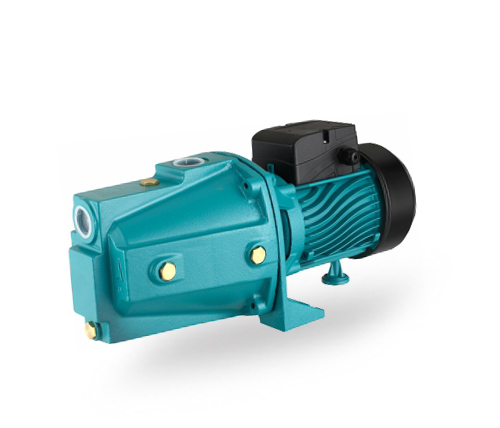
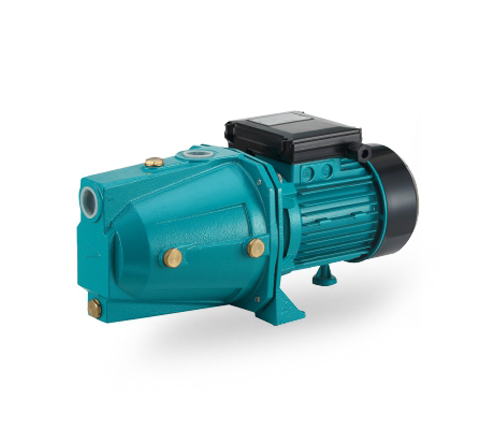
JET-SL Series High Pressure Horizontal Self-priming JET Pump for Garden Use
The JET-SL Series is a horizontal self-priming JET pump developed for shallow-well and surface-water applications. It is particularly suitable where water must be drawn from a source below the pump and delivered through a pipe network to irrigation points, storage tanks, household systems, or auxiliary equipment. The maximum suction height is stated as 8 meters, making the series suitable for many conventional shallow-well and surface-water installations when the suction pipeline is correctly designed.
As a JET pump, the unit uses a hydraulic arrangement involving a nozzle, Venturi, and diffuser. These components help create the pressure conditions required for self-priming and water lifting. The design is intended to support stable suction performance while maintaining a high maximum head. Depending on the selected model, the maximum head reaches from 40 to 50 meters.
The series includes three principal models: JET-550SL, JET-750SL, and JET-1100SL. Their rated power ranges from 0.6 kW to 1.1 kW, while maximum flow ranges from 40 to 50 liters per minute. All listed models use 1-inch inlet and outlet connections and provide a maximum suction height of 8 meters.
This configuration makes the pump especially useful for users who need more pressure than a basic garden transfer pump can offer but do not require a large industrial centrifugal system. It occupies a practical position between light-duty domestic pumps and larger commercial water-transfer equipment.
One of the most important advantages of the JET-SL Series is its self-priming function. In many surface-pump applications, the operator must manually fill the pump and suction pipe with water before every start. This can be inconvenient, especially when the pump is installed in a garden, greenhouse, breeding facility, or remote water-transfer location.
A properly installed self-priming JET pump can reduce the need for repeated manual intervention. Once the pump body and suction system have been initially prepared according to installation requirements, the hydraulic system can assist in removing air from the suction line and establishing water flow. This improves operating convenience and can make the pump more suitable for intermittent applications where the equipment may stop and restart regularly.
Self-priming capability is also useful in applications where the water source is below the pump. The 8-meter maximum suction specification provides a clear design reference, although actual performance depends on pipe length, pipe diameter, water temperature, altitude, foot-valve condition, air tightness, and the condition of the water source.
The JET-SL Series is designed for high-pressure water delivery within its intended size range. Maximum heads of 40, 45, and 50 meters are available across the three models. This makes the pump suitable for garden irrigation systems with elevated sprinklers, long delivery pipes, small water distribution networks, greenhouse lines, and applications requiring water to be transferred to a higher level.
A higher maximum head gives users greater flexibility when selecting pipe routes and irrigation equipment. It can help overcome elevation differences and pressure losses caused by fittings, valves, elbows, filters, and narrow pipe sections. In comparison with simple low-head surface pumps, a pressure-oriented JET pump may provide more usable performance in installations where water must travel a considerable distance or reach elevated outlets.
Maximum head is not the same as operating flow at every point in the system. Pump performance changes according to system resistance, pipe size, elevation, and outlet conditions. Therefore, users should select the model based on the required combination of flow and pressure rather than relying only on the maximum head figure. Even so, the published specifications clearly show that the JET-SL Series is intended for pressure-demanding small-scale applications.
The pump body and support are made from HT200 cast iron and receive special anti-rust treatment. Cast iron provides a solid structural foundation for the hydraulic chamber and motor support. It can help reduce vibration and maintain alignment during operation when the pump is installed on a stable base.
The anti-rust treatment is an important practical feature because surface pumps are frequently installed in humid environments, utility rooms, gardens, greenhouse areas, and agricultural locations. Protection against corrosion helps preserve the exterior and supports longer service life. Proper installation remains necessary, since anti-rust treatment cannot compensate for constant exposure to standing water, aggressive chemicals, or poor drainage.
Compared with lightweight pumps made largely from thin plastic or lower-strength materials, a cast iron body can offer a more substantial construction. This is particularly valuable when the pump operates continuously or when the connected pipework creates mechanical stress. The structure should always be supported correctly, and pipework should not be allowed to hang from the pump connections.
The impeller is made from brass. This material selection supports the pump’s hydraulic durability and provides a robust rotating component in contact with water. Brass is also advantageous in applications where repeated starting and stopping may occur, because the impeller must maintain its shape and balance throughout operation.
The product information emphasizes the ability of the brass impeller and rust-free copper inserts to support smooth restarting after long periods of inactivity. This is especially useful in seasonal garden irrigation, greenhouse systems, and equipment that may remain unused during dry or cold periods. A pump that starts smoothly after storage reduces the risk of operating delays and helps simplify seasonal maintenance.
Impeller material also affects resistance to wear caused by normal water movement and minor particles. The JET-SL Series is designed for clean water, so users should not treat the brass impeller as suitable for abrasive sand, sludge, wastewater solids, or heavily contaminated liquid. A properly maintained suction filter can help protect the hydraulic components.
The shaft is made from AISI 304 stainless steel. This provides corrosion resistance in the water-contact area and helps protect the rotating assembly from rust-related deterioration. Shaft corrosion can lead to seal damage, imbalance, difficult starting, and premature mechanical failure. Selecting stainless steel for this component is therefore an important design advantage.
AISI 304 stainless steel is widely used for water-contact components because it offers a practical balance of corrosion resistance, mechanical strength, and cost. For clean-water applications, it is a suitable material choice. However, users handling salty, acidic, alkaline, or chemically aggressive liquids should confirm compatibility before purchase.
The motor uses durable copper wiring. Copper windings provide good electrical conductivity and support efficient conversion of electrical energy into mechanical power. Efficient winding construction can contribute to stable motor performance, reduced electrical losses, and dependable operation when the pump is correctly matched to the power supply.
The motor is equipped with high-efficiency C&U bearings. Bearings influence smooth rotation, noise levels, friction, heat generation, and service life. A reliable bearing system helps the rotor maintain stable alignment and supports consistent operation during continuous work. The use of recognized bearing technology is a meaningful advantage over low-cost pumps that may rely on less consistent bearing components.
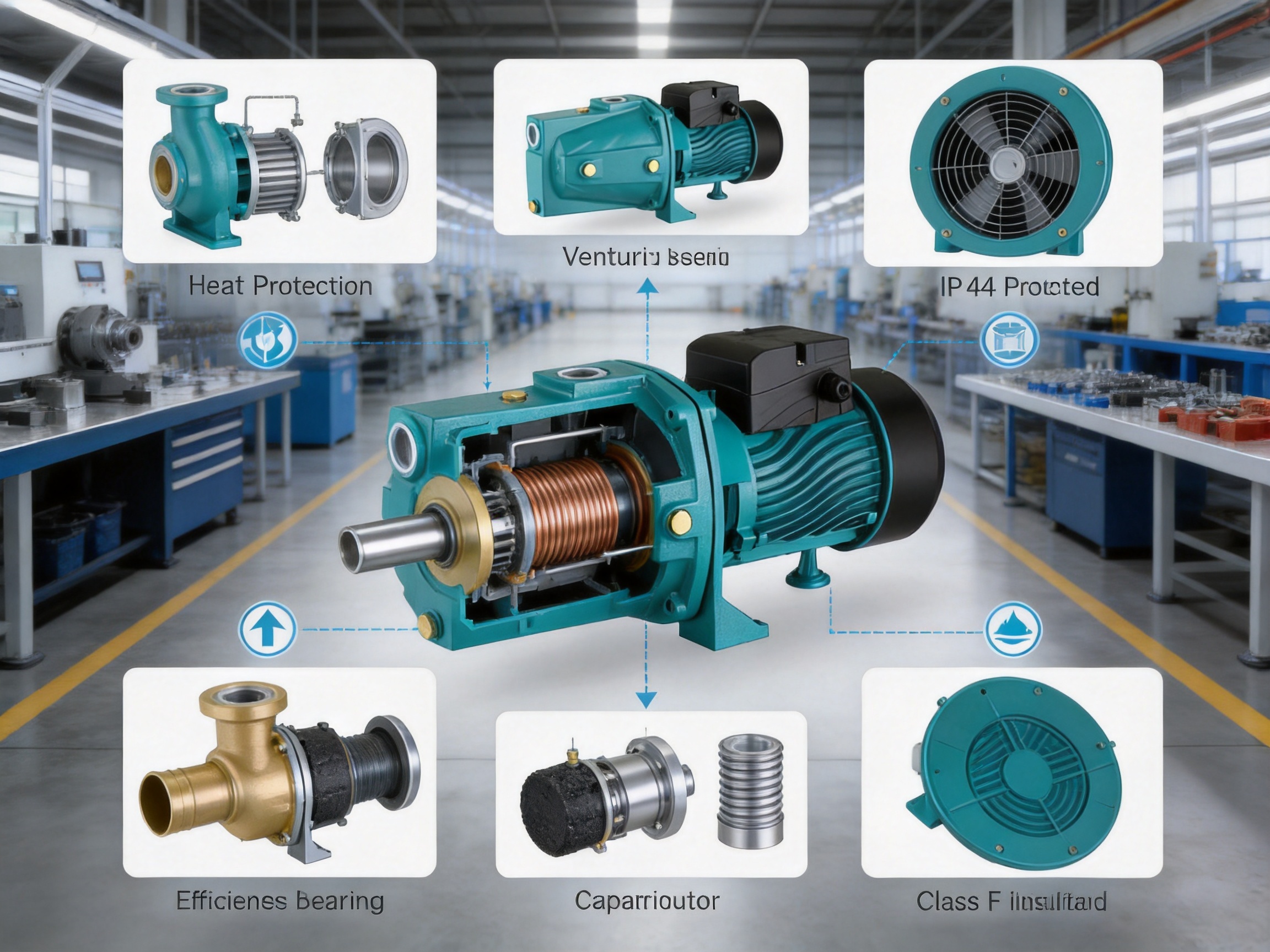
The motor also includes a built-in thermal protector for the single-phase motor configuration. If the motor temperature rises excessively under abnormal conditions, the thermal protection can help reduce the risk of winding damage. Possible causes of overheating include blocked ventilation, voltage problems, excessive mechanical load, dry running, frequent starting, incorrect wiring, or operation outside the recommended conditions.
The motor insulation rating is Class F. This indicates a robust level of thermal insulation for the motor winding system. Class F insulation is commonly selected for equipment that may experience elevated operating temperatures, provided that the motor remains within its specified operating conditions.
The protection rating is IP44. This provides protection against solid objects above a specified size and against water splashing from different directions. IP44 is appropriate for many sheltered pump-room, household, garden, and utility installations. It does not mean that the entire motor can be submerged or exposed to direct high-pressure water jets. The pump should be installed in a dry, ventilated location protected from flooding and severe weather.
The three models in the JET-SL Series are designed to cover a practical range of pressure and flow requirements. The following table summarizes the published technical data.
| Model | Power (kW) | Power (HP) | Inlet/Outlet | Maximum Flow (L/min) | Maximum Head (m) | Maximum Suction (m) |
|---|---|---|---|---|---|---|
| JET-550SL | 0.6 | 0.8 | 1" x 1" | 40 | 40 | 8 |
| JET-750SL | 0.75 | 1 | 1" x 1" | 45 | 45 | 8 |
| JET-1100SL | 1.1 | 1.5 | 1" x 1" | 50 | 50 | 8 |
The JET-550SL provides 0.6 kW of power, a maximum flow of 40 liters per minute, and a maximum head of 40 meters. It is a suitable starting point for smaller gardens, short delivery lines, light irrigation, and basic water-transfer work where demand is moderate.
This model can be attractive when the user wants to avoid oversizing the pump. A correctly sized smaller pump may consume less energy than a larger unit operating far below its useful range. It can also be easier to install in compact spaces and may be sufficient for a small number of sprinklers or outlets.
The JET-750SL increases power to 0.75 kW and provides a maximum flow of 45 liters per minute with a maximum head of 45 meters. It represents a balanced option for users who need additional pressure and capacity but do not require the highest model in the series.
This model may be appropriate for medium-sized gardens, greenhouse water supply, longer delivery pipes, and systems with several fittings or moderate elevation changes. It provides a useful performance step above the JET-550SL while maintaining the same 1-inch inlet and outlet size.
The JET-1100SL delivers the highest published performance in the series, with 1.1 kW of power, a maximum flow of 50 liters per minute, and a maximum head of 50 meters. It is designed for applications with higher pressure requirements, greater pipe resistance, larger garden areas, or more demanding water-transfer duties.
The JET-1100SL is not automatically the best choice for every installation. A larger motor requires an appropriate electrical supply and should be selected only when the system demand justifies it. The best selection is based on the required duty point, which includes flow rate, total head, suction lift, pipe friction, and operating schedule.
Garden irrigation is one of the most natural applications for the JET-SL Series. Gardens may require water to be moved from a storage tank, shallow well, rainwater reservoir, or ground-level source to sprinklers, hoses, drip irrigation lines, or elevated planting beds.
The self-priming function is useful when the pump is installed above the water source. Instead of relying on a fully flooded suction arrangement, the JET system is designed to assist with air removal during startup. The high-pressure characteristics can support sprinklers and other outlets that require more pressure than an ordinary transfer pump can provide.
For best results, the suction pipe should be as short and straight as practical. All joints must be sealed against air leakage, and a suitable foot valve or check valve should be used where required. Even a small air leak can prevent a surface pump from priming correctly. The suction pipe should also be adequately supported and protected from collapse.
Garden users should avoid running the pump without water. Dry running can overheat the mechanical seal and cause damage. A filter or strainer at the suction side can help prevent leaves, sand, and debris from entering the pump. Although the pump is built for clean water, no water source should be assumed to be completely free of foreign material.
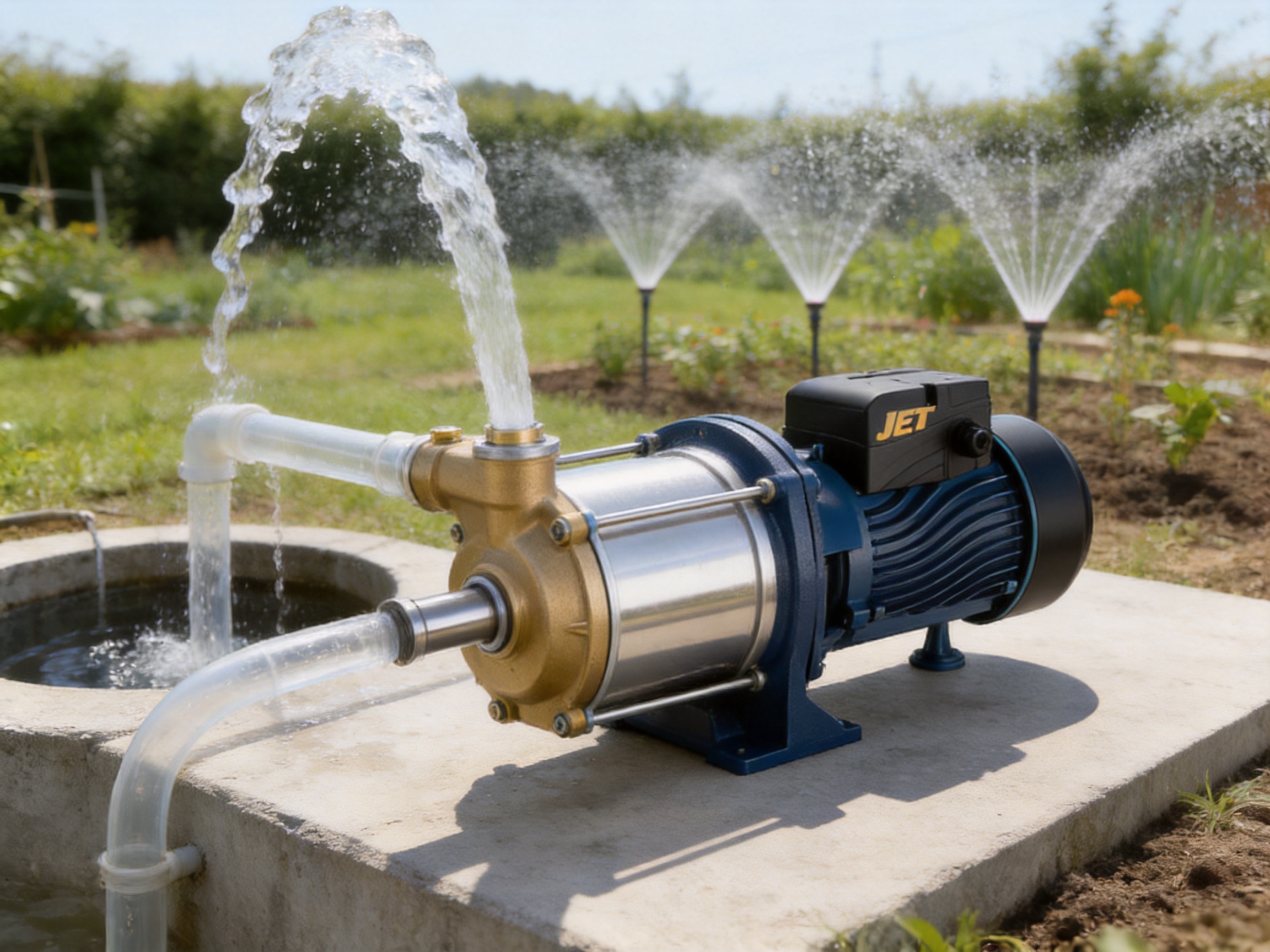
Vegetable greenhouses require dependable water delivery because plant growth depends on regular and controlled irrigation. Water may need to be transferred from a tank to drip lines, spray systems, misting equipment, or distribution manifolds. The JET-SL Series can serve as a compact pressure source for these systems when its capacity matches the irrigation design.
The pump’s high maximum head is useful when the greenhouse has multiple rows, long pipe runs, elevated distribution lines, or several pressure losses caused by filters and valves. The 1-inch connections offer a practical interface for common small-scale water systems, although the final pipe size should be selected according to the required flow and distance.
In greenhouse environments, humidity can be high and equipment may be exposed to condensation. The cast iron body’s anti-rust treatment, Class F insulation, and IP44 motor protection contribute to suitability for sheltered installations. The motor should nevertheless be kept away from direct water spray, condensation buildup, fertilizer spills, and standing water.
Fertilizer injection and chemical dosing require special care. The pump is intended for clean water and liquids with chemical properties similar to water. If fertilizers, disinfectants, acids, or other additives are introduced into the liquid, the operator should confirm compatibility with the brass impeller, AISI 304 stainless steel shaft, mechanical seal, and other wetted materials.
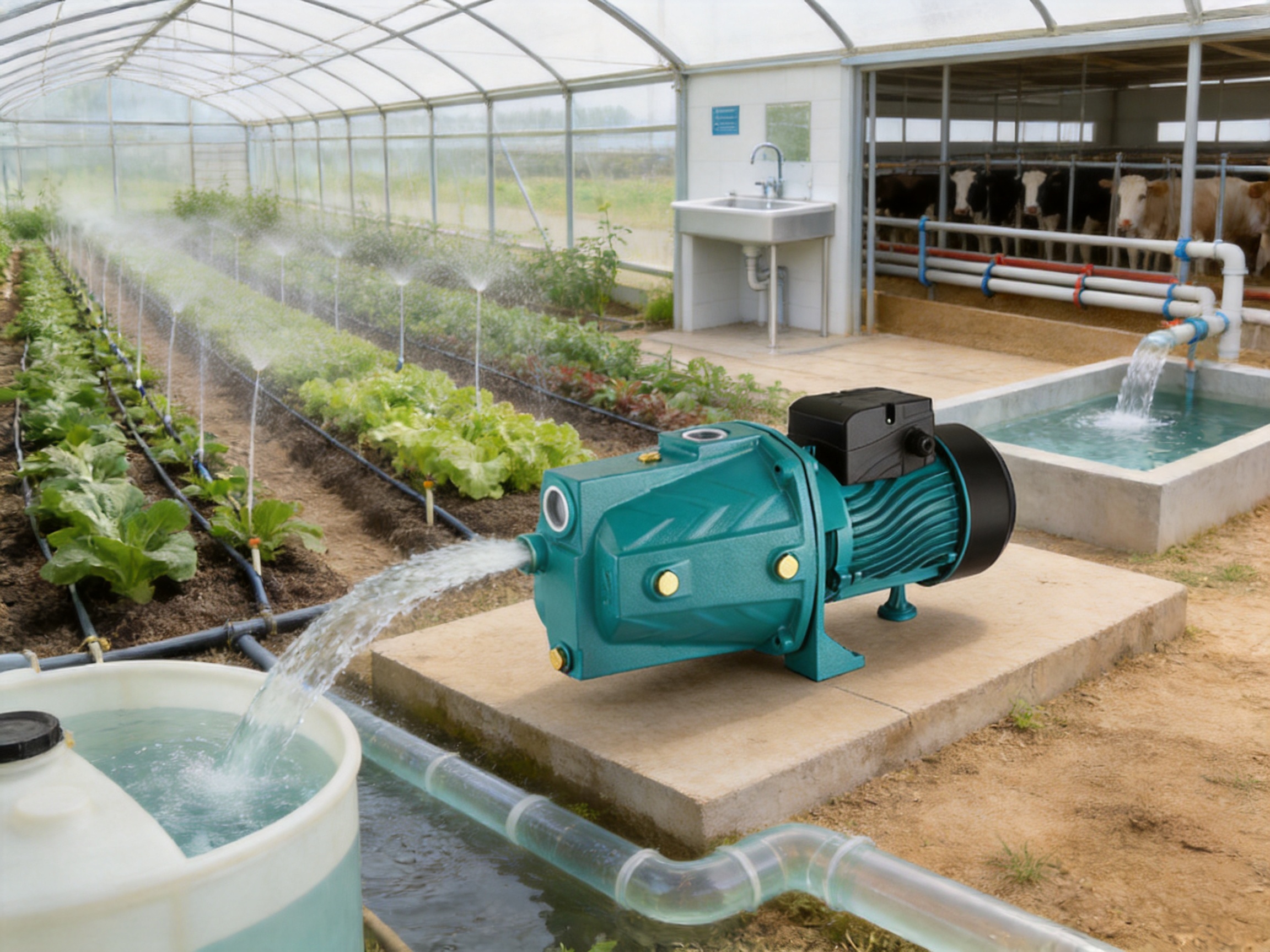
Breeding operations often need water for cleaning, animal drinking systems, storage tanks, equipment washing, and general facility management. The JET-SL Series can support clean-water supply and selected drainage-related water-transfer tasks where the liquid does not contain solids or aggressive contaminants.
The pump’s continuous-work design is useful for applications requiring a steady water supply. Its copper winding, C&U bearing system, thermal protector, and solid cast iron construction are intended to support regular operation. Correct ventilation and proper electrical protection remain essential, especially in humid agricultural environments.
Operators should distinguish between clean-water transfer and wastewater pumping. The JET-SL Series is not described as a sewage or solids-handling pump. Water containing bedding material, mud, manure, fibers, or large suspended particles may block the Venturi system, damage the mechanical seal, or wear the impeller. Such conditions require a pump specifically designed for contaminated water.
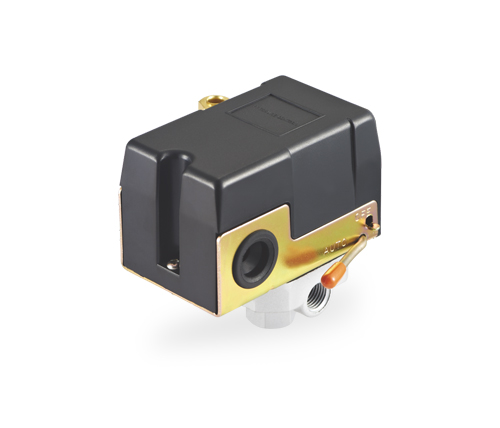
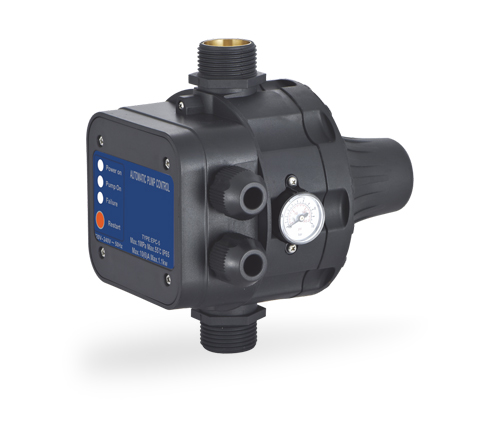
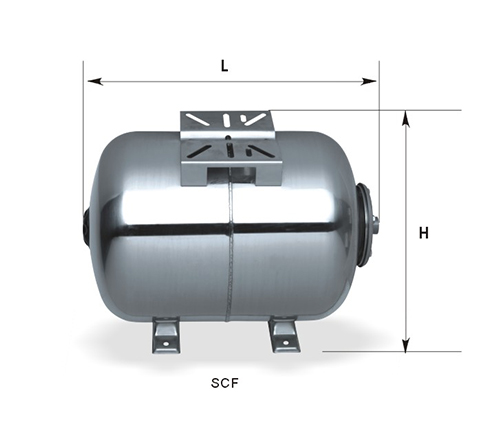
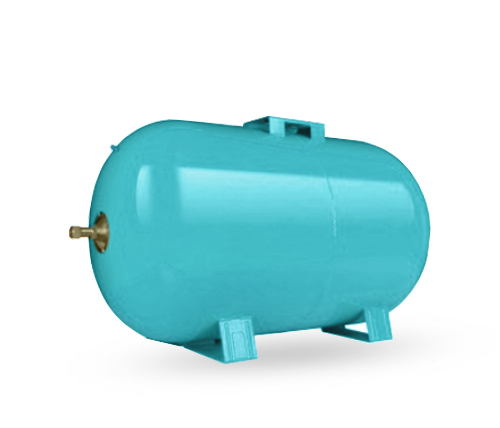
The JET-SL Series can work with various types of corollary equipment used in water management. Possible system components include storage tanks, filters, pressure gauges, valves, sprinklers, drip irrigation systems, hoses, water treatment accessories, and control devices.
A pressure gauge can help operators understand system behavior and identify changes caused by blocked filters, closed valves, air leaks, or pipe restrictions. Isolation valves can simplify maintenance, while a check valve can help protect the suction line and reduce water loss after shutdown. A properly selected strainer can prevent debris from entering the pump.
When combining the pump with an automatic control system, the control equipment should be compatible with the motor rating and electrical supply. Users should also consider whether the system requires dry-run protection, low-water protection, pressure control, or automatic restart. These functions may require additional accessories and should not be assumed to be included in the standard pump.
The JET-SL Series includes a nozzle, Venturi, and diffuser made from PPO. These components form the core of the jet-assisted hydraulic system. The nozzle accelerates water flow, the Venturi section supports the pressure conditions needed for air removal and suction assistance, and the diffuser helps recover pressure before water leaves the hydraulic chamber.
PPO is a practical engineering polymer used in hydraulic components because it can provide dimensional stability, corrosion resistance, and suitable performance in clean-water service. Its resistance to rust is an advantage compared with metallic components that may corrode in certain environments.
The performance of the jet system depends on correct assembly and clean internal passages. Dirt, scale, or foreign particles can affect the nozzle and Venturi geometry. Regular inspection is therefore important when the pump is used with water from open tanks, wells, or rainwater storage systems.
The mechanical seal uses a carbon and ceramic material combination. The seal is responsible for preventing water from moving along the shaft into the motor area. Carbon and ceramic are widely used in pump sealing systems because their contact surfaces can provide reliable sealing when correctly installed and lubricated by the pumped liquid.
Mechanical seals are sensitive to dry running, abrasive particles, excessive temperature, shaft damage, and incorrect installation. The JET-SL Series has a maximum liquid temperature of plus 60 degrees Celsius, but operation near the upper limit should be evaluated carefully. Clean, suitable water and adequate cooling conditions are important for seal life.
The motor case is made from aluminum, while the motor cover is cast iron. This combination provides a balance between structural strength and practical motor housing design. The fan is made from PP, and the fan cover protects the rotating cooling fan while allowing airflow around the motor.
The capacitor holding box, capacitor, and terminal cover form part of the motor’s electrical assembly. The terminal cover helps protect electrical connections from accidental contact and environmental exposure. Electrical work should be performed by qualified personnel, and the pump should be connected according to the applicable local electrical requirements.
The JET-SL Series is produced by an integrated manufacturing enterprise established in 2008, with capabilities covering independent research and development, mass production, and global export. This combination gives the manufacturer direct involvement in product design, manufacturing coordination, order management, and international delivery.
An integrated manufacturing structure is valuable because pump performance depends on the interaction of many components. The pump body, impeller, shaft, motor, seal, nozzle, Venturi, diffuser, bearings, and electrical protection must work together as one system. Managing these elements through a coordinated production process can support better consistency than assembling unrelated components without unified engineering control.
The material selection of the JET-SL Series reflects a deliberate product-development approach. HT200 cast iron is used for the pump body and support, brass is used for the impeller, AISI 304 stainless steel is used for the shaft, PPO is used for the jet components, carbon and ceramic are used for the mechanical seal, aluminum is used for the motor case, and PP is used for the fan. Each material addresses a particular requirement involving strength, corrosion resistance, weight, insulation, or hydraulic performance.
Independent research and development also enables the manufacturer to adapt pump structures to different market requirements. A global customer base may require different power standards, connection preferences, packaging arrangements, documentation, and application solutions. Product development experience across deep well pumps, submersible pumps, domestic booster pumps, circulation pumps, solar water pumps, intelligent booster pumps, and related equipment can support a broader understanding of water-system needs.
Mass production provides another important strength. A repeatable production process can help standardize component dimensions, motor assembly, seal installation, bearing placement, wiring, and final configuration. Consistency is particularly important for self-priming pumps because small differences in hydraulic assembly or sealing can affect startup performance.
The company’s experience in global export and foreign-trade service also supports international purchasing. Through procurement planning, order tracking, cross-border delivery, and customer-service coordination, the supplier can provide more than an individual pump. This is useful for distributors, irrigation-equipment companies, contractors, agricultural suppliers, and project buyers seeking a stable supply channel.
Although manufacturing details can vary according to order and configuration, the product structure indicates several important process priorities. Cast components require controlled forming, surface treatment, machining, and inspection. Rotating components require proper dimensional accuracy and balance. Mechanical seals require careful assembly to protect the sealing surfaces. Motor windings, bearings, capacitors, and thermal protectors require electrical and mechanical coordination.
The combination of a cast iron hydraulic body with polymer jet components requires accurate interfaces between metallic and non-metallic parts. The nozzle, Venturi, and diffuser must be correctly positioned so that the jet effect works as intended. The impeller must rotate without unwanted contact, and the shaft must maintain alignment through the bearing and seal system.
These requirements demonstrate why a self-priming JET pump should not be evaluated only by motor power. The quality of the hydraulic assembly, the precision of the rotating system, the reliability of the seal, and the consistency of the electrical protection are equally important. The JET-SL Series is designed as an integrated product rather than a simple motor attached to a water chamber.
Ordinary surface pumps can be useful for basic transfer tasks, but they may not provide the same balance of pressure and self-priming convenience. Some low-cost models require frequent manual priming, use less durable impeller materials, or lack a clearly defined thermal protection system. In contrast, the JET-SL Series combines a jet-assisted self-priming structure with a brass impeller, stainless steel shaft, and built-in thermal protector.
The pressure range is another difference. With maximum heads up to 50 meters, the JET-SL Series is better suited to installations involving elevation, longer pipe runs, or pressure-sensitive outlets than many basic transfer pumps. The actual operating point must still be checked, but the design provides a greater pressure margin for suitable applications.
The construction also compares favorably with lightweight utility pumps. A cast iron body and support can provide a more stable platform, while copper motor wiring and C&U bearings support continuous operation. These features are relevant to users who value service life and dependable operation rather than only the lowest initial purchase price.
The JET-SL Series is not intended to replace every other pump category. Deep well pumps are more suitable for deep underground sources, submersible pumps are designed for submerged operation, circulation pumps are optimized for closed-loop systems, and commercial multistage pumps address larger flow and pressure requirements. The advantage of the JET-SL Series is its focused suitability for shallow suction, clean water, high-pressure surface delivery, and self-priming convenience.
Install the pump on a firm, level base in a dry and well-ventilated location. The installation area should be protected from flooding, heavy rain, direct water spray, and excessive dust. Adequate space should be left around the motor for cooling and maintenance.
The pump should be positioned as close as practical to the water source. A shorter suction pipe reduces friction loss and decreases the possibility of air leakage. If the pump must be installed far from the water source, the suction design should be reviewed carefully because excessive suction-line resistance may prevent successful priming.
The suction pipe must be airtight. Threaded joints, unions, valves, and fittings should be sealed correctly. Air entering through a small leak may not produce visible water leakage, yet it can be enough to interrupt self-priming.
The suction pipe should generally rise continuously toward the pump or be arranged to avoid air pockets. A suitable foot valve can keep the suction pipe filled when the pump stops. The pipe should have sufficient structural strength and should be supported independently of the pump.
The discharge pipe should be selected according to the required flow, distance, and pressure. Although the pump has 1-inch inlet and outlet connections, a larger downstream pipe may sometimes reduce friction loss in a longer system. Excessively small pipes, restrictive filters, or too many sharp elbows can reduce useful flow.
Valves should be installed where they can be accessed for adjustment and maintenance. A pressure gauge can assist in diagnosing operating conditions. If the system includes sprinklers or drip lines, the pressure requirement of those components should be compared with the pump’s expected duty point.
The electrical connection must match the actual pump nameplate and local power requirements. Since voltage, frequency, and phase details are not included in the supplied technical data, these specifications should be confirmed before ordering and installation.
Grounding, circuit protection, cable sizing, and isolation arrangements should comply with local regulations. The built-in thermal protector is an important safety feature, but it does not replace proper fuses, circuit breakers, grounding, or professional installation.
Before the first startup, the pump body should be filled as instructed for the specific installation. The suction line should be checked for air tightness, and all valves should be positioned correctly. The pump should not be started when the water source is empty or when the suction line is not prepared.
During operation, observe unusual noise, vibration, leakage, overheating, pressure changes, and loss of flow. A sudden reduction in performance may indicate a blocked strainer, air entering the suction pipe, a closed valve, insufficient water level, damaged mechanical seal, or obstruction in the nozzle and Venturi assembly.
Routine maintenance should include inspection of pipe connections, cleaning of suction filters, checking of electrical terminals, and examination of the pump for corrosion or leakage. Seasonal users should drain and protect the pump when freezing conditions are possible. Long periods of inactivity should be managed according to the installation environment and the instructions supplied with the pump.
If the thermal protector trips repeatedly, the underlying cause must be identified rather than simply restarting the pump. Possible causes include low voltage, excessive current, blocked cooling airflow, seized bearings, abnormal friction, incorrect wiring, or operation beyond the pump’s intended duty.
The JET-SL Series is designed for clean water and liquids with chemical properties similar to water. It should not be used automatically for flammable liquids, highly corrosive chemicals, abrasive slurries, sewage, liquids containing large solids, or water with a high concentration of sand.
The maximum liquid temperature is plus 60 degrees Celsius. Operation above this value can affect the mechanical seal, motor cooling, material durability, and overall safety. Users should also consider that higher liquid temperatures can reduce suction performance and increase the risk of vapor-related hydraulic problems.
The maximum suction height is 8 meters under stated or suitable conditions. It is not a guarantee that every installation will achieve 8 meters. Atmospheric pressure, altitude, water temperature, suction-pipe losses, and air tightness all influence actual suction performance.
Never place hands, tools, or loose materials near the rotating fan. Disconnect electrical power before maintenance. If a leak appears near the mechanical seal or motor area, stop the pump and arrange inspection by qualified personnel.
For distributors and project buyers, the JET-SL Series offers a clear model structure that simplifies product selection. The three power levels provide a logical progression from smaller garden applications to higher-pressure water-transfer duties. The shared 1-inch connection size can also simplify inventory planning and accessory matching.
The manufacturer’s wider product portfolio includes deep well pumps, submersible pumps, domestic booster pumps, circulation pumps, solar water pumps, intelligent booster pumps, and other water-treatment peripheral products. This broader range may help customers source multiple pump categories from one experienced supplier rather than coordinating every product with a separate vendor.
The company supports independent research and development, mass production, and global export. Its associated procurement and foreign-trade service organizations provide order tracking, procurement planning, cross-border delivery, and related services. These capabilities are valuable for overseas customers who need coordinated communication from product selection through shipment.
Before placing an order, buyers should confirm voltage, frequency, phase, packaging, connection standards, warranty terms, spare-parts availability, delivery schedule, and any required customization. They should also provide the actual application conditions, including water source depth, suction distance, required flow, vertical lift, pipe length, and operating hours.
The JET-SL Series is a horizontal self-priming JET pump designed for shallow-well, garden irrigation, clean-water transfer, greenhouse supply, and selected breeding-industry water applications.
The published maximum suction height is 8 meters. Actual suction performance depends on installation conditions, including pipe length, pipe diameter, elevation, water temperature, air tightness, and the condition of the foot valve.
The maximum stated liquid temperature is plus 60 degrees Celsius. The pump should not be used with hotter liquids unless the manufacturer has specifically approved the application and confirmed material compatibility.
The JET-1100SL provides the highest published maximum head at 50 meters. It also offers a maximum flow of 50 liters per minute and has a rated power of 1.1 kW.
The JET-550SL may be suitable for a smaller garden with moderate water demand, provided its required flow and pressure match the irrigation system. The JET-750SL may be preferable when the garden has longer pipes, more outlets, or greater elevation changes.
No automatic assumption should be made that it can. The JET-SL Series is specified for clean water and similar liquids. Wastewater containing solids, fibers, sludge, or abrasive particles requires a pump designed specifically for those conditions.
The pump body and support use HT200 cast iron, the impeller is brass, the nozzle, Venturi, and diffuser use PPO, the shaft uses AISI 304 stainless steel, and the mechanical seal uses carbon and ceramic materials.
The motor includes a built-in thermal protector for the single-phase motor configuration. Proper electrical protection, grounding, ventilation, and correct operating conditions are still required.
The product information states that the pump is designed for continuous work. Continuous operation must remain within the rated application conditions, with adequate water supply, ventilation, correct voltage, and suitable hydraulic loading.
Buyers should confirm the model, required flow and head, power supply, phase, inlet and outlet dimensions, liquid characteristics, suction height, operating temperature, delivery requirements, and availability of accessories or spare parts.
The JET-SL Series High-Pressure Horizontal Self-Priming JET Pump is a practical solution for clean-water applications that require reliable suction, strong pressure performance, and durable construction. Its three-model range covers 0.6 kW to 1.1 kW, with maximum heads from 40 to 50 meters and maximum flow rates from 40 to 50 liters per minute.
Its principal advantages include self-priming operation, a cast iron pump body and support with anti-rust treatment, a brass impeller, rust-resistant copper inserts, an AISI 304 stainless steel shaft, carbon and ceramic mechanical sealing, copper motor wiring, C&U bearings, Class F insulation, IP44 protection, and a built-in thermal protector.
These features give the series a strong position against basic surface pumps that may offer less pressure, weaker materials, or less convenient starting behavior. The product is not a universal replacement for deep well, submersible, sewage, circulation, or large commercial pumps; instead, its strength lies in its focused design for shallow suction, garden irrigation, greenhouse supply, clean-water transfer, and similar duties.
Supported by an established manufacturing enterprise with independent R&D, mass-production capability, and international export experience, the JET-SL Series also benefits from a broader pump-product ecosystem and coordinated purchasing services. When correctly selected, installed, and maintained, it can provide dependable water delivery for domestic, agricultural, and small commercial users.
1. Product technical data and material specifications supplied for the JET-SL Series High-Pressure Horizontal Self-Priming JET Pump.
2. Manufacturer product information concerning garden irrigation, greenhouse water supply, breeding-industry water supply and drainage, and auxiliary water-management applications.
3. Manufacturer company profile covering independent research and development, mass production, global export, procurement planning, and cross-border delivery services.
4. General engineering guidance for centrifugal and self-priming pump installation, suction-pipe design, mechanical-seal protection, and motor safety.
5. General reference principles for pump selection based on flow, total head, suction lift, pipe friction, liquid temperature, and application conditions.
edwina@edwin-pump.com
+86-13586290903 (WhatsApp)
Xuri Gongliang Cutting Tool Entrepreneurship Park, Wenqiao Town, Wenling City, Taizhou City, Zhejiang Province, China

High Performance Smart Pump Factory


 English