edwina@edwin-pump.com

View All Products
en
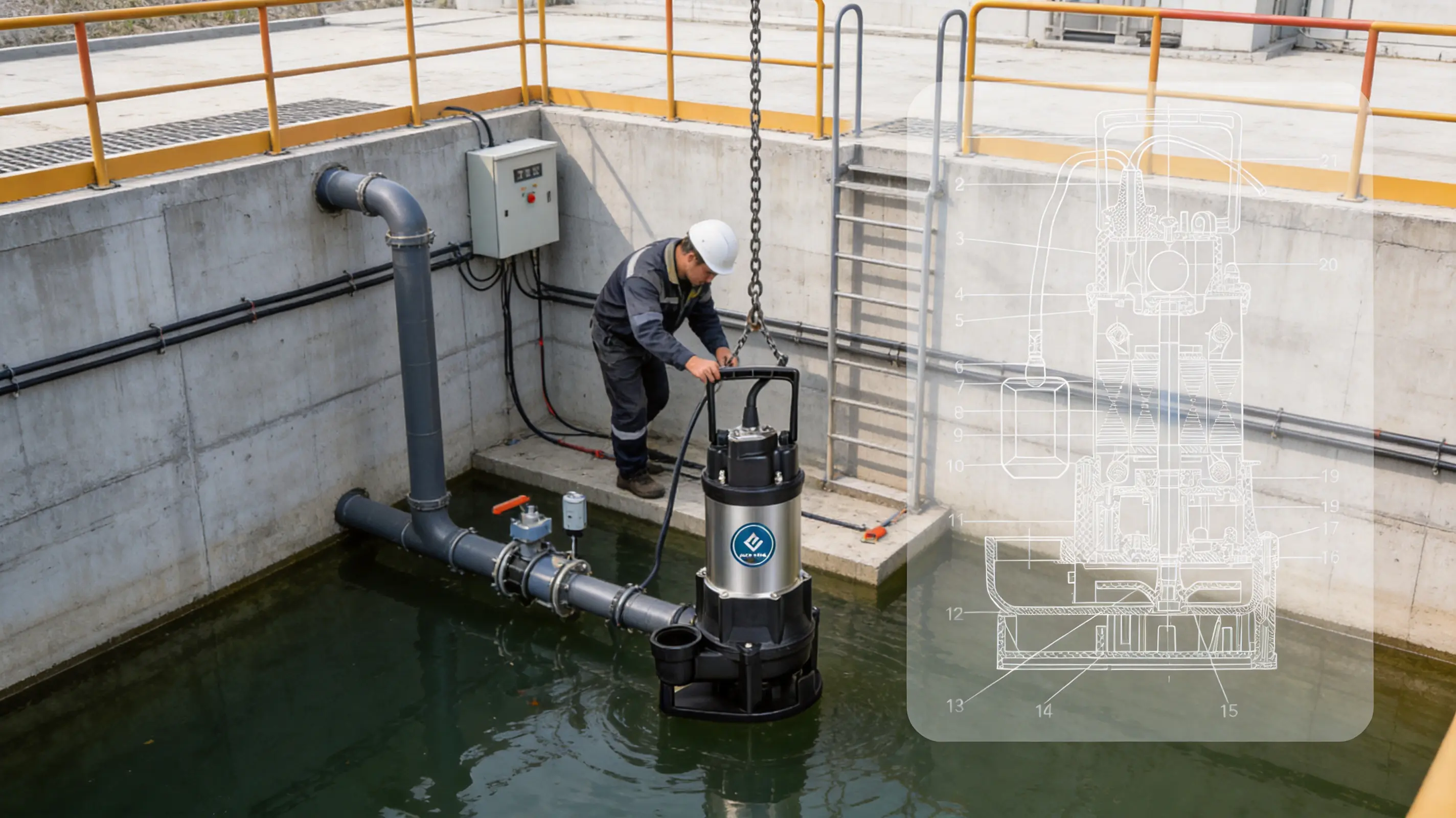
Reliable wastewater drainage is essential in factories, construction sites, commercial facilities, residential communities, municipal treatment systems, agricultural areas, and many other environments. When wastewater contains suspended solids, organic matter, or debris, an ordinary clean-water pump may not provide the performance, durability, or operating flexibility required. A purpose-designed sewage pump must be able to operate while fully submerged, transfer contaminated water efficiently, withstand demanding working conditions, and provide dependable service with limited operator intervention.
The Submersible Sewage Pump VP is designed for these requirements. It is a compact wastewater drainage solution intended for applications where liquid must be removed from collection pits, drainage stations, sewage systems, methane pools, construction areas, and agricultural irrigation locations. Its submersible configuration allows the pump to work directly inside the liquid, reducing the need for complicated suction arrangements and helping simplify installation.
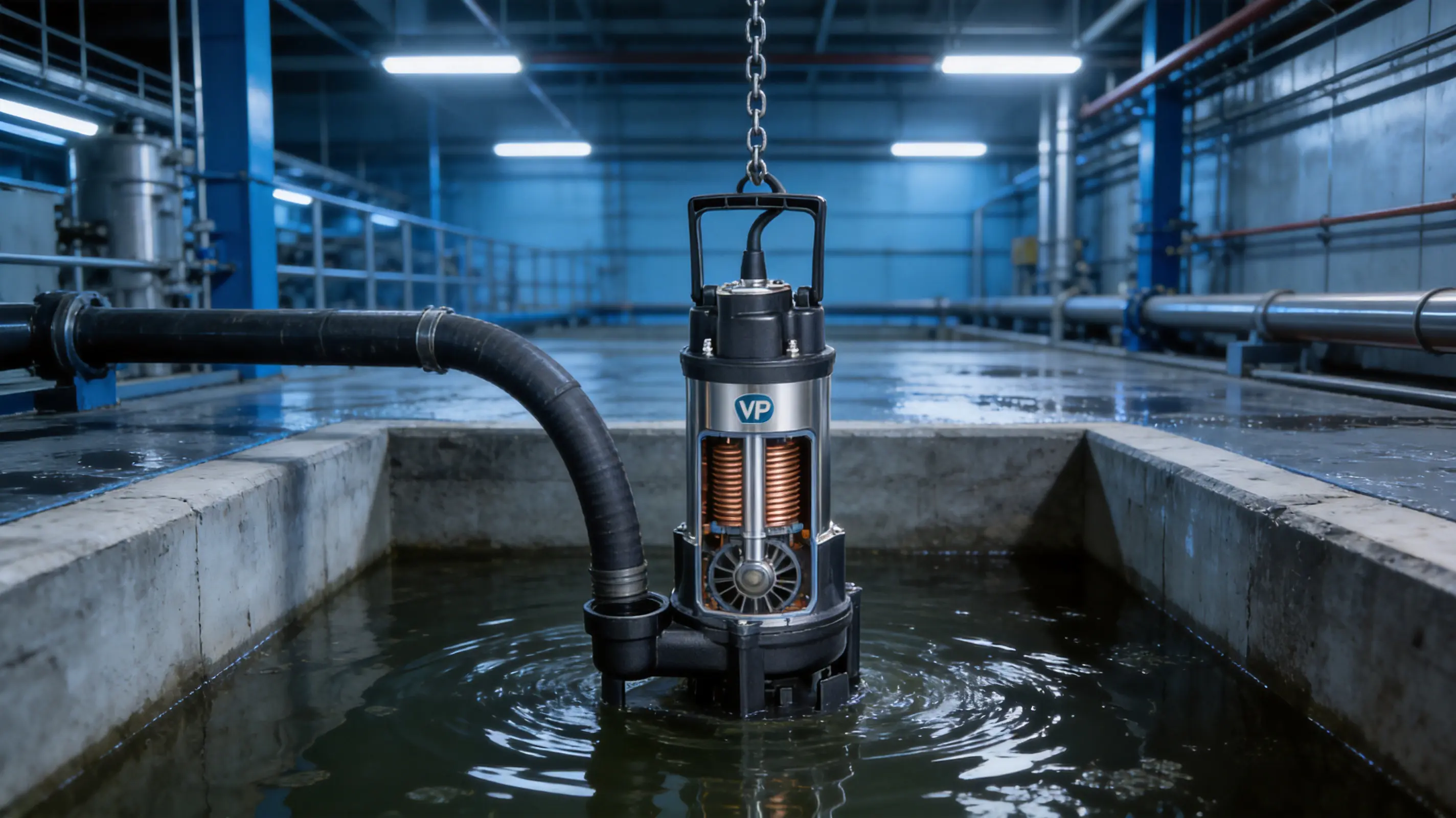
The VP series combines a copper-wound motor, built-in thermal protection, a stainless steel welded shaft, Class B insulation, and IPX8 protection. Together, these features create a practical pump platform for wastewater drainage in environments where moisture, immersion, and variable liquid conditions are unavoidable. Its stated operating limits include a maximum immersion depth of 5 meters, a maximum liquid temperature of 40°C or 104°F, and a liquid pH range of 5 to 9.
Unlike many general-purpose drainage pumps, a sewage pump must be selected according to the nature of the liquid, the installation depth, the discharge route, the required flow, and the frequency of operation. The VP model provides a focused solution for users who need a submersible drainage pump with a protected motor and a construction suitable for routine wastewater handling.
A submersible sewage pump is installed below the liquid level and uses its motor and hydraulic assembly to transfer wastewater to a higher point, a treatment system, a drainage channel, or another collection area. Because the pump is placed directly in the liquid, it does not need to lift the wastewater through a long suction pipe before pumping begins. This can reduce priming problems and make the overall drainage system more straightforward.
Submersible operation is especially useful in pits, tanks, basements, sewage wells, drainage stations, and temporary excavation areas. In these locations, the liquid level may change considerably during operation. A pump installed inside the collection area can continue working as the water level rises and falls, provided that the installation follows the applicable operating requirements.
Wastewater drainage also presents challenges that are not normally found in clean-water applications. The liquid may contain suspended particles, organic material, silt, and other contaminants. The pump therefore needs suitable materials, adequate electrical protection, and a design that can tolerate regular contact with wet and potentially aggressive liquids. It also needs to be installed and maintained correctly to reduce blockage, overheating, and premature wear.
The VP pump is intended for drainage duties rather than unrestricted handling of every type of sewage. Operators should verify the actual solid content, particle size, liquid chemistry, flow requirement, and discharge conditions before placing an order or commissioning the equipment. Proper application matching is one of the most important factors in obtaining dependable service from any sewage pump.
The available product information identifies the VP as a submersible sewage pump for wastewater drainage and related applications. Its principal operating information is summarized below. Final selection should be confirmed against the supplier’s current technical data sheet, motor rating, hydraulic curve, cable configuration, and installation instructions.
| Item | Stated Information | Practical Importance |
|---|---|---|
| Product type | Submersible sewage pump | Designed for installation directly in wastewater or drainage liquid |
| Maximum immersion depth | 5 meters | Defines the maximum recommended submerged installation depth |
| Maximum liquid temperature | 40°C or 104°F | Supports common ambient and wastewater drainage conditions |
| Liquid pH range | pH 5 to 9 | Suitable for mildly acidic to mildly alkaline liquids within this range |
| Liquid viscosity | Stated product information: 7 × 10* to 23 × 10* m²/s | Exact exponent should be confirmed before application approval |
| Maximum liquid density | Stated product information: 1.2 × 10* kg/m³ | Exact exponent should be confirmed with the manufacturer |
| Motor winding | Copper winding | Supports efficient electrical conduction and reliable motor operation |
| Thermal protection | Built-in thermal protector | Helps protect the motor from excessive temperature |
| Shaft | Stainless steel welded shaft | Provides corrosion resistance and structural durability |
| Insulation class | Class B | Defines the motor winding insulation temperature capability |
| Protection class | IPX8 | Indicates suitability for continuous immersion under specified conditions |
The table provides a practical overview, but pump performance cannot be determined by protection class or motor construction alone. Flow rate, total head, discharge pipe diameter, pump speed, power rating, impeller design, and operating point must also be considered. Professional users should request the applicable performance curve and technical drawing when designing a complete system.
The most basic advantage of the VP design is its ability to operate while immersed in the wastewater. Direct placement in the collection pit or drainage basin can reduce the length and complexity of the suction arrangement. This is valuable in locations where space is limited or where a conventional surface-mounted pump would be difficult to prime.
Submerged operation can also help reduce the risk of air entering the suction line. A surface pump may lose performance if the suction pipe leaks, the foot valve fails, or the liquid level falls below the required point. A properly installed submersible pump avoids many of these issues because the hydraulic inlet remains below the liquid surface during normal operation.
The IPX8 protection class is an important feature for equipment intended to work underwater. It indicates that the enclosure is designed for continuous immersion under conditions specified by the manufacturer. This is more appropriate for a submerged wastewater application than a basic enclosure intended only to resist splashing.
IPX8 protection does not mean that the pump can be placed at any depth or used without installation controls. The stated maximum immersion depth for the VP is 5 meters. Cable connections, junction boxes, lifting equipment, discharge fittings, and control panels must also be protected according to the installation environment. A complete system requires attention to every electrical and mechanical connection, not only the pump housing.
Wastewater pumps may experience difficult operating conditions, including restricted discharge, repeated starting, low liquid levels, mechanical resistance, voltage variation, or accumulated material around the hydraulic assembly. These conditions can increase motor temperature. The VP includes a built-in thermal protector to help guard the motor against excessive heat.
Thermal protection is a valuable safety feature because it can interrupt or limit operation when the motor temperature becomes too high. It helps reduce the risk of winding damage caused by overheating. However, it should not be treated as a substitute for correct system design. Repeated thermal trips may indicate an undersized cable, incorrect voltage, excessive head, blockage, insufficient cooling liquid, or another underlying problem.
The motor uses copper winding, a widely applied material for electric motors because of its strong electrical conductivity and suitability for compact winding arrangements. Efficient conduction can support stable motor performance and help control electrical losses when the motor is correctly matched to the supply voltage and operating load.
The actual efficiency and service life of a motor depend on several factors, including winding quality, insulation system, rotor balance, bearing selection, manufacturing tolerances, cooling conditions, and electrical supply quality. The copper winding is therefore one part of a wider motor design. Its value is realized when it is combined with controlled assembly, effective insulation, proper sealing, and final testing.
The stainless steel welded shaft is intended to provide a durable connection between the motor and hydraulic components while offering resistance to corrosion. This is particularly relevant in wastewater environments, where the pump may be exposed to moisture, dissolved substances, and contaminants for extended periods.
A shaft must also maintain adequate alignment and mechanical strength during rotation. Excessive runout, poor welding, surface damage, or incorrect fit can increase vibration and bearing loads. For this reason, shaft fabrication and assembly accuracy are important manufacturing considerations. A well-controlled shaft process contributes to smoother operation and helps protect seals, bearings, and rotating components.
The VP is specified for liquids with a pH value from 5 to 9 and a maximum temperature of 40°C. This range covers many common drainage and wastewater conditions, including wastewater from commercial facilities, construction sites, residential drainage systems, and municipal applications.
The pH range should always be considered together with the chemical composition of the liquid. Two liquids with the same pH may have different substances that affect elastomers, metals, cable jackets, or other components. Industrial wastewater containing solvents, concentrated chemicals, abrasive particles, or unusually high levels of dissolved salts may require a different pump construction. Application review remains essential even when the pH appears to be within the stated range.
Factories, workshops, warehouses, shopping facilities, and commercial buildings often generate wastewater that must be removed from low points, service areas, basements, equipment rooms, or collection pits. A submersible pump can provide a compact drainage option where gravity drainage is unavailable or insufficient.
In these environments, the pump may be installed as part of a permanent drainage system or used for periodic removal of accumulated liquid. The VP’s built-in thermal protector and immersion-rated construction are useful features for applications where the pump may be required to operate automatically or for extended periods. Operators should still inspect the pit and pump regularly to prevent material accumulation and verify that the discharge line remains open.
Construction areas frequently collect rainwater, groundwater, wash water, and wastewater in excavations, foundations, trenches, and temporary pits. Water levels can change quickly, and drainage equipment may need to be moved as the project develops. A submersible pump is often easier to deploy in these conditions than a surface pump requiring a stable mounting location and a carefully primed suction line.
Construction-site use places special emphasis on electrical safety. Temporary power supplies, extension cables, wet ground, vehicle movement, and changing site conditions can create additional risks. The pump should be used with suitable overcurrent protection, residual-current protection where required, correctly rated cables, and secure lifting arrangements. The power cable must never be used as the lifting rope.
Municipal wastewater systems include collection wells, drainage stations, treatment facilities, overflow areas, and auxiliary transfer points. A submersible sewage pump can be used to move wastewater between process stages or remove liquid from low-lying areas.
Municipal installations often require detailed hydraulic calculations and operational redundancy. The selected pump must match the required flow, static lift, friction losses, pipe arrangement, and expected solids. Where uninterrupted service is critical, multiple pumps, automatic level controls, alarms, standby power, and scheduled maintenance may be appropriate. The VP can serve as part of a drainage solution when its operating range is compatible with the specific duty.
Residential quarters, apartment buildings, housing developments, and individual properties may need drainage pumps where toilets, basements, garages, or utility areas are below the municipal sewer level. A submersible pump installed in a collection basin can transfer wastewater to the main drainage line.
Residential users generally benefit from equipment that is compact, straightforward to install, and protected against the effects of immersion. Noise can also be reduced because the pump operates below the liquid level. Correct basin design, check-valve selection, venting, float control, and access for maintenance are important parts of the complete installation.
The product information also identifies methane pools and field irrigation in the countryside as application areas. In agricultural settings, pumps may be used to transfer liquid from storage areas or support irrigation arrangements. The characteristics of agricultural wastewater can vary considerably, so the liquid temperature, solids content, chemical composition, and required lifting height should be evaluated before use.
When a pump is used near methane-producing environments, safety planning is particularly important. Electrical equipment, switching devices, ventilation, and control arrangements must comply with applicable local requirements for potentially hazardous atmospheres. The pump should not be assumed to be explosion-proof or suitable for classified hazardous locations unless the manufacturer provides explicit documentation confirming that classification.
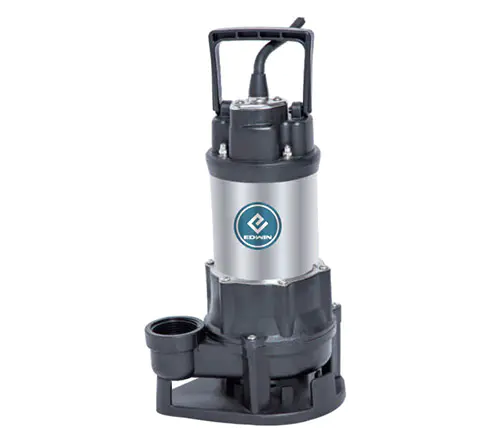
SUBMERSIBLE SEWAGE PUMP VP
Competitor comparisons should be based on verified technical data rather than appearance or a single feature. Even so, the VP offers several design characteristics that can make it more suitable than a basic drainage pump for specific wastewater duties.
First, its intended use is wastewater drainage rather than only clean-water transfer. This focus suggests that the product is selected and configured around submerged drainage conditions. A general-purpose clean-water pump may have limited tolerance for suspended material, prolonged immersion, or contact with wastewater components.
Second, the VP includes IPX8 protection, which is aligned with continuous submerged operation under specified conditions. Some surface drainage pumps may be splash-resistant but are not designed to remain underwater. Using the correct enclosure concept can improve safety and reliability when the pump is installed inside a pit or tank.
Third, the built-in thermal protector provides an additional layer of motor protection. Although thermal protection is not unique to one product, it is an important advantage over simpler pumps that rely entirely on external protection or lack adequate overload response.
Fourth, the stainless steel welded shaft is suited to wet and potentially corrosive operating conditions. Shaft material and construction can influence long-term reliability, especially when the pump is exposed to moisture and wastewater over many operating cycles.
Fifth, the VP is supported by a manufacturer with a broad pump portfolio, including deep well pumps, submersible pumps, domestic booster pumps, circulation pumps, solar water pumps, intelligent booster pumps, multistage pumps, garden pumps, pool and spa pumps, end-suction pumps, pipes, valves, and pump accessories. This breadth can be useful for buyers seeking coordinated equipment, replacement parts, and application support from one supply source.
These advantages do not mean that the VP is automatically suitable for every wastewater project. A competitor may provide a higher flow rate, greater head, specialized cutting technology, advanced monitoring, explosion protection, or a different material configuration. The correct comparison should consider the complete duty point, liquid characteristics, installation requirements, after-sales support, spare parts, energy consumption, and total cost of ownership.
The manufacturer is described as an integrated enterprise specializing in independent research and development, mass production, and global export. This integrated structure is relevant to pump buyers because it connects product design, manufacturing, quality control, and export services within an organized business system.
Independent research and development can help a manufacturer adapt pump designs to changing customer requirements. For a sewage pump, development work may include motor protection, sealing arrangements, shaft materials, hydraulic efficiency, cable entry design, corrosion resistance, and assembly convenience. Product improvement is most effective when engineers can receive feedback from production teams and users in the field.
Mass production provides advantages when it is supported by process control. Repeated manufacturing allows the company to standardize components, document assembly procedures, train operators, and monitor recurring quality data. It can also improve purchasing efficiency for copper wire, stainless steel parts, seals, bearings, castings, fasteners, and electrical components.
For international buyers, consistent production is especially important. A pump supplied for a repeat project should maintain the same dimensional interfaces, electrical characteristics, packaging standards, and performance expectations as earlier units. Batch control, inspection records, and clear product identification help support this consistency.
The motor is central to the performance of a submersible pump. Manufacturing quality affects winding integrity, insulation reliability, rotor balance, bearing life, heat management, and resistance to vibration. The VP’s copper winding and Class B insulation require careful winding, connection, insulation treatment, and electrical testing.
Electrical assembly should include checks for winding continuity, insulation resistance, connection accuracy, and compatibility with the specified voltage and frequency. Where applicable, no-load current, operating current, rotation direction, and thermal response should also be evaluated. These tests help identify manufacturing defects before the pump reaches the customer.
Because the product is intended for immersion, motor sealing and cable entry are equally important. A high-quality winding cannot compensate for water entering through a damaged cable seal or improperly assembled joint. Controlled sealing processes and careful final inspection are therefore essential to the product’s overall reliability.
The stainless steel welded shaft requires controlled fabrication and inspection. Welding quality, straightness, surface finish, and dimensional accuracy all affect the rotating assembly. When the shaft is accurately aligned with the motor and hydraulic components, the pump can operate with lower vibration and reduced stress on bearings and seals.
Mechanical assembly should also address impeller balance, bearing seating, fastener tightening, seal installation, and clearance between stationary and rotating components. These details may not be visible to the final user, but they have a direct effect on operating noise, energy consumption, wear, and service life.
A professional pump manufacturer should use inspection procedures at multiple stages rather than relying only on a final visual check. Incoming materials can be inspected for dimensions and composition. Components can be checked during machining and assembly. Finished pumps can be evaluated for electrical safety, leakage resistance, operation, vibration, and hydraulic performance according to the applicable internal and external requirements.
Functional testing is particularly important for submersible pumps. The pump should be checked for correct rotation, stable starting, abnormal noise, leakage, and motor current. Where a performance test is conducted, flow and head results can be compared with the intended design values. The exact tests performed depend on the model, market, order requirements, and relevant standards.
Buyers should request applicable test reports, inspection documents, certificates, and compliance information when these items are necessary for a project. Product features described in general marketing information should not be interpreted as certification claims unless supported by current documentation.
Wastewater equipment must balance strength, corrosion resistance, manufacturability, and cost. The VP includes a stainless steel welded shaft, which addresses one important component exposed to moisture and mechanical stress. Other components, including the pump body, impeller, fasteners, seals, bearings, and cable system, should be selected according to the expected liquid conditions.
The pH range of 5 to 9 is a useful starting point for application evaluation. However, wastewater may contain abrasive sand, fibrous material, grease, detergents, salts, or biological substances. These factors can influence hydraulic performance and component wear. An installation handling abrasive liquid may require more frequent inspection than one handling relatively clean drainage water.
Temperature also affects material behavior and motor cooling. The VP has a stated maximum liquid temperature of 40°C. Submersible motors often depend partly on the surrounding liquid to dissipate heat, so operating above the specified temperature can increase thermal stress even if the motor appears to run normally. Temperature limits should be respected throughout the installation.
Before installation, the user should determine the required flow rate and total head. Total head includes the vertical lift from the liquid surface to the discharge point as well as friction losses in the pipe, elbows, valves, check valves, and fittings. Selecting a pump only by pipe diameter or motor power can lead to poor performance.
The pump should operate near a suitable point on its performance curve. A pump that is too small may fail to remove liquid quickly enough, while a pump that is too large may consume unnecessary energy, cycle too frequently, or create excessive velocity in the discharge line. The manufacturer’s performance data should be used for final selection.
The liquid should be assessed for temperature, pH, density, viscosity, solids, fibers, grease, chemicals, and gas content. The stated limits for the VP are maximum immersion depth of 5 meters, maximum liquid temperature of 40°C, and pH from 5 to 9. The supplied information also gives viscosity and density limits, but the mathematical exponents are not fully legible in the source material. These values should be confirmed directly before purchase.
If the liquid contains large solids or long fibers, the buyer should ask for the permitted solids passage and impeller information. If the liquid contains explosive gas or is located in a hazardous area, the user must confirm whether the specific pump has the necessary hazardous-location approval. Standard IPX8 protection alone does not establish explosion protection.
The pump should not be installed deeper than the stated maximum immersion depth of 5 meters. It should be positioned on a stable base or in accordance with the recommended installation method. The inlet must remain clear of sludge accumulation and obstructions. If the pump sits directly on the bottom of a pit, a suitable arrangement may be needed to limit the intake of settled solids.
Operators should provide access for inspection and removal. A lifting chain or approved lifting device can make maintenance safer and easier. The electrical cable should have enough slack for movement but should not be allowed to rub against sharp edges or become trapped beneath equipment.
The discharge pipe should be sized according to the required flow, total head, and acceptable velocity. Excessively small piping increases friction losses and may reduce pump output. A check valve can help prevent reverse flow when the pump stops, while an isolation valve can assist with maintenance.
Pipe supports should prevent the pump discharge connection from carrying excessive mechanical loads. Sudden changes in pipe direction can increase vibration and hydraulic losses. Where automatic operation is required, level sensors, floats, alarms, and control panels should be selected for the liquid and electrical environment.
Electrical installation must be performed by qualified personnel and must comply with local regulations. The supply voltage and frequency should match the pump nameplate. Correct overcurrent protection, grounding, cable sizing, isolation, and residual-current protection are important for personnel and equipment safety.
The pump should be disconnected from the power supply before inspection, cleaning, adjustment, or removal. A thermal protector helps protect the motor, but it does not eliminate the need for proper external electrical protection. All cable joints must be kept dry and protected from mechanical damage.
Correct maintenance is one of the most effective ways to extend the service life of a sewage pump. Before each operating period, the user should check that the pump is positioned correctly, the discharge route is open, the liquid level is sufficient, and the cable and lifting equipment are in good condition.
During operation, unusual noise, excessive vibration, repeated thermal trips, reduced flow, high current, or visible leakage should be treated as warning signs. Continuing to run a pump under abnormal conditions can increase damage to the motor, bearings, seals, impeller, or discharge system.
Inspection frequency should be based on operating hours and liquid conditions. A pump handling clean drainage water may require less frequent cleaning than a pump working in a sewage pit containing grease, fibrous material, or heavy sediment. Regular inspection can identify blocked inlets, worn hydraulic parts, deteriorated seals, and damaged cables before they cause a complete shutdown.
When the pump is removed from service, it should be isolated electrically and lifted using the approved method. The exterior can be cleaned with a suitable method that does not damage cable insulation or seals. Any internal maintenance should be performed by trained personnel using compatible replacement parts.
Spare parts should be selected according to the exact model and production version. Important components may include mechanical seals, bearings, gaskets, impellers, fasteners, cables, thermal protectors, and control accessories. Maintaining a small inventory of critical parts can reduce downtime in commercial and municipal installations.
Energy consumption is an important part of sewage pump ownership. The pump’s efficiency depends on hydraulic design, motor efficiency, operating point, pipe friction, liquid properties, and control strategy. A pump that is correctly sized for the required flow and head will generally operate more efficiently than one that is significantly oversized or forced to work far from its intended duty point.
The copper-wound motor is designed to support effective electrical conduction, but energy performance must be evaluated using actual operating data. Buyers should compare rated power, current, flow, head, efficiency, duty cycle, and expected annual operating hours. A small difference in efficiency can become significant when a pump runs continuously or serves a large municipal or industrial system.
Total cost of ownership includes purchase price, installation, electricity, maintenance, replacement parts, downtime, and disposal. A lower-priced pump may become more expensive if it requires frequent unplanned service or lacks available spare parts. Conversely, a higher-feature pump may not be economical if the application is simple and intermittent. The VP can be evaluated on the basis of its application suitability, protective features, serviceability, and supply support rather than initial price alone.
Many pump projects involve more than the pump itself. Buyers may also need discharge pipes, valves, control components, accessories, replacement parts, packaging, documentation, and shipping coordination. A supplier with multiple product categories can support a more coordinated purchasing process.
The manufacturer’s stated product portfolio includes solar pumps, deep well pumps, submersible pumps, surface pumps, booster pumps, circulation pumps, garden pumps, pool and spa pumps, commercial multistage pumps, pump accessories, end-suction pumps, pipes and valves, and intelligent booster pumps. This range allows customers to compare different pumping solutions under one broader product structure.
The company also states that it established related import and export service companies to support procurement planning, order tracking, cross-border delivery, and foreign trade services. For overseas customers, these capabilities can be useful when projects require multiple models, consolidated shipments, export documents, or ongoing communication across different order stages.
International procurement still requires careful review. Buyers should confirm product specifications, packaging, voltage, frequency, plug or cable requirements, language of manuals, customs documentation, warranty terms, spare-parts availability, and delivery responsibilities. Clear communication before production can help prevent costly changes after shipment.
Taizhou Edwin Electric Co., Ltd., operating under the Edwin Pump name, was founded in 2008 according to the provided company information. It is described as a manufacturing enterprise combining independent research and development, mass production, and global export. Its core product lines include deep well pumps, submersible pumps, domestic booster pumps, and circulation pumps.
The company reports that its pumps are used in new energy projects, agricultural irrigation, municipal engineering, mining, construction, heating, ventilation and air-conditioning systems, and household water supply. These application areas require different hydraulic configurations and installation methods. Experience across several pump categories can support broader product knowledge and more flexible project discussions.
Since 2018, the company has invested in new energy and intelligent technology, including solar water pumps and intelligent booster pumps. This development direction indicates an effort to expand beyond conventional motor pumps and address applications involving renewable energy, automation, and pressure management.
For wastewater pump buyers, the relevance of this company background lies in its manufacturing breadth and ability to serve different water-handling requirements. A supplier experienced in multiple product families may be better positioned to help customers select between a submersible sewage pump, a surface pump, a multistage pump, or another configuration when the application changes.
Professional engineers should evaluate the VP as part of a complete drainage system. The pump must be matched with the collection basin volume, inflow rate, discharge pipe, control logic, power supply, and maintenance access. A pump that performs well in a test environment may not achieve the same result if the field installation has excessive pipe losses or unstable liquid levels.
For automatic drainage, the control sequence should limit unnecessary starts and stops. Frequent cycling can increase motor and electrical stress. The basin should provide sufficient working volume between the start and stop levels while preventing the pump from running dry. Alarm levels may be included for high liquid level, pump failure, or power loss.
In systems with two or more pumps, controls can alternate the duty pump and start the standby unit during peak inflow or primary-pump failure. Such arrangements are common where drainage continuity is important. The appropriate configuration depends on the consequences of flooding, the expected inflow, and the project budget.
Hydraulic calculations should account for the actual liquid density and viscosity. A liquid that is denser or more viscous than ordinary water may require additional motor power or may produce a lower flow rate. The available product information includes density and viscosity limits, but the unclear exponents in the source description should be verified before engineering approval.
Wastewater drainage equipment can contribute to safer and cleaner workplaces by helping remove standing water, reducing the risk of flooding, and supporting organized treatment processes. However, pump operation does not remove the need for environmental controls. Discharged wastewater must be directed to an approved treatment or disposal point in accordance with local regulations.
Workers may be exposed to biological hazards, toxic gases, slippery surfaces, and confined-space risks around sewage pits and tanks. Maintenance personnel should follow established safety procedures, use suitable personal protective equipment, and avoid entering confined spaces without the required assessment and controls.
Noise and vibration should be monitored in occupied facilities. Submerged installation naturally reduces airborne noise, but poor alignment, pipe movement, cavitation, blockage, or worn bearings can still create vibration. Early investigation can protect both the pump and surrounding structure.
Complete documentation supports correct selection, installation, operation, and maintenance. A professional product package should identify the model, electrical rating, direction of rotation, operating limits, installation depth, liquid temperature, pH range, cable information, and safety instructions. It should also explain how to handle thermal protection and what to do if the pump stops unexpectedly.
Technical drawings are useful for confirming mounting dimensions and discharge connections. Performance curves are necessary for verifying flow and head. Parts diagrams can simplify maintenance and ordering. Inspection or test records may be required for industrial, municipal, or export projects.
Customers should distinguish between general product descriptions and order-specific documentation. The VP model may be available in different motor ratings, cable lengths, configurations, or market versions. The final quotation and technical confirmation should state the exact supplied configuration.
Before purchasing the Submersible Sewage Pump VP, users can review the following points:
| Selection Question | Reason for Review |
|---|---|
| What flow rate is required? | Determines whether the pump can remove incoming liquid at the desired rate |
| What is the total head? | Confirms whether the pump can overcome vertical lift and pipe friction |
| What is the liquid temperature? | Must remain at or below the stated maximum of 40°C |
| What is the liquid pH? | Should remain within the stated range of pH 5 to 9 |
| What solids and fibers are present? | Helps determine blockage risk and impeller suitability |
| What is the required immersion depth? | Must not exceed the stated maximum of 5 meters |
| Is the location hazardous? | Requires confirmation of any applicable explosion-protection approval |
| What voltage and frequency are available? | Must match the exact motor configuration |
| How will the pump be controlled? | Determines the need for floats, sensors, alarms, or control panels |
| How will maintenance be performed? | Ensures safe access, lifting, cleaning, and spare-part planning |
This checklist can be used during project planning, quotation review, and commissioning. It also helps buyers provide the manufacturer with the information needed for a more accurate recommendation.
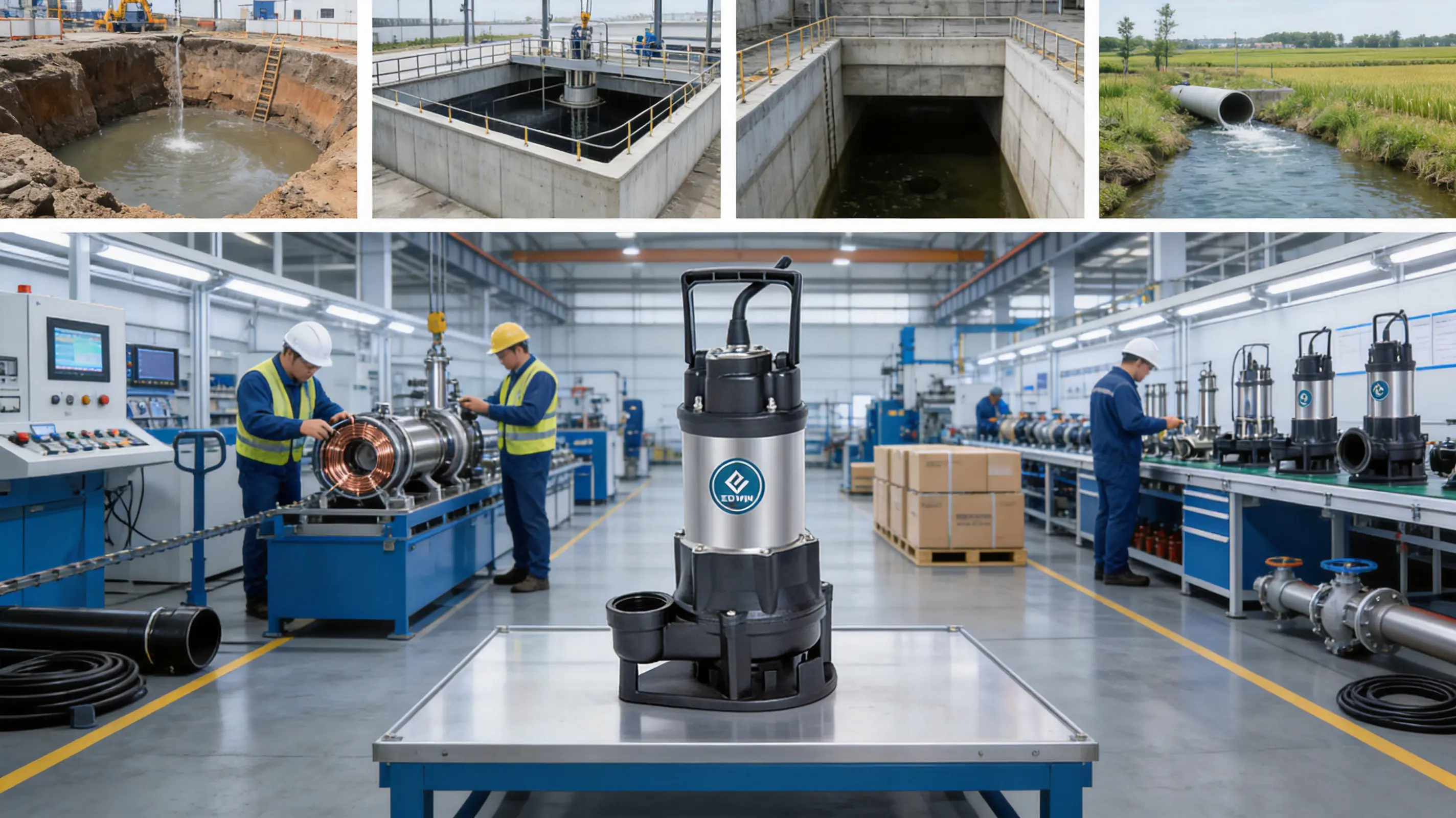
The VP is a submersible sewage pump intended for wastewater drainage. It is designed to operate while immersed in the liquid and can be used in drainage pits, sewage systems, treatment facilities, construction areas, commercial facilities, residential drainage stations, methane pools, and agricultural environments when the operating conditions are suitable.
The stated maximum immersion depth is 5 meters. The pump should not be installed below this limit unless the manufacturer provides a specific written confirmation for another configuration.
The stated maximum liquid temperature is 40°C or 104°F. Higher temperatures may increase motor and seal stress and should not be used without technical approval.
The stated liquid pH range is 5 to 9. Chemical compatibility should still be reviewed because pH alone does not identify every substance in industrial or agricultural wastewater.
No. IPX8 describes protection against continuous immersion under specified conditions, but the product also has a stated maximum immersion depth of 5 meters. The entire installation, including cable joints and control equipment, must be suitable for the operating environment.
The VP includes a built-in thermal protector. This feature helps protect the motor from excessive temperature, but correct external electrical protection, grounding, cable sizing, and control practices remain necessary.
Copper provides strong electrical conductivity and is widely used in motor windings. It can support efficient operation when the motor is correctly designed, assembled, supplied with the proper voltage, and operated within its rated conditions.
The stainless steel welded shaft is intended to provide corrosion resistance and mechanical durability in wet operating conditions. Its performance also depends on accurate welding, alignment, surface finish, and assembly quality.
No pump should be assumed to handle every type of sewage. Users must verify solids size, fiber content, density, viscosity, temperature, pH, chemicals, and required flow and head. Liquids containing hazardous gases or unusual chemicals require specific technical confirmation.
The product information lists methane pools as an application. However, methane may create a potentially hazardous atmosphere. Users must confirm the applicable safety classification, ventilation, electrical requirements, and whether the exact pump configuration has the approvals required for that location.
It may be incorporated into an automatic drainage system using appropriate level controls, floats, sensors, alarms, and electrical protection. The complete control arrangement should be designed according to the basin, inflow rate, pump duty, and local safety requirements.
Selection should be based on required flow, total head, pipe losses, liquid characteristics, immersion depth, power supply, solids content, duty cycle, and installation conditions. The manufacturer’s performance curve and technical documentation should be reviewed before final approval.
Repeated tripping may indicate blockage, excessive head, restricted discharge, incorrect voltage, inadequate cable sizing, frequent cycling, insufficient liquid cooling, or a mechanical fault. The pump should be isolated and inspected by qualified personnel rather than repeatedly restarted without identifying the cause.
Service life can be improved through correct sizing, proper installation, suitable electrical protection, regular cleaning, inspection of the inlet and discharge line, monitoring of vibration and current, and timely replacement of worn seals or bearings. Avoiding dry running and operation outside the stated limits is also important.
Buyers should request the exact motor power, voltage, frequency, rated current, flow and head curve, discharge size, permitted solids passage, cable length, dimensions, weight, installation method, spare-parts information, warranty conditions, inspection documents, and any required compliance certificates.
The Submersible Sewage Pump VP is a practical solution for wastewater drainage in factories, construction sites, commercial facilities, municipal systems, residential drainage stations, methane pools, and countryside irrigation applications. Its submerged operating format simplifies many installations, while IPX8 protection supports the demands of underwater operation within the specified conditions.
The product’s copper winding, built-in thermal protector, stainless steel welded shaft, Class B insulation, and defined liquid limits provide a useful combination of electrical protection, mechanical durability, and application flexibility. These features give the VP meaningful advantages over basic clean-water or splash-resistant drainage pumps when the application requires continuous immersion and wastewater-oriented construction.
Its performance should be evaluated as part of a complete system. Flow, head, pipe losses, solids, liquid chemistry, temperature, immersion depth, power supply, controls, and maintenance access all influence the final result. Users should also confirm the precise viscosity and density limits because the exponents in the supplied product description are unclear.
The manufacturer’s reported strengths in independent research and development, mass production, global export, and multiple pump categories provide additional value for international and industrial buyers. A broad product portfolio and organized export support can help customers obtain coordinated equipment and manage larger procurement programs.
For projects requiring reliable wastewater transfer, the VP offers a focused combination of submersible construction, motor protection, corrosion-conscious materials, and manufacturing support. With correct selection, professional installation, and regular maintenance, it can serve as an effective component in drainage and sewage-handling systems.
1. Manufacturer-provided product information for the Submersible Sewage Pump VP.
2. Manufacturer-provided company profile and product portfolio information.
3. General principles of submersible pump selection, installation, and maintenance.
4. General guidance on electric motor insulation, thermal protection, and enclosure protection.
5. General wastewater pumping system design practices for industrial, municipal, commercial, residential, and agricultural applications.
6. General principles of hydraulic system calculation, including static head, friction loss, flow rate, and pump operating points.
edwina@edwin-pump.com
+86-13586290903 (WhatsApp)
Xuri Gongliang Cutting Tool Entrepreneurship Park, Wenqiao Town, Wenling City, Taizhou City, Zhejiang Province, China

High Performance Smart Pump Factory


 English