edwina@edwin-pump.com

View All Products
en
Reliable access to water is essential for rural households, agricultural producers, livestock operations, remote construction sites, and small community infrastructure. In locations where grid electricity is unavailable, unstable, or too expensive to extend, solar pumping provides a practical alternative. However, the value of a solar pumping system depends on more than the presence of photovoltaic panels. The pump must operate efficiently under changing solar input, withstand difficult water conditions, deliver sufficient pressure, and remain dependable with limited maintenance.
The 3HVSC wide-voltage stainless steel impeller solar deep well pump is designed to meet these requirements in small wells and low-to-medium-flow water supply applications. It combines a compact 3-inch bore design, brushless DC motor technology, stainless steel wetted components, NSK bearings, high-temperature copper wire, and a wide operating voltage range. These features allow the pump to perform consistently under variable solar conditions while offering durability advantages over conventional pumps that rely heavily on plastic impellers or less corrosion-resistant materials.
Manufactured by Taizhou Edwin Electric Co., Ltd., the pump reflects the company’s experience in deep well pumps, submersible pumps, booster pumps, circulation pumps, and solar water pumping systems. The manufacturer operates as an integrated enterprise covering product research and development, mass production, procurement coordination, export, and customer service. This integrated structure supports consistent product quality and provides buyers with a practical one-stop source for solar pumping equipment.
This article examines the pump’s construction, performance, operating advantages, application range, manufacturing strengths, model selection, installation considerations, and competitive benefits. It also explains why stainless steel construction and wide-voltage brushless motor technology are important for off-grid water systems.
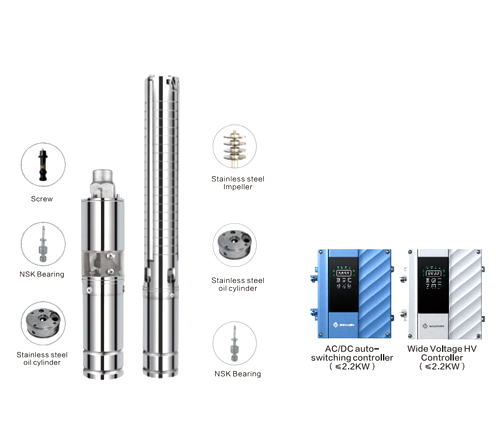
3HVSC Wide Voltage Stainless Steel Impeller Solar Deep Well Pump
A deep well pump is installed below the water level and pushes water upward through a delivery pipe. Unlike a surface pump, which must lift water through a suction line, a submersible deep well pump works directly inside the well. This arrangement reduces suction limitations, improves reliability at greater lifting distances, and allows the pump to serve wells where a surface-mounted unit would be unsuitable.
Solar deep well pumps are powered by electricity generated from photovoltaic panels. During periods of strong sunlight, the panels provide energy to the motor. As sunlight changes because of clouds, seasonal conditions, panel angle, or time of day, the available voltage and power also change. A solar pump must therefore tolerate a wider range of input conditions than a conventional fixed-speed AC pump connected to a stable utility supply.
The 3HVSC series addresses this challenge with a wide-voltage brushless DC motor. Depending on the model, the optimum input voltage range is either 110V to 350V DC or 150V to 350V DC. The solar panel open-circuit voltage must remain below 450V, while the recommended solar panel power is at least 1.3 times the pump power. This configuration gives the system an operating margin that helps the pump use available solar energy more effectively.
Solar pumping is particularly valuable in areas where water is available underground but electricity infrastructure is limited. A properly selected system can supply water for drinking, livestock, irrigation, storage tanks, and small-scale agricultural production without requiring continuous fuel deliveries. It can also reduce operating costs because sunlight, unlike diesel fuel or grid electricity, does not create a recurring energy purchase for every hour of operation.
The 3HVSC is a compact solar submersible pump with a 3-inch diameter. Its narrow construction allows installation in smaller boreholes than many larger deep well pumps. This is a significant advantage for rural properties, small irrigation wells, residential wells, and replacement projects where the existing bore diameter cannot accommodate a larger pump.
The pump is available in several performance configurations. The listed models provide maximum flow rates of 4.8 or 5 cubic meters per hour in higher-head versions and 6 cubic meters per hour in lower-head versions. Maximum head ranges from 60 meters to 135 meters, depending on motor power and hydraulic configuration. Rated power options include 750W, 1100W, and 1500W.
The pump outlet is 1.25 inches, and each listed model includes a 2-meter cable. The pump uses a stainless steel impeller and stainless steel cylinder. These components are exposed to water during operation, so their material selection is particularly important. Stainless steel provides better resistance to corrosion, wear, and chemical attack than many lower-cost materials used in basic pumping equipment.
The design is intended for clean or relatively clean water applications, including drinking water supply, low-flow irrigation, tank filling, and small-scale water transfer. As with any submersible pump, the actual suitability depends on water quality, sand content, temperature, installation depth, pipe layout, and the selected operating point.
The most important characteristics of the pump include its 3-inch bore compatibility, brushless DC motor, wide voltage range, stainless steel impeller, stainless steel cylinder, NSK bearings, high-temperature copper wire, and energy-efficient operating concept.
The brushless motor eliminates the mechanical brushes used in traditional brushed DC motors. Because brushes wear over time and may create electrical arcing, removing them can reduce maintenance requirements and improve service life. Electronic commutation also allows the motor to operate efficiently across a changing supply range, which is valuable in a solar application.
The stainless steel impeller is another major design feature. The impeller is responsible for transferring motor energy to the water and creating the pressure needed to lift water through the delivery pipe. An impeller exposed to abrasive particles, mineral deposits, or chemically aggressive water can deteriorate over time. Stainless steel helps the impeller maintain its mechanical strength and corrosion resistance in demanding environments.
The stainless steel cylinder and robust pump body provide additional protection for internal components. The cylinder forms part of the pump’s structural and hydraulic assembly, while the body protects the motor and supports safe operation under submersible conditions. Together, these components contribute to long-term durability.
Many entry-level solar pumps use plastic or polymer impellers to reduce initial manufacturing cost. Plastic impellers can be effective in clean water and light-duty applications, but their performance may be affected by abrasive particles, high temperatures, ultraviolet exposure during storage, chemical conditions, or prolonged mechanical loading. The suitability of any plastic material depends on its grade and design, but stainless steel generally offers a stronger margin for demanding use.
A stainless steel impeller provides several practical advantages. First, it has strong resistance to rust and corrosion. This is important in groundwater, where dissolved minerals and varying pH levels can gradually attack less resistant materials. Second, stainless steel maintains its shape and mechanical strength under repeated operation. A stable impeller geometry supports more consistent hydraulic performance over the pump’s service life.
Third, stainless steel is better suited to applications where small amounts of suspended material may be present. The pump is not intended to handle excessive sand or abrasive solids, and correct well development remains essential. Nevertheless, the material can provide improved resistance to normal wear compared with a basic plastic construction when water quality is moderately challenging.
Stainless steel also supports a perception of product quality that is important for professional installers, distributors, and project contractors. Buyers supplying remote communities or agricultural clients often require equipment that can operate for long periods without frequent replacement. A more durable wetted assembly can reduce the risk of premature failure and lower the total cost of ownership.
Groundwater conditions vary substantially from one location to another. Some wells contain high mineral content, while others have mildly acidic or alkaline characteristics. In coastal areas, salt influence may increase corrosion risk. Although water testing is always recommended for critical projects, stainless steel provides a more reliable material base than ordinary carbon steel and many basic plastic components.
Corrosion can reduce impeller thickness, alter clearances, damage fasteners, and decrease hydraulic efficiency. Once an impeller becomes rough or deformed, the pump may require more energy to produce the same flow and head. By resisting corrosion, the stainless steel impeller helps preserve the intended relationship between motor power and hydraulic output.
Pump wear is not limited to visible damage. Small changes in impeller surfaces and internal clearances can gradually reduce performance. In a solar system, where energy is already limited by sunlight, preserving hydraulic efficiency is especially important. An impeller that remains structurally stable allows more of the available solar power to be converted into useful water movement.
The stainless steel construction should be considered alongside proper well preparation, filtration where appropriate, and correct installation. No pump material can compensate for excessive sand, stones, or debris entering the hydraulic system. However, the stainless steel design gives the 3HVSC a strong advantage when compared with low-cost pumps that use less durable components throughout the water path.
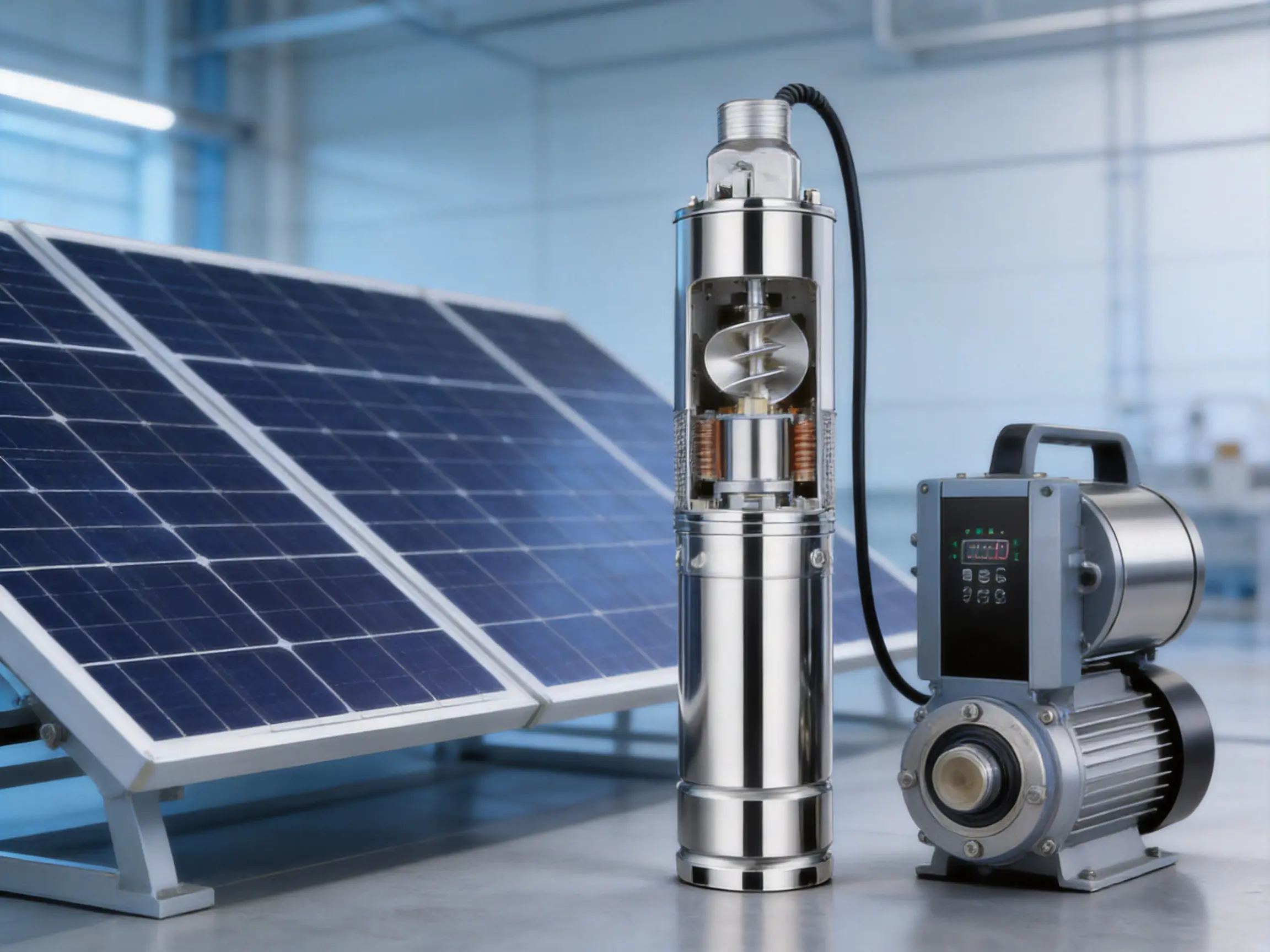
The operating environment of a solar pump is fundamentally different from that of a standard mains-powered pump. Utility voltage is generally controlled within a relatively narrow range, while solar voltage changes continuously. A cloud passing over the panels can reduce available power within seconds. Morning and afternoon conditions produce different voltage levels, and seasonal changes affect the total daily energy available.
The wide-voltage brushless DC motor is designed for this variable environment. The listed 3HVSC models operate within broad DC input ranges, allowing the pump to continue working as solar conditions change. The 110V to 350V models are suitable for systems designed around that range, while the 150V to 350V models are intended for higher-voltage solar configurations.
A wide input range can reduce the need for frequent manual adjustment and make system design more flexible. Installers can configure an appropriate series-parallel solar panel arrangement while staying within the pump’s voltage limits. The system must still be engineered carefully, especially with respect to maximum open-circuit voltage, cable losses, panel temperature, and controller compatibility.
Traditional brushed DC motors use physical brushes and a commutator to transfer electricity to the rotating section. These parts experience friction and gradually wear. In remote pumping installations, replacing brushes can be inconvenient or expensive, particularly when the well is far from a service center.
A brushless DC motor uses electronic switching rather than mechanical brushes. This arrangement reduces mechanical wear inside the motor and can improve operating efficiency. It also supports more precise control of motor rotation as the electrical input changes. For a solar application, this is beneficial because the motor can make better use of fluctuating power instead of depending on a narrow, fixed electrical condition.
Brushless operation does not mean that the complete pumping system is maintenance-free. Bearings, seals, cables, water quality, pipework, and electrical connections still require proper attention. Nevertheless, eliminating brush replacement is a meaningful advantage for remote and off-grid installations.
The motor uses high-temperature copper wire. Copper provides excellent electrical conductivity, while high-temperature insulation helps the winding tolerate the thermal conditions associated with continuous motor operation. In a submersible pump, heat management is important because the motor is enclosed and installed in water below ground.
Stable windings help reduce electrical losses and support reliable motor performance. When the motor operates under variable solar input, efficient windings can help maximize the amount of available energy converted into rotational power. This contributes to the pump’s suitability for long daily operating periods, particularly when water is pumped into storage rather than required instantly at a fixed time.
Bearings support the rotating shaft and help maintain alignment between the motor and hydraulic assembly. Poor bearing quality can lead to increased friction, vibration, noise, heat, and premature failure. The 3HVSC series uses NSK bearings, which are recognized industrial components selected for stable rotation and reduced friction.
Reliable bearings are particularly important in a deep well pump because maintenance access is limited after installation. Removing a submersible pump from a well requires labor, lifting equipment, and service time. A quality bearing system can therefore help reduce the risk of unnecessary retrieval and repair.
Bearing reliability also affects hydraulic performance. A shaft that remains properly aligned allows the impeller to rotate with consistent clearance. Excessive movement can cause wear against surrounding components and may reduce efficiency. By supporting stable shaft operation, the bearing system contributes to both mechanical life and water output.
Professional pump manufacturing requires coordination between shaft dimensions, bearing fit, rotor balance, sealing arrangements, impeller geometry, and motor housing tolerances. The use of specified industrial bearings is one part of this broader engineering process. It indicates that the pump is designed with attention to component quality rather than relying only on nominal motor power.
The 3HVSC range includes six listed configurations. Three are designed for approximately 4.8 to 5 cubic meters per hour, while three provide up to 6 cubic meters per hour. The maximum head values allow users to select a model according to the vertical lift and pressure requirements of the project.
Maximum head is not the same as operating head. A pump’s maximum head describes the approximate point at which flow approaches zero. In a real installation, the pump must operate at a point where the required flow and total dynamic head intersect the pump performance curve. Total dynamic head includes vertical elevation, pipe friction, fittings, valves, pressure requirements, and any storage or distribution pressure.
For example, a 6 cubic meter per hour model with a maximum head of 60 meters may be appropriate for a relatively shallow lift or a low-pressure tank filling system. A 5 cubic meter per hour model with a maximum head of 135 meters may be more suitable where the well is deeper or the water must be delivered to a higher elevation. The correct selection depends on the complete system rather than the maximum values alone.
| Model | Optimum DC Input Voltage | Power | Maximum Flow | Maximum Head | Outlet | Recommended Solar Panel Power |
| 3HVSC4.8-95-110-750 | 110V–350V | 750W | 4.8 m³/h | 95 m | 1.25 inches | At least 1.3 times pump power |
| 3HVSC5-112-110-1100 | 110V–350V | 1100W | 5 m³/h | 112 m | 1.25 inches | At least 1.3 times pump power |
| 3HVSC5-135-150-1500 | 150V–350V | 1500W | 5 m³/h | 135 m | 1.25 inches | At least 1.3 times pump power |
| 3HVSC6-60-110-750 | 110V–350V | 750W | 6 m³/h | 60 m | 1.25 inches | At least 1.3 times pump power |
| 3HVSC6-85-110-1100 | 110V–350V | 1100W | 6 m³/h | 85 m | 1.25 inches | At least 1.3 times pump power |
| 3HVSC6-115-150-1500 | 150V–350V | 1500W | 6 m³/h | 115 m | 1.25 inches | At least 1.3 times pump power |
Projects that fill a storage tank slowly over the course of the day may prioritize head capability and reliable operation over the highest instantaneous flow. Irrigation systems with larger daily water requirements may prioritize flow, provided that the well yield and solar array can support the demand.
It is important to avoid oversizing the pump based only on the deepest possible head. A pump that is too large for the well may draw more energy than the solar array can provide, cause excessive drawdown, or produce more water than the distribution system can handle. Conversely, an undersized pump may fail to meet the required daily water volume.
The water source should also be evaluated. A well must recover naturally after pumping. The pump’s capacity should not exceed the sustainable well yield for extended periods. For this reason, a professional design normally considers well depth, static water level, dynamic water level, recovery rate, water quality, pipe diameter, storage capacity, and daily solar radiation.
The 3HVSC series competes with several categories of solar pumps, including low-cost plastic-impeller pumps, narrow-voltage DC pumps, brushed motor pumps, and larger pumps that cannot fit small boreholes. Its main competitive advantages arise from the combination of materials, motor technology, compact dimensions, and model variety.
Plastic impellers can offer a low purchase price and may perform adequately in clean water. However, the durability margin may be lower in wells with mineral content, moderate abrasion, or long operating cycles. The stainless steel impeller in the 3HVSC series is designed for greater resistance to corrosion and mechanical wear.
This advantage is particularly relevant for commercial installers and distributors who must consider warranty exposure and customer satisfaction. A slightly higher-quality wetted assembly can reduce the likelihood of premature performance loss and provide better long-term value than a pump selected solely on initial price.
A narrow-voltage solar pump may stop frequently when sunlight changes or require a more carefully matched solar array. The wide-voltage design of the 3HVSC gives installers greater flexibility and allows the motor to operate across a broader range of available photovoltaic input.
Wide-voltage operation does not eliminate the need for correct system design, but it can make the system more tolerant of normal solar variation. This is valuable in regions with intermittent cloud cover, seasonal changes, and variable daily sunlight.
Brushless motors avoid the routine replacement of mechanical brushes and reduce a common wear point. For deep well installations, this can be a major practical benefit because servicing a submerged pump is more difficult than maintaining an above-ground unit.
The brushless design also supports efficient electronic control and stable rotation. When combined with high-temperature copper wire and quality bearings, it creates a motor package suited to long-term, low-maintenance operation.
Many deep well pumps require a larger borehole, increasing drilling costs or limiting replacement options. The 3HVSC design is suitable for small wells and narrow installations. This can reduce infrastructure requirements for residential, agricultural, and rural projects.
A compact pump is also easier to integrate into existing small-diameter wells. However, the installer must confirm the internal bore diameter, pump clearance, cable placement, pipe diameter, and available water level before installation.
Remote households and rural communities often need water from wells but may not have dependable grid electricity. A solar deep well pump can lift water into an elevated or ground-level storage tank during daylight. The stored water can then be distributed when needed, including during evening hours.
The stainless steel wetted components are valuable in drinking water projects because corrosion resistance supports cleaner and more stable long-term operation. Local regulations and water treatment requirements must still be followed, since the pump itself does not remove biological or chemical contaminants from groundwater.
The 3HVSC series is suitable for low-flow agricultural irrigation in orchards, gardens, vineyards, and small farms. Solar pumping aligns well with irrigation demand because water is often required during daylight hours when solar energy is available.
For drip irrigation, a storage tank and filtration system may be used between the pump and the emitters. The pump fills the tank, while a separate pressure system supplies the irrigation lines. This arrangement can protect the well pump from frequent starts and stops while providing stable pressure to the drip network.
Tank filling is one of the most practical uses for a solar pump. Instead of demanding constant pressure at the point of use, the pump can operate at a suitable flow and gradually fill a reservoir. A float switch or level-control system can stop the pump when the tank is full, while a low-water protection arrangement can help prevent dry running.
Storage also compensates for changes in sunlight. Water pumped during strong sunshine remains available during cloudy periods or at night. This allows the solar array and pump to be sized for daily energy production rather than instantaneous household demand.
Construction camps, remote workshops, livestock areas, and isolated utility sites may require water transfer from a well to another location. The wide-voltage motor and corrosion-resistant hydraulic components help make the pump suitable for these locations, particularly where maintenance visits are infrequent.
The robust pump body and stainless steel construction are useful in installations exposed to variable water chemistry, long operating cycles, or difficult service access. The pump remains dependent on appropriate water quality and correct installation, but its construction provides a stronger foundation than basic residential units intended only for occasional use.
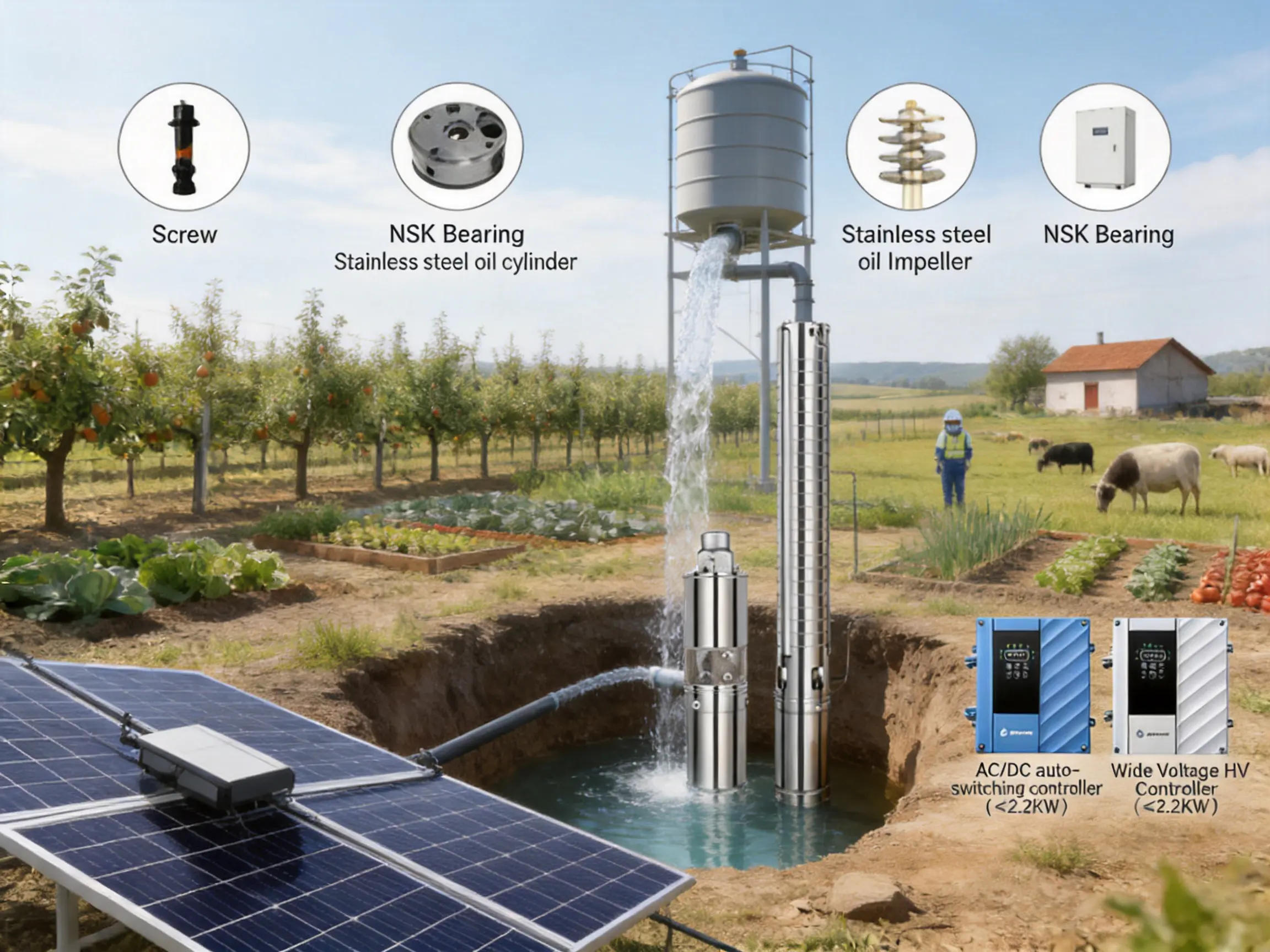
Taizhou Edwin Electric Co., Ltd. was founded in 2008 and operates as an integrated manufacturing enterprise. Its activities include independent research and development, mass production, and global export. The company’s core product lines include deep well pumps, submersible pumps, domestic booster pumps, circulation pumps, solar water pumps, intelligent booster pumps, and related water system products.
This product breadth is important because pumping technology requires knowledge of hydraulics, motors, seals, materials, controllers, electrical protection, and application conditions. Experience across several pump categories can support more complete product development and better understanding of how different pump systems are used in the field.
Independent research and development allows the manufacturer to adapt products to changing market requirements. Solar pumping has different technical demands from conventional AC pumping, including variable voltage, photovoltaic compatibility, motor control, energy optimization, and remote installation conditions.
The development of wide-voltage brushless DC pumps demonstrates an orientation toward these requirements. The stainless steel impeller version also shows attention to the needs of users who require greater durability than a standard plastic hydraulic assembly can provide.
Product development is not limited to selecting a motor and attaching a pump head. Engineers must coordinate electrical characteristics with hydraulic load, determine appropriate operating ranges, manage heat, select bearings and winding materials, and ensure that the pump body can tolerate submersible operation. The 3HVSC design brings these elements together in a compact package.
Mass production can provide advantages in component sourcing, process standardization, inventory planning, and repeatability. For distributors and project buyers, consistent production is important because replacement units should match the original performance and installation dimensions.
Standardized models also make it easier for installers to prepare quotations, select spare parts, train technicians, and maintain stock. The six listed performance configurations create a structured range that covers different combinations of flow, head, and power without requiring an entirely custom design for every small project.
The use of NSK bearings, high-temperature copper wire, stainless steel impellers, and stainless steel cylinders indicates attention to key components that directly influence service life. In pump manufacturing, assembly quality is equally important. Shaft alignment, bearing installation, winding protection, sealing, impeller balance, cable connection, and final testing all influence the finished product.
A professional manufacturing process typically includes incoming material inspection, component dimensional checks, motor winding controls, assembly procedures, electrical testing, hydraulic testing, and final quality inspection. The exact internal procedures may vary by production line and model, but these stages are essential for producing dependable submersible pumps at scale.
In 2012, the company established Taizhou Haipai Import & Export Co., Ltd. and Golden Falcon Industrial Co., Ltd. to support procurement planning, order tracking, cross-border delivery, and foreign trade services. This structure provides value for overseas buyers who need more than a factory quotation.
International pump projects often involve technical confirmation, product selection, packaging, documentation, shipping coordination, customs procedures, and after-sales communication. A manufacturer supported by an experienced export and procurement team can help reduce coordination difficulties, especially for distributors ordering several pump categories or complete water system components.
The performance of a submersible pump depends on the quality of its manufacturing process as much as on its published specifications. A pump may have an attractive motor rating, but poor assembly tolerances or inadequate testing can undermine reliability. The following process areas are particularly important for a product such as the 3HVSC.
Stainless steel impellers and cylinders must be formed and finished accurately. Surface quality affects hydraulic efficiency, while dimensional accuracy affects internal clearances and balance. Rough surfaces may increase turbulence, and imbalance can create vibration during operation.
After fabrication, components should be inspected for deformation, burrs, surface defects, and dimensional consistency. Proper finishing and cleaning are important because residues or metal particles should not remain inside the hydraulic chamber.
High-temperature copper wire must be wound with appropriate tension and arrangement. Consistent winding supports balanced electrical performance and helps prevent localized overheating. Insulation systems must be protected during insertion and assembly so that the winding does not suffer damage from vibration, sharp edges, or thermal cycling.
Electrical tests can include resistance checks, insulation checks, and other production controls appropriate to the motor design. These tests help identify winding problems before the pump is shipped or installed.
The rotor and shaft must be balanced and aligned with the bearings. Incorrect assembly may increase noise and vibration or place unnecessary stress on seals and hydraulic components. The use of recognized bearings such as NSK components supports reliability, but correct fitting and lubrication practices remain essential.
Assembly personnel must follow controlled procedures for bearing seating, shaft positioning, fastener tightening, and rotating-part clearance. These details are especially important in a compact 3-inch pump, where internal space is limited and small dimensional errors can have a noticeable effect.
A submersible motor requires protection against water entering the electrical and mechanical areas. Seals, gaskets, cable entries, and housing interfaces must be assembled correctly. The cable connection is also critical because water can travel through damaged or improperly sealed cable assemblies.
Manufacturing inspection should therefore include visual checks, electrical safety checks, and suitable water-resistance or pressure-related tests according to the product’s technical standards. Installers should also protect the cable during transportation and installation, since a good factory seal can be compromised by pulling, cutting, or crushing the cable in the field.
Hydraulic testing helps confirm that the pump can deliver the expected relationship between flow and head. Functional testing can also identify abnormal vibration, unusual noise, excessive current, or unstable rotation. Test results provide valuable feedback for production control and product improvement.
The published maximum flow and maximum head figures should be interpreted as reference points rather than guaranteed simultaneous operating values. Pump selection should always use the manufacturer’s performance curve and the project’s calculated total dynamic head.
The recommended solar panel power is at least 1.3 times the pump power. For a 750W pump, this represents a minimum nominal solar array capacity of approximately 975W. For a 1100W pump, the corresponding minimum is approximately 1430W. For a 1500W pump, the corresponding minimum is approximately 1950W.
| Pump Power | Minimum Recommended Solar Array Power at 1.3 Times Pump Power | Typical Design Purpose |
| 750W | Approximately 975W | Small wells, tank filling, garden irrigation |
| 1100W | Approximately 1430W | Moderate head or higher daily water demand |
| 1500W | Approximately 1950W | Higher head, deeper lifting, or increased pumping requirement |
The 1.3 multiplier is a planning reference, not a substitute for detailed solar engineering. Actual panel output depends on temperature, orientation, shading, dust, cable losses, inverter or controller efficiency, and local solar conditions. The array’s open-circuit voltage must remain below 450V, and the selected operating voltage must stay within the model’s specified range.
For models with a 110V to 350V optimum input range, the solar array should be configured so that normal operating voltage falls within this window. For models with a 150V to 350V range, the array must reach the higher minimum operating region. The designer should consider the lowest expected operating voltage as well as the highest possible open-circuit voltage during cold, bright conditions.
Electrical protection should include suitable disconnects, grounding, overcurrent protection, surge protection where appropriate, and protection against dry running or abnormal operating conditions. Because the voltage can be high, installation should be completed by qualified personnel using equipment rated for the actual DC voltage.
Before installation, confirm the well diameter, well depth, static water level, expected dynamic water level, water quality, well yield, and pump setting depth. The pump should remain sufficiently submerged during operation, but it should not be installed directly on the bottom where sediment may enter the inlet.
The well should be properly developed and cleaned before the pump is lowered. Excessive sand can damage hydraulic components, increase wear, and reduce output. If the water contains significant sand or suspended particles, the project may require additional filtration, a different pump design, or a water treatment solution.
The delivery pipe should be selected according to flow rate, vertical lift, friction loss, pressure requirements, and installation length. A pipe that is too small can create excessive friction and reduce the flow available at the outlet. Valves should be installed in a way that supports maintenance and prevents sudden hydraulic shocks.
The supplied 2-meter cable must be handled carefully. It should be secured to the delivery pipe using appropriate supports without placing excessive tension on the electrical connection. The cable should not be used to lift the pump. A separate safety rope or lifting arrangement should support the pump during installation and removal.
Before lowering the pump, inspect the body, cable, outlet, and connection points. After installation, test the system under controlled conditions. Confirm the direction and stability of operation, observe the water quality, verify the output, and check that the solar voltage remains within the required range.
Submersible pumps depend on surrounding water for cooling and lubrication of suitable components. If the water level falls below the pump inlet, the motor may overheat or the hydraulic assembly may operate abnormally. A water-level sensor, controller, or other dry-run protection method should be considered in wells with seasonal variation or uncertain recovery rates.
A storage tank is often recommended for solar pumping systems. A high-level float switch can stop the pump when the tank is full, while a low-level sensor can help protect the well. Tank controls reduce water waste and allow the pump to operate according to solar availability rather than household demand.
One of the advantages of the 3HVSC design is its low-maintenance brushless motor. Even so, long-term performance depends on routine inspection of the complete water system. Solar panels should be kept clean and free from shading. Cable connections should be checked for physical damage, moisture, and corrosion. Storage tanks, filters, valves, and control devices should be inspected at regular intervals.
Changes in pump output may indicate a drop in the water level, clogged pipework, increased sand, damaged valves, solar panel contamination, or component wear. Monitoring daily water volume and operating behavior can help identify problems before a complete failure occurs.
If the pump must be removed, power should be disconnected and the solar array isolated before work begins. The pump should be lifted using suitable equipment and never by the electrical cable. After removal, inspect the impeller, cylinder, inlet, cable, seals, and bearings for signs of abrasion, corrosion, overheating, or blockage.
In areas with seasonal freezing, exposed pipework should be protected or drained. In areas with high mineral content, deposits may accumulate in pipes and fittings. Preventive cleaning and water-quality management can improve the overall service life of the system.
The purchase price is only one part of a pump’s total cost. Installation labor, solar panels, pipework, support structures, controllers, storage tanks, maintenance, replacement frequency, and lost water production all affect the economic result.
A pump with a stainless steel impeller and durable motor components may provide better long-term value than a cheaper unit requiring earlier replacement. This is particularly true where pump retrieval is difficult or where downtime affects crops, livestock, or household water access.
Solar pumping also reduces recurring energy expenses. Once the photovoltaic system is installed, sunlight provides the primary energy source. The actual financial benefit depends on the local cost of grid connection, diesel fuel, generator maintenance, and alternative water supply methods. In remote areas, the avoided cost of fuel transportation can be especially significant.
Storage-based operation can further improve value by allowing the pump to work during productive daylight hours while water remains available later. It may also reduce the need for a larger battery system. In many agricultural and rural applications, storing water is more economical than storing electricity.
Taizhou Edwin Electric Co., Ltd. serves a broad international market and focuses on medium-to-high-end pump products. Its product portfolio covers several water handling categories, allowing buyers to source deep well pumps, submersible pumps, booster pumps, circulation pumps, solar pumps, and related accessories from an experienced pump supplier.
The company’s activities in new energy and intelligent technology since 2018 demonstrate a continued focus on modern water system requirements. Solar water pumping is closely connected with energy efficiency, remote operation, agricultural modernization, and decentralized infrastructure. Intelligent booster pump development adds another dimension by addressing pressure management and automated household or commercial water supply.
Global customers may also benefit from the company’s export support structure. Procurement planning, order tracking, cross-border delivery, and foreign trade services are important when equipment is shipped to different countries with different documentation and logistics requirements.
The company’s products are used in new energy projects, agricultural irrigation, municipal engineering, mining, construction, HVAC systems, and household water supply. This range of applications indicates experience with both residential and industrial purchasing needs. For distributors, the ability to work with one manufacturer across several pump categories can simplify product selection and inventory planning.
A successful solar well pump project begins with a clear statement of the water requirement. The designer should calculate daily water volume, peak demand, required delivery schedule, total lift, pipe length, outlet pressure, and storage capacity. The pump model should then be selected using the performance curve rather than maximum flow or maximum head alone.
The solar resource must also be assessed. Local sunshine hours, seasonal weather, panel orientation, shading, temperature, and dust conditions affect daily output. If water must be available during prolonged cloudy periods, additional storage or a backup energy source may be appropriate.
Well data is equally important. A pump cannot produce sustainable results if the well yield is too low. The static and dynamic water levels should be measured, and the pump should be set at a depth that balances reliable submergence with protection from sediment.
Finally, the electrical system must be designed with safety in mind. The specified voltage limits must not be exceeded, and all DC components must be rated for the actual voltage and current. Qualified technicians should complete wiring, grounding, isolation, and commissioning.
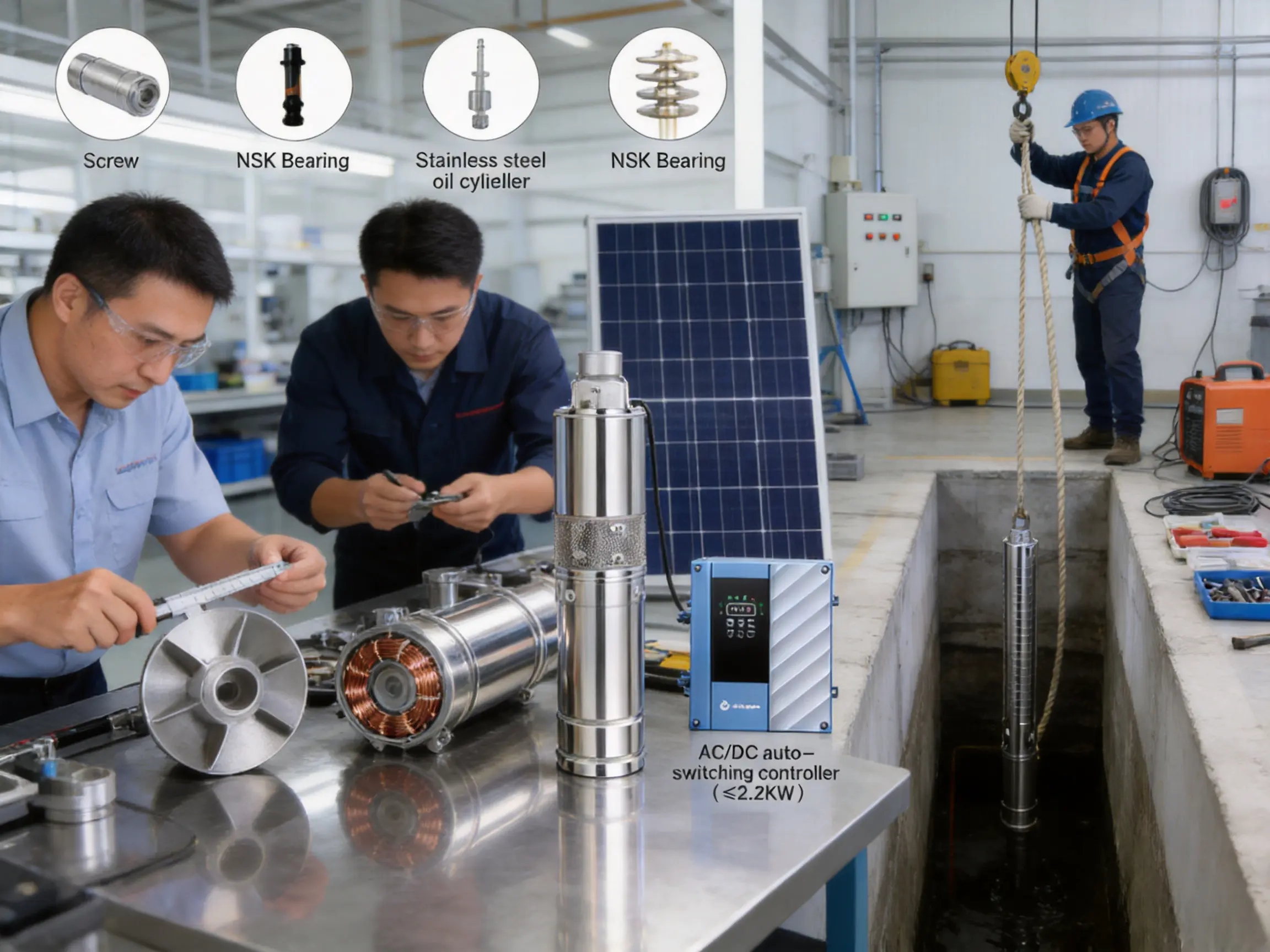
The pump is designed primarily for deep wells and small wells containing clean or relatively clean water. It can serve rural drinking water systems, tank filling, low-flow irrigation, orchards, gardens, vineyards, and remote water transfer installations. Excessive sand, stones, or abrasive solids may reduce service life, so the well should be properly developed and the water quality evaluated before installation.
The 3-inch designation refers to the compact bore and pump diameter class. The pump is intended for installation in a compatible 3-inch well casing or borehole. The installer must verify the actual internal diameter and provide sufficient clearance for the pump, cable, and pipe.
Solar panel voltage changes with sunlight, temperature, time of day, and weather. A wide-voltage brushless DC motor can operate across a broader input range than a narrow-voltage design. This gives the system greater flexibility and helps it continue operating as solar conditions vary, provided the voltage remains within the specified limits.
The listed performance data specifies that the solar panel open-circuit voltage should be below 450V. The array must be designed so that its maximum possible open-circuit voltage, including cold-weather effects where relevant, does not exceed this limit.
The recommended solar panel power is at least 1.3 times the pump power. This corresponds to approximately 975W for a 750W pump, 1430W for a 1100W pump, and 1950W for a 1500W pump. Final sizing should consider local solar conditions, panel temperature, cable loss, controller efficiency, and daily water requirements.
For many demanding water conditions, stainless steel offers better corrosion resistance, wear resistance, and mechanical durability than conventional plastic impellers. The exact performance depends on water chemistry, sand content, operating conditions, and the quality of the competing materials. The stainless steel design is especially valuable where long service life and reduced maintenance are priorities.
The brushless motor does not require mechanical brush replacement, which reduces one common maintenance task. However, the complete system still requires inspection of cables, solar panels, pipework, valves, water levels, filters, control devices, and storage tanks. Proper maintenance helps protect the motor and hydraulic components.
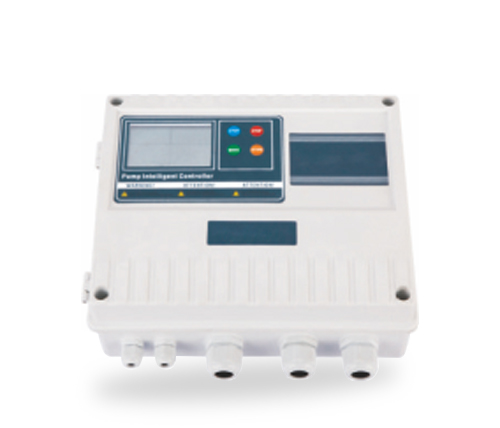
The system is intended for solar DC input, but the complete installation must use the appropriate control and protection equipment required by the pump configuration. The solar array must meet the specified voltage and power requirements. A qualified installer should confirm whether a dedicated controller or other control device is required for the intended system.
Model selection should be based on the required flow at the total dynamic head. Consider vertical lift, pipe friction, fittings, required outlet pressure, well yield, daily water volume, and solar availability. The 750W models suit lower-power applications, while the 1100W and 1500W versions provide higher head or greater capacity within the listed range.
Yes. The pump is suitable for drip irrigation in orchards, vineyards, gardens, and small farms when the flow and pressure are correctly matched to the irrigation system. A filter, pressure management equipment, and storage tank may be advisable to provide stable water delivery and protect drip emitters.
A storage tank is often beneficial. It allows the pump to use solar energy during daylight and makes water available during periods of low sunlight or at night. It also provides a buffer between variable pump output and steady household or irrigation demand.
Possible causes include insufficient sunlight, dirty or shaded panels, incorrect solar array voltage, excessive pipe friction, a blocked inlet, sand accumulation, a falling well water level, an undersized pipe, a closed valve, or operation outside the pump’s performance range. Systematic inspection should begin with the solar input and water level before removing the pump.
The 3HVSC wide-voltage stainless steel impeller solar deep well pump is designed for users who need reliable water supply from small wells without depending on conventional grid electricity. Its compact 3-inch construction makes it suitable for narrow boreholes, while the stainless steel impeller and cylinder provide a durable foundation for long-term operation in varied groundwater environments.
The wide-voltage brushless DC motor is well matched to the changing electrical conditions of solar power. NSK bearings and high-temperature copper wire support stable motor performance, reduced friction, and improved operating reliability. The model range gives installers choices from 750W to 1500W, with maximum heads from 60 meters to 135 meters and flow rates up to 6 cubic meters per hour.
Compared with basic plastic-impeller, brushed-motor, narrow-voltage, or oversized borehole pumps, the 3HVSC offers a balanced combination of durability, efficiency, compact installation, and solar compatibility. Its advantages are most valuable in rural water supply, low-flow irrigation, orchard and vineyard systems, remote tank filling, and other off-grid applications where maintenance access is limited.
The product is supported by Taizhou Edwin Electric Co., Ltd., an integrated pump manufacturer with experience in research and development, mass production, international export, and a broad portfolio of water pumping equipment. The company’s focus on solar water pumps and intelligent technology, together with its procurement and export service capabilities, makes it a suitable partner for distributors, contractors, system integrators, and industrial buyers.
As with any pumping project, the best results depend on correct system design. Well conditions, water quality, flow, head, solar array voltage, panel capacity, storage, pipework, and protective controls must all be considered. When these factors are properly matched, the 3HVSC can provide an efficient and durable solution for dependable solar-powered water delivery.
1. Product technical information for the 3HVSC wide-voltage stainless steel impeller solar deep well pump, including model performance data and application specifications.
2. Manufacturer information for Taizhou Edwin Electric Co., Ltd., including company history, product categories, manufacturing activities, research and development, and international export services.
3. General principles of submersible pump selection, including flow, total dynamic head, well yield, pipe friction, and storage tank sizing.
4. General photovoltaic system design principles concerning solar array voltage, open-circuit voltage, temperature effects, power margins, and DC electrical protection.
5. General engineering guidance for stainless steel hydraulic components, brushless DC motors, electric motor windings, bearings, and submersible pump installation.
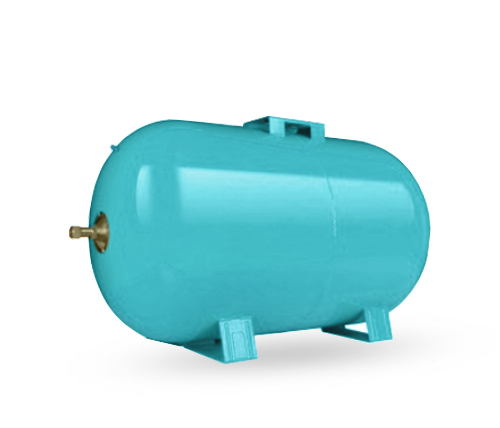
aseriesnoisereductiondesignacid-baseverticalsurfacepump-1.jpg "EV(F)A Series Noise Reduction Design Acid-base Vertical Surface Pump")
edwina@edwin-pump.com
+86-13586290903 (WhatsApp)
Xuri Gongliang Cutting Tool Entrepreneurship Park, Wenqiao Town, Wenling City, Taizhou City, Zhejiang Province, China

High Performance Smart Pump Factory


 English