edwina@edwin-pump.com

View All Products
en
Reliable water movement is essential in residential, agricultural, commercial, and light industrial systems. A pump must do more than transfer water from one point to another. It must provide stable pressure, efficient operation, dependable starting, practical maintenance, and resistance to the environmental conditions in which it operates. The HMC-IA Series Longevity Tamper-proof Stainless Steel Water Surface Centrifugal Pump is designed around these requirements.
As a horizontal multistage surface pump, the HMC-IA Series combines a compact above-ground installation with the pressure capability required for water supply, garden irrigation, pressure boosting, fountains, swimming pools, and similar applications. Its design includes stainless steel wetted components, a brass impeller, an AISI 304 shaft, self-priming capability, a motor with copper winding, and a built-in thermal protector for single-phase versions. These features give the series a practical balance between durability, functionality, and ease of use.
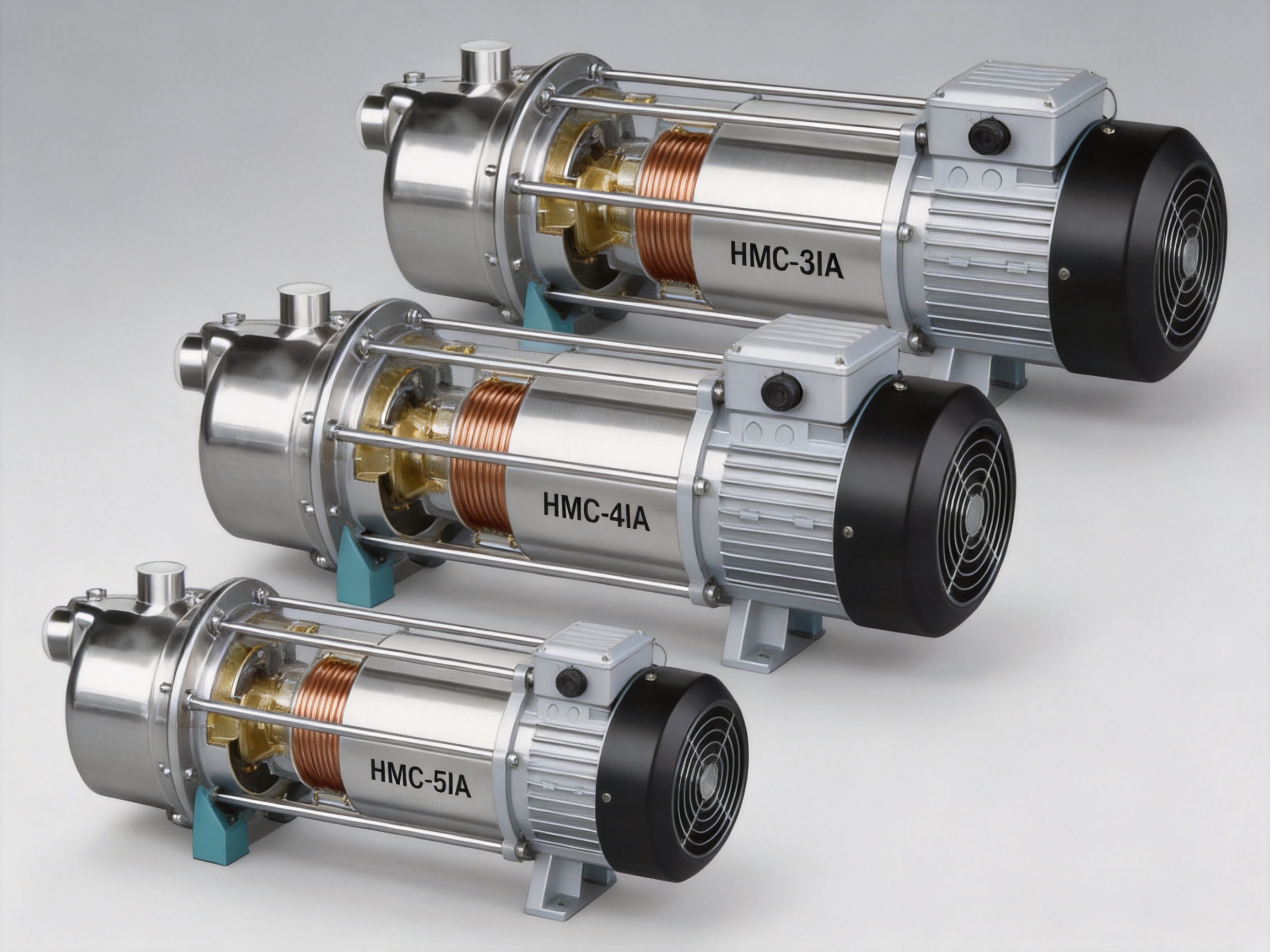
The series includes three models: HMC-3IA, HMC-4IA, and HMC-5IA. Depending on the selected model, rated power ranges from 0.55 kW to 0.9 kW, maximum flow ranges from 33 L/min to 55 L/min, and maximum head ranges from 85 m to 95 m. All listed models use 1-inch inlet and outlet connections and offer a maximum suction lift of 8 m.
This article examines the construction, operating advantages, application suitability, manufacturing strengths, maintenance requirements, and selection considerations of the HMC-IA Series. It also explains how the pump compares with common alternatives and provides a technical question-and-answer section for purchasers, installers, distributors, and end users.
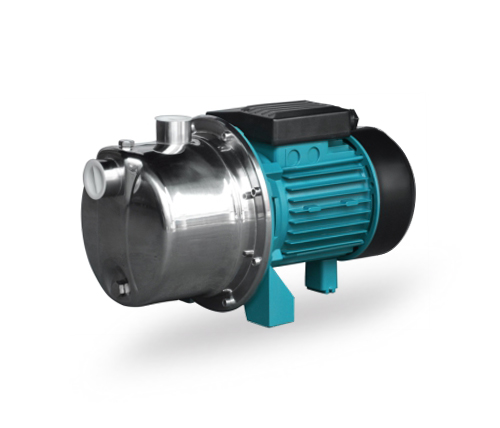
HMC-IA Series Longevity Tamper-proof Stainless Steel Water Surface Centrifugal Pump
The HMC-IA Series is a surface-mounted centrifugal pump intended for clean water and liquids with physical and chemical properties similar to water. Unlike a submersible pump, it is installed outside the water source. This arrangement makes the motor and primary service components accessible for inspection, wiring, cleaning, and replacement without removing the complete pump assembly from a well, tank, or basin.
The pump is categorized as a horizontal multistage pump. A multistage design uses more than one hydraulic stage to build pressure progressively. Water passes through a sequence of impellers and diffusers, allowing the pump to achieve a relatively high head from a compact motor size. This is particularly useful where water must be lifted to an elevated tank, delivered through a long pipe run, or supplied to sprinklers and fixtures at useful pressure.
The product is also described as a water surface centrifugal pump. Its intended use is therefore not limited to one type of installation. It can support water lifting from a well, garden sprinkling, pressure boosting of running water, and equipment-support applications. The same general operating principle can be adapted to domestic water systems, irrigation arrangements, fountains, pools, and other clean-water installations.
Several design priorities are evident in the product configuration. The pump is designed for longevity through durable materials and a serviceable layout. It incorporates tamper-resistant or tamper-proof design considerations for installations where unauthorized interference is a concern. It uses corrosion-resistant stainless steel in key hydraulic components, while aluminum, brass, polymer, and treated cast iron are used in other locations according to the material table supplied for the series.
These features make the HMC-IA Series suitable for users seeking a surface pump that is more robust than a basic domestic transfer pump but simpler and more accessible than a large commercial pumping system.
The HMC-IA Series is available in three configurations. The specifications below are based on the supplied technical parameter table. Actual operating performance may vary according to suction conditions, pipe diameter, water temperature, voltage, system resistance, and the selected duty point.
| Model | Power | Power | Inlet x Outlet | Maximum Flow | Maximum Head | Maximum Suction |
|---|---|---|---|---|---|---|
| HMC-3IA | 0.55 kW | 0.75 HP | 1 inch x 1 inch | 33 L/min | 85 m | 8 m |
| HMC-4IA | 0.75 kW | 1 HP | 1 inch x 1 inch | 45 L/min | 95 m | 8 m |
| HMC-5IA | 0.9 kW | 1.2 HP | 1 inch x 1 inch | 55 L/min | 95 m | 8 m |
The model selection should be based on the required combination of flow and head rather than maximum values alone. Maximum head is normally achieved at a very low or zero-flow condition, while maximum flow is normally achieved at a lower head. A professional selection process should therefore compare the system duty point with the pump performance curve supplied by the manufacturer.
The HMC-3IA is the lowest-power option and may be appropriate for smaller garden systems, domestic water transfer, and moderate pressure-boosting applications. The HMC-4IA provides a step up in power and head capability. The HMC-5IA offers the highest listed flow and is appropriate when the system requires greater water delivery while retaining the same compact connection size.
All three models use 1-inch inlet and outlet ports. This simplifies replacement planning and allows distributors to stock a common connection size across the range. It also provides flexibility for installations using standard water-supply fittings, valves, flexible connectors, and filtration components.
A centrifugal pump converts the rotational energy of an electric motor into hydraulic energy. The motor turns the shaft and impeller. As water enters the impeller eye, centrifugal force moves it outward toward the diffuser or volute area. The diffuser slows and redirects the water while converting part of its velocity into pressure. In a multistage arrangement, this process is repeated through additional hydraulic stages to increase the total head.
The HMC-IA Series uses a compact horizontal arrangement. The pump and motor are positioned on a common horizontal axis, helping keep the footprint manageable and making the unit convenient for surface installation. This configuration is particularly practical in pump rooms, utility spaces, irrigation cabinets, plant rooms, and equipment areas where access to the motor and terminal cover is important.
The supplied component information identifies a Venturi tube and diffuser made from PPO. PPO, or polyphenylene oxide, is an engineering polymer commonly selected for dimensional stability, low water absorption, and resistance to many operating conditions. Polymer hydraulic components can also reduce weight and help provide smooth internal passages when properly molded and finished.
The impeller is listed as stainless steel in the materials table and the pump section also identifies a brass impeller. This difference should be confirmed against the exact model and production configuration before an order is finalized. In either case, the stated objective is a durable impeller suitable for clean-water service. Stainless steel offers strong corrosion resistance, while brass is widely used in water-pump impellers because of its machinability, strength, and resistance to many common water environments.
The pump body is identified as stainless steel in the materials table, while the pump description separately refers to a cast-iron pump body and support under special anti-rust treatment. Buyers should request the current model-specific bill of materials when material confirmation is critical. This does not reduce the value of the design; rather, it emphasizes the importance of matching the exact material configuration to the intended water chemistry and installation environment.
The maximum liquid temperature is listed as 40°C. This indicates that the pump is intended for cool or moderately warm clean water, not high-temperature process fluids. Operating above the specified temperature can affect seals, insulation, bearings, hydraulic clearances, and motor life.
Stainless steel is used in important components, including the pump body and impeller according to the supplied materials information. Stainless steel helps protect the hydraulic assembly against rust and corrosion in ordinary water-service conditions. It is especially useful in installations exposed to humidity, intermittent wetting, outdoor air, or water containing moderate levels of dissolved minerals.
The use of corrosion-resistant materials can provide an advantage over basic painted-steel or untreated cast-iron pumps. When conventional surfaces are damaged or exposed to moisture for extended periods, corrosion can affect appearance, sealing surfaces, fasteners, and hydraulic passages. Stainless steel does not eliminate every corrosion risk, but it can significantly improve long-term resistance in suitable applications.
The shaft is specified as AISI 304 stainless steel. The shaft transfers torque from the motor to the impeller assembly and operates in an environment where water, condensation, and mechanical loads may be present. AISI 304 is widely used in water-handling equipment because it provides a useful combination of corrosion resistance, strength, availability, and manufacturing practicality.
A sound shaft material contributes to stable rotation and helps reduce the risk of rust-related surface damage near the mechanical seal. Shaft condition is important because scoring, pitting, or corrosion can shorten seal life and cause leakage. The AISI 304 specification therefore represents a meaningful advantage over low-grade or poorly protected shaft materials.
The impeller is one of the most important hydraulic parts in a centrifugal pump. It must maintain its shape under rotation, transmit energy efficiently, and resist wear from normal clean-water operation. The supplied product information identifies brass in the pump feature description and stainless steel in the component material table. The correct material may vary by production version or technical configuration.
Both brass and stainless steel are established choices for water pumps. Brass offers good mechanical properties and practical casting or machining characteristics. Stainless steel provides strong corrosion resistance and can be suitable for applications where the appearance and durability of wetted metal surfaces are important. Before purchase, the customer should specify which impeller material is required and obtain confirmation on the quotation or technical datasheet.
The pump is listed as self-priming. Self-priming equipment is designed to remove air from the suction line and establish water flow after appropriate initial filling and installation. This can make startup more convenient than with a conventional non-self-priming surface pump, particularly in applications where the suction pipe may occasionally lose its water charge.
Self-priming performance still depends on correct installation. The suction pipe must be airtight, the suction lift must remain within the stated maximum of 8 m, and the pump casing should be filled according to the installation instructions. A foot valve or suitable check valve may be needed to prevent the suction line from draining when the pump stops.
The motor is specified with copper winding. Copper provides good electrical conductivity and is widely used in quality pump motors. Efficient conductivity can help support reliable motor performance and reduce electrical losses compared with inferior winding materials, provided that the motor is correctly designed and operated at its rated voltage and frequency.
The motor also includes a built-in thermal protector for single-phase versions. A thermal protector helps interrupt or protect the motor circuit when excessive temperature develops. This can occur because of overload, blocked ventilation, excessive starts, low voltage, high ambient temperature, or a jammed hydraulic assembly. Thermal protection is an important layer of safety, although it does not replace correct sizing, overcurrent protection, grounding, and professional electrical installation.
The listed insulation class is F. Insulation class F is commonly associated with motor winding insulation capable of handling higher thermal stress than lower-class insulation systems. The listed protection class is IP44, which indicates protection against solid objects above a specified size and against splashing water from appropriate directions. IP44 is suitable for many sheltered pump-room and domestic installations, but the motor should not be submerged or exposed to uncontrolled heavy water jets.
The maximum ambient temperature is listed as 40°C. Adequate ventilation is necessary to prevent the motor from operating continuously in excessive heat. The installer should keep the motor away from direct heat sources, provide sufficient air circulation, and avoid enclosing the unit in a small unventilated cabinet.
A basic single-stage surface pump may be sufficient for low-pressure water transfer, but it can be less suitable when the system requires a higher head from a compact unit. The multistage hydraulic arrangement of the HMC-IA Series is intended to deliver stronger pressure capability than many basic single-stage domestic pumps of similar physical size.
This advantage is relevant for elevated buildings, long pipe runs, sprinkler systems, pressure boosting, and applications where water must overcome significant static lift. A higher-head design can reduce the need to install a much larger pump, although the final selection must always be based on the complete system curve.
Submersible pumps are installed inside wells, tanks, or other water sources. They are useful when the water level is deep or when surface suction is impractical. However, servicing a submersible pump generally requires removal from the water source. The HMC-IA Series is installed above ground, so the motor, terminal cover, and external hydraulic connections remain accessible.
This surface arrangement can simplify inspection and routine maintenance. It can also make the pump easier to integrate into pressure-boosting systems, irrigation manifolds, filtration systems, and equipment skids. On the other hand, the HMC-IA Series is limited by its maximum suction lift and is not a substitute for a deep-well submersible pump when water must be lifted from a level beyond the permitted suction range.
Low-cost painted cast-iron pumps can offer attractive initial pricing, but coating damage, moisture exposure, and poor maintenance may eventually lead to external or internal rust. The HMC-IA Series uses stainless steel in identified hydraulic components and includes anti-rust treatment for the support or pump body configuration described in the product information.
This material approach can provide an advantage in humid environments and in applications where a clean appearance and resistance to surface deterioration are important. Stainless steel construction may also be more attractive to customers who want a longer service interval and reduced concern about corrosion-related maintenance.
Some entry-level pumps have limited protection against accidental interference, loose wiring access, or unauthorized adjustment. The HMC-IA Series is promoted with a tamper-proof design. This feature is valuable in shared facilities, outdoor utility areas, public-facing water installations, managed irrigation systems, and equipment rooms where protection against interference is a practical concern.
Tamper-resistant construction should be viewed as part of a complete security approach. The pump should still be installed in a suitable location, protected from unauthorized electrical access, and connected using appropriate isolation and protection equipment.
Large commercial multistage pumps can provide high capacity, but they may require more space, more complex installation, higher initial investment, and greater service resources. The HMC-IA Series targets a smaller duty range, offering a compact solution for applications that do not require large industrial flow rates.
Its 0.55 kW to 0.9 kW power range may be appropriate for many domestic, garden, agricultural, and light commercial systems. The series can therefore fill the gap between small transfer pumps and larger commercial equipment. Distributors can offer different performance levels without changing the basic connection size or installation concept.
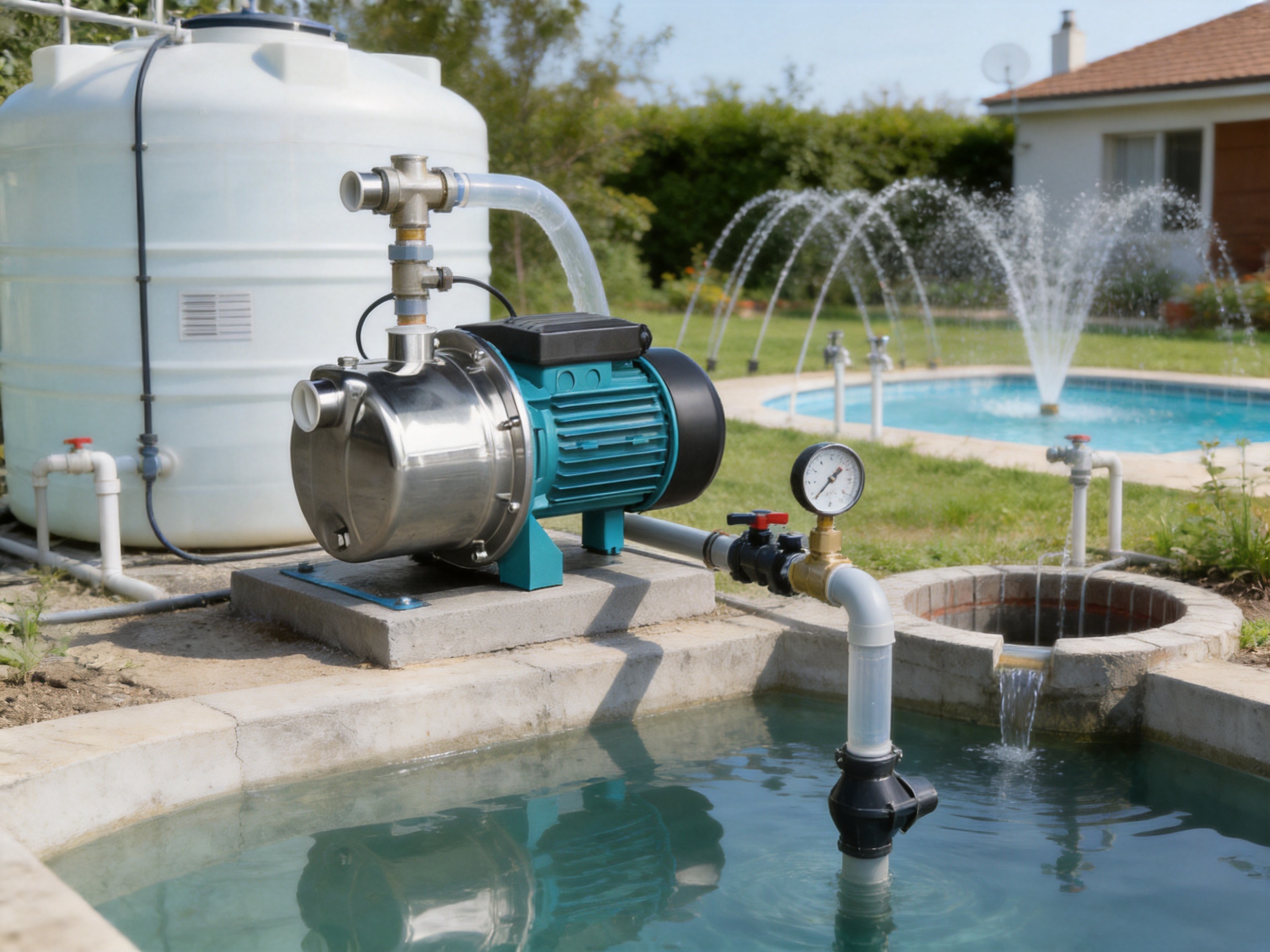
The HMC-IA Series can be used to transfer clean water from a storage tank, shallow well, or other source to household outlets. It can support water supply systems where additional pressure is required for taps, showers, washing equipment, or elevated fixtures.
Domestic installation should include suitable isolation valves, a non-return valve where required, correctly sized suction and discharge pipes, and electrical protection. If the pump is controlled automatically, a pressure switch, electronic controller, or compatible water-management device may be added according to the system design.
Garden irrigation systems often require moderate flow and useful pressure across hoses, sprinklers, drip lines, or small irrigation zones. The HMC-IA Series can support these applications when the water source is clean and the required duty point falls within the selected model’s operating range.
The HMC-3IA may suit smaller irrigation zones, while the HMC-4IA or HMC-5IA may be selected for higher flow requirements. The installer should account for friction losses in hoses and pipes, elevation changes, filters, valves, sprinkler pressure requirements, and the number of outlets operating simultaneously.
The pump can lift water from a well when the suction lift is within the listed maximum of 8 m. This measurement should be considered from the pump inlet to the dynamic water level while the pump is operating. If the water level falls lower during pumping, the effective suction lift increases.
The suction line should be airtight and protected against collapse. A properly selected foot valve can maintain prime and prevent backflow. The source should also be checked for sand, debris, and other contaminants that may damage the impeller, diffuser, seal, or suction valve.
The pump can be used to increase pressure in an existing water supply system. This is useful where municipal or tank-fed water arrives at insufficient pressure, or where a building has several outlets that require more consistent delivery.
Pressure-boosting systems should be designed to avoid excessive cycling. A pressure tank, pressure controller, or other appropriate control method can help match pump operation to demand. The pump should not be selected solely according to maximum head because actual pressure at the outlet will depend on flow and system resistance.
The product information identifies swimming pools and fountains among its potential surface-water applications. In these systems, the pump may circulate or transfer clean water through decorative features, filtration equipment, or auxiliary circuits.
Pool and spa installations require special attention to electrical safety, grounding, bonding, residual-current protection, chemical compatibility, and local regulations. The maximum liquid temperature of 40°C should be observed, and the pump should not be used with concentrated chemicals or liquids outside the stated clean-water category without written technical approval.
The pump can support equipment that needs a dependable water supply, including small treatment systems, cooling circuits using clean water, washdown systems, and agricultural equipment. Compatibility depends on the fluid, temperature, pressure, duty cycle, and required flow.
Where the pump is integrated into a larger machine, the system designer should consider start-up logic, dry-run protection, emergency isolation, vibration control, and access for service. The compact horizontal format can simplify skid or cabinet integration when adequate ventilation and clearance are provided.
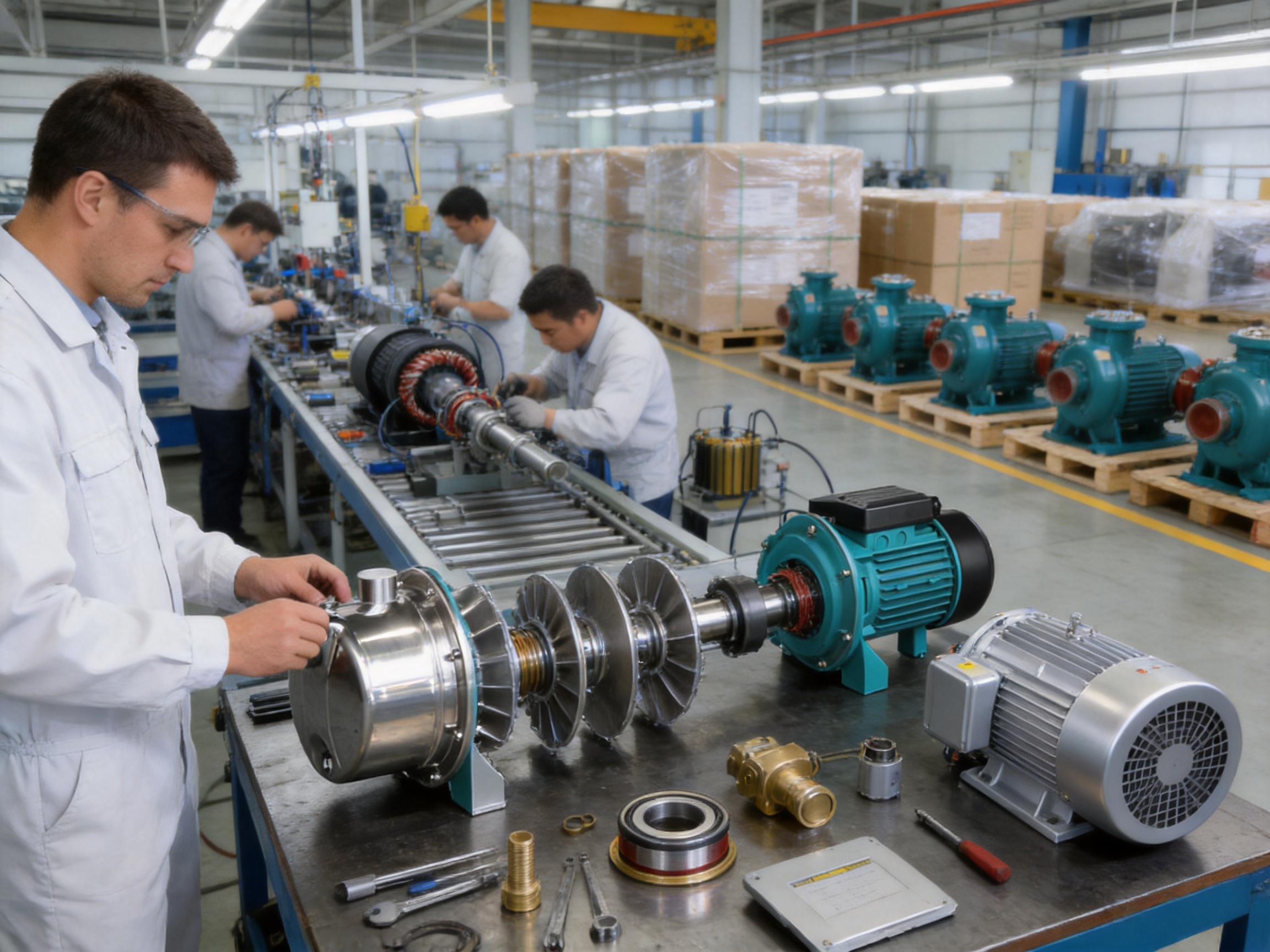
The product is manufactured by Taizhou Edwin Electric Co., Ltd., an integrated manufacturing enterprise founded in 2008. The company is described as specializing in independent research and development, mass production, and global export. This combination is important because a pump manufacturer must coordinate hydraulic design, motor production, component sourcing, assembly, testing, packaging, and international order fulfillment.
Independent research and development allows a manufacturer to refine pump structures according to practical market requirements. For a product such as the HMC-IA Series, development work may include hydraulic-stage design, impeller geometry, diffuser matching, shaft alignment, motor selection, sealing arrangement, noise reduction, and ease of installation.
A manufacturer with direct R&D capability can also respond more effectively to distributor feedback. Different markets may require different voltage arrangements, connection standards, materials, packaging formats, control systems, and documentation. Product development experience supports the creation of a consistent series with multiple power levels.
Mass production provides advantages in repeatability and supply planning. Pumps contain multiple components that must work together accurately. Consistent machining, molding, winding, assembly, and testing help reduce variation between units.
For distributors and project buyers, production capacity is also important. A pump may be technically suitable but commercially impractical if the supplier cannot maintain stable lead times or repeat orders. The company’s stated mass-production capability supports procurement programs requiring ongoing supply rather than isolated purchases.
The HMC-IA Series includes a defined materials table covering the pump body, Venturi tube, diffuser, support, motor case, motor cover, fan, fan cover, impeller, shaft and rotor, bearings, capacitor holding box, capacitor, and terminal cover. A component-level materials list improves communication between the manufacturer, distributor, installer, and end user.
Materials listed for the series include stainless steel, PPO, aluminum, HT200 cast iron, PP, ABS, brass, and AISI 304 stainless steel, depending on the component and the relevant product description. These materials are selected for different roles. Metals provide structural strength and heat dissipation, polymers support electrical insulation and hydraulic performance, and corrosion-resistant materials protect water-contact areas.
For professional procurement, the material table should be treated as a technical reference that must be confirmed for the specific model, production batch, and configuration. Material traceability and incoming inspection are especially important when pumps are supplied for projects with defined corrosion, hygiene, or service-life requirements.
The motor uses copper winding and includes a built-in thermal protector for single-phase models. Motor production requires accurate winding, insulation treatment, rotor balancing, bearing installation, terminal connection, and electrical testing. Small deviations in these processes can affect efficiency, temperature rise, vibration, and service life.
The motor case and support are listed as aluminum in the materials table, while the motor cover is listed as HT200. Aluminum can assist with weight reduction and heat dissipation, while cast iron can provide rigidity and mechanical support. The combination reflects a practical approach in which materials are assigned according to functional requirements.
Multistage pumps require careful assembly because each stage must align correctly. The impellers, diffusers, shaft, seals, bearings, and pump body must work together with suitable clearances. Poor alignment can increase friction, vibration, leakage, and energy consumption.
Mechanical assembly should include inspection of shaft runout, bearing seating, seal installation, fastening torque, impeller clearance, and rotation direction. A structured assembly process helps ensure that the pump performs consistently across the HMC-3IA, HMC-4IA, and HMC-5IA versions.
Although specific factory test procedures are not provided in the supplied material, professional pump manufacturing normally includes visual inspection, electrical checks, leakage inspection, rotation verification, and hydraulic performance testing. Performance testing may compare flow and head against expected values at selected operating points.
For buyers, it is appropriate to request available test records, inspection standards, motor data, wiring diagrams, and performance curves for the exact model. This documentation is particularly useful for projects involving several pumps, export shipments, or integration into automated water systems.
The company established Taizhou Haipai Import & Export Co., Ltd. and Golden Falcon Industrial Co., Ltd. in 2012 to support procurement planning, order tracking, cross-border delivery, and foreign-trade services. These capabilities can be valuable to international customers that require more than product manufacturing.
One-stop procurement support can help coordinate product selection, production schedules, packaging, shipping documents, and communication among factories, freight providers, distributors, and project teams. For overseas buyers, an organized export process can reduce delays and simplify repeat purchasing.
The HMC-IA Series should be installed by a qualified technician or an experienced installer familiar with water pumps and electrical systems. Before installation, confirm the model, voltage, frequency, connection size, liquid type, water temperature, suction lift, and expected operating duty.
Install the pump on a firm, level base capable of supporting its weight and resisting vibration. The base should be positioned above areas where standing water may accumulate. Adequate clearance should be left around the motor, terminal cover, pump casing, and pipe connections so that inspection and maintenance can be performed safely.
The suction pipe should be as short and direct as practical. Avoid unnecessary bends, high points where air can collect, and reductions that create excessive flow resistance. The suction pipe must be airtight because even a small air leak can prevent self-priming and cause unstable operation.
A foot valve may be fitted at the lower end of the suction pipe when the pump draws from a well, tank, or open source. The valve should be sized correctly and protected from blockage. A strainer may be used where debris is present, but it must be cleaned regularly because a clogged strainer increases suction losses.
The discharge pipe should be supported independently so that its weight is not carried by the pump casing. Isolation valves can make maintenance easier, while a pressure gauge can help the operator monitor system performance. A non-return valve may be required to prevent reverse flow or pressure loss, depending on the installation design.
Before starting, fill the pump casing and suction line according to the operating instructions. Do not run the pump dry. Dry running can damage the mechanical seal and may cause rapid temperature rise. Confirm that all fittings are tight, valves are in the correct position, and the motor rotates in the correct direction where applicable.
Electrical installation should include correct voltage, grounding, circuit protection, and a suitable disconnecting device. Cable size must match the motor current, cable length, installation method, and local electrical requirements. The built-in thermal protector is helpful, but it should be used together with appropriate external protection.
Routine maintenance is essential for achieving the intended longevity of the pump. Maintenance frequency depends on operating hours, water quality, installation environment, starts per hour, and system pressure. A clean-water domestic pump may require less frequent attention than a pump operating continuously in an agricultural or commercial environment.
Inspect the pump regularly for leakage, unusual noise, vibration, overheating, loose fasteners, damaged cables, and changes in water pressure. A gradual reduction in flow may indicate a blocked strainer, partially closed valve, air entering the suction line, worn hydraulic components, or a change in the water level.
Keep the motor exterior and ventilation openings clean. Dust, dirt, and plant debris can restrict airflow and increase motor temperature. Do not wash the motor with high-pressure water, especially around the terminal cover, capacitor holding box, and electrical connections.
Check the suction system for air leaks. Threaded joints, unions, flexible connectors, foot valves, and gaskets should be inspected when the pump struggles to prime or loses prime after shutdown. Replace damaged seals and use compatible sealing materials.
Filters and strainers should be cleaned according to the water condition. Excessive blockage can cause cavitation-like noise, reduced flow, unstable pressure, and mechanical seal stress. If sand or abrasive particles are present, the water source should be evaluated because the pump is intended primarily for clean water.
Before servicing, disconnect electrical power and prevent accidental reconnection. Close isolation valves and release pressure from the system. Allow the motor and water to cool if the pump has been operating at elevated temperature. Only trained personnel should open the motor, capacitor compartment, or hydraulic assembly.
Bearings, mechanical seals, impellers, diffusers, and other wear components should be inspected when the pump is disassembled. Replacement parts should match the exact model and production configuration. Since the supplied information includes different references to brass and stainless steel for the impeller and different descriptions of the pump body, model-specific confirmation is recommended before ordering service parts.
Efficiency is not determined by motor power alone. A pump operates most effectively when it is selected close to the required duty point and installed with correctly sized pipes. Oversizing can cause unnecessary energy use, excessive pressure, frequent cycling, and accelerated wear. Undersizing can result in continuous overload, insufficient pressure, and poor user satisfaction.
The HMC-IA Series offers three power levels, allowing the buyer to select a closer match for the system. The HMC-3IA, HMC-4IA, and HMC-5IA provide progression in power and maximum flow while maintaining the same 1-inch connection format. This makes it easier to choose a suitable model without redesigning the basic pipe arrangement.
Long-term value also depends on service accessibility. Because the HMC-IA Series is surface mounted, technicians can reach the motor and pump connections without extracting equipment from a deep well. Easier access can reduce labor time during inspection or repair and may help minimize system downtime.
Corrosion-resistant components can contribute to life-cycle value by reducing the likelihood of rust-related deterioration in suitable water conditions. Copper motor windings, AISI 304 shaft construction, thermal protection, and durable hydraulic materials further support reliable service when the pump is properly installed and operated.
The best comparison with a competing pump should include the total cost of ownership rather than purchase price alone. Relevant factors include energy consumption, expected service interval, spare-part availability, installation time, downtime risk, warranty terms, shipping cost, and compatibility with local service capabilities.
Start by identifying the water source and the required destination. Measure the vertical lift, horizontal pipe distance, pipe diameter, number of fittings, filters, valves, sprinklers, and outlets. Calculate or estimate the total dynamic head, including both static lift and friction losses.
Next, determine the required flow. Consider whether the system operates one outlet at a time or several outlets simultaneously. For irrigation, calculate the flow of each zone. For domestic systems, consider peak demand rather than average daily consumption. For fountains and equipment, follow the flow requirement specified by the connected device.
Choose the model by comparing the required flow and total head with the manufacturer’s performance curve. The maximum values in the basic table are useful for preliminary comparison but do not represent the pump’s performance at every operating condition.
Confirm water quality and temperature. The product is intended for clean water or liquids with similar physical and chemical properties. If the liquid contains chemicals, oil, abrasive solids, high salt concentration, or elevated temperature, obtain written compatibility confirmation before use.
Check the suction lift carefully. The listed maximum suction is 8 m, but real-world performance can be affected by altitude, water temperature, pipe losses, foot-valve resistance, air leakage, and water-level fluctuation. A lower practical suction lift is often preferable for reliable operation.
Finally, confirm the electrical configuration and installation environment. Ensure that the motor rating matches the available supply and that the IP44 protection level is suitable for the location. Outdoor installations should include weather protection, drainage, secure mounting, and safe cable routing.
The three-model series gives distributors a clear product structure. A distributor can offer a lower-power model for small domestic or garden applications, a mid-range option for general pressure boosting, and a higher-flow option for more demanding systems. Common 1-inch connections make product presentation and accessory matching simpler.
The product’s combination of stainless steel components, self-priming capability, multistage pressure performance, thermal protection, and accessible surface installation creates a broad application profile. This can help distributors serve several market segments without maintaining an excessively large number of different pump platforms.
For project buyers, the manufacturing company’s stated experience in independent R&D, mass production, and global export is relevant to supply continuity. Its wider product portfolio includes deep well pumps, submersible pumps, domestic booster pumps, circulation pumps, solar water pumps, intelligent booster pumps, and other water-treatment-related products. This can support package procurement when a project requires multiple pump categories.
The company also reports experience in new energy and intelligent technology since 2018. Although the HMC-IA Series is a conventional electric surface pump, this broader technical direction may be useful to customers planning future upgrades involving solar pumping, intelligent controls, or integrated water-management systems.
International buyers should request a complete quotation that states the model, voltage, frequency, phase, impeller material, pump-body material, connection standard, packaging, spare parts, warranty conditions, inspection documents, and delivery terms. Clear documentation reduces misunderstandings, especially when a product is offered in more than one material or electrical configuration.
The HMC-IA Series should not be used beyond the stated maximum liquid temperature of 40°C. It should not be used for flammable liquids, aggressive chemicals, thick fluids, seawater, or abrasive slurry unless the manufacturer has specifically approved the application and materials.
The pump should not operate without water. Dry running can cause mechanical seal failure, overheating, and damage to hydraulic parts. The operator should also avoid excessive short cycling because frequent starts can increase motor temperature and electrical stress.
The pump is not a replacement for a deep-well submersible unit when the water level is beyond practical suction limits. It is also not intended to replace a high-capacity commercial multistage pump in large municipal, industrial, mining, or process-water systems that require substantially greater flow.
Correct application is one of the most important factors in product life. A well-designed pump operating within its specified conditions will generally deliver better reliability than a more powerful pump that is poorly matched to the system.
The HMC-IA Series is a horizontal multistage surface centrifugal pump. It is installed above ground and is intended primarily for clean water transfer, water lifting, pressure boosting, irrigation, fountains, swimming pools, and similar applications.
The listed maximum suction is 8 m. Actual usable suction lift depends on water temperature, altitude, pipe length, pipe diameter, valve resistance, airtightness, and changes in the water level. The shorter and more direct the suction line, the more reliable the operation is likely to be.
The HMC-5IA provides the highest listed maximum flow at 55 L/min. It has a rated power of 0.9 kW and a listed maximum head of 95 m.
The HMC-3IA is the lowest-power model, rated at 0.55 kW or 0.75 HP. Its listed maximum flow is 33 L/min and its listed maximum head is 85 m.
Yes. The supplied technical table lists a 1-inch inlet and 1-inch outlet for HMC-3IA, HMC-4IA, and HMC-5IA.
Yes. Self-priming is listed as one of the pump features. The pump must still be filled correctly before initial operation, and the suction pipe must remain airtight. A foot valve may be required to maintain prime.
The supplied information lists stainless steel for the pump body and impeller in the materials table, AISI 304 stainless steel for the shaft, PPO for the Venturi tube and diffuser, aluminum for the support and motor case, HT200 for the motor cover, PP for the fan, and ABS for the capacitor holding box and terminal cover. The pump feature section also refers to a brass impeller and cast-iron pump-body configuration under anti-rust treatment. The exact material configuration should be confirmed for the selected model before purchase.
The maximum liquid temperature is listed as 40°C. It should not be used for hotter water unless the manufacturer provides written approval for a specific configuration.
The pump is intended for clean water or liquids with similar physical and chemical properties. Water containing abrasive sand, aggressive chemicals, oil, or significant suspended solids may cause damage or require a different pump design.
The product information states that single-phase motor versions include a built-in thermal protector. External electrical protection and proper grounding are still required.
Insulation class F identifies the thermal capability of the motor winding insulation system. IP44 indicates protection against certain solid objects and splashing water. The motor should remain above standing water and should not be submerged or exposed to uncontrolled high-pressure water.
Yes. The stated applications include garden sprinkling and irrigation-related water transfer. The correct model must be selected according to sprinkler flow, pipe friction, elevation, and required pressure.
It can be used in suitable pressure-boosting systems, provided that local regulations permit the arrangement and the pump is protected against dry running, excessive cycling, and unsuitable inlet conditions. A pressure controller or pressure tank may be added as required.
It is suitable for lifting water only when the suction lift remains within the listed maximum of 8 m. For deeper water levels, a properly selected deep-well or submersible pump is normally more appropriate.
The product is promoted with a tamper-proof design intended to help prevent unauthorized access or interference. The exact implementation should be confirmed in the model documentation, especially when the pump is being installed in a public or shared facility.
Operate the pump with clean water within the specified temperature and pressure range, prevent dry running, maintain an airtight suction line, clean filters and strainers, protect the motor from flooding, provide ventilation, and inspect the pump regularly for leakage, vibration, and overheating.
Professional installation is strongly recommended because the system involves hydraulic sizing, suction design, electrical wiring, grounding, pressure control, and safety protection. Incorrect installation can cause poor priming, low flow, motor damage, leakage, or unsafe operation.
The buyer should request the exact technical datasheet, performance curve, motor nameplate information, wiring diagram, installation instructions, materials confirmation, inspection documents, spare-parts list, packaging details, warranty conditions, and shipping documentation.
The HMC-IA Series Longevity Tamper-proof Stainless Steel Water Surface Centrifugal Pump is a practical solution for clean-water applications requiring above-ground installation, pressure capability, corrosion-resistant components, and accessible maintenance. Its horizontal multistage construction supports higher head performance than many basic single-stage surface pumps, while the three-model range allows users to select between 0.55 kW, 0.75 kW, and 0.9 kW motor options.
Key advantages include self-priming capability, a listed maximum suction lift of 8 m, stainless steel components, an AISI 304 shaft, copper motor winding, thermal protection for single-phase versions, insulation class F, IP44 motor protection, and a tamper-resistant design concept. These features help position the series between entry-level domestic pumps and larger commercial systems.
The manufacturer adds value through stated experience in independent R&D, mass production, global export, and one-stop procurement support. Its broader product portfolio and investment in solar and intelligent pump technology provide additional opportunities for customers seeking coordinated water-pumping solutions.
For the best result, the pump should be selected according to the complete system duty point, installed with an airtight suction line and suitable electrical protection, and maintained within the specified operating limits. Buyers should also confirm the exact material and electrical configuration for the selected model, particularly where the project has strict corrosion, temperature, or documentation requirements.
1. Product technical information for the HMC-IA Series Longevity Tamper-proof Stainless Steel Water Surface Centrifugal Pump, including model data, component materials, motor information, and application descriptions.
2. Manufacturer-provided company profile for Taizhou Edwin Electric Co., Ltd., including company history, research and development, production, export, and product portfolio information.
3. General centrifugal pump engineering principles covering pump head, flow, suction lift, multistage hydraulic design, priming, and system resistance.
4. General electric motor application principles covering copper windings, insulation classes, thermal protection, grounding, ventilation, and enclosure protection.
5. General water-pump installation and maintenance practices for clean-water surface pumping systems.
edwina@edwin-pump.com
+86-13586290903 (WhatsApp)
Xuri Gongliang Cutting Tool Entrepreneurship Park, Wenqiao Town, Wenling City, Taizhou City, Zhejiang Province, China

High Performance Smart Pump Factory


 English