edwina@edwin-pump.com

View All Products
en
Reliable water supply is no longer defined only by the basic ability of a pump to move water. Modern residential, commercial, agricultural, and light industrial systems increasingly require equipment that can recognize changing demand, maintain stable pressure, protect itself from abnormal operating conditions, and restart automatically when water becomes available again. The ITWZB Series Automatic Multi-Protection Double Control System Intelligent Self-Priming Pump has been developed to address these requirements in one integrated pumping solution.
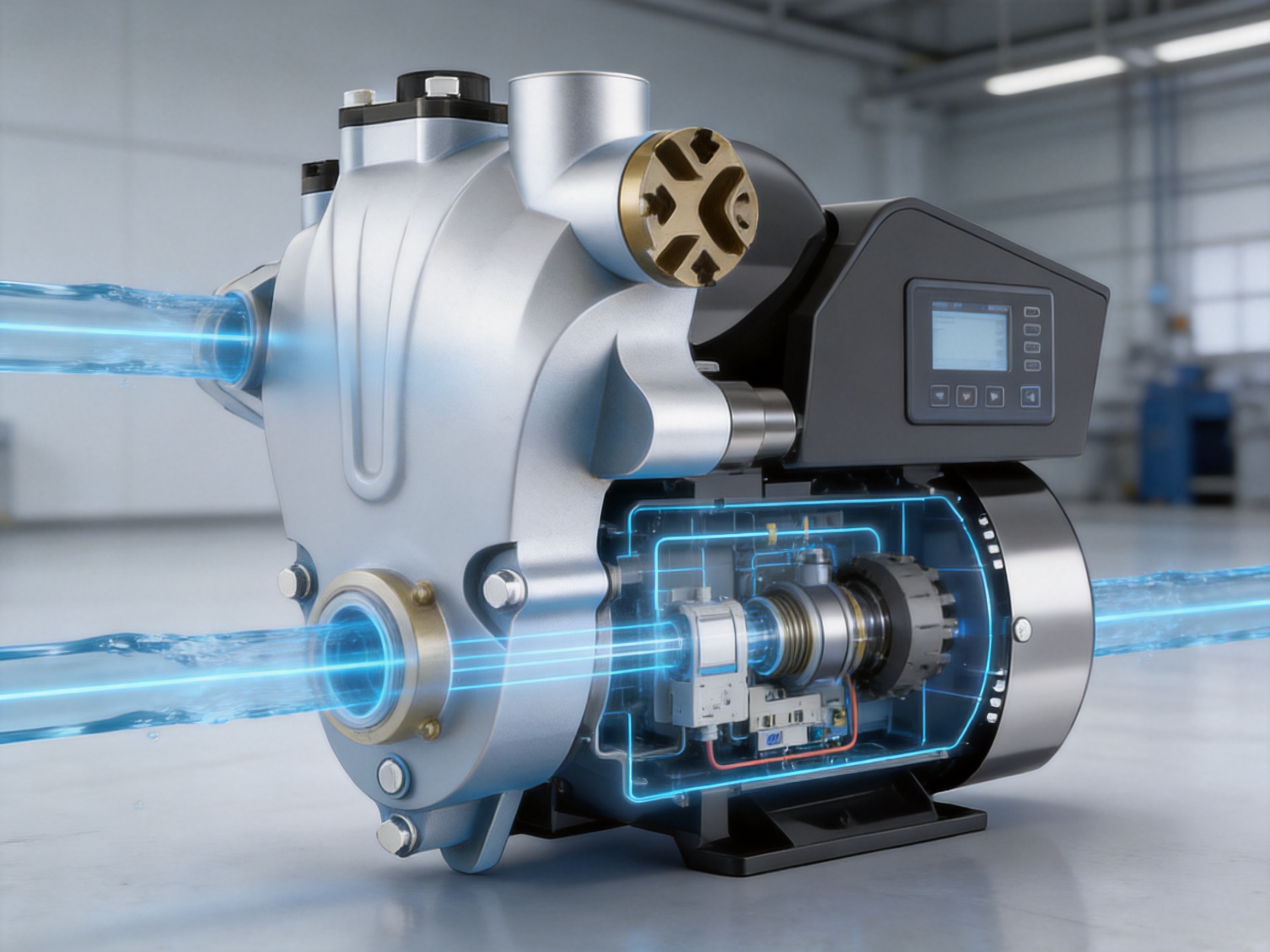
This series combines a self-priming peripheral pump design with an electronic pressure sensor, flow-control technology, automatic pressure adjustment, water-deficit protection, temperature protection, timer functionality, and intelligent operating logic. Instead of relying only on a conventional mechanical pressure switch, the pump uses a linear pressure sensor to regulate the initial pressure more precisely. A flow switch works together with the pressure sensor so that the pump can respond to both pressure changes and actual water demand.
The result is a compact automatic booster and self-priming pump suitable for domestic water supply, well-water pumping, garden irrigation, hotel and canteen applications, water-heater support, central air-conditioning systems, solar-energy equipment, and other raw-water pressurization duties. With power options from 128 W to 1,500 W, the series covers a broad range of water-pressure requirements while maintaining a practical, easy-to-install configuration.
The ITWZB Series is categorized as an intelligent self-priming peripheral pump. It is designed for systems in which water must be drawn from a shallow source, supplied from a storage tank, or boosted through a domestic or commercial piping network. Depending on the model, the pump can produce a maximum head from 22 m to 60 m and a maximum flow from 1.8 m³/h to 5.5 m³/h.
The series includes compact models for small household systems and higher-output versions for larger domestic, commercial, and light-duty installations. Models from ITWZB-128T through ITWZB-880T generally use 1-inch inlet and outlet connections. The ITWZB-1100T and ITWZB-1500T models use larger 1.5-inch connections to accommodate their greater flow capacity.
Two control configurations are available within the product family. The standard T models are designed for conventional pump installation. The S models, available in 1,100 W and 1,500 W versions, use a larger package size and are suitable for applications requiring a different installation arrangement or enhanced equipment configuration. All models are based on the same intelligent operating concept and are intended to provide automatic water-pressure support with reduced user intervention.
The pump is powered by a single-phase 220 V, 50/60 Hz motor, with customization available according to project requirements. Its electrical pump speed is listed as 2,850 revolutions per minute. The motor uses Class F insulation, IP44 protection, S1 continuous service, and a thermal protector. These specifications support stable operation in normal water-supply environments when the pump is installed, wired, and operated according to appropriate technical requirements.
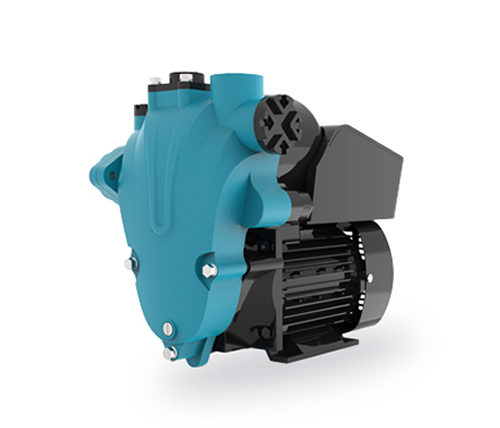
ITWZB Series Automatic Multi-protection Double Control System Intelligent Self Primning Pump
Traditional automatic water pumps often depend on a mechanical pressure switch. While mechanical switches are simple and widely used, their operating point may change because of spring fatigue, contact wear, pressure fluctuation, or installation conditions. They may also react only to a limited type of system change, making them less adaptable when several outlets open or close at different times.
The ITWZB Series uses a linear pressure sensor to regulate the initial pressure instead of depending exclusively on a conventional mechanical switch. This electronic approach allows the control system to identify pipe-pressure conditions more accurately. The integrated flow-control system adds another layer of information by detecting water movement. Pressure and flow are therefore considered together when the pump determines whether to start, continue operating, or stop.
This double-control arrangement is one of the principal advantages of the series. A pressure-only system may interpret a temporary pressure change as a demand for water. A flow-only system may not provide sufficient information about the pressure condition in the pipe. By combining both signals, the ITWZB system is designed to make more intelligent decisions during normal operation.
The control unit also includes a memory function. Once the pump has operated and learned the relevant system conditions, the integrated chip can retain operating information and support automatic readjustment of the starting pressure. This is particularly useful in domestic systems where pipe length, elevation, outlet size, and usage patterns may vary from one installation to another.
The pump is intended to support plug-and-play configuration. This does not eliminate the need for correct installation, priming, electrical protection, and pipework design, but it can simplify commissioning by reducing the number of external control components required. For distributors, installers, and end users, an integrated intelligent pump can reduce system complexity compared with a pump that requires a separate pressure tank, separate pressure switch, and multiple independent protection devices.
The pressure sensor continuously responds to the pressure condition in the connected piping system. When the water demand changes, the pump can identify the resulting pressure behavior and activate according to the programmed control logic. This automatic recognition helps the system respond to common household events such as opening a faucet, starting a shower, using a toilet, or operating a garden sprinkler.
Automatic pressure recognition also makes the pump suitable for systems in which water demand is not constant. In a fixed-speed installation without intelligent control, frequent demand changes can lead to unnecessary starts, delayed response, or excessive pressure fluctuations. The ITWZB Series is designed to provide a more coordinated response by using its sensor and flow-control functions together.
Different installations do not always have the same ideal starting pressure. A pump connected to a short domestic pipe network may require a different operating point from a pump connected to a well, storage tank, or elevated building system. The series can automatically readjust its starting pressure rather than requiring the user to make repeated mechanical adjustments.
This feature provides an advantage over basic pressure-switch systems, especially when the pump is installed in a new building or replacement project where the exact pressure behavior may not be known in advance. Automatic adjustment can also help compensate for ordinary differences in pipe resistance and installation layout.
The integrated chip includes a memory function and supports intelligent adaptable learning. In practical terms, the pump can use operating information from the connected system to improve its response to future pressure and flow conditions. This is a valuable feature for systems that experience changing demand throughout the day.
Adaptive learning does not mean that the pump can overcome an incorrectly sized pipe, a blocked suction line, or an unsuitable water source. The hydraulic installation must still be designed correctly. However, when the pump is properly selected and installed, the control function can make everyday operation more convenient and consistent.
Dry running is one of the most damaging conditions for a water pump. When the pump operates without sufficient water, the mechanical seal, impeller, and other internal components may experience excessive heat and wear. The ITWZB Series includes a water-deficit protection mechanism designed to help prevent continued operation when the water supply is insufficient.
When water returns, the pump can initiate automatically. This feature is important for well-water systems, rainwater storage systems, and other applications in which the available water level may change. Instead of requiring the user to manually reset the pump after every temporary water shortage, the automatic restart function is intended to restore operation when suitable water conditions return.
The pump includes temperature protection as part of its multi-protection design. The motor also incorporates a thermal protector. Together, these functions help reduce the risk associated with excessive operating temperature caused by overload, restricted ventilation, abnormal electrical conditions, or other operating problems.
Temperature protection is especially valuable in automatic systems because the pump may be installed in a utility room, equipment cabinet, basement, or other location where the user does not continuously monitor its operation. Protection devices cannot replace correct installation or maintenance, but they add an important safety layer to automatic pumping equipment.
The timer function supports programmed operating behavior for applications where water use follows a regular schedule. Examples may include garden irrigation, scheduled water transfer, or other systems in which operation is required only during selected periods.
Scheduled operation can help users organize water use and reduce unnecessary running time. In irrigation or water-transfer applications, a timer can also support more consistent daily routines. The exact control settings should be established according to the installation requirements and the characteristics of the connected water system.
The product information identifies electrophoresis treatment for rust prevention. This surface-treatment approach is intended to improve the resistance of relevant metal components against corrosion. Corrosion resistance is particularly important for pump equipment exposed to humid installation environments, water splashing, condensation, or long operating periods.
The pump also incorporates selected materials for different components. The pump body and pump support use cast iron with 304 stainless steel inserts. The motor housing is made of aluminum, the impeller is brass, and the mechanical seal uses silicon carbide. These material choices reflect an effort to balance structural strength, corrosion resistance, wear performance, and manufacturing practicality.
A basic automatic pump may use a mechanical pressure switch that starts the motor when pressure drops below a preset point and stops it when pressure rises. This arrangement can be effective in simple systems, but it may have limitations when pressure fluctuates or when the system experiences intermittent flow.
The ITWZB Series uses a pressure sensor and flow switch as coordinated control elements. The pressure sensor identifies the condition of the pipe, while the flow-control system recognizes whether water is actually moving through the system. This allows the controller to distinguish more effectively between a genuine water-demand event and an isolated pressure variation.
Compared with a conventional pump that requires several external accessories, the integrated system can offer a cleaner installation. The user may not need to purchase and coordinate a separate pressure switch, independent dry-run protector, separate controller, and additional restart logic. Fewer external components can simplify the equipment layout and reduce the number of possible connection points.
The double-control concept also offers a practical advantage for installers serving different markets. Domestic water systems, hotel rooms, canteens, gardens, and solar-water equipment do not all have identical operating characteristics. A pump that can learn and readjust according to the connected system is more adaptable than a fixed mechanical control that must be manually adjusted for each installation.
However, the pump should not be compared only by its control functions. Hydraulic performance, motor quality, materials, electrical protection, service life, installation requirements, and supplier support are equally important. The ITWZB Series combines these aspects in a single product platform, making it suitable for buyers who need intelligent automation without moving to a much more complex variable-speed system.
Model selection should be based on required flow, required head, suction conditions, pipe size, water quality, and the number of outlets that may operate simultaneously. Maximum flow and maximum head are reference values rather than operating points that occur at the same time. The actual performance should be confirmed using the pump performance chart and the hydraulic requirements of the specific installation.
| Model | Power | Power | Maximum Flow | Maximum Flow | Maximum Head | Maximum Suction | Pipe |
|---|---|---|---|---|---|---|---|
| ITWZB-128T | 128 W | 0.2 HP | 1.8 m³/h | 30 L/min | 22 m | 6 m | 1 × 1 inch |
| ITWZB-200T | 200 W | 0.3 HP | 1.8 m³/h | 30 L/min | 25 m | 6 m | 1 × 1 inch |
| ITWZB-280T | 280 W | 0.4 HP | 2.0 m³/h | 33 L/min | 30 m | 8.5 m | 1 × 1 inch |
| ITWZB-380T | 380 W | 0.5 HP | 2.0 m³/h | 33 L/min | 32 m | 8.5 m | 1 × 1 inch |
| ITWZB-480T | 480 W | 0.7 HP | 2.0 m³/h | 33 L/min | 35 m | 8.5 m | 1 × 1 inch |
| ITWZB-580T | 580 W | 0.8 HP | 2.2 m³/h | 37 L/min | 35 m | 8.5 m | 1 × 1 inch |
| ITWZB-680T | 680 W | 0.9 HP | 3.4 m³/h | 57 L/min | 40 m | 8.5 m | 1 × 1 inch |
| ITWZB-880T | 880 W | 1.2 HP | 3.6 m³/h | 60 L/min | 45 m | 8.5 m | 1 × 1 inch |
| ITWZB-1100T | 1,100 W | 1.5 HP | 5.5 m³/h | 92 L/min | 55 m | 8.5 m | 1.5 × 1.5 inch |
| ITWZB-1500T | 1,500 W | 2.0 HP | 5.5 m³/h | 92 L/min | 60 m | 8.5 m | 1.5 × 1.5 inch |
The 128 W and 200 W models are appropriate for modest water-pressure requirements where compact size and low power consumption are priorities. The 280 W through 580 W range offers progressively greater head and flow for larger homes, small gardens, and more demanding booster applications. The 680 W and 880 W models provide higher head and flow for systems with greater elevation or longer pipe runs.
The 1,100 W and 1,500 W models are the highest-capacity versions in the main series. With maximum flow of 5.5 m³/h and maximum head of 55 m or 60 m, respectively, they can support larger domestic systems, commercial water boosting, and equipment support applications when the system design is suitable.
The ITWZB-1100T(S) and ITWZB-1500T(S) models retain the same stated hydraulic values as the corresponding standard models but have larger overall dimensions and shipping volumes. Buyers should therefore consider equipment-room space, access for installation, transportation requirements, and maintenance clearance before selecting the S configuration.
The temperature of the pumped liquid should not exceed 100°C, and the ambient temperature should not exceed 40°C. The maximum suction is listed as 8.5 m for most of the series, while the 128 W and 200 W models are listed with a 6 m maximum suction value. These limits should be treated as design conditions rather than targets for every installation.
Self-priming performance depends on the condition of the suction pipe, the presence of air leaks, the use of suitable valves, the quality of initial priming, and the vertical distance between the water surface and the pump. The suction line should be properly sealed and sized. A foot valve or check valve may be required depending on the system arrangement and local installation practice.
The pump should be installed in a dry, ventilated location that allows sufficient access for inspection and service. Electrical connections must be completed by qualified personnel and protected in accordance with applicable local requirements. The IP44 rating provides protection appropriate to the specified operating environment, but it does not mean that the motor can be exposed to flooding, direct water jets, or prolonged outdoor weather without additional protection.
The pump body and pump support are made from cast iron with 304 stainless steel inserts. Cast iron provides a rigid and stable housing structure, while stainless steel inserts can improve resistance in areas that may be exposed to water or require additional corrosion protection. This combination is commonly used when a manufacturer seeks a balance between mechanical strength and material cost.
The aluminum motor housing helps reduce weight and supports heat dissipation around the motor assembly. Lower equipment weight can simplify handling during installation, especially for residential and small commercial projects where the pump may be positioned in a confined equipment area.
The brass impeller provides a durable hydraulic component for the peripheral pumping mechanism. Its material characteristics are suitable for many clean-water and general water-supply duties. As with any pump, the pumped liquid should be compatible with the materials and should not contain abrasive solids or chemicals beyond the intended operating range.
The mechanical seal is made from silicon carbide. The mechanical seal is a critical component because it prevents water from entering the motor area while allowing the rotating shaft to operate. Silicon carbide is recognized for its hardness and wear resistance, which can help support reliable sealing performance when the pump is correctly operated and the liquid conditions are appropriate.
The bearing arrangement uses 6201 bearings for the 128 W through 480 W models and 6202 bearings for the 580 W through 1,500 W models. The bearing selection corresponds to the motor and pump configuration and supports stable shaft rotation under normal operating conditions.
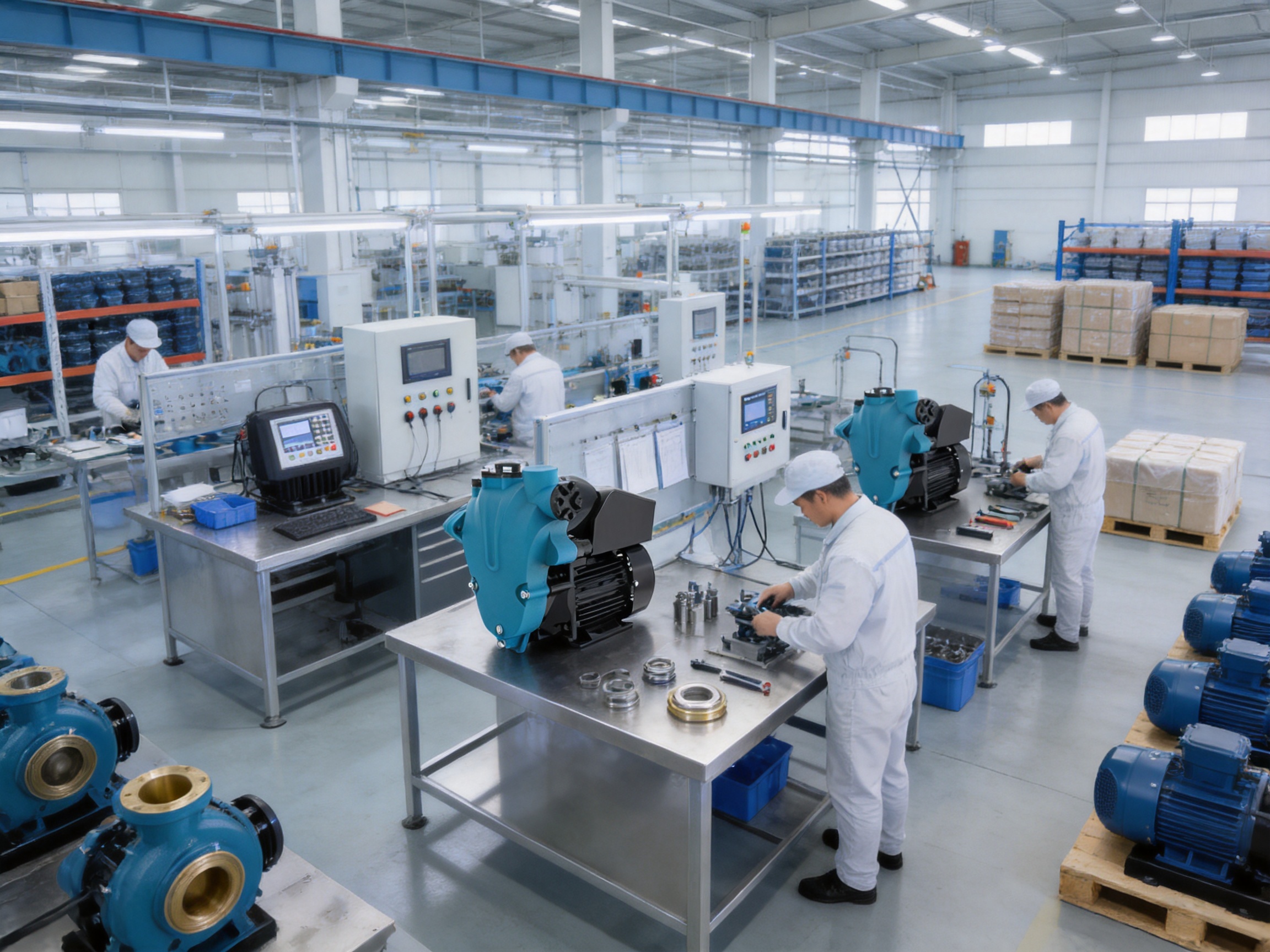
Taizhou Edwin Electric Co., Ltd., operating under the Edwin Pump name, was founded in 2008. The company is described as an integrated manufacturing enterprise involved in independent research and development, mass production, and global export. This integrated structure is important for an intelligent pump because successful production requires cooperation among hydraulic design, motor engineering, electronic control, mechanical assembly, quality inspection, and export logistics.
Independent research and development allows the manufacturer to coordinate the hydraulic and electronic aspects of the product rather than treating the controller as an unrelated accessory. The ITWZB Series reflects this approach through the combination of a self-priming peripheral pump, pressure sensor, flow switch, memory function, adaptive learning, and multi-protection logic in one product family.
Mass production capability provides advantages for buyers who need repeatable supply. Stable production planning can support model consistency, spare-parts preparation, order scheduling, and delivery coordination. It also allows the manufacturer to refine assembly procedures and process controls through repeated production experience.
The company has established related import and export organizations to support procurement planning, order tracking, cross-border delivery, and foreign-trade services. For international distributors and project buyers, these capabilities can be as important as the pump itself. A technically suitable product must also be available in the required quantity, packed properly, documented correctly, and shipped according to the project schedule.
The supplier serves customers in the medium-to-high-end global market and has experience with a wide product portfolio, including deep-well pumps, submersible pumps, domestic booster pumps, circulation pumps, solar water pumps, and intelligent booster pumps. This broader product knowledge can be valuable when a project includes more than one pump type or requires coordinated equipment selection.
The hydraulic performance of a peripheral pump depends on the relationship between the pump body, impeller, flow passages, shaft, seal, and motor speed. Consistent casting, machining, deburring, and assembly are necessary to maintain the intended hydraulic clearance and reduce unnecessary vibration or noise.
A controlled manufacturing process should ensure that cast components are inspected for dimensional accuracy and visible defects before machining. Machined sealing surfaces must be sufficiently accurate to support reliable gasket and mechanical-seal installation. The brass impeller should be checked for balance and proper fit on the shaft. These process steps help maintain consistent performance across different production batches.
The motor is assembled with Class F insulation, an IP44 protective structure, S1 continuous-service capability, and a thermal protector. These features require appropriate winding, insulation, terminal, housing, and electrical inspection procedures. Winding quality affects efficiency, temperature rise, starting performance, and service life.
Electrical testing should verify insulation integrity, winding continuity, grounding arrangements, operating current, and basic functional performance. The thermal protector must be positioned and connected correctly so that it can respond to excessive temperature. For an automatic pump, reliable electrical assembly is especially important because the unit may start and stop frequently in response to household water demand.
The double-control system is a central part of the product's value. Pressure-sensor installation, flow-switch integration, circuit-board assembly, programming, and final functional testing must be carried out consistently. The controller must recognize pressure and flow signals while coordinating motor operation and protective functions.
Production testing should include simulated start and stop conditions, water-deficit behavior, automatic restart response, temperature-protection response, and timer operation. The memory and adaptive-learning features should also be checked to confirm that the controller can retain and use relevant operating information.
Integrating the controller during factory assembly offers an advantage over systems assembled from unrelated third-party parts. The pump, sensor, flow switch, and protection logic can be tested as one unit. This can help reduce compatibility problems and make troubleshooting more straightforward for installers and after-sales teams.
Electrophoresis treatment for rust prevention requires appropriate surface preparation, coating control, curing, and inspection. The quality of the final surface depends on cleaning, pretreatment, coating uniformity, and the absence of contamination during the process.
A consistent surface-treatment process improves the appearance of the product while also supporting corrosion resistance during storage, transportation, and operation. Proper packaging remains necessary because surface treatment alone cannot prevent damage caused by impact, abrasion, standing water, or incorrect storage.
Final assembly should include correct installation of bearings, shaft components, mechanical seals, impellers, pump covers, electrical terminals, and control-system parts. Torque control and inspection of fastening points are important because loose or improperly tightened components can create leakage, vibration, or electrical problems.
End-of-line testing should verify that the completed unit starts correctly, runs smoothly, responds to control signals, and meets the applicable performance requirements for the selected model. A reliable factory inspection program can identify assembly defects before the pump reaches a distributor or project site.
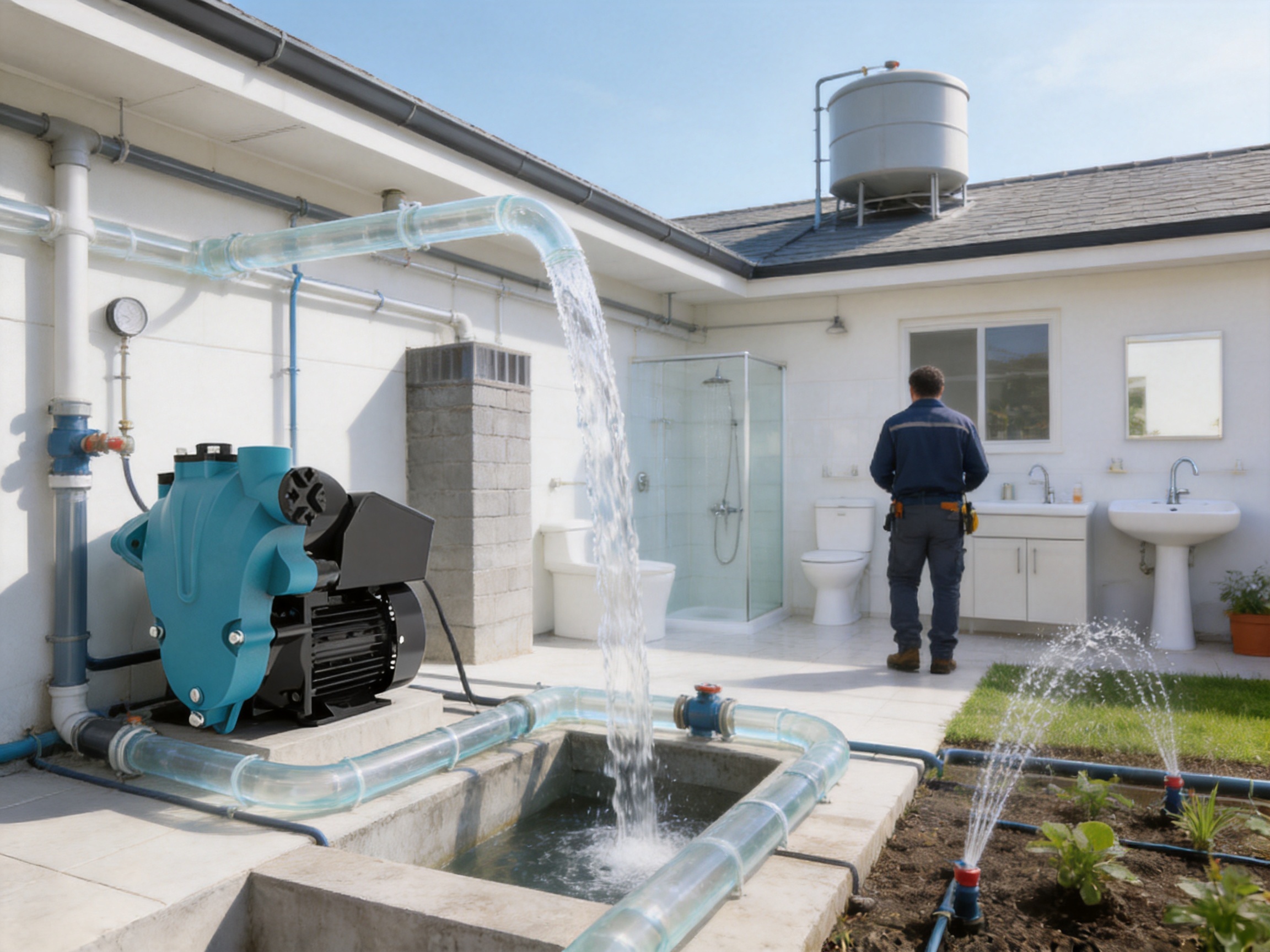
The series is suitable for homes that experience low municipal pressure, inconsistent water delivery, or insufficient pressure at upper floors. It can be used to boost water to bathrooms, kitchens, washing areas, and other household outlets. Automatic start and stop operation helps users obtain water when needed without manually operating the pump.
The compact lower-power models are suitable for small homes or individual supply points, while the higher-output models may be selected for larger houses with several bathrooms or simultaneous water demands. Correct model selection remains essential because maximum pressure should not exceed the limits of connected fixtures and appliances.
The self-priming design is suitable for shallow well-water applications within the stated suction limitations. It can transfer water from a well or underground source to a household storage tank or directly to a pressurized water system. A properly designed suction line, a sealed connection, and suitable filtration are important for stable operation.
Well-water quality should be reviewed before installation. Sand, abrasive particles, excessive mineral content, or corrosive chemicals may reduce the service life of the impeller, seal, controller, and other components. Where water contains solids, a suitable pre-filtration arrangement should be considered.
The automatic control system makes the pump suitable for garden irrigation, particularly where water must be drawn from a tank, rainwater reservoir, or shallow source. Timer functionality can support scheduled irrigation, while the pressure and flow controls can respond when irrigation zones open or close.
The irrigation network should be designed to match the selected pump. Long pipes, narrow tubing, filters, spray heads, and elevation changes all influence the required head and flow. The pump should not be selected only according to the maximum flow figure printed in a catalog.
Hotels, canteens, and similar facilities often experience changing water demand throughout the day. The double-control system can help the pump respond to intermittent use from faucets, wash stations, kitchens, and service areas. The broad model range makes it possible to select a compact unit for a small facility or a higher-capacity model for a larger water-supply arrangement.
Commercial operators may also benefit from the pump's automatic protection features. Water-deficit protection and temperature protection can reduce the risk of damage during abnormal conditions, although commercial installations should still include appropriate valves, filtration, electrical protection, isolation points, and maintenance procedures.
The pump can support solar-energy systems and water heaters by providing additional pressure or transferring water through associated equipment. In these applications, the liquid temperature limit, pipe materials, system pressure, and control sequence must be reviewed carefully.
When connected to a solar-water system, installers should confirm that the pump's voltage, frequency, temperature range, and control arrangement are compatible with the wider system. The pump should not be exposed to temperatures or operating pressures beyond its specified limits.
The series may also be used to support water circulation or pressurization associated with central air-conditioning equipment, provided that the hydraulic requirements and liquid temperature are suitable. The designer should verify whether the application requires a self-priming pressure pump, a dedicated circulation pump, or another pump type. The ITWZB Series is most appropriate when automatic pressure boosting and self-priming behavior are required.
Before installation, confirm the required flow rate, total dynamic head, suction lift, pipe diameter, water temperature, ambient temperature, power supply, and expected duty cycle. Select the model based on the operating point rather than maximum head or maximum flow alone.
Install the pump on a stable base that can support its weight and limit vibration. The location should be dry, clean, ventilated, and accessible for inspection. Avoid locations where rainwater, flooding, condensation, or direct spray can reach the motor or controller.
The suction pipe should be as short and direct as practical. Avoid unnecessary bends, sudden reductions, and high points where air can accumulate. All suction connections must be airtight. Even a small air leak can reduce self-priming performance and cause irregular operation.
Prime the pump according to the installation instructions before initial operation. A self-priming pump generally requires water in the pump chamber before it can establish suction. Operating the pump without adequate water can activate protection devices and may still cause unnecessary wear if the condition continues.
Install appropriate valves and filters where required. A foot valve or check valve can help maintain water in the suction line, while a strainer can help prevent debris from entering the pump. Filters must be maintained because a blocked filter can significantly reduce flow and increase suction losses.
Connect the discharge pipe securely and ensure that its diameter is appropriate for the required flow. Excessively narrow pipes can create high friction losses, reduce delivered flow, and increase the operating burden on the pump. Long discharge runs should be evaluated for friction, elevation, and pressure requirements.
Electrical installation should be completed by qualified personnel. Confirm that the voltage and frequency match the pump nameplate and that grounding, overcurrent protection, isolation, and cable sizing comply with local requirements. The control system should not be modified without authorization from the manufacturer or a qualified technical specialist.
After installation, open the necessary valves, confirm that the pump is primed, and observe the initial start-up. Check for leakage, abnormal vibration, unusual noise, unstable pressure, or repeated starting and stopping. If the pump cycles excessively, the system should be inspected for leaks, insufficient flow, incorrect pipe sizing, or an unsuitable pressure setting.
Regular maintenance helps preserve the performance of an intelligent automatic pump. Inspect the suction line, filters, valves, electrical cable, pump housing, and discharge connections at suitable intervals. Remove debris from strainers and check that air is not entering the suction side.
If the pump has been unused for an extended period, inspect the system before restarting. Confirm that the shaft can rotate normally, that the pump chamber contains water when required, and that no valves have been left closed in a way that could cause abnormal operation.
Monitor changes in sound, vibration, pressure, and water delivery. A gradual decrease in performance may indicate a clogged filter, worn impeller, air leakage, damaged mechanical seal, restricted pipe, or insufficient water level. Prompt investigation can prevent a minor problem from developing into a major repair.
The intelligent control system should be kept dry and protected from unauthorized opening. If the controller displays abnormal behavior or the pump repeatedly enters protection mode, the system should be isolated and examined by qualified service personnel. Repeated resets without correcting the underlying condition are not recommended.
For distributors, the ITWZB Series provides a coherent product range rather than a single fixed-capacity pump. Ten main model choices and additional S configurations allow suppliers to serve different household, commercial, and light-industrial requirements from one product family.
The range also supports straightforward product positioning. Lower-power models can be offered for compact residential booster applications, mid-range models for larger homes and gardens, and higher-power models for commercial water boosting or larger domestic systems. Shared control concepts and similar construction can simplify product training and sales support.
For project buyers, integrated intelligent control can reduce the number of separate components that must be sourced, installed, and maintained. A single pump package containing pressure recognition, flow control, water-deficit protection, automatic restart, temperature protection, and timer functionality can simplify procurement and system documentation.
The manufacturer's experience in independent development, mass production, export, and related pump categories can support long-term cooperation. Buyers can work with a supplier capable of handling product selection, production planning, order tracking, packaging, international logistics, and technical communication.
Customization is also identified as available for the single-phase electrical supply. Project buyers should communicate required voltage, frequency, connection standards, packaging, labeling, documentation, and application conditions at the quotation stage so that the proposed configuration can be confirmed before production.
The ITWZB Series competes most effectively where customers need more than a basic low-cost pressure pump. Its competitive position comes from the combination of intelligent control, self-priming operation, multiple protections, broad power coverage, practical materials, and integrated manufacturing support.
Compared with a basic mechanical-switch pump, it offers more sophisticated pressure and flow recognition. Compared with a pump that uses separate external protection devices, it offers a more integrated package. Compared with a complex variable-speed system, it can provide intelligent automatic operation in a simpler fixed-speed format.
The product is also differentiated by its adaptive-learning and automatic starting-pressure functions. These features can reduce the need for repeated manual adjustment and help the pump accommodate different installation conditions. The memory function provides continuity between operating cycles and supports consistent control behavior.
Reliability depends on correct application as well as product design. No pump can compensate for an undersized suction pipe, contaminated water, incorrect wiring, inadequate ventilation, or operation outside the stated limits. The best results are achieved when the pump's intelligent functions are supported by proper hydraulic design and regular maintenance.
It is an automatic intelligent self-priming peripheral pump with a double-control system. It uses a linear pressure sensor and flow-control technology to manage automatic operation.
The series ranges from 128 W, or 0.2 HP, to 1,500 W, or 2.0 HP. This range covers small domestic booster duties through higher-capacity domestic and commercial applications.
Depending on the model, maximum head ranges from 22 m to 60 m, while maximum flow ranges from 1.8 m³/h to 5.5 m³/h. Maximum head and maximum flow are not normally achieved at the same operating point, so the performance chart should be consulted for final selection.
The linear pressure sensor monitors pipe pressure and helps regulate the starting condition. The flow switch identifies water movement. The controller uses both pressure and flow information to determine pump operation.
The product includes a water-deficit protection mechanism. When water is insufficient, the control system is designed to help prevent continued operation. The pump can also start automatically when water returns.
Yes. The product information states that the pump initiates automatically when the water supply returns after a water-deficit condition, subject to proper installation and suitable operating conditions.
The series is intended for water-supply and water-pressurization applications. The pumped liquid temperature should not exceed 100°C. The liquid should be compatible with the pump materials and should not contain excessive abrasive solids or aggressive chemicals unless specifically approved.
The maximum suction is listed as 6 m for the ITWZB-128T and ITWZB-200T models and 8.5 m for most other models. Actual suction performance depends on water temperature, altitude, pipe design, airtightness, valves, and the condition of the water source.
The standard supply is single-phase 220 V at 50/60 Hz. Electrical customization may be available, but the required configuration should be confirmed with the manufacturer before ordering.
The motor uses Class F insulation, IP44 protection, S1 continuous service, and a thermal protector. The intelligent control system also provides temperature protection as part of its multi-protection functions.
The pump body and support use cast iron with 304 stainless steel inserts. The motor housing is aluminum, the impeller is brass, and the mechanical seal uses silicon carbide. Bearing sizes vary according to motor power.
Yes. It is identified as suitable for garden irrigation. The timer function and automatic pressure and flow control can be useful for scheduled or demand-based irrigation, provided the pump is correctly sized for the irrigation network.
Yes. The series is suitable for well-water pumping within its stated suction limitations. The suction pipe must be airtight and properly installed, and the water should be screened or filtered when necessary.
Check required flow, total head, suction lift, pipe diameter, water temperature, ambient temperature, power supply, water quality, simultaneous outlet demand, and available installation space. Use the actual system operating point rather than relying only on maximum catalog values.
It combines a linear pressure sensor, flow switch, automatic starting-pressure adjustment, memory, adaptive learning, water-deficit protection, automatic restart, temperature protection, and timer functionality in one integrated system.
The product is manufactured by Taizhou Edwin Electric Co., Ltd., also known as Edwin Pump. The company has experience in research and development, mass production, global export, and multiple water-pump product categories.
The ITWZB Series Automatic Multi-Protection Double Control System Intelligent Self-Priming Pump is designed for users who need dependable automatic water pressure without the complexity of a large variable-speed installation. Its central advantage is the coordinated use of pressure sensing and flow control. This double-control approach is supported by automatic pressure adjustment, adaptive learning, memory, water-deficit protection, automatic restart, temperature protection, timer functionality, and rust-prevention treatment.
The range covers power levels from 128 W to 1,500 W, maximum heads from 22 m to 60 m, and maximum flows from 1.8 m³/h to 5.5 m³/h. With cast-iron and stainless-steel pump components, an aluminum motor housing, brass impellers, silicon-carbide mechanical seals, Class F insulation, IP44 protection, and S1 continuous service, the series is built for a wide range of water-supply and pressurization applications.
Its suitability for domestic water supply, shallow wells, gardens, hotels, canteens, solar equipment, water heaters, and central air-conditioning support makes it a versatile choice for distributors and project buyers. The manufacturer's integrated capabilities in research and development, production, export, and order support further strengthen the product's position in international markets.
When properly selected, installed, and maintained, the ITWZB Series can provide a practical balance of intelligent operation, automatic protection, hydraulic flexibility, and manufacturing support. It is a strong option for water systems that require responsive pressure boosting, self-priming capability, and greater operational convenience than a conventional mechanical-switch pump.
Taizhou Edwin Electric Co., Ltd. ITWZB Series Product Technical Data and Performance Information.
Taizhou Edwin Electric Co., Ltd. Product Construction and Component Material Information.
General principles of centrifugal and peripheral pump selection, installation, and maintenance.
General guidance for electric motor insulation classes, enclosure protection, thermal protection, and continuous-duty operation.
General engineering practice for domestic water boosting, shallow-well suction systems, garden irrigation, and automatic pump controls.
edwina@edwin-pump.com
+86-13586290903 (WhatsApp)
Xuri Gongliang Cutting Tool Entrepreneurship Park, Wenqiao Town, Wenling City, Taizhou City, Zhejiang Province, China

High Performance Smart Pump Factory


 English