edwina@edwin-pump.com

View All Products
en
Modern water systems require more than a pump that simply moves liquid from one point to another. Industrial facilities, commercial buildings, water-treatment installations, agricultural operations, and residential supply systems increasingly need equipment that can deliver stable pressure, resist corrosion, operate efficiently, and adapt to changing demand. The EMIH-Z(T) Series Two-pole Induction Motor Horizontal Stainless Steel Water Surface Centrifugal Pump with Intelligent Controller is designed to meet these requirements through a compact horizontal multistage configuration, stainless steel hydraulic components, and integrated intelligent control.
This pump combines the pressure-building capability of a multistage centrifugal design with the practical installation advantages of a horizontal surface pump. It is available in multiple flow and head configurations, covering rated flows from 1 to 5 m³/h and rated heads from 8 to 45.5 m. With power options from 0.25 to 1.1 kW in the listed models, the series is suitable for many light industrial, commercial, and domestic boosting duties.
Its design is particularly valuable where water quality, equipment life, pressure stability, and ease of service are important. The stainless steel casing and impeller provide improved resistance to corrosion compared with ordinary carbon-steel or lower-grade pump materials. The two-pole induction motor provides dependable rotational performance, while the intelligent controller can support more convenient pump operation and system protection. Together, these features create a practical alternative to basic single-stage pumps and less adaptable conventional booster units.
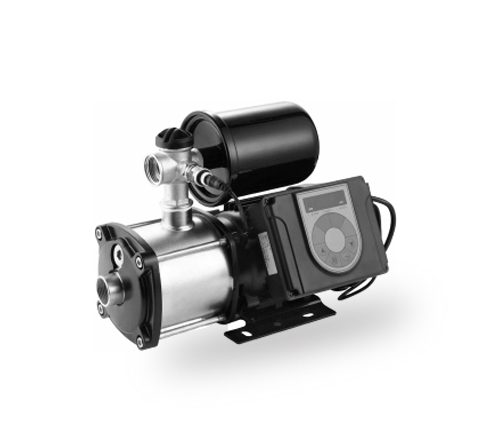
EMIH-Z(T) Series Two-pole Induction Motor Horizontal Stainless Steel Water Surface Centrifugal Pump with Intelligent Controller
The EMIH-Z(T) Series is a horizontal stainless steel surface centrifugal pump built around a two-pole induction motor and a multistage hydraulic assembly. The term “horizontal” refers to the arrangement of the motor and pump shaft, which makes the unit convenient to install on a level foundation or equipment platform. The term “multistage” indicates that several impeller and diffuser stages work in sequence to increase pressure. This allows the pump to produce a relatively high head while maintaining a compact overall structure.
Unlike a deep-well or submersible pump, this product is installed outside the water source. It is therefore suitable for pressure boosting from storage tanks, municipal supply lines, treatment equipment, process systems, and other surface-water applications. The specified maximum suction capability is 5 m, so installation planning must take suction lift, pipe length, inlet losses, water temperature, and net positive suction head into account.
The product is offered in models identified by flow and stage configuration. For example, EMIH1-2Z(T) is rated for approximately 1 m³/h with two stages and a rated head of 18 m, while EMIH5-6Z(T) is rated for approximately 5 m³/h with six stages and a rated head of 36 m. This range allows users to select a model according to the required combination of flow, pressure, and motor power rather than forcing one pump size to serve every application.
The main product characteristics include a stainless steel pump casing, stainless steel impeller, horizontal installation, multistage pressure generation, a two-pole induction motor, an intelligent controller, and a compact surface-pump format. Depending on the electrical configuration, the motor may be supplied for single-phase or three-phase operation.
Single-phase versions are specified for 1 x 220–240 V at 50 Hz or 1 x 110–120 V at 50 Hz. Three-phase versions are specified for 3 x 380–415 V at 50 Hz. Motors with other voltages may be available on request, which is useful for export projects and facilities operating under different regional electrical standards.
For single-phase versions, a thermal protector is included to help protect the motor against excessive temperature caused by overload, abnormal operating conditions, or inadequate cooling. The stated insulation class is F. These electrical features support dependable operation, but the final selection should always be checked against local electrical regulations, installation conditions, and the actual motor nameplate.
A centrifugal pump converts mechanical energy from the motor into hydraulic energy. The motor rotates the shaft and impeller, causing water to enter the impeller eye and move outward through the impeller passages. The diffuser or guide passage then converts part of the water velocity into pressure before directing the water to the next stage.
In a multistage pump, the discharge from one stage becomes the inlet to the following stage. Each stage contributes additional pressure. As a result, the pump can achieve a substantially higher head than a single-stage pump of similar diameter. This makes the design well suited to building boosting, process water circulation, filtration equipment, heating and cooling systems, and other applications where pressure is more important than very high flow.
The horizontal arrangement provides several practical benefits. It can simplify connection to existing horizontal pipework, reduce the height of the equipment installation, and make the motor and pump assembly accessible for inspection. In many plant rooms and equipment rooms, a horizontal pump can be installed below or beside a storage tank, pressure vessel, treatment skid, or control cabinet.
The multistage architecture also gives the user a broader selection of operating points. Smaller-flow models can be configured with additional stages when a higher head is required, while larger-flow models can provide greater water delivery with fewer or more stages depending on system requirements. This modular approach is one of the principal advantages over basic single-stage surface pumps.
Pump selection should be based on the required duty point rather than on motor power alone. The duty point is generally expressed as flow rate and total dynamic head. Total dynamic head includes the static elevation difference, required outlet pressure, pipe friction, valve losses, filter losses, and other system resistance.
For example, a system requiring approximately 2 m³/h at 24 m of head may be matched with the EMIH2-3Z(T), which is listed with a 0.37 kW motor, a rated head of 24 m, and a maximum suction of 5 m. A system requiring approximately 4 m³/h at 35 m of head may be considered for the EMIH4-5Z(T), listed with a 0.75 kW motor and a rated head of 35 m. These examples are only preliminary selections; the final choice should be verified against the complete pump curve and actual system conditions.
Correct matching prevents two common problems. An undersized pump may fail to achieve the required pressure, while an oversized pump may consume unnecessary energy, create excessive flow, and operate away from its best efficiency region. The available range helps engineers choose a closer match and avoid relying on a single oversized model for multiple applications.
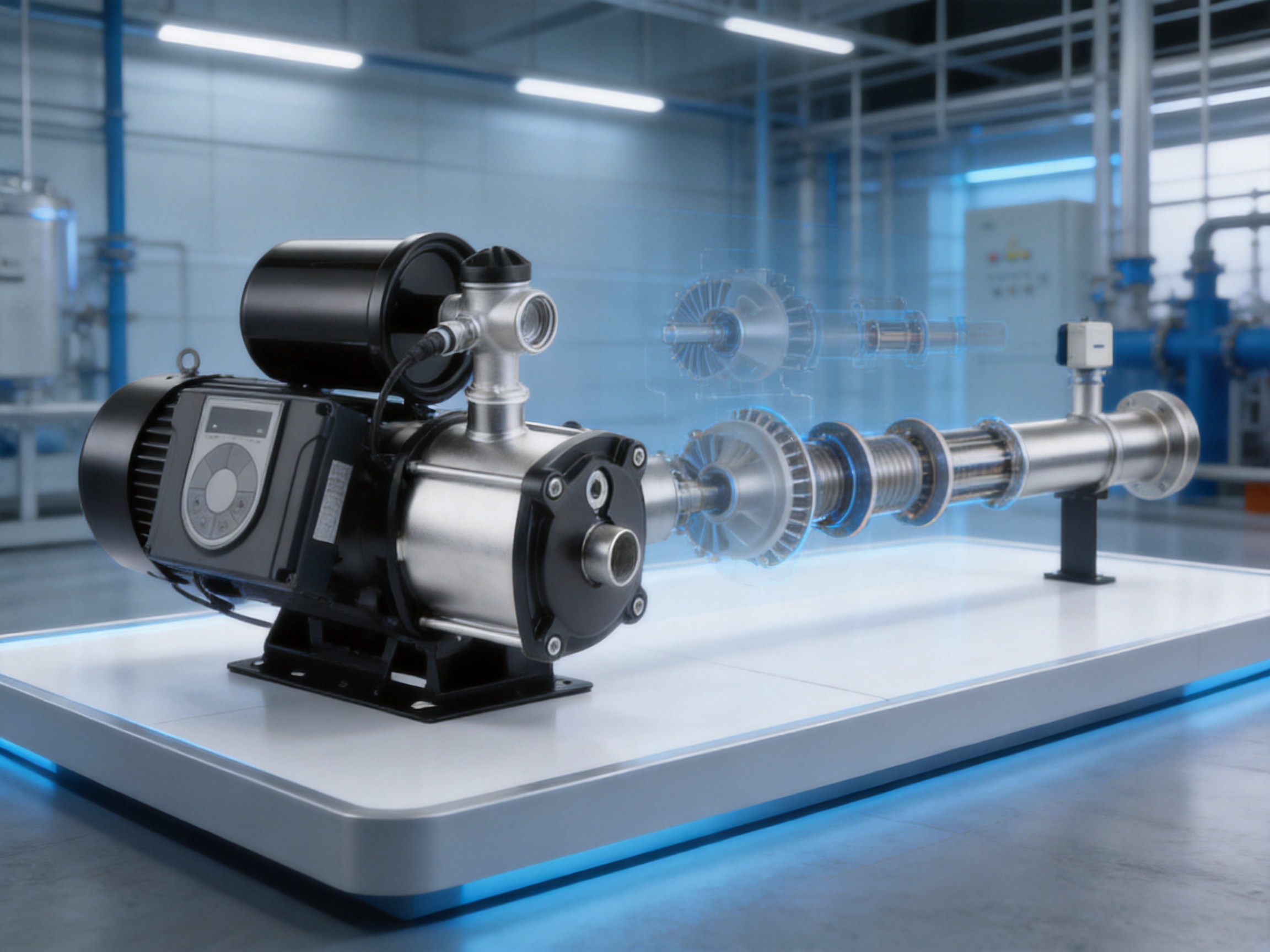
Material selection is one of the most important factors affecting pump service life. Water quality varies significantly between applications. Clean municipal water may be relatively mild, while process water, lightly chlorinated water, softened water, fertilizer solutions, or treated industrial water may create a more demanding environment. Stainless steel hydraulic components offer a stronger defense against corrosion than conventional unprotected iron or ordinary steel components.
The pump casing and impeller are specified as stainless steel. These parts have direct contact with the pumped liquid and are therefore particularly important in determining hydraulic durability. Stainless steel can help preserve surface integrity, reduce the risk of rust contamination, and maintain a more stable internal flow passage during extended operation.
The materials table also identifies carbon and ceramic for the mechanical seal, HT200 for the support, aluminum for the motor case, cast iron for the motor cover, and PP for the fan. This combination reflects a practical engineering approach: corrosion-resistant materials are used in the principal wet-end components, while different materials are selected for structural, electrical, thermal, and mechanical functions.
Compared with a standard cast-iron surface pump, a stainless steel hydraulic assembly can provide several advantages. It is less vulnerable to visible rust on wetted surfaces, better suited to applications where water appearance matters, and more appropriate for lightly corrosive or hygienically sensitive water service. It can also reduce the likelihood that corrosion products will enter downstream equipment.
Compared with a basic plastic pump, the stainless steel construction offers a more robust mechanical structure and higher resistance to mechanical stress and elevated operating demands. Plastic components may be effective in selected low-pressure applications, but stainless steel is often preferred where durability, dimensional stability, and long-term industrial service are priorities.
Material compatibility must still be evaluated carefully. Stainless steel does not mean that the pump is suitable for every chemical. Concentration, temperature, pH, chloride content, abrasives, viscosity, and exposure time all affect material performance. The product is intended primarily for water and compatible liquids. If the liquid is denser or more viscous than water, the source information states that a higher-power motor may be necessary.
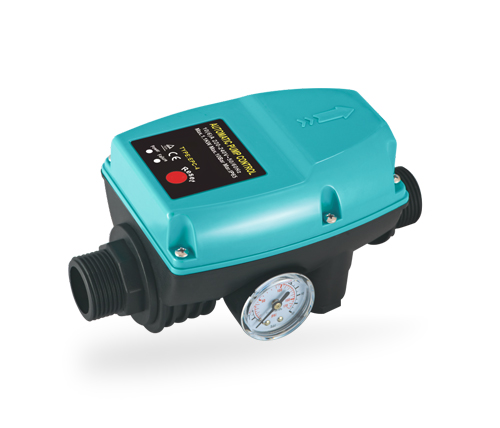
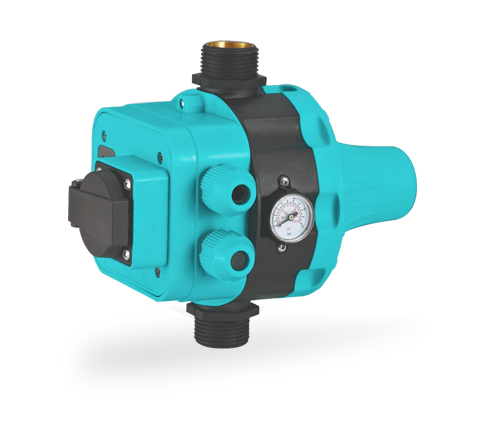
The EMIH-Z(T) Series is equipped with an intelligent controller. This feature distinguishes the product from a conventional pump that relies only on a manual switch or a basic motor starter. In a water-boosting system, intelligent control can help coordinate pump operation with demand, provide more convenient starting and stopping, and reduce the need for continuous manual supervision.
The materials list identifies an intelligent switch, flow switch, and intelligent controller as part of the assembly. These elements are especially relevant to domestic boosting, process-water systems, and equipment packages where the pump must respond to water use or flow conditions. The controller can make the pump easier to integrate into a practical pressure-boosting system, although the exact control logic and protection functions should be confirmed from the applicable technical manual and supplied configuration.
Intelligent control can offer several operational benefits:
First, it can improve user convenience by reducing the need to operate the pump manually each time water is required. Second, it can help the pump respond more appropriately to changing demand. Third, it can support safer operation by coordinating pump activity with flow or system conditions. Fourth, it can reduce unnecessary running time when the system is not calling for water.
These benefits are especially useful in applications where demand varies throughout the day. A commercial building may experience low overnight demand and high morning demand. An industrial cleaning line may operate intermittently. A domestic water system may require short bursts of pressure at different outlets. Intelligent operation can make the pump more responsive than a simple continuously running booster arrangement.
For best results, the controller should be installed and commissioned as part of the complete water system. The installer should verify the direction of rotation, suction and discharge connections, electrical voltage, grounding, overload protection, pipe support, and any pressure or flow sensors used by the system.
The controller does not eliminate the need for correct hydraulic design. It cannot compensate for an excessively long suction pipe, an undersized inlet, insufficient water supply, blocked filters, air leaks, or a pump selected outside its recommended operating range. Intelligent control is most valuable when combined with sound system engineering.
The two-pole induction motor is designed for high rotational speed and direct coupling to the pump assembly. This arrangement supports a compact pump package and helps the multistage hydraulic section generate the pressure required for boosting applications.
Induction motors are widely used in industrial and commercial pumping because of their straightforward construction, dependable operation, and broad availability of electrical configurations. A two-pole motor can provide the speed required for a compact centrifugal pump without relying on a separate mechanical speed-increasing transmission.
The motor case is listed as aluminum, which can help reduce weight and assist heat dissipation. The motor cover is listed as cast iron, providing a rigid supporting structure. Ball bearings support shaft rotation and contribute to smooth operation when properly lubricated and operated within design limits. As with any motor-driven pump, correct alignment, adequate ventilation, stable power supply, and protection against overload are essential.
The series supports single-phase and three-phase electrical configurations. Single-phase models are often convenient for homes, small commercial premises, workshops, and locations where three-phase power is unavailable. Three-phase models are generally preferred for industrial installations and larger continuous-duty systems where balanced motor operation and facility power infrastructure are available.
The stated voltage options include 220–240 V single-phase, 110–120 V single-phase, and 380–415 V three-phase at 50 Hz. Since electrical standards vary by country and facility, the purchaser should specify the required voltage, frequency, phase, motor protection, cable arrangement, and enclosure requirements before ordering.
The thermal protector for the single-phase motor is a useful safeguard against overheating. However, users should not treat thermal protection as a substitute for system protection. A suitable circuit breaker, isolator, grounding arrangement, and correctly sized wiring should be installed in accordance with local regulations.
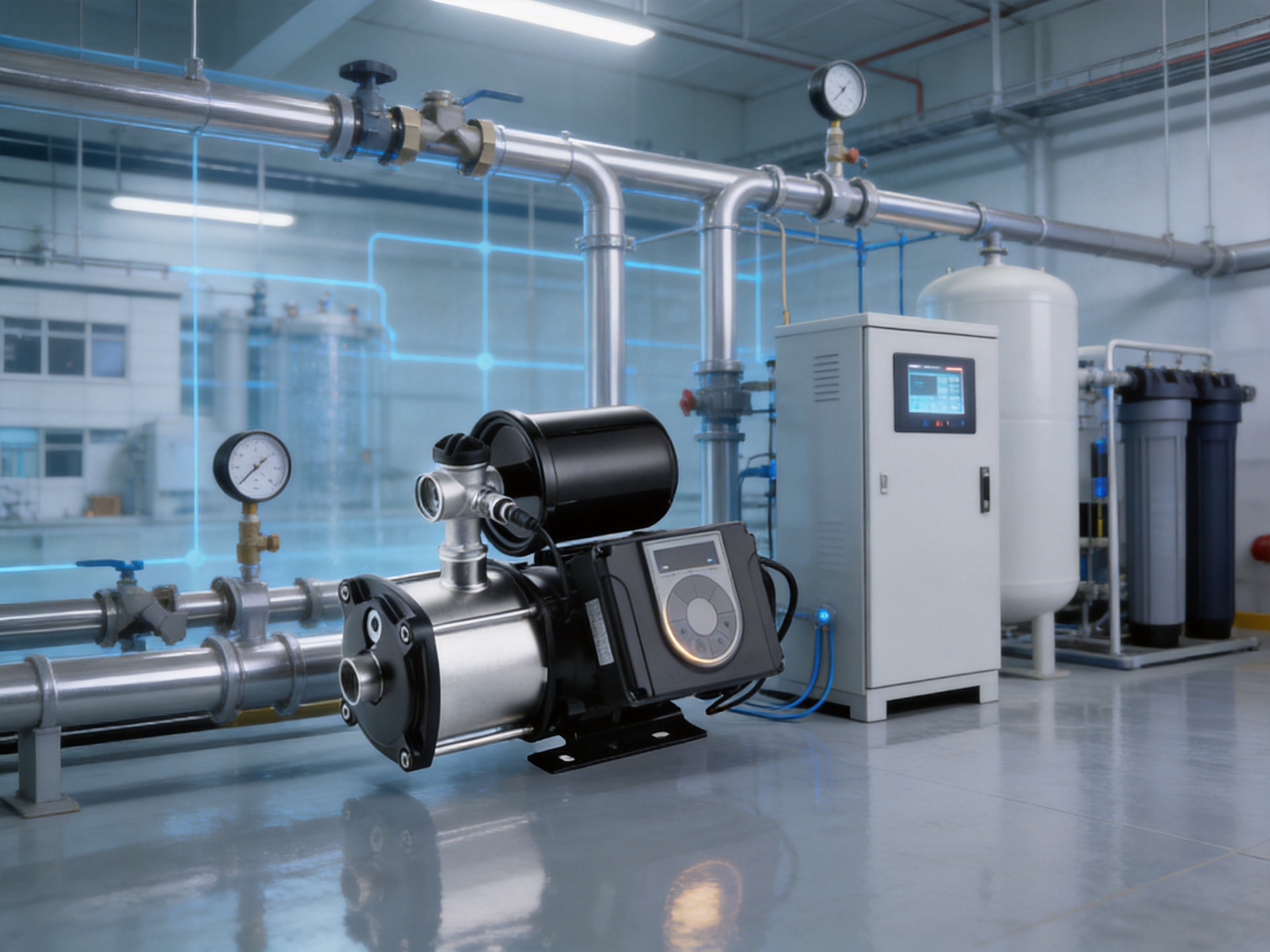
The pump is designed for water treatment processes, industrial cleaning, process-water boosting, heating and cooling systems, air-conditioning systems, air-freshening equipment, soft-water heater devices, fertilization and metering systems, drinking-water boosting, and lightly chlorinated water supply.
Water-treatment systems frequently require stable flow and pressure through filters, membrane equipment, dosing equipment, softeners, and other process components. The stainless steel wet end is advantageous where the water has been chemically treated or where maintaining clean internal surfaces is important.
The pump can serve as a transfer or booster unit within a treatment line, provided the liquid characteristics are compatible and the selected model can meet the required flow and head. Proper filtration is important when the source water contains sand, suspended solids, or abrasive particles.
Industrial cleaning equipment often requires a reliable supply of pressurized water. The horizontal multistage structure can provide the pressure needed for cleaning circuits, spray systems, equipment rinsing, and process preparation. Stainless steel components may also be beneficial in environments where water splashing and humidity would accelerate corrosion on ordinary materials.
Industrial heating and cooling loops need consistent circulation through heat exchangers, coils, jacketed vessels, and process equipment. The pump can support these systems when the liquid temperature and chemical composition remain within the permitted operating range. The ambient temperature specification is stated as up to +50 degrees Celsius, but the allowable pumped-liquid temperature should be verified separately for the exact configuration.
Commercial and industrial air-conditioning systems often need circulation or pressure boosting through secondary loops. Soft-water heater devices and related equipment may also benefit from a corrosion-resistant stainless steel hydraulic path. The pump’s compact surface arrangement helps integrate it into plant rooms, service areas, and packaged HVAC systems.
Fertilization and metering systems may handle water containing dissolved additives. The exact chemical concentration and temperature must be reviewed before selecting the pump. Where the liquid is more viscous or denser than water, the motor power requirement may increase. Compatibility of the mechanical seal, elastomers, and all wetted materials should be confirmed for the specific fertilizer or additive.
In domestic and commercial water systems, pressure may be insufficient at upper floors, distant outlets, showers, or equipment connections. A horizontal multistage booster can increase pressure while occupying less space than some alternative pressure systems. The intelligent controller can make operation more convenient by allowing the pump to respond to actual water demand.
The following table summarizes the listed performance configurations. Rated head and rated flow are reference values for model selection. Actual performance depends on system resistance, liquid properties, suction conditions, voltage, frequency, installation quality, and the pump curve applicable to the final product.
| Model | Power (kW) | Rated Head (m) | Rated Flow (m³/h) | Maximum Suction (m) | Gross Weight (kg) |
|---|---|---|---|---|---|
| EMIH1-2Z(T) | 0.25 | 18 | 1 | 5 | 7.5 |
| EMIH1-3Z(T) | 0.25 | 25 | 1 | 5 | 7.8 |
| EMIH1-4Z(T) | 0.37 | 32 | 1 | 5 | 8.0 |
| EMIH1-5Z(T) | 0.37 | 38 | 1 | 5 | 8.3 |
| EMIH2-2Z(T) | 0.25 | 16 | 2 | 5 | 7.4 |
| EMIH2-3Z(T) | 0.37 | 24 | 2 | 5 | 7.5 |
| EMIH2-4Z(T) | 0.55 | 30 | 2 | 5 | 10.0 |
| EMIH2-5Z(T) | 0.55 | 38 | 2 | 5 | 10.5 |
| EMIH3-2Z(T) | 0.25 | 11 | 3 | 5 | 7.4 |
| EMIH3-3Z(T) | 0.37 | 20 | 3 | 5 | 7.5 |
| EMIH3-4Z(T) | 0.55 | 24 | 3 | 5 | 10.0 |
| EMIH3-5Z(T) | 0.55 | 30 | 3 | 5 | 10.5 |
| EMIH4-2Z(T) | 0.37 | 13 | 4 | 5 | 8.0 |
| EMIH4-3Z(T) | 0.55 | 19.5 | 4 | 5 | 10.0 |
| EMIH4-4Z(T) | 0.75 | 28 | 4 | 5 | 11.5 |
| EMIH4-5Z(T) | 0.75 | 35 | 4 | 5 | 12.5 |
| EMIH4-6Z(T) | 1.10 | 45.5 | 4 | 5 | 13.0 |
| EMIH5-2Z(T) | 0.37 | 8 | 5 | 5 | 8.0 |
| EMIH5-3Z(T) | 0.55 | 14.5 | 5 | 5 | 10.0 |
| EMIH5-4Z(T) | 0.75 | 20 | 5 | 5 | 11.5 |
| EMIH5-5Z(T) | 0.75 | 26 | 5 | 5 | 12.5 |
| EMIH5-6Z(T) | 1.10 | 36 | 5 | 5 | 13.0 |
A major advantage of the EMIH-Z(T) design is its ability to generate useful pressure through multiple stages without requiring a very large pump body. A conventional single-stage surface pump may provide adequate flow but insufficient head for multistory buildings, long pipe runs, filters, or process equipment. The multistage arrangement addresses this limitation while retaining a relatively compact horizontal format.
Many entry-level pumps use cast iron or basic coated materials for wetted components. These materials may be acceptable for ordinary clean-water duties but can be less suitable for lightly chlorinated water, soft water, or industrial process water. Stainless steel casing and impeller materials provide a stronger material solution for applications where corrosion resistance and water cleanliness are important.
A basic pump often requires a separate control panel, manual switch, or external pressure arrangement. The integrated intelligent controller, intelligent switch, and flow switch reduce the complexity of creating a practical automatic boosting system. This can simplify installation for users who need demand-responsive operation rather than a pump that runs continuously.
The availability of single-phase and three-phase motor configurations enables the same general product family to serve different facilities. This flexibility is useful for international distributors, engineering contractors, replacement projects, and original equipment manufacturers that must adapt pump packages to local power supplies.
The range covers rated flows from 1 to 5 m³/h and heads from 8 to 45.5 m in the listed configurations. This gives purchasers more options for matching pump output to system demand. A closer match can help avoid excessive energy consumption and unstable operation caused by using an oversized unit.
The pump is designed with accessible components and a practical structure. The stated maintenance advantage is important for industrial users because reduced service time can lower downtime and maintenance cost. Components such as the mechanical seal, bearings, motor cover, fan, and controller can be inspected according to the maintenance instructions for the specific model.
Taizhou Edwin Electric Co., Ltd., operating under the Edwin Pump product identity, was founded in 2008 and has developed an integrated manufacturing and export operation. Its capabilities include independent research and development, mass production, product assembly, and international distribution. The company’s broader product portfolio includes deep-well pumps, submersible pumps, domestic booster pumps, circulation pumps, solar water pumps, intelligent booster pumps, and related water-treatment products.
This broader product structure is relevant to the EMIH-Z(T) Series because pump development benefits from experience across multiple hydraulic categories. Knowledge gained from submersible pumps, solar pumping systems, circulation pumps, and booster equipment can support the design of motor systems, hydraulic passages, controls, materials, and application solutions.
Independent research and development allows a manufacturer to improve products based on practical application feedback rather than simply reproducing an existing design. For a smart horizontal multistage pump, development work may involve hydraulic optimization, impeller and diffuser geometry, motor matching, controller logic, seal selection, thermal management, and assembly quality.
Product development is also important when serving different export markets. Voltage options, regional installation practices, water conditions, packaging requirements, and customer expectations vary from country to country. An established engineering and product-development capability helps a manufacturer adapt pump configurations to those requirements.
Mass production can improve consistency when it is supported by controlled processes, standardized components, documented assembly procedures, and inspection checkpoints. A pump is a system of closely related parts: casing, impellers, diffusers, shaft, mechanical seal, bearings, motor, fan, controller, and electrical connections. Dimensional variation or improper assembly in any one area can affect vibration, leakage, noise, efficiency, or service life.
For this reason, advanced pump manufacturing should include incoming material inspection, machining control, component verification, motor testing, seal inspection, electrical safety checks, hydraulic performance testing, and final assembly inspection. The precise testing scope depends on the production model and customer requirements, but these process principles are essential for reliable commercial pump production.
The company established Taizhou Haipai Import and Export Co., Ltd. and Golden Falcon Industrial Co., Ltd. in 2012 to support procurement planning, order tracking, cross-border delivery, and foreign-trade services. This structure is valuable for international customers that require more than a product catalogue. Industrial buyers often need assistance with model selection, documentation, packaging, delivery schedules, spare parts, and coordination between technical and commercial teams.
A manufacturer with integrated export support can help reduce communication gaps during international purchasing. This is particularly useful when the pump is part of a larger water-treatment system or an OEM equipment package with multiple technical requirements.
Since 2018, the company has invested in new energy and intelligent technology, including solar water pumps and intelligent booster pumps. This experience strengthens its position in the development of electronically controlled water systems. The EMIH-Z(T) Series reflects this direction through the inclusion of an intelligent controller and related switching components.
Intelligent pumping is increasingly important because users want improved water availability, lower operating waste, and simpler control. A manufacturer that works across both conventional motor-driven pumps and newer smart or solar-powered systems is better positioned to understand the relationship between hydraulic performance, energy supply, control logic, and field installation.
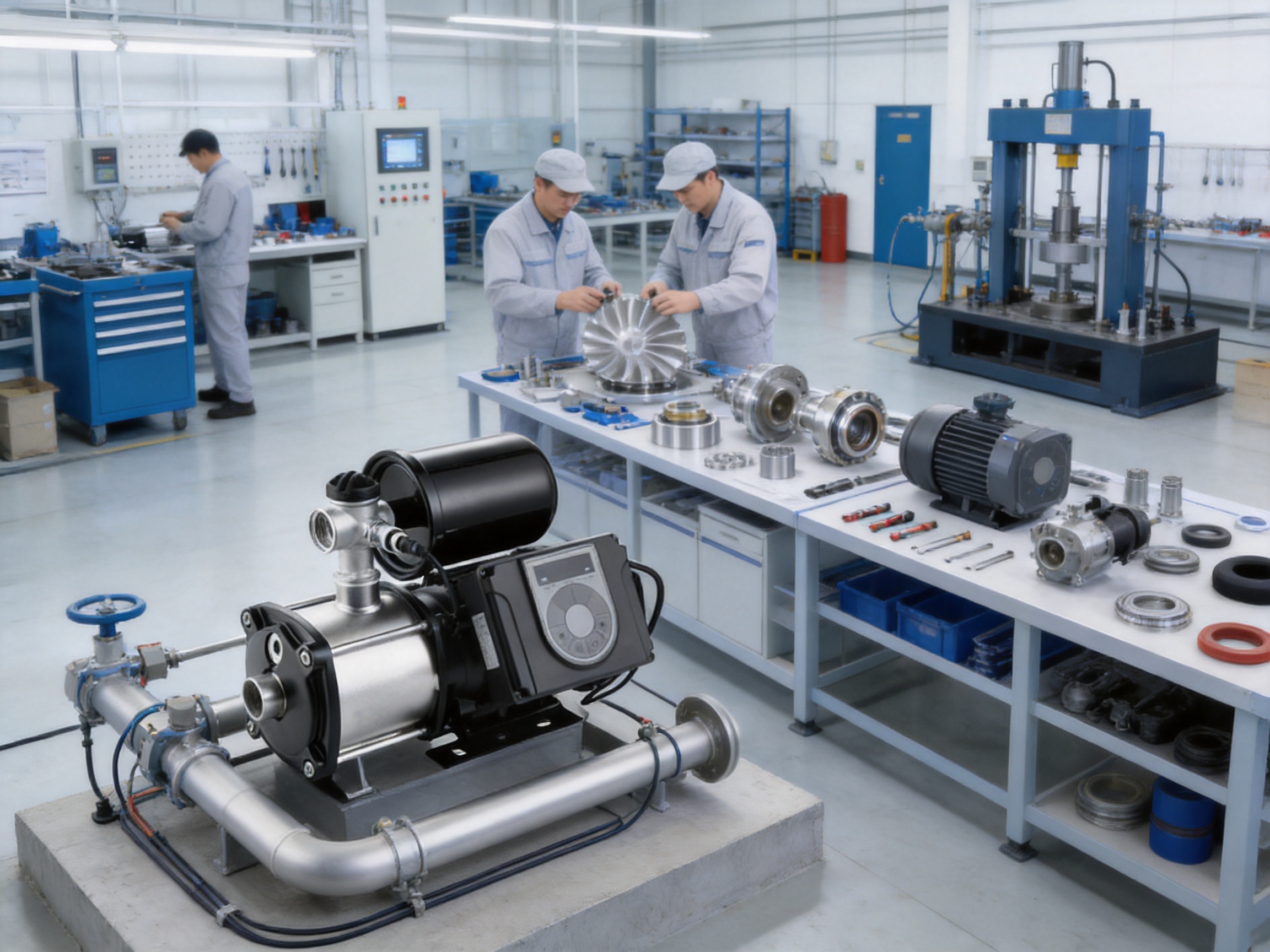
The pump should be installed on a stable, level surface capable of supporting the equipment and resisting vibration. The suction pipe should be as short and direct as practical, with an appropriate diameter and minimal unnecessary bends. Long, narrow, or poorly sealed suction lines can reduce performance and increase the risk of cavitation or loss of prime.
All pipework should be independently supported. The pump casing should not be used to carry the weight of connected pipes. Threaded or flanged connections should be sealed correctly without allowing sealing material to enter the hydraulic passage. A suitable inlet strainer or filter may be used where the water contains particles, but it must be sized and maintained to avoid excessive suction losses.
The pump should be filled and primed according to the installation instructions before starting. Operating a centrifugal pump without sufficient liquid can damage the mechanical seal and create excessive heat. The operator should verify that valves are positioned correctly and that the water source can provide a continuous supply during startup.
Electrical installation should be completed by qualified personnel. Voltage, phase, frequency, cable size, grounding, protective devices, and controller wiring must match the pump specification. For three-phase units, phase sequence should be checked to confirm correct rotation. Incorrect rotation can cause poor performance and may damage the pump if operation continues.
Routine maintenance begins with observation. Operators should monitor unusual noise, vibration, leakage, pressure fluctuation, motor heating, frequent starts, and changes in flow. Early detection can prevent minor issues from developing into major failures.
The pump and surrounding area should be kept clean and dry. Ventilation openings must remain unobstructed so that the motor can dissipate heat. Electrical terminals and cable connections should be inspected periodically for looseness, corrosion, or signs of overheating.
The mechanical seal is a normal wear component. A small amount of initial adjustment may be part of commissioning, but continuing leakage indicates that inspection or replacement may be required. The seal should never be allowed to operate dry. When replacing it, the shaft, seal seat, spring, and related surfaces should be checked for damage or contamination.
Filters and strainers should be cleaned according to the quality of the water. A blocked inlet filter can cause low flow, noise, unstable pressure, and cavitation. In process systems, deposits may accumulate inside valves, pipes, heat exchangers, or diffusers. Cleaning intervals should therefore be based on actual water conditions rather than on a fixed schedule alone.
When the pump is used with liquids denser or more viscous than water, the motor load should be reviewed. The source information specifically notes that a higher-power motor may be required in such conditions. This is because increased density raises the power needed to maintain the same hydraulic output, while increased viscosity can reduce hydraulic efficiency and alter the pump operating point.
Buyers should begin by identifying the required flow rate, total head, liquid temperature, liquid composition, suction lift, operating hours, electrical supply, and installation environment. These details determine whether the pump is appropriate and which model is most suitable.
Flow should be based on the actual demand of the system, not simply on the largest possible water use. Head should include both elevation and pressure requirements. If a building requires a specific pressure at a high-level outlet, that pressure must be converted into an equivalent head and added to pipe and equipment losses.
The buyer should also determine whether the pump will operate continuously, intermittently, or under frequent start-stop conditions. Frequent cycling may require careful controller settings, a pressure tank, or additional system protection. The intelligent controller can improve operation, but the complete pressure-control strategy must be designed for the application.
Water quality is equally important. Clean water, lightly chlorinated water, softened water, and process water may all be suitable in certain conditions, but abrasive solids, high chloride concentrations, aggressive chemicals, or unusually high temperatures may require a different material specification. Purchasers should provide a liquid data sheet when the application is not ordinary clean water.
In a storage tank installation, the pump draws water from the tank and supplies a building or process line. The pump should be positioned to minimize suction lift and should be protected against dry running. A level sensor or suitable inlet arrangement can help prevent operation when the tank is empty.
Where municipal pressure is insufficient, the pump can supplement the incoming supply. A bypass, check valve, isolation valves, and suitable pressure-control arrangement may be required. Local regulations concerning direct connection to public water supplies should be observed.
For a process skid, the pump can be installed with filters, heat exchangers, dosing equipment, or spray devices. Stainless steel wet-end components can improve compatibility with many treated-water applications. The skid designer should verify pressure losses across every connected component and provide access for maintenance.
In an HVAC secondary loop, the pump may circulate water through coils or heat exchangers. The operating temperature, pressure, fluid treatment, and control sequence must be checked. If glycol or another additive is used, the change in viscosity and density should be included in pump selection.
It is a horizontal surface centrifugal pump with a multistage hydraulic design, a two-pole induction motor, stainless steel wet-end components, and an intelligent controller.
The multistage structure allows the pump to produce higher pressure than many single-stage pumps while maintaining a compact horizontal configuration. It is useful for boosting, elevated delivery, filters, process equipment, and systems with significant pipe resistance.
The listed models cover rated flows from 1 to 5 m³/h and rated heads from 8 to 45.5 m. The exact combination depends on the selected model and number of stages.
Yes. The product is designed for water supply and boosting applications, including drinking-water and lightly chlorinated water systems, provided the installation and material compatibility requirements are satisfied.
Yes. Listed applications include water treatment, industrial cleaning, process heating and cooling, air-conditioning, air-freshening systems, soft-water heater devices, and fertilization or metering systems. The liquid properties must be checked before use.
Listed options include single-phase 220–240 V, single-phase 110–120 V, and three-phase 380–415 V, all at 50 Hz. Other voltages may be available by request.
The series is equipped with an intelligent controller and includes an intelligent switch and flow switch in the listed component structure. The precise operating and protection functions should be confirmed for the supplied configuration.
The listed maximum suction value is 5 m. Actual suction performance depends on water temperature, atmospheric pressure, pipe design, inlet losses, sealing, and available net positive suction head.
They improve resistance to corrosion on the principal wetted components and can help maintain cleaner and more durable hydraulic passages than many conventional iron or basic coated materials.
It may handle compatible liquids, but the liquid density, viscosity, temperature, chemical composition, and solids content must be evaluated. A higher-power motor may be needed when the liquid is denser or more viscous than water.
The design provides accessible components and a practical horizontal layout intended to simplify inspection and servicing. Maintenance should include checking the mechanical seal, bearings, electrical connections, filters, controller, and operating condition.
The manufacturer has experience in research and development, mass production, global export, procurement support, order tracking, cross-border delivery, and foreign-trade services. Its wider product portfolio also supports one-stop sourcing for different water-pumping requirements.
The EMIH-Z(T) Series Two-pole Induction Motor Horizontal Stainless Steel Water Surface Centrifugal Pump with Intelligent Controller is a versatile solution for users who need more than basic water transfer. Its horizontal multistage architecture provides useful pressure in a compact package, while the stainless steel casing and impeller improve resistance to corrosion in demanding water applications.
The product’s intelligent controller, flow switch, and intelligent switch add operational convenience and support more responsive boosting. The two-pole induction motor provides a practical high-speed drive arrangement, and the availability of single-phase and three-phase configurations allows the series to serve domestic, commercial, and industrial installations.
Its strongest competitive advantages are the combination of multistage pressure, stainless steel wetted components, intelligent operation, broad model selection, and serviceable construction. These benefits are reinforced by the manufacturer’s experience in pump research, mass production, export logistics, intelligent pumping technology, and related water-treatment equipment.
For successful application, users should select the pump according to the complete hydraulic duty point, confirm liquid compatibility, design the suction line carefully, provide proper electrical protection, and follow the commissioning and maintenance instructions. When correctly matched and installed, the series can provide reliable pressure boosting and water circulation across a wide range of professional applications.
1. Product technical information for the EMIH-Z(T) Series Horizontal Stainless Steel Water Surface Centrifugal Pump.
2. Manufacturer-provided model, motor, material, and performance data for the EMIH-Z(T) Series.
3. General centrifugal pump selection principles covering flow, head, suction conditions, and system resistance.
4. General industrial guidance for induction motor protection, pump installation, mechanical seals, and preventive maintenance.
5. General engineering references on stainless steel material selection for water-handling equipment.
edwina@edwin-pump.com
+86-13586290903 (WhatsApp)
Xuri Gongliang Cutting Tool Entrepreneurship Park, Wenqiao Town, Wenling City, Taizhou City, Zhejiang Province, China

High Performance Smart Pump Factory


 English