edwina@edwin-pump.com

View All Products
en
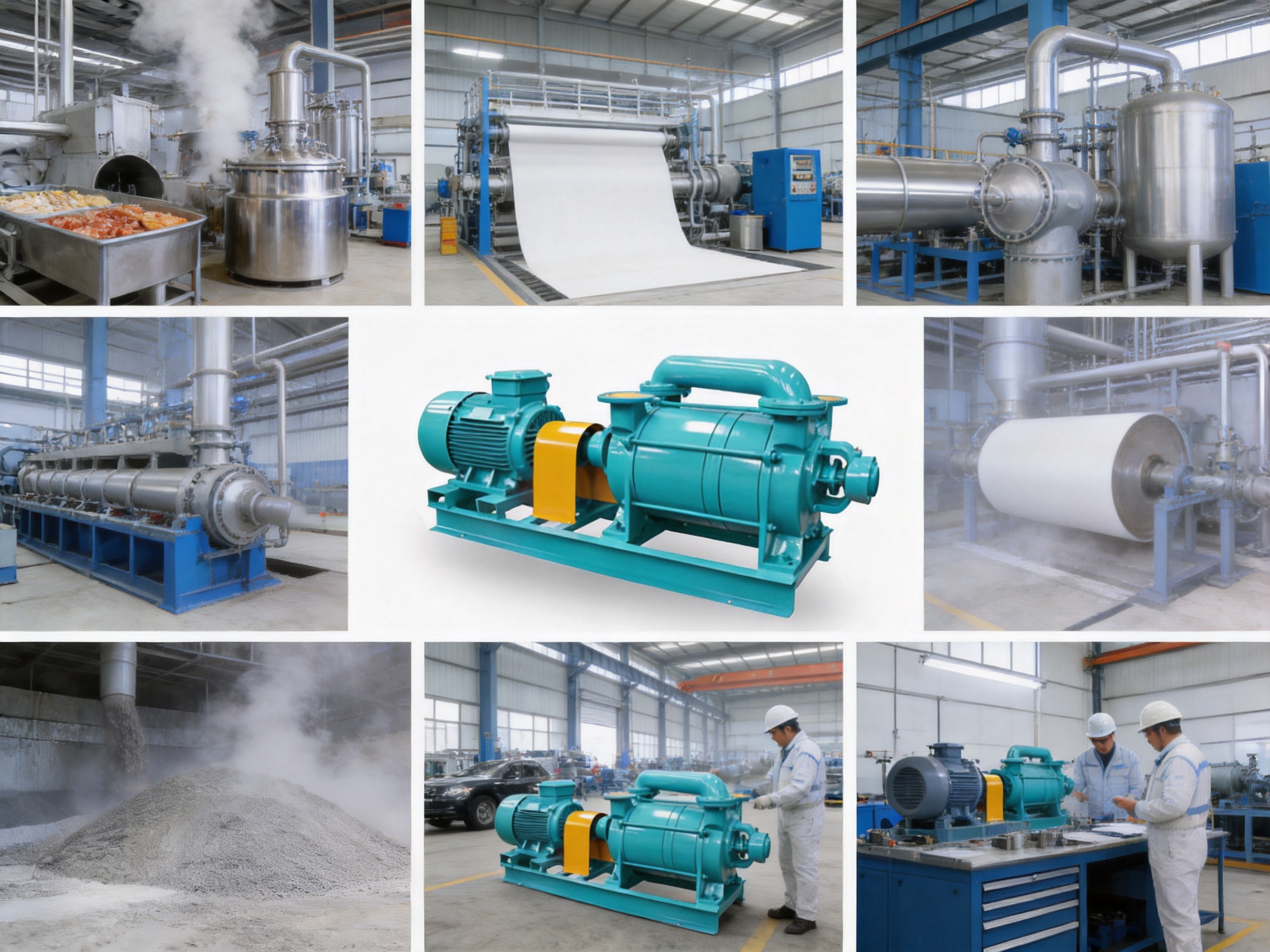
Industrial production environments often require dependable vacuum equipment that can handle moisture, dust, process vapors, and changing operating conditions. In these applications, a conventional dry vacuum pump may experience performance loss, contamination, or accelerated wear. A liquid ring vacuum pump offers a practical alternative because it uses a continuously rotating liquid ring to create compression chambers and transport gas through the pump. The SK Series Single-Stage Liquid Ring Vacuum Pump is designed around this proven operating principle, providing a reliable solution for general manufacturing, chemical processing, food production, paper manufacturing, mining, petroleum, power, cement, and many other industries.
The SK Series is a single-stage liquid ring vacuum pump developed for applications in which process reliability, tolerance of humid gas, and stable vacuum generation are more important than complicated multistage construction. Its design combines a vaned impeller, cylindrical casing, working liquid, inlet port, and discharge port into a relatively straightforward pumping system. By using liquid as the sealing medium, the pump can process gas containing moisture and certain condensable vapors without relying on close mechanical contact between dry components.
Manufactured by Taizhou Edwin Electric Co., Ltd., the pump forms part of a broader industrial product portfolio that includes submersible pumps, deep well pumps, booster pumps, circulation pumps, solar water pumps, and other water-handling equipment. The company’s experience in pump research, mass production, export operations, and project-oriented procurement supports the development and supply of equipment for customers seeking dependable industrial pumping solutions.
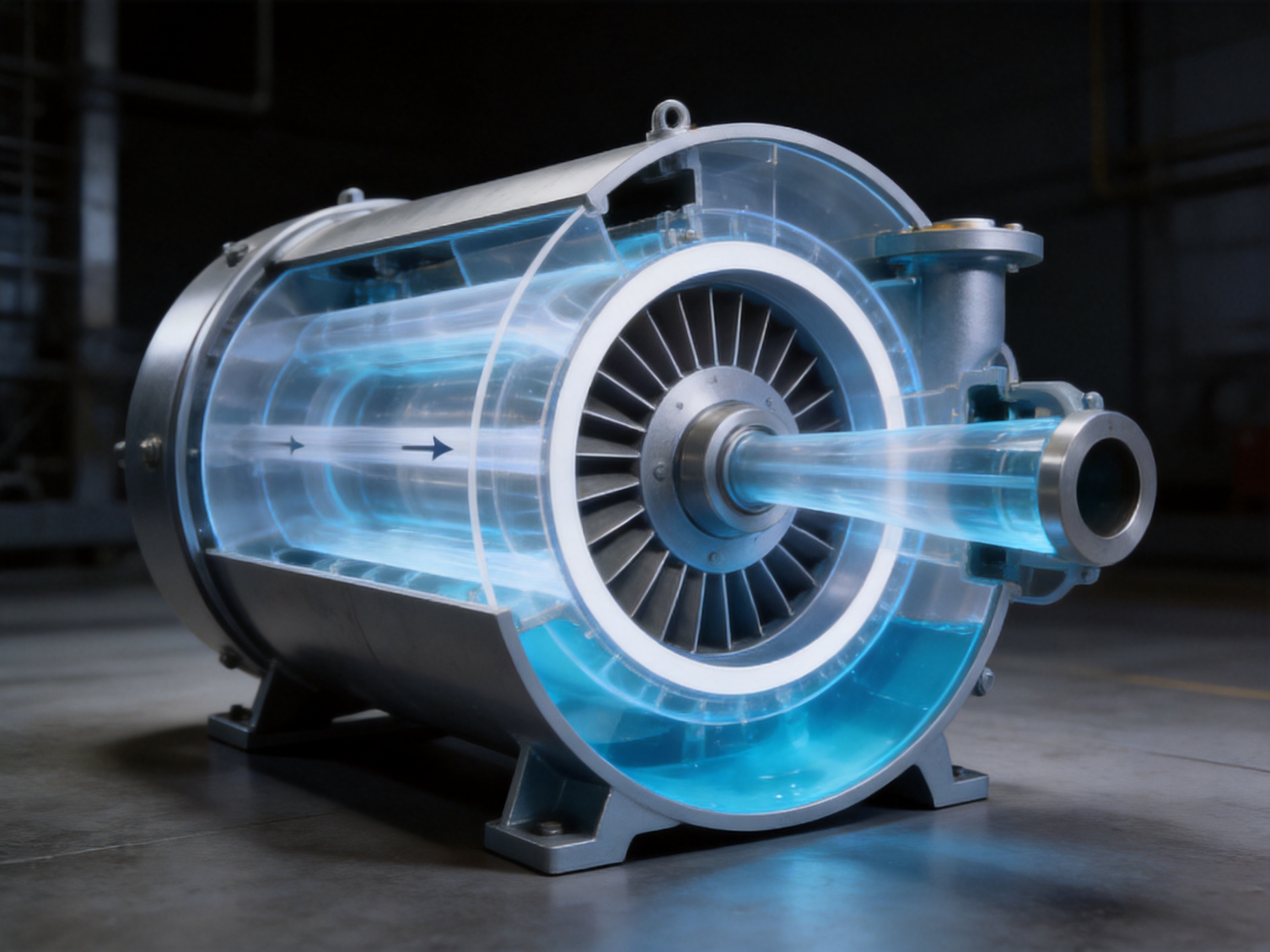
The SK Series operates through a rotating impeller installed eccentrically inside a cylindrical casing. Before operation, an appropriate quantity of working liquid is supplied to the pump. As the impeller rotates, centrifugal force drives this liquid outward against the inner wall of the casing. The result is a rotating liquid ring that follows the internal contour of the pump housing.
Because the impeller axis is offset from the geometric center of the casing, the space between adjacent impeller vanes and the liquid ring changes as the impeller turns. These changing spaces act as compression chambers. During the expansion portion of the rotation, the volume of a chamber increases and creates a vacuum that draws air or process gas into the pump through the inlet port. As the chamber moves toward the compression portion of the cycle, its volume decreases and the trapped gas is compressed.
The compressed gas then leaves through the discharge port. Since the gas is compressed in direct contact with the working liquid, the discharge stream may contain a certain amount of liquid or vapor. In a complete installation, a vapor-liquid separator can be used downstream to separate the working liquid from the discharged gas and support liquid recovery or safe drainage.
This operating method gives the SK Series an important advantage in industrial environments: the liquid ring serves both as a sealing medium and as a thermal buffer. It helps reduce the effect of gas temperature increases during compression and allows the pump to work with gas streams that may contain humidity, condensable substances, or small amounts of liquid carryover.
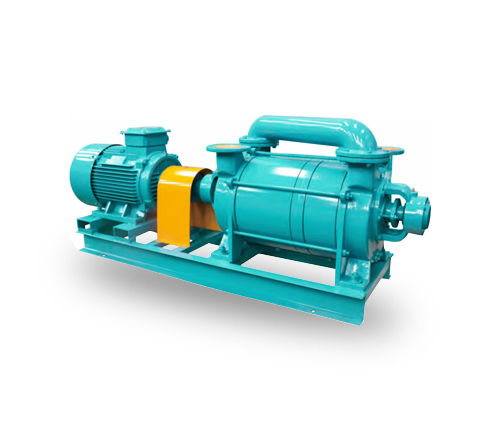
SK Series Single Stages Widely Applications Liquid Ring Vacuum Chenmical Industrial Pump
Vacuum equipment is used for many different purposes, including filtration, drying, degassing, evaporation, material handling, vapor recovery, suction, lifting, packaging, and process evacuation. The gas handled by the pump is not always clean and dry. In actual factories, air and process gas may contain water vapor, solvent vapor, dust, oil mist, or other contaminants. A pump that is highly sensitive to these substances can require frequent cleaning and maintenance.
Liquid ring technology is well suited to these conditions because its principal sealing action is created by the working liquid rather than by extremely tight dry clearances. This makes the design appropriate for humid, dirty, or high-capacity applications in which the process gas may be difficult to manage with dry vacuum equipment.
The liquid ring also helps moderate compression heat. When a gas is compressed, its temperature can rise. The working liquid absorbs and carries away part of this heat, helping the pump operate with a comparatively stable internal environment. The actual operating temperature depends on the gas, liquid, flow rate, suction pressure, discharge conditions, and installation arrangement, but the basic principle remains valuable for demanding applications.
Another advantage is operational simplicity. The SK Series uses a single-stage arrangement rather than a complex series of compression stages. A single-stage pump can be easier to install, inspect, and integrate into a plant system. For many general vacuum duties, its straightforward configuration offers an effective balance between performance, durability, and maintenance accessibility.
The SK Series generates vacuum through repeated expansion and compression of gas chambers formed by the impeller vanes and liquid ring. This continuous rotary process supports smooth gas movement and stable operation when the pump is correctly selected and supplied with the required working liquid.
Stable vacuum is particularly important in processes such as filtration, vacuum dehydration, paper drainage, vacuum packaging, and material forming. Sudden fluctuations can affect product quality, cycle time, and process control. A liquid ring pump can provide a dependable vacuum source for systems that operate continuously or for repeated production cycles.
Many industrial vacuum applications involve gas that is not completely dry. Food processing may generate steam and moisture. Chemical production may release condensable vapors. Paper manufacturing involves water-laden air. Mining and cement plants may expose equipment to dust. The liquid ring principle is naturally suited to these conditions because the working liquid forms the internal seal and supports gas compression.
This does not mean that every contaminant is harmless or that filtration is unnecessary. Correct material selection, inlet protection, liquid management, and routine inspection remain essential. However, compared with equipment that depends entirely on dry, close-fitting surfaces, a liquid ring pump can offer greater tolerance of common industrial process conditions.
The working liquid separates the impeller and casing surfaces during normal operation. This reduces the dependence on dry sliding contact for the primary compression action. As a result, the pump can avoid certain types of friction-related wear associated with dry-running designs.
Operators must still prevent operation without the required liquid supply. A liquid ring pump is not designed to run indefinitely without liquid, and insufficient liquid can lead to overheating, unstable vacuum, or internal damage. Proper operating procedures are therefore an essential part of realizing the product’s durability advantages.
Compression generates heat, especially when the pump is operated continuously or against demanding pressure conditions. The working liquid helps absorb heat from the compression process. This provides a useful thermal-management function and supports steady operation in applications where gas temperature control matters.
The working liquid may become warmer during operation, so the installation should account for liquid circulation, replacement, cooling, or separation as required by the process. A properly engineered liquid-management system can improve operating stability and help maintain predictable vacuum performance.
The SK Series is suitable for a wide range of industries because the fundamental vacuum requirement is common across many production processes. Its application range includes general manufacturing, food processing, paint production, chemical plants, paper and allied products, brick extrusion, automotive production, metalworking, petroleum, mining, oil and gas, plastics, textiles, power and utilities, and cement-related operations.
These industries have different process conditions, but many require a pump that can manage air or gas containing humidity, vapor, or small amounts of process contamination. The SK Series provides a practical platform for these duties, subject to proper engineering review and model selection.
A single-stage design can simplify the arrangement of internal components and reduce the number of compression sections requiring inspection. This may support easier maintenance planning and faster access to routine service areas. It can also reduce the complexity of piping and system integration compared with certain multistage alternatives.
For users who need a dedicated vacuum source without excessive mechanical complexity, a single-stage liquid ring pump can be an economical and serviceable choice. Its suitability should be evaluated according to the required vacuum level, gas volume, operating cycle, liquid conditions, and discharge arrangement.
No vacuum pump technology is ideal for every application. The correct choice depends on process gas composition, target vacuum, flow demand, contamination risk, noise requirements, liquid availability, maintenance expectations, and total operating cost. The value of the SK Series becomes clearer when it is compared with common alternatives.
| Evaluation Factor | SK Series Liquid Ring Pump | Dry Vacuum Pump | Oil-Sealed Vacuum Pump | Typical Benefit of Liquid Ring Design |
|---|---|---|---|---|
| Moisture tolerance | Well suited to humid gas when properly configured | Varies by design and may require protection | Moisture can affect oil condition | Better compatibility with condensable vapor and wet processes |
| Primary sealing medium | Working liquid | Dry clearances, seals, or special materials | Oil and mechanical clearances | Liquid provides sealing and thermal buffering |
| Process contamination tolerance | Suitable for many dirty or demanding applications | Depends strongly on filtration and construction | Contaminants may degrade oil | Useful for industrial gas streams with moderate contamination |
| Thermal control | Working liquid absorbs compression heat | Depends on air cooling or separate cooling system | Oil carries heat but requires condition control | Stable thermal behavior in wet applications |
| Liquid management requirement | Required | Usually limited or absent | Oil management required | Water or another compatible liquid can be selected for the process |
| Typical maintenance focus | Liquid quality, seals, bearings, impeller, casing, separator | Filters, seals, vanes, bearings, or dry elements | Oil, filters, seals, bearings | Maintenance is predictable when the liquid circuit is managed correctly |
| Industrial suitability | Strong for humid, dirty, and continuous duties | Strong for clean and dry applications | Strong for applications compatible with oil | Balanced solution for demanding general industry |
The table provides a general comparison rather than a substitute for a technical selection review. Different manufacturers and pump models can have substantially different capabilities. Nevertheless, the comparison demonstrates why liquid ring pumps remain important in factories where wet gas and process reliability are central concerns.
Manufacturing plants use vacuum for clamping, lifting, degassing, forming, drying, and pneumatic process support. A liquid ring pump can provide a centralized or dedicated vacuum source for production equipment. Its tolerance of humid plant air and occasional process vapor makes it useful in environments where workshop conditions are not perfectly clean.
Food production often involves steam, water, cleaning cycles, and strict process hygiene. Vacuum may be used for packaging, evaporation, concentration, dehydration, and product handling. A liquid ring pump can be integrated into a system designed for wet operation, with suitable materials, liquid management, cleaning procedures, and downstream separation.
Food applications require special attention to the quality and compatibility of the working liquid. The pump should be installed according to the hygiene requirements of the process, and the working liquid must not introduce unacceptable contamination into the production area.
Chemical plants may need vacuum for distillation, filtration, solvent recovery, drying, crystallization, evaporation, and reactor evacuation. Process gases can contain vapors and substances that challenge dry pumps. The liquid ring design can offer advantages in these conditions, but chemical compatibility must always be verified.
Engineering teams should evaluate the working liquid, casing and impeller materials, seal materials, gas composition, vapor concentration, temperature, and potential chemical reactions. A suitable separator and recovery arrangement may also be required to manage the liquid carried with the discharge gas.
Paint and coating operations often involve solvents, pigments, resins, and vapors. Vacuum may be used in mixing, deaeration, filtration, or solvent-related processes. A liquid ring pump can be considered when the process contains moisture or condensable vapor, provided the selected liquid and construction materials are appropriate for the chemical environment.
Vacuum is a fundamental utility in paper production. It supports drainage, dewatering, forming, pressing, and other stages in which water must be removed from the fiber web. Paper plants commonly require pumps capable of handling large gas volumes with substantial moisture. Liquid ring technology is therefore well suited to many paper and allied-product applications.
Vacuum extrusion removes trapped air from clay and similar materials before forming. Stable vacuum helps improve product density, reduce voids, and support consistent extrusion. The industrial atmosphere may contain dust, and the gas stream may carry moisture. Inlet protection, regular cleaning, and appropriate liquid management are important for maintaining reliable operation.
Automotive production and metalworking plants use vacuum in material handling, fixture systems, casting, heat treatment, cleaning, and process support. These facilities may contain oil mist, coolant vapor, dust, and fluctuating production loads. A robust liquid ring vacuum source can serve centralized or machine-level requirements when the system is correctly sized.
Vacuum equipment is used in petroleum and oil-related operations for vapor handling, dehydration, distillation, recovery, and process evacuation. These applications require careful hazard evaluation and material compatibility. The SK Series may be considered for suitable duties after a detailed review of gas composition, flammability, temperature, pressure, electrical classification, and site safety requirements.
Mining and cement production expose equipment to dust, moisture, and demanding working conditions. Vacuum may be required for filtration, dewatering support, pneumatic conveying, material handling, and process systems. A liquid ring pump can provide an advantage where gas cleanliness is difficult to guarantee, although effective filtration and separator design remain necessary.
Plastic processing may use vacuum for degassing, extrusion, drying, and molding. Textile production may use vacuum for suction, drying, fiber handling, and process control. Both sectors can benefit from a pump that offers stable operation and reasonable tolerance of vapor or humid air.
Power and utility facilities use vacuum systems for water removal, condenser-related duties, deaeration, drainage, and general process support. Liquid ring pumps are often considered where the gas stream contains water vapor or where a reliable industrial vacuum source is needed for long operating cycles.
The performance of a pump is influenced not only by its operating principle but also by the quality of its manufacture. Dimensional accuracy, balance, material consistency, sealing quality, assembly discipline, and final testing all affect reliability. Taizhou Edwin Electric Co., Ltd. combines independent research and development, mass production, and global export as part of its manufacturing model.
The company was established in 2008 and has developed a product portfolio covering multiple water and industrial pump categories. Its experience with deep well pumps, submersible pumps, domestic booster pumps, circulation pumps, solar water pumps, and intelligent booster pumps provides a broad foundation in hydraulic equipment, motor integration, mechanical assembly, electrical control, and application support.
Product development begins with understanding the intended service conditions. For a liquid ring vacuum pump, this includes the required suction performance, gas volume, working liquid, temperature, process contamination, duty cycle, and discharge arrangement. A manufacturing organization with multiple pump categories can apply experience from fluid handling, motor design, sealing, impeller production, and system integration to the development and supply of specialized equipment.
Mass production can also provide advantages when supported by controlled processes. Repeated production allows manufacturing teams to standardize component preparation, assembly procedures, inspection points, and functional testing. Standardization helps reduce variation between units and supports more consistent quality for distributors, contractors, and industrial end users.
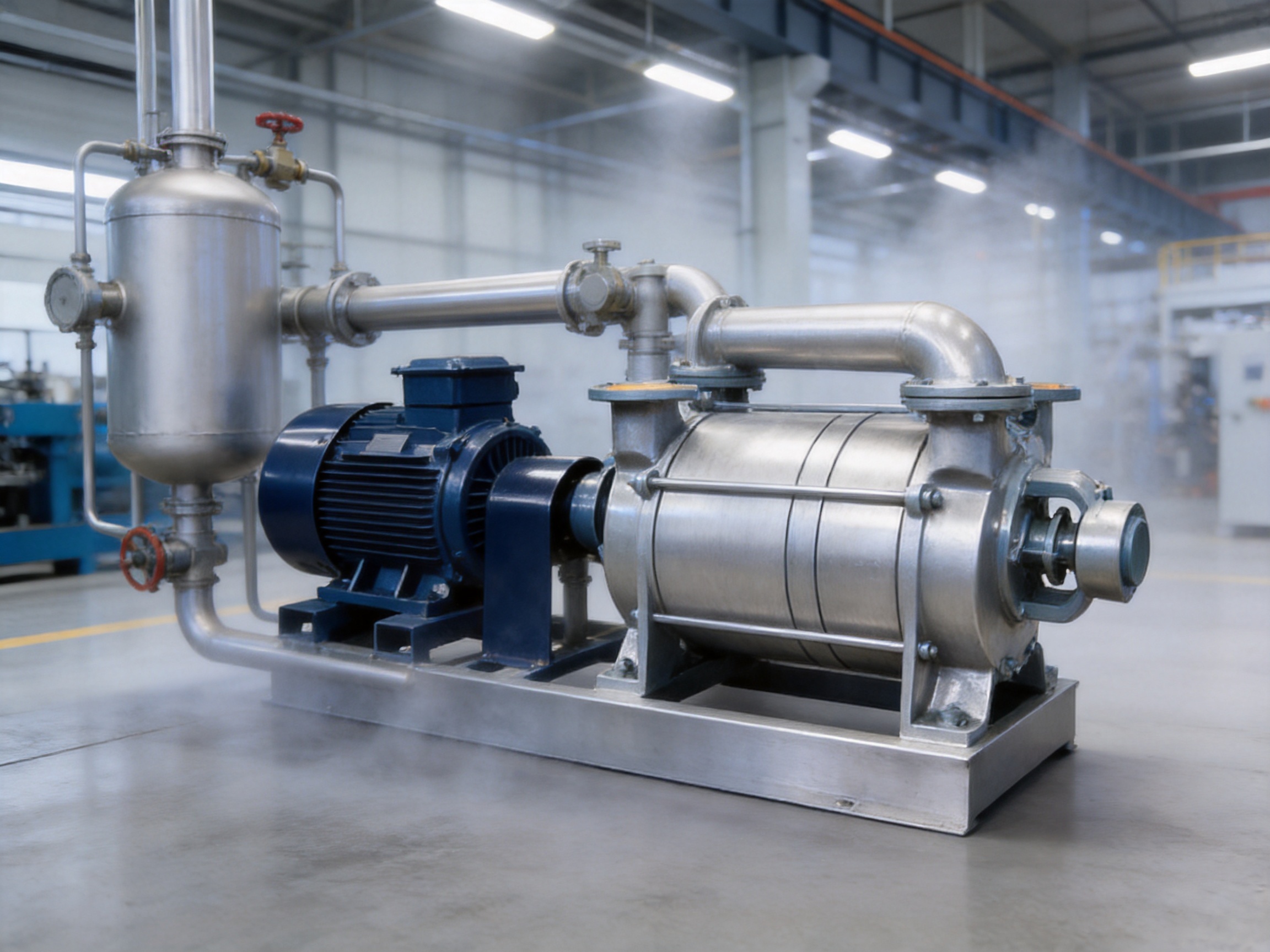
The impeller and casing form the central working geometry of a liquid ring pump. Their relative dimensions influence compression chamber formation, internal efficiency, vibration, and operating stability. Accurate machining and careful inspection are therefore important. The impeller must rotate freely and maintain appropriate balance, while the casing must provide the correct internal profile for the liquid ring.
Rotating components should be manufactured and assembled with attention to balance. Excessive imbalance can increase vibration, noise, bearing load, and seal stress. Appropriate balancing procedures, shaft inspection, bearing installation, and alignment checks help protect the pump during continuous operation.
Seals and bearings are essential service components. The sealing arrangement must prevent unacceptable leakage while accommodating the working liquid and the process conditions. Bearings must support the rotating assembly under the expected load and operating speed. Selection of seal and bearing materials should consider temperature, chemical exposure, liquid quality, and maintenance intervals.
A vacuum pump is part of a complete power and fluid system. Motor selection should correspond to pump load, duty cycle, supply voltage, frequency, starting conditions, and site requirements. Coupling, base, alignment, guarding, and electrical protection all influence the long-term performance of the installation.
Final testing is an important stage in pump production. Depending on the model and customer requirement, testing may include rotation checks, leakage inspection, vibration observation, current and power checks, vacuum performance evaluation, noise assessment, and verification of accessories. Testing procedures should be defined according to the product design and the intended application.
Customers purchasing equipment for critical industrial services should request the appropriate technical documents, test records, installation instructions, and maintenance guidance. These documents help the end user confirm that the equipment is suitable for the intended duty and provide a foundation for future service.
Industrial buyers often require more than a standalone pump. They may need assistance with model selection, application review, order coordination, packaging, documentation, spare parts, delivery, and communication among several parties. Edwin Pump supports this broader procurement need through an integrated company structure and related import and export organizations.
Taizhou Haipai Import & Export Co., Ltd. and Golden Falcon Industrial Co., Ltd. were established in 2012 to support procurement planning, order tracking, cross-border delivery, and foreign trade services. This structure can be valuable for overseas customers that need a single professional contact for technical coordination and international purchasing.
An integrated supplier can help reduce communication gaps between engineering, production, quality control, logistics, and the customer. This is especially useful when a project includes several pump types or when the buyer requires coordinated delivery of pumps, accessories, valves, and other water-treatment or fluid-handling products.
The company’s broader product portfolio also supports one-stop purchasing. A customer may be able to source different pump categories for agricultural irrigation, municipal engineering, mining, construction, HVAC, household water supply, and industrial facilities through one established supply network. For contractors and distributors, this can simplify vendor management and improve project coordination.
Correct selection is essential to achieving the advantages of the SK Series. The pump should not be selected solely by connection size or motor power. Engineers should collect complete operating information before confirming the model.
| Selection Item | Information to Confirm | Reason for Evaluation |
|---|---|---|
| Required vacuum | Normal, minimum, and maximum suction pressure | Determines whether the pump can meet the process target |
| Gas flow | Required capacity at operating pressure | Prevents under-sizing and excessive energy use |
| Gas composition | Air, vapor, solvent, corrosive gas, dust, or mixed gas | Supports material and safety evaluation |
| Gas temperature | Normal and maximum temperature | Affects seals, liquid behavior, and pump loading |
| Working liquid | Type, temperature, quality, and availability | Provides the liquid ring and influences compatibility |
| Operating cycle | Intermittent, continuous, or variable duty | Guides motor and thermal-load selection |
| Discharge conditions | Atmospheric or pressurized discharge, separator requirement | Influences system resistance and downstream design |
| Installation environment | Indoor or outdoor, ambient temperature, dust, humidity, hazardous area | Supports correct protection and installation planning |
| Materials | Casing, impeller, shaft, seal, and accessory requirements | Reduces corrosion and premature wear risks |
| Service requirements | Inspection access, spare parts, maintenance resources | Improves long-term availability |
When the gas contains corrosive vapors, flammable substances, or hazardous materials, the supplier should receive complete process information before recommending a configuration. The operating environment may require special materials, electrical protection, ventilation, separation, or additional safety measures.
The pump should be installed on a firm and level foundation capable of supporting the complete operating weight. The base should limit vibration and provide sufficient access for inspection, seal replacement, bearing service, and connection checks. The motor and pump must be aligned correctly, and all rotating parts must be guarded.
The suction line should be designed to minimize unnecessary pressure loss. It should be appropriately supported and protected against the entry of large solid particles. If the process gas contains dust, fibers, or other contaminants, an inlet filter or separator may be required. The filter should be sized so that it does not create excessive restriction as it becomes loaded.
The working-liquid supply must be reliable and compatible with the pump. The liquid should be clean enough to avoid blocking passages or causing excessive abrasion. In systems that recirculate liquid, a separator, cooler, strainer, or treatment system may be necessary. The liquid temperature should remain within the recommended operating range.
The discharge side should be arranged to avoid excessive back pressure. A vapor-liquid separator may be installed when the discharged gas carries working liquid. The separator can support liquid recovery, drainage, or controlled discharge, depending on the process design.
Before commissioning, operators should verify rotation direction, valve positions, liquid level, lubrication condition, electrical connections, coupling alignment, and the absence of foreign matter. The pump should be started according to the manufacturer’s instructions and observed for abnormal vibration, leakage, noise, temperature rise, or unstable vacuum.
Preventive maintenance helps preserve the benefits of liquid ring operation. Operators should monitor vacuum level, gas capacity, motor current, bearing temperature, vibration, seal leakage, working-liquid condition, and discharge behavior. A gradual change in performance may indicate a blocked filter, worn seal, incorrect liquid level, damaged impeller, casing wear, bearing deterioration, or a process change.
The working liquid should be checked regularly. Contaminated liquid can reduce performance and accelerate wear. If the system uses recirculated liquid, solids and accumulated process substances should be removed according to the maintenance schedule. The liquid circuit should also be inspected for blocked lines, restricted flow, leaks, or inadequate cooling.
Inlet filters and separators should be cleaned before pressure loss becomes excessive. Bearings should be serviced according to the recommended procedure, and seals should be replaced when leakage exceeds acceptable limits. Maintenance should be performed by trained personnel with the pump isolated from electrical power and process pressure.
Extended storage requires protection against corrosion, moisture, contamination, and mechanical damage. The pump should be stored in a clean, dry environment, with openings protected and rotating components handled according to the supplier’s instructions. Before restarting equipment after long storage, operators should inspect the liquid circuit, seals, bearings, electrical system, and shaft rotation.
Purchase price is only one part of the total cost of a vacuum system. Energy consumption, working-liquid use, maintenance, downtime, spare parts, and installation complexity can have a greater effect over the operating life of the pump. A pump that remains stable under wet and dirty conditions may reduce process interruptions and maintenance-related losses.
Proper sizing is one of the most effective ways to control energy use. An oversized pump may consume unnecessary power, while an undersized pump may run continuously at unfavorable conditions and fail to achieve the required vacuum. The selection should be based on actual gas load and operating pressure rather than a simple nominal capacity estimate.
Liquid management also affects cost. Where practical, a recirculating system can reduce liquid consumption, while a once-through arrangement may be simpler for installations with an available water supply and acceptable discharge conditions. The correct choice depends on local water quality, environmental requirements, process contamination, cooling needs, and operating economics.
Reliable manufacturing contributes to lifecycle value. Accurate components, controlled assembly, effective testing, and accessible technical support can reduce the risk of early failure. Edwin Pump’s combination of product development, mass production, and export service is intended to support customers beyond the initial transaction and provide a practical foundation for long-term equipment use.
The company has invested in new energy and intelligent technology since 2018, including solar water pumps and intelligent booster pumps. Although the SK Series is a mechanical liquid ring vacuum pump, this broader development experience reflects an interest in improving pump efficiency, control, monitoring, and application flexibility.
Modern industrial users increasingly expect pumps to operate as part of connected systems. Monitoring of pressure, temperature, vibration, current, liquid level, and operating hours can support preventive maintenance and improve process visibility. Depending on the project, a liquid ring pump installation may be integrated with sensors, control panels, variable-frequency equipment, alarms, or a plant management system.
Intelligent control does not replace correct mechanical selection. Sensors and automation can identify operating changes, but the pump must still receive the correct working liquid and operate within its design range. The strongest results come from combining sound mechanical design with appropriate monitoring and disciplined maintenance.
Operators should understand that a vacuum pump is a rotating pressure-system component and must be treated as industrial machinery. Guards should remain installed during operation. Electrical work should be completed by qualified personnel. Isolation procedures should be followed before removing covers, disconnecting pipes, or servicing seals and bearings.
The process gas must be evaluated for toxicity, flammability, corrosiveness, and reactivity. If the gas is hazardous, the installation may require special ventilation, gas detection, explosion protection, grounding, material selection, or discharge treatment. The pump should never be applied to a hazardous process without a documented engineering review.
Working-liquid discharge must also be managed responsibly. If the liquid absorbs process substances, it may require treatment or controlled disposal. A vapor-liquid separator can help contain the discharge stream, but the complete system must comply with the customer’s environmental and safety requirements.
Noise and vibration should be monitored, especially in continuous-duty installations. Sudden changes can indicate mechanical damage, cavitation-like liquid conditions, misalignment, bearing problems, blocked lines, or process overload. Early investigation is usually less expensive and safer than continued operation under abnormal conditions.
The SK Series offers a combination of features that is difficult to match with a single dry technology in wet and contaminated service. Its liquid ring creates the internal seal, supports smooth compression, absorbs part of the compression heat, and allows the pump to manage humid gas and certain condensable vapors. The single-stage arrangement provides a practical and understandable configuration for many general industrial duties.
Its strongest competitive advantages are not based on one isolated specification. They arise from the interaction of a proven pumping principle, suitability for demanding gas conditions, relatively straightforward maintenance, broad application potential, and support from an integrated manufacturing and export organization.
Compared with a dry pump selected for a clean process, the SK Series may offer greater tolerance of moisture and process vapor. Compared with an oil-sealed pump in a wet or contaminant-heavy application, it may reduce concerns associated with oil degradation or oil carryover. Compared with a more complicated multistage arrangement for a general vacuum task, its single-stage construction may simplify installation and service.
These advantages should always be considered alongside the operating requirements. The correct working liquid, material construction, model size, motor arrangement, separator, filtration, and safety system must be confirmed for each project. When properly engineered, the pump can serve as a durable vacuum source for demanding industrial environments.
International customers can benefit from providing complete technical information at the beginning of the purchasing process. A useful inquiry should include the target vacuum, gas volume, process gas composition, gas temperature, working liquid, operating schedule, installation location, power supply, materials, and any documentation requirements.
For projects involving several types of pumps, a coordinated procurement plan can help align specifications, packaging, production schedules, and delivery arrangements. Edwin Pump and its associated export service organizations are positioned to support procurement planning, order tracking, cross-border delivery, and foreign trade communication.
Customers should also confirm the scope of supply. Depending on the project, the package may include the pump, motor, base, coupling, guards, valves, separator, filters, control components, spare parts, installation instructions, and test documentation. Clear definition of the supply scope helps prevent delays during installation.
After-sales support is another important consideration. Customers should ask about recommended spare parts, maintenance intervals, troubleshooting procedures, warranty conditions, technical communication, and the availability of replacement seals, bearings, gaskets, and other wear components. A strong supplier relationship can improve equipment availability throughout the service life.
The SK Series is a single-stage liquid ring vacuum pump designed to remove air and other process gases from industrial systems. It is particularly suitable for humid, dirty, vapor-containing, or high-capacity applications where a liquid-sealed vacuum process is beneficial.
A vaned impeller rotates eccentrically inside a cylindrical casing. A working liquid forms a rotating ring against the casing wall. The changing spaces between the impeller vanes and liquid ring alternately expand and contract, drawing in gas, compressing it, and discharging it from the pump.
The working liquid forms the internal sealing ring and creates the compression chambers. It also absorbs part of the heat produced during gas compression. The liquid must be supplied and managed correctly for stable operation.
Yes. Liquid ring pumps are generally well suited to humid gas and certain condensable vapors. However, the gas composition, temperature, liquid quality, and materials must be reviewed to confirm suitability for a particular process.
No. The pump depends on the liquid ring for sealing and compression. Operation without an adequate working-liquid supply can cause overheating, unstable performance, and internal damage.
A separator may be required when the discharge gas contains a significant amount of working liquid or process condensate. It can separate liquid from the gas stream and support recovery, drainage, or controlled discharge.
Potential industries include general manufacturing, food processing, paint, chemical production, paper, brick extrusion, automotive, metalworking, petroleum, mining, oil and gas, plastics, textiles, power, utilities, cement, and related heavy industries.
The most important information includes required vacuum, gas flow, gas composition, gas temperature, working-liquid type, duty cycle, discharge pressure, installation environment, material requirements, power supply, and any hazardous-area or environmental requirements.
A liquid ring pump is often better suited to wet, humid, or contaminated gas, while a dry pump may be preferable for clean and dry applications. The final choice depends on the process, required vacuum, gas composition, maintenance priorities, and operating cost.
The liquid ring design uses a working liquid rather than oil as the primary sealing medium. This can be advantageous in wet processes or applications where oil contamination and oil condition are concerns. Chemical compatibility and liquid management still need careful evaluation.
It can be suitable for continuous industrial service when the selected model, motor, working-liquid system, cooling arrangement, and installation are appropriate for the duty. Operating conditions should remain within the manufacturer’s recommended range.
Routine maintenance includes checking the working liquid, inspecting filters and separators, monitoring vibration and temperature, checking seals and bearings, confirming alignment, inspecting electrical connections, and reviewing vacuum performance. The actual schedule depends on the process and operating hours.
Potentially, but only after a detailed compatibility assessment. The gas composition, concentration, temperature, working liquid, casing, impeller, shaft, seals, and accessories must be evaluated. Special materials or protective systems may be necessary.
Taizhou Edwin Electric Co., Ltd. combines independent research and development, mass production, and global export. It has experience across several pump categories and supports procurement planning, order tracking, cross-border delivery, and foreign trade services through its related organizations.
Yes. The company’s product portfolio includes deep well pumps, submersible pumps, booster pumps, circulation pumps, solar water pumps, intelligent booster pumps, end suction pumps, pump accessories, pipes, valves, and other water-handling products. This supports one-stop purchasing for many industrial and infrastructure projects.
Operators should verify the installation foundation, alignment, rotation direction, electrical connections, working-liquid supply, valve positions, filter condition, discharge arrangement, lubrication, guarding, and absence of foreign matter. The initial start should be monitored for abnormal vibration, noise, leakage, temperature, and vacuum behavior.
The SK Series Single-Stage Liquid Ring Vacuum Pump is a practical industrial solution for processes that require stable vacuum generation under humid, dirty, vapor-containing, or high-capacity conditions. Its vaned impeller and liquid ring create a reliable compression cycle, while the working liquid provides sealing and thermal support. The single-stage design offers a straightforward structure for installation, operation, and maintenance.
The pump’s advantages over competing technologies are especially relevant when process gas cannot be guaranteed to be clean and dry. Compared with many dry vacuum solutions, it offers useful tolerance of moisture and condensable vapor. Compared with oil-sealed equipment, it can reduce reliance on oil management in suitable applications. Compared with more complex arrangements, its single-stage construction may provide a practical balance of capability and serviceability.
Successful operation depends on correct engineering. Gas composition, vacuum level, flow, temperature, working liquid, materials, filtration, separation, safety, and maintenance must all be considered. With proper selection and installation, the SK Series can support demanding applications across chemical, food, paper, petroleum, mining, cement, automotive, power, manufacturing, and other industrial sectors.
Behind the product is a manufacturing organization with experience in research and development, mass production, pump integration, international export, and one-stop procurement support. This combination gives industrial customers access not only to a proven liquid ring vacuum principle but also to a broader supply and service capability for complex pumping projects.
1. General principles of liquid ring vacuum pump operation and gas compression.
2. Industrial vacuum system design practices for humid, dirty, and condensable gas applications.
3. Pump selection guidance covering flow rate, suction pressure, working liquid, temperature, materials, and duty cycle.
4. Industrial machinery maintenance practices for rotating equipment, bearings, seals, alignment, and vibration monitoring.
5. General engineering guidance for vapor-liquid separation and liquid management in vacuum systems.
6. Manufacturer-provided product information for the SK Series Single-Stage Liquid Ring Vacuum Pump.
7. Manufacturer-provided company information concerning research and development, mass production, export service, solar pumping, intelligent pumping technology, and industrial pump applications.
edwina@edwin-pump.com
+86-13586290903 (WhatsApp)
Xuri Gongliang Cutting Tool Entrepreneurship Park, Wenqiao Town, Wenling City, Taizhou City, Zhejiang Province, China

High Performance Smart Pump Factory


 English