edwina@edwin-pump.com

View All Products
en
Reliable water access is essential for agricultural irrigation, livestock management, rural households, industrial utility systems, and remote infrastructure. In many locations, however, conventional pumping systems face increasing operating challenges. Grid electricity may be unstable or unavailable, fuel-powered pumps create emissions and require regular refueling, and ordinary motors may lose efficiency when used continuously in demanding environments. A hybrid solar pumping system provides a practical response by combining renewable energy with dependable backup power.
The 6ADPC AC/DC Brushless Motor Solar Deep Well Pump with Plastic Impeller is designed for precisely this type of application. It combines solar DC operation and grid AC compatibility in one high-capacity submersible pump platform. Its brushless motor, NSK bearings, corrosion-resistant construction, and high-efficiency plastic impeller are engineered to support long operating periods, substantial water delivery, and reduced maintenance requirements.
Unlike a single-purpose solar pump that depends entirely on sunlight, this AC/DC hybrid model can operate with solar power during the day and AC electricity when solar conditions are insufficient. This flexibility makes it suitable for large agricultural projects, deep-well installations, livestock water systems, rural water supply, and commercial pumping applications that require continuity rather than occasional operation.
The product range includes high-flow models delivering up to 88 cubic meters per hour and high-head configurations reaching up to 330 meters, depending on the selected model. With power options from 5,500 watts to 37,000 watts, the series can be adapted to different well depths, pipeline layouts, irrigation demands, and water-distribution requirements.
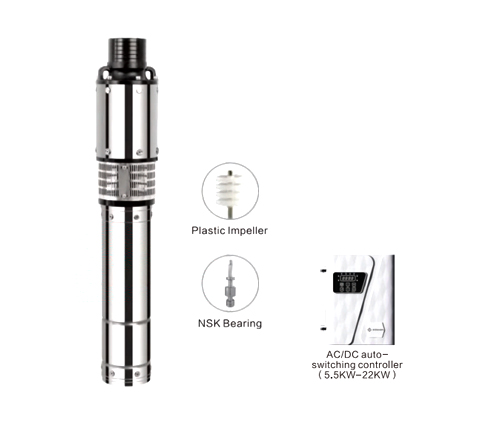
6ADPC AC/DC Brushless Motor Solar Deep Well Pump With Plastic Impeller
Water pumping is one of the most significant energy-consuming activities in agriculture, construction, municipal services, and industrial production. A pump may need to operate for many hours each day, often in areas where electricity prices are high or the power network is unreliable. A system that depends only on conventional grid power can therefore create considerable operating expenses and expose users to interruptions.
Solar energy offers an attractive alternative because it can be generated close to the pumping location. Solar panels can supply electricity without fuel transportation, combustion, or direct operating emissions. In remote farms, borehole projects, and rural communities, a solar-powered pump can reduce dependence on diesel generators and minimize the need for long electrical connections.
Nevertheless, solar energy varies with weather, season, time of day, and panel temperature. A pumping system that operates only when sunlight is strong may not provide the continuity required by irrigation schedules, livestock watering, domestic supply, or commercial water distribution. Hybrid AC/DC technology addresses this limitation by allowing the pump to use available solar power while retaining AC power as a backup.
The 6ADPC system is therefore more than a conventional submersible pump fitted with solar panels. It is a dual-input pumping solution intended to balance energy savings and operational reliability. Solar energy can be prioritized when available, while grid electricity can support operation during cloudy periods, at night, or when the water demand exceeds the available solar output.
The defining feature of the 6ADPC series is its ability to work with both AC and DC power sources. The listed models use AC380/DC520V electrical specifications, with an optimum DC input range of 520V to 650V. This configuration is intended for large-scale solar pumping systems where a suitably designed photovoltaic array and controller provide high-voltage DC power.
Dual-power compatibility gives system designers greater freedom when planning an installation. A project can be configured around solar operation without eliminating the possibility of grid backup. This is particularly valuable for commercial farms, municipal water projects, and remote facilities where water delivery must remain available even when solar production changes.
The hybrid design can also reduce the need for separate pumping equipment. Instead of installing one pump for solar operation and another for grid operation, a single compatible pump can serve both energy sources. Fewer major components may simplify installation planning, reduce equipment duplication, and make routine servicing more straightforward.
For safe and correct operation, the complete system should include an appropriate controller, electrical protection, grounding, overload protection, and switching logic. Solar panel voltage and open-circuit voltage must remain within the specified limits. The product data lists a solar panel open-circuit voltage below 900V and recommends solar panel power of at least 1.3 times the pump power. Final system design should be completed by a qualified professional according to local electrical standards.
The pump uses a brushless motor designed for efficient and stable operation. In a brushless configuration, mechanical carbon brushes are eliminated from the motor design. This reduces a common source of friction, wear, heat, and maintenance in traditional brushed motors.
Because the motor does not rely on brushes rubbing against a commutator, it can provide a cleaner electrical and mechanical operating environment. Reduced mechanical contact helps support longer service intervals, particularly when the pump is required to operate for extended periods. It also contributes to lower noise and more consistent performance.
Brushless technology is well suited to solar pumping because photovoltaic power can fluctuate during the day. A properly controlled brushless motor can operate efficiently across changing input conditions when used with a compatible controller. This helps the system make better use of available solar energy rather than wasting a large portion of the input as unnecessary heat or mechanical loss.
The motor is also suitable for automatic energy management in a hybrid system. When solar output is adequate, the pump can use DC power; when solar output falls below the required operating level, the system can use AC power according to the control configuration. This supports more reliable water delivery without sacrificing the energy-saving advantages of photovoltaic operation.
The 6ADPC series incorporates NSK bearings to support smooth shaft rotation and mechanical stability. Bearings play a critical role in a submersible pump because they must support rotating components under continuous load while operating in a compact and enclosed structure.
High-precision bearings can reduce friction between moving components and help maintain shaft alignment. Stable alignment is important for minimizing vibration, protecting the impeller, and reducing stress on the motor assembly. Smooth rotation can also contribute to quieter operation, which is useful for residential water supply, livestock facilities, and installations near occupied areas.
The use of recognized precision bearings is also an indication that the pump design considers the long-term mechanical demands of high-capacity operation. While every bearing has a finite service life and must be used within its intended conditions, quality bearing components can improve reliability when the pump is correctly selected, installed, and maintained.
The pump uses a plastic impeller rather than a conventional metal impeller. This design choice provides several practical benefits. High-strength engineering plastic can be lightweight, resistant to corrosion, and efficient in hydraulic applications. It is not affected by rust in the same way as unprotected ferrous metal, making it suitable for many water environments.
A lighter impeller can reduce the rotational inertia of the pump assembly. This may support efficient starting and reduce the energy needed to maintain rotation. The lower weight can also reduce mechanical loading on the motor and bearing system when compared with a heavier design of similar hydraulic function.
Plastic construction is especially useful in areas where the water may contain minerals or conditions that accelerate corrosion. However, the pump should always be selected according to the actual water quality. Abrasive sand, gravel, aggressive chemicals, and unusual temperatures may affect any impeller material. Proper well development, filtration, and application review remain important.
The impeller is engineered to support efficient water movement while maintaining a practical balance between performance, durability, and manufacturing cost. This combination helps the product compete with heavier and more corrosion-sensitive pump designs in suitable applications.
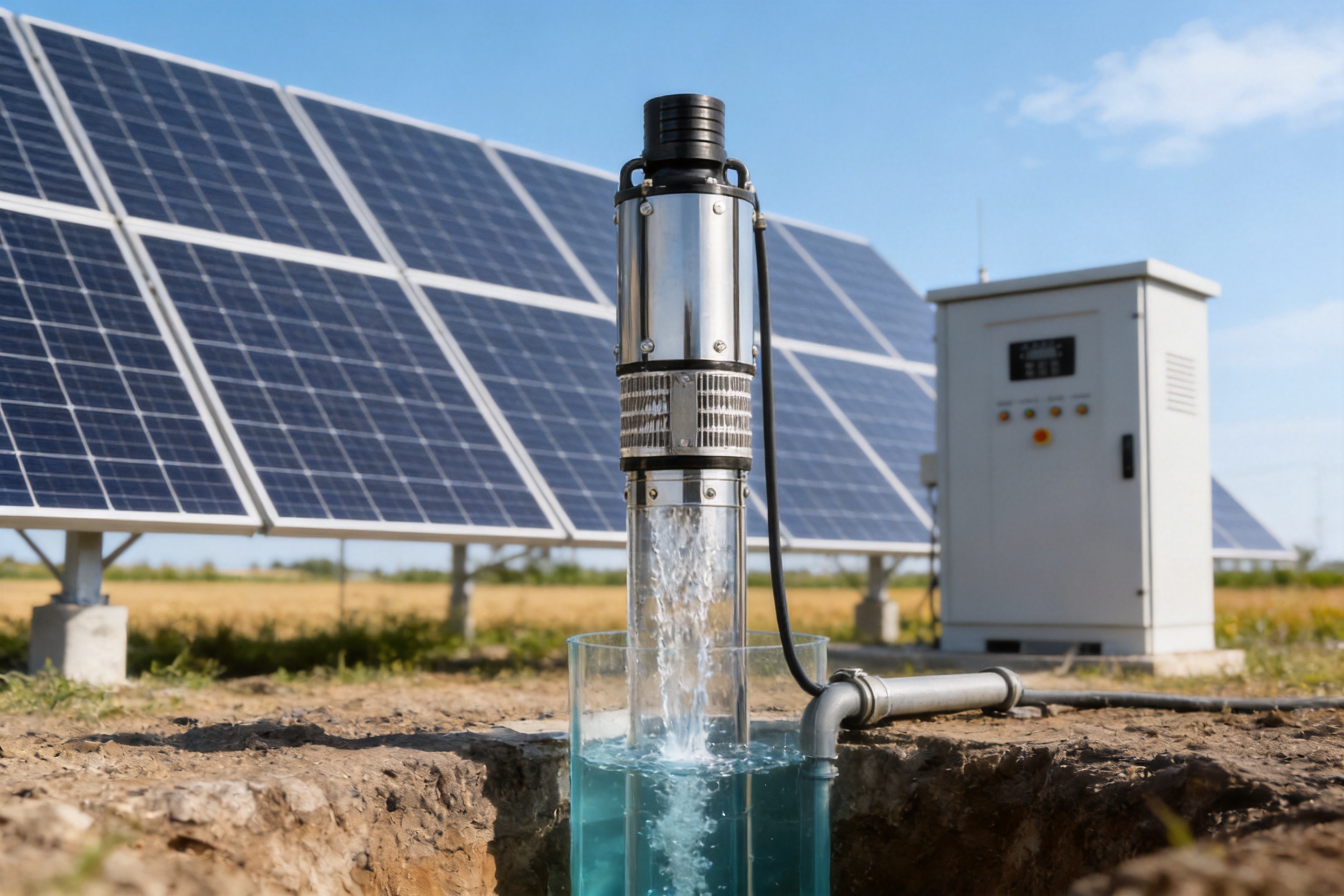
The 6ADPC product family includes multiple configurations for different combinations of flow and head. The available models are organized around two main nominal flow groups: approximately 68 cubic meters per hour and approximately 88 cubic meters per hour. Within each group, the available head ranges vary according to the number and arrangement of hydraulic stages.
Maximum flow and maximum head are not normally achieved at the same operating point. The actual delivered flow depends on total dynamic head, pipe friction, elevation, valves, fittings, water level, and the specific performance curve. Buyers should therefore use the supplied performance curve and a complete system calculation rather than selecting a pump only from the maximum figures.
For example, a model rated at 68 cubic meters per hour and 65 meters of maximum head is intended for a different duty point from a 68 cubic meter per hour model with a 233-meter maximum head. Likewise, an 88 cubic meter per hour configuration with a 48-meter head is designed for a different installation from an 88 cubic meter per hour configuration with a 250-meter head.
The model selection process should begin with the required water flow. Agricultural irrigation may require a high volume for a limited number of operating hours, while domestic or livestock systems may prioritize steady delivery at a lower flow. Next, the designer should calculate the total dynamic head, including the vertical lift from the pumping water level to the discharge point and all friction losses in the pipeline.
The condition of the well is also important. The pump must be installed at a suitable depth, remain adequately submerged, and operate within the recommended water temperature and water-quality conditions. The well should provide sufficient yield so that the pump does not withdraw water faster than the aquifer can replenish it.
| Model | Voltage | Optimum DC Input | Power | Maximum Flow | Maximum Head | Outlet | Cable | Solar Panel VOC | Recommended Solar Panel Power |
|---|---|---|---|---|---|---|---|---|---|
| 6ADPC68-65-380/520-5500 | AC380/DC520V | 520–650V | 5,500W | 68m³/h | 65m | 3" | 2m | <900V | ≥1.3 × pump power |
| 6ADPC68-117-380/520-11000 | AC380/DC520V | 520–650V | 11,000W | 68m³/h | 117m | 3" | 2m | <900V | ≥1.3 × pump power |
| 6ADPC68-167-380/520-18500 | AC380/DC520V | 520–650V | 18,500W | 68m³/h | 167m | 3" | 2m | <900V | ≥1.3 × pump power |
| 6ADPC68-233-380/520-26000 | AC380/DC520V | 520–650V | 26,000W | 68m³/h | 233m | 3" | 2m | <900V | ≥1.3 × pump power |
| 6ADPC68-330-380/520-37000 | AC380/DC520V | 520–650V | 37,000W | 68m³/h | 330m | 3" | 2.5m | <900V | ≥1.3 × pump power |
| 6ADPC88-48-380/520-5500 | AC380/DC520V | 520–650V | 5,500W | 88m³/h | 48m | 3" | 2.5m | <900V | ≥1.3 × pump power |
| 6ADPC88-95-380/520-11000 | AC380/DC520V | 520–650V | 11,000W | 88m³/h | 95m | 3" | 2m | <900V | ≥1.3 × pump power |
| 6ADPC88-148-380/520-18500 | AC380V/DC520V | 520–650V | 18,500W | 88m³/h | 148m | 3" | 2m | <900V | ≥1.3 × pump power |
| 6ADPC88-200-380/520-26000 | AC380V/DC520V | 520–650V | 26,000W | 88m³/h | 200m | 3" | 2m | <900V | ≥1.3 × pump power |
| 6ADPC88-250-380/520-37000 | AC380V/DC520V | 520–650V | 37,000W | 88m³/h | 250m | 3" | 2m | <900V | ≥1.3 × pump power |
The table summarizes representative models from the available range. Additional configurations include intermediate head and power options. The full product selection includes 68 cubic meter per hour models with maximum heads of 65, 85, 117, 144, 167, 197, 233, 282, and 330 meters. The 88 cubic meter per hour range includes maximum heads of 48, 72, 95, 120, 148, 175, 200, 225, and 250 meters.
A grid-only pump may be effective where electrical infrastructure is stable and energy costs are predictable. However, it offers limited flexibility in remote areas and remains vulnerable to outages. The hybrid 6ADPC design can use solar power as the primary energy source and AC power as backup, helping reduce grid dependence while maintaining operational continuity.
Solar operation can also reduce daytime electricity consumption, especially when irrigation demand is highest. The pump can use locally generated energy without requiring fuel delivery or relying entirely on utility power. For agricultural users, this may provide a more predictable long-term energy strategy, although the financial return depends on solar resource, panel cost, operating hours, local electricity tariffs, and installation conditions.
Diesel pumps are often used in remote locations because they can operate independently of the electrical grid. Their disadvantages include fuel costs, engine noise, exhaust emissions, vibration, oil changes, mechanical maintenance, and the logistical challenge of storing and transporting fuel.
The 6ADPC pump does not require fuel combustion during solar operation. Its brushless motor reduces the maintenance associated with engine oil, filters, spark systems, and mechanical engine components. It also provides quieter operation and avoids direct exhaust emissions at the pumping site. AC backup maintains flexibility when solar production is insufficient.
A standard DC solar pump can offer excellent energy efficiency but may stop or reduce output when sunlight is weak. For projects requiring dependable water availability, this limitation can be significant. The AC/DC hybrid design offers a stronger continuity advantage because it can draw energy from the grid when necessary.
The hybrid approach is especially useful for livestock systems, domestic water supply, greenhouse irrigation, and commercial projects where water shortages could create operational or financial losses. The additional power-source flexibility may justify the use of a more advanced controller and electrical installation.
Metal impellers can provide strong mechanical performance, but some materials are vulnerable to corrosion, particularly in water containing minerals or other aggressive components. The plastic impeller used in the 6ADPC series is lightweight and corrosion-resistant in many common water applications.
The plastic design can also support lower rotational mass and efficient operation. It may reduce the risk of rust-related deterioration in appropriate conditions. Nevertheless, the best impeller material always depends on water quality, solids content, temperature, and the required operating point. Plastic should not be considered universally suitable for every fluid or abrasive environment.
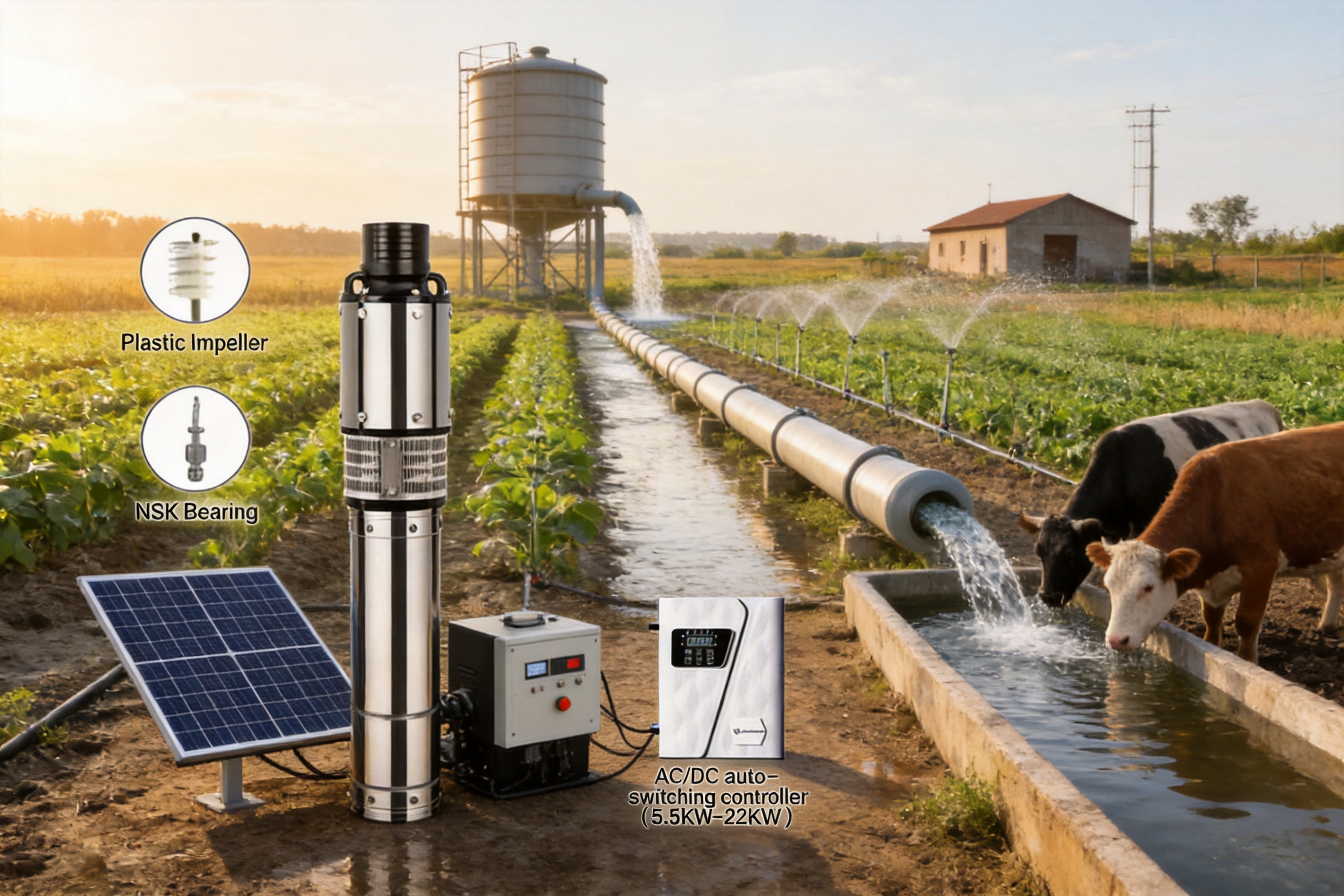
Large farms, orchards, greenhouses, and crop fields often require high-volume water transfer over long distances or significant elevation changes. The 6ADPC range provides multiple flow and head combinations, allowing system designers to match the pump to irrigation channels, storage tanks, pressure pipelines, and distribution networks.
Solar operation can be aligned with daytime irrigation schedules, reducing the amount of purchased electricity required during sunny periods. The AC input provides backup for cloudy weather, nighttime operation, or periods when irrigation demand exceeds solar generation. This makes the product suitable for hybrid agricultural energy systems rather than only small standalone solar installations.
Before installation, the designer should calculate the irrigation duty cycle, required pressure at sprinklers or drip lines, pipe diameter, friction losses, and the water level in the well. Oversizing the pump may increase energy consumption and create unnecessary pressure, while undersizing may result in inadequate field coverage.
Livestock require reliable access to clean water throughout the year. Ranches and remote farms may be located far from the electrical grid, making solar pumping attractive. However, animals cannot wait for ideal sunlight, particularly during hot seasons when water consumption increases.
The hybrid system provides a practical balance. Solar power can supply regular daytime pumping, while AC backup can support water delivery when required. Water can also be pumped into elevated storage tanks, allowing the system to store water during periods of strong solar production and distribute it later through gravity or a secondary pressure system.
In rural areas, the pump can support borehole water extraction for households, community facilities, schools, and small service buildings. The high-head configurations are suitable for deep wells and elevated storage tanks when the total dynamic head is carefully calculated.
Domestic water applications require particular attention to water quality, tank hygiene, electrical safety, and noise. The brushless motor and precision bearings support relatively quiet operation, while the sealed submersible construction keeps the pumping equipment below the water surface. Water intended for drinking should be tested and treated according to applicable regulations.
Community water projects and solar borehole installations often require durable equipment that can operate for long periods with limited technical support. A hybrid pump can improve resilience by combining renewable energy with a backup power source.
The product’s high-voltage DC requirements make it more suitable for professionally designed medium- and large-scale solar pumping systems than for small household photovoltaic kits. Engineers should account for array configuration, controller compatibility, cable length, voltage drop, lightning protection, grounding, and safe isolation procedures.
Industrial sites, construction projects, water storage facilities, and commercial properties may use the 6ADPC pump as part of a broader hybrid energy strategy. Solar power can reduce energy costs under normal conditions, while AC power maintains operation during periods of low solar output.
This arrangement can be combined with storage tanks, variable-speed controls, water-level sensors, pressure controls, and remote monitoring. The pump itself provides the hydraulic capacity, while the control system determines how effectively the complete installation responds to changing demand.
The manufacturer, Taizhou Edwin Electric Co., Ltd., was founded in 2008 and operates as an integrated manufacturing enterprise. Its stated capabilities include independent research and development, mass production, and global export. This combination is important for international buyers because product development, manufacturing coordination, and export service can be managed within an established organizational structure.
The company specializes in deep well pumps, submersible pumps, domestic booster pumps, and circulation pumps. Its broader product portfolio also includes surface pumps, garden pumps, pool and spa pumps, commercial multistage pumps, end-suction pumps, pipes, valves, pump accessories, and intelligent booster pumps. Such product breadth can support customers seeking multiple pump types from one supplier.
Since 2018, the company has invested in new energy and intelligent technology, including solar water pumps and intelligent booster pumps. The 6ADPC series reflects this development direction by combining renewable-energy compatibility, electronic control requirements, brushless motor technology, and high-capacity hydraulic design.
Independent research and development enables a pump manufacturer to coordinate hydraulic design, motor performance, materials, sealing, control compatibility, and production requirements. For a hybrid solar pump, these elements must work together. A motor designed only for conventional AC operation may not be suitable for photovoltaic input, while a basic solar pump may not be able to support industrial-scale flow and head requirements.
The 6ADPC design addresses several engineering requirements in one product family: high-voltage DC compatibility, AC backup operation, brushless motor efficiency, precision bearing support, plastic impeller performance, and deep-well installation. This integrated approach is a significant advantage over assembling unrelated components without coordinated design parameters.
Mass production can provide benefits in component planning, process consistency, production scheduling, and spare-parts availability. A product range with standardized model naming and repeated power configurations can help buyers manage procurement for multiple installations.
For project customers, production capability is particularly important when several pumps are required at the same time. Agricultural development programs, water infrastructure projects, and equipment distributors may need repeatable specifications and dependable order coordination. A manufacturer with experience in global export can also assist with packaging, documentation, and cross-border delivery arrangements.
The use of NSK bearings demonstrates attention to the mechanical components that affect smoothness, vibration, and service life. The stainless steel body and sealed structure are intended to resist rust and support operation in demanding water environments. The plastic impeller offers a corrosion-resistant alternative to some conventional metal designs.
Quality is not determined by one component alone. It depends on material control, machining accuracy, winding quality, sealing performance, assembly procedures, electrical testing, hydraulic testing, and final inspection. A professional pump manufacturing process should evaluate each of these areas before products are released for shipment.
The company established Taizhou Haipai Import and Export Co., Ltd. and Golden Falcon Industrial Co., Ltd. in 2012 to support procurement planning, order tracking, cross-border delivery, and foreign trade services. This structure is intended to provide a one-stop purchasing experience for international customers.
For buyers outside China, export support can be as important as the product itself. Clear specifications, accurate packing lists, timely production updates, shipping coordination, and responsive communication help reduce project risks. Customers purchasing complete pumping systems may also benefit from a supplier that can provide complementary pump types and accessories.
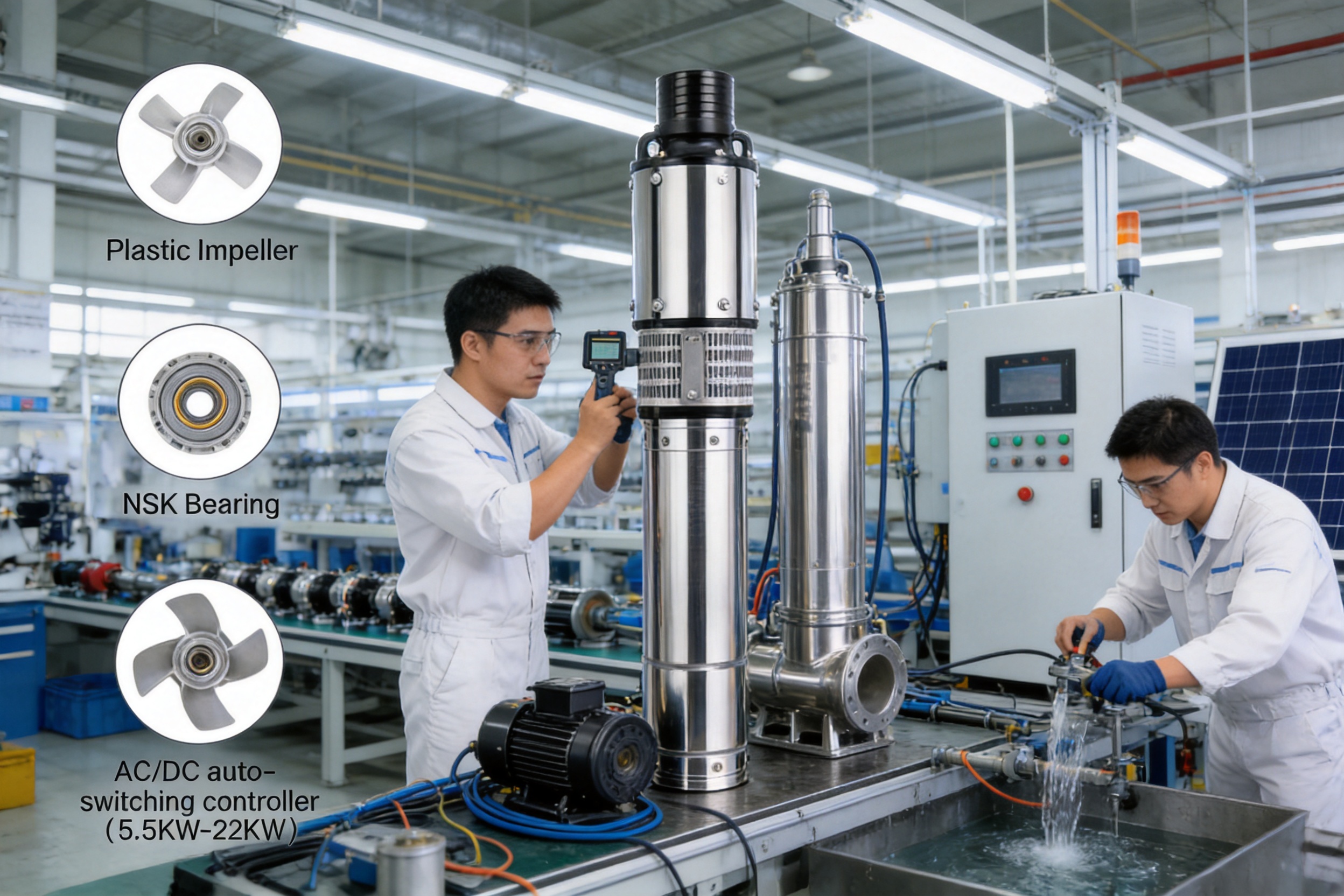
A high-capacity hybrid submersible pump requires controlled manufacturing at each stage. The body must maintain dimensional accuracy and corrosion resistance. The motor must be correctly wound and insulated. The shaft must align with the bearings and impeller. Seals must prevent water ingress into sensitive components. Electrical connections must be protected for submerged operation.
Manufacturing begins with the selection and inspection of stainless steel, engineering plastics, shaft materials, bearing components, cable assemblies, seals, and motor parts. Material quality directly influences corrosion resistance, mechanical strength, and service life. Components should be checked against design specifications before entering assembly.
The brushless motor assembly requires accurate placement of stator, rotor, shaft, bearings, insulation, and protective components. Electrical winding quality affects resistance, heat generation, starting behavior, and efficiency. Mechanical balance affects vibration and bearing loading.
Because the pump may be used for continuous operation, thermal management is essential. The surrounding water helps transfer heat from the submerged pump, but correct installation and adequate submergence remain necessary. Operation outside the rated conditions can increase thermal and mechanical stress.
The impeller and hydraulic passages must be assembled with appropriate clearances. Excessive clearance can reduce efficiency, while insufficient clearance may increase friction or create interference. The outlet and internal flow path must correspond to the selected model’s performance requirements.
Different head ratings within the product range are achieved through different hydraulic configurations. This allows the manufacturer to offer models for both high-volume, moderate-head applications and deep-well, high-head installations.
Submersible pump sealing is essential because the motor operates below the water surface. Seals and cable entries must protect the electrical components from water penetration. The sealed structure also helps prevent external contaminants from reaching sensitive internal parts.
Installation quality remains equally important. Cable joints, suspension arrangements, pipe connections, and control cabinets must be completed according to the manufacturer’s instructions. A well-designed pump can still suffer premature failure if the cable is damaged, the pump is suspended incorrectly, or the control system is improperly configured.
Finished pumps should undergo electrical and mechanical inspection before shipment. Typical production checks may include insulation testing, winding verification, bearing and shaft inspection, rotational checks, leak checks, vibration evaluation, and hydraulic performance testing. The precise testing program depends on the manufacturer’s internal procedures and the requirements of the ordered product.
Buyers should request appropriate technical documentation for their project, including model specifications, electrical requirements, performance curves, installation instructions, and available inspection records. This information helps confirm that the selected pump matches the intended duty point and installation environment.
The AC/DC hybrid configuration must be connected through a compatible controller or switching system. The photovoltaic array must be designed so that its operating voltage falls within the recommended DC range. The open-circuit voltage must remain below the specified limit, including possible cold-weather voltage increases.
The solar array is listed with a recommended power of at least 1.3 times the pump power. This guideline helps compensate for changing solar intensity, temperature effects, system losses, and the difference between rated panel output and actual field output. The exact array size should be determined by a qualified solar system designer.
Protection should include suitable circuit breakers, fuses, surge protection, grounding, isolation devices, and overload safeguards. AC and DC circuits must be treated as separate energy sources with appropriate disconnect procedures. High-voltage DC can remain dangerous even when the grid supply is disconnected.
The pump should be installed at a depth that maintains adequate submergence during operation. It should not rest directly on the bottom of the well, where it may draw sand or sediment. The well should be developed and cleaned before installation to reduce the risk of abrasive particles entering the hydraulic system.
The water level can change seasonally or during pumping. A sensor or protective control may be used to prevent dry running if the water level falls below the safe operating point. Dry operation can damage hydraulic components and increase motor temperature.
The 3-inch outlet listed for the product range must be connected to a pipe system that can carry the required flow without excessive friction loss. In some high-head models, the supplied cable length is 2.5 meters rather than 2 meters, but cable length should be confirmed for the selected model and installation design.
Pipe diameter, length, bends, valves, filters, check valves, and elevation all affect the final duty point. A pipeline that is too small may significantly reduce delivered flow and increase energy consumption. Check valves can help prevent reverse flow and water hammer, while correctly sized isolation valves simplify maintenance.
Water-level sensors, pressure switches, flow sensors, and tank controls can help automate the pumping system. An elevated tank can store water produced during periods of strong sunlight, reducing the need for immediate pumping at night. Remote monitoring may be valuable for large farms or community installations where the pump is located far from maintenance personnel.
Automation should be configured to avoid excessive starting and stopping. Frequent cycling can increase mechanical and electrical stress. Where appropriate, the control system should use gradual ramping, minimum run times, and protective shutdown settings.
The brushless motor reduces the need to replace mechanical brushes, but the pump still requires appropriate inspection and system maintenance. The well, pipeline, control cabinet, solar array, and electrical protection equipment should be checked periodically.
Routine maintenance may include checking operating current, monitoring flow and pressure, inspecting cable connections, verifying water levels, cleaning filters, checking for unusual vibration, and reviewing controller alarms. A noticeable reduction in flow may indicate a blocked intake, worn hydraulic components, a change in well level, pipeline obstruction, or an electrical issue.
The plastic impeller is corrosion-resistant, but it may still be affected by abrasive sand or hard particles. If the pumped water contains significant sediment, the system should use suitable well development, filtration, or sediment control. Excessive abrasives can reduce hydraulic efficiency and shorten component life.
When servicing the pump, all AC and DC supplies must be isolated. Solar panels can continue producing voltage in daylight, so the DC side requires special attention. Only qualified technicians should open electrical enclosures or work on submerged motor wiring.
Model selection should be based on the actual operating point rather than maximum specifications. Start by defining the required flow in cubic meters per hour. Next, calculate the total dynamic head, including the static lift, pressure requirement, pipeline friction, and losses through valves and fittings.
After the duty point is known, compare it with the performance curve for each candidate model. The preferred model should operate near an efficient portion of the curve, with sufficient margin for normal changes in water level and system demand. A pump that is too large may waste energy and create control difficulties, while a pump that is too small may fail to meet delivery requirements.
Consider the power source at the same time. The selected pump requires a compatible high-voltage DC solar system and AC supply. Review available grid voltage, solar resource, panel space, controller capacity, cable length, and backup operating schedule.
Water quality is another essential consideration. Confirm whether the water contains sand, suspended solids, minerals, salt, chemicals, or gases. The pump is described for water supply and irrigation applications, but unusual fluids should be reviewed with the manufacturer before purchase.
Finally, consider logistics and support. Buyers should confirm model availability, production lead time, spare parts, technical documents, packaging, shipping terms, installation support, and warranty conditions before placing an order.
The economic value of a hybrid solar pump depends on the relationship between the initial investment and the long-term cost of energy, maintenance, and downtime. Solar panels and control equipment require an upfront investment, but solar operation can reduce recurring electricity or fuel expenses.
Compared with diesel pumping, solar operation can reduce fuel purchases, transport requirements, oil changes, and engine maintenance. Compared with grid-only pumping, it can reduce daytime electricity consumption and provide a degree of energy independence. The AC backup capability helps protect the investment by ensuring that the pump can continue to serve the system when solar energy is temporarily unavailable.
Environmental benefits include reduced fuel combustion, lower direct operating emissions during solar operation, and quieter pumping. The brushless motor and plastic impeller are also designed to support efficient energy use. Actual environmental performance depends on the source of backup electricity, the efficiency of the solar array, equipment service life, and responsible end-of-life recycling.
The strongest economic results are usually achieved when the system is correctly sized and operated regularly. A pump that runs at a suitable duty point, uses an appropriately designed solar array, and fills a storage tank during high-sun periods can make better use of its available energy than a poorly matched installation.
For international pump buyers, product performance is only one part of the purchasing decision. Supplier reliability, technical communication, manufacturing capacity, export experience, and after-sales support also influence the success of a project.
Taizhou Edwin Electric Co., Ltd. combines pump manufacturing with research and development, mass production, and export service. Its product portfolio covers multiple pump categories, allowing customers to source deep well pumps, submersible pumps, booster pumps, circulation pumps, commercial multistage pumps, and related products through one established supply network.
The company’s focus on new energy and intelligent technology supports the development of products for modern water systems. The 6ADPC series is especially relevant to customers looking for a high-capacity solar pump that does not sacrifice the flexibility of AC backup operation.
For distributors, engineering contractors, agricultural equipment suppliers, and infrastructure developers, this combination can simplify product selection and procurement. A supplier able to support repeat orders and different pump applications may be more valuable than a supplier offering only one isolated product.
The 6ADPC is a high-capacity submersible pump designed for deep wells, agricultural irrigation, livestock water supply, rural water systems, solar boreholes, and hybrid pumping projects. It can use both DC power from a solar system and AC power from the grid.
Yes. When connected to a correctly designed AC supply and compatible control system, the pump can operate at night or during periods when solar output is insufficient. The exact switching method depends on the system controller and installation design.
The listed models use AC380/DC520V specifications. The recommended DC operating range is 520V to 650V, and the solar panel open-circuit voltage should remain below 900V. These are high-voltage requirements, so installation must be completed by qualified professionals.
The product information recommends solar panel power of at least 1.3 times the pump power. Actual array sizing should also consider solar radiation, temperature, cable losses, controller efficiency, seasonal conditions, and the desired operating schedule.
The available models include configurations with maximum listed flows of 68 cubic meters per hour and 88 cubic meters per hour. Actual flow depends on the selected model and the total system head.
The 68 cubic meter per hour range includes models with listed maximum heads up to 330 meters. The 88 cubic meter per hour range includes models with listed maximum heads up to 250 meters. Maximum head and maximum flow are different performance points and should not be treated as simultaneous values.
A brushless motor eliminates mechanical brushes, reducing brush wear, friction, and related maintenance. It is suitable for efficient operation and can provide stable performance when paired with an appropriate solar and hybrid control system.
The high-strength plastic impeller is lightweight, corrosion-resistant, and designed for efficient water delivery. It can be advantageous in many water applications where rust resistance and low rotational mass are important. Water containing heavy abrasives or aggressive chemicals should be reviewed before selection.
The pump uses NSK high-precision bearings. These bearings support smooth shaft rotation, reduced friction, mechanical stability, and quieter operation when the pump is correctly installed and operated within its design conditions.
It can support rural and off-grid domestic water supply, especially when connected to a suitable borehole and storage system. However, the listed power range and high-voltage electrical requirements make many models more suitable for professionally designed large-scale installations than for small household systems.
Buyers should provide the required flow, total dynamic head, well diameter and depth, static and pumping water levels, water quality, pipeline details, available AC power, solar resource, desired operating schedule, and installation location. This information allows the correct model and control system to be selected.
Yes. The company’s product lines include deep well pumps, submersible pumps, domestic booster pumps, circulation pumps, surface pumps, garden pumps, pool and spa pumps, commercial multistage pumps, end-suction pumps, intelligent booster pumps, pump accessories, pipes, and valves.
The 6ADPC AC/DC Brushless Motor Solar Deep Well Pump with Plastic Impeller is designed for water systems that require both renewable-energy efficiency and dependable operating flexibility. Its dual AC/DC compatibility allows solar power and grid power to work within one pumping solution, reducing dependence on a single energy source.
The brushless motor supports efficient, low-maintenance operation, while NSK bearings contribute to smooth mechanical performance. The high-strength plastic impeller provides a lightweight and corrosion-resistant hydraulic component, and the stainless steel body and sealed construction are intended for demanding submersible applications.
With flow configurations up to 88 cubic meters per hour, head options reaching as high as 330 meters, and power ratings from 5,500 watts to 37,000 watts, the series covers a broad range of agricultural, rural, livestock, borehole, and commercial water requirements. Correct system design remains essential: the pump must be matched to the duty point, solar array, controller, well, pipeline, and electrical protection system.
Supported by a manufacturer with experience in research and development, mass production, pump manufacturing, new-energy technology, and international export, the product offers a strong option for customers seeking a professional hybrid solar pumping solution. Its greatest competitive advantage is the combination of large-scale hydraulic capability, renewable-energy compatibility, AC backup flexibility, brushless motor technology, and a product platform suitable for modern water infrastructure.
1. Product technical information for the 6ADPC AC/DC Brushless Motor Solar Deep Well Pump with Plastic Impeller.
2. Manufacturer-provided model specifications, performance data, electrical requirements, and application information.
3. General engineering principles for submersible pump selection, total dynamic head calculation, and solar photovoltaic system sizing.
4. General maintenance practices for brushless motors, submersible pumps, solar pumping systems, and high-voltage electrical equipment.
5. General principles of agricultural irrigation, borehole water supply, livestock watering, and hybrid renewable-energy system design.
edwina@edwin-pump.com
+86-13586290903 (WhatsApp)
Xuri Gongliang Cutting Tool Entrepreneurship Park, Wenqiao Town, Wenling City, Taizhou City, Zhejiang Province, China

High Performance Smart Pump Factory


 English