edwina@edwin-pump.com

View All Products
en
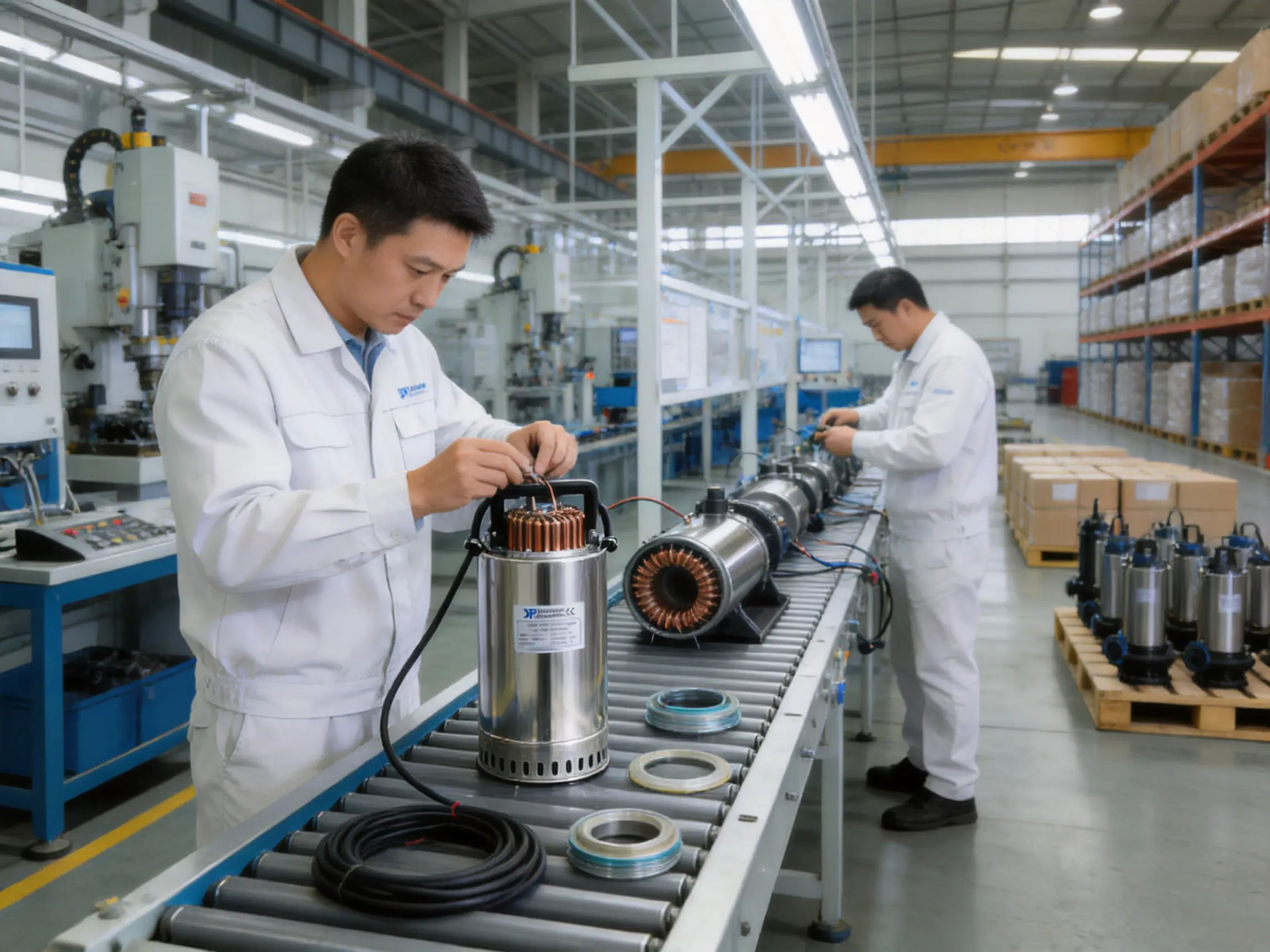
Efficient water movement is essential in homes, farms, construction sites, industrial facilities, and municipal environments. Whenever wastewater, accumulated water, or drainage water must be removed from a low-lying area, the pump must deliver dependable performance under demanding conditions. The Submersible Sewage Pump SPS is designed for this purpose. It combines compact electrical operation, submersible installation, practical protection features, and broad application flexibility in one drainage solution.
The SPS is intended for applications involving urban well water pumping, field irrigation and drainage, garden irrigation, household water supply, industrial accumulated-water drainage, construction-site water management, and livestock-breeding facilities. Its ability to operate while immersed makes it particularly useful where conventional surface-mounted equipment would require additional priming arrangements, suction piping, or a separate installation platform.
Unlike a pump that must remain outside the water source, a submersible pump is installed directly in the liquid. This arrangement can reduce installation complexity and allows the pump to work close to the lowest point of a pit, tank, well, or drainage area. The result is a practical solution for transferring water away from locations where flooding, standing water, or limited access can interrupt normal operations.
The SPS product is engineered as a submersible sewage pump for water removal and transfer duties. It is suitable for situations where water must be drained quickly and reliably from a defined location. Examples include accumulated water around construction areas, drainage from agricultural land, water in wells, household drainage points, and water management in livestock facilities.
Its maximum immersion depth is 5 meters, while the maximum liquid temperature is 40°C. These operating limits make the pump suitable for ordinary ambient-temperature water and many routine drainage applications. Before installation, users should confirm that the liquid characteristics, temperature, solids content, electrical supply, and required discharge conditions are compatible with the pump specification.
The pump’s submersible construction supports direct placement in the liquid. This helps eliminate the need for a long suction lift and can simplify the overall system layout. In drainage applications, the pump can be positioned in a sump, pit, well, or collection area, with the discharge line routed toward an approved drainage point or storage location.
For users, the principal value of the SPS is not limited to its ability to move water. A complete drainage solution must also be easy to install, safe to operate, suitable for repeated use, and reliable in changing working conditions. The SPS addresses these requirements through a built-in thermal protector, a copper-wound motor, Class B insulation, and IPX8 protection.
Direct immersion is one of the most important advantages of the SPS design. Because the pump operates inside the water, the distance between the liquid and the pumping mechanism can be minimized. This is especially valuable in pits, wells, and drainage areas where suction pipes may be difficult to arrange.
Surface pumps generally require careful suction-pipe installation and may need priming before operation. Air leakage in the suction line can reduce performance or prevent the pump from lifting water. A submersible pump avoids many of these concerns because the pumping unit is already positioned in the liquid. This can make commissioning faster and reduce the number of external components required for basic operation.
The submersible arrangement can also support quieter operation. Since the motor and pump are immersed, the surrounding liquid can help reduce airborne mechanical noise. Noise performance will vary according to installation conditions, pipework, water level, and operating environment, but the underwater operating position is naturally well suited to locations where surface noise should be limited.
The motor uses copper winding. Copper is widely valued in motor construction because of its electrical conductivity, thermal behavior, and durability. A properly manufactured copper-wound motor can support efficient electrical energy transfer and stable electromagnetic performance.
For a drainage pump, motor reliability is especially important because the pump may be used in damp environments and under extended operating periods. The quality of winding materials, insulation, assembly, and testing all contribute to the motor’s service performance. Copper winding provides a strong foundation for consistent operation when the pump is used within its specified conditions.
The use of copper winding also supports the product’s positioning as a practical, quality-oriented pump rather than a short-term emergency device. For households, agricultural operators, contractors, and facility managers, this can help reduce concerns about frequent interruptions and premature motor deterioration.
The SPS includes a built-in thermal protector. This feature is designed to help protect the motor if operating temperature rises beyond a safe range. Excessive heat can occur because of overload, restricted flow, unsuitable voltage, blocked passages, insufficient cooling, or other abnormal operating conditions.
Thermal protection adds an important layer of operational safety. It does not replace correct installation, proper electrical protection, or routine inspection, but it can help reduce the risk of motor damage during certain overheating events. By incorporating the protector into the motor system, the pump is better prepared for the variable conditions often encountered in drainage work.
Drainage environments are not always predictable. Water levels can change, discharge lines may become restricted, and the pump may be exposed to intermittent operation. A built-in thermal protector helps make the motor more resilient in practical field conditions. Users should still investigate the cause of any thermal interruption rather than repeatedly restarting the pump without inspection.
The motor insulation class is Class B. Insulation class indicates the thermal capability of the motor’s insulation system. Class B insulation is commonly used in electrical motors and is designed for operating temperatures appropriate to its classification when the motor is correctly selected and operated.
For an immersed pump motor, insulation quality is particularly important. The motor must maintain electrical separation and withstand the operating environment over time. The combination of Class B insulation and IPX8 protection supports a design intended for submerged operation, provided that installation, voltage, cable handling, and maintenance requirements are followed.
Good insulation is not only a matter of performance; it is also a safety consideration. Users should never operate a damaged cable, modify the factory electrical assembly, or handle the pump while it is connected to an energized power source. Qualified electrical installation and appropriate protective equipment remain essential.
The SPS has an IPX8 protection rating. IPX8 is associated with protection against continuous immersion in water under conditions defined by the manufacturer or applicable testing requirements. This rating is particularly relevant to submersible equipment because the pump is intended to operate below the water surface.
IPX8 protection provides an important advantage over equipment designed only for splash resistance or occasional contact with water. It supports the pump’s fundamental operating concept: installation inside the liquid rather than outside it. The rating also gives users greater confidence when selecting the product for wells, pits, drainage tanks, and other submerged environments.
However, an IP rating does not mean that the pump can be placed in every liquid or used beyond its stated limits. The maximum immersion depth remains 5 meters, and the maximum liquid temperature is 40°C. Chemicals, abrasive particles, corrosive liquids, excessive solids, or abnormal pressure conditions may require a different pump design. Application verification should always be completed before purchase.
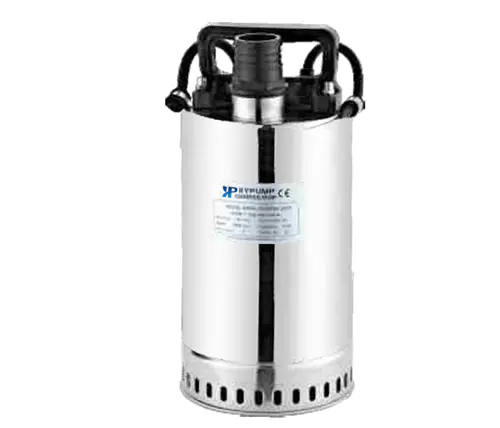
SUBMERSIBLE SEWAGE PUMP SPS
A surface pump is installed outside the water source and draws water through a suction pipe. This arrangement can be effective in suitable conditions, but it depends on correct priming, airtight suction connections, and an acceptable suction lift. If the suction line leaks or the water level falls too far, the pump may lose prime or operate inefficiently.
The SPS operates inside the liquid, so it does not rely on the same suction-lift arrangement. This makes it a strong alternative for low-level drainage, wells, pits, and areas where the water source is difficult to access. The installation can be more compact, and there may be fewer external components to assemble.
For emergency drainage, simplicity can be a major advantage. A submersible pump can often be lowered into the collection area, connected to a discharge pipe, and electrically supplied through a properly protected circuit. The exact installation process depends on local regulations and site conditions, but the basic concept is straightforward.
Some drainage systems use an externally mounted pump connected to a tank or sump. Such systems may require additional valves, suction fittings, priming arrangements, and support structures. They can also occupy more floor space and expose the motor to the surrounding environment.
The SPS integrates the pumping unit into a compact submerged assembly. This can reduce the footprint around the drainage point and help keep the motor away from direct exposure to dust, spray, and accidental contact. The submerged position may also support more stable cooling during operation because the motor is surrounded by liquid within the approved conditions.
These advantages are especially useful in construction sites, agricultural areas, and household drainage locations where space is limited. A compact submersible design can be placed where a larger external assembly would be inconvenient or vulnerable to damage.
Some small drainage pumps are designed primarily for occasional household use. They may be suitable for light-duty applications but may not provide the same combination of motor protection, insulation design, and manufacturer support expected by professional users.
The SPS is presented as a versatile product for domestic, agricultural, construction, industrial, and livestock-related environments. Its copper winding, built-in thermal protector, Class B insulation, and IPX8 protection indicate a design focused on dependable operation in real working conditions rather than use in only one narrow scenario.
Application flexibility can reduce procurement complexity. Contractors, distributors, and facility managers may use the same product family for several types of drainage work, while still confirming that each application falls within the rated operating limits.
Urban wells and water collection points may require compact equipment that can operate in a confined, submerged space. The SPS can be considered for well water pumping when the depth, liquid temperature, electrical supply, and water quality are compatible with its specifications.
Its maximum immersion depth of 5 meters provides a defined operating boundary for shallow or moderately deep submerged installations. Before use in a well, the installer should verify the well diameter, pump dimensions, discharge route, cable length, water level variation, and accessibility for maintenance.
Agricultural fields often experience changing water levels and uneven terrain. During dry periods, water may need to be transferred from a collection point to an irrigation area. During heavy rainfall, excess water may need to be removed to protect crops, soil conditions, and access routes.
The SPS can support these tasks when used with a suitable discharge hose or pipe and a properly designed electrical supply. Its submersible format is useful in collection pits, temporary tanks, drainage channels, and other locations where water accumulates below the surrounding ground level.
Farm operators should keep the pump clear of large debris, ropes, stones, and materials that could obstruct the inlet or damage internal components. A screened intake or suitable protective arrangement may be considered where local conditions involve leaves, fibers, or other floating materials.
Garden irrigation systems may draw water from tanks, shallow wells, rainwater collection points, or temporary storage containers. The SPS can provide a convenient pumping option when a submerged pump is preferred.
For garden use, the installer should ensure that the pump is fully supported and not suspended by the electrical cable. The discharge line should be routed to avoid sharp bends and unnecessary restrictions. If the pump is used intermittently, it should be inspected periodically to confirm that the inlet remains clear and that the cable and plug remain in safe condition.
Households may require pumping support for basements, utility pits, rainwater tanks, wells, garden storage, or accumulated water near buildings. A compact submersible pump can be valuable where space is restricted and water must be removed from a low point.
The SPS may be used for household water movement when the application matches the product’s intended conditions. It can help transfer accumulated water away from a basement or drainage point, support water movement from a tank, or assist with small-scale outdoor irrigation.
Domestic users should pay close attention to electrical safety. The power supply must include suitable protection, and the pump should not be operated in a location where people can come into contact with energized equipment or contaminated water. If the application involves potable water, users must independently confirm whether the pump materials and approvals are suitable for drinking-water service.
Industrial facilities may experience water accumulation around equipment foundations, service pits, workshops, storage areas, and process spaces. Removing this water quickly can help protect property, maintain access, and support safer working conditions.
The SPS may be considered for ordinary accumulated-water drainage where the liquid temperature does not exceed 40°C and the liquid is compatible with the pump. Industrial users should evaluate whether the water contains oil, solvents, corrosive chemicals, abrasive particles, or unusual solids. Such conditions may require a specialized industrial sewage or chemical pump.
The pump’s thermal protection and submersible construction can support routine industrial drainage duties, but the product should not be selected solely on the basis of the application name. A qualified technical review should confirm the liquid properties, expected operating schedule, discharge head, flow requirements, and electrical conditions.
Construction sites commonly contain temporary pits, foundation excavations, trenches, and low areas where rainwater or groundwater collects. A submersible pump can be placed directly in the collection area and used to transfer water away from the active work zone.
The SPS is suited to this type of practical drainage when the site conditions fall within its operating limits. Its compact structure can be useful where equipment must be moved between temporary locations. The IPX8 protection rating supports submerged operation, while the built-in thermal protector provides additional motor protection during demanding use.
Construction users should protect the pump and cable from vehicles, sharp aggregate, falling objects, and accidental impact. The pump should be lowered and lifted using an appropriate handle or support method, never by pulling the power cable. A clean, stable position can help maintain inlet flow and reduce the risk of blockage.
Livestock-breeding facilities require regular water management around cleaning areas, drainage channels, storage points, and service zones. The SPS can help remove accumulated water in suitable areas, supporting cleaner and more manageable working conditions.
Because agricultural and livestock environments may contain organic matter, fibers, sediment, and debris, careful installation and inspection are important. The pump must be selected according to the actual liquid composition. If the water contains larger solids or fibrous waste, users should verify that the SPS is appropriate or choose a model specifically designed for higher solids handling.
Taizhou Edwin Electric Co., Ltd. was founded in 2008 as an integrated manufacturing enterprise specializing in independent research and development, mass production, and global export. This integrated structure is significant because pump quality depends on more than the final assembly stage.
Independent research and development helps a manufacturer understand hydraulic design, motor construction, protection systems, materials, assembly methods, and application requirements. Mass-production capability supports repeatability, while export experience helps the company manage product documentation, packaging, communication, and international purchasing requirements.
For customers, an integrated manufacturer can provide a more direct relationship between product design, factory production, quality control, and after-sales communication. This can be valuable for importers and distributors that require consistent product supply and dependable coordination across multiple orders.
Independent research and development allows the manufacturer to adapt products to changing market expectations. The company’s product portfolio includes deep well pumps, submersible pumps, domestic booster pumps, circulation pumps, solar water pumps, intelligent booster pumps, and other water-pumping products.
This broader technical background can support the development of products for different pressure, flow, installation, and control requirements. In the case of the SPS, the focus is on practical submersible drainage, motor protection, submerged operation, and application versatility.
Research and development also supports continuous improvement. Product refinement may involve motor winding methods, insulation systems, sealing arrangements, pump-body design, component selection, production fixtures, inspection procedures, and packaging. Although individual improvements depend on the specific model and production program, an established R&D structure gives the manufacturer a foundation for systematic product development.
Mass production is valuable when it is supported by standardized processes and appropriate inspection. A pump contains multiple elements that must work together: the motor, winding, insulation, seals, electrical cable, pump body, hydraulic components, fasteners, and protective systems.
Consistent manufacturing helps reduce variation between units. Repeated assembly procedures, controlled component sourcing, production inspection, and final testing can support stable performance across larger orders. This is particularly important for distributors, project contractors, and original equipment buyers that need dependable product consistency.
For the SPS, manufacturing quality is directly connected to its core advantages. Copper winding must be correctly formed and insulated. The thermal protector must be integrated properly. Sealing components must support the IPX8 design objective. Mechanical and electrical assemblies must be inspected before the pump is released for shipment.
The company describes its business as focused on quality, innovation, high-performance water pumps, and one-stop procurement services. This positioning reflects the needs of international pump buyers, who often require more than a single product shipment.
Quality-oriented production begins with selecting appropriate materials and components. It continues through motor assembly, winding, insulation, sealing, mechanical assembly, electrical inspection, functional testing, and packaging. Each stage contributes to the finished product’s ability to perform in a wet and demanding environment.
For a submersible pump, final inspection should pay particular attention to electrical safety, insulation condition, cable integrity, sealing performance, motor operation, abnormal noise, vibration, and overall assembly quality. Specific test procedures and acceptance criteria may vary by model and market, but systematic verification is essential.
Since its establishment, the company has developed a global export orientation. To support different purchasing needs, it established Taizhou Haipai Import and Export Co., Ltd. and Golden Falcon Industrial Co., Ltd. in 2012. These related organizations support procurement planning, order tracking, cross-border delivery, and foreign trade services.
This supply-chain experience can benefit overseas customers seeking a coordinated purchasing process. International pump orders often involve product selection, technical confirmation, packaging requirements, shipping documents, production schedules, payment coordination, and delivery planning. A manufacturer with experience in these areas can help reduce communication gaps between factory production and international distribution.
Export capability is also relevant to product packaging and documentation. Pumps must be protected during transportation, and buyers may require consistent labeling, product information, spare-parts coordination, and shipment records. Professional handling of these details can make the procurement process more efficient.
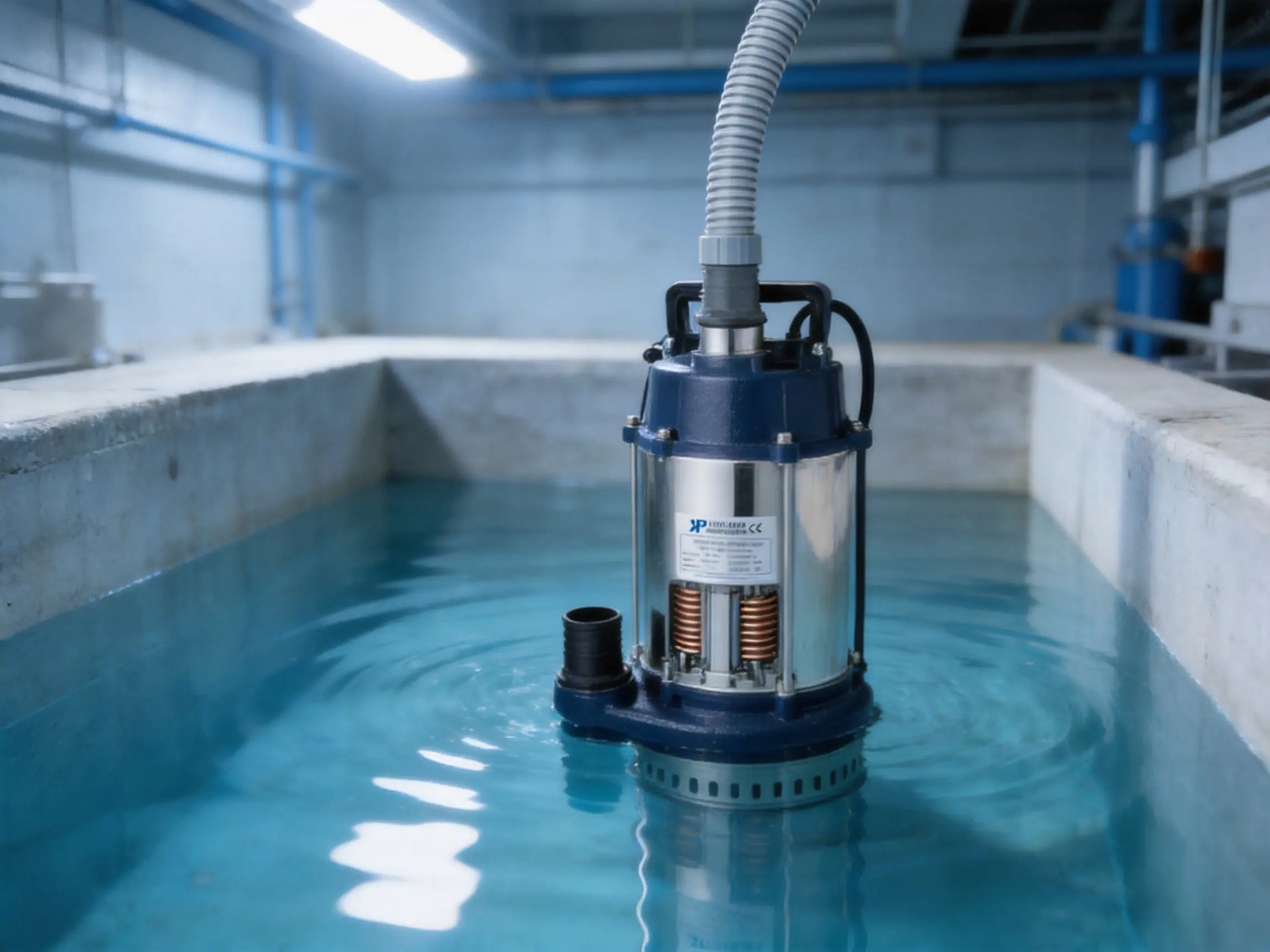
The copper-wound motor is central to the SPS’s performance. During production, winding quality affects electrical efficiency, heat generation, torque, and long-term stability. The winding must be correctly positioned and securely insulated so that the motor can function safely within its intended operating range.
Electrical assembly also includes cable connection, insulation protection, terminal arrangements, and integration of the thermal protector. These areas require careful workmanship because the pump is designed for submerged operation. A small weakness in an electrical connection or sealing point can have serious consequences in a wet environment.
Submersible pumps require effective separation between the electrical components and the surrounding liquid. Sealing systems, cable entry points, housing interfaces, and mechanical joints all contribute to the overall protection level.
The IPX8 rating stated for the SPS reflects its intended continuous-immersion capability under defined conditions. Maintaining this protection depends on correct factory assembly and proper field handling. Users should not open sealed sections unnecessarily, cut or splice cables without authorization, or operate the pump after visible damage without professional inspection.
Functional testing helps verify whether the assembled pump operates as intended. A complete production approach may include electrical checks, insulation checks, motor running tests, visual inspection, noise and vibration observation, and verification of protective functions. The precise test program depends on the manufacturer’s internal standards and the requirements of the destination market.
Thermal protection should be treated as part of the product’s safety architecture. Testing and quality control help confirm that the motor protector is correctly installed and that the electrical system responds appropriately under relevant conditions.
Packaging is an important part of pump manufacturing because the product may travel through multiple handling stages before reaching the final customer. Proper packaging should protect the pump body, cable, fittings, and external surfaces from impact, moisture, abrasion, and compression during transportation.
Export customers may also require packaging adapted to container loading, palletization, warehouse storage, or retail distribution. The company’s international procurement and export experience supports the coordination of these requirements with production and shipping schedules.
Correct installation is essential for obtaining the full benefit of the SPS design. Before installation, inspect the pump, cable, plug, discharge connection, and protective components. Do not use the pump if the cable is damaged, the housing is cracked, or the equipment shows signs of impact.
Confirm that the liquid temperature does not exceed 40°C and that the installation depth does not exceed 5 meters. The pump should be placed in a stable position where the inlet can remain open. Avoid placing it directly in heavy sediment, mud, or loose debris that could block the inlet or restrict water movement.
The discharge pipe or hose should be correctly sized and routed with as few unnecessary bends as possible. Excessive restriction can reduce flow and increase operating stress. The discharge end should be secured so that movement or water pressure does not pull the pump out of position.
Never lift or suspend the pump by its electrical cable. Use the designated handling point, a suitable rope, or an approved support arrangement. The cable should be protected from sharp edges, heat, vehicles, animals, and standing mechanical loads.
The electrical supply should be installed by a qualified person and should include appropriate overload and residual-current protection according to local electrical regulations. The pump must be disconnected from the power supply before inspection, cleaning, relocation, or maintenance.
Users should also verify the direction of water discharge and ensure that drained water is routed to a safe and approved location. In sewage or contaminated-water applications, appropriate personal protective equipment and hygiene procedures are required.
Routine inspection can help maintain dependable performance. After operation, users should check whether the pump has unusual noise, excessive vibration, reduced flow, repeated thermal interruptions, or visible damage. Any change in performance should be investigated before continued use.
The inlet area should be kept clear of leaves, fibers, sediment, and other material. If the pump has been used in dirty water, it may require cleaning after removal from service. Cleaning should be performed only after the electrical supply has been disconnected and the pump has been safely removed from the liquid.
Mechanical seals, cables, connectors, and housing interfaces should be examined during scheduled maintenance. If a seal is damaged or the cable insulation is compromised, the pump should be repaired by an authorized or suitably qualified service professional.
Thermal protection should not be bypassed. If the protector interrupts operation, identify the cause. Possible causes may include a blocked inlet, restricted discharge line, incorrect voltage, overload, excessive liquid temperature, or mechanical damage. Repeated resetting without diagnosis can increase the risk of permanent motor failure.
When storing the pump, clean it appropriately, dry external surfaces, protect the cable, and keep the equipment in a secure location. Avoid dropping the pump or storing it where freezing conditions, chemicals, or sharp objects can cause damage.
Buyers should evaluate more than the product name when selecting a submersible sewage pump. The most suitable pump depends on the liquid, required flow, total discharge head, operating frequency, installation depth, electrical supply, pipe size, and environmental conditions.
The SPS offers a defined maximum immersion depth of 5 meters and a maximum liquid temperature of 40°C. These values should be used as part of the initial selection process. If the installation is deeper, hotter, more chemically aggressive, or more heavily contaminated than these conditions allow, a different model may be required.
Distributors should also confirm the intended customer segment. The SPS may be relevant to agricultural suppliers, construction-equipment distributors, plumbing wholesalers, household water-equipment retailers, industrial maintenance suppliers, and irrigation specialists.
Its broad application range can make it suitable for organizations that serve several markets. Rather than stocking a pump for only one narrow use, a distributor may be able to position the SPS for drainage, well water transfer, garden irrigation, household water movement, and suitable industrial or agricultural duties.
Technical communication remains important. Buyers should request the applicable performance curve, electrical data, dimensions, cable details, outlet information, packaging specifications, and certification documents where required. The product information provided here establishes the key construction and application characteristics, while detailed project selection should be based on the complete technical datasheet.
A reliable pump purchase includes both hardware and service coordination. International customers may need support with model selection, production schedules, packaging, shipping, documentation, replacement parts, and technical questions. A manufacturer with integrated production and export experience can help coordinate these stages more effectively.
Edwin Pump serves customers in multiple sectors, including new energy projects, agricultural irrigation, municipal engineering, mining, construction, HVAC systems, and household water supply. This application experience provides a useful foundation for understanding the different demands placed on pumping equipment.
The company has also expanded into solar water pumps and intelligent booster pumps since 2018. This development reflects continued investment in new energy and intelligent technology. Although the SPS is a submersible sewage and drainage product, a broad product portfolio can benefit customers that require several types of water-pumping equipment from one supplier.
One-stop procurement can simplify sourcing for projects that use different pump categories. A customer may need a submersible drainage pump for construction, a deep well pump for water supply, a booster pump for pressure support, and a circulation pump for an HVAC installation. A manufacturer with multiple product lines may help consolidate communication and purchasing activities.
| Purchasing Consideration | Value Offered by the SPS and Its Manufacturer | Buyer Benefit |
|---|---|---|
| Installation method | Direct submersible operation | Practical installation in wells, pits, tanks, and drainage areas |
| Motor construction | Copper winding and Class B insulation | Stable electrical performance within the approved operating range |
| Operational protection | Built-in thermal protector | Additional protection against certain overheating conditions |
| Water protection | IPX8 protection rating | Designed for continuous immersion under specified conditions |
| Application flexibility | Suitable for selected domestic, agricultural, construction, industrial, and livestock duties | One product can serve several practical drainage requirements |
| Manufacturing background | Independent R&D, mass production, and global export experience | More coordinated product development and supply support |
| Product portfolio | Submersible, deep well, booster, circulation, solar, and related pump lines | Potentially simplified multi-product procurement |
The table summarizes the practical reasons why the SPS can be considered for professional and general-purpose drainage applications. It is not a substitute for a technical selection review, but it shows how the product’s construction, protection features, and supplier capabilities work together.
The SPS should be used within its stated operating limits. The maximum immersion depth is 5 meters, and the maximum liquid temperature is 40°C. These limits should be observed during both normal operation and temporary conditions such as seasonal flooding or emergency drainage.
Users should not assume that every type of sewage or wastewater is suitable. Liquids containing strong chemicals, flammable substances, high concentrations of abrasive solids, large fibrous materials, or unusually high temperatures may require specialized pump materials or hydraulic designs.
The pump should also not be used as a substitute for proper wastewater treatment. In applications involving contaminated water, the operator must follow applicable environmental, hygiene, and disposal requirements. The pump transfers liquid; it does not remove all biological, chemical, or physical hazards.
Where local regulations require special certifications, electrical protection, or installation procedures, those requirements must be confirmed before operation. Professional installation is recommended for permanent systems, commercial facilities, industrial environments, and locations where electrical or health risks are present.
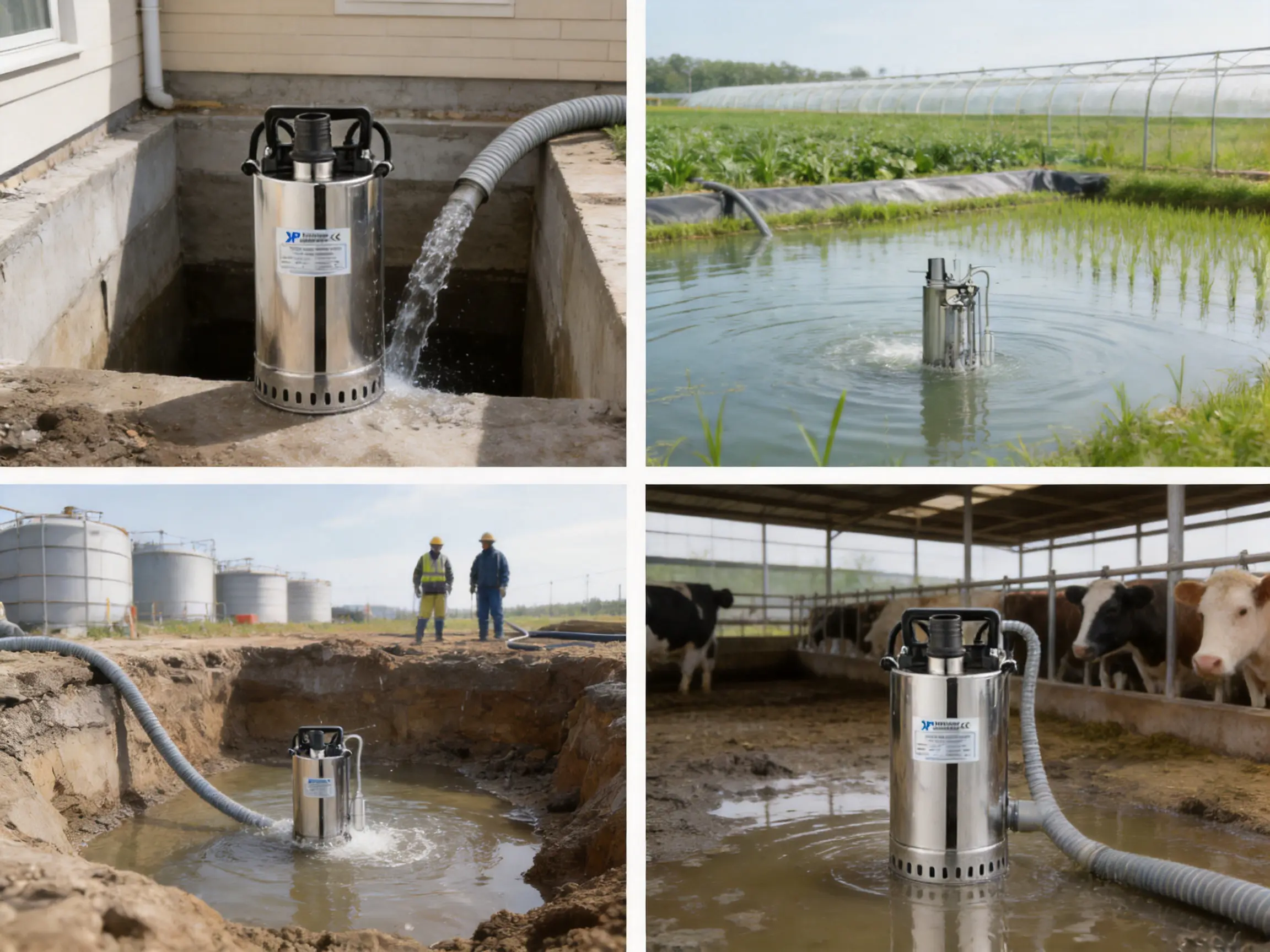
The SPS is designed for submersible sewage, drainage, and water-transfer applications. It can be used for suitable urban well water pumping, field irrigation and drainage, garden irrigation, household water supply, industrial accumulated-water drainage, construction-site drainage, and livestock-breeding facilities.
The maximum immersion depth stated for the SPS is 5 meters. The pump should not be installed deeper than this limit unless the manufacturer provides specific approval for another operating condition.
The maximum liquid temperature is 40°C. Users should measure or confirm the expected liquid temperature before selecting the pump, especially in industrial environments or enclosed areas exposed to heat.
Yes. The SPS includes a built-in thermal protector. This feature helps protect the motor during certain overheating conditions, but it does not replace correct installation, electrical protection, inspection, or maintenance.
The motor uses copper winding. Copper supports electrical conductivity and is widely used in quality motor construction. Proper winding assembly and insulation are still essential for reliable performance.
IPX8 indicates protection suitable for continuous immersion under conditions defined by the manufacturer or applicable testing requirements. It supports the SPS’s submersible design. The rating does not permit operation beyond the maximum immersion depth, temperature, or liquid compatibility limits.
Yes, it may be used for suitable household drainage and water-transfer applications, including accumulated water in basements, pits, tanks, gardens, and other low areas. The electrical installation must be safe and compliant with local regulations.
It can be considered for field and garden irrigation when the water source, discharge requirements, electrical supply, and liquid characteristics are suitable. The pump should be selected according to the required flow and discharge head.
No. The term sewage can describe liquids with very different solids, fibers, chemicals, and temperatures. Users should confirm the actual liquid characteristics before purchase. Heavy solids, corrosive liquids, or high-temperature wastewater may require a specialized model.
The pump should be lifted with a suitable handle, rope, or approved support arrangement. It should never be lifted or suspended by the electrical cable, because cable damage can create a serious electrical and operational hazard.
Check the pump body, cable, power connection, discharge connection, operating depth, liquid temperature, inlet condition, and electrical protection. Confirm that the water is compatible with the pump and that the discharge route is safe and unrestricted.
Disconnect the power and investigate the cause. Check for a blocked inlet, restricted discharge, incorrect voltage, excessive liquid temperature, overload, or mechanical damage. Do not repeatedly restart the pump without resolving the underlying problem.
The supplier was founded in 2008 and operates as an integrated manufacturer with independent research and development, mass-production, and global-export capabilities. Its broader product portfolio includes submersible pumps, deep well pumps, domestic booster pumps, circulation pumps, solar water pumps, intelligent booster pumps, and related products.
Yes. The company has established related import and export organizations to support procurement planning, order tracking, cross-border delivery, and foreign-trade services. Buyers should communicate technical, packaging, documentation, and delivery requirements before placing an order.
The Submersible Sewage Pump SPS is a practical solution for water drainage and transfer in applications ranging from households and gardens to farms, construction sites, industrial facilities, wells, and livestock environments. Its direct submersible installation can simplify water removal from pits and low-lying areas, while its copper-wound motor, built-in thermal protector, Class B insulation, and IPX8 protection support dependable operation within the stated limits.
Its main advantage over many surface-mounted alternatives is the ability to operate directly in the liquid without relying on a conventional suction-lift arrangement. This can make installation more convenient, particularly where space is restricted or water accumulates below ground level. The product’s application flexibility also allows it to serve several drainage and water-transfer requirements.
The strength of the SPS is supported by the manufacturer’s broader capabilities. Since 2008, Taizhou Edwin Electric Co., Ltd. has developed an integrated approach based on independent R&D, mass production, international export, and a growing range of pump technologies. Its experience in agriculture, construction, municipal engineering, mining, HVAC, household water supply, and new-energy applications provides a foundation for serving diverse customers.
For the best results, the pump must be correctly selected, installed, operated, and maintained. Users should observe the 5-meter maximum immersion depth and 40°C maximum liquid temperature, confirm liquid compatibility, protect the electrical system, and arrange professional inspection when necessary. With these requirements properly managed, the SPS can provide a reliable and versatile solution for everyday drainage and water-management duties.
1. Manufacturer-provided product information for the Submersible Sewage Pump SPS.
2. Manufacturer-provided company profile and product portfolio information.
3. General principles of submersible pump installation, operation, and maintenance.
4. General guidance on electric motor winding, insulation classes, and thermal protection.
5. General guidance on enclosure protection ratings for electrical equipment used in wet and submerged environments.
6. General practices for agricultural irrigation, construction-site drainage, household water management, and industrial accumulated-water removal.
serieswatershortageprotectionvoltagestabilizationstainlesssteelverticalmultistagepump.jpg "EVR(S) Series Water Shortage Protection Voltage Stabilization Stainless Steel Vertical Multistage Pump")
edwina@edwin-pump.com
+86-13586290903 (WhatsApp)
Xuri Gongliang Cutting Tool Entrepreneurship Park, Wenqiao Town, Wenling City, Taizhou City, Zhejiang Province, China

High Performance Smart Pump Factory


 English