edwina@edwin-pump.com

View All Products
en
Modern gardens, ponds, fountains, irrigation systems, and outdoor water features require dependable water movement. A pump must do more than transfer water from one location to another. It must deliver sufficient lifting performance, operate safely for extended periods, tolerate outdoor conditions, and remain practical to install and maintain. The EGP-10 Series High-Lift Safety Widely Application Garden Submersible Pump has been developed to address these requirements through a combination of high lifting capability, durable construction, built-in protection, flexible connection options, and broad application suitability.
Designed for submersible operation, the EGP-10 Series can be installed directly in a water source. This configuration helps reduce installation complexity because the pump does not need to be positioned outside the pond, tank, or water feature. Once correctly installed, it can provide water circulation, irrigation support, fountain operation, waterfall supply, and other outdoor pumping functions. The series includes two main models: the EGP-10-1 with a rated power of 900 W and the EGP-10-2 with a rated power of 1,100 W.
The product is manufactured by Taizhou Edwin Electric Co., Ltd., an integrated pump enterprise with experience in research and development, mass production, and international export. The company’s wider product portfolio includes deep well pumps, submersible pumps, domestic booster pumps, circulation pumps, solar water pumps, intelligent booster pumps, and related water treatment products. This broad product background supports the development of pumps for agricultural irrigation, household water supply, municipal applications, construction, mining, HVAC systems, and new energy projects.
This article examines the technical characteristics, application value, safety features, manufacturing strengths, installation considerations, and competitive advantages of the EGP-10 Series. It also explains how buyers, distributors, contractors, gardeners, and project planners can evaluate whether this high-lift garden submersible pump is suitable for their specific requirements.
The EGP-10 Series is a high-lift garden submersible pump intended for outdoor water transfer and circulation. The pump is installed underwater or inside a suitable water source, where it draws water through its inlet and discharges it through a connected pipe or hose. Its submersible configuration is particularly useful in locations where a surface-mounted pump would require additional suction piping or a separate installation platform.
The series is designed for applications that require a meaningful vertical lift. The EGP-10-1 can reach a maximum height of 30 meters, while the EGP-10-2 can reach a maximum height of 35 meters under appropriate operating conditions. These figures make the pump suitable for more demanding garden installations than basic low-lift circulation pumps.
Maximum lifting height should always be considered together with flow rate, pipe diameter, pipe length, bends, valves, and other system resistance. The stated maximum height represents the upper operating limit under specified conditions rather than the flow rate available at every height. For practical system design, users should select the model according to the required combination of discharge volume and elevation.
The two available configurations allow buyers to select a capacity that more closely matches their application:
| Model | Rated Power | Maximum Pump Rate | Maximum Height | Maximum Depth | Maximum Grain Size | Pipe Diameter | Impeller |
| EGP-10-1 | 900 W | 5,000 L/H | 30 m | 8 m | 5 mm | 1 inch, 1.25 inch, 1.5 inch | 3-piece |
| EGP-10-2 | 1,100 W | 5,500 L/H | 35 m | 8 m | 5 mm | 1 inch, 1.25 inch, 1.5 inch | 4-piece |
The maximum pump rate of 5,000 to 5,500 liters per hour provides useful water movement for irrigation and decorative applications. The maximum immersion depth of 8 meters gives installation flexibility in deeper tanks, reservoirs, ponds, and water collection areas, provided that all electrical and operational requirements are followed.
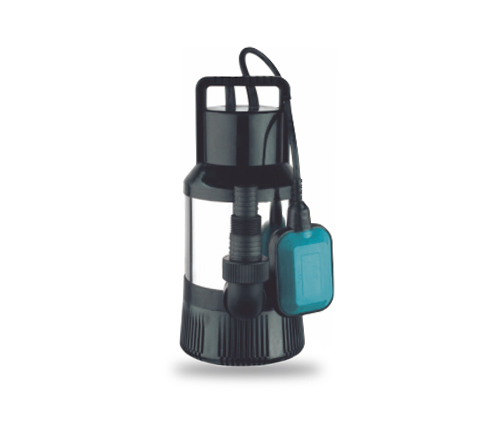
EGP-10 Series High-lift Safety Widely Application Garden Submersible Pump
One of the most important advantages of the EGP-10 Series is its high-lift design. Many garden pumps are suitable only for short-distance water transfer or low-level circulation. When water must be moved uphill, supplied to an elevated fountain, or delivered across a site with significant vertical difference, a pump with greater lifting capability can provide a more practical solution.
The EGP-10-1 offers a maximum height of 30 meters, while the EGP-10-2 reaches up to 35 meters. This capability can be beneficial in sloped gardens, terraced landscapes, elevated water features, and irrigation layouts where the water outlet is substantially higher than the source. The high-lift characteristic also gives designers greater flexibility when planning pipe routes and positioning outlets.
Compared with a basic garden circulation pump, a high-lift model is better suited to systems where elevation is a major design factor. A low-lift pump may appear economical at the time of purchase, but it may fail to provide sufficient pressure once vertical elevation and pipe resistance are considered. Selecting an appropriately rated high-lift pump helps reduce the risk of inadequate discharge and repeated equipment replacement.
The high-lift design is also useful for waterfall and fountain installations. Water features often require the pump to push water through pipes, filters, decorative outlets, and bends before reaching the final discharge point. The additional lifting capability of the EGP-10 Series can help compensate for these system demands, although final performance will depend on the complete hydraulic design.
Users should distinguish between maximum lift and recommended working lift. At the maximum height, the actual flow rate may be lower than the maximum pump rate. For best results, buyers should identify the required discharge height, target flow rate, pipe length, pipe diameter, and expected system resistance before choosing the model. Where a continuous and strong water display is required, selecting the EGP-10-2 may provide additional capacity.
In an irrigation system, high lift allows water to reach raised planting beds, hillside gardens, greenhouse sections, and upper-level landscaping. In a fountain, it helps supply water to a tall outlet or elevated basin. In a waterfall, it supports the transfer of water from a lower collection pond to the upper point of discharge. In a storage tank system, it can help move water to a higher tank or distribution point.
High-lift capability can also simplify project planning. Instead of using multiple small pumps for separate elevations, an installer may be able to use one suitably selected pump for a larger system. This can reduce the number of electrical connections, simplify maintenance, and make the overall installation easier to manage. The correct approach depends on the required flow, duty cycle, and system layout.
The EGP-10-1 provides a maximum pump rate of 5,000 liters per hour, while the EGP-10-2 provides up to 5,500 liters per hour. These flow rates make the series suitable for many garden irrigation tasks and decorative water applications. The pump can support water transfer between tanks, circulation within ponds, and the supply of fountains or waterfalls.
For irrigation, consistent water delivery is essential. Plants may be distributed over a broad area, and the water source may be positioned below the garden. A pump with sufficient flow and lift can supply hoses, sprinklers, drip irrigation lines, or other distribution equipment, subject to the pressure requirements of the selected irrigation components.
For ponds and water features, flow rate affects visual performance and water circulation. A fountain may require a specific volume of water to create the desired height and pattern. A waterfall may need sufficient flow to produce a continuous sheet or stream. The EGP-10 Series offers two capacity options so that users can select a configuration based on the scale of the installation.
Water circulation can also support better distribution of oxygen and reduce stagnant areas in suitable pond systems. However, the pump should not be treated as a complete water treatment solution. Filtration, biological treatment, cleaning, and water-quality management may still be necessary, especially in ornamental ponds containing fish or plants.
The pump supports pipe diameters of 1 inch, 1.25 inches, and 1.5 inches. This range allows installers to select a connection that matches the required flow and existing pipework. Larger pipes can help reduce friction losses over longer distances, while smaller pipes may be suitable for compact installations or lower-flow outlets.
Pipe selection should be based on the complete system rather than only the pump outlet. A long pipe with multiple bends, narrow fittings, valves, or restrictive filters can significantly reduce actual flow. When a high flow rate is required, the use of an appropriately sized pipe and smooth routing can help the pump perform more efficiently.
Installers should also make sure that all pipe connections are secure. Loose connections can create leaks, introduce air into the system, or reduce pressure at the discharge point. Proper clamps, compatible fittings, and suitable sealing practices are important for reliable operation.
Outdoor water systems combine electricity, moisture, changing temperatures, and variable operating conditions. For this reason, safety is a central consideration when selecting a submersible pump. The EGP-10 Series includes overload protection and thermal protection to help safeguard the motor during abnormal operating conditions.
Overload protection is intended to reduce the risk of motor damage when the pump experiences excessive load. An overload may occur because of blockage, excessive system resistance, mechanical problems, or other operating conditions. When the protection system detects an unsafe condition, the pump can shut down to help prevent continued operation under damaging circumstances.
Thermal protection helps address overheating. A pump may generate excessive heat if it operates under an abnormal load, becomes partially blocked, experiences insufficient cooling, or is used outside its intended conditions. Automatic thermal protection can stop operation when the temperature becomes unsafe and help protect the motor from permanent damage.
These safety features provide an important advantage over unprotected pumps. A basic pump without appropriate protection may continue operating during an overload or overheating event, increasing the possibility of motor failure. Built-in protective functions do not eliminate the need for proper installation, but they provide an additional level of operational security.
Users must still follow electrical safety requirements. The pump should be connected to a properly rated power supply, and the installation should use suitable protective devices, grounding, and residual-current protection where required by local regulations. Cables and plugs should be kept in good condition, and electrical connections must not be exposed to uncontrolled water entry.
A submersible pump should never be handled while energized. Before installation, inspection, cleaning, or maintenance, the power supply must be disconnected. The pump should also be used only within its specified maximum depth and intended water conditions.
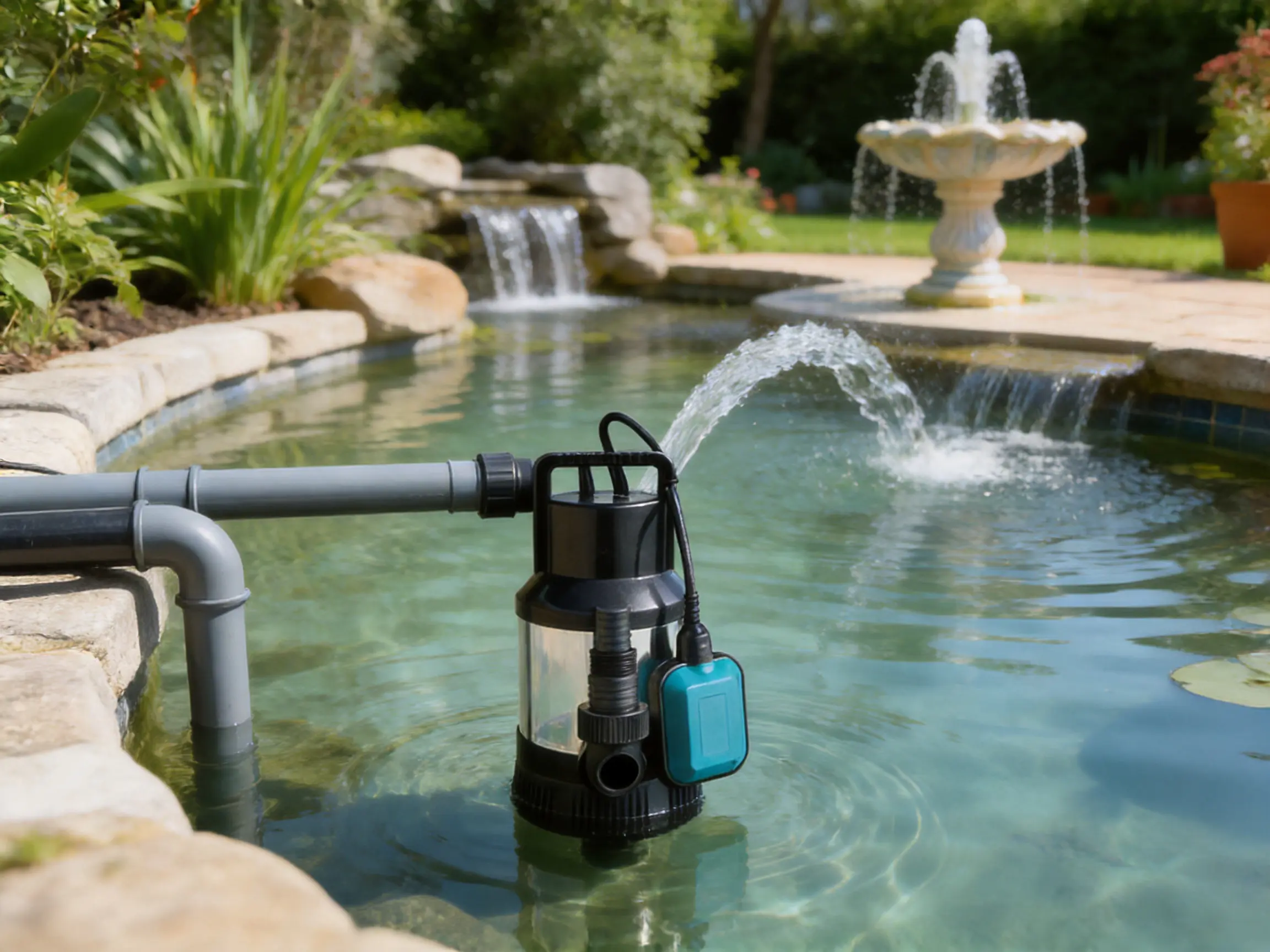
The EGP-10 Series is constructed with materials selected for resistance to corrosion and wear. This is important because garden pumps are commonly exposed to moisture, sediment, changing weather conditions, and repeated operating cycles. A durable pump body and internal structure can help extend service life and reduce the frequency of replacement.
Submersible equipment must maintain reliable operation while immersed. The pump’s construction therefore has to support the protection of internal electrical and mechanical components. Proper material selection, sealing, assembly quality, and inspection all contribute to long-term reliability.
Outdoor environments can be more demanding than indoor utility spaces. Water sources may contain small particles, organic material, or sediment. The EGP-10 Series has a maximum grain size specification of 5 millimeters. This does not mean that the pump should be used as a garbage or sewage pump. It means that the application should remain within the stated particle-handling limits and that large debris should be removed before it reaches the pump.
Regular cleaning is an important part of maintaining durability. Leaves, algae, mud, and other materials can restrict the inlet or affect the impeller. A simple inspection routine can help identify contamination before it causes an overload or reduces pumping performance.
The EGP-10-1 uses a three-piece impeller configuration, while the EGP-10-2 uses a four-piece impeller configuration. Impeller design plays an important role in the movement of water through the pump. The difference between the two configurations supports the different rated capacities and lifting performance of the two models.
When selecting between the models, buyers should consider more than motor power. The required flow rate, delivery height, pipe size, operating time, and water condition should all be reviewed. The EGP-10-2 may be more appropriate for a larger or more demanding installation, while the EGP-10-1 may be sufficient for a smaller garden system.
The EGP-10 Series is described as a widely applicable garden submersible pump because it can be used across several outdoor water management tasks. Its applications include garden irrigation, pond circulation, fountain operation, waterfall supply, water transfer, and other suitable outdoor projects.
Garden irrigation is one of the primary uses of the series. The pump can draw water from a pond, tank, collection basin, or other suitable source and deliver it to irrigation equipment. This can help gardeners maintain lawns, flower beds, vegetable gardens, trees, and landscaping in areas where natural rainfall is insufficient or inconsistent.
In a sloped garden, the high-lift capability can help move water to higher planting areas. In a large garden, the flow rate can support distribution through multiple outlets when the system is correctly designed. The pump can also be used as part of a temporary irrigation setup, provided that the electrical and hydraulic arrangements are safe and stable.
Decorative ponds and fountains depend on reliable water circulation. The pump can be installed in a suitable pond or reservoir and connected to the fountain outlet. Its compact submersible arrangement allows the pump to remain concealed below the water surface, helping maintain a cleaner appearance than an exposed surface-mounted unit.
Fountain performance depends on the nozzle, outlet design, pipe diameter, elevation, and desired water pattern. The pump should be matched to these requirements. The high-lift models are especially suitable where the fountain outlet is elevated or where water must travel through a relatively long pipe route.
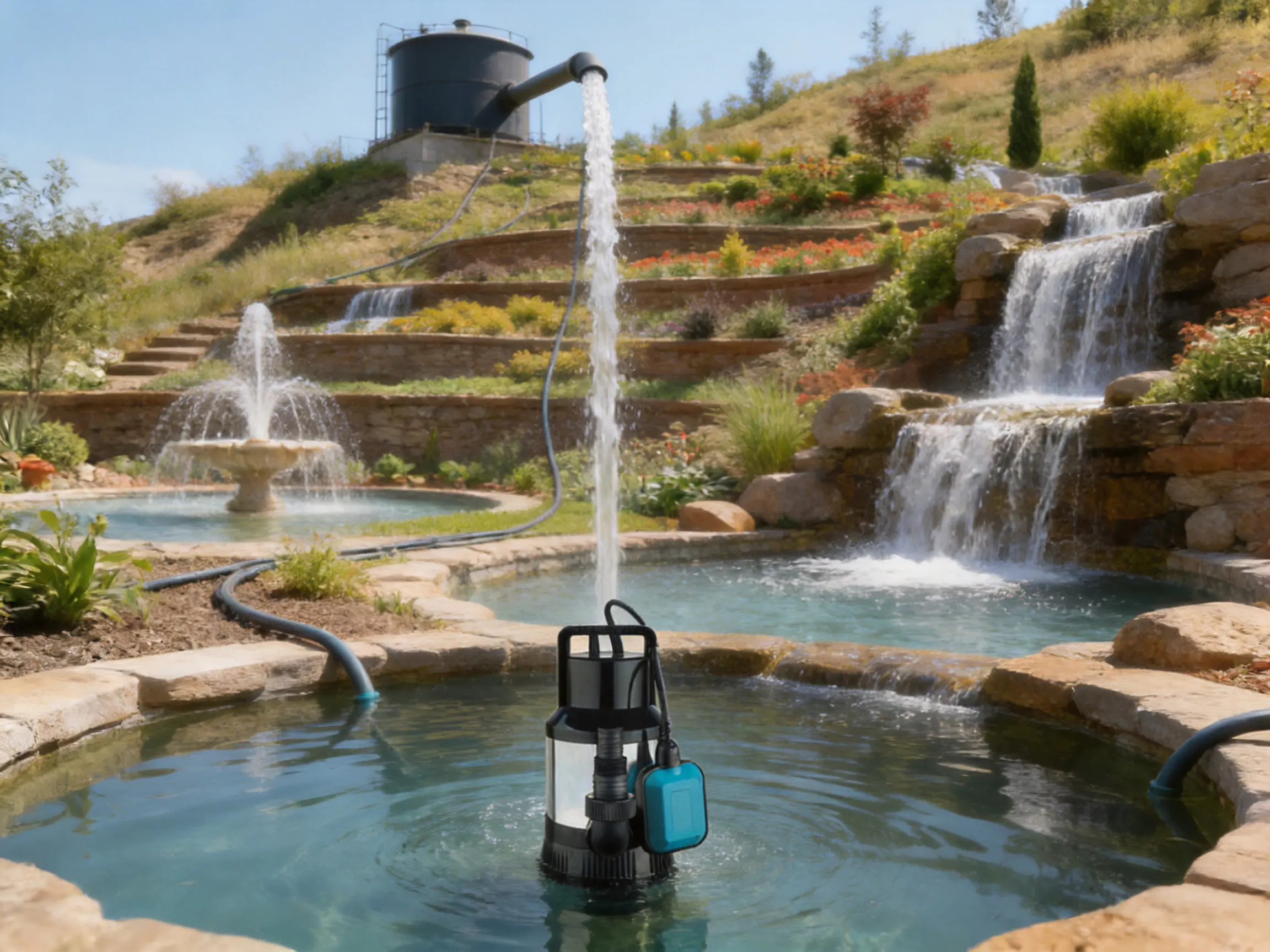
Landscape waterfalls often require water to be lifted from a lower basin to an upper channel. The EGP-10 Series can support this arrangement when the total lift and flow requirement remain within the pump’s operating range. The pump may be placed in the lower collection area, with the discharge pipe routed to the upper waterfall point.
For a natural appearance, the pipe may be concealed beneath soil, stone, or decorative structures. During installation, the pipe should remain accessible enough for inspection and maintenance. Protective measures may be required to prevent crushing, sharp bends, or blockage.
The pump can also be used for transferring water between suitable storage locations. Examples include moving water from a collection tank to an irrigation tank, emptying a temporary reservoir, or supplying a garden storage system. The receiving container must be capable of handling the delivered flow, and the installer should provide an appropriate method to prevent overflow.
Although the EGP-10 Series is versatile, it should be used only for water and applications compatible with its construction. It is not automatically suitable for chemicals, fuel, seawater, sewage, highly abrasive liquids, or hot fluids. Application conditions should be confirmed before use.
Buyers evaluating garden pumps often compare price, power, flow rate, lift, safety, installation method, and durability. The EGP-10 Series offers several advantages over entry-level pumps that are designed mainly for short-distance or low-lift circulation.
The 30-meter and 35-meter maximum height ratings distinguish the series from many basic decorative pumps. This makes it more appropriate for elevated fountains, sloped gardens, multi-level landscaping, and other applications where vertical lift is a central requirement.
The availability of two models enables a more precise match between pump capacity and project size. The 900 W model provides up to 5,000 liters per hour, while the 1,100 W model provides up to 5,500 liters per hour and a higher maximum lift. This choice is useful for distributors and contractors serving customers with different installation requirements.
Overload and thermal protection add value compared with pumps that rely only on external supervision. These functions help protect the motor during abnormal conditions and can reduce the risk of damage caused by overheating or excessive load.
Support for 1-inch, 1.25-inch, and 1.5-inch pipes gives installers more flexibility. It can simplify integration with existing systems and allow the discharge arrangement to be selected according to the required flow and distance.
The underwater installation format reduces the need for a separate pump housing and suction arrangement. It can also make the pump less visually intrusive in ponds and decorative water features. For many garden projects, a submersible design offers a direct and convenient solution.
Corrosion-resistant and wear-resistant construction is valuable in damp outdoor conditions. When combined with regular cleaning and correct operation, durable materials can help the pump provide dependable service over a longer period.
Product performance is closely connected to the capabilities of the manufacturer. Taizhou Edwin Electric Co., Ltd. was founded in 2008 and operates as an integrated manufacturing enterprise. Its activities include independent research and development, mass production, and global export. This combination allows the company to participate in the full product cycle, from design and engineering through production, inspection, packaging, and delivery.
Independent research and development supports the improvement of pump structures, motor systems, protection functions, and application-specific designs. For a product such as the EGP-10 Series, development work may involve evaluating flow performance, lifting capacity, impeller configuration, material suitability, thermal behavior, sealing, and user installation requirements.
Mass production capability is important for distributors and project buyers. It supports more consistent product availability and helps the manufacturer serve repeat orders. A factory with established production processes can organize component procurement, assembly, inspection, and shipment for different markets and order sizes.
The company’s product portfolio covers many types of water pumps, including deep well pumps, submersible pumps, domestic booster pumps, circulation pumps, solar water pumps, and intelligent booster pumps. Experience across these categories can contribute to a broader understanding of motor technology, hydraulic design, water delivery systems, and application conditions.
The company also established Taizhou Haipai Import & Export Co., Ltd. and Golden Falcon Industrial Co., Ltd. in 2012 to support procurement planning, order tracking, cross-border delivery, and foreign trade services. These capabilities are valuable for international customers that require coordinated purchasing, production communication, documentation, and logistics.
A dependable pump requires more than a powerful motor. Quality must be considered throughout the manufacturing process. For the EGP-10 Series, an effective production approach includes the selection of suitable raw materials, controlled component processing, motor assembly, impeller installation, sealing, electrical inspection, performance testing, and final packaging.
Materials used in the pump body and internal components should be selected according to exposure to water, mechanical stress, temperature, and wear. Corrosion-resistant materials are particularly important for equipment intended for ponds, gardens, and outdoor reservoirs. Material consistency also helps reduce variation between production batches.
The motor is the central power source of the pump. Assembly quality affects electrical safety, operating stability, and service life. Winding, insulation, cable routing, sealing, and protective components must be installed correctly. In a submersible product, the protection of electrical components against water entry is especially important.
The impeller, pump chamber, inlet, and discharge components must be correctly aligned. Poor alignment can increase vibration, reduce efficiency, and accelerate wear. Proper assembly supports the stated flow and lift characteristics and helps the pump operate smoothly.
Products should be checked for electrical continuity, insulation, operating current, vibration, noise, leakage, and water delivery performance. Protection functions should also be verified as part of a suitable quality-control program. Testing helps identify defects before products are shipped to distributors or end users.
Final inspection confirms that the correct model, accessories, connection options, labels, instructions, and protective packaging are included. Secure packaging helps protect the pump during domestic and international transportation. Clear product identification is also important for warehouse management, installation, after-sales support, and replacement ordering.
Correct installation is essential for achieving reliable pump performance. Before installation, the user should confirm that the power supply, water source, pipework, pump model, and operating conditions are compatible with the product specifications.
The pump should be placed in clean water with adequate clearance around the inlet. It should not rest directly in heavy sediment, mud, or material that could block the intake. If the water source contains leaves or larger particles, a suitable protective screen or pre-filter may help reduce the risk of blockage, provided that it does not create excessive restriction.
The maximum immersion depth is 8 meters. The pump should not be installed deeper than this limit. The discharge pipe should be connected securely using compatible fittings, and the selected pipe diameter should be appropriate for the required flow and installation distance.
The pump should be positioned so that it cannot fall, roll, or become trapped beneath stones or other objects. In a pond or fountain, the installation should also consider access for future cleaning. If the pump is hidden beneath a decorative structure, the structure should be removable or serviceable.
Electrical installation should be performed according to local regulations and by a qualified person where required. A suitable circuit breaker and residual-current protective device should be considered. The electrical cable must be protected from mechanical damage, sharp edges, excessive heat, and unauthorized handling.
Before starting the pump, confirm that the discharge route is open and that the receiving area can accommodate the expected water volume. After switching on, check for unusual noise, excessive vibration, leakage, unstable flow, or rapid heating. If abnormal behavior occurs, disconnect the power and investigate the cause.
Regular maintenance helps preserve pump performance. The frequency of maintenance depends on water quality, operating hours, seasonal conditions, and the amount of debris in the source.
The inlet should be inspected periodically. Leaves, algae, mud, gravel, and other material can restrict water entry. A blocked inlet may reduce flow and cause the motor to work under greater stress. Cleaning should be carried out only after the power supply has been disconnected.
The discharge pipe should also be checked for kinks, blockages, loose fittings, and leakage. A damaged or undersized pipe can reduce the system’s actual performance even when the pump itself is operating correctly.
Users should listen for changes in operating sound. Grinding, rattling, or abnormal vibration may indicate debris, impeller wear, misalignment, or another mechanical issue. Early inspection can prevent a minor problem from developing into a major failure.
At the end of a season, the pump may be removed, cleaned, dried as appropriate, and stored according to the operating instructions. In climates where water may freeze, the pump and connected pipework should be protected from freezing conditions. Expansion caused by ice can damage components and connections.
Maintenance records can be useful for commercial users, landscapers, property managers, and distributors. Recording cleaning dates, operating problems, and replacement parts helps identify recurring issues and supports planned service.
Choosing between the EGP-10-1 and EGP-10-2 requires an assessment of the complete installation. The EGP-10-1 has a rated power of 900 W, a maximum pump rate of 5,000 liters per hour, and a maximum height of 30 meters. The EGP-10-2 has a rated power of 1,100 W, a maximum pump rate of 5,500 liters per hour, and a maximum height of 35 meters.
The EGP-10-1 may be suitable for medium-sized garden irrigation systems, ponds, fountains, and water transfer tasks where the required lift remains within 30 meters. Its three-piece impeller configuration and 900 W rating provide a practical option for users who need strong performance without selecting the larger model.
The EGP-10-2 may be more appropriate where the delivery point is higher, the pipe route is longer, or the system requires additional capacity. Its 35-meter maximum height and 5,500-liter-per-hour maximum pump rate provide an extra performance margin for more demanding applications.
However, selecting the more powerful model is not always automatically better. A larger pump may use more electricity and may require a different pipe arrangement or outlet design. Buyers should match the model to the actual duty requirements rather than selecting solely according to rated power.
What is the vertical distance between the water surface and the discharge point?
How much water must be delivered per hour?
How long is the discharge pipe?
How many bends, valves, filters, or nozzles are included?
What pipe diameter will be used?
Does the water contain sediment, leaves, or particles?
How many hours per day will the pump operate?
Is the pump intended for seasonal, intermittent, or continuous use?
Is the electrical supply compatible with the pump rating?
Answering these questions helps users avoid both under-sizing and unnecessary oversizing.
The EGP-10 Series can be attractive to distributors, garden-equipment suppliers, landscaping companies, irrigation contractors, and project purchasers. Its broad application range allows one product family to serve several customer segments. The two model options also make it easier to build a product offering that covers different lift and flow requirements.
For distributors, clear technical specifications are useful for sales planning and customer support. The listed pump rate, maximum height, maximum depth, grain-size limit, pipe diameters, power ratings, and impeller configurations provide a practical foundation for product selection.
For landscaping contractors, the submersible design can simplify the installation of ponds, fountains, waterfalls, and irrigation systems. For irrigation professionals, the high-lift capability can support projects with changes in elevation. For garden retailers, the product’s combination of safety features, flexible connection sizes, and outdoor durability can provide a strong value proposition.
The manufacturer offers a one-year warranty. Warranty terms should be reviewed with the supplier before purchase, including coverage conditions, exclusions, required installation practices, documentation, and procedures for technical support or replacement.
Taizhou Edwin Electric Co., Ltd. has developed its business around pump research, manufacturing, and global export. Since its establishment in 2008, the company has expanded its product range to serve household, agricultural, commercial, municipal, industrial, and new energy applications.
The company’s pumps are used in agricultural irrigation, municipal engineering, mining, construction, HVAC systems, household water supply, and new energy projects. This range of applications indicates experience with different water-delivery requirements and operating environments.
Since 2018, the company has invested in new energy and intelligent technology, including solar water pumps and intelligent booster pumps. These developments complement the EGP-10 Series by demonstrating a broader interest in efficient, automated, and application-focused water pumping solutions.
International customers may also benefit from the company’s associated procurement and foreign-trade service organizations. Procurement planning, order tracking, cross-border delivery, and export communication are important parts of a reliable supply relationship. For buyers ordering pumps in commercial quantities, these services can support better coordination from inquiry to final delivery.
A manufacturer’s strength should be evaluated not only by the product itself but also by its ability to provide consistent specifications, stable supply, technical communication, packaging, documentation, and after-sales support. The integrated structure of the business is intended to address these broader purchasing requirements.
Water pumps consume electricity, so efficient system design is important. The pump should be selected according to the actual duty requirement, and pipework should be designed to avoid unnecessary friction losses. A suitable pipe diameter, an efficient route, and regular cleaning can help reduce the energy required to deliver water.
Users should avoid operating the pump against a closed or severely restricted discharge unless the application and operating instructions specifically permit it. Excessive restriction can increase stress and reduce useful water delivery. Timers, level controls, or other control devices may be considered for systems that do not require continuous operation, provided that they are compatible with the pump.
Proper maintenance also supports environmental performance. A clean pump can deliver its intended water movement more effectively than a pump operating with a blocked inlet or damaged impeller. Extending equipment life through correct operation and maintenance can reduce the environmental impact associated with frequent replacement.
For installations powered by renewable energy, the pump’s electrical requirements should be evaluated carefully. The EGP-10 Series is a mains-powered garden submersible pump unless a suitable compatible system is designed by a qualified professional. It should not be connected directly to a solar system without confirming voltage, current, control, and protection requirements.
One common mistake is selecting a pump based only on maximum flow rate. A pump that delivers a high flow at low lift may not provide the required performance at a greater elevation. Both flow and lift must be evaluated together.
Another mistake is using a pipe that is too narrow for the intended distance. Small pipework can create substantial friction losses and reduce the water available at the outlet. The connection should be planned according to the complete hydraulic system.
Operating the pump in dirty water without suitable protection can also create problems. The 5-millimeter maximum grain-size specification should not be interpreted as permission to pump heavy debris. Leaves, stones, strings, and other large material should be removed or prevented from entering the inlet.
Some users may ignore thermal or overload shutdowns and repeatedly restart the pump without identifying the cause. A protection trip is a warning that the pump may be blocked, overloaded, overheated, or incorrectly installed. The unit should be disconnected and inspected before restarting.
Improper electrical handling is another serious risk. The pump should never be pulled out of the water by its cable, and it should never be serviced while connected to power. All electrical work should follow applicable regulations and be carried out by an appropriately qualified person.
The EGP-10 Series is a garden submersible pump designed for underwater installation in suitable ponds, tanks, reservoirs, and other water sources. It is intended for irrigation, water features, water transfer, and circulation applications.
The EGP-10-1 has a maximum height of 30 meters. The EGP-10-2 has a maximum height of 35 meters. Actual flow at a specific height depends on pipe length, pipe diameter, fittings, valves, outlet design, and other system resistance.
The EGP-10-1 has a maximum pump rate of 5,000 liters per hour. The EGP-10-2 has a maximum pump rate of 5,500 liters per hour. These are maximum rated values and should not be assumed to apply at the maximum lifting height.
Yes. The pump is suitable for many garden irrigation applications, including watering planting beds, lawns, landscaped areas, and gardens on sloped sites. The irrigation system should be designed to match the pump’s flow and lift capabilities.
Yes. It can supply suitable fountains, waterfalls, ponds, and decorative water features. The final water pattern and flow depend on the nozzle, outlet, pipe arrangement, elevation, and total system resistance.
The pump supports 1-inch, 1.25-inch, and 1.5-inch pipe diameters. The best size depends on the required flow, pipe length, elevation, fittings, and existing installation.
The maximum depth specified for both models is 8 meters. The pump should not be installed beyond this limit.
The maximum grain size listed for both models is 5 millimeters. The pump should still be protected from leaves, large debris, stones, string, and heavy sediment. It is not intended to replace a sewage or garbage pump.
The EGP-10 Series includes overload protection and thermal protection. These features can help shut down the pump during excessive load or overheating. They do not replace correct installation, electrical protection, cleaning, and routine inspection.
Select the EGP-10-1 when the required application is within its 30-meter maximum height and 5,000-liter-per-hour maximum pump rate. Select the EGP-10-2 when the installation requires up to 35 meters of lift or additional capacity up to 5,500 liters per hour. Final selection should be based on the complete system calculation.
Operating time depends on the installation, water conditions, electrical supply, and product instructions. The pump should not be assumed suitable for continuous operation without confirming the intended duty cycle. Any thermal or overload shutdown should be investigated before restarting.
Keep the inlet clear, use compatible water, avoid exceeding the maximum depth, select suitable pipework, prevent dry running where applicable, inspect the impeller, and disconnect power before cleaning or servicing. Proper electrical protection is also essential.
The supplied product information states that a one-year warranty is offered. Buyers should confirm the detailed warranty terms, coverage, exclusions, and service procedure with the supplier before ordering.
The EGP-10 Series High-Lift Safety Widely Application Garden Submersible Pump is designed for users who need more than basic low-lift water circulation. With maximum lifting heights of 30 and 35 meters, maximum pump rates of 5,000 and 5,500 liters per hour, support for three pipe diameters, an 8-meter maximum depth, and built-in overload and thermal protection, the series provides a flexible solution for gardens, ponds, fountains, waterfalls, irrigation systems, and water transfer projects.
Its main competitive advantages are its high-lift capability, two-model configuration, submersible installation, outdoor-oriented construction, safety protection, and broad application range. These features can help contractors, distributors, and end users select a pump that is more capable and adaptable than a basic decorative circulation unit.
The product is supported by a manufacturer with experience in independent research and development, mass production, global export, procurement coordination, and foreign-trade services. The company’s broader portfolio of water pumps and investment in solar and intelligent pumping technologies provide additional evidence of its focus on product development and application diversity.
For the best results, the pump should be selected according to the complete hydraulic and electrical requirements of the project. Correct pipe sizing, secure installation, clean water conditions, routine inspection, and proper safety procedures are essential. When these conditions are met, the EGP-10 Series can provide a dependable and practical foundation for outdoor water management.
1. Product specification sheet for the EGP-10 Series High-Lift Safety Widely Application Garden Submersible Pump.
2. Manufacturer-provided technical data covering rated power, maximum pump rate, maximum height, maximum depth, grain size, pipe diameter, and impeller configuration.
3. Manufacturer-provided company profile describing research and development, mass production, global export, procurement planning, and foreign-trade services.
4. General principles of centrifugal pump selection, including the relationship between flow rate, total dynamic head, pipe friction, fittings, and outlet resistance.
5. General electrical safety practices for submersible pumps and outdoor water equipment.
6. General maintenance practices for garden irrigation pumps, pond circulation systems, fountains, and landscape water features.
edwina@edwin-pump.com
+86-13586290903 (WhatsApp)
Xuri Gongliang Cutting Tool Entrepreneurship Park, Wenqiao Town, Wenling City, Taizhou City, Zhejiang Province, China

High Performance Smart Pump Factory


 English