edwina@edwin-pump.com

View All Products
en
Reliable water pressure is essential in homes, gardens, greenhouses, commercial facilities, and many light industrial applications. However, water demand is rarely constant. A household may require only a small flow when one tap is open, but much more pressure when several outlets, showers, irrigation zones, or appliances operate at the same time. Traditional fixed-speed booster pumps often run at one constant speed regardless of actual demand. This can lead to unnecessary energy consumption, pressure fluctuations, frequent starting and stopping, and avoidable wear on the pump and plumbing system.
The Litepro2, Litepro3, Litepro4, Litepro5, and Litepro8 series addresses these challenges through a combination of variable-speed motor technology, integrated frequency conversion, permanent magnet motor efficiency, intelligent pressure control, and multistage hydraulic design. The result is a compact self-priming booster pump platform designed to adapt its operating speed to changing water requirements.
Unlike a basic booster pump that simply switches on and off, this type of intelligent pump can continuously adjust its performance. It is intended to maintain a more stable pressure while reducing energy use during periods of partial demand. Its built-in pressure vessel, pressure and current monitoring, programmable menu, and protective functions further simplify operation for residential and selected commercial water systems.
This article examines the product’s operating principles, technical advantages, application suitability, model selection, manufacturing strengths, installation considerations, maintenance requirements, and competitive value. It also explains why integrated production and intelligent motor control are increasingly important in modern water supply equipment.
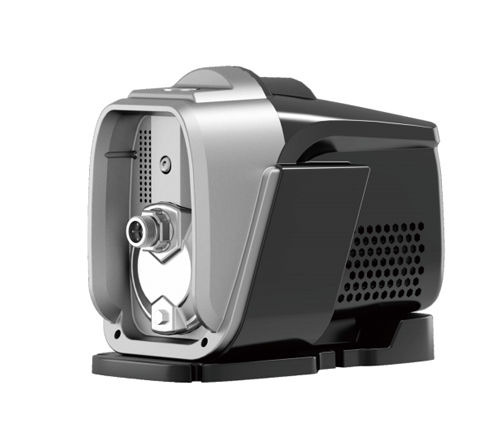
Litepro2/3/4/5/8 Variable Speed Motor Self-Priming Multistage Intelligent Booster Pump
The Litepro series is a self-priming, multistage, variable-speed intelligent booster pump range. The product is designed to draw water from a source, increase pressure, and deliver water to a distribution system according to current demand. It can support household water use, tap water pressurization, garden irrigation, water circulation, and vegetable greenhouse water supply.
The word “self-priming” refers to the pump’s ability to remove air from the suction line and establish water flow under suitable installation conditions. This can make the pump more convenient than a conventional non-self-priming pump, particularly where the suction pipe may contain air after installation or after the water source has been interrupted. Self-priming performance still depends on correct pipework, a properly sealed suction line, suitable suction height, and adequate water availability.
The term “multistage” indicates that the pump uses multiple hydraulic stages arranged in series. Each stage contributes additional pressure, allowing the pump to achieve a higher head than many single-stage designs of comparable size. This is especially useful for houses with multiple floors, long pipe runs, sprinkler systems, greenhouse installations, and water networks where pressure losses must be overcome.
The word “intelligent” describes the integration of sensors, electronic control, programmable operating parameters, and protective functions. Instead of relying only on a mechanical pressure switch, the system can monitor operating conditions and regulate motor speed more precisely. This approach helps match pump output to actual water demand.
A variable-speed motor allows the pump to operate at different rotational speeds rather than only at a fixed nominal speed. When demand is low, the controller can reduce speed. When demand increases, the motor can accelerate to provide more flow or pressure. The stated maximum speed for the series is 5,200 revolutions per minute.
This operating principle offers an important advantage over traditional fixed-speed booster pumps. A fixed-speed pump may deliver more water than required when only one outlet is open. The excess energy is often converted into pressure loss, throttling loss, recirculation, or repeated on-and-off cycling. A variable-speed pump can instead reduce its output and operate closer to the actual system requirement.
Variable-speed operation can also improve user comfort. When water demand changes gradually, the pump can respond progressively rather than switching abruptly between full output and no output. This may reduce sudden pressure changes in domestic plumbing and provide a more consistent shower, faucet, or irrigation experience.
The integrated frequency converter controls the electrical frequency supplied to the motor. By modifying frequency, the controller changes motor speed and therefore changes pump performance. Integrating the converter into the pump assembly reduces the need for a separate external control cabinet in many installations.
A built-in converter can simplify system design because the motor, electronic controller, sensors, and pump body are supplied as a coordinated unit. This can reduce the number of external components, wiring connections, and installation decisions. It also allows the control system to be configured specifically for the pump’s motor and hydraulic characteristics.
For installers, integrated frequency conversion can create a cleaner and more compact installation. For end users, it can make automatic operation easier because the pump is designed to regulate itself according to pressure and flow requirements. The suitability of the installation must still be evaluated with regard to supply voltage, electrical protection, grounding, environmental conditions, and local regulations.
The series uses a high-efficiency permanent magnet driven motor. Permanent magnet motors can achieve high efficiency because the rotor does not depend on the same type of electrical excitation used by a conventional induction motor. In suitable operating conditions, this can reduce electrical losses and support efficient variable-speed operation.
The benefit is particularly relevant when the pump operates for long periods or works under changing loads. A motor that remains efficient across a broader range of operating speeds can help reduce energy consumption compared with a basic fixed-speed motor controlled only through frequent starts and stops.
Energy performance depends on the entire system, not only the motor. Pipe diameter, suction conditions, pressure settings, leakage, valve selection, water demand, and duty point all influence actual consumption. Nevertheless, combining a permanent magnet motor with a frequency converter creates a strong technical foundation for energy-conscious water pressurization.
The built-in pressure vessel helps stabilize the system and reduce unnecessary pump starts. When only a small quantity of water is needed, the vessel can provide a limited amount of stored pressurized water without requiring the motor to start immediately. This is useful for brief water demands such as opening a faucet for a short time.
Reducing the number of starts can benefit the motor, control electronics, and mechanical components. Frequent starting is a common source of stress in conventional booster systems, especially when the pressure tank is undersized or when a pressure switch is poorly adjusted. The integrated vessel supports smoother automatic operation and helps make the pump package more compact.
The pump includes monitoring of pressure and current. Pressure information enables the controller to identify the condition of the water supply system and adjust motor speed. Current monitoring can provide information about motor load and help activate protective responses when operating conditions become abnormal.
Monitoring is an important difference between an intelligent booster pump and a basic pump that operates with limited feedback. A feedback-controlled system can respond to actual hydraulic demand instead of depending only on a simple time schedule or manual adjustment. This improves convenience and can support more stable operation across changing water-use patterns.
The programmable menu allows operating parameters to be configured according to installation requirements. Depending on the final configuration and application, installers may be able to adjust pressure-related settings, operating modes, protection responses, or other control values.
Programmability is useful because a small residence, a greenhouse irrigation line, and a garden water system may not require the same pressure profile. A properly configured pump can avoid excessive pressure, reduce energy waste, and provide better compatibility with downstream equipment.
The five models share the same general intelligent booster platform but provide different motor powers, flow capacities, heads, and physical dimensions. This gives system designers the flexibility to select a pump that fits the required duty point rather than using one oversized pump for every application.
| Model | Voltage | Power | Maximum Flow | Maximum Head | Rated Flow | Rated Head | Maximum Suction | Size L×W×H |
|---|---|---|---|---|---|---|---|---|
| Litepro2 | 165–260 V | 370 W | 4.0 m³/h | 36 m | 1.5 m³/h | 20 m | 8 m | 360×184×290 mm |
| Litepro3 | 165–260 V | 550 W | 5.2 m³/h | 48 m | 3 m³/h | 24 m | 8 m | 360×184×290 mm |
| Litepro4 | 165–260 V | 750 W | 5.6 m³/h | 55 m | 3 m³/h | 28 m | 8 m | 400×204×320 mm |
| Litepro5 | 165–260 V | 900 W | 6.0 m³/h | 60 m | 3 m³/h | 38 m | 8 m | 400×204×320 mm |
| Litepro8 | 165–260 V | 1100 W | 12 m³/h | 60 m | 6 m³/h | 28 m | 8 m | 436×204×320 mm |
The voltage range of 165–260 V indicates a broad single-phase operating range, subject to confirmation of the exact electrical version and local supply conditions. The maximum suction value is listed as 8 meters. In practice, suction performance is affected by water temperature, altitude, pipe size, foot-valve condition, air leakage, fittings, and the physical layout of the suction line.
Maximum flow and maximum head are theoretical reference points and should not be interpreted as occurring simultaneously. Pump selection should be based on the required operating point, where the system’s flow demand intersects the pump performance curve. The rated flow and rated head in the table provide useful reference values for common operating conditions, but the final selection should use the complete performance curve and the actual system resistance calculation.
The Litepro2 is the smallest model in the range, with a 370 W motor, a maximum flow of 4.0 m³/h, and a maximum head of 36 meters. It is suitable for smaller homes, single-family water boosting, modest garden irrigation, and light circulation duties where the required flow is relatively limited.
Its compact dimensions of 360×184×290 millimeters make it attractive for installations where space is restricted. It can be considered when the system needs improved water pressure but does not require the higher head or flow capacity of the larger models.
The Litepro3 increases motor power to 550 W and provides a maximum head of 48 meters. Its rated flow is 3 m³/h at a rated head of 24 meters. This model can serve larger homes, moderate water distribution systems, and applications with longer pipe runs or greater elevation differences than the Litepro2 can comfortably handle.
Because it retains the same compact overall dimensions as the Litepro2, it offers increased hydraulic capability without a major increase in installation footprint. This makes it a practical step-up model where additional pressure is needed but the system still benefits from a compact package.
The Litepro4 uses a 750 W motor, reaches a maximum head of 55 meters, and provides a rated head of 28 meters at a rated flow of 3 m³/h. It is intended for applications requiring stronger pressure performance, such as larger residences, multi-level buildings, greenhouse water supply, and irrigation systems with multiple distribution points.
The housing size increases to 400×204×320 millimeters. The additional physical volume reflects the higher power level and hydraulic requirements. Installers should allow adequate clearance for pipe connections, ventilation, inspection, and maintenance access.
The Litepro5 provides 900 W of power, a maximum head of 60 meters, and a rated head of 38 meters at 3 m³/h. It is a suitable candidate for demanding domestic pressure boosting, higher elevation applications, and irrigation networks that require a stronger pressure margin.
Its rated head is the highest among the models with a 3 m³/h rated flow. This makes it especially relevant where pressure, rather than maximum flow, is the primary design requirement. As with every model, the actual duty point should be checked against the performance curve before purchase.
The Litepro8 is the highest-capacity model in the range. It uses a 1100 W motor, reaches a maximum flow of 12 m³/h, and has a maximum head of 60 meters. Its rated flow is 6 m³/h at a rated head of 28 meters.
This model is appropriate for systems requiring considerably more flow than the other models, including larger irrigation zones, greenhouse water supply, commercial water distribution, and applications where several outlets may operate at the same time. Its dimensions are 436×204×320 millimeters, so the installation space and pipe connection arrangement should be reviewed carefully.
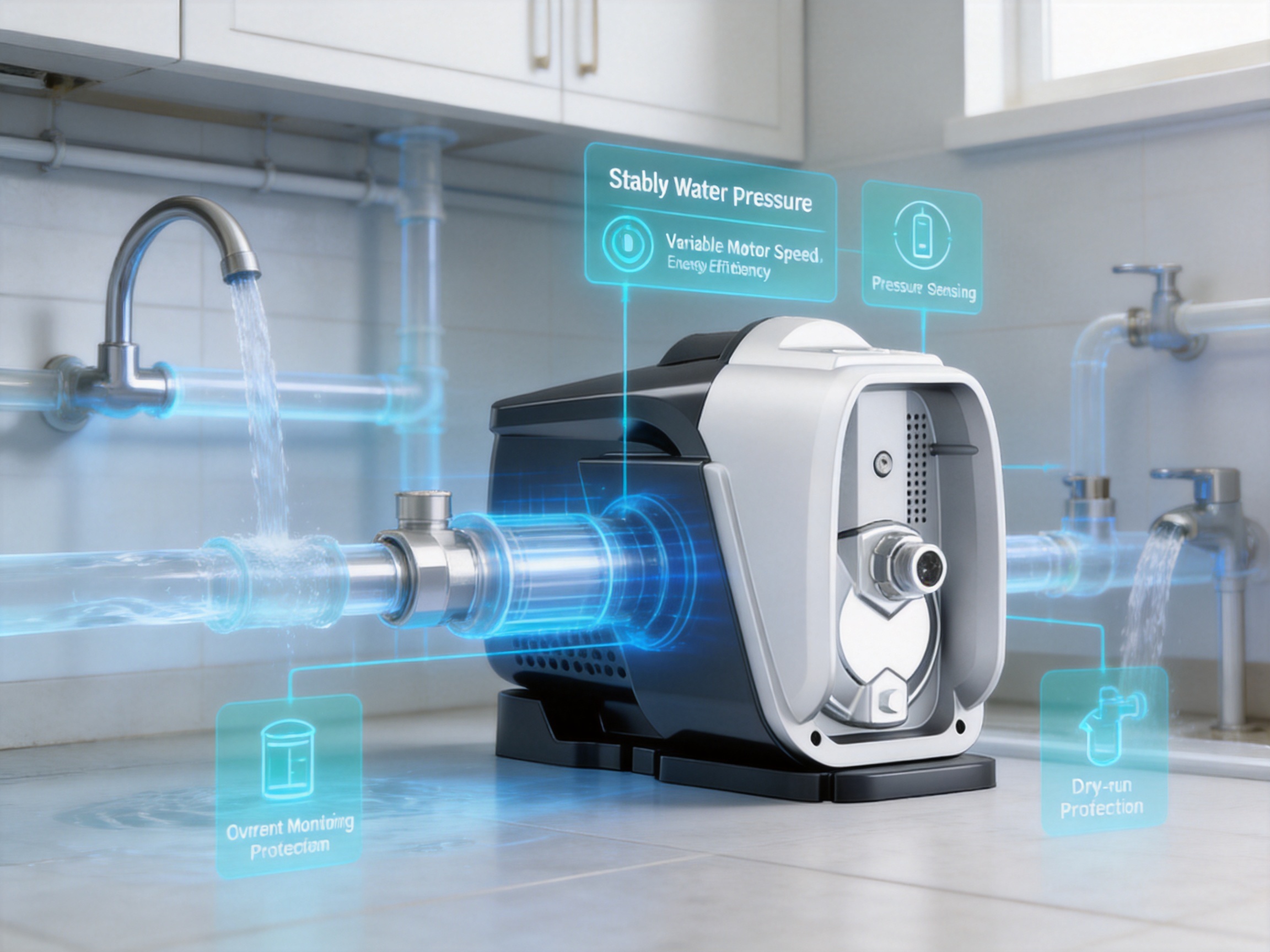
One of the strongest advantages of the Litepro series is its ability to operate at variable speed. Many conventional booster pumps are designed around a fixed-speed motor and a simple pressure switch. When the pump starts, it often runs near full speed even if the actual demand is small. This can lead to inefficient operation during low-flow conditions.
The variable-speed system can reduce motor speed when demand decreases. This helps align power consumption more closely with hydraulic demand. In a system with changing consumption, the efficiency benefit may be greater than that of a pump that only operates at full speed or stops completely.
This feature also makes the product more suitable for modern water systems, where users expect automatic pressure control without manually adjusting valves or starting the pump. The controller manages output dynamically, providing a more responsive solution than a basic on-off booster arrangement.
Fixed-speed pumps controlled by pressure switches can create noticeable pressure swings. The pressure falls until the switch starts the pump, rises while the pump runs, and then falls again after the pump stops. A variable-speed intelligent pump can make smaller and more frequent speed adjustments to maintain a more stable pressure level.
Stable pressure benefits domestic users because showers, faucets, washing equipment, and water heaters can operate more comfortably. It can also benefit irrigation systems by helping maintain more predictable sprinkler and nozzle performance.
The product information specifies quiet operation of approximately 20–30 dB. This low-noise design is particularly valuable in residential environments, utility rooms, kitchens, basements, and other locations close to occupied areas.
Actual sound levels depend on installation quality. Pipe vibration, cavitation, loose fittings, wall contact, water turbulence, and poor mounting can increase perceived noise. Even so, the combination of variable-speed control, permanent magnet motor technology, and compact integrated construction is intended to deliver smooth and quiet operation compared with many conventional high-speed on-off pumps.
An external frequency converter, separate pressure switch, external control cabinet, and independent pressure vessel can make a conventional pumping system complicated and space-consuming. The Litepro series integrates key functions into one package, including the motor, controller, pressure monitoring, current monitoring, and pressure vessel.
This integration can reduce installation complexity and help create a cleaner system layout. It may also reduce the number of external electrical and hydraulic connections that need to be coordinated. Fewer components can simplify troubleshooting, although installers should still follow the product manual and applicable electrical standards.
Self-priming capability is helpful in applications where air may enter the suction pipe or where the pump is installed above the water source within the specified suction limit. A conventional non-self-priming pump may require manual filling and repeated priming after an interruption. A self-priming pump can provide more convenient recovery when conditions are correctly managed.
Self-priming does not eliminate the need for proper installation. The suction pipe must be airtight, the pump casing must be filled as required, the suction height must remain within the specified limit, and the water source must be suitable. A leaking suction line can prevent any self-priming pump from operating correctly.
The availability of five models enables the product family to cover a range of domestic and light commercial requirements. Smaller models can serve compact residences and garden systems, while larger models provide greater head or flow for greenhouse, irrigation, and commercial applications.
A full product family is valuable to distributors and system integrators because it supports more than one project size. It can reduce the need to source unrelated pump designs from different suppliers and can simplify product training, spare-parts planning, and customer support.
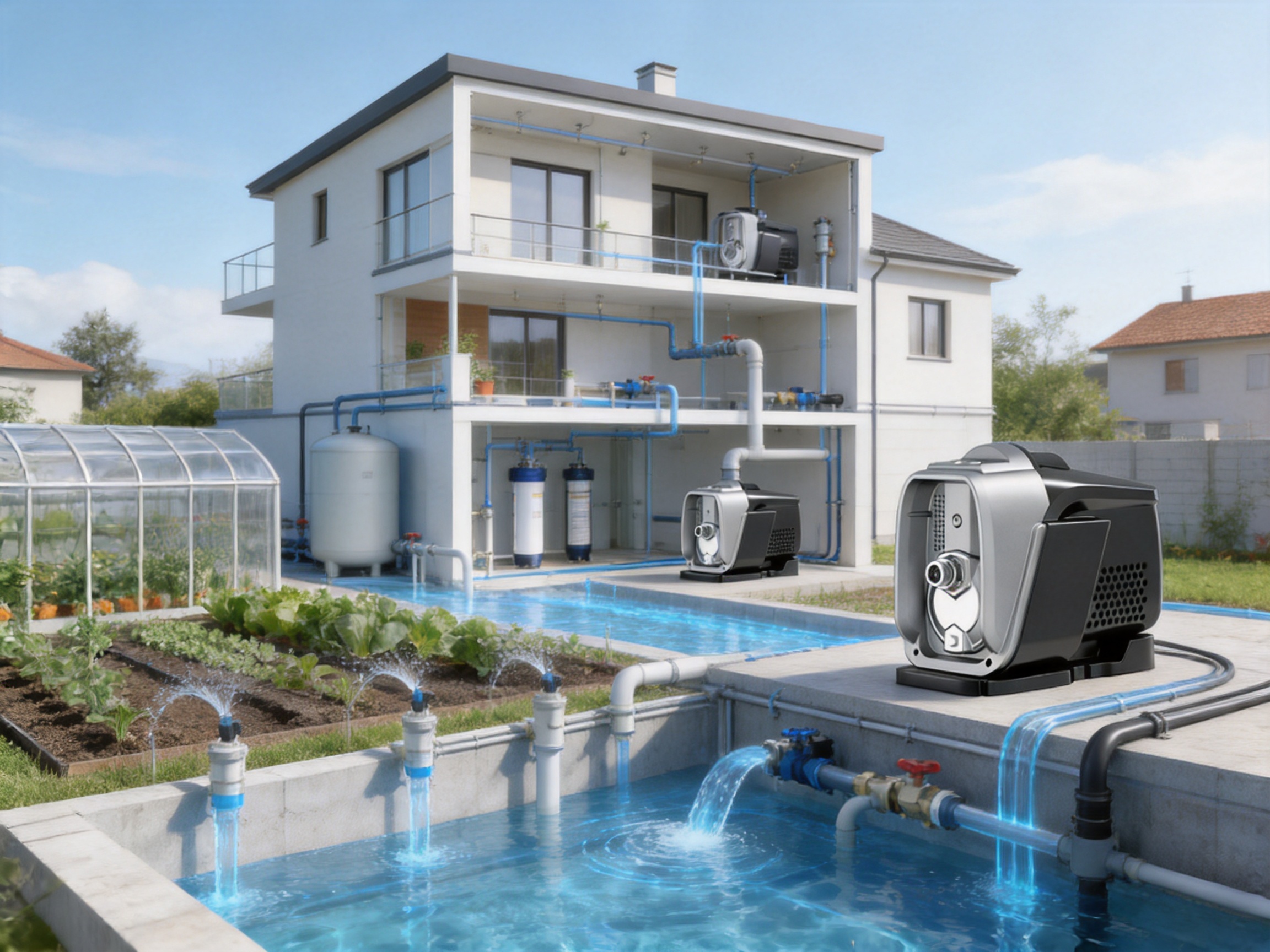
Household water pressure can be inadequate in elevated homes, buildings at the end of a supply line, properties supplied by storage tanks, or locations where municipal pressure varies throughout the day. The Litepro series can boost water pressure for showers, faucets, toilets, washing machines, and other domestic outlets.
Variable-speed control is especially useful in homes because water demand changes constantly. A family may use one outlet in the morning, several outlets during peak periods, and almost no water at night. An intelligent booster pump can adapt to these variations instead of operating at full power for every demand level.
Where incoming tap water is available but pressure is insufficient, a booster pump can raise the pressure to a more useful level. The system designer must confirm that local water regulations permit the proposed arrangement and that the pump will not create unacceptable negative pressure in the public supply line.
In some installations, a break tank or storage tank may be required between the public supply and the booster pump. The correct arrangement depends on local regulations, building type, water authority requirements, and the risk of backflow.
Garden irrigation systems often include sprinklers, drip lines, hose outlets, filters, timers, and multiple zones. Pressure requirements vary according to the type of emitter, pipe length, elevation, and the number of outlets operating simultaneously.
The variable-speed feature can help maintain more stable pressure when irrigation zones open or close. A correctly selected model can provide sufficient head for sprinklers while reducing energy use during lower-flow drip irrigation periods.
Greenhouse systems may require water for drip irrigation, misting, seedling cultivation, cleaning, and nutrient delivery. Consistent pressure is important because uneven pressure can produce inconsistent water distribution across rows and zones.
The Litepro series can support greenhouse water supply where its flow and head characteristics match the system requirements. Designers should account for filters, fertilizer injectors, valves, long pipe runs, elevation changes, and the pressure required at the most distant outlet.
The pump can be used for selected water circulation duties, provided that the liquid temperature and chemical compatibility are suitable. The stated maximum liquid temperature is 75°C, while the maximum ambient temperature is 50°C.
Water circulation applications must be evaluated carefully because continuous circulation can create different operating conditions from intermittent boosting. The pump should not be used with liquids containing abrasive solids, aggressive chemicals, or contaminants outside the product’s intended range unless the manufacturer has specifically approved the application.
The higher-capacity Litepro8 model may be considered for selected light commercial systems requiring automatic pressure boosting and a flow capacity of up to 12 m³/h at the maximum reference point. Possible examples include small commercial buildings, service facilities, irrigation installations, and utility water networks.
Large commercial, industrial, firefighting, high-temperature, or highly critical systems may require a different pump configuration, multiple-pump controls, special materials, standby capacity, or formal engineering approval. The Litepro series should be selected only after confirming that the duty, materials, control logic, and regulatory requirements are appropriate.
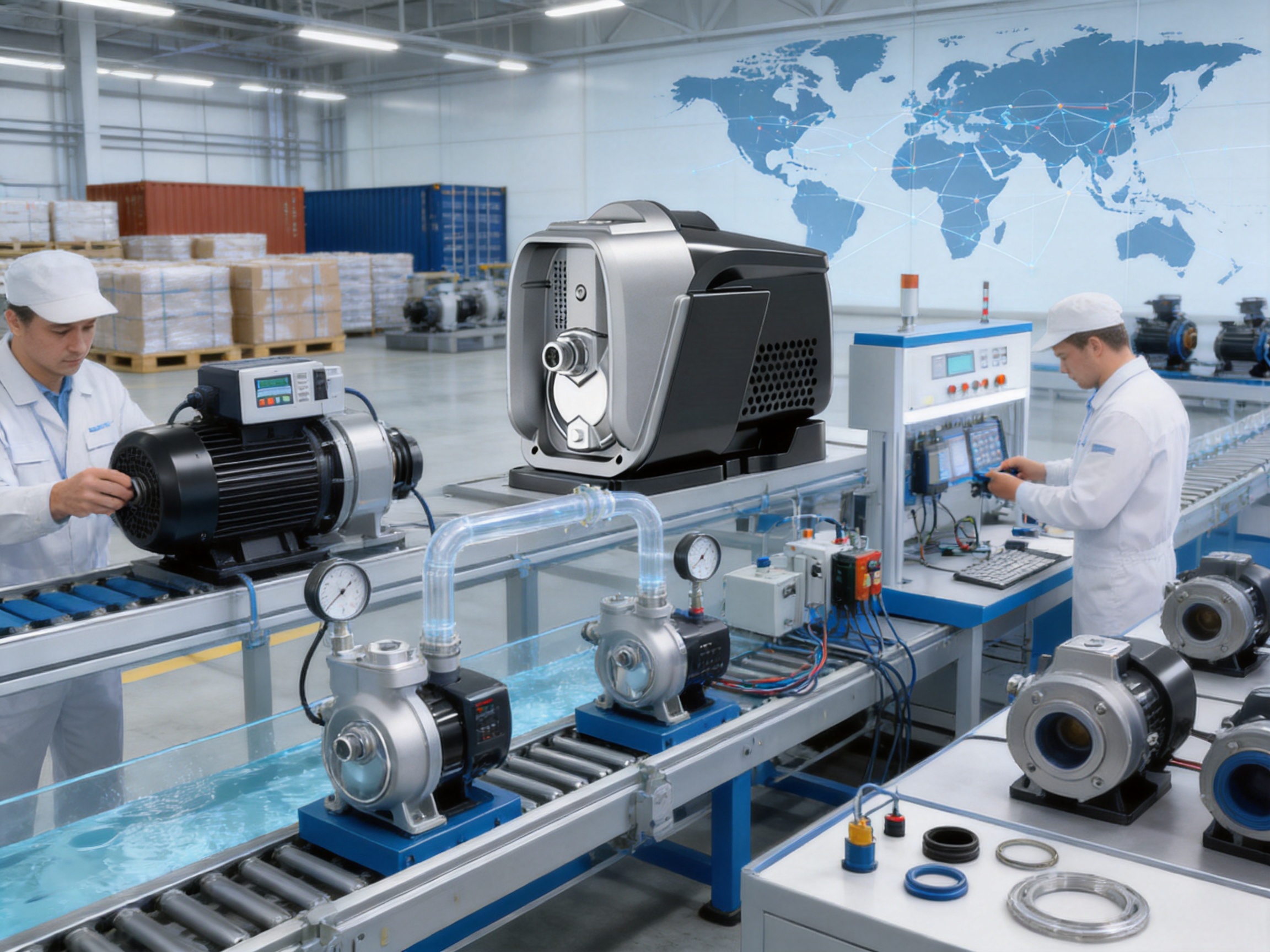
The company behind the product is an integrated manufacturing enterprise established in 2008. Its activities include independent research and development, mass production, and global export. This combination is important because pump quality depends not only on the design concept but also on the ability to manufacture consistently at scale.
Independent research and development allows the manufacturer to coordinate hydraulic design, motor performance, electronic control, product dimensions, and application requirements. For an intelligent booster pump, these elements must work together. A motor may be efficient by itself, but the complete pump also requires suitable control software, pressure feedback, thermal management, protective functions, and hydraulic matching.
Developing the product platform internally can help the manufacturer refine these relationships over time. It also makes it easier to adapt models to different markets, voltage conditions, application expectations, and customer requirements.
Mass production requires more than assembling individual units. It involves standardized component specifications, repeatable assembly procedures, production scheduling, process control, functional testing, packaging, and traceability. These activities are especially important for pumps containing both hydraulic and electronic systems.
A consistent production process helps reduce variation between units. It can improve the reliability of motor assembly, controller installation, pressure sensor placement, wiring, sealing, and final performance. For distributors and project buyers, scalable production also supports stable supply for repeated orders.
The manufacturer’s broader product portfolio includes deep well pumps, submersible pumps, domestic booster pumps, circulation pumps, solar water pumps, and related water-supply products. This product breadth creates useful technical experience across different water applications.
A company familiar with submersible systems, surface pumps, pressure boosting, circulation, and solar pumping can better understand how individual products fit into complete water systems. This is valuable for customers seeking coordinated product sourcing rather than isolated equipment purchases.
The company states that it focuses on reliable quality, innovation, and high-performance water pumps. For the Litepro series, quality must address both mechanical and electronic factors. The pump must maintain hydraulic performance while the variable-speed controller responds correctly to pressure and load changes.
Important production control areas include motor winding quality, rotor and stator alignment, bearing installation, impeller balance, hydraulic-stage assembly, mechanical sealing, pressure vessel integrity, sensor connection, control-board protection, and final electrical testing. Although specific internal inspection procedures are not provided, these are the types of manufacturing disciplines required for a dependable intelligent pump.
The company has developed export-oriented capabilities and provides procurement planning, order tracking, cross-border delivery, and foreign-trade services through associated business operations. This is an important strength for international buyers because successful pump procurement involves more than selecting a technical model.
Global customers often need assistance with product matching, packaging, shipping documents, delivery schedules, voltage requirements, spare parts, and after-sales communication. An organized export structure can help reduce administrative friction and support long-term distributor relationships.
Since 2018, the company has invested in new energy and intelligent technology, including solar water pumps and intelligent booster pumps. This direction is consistent with the changing needs of the water-pump market. Customers increasingly seek lower operating costs, automatic control, remote or programmable functions, and products that can work efficiently under variable conditions.
The Litepro series reflects this investment by combining a high-efficiency motor with integrated electronic control and automatic monitoring. Its design demonstrates a movement away from purely mechanical pumping equipment toward electronically managed water systems.
The product information identifies overload protection, dry-run protection, and other safety features. These mechanisms are important because water pumps may encounter abnormal operating conditions during installation or use.
Overload protection can help safeguard the motor and control system when electrical or mechanical load exceeds normal conditions. Possible causes include blocked piping, excessive friction, seized components, incorrect operating conditions, or voltage-related problems.
Protection does not replace correct system design. The pump should be connected to a suitable power supply with appropriate grounding and upstream protection. Electrical installation should be performed by a qualified professional in accordance with local requirements.
Dry running occurs when the pump operates without sufficient water. This can damage mechanical seals, cause overheating, reduce lubrication, and shorten component life. Dry-run protection is therefore particularly valuable for systems connected to tanks, wells, or variable water sources.
Users should still ensure that the suction pipe remains submerged where required, the source has adequate capacity, and the pump is primed according to the operating instructions. Protective electronics are a safeguard, not a substitute for correct hydraulic installation.
The stated liquid temperature limit is 75°C, and the ambient temperature limit is 50°C. The insulation class is F, and the enclosure protection rating is IPX5. These values provide important boundaries for product selection and installation.
The IPX5 rating indicates protection against water jets under defined test conditions, but it does not mean the pump can be submerged or exposed to every outdoor environment without additional protection. The pump should be installed in a location that limits flooding, severe weather, condensation, corrosive atmospheres, and direct contamination.
Correct installation is essential for achieving the product’s expected performance. Before installation, the installer should confirm the water source, suction height, pipe diameter, available voltage, desired pressure, maximum flow, and location of all outlets.
The suction pipe should be as short and direct as practical. It should be properly supported and sealed to prevent air leakage. Sudden reductions in pipe diameter, excessive elbows, unnecessary valves, and undersized filters can increase friction losses and reduce pump performance.
The pump should be placed on a stable base that limits vibration. Flexible connectors may be useful in suitable systems, but they should not be used to compensate for poorly supported piping. The surrounding area should provide sufficient clearance for inspection, wiring, ventilation, and maintenance.
Before startup, the pump casing and suction line should be prepared according to the manufacturer’s instructions. Any isolation valves should be in the correct position, and the discharge system should be checked for leaks. The first startup should be monitored to confirm that the pump primes correctly, pressure rises normally, and no unusual noise or vibration occurs.
The programmable menu should be configured according to the system requirements rather than simply using the highest available pressure. Excessive pressure can increase leakage risk, water consumption, pipe stress, and energy use. The correct target is stable, adequate pressure at the required flow.
Variable-speed intelligent pumps are designed to reduce manual intervention, but they still require routine inspection. Maintenance should include checking for leaks, unusual noise, vibration, overheating, pressure instability, and repeated fault indications.
Filters and strainers should be cleaned at suitable intervals. A blocked filter increases suction resistance and can contribute to cavitation, reduced flow, or dry-run conditions. The water source should also be checked for sand, debris, algae, or other contaminants that could affect the hydraulic stages or mechanical seal.
Electrical terminals and cable connections should be inspected by qualified personnel. Moisture, loose connections, damaged insulation, or improper grounding can create safety risks and interfere with electronic control. Any service work should be performed with the power isolated.
If the pump will remain unused for an extended period, the system should be protected against freezing, sediment accumulation, and stagnant water where applicable. Seasonal irrigation systems may require draining or other winterization procedures depending on climate.
When a fault occurs, users should record the fault condition, operating pressure, water availability, voltage, and recent changes to the system. This information can help technical personnel identify whether the problem is hydraulic, electrical, mechanical, or related to configuration.
Model selection should begin with a clear calculation of required flow and total dynamic head. Required flow is based on the number and type of outlets that may operate simultaneously. Total dynamic head includes elevation difference, required outlet pressure, pipe friction, valve and filter losses, and any special equipment resistance.
For example, a small home with one or two active outlets may be adequately served by the Litepro2 or Litepro3, depending on elevation and pressure requirements. A larger residence or greenhouse system may require the stronger head performance of the Litepro4 or Litepro5. A system with several irrigation zones or a greater simultaneous flow demand may be better suited to the Litepro8.
It is not advisable to select a pump solely by maximum head or maximum flow. A pump that is too large may cycle inefficiently, create excessive pressure, and cost more to operate. A pump that is too small may fail to satisfy demand and may operate continuously near its limit.
The best selection is normally made by locating the system duty point on the pump performance curve. The pump should operate within a stable and efficient region rather than at the extreme end of its curve. The manufacturer or qualified distributor should confirm the final model when the application has unusual suction conditions, high temperature, chemical exposure, or complex control requirements.
Water and energy efficiency are increasingly important in residential, agricultural, and commercial facilities. Pumping systems often run for many hours, and even modest improvements in operating efficiency can accumulate into meaningful savings over the service life of the equipment.
At the same time, users expect comfort and automation. They want stable water pressure without manually adjusting a pump. They also want compact equipment that can be installed in smaller utility spaces and monitored through understandable controls.
An integrated intelligent booster pump responds to these expectations by combining the hydraulic unit, motor, electronic converter, sensors, and pressure vessel. This approach can reduce system complexity while providing more sophisticated operation than a conventional fixed-speed package.
The Litepro series is positioned within this trend. Its variable-speed motor and permanent magnet technology address efficiency. Its pressure and current monitoring address automatic adjustment and protection. Its built-in pressure vessel addresses short-duration demand and start-frequency reduction. Its self-priming multistage design addresses installation flexibility and pressure performance.
The Litepro series is a self-priming, multistage, variable-speed intelligent booster pump range. It is designed to increase and regulate water pressure for household, irrigation, greenhouse, circulation, and selected light commercial applications.
The main difference is the integrated variable-speed control system. Instead of operating only at one fixed speed, the pump can adjust motor speed according to demand. It also combines a frequency converter, permanent magnet motor, pressure monitoring, current monitoring, programmable control, and a built-in pressure vessel.
The pump is designed for automatic operation, but continuous operation must remain within the product’s hydraulic, electrical, temperature, and environmental limits. The correct model should be selected for the actual duty point, and the installation must provide adequate water supply and cooling conditions.
The technical data lists a maximum suction value of 8 meters. Actual suction performance depends on water temperature, altitude, pipe size, pipe sealing, fittings, water level, and the condition of the suction line. The practical installation should remain within the manufacturer’s specified conditions.
The listed maximum liquid temperature is 75°C. The actual application must also consider pressure, operating duration, material compatibility, and local safety requirements. The pump should not be used outside its specified temperature range without written technical confirmation.
The answer depends on the required flow, sprinkler pressure, pipe length, elevation, and number of zones operating at the same time. The Litepro8 provides the highest maximum flow in the range, while the Litepro5 provides strong rated head performance. A performance-curve review is necessary before final selection.
It may be suitable when the required pressure and flow fall within the selected model’s performance range. The designer must include the height difference between the pump and the highest outlet, the desired pressure at that outlet, and all pipe and fitting losses.
The built-in pressure vessel is intended to support automatic operation and reduce unnecessary starts, but whether an external tank is needed depends on the application. Larger systems, special pressure requirements, or systems with frequent low-flow demands may require additional hydraulic assessment.
The product information identifies overload protection, dry-run protection, pressure and current monitoring, and other safety functions. The exact protection logic and reset procedure should be confirmed in the applicable operating manual for the specific model.
The stated noise level is approximately 20–30 dB. Actual perceived noise depends on the pump speed, pipe vibration, mounting surface, water conditions, and surrounding structure. Proper installation is important for achieving quiet operation.
The technical table lists a voltage range of 165–260 V. Buyers should confirm the exact model configuration, local supply voltage, frequency, wiring method, and electrical protection requirements before installation.
Routine maintenance should include checking for leaks, cleaning filters, observing pressure and flow, inspecting for unusual noise or vibration, and confirming that the suction line remains airtight. Electrical inspection and repairs should be carried out by qualified personnel with the power disconnected.
The listed application information concerns water supply and circulation. Abrasive, corrosive, or chemically aggressive liquids may damage the hydraulic stages, seals, or other components. Such applications require confirmation of material compatibility from the manufacturer.
The manufacturer combines independent research and development, mass production, export experience, and a broad water-pump portfolio. Its associated service structure supports procurement planning, order tracking, cross-border delivery, and foreign-trade coordination for global customers.
The Litepro2, Litepro3, Litepro4, Litepro5, and Litepro8 series provides a modern approach to automatic water pressure boosting. Its core advantages come from the combination of variable-speed operation, integrated frequency conversion, permanent magnet motor efficiency, multistage hydraulic design, self-priming capability, pressure monitoring, current monitoring, programmable control, and a built-in pressure vessel.
Compared with a conventional fixed-speed booster pump, the series is designed to provide more adaptive operation, quieter performance, improved pressure stability, reduced unnecessary starting, and greater installation convenience. The range of motor powers, flow capacities, heads, and physical sizes allows the product to serve different domestic, garden, greenhouse, circulation, and selected commercial requirements.
The manufacturer’s strengths in research and development, mass production, global export, intelligent technology, and broad pump-system experience further support the product’s market position. Its integrated manufacturing approach is particularly relevant for an intelligent pump because hydraulic performance, motor efficiency, electronic control, and protective functions must operate as one coordinated system.
Successful application still depends on proper model selection and installation. Buyers should calculate the required duty point, verify suction conditions, confirm electrical compatibility, observe temperature limits, and use the complete performance curve. When correctly specified and maintained, the Litepro series can provide a compact and efficient solution for modern water pressurization.
1. Manufacturer-provided Litepro2, Litepro3, Litepro4, Litepro5, and Litepro8 technical data and application information.
2. Manufacturer-provided product descriptions concerning variable-speed motors, integrated frequency conversion, permanent magnet motor technology, pressure monitoring, and protection functions.
3. General pump engineering principles relating to total dynamic head, flow requirements, suction conditions, multistage pump operation, and system resistance.
4. General guidance for centrifugal pump installation, commissioning, maintenance, and protection against dry running and overload conditions.
5. General technical principles for variable-frequency motor control and energy-efficient pumping systems.
edwina@edwin-pump.com
+86-13586290903 (WhatsApp)
Xuri Gongliang Cutting Tool Entrepreneurship Park, Wenqiao Town, Wenling City, Taizhou City, Zhejiang Province, China

High Performance Smart Pump Factory


 English