
edwina@edwin-pump.com

View All Products
en
A submersible pump often works in challenging environments where water, pressure, vibration, and continuous operation place constant stress on internal components. The mechanical seal is one of the most important protection systems because it prevents water from entering the motor chamber. Adding a second sealing layer seems like an obvious solution, yet some pumps equipped with dual sealing structures still experience leakage, overheating, or unexpected shutdowns.
This raises an important question: Why can a Double Mechanical Seal Submersible Pump still fail despite having additional protection?
The answer is that a double seal design improves protection, but it cannot eliminate problems caused by incorrect application, unsuitable materials, poor operating conditions, or system issues. Mechanical seals depend on proper lubrication, cooling, alignment, and compatible materials to maintain reliable performance.
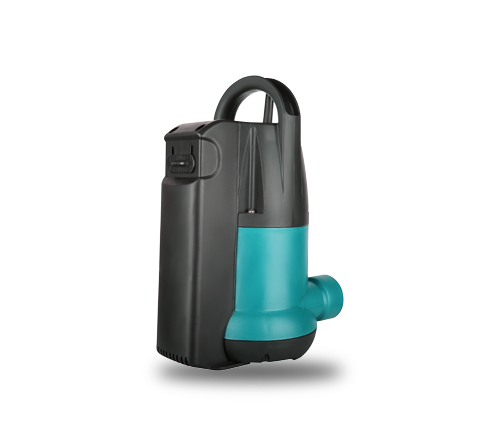
A double mechanical seal structure uses two sealing surfaces instead of one. The design creates an additional barrier between the pumped liquid and the motor section.
The typical structure includes:
This arrangement helps reduce the possibility of immediate motor damage after the first sealing surface experiences wear.
| Seal Structure | Main Function | Typical Application |
| Single Mechanical Seal | Basic leakage protection | Clean water applications |
| Double Mechanical Seal | Additional barrier protection | Continuous duty and demanding environments |
| Double Seal with Oil Chamber | Improved lubrication and cooling | Industrial and deep submersible systems |
Mechanical seals rely on a thin liquid film between the rotating and stationary faces. This film provides lubrication and removes heat generated during operation.
Without sufficient liquid around the seal faces, friction increases rapidly. The result may include:
A double mechanical seal provides backup protection, but both seals still depend on correct operating conditions. Running without enough water or operating outside the recommended conditions can damage sealing components quickly.
Many submersible pumps operate in wells, construction sites, drainage systems, or agricultural environments where water may contain sand, minerals, or small solid particles.
These particles can enter the seal area and create surface damage.
Hard materials such as silicon carbide or tungsten carbide are often used in demanding applications because they offer stronger wear resistance compared with softer seal face materials.
Not every double seal configuration is suitable for every liquid.
The pumped medium may contain chemicals, minerals, temperature variations, or suspended particles that affect seal durability.
| Seal Material | Characteristics | Suitable Conditions |
| Carbon | Good lubrication ability | Clean water applications |
| Silicon Carbide | High hardness and thermal conductivity | Abrasive water environments |
| Tungsten Carbide | Strong impact resistance | Heavy-duty pumping conditions |
| Ceramic | Good corrosion resistance | General water applications |
A double mechanical seal system using unsuitable materials may fail earlier than a properly matched single seal system.
Mechanical seals require accurate alignment between rotating and stationary components. Excessive vibration changes the contact pressure between seal faces.
Possible causes of vibration include:
Over time, vibration can create uneven wear patterns and reduce the sealing ability of both mechanical faces.
A high-quality sealing system still requires careful handling during installation.
Mechanical seal components are precision parts, and improper handling during assembly is a recognized cause of premature failure.
A dependable submersible pump requires cooperation between the seal system, motor, hydraulic components, and protective features.
| Feature | Reliability Benefit |
| Double mechanical seal | Adds an additional protection barrier |
| Oil-filled seal chamber | Supports cooling and lubrication |
| Stainless steel shaft | Improves corrosion resistance |
| Thermal overload protection | Helps prevent motor overheating |
| High-strength impeller | Maintains hydraulic stability |
| IP68 motor protection | Supports submerged operation |
Although seal failure cannot always be avoided, proper operation can significantly reduce unnecessary damage.
The answer depends on the application requirements.
A double sealing structure does not make a pump immune to failure, but it provides additional protection against leakage risks. Applications involving continuous operation, deeper installation, or demanding water conditions often benefit from this extra protection layer.
The key factor is not simply adding more seals. Reliable performance comes from combining suitable materials, correct installation, stable operating conditions, and proper pump selection.
A Double Mechanical Seal Submersible Pump offers stronger protection compared with traditional single-seal designs, but even advanced sealing systems have operating limits. Dry running, abrasive particles, vibration, unsuitable materials, and installation mistakes remain common reasons behind unexpected failures.
Understanding these factors helps users make better decisions and maintain stable pumping performance. A dual seal design works best as part of a complete reliability strategy rather than as the only solution for preventing pump problems.
serieswatershortageprotectionvoltagestabilizationstainlesssteelverticalmultistagepump.jpg "EVR(S) Series Water Shortage Protection Voltage Stabilization Stainless Steel Vertical Multistage Pump")
edwina@edwin-pump.com
+86-13586290903 (WhatsApp)
Xuri Gongliang Cutting Tool Entrepreneurship Park, Wenqiao Town, Wenling City, Taizhou City, Zhejiang Province, China

High Performance Smart Pump Factory


 English