
edwina@edwin-pump.com

View All Products
en
A single water source often needs to support more than one purpose. Residential properties may require water for bathrooms, kitchens, gardens, livestock, cleaning, and other daily activities. Agricultural sites may depend on one well system for irrigation, equipment washing, and general water supply. This raises an important question: Can one pump handle different water demands without affecting performance?
A Multi Functional Deep Well Pump is designed around this idea. Instead of using separate pumps for different applications, one integrated system can provide water with adjustable flow, pressure, and operating flexibility. However, the ability to handle multiple tasks depends on pump specifications, well conditions, and the actual water requirements of the application. Low pressure and unstable flow are common concerns in well systems, especially during simultaneous water usage.
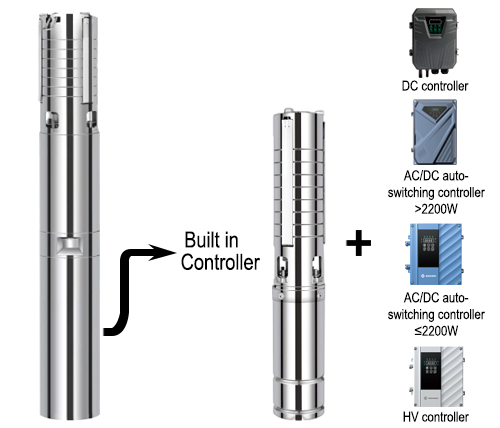
Traditional water systems often require different pumping equipment for different purposes. A household may need one system for domestic water and another solution for garden irrigation. This approach increases installation complexity and maintenance requirements.
Modern deep well pump designs focus on improving versatility through:
A well-designed multifunction system can support different water needs while reducing the number of pumping units required.
The actual application range depends on pump power, head capability, and flow rate. A properly matched pump can serve several common scenarios.
| Application | Typical Water Requirement | Important Pump Feature |
| Household water supply | Stable pressure and daily water consumption | Constant pressure operation |
| Garden irrigation | Higher flow demand | Strong water delivery capacity |
| Agricultural watering | Long operating periods | Durable motor and cooling structure |
| Livestock water supply | Reliable continuous supply | Low failure risk design |
| Cleaning systems | Moderate pressure requirements | Flexible operating range |
Some users worry that a pump designed for many purposes may not perform well in any specific application. This concern is understandable, but the real factor is not the number of functions. The key point is whether the pump matches the hydraulic requirements.
A multifunction pump performs effectively when three conditions are satisfied:
A pump that is too small may struggle during multiple water uses. A pump that is oversized may consume unnecessary energy and experience frequent cycling.
Many pump problems are caused by confusing water pressure with water flow. Pressure determines how strongly water moves through the pipeline, while flow rate determines how much water is delivered within a certain period.
| Parameter | Example Range | Purpose |
| Motor Power | 0.75 kW–3 kW | Determines pumping capability |
| Maximum Head | 30 m–100 m | Controls vertical lifting ability |
| Flow Rate | 20 L/min–150 L/min | Determines water supply volume |
| Voltage | 110V / 220V / 380V | Matches electrical systems |
| Protection Grade | IP55 or higher | Improves motor protection |
Users experiencing pressure drops during simultaneous activities often need to review pump capacity and pressure tank settings rather than simply replacing the pump.
The answer depends on how many devices operate at the same time.
A household may normally use water from one shower, one kitchen faucet, and one washing machine. However, irrigation equipment may dramatically increase demand during operation.
Common situations that increase water demand include:
A deep well pump should be evaluated according to the highest expected demand rather than average daily usage.
A multifunction deep well system usually combines several technical features to improve adaptability.
Multiple impellers can increase pressure generation, making the pump suitable for deeper wells or higher delivery requirements.
Stainless steel components and durable engineering plastics help protect internal parts from mineral deposits and water quality changes.
Built-in motor protection can reduce damage caused by overheating during extended operation.
Pressure switches, controllers, and variable speed systems allow the pump to respond better to changing water demand.
Even a capable pump may experience problems under unsuitable conditions.
The groundwater supply itself may not recover quickly enough to support continuous high-volume pumping.
A pump with insufficient head or flow capacity may create unstable pressure during heavy usage.
Narrow pipes, blocked filters, or poor installation layouts can reduce water delivery.
Short cycling may increase mechanical stress and reduce component lifespan. Pressure system problems are often associated with repeated pump cycling.
Not every well requires the same pumping solution.
Before installation, users should evaluate:
A multifunction design provides flexibility, but proper matching remains essential.
Water demand continues to become more diverse. Homes, farms, and small commercial properties increasingly need equipment that can adapt to different usage patterns.
Future pump systems are expected to include:
These developments allow one pumping system to respond more effectively to changing water requirements.
One deep well pump can support multiple water needs, but the result depends on correct system planning. A Multi Functional Deep Well Pump provides flexibility by combining reliable water delivery, adaptable performance, and simplified system design.
The important consideration is not whether one pump has many functions, but whether its technical specifications match the real water demand. With suitable flow capacity, proper installation, and appropriate well conditions, a single deep well pump can serve residential, agricultural, and general water applications with stable performance.
edwina@edwin-pump.com
+86-13586290903 (WhatsApp)
Xuri Gongliang Cutting Tool Entrepreneurship Park, Wenqiao Town, Wenling City, Taizhou City, Zhejiang Province, China

High Performance Smart Pump Factory


 English